



Cloud Security  incident response Linux administration
incident response Linux administration Over the span of just 14 days, threat actors unleashed more than 81 million login attempts against Microsoft’s Azure command-line interface (CLI). The campaign , which security researchers at Huntress identified as an ongoing, automated password-spraying effort, successfully compromised at least 78 Microsoft accounts across 64 organizations between June 12 and June 26, 2026. . While the scale is massive, the underlying strategy is surprisingly surgical. Attackers aren't exploiting a flaw in...
 Jul 01, 2026
Security Trends security update mobile security
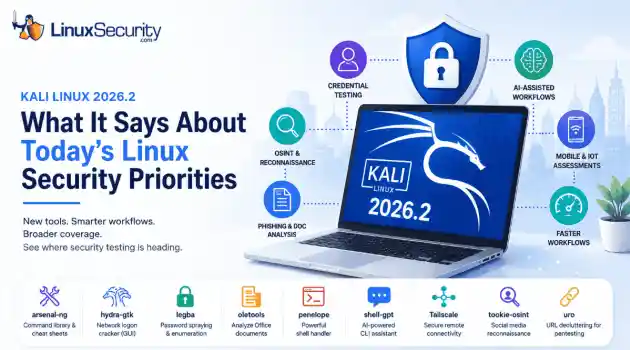
security update mobile security Offensive Security just dropped Kali Linux 2026.2 , and at first glance, it looks like a standard quarterly refresh. You’ve got the usual kernel bumps, desktop environment updates, and a handful of new utilities. But don't write this off as just another routine version update. If you look past the changelog, this release highlights several capabilities that continue to be important in offensive security. From AI-assisted workflows to credential testing and mobile assessments, Kali Linux 2026.2...
Jun 30, 2026
Security Projectssecurity advisory vulnerability management
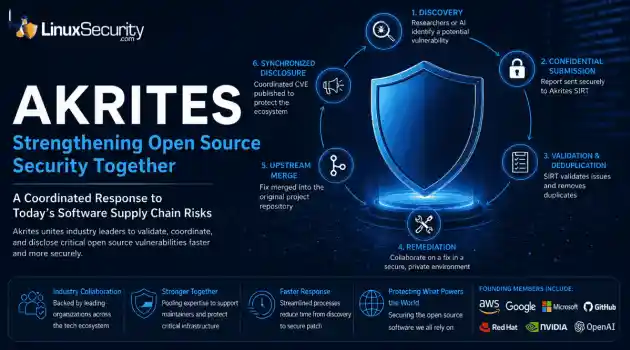
security advisory vulnerability management The Linux Foundation has officially launched Akrites , a coordinated industry initiative designed to improve how critical open source vulnerabilities are validated, coordinated, and disclosed before patches reach downstream users. Backed by a diverse coalition—including AWS, Google, Microsoft/GitHub, Red Hat, NVIDIA, and OpenAI—Akrites establishes a shared Security Incident Response Team (SIRT) to streamline the validation, remediation, and disclosure of vulnerabilities in the foundational...
Jun 29, 2026

Server Securitydenial of service open-source
denial of service open-source A process with a stable workload shouldn't keep growing its resident memory. When it does, the first question isn't how much RAM is available. It's where the allocations stopped being released. On Linux, that answer isn't always obvious because the kernel, allocator, and application all influence what memory usage looks like from the outside. . Separating normal allocation behavior from an actual leak takes more than watching top or container metrics. Heap growth, allocator caches, mapped...
Jun 26, 2026
Security ProjectsLinux security security assessment
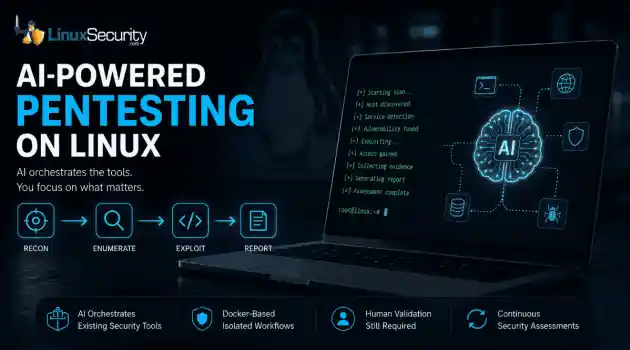
Linux security security assessment AI is beginning to reshape how penetration testing workflows are organized. For years, the penetration tester’s workflow has been a labor-intensive ritual: scan, enumerate, research, exploit, and report. But new frameworks are attempting to codify that intuition, turning the "human-in-the-loop" process into a machine-coordinated workflow. But is this a genuine evolution in how we secure Linux environments, or just a sophisticated wrapper around the same old tools? . Dark Moon is an open-source...
Jun 26, 2026
 Refine news
X Clear Filters
Get the latest News and Insights
Get the latest Linux and open source security news straight to your inbox.
Community Poll
Can sandbox isolation stop malware?
Loading...
Explore Latest Linux Security news
We found 147 articles for you...
77
 security advisorysecurity toolslinux
Linux AI Tools Require Enhanced Observability for Security
Linux security has traditionally depended on logs, metrics, and alerts. That model works well when systems behave predictably. Inputs come in, processes run, events get logged. Security teams can usually reconstruct what happened afterward without too much trouble. . AI changes that assumption. Machine learning systems are now embedded across infrastructure and security tooling. Email filtering, threat detection, and automated response pipelines. Some systems classify suspicious activity. Others decide whether containers should be isolated or traffic should be blocked. The issue is that AI-driven decisions are not always visible through normal logging. And that creates blind spots. AI Is Becoming Part of the Security Stack Older Linux security environments were built around observability . Analysts monitored system calls, authentication events, process activity, and network traffic. The idea was simple enough. If something happened on the system, logs would eventually show it. AI systems complicate that model because their logic often lives inside the model itself rather than inside readable rules or scripts. Enterprise adoption is moving quickly, too. OpenAI reported in late 2025 that enterprise employees were saving roughly 40 to 60 minutes per day using AI tools. Organizations are now deploying AI into production workflows instead of limiting it to testing or research environments. That includes security operations. AI agents increasingly handle tasks that once required human judgment. Sorting alerts. Classifying files. Filtering phishing emails. Sometimes, even triggers automated actions without an analyst reviewing every step first. Useful, sure. But harder to audit when something goes wrong. Traditional Logs Show Events, Not Reasoning This is where traditional logging starts falling short. A firewall rule change might appear in logs, but the reasoning behind the change usually does not. An AI-powered email security system may quarantine a message, yet analystsoften cannot see the exact chain of logic that led to the decision unless the system was specifically designed to expose it. That gap becomes a problem fast. Security teams may see the outcome while missing the intermediate reasoning steps entirely. False positives become harder to debug. Auditing decisions take longer. Detecting adversarial manipulation against AI systems gets messy because the internal decision process is mostly opaque. For Linux environments built around transparency and traceability, that is a major shift. Why AI Agent Observability Matters AI agent observability is becoming important for a pretty practical reason. Teams need visibility into how AI systems behave inside production environments. Not just the final output, but also the surrounding context. What data went into the model? What tools did the AI agent use? What outputs were generated? Sometimes, even the intermediate reasoning steps or confidence scores. Without this layer of visibility, AI systems behave like black boxes sitting inside otherwise observable infrastructure. And Linux administrators generally dislike black boxes for obvious reasons. Extending Observability Beyond Infrastructure Traditional observability mostly focuses on infrastructure health. CPU usage, memory pressure, network latency, and uptime metrics. Those signals still matter, but AI systems require another layer of telemetry on top of them. Teams increasingly want visibility into: Prompt inputs Model outputs Tool interactions Workflow state changes Confidence scoring Automated response actions That information becomes especially important in regulated environments where organizations need to explain why certain actions were taken. Compliance requirements do not disappear just because an AI model made the decision instead of a human analyst. The infrastructure still needs accountability somewhere. Why This Matters Going Forward Linux security teams are slowly adapting to this shift. AIsystems are no longer treated as isolated tools running off to the side. They are becoming part of the production stack itself, which means they also need monitoring, auditing, and visibility controls like any other critical component. Logs and metrics are still necessary. Nothing changes there. But in AI-driven environments, they are no longer enough on their own. . Discover how AI influences Linux security and the need for enhanced observability to ensure effective monitoring.. Linux Security, AI Observability, Threat Detection, Security Monitoring. . MaK Ulac
 May 11, 2026
•
May 11, 2026
• Server Security
81
 security advisorysecurity toolspackage management
Parrot OS 6.3 Security Advisory: Updates & Tools for Robust Defense
Parrot OS 6.3 has just arrived , bringing crucial updates that security admins should note. This latest version of the popular secure Linux distribution offers new features, updated tools, and substantial performance and security enhancements. From an updated Linux kernel 6.11.5 to advanced security tools such as Metasploit and Burpsuite, version 6.3 is designed to equip your toolkit with cutting-edge innovations. Whether upgrading from an older version or performing a fresh installation, these enhancements promise a more robust and secure operating environment. . Let's take a closer look at how Parrot OS can strengthen security measures while streamlining your workflow! Enhanced Kernel and Core Improvements Source: ParrotSec.org One of the key highlights of Parrot OS 6.3 is the upgraded Linux kernel 6.11.5 , providing numerous benefits, such as increased hardware support, improved performance, and power management. Compatibility with new devices also eases deployment. Core improvements mean more responsive performance under demanding conditions - essential requirements for security admins who rely on reliable performance for security tasks. With the new kernel, users enjoy improved security features essential to creating and maintaining a safe environment. Updates such as improved memory handling and isolation of processes help minimize risks related to exploits or vulnerabilities, making Parrot OS 6.3 an even safer platform for penetration testing, forensics analysis, and reverse engineering. Updated Security Tools Security tools are essential to any Linux security admin's arsenal, and Parrot OS 6.3 doesn't disappoint in that department. This release updates popular security tools like Metasploit, Burpsuite, Nmap, and Aircrack-ng. Metasploit, in particular, boasts several new modules and enhancements designed to increase its effectiveness at finding vulnerabilities. Burpsuite offers advanced web application security testing features, including automated vulnerabilityscanning and detailed reporting. Nmap , the go-to tool for network discovery and security auditing, has improved, including better performance and additional NSE scripts. Aircrack-ng provides wireless network security by updating libraries with the latest WEP cracking techniques, ensuring security admins always have access to cutting-edge tools to efficiently detect and counter potential threats. Performance and Usability Enhancements Parrot OS 6.3 is defined by notable performance and usability upgrades. The development team has put considerable time and energy into making it more responsive and resource-efficient, meaning faster boot times, quicker application launches, and smoother multitasking - essential features for security professionals who often run multiple tools simultaneously. Usability enhancements in Parrot OS 6.3 include a more refined and intuitive user interface, with easier access to essential tools and settings. The goal is to make Linux user-friendly even for novice users, shortening learning curves so they can focus on protecting systems and networks as best they can. Improved Package Management Package management can often be taken for granted, a usually neglected feature of any operating system. Parrot OS 6.3 features several enhancements that simplify user installation, updating, and managing software packages. The APT package manager has been updated for better performance and reliability, allowing faster updates and more seamless installations - essential to maintaining an up-to-date and secure working environment. Parrot OS 6.3 features improved support for snaps and flatpaks, enabling users to install applications directly from these popular package formats. This increase in flexibility means security admins can further customize their operating system according to their individual needs while including more tools and applications in their customized operating system. Enhanced Privacy Features We security admins value privacy greatly, and Parrot OS 6.3takes several measures to protect our data. Among them are updates to the Anonsurf anonymization tool, which routes all system traffic via the Tor network . These enhancements allow for better anonymity while performing security tasks, which is essential when engaging in sensitive operations. Parrot OS 6.3 improves cryptographic tools and secure communication applications, including GnuPG and OpenSSL versions 3.3.0 for robust encryption for data at rest and in transit. Thunderbird has also been updated with privacy-oriented plugins and settings to provide secure email communication. Bug Fixes and Community Feedback No release would be complete without addressing existing issues, and Parrot OS 6.3 includes numerous bug fixes to enhance overall stability and performance. Furthermore, the development team is actively engaged with the user community to take their feedback into account while making fixes available as soon as users report them. This ensures the OS continues to develop according to the real-world needs of its users. Parrot OS's community is integral to its development, and user feedback provides invaluable information on priority fixes and enhancements. Everything aimed at improving user experience while upholding a robust security posture, from usability changes to significant security patches , is prioritized accordingly. Our Final Thoughts on the Security & Privacy Benefits of Parrot OS 6.3 Parrot OS 6.3 is a compelling update for Linux security admins, offering cutting-edge features, performance enhancements, and an unwavering commitment to security. With its upgraded Linux kernel, updated security tools, and enhanced privacy features - as well as its performance and usability enhancements that make the system responsive and easy to use - Parrot OS 6.3 enables professionals to focus on their essential tasks without unnecessary distractions. As is often the case, Parrot OS community members play an integral role in driving its development and meeting user demands. Thanksto its robust features and ongoing commitment to security and privacy, Parrot OS 6.3 remains one of the go-to choices among security admins worldwide. Staying ahead of cybercriminals and malicious hackers requires both the appropriate tools and an efficient operating system. Parrot OS 6.3 fulfills both criteria, making it an indispensable ally in protecting systems and networks from threats in today's complex digital environment. Upgrade to Parrot OS 6.3 today to experience its benefits firsthand! You can download Parrot OS 6.3 from the project's official website. We'd love to hear your thoughts @lnxsec! . Parrot OS 6.3 elevates security with advanced tools for admins and pros, featuring a user-friendly interface, improved threat detection, and refined penetration testing.. Parrot OS 6.3, security updates, privacy measures, enhanced tools, Linux distribution. . Brittany Day
Feb 03, 2025
•
Privacy

78
 security toolshardware supportActive Directory
Kali Linux 2024.4: Enhanced Tools for Active Directory Privilege Escalation
If you're an admin responsible for managing and securing one or more Linux systems, you already know the importance of having top-notch tools at your disposal. The latest Kali Linux 2024.4 release is designed with you in mind, bringing new features and enhancements to make your job easier and more efficient! . This release introduces a range of new tools like bloodyad for Active Directory privilege escalation and web-cache-vulnerability-scanner for probing web cache security, equipping you with the latest penetration testing capabilities. But that's not all—Kali NetHunter now includes Wifipumpkin3, replacing the old Mana toolkit, and comes with a handy new "Kernel" tab to streamline kernel updates directly from the app. Additionally, Kali Linux 2024.4 enhances compatibility across various devices and ARM systems, adding support for the Realme X7 Max 5G and expanded functionalities for Raspberry Pi models. These updates ensure you can deploy Kali in various environments, from the lab to real-world enterprise scenarios. Whether you're conducting detailed forensic analysis or broad vulnerability assessments , the latest Kali release provides robust tools and expanded hardware support to help you stay ahead of the latest, most sophisticated Linux security threats. In this article, we'll delve deep into what's new in this release, from cutting-edge tools to expanded hardware support, and how these updates can make your job more effective and convenient. New Tools to Elevate Your Penetration Testing One of the most exciting aspects of the Kali Linux 2024.4 release is the addition of 14 new tools specifically designed to improve your penetration testing kit . These tools cover a range of functionalities that are crucial for modern cybersecurity practices. For instance, bloodyad focuses on Active Directory (AD) privilege escalation, a critical area for many security admins who protect environments heavily reliant on AD. This tool can help you identify potential vulnerabilities andunauthorized access points in your AD setup, enabling you to fortify your network against threats. Another valuable addition is the openssl-ssh1 tool. Since some legacy systems still utilize the older SSH1 protocol, having a reliable and secure client for interaction becomes essential. Although upgrading any system using SSH1 is recommended due to its outdated security, having openssl-ssh1 in your toolkit ensures you can still securely manage those that haven't updated yet. Then there's the web-cache-vulnerability-scanner , which addresses the increasingly relevant issue of web cache poisoning. As web applications become more complex and integral to business operations, vulnerabilities in web caching mechanisms pose significant security risks. This tool allows you to scan and test these caches, helping you to mitigate potential exploits before malicious actors can leverage them. Kali NetHunter: Now More Powerful and User-Friendly The Kali NetHunter platform , an essential tool for mobile penetration testing, has seen significant updates in this release. One of the biggest changes is the replacement of the Mana toolkit with Wifipumpkin3. This new tool allows you to create a rogue access point (AP) that provides a real internet connection, even over mobile networks. This is a game-changer for conducting man-in-the-middle (MiTM) attacks and testing wireless security in environments where setting up a traditional rogue AP would be inconvenient. Additionally, the NetHunter app now includes a "Kernel" tab. This seemingly small addition can have a substantial impact on your workflow. It simplifies and speeds up the process of keeping your systems up-to-date by allowing you to flash the kernel directly from the app without needing to enter recovery mode. This ease of use ensures that even those new to NetHunter can manage kernels with much less hassle, while veterans will appreciate the time savings. Expanded Device and ARM Support for More Versatile Deployments One of the ongoing challengesin Linux security administration is ensuring compatibility across diverse devices and platforms, and Kali Linux 2024.4 makes significant strides in this area. This release expands support to 100 devices, including models like the Realme X7 Max 5G and Xiaomi Mi 9 Lite. This broadened support means you can deploy Kali Linux on an even wider array of devices, making it a versatile choice for various testing environments and scenarios. There are also noteworthy enhancements for those who rely on ARM systems. The Raspberry Pi series, already popular among security admins for its flexibility and affordability, sees improved support in this release. Notably, there is now support for the Raspberry Pi 500, further cementing this platform's utility in your toolkit. Even though the Raspberry Pi 500 support remains untested due to hardware constraints, it's clear that Kali Linux is continuing to broaden its ARM support to ensure full functionality across these widely used devices. The team has also enabled Kernel Mode Setting (KMS) for better graphics performance and switched character maps to UTF-8 to avoid console issues, ensuring a smoother and more reliable user experience. These updates enhance ARM builds' performance and ensure that you can deploy and run Kali Linux smoothly on less conventional hardware setups, which can be particularly useful in field operations or specific security assessments. Practical Applications of Kali Linux 2024.4 in Everyday Linux Security Work So, how do these enhancements translate to your daily work as a Linux security admin? Let's consider a few practical scenarios. Imagine you are conducting a security audit for a client with a complex web infrastructure. Adding the web-cache-vulnerability-scanner allows you to identify and mitigate web cache-related vulnerabilities proactively. Instead of reacting to breaches or potential exploitations, you can stay ahead of the curve, fortifying the cache mechanisms before they become a target. Similarly, deploying bloodyad can helpyou uncover security weaknesses that could be exploited for privilege escalation in environments where Active Directory is heavily utilized. With this tool, you can simulate potential attacks, understand their impact, and implement the necessary controls to safeguard against threats. On the mobile front, setting up a rogue AP with Wifipumpkin3 can help you test the resilience of your network against MiTM attacks without the need for a cumbersome setup. This simplifies mobile security assessments and makes them more realistic, using the devices that end users might have in their pockets. Our Final Thoughts on Staying Ahead with Kali Linux 2024.4 Updating your Linux security tools and tactics is not just beneficial—it's essential. The Kali Linux 2024.4 release provides a robust suite of new tools, significant updates to the Kali NetHunter platform, and expanded device and ARM support that collectively enhance your ability to conduct comprehensive security assessments and maintain a robust security posture. From identifying and mitigating web cache vulnerabilities to securely managing legacy systems and conducting effective MiTM attacks with new tools, this release offers practical enhancements that can elevate your security practices. By leveraging the latest updates in Kali Linux 2024.4, you'll be better equipped to navigate modern cybersecurity challenges and stay one step ahead of potential threats. . Explore Kali Linux 2024.4's features, including the innovative bloodyad tool for enhancing Active Directory security and improved hardware compatibility for diverse deployments. Kali Linux 2024.4, penetration testing tools, Active Directory security, NetHunter updates. . Brittany Day
Dec 18, 2024
•
Vendors/Products
81
 cyber threatsnetwork protectionmalware
Securing Streaming on Linux: DDoS, Malware, and Payment Protection
Streaming on Linux can be an exhilarating experience, but it also comes with its own set of cybersecurity challenges. The risks are real, from DDoS attacks that can halt your secure video streaming to malware hidden in plugins to the looming threat of phishing schemes and secure streaming. . On top of that, doxxing and network vulnerabilities can put your personal information at risk. Fortunately, there are straightforward ways to protect your streaming broadcast without sacrificing the excitement. With tools like SELinux, VPNs, and regular updates, you can fortify your setup and focus on what matters most—creating an engaging, secure video streaming environment for your audience. The Hidden Dangers for Streamers Feel invincible in your Linux environment? Think again. While your setup has better defenses than most, the landscape of cyber threats is as unforgiving as a final boss. Cybercriminals hunt high-value targets, and your streaming broadcast empire, with its mix of personal data, financial transactions, and high-profile gaming accounts, glows like a neon bullseye. DDoS ambushes, malware smuggled through innocuous-looking plugins, or clever phishing schemes disguised as sponsorship offers—all aim to dismantle your fortress, brick by digital brick. Streaming isn’t just gaming; it’s an interconnected web of hardware, software, and networks. Capture devices, microphones, overlays—they all widen the gates. And let’s be honest: no system is flawless. A single unpatched vulnerability in third-party tools is like leaving your vault door ajar with a sign that reads, "Loot here." Why Are Streamers Under Fire? Streaming is a paradox—a platform that elevates your presence while stripping away anonymity. Your wealth of digital assets, from donation revenue to subscriber data, paints a tempting picture for cyber intruders. A hacker might hijack your stream mid-action, redirecting your hard-earned audience. Worse yet, a viewer could face collateral damage, their privatedata siphoned through exploits aimed at your channel. Stream sniping adds another layer of frustration and risk . Imagine being in the heat of a competitive match, only to realize an opponent is watching your broadcast in real time to predict your every move. Not only does this disrupt your gameplay, but it also undermines your credibility and leaves your audience disillusioned. The stakes escalate in real time, where online harassment and doxxing can spiral from nuisances to nightmares. For streamers, the always-online nature of gaming multiplies risk—each live session, each unscripted moment, is a potential opening. Where Vulnerabilities Lurk Even the strongest chain has weak links; your streaming setup is no exception. Outdated software, misconfigured networks, or lax privacy settings can transform a hardened Linux base into Swiss cheese. Consider this: Unpatched system flaws become entry points for silent intrusions. Poorly secured Wi-Fi invites snoopers to the party. Plugins from dubious sources act as digital Trojan horses. Combat these pitfalls with relentless vigilance. Security audits aren’t a luxury—they’re your lifeline. Scrutinize everything: who has access, how your data is stored, and where backups reside. Fortifying Your Streaming Setup To protect your streaming broadcast kingdom, you need a layered defense. Begin with your Linux Foundation: Activate tools like SELinux or AppArmor to choke out unauthorized actions. Keep updates automatic, closing gaps before attackers can exploit them. Monitor traffic logs like a hawk—your first warning sign might be buried in the noise. Protect your secure video streaming with robust defenses. Convenience should not bring down security in any aspect when it comes to secure video streaming software. OBS Studio is a brilliant creation, but every plugin or every shortcut you put in starts becoming more of a liability. Using third-party extensions, unless absolutely necessary, is just part ofcreating unique logins and allowing 2FA functionality. You can avoid the biggest reasons behind information leaks and keep secure streaming practices intact. Securing Your Network: The First Line of Defense Your network isn’t just a conduit; it’s the fortress wall. A poorly secured connection is akin to leaving the drawbridge down for invaders. Reinforce your setup by: Employing WPA3 encryption on your Wi-Fi and rotating passwords like clockwork. Deploying a VPN to mask your IP address and disrupt attackers’ targeting mechanisms. Conducting secure video streaming audits can also help detect unauthorized devices before they become threats. Protecting Your Identity and Finances Cybersecurity extends beyond your stream—it’s personal. Your identity and revenue streams are prime targets, and safeguarding them requires equal parts of strategy and execution: Never reveal sensitive data during live sessions, not even accidentally. Use compartmentalized accounts for streaming-related finances. Rely on encrypted payment platforms and review transaction histories with eagle eyes. These measures ensure your livelihood isn’t siphoned away while you’re focused on that clutch moment in-game. Battling Doxxing and Toxic Viewers Doxxing is no longer an outlier—it’s an epidemic. Prevent exposure by limiting personal information on profiles and leveraging tools like VPNs. Toxic viewers? Moderate them into oblivion. Automated tools, trusted human moderators, and escalating penalties for violators maintain your control and preserve the sanctity of your digital stage. The Cybersecurity Streamer’s Toolkit For the ultimate edge, consider leveling up your security arsenal. Specialized Linux distributions like Kali or Parrot OS come pre-loaded with defensive capabilities, giving you a head start. Adopt the 3-2-1 backup strategy—three copies, two different formats, one offsite storage—because even the best defenses can’t guaranteeinvulnerability. Stay alert, stay informed, and most importantly, stay streaming. Your audience is there for the gameplay, the banter, and the thrill of the journey—not for a front-row seat to a cyber calamity. So suit up, streamer. The digital battlefield awaits, but now you’re armed to conquer it. . Fortify your streaming environment against online risks by implementing essential security measures and resources tailored for Linux users who game and share broadcasts.. Linux Security, Cyber Threats, Streaming Protection, Network Security, Identity Protection. . MaK Ulac
Dec 17, 2024
•
Privacy
79
secure developmentsecurity toolsvulnerability assessmentEnhance Linux Software Security with Google’s Code Scanners
Developers recognize the critical nature of protecting software systems as cyberattacks grow more sophisticated, thus necessitating robust security measures in development lifecycle processes. C ode security scanners play a vital role here. These tools are intended to detect, mitigate, and prevent security vulnerabilities in code , improving integrity, reliability, and security for software systems. . In this article, I'll delve deeply into the function and importance of code security scanners developed by Google: AddressSanitizer (ASan), MemorySanitizer (MSan), UnknownBehaviorSanitizer (UBSan), Control Flow Integrity (CFI), LibFuzzer, and AFL (American Fuzzy Lop). Let's begin by gaining a deeper understanding of code security scanners and their importance in secure Linux software development. What Are Code Security Scanners? Code security scanners are tools used to scan source code to detect potential security flaws and flag them for further review by coders or testing services. Such analyses could involve either static analysis (without running it), dynamic analysis (while running), or some combination thereof. The goal is to identify flaws attackers might exploit, like buffer overflows , race conditions, and injection vulnerabilities. The Importance of Code Security Scanners in Secure Linux Software Development Code security scanners play an essential role in secure development. By integrating them early into their processes, developers can identify and address vulnerabilities before production-ready software reaches distribution, thus decreasing risks associated with security breaches. Proactive security solutions can be cost-efficient and effective. By addressing security issues during development rather than post-release fixes that often involve lengthy patches that compromise an organization's credibility and require extensive costs, organizations can minimize potential negative repercussions while protecting themselves from future liabilities. Many industries impose stringentregulatory standards on software security, and code security scanners can assist by documenting sound security practices and assuring regulatory compliance. Beyond increasing security, code security scanners improve overall software quality by identifying bugs or performance issues that would remain undetected. Code Security Scanners Developed by Google Google has developed several security tools that are invaluable for open-source security researchers attempting to quickly detect Type Confusion flaws during code development. Here is an introduction to each of Google's security tools and how they can be utilized: AddressSanitizer (ASan) AddressSanitizer is a memory error detector that identifies issues such as out-of-bounds accesses to heap, stack, and global variables and use-after-free bugs. ASan works by instrumenting code to detect memory errors at runtime, making it a powerful way of discovering buffer overflows or heap corruption issues. Utilization: ASan can quickly become part of any development workflow by being activated during compilation. Developers can run their programs with ASan enabled and watch it flag memory errors as they arise, providing complete diagnostic information that facilitates debugging efforts. MemorySan (MSan) MSan was developed to detect uninitialized memory reads. This tool detects instances where variables are being used without initializing correctly, potentially leading to unpredictable behavior and security vulnerabilities. MSan instruments code during compilation to monitor reads/writes on memory, so any use of uninitialized memory is promptly flagged as used memory by MSan. Utilization: Developers can utilize MSan by compiling their code with MSan instrumentation enabled. Running this instrumented program will allow MSan to identify instances of uninitialized memory usage, helping developers address them before becoming security issues. UnknownBehaviorSanitizer (UBSan) UnknownBehaviorSanitizer (UBSan) targets undefinedbehavior in code, such as integer overflows, misaligning pointers, and invalid casts, that might not cause immediate crashes but can lead to severe bugs and security vulnerabilities later down the road. Utilization: UBSan can be utilized by compiling code with UBSan instrumentation enabled, running it through execution, and monitoring for unanticipated behavior or incidents during run time. Developers can be provided with detailed reports to address these problems proactively. Control Flow Integrity (CFI) CFI is a security feature that ensures a program adheres to only legitimate paths defined by its control flow graph, thus protecting itself from attacks such as return-oriented programming (ROP) attacks that might divert its execution path from what was planned by design. Utilization: CFI can be implemented by compiling code with support for control flow integrity enabled. Once activated, CFI will check that program execution matches the expected control flow graph, blocking any attempts at malicious manipulation by running continuous verification checks that ensure execution conforms to expected flow charts. libFuzzer libFuzzer is a coverage-guided fuzzing tool used with sanitizers like ASan and UBSan to maximize security flaw detection. Fuzzing involves injecting random inputs into programs being tested to uncover hidden bugs by creating unexpected behavior that generates unexpected patterns that result in unforeseen bugs being exposed during testing. Due to these powerful combinations, libFuzzer excels in discovering Type Confusion vulnerabilities. Utilization: Developers utilize libFuzzer by writing "fuzz targets," which are particular entry points called by libFuzzer with various inputs. By pairing this approach with other testing sanitizers, developers can uncover hidden vulnerabilities through extensive fuzz testing, ensuring robust software security. American Fuzzy Lop [AFL] AFL (American Fuzzy Lop) is a security-oriented fuzzer that employs geneticalgorithms to automatically discover test cases that cause crashes or expose other potential issues with software applications. AFL tracks the execution path of a tested program while altering inputs to find new code paths, effectively uncovering any security flaws, such as Type Confusion vulnerabilities, that remain concealed under surface code paths. Utilization: Utilizing AFL in testing can be achieved by instrumenting code and running its fuzzer against its binary version, then running AFL's generator/mutate in an automated fashion to simulate inputs/mutations for testing purposes and identify vulnerabilities through comprehensive automated tests. Integration into the Linux Software Development Workflow Integrating code security scanners into the development workflow is critical to creating secure codebases. By embedding such tools within Continuous Integration/Continuous Deployment (CI/CD) pipelines , code is continuously tested for vulnerabilities throughout its lifespan and development lifecycle. Educating developers on security scanners' benefits and proper use is paramount for timely detection and resolution. Training sessions and resources may assist developers in integrating this tool smoothly into their daily workflow. At the same time, regular code audits should complement automated scanning tools as human oversight may identify problems missed by automated scanners. Our Final Thoughts on the Benefits of Code Security Scanners for Secure Linux Software Development AddressSanitizer, MemorySanitizer, UndefinedBehaviorSanitizer, Control Flow Integrity, libFuzzer, and AFL have become essential tools in developers' toolkits in an ever-evolving Linux security landscape. Developers must ensure that software remains robust, secure, and reliable by including security scanners in development projects. As with anything worth doing, an "ounce of prevention is worth a pound of cure." Security scanners allow developers to address security threats before users experience them directly. .In software development for Linux, integrating code security scanners is crucial. These tools automate vulnerability detection, enhancing security early in development.. security tools, code integrity, vulnerability detection, development processes, secure software. . Dave Wreski
Oct 14, 2024
•
Security Projects
74
 security toolsLinux distributionsnetwork assessment
Enhance Network Security with Best Linux Pentest Distros 2024
Maintaining robust network defenses requires a proactive approach to keep pace with today's rapidly evolving network security threats. One crucial element of an effective network security strategy is penetration testing , or staged attacks in network security that mimic actual security incidents. Specialized pentesting distributions, or pentest distros, help admins and cybersecurity professionals identify and address vulnerabilities and weaknesses within IT infrastructures. By leveraging these distros, sysadmins and organizations can better protect their networks from malicious actors and improve their security posture. . To help you understand the benefits Linux pentest distros offer and how you can get started using one to support your network security efforts, I'll introduce some of the best options for Linux users and how to use these distros most effectively to maximize security. Understanding Linux Pentest Distros & Their Significance Pentest distros are customized versions of the Linux operating system that come preloaded with a wide array of tools specifically tailored for penetration testing and forensic analysis. These tools are crucial for conducting thorough security assessments, as they enable professionals to simulate attacks, identify vulnerabilities , and evaluate the effectiveness of existing security measures. Pentest distros are significant because they can provide a comprehensive suite of tools in a single, easily accessible environment. This consolidation of resources streamlines the penetration testing process, allowing cybersecurity experts to focus on identifying and addressing potential threats rather than configuring individual tools. Critical Benefits of Forensic Linux Distros Forensic Linux distros play a pivotal role in enhancing network security. By using these specialized distributions, admins and organizations can achieve the following benefits: Simplified Vulnerability Identification: Forensic distros have tools designed to scan and assessnetwork security. These tools help identify weaknesses, such as misconfigured systems, outdated software, and insecure protocols, enabling organizations to address these issues promptly. Enhanced Threat Detection: With the right tools, cybersecurity professionals can detect potential threats before they escalate into serious security breaches. Forensic distros provide capabilities to analyze network traffic, identify suspicious activities, and uncover hidden vulnerabilities. Strengthened Network Periphery: Pentest distros enable organizations to evaluate their network periphery, including firewalls, intrusion detection systems, and other security measures. By identifying and addressing weaknesses in these components, they can fortify their defenses against external threats. Open-source Tools: A significant advantage of using Linux pentest distros is that many of the most effective tools are open-source. This reduces costs and ensures the community regularly updates and maintains these tools. Open-source tools foster collaboration and innovation, leading to more robust and reliable security solutions. Our Top Linux Pentest Distros in 2024 Several pentest distros have gained prominence in 2024 due to their effectiveness and the quality of their tools. Among these, the following stand out as our top choices for admins and ethical hackers: Kali Linux: Widely recognized as one of the leading pentest distros, Kali Linux offers a comprehensive suite of penetration testing and forensic analysis tools. It includes over 600 pre-installed tools, covering everything from network scanning to exploit development. Kali Linux is known for its user-friendly interface and strong community support. Parrot Security OS: Parrot Security OS is another popular choice, known for its versatility and wide range of tools. It includes features for penetration testing, digital forensics, and privacy protection. Parrot Security OS is designed to be lightweight and flexible, making it suitablefor novice and experienced users. BackBox: BackBox is a Ubuntu-based pentest distro that focuses on providing a reliable and efficient environment for security assessments. It includes a curated selection of tools for network analysis, vulnerability assessment, and exploitation. BackBox is known for its stability and ease of use. BlackArch: BlackArch is a specialized distro designed for advanced penetration testing and security research. It features a vast repository of over 2,000 tools, making it a powerful resource for in-depth security analysis. BlackArch is geared towards experienced users who require a highly customizable and extensive toolkit. Utilizing Pentest Distros Effectively to Maximize Linux Network Security To maximize the benefits of pentest distros, organizations should implement the following best practices: Regular Updates: Ensure the pentest distros and their tools are regularly updated to incorporate the latest security patches and features. This helps maintain the tools’ effectiveness and ensures protection against emerging threats. Customized Toolsets: Tailor the tools and configurations within the pentest distro to align with your organization’s specific needs. Customizing the toolset allows for more targeted and efficient vulnerability assessments. Integration with Existing Systems: To enhance security posture, integrate pentest distros with existing security solutions and workflows. This integration ensures a cohesive approach to vulnerability management and threat detection. Our Final Thoughts on the Security Benefits of Linux Pentest Distros In cybersecurity, pentest distros are invaluable assets for identifying and mitigating vulnerabilities within IT infrastructures. By leveraging these specialized Linux distributions, organizations can streamline their security assessments, detect potential threats, and strengthen their defenses. The availability of open-source tools within these distros further enhances their value,offering cost-effective and regularly updated solutions for network security. As the cybersecurity landscape evolves, staying informed about the latest pentest distros and their capabilities is essential for maintaining robust and resilient network defenses. . Investigate the ways in which Linux penetration testing distributions bolster security measures and identify the leading choices for safeguarding your network architecture.. Linux pentest distros, network security enhancements, penetration testing tools, forensic analysis tools. . Brittany Day
Oct 10, 2024
•
Network Security
209
security toolsthreat mitigationsystem protectionMalware Scanning: Protect Linux Systems from Evolving Threats
As malware continues to evolve , it poses an ever-increasing threat to computing environments of all kinds - Linux systems included. While many may assume Linux is safe due to its robust built-in security features , such a mistaken assumption may open doors for exploitation. . Malware such as viruses, trojans, ransomware botnets, keyloggers, worms, and rootkits pose considerable threats, including data breach risks and potential operational disruption to organizations of any size. Thus, admins must remain vigilant, as even one infection could wreak havoc upon an organization's operations integrity, disrupting service delivery to customers or clients. Linux may seem secure at first glance; however, its inherent security can still be vulnerable. Unpatched software or improper configuration can expose systems to attacks like cryptojacking, where attackers use your resources for cryptocurrency mining without your knowledge, or DDoS attacks that severely disrupt operations. As a result of these vulnerabilities and risks, malware scanners such as ClamAV, Chkrootkit, or RKHunter help ensure a more secure operating environment by providing system administrators the means necessary for malware detection and mitigation so they can maintain stable and secure operating environments. In this article, we investigate practical tools for scanning Linux environments for malware, helping you develop reliable defense mechanisms against an ever-evolving threat landscape. Linux Malware Presents an Increasing Risk for Admins & Organizations Though Linux has historically been known as a highly secure operating system, Linux malware has seen an alarming uptick over recent years, raising significant concern among system administrators. Malware attacks targeting Linux systems have increased in both frequency and complexity. Backdoors and new malware families highlight the growing and evolving Linux malware threat. This trend presents Linux admins with an immense challenge. They must stay vigilant againstsuch complex and dangerous attacks while protecting their systems against newer and more dangerous threats that constantly emerge. Malware scanning is now essential for detecting and mitigating malware attacks before they cause extensive damage. Let's examine some excellent tools Linux admins can use for malware detection and elimination. Essential Tools for Scanning Linux Systems for Malware Admins and organizations need specialized malware scanning tools to mitigate Linux security risks effectively. ClamAV , for instance, is an open-source antivirus engine that detects various forms of malware. Its capabilities cover files, emails, and directories, providing system administrators with the flexibility they require in securing different environments. Its regularly updated virus database ensures maximum protection from newer threats. Chkrootkit is an invaluable tool for detecting rootkits—malware that embeds itself deeply within system processes to evade detection—by scanning for known signatures on system processes. It helps administrators quickly spot potential compromises that otherwise go undetected. Furthermore, its lightweight architecture and simple deployment make Chkrootkit an essential component of any Linux security toolkit. The Role of RKHunter in Vulnerability Assessment RKHunter enhances Linux systems' malware defenses with an integrative vulnerability assessment solution , offering comprehensive rootkit detection, system configuration evaluation, weak password scanning, and suspicious file change detection capabilities. It is invaluable in protecting systems by identifying and addressing vulnerabilities early before attackers can exploit them. It regularly executes to detect any possible malicious activities, helping uphold a robust security posture by effectively addressing vulnerabilities before outside forces can exploit them. Establishing an Effective Security Framework Implementing tools such as ClamAV, Chkrootkit, and RKHunter into any security framework isintegral. Regular scanning using these solutions can significantly lower the risk of malware infections, freeing organizations to focus on core operations without worrying about cyberattacks. However, these tools alone do not serve as sufficient defense. A comprehensive security strategy must incorporate user education, regular software updates , and best practices for secure system configuration to provide extensive protection from emerging threats. Let's examine some of these best practices in more detail. Best Practices for Protecting Against Linux Malware Training users on safe computing practices is vital in protecting Linux systems against malware. Making them aware of common dangers like phishing attacks or social engineering tactics empowers users to identify and avoid potential dangers. Additionally, implementing strict access control policies and creating strong password policies strengthen system defenses further. Regular software updates are also integral to maintaining robust security. By keeping all components current with updates, known vulnerabilities will be patched immediately, decreasing risk. Administrators should conduct routine audits to confirm that security measures are working properly and meet industry standards. Our Final Thoughts on Malware Scanning & Its Importance The increasing prevalence of malware in Linux environments underscores the necessity of employing effective malware scanning mechanisms. As sophisticated threats like cryptojacking and DDoS attacks advance and new attacks emerge, organizations cannot overlook the importance of strong security measures. By including robust tools like ClamAV, Chkrootkit, and RKHunter in their security strategies, system administrators can significantly improve their defenses against potential infections. Staying abreast of new threats and adapting security protocols are integral to maintaining Linux systems' integrity and security. An inclusive approach encompassing user education, software updates, andvigilant monitoring will ensure your systems can withstand emerging cyberattacks and threats. Organizations can protect critical assets while upholding operational continuity amid an ever-more hostile digital landscape by prioritizing security first and maintaining operational continuity over time. . Unix-based environments encounter vulnerabilities from malicious software such as worms, spyware, and backdoors. Discover essential detection utilities and methodologies.. Linux Malware, System Security Tools, Threat Detection Strategies, Anti-Malware Practices, Rootkit Prevention Software. . Anthony Pell
Oct 10, 2024
•
Security Trends
83
 security strategiessecurity toolsservice disruption
Apache2 Security: New Malware Threat Insights and Protection Strategies
Elastic researchers recently identified an advanced Linux malware campaign targeting Apache2 web servers, underscoring the need for sysadmins and cybersecurity specialists to be increasingly aware of the growing Linux malware threat. Constant vigilance in cybersecurity is necessary to guard systems from emerging attacks, especially as cyber threats continue to advance and become more challenging to detect. . In this article, we'll delve deeply into this recently identified malware, exploring its intricate inner workings and exploiting Apache2 web servers through infiltration and exploit. Furthermore, we'll examine its multidimensional impact, including degraded server performance, service disruption, and data loss. Knowing your vulnerability will enable more effective defense strategies against this campaign, and we'll explain who is at risk. Finally, we'll offer admins practical, actionable mitigation strategies to strengthen Apache2 web server security—from system updates and best practices to advanced security tools and user training. By adopting these strategies, you can more effectively protect your systems against current and future threats to ensure a resilient cybersecurity posture. Let's begin by closely examining this malware and how it works. Overview of This New Linux Malware & Its Operations This recently discovered Linux malware campaign involves attackers exploiting vulnerabilities in Apache2 web servers to leverage remote code execution (RCE) and path traversal flaws. This campaign has been classified as highly sophisticated due to its complex arsenal containing multiple types of malware, advanced persistence mechanisms, and various obfuscation techniques. The malware arsenal deployed by attackers includes various sophisticated components and techniques. KAIJI, explicitly used for Distributed Denial of Service attacks (DDoS), RUDEDEVIL as cryptocurrency miner malware, and custom malware tailored specifically for their operations have all been utilized by these criminals int heir attacks. Multiple mechanisms are employed to ensure persistence: GSocket masquerades as kernel processes for encrypted communications, Systemd services manage various services at boot time, while older SysVinit scripts initiate processes upon system boot-up. Bash profile modifications also modify user login processes to keep malware active over time. The attackers use several advanced techniques to maintain their presence, including manipulating SELinux policies to adjust security settings on Linux systems and using bind mounts as an obfuscation method to mask malicious files. They also exploit the CVE-2021-4034 (PwnKit) vulnerability for privilege escalation using tools like pspy64 for system reconnaissance and custom binaries named apache2 or apache2v86 with XOR encoded strings to avoid detection. Automated attacks use cron jobs, while attackers establish command and control (C2) channels using Telegram bots. How Does This Attack Work? At first, reconnaissance occurs when threat actors use tools like whatweb and sslscan to gather server information about potential targets. Once they identify an ideal victim, they exploit vulnerabilities to gain initial entry. If privilege escalation attempts fail, persistent users such as www-data are set up through encrypted connections using GSocket to maintain access and keep running undetected for extended periods. A cron job is then set up to download and execute a script named ifindyou every minute, using XMRIG, a popular cryptocurrency miner, to mine Bitcoin through the unmineable.com pool, using your hostname as identification in the mining process. Additionally, attackers use a Python script that interacts with online gambling APIs to simulate user activity and suggest potential money laundering schemes. What Is the Impact of This Threat & Who Is At Risk? Malware attacks can have far-reaching and catastrophic repercussions, with resource exploitation becoming an immediate risk to server performance and increased power usage, not tomention hardware components' potential wear and tear. Service disruption is another crucial issue where DDoS attacks can significantly impede availability. Data integrity and confidentiality are at risk, with malware potentially accessing sensitive data from compromised servers using communication channels like Telegram bots to exfiltrate it. Financial and reputational damage also pose substantial threats. Compromised servers could incur remediation costs, lost business revenue, and suffer service outages or data breaches that cause significant reputational harm to organizations. Since Apache2 web servers are so widely utilized, many entities are vulnerable. Enterprises of all sizes may be at risk due to outdated or unpatched Apache2 versions being used. Financial and e-commerce institutions that rely heavily on web services, web hosting providers with multiple client accounts hosted on shared infrastructure, and government and public sector organizations are also highly susceptible. Practical Mitigation Strategies for Securing Apache2 Web Servers Admins seeking to safeguard Apache2 web servers against sophisticated malware campaigns should employ several key mitigation strategies. Regularly updating and patching systems , including Apache2, is crucial. Implementing security best practices such as strong SELinux policies , disabling unnecessary modules and services to reduce the attack surface, and auditing server configurations and logs can all play an integral part in strengthening defenses. Enhancing authentication and access controls is another essential strategy. Administrators should use multi-factor authentication (MFA) and adhere to the least privilege (PoLP) principle when assigning user accounts and processes privileges. Deploying advanced security tools like intrusion detection systems (IDS) and intrusion prevention systems (IPS), endpoint detection response solutions, and web application firewalls can further boost security. Monitoring and analyzing network traffic is integralto detecting suspicious activities. Proper network segmentation must be implemented, with admins checking for suspicious connections outbound to unknown IPs. Maintaining regular copies of critical data backups and creating and testing an incident response plan is also essential and can ensure a swift recovery from incidents. Educating staff members on phishing and social engineering tactics, as well as developing and spreading security awareness through user training, can drastically decrease successful attacks on networks. Our Final Thoughts on Securing Your Web Servers Against This Malware This discovery of sophisticated Linux malware attacking Apache2 web servers illustrates the ever-evolving nature of cyber threats. Given its sophistication and capability, adopting an effective multi-layered security strategy is imperative to keeping your web servers safe from compromise and ensuring their resilience and security. Admins can significantly mitigate risk and strengthen server security by staying informed and following best practices. Due to the increasing frequency and sophistication of cyberattacks, continuous vigilance and proactive measures are essential in protecting vital digital infrastructure. . Investigate the emerging Linux malware risk aimed at Apache2 servers and implement proactive measures to bolster your cybersecurity defenses.. Linux Malware Threat, Apache2 Security, Cybersecurity Strategies, Malware Mitigation, Sysadmin Practices. . Brittany Day
Oct 03, 2024
•
Hacks/Cracks

Get the latest News and Insights
Get the latest Linux and open source security news straight to your inbox.
Community Poll
Can sandbox isolation stop malware?
Search Topics
Powered By

Linux Security - Your source for Top Linux News, Advisories, HOWTOs and Feature Releases
QUICK LINKS
subscribe to newsletters!
Like staying secure? So do we.
Sign up for updates, tips, and alerts!
Discover faster search, smarter navigation, and deeper Linux security insights. Read More