Audit Linux privileges now to limit compromise, escalation, and system-wide damage. Review Linux Privileges×


Security Vulnerabilities  email security Linux server
email security Linux server You've probably trained your team to look for red flags. Odd sender names, urgent language, mismatched links. But a well-crafted spoofed email won't trip any of those wires. It looks legitimate, sounds legitimate, and often comes from a domain that passes every automated check you throw at it. . Attackers know exactly how humans scan an inbox. They design around it. This guide walks you through the techniques attackers use to slip a spoofed email past both your filters and your users and what...
 Jul 25, 2026

Security Vulnerabilities cisa kev vulnerability prioritization
cisa kev vulnerability prioritization Most Linux teams don't struggle to find vulnerabilities anymore. They struggle to decide which ones deserve attention first. Between daily scanner results, vendor advisories, and hundreds of new CVEs each month, the challenge isn't visibility—it's prioritization. . To solve this, organizations typically lean on the National Vulnerability Database (NVD) and CISA’s Known Exploited Vulnerabilities Catalog. But these aren’t competing lists. They answer two entirely different questions. While the...
Jul 22, 2026

Desktop Securitysecurity advisory vulnerability
security advisory vulnerability GNOME is officially shortening its standard vulnerability disclosure window from 90 days to 30 days, a change that impacts upstream maintainers, downstream Linux distributions, and system administrators in how they handle software vulnerabilities. The policy shift, announced by long-time security coordinator Michael Catanzaro , addresses modern software patching realities and a growing influx of automated submissions. . Because GNOME is the default desktop environment on several major Linux...
Jul 21, 2026

Security Vulnerabilities security advisory moderate
security advisory moderate For organizations that run a self-hosted Git platform, it’s no longer just about hosting static code repositories. Today, Git servers are responsible for deployment pipelines, API tokens, SSH keys, package repositories, and the automation scripts that push code directly. Confirm that the upgrade addresses known vulnerabilities but also provides production environments. . That makes them trusted systems within the development environment and attractive targets for attackers looking to move...
Jul 20, 2026

Server Securitydata privacy automation
data privacy automation Every system admin has lived through the same Monday morning ritual. A queue of forty tickets, half of them password resets, permission errors, or disk space warnings that any experienced technician could resolve in under two minutes. The other half require actual judgment. For years, automation promised that software would eventually sort the two apart on its own. That promise is now being tested in production Linux environments. . Early results are reshaping how IT teams think about tier-1...
Jul 17, 2026
 Refine news
X Clear Filters
Get the latest News and Insights
Get the latest Linux and open source security news straight to your inbox.
Community Poll
Should Linux servers automatically install security updates?
Trending News
Loading...
Explore Latest Linux Security news
We found -2 articles for you...
82
 privacy protectionfacial recognitionwarrant requirement
Facial Recognition Technology Regulation Act: Mandates Warrant for Usage
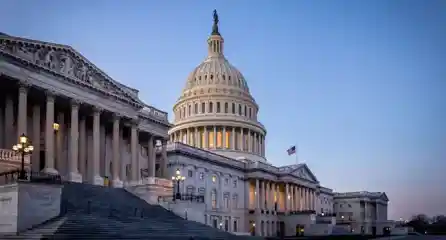
A new bill introduced by Sens. Chris Coons and Mike Lee would prevent “abuse” of facial recognition technology by federal authorities. Learn more in this Security Today article: . Following ongoing scrutiny of the use of facial recognition technology by police and the government, two senators have introduced a bill requiring federal law enforcement to obtain a warrant before using the software to conduct public surveillance. Sens. Chris Coons (D-Delaware) and Mike Lee (R-Utah) introduced The Facial Recognition Technology Warrant Act on Nov. 14 as part of an effort to regulate how authorities can use the tool, which has been criticized as invasive and less accurate when identifying people of color and women. In a statement, Coons and Lee said that facial recognition can be a valuable tool for police but could “violate the privacy of individual Americans” if used improperly. While introducing the bill, Lee said that Americans deserve protection from “facial recognition abuse.” The link for this article located at Security Today is no longer available. . Legislation requires government entities to obtain judicial authorization before employing biometric identification, protecting individual privacy.. Facial Recognition, Federal Law, Technology Regulation, Privacy Protection, Warrant Requirement. . Brittany Day
 Nov 21, 2019
•
Nov 21, 2019
• Government
81
 government surveillanceelectronic communicationsdigital privacy
California SB 178: Warrant Requirement for Digital Privacy Protection
Backed by a number of tech companies, California is eyeing state legislation to protect Relevant Products/Services its citizens from warrantless government surveillance of e-mails, text messages and cellphone communications. The proposed legislation is being backed by state senators Mark Leno, a Democrat, and Joel Anderson, a Republican. . The proposal, Senate Bill 178, is also known as the California Electronic Communications Privacy Act. It would require law enforcement officials to first obtain warrants before accessing Californians' digital Relevant Products/Services information or communications. . The proposal, Senate Bill 178, is also known as the California Electronic Communications Privacy Act. backed, number, companies, california, eyeing, state, legislation, protect, relevant. . LinuxSecurity.com Team
Feb 10, 2015
•
Privacy

82
court decisionadvanced technologyprivacy rulingSupreme Court Ruling On Infrared Surveillance And Warrant Requirement
If the feds want to spy on your home using whizzy tech gadgets, they'd better get a warrant first, the Supreme Court said on Monday. In an important 5-4 ruling that extends privacy's shield to radiation not visible to the human . . . . If the feds want to spy on your home using whizzy tech gadgets, they'd better get a warrant first, the Supreme Court said on Monday. In an important 5-4 ruling that extends privacy's shield to radiation not visible to the human eye, the court said federal agents should have obtained a warrant before using an infrared imaging device to snoop on Danny Lee Kyllo, an Oregon man they later arrested for growing marijuana. The decision, written by conservative Justice Antonin Scalia, said even though the law has long allowed police to peer at homes through their naked eyes, enhanced cameras and similar devices in law enforcement hands "would leave the homeowner at the mercy of advancing technology -- including imaging technology that could discern all human activity in the home." The link for this article located at Wired is no longer available. . High Court decision highlights the necessity of obtaining warrants prior to utilizing sophisticated technology for surveillance purposes.. Privacy Ruling, Surveillance Laws, Infrared Imaging. . Anthony Pell
Jun 12, 2001
•
Government

Get the latest News and Insights
Get the latest Linux and open source security news straight to your inbox.
Community Poll
Should Linux servers automatically install security updates?
Trending News
Search Topics
Powered By

Linux Security - Your source for Top Linux News, Advisories, HOWTOs and Feature Releases
QUICK LINKS
subscribe to newsletters!
Like staying secure? So do we.
Sign up for updates, tips, and alerts!