Audit Linux privileges now to limit compromise, escalation, and system-wide damage. Review Linux Privileges×


Stay Ahead With Linux Security Features
 security advisory path traversal
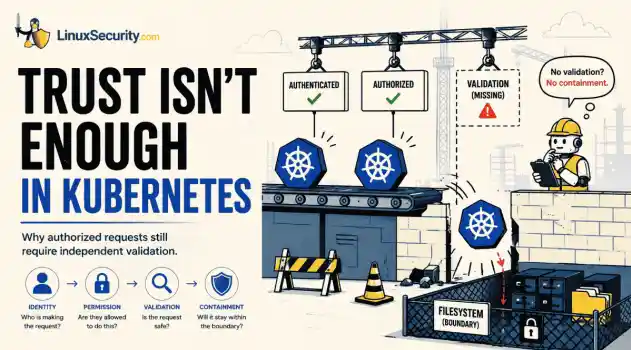
 Two newly fixed storage bugs in Kubernetes showed more than just a problem with path traversal. They found a common security flaw in the cloud: powerful parts often think that requests accepted by a higher system are safe to run. This is a simple lesson for the platform and security teams: RBAC can accept a request without showing that its parameters will stay within a certain filesystem boundary. This is clear from a new study from SentinelLabs into flaws in the Kubernetes CSI drivers for NFS...
 Jul 24, 2026
 security advisory update
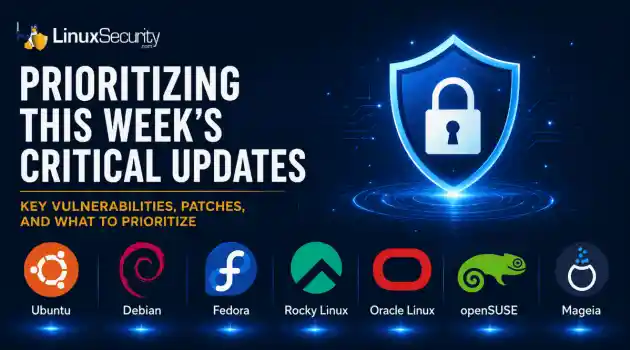
 A large volume of Linux security updates and advisories this week across major distributions once again, but it wasn't just the volume that was the story. Where maintainers and security teams focused their attention was evident in the concentration of fixes targeting Linux kernel updates, identity services, DNS infrastructure, and internet-facing software. . Instead of looking at each advisory in isolation, administrators gain more value from the general trends they reveal about Linux security...
Jul 23, 2026
 identity management security tactics
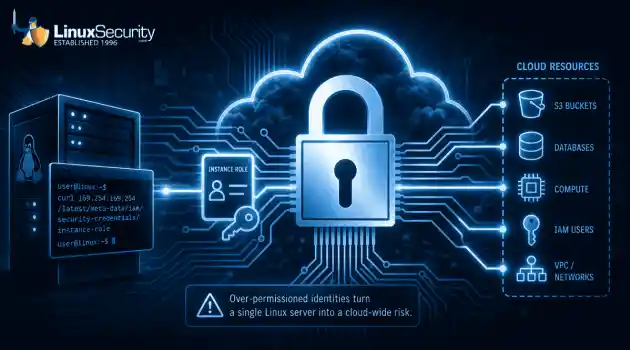
 For years, we secured our Linux infrastructure by building walls: VPCs, security groups, and hardened SSH configurations. We treated the cloud like a virtual data center, assuming that if we kept the "bad guys" out of the network, our workloads were safe. . That model is no longer sufficient. Today, one of the most common paths from an initial compromise to a major cloud breach is the identity assigned to your Linux workload. When an attacker gains code execution on a Linux instance—through a...
Jul 17, 2026
 security practices patch management
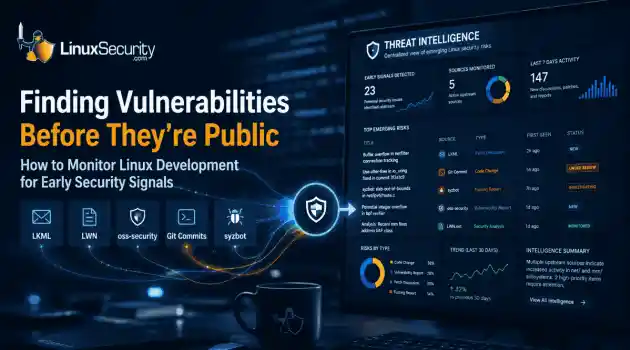
 Most of us don't hear about a kernel vulnerability until a CVE lands in our inbox or the vulnerability scanner starts complaining. By then, the patch isn't new anymore. Kernel developers may have been passing it around for review, arguing over the implementation, or revising it for days before anyone outside that community noticed it. None of those discussions are secret. They're sitting in mailing list archives, Git commits, and patch reviews where they've been the whole time. The strange...
Jul 14, 2026
 Linux security cyber attacks
 Every Linux server in your fleet produces thousands of events every minute. From journald logs and auditd records to kernel-level eBPF hooks, your systems are constantly talking. Most of that noise is just the mundane churn of system services, CI/CD runners, or routine administrative automation. But among that noise, an attacker might be establishing a foothold, moving laterally, or setting up persistence. The challenge for any security team is: how do you separate the routine from the...
Jul 13, 2026
 Refine features
X Clear Filters
Get the latest News and Insights
Get the latest Linux and open source security news straight to your inbox.
Community Poll
Should Linux servers automatically install security updates?
Loading...
Explore Latest Linux Security features
We found 0 articles for you...
102
 security featuresopen-source solutionsautomation tools
Exploring Linux Cloud Solutions for Enhanced Business Efficiency
Cloud computing has significantly changed the business landscape as various organizations have benefited from the ability to harness scalable infrastructure, flexible storage, and high performance. . At the core of this change is Linux, an open-source operating system that is now the foundation of nearly every cloud computing platform. Due to its flexibility, security, and performance , Linux has gained significant popularity as an operating system in data centers. As businesses have slowly shifted to cloud computing, the demand for Linux will also rise. In this article, we’ll focus on using Linux in cloud computing, some of the powerful Linux cloud platforms today, and why Linux is advantageous for businesses in cloud computing. We will also discuss how solutions based on the Linux cloud can minimize software development costs and maximize business performance. The Rise of Linux in Cloud Computing Linux is, more or less, the foundation of cloud computing because of its open-source policy, flexibility, and scalability. When companies started moving towards cloud environments, Linux became optimal for operating large-scale distributed environments. A major driver of this growth has been the versatility of hardware on which Linux can operate, which is essential for virtualized environments that rely on cloud platforms. Furthermore, Linux's structure is quite simple, and its community is large, so the system is updated regularly, and new security patches are always available. This has placed Linux as the favored operating system for cloud platforms, thus fueling the expansion of cloud services. Currently, most of the cloud infrastructure, whether virtual machines or containers, runs on Linux, making the role of Linux in cloud computing clear. Why Is Linux Dominating Cloud Computing? The benefits of Linux in cloud computing cannot be overstated. Here are some key reasons why Linux has become integral to cloud computing. Open Source and Costs Since Linux is anopen-source operating system, businesses can implement cloud solutions while avoiding expensive license costs related to proprietary operating systems. This significantly lowers the cost of mobile app and software development, making cloud solutions affordable for startups and large enterprises. Open source also implies continuous development because developers worldwide update the Linux kernel and related software. Stability and Reliability Linux is well-known for its stability and reliability, especially for large-scale and business-critical applications. In cloud computing scenarios where availability and performance are crucial issues, Linux has a reliable and solid structure capable of providing very low downtimes and high performance, even when the loads are very high. Security Features Security is a significant issue in cloud computing, and Linux has integral firewalls, strong user authentication, and secure booting. Most cloud service providers in the United States also provide Linux distributions with a special focus on security, known as Red Hat Enterprise Linux and Ubuntu LTS. Scalability and Flexibility Small-scale and well-designed, Linux can smoothly be installed and run in any environment, from a virtual machine to a container. This is critical for organizations that need elastic cloud services to address dynamic business needs and application demands. Support for Containers and Microservices The use of containers and microservices is currently revolutionizing how applications are developed and hosted in the cloud. Linux has emerged as the leading platform for container applications primarily because of the compatibility of the operating systems with container technologies like Docker . It is particularly relevant for organizations considering cloud microservices adoption as one of their architectural styles. Automation and DevOps Tools Support Linux supports automation tools and DevOps, which allows businesses to apply continuous integration and deployment (CI/CD) processes . Most of the automated tools, such as Ansible , Puppet , and Chef , are compatible with Linux to enhance the automation of cloud infrastructures. This makes operations smooth, requires minimal human interaction for necessary changes, and shortens the development cycle, enabling businesses to quickly implement changes and new features. Four Popular Linux-based Cloud Platforms Several excellent cloud-based platforms are available to Linux users. Our four favorites are as follows: 1. Amazon Web Services (AWS) AWS continues to dominate the cloud services market, providing numerous services with Linux as the underlying technology. AWS was indeed one of the pioneer cloud platforms that realized the significance of Linux in the cloud for business and integrated Linux-based services as a primary service offering. Key Linux-based Services on AWS Amazon EC2 (Elastic Compute Cloud) is an AWS core service that enables the deployment of virtual servers. Customers can select from Amazon Linux, Ubuntu, CentOS, and Red Hat Enterprise. These virtual machines are quite manageable, as the organization can easily upgrade or downgrade them depending on its needs. Amazon ECS (Elastic Container Service): A container orchestration service that lets users schedule and manage Docker containers on a Linux platform. This service benefits organizations that want to grow and deploy their containerized applications. Amazon RDS (Relational Database Service): AWS provides Linux solutions for organizations to host MySQL, PostgreSQL, and other databases efficiently and securely. Benefits of AWS for Linux-based Cloud Solutions Scalability: AWS offers flexible capacity; this implies that any business can acquire, modify, or release resources based on its requirements. Global Reach: AWS has a vast infrastructure in various parts of the globe; thus, providing Linux services across different regions ensures low customer latency. Cost Management: When deployed inAWS, Linux costs nothing regarding software licensing since it is an open-source operating system, saving costs. 2. Microsoft Azure While Microsoft is mainly associated with Windows, Azure has gone all in for Linux in the past few years. Today, over 60% of Azure’s marketplace virtual machines run on Linux. Azure offers various Linux cloud computing services to help businesses leverage open-source flexibility. Key Linux-based Services on Azure Azure Virtual Machines (VMs): Azure has various Linux-based VMs, including Ubuntu, CentOS, Red Hat, and SUSE Linux distributions. These VMs are suited for large-scale applications, databases, and workloads in the cloud environment. Azure Kubernetes Service (AKS): AKS is Azure’s managed service for Kubernetes . It is based on the Linux environment and allows enterprises to manage and orchestrate containerized workloads. AKS fully supports the integration with Azure Active Directory to ensure security for cloud-native applications. Azure App Services: This is a platform-as-a-service (PaaS) mainly for the deployment of Linux-based applications. Developers can deploy code in languages like Node.js, Python, PHP, and Java on Linux-based infrastructure. Benefits of Azure for Linux-based Cloud Solutions Hybrid Cloud Support: Azure shines in hybrid cloud scenarios. Organizations can connect their on-premises Linux servers with Azure services seamlessly. Robust Security : Microsoft offers a comprehensive security layer for Linux applications on Azure, enabling enterprises to achieve compliance while adopting Linux's agility. Extensive Integration: Azure works cohesively with other Microsoft services, such as Microsoft 365, which could benefit business organizations that use Linux in their operations. 3. Google Cloud Platform (GCP) Google Cloud has supported open-source and Linux-based technologies since its early days. Linux remains GCP’s dominant platform, and the company offers diverse tools forLinux-based solutions, especially for containerized environments. Key Linux-based Services on GCP Google Compute Engine (GCE): Google’s IaaS provides an environment where Linux-based virtual machines can be run for business on a global platform. Debian, CentOS, Ubuntu, Red Hat, and SUSE are supported distributions. GCE provides flexibility in configuring a Linux environment while leveraging Google’s advanced infrastructure to meet business needs. Google Kubernetes Engine (GKE): GKE is a fully managed Kubernetes service offered by Google based on Linux containers. Kubernetes allows businesses to run and orchestrate extremely scalable and containerized applications with the support of the Google Cloud platform. Google Cloud Functions: Google Cloud’s serverless computing environment is Linux-centric, enabling developers to create and run event-based functions in languages like Python, Go, and Node.js. Benefits of GCP for Linux-based Cloud Solutions Performance and Speed: Google Cloud is known to provide performance-optimized infrastructure to run Linux-based workloads, especially for high-end services such as artificial intelligence, machine learning, and big data processing jobs. Cost Efficiency: Google Cloud has a reasonable pricing structure for its services, and combined with Linux, it makes software development costs easily manageable for businesses. AI and ML Integration: GCP’s Linux-based services are AI-optimized and fully compatible with Google’s AI and Machine Learning tools, making them ideal for businesses that want to build AI applications. 4. IBM Cloud IBM Cloud is another critical player that provides reliable Linux solutions for enterprises. Having actively contributed to the open-source community, IBM has been offering Linux-based cloud solutions for quite some time now. Their cloud offerings meet the needs of companies interested in a hybrid cloud model, artificial intelligence, and dynamic computing power. Key Linux-basedServices on IBM Cloud IBM Cloud Virtual Servers: These virtual servers offer flexible computing capacity derived from several Linux distributions, including Red Hat, Ubuntu, and SUSE. IBM Cloud is also closely connected to Red Hat OpenShift, which enables businesses to run Kubernetes workloads on Linux. IBM Cloud Kubernetes Service: Like AWS and GCP, IBM provides a KaaS service that runs on Linux. This service allows businesses to run containerized applications in a secure and highly flexible environment. IBM Watson: Watson, an AI developed by IBM, also uses Linux-based technologies. Through Watson, businesses can analyze data using machine learning and deep learning while still using the security and open-source flexibility of Linux. Benefits of IBM Cloud for Linux-based Cloud Solutions Enterprise-Grade Solutions : IBM Cloud was developed for enterprises emphasizing hybrid cloud plans, enabling organizations to simultaneously operate on-premises and cloud-based Linux environments. Security and Compliance : IBM Cloud has enhanced security features for Linux workloads, such as encryption, secure multi-tenancy, and comprehensive compliance. AI and Data Analytics : Combining IBM Watson with Linux-based cloud solutions gives enterprises an effective tool for implementing innovative AI solutions and gaining value from big data. Our Final Thoughts on the Benefits of Linux-based Cloud Computing Solutions Linux has become one of the primary pillars of cloud computing because of its stability, versatility, and expansibility for companies of any size. Whether you are a startup or a big corporation, using Linux-based solutions for your cloud environment will allow you to grow and protect your data while leveraging the modern technologies introduced by cloud services. The decision to adopt Linux for cloud computing is not only about technology but about making the right strategic decision to prepare your business for the future. . Linux leads in cloud computing withinnovations enhancing performance, cost efficiency, and security. Its open-source nature allows tailored solutions for businesses.. Linux Cloud Solutions, Open Source Computing, Cloud Infrastructure, DevOps Automation. . Anthony Pell
 Sep 14, 2024
•
Sep 14, 2024
•
102
 Linux securitysecurity complianceautomation tools
Effective IT Asset Management Strategies for Linux Administrators
Have you ever wondered why your organization needs IT asset management? ITAM or IT asset management ensures your organization's assets are deployed, upgraded, maintained, accounted for, and disposed of in due time. It ensures that your organization's valuable items (both tangible and intangible) are being used and tracked. . Before exploring IT asset management further, let's first understand IT assets. These typically include all software systems, hardware, and organization-value information. They often have a finite period of use, so to maximize their value, they must be proactively managed. This is where IT asset management comes into play. Read on as we discuss IT asset management and security in Linux and provide practical advice Linux admins can implement for secure IT management. Understanding IT Asset Management in Linux In the context of Linux environments, ITAM manages hardware (servers, workstations, networking equipment), software (operating systems, applications, libraries), and related infrastructure (cloud instances, containers). The Scope of ITAM in Linux includes: Track physical servers and workstations, ensuring optimal utilization and timely maintenance. Maintain and document system configurations. Ensure all assets comply with regulatory requirements and organizational policies. Manage licenses, versions, and configurations of Linux distributions and installed software. Why Is ITAM Challenging and Crucial in Linux Environments? Some of the challenges that ITAM faces in a Linux environment include its open-source nature, which leads to a high volume of unmanaged, potentially outdated, or redundant applications. Linux environments often span various distributions, each with different management tools and conventions. They also frequently use complex package management systems with numerous dependencies, making software tracking and updating intricate. Users with root or sudo access can install or modify software independently, complicatingcentralized asset management. Most importantly, unmanaged or poorly managed assets increase the risk of security vulnerabilities and breaches. However, ITAM plays a crucial role in identifying redundant or unused assets, which helps optimize costs by reallocating or disposing of them. It ensures all assets are accounted for and up to date, helping minimize security risks and ensuring compliance with regulations. Its accurate asset data provides insights that support strategic planning and investment decisions. Essential ITAM Best Practices Tailored for Linux Administrators. Here are some IT asset management best practices . Centralized asset repository : Consider establishing a centralized system for tracking all hardware and software assets. You can also use tools like Ansible for configuration and asset management. Asset discovery and inventory: Implement automated discovery tools to keep track of assets and their configurations. Regular audits and compliance checks: Conduct regular audits to ensure all assets comply with policies and standards. Consider tools like The OpenSCAP for automated vulnerability checking, allowing you to be proactive. What Are Security Challenges in Managing Linux IT Assets? Some of the common vulnerabilities associated with Linux systems are: Privilege escalation vulnerabilities that allow users to gain unauthorized access. Configuration errors, such as weak passwords, unnecessary services running, and not restricting access to sensitive areas, create vulnerabilities that attackers can exploit. Malware , viruses, trojans, and worms can affect Linux systems, compromising system security. Physical attacks such as tampering and theft. There is also a massive risk of unmanaged and unpatched assets, which are more likely to contain security vulnerabilities that attackers can exploit, especially if they are not current. Such issues can lead to data breaches and expose sensitive information, such as aclient’s personal or credit card information. They also target intellectual property. Unpatched systems are also prime targets for malware and ransomware attacks , which can disrupt your organization’s operations and cause significant financial damage. Open-source software licenses are complex and difficult to manage for various reasons. First, there are legal risks, as failure to comply with open-source licenses can result in legal actions, financial penalties, and reputational damage. Secondly, open-source projects often rely on numerous dependencies, each with its licensing requirements. Dependencies refer to frameworks, external libraries, or modules a software project needs to function. Thirdly, to avoid legal conflicts, you also must ensure compatibility between different open-source licenses. This means checking if you can modify, use, or distribute code under another license’s terms. Lastly, your organization must create, Implement, and enforce organizational policies regarding open-source software use and distribution. What Is The Role of ITAM in Enhancing Security Posture in Linux Environments? IT asset management plays a crucial role in enhancing Linux’s security posture. Framework for Identifying and Mitigating Security Risks. ITAM maintains a detailed and up-to-date inventory of the organization's hardware, software, and network assets. It helps identify the most critical assets you must prioritize for security and tracks dependencies between different software components to understand potential risk points. Additionally, it can further identify anomalies indicating security breaches or vulnerabilities. An updated inventory will allow you to accurately and quickly respond to security incidents, minimize damage, and speed up recovery. Managing Software Versions and Patches Efficient asset management helps manage software versions and patches by implementing automated patch management tools to ensure the timely application of security patches andmaintaining a log of patches to ensure traceability and accountability. ITAM is also essential in assessing the risk posed by unpatched systems and prioritizing patching based on severity. It regularly scans systems for known vulnerabilities and applies patches or mitigations as necessary. It will also keep track of software versions to ensure that all systems are running supported and secure versions. Compliance With Security Standards and Policies Your organization needs to define security policies that align with regulatory requirements and industry standards, and you can use IT asset management tools to automate policy enforcement across all assets. It will also conduct regular security audits and continuously monitor systems to ensure compliance with security policies. ITAM can even help Identify and address gaps in compliance to improve your organization’s overall security posture. What Are the Benefits of Automation in IT Assets? It isn't enough just to have an ITAM; you must also apply automation to your IT asset management program. Here's why: Enhancing Accuracy and Timeliness of Asset Inventories An automated system will monitor and update your asset inventory in real time, ensuring data is always current. When you add a new hardware or software asset, it can be quickly detected and recorded, which reduces the lag between inventory update and asset deployment. Automated ITAM can routinely schedule maintenance checks so each asset operates in peak conditions, reducing downtime. It also makes troubleshooting more straightforward and faster, helping minimize workflow disruptions. Reducing Manual Effort and Minimizing Human Error Perhaps the most significant advantage is its ability to reduce human error associated with manual data entry. It can also provide more comprehensive details about each asset, including configurations, versions, and relationships with other assets, which manual processes often overlook. Similarly, it can free up your IT staff to focus on morestrategic and complex tasks rather than spending time on repetitive manual activities. Automatically Enforcing Security Policies and Compliance Requirements Automated tools can continuously check for compliance with security policies and regulatory requirements, ensuring that all assets adhere to established standards. If automated ITAM detects non-compliance or a security policy violation, it can immediately take corrective actions, such as applying patches or reconfiguring settings. How Can I Integrate ITAM with Linux Security Tools and Strategies? Integrating ITAM with Linux security tools enhances IT assets' visibility, control, and security. What better way to understand this than with the help of case studies? For example, a financial institution wanted to enhance its Linux infrastructure with thousands of servers and endpoints. It integrated Red Hat Satellite for ITAM and OpenSCAP for compliance scanning, which automated asset discovery and inventory management, ensured continuous compliance scanning against regulatory standards, and automated patch management for all Linux servers. It saw results such as achieving real-time visibility into asset inventory, reducing manual effort in managing and securing assets, and significantly decreasing unpatched vulnerabilities and faster incident response times. Automation in Linux Systems for ITAM You can automate the following IATM practices in Linux: Automated asset discovery and inventory management: Continuously scan the network for new and existing assets, ensuring the inventory is always up-to-date Configuration management: Automating systems deployment, configuration, and management Patch management: Automate the downloading and application of patches across all systems, ensuring timely updates and reducing vulnerabilities. Lifecycle management: Automate the entire lifecycle of assets from procurement to decommissioning, ensuring efficient management and disposal. The benefits of leveraging Linuxsystems for ITAM and automation include: Efficiency and productivity Reduce human error Standardized configurations High scalability Timely patch management Reduced labor costs Optimize Resource Utilization Tools and Scripts for Automating ITAM Processes in Linux Here’s an overview of open-source ITAM and security tools which are compatible with Linux: Tools for Automating ITAM Processes in Linux Here are a few examples of open-source tools for automating ITAm process in Linux: Snipe-IT Snipe-IT ensures transparency, oversight, and security across the board. Its powerful REST API allows organizations to develop custom automation based on their needs. For Linux environments, Snipe-IT helps maintain an accurate inventory of physical and virtual assets, ensuring all devices and components are accounted for and appropriately managed throughout their lifecycle. OpenVAS The Open Vulnerability Assessment System is an open-source vulnerability scanning and management framework that provides a comprehensive suite of tools for detecting security vulnerabilities in systems and applications. It also assists by scanning Linux servers and devices for known vulnerabilities, generating detailed reports, and suggesting remediation actions. Rundeck Rundeck allows administrators to define, schedule, and execute jobs on any number of nodes via a web-based or command-line interface. Rundeck automates repetitive tasks such as software deployment, daily reports, system updates, file transfers, and backups for Linux asset management, improving efficiency and consistency. AWX/Ansible Tower AWX provides a web-based user interface, REST API, and task engine for managing Ansible automation tasks. Ansible Tower centralizes IT automation, making it easier to manage large-scale environments. Linux allows administrators to manage playbooks, inventory, and variables from a central location, enhancing control, visibility, and consistency across all managedassets. Puppet Puppet is a configuration management tool that automates the provisioning, configuration, and management of servers and other IT resources. In Linux systems, it helps maintain desired state configurations, reduce configuration drift, and improve operational efficiency by managing large numbers of servers with minimal manual intervention. Chef Chef transforms infrastructure into code, automating infrastructure configuration, deployment, and management. Linux asset management ensures that all systems are consistently configured according to best practices and security policies, reducing the risk of human error. SaltStack Saltsack can automate repetitive tasks, deploy applications, and manage complex IT environments. SaltStack automates system configuration, software installation, and patch management in Linux asset management, enhancing operational efficiency and consistency. Foreman Foreman is an open-source lifecycle management tool for physical and virtual servers. It offers provisioning, configuration management, and monitoring capabilities. In Linux, it automates the provisioning of new servers, manages configuration changes, and monitors system health and performance. Scripts for Automating ITAM Processes in Linux The following scripts can be used for automating ITAM processes in Linux: Custom Bash scripts Custom Bash scripts are powerful tools for automating various ITAM tasks in Linux environments. For instance, a Bash script can be written to scan the network, compile a list of active assets, and check the versions of installed software. Once created, you can schedule these scripts to run regularly using Cron jobs, ensuring continuous asset tracking and up-to-date inventory data. Python Python , with its rich ecosystem of libraries, is an excellent choice for more complex ITAM automation tasks. Libraries like Paramiko allow automated SSH (Secure Shell) connections to gather system information. Requests can interact with RESTAPIs to collect and update asset data, and Pandas offers powerful data manipulation and analysis capabilities. Example Script Repositories Script repository examples include: GitHub GitHub is a valuable resource for finding open-source ITAM scripts. In Linux, these scripts provide a solid foundation and can be tailored to meet specific organizational needs, speeding up the implementation of automated ITAM processes. Cron Cron is a time-based job scheduler in Unix-like operating systems, ideal for scheduling and automating script execution. Using Cron, administrators can ensure that their custom ITAM scripts run at specified intervals, such as daily, weekly, or monthly. This regular execution helps maintain an up-to-date and accurate asset inventory. How Can I Combine Tools with Scripts? Automation's true power comes from effectively combining these tools and scripts to create a cohesive ITAM automation strategy. This could involve using Ansible to automatically deploy and configure Rundeck with your custom scripts, which are scheduled to collect IT asset data regularly. You can then manage the output data through an asset database like Snipe-IT for a clear and up-to-date view of IT assets. By utilizing these tools and scripts, Linux administrators can automate a significant portion of their ITAM tasks, reducing error, saving time, and ensuring compliance. With Linux’s strong support for open-source solutions, most of these tools can be adopted without substantial upfront investment, making them suitable for businesses of all sizes. Our Final Thoughts on the Importance of ITAM for Linux Admins & Organizations IT asset management (ITAM) is essential for helping organizations effectively manage and secure their hardware, software, and network assets, especially in Linux environments. ITAM ensures you readily comply with regulations and organizational policies by maintaining accurate inventories and configurations. . Enhance security and manage IT assets in Linux byimplementing strategies like inventory management, patch management, and user access controls, among others. IT Asset Management, Linux Security Tools, Automation Strategies, Compliance Standards. . Brittany Day
Jul 27, 2024
•

102
 cloud securityautomation toolsLinux management
Linux Management Techniques for MSPs to Enhance Security and Efficiency
Managed Service Providers (MSP) prioritize Linux device management in their core operation. Organizations have started to rely heavily on their Linux systems, so administering these devices appropriately is essential within an MSP. It must deliver efficient Linux device management that aligns with the client’s needs. . Linux MSPs must focus on efficient operations, robust endpoint protection, and Linux-based solutions that can expand the services offered within a cloud security framework. Such benefits can empower an MSP to meet and exceed client expectations by providing top-notch automation, enhanced data and network security, effective security patching, and comprehensive inventory management. This article will discuss how MSPs can help Linux users improve security posture and streamline operations. What Linux Device Management Techniques Should I Use for MPSs? MSPs help clients oversee their IT infrastructure so organizations can embrace their systems and master the essential tactics required to deliver effective, comprehensive services to a business. Let’s review the various aspects of MSPs that help cloud security frameworks thrive. Automation and orchestration Efficient workflow : Streamline routine tasks such as system updates, backups , and general monitoring with automation tools that reduce the necessity for manual intervention. MSPs can deploy scripts that automate repetitive processes and enhance operational efficiency. Seamless operation : Manage complex workflows with orchestration tools that automate the provisioning of new resources, ensuring smooth client operations that do not experience delays. Remote Troubleshooting and Diagnostics Instant remote access : Diagnose and troubleshoot network security issues using remote access tools. Such tactics can help security professionals formulate conclusions about client systems that can help determine the best resolution that minimizes downtime. Diagnostic tools Enable comprehensive MSPs toidentify hardware and software problems, enabling them to develop timely, accurate solutions that reduce downtime and maintain client satisfaction. Patch management and security Patches and vulnerability scanners : Keep systems up to date with the latest security patching updates , especially when managing different client IT infrastructures from one location. MSPs can rely on network security toolkits to schedule and automate Linux patch deployments, preventing emerging threats from causing damage. Best practices for data and network security : Implement various best practices to protect your server from harm. Configure firewall rules, set up Linux intrusion detection systems, deploy antivirus solutions and maintain regular security assessments and cloud security audits to ensure you have robust endpoint security solutions in place. Asset inventory management Asset discovery : Onboard client endpoints with asset discovery tools that make setting up Linux devices much easier while also allowing users to maintain a detailed inventory of client devices, including hardware specifications and software installations. Inventory is invaluable in managing licenses, tracking updates, and ensuring user compliance. License management : Ensure compliance and cost control with an efficient software license management that MSPs can track to prevent non-compliance network security issues. How Can I Streamline MSP Operations with Linux? MSPs have dynamic settings in which to work ever since Linux-based systems have become integral to the contemporary business landscape . Therefore, MSPs must optimize their operational processes to maintain a competitive edge when delivering exceptional services. Here are a few ways you can improve MSP management on Linux: Enhance operational efficiency with Linux device management Resource allocation : Maintain optimal performance with MSPs that can efficiently allocate Linux environments to keep client systems responsiveand efficient. This robust resource allocation and management service helps organizations continue to thrive. Scalability : Linux has scalability that allows MSPs to adapt to a client’s constantly changing needs. Whether a client's business grows or scales down, Linux-based systems adapt to such alterations to prevent significant disruptions and downtime. Scripting and automation : Efficient MSP operations rely on security automation, so Linux has a safe environment from which to script and automate routine tasks, including software updates, backups, and security checks. Ensure comprehensive endpoint protection Security-centric distribution : Built-in Linux security features and network security toolkits can enhance endpoint protection . Fortify clients' systems with MSPs that use such distributions to combat cybersecurity vulnerabilities and other network security threats. Regular updates : Linux is well-known for its rapid response to cybersecurity vulnerabilities . Updating Linux systems regularly can prevent attacks in network security, as you can implement security patching once you notice issues within the server. Endpoint security solutions : MSPs integrate robust endpoint software within Linux environments to provide advanced protection against malware threats , ransomware , and other network security issues. Expand service offerings with Linux-based solutions Cloud services : MSPs leverage Linux to provide clients with cloud security frameworks and services. Such solutions offer scalability, cost-effectiveness, and flexibility, keeping Linux a preferred business outlet. Open-source solutions : Linux is synonymous with open-source software . MSPs can fulfill client requirements with cost-effective and customizable open-source solutions, enhancing flexibility with efficient open-source technology. Containerization : Linux-based containerization platforms , such as Docker and Kubernetes, enable MSPs to offer containerized services toclients. Containers can reduce operational complexities while businesses manage applications in an efficient, portable, easy-to-use framework. How Can MSPs Simplify Linux Management with ManageEngine Endpoint Central MSP? A comprehensive solution like ManageEngine Endpoint Central MSP can enable streamlined Linux device management for businesses. ManageEngine is available both as an on-premises and cloud-based solution. The service provides a holistic suite of network security toolkits that help manage all endpoints, including Linux devices. Endpoint Central MSP can empower clients to automate tasks, troubleshoot remotely, manage security patching, and maintain asset inventory. This software delivers top-tier Linux device management services efficiently and effectively since it is an all-in-one solution that equips MSPs to meet the evolving needs of their clients and thrive in the competitive MSP landscape. Endpoint Central MSP simplifies Linux device management, leading MSPs to success in managed services. Final Thoughts on Linux Device Management for MSPs Utilizing an MSP to manage your Linux devices is essential for maintaining data and network security on your server. The various solutions and techniques we mentioned in this article prove effective in helping companies boost their cloud security framework. . Linux service providers need to prioritize streamlined processes, strong device security, and solutions tailored for Linux platforms. Linux Management Solutions, Managed Service Providers, Endpoint Protection, Cloud Security Techniques, Automation Tools. . Duane Dunston
Nov 28, 2023
•
102
 network securitydata protectionsecurity practices
Comprehensive Guide To Software Testing And Automation On Linux
Understanding and utilizing software security has become paramount in today's interconnected digital landscape. Computer security news constantly warns of newly evolving network security threats, which means that organizations must implement the most comprehensive testing and security practices to ensure employees are secure. With an open-source nature and robust capabilities, Linux has the ideal cloud security framework for conducting thorough software security patching and testing. . This article will provide you with a comprehensive understanding of the critical role software testing plays in ensuring robust data and network security, delve into the various types of software testing, highlight how automation can streamline the testing process, and emphasize why Linux stands as an exceptional, secure Operating System for testing purposes. You will also discover a carefully curated list of the best test automation tools and libraries tailored explicitly for Linux environments. When you are done, you will be well-prepared to implement these insights effectively, enhancing software development's ultimate security and reliability, particularly within the Linux ecosystem. What Is Software Testing & Why Is It Essential For Robust Security? Software Testing is a systematic process in software development that involves examining and evaluating software for its application security vulnerabilities, including defects, errors, or flaws in its functionality, performance, and reliability. It ensures that the software performs as intended, meets specified requirements, and provides a positive user experience. Software testing is essential for robust security for several critical reasons: Vulnerability Identification: Security testing, a subset of software testing, focuses on uncovering exploits in cybersecurity within the software. Malicious actors can exploit these cybersecurity vulnerabilities to gain unauthorized access, steal data, or disrupt the application's operation.Identifying and addressing these network security issues proactively is vital to prevent cloud security breaches. Risk Mitigation: Security testing evaluates a software application's risk, enabling organizations to proactively address critical network security threats and web application security vulnerabilities during development, thus reducing the risk of network security issues. Data Protection: Many software applications handle sensitive data, such as personal information, financial records, or confidential business emails. Security testing ensures that this data is adequately protected against unauthorized access, cloud security breaches, or data leaks, safeguarding the privacy and trust of users. Compliance and Regulatory Requirements: Various industries have strict regulations and compliance standards related to data and network security (e.g., GDPR). Security testing helps organizations adhere to these requirements by identifying and rectifying cybersecurity vulnerabilities that could result in non-compliance and legal consequences. Malware and Exploits Prevention: Security testing uncovers cybersecurity vulnerabilities that malware could exploit to compromise the software. Timely identification and resolution of these network security issues prevent malicious attacks and safeguard the integrity of the application. Trust and Reputation: A cloud security breach can severely damage an organization's reputation and erode trust among its users and customers. Thorough security testing and a commitment to the best data and network security practices demonstrate an organization's dedication to user safety and data safety, fostering trust and confidence. Cost Savings: Detecting and addressing cybersecurity vulnerabilities early in the development lifecycle is significantly more cost-effective than dealing with cloud security breaches after the software is in production. Security testing helps organizations avoid substantial financial losses and recovery costs. Types OfSoftware Testing In this section, we will explore various types of software testing, each ensuring the quality, functionality, and reliability of software applications: Functional Testing assesses whether the software's functions and features meet the specified requirements for inputs, outputs, and the application's overall behavior, verifying that it performs its intended functions correctly. Performance Testing evaluates the software's performance under various conditions, such as load, stress, and scalability. It helps identify performance bottlenecks and ensures the application can handle expected user traffic levels. Security Testing focuses on identifying cybersecurity vulnerabilities and weaknesses in the software that malicious actors could exploit. It assesses the application's defenses against network security threats, including data or cloud security breaches and unauthorized access. Usability Testing checks the software's user-friendliness by assessing how easily users can navigate and interact with the application, ensuring a positive and intuitive user experience. Regression Testing guarantees that new code changes or updates do not introduce more defects or negatively impact existing functionality. Test cases are re-executed to confirm that previously working features still function correctly. Compatibility Testing looks at how well the software performs on different devices, operating systems, browsers, and network environments, ensuring the application functions consistently across various platforms. Automated Testing involves using test scripts and tools to perform repetitive and time-consuming testing tasks quickly and efficiently. It is beneficial for regression testing and ensuring consistent test coverage. How Can Automation Aid In The Software Testing Process? Automation can significantly enhance software testing in several ways: Repetitive Test Execution: Automation tools can execute repetitive test cases consistently andquickly, reducing the need for manual intervention, ensuring test scenarios are repeated without errors, and freeing testers up for more com plex, creative tasks. Regression Testing: Automated tests are ideal for regression testing, where previously validated functionality is retested after code changes, which can make sure that new code updates do not break existing features, saving time and effort in the long run. Parallel Testing: This allows for executing test cases on multiple configurations, devices, or browsers simultaneously, speeding up the testing process and ensuring compatibility across various environments. Data-Driven Testing: Automation tools can perform data-driven testing using datasets that execute the same trail with multiple input values, validating software behavior under different scenarios and conditions. Load and Performance Testing: Automated load and performance testing tools simulate many users accessing the software concurrently, assessing the application's performance under heavy loads and identifying performance bottlenecks. Continuous Integration and Testing: Automation can be implemented into the development pipeline to run tests automatically during a code change, verifying that defects are identified and fixed early during development. Increased Test Coverage: Automated tests can cover a broader range of cases than manual testing alone, leading to better coverage and stronger defect and malware detection that might be missed in manual testing. Consistency and Reproducibility: Automation provides consistent and reproducible results, eliminating human errors and subjectivity in testing and ensuring that test outcomes are reliable and can be easily shared and compared. Faster Feedback: Automation provides rapid feedback on the quality of the code, enabling developers to identify and fix network security issues promptly. This accelerates the development cycle and ensures that high-quality software is delivered faster to users. CostSavings: While initial setup and maintenance of automation scripts may require an investment, automation can lead to significant cost savings in the long term by reducing manual testing efforts and preventing costly post-release defects and cloud security breaches. Why Is Linux An Excellent OS For Software Testing? Linux is widely regarded as an excellent operating system for software testing and security patching for several compelling reasons: Variety of Distributions: Linux offers a wide range of distributions (distros), each tailored to specific use cases and preferences. Testers can choose from diverse secure Linux distros like Ubuntu, CentOS, Debian, and Fedora, allowing them to simulate different target environments easily. This is valuable for cross-platform testing and ensuring software compatibility across various Linux cloud security frameworks. Open-Source Nature: Linux is open source, meaning testers can access and modify its source code as needed. This openness facilitates debugging and customization, making diagnosing network security issues easier and adapting the OS to specific testing requirements. Package Management: Linux distributions come with robust package management systems (e.g., APT, YUM, and DNF) that simplify the installation, removal, and management of software packages. Testers can quickly set up and configure testing environments with the necessary network security toolkits and dependencies. Terminal Access: Linux provides powerful Command-Line Interfaces (CLIs) essential for automation and scripting. Using the command line, testers can create and execute automated test scripts, simulate different scenarios, and perform batch testing efficiently. Stability and Performance: Linux is known for its stability and performance, making it an ideal choice for testing and benchmarking. It can handle heavy workloads and resource-intensive tasks, allowing testers to assess how software performs under various conditions. Cost-Efficiency: Linux istypically free to use and distribute, making it an attractive option for testing environments, especially since organizations looking to reduce licensing costs usually utilize operating systems like Windows and macOS. What Are The Best Free And Open-Source Software Testing Network Security Toolkits, Cloud Security Frameworks, And Libraries For Linux? Your unique requirements, level of technical proficiency, understanding of software testing life cycle , and complexity of your online applications all play a role in choosing the best web application security open-source vulnerability scanners. Here are some things to think about: Selenium Selenium is one of the most popular open-source testing frameworks for web applications. It provides a suite of tools for automating web browsers, making it an invaluable resource for web application testing. Selenium supports multiple programming languages, including Java, Python, and JavaScript, allowing testers to write automated tests in their preferred language. Key features include recording and playback interactions, support for parallel test execution, and integration with various testing and cloud security frameworks. Benefits: Cross-Browser Testing : Selenium enables testers to verify web application compatibility across different browsers like Chrome, Firefox, and Safari. Reusability : Test scripts written with Selenium can be reused, reducing duplication of effort. Community Support : Selenium has a large and active user community, ensuring a wealth of resources and plugins. Appium Appium is an open-source automation tool for mobile applications, making it particularly useful for testing Android and iOS apps. It allows evaluators to write tests using standard programming languages (e.g., Java, Python, and Ruby) and provides a consistent API for testing native, hybrid, and mobile web apps. Appium supports automation cloud security frameworks and seamlessly integrates with security testing tools like Selenium. Benefits: Cross-Platform Testing : Appium supports Android and iOS, making it suitable for testing mobile apps across different platforms. Real Devices and Emulators : Testers can use real devices or emulators/simulators for testing, providing flexibility and cost-efficiency. Broad Language Support : Testers can write automation scripts in their preferred programming language. Katalon Katalon Studio is an open-source test automation platform offering a comprehensive web and mobile application testing solution. It provides a user-friendly interface for test case creation and management, making it accessible to testers with varying technical expertise. Katalon Studio supports scripting in Groovy and offers built-in keywords for test creation and integration with various test management and continuous integration of network security toolkits. Benefits: Integrated Environment : Katalon Studio offers an all-in-one platform for test case design, execution, and reporting. Low Learning Curve : Testers with minimal programming experience can create and execute tests efficiently. Built-In Features : It includes features for data-driven testing, object repository management, and API testing, reducing the need for external tools. Apache JMeter Apache JMeter is an open-source tool primarily used for performance, load, and stress testing web applications and services. It simulates multiple users making requests to a server, helping testers identify performance bottlenecks and assess an application's scalability. JMeter supports many protocols, including HTTP, FTP, JDBC, and more, making it versatile for various testing scenarios. Benefits: Performance Testing : JMeter assesses an application's performance under various loads, helping identify performance bottlenecks. Scalability : It can simulate many virtual users, making it suitable for high-traffic testing applications. Extensibility : JMeter supports custom scripting, allowing testers to tailor teststo their specific requirements. SOAP UI SOAP UI is an open-source tool that tests SOAP and RESTful web services. It provides a user-friendly interface for creating, executing, and validating API tests. SOAP UI supports automated test generation, data-driven testing, and scripting in Groovy. It also offers robust reporting and integration with popular CI/CD pipelines. Benefits: API Testing : SOAP UI is tailored for API testing, making it a reliable choice for testing web services. Automation : It supports automated test generation and execution, saving time and effort. Extensive Protocol Support : SOAP UI works with various web service protocols, including SOAP, REST, HTTP, and more. Burp Suite Burp Suite is a powerful open-source testing tool for web application security vulnerabilities. It is primarily used to identify cybersecurity vulnerabilities such as SQL injection, cross-site scripting (XSS) attacks, and CSRF. Burp Suite provides an interactive and graphical interface, making it accessible to security professionals and testers. It offers crawling, scanning, and manual testing to pinpoint various network security issues. Benefits: Security Testing : Burp Suite is designed to identify and mitigate cybersecurity vulnerabilities in web applications. Interactivity : Testers can manually manipulate requests and responses, making identifying complex security issues practical. Extensive Reporting : It provides detailed reports and integrates with other network security toolkits for comprehensive testing. ZAP Proxy ZAP Proxy (Zed Attack Proxy) is another open-source security testing tool that finds web application security vulnerabilities. It operates as a proxy server , intercepting and inspecting HTTP requests and responses. ZAP Proxy offers automated cloud security scanners and a user-friendly GUI for manual testing, making it suitable for novice and experienced testers. Benefits: Proxy-Based Testing : ZAP Proxy captures andanalyzes web traffic, enabling testers to identify real-time cybersecurity vulnerabilities. Automation : It includes automated scanners to discover common network security issues. Community Support : ZAP Proxy has an active community and provides access to many add-ons and extensions. API Clarity API Clarity is an open-source API testing and monitoring tool that focuses on ensuring API reliability and performance. It provides features for monitoring API endpoints, validating response data, and setting up alerts for API issues. API Clarity is suitable for both functional and performance testing of APIs. Benefits: API Monitoring : API Clarity allows testers to monitor APIs to detect and address issues promptly and continuously. Validation and Alerts : It supports data validation and alerting capabilities to notify users of API failures. User-Friendly Dashboard : The tool offers a user-friendly dashboard for real-time API performance and reliability visibility. Best Practices for Software Testing Incorporate Security-Focused Testing Security-focused testing is a critical best practice to ensure the resilience of software applications against potential network security threats. It systematically identifies and addresses cybersecurity vulnerabilities and weaknesses throughout the software development lifecycle. By proactively assessing the software's security posture, organizations can reduce the risk of data and cloud security breaches, unauthorized access, and other network security issues, safeguarding user data and reputation. Involve Users User involvement is indispensable in software testing. Engaging users, whether internal stakeholders or end-users, provides valuable insights into usability, functionality, and overall user satisfaction. Their feedback helps identify issues that need to be apparent through traditional testing methods, ensuring that the software meets real-world needs and expectations. Think About The Future Thinking aboutnetwork security's future means ensuring software testing involves creating tests and scenarios that account for potential changes, updates, or scalability requirements. This forward-looking approach ensures that the software can adapt and perform well as it evolves, reducing the need for extensive retesting and redevelopment when changes occur. Perform Thorough Reporting Reporting is essential for effective communication and decision-making during software testing. Testers should comprehensively document their findings, including defects, test results, and coverage. Clear and detailed reports help developers understand network security issues, prioritize fixes, and make informed decisions about software quality and readiness for release. Use Two-Tier Test Automation Two-tier test automation combines unit-level and end-to-end automation testing. Unit tests focus on testing individual components or functions, while end-to-end tests simulate the entire user workflow. This approach provides a balanced perspective on software quality, catching issues at both the micro and macro levels, leading to more robust and reliable software. Don't Skip Regression Testing Regression testing is a fundamental practice that should always be followed, especially when new code changes or features are introduced. It ensures that previously working functionality remains intact after modifications. Skipping regression testing can introduce new defects and network security issues, undermining the software's overall stability and reliability. Final Thoughts On Linux Software Security Testing Software security testing is vital in our interconnected digital world as cyber and network secu rity threats evolve . With its open-source strength, Linux is an excellent platform for thorough security testing. This guide covered the importance of testing, testing types, automation's role, top open-source tools, and critical practices for more robust security. By adopting these insights, readers can verify theyhave security-enhanced Linux software, ensuring reliability and resilience in the Linux environment. To further explore and enhance your knowledge of Linux software security testing, consider reading the Linux security Feature articles: Linux Pentesting: What Is It and How Can It Improve Network Security? Open Source Vulnerability Assessment Tools & Scanners . Elevate your Linux software testing by adopting varied methods, top tools, and best practices for security and performance while automating processes and stress testing. Software Testing, Open Source Automation, Cybersecurity Strategies. . Brittany Day
Oct 04, 2023
•
102
 network securitysecurity practicesopen-source
Comprehensive Overview of Open-Source Security Automation Practices
Open-source security automation is a critical aspect of modern cybersecurity. Various data and network security tasks, including vulnerability scanning , incident response, and compliance monitoring, employ open-source tools and technologies to improve efficiency and effectiveness throughout security operations. . Cyber fraud typically targets medium- to small-sized businesses because such companies often lack the resources and expertise to protect themselves adequately from exploits in cybersecurity. However, open-source security automation network security toolkits can help reduce web application security vulnerabilities. These tools can detect and report network security issues and automatically patch such risks, minimizing the chances of a successful attack. This article will discuss the value of security automation and introduce several open-source security automation tools to protect against cybersecurity vulnerabilities. Why Is Open-Source Security Automation Critical for Robust Cybersecurity? Open-source security automation helps organizations find network security threats faster, a crucial benefit in today's fast-paced digital environment. Developers uncover discoveries frequently, so companies must identify and mitigate network security issues as quickly as possible. These network security toolkits can regularly scan a business' IT infrastructure for cybersecurity vulnerabilities so they can utilize security patching immediately before any problems arise. Since these open-source security automation tools can deal with security incidents more efficiently, data and network security incidents have less impact on organizations, allowing companies to continue functioning as usual. Here are a few benefits of using open-source security automation tools in a security plan: Scalability : Scan large and complex environments (cloud and/or hybrid) with interconnected systems to comprehensively view network security threats. Cost-effectiveness : Typically available at no cost, these toolsare affordable for companies of any size. Customizability : Customize and configure the tools based on the organization's specific needs for more targeted and adequate security measures. Community support : Users and developers maintain servers with their wealth of knowledge and resources for troubleshooting and problem-solving. Compliance : Help companies comply with industry regulations and standards like PCI-DSS, HIPAA, and SOC2 Continuous monitoring : Continuous monitoring and alerting allow quick responses to potential network security threats and other cybersecurity vulnerabilities. Integration : Blend tools with other network security toolkits (like SIEMs) to comprehensively view network security issues. Threat intelligence : Leverage threat intelligence feeds and databases to identify the latest problems headed your way. Types of Security Automation Tools Here are a few security automation options and the tools and technologies they integrate: Network security automation executes tasks like firewall management, intrusion detection , and vulnerability scanning. Endpoint security automation employs antivirus software, patch management, and endpoint configuration management. SIEM automation involves collecting, analyzing, and reporting security-related data. Open-Source Security Automation Projects and Organizations Multiple open-source projects exist to work with the community on developing and promoting open-source security automation tools. OWASP is a non-profit organization that aims to improve security posture through software updates that offer a range of resources and tools for developers and security professionals. The organization has various projects focusing on web application security vulnerabilities. The OWASP Top 10 Project identifies the most significant network security issues to remember. The Open-Source Security Testing Methodology Manual (OSSTMM) provides testing and assessment frameworks to analyze systems and applicationsso security professionals can utilize their open-source methodology to care for security patching before network security threats become an issue. The Community for Open-Source Security Automation Software (COSSAS) offers a continuously expanding base of novel software components for cybersecurity automation that SOC, CERT, and CTI professionals can deploy and trial in their operational environments. These organizations have many open-source security automation resources, such as guidelines, best practices, and identification and mitigation tools. This information can strengthen companies’ data and network security throughout their systems and applications. Top Open Source Security Automation Tools Here are a few of the most popular and widely used tools to consider out of the various open-source security automation tools offered online: OWASP ZAP Web Application Security Scanner OWASP Zed Attack Proxy (ZAP) is a security scanner that can identify web application security vulnerabilities by: Actively interacting with web applications to detect SQL injection, Cross-Site Scripting (XSS), and broken authentication or authorization. Implementing features like a proxy server, automated scanner, or API with other tools to find network security threats faster. Providing a user-friendly, navigable interface with cybersecurity vulnerabilities access. Regularly updating with new features and security checks for finding and staying up-to-date on the latest network security issues. Running on various platforms like Windows, Linux, and Mac OS and integrating with CI/CD pipelines for continuous scanning. OWASP ZAP can also use cloud security frameworks like Ruby on Rails and ASP.NET to find other possible exploits in cybersecurity, making it an incredibly beneficial, universal tool. OpenVAS Open Source Security Automation Scanner OpenVAS (Open Vulnerability Assessment System) is a full-featured cloud security scanner that can scan networks and hosts for known cybersecurityvulnerabilities. It uses an extensive collection of Network Vulnerability Tests (NVTs) to scan for network security threats and software misconfigurations. OpenVAS can scan servers, workstations, and network devices, identify missing security patches, and notify companies about configuration issues that may leave a system vulnerable to attacks in network security. The software uses a client-server architecture where a central management server and a scanner engine work together when performing vulnerability scans to analyze. Such information can be reported through built-in capabilities or exports, which can help users improve security posture. OpenVAS has a flexible, customizable framework allowing users to create their scan configurations and adapt them to their specific needs and environments. Here are the benefits OpenVAS offers to users: Scheduled Scans : Configure OpenVAS to perform scans at regular intervals (daily or weekly) to promptly identify and address cybersecurity vulnerabilities. Targeted Scans : Specify targets in scanning (certain IP addresses or URLs) to focus on one type of web application or system. Continuous Scans : Perform scans constantly to find network security issues as they enter a web application. Baseline Scans : Establish a baseline of web application security vulnerabilities to keep track of when identifying network security threats over time. Compliance Scans : Check for compliance with industry standards and regulations, including PCI-DSS and HIPAA. Custom Scans : Create custom configurations to scan a web server or database for specific cybersecurity vulnerabilities. Integration with other tools : Integrate with network security toolkits to get more comprehensive views on data and network security risks. Automated reporting : Generate reports that can document and track progress in addressing vulnerabilities, which can help demonstrate compliance with regulations and understand the effectiveness of security measures. Elasticsearch, Logstash and Kibana (ELK) Open Source Log Management The ELK (Elasticsearch, Logstash, Kibana) stack is a popular open-source log management and analysis tool that can collect such information through servers, firewalls, and intrusion detection systems. Organizations can quickly identify and respond to security incidents once the ELK stack analyzes a server for web application security vulnerabilities. This can prevent exploits in cybersecurity that could cause problems for the company. Here are the benefits of using ELK stack: Various built-in tools : Elasticsearch indexes and stores log data and analysis. Logstash collects and processes log data. Kibana visualizes and analyzes data. Log data analysis : Find and identify cybersecurity vulnerabilities after using tools to monitor suspicious activity like failed login attempts or unusual network traffic. Vulnerability detection : Look at log data for alarming patterns or anomalies. Automation : Use Machine Learning (ML) algorithms and anomaly detection techniques to flag potential network security issues. Open-source community : Contribute to the stack and its capabilities to improve security posture, adapt your services to network security threats, and stay up-to-date on web application security vulnerabilities evolving in the online landscape. Ansible Open Source Security Automation The Ansible automation tool patches server vulnerabilities handles configuration management and application deployment, and automates tasks. Companies can reduce their risk of attacks in network security by having this service identify network security issues quickly so that security patching can mitigate the risks efficiently. Here are the main benefits of using Ansible: Security automation : Set up an automatic process for configuring and maintaining your organization’s systems. Security policies : Use code to ensure data and network security configurations are performed safely. Identify webapplication security vulnerabilities : Have online and cloud security audits check your servers for network security threats regularly. System monitoring : Identify changes that indicate a vulnerability. Use predefined playbooks : Automatically respond to critical network security issues and remediate vulnerabilities. Integration : Use with other security tools on Windows and Linux servers, network devices, and in cloud environments. Other Open Source Security Automation Tools Many open-source tools can be used for endpoint security, SIEM (Security Information and Event Management), and network security automation. Here are a few more tools to consider when choosing one for your business: Suricata : A high-performance network IDS, IPS, and network security monitoring engine. Snort : A rule-based network intrusion detection and prevention system. OSSEC : A Host-Based Intrusion Detection System (HIDS) that monitors and analyzes log files from various systems and applications. SELKS : A security distribution based on Debian that includes Suricata, Elasticsearch, Logstash, and Kibana (ELK Stack) Nagios : A network and system monitoring tool that monitors and alerts on various network and system metrics. Wireshark : A powerful packet analyzer that analyzes and troubleshoots network traffic. Nmap : A popular network scanner that maps networks and identifies hosts, services, and vulnerabilities. Nessus : A vulnerability scanner that identifies web application security vulnerabilities in systems. Metasploit : A penetration testing framework that finds exploits in cybersecurity systems and applications. Wapiti : A web application security scanner that notifies users of vulnerabilities by performing black box testing. Final Thoughts on Security Automation & Reporting Using Open Source Tools Open-source security automation is a powerful tool that can protect businesses from various cybersecurity vulnerabilities. By using tools such as OWASP ZAP,OpenVAS, Ansible, and the ELK stack, organizations can detect and report network security issues in web applications and servers efficiently. These tools offer security patching to address network security threats before an attack. Medium- to small-sized businesses are particularly vulnerable to cyber fraud, and using these open-source tools can help protect these businesses from potential attacks in network security. . Community-driven security automation empowers organizations to tackle cyber threat weaknesses skillfully and rapidly.. open source security, security automation, threat detection, network security management, compliance monitoring. . Dave Wreski
Jan 30, 2023
•

Get the latest News and Insights
Get the latest Linux and open source security news straight to your inbox.
Community Poll
Should Linux servers automatically install security updates?
Search Topics
Powered By

Linux Security - Your source for Top Linux News, Advisories, HOWTOs and Feature Releases
QUICK LINKS
subscribe to newsletters!
Like staying secure? So do we.
Sign up for updates, tips, and alerts!