Audit Linux privileges now to limit compromise, escalation, and system-wide damage. Review Linux Privileges×


Stay Ahead With Linux Security Features
 security advisory update
 A large volume of Linux security updates and advisories this week across major distributions once again, but it wasn't just the volume that was the story. Where maintainers and security teams focused their attention was evident in the concentration of fixes targeting Linux kernel updates, identity services, DNS infrastructure, and internet-facing software. . Instead of looking at each advisory in isolation, administrators gain more value from the general trends they reveal about Linux security...
 Jul 23, 2026
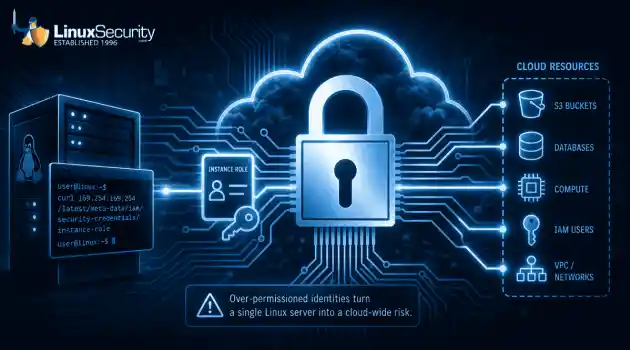 identity management security tactics
 For years, we secured our Linux infrastructure by building walls: VPCs, security groups, and hardened SSH configurations. We treated the cloud like a virtual data center, assuming that if we kept the "bad guys" out of the network, our workloads were safe. . That model is no longer sufficient. Today, one of the most common paths from an initial compromise to a major cloud breach is the identity assigned to your Linux workload. When an attacker gains code execution on a Linux instance—through a...
Jul 17, 2026
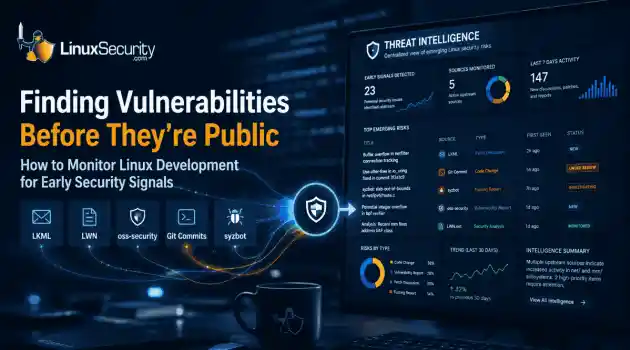 security practices patch management
 Most of us don't hear about a kernel vulnerability until a CVE lands in our inbox or the vulnerability scanner starts complaining. By then, the patch isn't new anymore. Kernel developers may have been passing it around for review, arguing over the implementation, or revising it for days before anyone outside that community noticed it. None of those discussions are secret. They're sitting in mailing list archives, Git commits, and patch reviews where they've been the whole time. The strange...
Jul 14, 2026
 Linux security cyber attacks
 Every Linux server in your fleet produces thousands of events every minute. From journald logs and auditd records to kernel-level eBPF hooks, your systems are constantly talking. Most of that noise is just the mundane churn of system services, CI/CD runners, or routine administrative automation. But among that noise, an attacker might be establishing a foothold, moving laterally, or setting up persistence. The challenge for any security team is: how do you separate the routine from the...
Jul 13, 2026
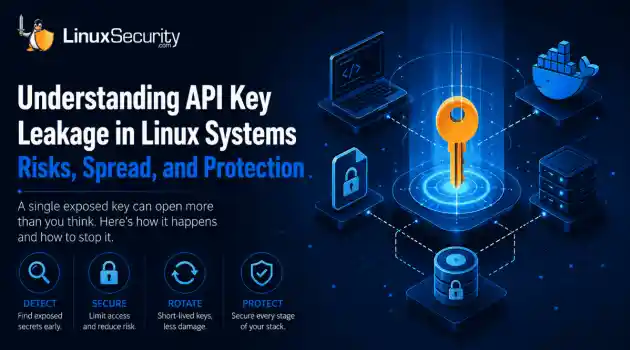 open-source infrastructure risk
 Security scanners flag exposed API keys in public repositories every day. The initial response is usually predictable: delete the commit, revoke the credential, and move on. That’s a mistake. . In a real Linux environment, an API key never stays in one place. By the time it hits a public repo, it’s already everywhere. It’s in the CI/CD pipeline. It’s in your container registry. It’s in the build logs. It’s in the backups. Git makes this worse because the history never dies. Deleting a file in...
Jul 11, 2026
 Refine features
X Clear Filters
Get the latest News and Insights
Get the latest Linux and open source security news straight to your inbox.
Community Poll
Should Linux servers automatically install security updates?
Loading...
Explore Latest Linux Security features
We found -1 articles for you...
102
 security advisorycompliancelinux
OSSEC for Linux: What It Means for Your Monitoring and Risk Posture
You probably already have firewall rules in place, regular patching cycles, and logs flowing into a SIEM. That covers a lot. What it does not tell you is whether /usr/bin/ssh was replaced last night, whether /etc/sudoers changed outside of a maintenance window, or whether someone added a quiet backdoor account and cleaned up the auth logs afterward. . This is where OSSEC enters the picture. It runs on the host itself, not on the network. That sounds small, but it shifts what you can verify. Most monitoring pipelines focus on traffic patterns or aggregated events. A host-based intrusion detection system, or HIDS, looks inward. It watches file integrity, parses local logs, checks for rootkit indicators, and evaluates policy state directly on the machine that could be compromised. OSSEC does not replace your firewall. It does not patch systems. It is not an EDR platform. What it does is give you a way to validate trust at the file and log level on each Linux host. You start to see things that were previously invisible because they never crossed a network boundary. If you are already shipping logs to a SIEM, you might wonder what you are missing. The short answer is file integrity state, local correlation, and baseline enforcement. If you need file integrity monitoring for audits, the question becomes whether you can manage the signal without drowning in it. If you are worried about overlap with endpoint detection and response (EDR) platforms, that depends on how deep your existing tooling goes into host-level change tracking. In this article, we will look at what OSSEC actually monitors, how it works internally, what day-to-day operations look like once it is deployed, and where it fits into compliance and risk decisions. By the end, you should be able to decide whether adding OSSEC strengthens your monitoring posture or just creates another alert stream that no one has time to review. What Is OSSEC and Where Does It Fit in a Linux Security Stack? When people first hear about OSSEC ,they often lump it in with whatever security tooling they already have. Firewall, SIEM, maybe EDR. It helps to slow that down. OSSEC is a host-based intrusion detection system. A HIDS. That category matters because it tells you where it operates and what it can realistically see. OSSEC runs an agent on each monitored system. That agent collects local logs, monitors file integrity, performs rootkit checks, and evaluates certain policy conditions. Those events are sent to a central manager, which applies rules and generates alerts. Nothing about it inspects raw network packets. It does not watch east-west traffic. It lives inside the operating system. That distinction is practical. A firewall can block an inbound connection. A SIEM can correlate events across systems. An EDR platform can monitor process behavior and memory activity. OSSEC focuses on the state of the host itself. File changes. Authentication patterns. Configuration drift that was not approved. You start thinking less about “did traffic look strange” and more about “did this machine change in a way we did not authorize.” In a typical Linux environment, OSSEC sits alongside your existing logging and security stack. Agents run on the servers. The manager aggregates events. Alerts are often forwarded to a SIEM for centralized visibility. It does not replace those tools. It fills in a gap at the file and log layer that network-based controls simply cannot see. This changes how you reason about trust. Without a HIDS like OSSEC, you are mostly trusting that if something serious happened, it would generate visible traffic or obvious log anomalies. With it, you can validate whether core binaries, configuration files, and privilege assignments remain in the state you expect. That is a different kind of assurance. More granular, and sometimes more uncomfortable. From a stack perspective, OSSEC is not your perimeter defense, and it is not your incident response platform. It is a visibility layer on the host. If you are deciding whereit fits, start by mapping what you currently monitor at the file and configuration level. If the answer is “nowhere,” then this is likely a gap. How Does OSSEC Work Under the Hood? Before you decide whether to deploy it, you need to understand what OSSEC is actually doing on the system. Otherwise, it just becomes another agent you hope behaves. At a high level, the OSSEC architecture is straightforward. Each Linux host runs an agent. That agent reads local log files, monitors configured directories for file changes, and performs periodic checks. Events are sent to a central manager over an encrypted channel, where rules are applied, and alerts are generated. The manager is where correlation happens. The agent is mostly a collector and forwarder with some local logic. That division matters when you think about scale. A quiet file server behaves very differently from a busy web node, throwing thousands of log lines per minute. Manager sizing depends on event volume, not just agent count. If you underestimate that, queue backlogs start to build, and alerts get delayed. You will not notice it immediately. Then you will. File Integrity Monitoring is one of the core pieces. OSSEC builds a baseline of selected directories, typically /etc, /usr/bin, /bin, sometimes application paths like /var/www. It calculates checksums and records permissions, ownership, and metadata. On subsequent scans, it compares the current state to the stored baseline. If a binary hash changes or permissions shift unexpectedly, it raises an alert. This sounds simple, but the baseline is everything. If you initialize it on a system that is already compromised, you just captured a bad state as trusted. If you run it right before a large patch cycle, you will trigger a wave of integrity changes that are technically correct but operationally noisy. Timing matters more than people expect. Log analysis is the other major component. The agent reads local logs such as /var/log/auth.log, /var/log/secure, web server logs, andothers you define. Decoders parse those logs into structured events. Rules then evaluate patterns. A single failed SSH login might be low severity. Twenty from the same IP in a short window escalates. That correlation happens at the manager level, which is why accurate time synchronization across hosts is not optional. There is also rootkit detection and policy checking. OSSEC can look for known rootkit signatures, suspicious kernel modules, hidden processes, and certain configuration states. It is not deep behavioral detection. It is signature and rule-driven. Useful, but not magical. Active response is available as well. You can configure OSSEC to block an IP via firewall rules or execute scripts when certain thresholds are met. This is where caution comes in. Automated responses based on log patterns can backfire if rules are not tuned carefully. I have seen environments where legitimate traffic patterns triggered temporary blocks because someone trusted defaults too quickly. Operationally, you cannot treat this as set-and-forget. You need reliable time sync. You need to understand which directories are monitored and why. You need to tune rules to match your environment, especially around authentication noise and package upgrades. Poor tuning leads directly to alert fatigue, and once people start ignoring OSSEC alerts, the value drops fast. If you are evaluating it, start by mapping what data it will actually collect on your systems. Then look at how that flows through the manager and into your existing alerting pipeline. The mechanics are not complicated, but the impact on daily operations depends entirely on how deliberately you configure it. What OSSEC Looks Like in Day-to-Day Operations The theory sounds clean. Baselines, rules, correlation. In practice, what you see are alerts, patterns, and sometimes silence where there should not be any. One of the first things that shows up after deploying OSSEC is authentication noise. Repeated SSH failures from a single IP get grouped andescalated. On an internet-facing server, that can be constant background radiation. It is useful to see, especially if the pattern shifts or targets a specific account, but it quickly teaches you that not every alert is an incident. File integrity alerts are where things get more interesting. A change to /etc/passwd, /etc/sudoers, or a binary under /usr/bin stands out immediately. During a routine patch cycle, you will see bursts of file modifications. That is expected. The important part is whether those changes align with your maintenance window and change records. If they do not, you stop and ask why. Web servers make this even clearer. When a file under /var/www/html changes at 2:17 AM and there was no deployment scheduled, that is not theoretical. That is either a developer working outside process or something worse. OSSEC alerts give you that timestamped signal without relying on network logs. You also start to notice what is not happening. An agent that goes silent is easy to miss unless you monitor agent health. No events can mean a quiet system, or it can mean the agent crashed, the service was stopped, or communication to the manager broke. Silence is not always good news. Configuration management tools introduce another layer. If Ansible, Puppet, or another system is regularly enforcing state, OSSEC will see those file changes. If you do not scope monitoring carefully, you generate predictable noise. Over time, teams either tune it properly or begin ignoring categories of alerts, which defeats the purpose. Baseline timing shows up here again. If you built the file integrity baseline before hardening was complete, you will see a wave of expected changes. If you built it after an unnoticed compromise, you will not see anything wrong because the altered files are now considered normal. That is the uncomfortable edge of file integrity monitoring. This is where OSSEC alerts stop being abstract. They become part of patch planning, change management, and after-hours review. If you deployit, you need to align maintenance windows, baseline updates, and alert review processes. Otherwise, it becomes just another stream of notifications competing for attention. Risk, Compliance, and Policy Implications At some point, this stops being about features and starts being about accountability. Most teams do not deploy OSSEC because they are curious. They deploy it because they need evidence, or because they are tired of not knowing what changed on a host after an incident. From a compliance perspective, file integrity monitoring is not optional in certain frameworks. PCI DSS, for example, explicitly requires monitoring of critical system files and alerting on unauthorized changes. If you are responsible for systems in scope, you need a way to demonstrate that /etc, key binaries, and security configurations are monitored consistently. Screenshots of firewall rules are not enough. OSSEC gives you structured visibility at the file and log layer. That visibility translates into audit artifacts. You can show that privileged user additions were logged. You can show that changes to sensitive files generated alerts. You can demonstrate that monitoring is continuous, not periodic. Policy enforcement is the other half. It is one thing to document that logging must remain enabled or that sudo access is restricted. It is another to verify it. OSSEC can surface: Changes to critical configuration files such as /etc/ssh/sshd_config Modifications to /etc/sudoers or group membership affecting privilege Disabling or tampering with logging services Creation of new local user accounts Repeated authentication anomalies that suggest lateral movement None of this prevents exploitation. That is important to say clearly. OSSEC does not block an attacker by default, and it does not patch a vulnerable service. What it does is reduce the time between “something changed” and “someone noticed.” In post-incident reviews, that time gap is usually where the real damage accumulates. Thereis also overhead. More monitoring means more events to triage. If your change management process is informal, file integrity alerts will expose that quickly. You either tighten the process or accept a steady stream of “expected but undocumented” changes. Over time, auditors tend to ask about those patterns. If you are evaluating this from a risk angle, start by listing which systems require demonstrable file integrity monitoring and privileged access tracking. Then map how you currently prove that control works. If the answer depends on manual review or trust, OSSEC changes that conversation. It turns policy statements into verifiable signals, which is uncomfortable at first but ultimately more defensible. When OSSEC Makes Sense and When It Doesn’t Not every Linux environment benefits equally from OSSEC. That is usually clear a few months after deployment, sometimes sooner. If you are operating in a compliance-heavy space, especially where file integrity monitoring is explicitly required, OSSEC is a practical fit. It gives you traceable evidence that critical files are monitored and that privileged actions are surfaced. On internet-facing servers, particularly those exposed over SSH or running public web applications, the added visibility into authentication patterns and file changes tends to justify the overhead. It is also useful in environments that do not have a full EDR platform. OSSEC can provide a baseline level of host visibility where, otherwise, you might only have centralized logs. It is not behavioral detection in the modern sense, but it is better than trusting that nothing changed locally. Where it becomes less compelling is in short-lived infrastructure. If your workloads are mostly ephemeral containers rebuilt frequently from clean images, file integrity monitoring at the host level may not add much value. The same applies to heavily managed PaaS environments where you do not control the underlying system state. There is also a staffing reality. If your team does nothave the capacity to review alerts consistently, adding another signal source can degrade overall monitoring quality. Alert streams that are not reviewed become background noise. Once that happens, even high-severity OSSEC alerts risk being ignored. There is overlap with some EDR platforms as well. Many modern endpoint tools already track file modifications, suspicious privilege changes, and authentication anomalies. In those environments, OSSEC deployment needs to be justified by specific gaps, not by the assumption that more monitoring is automatically better. If you are deciding whether to move forward, look at three things. First, do you have a compliance requirement that mandates host-level file integrity monitoring? Second, do you have clear gaps in visibility at the file and configuration level? Third, do you have the operational discipline to tune and maintain it? If the answer to all three is yes, OSSEC deployment likely strengthens your posture. If not, it may just redistribute your attention without improving your response time. Our Final Thoughts: What OSSEC Changes for You as a Linux Admin When you step back from the feature list, OSSEC changes something simple but important. It shifts part of your security model from trusting the perimeter to verifying the host. With OSSEC in place, you are no longer assuming that core binaries, configuration files, and privilege assignments remain untouched unless proven otherwise. You are actively checking. That alters how you think about patch cycles, maintenance windows, and even routine configuration work. “Expected change” stops being a vague idea and becomes something you have to define clearly. It also changes your monitoring workflow. File integrity alerts, authentication correlations, and agent health become part of your operational picture. You have to decide which directories truly matter, how often baselines are updated, and how alerts are routed. If you do not tune it deliberately, alert volume will climb, and confidence willfall. That part is predictable. From a compliance standpoint, OSSEC strengthens your position. It gives you defensible evidence that critical files are monitored and that suspicious changes generate alerts. During audits or post-incident reviews, that visibility becomes tangible. You can point to timestamps, rule triggers, and response actions instead of relying on assumptions. At the same time, it is important to keep expectations realistic. OSSEC is detection-focused. It does not prevent exploitation. It does not replace patching, hardening, or EDR. It adds a layer of host-level verification. Nothing more, nothing less. If you are considering it, the real question is not whether OSSEC works. It does what it is designed to do. The question is whether you are prepared to own the monitoring it introduces. If you are willing to treat host integrity as something to be continuously verified rather than implicitly trusted, then it has a clear place in your stack. If not, it becomes another agent running quietly in the background, generating signals that no one fully uses. . Explore OSSEC's role in monitoring Linux systems, file integrity checks, and compliance for better risk management.. OSSEC File Integrity Host Intrusion Detection Linux Monitoring. . Brittany Day
 Feb 19, 2026
•
Feb 19, 2026
•
102
 cybersecurityrisk assessmentcompliance
Enhancing Risk Management: Automating Third-Party Relationships in Linux
As more vendors, suppliers, and contractors become integral to an organization's operation, the need to identify and mitigate risks associated with such external partners is significant. Third-party risk management automation (TPRM) is essential in this process. TPRM involves integrating technology that streamlines and automates various methods for identifying, assessing, and mitigating risks from external partners. . In this article, I’ll explore the transformative potential of TPRM process automation in detail, showing how technology can help improve accuracy and efficiency while enabling organizations to make speedier, data-driven decisions without compromising compliance and focusing on Linux distro solutions. What is Third-Party Risk Management Automation? Third-party risk management automation (TPRM) means integrating technology that streamlines and automates various processes for identifying, assessing, and mitigating risks from external partners. Most traditional methods rely on manual work: spreadsheets, emails, and phone calls. Such an approach is not only very resource-consumptive but also prone to errors. TPRM automation helps an organization load these activities into one single central ecosystem, thus enhancing its overall risk management strategies. Automation allows for the constant monitoring of third parties for signs of risk on an automated basis. At the same time, more productive data analysis and timely updates are ensured accordingly. According to an IBM report, organizations that use automation in their risk management processes can save up to 30% of their time on such activities. This allows them to free up resources to help drive efforts toward more strategic activities. This process of enterprise risk management is proactive rather than reactive. The Importance of TPRM Automation in the Current Threat Landscape One thing that characterizes the digital landscape is its particular challenges and opportunities for organizations. According to theCybersecurity and Infrastructure Security Agency, "Supply chain vulnerabilities can provide threat actors with a vector of entry into an organization's network and result in significant security breaches-making robust, effective risk management practices all the more critical.” A Forbes report in 2022 estimated that 63% of organizations experience a data breach caused by third-party vendors. These figures point to the dire need for effective TPRM strategies. The very interconnectedness that's the hallmark of modern business means that the failure of one vendor can cascade down the links of an entire supply chain . Therefore, it is incumbent upon every business to make the identification of potential risks within third-party relationships paramount. In addition to automating the risk assessment process, TPRM will go a long way in positioning an organization to identify and mitigate its risks before they become significant. Key Capabilities of TPRM Automation Tools When assessing TPRM automation, a core set of functionalities could make all the difference in business processes. While each automation tool has its respective functionalities, some make all the difference in third-party risk management by offering the following capabilities. Open-source TPRM scanning tools like OpenVAS provide: Continuous Monitoring The most critical capability of any TPRM automation tool involves ongoing, continuous monitoring of third-party relationships. Even in cases where the initial risk assessment of vendors has been performed, the system periodically assesses whether changes in a vendor's profile may indicate a higher level of risk. In this respect, continuous monitoring may involve a variety of risk indicators, including financial instability, inability to comply with regulatory requirements , or the emergence of new cybersecurity threats. This proactive approach enables corporations to steer clear of conditions that could be problematic and put them at an advantage in managing risk. Risk Scoring by Automation This builds on another powerful feature: automatic risk scoring, which aids organizations in determining the quick assessment of the risk level for every third party. Systems will have a generality of data, including data points from financial health to compliance records and performance history, providing a risk score. These scores help an organization filter those vendors or partners that may demand greater attention or extra controls to minimize risks. Companies can protect themselves from questionable third-party relationships by automating processes around risk assessment, enabling them to make more informed decisions based on real-time data. Custom Workflows Each organization has different needs when it comes to managing third-party risk. This is where customizable workflows emerge, meaning an organization can adapt the automation process in many ways to suit its specific needs. This can include setting risk thresholds, automating approval processes, and even system integrations. Be it whichever, the customizable workflow will ensure that TPRM automation only complements the company's overall risk management strategy. This level of flexibility will significantly enhance an organization's response to changed circumstances and risks. Central Risk Management Dashboard A Centralized Dashboard enables an enterprise to maintain real-time visibility into its third-party risk management activities. It shows current risks, pending assessments, and ongoing continuous monitoring activities. All this information in one place enables executive leadership to examine the overall risk landscape quickly and aids timely decisions for more effective risk management. According to Wikipedia , centralized dashboards can facilitate significant communication and coordination among stakeholders involved, allowing better integration of risk management strategies. Notable Benefits of Automating TPRM Among several other benefits, automation of TPRM processes offers variousadvantages to an entity in its quest to solidify its risk management capabilities. Some of the main advantages include: Enhanced Efficiency Automation affects labor-intensive operations, allowing the core business to focus on value addition in high-priority activities. A study conducted by the Institute of Risk Management used input from organizations that had already started automating their TPRM processes. It reported a 40% reduction in time spent on risk assessments. Improved Accuracy By minimizing human intervention, automated systems reduce the potential for mistakes from manual processes; hence, they are more accurate and can provide more dependable risk assessments with better-informed decisions. Proactive Risk Management With continuous monitoring capabilities, automated TPRM systems allow an organization to identify potential risks before they get out of hand. In this respect, the business would not suffer from the negative consequences of expensive disruption. Still, it would be able to maintain operational resilience. Regulatory Compliance Maintaining compliance with industry regulations is critical for any business. Automation tools can help a company ensure that each third-party relationship maintains all the standards of essential compliance and reduces the risk associated with regulatory fines and reputational damage. Challenges with TPRM Automation Despite the many benefits of automating the TPRM process, implementing such systems may pose several challenges to an organization. Some common challenges are: Integration with Existing Systems Integrating new automation tools with legacy systems can often be cumbersome and extended. In addition, an organization should ensure that its automation solution is well integrated with an existing platform. Data Quality And Accuracy Success in automating TPRM is tied to the quality of the data analyzed. Therefore, organizations must invest more in robust data management practices to ensure the information feedingthe automated systems is correct and reliable. Change Management Transitioning to an automated process can also be a cultural change. Employees must be adequately trained to accept the new tools and workflow, which often creates resistance and loss of productivity in its initial stages. Our Final Thoughts on Automating Third-Party Risk Management in Linux Environments Automating third-party risk management processes is a significant development in how organizations can identify, assess, and mitigate risks associated with their external partners. A business can bring efficiency, accuracy, and compliance into proactive risk management through technology. Organizations that embrace such developments will be better positioned to navigate the complexities associated with contemporary business operations and secure their assets against potential threats. All business entities should include TPRM automation tools in their future investment plans. The key is smoothing risk management processes to prepare businesses for success in an increasingly dynamic and competitive landscape. . Explore the potential of TPRM automation for improving risk management in organizations, enhancing efficiency and accuracy.. vendors, suppliers, contractors, become, integral, organization', operation. . Brittany Day
Nov 11, 2024
•

102
 risk managementdata integritycompliance
Streamlining Third-Party Risk Management: Benefits and Best Practices
Managing third-party risks is critical to business operations, especially in today’s interconnected global economy. With organizations relying on vendors, suppliers, and contractors more than ever, identifying and mitigating risks associated with these external parties is essential. . Meanwhile, keeping up with the latest advancements in linux security and linux news is crucial for IT departments to protect their systems. Traditionally, third-party risk management (TPRM) processes have been manual, resource-intensive, and error-prone. However, technological advancements have ushered in a new era: TPRM automation . Incorporating automation into third-party risk management enhances accuracy and efficiency, helping businesses make faster, data-driven decisions without compromising on compliance. This article explores how TPRM automation can revolutionize risk management and why businesses should automate third-party risk processes. What Is Third-Party Risk Management Automation? Third-party risk management (TPRM) automation refers to using technology to streamline and automate the processes involved in identifying, assessing, and mitigating risks associated with external partners. Instead of relying on manual methods such as spreadsheets, emails, and phone calls, TPRM automation allows companies to centralize and automate these tasks. Automated systems can continuously monitor third parties for risk indicators, analyze data more efficiently, and provide real-time updates. This not only reduces the time spent managing risks but also helps in the early identification of potential issues, allowing businesses to act proactively. Benefits of Automating TPRM There are several advantages to implementing TPRM automation for businesses of all sizes. Let’s dive into some of the key benefits: Increased Efficiency and Speed Manual risk management processes often involve tedious tasks that can slow down the entire workflow. Automation eliminates the need for repetitive data entry,cross-referencing, and manual follow-ups. With automation tools, you can set predefined workflows, enabling quicker identification and resolution of risks. This increased speed allows businesses to respond to potential threats in real-time rather than after the damage has been done. Cost Savings Reducing manual labor leads to significant cost savings. Organizations can reduce the number of employees required to manage risk by automating third-party risk management processes. The system handles much of the legwork, such as gathering information, assessing risks, and generating reports, freeing up employees to focus on higher-level strategic tasks. Furthermore, automation reduces human error, which can be costly in risk management scenarios. Correcting mistakes often requires additional time, effort, and resources, but automation minimizes this risk, ensuring that the processes are carried out accurately the first time. Improved Accuracy and Data Integrity Manual processes are not only time-consuming but also prone to mistakes. Automating TPRM ensures that data is captured consistently and accurately. This means fewer errors in risk assessments and a more reliable system for tracking risks. Automation tools can integrate with multiple data sources to gather relevant information, ensuring the data you’re working with is up-to-date and precise. Scalability As a business grows, so does its network of third-party relationships. Managing the associated risks can become overwhelming if relying on manual processes. TPRM automation provides scalability, allowing companies to efficiently manage an increasing number of third parties without additional administrative burden. Automated systems can handle large volumes of data and scale to meet your business needs. Key Features of TPRM Automation Tools When considering TPRM automation, it’s essential to understand the features that will impact your business most. While each automation tool may differ, certain features are particularly valuablein open-source third-party risk management tools like OpenVAS: Continuous Monitoring One of the most critical features of a TPRM automation tool is the ability to monitor third-party relationships continuously. This means that even after an initial risk assessment, the system will regularly check for any changes in the vendor’s profile that might indicate increased risk. Whether it's financial instability, regulatory non-compliance, or cybersecurity threats, continuous monitoring helps businesses avoid potential problems. Automated Risk Scoring Automated risk scoring is a valuable feature that allows businesses to assess the risk levels of each third party quickly. The system analyzes various factors such as financial health, compliance records, and past performance to assign a risk score. This helps prioritize which vendors or partners need closer scrutiny or additional risk mitigation strategies. Customizable Workflows Every business has unique needs when it comes to third-party risk management. Customizing workflows allows businesses to tailor the automation process to fit their specific requirements. Whether setting different risk thresholds, automating approval processes, or integrating with other systems, customizable workflows ensure that TPRM automation aligns with the company’s risk management strategy. Centralized Risk Management Dashboard A centralized dashboard gives businesses a real-time view of all third-party risk management activities. This feature overviews current risk levels, pending assessments, and ongoing monitoring efforts. With all information in one place, it’s easier for decision-makers to take action and manage risks more effectively. Challenges of Implementing TPRM Automation While the benefits of TPRM automation are significant, businesses may face certain challenges during implementation. Understanding these challenges can help organizations plan accordingly and mitigate any potential obstacles. Integration with Existing Systems One ofthe biggest challenges is ensuring that TPRM automation tools integrate seamlessly with existing systems. Businesses often have multiple platforms handling different aspects of operations, and integrating a new system can sometimes cause disruptions. Companies need to ensure that the automation tool they choose is compatible with their current infrastructure to avoid any implementation hiccups. Data Security and Privacy Concerns Automating third-party risk management involves handling large amounts of sensitive data. While automation tools are designed to improve security, businesses must still be mindful of potential data breaches or privacy concerns. Implementing strong cybersecurity measures and ensuring compliance with data protection regulations is essential when automating TPRM. Initial Costs and Resource Allocation Although automation can lead to long-term cost savings, the initial implementation costs can be significant. Companies must invest in the right technology, train staff, and allocate resources for successful deployment. However, these costs are a necessary investment for improved risk management in the long run. Best Practices for Adopting TPRM Automation For businesses considering automating their third-party risk management processes, here are some best practices to ensure a smooth transition: Assess Your Current TPRM Program Before implementing automation, it’s crucial to assess your current TPRM program. Identify the manual processes that consume the most time and resources and consider how automation can streamline them. Understanding your business's pain points will help you choose the right automation tool. Choose the Right Automation Tool Not all TPRM automation tools are created equal. Research different options to find one that suits your business’s needs, integrates with your existing systems and offers the features that are most important to you, such as continuous monitoring, risk scoring, and customizable workflows. Train Your Team Automation won’t be effective if your team isn’t equipped to use it. Provide training to your staff to ensure they understand how the system works, how to interpret automated risk reports, and how to respond to alerts. Automation Tool Selection Not all TPRM automation tools are created equal. Research different options to find one that suits your business’s needs integrates with your existing systems, and offers the most important features, such as continuous monitoring, risk scoring, and customizable workflows. For instance, staying updated with linux security and linux news can help you choose automation tools that comply with the latest security standards and technological trends. Ensure that the selected tool seamlessly integrates with your business's IT infrastructure, which might be based on Linux environments. Security Considerations While automation tools are designed to improve security, businesses must still be mindful of potential data breaches or privacy concerns . Implementing strong cybersecurity measures and ensuring compliance with data protection regulations is essential when automating TPRM. Following linux security best practices can provide additional layers of protection. Additionally, keeping up with linux news can inform you about the latest vulnerabilities and patches , helping to keep your automated TPRM systems secure. Our Final Thoughts on Streamlining Third-Party Risk Management Third-party risk management automation is no longer a luxury but a necessity for businesses looking to stay competitive in a fast-paced, risk-laden environment. Automating TPRM helps companies save time, reduce costs, and improve accuracy, all while enhancing their ability to mitigate risks effectively. As the business world becomes increasingly complex, adopting TPRM automation ensures that companies can manage third-party risks with greater confidence and agility. . Keeping up with Linux security advancements safeguards business operations and boosts third-party risk managementefficiency.. managing, third-party, risks, critical, business, operations, especially, today’s, interconnecte. . Brittany Day
Oct 11, 2024
•
102
 patchingcomplianceautomation
Enterprise Linux Compliance: Insights on Patching and Resource Management
The Linux vulnerability landscape is becoming increasingly complex, in part due to a seemingly never-ending number of new vulnerabilities that are constantly surfacing. . Even when Linux-based operating systems are used at a small scale, it is challenging to patch vulnerabilities consistently. At an enterprise scale, the task of managing hundreds of vulnerabilities over fleets of thousands of servers is not simple at all. Yes, there are a variety of tools that can help – but awareness of tools such as automated patching and live patching varies, and these tools are used inconsistently. With the management of vulnerability assessment and patching varying so much from one organization to another, TuxCare set out to investigate how enterprises approach this challenging task. Our survey, State of Enterprise Vulnerability Detection and Patch Management, revealed several interesting insights into how organizations handle vulnerability and patch management at an enterprise scale. The survey explores how these tools are used and examines the restrictions faced by organizations in their ongoing fight against threat actors. Vulnerability Management Is a Compliance Priority One of the reasons that TuxCare initiated a survey into the enterprise vulnerability and patching environment is that, for large organizations, vulnerability management and patching is a compliance issue. Over and above the obvious security concerns surrounding vulnerabilities, enterprise Linux users also need to meet compliance obligations. In other words, there are laws and regulations in place that demand that large organizations meet minimum requirements around the remediation of vulnerabilities. Where organizations covered by these regulations fail to meet minimum requirements it can lead to stiff penalties. The rules that apply to companies operating in a specific industry vary, with organizations that deal with personal data – finance and healthcare firms, for example – under much stricter supervision. We mentioncompliance because it has a direct effect on how large organizations approach vulnerability management and patching. Some enterprise Linux users must respond much faster to emerging vulnerabilities than others. The results we gathered in our survey clearly highlight how compliance requirements affect day-to-day vulnerability operations. The TuxCare Enterprise Vulnerability and Patch Management Survey TuxCare started surveying key IT security personnel across enterprise organizations at the start of 2021. We wanted to take a close look at three key aspects of vulnerability and patch management: deployment practice, maintenance windows, as well as the broader level of security awareness in an organization. We published the initial results, but the survey is still actively running and you are welcome to contribute . Initial responses have already revealed several interesting observations. From the start, we noted that the geographic location of the respondent had a negligible effect on the response we received. In other words, there was no correlation between the location of a respondent, and the answers returned by that respondent. That indicates that vulnerability and patch management practices are roughly the same across the globe. However, our survey revealed significant differences between industries. The sector in which an organization operates clearly has an impact on the way that an organization manages vulnerabilities and patching. Taking a First Look at the Results A few points jumped out at us. For example, we noted that automated patching is commonly used by organizations around the globe, as 76% of our respondents said that they apply automated patching across their workloads. We also noted that live patching, a step up from automated patching, is in use at many organizations, as about half of our respondents reported that they relied on live patching to fix vulnerabilities. It makes sense that, at the enterprise scale, teams would rely on automated and live patching because of thesheer number of vulnerabilities that require patching. Given today’s pervasive cybersecurity threats, it is no surprise that automation is a commonly used tool, so we found it interesting to note that manually researching vulnerabilities via online resources is in fact the most commonly used tool in our respondents’ vulnerability management arsenal. Even though automation of vulnerability management is commonplace, comprehensive vulnerability management still requires a few manual steps. Another interesting fact emerged: 73% of our respondents suggested that their server fleets rely on a single Linux OS. In other words, rather than utilizing a specific Linux distribution for each different server role, most respondents reported that they picked a single OS – in most cases, it was CentOS or a fork of CentOS. Organizations are probably choosing to do so because using a single distribution makes maintaining server fleets so much easier – whereas a mix of distributions increases the time spent on server maintenance and addressing vulnerabilities. Vulnerability and Patch Management Practices Vary by Industry Looking more closely at what our respondents said, we noticed that vulnerability and patch management procedures and practices varied significantly from one industry to another. For example, when compared to the banking and financial services sector, respondents in the tech sector reported spending three times as much time in any given week on vulnerability monitoring. It’s possible that tech sector respondents are simply much more aware of cybersecurity threats than those working in banking and finance. Another observation we made is that the tolerance or indeed the need for patching-related downtime varied significantly from one industry to another. In transports and logistics, our respondents reported that their organizations experienced around 15 hours a week of patching-related downtime. In contrast, respondents working for healthcare enterprises reported downtime of only about anhour a week. The staff resources dedicated to monitoring for vulnerabilities also appear to be allocated very differently depending on the industry the respondent works in. In public and social services, respondents suggested that a large proportion of staff hours are spent on monitoring tasks – whereas respondents in the industrial sector said that very little time is spent on monitoring for vulnerabilities. Resources Remain a Restriction In the last section, we pointed to the allocation of staff resources when it comes to vulnerability management. Staff hours are a limited resource, and we found a few interesting trends in the responses we received. First, when it comes to documenting patching efforts, our respondents reported that documentation takes up very little time when compared to the other efforts made around patching. In fact, we found that respondents suggested that trying to settle on a maintenance window that keeps everyone happy takes up a significant amount of staff time. We suspect this may be because of the many stakeholders involved in settling on an acceptable maintenance window – after all, maintenance windows cause significant disruption. Resourcing is without a doubt a restriction, as 38% of our respondents said that they wanted to increase their IT security headcount in an effort to improve how effective their patching regime is. In further supporting evidence, 29% of respondents suggested that on at least one occasion patch installation was delayed because of a lack of resources. That’s probably why 54.5% of our respondents said that the staff resources at their disposal are not sufficient to meet the patching workload. A further 27.2% indicated they have active plans to hire more staff to cope with the growing vulnerability and patch management workload. The Tools that Support IT Security Staff We also asked our respondents to give us some insight into the tools used to support the human efforts behind vulnerability and patch management. We found that there wereseveral key tools that respondents suggested would help them make better use of the resources at their disposal. In response to our survey, respondents pointed to several features that they would like to see in a patch management tool. First, enterprise Linux users wanted quick responses to new CVEs to ensure new vulnerabilities are rapidly covered. Live patching was also top of the list, while respondents wanted to see more comprehensive automated reporting. We left the question open-ended. One respondent suggested that vulnerability tools should offer better logging capabilities than they currently do. That may be because many tools simply do not offer a lot of transparency into the functionality of the tool, or how the tool modifies systems as it manages vulnerabilities. Our respondents requested a few other features, including phased rollouts to manage patching in a more controlled manner in order to prevent disruption. The Implications for Enterprise Linux Users Just like any other major operating system, Linux-based operating systems are subject to new exploits on a weekly - if not daily - basis. The number of exploits keeps growing and one of the reasons for this is that threat actors rely on automation to f ind vulnerabilities. Battling a cybersecurity threat that’s underpinned by automation won’t be easy and using automation in security efforts is really the only way forward. This includes patching automation, already used by many of our respondents. Similarly, automated vulnerability management tools that have just the right feature set will prove equally valuable. It is heartening to see that so many of our respondents are engaging with automated and live patching, but neither of these tools has full penetration and there is little doubt that automation is the best way forward. Win a Course for Kubernetes We stated earlier that the survey is still running. Even though we’ve collated some of the initial responses, we’re still eager to hear from respondents working in theenterprise Linux environment. For this reason, we’re offering ten free CKA (Certified Kubernetes Administrator) certification courses run by the Linux Foundation. You stand the chance of winning one of ten courses from us simply by completing our survey on this link . By completing the survey, you also help us to gauge how vulnerability and patch management is handled by enterprise Linux users. Don’t forget – you can download the full report covering the initial results of our survey, State of Enterprise Vulnerability Detection and Patch Management, state of enterprise vulnerability detection and patch management report . Thank you to CloudLinux for contributing this article. . Handling weaknesses in corporate Linux systems poses challenges; delve into observations regarding regulatory standards, software solutions, and best practices within the sector.. Enterprise Security, Patch Management, Vulnerability Tools, Cybersecurity Insights, Linux Compliance. . Brittany Day
Jul 13, 2021
•

Get the latest News and Insights
Get the latest Linux and open source security news straight to your inbox.
Community Poll
Should Linux servers automatically install security updates?
Search Topics
Powered By

Linux Security - Your source for Top Linux News, Advisories, HOWTOs and Feature Releases
QUICK LINKS
subscribe to newsletters!
Like staying secure? So do we.
Sign up for updates, tips, and alerts!