Audit Linux privileges now to limit compromise, escalation, and system-wide damage. Review Linux Privileges×


Stay Ahead With Linux Security Features
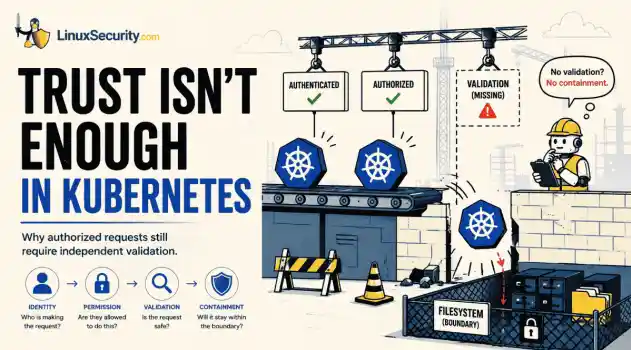
 security advisory path traversal
 Two newly fixed storage bugs in Kubernetes showed more than just a problem with path traversal. They found a common security flaw in the cloud: powerful parts often think that requests accepted by a higher system are safe to run. This is a simple lesson for the platform and security teams: RBAC can accept a request without showing that its parameters will stay within a certain filesystem boundary. This is clear from a new study from SentinelLabs into flaws in the Kubernetes CSI drivers for NFS...
 Jul 24, 2026
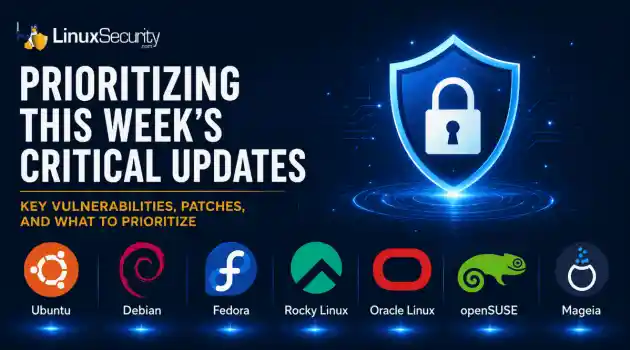 security advisory update
 A large volume of Linux security updates and advisories this week across major distributions once again, but it wasn't just the volume that was the story. Where maintainers and security teams focused their attention was evident in the concentration of fixes targeting Linux kernel updates, identity services, DNS infrastructure, and internet-facing software. . Instead of looking at each advisory in isolation, administrators gain more value from the general trends they reveal about Linux security...
Jul 23, 2026
 identity management security tactics
 For years, we secured our Linux infrastructure by building walls: VPCs, security groups, and hardened SSH configurations. We treated the cloud like a virtual data center, assuming that if we kept the "bad guys" out of the network, our workloads were safe. . That model is no longer sufficient. Today, one of the most common paths from an initial compromise to a major cloud breach is the identity assigned to your Linux workload. When an attacker gains code execution on a Linux instance—through a...
Jul 17, 2026
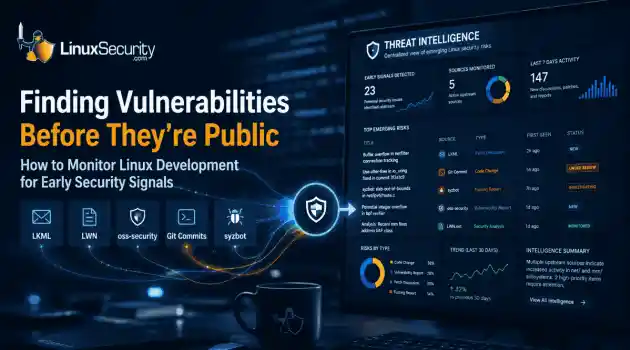 security practices patch management
 Most of us don't hear about a kernel vulnerability until a CVE lands in our inbox or the vulnerability scanner starts complaining. By then, the patch isn't new anymore. Kernel developers may have been passing it around for review, arguing over the implementation, or revising it for days before anyone outside that community noticed it. None of those discussions are secret. They're sitting in mailing list archives, Git commits, and patch reviews where they've been the whole time. The strange...
Jul 14, 2026
 Linux security cyber attacks
 Every Linux server in your fleet produces thousands of events every minute. From journald logs and auditd records to kernel-level eBPF hooks, your systems are constantly talking. Most of that noise is just the mundane churn of system services, CI/CD runners, or routine administrative automation. But among that noise, an attacker might be establishing a foothold, moving laterally, or setting up persistence. The challenge for any security team is: how do you separate the routine from the...
Jul 13, 2026
 Refine features
X Clear Filters
Get the latest News and Insights
Get the latest Linux and open source security news straight to your inbox.
Community Poll
Should Linux servers automatically install security updates?
Loading...
Explore Latest Linux Security features
We found -2 articles for you...
102
 security managementincident responseconfiguration management
Integrating Ansible Into Linux Security Management for Automation
The US government reported the OPM Breach, one of the country's greatest hacks, in 2015. Over 22 million past and present employees' personnel records were compromised by hackers believed to be based in China. According to experts, the consequences of such a large-scale breach may persist for almost 40 years. . Breaches like this are why many firms are starting to automate their cybersecurity operations. If institutions try to manually protect themselves against these attacks, the fight becomes man vs. machine, with the organization facing extremely bleak chances. In short, studies suggest that it could be prudent to let the machines fight it out regarding cybersecurity. Linus Torvalds and his colleagues created Linux in 1991 to manage several services in a computer system. This open-source system has proven helpful to cybersecurity professionals for its safety functions and customizability. Ansible, on the other hand, was developed to automate IT processes. We are happy to announce that when Linux’s defensive features combine with Ansible’s automation abilities, the result is a digital stronghold. Thus, to address everything from workflow optimization to security improvements, we’ll discuss four essential methods for integrating Ansible with Linux security administration. Integration With Artificial Intelligence For Enhanced Automation Whether interested in tech development or being a usual internet user, many of us already know that the Artificial Intelligence industry rides on a superpower. This power is its ability to transform the structures and procedures that have molded how things are done in all spheres of life. When it comes to security automation, AI has genuinely upped the game. Cybersecurity teams can increase insights, effectiveness, and economies of scale through artificial intelligence-driven automation. AI can be integrated with Linux and Ansible for command interpretation, anomaly detection, forecasting analytics, or even self-learning automation tasks. WhenAnsible and AI-driven monitoring tools are combined, abnormalities and performance problems can be proactively detected, allowing for automatic repair measures. Additionally, AI approaches can handle regulatory and security processes within Ansible automation workflows, improving threat detection, vulnerability assessment , and compliance inspections. You may not grasp the advantage of the automated workflow regarding security protection, but it’s more than necessary in the current age, when the human eye may not detect some patterns. A friend works in an IT company and recently shared his story about how their AI-powered anomaly detection system identified and eliminated a potential data breach in real time. This system integrates with its Linux-based infrastructure and Ansible automation workflows and continuously monitors network traffic and user behavior patterns. By leveraging advanced Machine Learning algorithms , it can quickly spot any deviations from the norm and trigger automatic containment measures. In this incident, the AI system detected an unusual spike in data transfers from a specific user account outside regular business hours. Within seconds, it flagged the activity as a potential threat and initiated a predefined incident response playbook through Ansible. Integration with Security Information and Event Management (SIEM) Systems Ansible's automation capabilities can seamlessly integrate with Security Information and Event Management (SIEM) systems to enhance an organization's security protection. SIEM systems are designed to collect, analyze, and correlate security events from various sources, providing a centralized view of an organization's security landscape. By integrating Ansible with SIEM systems, security teams can automate collecting and feeding relevant security data into the SIEM platform. For instance, Ansible playbooks can extract log files from Linux servers, network devices, and applications and transform and normalize the data before ingesting it intothe SIEM system. This automation saves time, reduces the risk of human error, and ensures that the SIEM system has access to comprehensive and up-to-date security data for analysis. Continuous Security Testing and Vulnerability Management It is not a secret that by integrating Ansible with security testing tools and vulnerability scanners, organizations can automate identifying and remediating security weaknesses in their systems and applications. For example, Ansible playbooks can schedule and execute regular vulnerability scans across the Linux infrastructure using popular tools such as Nessus or OpenVAS , which can identify known vulnerabilities, misconfigurations, and outdated software versions. Once the scans are complete, Ansible can automatically show the results and generate in-detail reports highlighting the identified vulnerabilities and their levels. Furthermore, Ansible can implement security testing in the software development lifecycle (SDLC) . Security tests can be automatically executed whenever new code changes are pushed by integrating Ansible with continuous integration and continuous deployment (CI/CD) pipelines. This allows for early detection and remediation of security issues before they enter production environments. By embracing continuous security testing and vulnerability management with Ansible, organizations can proactively identify and address security weaknesses, ensuring their Linux systems remain secure and resilient against evolving cyber threats. Secure Configuration Management Let’s say you have dozens or even hundreds of Linux servers, each needing to be configured with the same security settings. Keeping track of all those configurations manually would be a nightmare, and you would definitely need a flexible management system. Ansible lets you define reusable instructions, called playbooks, that specify the desired security settings for your Linux systems. It can include password complexity requirements, file permissions restricting access, andnetwork configurations blocking unauthorized connections. By running these playbooks across all your servers, Ansible ensures that all systems have the same secure configuration, eliminating any inconsistencies that attackers could exploit, which is an intuitive functionality I love the most. One of the most powerful things about Ansible, in terms of flexibility and intuitiveness, is that it guarantees the desired state of your systems. Even if someone accidentally changes a server's configuration, it can detect and automatically fix the difference to match your defined secure configuration. This ensures that your systems stay secure, even in the face of human error. By using Ansible for secure configuration management and hardening, you can lay a solid foundation for the security of your Linux environment. This proactive approach helps prevent security breaches, reduces the risk of unauthorized access, and ensures your systems comply with industry best practices and regulations. Incident Response and Forensic Analysis Automation Imagine a security crisis - alarms blaring and time ticking. You need to act fast and find a solution. This is where the role of automated solutions seems priceless for security teams. To explain how this process works, let’s start by saying that a tool like Ansible can be programmed to jump into action when a security threat is detected. It can automatically collect evidence for forensic analysis, such as system logs, network traffic, and even snapshots of the affected devices' memory and hard drives. Ansible securely stores this evidence in a central location, ensuring it stays tamper-proof and can be used for later investigation. Ansible can also be your secret weapon for analyzing the evidence. It can run specialized programs to recover deleted files, identify suspicious processes, or even analyze network traffic for unusual activity. By automating these tasks, Ansible helps security teams quickly understand what happened and reconstruct the timeline of theattack. But it doesn't stop there. Ansible can also automate steps to contain and eliminate the threat. Once the culprit is identified, it isolates compromised systems, blocks malicious connections, and patches vulnerabilities to prevent further attacks. This automation ensures a fast and consistent response, minimizing the damage caused by the incident. I love that Ansible can even improve communication and collaboration during a crisis. By connecting with platforms like Slack or Teams, it can automatically notify the right people, keep everyone updated on the situation, and share critical information throughout the incident response process. This ensures everyone is on the same page and can work together effectively. Patch Management Patch management is the systematic process of identifying and fixing security flaws in an organization by applying updates to various technology systems. It is crucial as it helps companies maintain network security and lower cyber risk by fixing vulnerabilities in sensitive assets. You might not understand how tedious this process can be, especially when done manually until you ask IT Admins, who tell you it can take entire weekends. The good news is that Ansible playbooks can speed up the process and help you check for bugs and other threats. At the end of the day, it is a win-win situation for everyone: Patches are fixed, system engineers do not have to do those tedious installations, and the business’s data is protected. Configuration Management Here is your 101 guide to server configuration management with Ansible. Since its provisioning scripts are written in YAML , Ansible is a simple IT automation tool with an easy user experience. Numerous integrated modules allow you to simplify chores such as dealing with templates and updating applications. Its easily understandable vocabulary and streamlined system requirements make it a suitable option for newbies in configuration management. As of now, you can see how Ansible is a simple tool with alot of power. With modules, you can handle many configuration management responsibilities; all you need is SSH access to the host. You have the option to use arbitrary commands in situations where a module is unable to accomplish the task at hand. However, playbooks are where Ansible shines. You can specify system settings and plan installations using playbooks, a configuration management tool. Compliance Monitoring Tasks related to compliance monitoring can also be automated using Ansible in conjunction with security monitoring technologies. Monitoring compliance entails comparing system configurations to industry standards and legal requirements. By automating compliance monitoring tasks, organizations can guarantee they are fulfilling compliance responsibilities and spot possible security vulnerabilities. More specifically, Ansible can be used to check Linux system configurations and report on compliance status. Our Final Thoughts on Integrating Linux Security Automation With Ansible Combining Ansible with Linux security automation is a strong way to improve system security, speed up tedious administrative tasks, and guarantee system design. By using Ansible's powerful automation features, organizations can set compliance standards, automate repetitive operations, adopt preventive safety precautions, and act promptly regarding safety concerns. Implementing the abovementioned methods can help teams improve their offensive strategy and reduce vulnerabilities. Integrating Ansible and Linux security automation offers an efficient and successful way to protect private information , strengthen infrastructure, and maintain operational stability, which will strengthen and sustain business operations. . Combining Ansible with Linux security enhances automation, regulatory adherence, and threat mitigation for robust safeguarding.. Ansible Automation, Linux Security, Security Workflow, Incident Response. . Brittany Day
 Jun 29, 2024
•
Jun 29, 2024
•
102
 network securitysecurity practicesopen-source
Comprehensive Overview of Open-Source Security Automation Practices
Open-source security automation is a critical aspect of modern cybersecurity. Various data and network security tasks, including vulnerability scanning , incident response, and compliance monitoring, employ open-source tools and technologies to improve efficiency and effectiveness throughout security operations. . Cyber fraud typically targets medium- to small-sized businesses because such companies often lack the resources and expertise to protect themselves adequately from exploits in cybersecurity. However, open-source security automation network security toolkits can help reduce web application security vulnerabilities. These tools can detect and report network security issues and automatically patch such risks, minimizing the chances of a successful attack. This article will discuss the value of security automation and introduce several open-source security automation tools to protect against cybersecurity vulnerabilities. Why Is Open-Source Security Automation Critical for Robust Cybersecurity? Open-source security automation helps organizations find network security threats faster, a crucial benefit in today's fast-paced digital environment. Developers uncover discoveries frequently, so companies must identify and mitigate network security issues as quickly as possible. These network security toolkits can regularly scan a business' IT infrastructure for cybersecurity vulnerabilities so they can utilize security patching immediately before any problems arise. Since these open-source security automation tools can deal with security incidents more efficiently, data and network security incidents have less impact on organizations, allowing companies to continue functioning as usual. Here are a few benefits of using open-source security automation tools in a security plan: Scalability : Scan large and complex environments (cloud and/or hybrid) with interconnected systems to comprehensively view network security threats. Cost-effectiveness : Typically available at no cost, these toolsare affordable for companies of any size. Customizability : Customize and configure the tools based on the organization's specific needs for more targeted and adequate security measures. Community support : Users and developers maintain servers with their wealth of knowledge and resources for troubleshooting and problem-solving. Compliance : Help companies comply with industry regulations and standards like PCI-DSS, HIPAA, and SOC2 Continuous monitoring : Continuous monitoring and alerting allow quick responses to potential network security threats and other cybersecurity vulnerabilities. Integration : Blend tools with other network security toolkits (like SIEMs) to comprehensively view network security issues. Threat intelligence : Leverage threat intelligence feeds and databases to identify the latest problems headed your way. Types of Security Automation Tools Here are a few security automation options and the tools and technologies they integrate: Network security automation executes tasks like firewall management, intrusion detection , and vulnerability scanning. Endpoint security automation employs antivirus software, patch management, and endpoint configuration management. SIEM automation involves collecting, analyzing, and reporting security-related data. Open-Source Security Automation Projects and Organizations Multiple open-source projects exist to work with the community on developing and promoting open-source security automation tools. OWASP is a non-profit organization that aims to improve security posture through software updates that offer a range of resources and tools for developers and security professionals. The organization has various projects focusing on web application security vulnerabilities. The OWASP Top 10 Project identifies the most significant network security issues to remember. The Open-Source Security Testing Methodology Manual (OSSTMM) provides testing and assessment frameworks to analyze systems and applicationsso security professionals can utilize their open-source methodology to care for security patching before network security threats become an issue. The Community for Open-Source Security Automation Software (COSSAS) offers a continuously expanding base of novel software components for cybersecurity automation that SOC, CERT, and CTI professionals can deploy and trial in their operational environments. These organizations have many open-source security automation resources, such as guidelines, best practices, and identification and mitigation tools. This information can strengthen companies’ data and network security throughout their systems and applications. Top Open Source Security Automation Tools Here are a few of the most popular and widely used tools to consider out of the various open-source security automation tools offered online: OWASP ZAP Web Application Security Scanner OWASP Zed Attack Proxy (ZAP) is a security scanner that can identify web application security vulnerabilities by: Actively interacting with web applications to detect SQL injection, Cross-Site Scripting (XSS), and broken authentication or authorization. Implementing features like a proxy server, automated scanner, or API with other tools to find network security threats faster. Providing a user-friendly, navigable interface with cybersecurity vulnerabilities access. Regularly updating with new features and security checks for finding and staying up-to-date on the latest network security issues. Running on various platforms like Windows, Linux, and Mac OS and integrating with CI/CD pipelines for continuous scanning. OWASP ZAP can also use cloud security frameworks like Ruby on Rails and ASP.NET to find other possible exploits in cybersecurity, making it an incredibly beneficial, universal tool. OpenVAS Open Source Security Automation Scanner OpenVAS (Open Vulnerability Assessment System) is a full-featured cloud security scanner that can scan networks and hosts for known cybersecurityvulnerabilities. It uses an extensive collection of Network Vulnerability Tests (NVTs) to scan for network security threats and software misconfigurations. OpenVAS can scan servers, workstations, and network devices, identify missing security patches, and notify companies about configuration issues that may leave a system vulnerable to attacks in network security. The software uses a client-server architecture where a central management server and a scanner engine work together when performing vulnerability scans to analyze. Such information can be reported through built-in capabilities or exports, which can help users improve security posture. OpenVAS has a flexible, customizable framework allowing users to create their scan configurations and adapt them to their specific needs and environments. Here are the benefits OpenVAS offers to users: Scheduled Scans : Configure OpenVAS to perform scans at regular intervals (daily or weekly) to promptly identify and address cybersecurity vulnerabilities. Targeted Scans : Specify targets in scanning (certain IP addresses or URLs) to focus on one type of web application or system. Continuous Scans : Perform scans constantly to find network security issues as they enter a web application. Baseline Scans : Establish a baseline of web application security vulnerabilities to keep track of when identifying network security threats over time. Compliance Scans : Check for compliance with industry standards and regulations, including PCI-DSS and HIPAA. Custom Scans : Create custom configurations to scan a web server or database for specific cybersecurity vulnerabilities. Integration with other tools : Integrate with network security toolkits to get more comprehensive views on data and network security risks. Automated reporting : Generate reports that can document and track progress in addressing vulnerabilities, which can help demonstrate compliance with regulations and understand the effectiveness of security measures. Elasticsearch, Logstash and Kibana (ELK) Open Source Log Management The ELK (Elasticsearch, Logstash, Kibana) stack is a popular open-source log management and analysis tool that can collect such information through servers, firewalls, and intrusion detection systems. Organizations can quickly identify and respond to security incidents once the ELK stack analyzes a server for web application security vulnerabilities. This can prevent exploits in cybersecurity that could cause problems for the company. Here are the benefits of using ELK stack: Various built-in tools : Elasticsearch indexes and stores log data and analysis. Logstash collects and processes log data. Kibana visualizes and analyzes data. Log data analysis : Find and identify cybersecurity vulnerabilities after using tools to monitor suspicious activity like failed login attempts or unusual network traffic. Vulnerability detection : Look at log data for alarming patterns or anomalies. Automation : Use Machine Learning (ML) algorithms and anomaly detection techniques to flag potential network security issues. Open-source community : Contribute to the stack and its capabilities to improve security posture, adapt your services to network security threats, and stay up-to-date on web application security vulnerabilities evolving in the online landscape. Ansible Open Source Security Automation The Ansible automation tool patches server vulnerabilities handles configuration management and application deployment, and automates tasks. Companies can reduce their risk of attacks in network security by having this service identify network security issues quickly so that security patching can mitigate the risks efficiently. Here are the main benefits of using Ansible: Security automation : Set up an automatic process for configuring and maintaining your organization’s systems. Security policies : Use code to ensure data and network security configurations are performed safely. Identify webapplication security vulnerabilities : Have online and cloud security audits check your servers for network security threats regularly. System monitoring : Identify changes that indicate a vulnerability. Use predefined playbooks : Automatically respond to critical network security issues and remediate vulnerabilities. Integration : Use with other security tools on Windows and Linux servers, network devices, and in cloud environments. Other Open Source Security Automation Tools Many open-source tools can be used for endpoint security, SIEM (Security Information and Event Management), and network security automation. Here are a few more tools to consider when choosing one for your business: Suricata : A high-performance network IDS, IPS, and network security monitoring engine. Snort : A rule-based network intrusion detection and prevention system. OSSEC : A Host-Based Intrusion Detection System (HIDS) that monitors and analyzes log files from various systems and applications. SELKS : A security distribution based on Debian that includes Suricata, Elasticsearch, Logstash, and Kibana (ELK Stack) Nagios : A network and system monitoring tool that monitors and alerts on various network and system metrics. Wireshark : A powerful packet analyzer that analyzes and troubleshoots network traffic. Nmap : A popular network scanner that maps networks and identifies hosts, services, and vulnerabilities. Nessus : A vulnerability scanner that identifies web application security vulnerabilities in systems. Metasploit : A penetration testing framework that finds exploits in cybersecurity systems and applications. Wapiti : A web application security scanner that notifies users of vulnerabilities by performing black box testing. Final Thoughts on Security Automation & Reporting Using Open Source Tools Open-source security automation is a powerful tool that can protect businesses from various cybersecurity vulnerabilities. By using tools such as OWASP ZAP,OpenVAS, Ansible, and the ELK stack, organizations can detect and report network security issues in web applications and servers efficiently. These tools offer security patching to address network security threats before an attack. Medium- to small-sized businesses are particularly vulnerable to cyber fraud, and using these open-source tools can help protect these businesses from potential attacks in network security. . Community-driven security automation empowers organizations to tackle cyber threat weaknesses skillfully and rapidly.. open source security, security automation, threat detection, network security management, compliance monitoring. . Dave Wreski
Jan 30, 2023
•

102
 open sourceenterprise securitythreat intelligence
Cloud-Native Security Insights: Addressing Challenges with Uptycs
Cloud and container adoption is on the rise, as organizations are increasingly recognizing the potential for rapid growth and evolution that cloud-based infrastructure offers. That being said, along with these advantages comes significant security challenges. . The modern cloud-native attack surface is complex and difficult to secure with many “moving pieces” including endpoints, servers, containers and cloud providers. This makes integrating Threat Intelligence data gathered from all of these surfaces and evaluating potential security and compliance risks and active threats no easy task. Not only is risk harder to identify and evaluate in cloud and container environments, security vulnerabilities, malware and other threats that are also easier to inadvertently inherit from common layers and shared components frequently used in container builds. To better understand the modern cloud-native attack surface and what is required to close security and observability gaps across cloud-native infrastructure, LinuxSecurity researchers had the privilege of speaking with Ryan Mack, Director of Engineering at Uptycs, a leading open source cloud-native security analytics provider, to discuss the challenges organizations face and how to enhance and simplify cloud-native security and observability for the enterprise. LinuxSecurity: How do you feel that the extensive adoption of containerization has impacted the digital threat landscape? Ryan Mack: Containerization, like every evolution in the way software is developed and deployed, trades some conveniences and security benefits for others. On the development side, building container images speeds development by making it much easier to include common layers and shared components. This also makes it easier to inadvertently inherit security vulnerabilities or even malware - commonly coin miners - that have been included in commonly used images on public image repositories. On the deployment side, short-lived containers have dramatically improved the abilityto scale to sudden increases in load and provide security benefits by making deployments more immutable. This can present a challenge for heavy weight endpoint security software that don't scale down well into low memory micro VMs or don't make it easy to understand a complex and potentially high churn set of running containers. LS: What is the most significant challenge that Uptycs helps enterprises overcome? What differentiates your products from other security analytics platforms available for the enterprise? RM: To be honest this varies widely depending on the enterprise. This can range from just providing a tool to run queries against their corporate assets and cloud infrastructure, historic data collection for after-the-fact security analysis, to our full set of compliance monitoring, real time threat detection, remediation, and vulnerability scanning. Every security analytics vendor that ingests data from different sources needs to solve the problem of normalization and correlation to perform analysis. Uptycs tackles this problem by extending the osquery concept of SQL-driven analytics. We’ve developed open-source extensions to osquery to expand the types of telemetry gathered and normalized into SQL tables for simpler real-time event correlation and ad hoc querying. With this analysis backend, we can quickly answer different types of questions such as “Are we seeing exploit attempts for this particular CVE, and have these bad actors been doing anything else in our network?” and “What is the compliance posture of our Linux server fleet against the CIS Benchmarks?” LS: Although the platform itself is not an open-source tool, Uptycs has built on various open-source projects spearheaded by Facebook and Apache to engineer its Uptycs Security Analytics Platform. In your opinion, how does your use of Open Source benefit your engineers and your customers? More specifically, how does your use of Open Source impact the level of security that your customers experience? RM: Therapid adoption and evolution of cloud-based infrastructure requires that cloud-native Security Analytics innovate and adapt quickly. Open source software provides scalable, battle tested foundations that allow us to focus on the unique requirements of our product instead of reinventing common components. Our ability to rapidly adapt to enterprises' changing requirements and an ever-evolving threat landscape is in no small part due to being able to build on top of robust open source solutions . LS: How do you anticipate the cloud-native attack surface changing and evolving in coming years? RM: The key ongoing trend of the last couple of decades has been the shift from a few big servers, to small server scale-out, to virtual machines, containers, and now serverless computing with AWS Lambda and Fargate. Each step has shifted the operational complexity from things we are in direct control of to things we manage indirectly through the configuration of our cloud provider, container orchestration framework, or service mesh. This trend is certainly going to persist foing forward. Security professionals need to understand how dramatically their attack surfaces will change in the coming years. They need to anticipate these changes because attackers will be looking to exploit gaps in visibility and unmitigated risk in these new environments. New problems demand new solutions, and Uptycs is positioned well to help organizations tackle these emerging security challenges with scalable, integrated technology built on a secure, community-powered open-source foundation. Have a thought to share or another open-source security tool you’d like us to cover? Connect with us on Twitter and let us know! . The modern cloud-native attack surface is complex and difficult to secure with many “moving pieces. cloud, container, adoption, organizations, increasingly, recognizing, poten. . Brittany Day
Oct 26, 2021
•

Get the latest News and Insights
Get the latest Linux and open source security news straight to your inbox.
Community Poll
Should Linux servers automatically install security updates?
Search Topics
Powered By

Linux Security - Your source for Top Linux News, Advisories, HOWTOs and Feature Releases
QUICK LINKS
subscribe to newsletters!
Like staying secure? So do we.
Sign up for updates, tips, and alerts!