


Stay Ahead With Linux Security Features
 security advisory attack
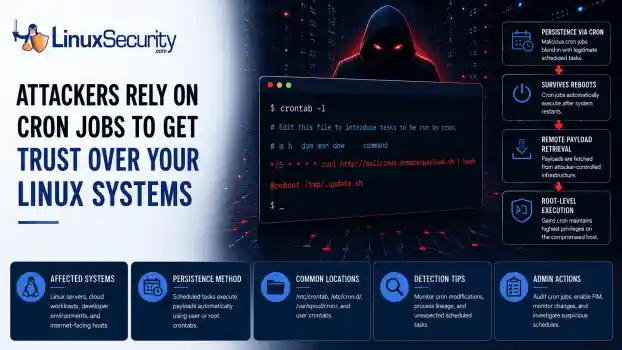
 A Linux server gets cleaned up after an intrusion. The suspicious process is terminated, credentials are rotated, and the system is rebooted during maintenance. Everything seems secure. A few hours later, the same outbound connection appears again. . Situations like that point to persistence . The attacker no longer needs the original exploit because something on the host continues restoring access behind the scenes. Finding that mechanism is often more important than understanding how the...
 Jun 08, 2026
  threat detection scalability
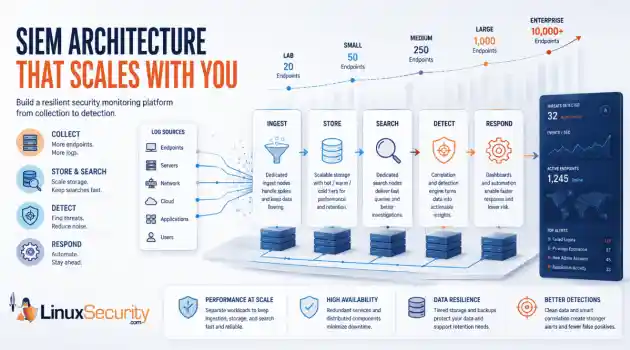
 Building a SIEM is easier than scaling one. Most open-source deployments start as a simple "all-in-one" server. It is easy to set up, but that design rarely survives the transition from a lab to a production workload. . A SIEM watching 20 endpoints is not doing the same job as one watching 500. More endpoints mean more logs; more logs require more storage; more storage makes search heavier. Eventually, the very architecture that made your lab easy to deploy becomes the reason your production...
Jun 04, 2026  security advisory apache
 A newly disclosed attack technique called HTTP/2 Bomb is drawing attention because it targets the software that sits at the front of much of the Linux internet. Apache HTTP Server, NGINX, Envoy, and the ingress layers that many Kubernetes environments depend on can be forced into consuming disproportionate amounts of memory using relatively small amounts of attacker traffic. . For Linux administrators, the concern is not the HTTP/2 protocol itself. It is the possibility that a single...
Jun 04, 2026  security advisory important
 The compromise of Nx Console shows how much infrastructure now sits behind a single developer account. GitHub repositories, CI/CD pipelines, container build systems, Terraform projects, Kubernetes deployments. None of those systems was the initial target. The workstation was. . Attackers did not need a Linux privilege escalation bug or a remote code execution chain. They needed developers to trust a tool they were already using. For many organizations, that was enough. What Happened? Federal...
Jun 03, 2026  security advisory open-source
 You remove the malware. You rotate the compromised credentials. You patch the original vulnerability and close the ticket. Two weeks later, the attacker is back. . What happened? You didn't lose the battle at the exploit; you lost it at the cleanup. In many modern Linux intrusions, the malware you found wasn't the main problem—it was the fallback mechanisms left behind. These hooks quietly restore attacker access the moment you look away. If you clean a host but miss these persistence layers,...
Jun 02, 2026  Refine features
X Clear Filters Get the latest News and Insights
Get the latest Linux and open source security news straight to your inbox.
Community Poll
What got you started with Linux?
Loading...
Explore Latest Linux Security features
We found 6 articles for you...
102
 cyber threatsmalware protectionsoftware development
Enhancing Email Security in SDLC for Managing Cyber Threats
Imagine releasing a software solution into the market only to realize the user cannot use the app properly. They have been reporting numerous bugs, which has lowered your reputation and reliability. . The Software Development Life Cycle (SDLC) is essential to a developer’s life. It guides the entire software development project from conception to development, ensuring efficiency, quality, and reliability. It can help the software development company mitigate risks and control costs, which helps release an excellent and usable product to the market. SDLC has built a symbiotic relationship with Information Security (InfoSec) to thwart cybercrime in its earliest stages. This helps safeguard and protect sensitive data from cyber threats by incorporating security measures at every lifecycle stage. These security protocols attempt to fortify software to mitigate any possible risks. Email is a crucial part of the infosec strategy. It is central to all phishing and malware attacks . This article will explore how Linux admins and organizations can prioritize email security to create a digital fortress against cyberattacks. What Is the Relevance of SDLC to Infosec? The software development lifecycle (SDLC) provides a roadmap for projects that helps development companies with the various phases: planning, design, development, testing, and deployment. Implementing the security protocols at every stage is equally crucial to understanding the objectives, aligning them with the code, and ensuring seamless deployment. This will help your software stay protected from unnecessary threats and issues. What Are the Phases of the SDLC? The phases of the SDLC are as follows: The Planning Phase The planning phase is when the entire business, marketing, sales, operations, and development team meets to define the project's goals and objectives. During this phase, they determine the scope, initial requirements, and feature list. The security team must determine the potential securityissues within the scope or requirements. They must define the security objectives and ensure they align with the business objectives. This will help set the foundation for security before starting the development. The Design Phase During the design phase, the design team (architects, user experience designers, and interface designers) will start determining the best-fit architecture for the software. They will also design the application's UX and UI. In this phase, the team will work on wireframes, interactions, and experiences in detail. The infosec team will work closely with your team to incorporate security features like access control and encryption protocols into the application. They will even help with authentication mechanisms. This will help you create a highly secure final product aligned with your needs. The Development Phase During the development phase, the developers will convert the interactions into code and work on defining them smoothly. The infosec team will work on detailed code reviews and vulnerability assessments. They will also conduct penetration testing that can help identify and remediate security flaws. You can use the infosec strategy to define the development workflow and determine the vulnerabilities early. This will reduce the risk of exploitation within a deployed application. The Testing Phase During the testing phase, the testing team will validate the functionality and usability of the application. They will test each unit and its integration to determine the application's ability. During this phase, the infosec team will validate the security controls and their ability. They will also ensure that the software is compliant with the regulations. In detail, they will conduct all the tests, including the vulnerability and penetration scans. The Deployment Phase The deployment phase is when the entire software is released to particular platforms. It is optimized and made ready for the platform. The infosec team also works on securing thedeployment protocols. This phase will include secure configuration settings and monitoring tools to help identify security incidents. The Maintenance Phase The maintenance phase is when the entire team works on updating the code and upgrading the software to meet the latest requirements. They continuously improve the software to meet the users' needs. The infosec team will incorporate the security patches and vulnerability assessments throughout this phase. They will address potential threats and maintain the security of the application. What Email Security Concerns Do Businesses Face? Email security is one of the main concerns for all organizations. This is the most vulnerable path that can attract cyber threats and criminals. A vulnerable email system is equal to a ticking bomb. The most common email threats include phishing and malware attacks. Phishing is when the attackers deceive the users by allowing them to divulge sensitive information. These attacks occur when the sender uses a known identity to lure you into clicking on the content or link. This impersonation can cost your business data and reputation loss. Malware attacks can help hackers access your system via email attachments or links, compromising the safety of your sensitive data. These attacks can disrupt your operations and lead to significant financial losses. Ransomware is one of the most commonly found malware that can encrypt files. The hacker demands payment for the data that they have stolen from you. This kind of attack can damage your business reputation and cause downtime. Business email compromise (BEC) is another type of attack that occurs at a higher level. The company can suffer significant losses when trusted vendors or executives manipulate employees to transfer funds or confidential data. This is an impersonation attack that has cost several businesses. Email security breaches can cost your business more than financial losses. The data breach can also compromise yourbusiness’s legal outfit, causing reputational damage and a lot of lawsuits. You must ensure immediate incident response and remediation, which also costs the company. You may face issues gaining your customers' trust again, which could also have long-term implications for the business. Email is an important part of business communication. As a result, you must prioritize security measures, including employee training and multi-factor authentication, to mitigate the risks via this medium. You can also adopt the best measures to reduce breaches and protect assets. How Can I Integrate Infosec into the SDLC Phases? Regarding email security, you must integrate infosec in every phase of SDLC. This will ensure email security is aligned with the overall security objectives and software requirements. Planning During this phase, you must conduct a detailed assessment of the security threats to your email. You must make a note of the phishing attacks and malware distribution. Additionally, ensure you have added unauthorized access to your list. Once you have made the list, you can define the security requirements for email communication. Encryption during communication is a standard protocol. Similarly, you can define strategies for the best outcomes, such as access control and email filtering. Design You must incorporate security protocols like Transport Layer Security . This will encrypt the email traffic and protect the business against eavesdropping. You must also design systems to thwart email threats. These systems will include spam filtering , sender authentication , and attachment scanning. Development You must implement secure coding practices to help mitigate email vulnerabilities. These practices include input validation, output encoding, and email attachment security. You must also implement protocols to help avoid email spoofing and phishing. During this phase, you must consider email authentication protocols and sender identity validation. Testing Penetration and vulnerability scanning can help you detect the resilience of your email systems. It helps you understand the security you must establish to protect them from cyberattacks. You can also conduct phishing in simulation to make your employees more aware and gauge their susceptibility to phishing. You can use the testing phase to determine the training you need Deployment You must ensure secure deployment to ensure the best fit for email systems. Make sure to use the proper encryption for email traffic. You must also configure the email servers and clients using the best practices and recommended settings. You can also use cloud email security solutions to inspect email traffic and ensure that only safe, legitimate mail reaches the inbox. This will help you block out suspicious emails and identify malicious content. Maintenance Patching email systems against newly found vulnerabilities is a significant duty of the developer during the maintenance phase. This phase also trains and educates employees on email best practices and response procedures. Tools & Best Practices for Securing Email Through the SDLC Specific tools, frameworks, and standard practices may help establish the necessary infrastructure when securing email through the SDLC. You must adhere to the coding standards and frameworks defined to create robust and secure systems. These standards include coding validation and output encoding. You must also ensure authentication mechanisms that promote security. Additionally, you must think through error-handling processes. You must use the right tools to define code analysis and vulnerability scanning. For the best results, you must also conduct penetration testing. When integrating third-party vendors with email systems, you must thoroughly assess them. The solutions must be validated before being incorporated into your email security systems. You could also evaluate the vendor’s security practices and compliancecertifications before integrating them into your email platform. Conducting detailed employee training and awareness programs can help educate them on best practices for handling email. You can teach them about suspicious attachments and fraudulent emails. These sessions can help you empower the employees and protect them against the threats. As a practice, you must encrypt the sensitive data within the email and use email protocols like Transport Layer Security and End-to-end encryption to protect the email content. You must monitor and audit email activity regularly. This will help you identify anomalies in the early stages. You can also use email logs and access controls to thwart unauthorized access to the email. Future Directions & Emerging Trends in Email Security Threats It is equally important to stay prepared for the future. Several new email security threats are posing new challenges in your SDLC. AI-powered Phishing: Many cybercriminals have begun adopting the latest technologies, such as AI, to create sophisticated emails for phishing . These emails seem legitimate and personalized, making it difficult for users to detect the phishing attack. Deep Fake Impersonation: Hackers have begun using realistic audio and video content to create impersonations. They seem so real that users tend to take action, such as transferring funds or information. This can lead to reputation or data loss. Zero-day Exploits: In this case, the hackers will target already known email vulnerabilities. These could exist in the server, client, or protocols. Traditional security defenses can easily bypass these threats. Supply Chain Attacks: Many attackers involve third-party vendors or suppliers to gain information, which can pose a risk to the organization. Challenges in Integrating Infosec with SDLC Your business must anticipate the future landscape and the challenges while integrating infosec with SDLC. Challenges include: Adopting agilemethodologies while integrating infosec with SDLC is crucial. This can help with iterative development and ensure complete speed with security assessments and testing. It can also help you choose innovative development approaches and automate specific processes. You may face issues when migrating apps or data to a cloud environment. This can also complicate the security aspects. You must have a clear and defined security roadmap with an expert to help overcome the complexities of cloud configuration management and data protection. Our Final Thoughts on Improving Email Security Through the SDLC Your business must integrate Infosec with SDLC to safeguard email communication throughout the development lifecycle. It can help you protect communications and encrypt data to protect against cyber threats. Infosec protocols can effectively boost email security and reduce cyberattack risks. To ensure best security practices are implemented, the software development team should collaborate with the security team to prioritize security during development. Defining best practices and streamlining communication to fortify email security is equally crucial. . Discover key methods to embed email security within the Software Development Life Cycle (SDLC) for robust protection against cyber threats by integrating security from the start. Email Protection, Cybersecurity Practices, Development Lifecycle, Secure Coding Techniques, InfoSec Strategies. . Brittany Day
 May 07, 2024 •
102
 cyber threatsweb applicationLinux security
Enhancing Security in Linux Web Applications With Coding Strategies
Cybersecurity is not static; it's a game of continuous evolution. As web applications burgeon, so too do the threats against them. Within Linux environments, where flexibility and open-source attributes are prized, secure coding practices, Linux devs can stand on vigilant watch against these proliferating dangers. . Consider web scraping—as old as the web itself—leveraged for harmless data aggregation but capable of darker undertakings when turned against vulnerable sites. Its tools are often simple yet sophisticated enough to sidestep security measures thought ironclad. Web applications on Linux servers must be equipped with more than just basic defenses to withstand such relentless attempts at exploitation. So let’s get into the meat of this issue, touching on aspects as varied as understanding web scraping's Node. js-powered tactics and enacting robust protocols that fortify Linux web application security at its core. We'll explore how developers and system administrators can effectively anticipate attacks and shield their digital fortresses. The journey starts with recognizing that superior armor is crafted through knowledge of one's adversary and skillful application of defense strategies. Let's solidify your Linux stronghold against unwarranted data extraction and cyber intrusion. Insights into Web Scraping Techniques Using Node.js The essence of Node.js, designed for asynchronous event-driven JavaScript execution, makes it a potent tool for those who want to perform web scraping in JavaScript. This server-side platform equips developers with the capabilities to automate data extraction processes efficiently and, if not ethically constrained, potentially target the vulnerable facets of web applications. Here are a few critical Node.js security considerations viewed through the lens of web scraping, specifically concerning sidestepping security measures and web scraping blocks: Understanding HTTP/S Requests: The essential mechanism of sending HTTP/S requests lies atthe heart of web scraping. Node.js developers must grasp how these requests interact with web servers and what information they reveal about the scraper's intentions. User-Agent Spoofing: One-way scrapers slip past basic defenses by mimicking legitimate user behaviors via User-Agent spoofing. Modifying this header within a Node.js application can allow a scraper to pose as a different browser or device, evading detection mechanisms based on known scraper signatures. Handling Cookies and Sessions: Many sites track users' sessions using cookies. A sophisticated scraper built with Node.js will manage cookies like a regular browser, eluding simple security measures that filter out clients without cookie support. IP Rotation and Proxy Usage: Bypassing IP-based rate limiting or outright bans is achievable through proxy services and IP rotation strategies—a common technique in advanced web scraping scripts where each request appears to originate from a different source. Headless Browsers: Utilizing tools like Puppeteer or PhantomJS within a Node.js framework enables scrapers to render an entire web environment, complete with JavaScript execution and DOM interaction. This simulates a real user's browsing experience, allowing for circumvention of security measures that rely on the absence of certain client-side capabilities. DOM Parsing and Element Selection: Quality scraping hinges on accurately discerning and extracting data from the DOM. Node.js libraries such as Cheerio provide efficient parsing, enabling scrapers to select elements with precision akin to jQuery, thereby accessing content that less advanced methods might miss. Asynchronous Control Flow: Maneuvering through complex site navigation requires an asynchronous approach. With Node.js's non-blocking nature and async/await patterns, a scraper can navigate page sequences without getting tripped up by synchronous expectations. Rate Limit Evasion: By implementing delay tactics or randomizing request timings within aNode.js application, scrapers can attempt to mimic human interaction speeds, thwarting defense mechanisms designed to spot unnaturally rapid data queries. CAPTCHA Solving Services Integration: Some scraping applications go as far as integrating third-party CAPTCHA-solving services, allowing them to bypass one of the more stringent barriers in web security. The implications are clear: web applications require staunch, secure coding practices Linux experts must deploy to address these advanced scraping methods head-on. Cybersecurity professionals hope to develop robust defenses to guard against them only by understanding these techniques. Comprehensive Exploration of Secure Coding Practices for Linux Web Applications In the chess game of web application security, one must think several moves ahead. Developers, system administrators, and cybersecurity professionals orbiting Linux environments must arm themselves with secure coding practices—sharp tools to carve out robust defenses against sophisticated data extraction methods. This is a core part of wider security practices that must be adopted. Let’s lay down a groundwork of strategies and pragmatic approaches designed to elevate your Linux web application security posture to new heights: The Foundation of Secure Coding Security is not an afterthought—it's the blueprint upon which every code block should rest. Establishing a bedrock of secure coding guidelines is pivotal for any team striving for resilience in their web applications. This begins with ingraining industry standards such as the OWASP Top 10 , which crystallizes web applications' most critical security risks. Internalize Best Practices: Digest and integrate core principles from secure coding standards tailored for Linux environments, ensuring these practices become second nature within your development cycle. OWASP’s Top 10 Awareness: Familiarize yourself with each entry in OWASP's compendium; understanding threats like injection flaws or brokenauthentication paves the way for preemptive defense construction. Embrace Security-centric Design Philosophy: Prioritize security at every phase—from initial design through development to deployment—fostering an organizational culture deeply rooted in mindful coding habits. Adapt Guidelines For Node.js: While broad precepts are universal, specificity matters. Adapt secure coding guidelines to address nuances specific to Node.js and Linux environments. This means understanding the ecosystem, its modules, and how they interact within a Linux server context to harness their full potential for security. Leverage Secure Coding Tools: Employ tools designed for Node.js, such as linters and static analysis packages, that enforce secure coding standards automatically. In a Linux setting, tools like ESLint with plugins for security can identify code that may lead to vulnerabilities. Develop Custom Security Rules: There's value in customization—define your own rules based on your application's unique requirements or organizational policies. The aim is to configure an environment where automation encourages and enforces secure practices. Focus on Dependency Management: Dependencies in Node.js are double-edged swords; they offer functionality but open doors to vulnerabilities if not properly managed. Use package managers with features that spotlight security when managing these dependencies on Linux servers. Continuous Education and Training: Secure coding is an evolving discipline. Regularly scheduled training sessions keep teams up-to-date with the latest threats and mitigation techniques, ensuring that your defense mechanisms evolve as rapidly as new challenges arise. In-depth Input Validation and Sanitization Surface-level measures no longer suffice in the relentless battle against cyber threats; the depth of your defense often determines victory. Therefore, input validation and sanitization must be meticulously managed to repel attackers seeking to exploit Linux webapplication security through malicious input. Employ Whitelisting: Allow only pre-approved inputs, shunning the risk-laden approach of blacklisting where dangers are bound to slip through an ever-growing list of exceptions. Enforce Strict Type Constraints: When data is expected in a specific format or type, enforce these expectations rigidly. Such type constraints filter out mismatched inputs before they can cause harm within your Node.js application on a Linux server. Utilize Sanitization Libraries: Lean on libraries crafted to clean data. They strip inputs of elements that could trigger unwanted behaviors or security vulnerabilities. Regular Expressions with Caution: While powerful, regular expressions should be used judiciously as their complexity can inadvertently introduce risks—aim for simplicity and clarity wherever possible. Validate File Uploads Meticulously: This extends beyond checking file extensions or MIME types; consider implementing antivirus scanning or file content analysis to fortify against compromised uploads. Secure Session Management Navigating the intricacies of session management is akin to fine-tuning a high-performance engine—it requires precision, understanding, and constant vigilance. For Node.js applications in the Linux realm, maintaining the sanctity of user sessions is key to repelling unauthorized access and preserving session integrity. Implement Robust Cookie Security Attributes: Ensure cookies carrying session tokens are secured with attributes such as `HttpOnly,` `Secure,` and `SameSite.` These help mitigate risks like XSS and CSRF attacks by asserting control over how browsers handle cookies. Manage Session Expiration: Expire sessions after inactivity to reduce the risk window. Post-authentication, revamp session tokens to guard against fixation attacks while maintaining a seamless user experience. Leverage Advanced Token Techniques: Where suitable, adopt token-based authentication mechanisms like JWT(JSON Web Tokens) . If employing this method within Linux environments, ensure payload encryption and proper management of the token lifecycle. Harden Against Enumeration Attacks: Design your session identifiers to be unpredictable and resistant to enumeration. This can be achieved through high entropy strings that don't divulge timing or order information. Sessions in Distributed Systems: If your architecture spans multiple servers or services, implement a synchronized session management strategy that consistently sustains security measures across different components. Encryption and Secure Data Storage In the vault of Linux web applications, data is the currency. Protecting it isn't just a priority; it's a necessity. Encryption serves as the armored car for data in transit and at rest, ensuring that even malicious actors intercept your precious cargo, they're left with an indecipherable puzzle. TLS/SSL Protocols: Implement TLS (Transport Layer Security) protocols to encrypt data as it flows through network pipes. This means acquiring and maintaining valid SSL certificates for your Node.js applications on Linux servers. Encrypt Sensitive Data at Rest: Use strong algorithms and strategies to transform active records into unreadable blocks of encrypted information when stored. Consider tools like LUKS for full disk encryption or database-specific encryption features in Linux environments. Key Management Practices: Safeguard encryption keys with the same ferocity as the data itself—utilize key management solutions that offer secure storage, rotation, and access controls. Data Masking Techniques: Minimize exposure by masking portions of the information when displaying sensitive data. Employ strategies that permit necessary interactions without revealing complete details. Seek Libraries With Proven Track Records: Select cryptographic libraries widely trusted within the development community and undergo regular security audits; keeping these up-to-date isparamount. Error Handling and Logging The drama of a system failure or a security breach unfolds quickly, and the narrative it leaves behind is crucial for forensic scrutiny. In Linux web application security, error handling, and logging are the scribes that record these events precisely, ensuring that they inform future safeguards rather than expose vulnerabilities. Discreet Error Messages: Design error responses to provide necessary feedback without unveiling system internals. Overly informative messages can serve as hints for attackers—avoid them. Structured Log Management: Establish rigorous logging practices that capture enough detail for analysis but exclude sensitive user data. Use structured formats like JSON to facilitate parsing and investigation in Linux environments. Centralized Logging System: Implement a centralized log management solution conducive to aggregating logs from various sources, offering an overarching view of your Node.js application's health and security posture. Monitor Log Integrity: Protect your logs as fervently as any other aspect of your system. Regular checks against tampering will ensure the reliability of this critical diagnostic tool. Automation in Log Analysis: Apply automated monitoring tools capable of alerting personnel to anomalous behavior indicative of a security incident or systemic issue. Authentication and Authorization Mechanisms In the realm of Linux web application security, establishing who someone is and what they are permitted to do is akin to distributing keys and laying out the permissible paths within your digital kingdom. Authentication verifies identity; authorization ensures rights are properly allocated. Each is a vital element in the secure coding arsenal. Multi-Factor Authentication (MFA): Go beyond simple passwords with MFA, requiring additional verification methods such as tokens or biometrics—a practice that significantly elevates hurdles for intruders. Authorization Checks: Embed granular controls that consistently enforce who has access to what. In Node.js, middleware can act as a gatekeeper, asserting permissions before granting access to specific routes or resources. Password Management Best Practices: Enforce strong password policies and use secure, salted hashing techniques for storage. Never underestimate the potential of compromised credentials when inadequately protected. Role-Based Access Controls (RBAC): Implement an RBAC system where roles are clearly defined along with their associated privileges—this simplifies management while enhancing security by ensuring least privilege access principles. JSON Web Tokens for Session Management: Utilize JWTs carefully to maintain user state in your applications—an approach involves validation at every request and aids in keeping sessions secure. Preventing Injection Attacks The defense against injection attacks in web applications forms one of the cornerstones of secure coding practices Linux devs need to get to grips with. Recognized as a notorious threat vector, these attacks turn benign application queries into malicious commands. Preventing them requires a combination of stringent coding techniques and vigilance. Use Prepared Statements: When querying databases within Node.js applications, prepared statements with parameterized queries are your best defense, creating a bulwark that injection payloads can't penetrate. Employ ORM Frameworks: Object-Relational Mapping (ORM) frameworks abstract database interactions and inherently sanitize inputs—take advantage of tools like Sequelize or TypeORM for added layers of security. Validate All Inputs: Never trust external input; rigorously validate and sanitize all data from user forms, URL parameters, headers, and cookies to eliminate any executable code before it reaches your logic. Escaping Data: When direct interaction with SQL or command lines is unavoidable, ensure proper escaping is employed so that special characterscannot manipulate the intended query or command. Regular Security Audits and Penetration Testing Complacency is the enemy of security. In the context of Linux web applications, it's not whether attackers will try their luck but when. Regular security audits and penetration testing are the drills that keep your sentries sharp and your battlements sturdy. Scheduled Code Reviews: Commit to routine examinations of your application’s source code. This practice often unveils vulnerabilities that automated tools might overlook. Automated Vulnerability Scanning: Integrate automated scanners into your development process. Tools like OWASP ZAP can provide continuous insight into potential weaknesses. Engage in Penetration Testing: Ethical hackers simulate cyberattacks during penetration tests, challenging your defenses in real-world scenarios—enlist them regularly to probe for soft spots. Test Across Different Layers: Ensure that both front-end and back-end components undergo scrutiny. Each layer—from servers and databases to interfaces—has unique chinks in its armor. Adapt to Findings Swiftly: Post-audit, prioritize discovered vulnerabilities based on risk severity; then act swiftly to patch gaps, revise flawed logic, or enhance protective measures. How Can I Close Security Gaps with Monitoring and Incident Response? A Linux web application's security strategy arsenal is incomplete without the dual forces of monitoring and incident response. These proactive and reactive measures work in tandem to identify and manage potential breaches effectively when they occur. Implement Advanced Monitoring Solutions: Deploy real-time tools that can detect anomalies. Use solutions capable of sifting through vast amounts of data and alerting teams to unusual patterns to enhance data extraction prevention techniques and avoid other malicious activities. Establish Alert Thresholds: Define clear criteria for abnormal behavior within your systems. Setting theseparameters ensures that alerts are meaningful and warrant immediate investigation. Orchestrate an Incident Response Plan: Develop a comprehensive plan detailing steps to be taken in the event of a security breach. This should include initial containment strategies, communication protocols, and recovery processes. Practice Incident Scenarios: Conduct regular drills based on potential breach scenarios to ensure all team members know their roles during an incident—such preparedness can significantly mitigate damage. By meticulously establishing monitoring systems and honing incident response plans, Linux web applications can quickly close gaps when breaches occur and potentially prevent many from ever happening. Our Final Thoughts on Enhancing Security in Linux Web Applications with Advanced Secure Coding Practices As we encapsulate our exploration of advanced secure coding practices, we must acknowledge their vital role in safeguarding Linux web applications. The strategies we've delineated are not merely suggestions but essential components of a robust security framework designed to withstand the sophisticated methods of unauthorized data extraction and cyberattacks. The commitment to deploying these practices is a testament to due diligence in an era where digital threats are as inevitable as diverse. It's a continuous pursuit that demands vigilance, agility, and an unyielding resolve to adapt. For those tasked with defending Linux web applications, embracing these stringent measures is more than just enhancing security—it's about preserving trust and upholding the integrity that clients and stakeholders expect. In closing, let this be both a reflection on what has been learned and a clarion call for action—a reminder that in the dynamic landscape of cybersecurity, the only constant is change itself. Encourage a culture of continuous learning and improvement within your teams. While today’s protective measures may be formidable, tomorrow’s challenges require evengreater resilience and innovation. . Web applications on Linux face advanced threats; implement secure coding practices to protect against web scraping and cyberattacks.. cybersecurity, static, it', continuous, evolution, applications, burgeon. . Brittany Day
Mar 05, 2024 • 
102
 network securitycyber threatsweb application
Comprehensive Guide to Penetration Testing Methods for Web Applications
Web applications are an integral part of most business operations responsible for storing, processing, and transmitting data. However, these systems are sometimes exposed to web application security vulnerabilities and risks. They attract malicious hackers who exploit these application security trends for their personal gain, thereby raising major web application concerns. . To address this growing concern, a thorough penetration testing web application should be performed to assess and identify the network security issues within them proactively. Pentesting a website is an effective way of identifying security gaps so they can be addressed immediately. In this article, we will discuss what penetration testing is and how to utilize it to protect your web applications from current and future network security threats. What is a Web Application Penetration Test? Penetration testing web applications is a technique that aims at evaluating and gathering information concerning the possible cyber security vulnerabilities and flaws in the web application system. This tactic gathers detailed information on how these network security issues could compromise the web application and impact business operations. Pentesting a website involves simulating attacks in network security on the application to gain insight into an attacker’s perspective. This could be using SQL injection techniques and others that include steps like scoping, reconnaissance, gathering information, discovering web application security vulnerabilities, exploits in cyber security, and developing reports. Penetration testing for websites can be performed manually or automated to help you find weaknesses in your application security trends so that the logic, coding, and security configurations can be adjusted to mitigate such network security issues. Why do Businesses Need Penetration Testing? Considering the evolving threat landscape and growing rate of cybercrime, performing penetration testing on websites so youcan take into account all web application security vulnerabilities that could compromise your data is essential. Organizations must consider pentesting a website as a part of the Software Development Life Cycle (SDLC) to ensure the best practices to use against various web application security vulnerabilities. Here are some reasons why we believe penetration tests are important for business: A penetration test is an effective way to identify unknown cybersecurity vulnerabilities. The test helps validate the effectiveness of the overall security measures implemented. The Penetration Test is essential to augment the web application firewall from the web application security perspective. Penetration tests help businesses identify and prioritize resources to mitigate network security issues. The test helps users discover the most vulnerable route for attacks in network security and their possible impact. The test helps you find security flaws and loopholes that can result in sensitive data and/or cloud security breaches. Why does the Web Application Require a Penetration Test? The basic objective of performing a penetration test is to identify known and unknown cybersecurity vulnerabilities and implement measures to mitigate them. The assessment helps you find flaws in web application systems as well as the effectiveness of security measures, policies, and procedures being implemented. The reason why pentesting a website is so valuable is so network security issues can be identified and taken care of ahead of time. Here are the three main components evaluated when pentesting a website: Evaluates People Penetration tests evaluate how well prepared and aware the employees are of the current network security threats and whether or not they are equipped to deal with risks and potential cloud security breaches. It further helps determine whether or not employees require advanced training programs in terms of cyber security and techniques. This can help workers to protectsensitive data from any cyber security vulnerabilities. Evaluate Process Pentesting a website also determines whether or not the processes implemented are effective and in line with the cybersecurity programs. It is important to verify whether or not the processes have been set as per the established policies and employee integration. The penetration test helps discover loopholes in the process and facilitates fixing these network security issues in the process. Evaluate Policies Security policy forms the base of any business operations and processes. It also forms the foundation of any cybersecurity program. So, penetration testing for websites may also detect gaps in policies and facilitate the addition or implementation of new policies. For instance, certain companies may focus on preventing network security threats by implementing certain security policies. However, they may not have specific policies for dealing with incidents of breaches or attacks in network security. During the process of penetration tests, such gaps in policies are highlighted, and businesses should implement policies that focus on responding to attacks. The test further highlights whether or not the security personnel is equipped to respond to situations and further prevent significant damage. Prioritization of Resources By revealing the network security issues and problems within web applications, penetration test reports can help decision-making in regards to prioritizing resources to immediately fix the gaps that need immediate attention. This information works as a guide for developers and programmers to fix web application security vulnerabilities by building strong code and secure websites. Now that we are aware of the importance of a web application penetration test let us learn and understand the different network security threats to defend against. Web Application Vulnerability Types Advancements in technology and the evolving threat landscape have resulted in the discovery of new types of webapplication security vulnerabilities. Open Web Application Security Project (OWASP) is an open community of IT professionals who aim to highlight network security issues to make the web safer for users and other entities. Below are some of the most common web application threats listed in the OWASP Community: Injection An injection is a web application security flaw that enables various types of attacks in network security. Malicious actors stage an attack to access sensitive data by inputting certain malicious information into a web application, causing alterations to the system and to command execution, and compromising data and web application services. Leveraging such flaws, attackers may delete, alter, or damage data and create Denial of Service attacks that can impact your business. Broken Authentication Broken authentication facilitates cybercriminals to stage attacks on users as a result of exploits in cyber security. A threat actor accesses information like passwords and keys that help to compromise a user’s identity. The hacker impersonates a legitimate user and gains unauthorized access to the systems, networks, and applications. This can be a result of cyber security vulnerabilities such as poor identity and access management controls, poor session oversight, and poor credential management. Sensitive Data Exposure Any sensitive and important data meant to be protected against unauthorized access could be breached during Sensitive Data Exposure attacks in network security. These web application security vulnerabilities can put companies at higher risk levels. The most common Sensitive Data Exposure attack is the Lack of Secure Sockets Layer (SSL) protocol that authenticates and encrypts data, misconfigures cloud storage locations, transmits data in clear text, utilizes outdated or weak encryption algorithms and cryptography keys, and more. This network security threat is very different from data and network security breaches, where hackers steal information and reveal data.Instead, Sensitive Data Exposure is a vulnerability that is generated unknowingly, leaving information visible to the public. Broken Access Control Access controls are critical to prevent unauthorized access and data breaches in systems and applications. To ensure maximum and high-level security, implement effective IAM and PAM controls. However, broken access controls can tamper with these efforts, as broken access controls are web application vulnerabilities that allow hackers to gain unauthorized access to sensitive data and resources. This can result in a high-level risk of data tampering, alteration, damage, or theft. Attackers can take advantage of these weaknesses to stage their attacks and impact business operations. Security Misconfiguration Security misconfiguration is a vulnerability wherein the security controls of the web applications are misconfigured or left with unsafe security patching. Security misconfigurations are one of the most common web application security vulnerabilities that enter systems due to a company's failure to change default passwords and security settings. These breaches can result from utilizing default passwords, not enforcing secure password policies, ignoring unpatched software, incorrectly configuring files, implementing poor web application firewalls, and more. Cross-Site Scripting Cross-site scripting is a kind of attack wherein malicious scripts are injected into a trusted web application. This works by manipulating a vulnerable web application, executing malicious code, and compromising the user’s interaction with the application. Typically, when the malicious script is injected, the user opens a web page on their browser where the malicious code downloads and executes in the browser, redirecting users from a legitimate site to a malicious one. Cross-site scripting vulnerabilities grant attackers the ability to hijack the user’s session and take over the account, thereby resulting in account compromise. Insecure Direct Object References Insecure Direct Object References (IDOR) are network security issues that occur in a web application when a developer utilizes an identifier for direct access to an object in the internal database and does not implement additional access control and authorization checks. This results in data access and compromise. Although IDOR is not a direct network security threat, it allows hackers to stage attacks in network security that provide them access to unauthorized data. Cross-Site Request Forgery Cross-Site Reference Forgery (XSRF, “Sea Surf,' or Session Riding) is an attack that tricks the victim into submitting their identity and privilege to perform unwanted activities. These attacks in network security use social engineering techniques that force users to perform undesired actions, such as changing information in a web application. There are numerous ways in which the user can be tricked to perform this forced and unwanted activity. If an attacker generates a malicious request via an email or chat, users could log into the web application from where attackers can transfer funds, make unauthorized purchases, change email addresses, and more. Failed Logging & Monitoring Insufficient logging and monitoring is a vulnerability that occurs due to log failures. When the organization's log fails to capture necessary information, such as logs and audits, an organization’s activities and events can leave trails that allow for cloud security breaches and other attacks in network security. Logs and audits are reports on the happenings and activities in your systems, networks, and applications that can detect anomalies and incidents impacting the security of the organization’s operations and infrastructure. Collecting the right event log data is essential to preventing and mitigating network security issues and threats. Some of the most common web application security vulnerabilities include failed logins, failed logs of error, failed logs of high-value transactions, failed application and logmonitoring, and lack of real-time alerts, detection, escalation, and response. Such problems can lead to high-level security risks and breaches. Penetration Testing Process Active and Passive Reconnaissance The initial first step to a Web Application Penetration Test is to conduct an active and passive reconnaissance. This is also popularly known as the evidence-gathering stage, where the tester gathers information from freely available data by probing the web application. Active Reconnaissance Active reconnaissance means directly looking at the target system to get an output. The attacker engages with the target system and conducts a port scan to find any web application security vulnerabilities. Passive Reconnaissance Passive reconnaissance means collecting information that is readily available on the internet. This process does not require any direct engagement with the target system and is mostly done by using public resources or using platforms like Google for collecting information. Scanning This is the second step of pentesting a website. At this stage, workers inspect the application to understand its performance on a real-time basis. This step involves identifying open ports and discovering cybersecurity vulnerabilities in the application. The basic objective of conducting a web application scan is to determine network security issues and misconfigurations in web-based applications so that they can be mitigated. Gaining Access After collecting all relevant information pertaining to the application, the tester stages an attack on the application to uncover a target’s weaknesses . Thereafter, the tester tries to take advantage of these exploits in cyber security to escalate privileges, steal data, and intercept traffic. This is done to gauge the level of risk, damage, and impact that can be caused if web application security vulnerabilities are ignored. Maintaining Access Next, testers see if they can maintain prolonged access and presence in the exploitedapplication. This is to understand whether the attacker can gain in-depth access to sensitive systems, networks, and information for the duration of time they are actively inside the web application. This process typically imitates the advanced persistent network security threats that an attacker stages to remain in the application for months at a time to steal sensitive information. Report & Analysis The results of pentesting a website are compiled into a report and provide details regarding the web application security vulnerabilities exploited, the sensitive data exposed, and the amount of time a penetration tester maintained access and remained undetected. All the information collected from the test is then analyzed, and security solutions are provided as actionable guidance for closing security gaps. The report helps organizations with security patching to protect against all network security threats. Testing Methods Pentesting a website can be done through various methods depending on the objectives you hope to achieve through an assessment. Let’s discuss the different types of penetration testing methods: External Testing An external penetration test involves targeting the assets of the company that are visible to the internet, including web applications, company websites, emails, and domain name servers. Applications face simulated attacks in network security from externally visible devices and applications, gaining unauthorized access to extract valuable data. Internal Testing An internal penetration test involves targeting the assets of the company from inside the company, posing as a malicious insider. This does not necessarily mean simulating a rogue employee, but instead, it could involve staging an attack using various social engineering tactics in hopes of stealing the employee’s credentials. This test exposes the insider threats that sensitive data is exposed to in an organization. Such screening helps identify employees who are likely to respond to socialengineering or phishing attacks and try to mitigate the cyber security vulnerabilities at risk. Blind Testing In blind testing, the tester simulates a real-life attack on applications but with information gained from the security team. The organization’s security team will know when and where an attack will occur so they can prepare for it accordingly. However, they will have limited information about the breach strategy and techniques. The blind testing strategy highlights the effectiveness of the organization’s current cyber security program and gives an insight into how an actual attack would take place. Double-Blind Testing In the double-blind testing technique, the security team will have no prior knowledge of the simulated attack. So, similar to a real-world attack, the team will not have time to build their defenses. This testing technique helps examine the security monitoring systems, incident identification, alert systems, and response procedures of the organization, all of which are valuable in finding any web application security vulnerabilities that could interfere with the security patching process. Targeted Testing Targeted testing is a scenario wherein both the tester and security team work together in the process of targeted testing on the application. Both parties are aware of the activities and stages of testing that will be performed. Overall, targeting testing can be utilized as an important training exercise that provides the security team with real-time feedback from a hacker’s perspective. Final Thoughts on Web Application Penetration Testing Pentesting a website helps to identify where there are web application security vulnerabilities and exploits in cyber security in general. Finding these weaknesses is useful for helping workers to do any security patching needed ahead of time so that real-time attacks are not as harmful, if harmful at all. We suggest organizations proactively run a web application penetration test to address potential network securityissues that could impact the company during a security incident. Depending on the goals of a penetration test, testers can utilize techniques that provide organizations with opportunities to improve security posture and general defenses against various network security threats. Performing the web application penetration test is a great way to patch security gaps and vulnerabilities that may otherwise go unnoticed. . Conducting vulnerability assessments is essential for reducing online application threats and protecting confidential information and operational workflows.. Penetration Testing Strategies, Cyber Threat Assessment, Web App Defense Techniques. . Justice Levine
Jul 23, 2023 • 102
 network securitycyber threatsopen-source
Massive Phishing Campaign Targets Open-Source Repositories and Users
Researchers have identified that unknown threat actors uploaded about 144,294 phishing-related packages using open-source package repositories, including NPM, PyPi, and NuGet. Automation allowed for these large-scale attacks in network security that promoted fake apps, prize-winning surveys, gift cards, giveaways, and more. Hackers utilized naming schemes with similar features in the descriptions to host over 65,000 phishing pages across 90 domains. . A Massive Example of the Growing Phishing Problem Phishing exploits in cybersecurity impact the open-source software ecosystem by accounting for over 90% of today’s cyberattacks in network security, posing a threat to all users and organizations. The quantities for malicious package uploads are as follows: NuGet had 136,258, PyPI had 7,894, and NPM had 212 infections. The package descriptions contained phishing site URLs and urged users to click links for details about alleged gift card codes, applications, and hacking tools. Security professionals discerned that attackers were focusing on increasing the SEO of their phishing sites. Almost all of these sites request visitors to enter their email, username, and account passwords, causing victims to share sensitive data that hackers monetize for personal and financial gain. The system then initiates a series of redirects to survey sites, landing on legitimate e-commerce websites using affiliate links that generate revenue for the malicious actors. If victims made purchases on these sites while the referral codes were active, the threat actors would receive referral awards, making the safe website a distraction for this secondary exploitation scheme of stealing a victim’s login credentials. The Bottom Line Online repositories removed these phishing campaign packages from their sites, but NuGet unlisted them from search results, meaning they are still available but difficult to access. However, these automation methods for phishing raise concern for security professionals, who worry thatcybercriminals could reintroduce these network security threats easily and work quickly to harm data and network security once more. Linux security expert Dave Wreski advises, “To protect their digital security, users should always engage in cybersecurity best practices and remain vigilant when browsing package repositories.” Check out this IoC text file on GitHub for the complete list of URLs used in this campaign. Be sure to visit LinuxSecurity.com frequently and subscribe to our weekly newsletters to stay up-to-date on the latest security news and information impacting the open-source community! . This extensive operation pushed fraudulent applications, questionnaires, and vouchers to take advantage of individuals within public code repositories.. phishing campaign, open-source security, malicious packages, cybersecurity threats. . Brittany Day
Dec 15, 2022 • 102
 cyber threatscybercrimeransomware
Insights on Cyber Threats and Defense from 'The Art of Cyberwarfare'
The Art of Cyberwarfare: An Investigator's Guide to Espionage, Ransomware, and Organized Cybercrime , by Jon DiMaggio comes at a time in American History when everyone ranging from business owners to private citizens can no longer turn a blind eye to the need for cybersecurity.. Since the beginning of the COVID-19 pandemic, many businesses have moved to entirely remote or hybrid work and are now facing additional challenges from outside a traditional office environment. DiMaggio effectively captivates his audience to help them understand the major players in the ongoing cyberwar, the different methods attackers use, as well as how experts analyze attacks. Divided into two parts, the novel begins with the history and overview of cyberattacks and explores the geopolitical context in which these attacks occurred, as well as patterns discovered in attacker’s methods, and the supporting evidence analysts deemed responsible. In the second part of the book, Dimaggio details how defenses are able to track and assign future attacks, and provides the reader with techniques, tools, and the direction necessary for researching and dissecting the stages of attack campaigns. Regardless of your expertise level, this book is an insightful read whether you’re a member of a Security Operations Center team or an individual researcher. What separates The Art of Cyberwarfare from other novels on the subject are a drive for budding young professionals to have an expert resource leading them forward. Head over to the Guardian Digital Blog to read the full reveiw of The Art of Cyberwarfare . You can also download a sample chaper of The Art of Cyberwarfare from the Guardian Digital Resource Center. . In today's digital landscape, grasping cyber threats and establishing strong defenses is vital for businesses. 'The Art of Cyberwarfare' outlines key strategies for security.. Cybersecurity Strategies,Cyber Threat Analysis,Espionage Tactics,Cybercrime Prevention. . Justice Levine
Mar 27, 2022 • 102
 cyber threatsmalwareopen source
Why Open Source Email Security Solutions Are Essential for Your Safety
Is your solution doing enough to protect your users? This article helps you to decide. These days, the words “spam email” and “data breach” are commonplace. With an estimated 3.8 billion email users worldwide ( Radicati Group) , it is no surprise that scammers and cyber criminals frequently utilize email as a vector to carry out their attacks. Most email users are aware of this exploitation, and many have taken what they believe are the necessary measures to secure their email accounts. . It is a common belief that purchasing a spam filter or antivirus software eliminates the need for concern about email-related attacks. Sound familiar? Maybe you’ve taken additional measures and invested in a comprehensive email security gateway. If so, you have made a concerted effort to protect yourself from email-related harm and have likely reduced your chances of experiencing a successful attack. However, why stop there? There may be more you can do to mitigate your risk of being victimized by phishing, malware, BEC and other serious threats. From the software and technology that they are comprised of to the features they offer, email security solutions vary greatly in the protection they provide. Many email security gateways operate in a similar manner: identify and quarantine malicious email, thus preventing it from reaching the inbox. However, the technology used in this plays a significant role in determining accuracy and false-positives. These factors are critical when it comes to privacy and security. Open-source software is inherently more reliable and secure than proprietary alternatives due to the manner in which it is developed and reviewed. In regards to security, the accessibility of open source code enables developers and engineers around the world to view and critique open source projects. As a result, vulnerabilities and bugs are detected and fixed very rapidly. Email security solutions that are comprised of open-source software and that run on Linux are securefrom the ground up, as opposed to solutions that are made up of proprietary software and added security features, which often were not designed to work harmoniously. Thus, open-source email security solutions are innately secure by design . When evaluating an email security solution, it is imperative to consider the features it provides along with the technology it utilizes . Because email-related attacks have evolved to be highly advanced and difficult to detect, simply relying on a spam filter or an antivirus solution is not enough to keep you or your organization out of harm’s way. These features can be beneficial, but only if they are implemented as part of an advanced, comprehensive email security gateway. Many email security providers sell these features in an “a la carte” manner. While this does provide the customer with the freedom to select specific features and work within a budget, this approach fails to recognize the shortcomings of these features on their own. Furthermore, the products these companies offer often fall short of what open-source alternatives are able to provide in terms of security, efficacy and cost-effectiveness. Guardian Digital, the only open-source email security company, believes in a holistic, comprehensive approach toward securing email accounts. The EnGarde Email Security Gateway combines a myriad of advanced open-source features and technologies to provide complete, unrivaled protection in the midst of today’s scary and unpredictable digital threat landscape. EnGarde utilizes Big Data techniques, machine learning and advanced heuristics technologies, among many other state-of-the-art protective features, to identify both new and existing threats, including advanced persistent threats and zero-day exploits. The gateway rapidly and accurately identifies and quarantines malicious emails, ensuring that only safe and legitimate mail reaches the inbox. Moreover, the highest levels of encryption are used to prevent data loss. If you or yourbusiness prioritizes the safety of your information and, ultimately, your people, chances are you have taken measures to secure your email. The crucial question is: with both the prevalence and severity of email-related attacks on the rise, is your email really secure? . Open-source email security outshines traditional methods by offering flexibility, transparency, and cost-efficiency, empowering organizations to combat evolving threats effectively. Email Security, Open Source Solutions, Cyber Threats, Phishing Protection, Malware Prevention. . Brittany Day
Mar 05, 2019 • 102
 cyber threatsmalwaresecurity solutions
Protecting Email Accounts Against Growing Cyber Threats
Cyber threats are more sophisticated and dangerous than ever before! Are you securing your email accounts with a solution that is capable of preventing these advanced attacks? . As technology continues to become more advanced and prevalent in society, cyber attacks of every variety are a greater risk to both organizations and individuals. Cyber crime is becoming an increasingly large global business that threatens everyone. Business cyber crime increased by 63% in 2017 (Office for National Statistics). As defenses improve, cyber threats are evolving to become more sophisticated and harder to detect and stop. For instance, phishing attacks have become highly targeted and often utilize advanced social engineering technologies to appear legitimate. Targeted spear phishing emails and BEC scams can have devastating consequences for businesses. Moreover, zero-day attacks are becoming increasingly common. Because email is an extremely popular vector for various types of cyber attacks, it is crucial that businesses and individuals educate themselves on how to best protect their email accounts from attackers, and that they invest in technology that will most effectively prevent successful attacks. Phishing attacks have become both more common and more serious than they were in the past. Phishing is the top attack vector for cyber criminals and an average of 135 million phishing attacks are attempted each day (ZDNet). Phishing attacks can have dangerous consequences. Recently, a phishing scam compromised personal health information of 1.4 million UnityPoint Health patients (Health IT Security). Preventing highly targeted and sophisticated phishing attacks requires an email security solution that exceeds the protection that standard email filters and regular spam and virus solutions provide. Guardian Digital recognizes this and has designed an advanced gateway that authenticates every email delivered using DMARC, DKIM and SPF. In addition, state-of-the-art heuristic technologies recognize malicious code andaccurately identify and block highly targeted spear phishing attempts. Guardian Digital’s unrivaled secure email gateway significantly reduces the risk that a dangerous phishing attack poses to your business or personal email account. Similar to phishing, business email compromise (often referred to as BEC) is a prevalent email-related threat that can have devastating consequences for organizations of all sizes. BEC encompasses various types of scams including CEO fraud, data theft, account compromise, attorney impersonation and the Bogus Invoice Scheme. Business email compromise continues to become both more common and costly and has generated losses of $5.3 billion worldwide (InfoSec Institute). Guardian Digital’s advanced threat protection prevents all types of BEC scams using deep scanning to identify these low-volume, highly targeted attacks that are often missed by conventional security solutions. Malware is another cyber threat that everyone should be concerned about. It is usually delivered via a phishing email, and is designed to either gain access or cause damage to a computer or network without the victim detecting it. New malware with evolving capabilities is emerging constantly. Data indicates that in 2017 a new malware specimen emerged every 4.2 seconds on average (G DATA Security Blog). Accurately detecting and blocking malware requires advanced technologies that go beyond what many companies offer. Guardian Digital prevents harmful malware from reaching the inbox using real-time scanning of broad file types and Big Data techniques. Machine learning analyzes email content in real-time for suspicious behavior. With Guardian Digital’s secure email gateway, no obscure malware variant will be able to harm you or your business. Companies and individuals are more likely than ever before to be impacted by a serious cyber attack. Threats of various types are evolving to become more sophisticated and complex and more difficult detect and prevent. Are you protecting your email accounts withthe most effective email security solution on the market? Guardian Digital has exceptional customer support and would love to discuss a customized threat protection plan with you. Prioritize the security of your email now before it’s too late! . With the progression of technology, cyber threats become increasingly sophisticated. Safeguard your email using robust measures to combat contemporary risks.. Email Security,Cyber Threats,Phishing Prevention,Malware Protection,BEC Protection. . Brittany Day
Aug 07, 2018 • 102
security advisorycyber threatsmalwareExploring Linux Security Trends and Challenges Ahead for Cyber Threats
Hi, and welcome back. Today in Hacks From Pax we're going to shift gears a little, step back for a higher level view and talk about the year in security from a Linux standpoint, both the good and the bad, and have a brief discussion of trends for the coming year. . The holidays are over, the New Year has begun, and Santa (or someone much more sinister) has brought a late present for our Windows using colleagues in the form of a 0 day vulnerability exploiting a flaw in the WMF windows media file format. Luckily we Linux users are mature enough not to gloat. Most of us, anyway. The Good It's much the same story as last year, Windows worms and viruses continually propagate, crossbreed, and multiply while Linux remains above the fray. Sober and the other "newsmaking" viruses all infect and attack Windows while all Linux admins get out of it are a few hits to our Snort rulesets. Yes, there are worms attacking Linux, and Linux, like any other system, is certainly not immune. Linux is, however, more resistant. One reason is made clear when the internet is compared to a biosphere. Linux is a mutt. Every Linux distribution does things slightly differently, Linux runs on very varied hardware, many Linux users compile their own software. Things just aren't as standardized in the Linux world, which is viewed as a flaw by many pundits, though it has many benefits when it comes to security. A Linux security flaw may only affect a certain distribution or application, and most distributions and applications lack the massive marketshare to provide enough sustenance for a worm to really get going. Meanwhile, the applications that do possess large marketshare, such as Apache, tend to be generally secure due to their source code availability. Windows, on the other hand, lacks this genetic diversity. One copy of Windows XP is exactly like the next, and the source is closed so previously unknown flaws are discovered all the time. Yes, Windows does have agreater marketshare making it a bigger target, but I'd wager that if the marketshares of Windows and Linux were even Windows would still have more vulnerabilities. In nature, populations that lack genetic diversity run the risk of being decimated by a virulent disease, and the internet is no different. There's a reason we use biological metaphors like "worm" and "virus" to describe malware. Linux also benefits by tending to not be a primary target for malware authors because they have such a juicy target in Windows. Of course, keeping systems patched has been and will remain key, luckily most Linux distributions available today tend to be very polished in this area, with tools such as apt-get, yum, and portage providing easy application and system upgrades. The Bad and the Ugly So much for the good. Looking to the future, things go from bad to beyond ugly. We Linux users should realize how good we have it right now and recognize that the current security situation will not remain so benevolent for us. In an environment of dumb worms and viruses targeted at the least common denominator, Linux is well prepared to hold fast and remain generally secure. However, sinister trends are developing now that may end this state of complacency and need to be addressed. Crime related to spam, spyware, and other online illegalities is said by some experts to have recently passed international drug trafficking in dollars earned , and malicious hacking that used to be performed for fun is now a big business. Websites once hacked only so the culprit could deface them and show off are now penetrated in order to steal customer data and engage in identity theft. Botnets of more than a million compromised hosts are not unknown, used to send spam, host child pornography, and perform distributed DoS attacks. An underground market for botnets has made the creation of viruses and trojans into a thriving business opportunity for the unscrupulous. Extortionattempts threatening denial of service are becoming commonplace in the "gray markets" of internet pornography and online gambling, and this may lead to similar threats to more mainstream online businesses. Other schemes involving penetrating a system, encrypting important files and holding the decryption key hostage for payment have also occurred and may spread in the future. The spread of targeted attacks is another major threat on the horizon. A major scandal in Israel this year involved targeted trojans sent to major corporations on behalf of their competitors for the purposes of industrial espionage. These targeted attacks make existing signature-based virus scanning technology worthless, since the software is specific to its target, and in the Israeli case firewalls and IDS systems were bypassed by sending the trojan disguised as marketing material on a CD-ROM. Targeted attacks like this expose the flaws in our existing signature based security software, and show the need for a "default deny" philosophy and implementation of mandatory access control systems. This growing professionalism among the ranks of the malicious hackers and malware authors is alarming and will affect Linux users as well as Windows users. As more people move off of a Windows platform deemed vulnerable to Linux, our juiciness as a target grows larger. Targeted attacks aimed at Linux are simply a matter of time, and as the profit potential for compromising Linux systems grows so will the number of attackers focusing on the platform. Windows functions as our canary in the coal mine, the specific methods attackers will use to attack will change but their motives will remain. The days of "hacker curiosity" and penetrating systems "for fun" are over, the new breed of attacker has more material goals in mind, and while a more secure platform can help deflect attacks it may no longer help prevent Linux from being a target as it has in the past. -- Pax Dickinson has over ten years of experience in systemsadministration and software development on a wide variety of hardware and software platforms. He is currently employed by Guardian Digital as a systems programmer where he develops and implements security solutions using EnGarde Secure Linux. His experience includes UNIX and Windows systems engineering and support at Prudential Insurance, Guardian Life Insurance, Philips Electronics and a wide variety of small business consulting roles. . The holidays are over, the New Year has begun, and Santa (or someone much more sinister) has brought. welcome, today, hacks, we're, going, shift, gears, little. . Brittany Day
Jan 17, 2006 • 
Get the latest News and Insights
Get the latest Linux and open source security news straight to your inbox.
Community Poll
What got you started with Linux?
Search Topics
Powered By

Linux Security - Your source for Top Linux News, Advisories, HOWTOs and Feature Releases
QUICK LINKS
subscribe to newsletters!
Like staying secure? So do we.
Sign up for updates, tips, and alerts!
Discover faster search, smarter navigation, and deeper Linux security insights. Read More