Explore top 10 tips to secure your open-source projects now. Read More
×


Stay Ahead With Linux Security Features
 identity management security tactics
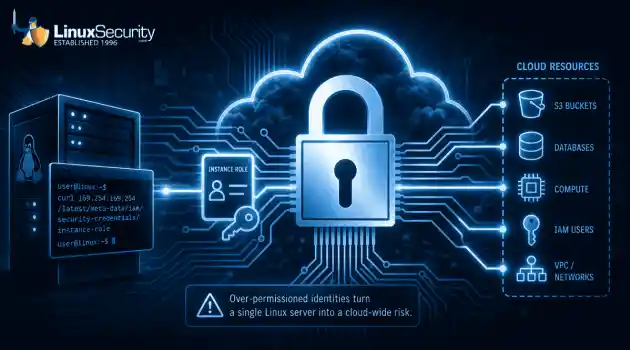
 For years, we secured our Linux infrastructure by building walls: VPCs, security groups, and hardened SSH configurations. We treated the cloud like a virtual data center, assuming that if we kept the "bad guys" out of the network, our workloads were safe. . That model is no longer sufficient. Today, one of the most common paths from an initial compromise to a major cloud breach is the identity assigned to your Linux workload. When an attacker gains code execution on a Linux instance—through a...
 Jul 17, 2026
 security practices patch management
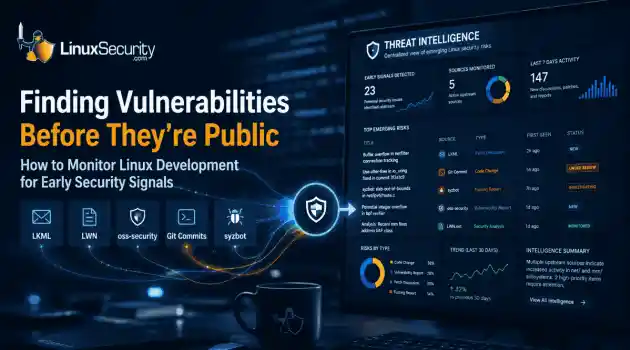
 Most of us don't hear about a kernel vulnerability until a CVE lands in our inbox or the vulnerability scanner starts complaining. By then, the patch isn't new anymore. Kernel developers may have been passing it around for review, arguing over the implementation, or revising it for days before anyone outside that community noticed it. None of those discussions are secret. They're sitting in mailing list archives, Git commits, and patch reviews where they've been the whole time. The strange...
Jul 14, 2026
 Linux security cyber attacks
 Every Linux server in your fleet produces thousands of events every minute. From journald logs and auditd records to kernel-level eBPF hooks, your systems are constantly talking. Most of that noise is just the mundane churn of system services, CI/CD runners, or routine administrative automation. But among that noise, an attacker might be establishing a foothold, moving laterally, or setting up persistence. The challenge for any security team is: how do you separate the routine from the...
Jul 13, 2026
 open-source infrastructure risk
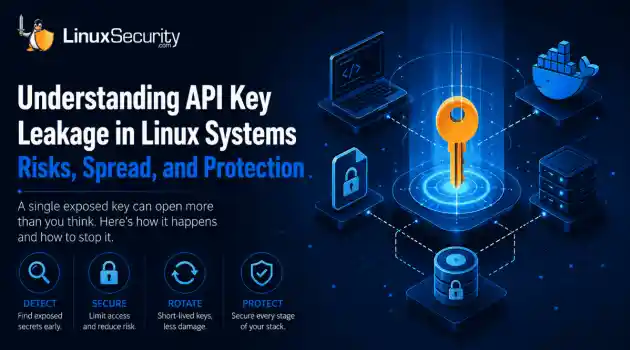
 Security scanners flag exposed API keys in public repositories every day. The initial response is usually predictable: delete the commit, revoke the credential, and move on. That’s a mistake. . In a real Linux environment, an API key never stays in one place. By the time it hits a public repo, it’s already everywhere. It’s in the CI/CD pipeline. It’s in your container registry. It’s in the build logs. It’s in the backups. Git makes this worse because the history never dies. Deleting a file in...
Jul 11, 2026
 open-source rootkit
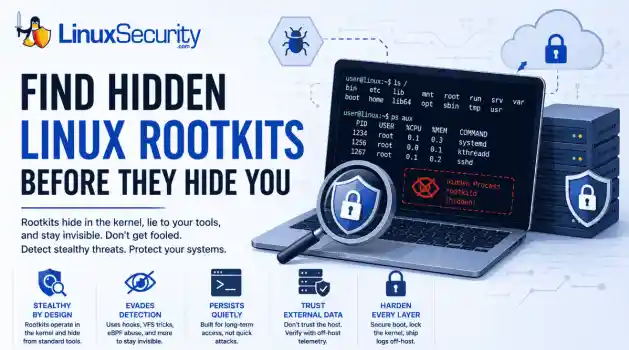
 Most of us think of Linux rootkits as ancient history—the stuff of 90s hacking forums and clunky malware that would crash your system if you looked at it the wrong way. But if you think they’ve gone away, you’re mistaken. They’ve just gotten smarter. . Modern attackers aren't using the noisy tools of the past. Today’s threats are surgical. Many of today’s most advanced Linux rootkits operate at the kernel level or abuse legitimate system features to blend in with normal traffic. They’re...
Jul 09, 2026
 Refine features
X Clear Filters
Get the latest News and Insights
Get the latest Linux and open source security news straight to your inbox.
Community Poll
Is continuous patching actually viable?
Loading...
Explore Latest Linux Security features
We found 29 articles for you...
102
 network securitydata protectionbackup strategies
Essential Cybersecurity Practices for Businesses to Protect Data
In this increasingly digital era, every business, no matter the size, has to be vigilant about its cybersecurity. Data breaches have become rampant over the past several years, costing even the top companies millions of dollars in damages. Hackers are always scheming to steal critical data and so, it is best to stay ahead of the game. . When it comes to protecting sensitive business and customer data, you need to implement the best and latest security solutions. Even if your business is small and consider it the last target for hackers, or use DIY security practices, it is important to ensure your security systems and applications are up-to-date in cases of a data breach. If you don’t know where to start, do not fret as this read will provide simple but powerful cybersecurity tips that you can implement today. What is Cybersecurity and Why Should I Bother? If you're a small business ownersmall business owner , you probably already know the importance of cybersecurity. Cyber attacks can bring down entire websites or critical network infrastructure. While larger companies can often withstand a DDoS attack, small businesses typically don't have the resources to recover from such an event. As a result, 60% of small businesses will close after suffering a cyber-attack. To minimize your risks, take the time to train your employees on basic Internet best practices. Despite the importance of cybersecurity awareness for small businesses, it's important to note that many small companies ignore the importance of cybersecurity. These companies have numerous devices connected to the internet at any given time, and a single breach can result in a major data breach. While you might not have any data on your own, you should invest in cybersecurity software and hardware to keep your data safe. Businesses are increasingly becoming the prime target of cybercriminals, and it's important to protect yourself and your business. Use Firewalls A firewall is usually the first line of defense againsthackers and cybercriminals. You’ll want to make sure you have both internal and external firewalls to protect your network and data. If you have employees working remotely, ensure they have firewalls in their devices as well. To ascertain compliance, consider providing them with firewall support. Firewalls have a number of benefits. They filter traffic and alert the user when a threat is detected. These devices are especially useful if the connection has a static IP address or is always on. They are generally installed alongside antivirus software. A personal firewall is usually a standalone product, a piece of software, or a hardware device with firewall firmware embedded. The latter is often used to set restrictions between in-home devices. If you don't need a separate firewall, a hardware firewall may be the best option. What Is Shorewall? If you have never heard of Shorewall, you should read this. Shorewall can also be useful for a network administrator, preventing access from malicious websites. Before installing Shorewall, read the documentation. Once you have installed it, you will need to run dos2unix against the configuration files to make sure they are correct. You can also find some sample configuration files in the Samples/one-interface directory. Once you've installed Shorewall, you will need to configure it. There are several settings you can adjust, including how to allow traffic and how to block access. First, you need to set the rules. These settings will allow or block traffic on certain ports. In this example, a firewall will block access to port 22000, which is a modified SSH port. In the next example, we'll use a custom configuration to allow SSH forwarding from an external TCP port 3022 to an internal server on a private network using standard SSH port 22. Document the Cybersecurity Policies Next, you’ll want to make sure you document all your company protocols for determining the practices as well as policies for cybersecurity. If you own a small business but are newto IT security compliance, check the Small Business Administration Cybersecurity portal for checklists, online information, and other relevant information. A cybersecurity policy can be an essential part of any company's information security strategy. It is important to follow guidelines that address both the general threat environment and the needs of the industry. Almost every company has proprietary data and employees' personal information at risk. Linux Cybersecurity Education & Training is Integral to Growing Your Career There are many benefits to a career in cyber security, including an excellent work-life balance. Most cybersecurity professionals work less than 40 hours per week and have the flexibility to enjoy their personal lives. This is because cybersecurity jobs are highly sought-after. Cybersecurity training programs can help you get the necessary skills. In addition to the excellent pay, careers in cyber security also offer lots of job security. These positions are in high demand and can be rewarding, too. Today's cybersecurity industry is booming. According to the U.S. Bureau of Labor Statistics, there are approximately 3.5 million open positions in the cyber security field. According to the Enterprise Service Group, 51% of IT decision-makers will struggle to fill open positions in the field by 2021. According to the World Economic Forum, cyber-attacks and data breaches are among the top five global concerns. Therefore, a career in cybersecurity is an exciting option for students interested in advancing their careers and helping others. Make Backups Regularly Having backups of your important documents is essential. In addition to digital backups, you should also maintain physical copies of all your documents. This way, you'll have a complete backup. For your data to be fully protected, you should organize and store the backup documents in an organized manner. Once you have the files organized, you can easily retrieve the data if necessary. The third step in data backup is tokeep a copy of each important document in a safe place off-site. Backing up your data is a must, regardless of the size and type of your business. If you don't back up your data, you could lose years of work and memories. A data backup is like a digital parachute in case of an emergency. Unfortunately, only 30% of people back up their data on a regular basis. The best backup practices are only followed by about 20% of IT professionals and personal computer users. A full 93% of companies will not survive one year without a recovery plan, so you need to be prepared. Cybersecurity is critical in this day and age using SIEM tools or alike. Data breaches come with hefty fines when customer information is breached and a simple attack can ruin your business. Avoid becoming a victim by implementing the security measures above. Implement Passwords and Multi-Factor Authentication When it comes to making passwords, there will always be that one person who uses their middle name or birthday. Hackers have powerful tools with algorithms that are able to guess millions of passwords in seconds. So, if your password falls in the easy or obvious category, you become potential prey. It is advisable to use a strong password of at least 12 characters, with a mix of capital and lowercase letters, numbers, and symbols. In addition, use multi-factor authentication to add a layer of security to your network. When you log into an application, a website, or the cloud, you'll probably be prompted to enter a second authentication factor. This may be something as simple as a password or OTP. But what if you don't have any of these tools? How can you be sure you're being authenticated? Luckily, multi factor authentication can help keep your identity secure. Here are some examples of situations where this technique might be the right solution for your needs. Linux Two-factor Authentication For Linux users, installing two-factor authentication can be a good way to prevent login-based attacks. The two-step verificationprocess also protects against social engineering attacks, as a victim's password is no longer enough to gain access to information. However, many Linux users are not happy with the default implementation of the two-factor authentication (TFA) feature. The two-factor authentication process is particularly important for people who use digital passwords to log in to their accounts. Passwords are often just the first stumbling block in a cybercriminal's journey to access personal information. The COVID-19 pandemic is an example of how a password-only system can be breached. But with two-factor authentication, hackers can't use stolen passwords against you. Secure the Business Wi-Fi Network Wi-Fi networks are one of those points where people can gain access to your system and install malicious software. Ensure your business network is secure, encrypted, and hidden from the public. Staff members should also safely encrypt their personal networks as their security is vital to your company’s safety. Make sure that your wireless router uses a secure password. This password should be at least 8 characters long and should contain uppercase, lowercase, numbers, and symbols. A firewall is also a good option to protect your wireless network from malware. These tools prevent hackers from accessing your network, preventing unauthorized access and minimizing the risk of a wifi attack. Most wireless devices are shipped with default administrator passwords, which can be easily obtained from the Internet. In addition, you should disable remote administration of your network to make it harder for an attacker to connect. To do this, set your router to require users to log in using a username and password that is unique to their network. Once you do this, you can rest easy knowing that your wireless network is protected from WiFi attacks. Install Robust Anti-Virus Software Regardless of how trained and experienced you and the employees are, you are prone to mistakes at some point. Installing robust anti-virusand anti-malware software on all your devices adding an extra layer of protection, particularly against phishing will go a long way in protecting your company. Know Your Company Inside Out Proper cybersecurity begins with proper knowledge of your company and points where hackers are likely to target. Think hard or use an IT professional to figure out whether hackers would be more interested in your employee's personal information, customer data, or intellectual property. Once you figure out the points of interest, ensure those areas have a high level of security and have a maintenance plan to ensure that remains the case. Conclusion The Linux operating system is used on most cloud servers, and this fact is important to know. More companies are moving their data to the cloud. A good Linux cybersecurity professional will have a deep understanding of the key areas of this operating system to ensure that their system is secure. You should protect the integrity of your data. This ensures that no one can alter it or corrupt it. Data should be available when a user needs it. This requires securing your system from the outside world by implementing strong user authentication. Keeping your system secure also means enforcing all privacy laws. When choosing your software, make sure that you choose a system with strong security features. . Safeguard critical enterprise information through fundamental Linux security methodologies, guaranteeing strong defenses against unauthorized access.. Cybersecurity Strategies, Linux System Security, Data Security Practices, Business Data Protection. . Justice Levine
 Jun 01, 2026
•
Jun 01, 2026
•
102
 data protectionencryption practicesdisk encryption
Disk Encryption: An Authoritative Guide for Linux Users
A lost Linux laptop or a recycled server drive can leak everything on it — from system files to sensitive data. Disk encryption changes that. It locks the entire drive, and nothing can be read until the right key is supplied. In this guide, we’ll look at what disk encryption does, how it works on Linux, where it helps most, and the options that are still worth using in 2025. . What Is Disk Encryption and Why Does It Matter Disk encryption turns the contents of a drive into unreadable code. Without the key, nothing on the disk can be accessed. Full disk encryption is the strongest form — see our sysadmin-focused guide for the deep dive. On Linux, the process is transparent once you log in. The operating system handles decryption automatically, so files open and save as they normally would. File encryption works differently. It lets you choose what to secure. Disk encryption takes the broader approach: it covers everything, including the operating system, swap space, and temporary files that users don’t usually see. Why does this matter? Because unprotected storage leaks data in ways people often overlook. A laptop left in an airport, a drive sent back for warranty service, or a retired server put into recycling can all expose sensitive information. With disk encryption, the hardware is locked. Without the key, it’s useless. Regulators recognize this. Frameworks like HIPAA and GDPR treat encryption as the standard for protecting data at rest, and fines often follow when it isn’t in place. How Disk Encryption Works in Linux Linux disk encryption protects everything written to the drive. Data is encrypted before storage and unlocked only after the correct passphrase is provided. To the user, the process is invisible. The system boots, the password is entered, and files open as if nothing special is happening. Underneath, everything on disk stays locked. Most modern distributions — Ubuntu, Fedora, Debian — rely on the same two components: Dm-crypt :handles encryption and decryption at the block level. LUKS2 : manages passphrases, recovery keys, and metadata to keep the setup consistent across systems. That pairing is now the baseline for linux disk encryption. It’s what makes the process seamless, whether you’re encrypting a laptop, a server, or even a removable drive. Performance used to be the trade-off. On older hardware, encryption could slow down disk operations noticeably. With today’s CPUs, AES instructions offload much of the work. In practice, the slowdown is small enough that most users never see it — but the protection it provides is significant. Disk Encryption Security Concerns Disk encryption keeps data safe on a powered-off or lost device, but it doesn’t block every type of attack. Once the system is unlocked, other risks come into play. Weak passphrases can be guessed or brute-forced. For example, a short password like “1234” can be cracked in seconds, even if the underlying encryption is strong. Standards bodies stress that a strong key matters as much as the cipher itself. Malware or keyloggers can steal the passphrase at the moment it’s typed in. Even with disk encryption in place, if malware is running on the system, it can capture the passphrase as you type. Phishing and supply chain exploits remain a real threat. Incidents like the supply chain attack targeting Telegram bots showed that attackers don’t need to break encryption if they can trick users or compromise the software supply chain. Unpatched operating systems open another door. Once the machine is running, exploits against an outdated kernel or library make the encryption irrelevant. Disk encryption stops data leaks from stolen hardware, but keeping a system secure also requires updates, monitoring, and careful handling of credentials. That’s why pairing disk encryption with strong passwords and regular updates is considered baseline security. Benefits of Disk Encryption for Linux Systems Thereal strengths of disk encryption show up in ordinary situations — the kind that don’t make headlines but still cause real damage when they go wrong. Lost or stolen devices . A laptop forgotten at airport security, or an external drive slipped into the wrong bag, won’t leak a thing without the passphrase. To whoever finds it, the hardware might as well be blank. Compliance . Regulators don’t care whether a breach happened by accident or through theft. Under HIPAA, GDPR, and CCPA, unencrypted data at rest is a violation. With disk encryption in place, the same lost laptop doesn’t trigger fines. End-of-life protection . Old servers and workstations often carry sensitive data long after they’re powered down. Destroying the encryption keys — a crypto-erase — wipes that data permanently. The drive can be resold or recycled without risk. Disk encryption doesn’t make a system bulletproof, but it takes some of the most common and costly risks off the table. Limitations of Disk Encryption While disk encryption is powerful, it’s not a cure-all. Users need to understand its trade-offs to use it effectively. Performance Impact of Disk Encryption on Linux : Disk encryption puts extra work on the system, and the impact shows up differently depending on the hardware. On an older desktop, copying a big folder can feel sluggish. On newer machines, the difference is usually small enough that most people won’t notice. Key Management Risks in Disk Encryption : If disk encryption keys are lost, the data is permanently inaccessible. Weak passphrases or missing backups create the biggest risks. Secure backups and multiple recovery keys are essential so one mistake doesn’t lock out an entire system. Why Disk Encryption Does Not Protect Data in Transit : Disk encryption protects data at rest but not in transit. Once the system is unlocked, files and memory are just as exposed as on an unencrypted machine. Malware and exploits can still steal information or move laterallythrough the network. Disk encryption won’t stop an attacker who steals data after you’ve logged in. Disk encryption does one job well: it protects the files on a drive if the hardware goes missing. Once the system is open and running, though, other risks take over. The risks and downsides of enabling full disk encryption It’s one of the strongest ways to keep data safe at rest — but it’s not without costs. Lose the keys, lose the data. A forgotten passphrase or a damaged LUKS header usually means the drive is gone. Backups are the only safety net. Performance isn’t free. Modern CPUs handle it well. On older hardware or in heavy I/O jobs, you’ll feel the drag. Recovery gets harder. Swapping disks, migrating, or fixing corruption takes more planning when everything is locked. Boot isn’t bulletproof. A misconfigured initramfs or an unsigned bootloader can give an attacker with hands on the machine a way in. Memory can leak. Cold-boot and side-channel attacks are still possible if a device is left sleeping instead of shut down. And once it’s open, it’s open. Malware, phishing, and remote exploits work the same on an encrypted system as they do on any other. Best practice: Back up keys and headers in safe places, use strong passphrases, lock down boot, and shut the machine off when you walk away. Encryption protects the drive itself — the rest still depends on you. Linux Disk Encryption Options in 2025 Linux offers a handful of disk encryption tools, but only a few are still worth using in practice. Tool/Method Best Use Case Pros Cons Status dm-crypt with LUKS2 Default on most distros Strong, well-maintained Some setup knowledge Recommended VeraCrypt Removable or cross-platform media Free, portable Not kernel-native Recommended Enterprise solutions Hybrid cloud / large fleets Centralized key management Cost, added complexity Recommended eCryptfs / loop-AES Legacy systems only Still found in old setups Weak defaults, outdated Avoid For most Linux users, disk encryption through dm-crypt and LUKS2 is the default. It’s built into Ubuntu, Fedora, and Debian installers and works reliably across laptops and servers. VeraCryp t still has a place when drives need to be moved between operating systems. Older tools like eCryptfs or loop-AES are mostly historical; they’re better replaced than deployed. Best Practices for Deploying Disk Encryption Getting the most out of disk encryption depends on how it’s set up and maintained. A few practical steps go a long way. Enable at OS install for a clean deployment. Back up recovery keys securely. Test recovery and crypto-erase before production. Use strong, unique passphrases. Don’t rely solely on FDE — combine with secure boot, patches, and backups. Handled this way, disk encryption stays reliable not just for lost devices, but across the full life of the system. FAQ: Disk Encryption on Linux Does disk encryption slow Linux? On a modern laptop, barely. Most CPUs have built-in instructions that take the load off, so you won’t notice it when browsing or editing documents. Copy a huge folder on older hardware, though, and the slowdown becomes obvious. Do I really need it on a personal machine? Yes. A laptop left in a coffee shop or an external drive forgotten at the office can expose everything on it. Disk encryption makes the device look like random noise until the right key is entered. How is file encryption different from disk encryption? File encryption is pick-and-choose. You decide which documents or folders to lock. Disk encryption covers the whole drive — even swap space and temporary files you never think about. That’s why it’s the standardchoice for Linux systems now. Conclusion: Why Disk Encryption Should Be Your Baseline The case for disk encryption is clear. It keeps stolen laptops from leaking data, meets compliance requirements under HIPAA and GDPR, and makes device retirement safe with crypto-erase. In 2025, linux full disk encryption is no longer optional — it’s expected. Most distributions include it by default, and it’s one of the simplest ways to keep your data safe. . What Is Disk Encryption and Why Does It Matter Disk encryption turns the contents of a drive into un. linux, laptop, recycled, server, drive, everything, system, files. . MaK Ulac
Sep 23, 2025
•

102
 data protectionbackup solutionautomation
Top Backup Tools for Linux: Prevent Data Loss from Ransomware Attacks
Linux ransomware is on the rise , and an attack on your system could result in the loss of critical data and significant downtime - if important files have not been backed up frequently and stored securely. . The Linux ransomware attacks rise, which can threaten to compromise your data security and cause operational downtime and data loss. To prevent this, a backup strategy becomes necessary. This article outlines reliable techniques to securely back up your Linux systems to guarantee that your data remains intact even in the face of a cyber attack. We present six top backup software for Linux desktops, servers, and enterprise systems. These tools allow you to automate backups, minimize risks, and protect information. These solutions offer convenience, guarantee the security of your backups, and enable swift recovery and continuity in your operations. In this article, you'll learn about our six favorite Linux backup solutions and how they compare: Timeshift Kbackup Rsync Duplicati Amanda Bacula Top Linux Backup Tools Comparison Table What Is Data Backup & How Can It Mitigate the Risk of Data Loss from a Ransomware Attack? Data backup involves copying critical files to secure and high-performing external systems to prevent a single point of failure (SPOF). A recent backup survey highlights the importance of backups; it found that while 78% of users back up their data, only 33% do so regularly. So, backing up your desktop and server regularly is critical to protect against data loss during a ransomware attack. You also should check that these files are not corrupted and that they are stored securely. This guarantees that your backups are immediately available for restoration, which allows quick recovery and minimal downtime after an attack. However, while the digital cloud is a popular storage option, as administrators can automate the backup process, statistics indicate that about 50% of users do not use physical backups for their stored data. Consequently, it is advisable to complement cloud backupswith physical storage solutions to improve security and provide data protection. It should be noted that if users implement a proactive, defense-in-depth security strategy and adhere to security best practices, they can greatly reduce their ransomware risk—but cannot eliminate it entirely. Users must maintain up-to-date servers and endpoints, implement the principle of least privilege for user accounts, closely monitor network activity and system logs, and audit systems regularly. Thus, a backup plan should be considered a critical “layer” of any successful cybersecurity strategy. 4 Top Tips for Secure Data Backup While 85% of ransomware attacks still target Windows systems, Linux is becoming an increasingly popular target due to the high value of the devices it powers, such as enterprise and government servers, web services, and large databases. Organizations capable of paying ransoms to restore operations and data are especially at risk. These attacks, which often use advanced encryption and extortion tactics, can lead to serious consequences such as data loss, damage to reputation, high recovery costs, and extensive downtime. Data backup remains the best defense against data loss should you suffer a ransomware attack. 56% of organizations recover their data from backups, compared to 26% that pay the ransom. So why are ransomware victims often unable to restore their systems from their backups? Nearly every admin and organization has backups; however, certain principles must be followed to implement a secure, successful data backup strategy. Data should be backed up frequently to meet recovery point objectives and keep potential data loss acceptable. Recovery time objectives should be established based on an acceptable period of downtime, as restore time will often determine the true impact of a ransomware attack. We recommend using folder comparison and synchronization software like FreeFileSync to resolve the differences between a source and a target folder so that only the minimum amount of datanecessary is transferred. Ransomware attacks can spread across networks, affecting backups as well. To protect backups, use a backup solution that creates unchangeable snapshots and keeps them in a read-only state to prevent encryption by ransomware. Alternatively, an “air-gapped” backup system, isolated from the rest of the IT environment, can also protect backups from malware. However, this method may be costly and complex, and there’s a risk that backups may capture the ransomware if a backup occurs before an attack is detected. Therefore, it’s necessary to check backups regularly to confirm they are not corrupted. Diversification is also a key consideration when it comes to creating and implementing a successful data backup strategy. Admins and organizations are quickly learning the importance of defense-in-depth in any type of security. Redundancy and resilience of backups can be accomplished with a “three-two-one” backup strategy, which guarantees that three copies of data are kept, with two on different media formats, one of which is off-site. This strategy makes it highly difficult for a malicious actor to encrypt and lock up every copy of their target’s data. Finally, you must restore and recover data from backups with minimal downtime in the event of a ransomware attack. This technical and time-consuming process requires that sysadmins and IT teams practice regularly to identify and improve any potential weaknesses. Luckily, the cloud facilitates easy recovery testing and makes data readily accessible. Bonus: Comparative Table of The Best Linux Backup Tools This article is extensive and contains a wealth of information. To assist you in navigating through the Linux backup software we have reviewed, we have compiled a general comparative table. We understand the importance of clear, accessible information, and this table aims to provide concise comparisons. Rsync Duplicati Timeshift Kbackup Amanda Bacula Easy to set up & configure? Yes (for simpleinstances) Yes Yes Yes Yes No Full client-side encryption? No Yes Yes Yes Yes Yes Supports file compression? Yes Yes Yes Yes Yes Yes Creates automated backups? Yes (with shell scripting) Yes Yes Yes Yes Yes Supports full backups? No Yes Yes Yes Yes Yes Supports incremental backups? Yes Yes Yes Yes Yes Yes Command-Line? Yes Yes Yes Yes Yes Yes GUI? Yes (Grsync) Yes Yes Yes Yes Yes Continuous data protection? No Yes Yes No No Yes Best suited for: Servers Desktops & servers Desktops Desktops Enterprise servers Enterprise servers Open-source version available? Yes Yes Yes Yes Yes Yes 6 Best Linux Backup Tools to Mitigate Data Loss Now that you understand the importance of data backups, we will analyze six top backup solutions for Linux. We provide a detailed overview of each tool, including general descriptions and highlighting their advantages. This analysis will help you compare the features and benefits of each tool. We recommend that you review all the tools sequentially, assess their capabilities, and then select the one that best suits your needs. Timeshift (for Desktops) Timeshift is one of the most popular Linux desktop backup tools, and LinuxSecurity users and team members rave about it. It is quick and easy to use, comes pre-installed with many popular Linux distros, and is available in the distribution repository. Timeshift supports Btrfs, a modern copy-on-write filesystem that is out of the box. Its Setup Wizard makes configuration simple, and setting up a backup configuration in Timeshift takes less than a minute. Additionally, Timeshift for Linux offers functionality similar to the System Restore feature in Windows and the Time Machine tool in MacOS. To protect systems, it takes incremental snapshots of the filesystem at regular intervals. These snapshots can later be restored to reverse any changes made to the system. It is important that Timeshift is designed to protect only system files and settings. User files such as documents, images, and music are notprotected. ✅ Why do we love Timeshift? Timeshift is ideally suited for backing up Linux desktop environments. The tool is fast and easy to navigate, which makes it accessible to users of all skill levels. Timeshift supports the Btrfs filesystem right out of the box, which improves the security and reliability of backups. Setup Wizard makes setup and configuration simple and quick. Users can create system snapshots at any moment ( Timeshift allows for multiple levels of snapshots, including Hourly, Daily, Weekly, Monthly, and Boot). 📆 Last update: The last update to Timeshift was made three years ago. 📥 Install Timeshift: For detailed instructions on how to install Timeshift, please visit the Timeshift GitHub page. These guidelines will help you set up and start using Timeshift on your system. Kbackup (for Desktops) Kbackup is a user-friendly, highly portable backup tool for both Linux and Unix that enables users to create automated, unattended backups. It creates archives, compresses them using the tar and gzip utilities, and then creates backups. Kbackup is highly reliable and supports full or incremental backups. It also offers encryption and double buffering for added security, support for tape drives, floppies, or removable media, and remote backup across networks. Kbackup has a menu-driven interface and a Command Line interface that can be included in automated scripts. ✅ Why do we love Kbackup? The software provides high reliability for securely storing data. It is designed to perform automated backups, which makes the process of data protection easier. The software supports full and incremental backups for flexibility, depending on your data protection needs. It can handle backups on various storage media, including tape drives and removable media, and also supports remote backups over networks. Features such as compression, encryption, and double buffering are available to enhance the security and efficiency of backups. The software has a user-friendly menu-driven interface and acommand line interface, ideal for integration into automated scripts. It can be easily adapted across different environments. 📆 Last update: January 9th, 2025. 📥 Install Kbackup: Visit the project’s GitHub page for detailed installation instructions. Rsync (for Desktops & Servers) Rsync is a simple but powerful utility that comes pre-installed with many popular Linux distros or is available in the repository. It is memory-friendly and can do anything a file manager can do from the Command Line, using a user-friendly command syntax. For instance, you can synchronize two directories by deleting existing files from the destination directory and copying all files from the backup directory using the command rsync -av --delete /backup/ /destination/. While rsync isn’t strictly a backup application, it’s the foundation for many of them. It’s quite possibly the most versatile file transfer application available. It was designed years ago to synchronize two files efficiently. But now, it has evolved into a powerful command-line tool to maintain files across different systems. Rsync supports any Cloud storage destination available online, including Google Cloud and an Amazon AWS instance. You can transfer backup files to remote storage using rsync with SSH ( from most modern desktops, this will automatically use SSH, but if it doesn’t, you can manually tunnel the file transfer through SSH). 🔴 Note: Rsync also has a GUI called Grsync that can be installed from your distro repository. ✅ Why do we love Rsync? These tools are ideal for backing up both Linux desktops and servers, which provide complete data protection across your entire infrastructure. Users can perform any action that a file manager can from the Command Line with a user-friendly command syntax. The tool supports incremental backups, which facilitates easy adaptation to an increased backup schedule and minimizes the storage footprint. It offers the option to tunnel through SSH, which adds an extra layer of security to protectdata during transfer. This tool supports both local and remote backups. It preserves file permissions and ownership settings during the backup process. Updates the file system and the directory tree after an operation that backs up new files on an already-established backup directory structure. They support both anonymous and authenticated rsync daemons, which is ideal for mirroring data across different locations. 📆 Last update: April 6th, 2024. 📥 Install Rsync: To install Rsync, you can find complete installation instructions on the Rsync GitHub page. Duplicati (for Desktops & Servers) Duplicati is a free and open-source Linux backup software that supports many popular third-party storage providers, including Google Drive, Dropbox, OneDrive, Amazon S3, and Google Cloud. It also stores backups on various remote file servers using SSH, making it easy to use an off-site destination far away from the original data—an important component of securing backups against ransomware. This feature also makes it a viable solution for desktop users. Duplicati supports incremental backups, so only changed parts need to be transferred. Theol features a built-in scheduler and auto-updater. It protects data privacy with AES-256 encryption and supports GPG encryption for backups. It also regularly tests backup content to detect broken backups on corrupt storage systems before it’s too late. ✅ Why do we love Duplicati? Duplicati provides data security by encrypting it before upload, which protects your information against unauthorized access. The software compresses files and supports incremental backups, which reduce both storage space requirements and bandwidth usage. Duplicati includes an integrated scheduler that automatically updates backups to keep your data protection up-to-date without manual intervention. It is available as a user-friendly graphical application and a command-line tool. Under Linux, Duplicati utilizes the Logical Volume Manager (LVM) to back up open or locked files. Users can adapttheir backup operations with various filters, deletion rules, and options for data transfer and bandwidth management. Duplicati regularly tests the integrity of backups to identify and address storage issues that may lead to corrupted data. 📆 Last update: Duplicati received its last software update in November 2024. 📥 Install Duplicati: Duplicati can be downloaded from the project’s GitHub page for free. Amanda Community (for Enterprise Servers) Amanda Community Edition is a free version of Amanda, the popular open-source data Linux backup and recovery software. It enables IT administrators to set up a single master backup server to back up many servers and workstations running multiple versions of Linux or Unix. Amanda Community Edition provides a rapid installer to minimize installation time. It also has an intelligent scheduler to automate backups. Amanda offers database, application, broad platform protection, and automated data retention in the event of transmission faults. Backup fault tolerance guarantees that initiated backups will remain synced in the case of network interference and will not compromise the entire backup. 🔴 Note: Amanda Community is available for free, while its professional version, Zmanda Pro, is a paid service that offers additional features and functionalities. ✅ Why do we love Amanda? This system enables the configuration of a single master backup server that backs up numerous servers and workstations using various Linux or Unix versions. An intelligent scheduler automates the backup process for timely updates without manual intervention. Amanda guarantees that backups remain uninterrupted and synchronized, even in network disruptions, which eliminates the need to restart the process. Users can choose from various storage media options to meet their backup needs. Maintains secure communication between the server and client via OpenSSH to allow secure backup of machines in a DMZ or on the Internet. Automated disposition policies streamline the management ofbackup lifecycles and simplify compliance and data control. 📆 Last update: Amanda was last updated on August 15th, 2023. 📥 Install Amanda: Amanda binary packages can be downloaded from the project’s website. Source packages can be downloaded from the project’s SourceForge page. Bacula (for Enterprise Servers) Bacula is a popular enterprise-level Linux backup solution available in all major Linux distro repositories. Linux security admins report that it can be difficult to set up, but once you do, you can easily manage its settings via a GUI or the Command Line. Bacula can create automatic backups on a remote or local server, manage backups using a CLI or a GUI, add volume pools, add storage blocks, include or exclude files, and more. It uses Transport Layer Security (TLS) authentication, supports virtual backup and duplicate job control, and can create accurate backups with compression support. ✅ Why do we love Bacula? This software provides an enterprise-level backup solution for data protection that is suitable for large-scale operations. It enables automatic backups on both remote and local servers. The software can be easily managed through a graphical user interface (GUI) or the Command Line. It employs Transport Layer Security (TLS) authentication to secure data transfers and improve the integrity and confidentiality of your backups. The system supports virtual backups, which allow seamless data protection in virtualized environments. It includes support for cloud storage and provides scalable and accessible backup storage options. The software offers duplicate job control to manage backup tasks and prevent redundant data storage. It allows data compression to increase the accuracy of backups, reduce storage requirements, and speed up data transfer. 📆 Last update: The software received its latest update on September 12th, 2023. 📥 Install Bacula: While the open-source tools required to build a Bacula enterprise backup system can be downloaded for free, Bacula also offerssubscription-based enterprise data backup solutions that combine Snapshots, advanced deduplication, single file restores, single mailbox restores, and data verification into one platform. Bacula Enterprise also includes assistance with onboarding and implementation and customized, ongoing support. Key Takeaways for Secure Data Backup on Linux The ransomware threat is here to stay and must be proactively addressed—but also prepared for. Data backup is an important part of secure Linux administration and can enable you to restore your system in the event of ransomware. While keeping on top of backups is difficult for most admins, using one of the automated, cloud-based tools introduced in this article can save time and improve your system's security. When choosing a Linux backup tool, admins should consider functionalities like database support, the nature of the backup media, encryption support, and supported data or file formats. It is critical to do your research and select a reliable backup solution, such as one of the tools featured in this article, to prevent the potential compromise of sensitive information. Remember, prevention is far better than reaction when it comes to ransomware and other cyber threats. Invest in your backup strategy now. Should something ever go wrong, you’ll be very thankful you did! Have additional questions about secure data backup on Linux? Are you using one of these tools in your backup strategy or another tool you think we should cover? Please reach out to us on Twitter, ask questions, and share your experience. We love to discuss topics like this with others who share our passion for Linux and security! Top Linux Backup Tools Comparison Table Timeshift Kbackup Rsync Duplicati Amanda Bacula For Desktops? Yes Yes Yes Yes No No For Servers? No No Yes Yes Yes Yes Easy to set up & configure? Yes Yes Yes (for simple instances) Yes Yes No Full client-side encryption? Yes Yes No Yes Yes Yes Supports filecompression? Yes Yes Yes Yes Yes Yes Creates automated backups? Yes Yes Yes (with shell scripting) Yes Yes Yes Supports full backups? Yes Yes No Yes Yes Yes Supports incremental backups? Yes Yes Yes Yes Yes Yes Command-Line? Yes Yes Yes Yes Yes Yes GUI? Yes Yes Yes (Grsync) Yes Yes Yes (Baculum) Continuous data protection? Yes No No Yes No Yes Best suited for: Desktops Desktops Servers Desktops & servers Enterprise servers Enterprise servers Open-source version available? Yes Yes Yes Yes Yes Yes. The Linux ransomware attacks rise, which can threaten to compromise your data security and cause ope. linux, ransomware, attack, system, critical. . Brittany Day
Feb 24, 2025
•
102
 data protectionthreat mitigationsecurity best practices
Essential Cybersecurity Compliance Practices and Threats for Linux Users
Security is an essential consideration when using computers and other technological devices. Linux admins and organizations must be informed about applicable legal measures related to the safety of their systems to ensure compliance and protect against possible risks. . Seeking legal advice from a cybersecurity lawyer can be highly advantageous in mitigating security threats and facilitating compliance. Let’s examine cybersecurity regulations impacting your systems and data, the threats Linux users face, best practices for enhancing Linux security, and the future of cybersecurity regulations for Linux users. Understanding Cybersecurity Regulations Cybersecurity regulations are laws or rules that govern information security and the prevention of cyber threats. These regulations apply to several sectors, such as healthcare, finance, and government. Unfortunately, Linux users must learn about these regulations to meet the requirements and prevent their systems from being at risk. Some of the most significant cybersecurity regulations include: HIPAA: HIPAA, also known as the Health Insurance Portability and Accountability Act, is a law in the United States that deals with health information privacy. Users of the Linux operating system in healthcare facilities must meet HIPAA requirements. This is the one most Americans are familiar with. GDPR: GDPR stands for General Data Protection Regulation, the legal power to secure personal data in the EU area. GDPR rules apply to any Linux users who process individuals’ data. PCI-DSS: The Payment Card Industry Data Security Standard, often called PCI DSS , is a set of regulations that describes how to handle credit card information. Anyone dealing with credit card data using Linux is bound to comply with PCI-DSS policies. Linux users can ensure their systems are secure and conform to the existing security standards. Applying such measures can also prevent other types of security threats, reducing the chances of data violation. Practical Examples of Emerging Trends in Cybersecurity and Their Impact on Linux Users Let's discuss emerging cybersecurity trends and their practical implications for Linux administrators and DevOps engineers. How are advancements in Artificial Intelligence (AI) and Machine Learning , the proliferation of Internet of Things (IoT) devices , and the widespread adoption of cloud computing shaping cybersecurity practices for Linux users? I've collected a few examples to illustrate how these trends can be integrated into your Linux environments to enhance system security while ensuring compliance with evolving regulatory standards. Using this knowledge, you should be able to leverage these cutting-edge tools and strategies to safeguard your infrastructure. AI-Driven Intrusion Detection Systems (IDS) How it Works: AI-enabled IDS can analyze network traffic in real time, identifying unusual patterns that may signify a security threat. These systems can differentiate between normal and malicious behavior. Impact on Linux Users: Linux users can deploy open-source AI-driven IDS solutions like OpenAI’s Gym or TensorFlow within systems like Snort or OSSEC . Ensuring these tools are correctly integrated and maintained can help comply with emerging regulations that mandate advanced threat detection capabilities. Securing IoT Devices with Linux-based Gateways How it Works: Many IoT devices operate on Linux-based platforms. Linux gateways can be configured to use Network Firewalls and Access Control Lists (ACLs) to monitor inbound and outbound traffic, ensuring only authorized communications occur. Impact on Linux Users: As IoT regulations develop, Linux users might need to adopt these security practices to comply with new standards. For instance, securing smart devices in a home automation setup using Linux-based Home Assistant, configuring proper firewall rules, and network segmentation could be necessary to meet compliance. Encryption of Data in Cloud Storage How it Works: With the increasing use of cloud services like AWS, Google Cloud, or Azure , encryption becomes vital. Encrypting data at rest and in transit ensures that sensitive information is protected from unauthorized access. Impact on Linux Users: Linux users can use tools like GnuPG or Linux Unified Key Setup (LUKS) to encrypt data before uploading it to the cloud. As new regulations might require stricter data protection measures, ensuring compliance with solutions like Amazon S3 encryption or Google Cloud’s Key Management Service (KMS) will be crucial. By integrating these practical examples into our workflows, Linux users can improve their protection against threats and remain compliant with evolving regulations. Compliance Requirements for Linux Users Linux users must meet existing compliances, including data protection regulations, access operation, control, and incident response. They must also ensure their systems are correctly set to satisfy these needs and have the tools to secure themselves against malicious threats. Some of the compliance requirements for Linux users include: Data Protection: Linux users must ensure that the information stored on it is secure from other parties who should not access it. This includes measures such as providing the confidentiality of data through encryption, limiting access to data, and implementing measures of backing up and recovery. Access Control: It also warns Linux users that access to their systems is restricted to personnel. Some ways include authentication, authorization, accounting (AAA), and good passwords. Incident Response: Linux users need strategies to help them respond once a security threat surfaces. This encompasses incident response management and periodic security checks and evaluations. Linux users can be assured that their systems are protected and meet specific security standards and regulations. Moreover, adopting these measures may also prevent possible security breaches and/orthreats, thus enhancing security. Best Practices for Robust Linux Security The ways to secure Linux are configuration, use of patches , and vulnerability scans. Linux users must ensure that the systems they configure implement these best practices and have the tools and assets to combat these threats. Some of the best practices for Linux security include: Secure Configuration: Linux users must confirm that their systems follow the best security practices. This involves implementing secure password management practices and configuring intrusion detection and firewall systems. Vulnerability Scan: Regular vulnerability scans are needed for Linux users to find possible security issues. Patch Management: Linux users must install the most recent security updates on their PCs. Linux users may ensure their systems are safe from threats and significantly reduce the likelihood of security breaches. By implementing secure design, patch management, and vulnerability scanning, Linux users may confirm that their systems are safe and compliant with relevant security standards. Tools and Resources for Linux Security Linux users have a combination of tools available to improve their security. These tools and resources include intrusion detection systems, firewalls, and encryption software. Consider consulting a team of professional cybersecurity lawyers to guarantee that your security standards comply with all appropriate laws and regulations. Some of the tools and resources available to Linux users include: Firewalls: Linux users can use firewalls to limit system access and protect against potential threats. Encryption Software: Linux users can use encryption software to protect sensitive information from unauthorized access and disclosure. Intrusion Detection Systems: Linux users can use intrusion detection systems to detect potential security threats. Future of Cybersecurity Regulations for Linux Users New technology and changing securitythreats may influence cybersecurity laws, affecting Linux users in the future. Linux users must keep up with the most recent changes to cybersecurity laws and compliance standards as the operating system continues to gain popularity. Some of the trends that may affect cybersecurity regulations for Linux users include: Artificial Intelligence and Machine Learning: The increasing use of artificial intelligence and machine learning in cybersecurity may lead to new regulations and guidelines for Linux users. Internet of Things (IoT): The growing number of IoT devices may lead to new security threats and regulations for Linux users. Cloud Computing: The increasing use of cloud computing may lead to new security threats and regulations for Linux users. By staying informed about these emerging trends and developments, Linux users can ensure their systems are secure and compliant with relevant security regulations. Our Final Thoughts on Cybersecurity Regulations and Compliance Cybersecurity regulations and compliance requirements are critical for Linux users to protect their systems from potential threats and provide compliance. By understanding these regulations and implementing best practices for Linux security, Linux users can protect their systems and confirm compliance. Linux users should consult a cybersecurity lawyer to guarantee they meet all the necessary compliance requirements. Cybersecurity lawyers play a critical role in today's digital age by safeguarding entities and individuals from illicit data access, managing the legal aspects of cybercrime, and ensuring compliance with cybersecurity laws and policies. Their expertise is essential for navigating the complexities of cybersecurity threats and implementing effective strategies to mitigate risks and protect sensitive information. . Mitigate security threats and achieve compliance with essential cybersecurity practices for Linux users and systems.. security, essential, consideration, using, computers, other,technological, devices, linux. . Brittany Day
Sep 27, 2024
•
102
 data protectionGnuPGemail encryption
How to Securely Send Encrypted Emails on Linux for Data Protection
Email encryption is a great way to enhance your organization’s communication security by protecting your email content and ensuring unauthorized individuals can’t read the information. . Research shows that 94% of organizations have experienced phishing attacks . However, only some take these risks seriously until an incident happens with them. In the words of Edward Snowden, “Arguing that you don’t care about the right to privacy because you have nothing to hide is no different from saying you don’t care about free speech because you have nothing to say.” With increasing data security and privacy risks, organizations must implement advanced security measures like encrypted emails. This article will explore encrypted emails, their importance, and how to send them. Understanding Encrypted vs. Secure Email Encrypted emails are different from secure emails. Understanding their differences is vital if you want to implement email security. It will help you choose a suitable security mechanism based on your communication needs and your required confidentiality level. What’s an Encrypted Email? An encrypted email is an email whose message content is encoded and transformed into an unreadable, secure format called ciphertext through an encryption technique. This ensures only those senders and receivers with appropriate keys or access permissions view and access the content. Encoding an email’s content is called email encryption, which helps protect sensitive data from harmful exposure or cyberattacks. Tools like GnuPG , S/MIME , etc., are used for end-to-end email encryption. In end-to-end encryption, emails are encrypted at the sender’s end and are meant only for the intended receiver to decrypt them on their system and view the content. The recipient and the sender must typically have an encryption code or key to access the email. This process happens automatically if both sides leverage an email client supporting encryption. An encrypted email typically hasthese features: Cryptographic keys - one public (that the sender uses for encryption) and one private (that the recipient uses for email decryption) Transport Layer Security (TLS) to protect data transmission between servers Secure/multipurpose Internet mail extensions (S/MIME) for email encryption Digital signatures for email verification What Is a Secure Email? A secure email has protective measures implemented for its safe transmission over networks. It employs security protocols like Transport Layer Security (TLS) or Secure Sockets Layer (SSL) to secure the connection between the user’s web browser and web server. This protects data from malicious intent and ensures an email’s integrity, authenticity, and confidentiality. “Secure email” is an umbrella term that includes securing emails through various protection mechanisms rather than the content itself. A secure email doesn’t necessarily use end-to-end encryption but also many other security mechanisms, such as: Multi-factor authentication (MFA) to add another security layer through OTPs, facial recognition, fingerprint scans, etc. Strong, lengthy, and unguessable passwords make it challenging for hackers to access accounts Personalized security questions (or choosing one from the given list and using a wrong answer) to prevent account hacks Digital signatures to validate email integrity Access controls so that only authorized people have the email’s access Malware protection to scan links and attachments for threats Anti-phishing tools to prevent phishing attacks In addition, email security involves making users aware of cybersecurity risks, recognizing attacks, maintaining secure communications, and meeting compliance requirements. Differences Between an Encrypted and Secure Email Parameter Encrypted Email Secure Email Focus Anencrypted email is encrypted to secure content so only authorized people can access it. A secure email is an umbrella term that includes different protocols and secure measures to protect an email’s integrity and keep it confidential. Priority Securing the content of an email Securing the connection in which the email is being transmitted over a network Security mechanisms Mainly uses end-to-end encryption email security mechanism. It can also include TLS. Apart from end-to-end encryption, it can have several email security mechanisms such as SSL, multi-factor authentication, anti-phishing and anti-malware, and digital signatures. Goal Email encryption safeguards an email’s content from eavesdropping, data exposure, and cyberattacks. Even if someone intercepts it, they can’t read the email content without the decryption key. Its goal is to provide email and connection security from malware, data breaches, phishing attacks, and other cybersecurity risks. What Is the Importance of Encrypted Email and Secure Email in Data Protection? Both encrypted email and secure email are essential. The main focus is data security and these two are just two ways to achieve it and avoid data exposure, phishing threats, and other cyberattacks. Importance of Encrypted Email In encrypted emails, the content is first scrambled or encrypted with the help of an encryption key to make the email unreadable without the decryption key. Unlike a secure email, an encrypted one is not sent in plain text. It then gets transmitted over the network to reach the intended recipient. Thus, your email message is safe even if the email connection security breaks at any point in the network. Even if someone successfully accesses the mail server or intercepts the network,they can’t read the email message, thanks to end-to-end encryption. Encrypted emails are helpful for these scenarios: Individuals who want to protect their personal or professional communication from hackers and identity thieves Organizations that host email services on their own must use email encryption Enterprises that send or receive sensitive information must use encryption email since cyberattack risks are higher for them Organizations that operate under heavily regulated industries, such as finance, health, military, etc., need strong email encryption Companies that must meet solid regulatory compliance requirements need email encryption to secure their communications Email service providers to protect their client’s information Importance of Secure Emails Sending secure emails is vital to protect your data privacy and security. They are helpful for the following scenarios: Protecting your personal or professional data against government-led surveillance, which is common in many countries from the US and UK to Germany, China, and Australia Safeguarding data from cybercriminals that may steal your identity, or money, or compromise your social accounts Securing your personal or business data from anti-parties and competitors who may misuse your data or discover your business secrets and strategies Preventing email service providers from monitoring your emails, sharing your information with advertisers, or selling your data to third parties. What Are the Benefits and Drawbacks of Sending Encrypted Email? Knowing the potential benefits and drawbacks of sending encrypted emails will help you make informed decisions when implementing email encryption in your communication network. Benefits Enhanced Security Research reveals that 95% of business leaders are stressed about email security. Hackers who can access your email content may expose confidential data and trade secrets to competitors or sell customer data onthe dark web. They can also use the data to carry full-blown attacks, such as phishing attacks, identity theft, etc., devastating a company based on reputation, money, and customer trust. Encrypted emails protect against email interception, ensuring only the designated receiver and sender read the email content. Even if someone can access your account, they can’t read the data without the decryption key. Data Privacy Security researchers have found that only 14% of email users encrypt their email communication, and 33% of users update their email passwords after a specific interval of time. Data privacy is instrumental for every individual or business. You don’t want your personal data, like social security numbers, health information, credit card details, personal photos, etc., to go public. Similarly, no company would want their internal matters exposed, which may harm their business. If you implement email encryption, you essentially keep your email content private from unauthorized people. Compliance with Regulations Businesses, especially from highly regulated industries, must adhere to regulatory requirements applicable in their areas, such as GDPR , HIPAA, PCI DSS , etc. These regulations ensure that businesses use customer data responsibly and adequately. Sending encrypted emails allows you to support the cause and stay compliant with these regulations. It also avoids the risk of penalties and upholds customers’ trust in your business. Identify Genuine Emails from Spam In 2022, 162 billion spam emails were sent to people every day in the same year. Encrypted emails help you identify genuine emails from spam or phishing emails. You can use an email encryption service with a digital signing feature to ensure an email has an authentic sender. This way, you can reduce malware and security risks. Drawbacks of Sending Encrypted Email Setup and Usage Complexity Implementing email encryption in your communication can be a time-consuming andcomplex process. Organizations generally use end-to-end encryption, S/MIME, or PGP for configuration, which are difficult for anyone and might introduce specific vulnerabilities. Compatibility Issues Encrypted emails require recipients to use a compatible decryption method to read the email content. The sender and receiver can have different or incompatible email clients or systems, hindering decryption. Possible Inconvenience for Recipients Many recipients, especially non-tech staff, may find accessing emails inconvenient as they require decryption keys. If a recipient has lost the keys, they can’t read the email. If the email content is crucial or time-sensitive, desired actions can’t be taken on time. Key Management Challenges Managing encryption keys can be challenging for many users. If they don’t know the implications and store them on public servers, hackers may access them and harm the organization. It happened in the real world when sensitive US military information was spilled online due to human error. Thus, users must be made aware of what email encryption is and how it works through proper training. Open Source Tools for Email Encryption Linux and information security (infosec) professionals prefer using open-source tools because their source code is publicly available and can be modified according to individual needs. So, if you want to implement email encryption in your communications, let’s explore some of the best open-source email encryption tools for Linux. GnuPG (GPG) GnuPG (GPG) is an open-source, accessible, and user-friendly command-line tool for Linux systems that helps implement end-to-end email encryption. This universally accepted tool lets you encrypt data and works across various email clients, including Apple Mail, Microsoft Outlook, and Thunderbird. Major GNU/Linux Oses have this tool installed by default. GPG fully implements the OpenPGP standard defined by PGP or RFC4880. This free software was introduced in1997 and has a GNU General Public license. It allows anyone to freely use, distribute, and modify it under the GNU terms. GnuPG’s latest version is 2.4.5. GPG’s key management system is versatile and has an access module with several public key directories. It’s feature-rich, boasting many front-end libraries and applications, a graphical user interface, front-end scripting tools, and more. GPG also supports Secure Shell (SSH) and S/MIME and easily integrates with various applications. How GPG implements end-to-end email encryption GPG utilizes public key encryption to safeguard emails. It combines symmetric cryptology (Secret Key) and asymmetric cryptography (Public Key + Private Key) to ensure high protection. To encrypt email content, you can utilize someone’s public key so that only the person with the corresponding private key can decrypt the email content. Here’s how to use GPG for email encryption. It also leverages embedded digital signatures to address the risks related to non-repudiation and data authentication. Download and install GPG on your Linux system Generate a public-private key pair Share the public key securely with the intended receiver Obtain the public key from the receiver Import into GPG the receiver’s public key Compose an email In the email client you use, choose the “Encrypt” button. GPG will encrypt the email message automatically. Send your email. GPG Benefits Highly secure with asymmetric cryptographic and symmetric cryptology Customizable to meet your needs and works with various email clients Easy to use and learn and widely supported Integrates with multiple applications and tools Reliability and performance Drawbacks Can be complex to set up Requires a public key exchange Use Cases GPG is preferred by organizations that are heavily regulated and require high security, such as financial institutions, healthcare organizations, banks,government bodies, activists, and individuals to protect sensitive information. S/MIME Secure/Multipurpose Internet Mail Extensions (S/MIME) is a public key encryption standard. It’s compatible with major enterprise-level email clients like Outlook, Gmail, etc. S/MIME offers two services: Email encryption to protect email content Digital signatures to verify the sender's identity How Does S/MIME Work? S/MIME leverages asymmetric encryption using a pair of Public and Private keys. These key pairs are different but mathematically related and are used for encryption and decryption. Install a S/MIME certificate on both email clients to enable email encryption on both the sender and receiver sides. When the sender sends an email, they ask the recipient for their public key and encrypt it using this public key. When the email reaches the recipient, they decrypt it with their private key. To ensure only an authorized sender can send an email, S/MIME affixes a digital signature to it. Thus, obtain the recipient's digital signature if you want to send an email with S/MIME encryption. In addition, you’ll need S/MIME certificates. Certified authorities and third-party authorities provide these S/MIME certificates. S/MIME Benefits Native support for email clients like Outlook, Gmail, etc. High-security with encryption keys Email content confidentiality and integrity Secure digital signatures for sender authentication Safety net in legal proceedings as S/MIME voluntarily offers signature non-repudiation by the sender Drawbacks Dependency on certificate authorities Cost of obtaining certificates Use Cases S/MIME is preferred mainly in the corporate environments. Businesses need it for identity verification and to prevent unauthorized access. Other Tools Other tools for email encryption include: Mailvelope Mailvelope is an open-source add-on for Chrome, Firefox, and Edge web browsers. It allows you toencrypt emails via PGP using a webmail provider. This browser extension provides end-to-end email encryption without changing your current email provider. In this tool, encryption and decryption works on endpoints, keeping data private and secure. Enigmail Enigmail is a free, open-source security extension for Postbox, Epyrus, and SeaMonkey. It lets you utilize OpenPGP to digitally sign and encrypt your email through a simple, intuitive user interface. It also allows you to decrypt emails and verify them. You can use, distribute, and modify the tool under the Mozilla Public License terms. Digital Certificates and Encryption Digital certificates ensure sender authentication, which is why it’s crucial to obtain them. As discussed earlier, you can get them from a certified authority of a third-party provider. Let’s now understand how to obtain and manage digital certificates using providers like Let's Encrypt and OpenSSL. Let's Encrypt Let's Encrypt is an open and automated Certificate Authority (CA) that offers free SSL/TLS certificates to enable secure email transmission. Provided by the Internet Security Research Group (ISRG), Let's Encrypt certificates help protect email servers. How Let’s Encrypt Works The ACME protocol and Let’s Encrypt allow you to configure an HTTPS server and obtain a digital certificate automatically. Let’s Encrypt checks that the person who controls that domain makes the certification request. To verify this, it sends a unique token only to retrieve a key from the token later by creating a DNS or web request. If the CA verifies the client, the client can request, revoke, or renew certificates for the domain. Let's Encrypt Advantages Cost-effectiveness as it offers digital certificates for free Ease of certificate management and renewal Promotes widespread encryption adoption, making the internet safer for all Automatic digital certificate generation, configuration, and usage Offers transparency ascertificates are recorded publicly, allowing anyone to inspect them Limitations Let’s Encrypt offers domain-validated certificates, meaning validating only ownership, not the entity 90-day expiration, but are renewed automatically 5 duplicate certificates per week Lacks dedicated support Use Cases Let’s Encrypt is ideal for server authentication but not directly applicable to personal email encryption. This service helps individuals and organizations who want to enable HTTPS on their websites. OpenSSL OpenSSL is an open-source, powerful, and fully-featured toolkit for enabling SSL/TLS encryption. It helps you perform general-purpose cryptography to protect your communications. The software is developed and maintained by the OpenSSL Project. It has an Apache-style license, meaning you can use it for free for your commercial and non-commercial needs under the license terms. Its core library is coded in C and offers multiple utility functions. It also has wrappers for using the OpenSSL library in different computer languages. OpenSSL is used by many web servers and major HTTPS sites and helps secure your emails. This security toolkit has three major components: The libcrypto library comes with many APIs for cryptography The libssl library comes with functions to enable peer-to-peer communication security The command-line utility performs cryptographic tasks like encrypting or decrypting files, generating certificates, etc. How to use OpenSSL to create self-signed certificates Generate a private key for encryption using OpenSSL by entering the following command: openssl genrsa -out yourdomain.key 2048 Create your Certificate Signing Request (CSR) using the private key generated above. Here’s the command to do that: openssl req -new -key yourdomain.key -out yourdomain.csr After this, you’ll be asked to fill in some information. Enter that. Create your self-signedcertificate that uses its own private key: openssl x509 -req -days 3650 -in your domain.csr -signkey yourdomain.key -out yourdomain.crt Advantages of OpenSSL Feature-rich tool Flexibility as you’ll retain complete control over the certificate attributes and parameters Wide usage and strong community support Cost-friendly as it’s free and open-source Platform independent - Linux, Windows, and macOS Limitations and Considerations Trust issues, as self-signed certificates, are not verified by an external CA Complexity, as it requires technical knowledge to generate and manage certificates. Use Cases OpenSSL is used by organizations across the world, from startups to enterprises. Some significant users include Infosys, Panasonic Corp, Fujitsu Ltd, and more. Challenges and Solutions When Sending Encrypted Email Key Management and Exchange Managing and distributing public and private encryption keys while sending encrypted emails and keeping them secure from attackers is challenging. Solution: To overcome this challenge: Store encryption keys on a secure public cloud server like AWS, GCP, etc. It’s cheaper, convenient, and user-friendly, but it might pose compliance issues in specific legislation. Store keys on a private cloud or on-premises server in the same country for better data security and compliance with applicable laws. This could be expensive, though. Exchange encryption keys manually without relying on a third party. User Education and Adoption Using email encryption is generally difficult to use, impacting the adoption rate. Solution: To overcome this challenge, address the learning curve. Invest in training your employees on using email encryption and best practices. For example, they must know how to encrypt and decrypt emails to read email content, store keys on a private server, and more. Instead of troubling users with extra account creations, logins, orquestions, prioritize user experience. Simplify email encryption by: Leveraging user-friendly resources and tools, like ProtonMail or Hushmail, to ease the adoption process. Adjusting protocols based on different environments Enabling decryption via a web browser and verifying emails to authenticate identity Implementing data access permissions and controls to encrypted emails for information security Practical Tips for Email Encryption Best Practices for Email Encryption Encrypt your emails, all of them, for greater data security and privacy Choose a suitable email encryption system and method based on your organization’s needs. Authenticate encryption indicators while transmitting emails Backup your encryption keys and certificates Be cautious about key management and storage. Store only on secured, private servers or on-premises. Educate users on email encryption and instruct them to follow best practices. What to do if a key compromise is suspected? In case your private key is compromised or stolen: Immediately change your email passwords and modify security settings. Change the passwords of your crypto wallets or accounts Quickly move your assets or data to another, secure wallet Notify your wallet provider or crypto exchange Report the incident to regulatory bodies in your region Backup and Recovery of Encryption Keys and Certificates Consider backing up your encryption keys and certificates in a secure, private server, on-premises system, or an off-site location. If you have the backup encryption certificate, you can restore your backups. Unfortunately, if you don’t, it’s not possible. Our Final Thoughts on the Importance of Sending Secure or Encrypted Email on Linux Encrypted and secure emails are essential to protect your email and the content from unauthorized access. So, implement email encryption and secure email practices to secure your organization’s communications, keepdata private, and prevent cyberattacks. With the practical advice offered in this article, you should be well on your way to improving your email security and securing your critical data against leaks and breaches. . Adopt encryption protocols and employ secure emailing techniques to safeguard correspondence and ensure information stays protected against breaches.. Encrypted Email, Email Security, Data Protection, GnuPG, S/MIME. . Brittany Day
Jun 22, 2024
•
102
 data protectionweb applicationrisk assessment
Linux Web Apps: Achieve SOC 2 Compliance and Secure Your Applications
Security is vital for your Linux web apps, but keeping up with the latest exploits and meeting compliance standards can quickly become overwhelming. . This article breaks down the essentials of locking down your Linux web apps and simplifies the process of meeting essential compliance standards like SOC 2. You'll learn the key steps to safeguarding your web apps using proven security controls and get pointers for tackling SOC 2 requirements . Whether you're a startup looking to assure customers or an enterprise preparing for an audit, you'll learn how easy it is to protect your apps and prove your security posture. What Vulnerabilities and Attacks Threaten Linux Web Apps? Web app vulnerabilities refer to weaknesses or flaws within web applications that attackers can exploit to compromise the security of the application, its data, or its users. These vulnerabilities can exist in various web application components, including the frontend user interface, backend server logic, and the interaction between different components. Common types of web app vulnerabilities include: Injection: Attackers can inject malicious code into the application to steal data or disrupt operations. Broken Authentication: Attackers can gain unauthorized access to accounts by exploiting weaknesses in authentication procedures. Sensitive Data Exposure: Sensitive data can be exposed if not adequately secured. Broken Access Control: Attackers can gain access to data they shouldn't be able to see. Security Misconfiguration: Applications can be vulnerable if not correctly configured. Cross-Site Scripting : Attackers can inject malicious scripts into an application to steal data or hijack user sessions. Insecure Direct Object References: Attackers can access data they shouldn't be able to see by exploiting weaknesses in how applications handle object references. Cross-Site Request Forgery: Attackers can trick users into performing actions in an application they don't intend toperform. Failed Logging & Monitoring: Organizations may be unable to detect attacks if they don't correctly log and monitor activity. What Is SOC 2 Compliance and Why Does It Matter? If you manage a web application, data security must be a top priority. One of the best ways to do that is to achieve SOC 2 compliance with the help of SOC 2 compliance automation, which ensures your controls and safeguards meet industry standards. SOC 2, short for Service Organization Control 2, is a comprehensive framework designed to assess the security, availability, processing integrity, confidentiality, and privacy of data handled by service providers. Achieving SOC 2 compliance means that a company's systems and processes meet rigorous American Institute of Certified Public Accountants (AICPA) standards. This certification assures customers that their data is handled carefully and meets industry best practices. Failing to meet SOC 2 compliance standards can have several repercussions for an organization, particularly those that deal with sensitive data or provide services to other businesses. Some potential repercussions include loss of customer trust and confidence, increased risk of data breaches and security incidents, and difficulty obtaining contracts with new customers and forming partnerships. How Can I Achieve SOC 2 Compliance for My Linux Web Apps? Admins and organizations should implement the following best practices to ensure their Linux web apps are secure and compliant with industry standards and regulations: Conduct a risk assessment. The first step is identifying potential risks and threats to your web app infrastructure and data. This involves evaluating an organization's information systems, infrastructure, and processes to identify vulnerabilities, assess risks, and recommend measures to mitigate those risks (like unauthorized access, data breaches , and system failures). Evaluating your risk exposure will help determine the appropriate SOC 2 controls to implement. Thisevaluation typically involves the following key steps: 1. Identifying Assets : This involves identifying all the assets within the web application infrastructure, including hardware, software, data, and personnel. 2. Risk Assessment: In this step, the identified threats and vulnerabilities are assessed to determine their potential impact and likelihood of occurrence. Risk assessment helps prioritize security measures based on the level of risk they pose to the organization. 3. Vulnerability Scanning and Penetration Testing: Vulnerability scanning involves using automated tools to scan the web application for known vulnerabilities such as outdated software versions, misconfigurations, or insecure coding practices. Penetration testing , however, involves simulating real-world attacks to identify security weaknesses that automated tools may not detect. 4. Remediation: Based on the assessment's findings, organizations should prioritize and implement remediation measures to address the identified security vulnerabilities and weaknesses. 5. Continuous Monitoring and Review: Security is an ongoing process, and continuous monitoring and review of the web application infrastructure are essential to detect and respond to new threats and vulnerabilities as they emerge. Establish and document security policies. You'll need written policies covering data access, storage, transmission, and disposal. These should map to the SOC 2 Trust Service Criteria, which, in summary, are the following: Security: This principle focuses on protecting the system against unauthorized access, both physical and logical. It involves implementing safeguards to prevent unauthorized access to data and ensuring the confidentiality and integrity of information. Availability: Availability concerns the system's accessibility, ensuring it is reliably available for operation and use as agreed upon or required. This includes measures to prevent and mitigate downtime and disruptions impacting service availability. Processing Integrity: Processing integrity ensures system processing is complete, valid, accurate, timely, and authorized. It encompasses controls to prevent errors, inaccuracies, or unauthorized alterations during data processing. Confidentiality: Confidentiality addresses the protection of sensitive information from unauthorized disclosure. It involves controls to restrict access to data only to authorized individuals or entities and to prevent unauthorized disclosure or exposure. Privacy: Privacy focuses on the collection, use, retention, disclosure, and disposal of personal information by an organization's privacy notice and regulatory requirements. It involves implementing controls to safeguard individual's personal data and ensure compliance with applicable privacy laws and regulations. Implement robust access control. Organizations should employ password protection, two-factor authentication (2FA), role-based access control, and user activity monitoring to restrict access to sensitive data and systems. Password protection involves enforcing strong password policies, encrypting passwords, and implementing multi-factor authentication (MFA) for an added layer of security. 2FA requires users to provide a second verification form, like a code sent to their phone and their password. Role-based access ensures that users only have access to the resources relevant to their roles within the organization, reducing the risk of unauthorized access. User activity monitoring involves logging and analyzing user actions to detect suspicious behavior, allowing for timely responses to potential security threats. Encrypt sensitive data. Any confidential information stored or transmitted by your web app should be encrypted. Several crucial measures should be implemented to safeguard encryption keys effectively. Firstly, robust industry-standard encryption algorithms such as AES (Advanced Encryption Standard) must be employed to secure the keys. Utilize hardware security modules (HSMs) ortrusted execution environments (TEEs) to provide a secure key generation, storage, and operations environment. Implement proper key management practices, including regular key rotation and securely storing keys in a centralized key management system. Additionally, strict access controls and authentication mechanisms should be enforced to restrict access to the keys only to authorized users and services. Audit and monitor key usage and access regularly for suspicious activities. By implementing these measures, organizations can significantly enhance the protection of encryption keys and safeguard sensitive data from unauthorized access or compromise. Conduct employee training. Educating your staff on security best practices and policies is crucial for safeguarding your organization's data. Train them on password hygiene, phishing awareness, and proper data handling procedures to minimize the risk of security breaches. Regular refreshers will reinforce the importance of data security and compliance. Additionally, LinuxSecurity offers excellent educational resources and newsletters specifically tailored to educate users on topics related to Linux security, providing valuable insights and updates to enhance your organization's security posture. Use web app pentesting to identify threats. Web application penetration testing, commonly known as web app pentesting, is a proactive approach to identifying and addressing security vulnerabilities within web applications. It involves simulating real-world attacks on a web application to uncover weaknesses that malicious actors could exploit. The primary goal is to identify and mitigate security flaws before attackers can exploit them. During a web app pentesting process, trained security professionals, known as penetration testers or ethical hackers, systematically assess the application's security. This assessment typically involves the following steps: Reconnaissance: Gather information about the web application, infrastructure,technologies, and potential attack vectors. Scanning: Identify all the entry points, functionality, and endpoints exposed by the web application, such as forms, input fields, APIs, and URLs. Vulnerability Assessment: Perform automated and manual testing to identify common security vulnerabilities, including but not limited to injection flaws (e.g., SQL injection, XSS), authentication bypass, insecure direct object references (IDOR), insecure deserialization, and misconfigurations. Gain Access: Attempt to exploit the identified vulnerabilities to demonstrate their impact and severity. This step involves validating vulnerabilities by executing attacks within a controlled environment without causing harm to the application or its users. Post-Access Analysis: Analyze the penetration test results, prioritize vulnerabilities based on their severity and potential impact, and provide actionable recommendations for remediation. Reporting: Document the findings, including detailed descriptions of identified vulnerabilities, their potential impact, and recommended remediation steps. The report should be comprehensive and understandable to technical and non-technical stakeholders and include evidence of successful exploitation where applicable. Implement advanced secure coding practices. Implementing advanced secure coding practices is essential for improving Linux web app security. These practices help prevent vulnerabilities that attackers could exploit. By following these practices, developers can significantly reduce the risk of security breaches and protect sensitive data from unauthorized access or manipulation. Some key advanced secure coding practices for Linux web app security include: Input Validation: Validate all user input to prevent attacks such as SQL injection and Cross-Site Scripting (XSS). Use libraries or frameworks that offer built-in input validation functions to ensure data integrity. Authentication and Authorization: Implement robust authenticationmechanisms, such as multi-factor authentication (MFA), and enforce proper authorization controls to restrict access to sensitive resources based on user roles and permissions. Session Management: Use secure session management techniques, such as generating unique session IDs, encrypting session data, and implementing session expiration policies to prevent session hijacking and fixation attacks. Encryption: Use HTTPS with TLS encryption to secure data transmission between clients and servers. Employ strong cipher suites, enable HSTS (HTTP Strict Transport Security), and implement certificate pinning to protect against man-in-the-middle attacks. Error Handling: Implement proper error handling mechanisms to avoid leaking sensitive information to attackers. Provide informative error messages to users without revealing internal system details that could be exploited. Prevent Injection Attacks: Use parameterized queries and input validation to prevent injection attacks, such as SQL injection and command injection. Regular Security Audits and Penetration Testing: Conduct routine security audits and penetration tests to identify vulnerabilities and assess security measures' effectiveness. How Can I Automate SOC 2 Compliance Processes for Efficiency? Automating essential parts of the SOC 2 compliance process can save your team considerable time and effort. Rather than manual data collection and report generation, automation tools can handle many of these tasks for you. Continuous Compliance Monitoring With automation, you can continuously monitor your web apps and systems. Automated scans will check for vulnerabilities or configuration issues that could impact security or compliance on an ongoing basis. You'll get alerts when problems are detected so you can address them immediately. Streamlined Audit Preparation When it's time for your annual SOC 2 audit, much of the work will already be done. Automated tracking of risks, controls, and processes means you'll have readyevidence for auditors. Rather than scrambling to gather documentation, your team can focus on higher-value initiatives. Automated report generation also simplifies creating materials for your auditors. Optimized Control Testing Control testing procedures ensure your web apps meet all necessary compliance standards. However, testing controls manually can require significant time and resources. Automation tools can execute control tests on your behalf and provide detailed results, allowing your team to optimize control testing processes. What Tools Can Help with Automated Vulnerability Scanning? Automated vulnerability scanning tools are crucial in identifying security weaknesses within Linux web applications. These tools streamline the process of detecting vulnerabilities and provide actionable insights for remediation. Some popular tools can be found in this list . Final Thoughts: Are Your Web Apps SOC 2 Compliant? So, in closing, you've got this. Keeping your web apps secure and compliant may feel daunting, but taking it step-by-step and leveraging frameworks like SOC 2 can make it very manageable. Start by speaking to an expert to see where you stand before proceeding with the audit. You'll meet essential compliance standards and protect sensitive data in no time. The peace of mind and trust you'll build with customers will be worth the effort. . Lock down your Linux web apps with essential security steps and ensure compliance with SOC 2 standards effectively.. security, vital, linux, keeping, latest, exploits, meeting, compl. . Brittany Day
May 18, 2024
•
102
 data protectioncybersecuritysecurity techniques
Exploring Nmap Techniques for Better Network Protection
Cybercriminals implement scanning into their attacks to find network machines with open ports that they can utilize to bypass security and harm businesses and employees. Before launching an attack, threat actors run cloud security scanners like Linux Nmap that can sweep servers and find cybersecurity vulnerabilities to exploit. Once they identify a target, an intruder can use TCP stack fingerprinting to determine the type of machine they are breaching. . Organizations must work with the same tools that threat actors implement so employees can see what network security issues permit cybercriminals into a system. This article will discuss Nmap, how to utilize it in various privacy sandboxes, and how to prevent cloud security breaches from entering your server so you can improve your security posture. What is Nmap? Nmap is a free-to-download service under the GNU General Public License (GPL) that can analyze collected data regarding hosts and services within a network. We will focus on how to work with Nmap on the command line as we move forward. Let’s start with a few basic explanations and steps that can help with your understanding of this cloud security framework: Within the "nmap" command line, scans have an -s flag specifying their type. Select one of the scanner options and what host or network you want to target. You can scan one host or an entire network with the correct configurations. Providing a network address with "/mask" appended to it can help you learn more about your targets. Once you understand how Nmap functions, you can run root commands and custom packets that prove effective in your analysis. Specify networks with wildcards such as 192.168.7.*, 192.168.7.0/24, or 192.168.7.1,4,8-12 to scan selected hosts on a subnet. What Techniques Can I Use on Nmap to Find Cybersecurity Vulnerabilities on My Server? You must learn the various methods you can implement for testing your server so you can integrate security patching as best as possible tokeep your organization and employees secure. Here are some configurations you can utilize to strengthen data and network security: Ping Sweeping Intruders can sweep entire networks looking for targets with Nmap. This is usually done with a ping scan using the "-sP" flag. By default, Nmap will send an ICMP echo and a TCP ACK to each host it scans. Nmap will consider hosts that respond to either to be up. In this example, scan all hosts on the 192.168.7.0 network: # nmap -sP 192.168.7.0/24 Starting nmap V. 2.12 by Fyodor (
Nov 27, 2023
•
102
network securitydata protectionsecurity practicesComprehensive Guide To Software Testing And Automation On Linux
Understanding and utilizing software security has become paramount in today's interconnected digital landscape. Computer security news constantly warns of newly evolving network security threats, which means that organizations must implement the most comprehensive testing and security practices to ensure employees are secure. With an open-source nature and robust capabilities, Linux has the ideal cloud security framework for conducting thorough software security patching and testing. . This article will provide you with a comprehensive understanding of the critical role software testing plays in ensuring robust data and network security, delve into the various types of software testing, highlight how automation can streamline the testing process, and emphasize why Linux stands as an exceptional, secure Operating System for testing purposes. You will also discover a carefully curated list of the best test automation tools and libraries tailored explicitly for Linux environments. When you are done, you will be well-prepared to implement these insights effectively, enhancing software development's ultimate security and reliability, particularly within the Linux ecosystem. What Is Software Testing & Why Is It Essential For Robust Security? Software Testing is a systematic process in software development that involves examining and evaluating software for its application security vulnerabilities, including defects, errors, or flaws in its functionality, performance, and reliability. It ensures that the software performs as intended, meets specified requirements, and provides a positive user experience. Software testing is essential for robust security for several critical reasons: Vulnerability Identification: Security testing, a subset of software testing, focuses on uncovering exploits in cybersecurity within the software. Malicious actors can exploit these cybersecurity vulnerabilities to gain unauthorized access, steal data, or disrupt the application's operation.Identifying and addressing these network security issues proactively is vital to prevent cloud security breaches. Risk Mitigation: Security testing evaluates a software application's risk, enabling organizations to proactively address critical network security threats and web application security vulnerabilities during development, thus reducing the risk of network security issues. Data Protection: Many software applications handle sensitive data, such as personal information, financial records, or confidential business emails. Security testing ensures that this data is adequately protected against unauthorized access, cloud security breaches, or data leaks, safeguarding the privacy and trust of users. Compliance and Regulatory Requirements: Various industries have strict regulations and compliance standards related to data and network security (e.g., GDPR). Security testing helps organizations adhere to these requirements by identifying and rectifying cybersecurity vulnerabilities that could result in non-compliance and legal consequences. Malware and Exploits Prevention: Security testing uncovers cybersecurity vulnerabilities that malware could exploit to compromise the software. Timely identification and resolution of these network security issues prevent malicious attacks and safeguard the integrity of the application. Trust and Reputation: A cloud security breach can severely damage an organization's reputation and erode trust among its users and customers. Thorough security testing and a commitment to the best data and network security practices demonstrate an organization's dedication to user safety and data safety, fostering trust and confidence. Cost Savings: Detecting and addressing cybersecurity vulnerabilities early in the development lifecycle is significantly more cost-effective than dealing with cloud security breaches after the software is in production. Security testing helps organizations avoid substantial financial losses and recovery costs. Types OfSoftware Testing In this section, we will explore various types of software testing, each ensuring the quality, functionality, and reliability of software applications: Functional Testing assesses whether the software's functions and features meet the specified requirements for inputs, outputs, and the application's overall behavior, verifying that it performs its intended functions correctly. Performance Testing evaluates the software's performance under various conditions, such as load, stress, and scalability. It helps identify performance bottlenecks and ensures the application can handle expected user traffic levels. Security Testing focuses on identifying cybersecurity vulnerabilities and weaknesses in the software that malicious actors could exploit. It assesses the application's defenses against network security threats, including data or cloud security breaches and unauthorized access. Usability Testing checks the software's user-friendliness by assessing how easily users can navigate and interact with the application, ensuring a positive and intuitive user experience. Regression Testing guarantees that new code changes or updates do not introduce more defects or negatively impact existing functionality. Test cases are re-executed to confirm that previously working features still function correctly. Compatibility Testing looks at how well the software performs on different devices, operating systems, browsers, and network environments, ensuring the application functions consistently across various platforms. Automated Testing involves using test scripts and tools to perform repetitive and time-consuming testing tasks quickly and efficiently. It is beneficial for regression testing and ensuring consistent test coverage. How Can Automation Aid In The Software Testing Process? Automation can significantly enhance software testing in several ways: Repetitive Test Execution: Automation tools can execute repetitive test cases consistently andquickly, reducing the need for manual intervention, ensuring test scenarios are repeated without errors, and freeing testers up for more com plex, creative tasks. Regression Testing: Automated tests are ideal for regression testing, where previously validated functionality is retested after code changes, which can make sure that new code updates do not break existing features, saving time and effort in the long run. Parallel Testing: This allows for executing test cases on multiple configurations, devices, or browsers simultaneously, speeding up the testing process and ensuring compatibility across various environments. Data-Driven Testing: Automation tools can perform data-driven testing using datasets that execute the same trail with multiple input values, validating software behavior under different scenarios and conditions. Load and Performance Testing: Automated load and performance testing tools simulate many users accessing the software concurrently, assessing the application's performance under heavy loads and identifying performance bottlenecks. Continuous Integration and Testing: Automation can be implemented into the development pipeline to run tests automatically during a code change, verifying that defects are identified and fixed early during development. Increased Test Coverage: Automated tests can cover a broader range of cases than manual testing alone, leading to better coverage and stronger defect and malware detection that might be missed in manual testing. Consistency and Reproducibility: Automation provides consistent and reproducible results, eliminating human errors and subjectivity in testing and ensuring that test outcomes are reliable and can be easily shared and compared. Faster Feedback: Automation provides rapid feedback on the quality of the code, enabling developers to identify and fix network security issues promptly. This accelerates the development cycle and ensures that high-quality software is delivered faster to users. CostSavings: While initial setup and maintenance of automation scripts may require an investment, automation can lead to significant cost savings in the long term by reducing manual testing efforts and preventing costly post-release defects and cloud security breaches. Why Is Linux An Excellent OS For Software Testing? Linux is widely regarded as an excellent operating system for software testing and security patching for several compelling reasons: Variety of Distributions: Linux offers a wide range of distributions (distros), each tailored to specific use cases and preferences. Testers can choose from diverse secure Linux distros like Ubuntu, CentOS, Debian, and Fedora, allowing them to simulate different target environments easily. This is valuable for cross-platform testing and ensuring software compatibility across various Linux cloud security frameworks. Open-Source Nature: Linux is open source, meaning testers can access and modify its source code as needed. This openness facilitates debugging and customization, making diagnosing network security issues easier and adapting the OS to specific testing requirements. Package Management: Linux distributions come with robust package management systems (e.g., APT, YUM, and DNF) that simplify the installation, removal, and management of software packages. Testers can quickly set up and configure testing environments with the necessary network security toolkits and dependencies. Terminal Access: Linux provides powerful Command-Line Interfaces (CLIs) essential for automation and scripting. Using the command line, testers can create and execute automated test scripts, simulate different scenarios, and perform batch testing efficiently. Stability and Performance: Linux is known for its stability and performance, making it an ideal choice for testing and benchmarking. It can handle heavy workloads and resource-intensive tasks, allowing testers to assess how software performs under various conditions. Cost-Efficiency: Linux istypically free to use and distribute, making it an attractive option for testing environments, especially since organizations looking to reduce licensing costs usually utilize operating systems like Windows and macOS. What Are The Best Free And Open-Source Software Testing Network Security Toolkits, Cloud Security Frameworks, And Libraries For Linux? Your unique requirements, level of technical proficiency, understanding of software testing life cycle , and complexity of your online applications all play a role in choosing the best web application security open-source vulnerability scanners. Here are some things to think about: Selenium Selenium is one of the most popular open-source testing frameworks for web applications. It provides a suite of tools for automating web browsers, making it an invaluable resource for web application testing. Selenium supports multiple programming languages, including Java, Python, and JavaScript, allowing testers to write automated tests in their preferred language. Key features include recording and playback interactions, support for parallel test execution, and integration with various testing and cloud security frameworks. Benefits: Cross-Browser Testing : Selenium enables testers to verify web application compatibility across different browsers like Chrome, Firefox, and Safari. Reusability : Test scripts written with Selenium can be reused, reducing duplication of effort. Community Support : Selenium has a large and active user community, ensuring a wealth of resources and plugins. Appium Appium is an open-source automation tool for mobile applications, making it particularly useful for testing Android and iOS apps. It allows evaluators to write tests using standard programming languages (e.g., Java, Python, and Ruby) and provides a consistent API for testing native, hybrid, and mobile web apps. Appium supports automation cloud security frameworks and seamlessly integrates with security testing tools like Selenium. Benefits: Cross-Platform Testing : Appium supports Android and iOS, making it suitable for testing mobile apps across different platforms. Real Devices and Emulators : Testers can use real devices or emulators/simulators for testing, providing flexibility and cost-efficiency. Broad Language Support : Testers can write automation scripts in their preferred programming language. Katalon Katalon Studio is an open-source test automation platform offering a comprehensive web and mobile application testing solution. It provides a user-friendly interface for test case creation and management, making it accessible to testers with varying technical expertise. Katalon Studio supports scripting in Groovy and offers built-in keywords for test creation and integration with various test management and continuous integration of network security toolkits. Benefits: Integrated Environment : Katalon Studio offers an all-in-one platform for test case design, execution, and reporting. Low Learning Curve : Testers with minimal programming experience can create and execute tests efficiently. Built-In Features : It includes features for data-driven testing, object repository management, and API testing, reducing the need for external tools. Apache JMeter Apache JMeter is an open-source tool primarily used for performance, load, and stress testing web applications and services. It simulates multiple users making requests to a server, helping testers identify performance bottlenecks and assess an application's scalability. JMeter supports many protocols, including HTTP, FTP, JDBC, and more, making it versatile for various testing scenarios. Benefits: Performance Testing : JMeter assesses an application's performance under various loads, helping identify performance bottlenecks. Scalability : It can simulate many virtual users, making it suitable for high-traffic testing applications. Extensibility : JMeter supports custom scripting, allowing testers to tailor teststo their specific requirements. SOAP UI SOAP UI is an open-source tool that tests SOAP and RESTful web services. It provides a user-friendly interface for creating, executing, and validating API tests. SOAP UI supports automated test generation, data-driven testing, and scripting in Groovy. It also offers robust reporting and integration with popular CI/CD pipelines. Benefits: API Testing : SOAP UI is tailored for API testing, making it a reliable choice for testing web services. Automation : It supports automated test generation and execution, saving time and effort. Extensive Protocol Support : SOAP UI works with various web service protocols, including SOAP, REST, HTTP, and more. Burp Suite Burp Suite is a powerful open-source testing tool for web application security vulnerabilities. It is primarily used to identify cybersecurity vulnerabilities such as SQL injection, cross-site scripting (XSS) attacks, and CSRF. Burp Suite provides an interactive and graphical interface, making it accessible to security professionals and testers. It offers crawling, scanning, and manual testing to pinpoint various network security issues. Benefits: Security Testing : Burp Suite is designed to identify and mitigate cybersecurity vulnerabilities in web applications. Interactivity : Testers can manually manipulate requests and responses, making identifying complex security issues practical. Extensive Reporting : It provides detailed reports and integrates with other network security toolkits for comprehensive testing. ZAP Proxy ZAP Proxy (Zed Attack Proxy) is another open-source security testing tool that finds web application security vulnerabilities. It operates as a proxy server , intercepting and inspecting HTTP requests and responses. ZAP Proxy offers automated cloud security scanners and a user-friendly GUI for manual testing, making it suitable for novice and experienced testers. Benefits: Proxy-Based Testing : ZAP Proxy captures andanalyzes web traffic, enabling testers to identify real-time cybersecurity vulnerabilities. Automation : It includes automated scanners to discover common network security issues. Community Support : ZAP Proxy has an active community and provides access to many add-ons and extensions. API Clarity API Clarity is an open-source API testing and monitoring tool that focuses on ensuring API reliability and performance. It provides features for monitoring API endpoints, validating response data, and setting up alerts for API issues. API Clarity is suitable for both functional and performance testing of APIs. Benefits: API Monitoring : API Clarity allows testers to monitor APIs to detect and address issues promptly and continuously. Validation and Alerts : It supports data validation and alerting capabilities to notify users of API failures. User-Friendly Dashboard : The tool offers a user-friendly dashboard for real-time API performance and reliability visibility. Best Practices for Software Testing Incorporate Security-Focused Testing Security-focused testing is a critical best practice to ensure the resilience of software applications against potential network security threats. It systematically identifies and addresses cybersecurity vulnerabilities and weaknesses throughout the software development lifecycle. By proactively assessing the software's security posture, organizations can reduce the risk of data and cloud security breaches, unauthorized access, and other network security issues, safeguarding user data and reputation. Involve Users User involvement is indispensable in software testing. Engaging users, whether internal stakeholders or end-users, provides valuable insights into usability, functionality, and overall user satisfaction. Their feedback helps identify issues that need to be apparent through traditional testing methods, ensuring that the software meets real-world needs and expectations. Think About The Future Thinking aboutnetwork security's future means ensuring software testing involves creating tests and scenarios that account for potential changes, updates, or scalability requirements. This forward-looking approach ensures that the software can adapt and perform well as it evolves, reducing the need for extensive retesting and redevelopment when changes occur. Perform Thorough Reporting Reporting is essential for effective communication and decision-making during software testing. Testers should comprehensively document their findings, including defects, test results, and coverage. Clear and detailed reports help developers understand network security issues, prioritize fixes, and make informed decisions about software quality and readiness for release. Use Two-Tier Test Automation Two-tier test automation combines unit-level and end-to-end automation testing. Unit tests focus on testing individual components or functions, while end-to-end tests simulate the entire user workflow. This approach provides a balanced perspective on software quality, catching issues at both the micro and macro levels, leading to more robust and reliable software. Don't Skip Regression Testing Regression testing is a fundamental practice that should always be followed, especially when new code changes or features are introduced. It ensures that previously working functionality remains intact after modifications. Skipping regression testing can introduce new defects and network security issues, undermining the software's overall stability and reliability. Final Thoughts On Linux Software Security Testing Software security testing is vital in our interconnected digital world as cyber and network secu rity threats evolve . With its open-source strength, Linux is an excellent platform for thorough security testing. This guide covered the importance of testing, testing types, automation's role, top open-source tools, and critical practices for more robust security. By adopting these insights, readers can verify theyhave security-enhanced Linux software, ensuring reliability and resilience in the Linux environment. To further explore and enhance your knowledge of Linux software security testing, consider reading the Linux security Feature articles: Linux Pentesting: What Is It and How Can It Improve Network Security? Open Source Vulnerability Assessment Tools & Scanners . Elevate your Linux software testing by adopting varied methods, top tools, and best practices for security and performance while automating processes and stress testing. Software Testing, Open Source Automation, Cybersecurity Strategies. . Brittany Day
Oct 04, 2023
•

Get the latest News and Insights
Get the latest Linux and open source security news straight to your inbox.
Community Poll
Is continuous patching actually viable?
Search Topics
Powered By

Linux Security - Your source for Top Linux News, Advisories, HOWTOs and Feature Releases
QUICK LINKS
subscribe to newsletters!
Like staying secure? So do we.
Sign up for updates, tips, and alerts!