Explore top 10 tips to secure your open-source projects now. Read More
×


Stay Ahead With Linux Security Features
 identity management security tactics
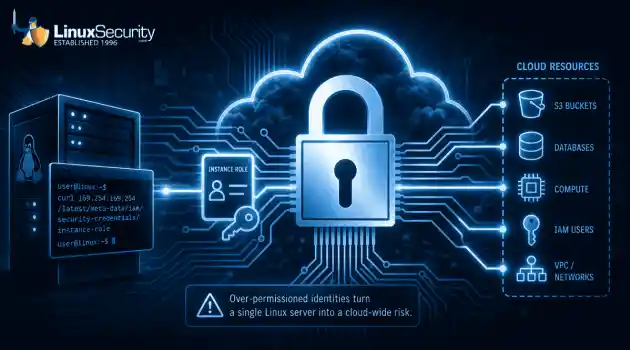
 For years, we secured our Linux infrastructure by building walls: VPCs, security groups, and hardened SSH configurations. We treated the cloud like a virtual data center, assuming that if we kept the "bad guys" out of the network, our workloads were safe. . That model is no longer sufficient. Today, one of the most common paths from an initial compromise to a major cloud breach is the identity assigned to your Linux workload. When an attacker gains code execution on a Linux instance—through a...
 Jul 17, 2026
 security practices patch management
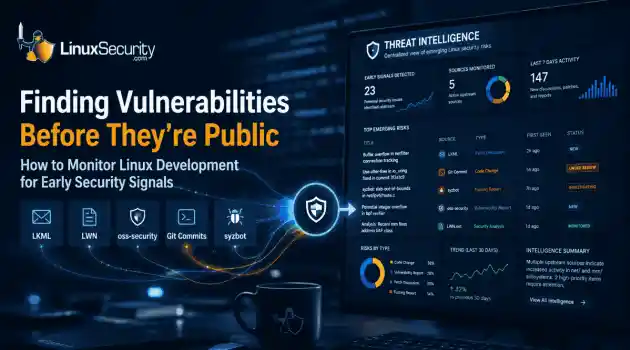
 Most of us don't hear about a kernel vulnerability until a CVE lands in our inbox or the vulnerability scanner starts complaining. By then, the patch isn't new anymore. Kernel developers may have been passing it around for review, arguing over the implementation, or revising it for days before anyone outside that community noticed it. None of those discussions are secret. They're sitting in mailing list archives, Git commits, and patch reviews where they've been the whole time. The strange...
Jul 14, 2026
 Linux security cyber attacks
 Every Linux server in your fleet produces thousands of events every minute. From journald logs and auditd records to kernel-level eBPF hooks, your systems are constantly talking. Most of that noise is just the mundane churn of system services, CI/CD runners, or routine administrative automation. But among that noise, an attacker might be establishing a foothold, moving laterally, or setting up persistence. The challenge for any security team is: how do you separate the routine from the...
Jul 13, 2026
 open-source infrastructure risk
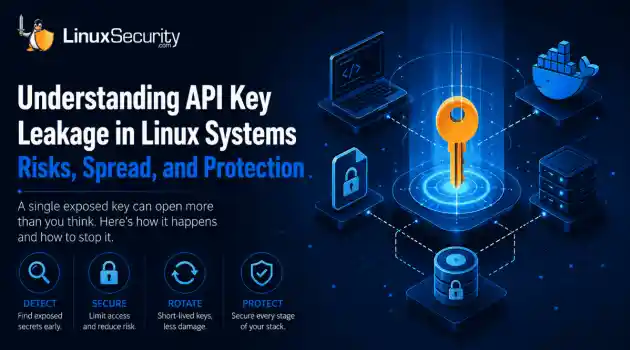
 Security scanners flag exposed API keys in public repositories every day. The initial response is usually predictable: delete the commit, revoke the credential, and move on. That’s a mistake. . In a real Linux environment, an API key never stays in one place. By the time it hits a public repo, it’s already everywhere. It’s in the CI/CD pipeline. It’s in your container registry. It’s in the build logs. It’s in the backups. Git makes this worse because the history never dies. Deleting a file in...
Jul 11, 2026
 open-source rootkit
 Most of us think of Linux rootkits as ancient history—the stuff of 90s hacking forums and clunky malware that would crash your system if you looked at it the wrong way. But if you think they’ve gone away, you’re mistaken. They’ve just gotten smarter. . Modern attackers aren't using the noisy tools of the past. Today’s threats are surgical. Many of today’s most advanced Linux rootkits operate at the kernel level or abuse legitimate system features to blend in with normal traffic. They’re...
Jul 09, 2026
 Refine features
X Clear Filters
Get the latest News and Insights
Get the latest Linux and open source security news straight to your inbox.
Community Poll
Should Linux servers automatically install security updates?
Loading...
Explore Latest Linux Security features
We found -3 articles for you...
102
 network protectionsystem hardeninginformation security
Initiating Your Journey With Linux Server Security and Optimal Safeguarding
Are your Linux servers secure? No machine connected to the internet is 100% secure, of course. In the words of security guru Bruce Schneier: “Security is a process, not a product.” However, this doesn't mean that you are helpless. Although cyber attacks, hacks and breaches are sometimes unavoidable, all system administrators and users can take definitive measures to mitigate their risk online. . A Linux system is like a house. It’s easy to keep the windows and doors always closed, but controlling when and how they get opened is an ongoing challenge. And the fact that poor administration and misconfigured servers are to blame for the majority of exploits on Linux systems is evidence that many system administrators are failing to meet this challenge. This introductory guide will explore the fundamentals of information security and explain how these principles can be applied to evaluate and improve the security of your Linux servers. Linux: An Increasingly Popular Target Among Cyber Criminals Due to its growing popularity, Linux is increasingly being targeted in dangerous campaigns - despite its heralded security. Threat actors have come to view Linux servers as yet another viable target that often provides a valuable return on investment. Unfortunately, 2019 and the first half of 2020 have been filled with emerging malware variants targeting Linux servers - and a plethora of resulting security news headlines harping on how “insecure” Linux is. But if you investigate a bit, you’ll find that many of these stories are fake news, and that the underlying issue is incompetant system administrators. After all, regardless of the OS that you're running, if you’re failing at security, it doesn't matter how “secure” your OS is. For instance, the recent BootHole vulnerabilities that dominated security news coverage required admin access to exploit, making them very dangerous to an already hacked system. What was almost always overlooked in the coverage of BootHole was that ifsomeone has root access to your system, you’re already in serious trouble! The good news for Linux users is that in reality, despite the uptick in threats targeting Linux servers, Linux remains an exceptionally secure OS - especially when using a specialized secure Linux distro . The transparency of Linux source code and the constant scrutiny that this code undergoes by a vibrant global community results in the rapid detection and elimination of security vulnerabilities and potential exploits. In comparison, security flaws generally remain undetected for significantly longer in closed-source proprietary code. Malicious actors recognize and exploit this, directing the majority of their attacks at proprietary software, platforms and operating systems. That being said, the rise of Linux malware should serve as a much-needed wake up call for the security industry to invest additional resources in threat protection, detection and response. What Is a Security Framework? A security framework outlines the basic steps in the life cycle of securing a system. The following illustrates the framework needed to establish and maintain a secure system: [ Risk Analysis ] [ Business Requirements ] | [ Security Policy ] | [ Security Service, Mechanisms, and Objects ] | [ Security Management, Monitoring, Detection and Response ] ‘Risk Analysis’ is the process of identifying and analyzing potential issues that could impact the security of a system, while ‘Business Requirements’ deals with the actual requirements for conducting business. These two components address the business aspects of s security framework. The ‘Security Policy’ is the theoretical aspect of a security framework, and defines what it means to be “secure”. ‘Security Service, Mechanisms and Objects’ is the implementation aspect of security, and ‘Security Management, Monitoring, Detection and Response’ is the operational facet of security, which covers the specifics ofidentifying and reacting to a potential security breach. When looking to secure your system, there are a selection of benefits associated with establishing a security framework: Helps administrators understand the security status of their system Communicates cybersecurity requirements with superusers and users Identifies opportunities for new or revised standards Assists in prioritizing improvement activities As you can see, developing a security framework is a worthwhile investment for any system administrator looking to improve the security of his or her system. Information Security Basics: Breaking It Down Information security, or the process of protecting information against unauthorized use, can be broken down into two parts: (1) Physical security / host security and (2) Network security. Each of these components has three facets: Protection: Slow down or stop intrusions or damage Detection: Alert someone if a breach (or attempted breach) of security occurs, and quantify and qualify what sort of damage occurred or would have occurred Recovery: Re-secure the system or data after the breach or damage has occurred and, where possible, undo whatever damage was done Host Security/Physical Security This type of security involves protecting the server from unauthorized access. Physical security/host security can be achieved by password protecting the physical server with steps such as setting up a bios password, placing the box in a locked room where only authorized users have access, applying OS security patches, checking and correcting the permissions on all OS related files and reviewing logs on a regular basis for any signs intrusion or attacks. Tips for Improving Host Security: Protect your systems with strong passwords Check the file systems and set correct permissions and ownerships on all directories and files Apply security patches to vulnerable software Remove all unnecessary ttys and console logins by removingthe entry from /etc/securetty Check system logs (eg: /var/log/messages, /var/log/secure, etc.) Set a password on the boot loader Monitor the system Network Security Network security is one of the most important aspects of overall security. As mentioned above, no machine connected to the Internet is completely secure - so security administrators and server owners must always be alert and ensure that they stay informed of the latest security bugs and exploits . Failure to keep up with these vulnerabilities leaves users at risk of breaches, hacks, malware and other dangerous cyber attacks. Advice for Improving Network Security: Use custom security scripts which will send out notifications when sshing as root, creating a user with uid of 0, etc. Set up an idle timeout, so that idle users will be logged out after a certain amount of time. Restrict direct root login (comment out the PermitRootLogin login option in sshd_config). Limit user’s resources (using pam, specify the limits for each user in /etc/security/limits.conf). Hide the server details. Remove /etc/issues and /etc/issues.net, for example. Install a firewall (eg: apf and iptables) and only allow ports that the box needs for its normal functions to operate; block all other ports to prevent mischief. Deploy honeynets for intrusion detection. Restrict ssh to specific IP addresses and specific users. Use a quality VPN (like Wireguard ) to encrypt data between you and your server. Check router firmware for security vulnerabilities and eliminate potential bugs with a Linux firmware replacement . Organizations that require greater control over hardware, network segmentation, and resource isolation often deploy bare metal servers to reduce shared-environment risks and strengthen the overall security posture of critical workloads. Security is an Ongoing Balancing Act Maintaining a secure system is an ongoing process. This process is all about balancing trade offs: administratorsmust continuously weigh investments in security with the costs and potential impacts to system performance and user productivity. Optimal security is a delicate balance of cost, user experience and risk. And all of these factors are constantly changing - digital threats are ever-evolving, users’ expectations shift and growing demands of infrastructures alter the environment being secured. The challenge is to fully understand these factors, how they impact each other and how they are changing, and to determine the amount and types of security needed to best meet the expectations of all parties involved. Getting Started with System Hardening System hardening - or the process of securing a system by reducing its surface of vulnerability - is essential to establishing and maintaining a good security posture. Some methodologies and best practices for hardening your Linux system include: Keep up to date on security news by subscribing to our Linux Security Week newsletter , which summarizes the week’s most relevant open-source security news. Create a good security policy. Conduct security audits on the basis of this policy. Keep your OS updated by applying all patches. Install a custom kernel with all unwanted services removed and patched. Disable all unwanted services and harden the services you leave running. Change file and directory permissions to tighten security. Install a firewall and create good rule sets. Test and audit the server on a regular basis (covered in more detail below). Install an intrusion detection system and a log monitor. Make your partitions secure. Run a good backup system to recover data in case of an intrusion, crash or other type of destructive incident. Install a log analyzer and check your logs frequently for any suspicious entries. Install scripts to send out mail or enable notifications when a suspected security breach occurs. After a security breach, try to find out how, when and through what the breach occurred. When youfind a fix for it, document the details for future reference. Security Audits: What Should be Checked? A security audit aims to identify any vulnerabilities present in a system and suggest actions to improve these flaws. In a normal audit, the points below should be checked. A report with the results of this audit should be created. Check intrusion detection . Use chkrootkit or rkhunter for this purpose. Check for known bugs in the software installed on the server - the kernel, openssl , openssh , etc. Scan all network ports and find out which ports are open. Report the open ports that should not be open and the program that is listening on them. Check whether /tmp is secured. Check for hidden processes. Check for bad disk blocks in all partitions. Check for unsafe file permissions. Check whether the kernel has a ptrace vulnerability. Check the memory. Check if the server is an open email relay. Check if the partitions have enough free space. Check the size of the log files. It's better that the log size remains in megabytes. How To Determine if You’re Being Hacked? If you suspect that your system has been compromised, here are some very basic steps you can take to determine if you’re being hacked: Check if your performance has degraded or if your machine is being overused. Check if your server has any hidden processes running. Install an intrusion detection system (IDS) like OSSEC or Snort to detect anomalies in network traffic. Use intrusion detection tools like chkrootkit or rkhunter to check your system for rootkit infections. Check your machine’s uptime. Identify unknown processes and determine what they are doing. Monitor users’ activity using commands “w” or “who”. Check network traffic by running the command “iftop” with sudo. The Bottom Line Security is of utmost importance to a server - compromising on server security is compromising on the security of yoursystem as a whole. Hence, a solid understanding of information security is a prerequisite to successful server ownership and administration. Security is a continuous learning process - mistakes are inevitable, and can provide valuable insight for the future. Thus, it is critical that administrators take the time to fully understand both their successes and failures - enabling them to identify what is working and where there is room for improvement. The host of recent attacks exploiting Linux systems has brought both the prevalence and the impact of poor system administration to light, and has shown the importance of diligently monitoring servers for anomalies or signs of compromise. It is time for system administrator to make server security a priority. Have additional questions about securing your server? Leave them in the comments below - we’d love to help you out! . Discover the fundamental strategies to robustly safeguard Linux servers using key methodologies and essential security protocols.. Linux Server Security, System Hardening, Information Protection. . Brittany Day
 Aug 31, 2020
•
Aug 31, 2020
•
102
 intrusion detectiondata protectionnetwork protection
Key Security Practices for Protecting Your Server Infrastructure
In a word, No. No machine connected to the internet is 100% secure. This doesn't mean that you are helpless. You can take measures to avoid hacks, but you cannot avoid them completely. This is like a house — when the windows and doors are open then the probability of a thief coming in is high, but if the doors and windows are closed and locked the probability of being robbed is less, but still not nil. . 1 What is Information Security? For our purposes, Information Security means the methods we use to protect sensitive data from unauthorized users. 2 Why do we need Information Security? The entire world is rapidly becoming IT enabled. Wherever you look, computer technology has revolutionized the way things operate. Some examples are airports, seaports, telecommunication industries, and TV broadcasting, all of which are thriving as a result of the use of IT. "IT is everywhere." A lot of sensitive information passes through the Internet, such as credit card data, mission critical server passwords, and important files. There is always a chance of some one viewing and/or modifying the data while it is in transmission. There are countless horror stories of what happens when an outsider gets someone's credit card or financial information. He or she can use it in any way they like and could even destroy you and your business by taking or destroying all your assets. As we all know "An ounce of prevention beats a pound of cure," so to avoid such critical situations, it is advisable to have a good security policy and security implementation. 3 Security Framework The following illustrates the framework needed to implement a functioning security implementation: [ Risk Analysis ] [ Business Requirements ] | [ Security Policy ] | [ Security Service, Mechanisms, and Objects ] | [ Security Management, Monitoring, Detection and Response ] This framework shows the basic steps inthe life cycle of securing a system. "Risk Analysis" deals with the risk associated with the data in the server to be secured. "Business Requirements" is the study which deals with the actual requirements for conducting business. These two components cover the business aspects of the security implementation. The "Security Policy" covers 8 specific areas of the security implementation, and is discussed in more detail in section 4 below. "Security Service, Mechanisms and Objects" is actually the implementation part of security. "Security Management, Monitoring, Detection and Response" is the operational face of security, where we cover the specifics of how we find a security breach, and how we react if a breach is found. 4 Security Policy The Security Policy is a document which addresses the following areas: Authentication: This section deals with what methods are used to determine if a user is real or not, which users can or cannot access the system, the minimum length of password allowed, how long can a user be idle before he is logged out, etc. Authorization: This area deals with classifying user levels and what each level is allowed to do on the system, which users can become root, etc. Data Protection: Data protection deals with the details like what data should be protected and who can access which levels of data on the system. Internet Access: This area deals with the details of the users having access to the internet and what they can do there. Internet Services: This section deals with what services on the server are accessible from the internet and which are not. Security Audit: This area addresses how audit and review of security related areas and processes will be done. Incident Handling: This area addresses the steps and measures to be taken if there is a breach of security. This also covers the steps to find out the actual culprit and the methods to prevent future incidents. Responsibilities: Thispart covers who will be contacted at any given stage of an incident and the responsibilities of the administrator(s) during and after the incident. This is a very important area, since the operation of the incident handling mechanism is dependent on it. 5 Types of Information Security There are 2 types of security. (1) Physical security / Host Security and (2) Network security. Each of these sections has 3 parts: Protection: Slow down or stop intrusions or damage Detection: Alert someone if a breach (or attempted breach) of security occurs, and quantify and qualify what sort of damage occurred or would have occurred. Recovery: Re-secure the system or data after the breach or damage and where possible, undo whatever damage occurred 5.1 Host Security / Physical Security Host Security / Physical Security means securing the server from unauthorized access. For that we can password protect the box with such steps as setting up a bios password, placing the computer box in a locked room where only authorized users have access, applying OS security patches, and checking logs on regular basis for any intrusion and attacks. In Host security we check and correct the permissions on all OS related files. 5.2 Network security Network security is one of the most important aspects of overall security. As I mentioned earlier, no machine connected to the internet is completely secure, so security administrators and server owners need to be alert, and make sure that they are informed of all new bugs and exploits that are discovered. Failure to keep up with these may leave you at the mercy of some script kiddy. 5.3 Which operating system is the most secure? Every OS has its own pros and cons. There are ways to make Windows more secure, but the implementation is quite costly. Linux is stable and reasonably secure, but many companies perceive it as having little vendor support. My vote for the best OS for security purposes goes to FreeBSD, another free Unix-like OS,but not many people are aware of its existence. 6 Is a firewall the final solution to the Network Security problem? No, a firewall is just a part of the security implementation. Again, we will use the example of a house. In a house all the windows and doors can be closed but if the lock on the front door of the house is so bad that someone can put just any key-like thing in and open it, then what is the use of the house being all closed up? Similarly, if we have a strong firewall policy, it will restrict unauthorized access, but if the software running on the box is outdated or full of bugs then crackers can use it to intrude into the server and gain root access. This shows that a firewall is not the final solution. A planned security implementation is the only real quality solution to this issue. 7 Security is a continuous process Continuing security is a on-going process. Security administrators can only conduct their work on the basis of the alerts and bugfixes released up to the date of securing, so in order to accommodate all of the fixes for the latest bugs, security work has to be done on a regular basis. 8 Does Security implementation create overhead and/or reduce performance? Yes, Security implementation creates a small amount of overhead, but it need not reduce overall performance drastically. In order to take care of such things, a well done security implementation has an optimization section where the security administration gives priority to both performance and security. While securing any software, we should secure it in such a way that it provides maximum performance. 9 Security Audits - What Should be Checked A security audit is a part of security implementation where we try to find out the vulnerabilities of the system and suggest actions to improve the security. In a normal audit, the points below should be checked, and a report with the results of that audit should be created. Check intrusion detection. Use chkrootkit or rkhunter for this purpose. Check forknown bugs in the software installed on the server - the kernel, openssl, openssh, etc. Scan all network ports and find out which ports are open. Report the ports that should not be open and what program is listening on them. Check whether /tmp is secured. Check for hidden processes. Check for bad disk blocks in all partitions. (This is just to make sure that the system is reasonably healthy.) Check for unsafe file permissions. Check whether the kernel has a ptrace vulnerability. Check the memory (Another system health check.) Check if the server is an open e-mail relay. Check if the partitions have enough free space. Check the size of the log files. It's better that the log size remains in megabytes. 10 How to know if you are being hacked? To find out if your box is compromised or not, follow these steps. These are the steps which I used to do and will be handy in most of the situations. 10.1 Check your box to see if your performance has degraded or if your machine is being over used. For that, use the commands vmstat Displays information about memory, cpu and disk. Ex: bash# vmstat 1 4 (where 1 is delay and 4 is count) mpstat Displays statistics about cpu utilization. This will help us to see if your cpu is over worked or not. Ex: bash# mpstat 1 4 (where 1 is delay and 4 is count) iostat This command displays statistics about the disk system. Useful options: -d - Gives the device utilization report. -k - Display statistics in kilobytes per second. Ex: bash# iostat -dk 1 4 (where 1 is delay and 4 is count) sar Displays overall system performance. 10.2 Check to see if your server has any hidden processes running. ps Displays the status of all known processes. lsof List all open files. In Linux everything is considered a file, so you will be able to see almost all of the activity on yoursystem with this command. 10.3 Use Intrusion Detection Tools rkHunter ( ) chkrootkit ( www.chkrootkit.org ) 10.4 Check your machine's uptime . If the uptime is less than it should be, this can mean that your machine's resources are being used by someone. Linux doesn't crash or reboot under normal conditions because it is such a stable OS. If your machine has been rebooted try to find out the actual reason behind it. 10.5 Determine what your unknown processes are and what they are doing. 10.5.0.1 Use commands like the following to take apart unknown programs readelf This command will display what the executable's program is performing. ldd This command will show the details of libraries used by a executable. string This command will display the strings in the binary. strace This command will display the system calls a program makes as it runs. 11 Hardening Methodology Read all security related sites and keep up to date. This is one of the main things a security administrator or server owner should do. Server owners should be made aware of security and its importance. Security training is an important part of an overall security package. Create a good security policy. Conduct security audits on the basis of this policy. Keep your OS updated by applying all patches. Install a custom kernel with all unwanted services removed and patched with either grsecurity or openwall. Disable all unwanted services and harden the services you leave running; Change file and directory permissions so that security is tightened. Install a firewall and create good rule sets. Test and audit the server on regular basis Install an intrusion detection system, log monitor, all of the Apache security modules, bfd, faf and tmp monitor. Make your partitions secure. Run a good backup system to recover data in case of an intrusion, crash, or other destructiveincident. Install a log analyzer and check your logs for any suspicious entries. Install scripts to send out mail or enable notifications when a security breach occurs. After a security breach try to find out how, when and through what the breach occurred. When you find a fix for it, document the details for future reference. 12 Summary Now lets conclude by covering the main steps by which a hosting server can be secured. 12.1 Determine the business requirements and risk factors which are applicable to this system 12.2 Devise a security policy with the above data in mind. Get management's approval and signoff on this security policy. 12.3 On approval of the policy, do a security audit on any existing systems to determine the current vulnerabilities and submit a report regarding this to the management. The report should also cover the methods needed to improve existing security. A quick checklist: Software Vulnerabilities. Kernel Upgrades and vulnerabilities. Check for any Trojans. Run chkrootkit. Check ports. Check for any hidden processes. Use audittools to check system. Check logs. Check binaries and RPMS. Check for open email relays. Check for malicious cron entries. Check /dev /tmp /var directories. Check whether backups are maintained. Check for unwanted users, groups, etc. on the system. Check for and disable any unneeded services. Locate malicious scripts. Querylog in DNS. Check for the suid scripts and nouser scripts. Check valid scripts in /tmp. Use intrusion detection tools. Check the system performance. Check memory performance (run memtest ). 12.4 Implement the security policy 12.4.1 Correct all known existing software vulnerabilities either byapplying patches or by upgrading the software. 12.4.2 Implement host security Protect your systems with passwords Check the file systems and set correct permissions and ownerships on all directories and files chmod -R 700 /etc/rc.d/init.d/* Use rpm -Va to find out if an rpm is modified Apply security patches to vulnerable software (ie. patch -p1 < patch file ) Remove all unneeded ttys and console logins by removing the entry from /etc/securetty Check system logs (eg: /var/log/messages, /var/log/secure, etc.) Set a password on the boot loader (lilo and grub both support this) Monitor the system (nagios or big brother) 12.4.3 Implement Network security Remove all unwanted users and groups. Use custom security scripts which will send out notification when sshing as root or while creating a user with uid of 0, etc. Require passwords with 16 characters (can be done by making changes in login.def). Disable unwanted services using tcpwrapper (unwanted services can also be disabled through xinet.d or xinetd.Conf). Set up an idle timeout, so that idle users will be logged out after a certain amount of time. Disable all console program access (eg: rm -rf /etc/security/console.app/ .) Enable nospoof option in /etc/host.conf. Specify the order in which domain names should be resolved (eg: order bind hosts). Lock the /etc/services file so that no one can modify it. Restrict direct root login (comment out the PermitRootLogin login option in sshd_config). Restrict su, so that only wheel group members are able to su. (can use pam or disable the permission of other for the su binary). Limit users resources (using pam, specify the limits for each user in /etc/security/limit.conf). Secure /tmp (mount /tmp with noexec,nodev,nosuid). Hide the serverdetails. Remove /etc/issues and /etc/issues.net. Disable unwanted suid and sgid files (eg: find -type -perm -04000 -o perm 02000 .) Examples of these: gpasswd , wall , and traceroute Using iptables, allow only pings from a specific locations (for monitoring systems to work). Take preventive measures against DOS, "ping of death" attacks, etc. Install a firewall (eg: apf and iptables) and only allow ports to operate which the box needs for its normal functions; block all other ports to prevent mischief. Links: rfxnetworks.com and yolinux.com/TUTORIALS/LinuxTutorialIptablesNetworkGateway.html Install intrusion detection (eg: install tripwire or aide ). Links: and redhat.com/docs/manuals/linux/RHL-9-Manual/ref-guide/ch-tripwire.html Install sxid to keep an eye on suid and sgid scripts. Restrict ssh to specific IP addresses and specific users (I suggest key authentication using passphrase). Install logcheck to check the logs. Install tmpwatch to delete the unused files from /tmp directory. Install and setup portsentry and configure it to use iptables to block IPs. Install mod_security and mod_dosevasive to safe guard apache. Delete files with nouser and nogroup. Deleted unwanted files/folders in htdocs, disable directory indexing. Check for unwanted scripts in /root, /usr/local, /var/spool/mbox. Install BFD and FAF for additional security. Disable open email relaying. Submit a status report to management detailing all discovered vulnerabilities and fixes. 12.5 Testing phase Use tools like nessus, nikto, and nmap to do a penetration test and see how well your server is secured. Also do a stress test. Security is of utmost importance to a server, compromising security is compromising the server itself. Hence, an understanding of the same is a prerequisite to serverownership and administration. About this document... This document was generated using the LaTeX 2 HTML translator Version 2002 (1.62) My name is Blessen and I prefer people calling me Bless. I got interested in Linux when I joined the software firm, Poornam Info Vision Pvt Ltd. They gave me exposure to linux. I am a B.Tech in Computer Science from the College of Engineering, Chengannur. I passed out in the year 2001 and got into the company that year. During my work, I was passionate with Linux security and I look forward to grow in that field. My hobbies are browsing net, learning new technologies and helping others. In my free time I also develop open source softwares and one of them is a scaled down version of formmail. The project is called "Smart Mail" which is more secure than formmail. Contact Blessen Cherian Copyright © 2005, Blessen Cherian. Released under the Open Publication license . 1 What is Information Security? For our purposes, Information Security means the methods we use to p. machine, connected, internet, secure, doesn't. . Blessen Cherian
Feb 08, 2005
•


Get the latest News and Insights
Get the latest Linux and open source security news straight to your inbox.
Community Poll
Should Linux servers automatically install security updates?
Search Topics
Powered By

Linux Security - Your source for Top Linux News, Advisories, HOWTOs and Feature Releases
QUICK LINKS
subscribe to newsletters!
Like staying secure? So do we.
Sign up for updates, tips, and alerts!