Audit Linux privileges now to limit compromise, escalation, and system-wide damage. Review Linux Privileges×


Stay Ahead With Linux Security Features
 security advisory path traversal
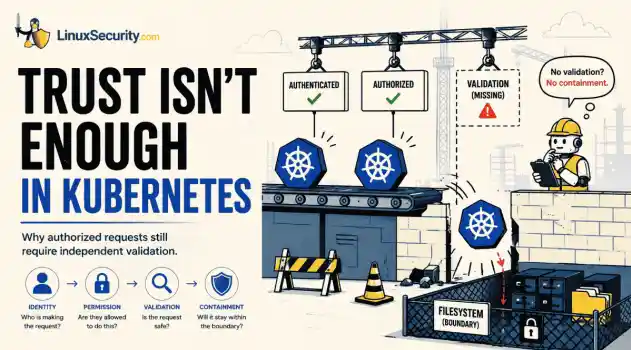
 Two newly fixed storage bugs in Kubernetes showed more than just a problem with path traversal. They found a common security flaw in the cloud: powerful parts often think that requests accepted by a higher system are safe to run. This is a simple lesson for the platform and security teams: RBAC can accept a request without showing that its parameters will stay within a certain filesystem boundary. This is clear from a new study from SentinelLabs into flaws in the Kubernetes CSI drivers for NFS...
 Jul 24, 2026
 security advisory update
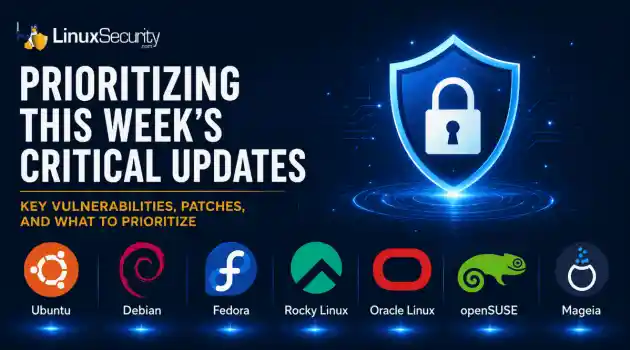
 A large volume of Linux security updates and advisories this week across major distributions once again, but it wasn't just the volume that was the story. Where maintainers and security teams focused their attention was evident in the concentration of fixes targeting Linux kernel updates, identity services, DNS infrastructure, and internet-facing software. . Instead of looking at each advisory in isolation, administrators gain more value from the general trends they reveal about Linux security...
Jul 23, 2026
 identity management security tactics
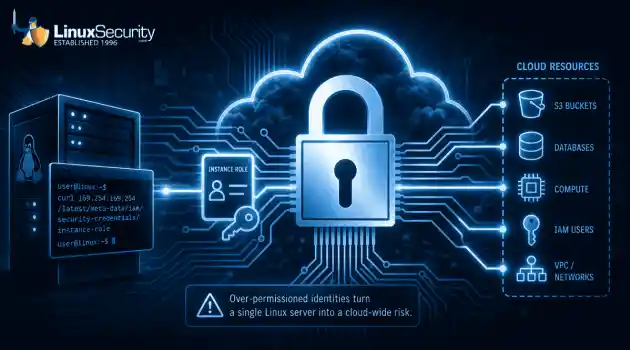
 For years, we secured our Linux infrastructure by building walls: VPCs, security groups, and hardened SSH configurations. We treated the cloud like a virtual data center, assuming that if we kept the "bad guys" out of the network, our workloads were safe. . That model is no longer sufficient. Today, one of the most common paths from an initial compromise to a major cloud breach is the identity assigned to your Linux workload. When an attacker gains code execution on a Linux instance—through a...
Jul 17, 2026
 security practices patch management
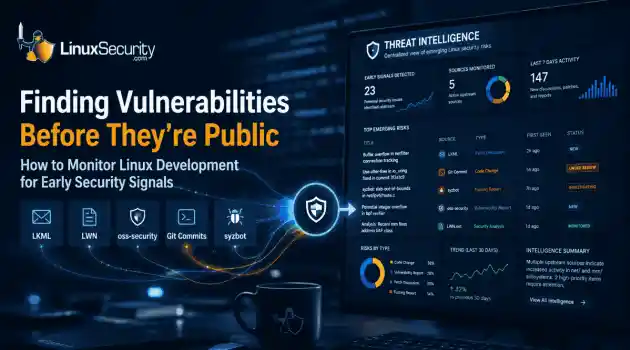
 Most of us don't hear about a kernel vulnerability until a CVE lands in our inbox or the vulnerability scanner starts complaining. By then, the patch isn't new anymore. Kernel developers may have been passing it around for review, arguing over the implementation, or revising it for days before anyone outside that community noticed it. None of those discussions are secret. They're sitting in mailing list archives, Git commits, and patch reviews where they've been the whole time. The strange...
Jul 14, 2026
 Linux security cyber attacks
 Every Linux server in your fleet produces thousands of events every minute. From journald logs and auditd records to kernel-level eBPF hooks, your systems are constantly talking. Most of that noise is just the mundane churn of system services, CI/CD runners, or routine administrative automation. But among that noise, an attacker might be establishing a foothold, moving laterally, or setting up persistence. The challenge for any security team is: how do you separate the routine from the...
Jul 13, 2026
 Refine features
X Clear Filters
Get the latest News and Insights
Get the latest Linux and open source security news straight to your inbox.
Community Poll
Should Linux servers automatically install security updates?
Loading...
Explore Latest Linux Security features
We found 4 articles for you...
102
 security advisorykernel securityserver protection
Kernel Hardening Trends: What’s Changing in Upstream Security Controls
Think about Linux security like the structural integrity of a building. Most information security best practices focus on the front door—locks, cameras, and ID badges. That’s the "policy" layer. It’s great for keeping people out, but it doesn't address what happens to the foundation if those locks fail. . The reality is that upstream kernel security moves a lot faster than enterprise adoption. Defenses are being built quietly through patch discussions and mailing lists, not through big announcements. By the time a feature becomes a standard "best practice," the risk has already been sitting in the gap between what is "available" and what is actually "active" in your environment. This isn't about just listing what exists; it’s about verifying what is actually working on your systems. Memory & Heap Hardening for Server Security If you’re trying to figure out how to secure a server, memory is where things usually break down. Most server security conversations stay at the surface. Firewalls, access controls, patching. That’s fine, but memory corruption is still behind a huge chunk of real exploits. KSPP doesn’t try to eliminate every bug. It focuses on making those bugs harder to turn into something usable. Many of these protections—like slab hardening or stack initialization—are compile-time options. You might be running a modern kernel, but the protection could be sitting there, turned off. These gaps are rarely covered in standard system security checklists, which usually focus on user permissions rather than kernel internals. If they’re disabled, exploit chains like "heap spraying" (where an attacker floods memory to find a predictable jump point) become significantly easier. These are the "seatbelts" of your kernel—they don't stop the crash, but they keep it from being fatal. What to check in your environment: Bash # Check for heap/slab protection (stops heap spraying) grep CONFIG_SLAB_FREELIST_HARDENED /boot/config-$(uname -r) # Check for stackinitialization (prevents info leaks) grep CONFIG_INIT_STACK_ALL /boot/config-$(uname -r) # Check for hardened data movement (stops data being stolen from kernel space) grep CONFIG_HARDENED_USERCOPY /boot/config-$(uname -r) Control Flow Protections and System Security Most network-level defenses assume that if you block the threat at the edge, you're safe. But once code runs locally, those external controls no longer apply. This is where infrastructure security depends on how hard you make it for an attacker to move once they get a foot in the door. Modern exploits don't just "run" a virus; they hijack the kernel’s own instructions using ROP (Return-Oriented Programming) chains. It’s like an intruder using the building's own blueprints to move through the vents. Control-flow protections (like CFI) are designed to break these paths by making sure the code only jumps where it’s supposed to. Simply "running a newer kernel" doesn't mean you're protected. You have to know if your specific hardware and distro actually flipped the switch on these protections. For example, modern endpoint security increasingly relies on hardware-assisted protections like Intel CET (Control-flow Enforcement Technology). If your infrastructure security plan assumes these are active, but you’re running on older virtualized hardware, you have a massive invisible gap. Server Security Gaps: Where Default Configurations Fall Short There is a massive gap between what the Linux kernel can do and what your distribution actually does . Most distros prioritize performance and stability over maximum hardening. It creates a blind spot where you assume you’re protected because you’re "up to date," but the actual defense is dormant. Hardening Feature Typical Distro Default Risk if Not Active Slab Hardening Often Enabled Heap exploitation Stack Init Often Disabled Information leaks CFI Rarely Enabled ROP/JOP attack chains LSM Enforcement Inconsistent Privilege escalation Standard patching doesn't always validate these internal controls. If you aren't checking these defaults, your endpoint security—the actual protection on the machine itself—is likely a lot thinner than you think. LSM Enforcement and Information Security Best Practices Having a Linux Security Module (LSM) like SELinux or AppArmor is one thing; having a policy that actually stops an attacker is another. The industry is moving toward "LSM stacking," but many environments still fall into the "permissive" trap. Think of it this way: your information security best practices might require an LSM to be active, but if that LSM is in log-only mode, your system security is just a suggestion. It’s a policy without a badge. What to verify: # See which modules are actually active cat /sys/kernel/security/lsm # Check if your primary LSM is actually enforcing getenforce Why Kernel Hardening Is Driven by Real Vulnerabilities These hardening efforts aren't academic. They are reactive. They are driven by the vulnerabilities found by tools like syzbot—an automated fuzzer that uncovers the same patterns over and over: Use-after-free, Out-of-bounds access, and Memory exposure. This constant pressure from fuzzing is why information security best practices are shifting from "patching known bugs" to "hardening against entire bug classes." These vulnerabilities directly undermine the logic of your defense. If an attacker can trigger a memory exposure bug, they can often bypass encryption and access controls entirely. Hardening features are the structural countermeasure to the bugs we already know are coming. The 5-Minute Kernel Hardening Audit for Endpoint Security You don't need a month-long audit to see where you stand. Here is a quick check for your endpoint security. Most standard monitoring tools won't tell you this; you have to look foryourself. Beyond the compile-time checks, you should also verify runtime system security tunables that limit an attacker's visibility. KSPP Features: Are memory protections compiled in? (grep your config) Active Protections: Are slab, stack, and usercopy protections turned on? LSM Status: Is it in "Enforcing" mode, or just logging? Control Flow: Does your hardware actually support CFI or Shadow Stacks (Intel CET/ARM PAC)? Runtime Restrict: Are kernel pointers and logs restricted? Quick Runtime Validation: # Verify kernel pointer restriction (should be 2) sysctl kernel.kptr_restrict # Verify dmesg restriction (should be 1) sysctl kernel.dmesg_restrict # Check if io_uring is restricted (a common modern attack vector) sysctl kernel.io_uring_disabled Infrastructure Security Depends on Kernel Validation The gap between what’s possible and what’s deployed is where risk lives. Kernel protections exist, but they’re often underutilized because they’re the least visible layer of the stack. True infrastructure security is about the foundation. It’s not enough to know a protection exists; you have to verify it’s actually working. Validation matters more than assumptions. The best defenses aren't the ones you read about in a memo—they’re the ones you’ve actually turned on. . The reality is that upstream kernel security moves a lot faster than enterprise adoption. Defenses a. security, think, about, linux, structural, integrity, building, information. . MaK Ulac
 Apr 28, 2026
•
Apr 28, 2026
•
102
 security advisoryaccess controlkernel security
Optimizing Linux Security 2026: Key Strategies for Modern Threats
Recent years have demonstrated a notable shift in the cybersecurity landscape, with Linux systems increasingly targeted by adversaries. Once considered relatively immune to malware threats, Linux servers have seen the emergence of sophisticated attack vectors, including high-profile Linux malware strains such as Cloud Snooper, HiddenWasp, and Tycoon. . These exploits showcase advanced capabilities in spreading, evading detection, and compromising server environments. For security professionals, this evolution underscores the importance of an informed and proactive approach to Linux server security. While Linux continues to provide fundamental security advantages through its strict privilege model and kernel-level defenses, the rise in targeted attacks—including those exploiting misconfigurations and poorly managed services—requires system administrators to reevaluate their strategies. The inherent strengths of open-source systems, such as rapid vulnerability patching and transparent code review, remain essential. However, reliance solely on these mechanisms without attention to Linux security best practices leaves systems vulnerable to compromise. Let's examine some key measures for addressing modern threats, focusing on known vulnerabilities and behavioral adjustments to mitigate risks. The strategies I'll share include effective access control with SELinux, reducing brute force attack vectors, defending against kernel exploits with Linux Kernel Runtime Guard (LKRG), and prioritizing privacy measures for network security. By implementing robust techniques informed by recent trends in Linux malware and attack methods, we can maintain resilience in increasingly hostile environments. How Secure is Linux? Regardless of the rise in attacks targeting Linux servers in recent years, Linux still offers notable security and privacy advantages over proprietary OSes like Windows or macOS. Because of the availability of its open-source code and the constant, thorough review that this codeundergoes by a vibrant worldwide community of developers and security experts, vulnerabilities are found and fixed very quickly and reliably compared to the closed-source code of proprietary OSes. Linux also greatly restricts root access through a strict user privilege model and features a selection of built-in kernel security defenses, including firewalls that use packet filters in the kernel, the UEFI Secure Boot firmware verification mechanism, the Linux Kernel Lockdown configuration option, and the SELinux or AppArmor Mandatory Access Control (MAC) security enhancement systems. However, despite the inherent security advantages that Linux offers, the OS is still vulnerable to compromise as a result of frequent misconfigurations and poorly managed services. While all Linux distros offer inherent security advantages over Windows or macOS, pentesters, security researchers, and users who are simply looking to maximize their security, privacy, and anonymity online can achieve this by choosing a specialized secure Linux distro . Regardless of the distro you choose, there are certain behaviors and Linux security best practices that all system administrators should engage in to secure their system against malware threats, viruses, and other exploits. Here are our top tips for optimizing the security of your Linux system in this modern threat environment. Focus On The Fundamentals First The majority of Linux security threats can be attributed to either misconfigurations or poor system administration—such as failure to keep up with security updates—and are not a reflection of the security of Linux source code. The Cybersecurity and Infrastructure Security Agency (CISA) and the Federal Bureau of Investigation (FBI) urge system administrators to prioritize patching known security vulnerabilities - especially those being exploited by foreign threat actors. Cybercriminals often begin by focusing their efforts on known vulnerabilities, as exploiting these flaws requires fewer resources thanexploiting zero-day flaws (for which no patches are available) or vulnerable applications. The latest Linux distribution security Linux advisories provide you with an easy and convenient way to stay informed of the latest updates issued by your distro. When looking to improve your Linux server security, begin by making sure that it is properly configured and up-to-date. Implementing the other tips and tools that we suggest in this article will do very little to keep you safe if these best practices haven’t been addressed. Control Access to Your System with SELinux Using Security-Enhanced Linux (SELinux) is a great way to increase the control you have over access to your system. SELinux is a highly fine-grained, fairly technical mandatory access control (MAC) system that restricts access beyond what traditional discretionary access control (DAC) mechanisms, such as file permissions or access control lists (ACLs), can achieve. For example, there is no reason a web browser should need access to an SSH key, so in SELinux, this information would not be provided to the web browser. Stringent access controls are critical in preventing malicious actors from gaining administrative access to your system and installing rootkits or other types of malware. For this reason, SELinux has been adopted by multiple popular Linux distros, including Fedora, Ubuntu, and Debian, and is typically enabled by default. Prioritize Network Security Using a VPN to encrypt data between you and your server is an excellent way to protect your privacy and anonymity online. By masking your internet protocol (IP) address, VPNs ensure that your web browsing history and other online actions are virtually untraceable. VPN use is crucial in staying safe online while working remotely. However, boosting your online privacy isn’t as simple as implementing any VPN - the VPN that you select is extremely important. When choosing a VPN, users should evaluate a range of characteristics, including speed, security, ease ofuse, and the reliability of the encryption technology used, among other factors. WireGuard (pictured below) is our top choice. The free and open-source VPN, which runs as a Linux kernel module (LKM), aims to outperform its competitors (namely, OpenVPN ) in performance and power efficiency . WireGuard offers the best of both worlds - it is both user-friendly and highly effective. WireGuard’s use of cryptographic package versioning enables the VPN to focus on ciphers considered among the most secure current encryption methods. In addition to using a quality VPN like WireGuard, users should check their routers for security bugs. Research conducted by Fraunhofer Institute for Communication (FKIE) revealed that the firmware present in a large number of popular home routers - many of which have never received a single security firmware update in their lifetime - is vulnerable to a wide range of serious security issues. Your router may very well be the biggest security hole in your network! Install Linux Kernel Runtime Guard to Detect Vulnerability Exploits Linux Kernel Runtime Guard (LKRG) is a kernel module created by Openwall that performs runtime integrity checking of the Linux kernel to detect security vulnerability exploits against the kernel. LKRG attempts to post-detect and rapidly respond to unauthorized kernel modifications or changes to the credentials of running system processes - protecting against exploits that gain unauthorized root access through kernel vulnerabilities, exploits that escape, e.g., from Docker containers, LKM rootkits , and other serious threats to the security of a Linux system. The module can defend against most pre-existing and future Linux kernel vulnerability exploits. LKRG provides security through diversity - without the usability drawbacks associated with running an uncommon OS. LKRG is most useful on systems that realistically won't be promptly rebooted into new kernels nor live-patched whenever a new kernel vulnerability is discovered.OpenWall Founder Alexander Peslyak elaborates: “LKRG offers best-effort protection against kernel vulnerability exploits with little effort on behalf of the user - no need to configure a policy, etc. - making it especially beneficial for systems that are not expected to be consistently kept up-to-date.” The module is compatible with a wide range of popular distros’ kernels, and can be easily installed in distros including RHEL, CentOS, Debian, Ubuntu, and Whonix. For administrators looking to ground their identity and access decisions in a broader security context, a clear identity security definition helps explain how identity and credential controls fit into a layered defense model. Use Fail2ban to Prevent Brute Force Attacks Brute-force attacks are prevalent on Linux servers. These attacks are often successful simply because of inadequate intrusion prevention measures. Fail2ban is an excellent intrusion-prevention tool designed to protect servers against brute-force attacks. Fail2ban monitors logs and reacts to intrusion attempts by either installing firewall rules to reject potentially malicious IP addresses for a specified period or blocking access to a specific port. You can download fail2ban from fail2ban Downloads . Download the Privacy Badger Extension to Secure Your Browser Against Trackers Privacy Badger is a free and open-source browser extension created by the Electronic Frontier Foundation (EFF) that prevents advertisers and other third-party trackers from secretly tracking the web pages you visit and your actions online. Privacy Badger takes a balanced approach to Internet privacy between advertisers and consumers by blocking advertisements and tracking cookies that violate the Do Not Track header on outgoing requests, which the extension automatically adds, so users conveniently don’t have to configure this setting in their browser. With Privacy Badger downloaded on your system, if it appears that an advertiser is tracking you across multiple websiteswithout your permission, the add-on automatically prevents that advertiser from being able to load any further content in your web browser. In the eyes of the advertiser, you’ve suddenly and mysteriously disappeared. Privacy Badger can be installed on Google Chrome, Mozilla Firefox, Opera, and Firefox for Android. Generate an SSH Key Pair to Help Protect Your Privacy & Secure Your Server While using strong passwords is a significant step toward strengthening your privacy and securing your server, generating a secure shell (SSH) key pair is an even better approach. It should be one of the first measures you implement when taking a proactive approach to server security. It is essential to keep in mind that security is all about trade-offs, and determining whether to rely on passwords or SSH keys is a prime example. While passwords are certainly more convenient for most users, they are also often relatively easy for malicious hackers to guess or crack through brute force, leaving sensitive data and entire systems vulnerable. SSH key pairs are not as user-friendly as passwords, but are far more secure because they use encryption on both the server being logged into and the computer being used. An SSH key pair consists of two cryptographic keys used to authenticate a client to a server. Each pair consists of a public key known to others and a private key retained by the client and kept private. When an administrator generates an SSH key pair to secure a server, the public key is uploaded to the remote server so he or she can log in with SSH. When a client attempts to authenticate to the server, the server can test whether the client possesses the private key. To keep an SSH key pair and the server it protects secure, SSH keys must be stored in a safe location. When determining where to save keys, administrators should weigh the likelihood of a physical attack against the possibility of a server hack. When in doubt, save SSH keys on a local device kept in a secure location to mitigate the risk inthe event of a hack. Perform Regular Security Audits The only way to be sure your system is as well protected as you think it is - or as it needs to be - is to frequently test and verify its security . Conducting regular security audits is a great way to identify gaps in your security defenses and determine how to address them to better protect your server against vulnerabilities and attacks. The Linux Auditing System (AuditD) is a native Linux kernel feature that provides administrators with valuable insight into the security, stability, and functionality of their systems. It operates at the kernel level (where it can monitor all system processes) and collects and logs system activity information to facilitate the investigation of potential security incidents. AuditD logs information in accordance with its auditing rules, as well as any added rules. Our Final Thoughts on Optimizing Linux Security in 2026 While threats to the security and privacy of Linux systems are at an all-time high, Linux users are still safer online than their Windows- and MacOS-using friends. The increasingly popular open-source OS offers inherent security benefits due to the transparency of its source code and its relatively small user base, and a selection of specialized privacy- and security-focused Linux distros are available for users looking to take their digital security and anonymity one step further. Regardless of the distro they choose, all Linux users can improve their security posture by engaging in good cyber hygiene and implementing the tips and best practices offered in this article. LinuxSecurity Founder Dave Wreski explains, “With the drastic uptick in attacks targeting Linux systems in recent years, now is definitely not the time to slack when it comes to system security and maintenance. The majority of successful attacks on Linux systems cannot be blamed on the OS as a whole, but rather can be attributed to misconfigured servers and poor system administration.” . Explore key strategiesto optimize Linux security in 2025 against evolving threats like malware and misconfigurations.. recent, years, demonstrated, notable, shift, cybersecurity, landscape, linux, systems. . Brittany Day
Nov 26, 2025
•

102
 security advisorykernel securitymandatory access control
Key Linux Features Boosting Security Measures for the Year 2026
Linux security comes from how the system is put together at the core. The layout of users, processes, and kernel space gives it a stable baseline that holds up across different environments. Most breaches still come from those basics drifting. That’s usually the story you see in real incidents. . Readers in ops or security feel this because the problems show up quietly. A permission slip, a package stops updating cleanly, or a service runs with more access than it should. Nothing dramatic. It just builds until someone notices the gap during a review or an outage. So the focus here is on the features of Linux that shape that stability and the Linux characteristics that keep daily operations predictable. Once you see how these fundamentals behave in real systems, the rest of the security model falls into place. What Makes Linux Secure? Understanding the Core Features of Linux Linux stays secure because the main pieces of the system reinforce each other. The openness of the platform makes problems visible early, and the privilege boundaries define how far a user or process can move. Kernel controls narrow that space even more, and the filesystems keep data in a state the system can trust. Update chains hold the rest together by keeping software predictable. None of it works alone, but it doesn’t need to. Operators start recognizing these categories after working with enough machines. Permissions form the first layer. SELinux and AppArmor shape what workloads can actually do at runtime. Namespaces , seccomp, and capabilities contain processes when something goes off script. Journaling and checksumming help the system recover cleanly. Update paths warns you when drift begins. These Linux characteristics show up before anything breaks, if you know where to look. All of this sets the stage for why transparency matters so much on Linux. Once you understand what the system exposes and why, the rest of the security model feels less like a collection of features of Linux and more like a designthat’s been steady for a long time. Open-Source Architecture: Why Transparency Improves Security Transparency is one of the Linux characteristics that proves its worth the moment you look under the hood. Anyone can inspect the code, report a flaw, or push a fix, which keeps vulnerability turnaround fast and visible. Issues rarely linger in isolation because the entire ecosystem notices when something looks off. You end up with a patching model that moves at the pace teams actually need. The openness also removes the guesswork that attackers rely on. There’s no hidden behavior for them to lean on, and any assumption they make has to survive public scrutiny. Defenders get the same advantage. They can verify what a component does instead of treating it like a sealed appliance, and that builds trust in the system’s long-term integrity and maintainability. Once that level of visibility becomes normal, the next step is understanding how Linux isolates users and workloads by default, since that separation is what keeps small mistakes from turning into larger incidents. Multiuser and Multitasking: Built-In Isolation for Safer Operations Linux separates users in a way that feels straightforward but carries real security value. Each account sits in its own space with limited reach, so a bad credential or misused session usually stays contained. Teams dealing with incidents see this often. The impact is smaller than expected because the boundary was held. The scheduler plays into that same pattern by keeping workloads from crowding each other. It divides CPU time and memory in a way that makes outliers stand out, even on a busy system. You get a clearer view of who’s doing what, and it helps catch issues before they spread into something larger. Once that separation is visible, the next step is understanding the permissions model that underpins it, since that’s where access control actually starts. Linux Permissions Model: The Foundation of Access Control The permissions layer iswhere Linux starts putting real boundaries around the system. It’s straightforward enough that you can read it quickly, but it still anchors who can touch what and how broad their reach is. On busy systems, that kind of consistency matters. It gives operators something steady to lean on when the rest of the environment is moving around it. Problems usually come from normal work, not from the model failing. A migration adjusts ownership, a quick fix loosens a directory, or a service account keeps access from a role it no longer serves. None of it looks dangerous at the moment. Give it a few months, though, and the pattern turns into system drift in Linux , where small permission gaps line up just wrong and expand the blast radius more than anyone expected. Once you’ve walked through enough of these checks, the value of keeping elevated tasks separate from regular user activity becomes clearer, which makes it clearer why Linux puts so much emphasis on separating elevated action from everyday access. Privilege Separation: How Linux Minimizes the Blast Radius Privilege separation is one of the Linux characteristics that makes incidents smaller than they could be. Linux draws a sharp line between having permissions and actually being root, and most systems never cross that line unless someone explicitly asks for it. You see the effect during investigations. A process might have read access somewhere, but it can’t reach across the system because it never gained true administrative authority. A few patterns define how Linux keeps that boundary intact: Normal permissions don’t equal full control: Most users can read or modify only what’s in their scope. The kernel treats real root access as a separate tier entirely, so a mistake in one area doesn’t spill over into the rest of the machine. sudo is narrow by design: Teams usually grant just enough access to run a command, not broad shells. The constraints in sudo policy matter more than people expect, because they decide whichpaths stay off-limits. Processes stay boxed in: Even elevated commands inherit restrictions, so they can’t wander far outside their intended task. It keeps lateral movement short and forces attackers to earn every step they take. After you’ve looked at how tightly Linux limits elevated work, it’s easier to see why another layer exists to contain what slips past it. Mandatory Access Controls: How SELinux and AppArmor Contain Zero-Days Mandatory access controls show their value when discretionary permissions aren’t enough. A process might have the right UNIX permissions, but MAC still decides what it can touch, which syscalls it can make, and how far it can move. It’s the layer that stops a zero-day from running freely just because DAC didn’t catch it. You see that control most clearly on systems that handle mixed workloads or untrusted input. MAC Concept What It Restricts in Practice Domains Keep a process locked to an expected behavior profile, limiting what it can interact with. Types Define which files or resources a domain can use, even when standard permissions would allow more. Contexts Label processes and objects so the system can evaluate every action against policy at runtime. Enforcement Blocks the action outright, creating AVC denials instead of letting questionable behavior run. In containerized or multi-service environments, these controls become part of the runtime shape of the system. SELinux and AppArmor policies determine which services can read logs, access the network, or write to specific paths, and prevent workloads from bleeding into each other even when the underlying filesystem allows it. That policy layer ends up acting like the backbone of container isolation on hardened hosts. AVC denials, mislabeled files, or a domain stepping outside its type are the signals operators notice first when MAC is doing itsjob. They show how tightly the system enforces its rules and where something doesn’t match the expected pattern. For deeper tuning and policy work, it helps to reference guides on configuring SELinux , since the details matter when tightening or adjusting behavior. Once you’ve seen how MAC handles what slips past permissions, the next stop is the kernel’s own security features, which fill in the rest of the boundary. Kernel Security Features: Namespaces, Seccomp, Capabilities, and Lockdown Kernel controls shape how much room an attacker has after the initial compromise. They’re tight, specific, and built to limit movement instead of trusting a process to behave. Here is a quick breakdown: Namespaces: Give processes their own PID, network, and mount views so they can’t see or touch other workloads. Seccomp: Filters syscalls and trims the attack surface to only what a process actually needs. Capabilities: Split root into small, controllable privileges so services don’t run with full authority. Lockdown: Blocks unsigned modules and restricts kernel access, especially on Secure Boot systems. Each control cuts off a different escape path, and together they reduce what post-exploitation looks like on a real system. From here, the filesystem layer becomes the next place where integrity and containment show their value. Filesystems and Journaling: Ext4, XFS, Btrfs, and Integrity Controls Filesystems end up influencing security more directly than people expect. Journaling keeps metadata consistent during crashes or forced reboots, which cuts down on corruption and gives the system a known state to recover from. That stability becomes one of the features of Linux that operators rely on quietly, especially on machines under steady write load. You also see real security impact in the small controls built into these filesystems. Immutable or append-only attributes stop critical files from being replaced, even by elevated processes. Btrfs adds its ownlayer with checksumming and self-healing, catching modifications that don’t match expected blocks. It all feeds into data integrity as a core Linux characteristic, not an add-on. Filesystem Feature What It Protects Journaling (Ext4/XFS) Limits corruption and gives consistent recovery after unexpected shutdowns Immutable / Append-only Prevents tampering with key system files, even with high privileges Btrfs Checksumming Detects and repairs silent data changes using known-good copies If the workflow needs stronger integrity checks, it’s worth looking into Linux integrity verification methods to see what fits the environment. Once storage integrity is solid, the update chain becomes the next layer that shapes how predictable the system stays. Package Management and Update Chains: How Linux Maintains Security Package systems stay predictable across distros, and that reliability matters more than people admit. The metadata, signatures, and repo chains tell you whether a host is following its expected path or drifting away from it. When mirrors go stale or keys expire, the system starts warning you in small ways, and those signals usually show up before anything breaks. You also see the impact in how distros separate routine updates from full upgrades. Each one handles patch cycles a little differently, but the pattern stays steady enough that operators know when a machine has fallen behind. Long-lived hosts make this more obvious because the gaps stand out once the workflow stops behaving cleanly. If you’re managing systems with long support windows, checking the Linux support lifecycle helps you understand how much runway each release actually has. Logging and Auditing: Journald, Auditd, and Kernel Event Tracking Journald and auditd tell you how close a system is to trouble, but they tell it in different ways. Journald shows service behavior as it happens. Auditd showswhat the kernel is actually permitting, blocking, or questioning. Together, they give you the earliest signal that a machine is drifting away from its baseline. Quick Signals Operators Look For Sudden bursts of warnings from a service that’s been stable AVC hits showing a process trying something outside its policy Syscalls that don’t match the workload’s usual pattern Gaps in logging that hint at tampering or disabled components Networking and Firewalling: Built-In Protections with Netfilter and nftables Linux’s network stack stays consistent even on hosts that run a mix of services, and that reliability is one of the features that Linux operators lean on. nftables handles filtering and NAT with a cleaner rule model than iptables ever had, and it’s easier to see when something in that flow changes. Network namespaces add another layer by giving each workload its own view of interfaces and routes, which cuts down on accidental overlap. A few patterns tend to show up when you work with this day after day: nftables rules reveal drift quickly because the structure is predictable Namespaces keep traffic separation tight without extra tooling SELinux and AppArmor override socket operations that don’t match policy The stack behaves the same way on routers, firewalls, and cloud hosts, which keeps troubleshooting grounded Once the network layer is behaving predictably, the next question is whether the system can keep its own configuration steady over time. Shell, Automation, and Scripting: Why Linux Enables Repeatable Security Automation is where Linux stays steady in the long run. Cron jobs and systemd timers run the same way every day, and small scripts fill in the gaps when teams need consistency without heavy orchestration. You start to notice the impact when a host stops following its schedule, and small pieces drift out of place. It’s one of those Linux characteristics that keeps environments stable without calling attention to itself. Operators usually rely on a simple mix of tools: Cron for recurring checks or cleanup work Systemd timers for jobs that need clearer visibility or tighter control Shell scripts to enforce configuration in ways that don’t depend on large frameworks Python or Zsh for tasks that need more structure but still need to be portable A system that keeps its routines in order tends to drift less in every other area. Final Summary: Why These Features Make Linux One of the Most Secure OSes Linux stays secure for the same reason it stays stable. The core pieces line up cleanly, and when they hold their shape, the system doesn’t drift far from its baseline. Most issues you see in real environments still start with something small — a permission that shifted, a repo key that aged out, or a service running with more reach than anyone intended. Quiet problems, but they grow if no one notices. Each layer supports the next. Filesystems keep data steady, kernel controls limit how far a compromised process can move, MAC rules stop behavior that doesn’t match policy, and package chains keep updates tied to trusted sources. None of these features of Linux solves everything alone, but together they keep the OS predictable under load. That predictability ends up being one of the Linux characteristics operators count on when environments get busy. If you want to dig further, it’s worth exploring how secure Linux is across different deployments, since the same patterns hold whether the system is running on a small appliance or a large cluster. . Explore essential Linux features that enhance security and prevent breaches in 2026, ensuring stable operations.. Linux security features, open source architecture, kernel security controls, mandatory access controls, Linux permissions model. . MaK Ulac
Nov 24, 2025
•
218
 system managementkernel securityopen-source
Linux Business Security Open Source Framework User Rights and Kernel Traits
If you manage systems, you’ve probably thought about the Windows vs. Linux security debate more than once. Security isn’t just some checkbox for compliance; it’s the thing keeping attackers out of your networks and your reputation intact. . And while Windows gets the job done for a lot of companies, there’s a reason Linux is seen as the OS you turn to when security really matters. Think about it: Linux isn’t just open-source; it’s massively open to scrutiny. Developers all over the globe are poking at the code every day, not because they’re required to, but because they’re invested and genuinely care. Combine that with Linux’s stricter privilege system (where regular users absolutely do not get unlimited power by default) and a highly customizable design, and it’s pretty clear why businesses, governments, and even tech giants like Google and IBM put their chips on Linux when it comes to securing high-value environments. Now, if you’re thinking, “Yeah, but Windows isn't exactly insecure,” that’s fair. Microsoft isn’t clueless; they know what they're doing when it comes to hardening their OS. But here’s the kicker—Windows tends to rely on “security through obscurity,” which means the source code is locked up, hidden away from public eyes. That might sound good at first, but if you’ve been doing this for a while, you’ll know it also means fewer people catching bugs before bad actors exploit them. With Linux, it’s the opposite; there’s nowhere for vulnerabilities to hide when you’ve got thousands of developers constantly digging through the code with loud opinions. That said, Linux isn’t perfect, and you shouldn’t expect it to magically shield you from all threats. But if you want a foundation that’s built with security front and center, it’s definitely worth considering. Honestly, the numbers speak for themselves—when 97% of the world’s top domains are running Linux, there’s probably a good reason for it. The Open-Source Edge: Why DoesIt Matter? Let’s talk about why Linux’s open-source nature makes all the difference. With Linux, the source code is out in the wild, which means an army—literally thousands—of developers are poring over it daily. These people aren’t just doing it for fun (though, yeah, some of them probably think reading kernel code is fun); they’re invested. It’s a community effort to spot vulnerabilities before attackers even know they exist, so fixes get rolled out freakishly fast. Contrast that with Windows, where the code is hidden behind closed doors, stuck in a vault. That “security through obscurity” model? Eh, it’s not great. This means that only Microsoft’s in-house team is hunting for bugs, and no matter how skilled they are, they’re never going to match the sheer volume of eyeballs Linux has. By the way, big names like Google and IBM—who have arguably more resources than most—are actively funding kernel developers to beef up Linux security. That’s the level of trust people have in the platform. Linux greatly restricts root access through a strict user privilege model, where a superuser has all privileges and ordinary users only have permission to access whatever they need to accomplish their tasks. Because Linux users have low automatic access rights and require additional permissions to open attachments, access files, or adjust kernel options, it is more difficult to spread malware and rootkits on a Linux system than on a system running another OS. Although it is possible to implement least-privilege administration models on Windows systems, organizations rarely take this precaution, and, in reality, “everyone is an admin” on most Windows systems. As a result, attacks in network security can more easily spread malware and viruses on Windows systems than on Linux servers. User Privileges: You’re Not “Admin by Default” on Linux Here’s another thing that hardcore Linux folks won’t shut up about: user privileges. On Linux, even if you’re logged in, youdon’t automatically have godlike powers to mess with the system or execute sketchy scripts. Normal users are sandboxed—they only get access to what they absolutely need, no more. Installing something that might jack up your kernel? Yeah, you’ll have to elevate your privileges explicitly, and even then, Linux has safeguards baked in. On Windows? Let’s be honest. It’s an open secret that most users—even in business environments—are often “admins” by default. Everyone’s an admin, and everything gets full permissions. It’s like begging malware to stroll in and invite its friends. On Linux, spreading malware isn’t just harder; it often requires jumping through a series of flaming hoops, and most attackers don’t want to bother. The Diversity Defense Linux isn’t just one monolithic system—it’s a buffet. There are so many distributions (distros) with different architectures, security models, and components that targeting them is a pain for attackers. One exploit isn’t going to work everywhere when everyone’s running customized setups. It’s kind of like trying to break into a vault when every single one has a unique lock; you’ll probably move on to easier targets, like vanilla Windows installs that look identical from a hacker’s perspective. And if you’re deep into privacy and security concerns —maybe you dabble in pentesting or work in sensitive industries—there are even specialized distros like Kali Linux and Qubes OS, which are laser-focused on locking things down for folks who don’t mess around. Built-In Kernel Security That’s Actually Useful Let’s geek out about the kernel for a minute because this is where Linux does some cool stuff. Linux comes loaded with features like UEFI Secure Boot, Kernel Lockdown, and mandatory access controls (MAC) through tools like SELinux or AppArmor. These aren’t random options you’ll never use—they’re practical tools for hardening your system. Take Linux Kernel Lockdown, for instance. This niftyfeature can stop even root users from modifying kernel code. Why? Because let’s say your root account gets hijacked—Lockdown mode acts like a last-resort shield. You can enable it in two ways: integrity mode (to block any kernel modifications) or confidentiality mode (to block sensitive data access). Quick note: integrity mode is usually the smarter choice for most admins unless you’re running something super-sensitive where even root shouldn’t touch certain data. Then you’ve got SELinux and AppArmor, which help you dictate airtight security policies for your processes. They’re not some over-complicated headache—they’re flexible tools that let you control what applications can or can’t do. Compare that with Windows, where MAC options like Mandatory Integrity Control (MIC) exist but aren’t nearly as versatile or common. Hosting Without the Sticker Shock Let’s be real: Linux hosting is where small businesses and developers clinch the deal. It’s free—like, actually free—which means no annoying subscription fees or per-user license charges. For Linux server admins, a lot of what you need is baked in, with support for core languages like Python, PHP, Ruby, and so on. Plus, Linux hosting tools like cPanel make managing websites way easier. Meanwhile, Windows hosting? Costs can pile up fast, and you’re going to pay for those licenses whether you like it or not. If you’re someone running big sites (think about healthcare data portals or e-commerce platforms), Linux hosting wins both on price and security features. So, What About Windows? Here’s the deal: attackers love Windows. This is partially because it’s everywhere. However, Microsoft’s approach doesn’t help its case either. By keeping Windows code all locked up, third-party devs can’t find bugs ahead of time. The open-source community simply does this better because, honestly, nobody has more time or energy to dissect vulnerabilities. It’s worth mentioning that Microsoft is starting to embrace Linuxmore. Things like Windows Subsystem for Linux (WSL2) and Azure Sphere show they’ve realized the open-source model works, and you’ll even find Microsoft mingling with Linux devs in protective mailing lists. Still, out of the box, Windows isn’t going to give you the same peace of mind that Linux does when it comes to keeping your business safe. Wrapping It All Up: Which OS is Best for You? Here’s where all this lands: if you pick Linux for your business, you’re starting from a fundamentally secure place. There’s less malware targeting it, root users don’t get free reign, and the open-source nature of the system means bugs don’t linger. But—and this is a big but—it’s only one piece of the puzzle. A secure OS is part of a solid defense plan, but it’s not the whole strategy. You still need to think about layered security: assessing your network, patching vulnerabilities , and training your users not to click things just because they’re shiny. Linux gives you a strong foundation, though—and if you’re running servers or handling sensitive data, it’s hard to argue against the level of control it offers over Windows. . Explore the Linux security advantages over Windows, highlighting user rights, kernel traits, and why businesses prefer Linux.. Linux security, open source framework, user rights, kernel traits, business systems. . Brittany Day
Jun 02, 2025
•
102
security practiceskernel securitysystem hardeningEssential Guide for Securing the Linux Kernel Environment Effectively
With the support of the open-source community and a strict privilege system embedded in its architecture, Linux has security built into its design. That being said, gone are the days when Linux system administrators could get away with subpar security practices. Cybercriminals have come to view Linux as a viable attack target due to its growing popularity, the valuable devices it powers worldwide, and an array of dangerous new Linux malware variants that have emerged in recent years. . It has become apparent that most attacks on Linux systems can be attributed to misconfigurations and poor administration - and failure to properly secure the Linux kernel is often at least partially to blame. Kernel security is a key determinant of overall system security, as the Linux kernel is the foundation of the Linux OS and the core interface between a computer’s hardware and its processes. Luckily, the Linux kernel possesses an assortment of effective built-in security defenses - namely, firewalls that use packet filters built into the kernel, Secure Boot, Linux Kernel Lockdown, and SELinux or AppArmor - that administrators should take full advantage of. In this article, we'll examine the importance of robust kernel security and explore various measures you can take to secure the Linux kernel and protect your systems from malware and other exploits. How Secure Is the Linux Kernel? Kernel security is an ongoing concern for Linux system administrators, and securing the kernel is one of the most complex aspects of securing a Linux system. Even though the Linux kernel undergoes constant scrutiny for security bugs by the “many eyes” of the vibrant, global open-source community, kernel vulnerabilities remain a persistent and serious threat. Flaws are inevitable in any OS, and many Linux kernel bugs present potential security issues, often resulting in privilege escalation or denial-of-service (DoS) attacks. Critical kernel vulnerabilities can often be exploited by remote attackers - withoutrequiring that the victim take any actions. Some of the most notorious Linux kernel security bugs discovered and fixed in recent years include: CVE-2017-18017: This critical vulnerability, which resides in the netfilter tcpmss_mangle_packet function, is highly dangerous due to its central role in filtering network communications by defining the maximum segment size that is allowed for accepting TCP headers. Without these controls, users are susceptible to overflow issues and DoS attacks. The flaw impacts kernel versions before 4.11. CVE-2016-10229: This udp.c bug, which also affects kernel versions before 4.5, allows a remote attacker to execute arbitrary code via UDP traffic, triggering an unsafe second checksum while executing a recv system call with the MSG_PEEK flag. CVE-2016-10150: This use-after-free vulnerability, which impacts kernel versions before 4.8.13, could be exploited by hackers to gain privileges and launch DoS attacks. CVE-2015-8812: This severe vulnerability, which was discovered in the Linux kernel drivers, impacts kernel versions prior to 4.5 and enables a remote attacker to execute arbitrary code or cause a DoS (use-after-free) attack via crafted packets. CVE-2014-2523: This serious netfilter vulnerability, which impacts kernel versions through 3.13.6, is attributed to the incorrect use of a DCCP header pointer. The flaw allows a remote attacker to cause a DoS (system crash) attack or to execute arbitrary code via a DCCP packet that triggers a call to either the dccp_new, dccp_packet, or dccp_error function. Tracking advisories is critical in protecting against kernel vulnerabilities and maintaining a secure, updated system. Subscribing to our weekly Linux Advisory Watch newsletter is an easy, convenient way to stay up-to-date on your Linux distribution's latest advisories and updates issues. What is Kernel Self-Protection, and Why Is It Important? Linux kernel-self protection , or the design and implementation of systems andstructures within the Linux kernel to protect against security flaws in the kernel itself, is an excellent way of adding another layer of security to the Linux kernel. It includes defense methods such as attack surface reduction, memory integrity, probabilistic defenses and the prevention of information exposure. Let’s examine some tips and best practices for securing the Linux kernel by implementing these defense methods to protect your users, your systems and your data. Practical Advice for Securing the Linux Kernel Securing the Linux kernel requires a proactive, multi-layered defense strategy. Practical measures you can take to secure the kernel against vulnerabilities and exploits leading to compromise include: Apply Kernel Security Patches The Linux kernel is patched frequently to mitigate the latest security vulnerabilities discovered and, albeit monotonous, staying on top of kernel security updates is imperative to maintaining a secure Linux system. The most straightforward method of updating the Linux kernel is tracking distribution security advisories and applying the latest updates available directly from your Linux distribution. There are three other methods for updating the kernel: on the command line, with kexec, or with a rebootless live kernel patching tool . Updating the kernel from the command line is the method that is most likely to be covered in your distribution’s documentation. However, a major disadvantage of patching the kernel on the command line is that you will need to suffer the downtime of a system reboot. Administrators can quicken rebooting process by using the kexec system call. However, this method is risky, as it can cause data loss and corruption. The third method - updating the kernel automatically using a rebootless live kernel patching tool such as Livepatch , Ksplice , Kpatch , Kgraft is generally administrators’ method of choice, but is not a replacement for full kernel upgrades, as it only applies patches for security vulnerabilities orcritical bug fixes. Enable Secure Boot in “Full” or “Thorough” Mode UEFI Secure Boot is a verification mechanism for ensuring that code launched by a device's UEFI firmware is trusted. The feature is designed to prevent malicious code from being loaded and executed before the OS has been loaded. By enabling UEFI Secure Boot in “f ull” or “thorough” mode, administrators can decrease the attack surface on x86-64 systems. UEFI Secure Boot requires cryptographically signed firmware and kernels. Thus, no unsigned drivers can be loaded for hardware on systems with UEFI Secure Boot enabled in “full” or “thorough” mode. This makes it far more difficult for an attacker to insert a malicious kernel module into a system and for unsigned rootkits to remain persistent after reboot. However, administrators should be aware that enabling Secure Boot comes with some potential drawbacks. For instance, it requires manual intervention any time a kernel or module is upgraded. Using Secure Boot also activates "lockdown" mode, which disables various features that can be used to modify the kernel. We will cover this in more depth in the following section. Use Linux Kernel Lockdown Linux Kernel Lockdown is a kernel configuration option developed to provide a policy to prevent the root account from modifying the kernel code by strengthening the divide between userland processes and kernel code. Thus, in the event that a root account is compromised, having Lockdown mode enabled will make it far more difficult for the compromised account to compromise the rest of the OS. Although Lockdown was not introduced until the release of kernel version 5.4, work on this feature began over a decade ago, and was spearheaded by Google engineer Matthew Garrett. Lockdown support can be activated to experience Linux Kernel Lockdown benefits with the lockdown= kernel parameter. The module has two modes: “integrity” mode and “confidentiality” mode. It is generally advised to use the “integrity”mode, and to only use the “confidentiality” mode for special systems that contain sensitive information that even root shouldn't be permitted to see, such as the EVM signing key which can be used to prevent offline file modification. Using confidentiality mode blocks access to all kernel memory, preventing administrators from being able to inspect and probe the kernel for purposes such as troubleshooting, development and testing and verifying security measures. Setting lockdown=integrity will block kernel features that allow user-space to modify the running kernel, while setting lockdown=confidentiality will block user-space from extracting sensitive information from the running kernel. Administrators have the option of permanently enforcing either the integrity or the confidentiality lockdown mode via SECURITY_LOCKDOWN_LSM_EARLY . All of these configurations are controlled through the Kconfig SECURITY_LOCKDOWN_LSM option for enabling the module and experiencing Linux Kernel Lockdown benefits. Administrators should be aware that using Lockdown prevents various features and modules that can be used to modify the kernel from loading. For instance, Lockdown disables: Loading kernel modules that are not signed by a trusted key, such as out-of-tree modules including DKMS-managed drivers. Using kexec to start an unsigned kernel image. Hibernation and resume from hibernation. User-space access to physical memory and I/O ports. Module parameters used to set memory and I/O port addresses. Writing to MSRs through /dev/cpu/*/msr. The use of custom ACPI methods and tables. ACPI APEI error injection. Enable Kernel Module Signing & Module Loading Rules The Linux kernel supports digital signatures on loadable kernel modules , ensuring that only known and valid modules can be loaded and decreasing a system’s attack surface with this requirement. Kernel module signing must be enabled in the kernel with settings in CONFIG_MODULE_SIG. Administrators can configure the kernelto require valid signatures, enable automatic module signing during the kernel build phase and specify which hash algorithm to use. Local or remote keys can also be used. In addition, limited module support can be enabled by default using the sysctl kernel.modules_disabled=1 command. Sysctl is a way for administrators to communicate directly with the kernel to control how it functions. These functions can also be configured in the /etc/sysctl.conf file. We explain how administrators can harden this file in the following section. Disabling modules completely can drastically reduce a system’s attack surface, but is only practical in special use cases. Harden the Sysctl.conf File The sysctl.conf file is the main kernel parameter configuration point for a Linux system. By using secure defaults, your whole system will benefit from a more secure foundation. With /etc/sysctl.conf you can configure various Linux network and system settings to improve security by: Limiting network-transmitted configuration for IPv4 Limiting network-transmitted configuration for IPv6 Turning on execshield protection Protecting against syn flood attacks Turning on source IP address verification Securing a server’s IP address against spoofing attacks Logging suspicious packets such as spoofed packets, source-routed packets and redirects Enable SELinux or AppArmor Modern Linux systems include the Mandatory Access Control (MAC) security enhancement systems AppArmor or SELinux (depending on the distribution) installed by default to protect against threats such as server misconfigurations, software vulnerabilities and zero-day exploits - which could potentially compromise an entire system without these controls in place. SELinux is installed and enabled by default on CentOS and RedHat Enterprise Linux OSes, while AppArmor is installed and enabled by default on Ubuntu and SuSE Linux Enterprise systems. These security enhancement systems allow for granular access control with securitypolicies, providing an additional layer of security throughout a system. SELinux defines access controls for the applications, processes, and files on a system, using security policies to enforce these access controls. When an application or process - known as a “subject” - makes a request to access an “object” such as a file, SELinux checks with an access vector cache (AVC), where permissions are cached for subjects and objects. If SELinux is unable to make a decision about access based on the cached permissions, the request is forwarded to the security server, which checks for the security context of the subject and object from the SELinux policy database. Permission is then either granted or denied. If permission is denied, an "avc: denied" message will be available in /var/log/messages. For typical use cases, we recommend that administrators set SELinux to permissive mode . By operating in permissive mode, policy is not enforced and the system remains operational. In other words, SELinux does not deny any operations, but only logs AVC messages, which administrators can then use for troubleshooting, debugging, and policy improvements. Like SELinux, Apparmor isolates applications and processes from each other with per-program profiles built into the kernel, as well as any profiles that an administrator has generated. AppArmor can be set to either enforce these profiles or to complain when profile rules are violated. AppArmor is less complex than SELinux, but in turn offers less control over how processes are isolated. It is unfortunately quite common for administrators to disable SELinux or AppArmor when they encounter an issue as opposed to learning how to fix the issue with these services enabled. This is a poor administration and security practice, and can detract significantly from a system’s overall security posture by leaving the system susceptible to the very attacks that SELinux or AppArmor are designed to prevent. Implement Strict Permissions When all kernelmemory is writable, it’s easy for attacks to redirect execution flow - making it imperative that kernel memory is protected with a tight set of permissions. Permissions should be as strict as is practical in a given environment. Administrators should begin by ensuring that executive code and read-only data is not writable. The CONFIG_STRICT_KERNEL_RWX and CONFIG_STRICT_MODULE_RWX configurations, which seek to make sure that code is not writable, data is not executable, and read-only data is neither writable nor executable, are the default options for the majority of Linux architectures. If these settings are user selectable, an administrator can select ARCH_OPTIONAL_KERNEL_RWX to enable a Kconfig prompt. CONFIG_ARCH_OPTIONAL_KERNEL_RWX_DEFAULT determines the default setting when ARCH_OPTIONAL_KERNEL_RWX is enabled. It is critical that function pointers and sensitive variables, which the kernel looks up and uses to continue execution, are read-only—not writable. Many such variables can be made read-only by setting them “const” so that they reside in the .rodata section instead of the .data section of the kernel. Permissions should always be configured to enforce the segregation of kernel memory from userspace memory. These rules can be enforced either via hardware-based restrictions or via emulation. Blocking userspace memory forces attacks to operate entirely in kernel memory. Use AuditD for Ongoing System Monitoring Carefully monitoring the Linux kernel enables administrators to discover security bugs, breaches or policy violations, allowing them to mitigate potential damage caused by these threats and verify the security of their systems. Using the Linux Auditing System (AuditD) is a popular and effective method of monitoring the events that occur on a system. AuditD is a native feature of the Linux kerne l, installed by default in most distributions and runs automatically, that collects information on system activity, such as file permissions modifications, services being enabled ordisabled, and network events, to facilitate the investigation of potential security incidents. It logs information according to its ules and any custom rules an administrator has added. The kernel is uniquely suited to perform these functions because only the kernel can access a system’s devices and memory. Here’s an example of the type of information the AuditD audit daemon provided. It shows users running specific commands like /usr/bin/sudo and ssh generating a new session key. type=USER_CMD msg=audit(1611763205.568:1621017): pid=1829220 uid=991 auid=4294967295 ses=4294967295 msg='cwd="/" cmd=2F7573722F6C6962363 exe="/usr/bin/sudo" terminal=? res=success'UID="nrpe" AUID="unset" type=CRYPTO_KEY_USER msg=audit(1611762843.231:1620894): pid=1825289 uid=0 auid=0 ses=49526 msg='op=destroy kind=server fp=SHA256:d7:c2:5a7 direction=? spid=1825289 suid=0 exe="/usr/sbin/sshd" hostname=? addr=? terminal=? res=success' UID="root" AUID="root" SUID="root" Here’s an example of “aureport” being used to generate a summary report of events on the system. [root@myhost ~]# aureport Summary Report ====================== Range of time in logs: 01/23/2021 04:54:03.379 - 01/27/2021 11:36:05.388 Selected time for report: 01/23/2021 04:54:03 - 01/27/2021 11:36:05.388 Number of changes in configuration: 67 Number of changes to accounts, groups, or roles: 0 Number of logins: 1457 Number of failed logins: 6249 Number of authentications: 1461 Number of failed authentications: 178 Number of users: 4 Number of terminals: 7 Number of host names: 661 Number of executables: 7 Number of commands: 1 Number of files: 0 Number of AVC's: 0 Number of MAC events: 65 Number of failed syscalls: 0 Number of anomaly events: 0 Number of responses to anomaly events: 0 Number of crypto events: 45395 Number of integrity events: 0 Number of virt events: 0 Number of keys: 0 Number of process IDs: 25064 Number of events: 136817 [root@myhost ~]# aureport -x --summary ExecutableSummary Report ================================= total file ================================= 71421 /usr/sbin/sshd 22796 /usr/sbin/crond 17905 /usr/lib/systemd/systemd 12344 /usr/bin/sudo 290 /usr/libexec/ipsec/pluto 26 /usr/bin/crontab 24 /usr/bin/su AuditD must be properly configured and hardened to ensure optimal security and effectiveness. Administrators should check that AuditD’s configuration is immutable using the control option “-e 2” and confirm that logs are stored in a centralized, secure location—ideally, a server dedicated to accepting remote syslog events. AuditD does have some weaknesses that should be considered - namely, bugginess, excessive overhead, lack of granularity, missing container support, and demanding output. Our Final Thoughts on Improving Linux Kernel Security Linux is becoming an increasingly attractive target among cybercriminals due to its growing popularity and the high-value devices it powers worldwide. Effective security is contingent upon defense in depth, and kernel security is a key element of overall system security that cannot be overlooked. After all, the kernel is the foundation of a system, and if the kernel is not secure, then nothing on the system is secure. Thus, Linux system administrators must prioritize kernel security and remain vigilant about implementing the tips and best practices discussed in this article to protect against security vulnerabilities and prevent exploits. Do you have questions about securing the Linux kernel or want to discuss the topic more? Reach out to us @lnxsec . We're here to help! . Attacks on Linux systems arise from misconfigurations; explore effective kernel security measures against threats.. support, open-source, community, strict, privilege, system, embedded, architec. . Brittany Day
Jan 22, 2025
•
102
kernel securityrootkitsecurity risksCrowdStrike Incident Overview: Kernel Security Risks and Safety Measures
Balancing strong security measures while minimizing operational risks is a constant juggling act in cybersecurity. The recent global outage caused by that bad CrowdStrike update underscores the risks of relying on kernel-level modules for security. . In this article, we'll dive into that incident, discuss the dangers of kernel-level security, and look at some examples of Linux rootkits and kernel security modules. Plus, we'll share some handy tips to help Linux administrators prevent such disasters in the future. What Happened to CrowdStrike’s Kernel Module? CrowdStrike released a software update in July 2024 for its Falcon monitoring product. Falcon is a kernel-level security module for Windows, which means it operates extremely deep within the operating system. This update was flawed and proved to be disastrous. The bug caused a chain reaction that brought down critical systems worldwide. The compromised systems at airports caused massive delays. Given the nature of their work, you can imagine how terrifying it is for hospitals to experience operational disruptions. Even banks were not spared. This led to financial chaos and downtime. This incident is a stark reminder of the risks associated with integrating security modules at a deep level. This can have devastating, sweeping effects when something goes wrong on the kernel level. This is a perfect example of the high-stakes game we play regarding cybersecurity. One minor glitch can bring critical infrastructures around the world to a halt. It warns everyone in the tech and security industries about the importance of rigorous testing and careful deployment, especially with something as fundamental as kernel-level software. Understanding Kernel Drivers Windows and Linux are built around a component called the "kernel." The kernel is responsible for critical functions, such as managing system resources and controlling hardware operations. The kernel can be modified to support new hardware and functionalities using "drivers."Drivers are usually required for new hardware like GPUs, but they can also perform other functions, such as cybersecurity. Kernel Level Security Modules Security software uses Kernel-level drivers to operate at a very low level of the OS. They can monitor and control basic operations like network connections and file access, allowing a comprehensive defense from malware and other cyber threats. However, embedding the security functionality within the kernel poses substantial risks. Unlike typical software bugs, kernel code flaws can cause severe system failures, which may only cause isolated crashes. What Does This Mean for System Administrators? The CrowdStrike failure highlights the risks that system administrators face, especially those who manage Linux environments and rely on security integrations at the kernel level. The risks include widespread system instability, complicated recovery processes, cascading failures, and complex recovery procedures. Linux administrators are at greater risk due to the custom kernels they use, their reliance on dependencies from open-source, and the need for careful patch management. This incident highlights the importance of robust testing, progressive updates, and diverse security measures to protect system stability and integrity. Kernel-level Integration Risks The risks of kernel-level integrations for system administrators and Linux users cannot be understated. System Stability Kernel drivers have full access to all critical system functions. One bug can cause widespread system failures. Recovery Is Complex: Fixing problems often requires manual intervention, such as booting in recovery mode and applying low-level fixes. This can be laborious and time-consuming. Cascading Failures: As shown in the CrowdStrike case, kernel-level bugs can cascade failures on interconnected systems, increasing the impact. Linux Administrators are at Risk As a Linux admin, I quickly learned that managing security was a complex challenge. Acolleague working as an administrator for a mid-sized company discovered that the network had been compromised by a sophisticated rootkit at the kernel level. The rootkit was undetectable despite the company's strict security protocols, allowing the attacker to steal sensitive customer data over weeks. Only after noticing abnormal network traffic patterns was the breach detected. This experience highlighted the specific risks we, as Linux administrators, face. We must always stay on top of the evolving threats. Kernel vulnerabilities can be devastating, giving attackers access to deep and often undetectable information. To ensure that the systems I manage remain as secure as they can be, I no longer just rely on routine patches and updates but also take advanced measures such as implementing robust security modules, performing regular audits, and ensuring continuous monitoring. This story is a constant reminder to remain vigilant and maintain the integrity and safety of Linux environments. Linux's stability and robustness are often its greatest strengths, but these can be vulnerabilities if kernel-level security modules are involved. Customized Kernels: Many Linux systems use kernels tailored to meet specific needs. Third-party kernel drivers may disrupt these carefully tuned systems. Open-Source Dependencies: Linux administrators rely on many open-source components that may need to be tested rigorously for compatibility with the latest kernel modules. Patch Management: Linux distributions are decentralized, so updates and patches must be managed carefully. This is because they must ensure stability. Linux Rootkits and Their Effects In my research into the effects of Linux Rootkits, I've looked at several famous examples that have historically compromised Linux Systems. Adore , Knark , and Phalanx2 are three examples that demonstrate remarkable abilities to conceal malicious activities and avoid detection. Adore, which provided hidden backdoors to intruders, wasespecially insidious. Knark, on the other hand, manipulated kernel operations to remain undetected. Phalanx2 was notable for its combination of hiding abilities and keylogging, allowing it to steal sensitive data efficiently. These studies have shown rootkits can lead to prolonged unauthorized access and significant data breaches. Rootkit: Adore (2000) Adore is one of the first well-known rootkits available for Linux. It allows an attacker to hide files, processes, and network connections. Effect: Administrators discovered hidden backdoors, which compromised the integrity of systems. Adore’s ability to conceal its presence rendered traditional detection methods useless, and many systems were unknowingly exposed to long-term spying. Rootkit: Knark (2001) Knark manipulates the Linux kernel to intercept and control calls. It could hide users, files, processes, and even admin tools from standard admin tools. Effect: Infected systems are virtually undetectable, which allows attackers to conduct covert operations like data exfiltration or extended control of the compromised system. Rootkit: Phalanx2 (2003) Phalanx2 has been designed as a sophisticated rootkit to backdoor Linux. It can hide directories, files, and processes and log keystrokes. Phalanx2 combined its hiding abilities and keylogging to cause severe data breaches. These included the theft of sensitive credentials and intellectual property, which extended the attacker's ability to control the infected system. Rootkits: A Parallel Threat Rootkits are another issue that Linux administrators should be concerned about when it comes to kernel-level integration. These malicious programs insert themselves insidiously into the Linux kernel, avoiding detection and maintaining persistent control over the computer. Rootkits: How Do They Work? Rootkits can hide their presence by altering core operating system components: Rootkits can hide themselves by injecting code into the kernel. They can interceptsystem calls, modify kernel data structures, and evade anti-virus tools. File and Process Hider: Rootkits can hide files, directories, and processes, making detection more difficult. Keystroke Logging & Credential Theft: Rootkits often include functionality that allows them to steal sensitive information, such as user credentials, data, and other sensitive information, directly from operating systems. Rootkits: How Do They Impact Security and Integrity Rootkits compromise vital components and allow attackers to alter system files or hide from detection mechanisms. This section highlights the potential threats, including data breaches, unauthorized data manipulations, and possible system downtimes. The section also highlights the broader implications of IT environments for trust and reliability. This report highlights the need for proactive measures such as regular audits and advanced detection tools. Comprehensive security protocols are also necessary to reduce these risks. A rootkit is a serious threat to the integrity and security of any system. Invisibility: Because rootkits are so low-level, they may be undetectable by traditional security tools. This allows the attacker to remain undetected in the system for long periods. Data Integrity: Rootkits can alter system logs, monitor traffic, and change application behavior, making it difficult to trust data or activities on a compromised machine. They grant attackers root-level privileges, which allows them to take any action they want on the system, including exfiltrating information or deploying more malware. Examples of Linux Kernel Security Modules There are several examples of how Linux kernel modules can enhance system security. SELinux and AppArmor are three prominent solutions. SELinux uses mandatory access controls to enforce strict policies. On the other hand, AppArmor uses path-based control to specify file permissions. TOMOYO, on the other hand, focuses more on policy learning to create customsecurity profiles that are tailored to specific system behavior. In my research, I've learned how these modules collectively strengthen the security of Linux systems by providing robust mechanisms for managing permissions and enforcing security policies. Module: SELinux (Security-Enhanced Linux) Purpose : Designed to provide a robust and flexible Mandatory Access Control (MAC) mechanism for Linux. Function : SELinux enforces security policies that limit program and user capabilities, tightly controlling access permissions to reduce the risk of system exploitation. Module: AppArmor (Application Armor) Purpose : Provides a security framework that protects operating systems and applications from external or internal threats. Function : AppArmor uses profiles to define permissible actions for applications, preventing them from performing unauthorized actions. Module: Seccomp (Secure Computing Mode) Purpose : Designed to limit the system calls that applications can make, thereby reducing the attack surface. Function : Seccomp is used to sandbox programs by allowing them to execute only a specific subset of system calls, making it harder for attackers to exploit vulnerabilities within those applications. Kernel Security Issues: How Can I Reduce Risk? Kernel-level security issues can pose significant risks to your Linux systems, making it crucial to have a strong defense strategy. As a Linux admin, you know these vulnerabilities can lead to severe consequences, including system breaches and data loss. This guide provides practical recommendations to help you mitigate these risks and protect your systems from potential rootkit threats. Let's dive into some essential steps you can take to fortify your kernel security. Secure Your Policies Establish and enforce sound security policies based on the principle of least privilege. Access to critical resources should only be granted on a need-to-know basis. Regularly review and update your policies to stayon top of new threats. Stay up to date with the latest updates. It is essential to keep your system updated. Developers patch kernel vulnerabilities regularly, so you want to keep your system safe. Automate updates whenever possible and create a bulletproof process for emergency patches. Use Advanced Security Modules Frameworks such as SELinux and AppArmor can boost your system's safety. These advanced modules enforce strict access controls, making breaches harder to commit. Make sure they are configured correctly and monitored. Real-Time Monitoring and Auditing Continuous monitoring and auditing will help you monitor your system's activities. Tools such as an Intrusion Detection System (IDS) and security Information and Event Management (SIEM) are used to detect suspicious behavior before it becomes a problem. Layer your security measures. Adopt a defense-in-depth strategy, layering several security controls to avoid a single failure point. When one security measure fails, other measures can keep your system safe. Perform Regular Security Audits Conduct security audits and risk assessments regularly to detect potential vulnerabilities. Third-party security experts provide unbiased views and can make actionable suggestions for improving your defenses. Use rootkit scanners to detect possible exploits. Containerization and Virtualization Virtualization and containerization are great ways to separate workloads. By isolating services and applications, you can reduce the risk that a single security breach will compromise your entire system. Keep in touch with the Security Community. Engage with the cybersecurity community to stay informed about the latest threats. Participate in forums, open-source projects, and security conferences for insights and to keep up with possible risks. Follow these guidelines to reduce the risk of rootkits. Layered, comprehensive security will make your system resilient and ready for anything. Keep Learning about Rootkits and KernelSecurity Modules CrowdStrike poignantly reminds us of the dangers of relying solely on kernel-level modules for security. Rootkits are a parallel threat, highlighting the need to be cautious when extending the kernel. Kernel-level security provides unparalleled control and access, but the possibility of catastrophic failures should something go wrong requires a balanced approach. Linux administrators must be vigilant due to the OS's decentralized nature and customization ability. Organizations can improve their security posture by implementing rigorous tests, adopting phased deployment strategies, leveraging diverse tools, maintaining robust recovery protocols, and being vigilant about rootkits. The ultimate goal is to build a flexible and resilient security framework capable of coping with the threats it was designed to counter and the vulnerabilities it might inadvertently introduce. . The CrowdStrike case emphasizes the need for strong kernel-level security for Linux admins to protect systems from privilege escalation, module manipulation, and data exposure risks. Kernel Security, Rootkit Threats, CrowdStrike Risks, Linux Administrators, Security Modules. . Dave Wreski
Jul 21, 2024
•
102
 kernel securitysecurity toolssecurity improvement
Enhancing Linux Kernel Defense: Open-Source Tools and Strategies
Kernel security is a key determinant of overall system security. After all, the Linux kernel is the foundation of the OS and the core interface between a computer’s hardware and its processes. Luckily, Linux now supports a range of effective open-source extensions and external tools engineered to boost kernel security. From the threats you should be aware of to the initiatives and technologies designed to reinforce and enhance the security of the Linux kernel, here's what you need to know. . The Open-Source Security Advantage Enterprise IT environments are becoming increasingly reliant on open-source technologies, but companies too often fail to approach those technologies with the same attention to security as they do with commercial and closed-source alternatives. Of course, open-source technologies are traditionally more secure than IT products that have been commercially developed. The Linux OS, for example, is known for its high level of security and has been exposed to far fewer bugs than its closed-source counterparts. This can largely be attributed to the nature of open-source development - higher levels of transparency and user scrutiny than proprietary development results in the rapid identification and elimination of potential security vulnerabilities in open-source code. The Impact of OpenSFF Launched in August 2020, the Open Source Security Foundation (OpenSSF) was created with the sole intention of improving the security of open-source software (OSS). A combination of The Linux Foundation’s Core Infrastructure Initiative, Github’s Open-Source Security Coalition and the Joint Open-Source Software Initiative, OpenSSF is a cross-industry collaboration that intends to continuously work to improve OSS security. OpenSSF has lofty goals and is already producing real-world results. Along with the accessible courses open to software developers (the Secure Software Development Fundamentals), they have also launched scoring systems that auto-generate reports into security andcriticality. The launch of a security metrics dashboard is still in its early stages but seems to be a very promising addition that should help boost kernel security. Overall, OpenSSF is one of the most significant steps forward in terms of improving OSS security. What Are Some Common Linux Kernel Attacks? From kernel data attacks that change the way that an OS functions to malware attacks that remain a serious, persistent threat, Linux kernel attacks are as dangerous and disruptive as ever. Let’s take a closer look at some of the main threats to the Linux kernel. Rootkits & Kernel Data Attacks Threat actors wishing to breach open-source security systems will commonly alter the in-memory kernel data so they can manipulate and change the way that the OS behaves. Doing this means that they don't have to worry about inputting any form of malicious code. This type of exploit is known as a kernel data attack and, although somewhat rare, these attacks could quickly become as disruptive as more traditional kernel rootkits - a particularly damaging type of malware that is able to hide from both antivirus software and the human eye. Rootkits work by modifying files (and in some cases replacing them entirely). While other OSes suffer from rootkit insertion to a much greater extent than Linux, Linux users can be just as susceptible to data theft, the intrusion of remote access, or even recruitment into a botnet. The transparency of open-source kernel security technologies is becoming less of a determining factor of security as those systems grow. For example, just a few years ago Linux kernel code consisted of only two million lines. Now, that number is closer to 28 million Malware and Open-Source Technologies In the early days of the Internet, malware was used primarily as a form of digital vandalism. The purposes of malware have evolved and expanded as cybercriminals have become increasingly sophisticated in both their motives and their tactics. Now, their goals and methods of attack vary greatly and,as a result, open-source kernel security technologies have to work harder to detect malware and rootkits and to avoid exposure to different types of DDoS attacks , as well as the myriad of other ways that threat actors can breach modern digital environments. For the most part, cyber criminals' main goal is now financial gain, although there are still those with ideological reasons for attacking organizations. Implementing Linux Kernel Security with Open-Source Technologies The most common method of enhancing kernel security is the use of a software layer that sits within the OS itself. With hardware at the heart of the technology, the kernel is the next layer, and regulates all authentication instructions and governs access control. The kernel cannot then be tampered with or changed, and by using open-source kernel security technologies, transparency becomes a key aspect of improving security. As the world grows increasingly reliance on digital technologies, open-source kernel security technologies must be built with this transparency at their heart. The growing number of automation tools that can monitor Linux systems and identify errors is only making open-source kernels safer and easier to use, while exponentially improving digital security. The LSM framework allows for various security checks via the use of newly introduced kernel extensions. These extensions are not loadable kernel modules, however. Instead, they are selected during the build-time process but can be overridden when it comes to boot-time. Mandatory Access Control (MAC) extensions are one of the more comprehensive security policies for Linux, and there is a range of options to look at more closely throughout build-time. Some of the most well-known examples, such as SELinux and AppArmor , do have limited functionality, though. For more in-depth layering and protection, extensions can be built directly from the LSM framework. This gives users the opportunity to make specific changes that they may not have access to with larger MACextensions. You can find out more about LSMs and how to extend their capabilities on the Linux man-pages project. These protection systems must be enabled at all times to ensure a safe Linux environment. Introducing Linux Kernel Lockdown Lockdown is a relatively new security feature designed specifically for the Linux kernel. Part of the Linux kernel 5.4 branch, it is a feature that must be activated. Its default mode is off, simply because it can negatively affect existing systems. However, the primary function of lockdown is to prevent root account interactions with kernel code. By strengthening this divide, Lockdown counters potentially dangerous interactions that have been possible since the launch of the Linux OS. Once lockdown has been activated, there will be limitations on kernel functionality, but these will make it significantly more difficult for root accounts that have been compromised to affect the rest of the OS. This will even affect root users, so it's not a small step. Two lockdown modes are supported: Integrity: This mode disables the kernel features that will allow userland modifications to kernel code. Confidentiality: This mode disables the ability to use the kernel features that allow for the extraction of confidential information. Additional external patches can also be added to the lockdown LSM. Additional Security Features It is highly advisable that organizations allow for the enabling of UEFI Secure Boot in either 'full' or 'boot' mode - especially on x86-64 systems. This will require cryptographically signed kernels and firmware, but it means that unsigned drivers cannot be loaded for hardware. This can dramatically reduce an attack surface by making it much more challenging for threat actors to insert malicious kernel modules into a system. It can also reduce the risk of unsigned rootkits remaining in place after a reboot. It's worth noting that not all Linux distros will have Secure Boot integration and that manual intervention may be necessary at times,particularly during upgrades. Introducing the Linux Auditing System (AuditD) Developed and maintained by RedHat, AuditD is designed for Linux access monitoring and accounting. It's an excellent and robust tool that integrates very tightly with the kernel, monitoring for particular system calls. By operating at the kernel level, this allows admins to access any of the system operations that they need to. Everything can be monitored, including files and network traffic. By operating at such a granular level, the detail that AuditD offers is outstanding, and it is as useful a tool as they come. However, it does suffer from a lack of Syslog. So while it doesn't have to rely on any externals, this does mean that you have to manage all of the audit logging using only the tools available on the AuditD dashboard itself. As a result, log collection, archiving and remote logging can become a lot more challenging. Malware/Rootkit Scanners Finding rootkits is always a challenge, but there is now a wide range of rootkit scanners that make it much easier to detect and then remove rootkits. There are plenty of options available, too, with some of the biggest tech names, such as Intel (McAfee) and Norton, offering their own rootkit scanners. Smaller names are also delivering a rapid output of rootkit scanning products, making rootkit discovery and removal significantly faster and easier. If you are planning to implement a malware/rootkit scanner, it's worth bearing in mind that they are often designed with a different end-user in mind. Many are tailored to more experienced users, while others will offer more basic functionality for non-technical users. Make sure to have a clear idea of the types of features you need, and do your research on each of the existing options. The following are all highly regarded: rkhunter chkrootkit OSSEC Automated Source Code Analysis Automated source code analysis (SCA) software is more informative than traditional vulnerability scanning software, as it checks forlicense and policy compliance and security threats, as well as any version updates. If the goal is a higher quality end product, automated source code analysis software is a worthwhile investment. It is very helpful in detecting flaws and even highlighting specific solutions for application code errors. Without the need for test cases and dramatically cutting down on test time, SCA software is the common-sense alternative to manually evaluating every single line of code. These solutions are dependable and cost-effective and are particularly valuable for organizations facing repeated cases of reduced quality, compliance issues, or overlooked flaws. Although not definitive, the advent of an automated technology that reads and analyses source codes line by line is the next stage in the evolution in open-source kernel security technologies. These technologies can quickly and easily identify and then repair potential vulnerabilities across a range of open-source systems and technologies. Hackers looking to attack an open-source technology will often target buffer overflows , memory allocation bugs - or any vulnerability they are able to find. Coding issues are all too easy to miss when in-house teams are the only option, making automation key to enhanced security measures across the digital space. In Summary By utilizing the very best open-source kernel security technologies, Linux admins can ensure that their systems are secure from attacks and branches. With the rapid innovation occurring in the realm of open-source security combined with responsible administration, admins, users and data can be kept safer than ever. . The Open-Source Security Advantage Enterprise IT environments are becoming increasingly reliant on o. kernel, security, determinant, overall, system, linux. . Brittany Day
Feb 15, 2021
•
102
 security practiceskernel securitysystem protection
How to Secure Your Linux System Against Kernel Threats and Attacks
The Linux kernel is the core component of the Linux operating system, maintaining complete control over everything in the system. It is the interface between applications and data processing at the hardware level, connecting the system hardware to the application software. The kernel manages input/output requests from software, memory, processes, peripherals and security, among other hefty responsibilities. Needless to say, the Linux kernel is pretty important. . However, with power comes great responsibility, and the Linux kernel is no exception to this rule. Kernel security is critical: it determines the security of the Linux operating system as a whole, as well as the security of every individual system that runs on Linux. Vulnerabilities in the kernel can have serious implications for Linux users, and it is extremely important that users stay up-to-date on news and advisories pertaining to kernel security. In this article, LinuxSecurity examines how kernel security has evolved in recent years and how to mitigate your risk as a Linux user. A Brief History of the Linux Kernel The Linux kernel was created in 1991 by Linus Torvalds for his personal computer. Torvalds had no cross-platform intentions for the kernel; however, over the past two decades the Linux kernel has expanded and evolved to support a wider array of computer architectures than any other kernel or operating system. Not long after its conception, Linux began to attract developers, contributors and users worldwide and was rapidly adopted as the kernel for many free software projects, including the GNU Operating System . Intro to Linux Kernel Security Kernel security is a hot topic in the Linux community due to the fact that a large portion of kernel bugs present potential security flaws. For instance, vulnerabilities in the Linux kernel may allow for privilege escalation or create denial-of-service attack vectors. Many of the more severe vulnerabilities discovered in the Linuxkernel result in attacks that can be carried out remotely without any actions taken by the victim. These attacks present a bigger threat than those that require hackers to have a local account. In general, Linux is an exceptionally secure operating system, which can be attributed to the principles of transparency and collaboration upon which the OS was founded. However, as with any OS, security bugs are inevitable. Thanks to a supportive, passionate and active community, a large portion of the vulnerabilities that exist in the Linux kernel are identified and fixed before they become a significant problem. Others slip through the cracks and cause more grief before they are recognized and addressed. While there have been many more security vulnerabilities that have been found and fixed in the Linux kernel than the ones listed below, some of the most notorious bugs that have been discovered and remedied over the years include: CVE-2017-18017: This critical vulnerability, which exists in the netfilter tcpmss_mangle_packet function, is extremely dangerous because of the important role that it plays in filtering network communications by defining the maximum segment size that is allowed for accepting TCP headers. Without these controls in place, users are susceptible to overflow issues and DoS attacks. The flaw impacts versions before 4.11. CVE-2016-10229: This udp.c bug, also affecting versions prior to 4.5, allows remote attackers to execute arbitrary code via UDP traffic, triggering an unsafe second checksum during the execution of a recv system call with the MSG_PEEK flag. CVE-2016-10150: This use-after-free vulnerability affecting Linux kernel versions prior to 4.8.13 allows users to cause a DoS attack. This flaw could also be exploited by hackers to gain privileges. CVE-2015-8812: This severe vulnerability impacting versions prior to 4.5, which was discovered in the drivers of the Linux kernel, enables remote attackersto execute arbitrary code or cause a DoS (use-after-free) via crafted packets. CVE-2014-2523: This serious netfilter vulnerability, which impacts versions through 3.13.6, can be attributed to the incorrect use of a DCCP header pointer. The flaw allows remote attackers to cause a DoS (system crash) or to execute arbitrary code via a DCCP packet that triggers a call to either the dccp_new, dccp_packet, or dccp_error function. Balancing the Risks of Public Bug Disclosure When a kernel vulnerability is identified, members of the Linux community collectively work to fix it. While this collaboration leads to rapid innovation and effective patches, the publication of patch proposals before their inclusion in the mainstream kernel branch does carry some degree of risk. Threat actors could potentially reverse-engineer a zero-day bug using patch proposals shared on the public mailing list. The community does have guidelines in place to mitigate this risk and keep patch proposals in the right hands until a patch is ready. A private mailing list exists for communicating with individual Linux distribution vendors, giving them time to prepare kernel patches in advance of public disclosure. However, the code for a patch eventually has to make it onto the public repositories that contain the source code for the Linux kernel. Greg Kroah-Hartman , a Fellow at the Linux Foundation responsible for the Linux kernel stable releases, explains: “There is no way to ‘hide’ our work or patches as everything we do is released publicly in our trees. So yes, if you really wanted to see what is ‘broken’ in Linux, you ‘just’ watch everything that is merged into the kernel tree as it has hundreds of fixes for problems every week.” This would be a difficult job, but by no means should be written off as impossible for a determined hacker, especially if he or she were to use ‘-next trees’, which collect likely patches for the next mainline mergewindow. Kernel Security in 2019: Current Issues and New Security Features 2019 has been an eventful year for the Linux kernel. While kernel security is never stagnant, some notorious security issues continue to plague the kernel. One example is Intel’s persistent CPU problems , which have led to Meltdown and Spectre security issues . Zombieland v2 , a security hole which allows hackers to gain read access to your data or to hang your system and can also be used against all recent Intel processors including Cascade Lake, is the latest of these problems. Greg Kroah-Hartman, the stable Linux kernel maintainer, recently commented on Intel’s notorious CPU issues, “These problems are going to be with us for a very long time, they're not going away. They're all CPU bugs, in some ways they're all the same problem, but each has to be solved in its own way. MDS, RDDL, Fallout, Zombieland : They're all variants of the same basic problem.” And securing your OS against these attacks as they appear is a tedious process which could result in a significant performance hit. For instance, disabling hyper-threading to protect systems against Zombieload attacks has been shown to decrease performance for certain workloads by 30% to 40% . In the words of a Chinese developer who recently spoke with Kroah-Hartman, “This is a sad talk.” On a brighter note, this past month Linus Torvalds finally approved a new security feature, the Linux Security Module (LSM) , nicknamed “lockdown”, to be included in version 5.4 of the kernel. The purpose of the feature is to restrict various aspects of kernel functionality, prevent modification of kernel code, and lockdown hardware that could potentially generate direct memory addressing, among other security benefits. The feature, which has been in the works since 2010, was engineered by Mathew Garrett as a way to prevent users with elevated privileges from modifying the Linux kernel code. Torvalds was initially opposed tothe idea, stating that it was “nothing more than a means of getting Linux to boot on what would be Windows-only hardware”. However, with the lockdown feature now in place, Torvalds admits that it “gets us much closer to not requiring external patches”. Another key security feature that is currently in the works is Kernel Address Space Isolation . Its implementation could potentially reduce the risk of leaking sensitive data in attacks like L1 Terminal Fault (L1TF), MDS, hyper threading and other vulnerabilities. Kernel Address Space Isolation would, however, increase the complexity of the kernel code and the impact that this would have on performance has not yet been evaluated. How to Protect Your Linux System from Kernel Vulnerabilities: Tips and Best Practices for Administrators and Users While kernel vulnerabilities are often identified and patched fairly rapidly, it is up to users to take responsibility for maintaining a secure Linux system. Some best practices for protecting your system include: Track security advisories Seek out and apply software patches as soon as they are released Update your system frequently - use automatic updates when possible - and don’t forget to reboot your system once the kernel is updated! (Note: Automatic updates are available for Linux and are often easier to set up and run than those available for Windows or MacOS users) When using a stable version, plan ahead and upgrade to the next version before official support is ended Implement proper firewall filtering policies Harden your server against SYN flood attacks Disable direct memory access (DMA) to prevent DMA attacks Create regular backups Set up system monitoring tools to avoid downtime LinuxSecurity.com is a great resource for information on how to secure and harden your Linux system against kernel vulnerabilities. LinuxSecurity also tracks security advisories for thirteenpopular Linux distributions, and has an RSS feed specifically devoted to advisories. Have additional questions about kernel security or how to secure your system that haven’t been addressed in this article? Do not hesitate to contact us . We would love to continue the discussion! . Learn the methods to harden your Linux kernel and safeguard it against significant risks and contemporary exploits.. Linux Kernel Security, Protecting Linux Systems, Kernel Vulnerabilities, Security Best Practices, Linux Security Tips. . Brittany Day
Nov 19, 2019
•

Get the latest News and Insights
Get the latest Linux and open source security news straight to your inbox.
Community Poll
Should Linux servers automatically install security updates?
Search Topics
Powered By

Linux Security - Your source for Top Linux News, Advisories, HOWTOs and Feature Releases
QUICK LINKS
subscribe to newsletters!
Like staying secure? So do we.
Sign up for updates, tips, and alerts!