Audit Linux privileges now to limit compromise, escalation, and system-wide damage. Review Linux Privileges×


Stay Ahead With Linux Security Features
 security advisory path traversal
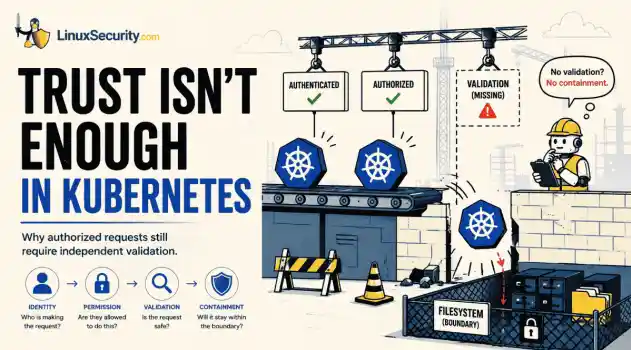
 Two newly fixed storage bugs in Kubernetes showed more than just a problem with path traversal. They found a common security flaw in the cloud: powerful parts often think that requests accepted by a higher system are safe to run. This is a simple lesson for the platform and security teams: RBAC can accept a request without showing that its parameters will stay within a certain filesystem boundary. This is clear from a new study from SentinelLabs into flaws in the Kubernetes CSI drivers for NFS...
 Jul 24, 2026
 security advisory update
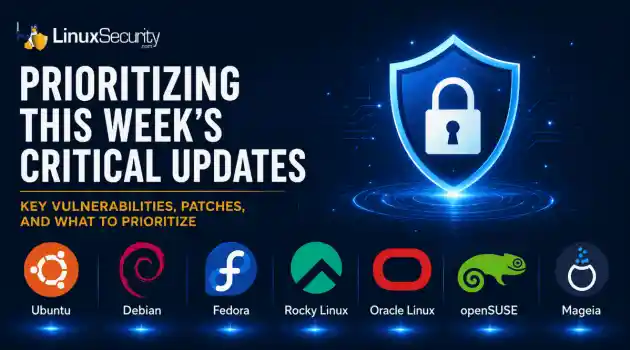
 A large volume of Linux security updates and advisories this week across major distributions once again, but it wasn't just the volume that was the story. Where maintainers and security teams focused their attention was evident in the concentration of fixes targeting Linux kernel updates, identity services, DNS infrastructure, and internet-facing software. . Instead of looking at each advisory in isolation, administrators gain more value from the general trends they reveal about Linux security...
Jul 23, 2026
 identity management security tactics
 For years, we secured our Linux infrastructure by building walls: VPCs, security groups, and hardened SSH configurations. We treated the cloud like a virtual data center, assuming that if we kept the "bad guys" out of the network, our workloads were safe. . That model is no longer sufficient. Today, one of the most common paths from an initial compromise to a major cloud breach is the identity assigned to your Linux workload. When an attacker gains code execution on a Linux instance—through a...
Jul 17, 2026
 security practices patch management
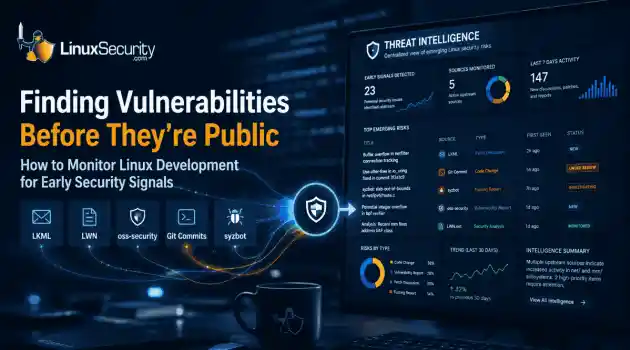
 Most of us don't hear about a kernel vulnerability until a CVE lands in our inbox or the vulnerability scanner starts complaining. By then, the patch isn't new anymore. Kernel developers may have been passing it around for review, arguing over the implementation, or revising it for days before anyone outside that community noticed it. None of those discussions are secret. They're sitting in mailing list archives, Git commits, and patch reviews where they've been the whole time. The strange...
Jul 14, 2026
 Linux security cyber attacks
 Every Linux server in your fleet produces thousands of events every minute. From journald logs and auditd records to kernel-level eBPF hooks, your systems are constantly talking. Most of that noise is just the mundane churn of system services, CI/CD runners, or routine administrative automation. But among that noise, an attacker might be establishing a foothold, moving laterally, or setting up persistence. The challenge for any security team is: how do you separate the routine from the...
Jul 13, 2026
 Refine features
X Clear Filters
Get the latest News and Insights
Get the latest Linux and open source security news straight to your inbox.
Community Poll
Should Linux servers automatically install security updates?
Loading...

Explore Latest Linux Security features
We found -4 articles for you...
102
 open-sourcetrustworthinesssecurity audits
Transforming AI Security with Open-Source LLMs for Linux Administrators
As Linux security admins, we understand the many advantages that open-source software brings . Open-sourcing Large Language Models (LLMs) used in AI development offer similar benefits, especially regarding security. Making their source code publicly available enables community audits that quickly discover vulnerabilities - essential in building trust with users while guaranteeing there are no backdoors or malicious code present. . Open-source LLMs offer additional benefits by quickly allowing for rapid integration of new security features and interoperability with existing secure systems, which is key for maintaining an effective security posture. Linux admins can easily customize or adapt these AI tools to their requirements for enhanced and tailored security environments. Incorporating open-source LLMs benefits AI security and aligns with Linux's fundamental principles that have enabled its reliability and safety over the years. In this article, I'll delve into how open-sourcing LLMs can enhance security, increase trustworthiness, and enable greater control and customization - all while adhering to the core values that have made open-source software so important in our lives. Transparency and Trust Transparency is one of the cornerstones of open-source software. When developers and security experts can review the source code of an LLM, trust is fostered, which may otherwise be hard to come by in proprietary systems. Furthermore, unlike closed-source models, where users must take their vendor's word as to its security or integrity of use for verification purposes alone, open-source models allow independent user verification. Transparency ensures no vulnerabilities, backdoors, or malicious code are buried within an AI model. For Linux security admins already experienced in auditing open-source software , this can add another level of assurance. AI systems integrated into environments will be as secure as their community can make them and provide similar levels of reliability aswell-maintained Linux distributions. Collaborative Security Audits An outstanding advantage of open-sourcing LLMs is their capacity for collaborative security audits. In a closed-source environment, security audits and vulnerability assessments typically consist of internal teams or third-party auditors hired by vendors. These audits may be thorough but lack the varied perspectives that a global community provides. Open-source environments enable individuals with sufficient knowledge to scrutinize code, identify potential issues, and suggest solutions. This global peer review process dramatically speeds up and broadens security assessments. Vulnerabilities can be discovered much quicker, decreasing malicious actors' window of opportunity for exploiting them - providing Linux security administrators an advantage in staying one step ahead of potential threats while keeping their systems protected and resilient. Rapid Identification and Fixes for Vulnerabilities Proprietary software often requires official patches and updates from a vendor, which may take time to implement when vulnerabilities are not considered urgent. In contrast, open-source communities tend to act quickly, rapidly responding to security issues reported within the community, with updates being disseminated quickly as patches. Open-source projects facilitate rapid response through their collaborative nature, where developers and security professionals from around the globe contribute their expertise. We Linux administrators are already familiar with this model for updating and patching open-source systems. By applying it to LLMs, we can protect our AI systems against emerging threats. Enhanced Security Features Open-source communities are hubs of innovation when it comes to security. By making LLMs Open Source, the development and integration of new security features can be greatly accelerated. Improvements that one organization might not have prioritized quickly become the responsibility of an entire community. Increased encryption methods , enhanced access controls , and better auditing capabilities are among the many security features developed and integrated by contributors to Linux security admins' benefit without waiting for proprietary solutions to catch up. Through open-source community contributions, they ensure their AI systems offer security protection and incorporate cutting-edge technology. Educational Value Open-sourcing LLMs offer significant educational value. Security professionals, students, and enthusiasts can all take advantage of real-world examples of AI code to study its structure, strengths, and weaknesses, providing hands-on experience that deepens their understanding of AI and security principles. This education will lead to a more knowledgeable and skilled workforce. Engaging with these LLMs enables us admins to continuously develop our expertise, stay abreast of emerging technologies, and apply these learnings to strengthen our organization's security posture. Interoperability with Secure Systems One of the key challenges associated with incorporating AI into existing IT infrastructures is ensuring its compatibility and interoperability with secure systems. Open-source software tends to be flexible enough to work across systems and standards. This makes it much simpler for LLMs to integrate securely into different environments. Linux security admins benefit from open-source LLMs being easily integrated into existing security frameworks. Open-source models provide the adaptability needed to ensure compatibility with encryption standards, SIEM systems , and compliance requirements - helping create an organized and safe IT environment. Better Control and Customization Open-source software enables organizations to gain unprecedented control and customization, and LLMs are no different. While proprietary AI models often come equipped with predetermined features and capabilities that limit an organization's ability to adapt to its unique securityrequirements, open-source LLMs can be customized according to individual and organizational needs. Linux security admins, for instance, can manipulate model algorithms or adjust security parameters as necessary, even adding custom modules for enhanced functionality. This ensures that AI systems align perfectly with an organization's policies and objectives and enables more customized AI apps tailored to individual industries' requirements. Aligning with Open-Source Principles Collaboration, transparency, and innovation--principles central to Linux's rise--are equally applicable in AI. By open-sourcing LLMs, AI practitioners can adopt these ideals more readily, leading to safer, reliable systems with advanced features. As Linux security admins, this approach feels familiar and aligns well with our values. Open-source LLMs support community-driven progress and a shared responsibility approach to open-source technologies, similar to Linux. Just as this collaboration led to the creation of an extremely secure operating system in Linux , AI communities can achieve similar goals through their collective efforts - providing security administrators with confidence in the systems they deploy. The Future of AI Security in an Open-Source World As AI becomes increasingly ingrained into our digital infrastructures, its impact on security cannot be overstated. Open-sourcing LLMs offer a straightforward means of improving this safety while encouraging innovation and trust. Adopting open-source AI models as part of their work with open-source operating systems and software is a natural extension of their philosophies. The deployment of open-source LLMs offers numerous benefits, including transparent and trustworthy code, rapid and collaborative security audits, quick vulnerability patches, and ongoing feature enhancements. Some of its many advantages are educational opportunities galore, seamless interoperability, and unmatched control and customization. At a time when AI could significantly changevarious aspects of our lives and industries, its security must be ensured. With Linux security administrators' help harnessing the open-source community's influence to build AI systems that advance innovative techniques and are robust and secure, secure AI development is attainable. Open-source software has already revolutionized IT; let's extend its impactful principles to AI as well! . Open-source LLMs enhance AI security with transparency, rapid updates, and community-driven collaboration.. linux, security, admins, understand, advantages, open-source, software, brings, open-s. . Brittany Day
 Feb 17, 2025
•
Feb 17, 2025
•

Get the latest News and Insights
Get the latest Linux and open source security news straight to your inbox.
Community Poll
Should Linux servers automatically install security updates?
Search Topics
Powered By

Linux Security - Your source for Top Linux News, Advisories, HOWTOs and Feature Releases
QUICK LINKS
subscribe to newsletters!
Like staying secure? So do we.
Sign up for updates, tips, and alerts!