Explore top 10 tips to secure your open-source projects now. Read More
×


Stay Ahead With Linux Security Features
 identity management security tactics
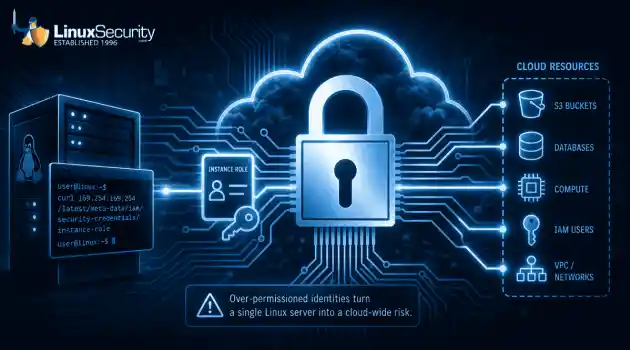
 For years, we secured our Linux infrastructure by building walls: VPCs, security groups, and hardened SSH configurations. We treated the cloud like a virtual data center, assuming that if we kept the "bad guys" out of the network, our workloads were safe. . That model is no longer sufficient. Today, one of the most common paths from an initial compromise to a major cloud breach is the identity assigned to your Linux workload. When an attacker gains code execution on a Linux instance—through a...
 Jul 17, 2026
 security practices patch management
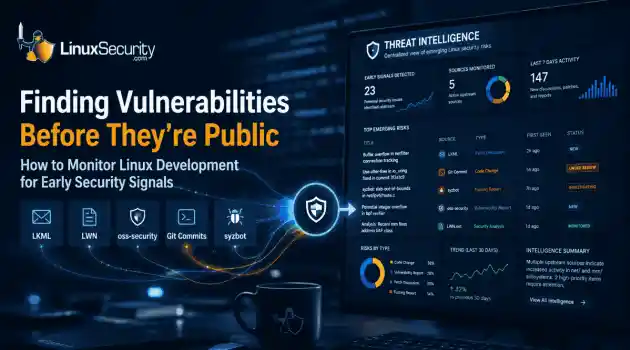
 Most of us don't hear about a kernel vulnerability until a CVE lands in our inbox or the vulnerability scanner starts complaining. By then, the patch isn't new anymore. Kernel developers may have been passing it around for review, arguing over the implementation, or revising it for days before anyone outside that community noticed it. None of those discussions are secret. They're sitting in mailing list archives, Git commits, and patch reviews where they've been the whole time. The strange...
Jul 14, 2026
 Linux security cyber attacks
 Every Linux server in your fleet produces thousands of events every minute. From journald logs and auditd records to kernel-level eBPF hooks, your systems are constantly talking. Most of that noise is just the mundane churn of system services, CI/CD runners, or routine administrative automation. But among that noise, an attacker might be establishing a foothold, moving laterally, or setting up persistence. The challenge for any security team is: how do you separate the routine from the...
Jul 13, 2026
 open-source infrastructure risk
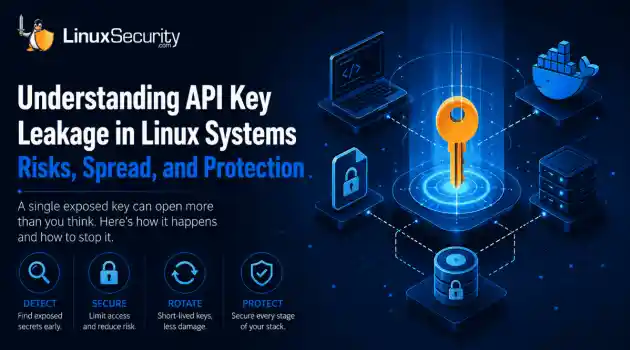
 Security scanners flag exposed API keys in public repositories every day. The initial response is usually predictable: delete the commit, revoke the credential, and move on. That’s a mistake. . In a real Linux environment, an API key never stays in one place. By the time it hits a public repo, it’s already everywhere. It’s in the CI/CD pipeline. It’s in your container registry. It’s in the build logs. It’s in the backups. Git makes this worse because the history never dies. Deleting a file in...
Jul 11, 2026
 open-source rootkit
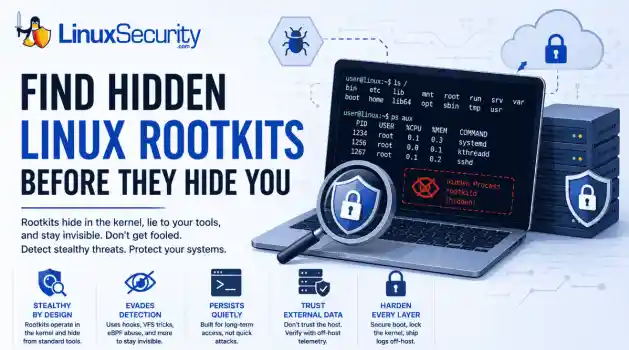
 Most of us think of Linux rootkits as ancient history—the stuff of 90s hacking forums and clunky malware that would crash your system if you looked at it the wrong way. But if you think they’ve gone away, you’re mistaken. They’ve just gotten smarter. . Modern attackers aren't using the noisy tools of the past. Today’s threats are surgical. Many of today’s most advanced Linux rootkits operate at the kernel level or abuse legitimate system features to blend in with normal traffic. They’re...
Jul 09, 2026
 Refine features
X Clear Filters
Get the latest News and Insights
Get the latest Linux and open source security news straight to your inbox.
Community Poll
Is continuous patching actually viable?
Loading...
Explore Latest Linux Security features
We found -2 articles for you...
102
 network securitylinux toolssecurity assessment
How Linux Pentesting Improves Network Security
When setting up network security systems, it is critical to ensure they work correctly and do not have flaws waiting to be exploited. . The best way to improve network security and prevent attacks is to conduct vulnerability scanning and continuously test the system for weak points. Penetration testing, or pentesting, is an incredibly helpful tool to protect your company from potential cyberattacks. This article will introduce Linux pentesting and its benefits, explain the basic methodology, and explore some of the penetration testing tools available to Linux users. What Is Pentesting? How Are Tests Executed? Pentesting is the practice of staging attacks in network security that mimic actual security incidents. This is a form of ethical hacking that helps identify the exploits that cybercriminals could use to attack. Pentests can vary greatly depending on the threat being tested, the information the ethical hacker can obtain beforehand, the types of penetration testing tools they use, and the limitations imposed by an employer. The majority of pentests fall into one or multiple of the following categories: Insider pentests simulate an insider attack, where a malicious hacker poses as a legitimate employee to gain access to the company’s internal network. This type of pentest relies on vulnerability scanning for internal network security issues, such as access privilege and network monitoring flaws, rather than external cybersecurity vulnerabilities, like firewall, antivirus, and endpoint protection problems. Outsider pentests don’t give hackers access to the company’s internal network or employees, forcing them to get in through external means, such as public websites or open communication ports. This type of pentest can overlap with social engineering pentests, in which a hacker evades external protection by tricking an employee into granting them access to the company’s internal network. Data-driven pentests provide the hacker with security information aboutthe target to simulate an attack by a former employee or someone who obtained leaked security data. Blind pentests give the hacker no information about the target other than their name and publicly available information. This leaves the employee entirely on their own in figuring out how to find the holes in network security websites and systems that have been implemented. Double-blind pentests test security and IT staff along with digital security measures. No one in the company is aware of the simulated attack, forcing them to react as they would in the event of a real cloud security breach. Double-blind pentests provide valuable information regarding how to improve the security posture for an entire company, such as staff readiness. Linux Pentesting Methodology Just like malicious cyberattacks, pentests require careful planning to be successful. They follow a sequence of clearly defined steps to yield the data and insights sought by the pentester. Let’s examine the basic pentesting methodology: Gather Information & Plan: The ethical hacker starts by collecting details on the target. Systems, users, exposed services, anything that shapes the attack surface. From there, they sketch out a plan. Not rigid, but enough to guide where to probe first and what paths might actually go somewhere. Vulnerability Evaluation: Scanning comes next. Vulnerability scanning tools flag weak spots, but the real work is sorting signal from noise. Small tests get run against those findings, just to see how the system reacts under pressure and which issues are worth pushing further. Vulnerability Exploitation: Once an entry point looks viable, they move in. Known flaws get tested in a controlled way, trying to turn access from theoretical to real. Some attempts fail outright. Others open just enough of a door to keep going. Maintaining Covert Access: Getting in isn’t the end of it. Staying in without tripping alarms is where things usually get messy. If access holds, the testerworks toward the goal of the engagement, maybe pulling data, maybe moving laterally, sometimes just proving it can be done without being seen. Reporting, Analyzing, & Repairing: Everything gets documented at the end. What worked, what didn’t, and what defenses actually caught. Security teams dig through that data, line it up with their own logs, and start making fixes where things clearly broke or never fired at all. Rinse & Repeat: Companies will often test the improvements they make to their security system by staging another pentest. How Can Linux Pentesting Be Used to Improve Security Posture & Verify Network Security Safety? As you can see, pentesting is an important piece of a successful network security toolkit. Linux pentesting identifies weak points (or a lack thereof) in a company’s system, providing professionals with valuable data. This vulnerability scanning allows administrators to anticipate threats and modify their network security system before malicious hackers exploit the gaps. Pentesting is also an excellent method of testing security changes, verifying that their systems can prevent malicious attacks on network security. Penetration Testing Tools for Linux Below, we list some of the best free and open-source tools to assist ethical hackers with Linux pentesting. Kali Linux Kali Linux is one of the most popular Linux distros among pentesters and security researchers, as it is flexible, customizable, and full-featured. It also protects sensitive data with LUKS full-disk encryption. You can download Kali Linux here. Parrot Security OS Parrot Security OS is a free Linux-based OS designed for pentesting, reverse engineering, and digital forensics. It is lightweight, user-friendly, and supportive of a wide selection of open-source pentesting and software development tools and utilities. Parrot Security OS is known for the impressive security and control it provides users. It is frequently updated and offers various hardening and privacy sandboxingoptions. You can download Parrot Security OS here . Nmap Nmap (“Network Mapper”) is an Open-Source Intelligence (OSINT) network monitoring tool that collects and analyzes data about a device’s hosts and servers. The widespread utility is flexible, powerful, and user-friendly, earning it numerous awards, including "Information Security Product of the Year" by Linux Journal, InfoWorld, and Codetalker Digest. You can download Nmap here. WebShag WebShag is an OSINT system auditing tool that scans HTTPS and HTTP protocols, collecting relevant data. It is used by ethical hackers performing outsider pentests through public websites. Final Thoughts on Linux Pentesting Staging cyberattacks that mimic legitimate security incidents can help improve company security by allowing administrators to identify and remediate vulnerabilities in network security systems and websites. Pentesting verifies that the modifications a business makes work as they should to prevent future attacks. There are many excellent penetration testing tools to assist Linux users in this process, but it's not something you can wing. Linux pentesting takes planning and a clear method. It should sit inside a broader defense-in-depth strategy, not run as a one-off exercise. Are you using pentesting to assess, validate, and actually improve your network security posture over time? We want to hear how that’s working in practice, not just on paper, so connect with us on social media: Twitter | Facebook . Explore the domain of Linux cybersecurity and uncover techniques and tools to enhance system protection in this enlightening article.. Linux Pentesting, Network Security Tools, Ethical Hacking, Cybersecurity Strategies. . Andrew Kowal
 Apr 25, 2026
•
Apr 25, 2026
•
102
 linux toolsopen-sourcelog analysis
Understanding Log Management and Analysis Tools for Linux Systems
Apr 24, 2026
•

102
 linux toolssecurity assessmentadministration
Port Scanning Explained: Tools, Techniques, and Best Open-Source Port Scanners for Linux
Most Linux admins assume they know which TCP/IP ports their servers expose, until a scan reveals something unexpected. A database port listening on all interfaces, a forgotten development service, or a management interface that was meant to stay internal can easily appear once you look from the network side. . In this article, we’ll focus on how port scanning works in practice and how Linux administrators can use common tools and techniques to identify open ports and verify network exposure. Port Scanning Techniques and How They Work Once you understand what port scanning is , the next question is how scanners discover those ports. The technique used determines how visible the scan is and how accurate the results might be, with different methods affecting both speed and detection. SYN Scan The SYN scan is one of the most common techniques used in network port scanning. It begins the normal TCP handshake by sending a SYN packet to a target port. If the port is open, the system replies with a SYN-ACK. Instead of completing the connection, the scanner immediately resets it. That small interruption is the key detail. The connection never fully establishes, which makes the scan faster and slightly less visible in application logs. Tools like Nmap use SYN scanning by default when they have the permissions needed to craft raw packets. TCP Connect Scan A TCP connect scan takes the more straightforward approach. It performs a full TCP handshake with each port and establishes a normal connection before closing it. Because this process uses the operating system’s standard networking functions, it works even when the scanning tool does not have elevated privileges. The tradeoff is visibility. Every completed connection is easier to log and detect on the target system. UDP Port Scan Scanning UDP ports works differently because UDP does not rely on a handshake. Instead, the scanner sends a packet and waits to see if the system responds. If the port is closed, the host oftenreturns an ICMP message indicating that the destination port is unreachable. If the port is open, there may be no response at all unless the service sends one. That silence makes UDP port scanning slower and sometimes less precise than TCP scanning. Despite the challenges, UDP scans remain useful because many important services rely on the protocol. FIN, NULL, and Xmas Scans Some scanning methods experiment with less conventional packet flags. FIN scans, NULL scans, and Xmas scans fall into this category. Each sends packets with unusual combinations of TCP flags and observes how the system reacts. These techniques were originally designed to slip past simple firewall rules that only expected normal connection attempts. The important takeaway is that no single technique reveals everything. Different scanning methods interact with systems in different ways, and that interaction shapes the results you see. When administrators compare scan outputs from different tools or techniques, those subtle differences in network behavior often explain why the results do not always match. Best Port Scanning Tools for Linux Admins The best tool choice becomes less about features and more about how each scanner behaves on the network. Some focus on depth. Others prioritize speed or large-scale discovery. Most Linux admins settle on two or three tools that fit their workflow. One for detailed analysis. Another for rapid discovery. Sometimes, a simple utility for quick checks. Nmap Nmap is still the tool most administrators reach for first, and there is a reason for that. It sits between speed and detail, capable of scanning thousands of hosts or slowing down to understand exactly what is running on a single system. Identifies open ports and running services Performs service discovery and version detection Often estimates the operating system behind the host Uses response analysis and fingerprinting to map services Supports a scripting engine for extended checks, from basicvulnerability detection to configuration gathering Nmap often identifies the application behind it, and sometimes even the exact version running. It is rarely the fastest scanner available, but it is often the most informative. Masscan Masscan sends packets as quickly as the network allows and records which hosts respond. The design allows it to scan enormous address ranges very quickly. In large environments, that speed is useful: Scans entire subnets or organization-wide address space in a short time Quickly identifies which hosts respond on which ports That speed comes with tradeoffs: Limited service identification Minimal analysis of application responses Focused on discovery, not what software is behind the port As a result, administrators often pair it with another scanner. Masscan finds open ports quickly across a large network, and then a deeper tool like Nmap analyzes the interesting hosts. RustScan RustScan appeared more recently and fills a niche between speed and analysis. Its role is straightforward: Fast port discovery across a host Automatically hands results to Nmap for deeper inspection Preserves speed without losing service detection and fingerprinting The workflow reflects how many admins already operate. Find the open ports first. Investigate them second. ZMap ZMap was designed for large-scale network research and prioritizes speed at scale: Scans extremely large portions of the internet quickly Uses highly optimized probe packets for large address spaces Built for distribution analysis across massive networks Because of that design: Not ideal for day-to-day system administration Better suited for researchers and large network operators For typical Linux environments, deeper tools like Nmap tend to be more practical. Naabu Naabu is a lightweight scanner built for speed and automation: Quickly discovers open ports across many hosts Integrates easily intoreconnaissance and asset discovery workflows Works well in automated security pipelines Its design allows repeated scans without placing a heavy load on the network, which makes it useful in environments where exposure needs to be tracked continuously. Angry IP Scanner Angry IP Scanner takes a different approach by focusing on visibility: Provides a graphical interface for scanning IP ranges Quickly identifies responsive hosts on a network Useful for fast, visual discovery in smaller environments Admins often use it to scan a subnet and immediately see which devices respond, then follow up with deeper tools as needed. Netcat Netcat is not a dedicated scanner, but it shows up often because of how simple it is: Tests connectivity to specific ports Confirms whether a service is reachable and responding Works as a quick diagnostic tool rather than a full scan solution When you already know which port to check, it gives a fast answer without running a full scan. Over time, you begin to see how these tools complement one another. Some specialize in speed, others in depth, and a few provide quick visibility when you just need to check a single service. The choice depends less on which tool is considered the best port scanner and more on what question you are trying to answer at that moment. How Do These Port Scanning Tools Compare? Once you start working with several scanning tools , the differences become easier to see. They all perform the same basic task, but the details are where they separate. Some prioritize accuracy and service detection. Others focus almost entirely on speed. A few are designed for very large network studies rather than everyday system administration. Tool Scan Speed Service Detection OS Fingerprinting Scale Best Use Case Nmap Moderate Yes Yes Small to medium networks Detailed audits andservice identification Masscan Extremely fast Limited No Very large networks Rapid discovery of open ports RustScan Fast Through Nmap Through Nmap Medium networks Fast discovery followed by deeper analysis ZMap Extremely fast No No Internet-scale Research and large-scale network measurement Naabu Very fast Limited No Medium to large environments Automation and continuous scanning The main difference is how much information each tool gathers. Nmap spends time analyzing responses, identifying services, and sometimes operating systems. It’s slower, but far more informative. Masscan and ZMap focus on speed. They send packets quickly and record which hosts respond, making them useful for large environments. RustScan and Naabu sit in between. They handle fast discovery, then pass results to deeper tools for analysis. You start to see why administrators rarely rely on just one scanner. One finds open ports quickly. Another explains what’s running behind them. Together, they give a clearer view than either alone. Practical Port Scanning Workflows for Linux Admins Most administrators use network port scanning in a few repeatable ways. Find All Open Ports on a Server One of the most common checks is scanning a server across the full TCP port range. This shows every port that responds, not just the common ones. nmap -p- server_ip The -p- option tells Nmap to scan all 65,535 TCP ports. The interesting moments happen when extra ports appear. A Redis service on 6379. A database on 3306. Occasionally, something more obscure, like a development service that was installed during troubleshooting and never removed. You start to notice this after scanning enough systems. The scan often reveals services no one remembersenabling. Verify Firewall Exposure Another common workflow is comparing scan results with what the system itself reports. A server may believe it is listening on certain ports, but that does not always mean the network can reach them. On the host, administrators often check active listening services like this: ss -tulnp This command shows which processes are bound to network sockets. When you compare that list with the results of a network port scanning tool, the differences become meaningful. If a service appears in ss -tulnp but not in a scan, the firewall may be blocking it. If a port appears in a scan that you did not expect, the service might be bound to an interface that exposes it externally. Detect Unnecessary Services It’s also a simple way to audit server roles. A typical web server might intentionally expose only a few ports. SSH for administration, and HTTP or HTTPS for the application itself. If a scan reveals additional services, that usually deserves a closer look. For example, a scan might return results like: 22/tcp open ssh 80/tcp open http 443/tcp open https 3306/tcp open mysql 6379/tcp open redis A port scan makes that exposure visible very quickly. Discover Devices on a Network It’s also useful for discovering systems across an entire subnet. Instead of targeting a single host, the scan probes every address in the range to see which machines respond. nmap -sn 192.168.1.0/24 This type of scan does not focus on ports. It simply identifies which hosts appear active on the network. Administrators often use it when building network inventories or trying to locate devices that have appeared unexpectedly. You start to see a clearer picture of the environment once you run scans like this. Servers show up first, but so do routers, embedded devices, and various pieces of equipment that quietly joined the network. Find All Printers on the Network Certain devices expose very recognizable ports. Network printers are a commonexample. Many models respond on port 9100 for raw printing. Scanning for that port across a subnet can quickly identify printers that exist on the network. nmap -p 9100 192.168.1.0/24 The results often include devices that were never added to asset inventories. These small discoveries are where port scanning becomes genuinely practical. It is not just about identifying open ports. Over time, it becomes a way to understand what systems actually exist on a network and which services they expose. Final Thoughts on Using Port Scanning to Understand What Your Systems Actually Expose Port scanning is often described as a form of network reconnaissance, and that description is technically correct. In everyday administration, though, its role is simpler. It helps confirm which TCP/IP ports are exposed, which services respond to the network, and how large the attack surface of a system really is. Over time, administrators start using port scanning in predictable ways. Checking open ports after configuration changes. Verifying firewall behavior. Scanning subnets to see which devices actually exist on the network. Tools like Nmap, Masscan, and RustScan approach this task from different angles, but the goal stays the same. Understand how systems appear from the network side and ensure that only the services meant to be visible are the ones that respond. . Explore techniques and tools for effective port scanning on Linux, ensuring you understand network exposure and service behavior.. Linux Port Scanners, Network Security Tools, System Administration, Open Ports, Security Assessment. . Brittany Day
Mar 20, 2026
•

Get the latest News and Insights
Get the latest Linux and open source security news straight to your inbox.
Community Poll
Is continuous patching actually viable?
Search Topics
Powered By

Linux Security - Your source for Top Linux News, Advisories, HOWTOs and Feature Releases
QUICK LINKS
subscribe to newsletters!
Like staying secure? So do we.
Sign up for updates, tips, and alerts!