Audit Linux privileges now to limit compromise, escalation, and system-wide damage. Review Linux Privileges×


Stay Ahead With Linux Security Features
 security advisory path traversal
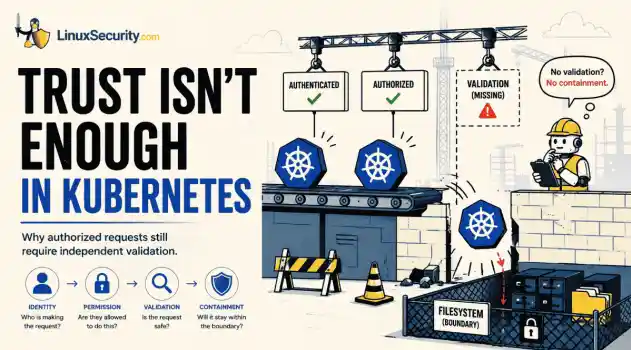
 Two newly fixed storage bugs in Kubernetes showed more than just a problem with path traversal. They found a common security flaw in the cloud: powerful parts often think that requests accepted by a higher system are safe to run. This is a simple lesson for the platform and security teams: RBAC can accept a request without showing that its parameters will stay within a certain filesystem boundary. This is clear from a new study from SentinelLabs into flaws in the Kubernetes CSI drivers for NFS...
 Jul 24, 2026
 security advisory update
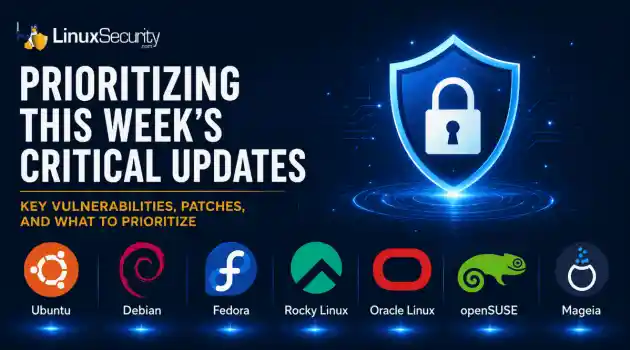
 A large volume of Linux security updates and advisories this week across major distributions once again, but it wasn't just the volume that was the story. Where maintainers and security teams focused their attention was evident in the concentration of fixes targeting Linux kernel updates, identity services, DNS infrastructure, and internet-facing software. . Instead of looking at each advisory in isolation, administrators gain more value from the general trends they reveal about Linux security...
Jul 23, 2026
 identity management security tactics
 For years, we secured our Linux infrastructure by building walls: VPCs, security groups, and hardened SSH configurations. We treated the cloud like a virtual data center, assuming that if we kept the "bad guys" out of the network, our workloads were safe. . That model is no longer sufficient. Today, one of the most common paths from an initial compromise to a major cloud breach is the identity assigned to your Linux workload. When an attacker gains code execution on a Linux instance—through a...
Jul 17, 2026
 security practices patch management
 Most of us don't hear about a kernel vulnerability until a CVE lands in our inbox or the vulnerability scanner starts complaining. By then, the patch isn't new anymore. Kernel developers may have been passing it around for review, arguing over the implementation, or revising it for days before anyone outside that community noticed it. None of those discussions are secret. They're sitting in mailing list archives, Git commits, and patch reviews where they've been the whole time. The strange...
Jul 14, 2026
 Linux security cyber attacks
 Every Linux server in your fleet produces thousands of events every minute. From journald logs and auditd records to kernel-level eBPF hooks, your systems are constantly talking. Most of that noise is just the mundane churn of system services, CI/CD runners, or routine administrative automation. But among that noise, an attacker might be establishing a foothold, moving laterally, or setting up persistence. The challenge for any security team is: how do you separate the routine from the...
Jul 13, 2026
 Refine features
X Clear Filters
Get the latest News and Insights
Get the latest Linux and open source security news straight to your inbox.
Community Poll
Should Linux servers automatically install security updates?
Loading...
Explore Latest Linux Security features
We found -2 articles for you...
102
 secure developmentrisk assessmentmemory safety
Why Memory Safety Is Becoming a Core Requirement in Modern Software
Most information security best practices are built on a single, comfortable assumption: that we have control over what software is running on our hardware, and that the underlying system behaves exactly as we expect. We assume that the memory management happening under the hood is a solved problem—a silent utility that stays within its lines. . But the data from the world's largest tech giants just blew that theory apart. From Microsoft to Google, the telemetry is consistent: roughly 70% of all serious software vulnerabilities are memory safety issues. We aren’t just dealing with occasional glitches; we are dealing with a structural failure in how we’ve built software for forty years. The Hidden Layer of Software Security Everyone Ignores When we discuss how to secure a system, we usually focus on the perimeter: hardening SSH, configuring firewalls, and managing user identities. But there is an invisible layer of legacy code and memory-unsafe programming languages running in the background that most admins never touch. Many of the most common software vulnerabilities—like buffer overflows and use-after-free errors—stem from how applications manage memory. Languages like C and C++ are the bedrock of our infrastructure, but they operate on an "honor system." They give developers total control over system memory, but they offer no guardrails. Academic and technical research—such as studies on memory safety issues and vulnerabilities in C/C++ systems —confirms that memory safety issues are a primary cause of kernel and system vulnerabilities. The problem? You can harden your network security all day, but if the foundation is written in an unsafe language, you’ve left a root-level power tool sitting on the counter for anyone to pick up. True system security isn't just about who can get into the box; it's about what the box is allowed to do once they're there. How Memory Safety Breaks System Security The technical failure here is a classic lack of boundaries, butthe design failure is much deeper. In a healthy system security model, trust should be atomic—it either exists or it doesn't. Memory-safe languages (like Rust) enforce this at the compiler level. They check if the data belongs in that memory space, and if it doesn't, the code simply refuses to compile. Memory-unsafe languages break this by splitting trust across layers. The developer has to manually verify every single pointer, and the moment there is a gap between the check and the action, the gap becomes a playground for exploits. Why Endpoint Security Doesn't Catch This This is where the reality of endpoint security gets uncomfortable. Most security tools are designed to look for "bad" things: known malware signatures, suspicious network traffic, or unauthorized binary execution. Memory corruption or a buffer overflow doesn't look "bad" to a standard monitor: The process is a legitimate system component. The action is a legitimate system function. The error happens entirely in the background. Security tools trust the same system components that attackers abuse. If your security strategy is purely reactive, it will stay silent while the system's own "trusted" tools are used to dismantle it from the inside. Linux and Rust: A Signal, Not the Story When a vulnerability is widespread, it stops being a local issue and becomes a massive failure in secure software development, as detailed on the OSS-Security mailing list and industry research. This isn't just a misconfiguration; it's the default behavior shipped to millions of users. Distribution Default Language Risk Profile Ubuntu / Debian Predominantly C/C++ High (The backbone of many servers) RHEL / Fedora Mixed C / Legacy Medium-High (Enterprise standard) The adoption of Rust in the Linux kernel is the clearest signal we have that the tide is turning. This shift is especially visible in Linux kernelsecurity , where new components are increasingly written with memory safety in mind. As noted in recent reports on Linux kernel adoption, this isn't about replacing every line of C overnight. It’s about starting with the most dangerous parts: drivers and new kernel components. By bringing open source security to the core of the operating system, Linux is demonstrating that even the most critical infrastructure can—and must—evolve without sacrificing performance. Rust-based drivers are already proving safer than C-based ones. Rust improves memory safety , concurrency safety, and performance simultaneously. You can also get a clear visual summary of how the integration functions by watching the Linux 7.0 and Rust Integration video . Breaking the Information Security Model We need to be clear about the stakes: Root access is total access. All your software security best practices assume that you have control over what software is running on your hardware. If an attacker can exploit a memory bug to gain arbitrary code execution or escalate privileges, that control is gone. They don't need to crack your database encryption; they can just pull the keys directly from memory. Your entire policy model is built on the assumption that software execution is a privileged, controlled act. Vulnerable, memory-unsafe code turns that act into a free-for-all. How to Secure a Server Right Now (Without Waiting) Most environments should not be relying on unsafe dependencies or unverified memory access where it can be avoided. Here is how to secure a server against this class of vulnerabilities: Audit: Check your dependencies and system binaries for unmanaged C/C++ libraries. Isolate: Stop using unneeded background helper services. If you don't need a middleman, kill the service and mask it so it can't be "woken up" by other processes. Patch/Migrate: Ensure your environments are utilizing up-to-date, securely compiled packages and dependencies. The Real Lesson: StopTrusting Default System Behavior If there is one thing that cybersecurity best practices consistently get wrong, it’s the idea that "default" equals "safe." Defaults prioritize usability. They want the system to "just work" for the broadest number of people. But security assumes correct behavior, and reality breaks both. If structural flaws can sit in default installs across every major distribution, the problem isn’t a lack of patching; it’s a lack of skepticism. The most dangerous systems are the ones that look normal. Security isn't about the tools you've installed. It's about the trust you've refused to give. Stop trusting that the "standard" install has your back. Start validating the foundation. . Explore the critical nature of memory safety in modern software and its impact on system security and vulnerabilities.. Memory Safety, Software Security, Secure Development Practices, System Integrity. . MaK Ulac
 Apr 30, 2026
•
Apr 30, 2026
•
102
security advisoryapplication securitymemory safetyThe End of “Patch and Pray”: How Rust Is Reshaping Memory Safety in Linux
Most information security best practices are built on a single, comfortable assumption: that if we find a bug, we can patch it, and once it’s patched, the system is "safe" again. . We’ve lived in this cycle for thirty years. A vulnerability is found, a CVE is issued, and sysadmins scramble to update their servers. But the recent move to bring the Rust programming language into the Linux kernel—reaching a new level of stability and integration in recent kernel releases—is the first sign that the people at the top have realized the cycle is broken. We aren't just dealing with "bugs" anymore. We are dealing with a structural failure in how our systems are built. What is C, and Why Is It Killing Us? To understand why this is a strategic shift, you have to look at the language Linux is built on: C . Computers don't actually understand "software." They understand electricity moving through physical memory addresses. C is the "translator" that sits between the human programmer and the physical hardware. It’s the industry standard because it’s incredibly fast and gives you total control over the machine. But that control comes with a catch: C has no safety rails. In C, the programmer is responsible for manually managing every single "bucket" of memory the system uses. If your program needs space to store a username, you have to ask the system for exactly 10 bytes of memory, use them, and then remember to "give them back" when you’re done. The problem? C assumes the programmer is perfect. If you ask for 10 bytes, but a user sends you 100, C doesn't stop the extra data. It just lets it spill over into the next section of memory—often overwriting the very security instructions that were supposed to keep the user out. The "70% Problem" in the Kernel In systems like the Linux kernel, these aren't just "accidents"; they are a structural reality of the language. Microsoft recently estimated that 70% of all security vulnerabilities in their products over the last decade werethese exact memory safety issues. Google found the same trend, noting that these bugs are the primary cause of stability and security issues in complex systems like Android. We’ve spent three decades telling engineers to "just write better code," but humans don't scale. If the smartest engineers at Microsoft and Google can’t stop making these translation mistakes, the problem isn't the engineers—it's the tool. As we saw with the recent Pack2TheRoot disclosure (CVE-2026-41651), a tiny gap in how a background service handles a memory request can sit in a "standard" Linux install for 12 years before someone realizes the door has been unlocked. When your foundation is built on a language that trusts a local user not to overflow a memory bucket, you aren't managing a secure server; you're managing a liability. Enter Rust: The Security Guard at the Checkpoint This is where Rust changes the philosophy of system security. In a traditional C-based system, we look for security flaws after the software is already running. That’s what your EDR, firewall, and log monitors are for—they watch for the "spill" after it happens. Rust moves that check to the compiler. The compiler is the tool that translates the human-written code into a running program. In Rust, the compiler acts like a strict building inspector. It includes a "Borrow Checker" that tracks every piece of data. If you try to write code that could cause a memory spill or a "race condition" (where two processes fight over the same data), the compiler simply refuses to build the program. In Linux, this is already showing up in new drivers and subsystems being written in Rust instead of C. This isn't just a development decision; it’s a signal that memory safety is being treated as a requirement, not a best practice. As detailed on the OSS-Security mailing list, the "default" state of a Linux host is usually its biggest risk. Rust fixes this by: Eliminating Risk Classes: We stop chasing individual bugs and start removingthe possibility of those bugs existing. Reducing the "Patching Tax": If a class of bugs can't exist in a driver, you don't have to spend your weekend patching a CVE for it. The Reality Check: Trust But Validate We have to be realistic: Linux is 30 million lines of C. We aren't swapping it all out overnight. The existing C code will dominate the kernel for years to come. And Rust isn't a magic wand. A recent audit showed that specific classes of bugs Rust won't catch—like logic errors where the code is "safe," but the math is wrong—still require human eyes. Rust can prevent you from crashing the car, but it can't prevent you from driving to the wrong address. But that’s exactly why this is a strategic win. By using Rust to handle the "boring" memory safety stuff automatically, we can finally focus our energy on the actual system logic. The Real Lesson: Stop Trusting the Defaults The shift toward Rust in Linux is a declaration of structural intolerance. It’s a signal that the industry is finally losing its patience with a model that assumes the foundation is naturally leaky. The most dangerous systems are the ones that look normal. For years, we’ve treated vulnerabilities like a weather pattern—something that just happens to us. We’ve focused on "detect and respond" because we assumed the foundation was naturally porous. Security isn't about the tools you've installed to watch the perimeter; it’s about the integrity of the core. Stop trusting that the "standard" install has your back. Start validating the foundation. . Exploring Rust's impact on memory safety within the Linux kernel and the shift from traditional C management strategies.. memory safety, Linux kernel, Rust programming, security practices, application integrity. . MaK Ulac
Apr 29, 2026
•

102
 buffer overflowmemory safetysecure coding
Understanding Buffer Overflow Risks and Solutions for Linux Programming
A buffer overflow occurs when a program or process tries to store more data in a temporary data storage area than it was intended to hold. Since buffers are created to contain a finite amount of data, the extra information can overflow into adjacent buffers, corrupting or overwriting the valid data held in them. . By: Suhas Desai Buffer overflows are a fertile source of bugs and malicious attacks. They occur when a program attempts to write data past the end of a buffer. A buffer is a contiguous allocated chunk of memory, such as an array or pointer in C. Limitation of C and C++ is there are no automatic bounds checking on the buffer where user can write past a buffer as given in example. Note: All examples are compiled on Linux platform having x86 configuration. int main () { int buffer [10]; buffer[20]=10; } After execution of this program it won’t give errors but program attempts to write beyond the allocated memory for the buffer which results for unexpected output. Example: void function (char *str) { char buffer[16]; strcpy(buffer,str); } int main() { char *str=”I am greater than 16 bytes”; function(str); } This program is guaranteed to cause unexpected behavior, because a string (str) of 27 bytes has been copied to a location (buffer) that has been allocated for only 16 bytes. The extra bytes run past the buffer and overwrite the space allocated for the FP, return address and so on. This corrupts the process stack. The function used to copy the string is strcpy, which completes no checking of bounds. Using strncpy would have prevented this corruption of the stack. Example: int main() { char buff[15]={0}; printf(“Enter your name:”); scanf(buff,”%s”); } In this example, program reads a string from the standard input but does not check strings length. If the string has more than 14 characters, then it causes a buffer overflow as scanf() tries to write the remaining characterpast buff’s end. Note: One character is always reserved for a null terminator. The result is most likely a segmentation fault that crashes the program .In certain conditions, the users will receive a shell’s prompt after the crash. Even if the shell has restricted privileges, they can examine the values of environment variables; list the current directory files to detect the network with the pig command. Writing Buffer Overflow exploits: 1. Example of an exploitable program - Lets assume that we exploit a function like this: void lame (void) { char small[30]; gets (small); printf("%sn", small); } main() { lame (); return 0; } Compile and disassemble it: # cc -ggdb program.c -o program /tmp/cca017401.o: In function `lame': /root/program.c:1: the `gets' function is dangerous and should not be used. # gdb program /* short explanation: gdb, the GNU debugger is used here to read the binary file and disassemble it (translate bytes to assembler code) */ (gdb) disas main Dump of assembler code for function main: 0x80484c8 : pushl %ebp 0x80484c9 : movl %esp,%ebp 0x80484cb : call 0x80484a0 0x80484d0 : leave 0x80484d1 : ret (gdb) disas lame Dump of assembler code for function lame: /* saving the frame pointer onto the stack right before the ret address */ 0x80484a0 : pushl %ebp 0x80484a1 : movl %esp,%ebp /* enlarge the stack by 0x20 or 32. our buffer is 30 characters, but the memory is allocated 4byte-wise (because the processor uses 32bit words) this is the equivalent to: char small[30]; */ 0x80484a3 : subl $0x20,%esp /* load a pointer to small[30] (the space on the stack, which is located at virtual address 0xffffffe0(%ebp)) on the stack, and call the gets function: gets(small); */ 0x80484a6 : leal 0xffffffe0(%ebp),%eax 0x80484a9 : pushl %eax 0x80484aa : call 0x80483ec 0x80484af : addl $0x4,%esp /* load the address of small and the address of "%sn" string on stack and call the print function: printf("%sn", small); */ 0x80484b2 : leal 0xffffffe0(%ebp),%eax 0x80484b5 : pushl %eax 0x80484b6 : pushl $0x804852c 0x80484bb : call 0x80483dc 0x80484c0 : addl $0x8,%esp /* get the return address, 0x80484d0, from stack and return to that address. you don't see that explicitly here because it is done by the CPU as 'ret' */ 0x80484c3 : leave 0x80484c4 : ret End of assembler dump. 1.a. Overflowing the program # ./program xxxxxxxxx
Feb 12, 2010
•

Get the latest News and Insights
Get the latest Linux and open source security news straight to your inbox.
Community Poll
Should Linux servers automatically install security updates?
Search Topics
Powered By

Linux Security - Your source for Top Linux News, Advisories, HOWTOs and Feature Releases
QUICK LINKS
subscribe to newsletters!
Like staying secure? So do we.
Sign up for updates, tips, and alerts!