Explore top 10 tips to secure your open-source projects now. Read More
×


Stay Ahead With Linux Security Features
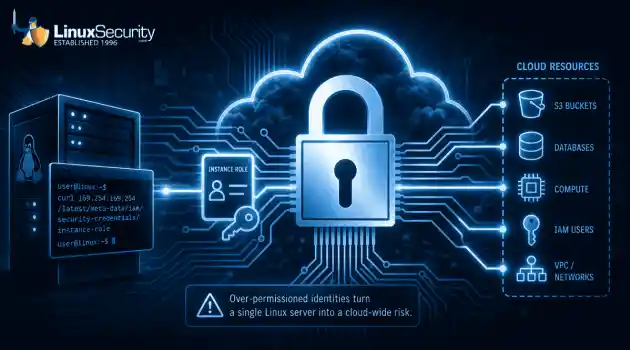
 identity management security tactics
 For years, we secured our Linux infrastructure by building walls: VPCs, security groups, and hardened SSH configurations. We treated the cloud like a virtual data center, assuming that if we kept the "bad guys" out of the network, our workloads were safe. . That model is no longer sufficient. Today, one of the most common paths from an initial compromise to a major cloud breach is the identity assigned to your Linux workload. When an attacker gains code execution on a Linux instance—through a...
 Jul 17, 2026
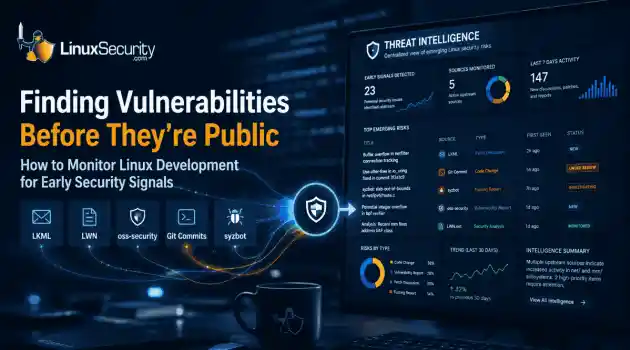 security practices patch management
 Most of us don't hear about a kernel vulnerability until a CVE lands in our inbox or the vulnerability scanner starts complaining. By then, the patch isn't new anymore. Kernel developers may have been passing it around for review, arguing over the implementation, or revising it for days before anyone outside that community noticed it. None of those discussions are secret. They're sitting in mailing list archives, Git commits, and patch reviews where they've been the whole time. The strange...
Jul 14, 2026
 Linux security cyber attacks
 Every Linux server in your fleet produces thousands of events every minute. From journald logs and auditd records to kernel-level eBPF hooks, your systems are constantly talking. Most of that noise is just the mundane churn of system services, CI/CD runners, or routine administrative automation. But among that noise, an attacker might be establishing a foothold, moving laterally, or setting up persistence. The challenge for any security team is: how do you separate the routine from the...
Jul 13, 2026
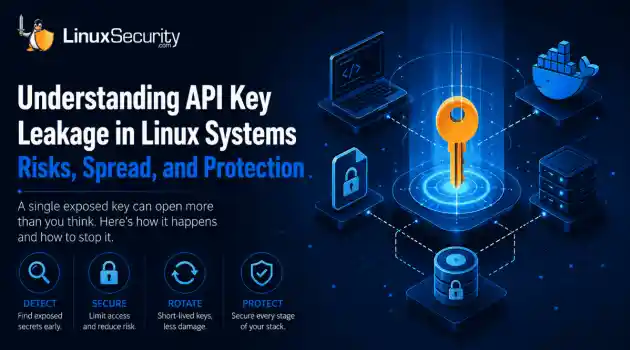 open-source infrastructure risk
 Security scanners flag exposed API keys in public repositories every day. The initial response is usually predictable: delete the commit, revoke the credential, and move on. That’s a mistake. . In a real Linux environment, an API key never stays in one place. By the time it hits a public repo, it’s already everywhere. It’s in the CI/CD pipeline. It’s in your container registry. It’s in the build logs. It’s in the backups. Git makes this worse because the history never dies. Deleting a file in...
Jul 11, 2026
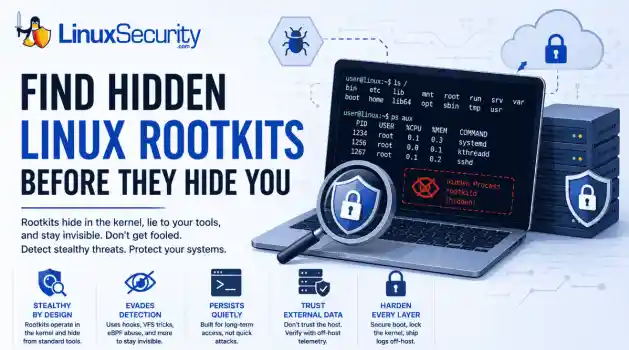 open-source rootkit
 Most of us think of Linux rootkits as ancient history—the stuff of 90s hacking forums and clunky malware that would crash your system if you looked at it the wrong way. But if you think they’ve gone away, you’re mistaken. They’ve just gotten smarter. . Modern attackers aren't using the noisy tools of the past. Today’s threats are surgical. Many of today’s most advanced Linux rootkits operate at the kernel level or abuse legitimate system features to blend in with normal traffic. They’re...
Jul 09, 2026
 Refine features
X Clear Filters
Get the latest News and Insights
Get the latest Linux and open source security news straight to your inbox.
Community Poll
Should Linux servers automatically install security updates?
Loading...
Explore Latest Linux Security features
We found 5 articles for you...
102
 data securitysecurity practicesnetwork protection
Data Security Best Practices for Strengthening Linux Networks
When it comes to managing Linux systems, there’s one thing every admin knows: security is a constant battle. Sure, you've set up the basics—firewalls, permissions, maybe even automated updates—but is your data truly safe? Cyber threats aren't just about flashy headlines. They’re subtle, persistent, and driven by attackers exploiting overlooked vulnerabilities. . Take cloud security breaches , for example. They're on the rise, and businesses are losing millions—not just in money but in customer trust. And here's the catch: even the best tools won't save you from gaps in your approach. If you're running Linux systems in the cloud or managing sensitive data, it's not just a question of if someone will try to breach your defenses—it’s when. So, let’s talk about what you can actually do to lock down your systems without losing sleep over it. The reality is that Linux gives you a solid foundation , but there’s no magic button here—it’s up to you to make the system formidable. Are you proactively encrypting drives? Do you have multi-factor authentication in place? Have you patched that weird buffer overflow vulnerability lurking in last year’s software version? These are practical questions, but they boil down to one principle— cybersecurity best practices. From insider threats to malware spikes (Linux malware jumped 50% recently—50%), the risks keep evolving. The good news? There’s no shortage of tools and tactics you can deploy right now. Let’s walk through them and make your systems a fortress rather than just a gate someone’s plotting to bypass. What Is Data Security and Why Is It Essential? Data security focuses on maintaining computer security so that threat actors do not compromise sensitive information. With robust data security measures in place, unauthorized users cannot access confidential resources on which they can install malware . Companies with more sensitive data usually create a set of parameters to determine when to delete information beforecybercriminals can gain access. Data security services must understand where sensitive information is on a server. Many companies are vulnerable to a data breach with all the information stored in their systems. Many executives may not know where to find confidential information. As a result, cybercriminals, once they hack a system, have an advantage in combining all of the information and finding what is useful for their attacks on network security. What Common Data Security Risks Do Organizations Face? IT security teams must be aware of the latest data and network security threats that could cause system crashes, account takeovers, and general compromise. Here are the main issues to be vigilant about: Malware can quickly infiltrate a system , leading to data loss, corruption, and inaccessibility. Hackers exploit software and cybersecurity vulnerabilities that have yet to undergo security patching. Linux users can activate automatic updates to prevent these risks. Employees can pose insider threats , as they can initiate cloud security breaches that can compromise data. Linux systems have fire-permission levels that administrators can set so individuals and groups have limited access to sensitive data they can misuse. Email phishing attacks have grown increasingly realistic and convincing. Researchers blame AI tools like ChatGPT for helping hackers craft misleading content faster. Kali Linux is a valuable tool that simulates phishing attacks to improve security posture through training. Cybercriminals can instigate physical security attacks by stealing devices from unsuspecting strangers. Individuals may leave their phones and laptops on public transit, and cybercriminals can hack sensitive data from these platforms. Location Magic and Prey are compatible network security toolkits that Linux admins can use to track misplaced or stolen devices. What Types of Data Security Should I Implement? IT security teams must take comprehensive approaches todata protection, so they should familiarize themselves with these best practices for strong data security: File encryption scrambles the data, making it less valuable and inaccessible to unauthorized users. To keep disk information secure, Linux users can install Full Disk Encryption (FDE) or use file encryption tools like Tomb , eCryptfs , and Cryptmount . Organizations must retain visibility into relevant activities to keep cloud security frameworks robust. Linux provides monitoring tools that administrators can configure based on their needs. This customization, granularity, and permission options strengthen security. Businesses should stay up-to-date with security patching to handle web application security vulnerabilities that could permit hacking. Administrators must engage in comprehensive, frequent privacy sandboxing and testing, deploy data encryption methods, and oversee access controls and permissions. Admins and companies should use Multi-Factor Authentication on cloud security frameworks to decrease opportunities for unauthorized cybercriminals to reach and use the cloud for malicious purposes. Spread cloud metadata across several locations so hackers only get a portion of your data if they enter your server. Verify and review cloud provider security practices to ensure you are still content with their services and how they protect your server. What Techniques and Best Practices Help Strengthen Linux Data Security? Companies can improve their computer security posture and brand image simply by following a variety of well-known safeguards. Here are a few of the suggestions we recommend you consider: Set up regular data backups to minimize your risks of lost data. Categorize your data by importance and then protect what is most vital first to avoid downtime and cloud security breaches from impacting your data. Speak with an IT team and other cybersecurity professionals to determine where and how often you should back up data. ImplementTwo-Factor Authentication as an additional cloud security protection measure. This requires users to input both a password and an additional security code, such as a fingerprint or text message code. Hackers can only access data if they have both pieces of information, reducing the chances of compromised information. Security patching can keep hackers from exploiting network security issues and using them to enter your server. Automatic updating on Linux can minimize this data risk. Configure your Linux Operating Systems (OS) with ultimate security with the open-source technology that helps thousands of users combat network security threats. Disable external root access to prevent unauthorized access and data loss. Make sure that the root account is the only one with a 0 ID, as those with the same number could bypass security and cause severe damage to your server. What Data Security Toolkits Can I Use on Linux? Linux has various open-source cybersecurity tools companies can use to safeguard data on top of the best practices we mentio ned above. Here are a few helpful data security toolkits we recommend: SELinux is a security enhancement for Linux that increases administrative control over user privileges. Administrators can specify who can read, write, or execute a file while setting data movement rules. ClamAV is a virus-detection service that offers on-demand file scanning. It provides automatic signature updates and is compatible with numerous types of data. Rkhunter uses online databases with safe files to check your system for backdoors, rootkits, and local exploits. Tripwire is a Linux intrusion detection system that provides insight into what is happening on your network so you can act more proactively with that knowledge. Wireshark is a network protocol analyzer that scans data traffic and signals so you can spot anomalies more quickly. Our Final Thoughts on the Importance of Robust Linux Data Security Let’s face it: data securityboils down to vigilance and action. No patch, toolkit, or encryption method will save your system if you’re not actively working to stay ahead of threats. Being a Linux admin isn’t just about keeping the system running; it’s about knowing it inside and out. Are your backups reliable? Is multi-factor authentication actually implemented, or is it just on the to-do list? Did you comb through who really has root-level access, or are there unnecessary accounts lingering in your system? Little lapses create big vulnerabilities that attackers love to exploit. The fixes might not feel glamorous, but they’re what keep you out of harm’s way—the encrypted drives, patched software, and relentless monitoring all add up to a system that’s a fortress, not a ticking time bomb. At the end of the day, security is about staying proactive, not getting complacent. No one wants to get that call about a breach, but avoiding it takes constant effort on your part. Attackers don’t take days off, and the rise in threats like malware spikes and sophisticated phishing campaigns proves it. The good news? Linux gives you all the tools you need to fight back—it’s flexible, open, and built to be fortified. But it’s on you to use them effectively. So, take a step back, revisit your security posture, and tighten the screws where they’re loose. Focus on what matters: safeguarding your data and protecting the trust your users place in your system. You’ve got this—the tools are there; now’s the time to make use of them! . Emphasizing digital safety is a vital strategy to safeguard data and enhance your reputation.. Data Protection, Cybersecurity Tools, Securing Linux, Cloud Security Best Practices. . Brittany Day
 May 30, 2025
•
May 30, 2025
•
102
 encryptionnetwork protectiondata breach
Cloud Security for SMBs: Data Protection from Threats and Breaches
About half of all small businesses use cloud-based hosting and infrastructure. Small- and Medium-Sized Businesses (SMBs) work with cloud security frameworks since the enterprise-grade technology is affordable and easy to use. However, there are still significant risks that users must consider when utilizing these services. . SMBs with cloud platforms face a one-in-three chance of experiencing a cloud security breach that can steal data , causing financial loss, reputational harm, and significant downtime. Therefore, SMBs must stay vigilant and prepared for any attacks in network security that head their way. This article will discuss how to integrate data and network security protocols that keep your information safe from a breach. How Can I Protect Cloud Storage? SMBs must harden any and all cloud data storage by enabling encryption across all cloud services within a server. Use the management interface to set up automated protection if the cloud security framework does not do so by default. Review your provider’s encryption policy and settings to ensure you have the ultimate security on your system, even if it seems unnecessary. Consider only implementing data storage providers that have encrypted connections for all data transfer functions to protect your business information during transport. Such a practice will prevent Man-in-the-Middle attacks in network security. Most commercial cloud storage providers offer this feature, and you should utilize it as an extra layer of protection. Here are a few encryption options major cloud storage providers have for users: Dropbox encrypts at-rest, stored files with the 256-bit Advanced Encryption Standard (AES). The software enforces SSL/TLS connections with 128-bit or higher AES encryption for all data transfer activities. Google Drive encrypts all files transferred to or from the platform with 256-bit AES encryption. Stored data also experiences this data and network security, and Google Drive allows optional client-sideencryption via the Google Workspace interface. Microsoft OneDrive encrypts both at-rest and in-transit data with 256-bit AES encryption. The cloud security framework recommends enabling client-side encryption on any iOS or Android devices that access the platform. Amazon S3 Storage encrypts all data automatically with the Amazon S3 managed keys (SSE-S3), which users can manage through their account console. Unfortunately, pre-existing data does not inherit these protections, so users must configure it manually. Protect in-transit data using SSL/TLS connections. How Can I Manage Credentials and Access Rights? SMBs must design their data access policies with the Principle of Least Privilege (POLP) in mind. The POLP ensures users have the minimum data access necessary to complete their jobs. This practice prevents internal attacks in network security from harming a company. Run a privilege review process at the end of each year to reassess access and determine how to proceed in the coming months. Choose a Single-Sign-On (SSO) provider to centralize user access credentials and broker access to multiple cloud services and platforms. Using SSO can make it easier to navigate across various servers with fewer passwords while also preventing unauthorized users from getting past administrators. How Can I Secure On-Site and Cloud VoIP Services? A Voice over Internet Protocol (VoIP) can benefit SMBs. Even though SMBs rarely experience VoIP attacks in network security, cybercriminals could harvest user credentials and instigate social engineering network security threats that could leave a company scrambling. Therefore, having VoIP in place is crucial. Most VoIP providers have strict password rules and 2-Factor Authentication protocols to keep your server safe. Some even offer SSO and encryption on their platform connections, regardless of the device on which you utilize the service. Asterisk open-source PBX software users can implement business-class firewall rules that permit onlyrequired ports to open to the Internet. Also, restrict extension access to only known internal subnets, disable unused channels, and enforce complex passwords as other data and network security protocols. How Can I Safeguard Remote and Hybrid Workers? SMBs can safeguard your data and communications with remote or hybrid security professionals and network security toolkits. A Virtual Private Network (VPN) can encrypt connections wherever a worker is to ensure no network security issues across the system. Companies should consider a Desktop-as-a-Service (DaaS) solution so remote workers have a business-controlled environment from where they can access apps and services while preventing cybersecurity vulnerabilities from flooding the server. Using DaaS makes it easier to enforce POLP access rules and cloud security policies that could be more difficult to maintain across independent hardware. How Can I Manage Bring-Your-Own-Device Policies? If an SMB permits remote workers to use their hardware, the company must develop Bring-Your-Own-Device (BYOD) policies to ensure no network security issues arise. Create minimum hardware and OS version standards so no cybersecurity vulnerabilities are prevalent on their software. Embrace a Mobile Device Management (MDM) solution to avoid managing too many devices. MDM helps SMBs set security policies on enrolled end-user devices that can keep sensitive data secure. For example, MDM can force-disable smartphone cameras and microphones when users access such information. Companies can also create device password and encryption standards, restrict Wi-Fi network access, and enable or disable data access based on where the user is working. Some businesses do not have enough devices to warrant an MDM solution, so endpoint security solutions can guarantee that no infections or malware threats enter your system. What Penetration Testing Options Are Available to My Business? SMBs should familiarize themselves with penetration testing options that can helpstrengthen the cloud security framework. Various open-source vulnerability scanners can help SMBs customize their servers to suit their needs. Consider Metasploit as a free, open-source option. Cloud security scanners can help businesses determine where to employ security patching before cybersecurity vulnerabilities permit a cybercriminal to instigate an attack. Perform complete penetration testing sweeps yearly to check for new security holes that could develop over time. Use cloud discovery technology to account for all cloud services and possible locations for attacks in network security. Close down any server your employees do not use to prevent threat actors from entering those unprotected systems. Final Thoughts on How to Improve Security Posture for SMBs SMBs have plenty to gain from installing cloud security frameworks that can implement procedures and best practices that keep their servers safe. Avoid cloud security breaches and other attacks in network security by following the various suggestions we provided in this article. Stop facing risks today and install cloud storage, employ security policies, and patch cybersecurity vulnerabilities before it is too late. . Small enterprises leveraging cloud technologies are experiencing approximately a 33% likelihood of data compromise; explore essential tactics to safeguard your information.. Cloud Security Framework, SMB Cybersecurity, Data Protection Strategies. . Duane Dunston
Nov 27, 2023
•

102
 security advisorynetwork protectionautomation
Proactive Tips for Linux Security Against Rising Cyber Attacks
Do you love Linux because of its user-friendly, exceptionally secure , heavy-duty, and open-source features that are easy to customize and maintain? If so, you’re not alone. It is no wonder Linux has captured the lion's share of the IT market. . Business leaders and IT decision-makers have poured their trust into Linux. ZDNet reports that 96.3% of the top web servers run on Linux. Unfortunately, attacks in network security on Linux are steadily rising as cybercriminals have come to recognize the OS as an increasingly viable attack target. This might seem far-fetched if you've always believed Linux is secure. But plenty of malware services target Linux machines , and some campaigns have gone under the radar for years, like Emotet's botnet, whose infrastructure is still being used in network security threats on Linux systems today despite being shut down in 2021. Let’s examine your security as a Linux user and tips and tricks you can implement today to beat the threats targeting your systems. Are Linux Security Components Really Secure? Since its inception, Linux has been considered one of the most secure operating systems. Here are a few reasons why: Restricted access to root privileges: This reduces the threat landscape, as there are fewer chances of attacks in network security that can successfully steal stored data. Memory management: Linux has a well-defined memory management system that helps you keep your data and network security intact. Data integrity: Security-Enhanced Linux (SELinux) helps you protect data by isolating and segregating content. These protocols were developed even before cybersecurity itself was clearly defined. However, cybersecurity and cybercriminals have come a long way. AI is here to help cybercriminals take down organizations cunningly, and IT teams must gear up with advanced network security toolkits that can evolve alongside AI technology. This shift can be seen with organizations moving from essential antivirus solutions toEndpoint Detection and Response (EDR), next-gen antivirus, and much more. Let's explore why Linux is insecure and how you can fortify it and win the game against cybercriminals. Decoding the Robust Privileges in Linux: Are Cybersecurity Vulnerabilities Still a Threat? Privilege elevation cyber security vulnerabilities in Linux are rising, with network security threats like StackRot and Dirty Pipe creating a lot of noise in the IT world. Dirty Pipe attacks in network security occur when a cybercriminal enters the network through brute force or credential abuse. They elevate privileges by installing malware and disabling your SELinux. The malware hides itself while expanding its presence through lateral movement across multiple payloads. Dirty Pipe has been added to the growing list of attacks targeting privilege-based cyber security vulnerabilities in Linux. Dirty COW application security vulnerabilities, patched back in 2017, escalated privileges, giving the attacker root access, with which they could not only export data but misuse CPU and processing power, effectively executing a Denial of Service (DoS) attack, causing lags and outages. Cybercriminals are using AI to develop cyber threats that can penetrate your network in creative ways that can be hard to anticipate. This is an issue since phishing attacks have grown more sophisticated than ever through AI. The conventional attack pattern of installing binaries on a machine to allow for data exploits in cyber security is no longer a common practice. Cybercriminals are more careful now and can use AI more effectively to evade notice. Even if it's becoming harder to discover how a network security threat originates, you can implement the following proactive strategies to keep your company secure. Visibility: Because You Can't Drive a Car Without a Windshield Linux involves applications, configurations, credentials, services, and more like any OS. You can build a secure IT environment only when you have a clear picture of its boundaries andhow they can help you protect your company with the latest cybersecurity trends. Defining boundaries through privilege allocation and restrictions prevents mishaps from occurring through unauthenticated sessions. In addition, visibility will help you classify assets based on the risk level, and real-time insights will help you track your data better. Security Always Starts with Patching When it comes to keeping your machines safe, security patching is essential. However, IT administrators often do not efficiently utilize patching in cyber security to protect their machines. This is a result of the real-time challen ges admins face as opposed to having a negative opinion regarding patch management . Regardless, as the number of Linux exploits grows, IT admins can fall behind in security patching, resulting in cyber security vulnerabilities. On the other hand, IT admins deploy patches at breakneck speed without analyzing their compatibility, which can lead to a breakdown of their Linux services. So, machine patching in cyber security effectively is essential. Here is how: Automate your patch deployment: With new patches and cyber security vulnerabilities cropping up regularly, it is difficult to manually track them all, categorize them based on severity, and patch them accordingly. IT admins should embrace automation by drawing a workflow for the patch deployment process, using AI- and ML-enabled tools to help. Risk-based vulnerability assessment and patching can help you significantly reduce the possibility of attacks on network security. Validate your patches: Though timely deployment is imperative, it is equally essential to ensure that the machines don't stop functioning as a result. Sometimes, the patch installed will corrupt or damage your machine due to compatibility network security issues with the hardware. Therefore, before deploying your patches, validate if they suit your company’s environment. This eliminates possible downtime for your machines and maintains high productivitywith no compromise in security. Customize your security patching deployment: Enabling flexible deployment will help IT teams patch their networks effectively. Creating separate windows for patches based on severity and environmental conditions can help form a basis for business use cases, yielding better results. Conditions include rebooting, deployment duration, file size, and timing. All these efforts contribute to patch compliance, which indicates a secure network. These techniques can help you develop a proactive patch management strategy to stay on top of Linux cyber security vulnerabilities. Securing Linux on the Fly? Your security measures for Linux won't end here. There are a lot of use cases that cannot be covered with standard network security toolkits but can be facilitated by custom scripts. For instance, securing code repositories and CI/CD tools varies from business to business. When such ad-hoc cases are compiled, IT teams must do a lot of scripting to address their system's particular concerns. Unfortunately, not all IT admins excel at writing custom scripts, and relying on scripts from the internet is not the ideal solution. IT admins must use scripts from trusted parties for smooth and reliable performance. Final Thoughts on Enhancing Linux Security Linux is an integral part of many organizations' ecosystems, and it's up to business leaders and IT decision-makers to get the most out of it. In today's landscape, IT admins should keep Linux operations light and easy on the machines while keeping them secure and productive. Security protocols should blend seamlessly with user experience. To yield the best results, prioritize security and empower end users with productivity boosters. The need for security doesn't stop with Linux, and it's the responsibility of an IT admin to keep their entire network security websites highly productive. Rather than loading your endpoints with dozens of agents, use a unified network security toolkit covering every use case. ManageEngine EndpointCentral is a unified solution for your endpoint security and management operations. Endpoint Central empowers IT teams to build a secure environment, offering an elevated experience to end users. With Endpoint Central, you can manage and secure your Linux and all major operating systems. Try a 30-day free trial to build a secure and highly productive network security toolkit with Endpoint Central. Ready to explore Endpoint Central? Get started today! . In today’s digital age, securing Linux systems is vital for safeguarding data and resources. Explore key strategies for enhancing Linux security and mitigating threats. Linux Security Tips, Malware Management, Network Protection, Privilege Escalation, Automated Patching. . Brittany Day
Sep 26, 2023
•
102
 network protectionsystem hardeninginformation security
Initiating Your Journey With Linux Server Security and Optimal Safeguarding
Are your Linux servers secure? No machine connected to the internet is 100% secure, of course. In the words of security guru Bruce Schneier: “Security is a process, not a product.” However, this doesn't mean that you are helpless. Although cyber attacks, hacks and breaches are sometimes unavoidable, all system administrators and users can take definitive measures to mitigate their risk online. . A Linux system is like a house. It’s easy to keep the windows and doors always closed, but controlling when and how they get opened is an ongoing challenge. And the fact that poor administration and misconfigured servers are to blame for the majority of exploits on Linux systems is evidence that many system administrators are failing to meet this challenge. This introductory guide will explore the fundamentals of information security and explain how these principles can be applied to evaluate and improve the security of your Linux servers. Linux: An Increasingly Popular Target Among Cyber Criminals Due to its growing popularity, Linux is increasingly being targeted in dangerous campaigns - despite its heralded security. Threat actors have come to view Linux servers as yet another viable target that often provides a valuable return on investment. Unfortunately, 2019 and the first half of 2020 have been filled with emerging malware variants targeting Linux servers - and a plethora of resulting security news headlines harping on how “insecure” Linux is. But if you investigate a bit, you’ll find that many of these stories are fake news, and that the underlying issue is incompetant system administrators. After all, regardless of the OS that you're running, if you’re failing at security, it doesn't matter how “secure” your OS is. For instance, the recent BootHole vulnerabilities that dominated security news coverage required admin access to exploit, making them very dangerous to an already hacked system. What was almost always overlooked in the coverage of BootHole was that ifsomeone has root access to your system, you’re already in serious trouble! The good news for Linux users is that in reality, despite the uptick in threats targeting Linux servers, Linux remains an exceptionally secure OS - especially when using a specialized secure Linux distro . The transparency of Linux source code and the constant scrutiny that this code undergoes by a vibrant global community results in the rapid detection and elimination of security vulnerabilities and potential exploits. In comparison, security flaws generally remain undetected for significantly longer in closed-source proprietary code. Malicious actors recognize and exploit this, directing the majority of their attacks at proprietary software, platforms and operating systems. That being said, the rise of Linux malware should serve as a much-needed wake up call for the security industry to invest additional resources in threat protection, detection and response. What Is a Security Framework? A security framework outlines the basic steps in the life cycle of securing a system. The following illustrates the framework needed to establish and maintain a secure system: [ Risk Analysis ] [ Business Requirements ] | [ Security Policy ] | [ Security Service, Mechanisms, and Objects ] | [ Security Management, Monitoring, Detection and Response ] ‘Risk Analysis’ is the process of identifying and analyzing potential issues that could impact the security of a system, while ‘Business Requirements’ deals with the actual requirements for conducting business. These two components address the business aspects of s security framework. The ‘Security Policy’ is the theoretical aspect of a security framework, and defines what it means to be “secure”. ‘Security Service, Mechanisms and Objects’ is the implementation aspect of security, and ‘Security Management, Monitoring, Detection and Response’ is the operational facet of security, which covers the specifics ofidentifying and reacting to a potential security breach. When looking to secure your system, there are a selection of benefits associated with establishing a security framework: Helps administrators understand the security status of their system Communicates cybersecurity requirements with superusers and users Identifies opportunities for new or revised standards Assists in prioritizing improvement activities As you can see, developing a security framework is a worthwhile investment for any system administrator looking to improve the security of his or her system. Information Security Basics: Breaking It Down Information security, or the process of protecting information against unauthorized use, can be broken down into two parts: (1) Physical security / host security and (2) Network security. Each of these components has three facets: Protection: Slow down or stop intrusions or damage Detection: Alert someone if a breach (or attempted breach) of security occurs, and quantify and qualify what sort of damage occurred or would have occurred Recovery: Re-secure the system or data after the breach or damage has occurred and, where possible, undo whatever damage was done Host Security/Physical Security This type of security involves protecting the server from unauthorized access. Physical security/host security can be achieved by password protecting the physical server with steps such as setting up a bios password, placing the box in a locked room where only authorized users have access, applying OS security patches, checking and correcting the permissions on all OS related files and reviewing logs on a regular basis for any signs intrusion or attacks. Tips for Improving Host Security: Protect your systems with strong passwords Check the file systems and set correct permissions and ownerships on all directories and files Apply security patches to vulnerable software Remove all unnecessary ttys and console logins by removingthe entry from /etc/securetty Check system logs (eg: /var/log/messages, /var/log/secure, etc.) Set a password on the boot loader Monitor the system Network Security Network security is one of the most important aspects of overall security. As mentioned above, no machine connected to the Internet is completely secure - so security administrators and server owners must always be alert and ensure that they stay informed of the latest security bugs and exploits . Failure to keep up with these vulnerabilities leaves users at risk of breaches, hacks, malware and other dangerous cyber attacks. Advice for Improving Network Security: Use custom security scripts which will send out notifications when sshing as root, creating a user with uid of 0, etc. Set up an idle timeout, so that idle users will be logged out after a certain amount of time. Restrict direct root login (comment out the PermitRootLogin login option in sshd_config). Limit user’s resources (using pam, specify the limits for each user in /etc/security/limits.conf). Hide the server details. Remove /etc/issues and /etc/issues.net, for example. Install a firewall (eg: apf and iptables) and only allow ports that the box needs for its normal functions to operate; block all other ports to prevent mischief. Deploy honeynets for intrusion detection. Restrict ssh to specific IP addresses and specific users. Use a quality VPN (like Wireguard ) to encrypt data between you and your server. Check router firmware for security vulnerabilities and eliminate potential bugs with a Linux firmware replacement . Organizations that require greater control over hardware, network segmentation, and resource isolation often deploy bare metal servers to reduce shared-environment risks and strengthen the overall security posture of critical workloads. Security is an Ongoing Balancing Act Maintaining a secure system is an ongoing process. This process is all about balancing trade offs: administratorsmust continuously weigh investments in security with the costs and potential impacts to system performance and user productivity. Optimal security is a delicate balance of cost, user experience and risk. And all of these factors are constantly changing - digital threats are ever-evolving, users’ expectations shift and growing demands of infrastructures alter the environment being secured. The challenge is to fully understand these factors, how they impact each other and how they are changing, and to determine the amount and types of security needed to best meet the expectations of all parties involved. Getting Started with System Hardening System hardening - or the process of securing a system by reducing its surface of vulnerability - is essential to establishing and maintaining a good security posture. Some methodologies and best practices for hardening your Linux system include: Keep up to date on security news by subscribing to our Linux Security Week newsletter , which summarizes the week’s most relevant open-source security news. Create a good security policy. Conduct security audits on the basis of this policy. Keep your OS updated by applying all patches. Install a custom kernel with all unwanted services removed and patched. Disable all unwanted services and harden the services you leave running. Change file and directory permissions to tighten security. Install a firewall and create good rule sets. Test and audit the server on a regular basis (covered in more detail below). Install an intrusion detection system and a log monitor. Make your partitions secure. Run a good backup system to recover data in case of an intrusion, crash or other type of destructive incident. Install a log analyzer and check your logs frequently for any suspicious entries. Install scripts to send out mail or enable notifications when a suspected security breach occurs. After a security breach, try to find out how, when and through what the breach occurred. When youfind a fix for it, document the details for future reference. Security Audits: What Should be Checked? A security audit aims to identify any vulnerabilities present in a system and suggest actions to improve these flaws. In a normal audit, the points below should be checked. A report with the results of this audit should be created. Check intrusion detection . Use chkrootkit or rkhunter for this purpose. Check for known bugs in the software installed on the server - the kernel, openssl , openssh , etc. Scan all network ports and find out which ports are open. Report the open ports that should not be open and the program that is listening on them. Check whether /tmp is secured. Check for hidden processes. Check for bad disk blocks in all partitions. Check for unsafe file permissions. Check whether the kernel has a ptrace vulnerability. Check the memory. Check if the server is an open email relay. Check if the partitions have enough free space. Check the size of the log files. It's better that the log size remains in megabytes. How To Determine if You’re Being Hacked? If you suspect that your system has been compromised, here are some very basic steps you can take to determine if you’re being hacked: Check if your performance has degraded or if your machine is being overused. Check if your server has any hidden processes running. Install an intrusion detection system (IDS) like OSSEC or Snort to detect anomalies in network traffic. Use intrusion detection tools like chkrootkit or rkhunter to check your system for rootkit infections. Check your machine’s uptime. Identify unknown processes and determine what they are doing. Monitor users’ activity using commands “w” or “who”. Check network traffic by running the command “iftop” with sudo. The Bottom Line Security is of utmost importance to a server - compromising on server security is compromising on the security of yoursystem as a whole. Hence, a solid understanding of information security is a prerequisite to successful server ownership and administration. Security is a continuous learning process - mistakes are inevitable, and can provide valuable insight for the future. Thus, it is critical that administrators take the time to fully understand both their successes and failures - enabling them to identify what is working and where there is room for improvement. The host of recent attacks exploiting Linux systems has brought both the prevalence and the impact of poor system administration to light, and has shown the importance of diligently monitoring servers for anomalies or signs of compromise. It is time for system administrator to make server security a priority. Have additional questions about securing your server? Leave them in the comments below - we’d love to help you out! . Discover the fundamental strategies to robustly safeguard Linux servers using key methodologies and essential security protocols.. Linux Server Security, System Hardening, Information Protection. . Brittany Day
Aug 31, 2020
•
102
 intrusion detectiondata protectionnetwork protection
Key Security Practices for Protecting Your Server Infrastructure
In a word, No. No machine connected to the internet is 100% secure. This doesn't mean that you are helpless. You can take measures to avoid hacks, but you cannot avoid them completely. This is like a house — when the windows and doors are open then the probability of a thief coming in is high, but if the doors and windows are closed and locked the probability of being robbed is less, but still not nil. . 1 What is Information Security? For our purposes, Information Security means the methods we use to protect sensitive data from unauthorized users. 2 Why do we need Information Security? The entire world is rapidly becoming IT enabled. Wherever you look, computer technology has revolutionized the way things operate. Some examples are airports, seaports, telecommunication industries, and TV broadcasting, all of which are thriving as a result of the use of IT. "IT is everywhere." A lot of sensitive information passes through the Internet, such as credit card data, mission critical server passwords, and important files. There is always a chance of some one viewing and/or modifying the data while it is in transmission. There are countless horror stories of what happens when an outsider gets someone's credit card or financial information. He or she can use it in any way they like and could even destroy you and your business by taking or destroying all your assets. As we all know "An ounce of prevention beats a pound of cure," so to avoid such critical situations, it is advisable to have a good security policy and security implementation. 3 Security Framework The following illustrates the framework needed to implement a functioning security implementation: [ Risk Analysis ] [ Business Requirements ] | [ Security Policy ] | [ Security Service, Mechanisms, and Objects ] | [ Security Management, Monitoring, Detection and Response ] This framework shows the basic steps inthe life cycle of securing a system. "Risk Analysis" deals with the risk associated with the data in the server to be secured. "Business Requirements" is the study which deals with the actual requirements for conducting business. These two components cover the business aspects of the security implementation. The "Security Policy" covers 8 specific areas of the security implementation, and is discussed in more detail in section 4 below. "Security Service, Mechanisms and Objects" is actually the implementation part of security. "Security Management, Monitoring, Detection and Response" is the operational face of security, where we cover the specifics of how we find a security breach, and how we react if a breach is found. 4 Security Policy The Security Policy is a document which addresses the following areas: Authentication: This section deals with what methods are used to determine if a user is real or not, which users can or cannot access the system, the minimum length of password allowed, how long can a user be idle before he is logged out, etc. Authorization: This area deals with classifying user levels and what each level is allowed to do on the system, which users can become root, etc. Data Protection: Data protection deals with the details like what data should be protected and who can access which levels of data on the system. Internet Access: This area deals with the details of the users having access to the internet and what they can do there. Internet Services: This section deals with what services on the server are accessible from the internet and which are not. Security Audit: This area addresses how audit and review of security related areas and processes will be done. Incident Handling: This area addresses the steps and measures to be taken if there is a breach of security. This also covers the steps to find out the actual culprit and the methods to prevent future incidents. Responsibilities: Thispart covers who will be contacted at any given stage of an incident and the responsibilities of the administrator(s) during and after the incident. This is a very important area, since the operation of the incident handling mechanism is dependent on it. 5 Types of Information Security There are 2 types of security. (1) Physical security / Host Security and (2) Network security. Each of these sections has 3 parts: Protection: Slow down or stop intrusions or damage Detection: Alert someone if a breach (or attempted breach) of security occurs, and quantify and qualify what sort of damage occurred or would have occurred. Recovery: Re-secure the system or data after the breach or damage and where possible, undo whatever damage occurred 5.1 Host Security / Physical Security Host Security / Physical Security means securing the server from unauthorized access. For that we can password protect the box with such steps as setting up a bios password, placing the computer box in a locked room where only authorized users have access, applying OS security patches, and checking logs on regular basis for any intrusion and attacks. In Host security we check and correct the permissions on all OS related files. 5.2 Network security Network security is one of the most important aspects of overall security. As I mentioned earlier, no machine connected to the internet is completely secure, so security administrators and server owners need to be alert, and make sure that they are informed of all new bugs and exploits that are discovered. Failure to keep up with these may leave you at the mercy of some script kiddy. 5.3 Which operating system is the most secure? Every OS has its own pros and cons. There are ways to make Windows more secure, but the implementation is quite costly. Linux is stable and reasonably secure, but many companies perceive it as having little vendor support. My vote for the best OS for security purposes goes to FreeBSD, another free Unix-like OS,but not many people are aware of its existence. 6 Is a firewall the final solution to the Network Security problem? No, a firewall is just a part of the security implementation. Again, we will use the example of a house. In a house all the windows and doors can be closed but if the lock on the front door of the house is so bad that someone can put just any key-like thing in and open it, then what is the use of the house being all closed up? Similarly, if we have a strong firewall policy, it will restrict unauthorized access, but if the software running on the box is outdated or full of bugs then crackers can use it to intrude into the server and gain root access. This shows that a firewall is not the final solution. A planned security implementation is the only real quality solution to this issue. 7 Security is a continuous process Continuing security is a on-going process. Security administrators can only conduct their work on the basis of the alerts and bugfixes released up to the date of securing, so in order to accommodate all of the fixes for the latest bugs, security work has to be done on a regular basis. 8 Does Security implementation create overhead and/or reduce performance? Yes, Security implementation creates a small amount of overhead, but it need not reduce overall performance drastically. In order to take care of such things, a well done security implementation has an optimization section where the security administration gives priority to both performance and security. While securing any software, we should secure it in such a way that it provides maximum performance. 9 Security Audits - What Should be Checked A security audit is a part of security implementation where we try to find out the vulnerabilities of the system and suggest actions to improve the security. In a normal audit, the points below should be checked, and a report with the results of that audit should be created. Check intrusion detection. Use chkrootkit or rkhunter for this purpose. Check forknown bugs in the software installed on the server - the kernel, openssl, openssh, etc. Scan all network ports and find out which ports are open. Report the ports that should not be open and what program is listening on them. Check whether /tmp is secured. Check for hidden processes. Check for bad disk blocks in all partitions. (This is just to make sure that the system is reasonably healthy.) Check for unsafe file permissions. Check whether the kernel has a ptrace vulnerability. Check the memory (Another system health check.) Check if the server is an open e-mail relay. Check if the partitions have enough free space. Check the size of the log files. It's better that the log size remains in megabytes. 10 How to know if you are being hacked? To find out if your box is compromised or not, follow these steps. These are the steps which I used to do and will be handy in most of the situations. 10.1 Check your box to see if your performance has degraded or if your machine is being over used. For that, use the commands vmstat Displays information about memory, cpu and disk. Ex: bash# vmstat 1 4 (where 1 is delay and 4 is count) mpstat Displays statistics about cpu utilization. This will help us to see if your cpu is over worked or not. Ex: bash# mpstat 1 4 (where 1 is delay and 4 is count) iostat This command displays statistics about the disk system. Useful options: -d - Gives the device utilization report. -k - Display statistics in kilobytes per second. Ex: bash# iostat -dk 1 4 (where 1 is delay and 4 is count) sar Displays overall system performance. 10.2 Check to see if your server has any hidden processes running. ps Displays the status of all known processes. lsof List all open files. In Linux everything is considered a file, so you will be able to see almost all of the activity on yoursystem with this command. 10.3 Use Intrusion Detection Tools rkHunter ( ) chkrootkit ( www.chkrootkit.org ) 10.4 Check your machine's uptime . If the uptime is less than it should be, this can mean that your machine's resources are being used by someone. Linux doesn't crash or reboot under normal conditions because it is such a stable OS. If your machine has been rebooted try to find out the actual reason behind it. 10.5 Determine what your unknown processes are and what they are doing. 10.5.0.1 Use commands like the following to take apart unknown programs readelf This command will display what the executable's program is performing. ldd This command will show the details of libraries used by a executable. string This command will display the strings in the binary. strace This command will display the system calls a program makes as it runs. 11 Hardening Methodology Read all security related sites and keep up to date. This is one of the main things a security administrator or server owner should do. Server owners should be made aware of security and its importance. Security training is an important part of an overall security package. Create a good security policy. Conduct security audits on the basis of this policy. Keep your OS updated by applying all patches. Install a custom kernel with all unwanted services removed and patched with either grsecurity or openwall. Disable all unwanted services and harden the services you leave running; Change file and directory permissions so that security is tightened. Install a firewall and create good rule sets. Test and audit the server on regular basis Install an intrusion detection system, log monitor, all of the Apache security modules, bfd, faf and tmp monitor. Make your partitions secure. Run a good backup system to recover data in case of an intrusion, crash, or other destructiveincident. Install a log analyzer and check your logs for any suspicious entries. Install scripts to send out mail or enable notifications when a security breach occurs. After a security breach try to find out how, when and through what the breach occurred. When you find a fix for it, document the details for future reference. 12 Summary Now lets conclude by covering the main steps by which a hosting server can be secured. 12.1 Determine the business requirements and risk factors which are applicable to this system 12.2 Devise a security policy with the above data in mind. Get management's approval and signoff on this security policy. 12.3 On approval of the policy, do a security audit on any existing systems to determine the current vulnerabilities and submit a report regarding this to the management. The report should also cover the methods needed to improve existing security. A quick checklist: Software Vulnerabilities. Kernel Upgrades and vulnerabilities. Check for any Trojans. Run chkrootkit. Check ports. Check for any hidden processes. Use audittools to check system. Check logs. Check binaries and RPMS. Check for open email relays. Check for malicious cron entries. Check /dev /tmp /var directories. Check whether backups are maintained. Check for unwanted users, groups, etc. on the system. Check for and disable any unneeded services. Locate malicious scripts. Querylog in DNS. Check for the suid scripts and nouser scripts. Check valid scripts in /tmp. Use intrusion detection tools. Check the system performance. Check memory performance (run memtest ). 12.4 Implement the security policy 12.4.1 Correct all known existing software vulnerabilities either byapplying patches or by upgrading the software. 12.4.2 Implement host security Protect your systems with passwords Check the file systems and set correct permissions and ownerships on all directories and files chmod -R 700 /etc/rc.d/init.d/* Use rpm -Va to find out if an rpm is modified Apply security patches to vulnerable software (ie. patch -p1 < patch file ) Remove all unneeded ttys and console logins by removing the entry from /etc/securetty Check system logs (eg: /var/log/messages, /var/log/secure, etc.) Set a password on the boot loader (lilo and grub both support this) Monitor the system (nagios or big brother) 12.4.3 Implement Network security Remove all unwanted users and groups. Use custom security scripts which will send out notification when sshing as root or while creating a user with uid of 0, etc. Require passwords with 16 characters (can be done by making changes in login.def). Disable unwanted services using tcpwrapper (unwanted services can also be disabled through xinet.d or xinetd.Conf). Set up an idle timeout, so that idle users will be logged out after a certain amount of time. Disable all console program access (eg: rm -rf /etc/security/console.app/ .) Enable nospoof option in /etc/host.conf. Specify the order in which domain names should be resolved (eg: order bind hosts). Lock the /etc/services file so that no one can modify it. Restrict direct root login (comment out the PermitRootLogin login option in sshd_config). Restrict su, so that only wheel group members are able to su. (can use pam or disable the permission of other for the su binary). Limit users resources (using pam, specify the limits for each user in /etc/security/limit.conf). Secure /tmp (mount /tmp with noexec,nodev,nosuid). Hide the serverdetails. Remove /etc/issues and /etc/issues.net. Disable unwanted suid and sgid files (eg: find -type -perm -04000 -o perm 02000 .) Examples of these: gpasswd , wall , and traceroute Using iptables, allow only pings from a specific locations (for monitoring systems to work). Take preventive measures against DOS, "ping of death" attacks, etc. Install a firewall (eg: apf and iptables) and only allow ports to operate which the box needs for its normal functions; block all other ports to prevent mischief. Links: rfxnetworks.com and yolinux.com/TUTORIALS/LinuxTutorialIptablesNetworkGateway.html Install intrusion detection (eg: install tripwire or aide ). Links: and redhat.com/docs/manuals/linux/RHL-9-Manual/ref-guide/ch-tripwire.html Install sxid to keep an eye on suid and sgid scripts. Restrict ssh to specific IP addresses and specific users (I suggest key authentication using passphrase). Install logcheck to check the logs. Install tmpwatch to delete the unused files from /tmp directory. Install and setup portsentry and configure it to use iptables to block IPs. Install mod_security and mod_dosevasive to safe guard apache. Delete files with nouser and nogroup. Deleted unwanted files/folders in htdocs, disable directory indexing. Check for unwanted scripts in /root, /usr/local, /var/spool/mbox. Install BFD and FAF for additional security. Disable open email relaying. Submit a status report to management detailing all discovered vulnerabilities and fixes. 12.5 Testing phase Use tools like nessus, nikto, and nmap to do a penetration test and see how well your server is secured. Also do a stress test. Security is of utmost importance to a server, compromising security is compromising the server itself. Hence, an understanding of the same is a prerequisite to serverownership and administration. About this document... This document was generated using the LaTeX 2 HTML translator Version 2002 (1.62) My name is Blessen and I prefer people calling me Bless. I got interested in Linux when I joined the software firm, Poornam Info Vision Pvt Ltd. They gave me exposure to linux. I am a B.Tech in Computer Science from the College of Engineering, Chengannur. I passed out in the year 2001 and got into the company that year. During my work, I was passionate with Linux security and I look forward to grow in that field. My hobbies are browsing net, learning new technologies and helping others. In my free time I also develop open source softwares and one of them is a scaled down version of formmail. The project is called "Smart Mail" which is more secure than formmail. Contact Blessen Cherian Copyright © 2005, Blessen Cherian. Released under the Open Publication license . 1 What is Information Security? For our purposes, Information Security means the methods we use to p. machine, connected, internet, secure, doesn't. . Blessen Cherian
Feb 08, 2005
•
102
security advisorynetwork protectionsecurity solutionsInterview With Dave Wreski on Guardian Digital's Unique Security Approach
LinuxSecurity.com editors have a seat with Dave Wreski, CEO of Guardian Digital, Inc. and respected author of various hardened security and Linux publications, to talk about how Guardian Digital is changing the face of IT security today.. LinuxSecurity.com: We are interviewing Dave Wreski, founder and CEO of Guardian Digital, Inc. Guardian Digital is perhaps best known for their hardened Linux solution EnGarde Secure Linux. EnGarde is touted as the premier secure, open-source platform for its comprehensive array of general purpose services, such as web, FTP, email, DNS, IDS, routing, VPN, firewalling, and much more. In contrast to most Linux distributions, which try to be everything to everyone, EnGarde is focused exclusively on being an extremely secure, powerfully functional, multi-purpose server. This dedicated focus is unique in the notoriously feature-oriented open-source community. LS: Your company, Guardian Digital, has been featured on our site numerous times. You, personally, have also been so kind as to share your security expertise with our readers. Can you explain a bit about your company and the offerings you provide? Dave Wreski: Guardian Digital is dedicated to providing enterprise and small business customers with inherently secure business-critical Internet solutions. We provide everything from web services to email to intrusion detection to VPN services to proxy caching all designed with security as the primary concern. Recognizing the fact that network security can no longer be an afterthought, our solutions provide embedded security at every level of design, providing the bulletproof security corporations need without sacrificing the functionality they desire. LS: What is the problem with today's network security solutions as you see it? How does Guardian Digital solve these problems? DW: A large part of the problem with effective network security is the complex architecture of applications. As technology evolves and the availability of features expand, proprietaryand open source software solutions are inundated with often unnecessary features resulting in convoluted and hard to secure systems. We, on the other hand, provide hardened out-of-the-box solutions that integrate security and productivity features into a cohesive and easily maintainable system. We achieve this goal by focusing on user and system security in each application and by keeping unnecessary complexity to a minimum. LS: I notice that you have chosen Linux as the basis of your system. Can you tell us why? DW: We are strong believers in open source design model and are proud to be active members of the open source community. The innate benefits of the open source method form the foundation for each of our secure solutions. Open source software is transparent, and does not rely on obscuring the source code as a security measure. Our developers, in collaboration with the thousands of open source developers throughout the world, identify and patch vulnerabilities much quicker then closed source counterparts and as a result, we are able to consistently ensure the infallible security our solutions provide. In addition, the availability of source code allows us to customize each of our solutions to fit the individual needs of our customers, providing the utmost reliability and security. For example, we have modified the basic Linux 2.4 kernel to incorporate OpenWall stack protection. Because of this, we are largely immune to many of the buffer overflow attacks that plague the largest Linux distributions. LS: What, in your opinion, distinguishes EnGarde from other open-source solutions out there? DW: There are several areas; I believe that set us apart from anyone else in the market. Our concentration on integrating embedded security, powerful functionality and simplified maintenance into each solution is an enormous differentiator for us. I believe strongly that EnGarde is, quite simply, the most secure Linux server platform available today. It would take considerable work for eventhe most experienced Linux administrator to render any other Linux distribution as securely functional as EnGarde is right out-of-the box, and that includes those that claim to be "secure"! This is a fundamental issue of design; where other distributions simply try adding a coating of security on top of an existing Linux platform and calling it a "secure solution", where EnGarde actually integrates engineered security into each business-specific solution. In contrast to most Linux distributions, EnGarde is also quite minimalist. It does not claim to be anything more then an extremely secure hardened server. This makes it much easier to keep it secure. It also incorporates a myriad of security features that others have not really integrated or configured, even if they offer packages that theoretically allow it to be done, which usually involves a lot of work and expertise. These include memory protection, Mandatory Access Control, intrusion detection, exquisite logging, secure-by-default settings for all available services, a minimum of listening ports, and strict control of applications' permissions and user privileges, quick and reliable patching - EnGarde embodies all of these principles. Others may incorporate a few of these features as well, but we are the only ones I know of that have them all, and that includes the other so-called "hardened" Linux installations. We're not impressed by the simple fact of packages existing for many of these things on other platforms because simply installing them without taking the time to fully integrate them, as we have, can often mean that you may be drawn into a false sense of confidence in your security. Many of these things do require some real expertise to use properly. LS: Many people would say that there is a tradeoff between security and functionality. Can you comment on this? DW: Unfortunately, that is a common misconception among users. While you can render an unpatched Windows machine secure by turning it off and locking it in your closet,it is not going to do anything for you. We design our products to encompass every possible security measures in order to minimize the security impact of added functionality. In fact, while EnGarde is most well-known as being a secure a server, it is also able to provide our customers with more then just security. Securely running all of the traditional web and email services, EnGarde is capable of doing it more smoothly and with greater functionality than would normally be available simply by downloading and installing the packages as they otherwise exist. This is especially true in our Secure Mail Suite, a modular extension to the EnGarde system. We can ironically combine greater functionality with greater security by focusing exclusively on services, as opposed to user-level applications, such as you might find on a workstation. Moreover, you can have all the theoretical security and functionality in the universe; but if the system is too difficult to use, it doesn't matter. To busy IT professionals, there is often no real difference between very arcane functionality and no functionality at all. A well designed system should be intuitive; it should require the least possible knowledge and experience of the user, and above all, should consistently perform as it is expected to. To back-up that theory, Guardian Digital solutions afford users ease of use and simplified administration. Utilizing a remotely accessible web interface, over a secure SSL channel, provides effortless administration and maintenance for all Guardian Digital solutions. The WebTool is something we are very proud of. We have worked very hard to make administering EnGarde exceptionally easy -- so easy, in fact, that it is one of the features that sets us apart. LS: What are the advantages of offering a lightweight distribution? By choosing a select set of packages, generally by best-of-breed, we can concentrate on integration. While other distributions may want to throw a lot of options at the user; it takes anenormous amount of work to make all of the components operate together properly. For example installing a random MTA (Mail Transport Agent), amavisd, and spam and virus checking programs into an existing system and get them all working together smoothly is a very difficult and time consuming task. EnGarde alleviates situations like these, by handling application integration behind the scenes, meaning everything is configured to work seamlessly together. Many of our customers tell us that this is one of the greatest things about EnGarde. They are not interested in having a lot of 'choice' so much as they are interested in efficiency, functionality, and quick, easy access. You can take an EnGarde install CD to a new computer and have a hardened web server running in twenty minutes. LS: You've emphasized that EnGarde is very secure. Can you tell us specifically what technologies you use to keep EnGarde servers secure? DW: EnGarde is engineered to be secure, that is, robust security features are available at every level of design. Of course, we use secure services, such as SSL-tunneled IMAP and POP for mail. But the platform itself is also hardened. Besides the kernel memory protection I talked about before, we also watch over the important system files with Tripwire and Snort, two industry-standard open source intrusion detection tools. For further security, we have also weaved LIDS (Linux Intrusion Detection System) into EnGarde. LIDS is not really intrusion detection, by the way; tripwire provides host-level intrusion detection for EnGarde. LIDS provides Mandatory Access Control, which means that the power of the 'root' user is contained by roles. Even if someone manages to get root access to your server, there is little they can do unless they know the password to unlock LIDS. They cannot otherwise touch your system files, configuration, or auditing. Like Tripwire, this application is not included hoping administrators knows how to implement it; configuration is taken care of foryou and EnGarde employs it from the first install, which is a definite contrast to all other distributions. For additional security, we have developed a very sophisticated graphical auditing and reporting system accessible to the web administration interface. This module reports system activity for both for events on the server itself and other the network. Incorporating pre-configured mrtg, administrators can monitor network traffic patterns for suspicious or potentially malicious activity. Graphical reports are sent to administrators providing the resources they need to ensure system effectiveness, pinpoint potential issues, and identify unlawful use. The refined auditing system will also automatically log suspicious user activities, and automatically alert the administrator as soon as these events occur. LS: Patching is a major concern in security circles. In this age of zero-day attacks, how do you keep your systems patched? DW: The past has shown that our products tend to need fewer patches than most of our competitors due to the hardened security of EnGarde. However, no one is completely immune to every attack and when we do need to implement a security patch for an open- source package; we are often amongst the first to do so. To make patch-management as simple as possible, we have developed a sophisticated patch-management system, Guardian Digital Secure Network (GDSN). Using this single web interface, an administrator can easily patch their EnGarde system with a simple click of the mouse. GDSN keeps track of dependencies for you, which also solves one of the biggest hassles of system maintenance today. LS: What are some developments Guardian Digital has recently released? DW: A few months back, we released the very first open source intrusion detection and prevention system. It was a very successful release and in the short amount of time it has been available it has proven to be a critical security tool and a product organizations really needed. We also recentlyreleased the next-generation of our secure email system, Secure Mail Suite. Through months of planning and development, we have created the most complete email system of its kind. It's very powerful, has an intuitive interface, and of course, secure. LS: What does the future hold for Guardian Digital? DW: The future is very bright. We are consistently working with our customers and the open source community to continue to develop the most technologically advanced security and productivity applications and customer-friendly service offerings that will further protect corporate networks from the ever-changing barrage of Internet security attacks. LS: Dave, thank you so much for your time. We wish you and your company the best of luck! For more information, please visit https://guardiandigital.com/ . Dave Wreski highlights Guardian Digital's role in transforming Linux security through user-friendly interfaces and robust configurations, enhancing cyber defense and operational efficiency. Guardian Digital, EnGarde, Secure Linux, IT Security Solutions. . Brittany Day
Jul 21, 2004
•
102
security advisorynetwork protectionemail securityReal World Linux Expo: Guardian Digital's Security Solutions Impress
Enterprise Email and Small Business Solutions Impress at Linux Exposition. Internet and network security was a consistent theme and Guardian Digital was on hand with innovative solutions to the most common security issues. Attending to the growing concern for cost-effective security, Guardian Digital's enterprise and small business applications were stand-out successes.. Real World Linux Expo, TORONTO, April 15, 2004 -- Guardian Digital, the premier open source security company, today announced that their enterprise solutions were the solutions of choice at the Real World Linux Exposition in Toronto Canada this past week. Internet and network security was a consistent theme and Guardian Digital was on hand with innovative solutions to the most common security issues. Attending to the growing concern for cost-effective security, Guardian Digital's enterprise and small business applications were stand-out successes. Exhibited by Canadian partner Symtrex, a leading provider of secure Internet and network solutions, Guardian Digital's comprehensive security and productivity applications proved to onlookers to incorporate the perfect balance of bulletproof security and robust functionality. Seemingly in the market for more comprehensive multi-purpose solutions, many expo visitors commended Symtrex and Guardian Digital for offering enterprise-grade applications at a price suitable for small business budgets; leaving Guardian Digital solutions prevailing over many of the single-purpose applications exhibited. Visitors to the Symtrex booth reported that they were specifically impressed by the simplified management components, multi-layered security features, next generation spam and virus protection all available at a price point unmatched by other vendors. "Incorporating GuardianDigital products into the show this year was a great decision for us. Internet Productivity Suite sparked the interests of price- conscious buyers, with its enterprise-grade security, powerful functionality and budget-friendly price while Secure Mail Suite was a favorite among buyers looking for the best way to protect from email borne viruses and effectively eliminate the influx of spam. Both solutions attracted much attention and received great feedback, furnishing us with many potential customers," said Darryl Conn, vice president of new business development for Symtrex. Among small business and email solutions offered through Symtrex, visitors were also impressed by the complete portfolio of security and productivity solutions by Guardian Digital. "These solutions combined with the variety of master support services are particularly appealing because they allow organizations to truly build a complete Internet presence from one source with a convenient single point of contact for technical issues," continues Conn. "Through a joint effort with Symtrex, Guardian Digital is proud to be able to deliver our extensive portfolio of applications to the small businesses and large enterprises of Canada. It is through our partnership with our resellers and taking part in events such as this our company is able to exhibit what differentiates us from other Linux vendors. Our concentration on embedded security, ease of management, and quality customer care is what truly makes us unique and why we continuously gain the recommendation of resellers and existing customers," states Dave Wreski, CEO of Guardian Digital, Inc. About Guardian Digital Guardian Digital, the premier open source security company, offers the first secure, open source Internet infrastructure system. Based on Guardian Digital's operating system platform, EnGarde, the company provides enterprises with the software and services necessary for secure computing on the Internet. By leveraging the merits of the collaborative open source design model, coupled with the company's security and Internet expertise, Guardian Digital solutions maintain the highest degree of security and reliability. Founded in 1999, Guardian Digital is headquartered in Allendale, New Jersey. For additional information, please visit Guardian Digital Makes Email Safe For Business - Microsoft 365, Goo.... or call 1-866-GD- LINUX . About Symtrex Founded in 1988, Symtrex Inc. is a leading provider of corporate security solutions headquartered in Toronto Canada. Symtrex offers a wide array of security products and services ranging from vulnerability assessment, firewall, VPNs, secured email, secured web hosting, intrusion detection systems and security architecture. It is the unique focused approach of Symtrex that enables them to provide complete solutions that are customized for each client, regardless of size or operating systems. About Real World Linux The key event in Canada exclusively dedicated to Linux and open source applications, solutions and hardware for management and technology professionals in enterprise, manufacturing, education, financial, telecommunications, SMB, government agencies, life sciences-virtually all sectors. Contact: Alison Parker Guardian Digital, Inc. Corporate Communications 201-934-9230
Apr 15, 2004
•
102
intrusion detectionnetwork protectionopen sourceAdvanced Internet Defense and Detection System by Guardian Digital
Comprehensive internet defense system delivers unsurpassed security combining intrusion detection and prevention in one easy to manage system.. ALLENDALE, NJ-April 5, 2004 -- Guardian Digital, Inc., the world's premier open source Internet security company, has today announced the first fully open source system designed to provide both intrusion detection and prevention functions. Guardian Digital Internet Defense & Detection System (IDDS) leverages best-in-class open source applications to protect networks and hosts using a unique multi-layered approach coupled with the security expertise and ongoing security vigilance provided by Guardian Digital. "Guardian Digital IDDS addresses the growing demand for consistent, cost-effective protection from ever-increasing intrusions on the Internet," writes Nicholas DeClario, lead architect of intrusion systems at Guardian Digital. "Further defining its role as the open source Internet security leaders, the unique combination of services and support deliver unmatched protection, data correlation, and visibility for enterprises without sophisticated training or proprietary technologies." Designed with the engineered security only found in Guardian Digital solutions, IDDS analyzes traffic on an organization's network or at their gateway for abnormal and potentially malicious activity, mitigating risk from debilitating vulnerabilities. Guardian Digital IDDS also delivers an extra layer of prevention at the host level, protecting web sites and other critical system information from being modified using an advanced form of access control. "The engineered security provided by Guardian Digital combined with the new intrusion prevention feature of the IDDS, our network has never been more secure," writes Alexandre da Fonseca, chief technology officer for Paris, France-based Code511 Internet Security, S.A. "This is by far the best and easiest way tomonitor and defend our system from intrusion attempts and malicious data." With the addition of intrusion prevention, network security is further enhanced. When an intrusion is detected, the offending IP address is identified and the connection redirected or reset before harmful data has the opportunity to disrupt the network, reducing the number of Internet threats and immediately making systems less vulnerable to known and unknown attacks. Frequent updates are available through the Guardian Digital Secure Network to consistently safeguard business-critical networks against a multitude of attacks, including buffer overflows, stealth port scans, CGI attacks and more. The added prevention mechanism is the perfect compliment to the already power-packed security features of the IDDS. Emphasizing increased security against costly network intrusions, IDDS includes: Open source intrusion applications including Tripwire & Snort. Network intrusion prevention. Specific attack information gives administrators the resources to properly defend against the latest threats. Detection of known and unknown attacks. Recommended settings feature ensures network security while easing administrative duties. Classified alerts determine the severity of the attack so to maximize security resources and eliminate guesswork. Pre-defined list to block well-known worms and other attacks. Comprehensive system auditing and graphical reports. Maintains state to guard against evasion attacks. Significant reduction of false positives. Provide protection for critical infrastructure servers and public-forcing applications. Simplified web-based management system. - No additional administration experienced required. Working across all protocols, IDDS is designed to work perfectly in a DMZ or small critical subnet to proactively enhance network security while leveraging an organization's existing technology.This comprehensive security solution affords administrators all necessary information to appropriately allocate resources and take suitable action to identify and prevent harmful network attacks, saving substantial administration time, lessening risk, reducing false positives while simultaneously lowering IT costs. Pricing and Availability Internet Defense and Detection System is now available starting at $545 for the standard system and with prevention capabilities starting on April 23, 2004 starting at $1445. All options include a free annual subscription to the Guardian Digital Secure Network as the primary means to obtain system and security updates as well as regular intrusion and prevention engine updates. Comprehensive annual support subscriptions are also available. About Guardian Digital Guardian Digital, the premier open source security company, offers the first secure, open source Internet infrastructure system. Based on Guardian Digital's operating system platform, EnGarde, the company provides enterprises with the software and services necessary for secure computing on the Internet. By leveraging the merits of the collaborative open source design model, coupled with the company's security and Internet expertise, Guardian Digital solutions maintain the highest degree of security and reliability. Founded in 1999, Guardian Digital is headquartered in Allendale, New Jersey. For additional information, please visit Guardian Digital Makes Email Safe For Business - Microsoft 365, Goo.... or call 1-866-GD-LINUX . Contact: Alison Parker Guardian Digital, Inc. Corporate Communications 201-934-9230
Apr 05, 2004
•

Get the latest News and Insights
Get the latest Linux and open source security news straight to your inbox.
Community Poll
Should Linux servers automatically install security updates?
Search Topics
Powered By

Linux Security - Your source for Top Linux News, Advisories, HOWTOs and Feature Releases
QUICK LINKS
subscribe to newsletters!
Like staying secure? So do we.
Sign up for updates, tips, and alerts!