Audit Linux privileges now to limit compromise, escalation, and system-wide damage. Review Linux Privileges×


Stay Ahead With Linux Security Features
 security advisory path traversal
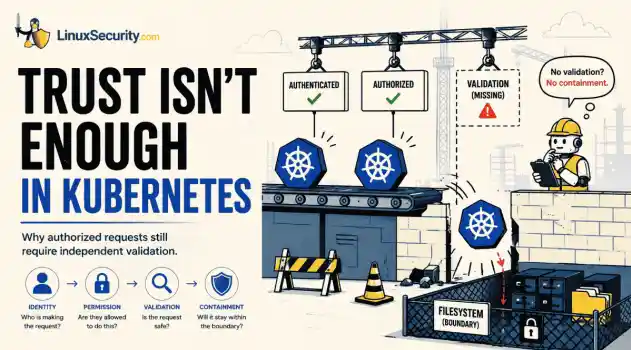
 Two newly fixed storage bugs in Kubernetes showed more than just a problem with path traversal. They found a common security flaw in the cloud: powerful parts often think that requests accepted by a higher system are safe to run. This is a simple lesson for the platform and security teams: RBAC can accept a request without showing that its parameters will stay within a certain filesystem boundary. This is clear from a new study from SentinelLabs into flaws in the Kubernetes CSI drivers for NFS...
 Jul 24, 2026
 security advisory update
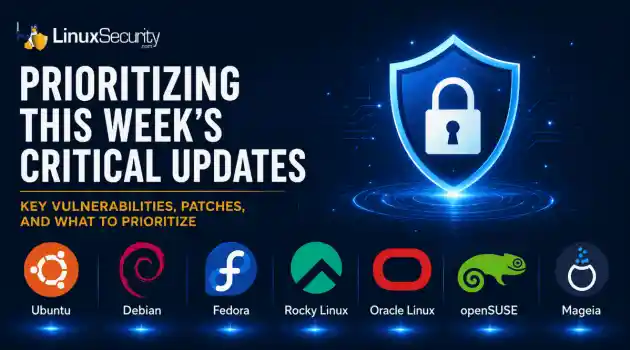
 A large volume of Linux security updates and advisories this week across major distributions once again, but it wasn't just the volume that was the story. Where maintainers and security teams focused their attention was evident in the concentration of fixes targeting Linux kernel updates, identity services, DNS infrastructure, and internet-facing software. . Instead of looking at each advisory in isolation, administrators gain more value from the general trends they reveal about Linux security...
Jul 23, 2026
 identity management security tactics
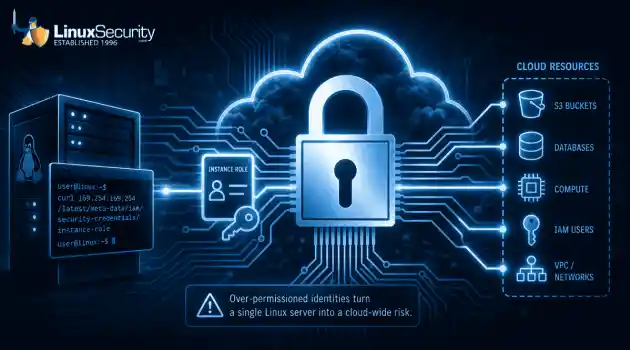
 For years, we secured our Linux infrastructure by building walls: VPCs, security groups, and hardened SSH configurations. We treated the cloud like a virtual data center, assuming that if we kept the "bad guys" out of the network, our workloads were safe. . That model is no longer sufficient. Today, one of the most common paths from an initial compromise to a major cloud breach is the identity assigned to your Linux workload. When an attacker gains code execution on a Linux instance—through a...
Jul 17, 2026
 security practices patch management
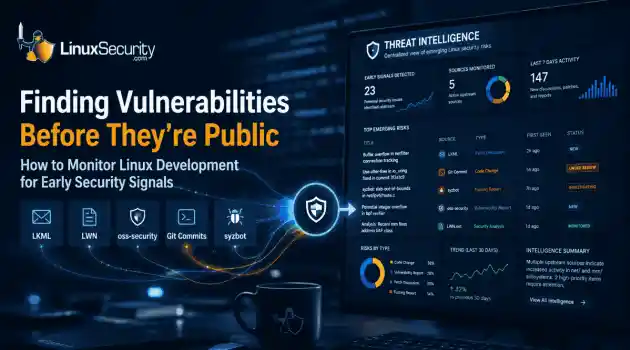
 Most of us don't hear about a kernel vulnerability until a CVE lands in our inbox or the vulnerability scanner starts complaining. By then, the patch isn't new anymore. Kernel developers may have been passing it around for review, arguing over the implementation, or revising it for days before anyone outside that community noticed it. None of those discussions are secret. They're sitting in mailing list archives, Git commits, and patch reviews where they've been the whole time. The strange...
Jul 14, 2026
 Linux security cyber attacks
 Every Linux server in your fleet produces thousands of events every minute. From journald logs and auditd records to kernel-level eBPF hooks, your systems are constantly talking. Most of that noise is just the mundane churn of system services, CI/CD runners, or routine administrative automation. But among that noise, an attacker might be establishing a foothold, moving laterally, or setting up persistence. The challenge for any security team is: how do you separate the routine from the...
Jul 13, 2026
 Refine features
X Clear Filters
Get the latest News and Insights
Get the latest Linux and open source security news straight to your inbox.
Community Poll
Should Linux servers automatically install security updates?
Loading...
Explore Latest Linux Security features
We found -2 articles for you...
102
 securityVPNaccessibility
Examining VPN Use on Linux: Advantages and Disadvantages Uncovered
If you use Linux, whether it is just to browse the web, use it as a VPN server, or even if you use it to hack people (Just kidding!), then it is pretty essential and worthwhile to understand the pros and cons of using a VPN for Linux. . An effective VPN works by routing all your Internet traffic through another computer. This means that if you use the Internet with a VPN, the remote computer/server in which traffic is being routed through becomes the source of data. In short, A VPN allows you to secure traffic between two locations, whether that be a VPN server you set up yourself at home or a location provided by a VPN provider, or even between your location and your work office! All your data traffic is routed through an encrypted virtual tunnel. With a VPN, not even your ISP or other third parties can see which websites you visit or the data you send and receive online. This article will explore the benefits and drawbacks of using a VPN on Linux. Benefits of Using a VPN on Linux Linux is a free open-source system that allows users to customize their experience and is a top choice for individuals interested in securing their privacy. Because of this, many users turn to VPN service providers. With an effective VPN, you can protect the following: Privacy: You might not be aware of how many breadcrumbs you're leaving when you're browsing the web. A VPN will disguise your IP and encrypt your connection, making it truly anonymous. Security: The more anonymous you are, the more secure you are. Having a new IP address every time you go online can be enough to deter doxxing and DDoS attacks. Plus, if you're in the habit of frequently connecting to Wi-Fi hotspots, you can never be too sure whether the network is safe. Unblocking websites: If you're living in Europe, you can't just go to the Hulu webpage and pay for your subscription. The website is off-limits if you're not from the US or Canada. The VPN helps to solve all these problems. It's even more useful in restrictivecountries. Torrenting: Linux users heavily rely on P2P networks to exchange operating system ISO files. The same networks tend to be a bit sketchy, and you might not always know what you're downloading. A VPN helps you stay private when downloading and helps you avoid copyright infringement notices. Avoid bandwidth throttling: Some ISPs impose restrictions on a particular type of traffic. So, if web pages load almost instantly, but downloading files takes forever, the culprit may be your ISP. A VPN disguises your traffic type, making it impossible to restrict based on its type. As like anyone who wants to do any of the things listed above, whether it be protecting your private information or your browsing data, or simply just maintaining anonymity, a VPN sounds like the perfect solution. Potential Drawbacks of Using a VPN on Linux Now although there may be many benefits to using a VPN, as well as many reasons as to why one might want to implement one, it is important to learn the potential drawbacks: Speed: Although some VPNs claim to boost your internet speed, you will eventually experience drops with your connection speed. There are many dependent variables when it comes to VPN connection speed such as your location, server availabilit y, your own internet connection speed, so on and so forth. However, there have been cases where even people with some of the quickest internet connections experience MAJOR drops. Most of the time, it depends on the VPN provider as well as the protocol that the VPN provider uses. You will find that VPN protocols and providers that value security tend to have slower connection speeds. Security and Privacy: Depending on which VPN you use for linux, you might never fully experience complete and total security & privacy. If you decide to go with a free VPN, there is a good chance that your connection will not be fully secure. Paid VPNs tend to provide stronger encryption and more security than free VPNs. VPNs such as SurfShark also support top-tierencryption by the use of VPN protocols such as WireGuard and OpenVPN. Moreover, SurfShark provides no-logging, which means they do not log your traffic, hence the privacy part. With many other VPN providers, whether it be free or paid, it is possible that they are logging your traffic. Moreover, with some VPNs, it could be very possible for the government to track what you are doing, especially if you have malicious intent. They would firstly have to ask the VPN provider for the logs of servers you’ve visited, if the VPN provider allows logging in the first place, and they can look at your traffic that way. Moreover, ISPs can also see your traffic in a sense! They cannot see it entirely but they can see when you connect to a VPN as you go through their server and connect the dots from there. My advice is to choose a VPN that does not log your traffic, provides VPN protocol options such as WireGuard, and also, do not do anything that will attract attention to yourself (aka black-hat hacking). Moreover, if one really wanted to keep ISPs and the government on a wild goose chase, then proxy chaining would be the best option. Website Tracking: I spoke about how the government and ISPs can still manage to track you if necessary, but what about websites? Well, if you are using a VPN, there is a way to still be tracked. If you visit websites where you use session cookies and have to log in with your information, it still uses your real public IP address rather than the VPN public ip address. Moreover, websites can deny you access to their services if they determine you are using a VPN. Difficult to configure: When it comes to Linux, you are left with many grayed-out options when using a VPN. You can find yourself a lot of the time doing a command line installation and even further than that, you might have to configure it yourself. It is critical to configure your VPN correctly. If you do not use a high-quality and dependable VPN, no VPN server, protocols, or encryption can protect you from IP address andDNS leaks. You'll be gone the instant your IP address and DNS leak. Cybercriminals can exploit this gap in your privacy and security. If you're familiar with VPN functions and configuration, put one in place as soon as possible! Do You Need a VPN? After considering the benefits and drawbacks of utilizing a VPN, you should select one to take use of the device's safety and security capabilities. Using a VPN allows you to access filtered, banned, and geo-restricted information. It is entirely up to you whether to use a high-quality commercial VPN or an unpaid one. To avoid bandwidth restriction, use a VPN that provides a high-speed connection and unlimited bandwidth. Before purchasing a VPN, be sure to read over the list of finest top-rated VPNs based on favorable ratings. It will assist you in making the best decision. Final Thoughts Overall, A reliable VPN is recommended if you wish to enjoy advantages such as circumventing geo-blocked material, privacy, anonymity, and encrypted data transfer. Before deciding on the best VPN for you, I recommend considering all of the benefits and drawbacks. When choosing a reliable VPN, privacy and security should be prioritized. . Examining the pros and cons of using VPNs on Linux offers crucial insights for users aiming to enhance their online security and privacy. Linux VPN Benefits, Internet Privacy, Network Security Linux, VPN Risks, Secure Browsing. . Brian Gomez
 Aug 08, 2022
•
Aug 08, 2022
•
102
 cybersecuritynetworkingopen source
Open Source’s Impact On Careers In Cybersecurity: Key Factors To Consider
Technology is an integral part of our everyday lives. Widespread reliance on devices that connect us to the Internet and cloud platforms that facilitate digital communications has markedly increased since the beginning of this pandemic. As technology companies are scrambling to meet businesses’ and consumers’ evolving needs, one trend has become clearly apparent - open-source is at the forefront of modern technological innovation, revolutionizing careers available in the field of cybersecurity in the process. . The Linux Foundation’s 2020 Open Source Jobs Report states that “Open Source is still the leading software development environment for SMBs and the enterprise despite the current economic downturn and pandemic”, continuing to provide abundant career opportunities - most notably in security and DevOps. A recent RedHat survey confirms that an open source revolution is underway, citing that 86% of IT leaders believe that the most innovative companies are using open-source software. The demand for open source skills and talent currently exceeds the number of people available to fill positions with these requirements, making individuals who posess this increasingly valuable skill set highly sought after by companies worldwide. This has undoubtedly been a transformative time for technology and cybersecurity and the career opportunities that exist in these fields. If you’re passionate about technology and cybersecurity and are intrigued by the growing influence of Open Source in these areas, here are 19 key factors that you should consider if you’re contemplating turning your passion into a career. You need to have technical skills Within the realm of cybersecurity, there are many sub-disciplines - but there are common technical foundations shared between cybersecurity jobs, too. You should be able to manage operating systems (for instance, numerous Linux distributions and Windows), as well as understand their architecture and administration, plus know about networking andvirtualization software. You’ll also need to understand network load balancers and firewalls, plus common programming languages - among other topics Many employers will require you to have certain certifications before you’re hired, and these qualifications will be a major factor in this process; they show how much you know about this sector. Industry experience is essential in acquiring the correct skills as well. Open source talent and certifications are becoming increasingly sought after, with 81% of hiring professionals citing open source skills and certifications as at top priority. There’s a great amount of variety Working as a security professional means you will have the opportunity to work directly with teams on systems and technology you may not have initially envisioned being involved with. It may be cars, or robots, or websites that are used by millions of people: there’s so much variety available in this field. So you’ll have an exciting career ahead of you - it’s unlikely that you’ll be bored in any cybersecurity role! You’ll also need to have a broad set of skills to understand modern security challenges. For this reason, cybersecurity professionals come from different diverse backgrounds: the more variety there is in your background, the better you’ll be as a security professional. You get to solve puzzles In the technology and cybersecurity industries, there’s always a new puzzle to solve. As technology advances, so do the threats that challenge it. With any cybersecurity job, it’ll be your responsibility to identify these threats, understand them and help to deal with them. These risks will change considerably when looking at how to protect websites that are running in the cloud compared to a pacemaker in a patient, for instance. This means that each situation is a new puzzle and a chance to rise to the challenge. Use code from a trusted source This best practice is especially important with open source software, which can be redistributed by anyonewho wants to do so. You shouldn’t simply download an open-source program from the first place you find it. Rather, always download software and programs from the original developers or a trusted download center, such as official open-source software repositories supported by major Linux distributors. Not all open-source is completely open Some open-source platforms may include some closed-source code. This is true with most Linux distributions, for instance. Certain “open-source” hardware devices will be powered partially by proprietary firmware - meaning small parts of the code in the systems won’t be open, although most of it will be. You won’t be able to trust these closed parts like you would with open ones and, ideally, you’d work around the issue by avoiding this type of firmware. However, you should be aware that this issue exists and that only the original developers truly know the intricacies of the code used in their software and products. Your password policy should be enforced Hackers build careers out of cracking passwords, and leverage a variety of sophisticated methods to do so. These methods include automated tools, spyware and details they’ve obtained about a person online. If you land a cybersecurity job within a business, then you should set a password policy and make sure it is enforced. It should ensure employees: Have strong passwords, no less than 10 characters long, with a mix of numbers, symbols, plus upper and lower case letters Don’t use the same password for different accounts Never share passwords Your data access should be controlled One study suggests a typical company will lose 5% of annual revenue to employee fraud - so it’s important that access to such valuable information is managed, particularly online. Network tools should be used to protect confidential details and sensitive files, and see who has accessed information at certain times. Levels of access should be assigned depending on what an employee needs toknow, with administration rights available to only a select group of people. Regularly review access rights and alter privileges when required. You’ll need to educate employees The methods that cyber criminals employ are numerous, but employees should be advised on some key points to help prevent security issues. These topics include: How to identify suspicious links Looking out for fake emails, with misspellings and demands to act swiftly Verifying the source of emails asking for personal information before replying Not downloading attachments from people they don’t know It is critical to highlight the importance of company security, the employee’s role in it, and how it affects both customers and the brand’s reputation. Workplace is highly dependent on employees’ participation and knowledge, and this must be emphasized and reinforced. You’ll get great job satisfaction The cybersecurity sector is constantly evolving - which means that in this field you’ll come across new problems all the time that need to be solved. Cybersecurity professionals will work with organizations looking to further their development and education. As a result, cybersecurity professionals are learning, building on their skillset, and contributing to society all the time - generally leading to great job satisfaction. There are fantastic opportunities for career progression If you’re interested in a cybersecurity career, there are great opportunities available regardless of background. Entry-level IT roles you may want to consider include computer software engineering, systems administration, web development and IT. From these positions, there is great opportunity for upward mobility - you could become a security manager or architect, a penetration tester or even a chief information security officer (CISO). You can choose your industry Cybersecurity professionals will develop highly-transferable skills, which will be in demand from many brands in many differentindustries around the world. The requirement for cybersecurity skills has increased as companies have become more reliant on technology, and 48% of companies now look for this skill set in potential employees . Being detail oriented is a must It is becoming increasingly difficult to detect cybersecurity threats, as threat actors refine their methods and techniques to evade security defenses. This means that in order to be successful in any cybersecurity career, you’ll have to be highly attentive to detail. Cybersecurity professionals must always be aware of potential issues, carefully monitor trends in technology and security and take note of changes that could impact the security of the systems they are responsible for. In other words, cybersecurity professionals must always stay one step ahead of malicious hackers - anticipating and preventing their potential next moves. You’ll need to communicate with people Your role as a cybersecurity professional will require strong communication skills. You’ll have to educate users, highlighting the paramount importance of cybersecurity and explaining the measures they need to take to protect their data. Thus, cybersecurity professionals need to have strong written and oral communication skills that enable them to convey all of these details in a way that’s both engaging and clear. Being creative is crucial A cybersecurity position will require that you have a forward-thinking approach to your role. You’ll need to be able to predict attacks and always remain one step ahead of all potential threats. This will require creativity and innovation. Cyber criminals are becoming increasingly creative with their tactics, and you’ll have to keep pace. A sound security system is essential As a cybersecurity professional, you will need to need to create a security system that is organized from the bottom up - which isn’t like traditional admin structures, where rule enforcement and operations are handled from the top. Creating such a systembegins by securing all devices that employees are using - a task that is becoming increasingly difficult due to the growing remote workforce. Thus, knowledge and expertise in this area is more important than ever. Use the cloud You’re less likely to lose critical data if you save it to the cloud, although there are still risks involved in this. Using the cloud for your data storage is a great and economical option if you work for a small or medium-sized business - and, as the company grows, your cloud storage and security can be scaled. There’s an ever-improving list of options for the cloud, too, so you will always have the most up-to-date items available to you for both security and storage. Automation is critical In any cybersecurity career, it will be very important for you to learn about and use the centralized controls available to you. You should automate any security changes, such as applying patches to systems and locking down any vulnerabilities, whenever possible. You’ll save countless hours of your time over the length of your career by using configuration management tools and relying on policy settings, or even simple scripts. Automation also reduces the chance of errors or issues, because these approaches are generally more foolproof than manual intervention. You can never test enough As a cybersecurity professional, you’ll need to test any security-related changes in an environment that’s as close as possible to your live production environment prior to releasing these changes. Some updates will be complicated, and may yield unexpected results. For example, disabling an old protocol could lead to problems with older databases - and the link between the problem and the change may not be obvious immediately. You will have to look at the results from your testing for both your systems and your users’ systems when you implement any changes. Network with other people Look for someone with cybersecurity expertise who has a style you like and ask them if theywould like to mentor you. You should make it as easy as possible for them to help you - people are often willing to help others who are eager to work and are just getting started. To kickstart your cybersecurity career, you may also wish to intern with a company. You may be able to write scripts for them, go through their data or even edit their blog posts. Experience gained in an internship may lead to an interview for one or many cybersecurity jobs in the future. Key Takeaways There will be copious skills you will need to learn as you embark on this journey. Not only are there a great number of technical skills that you’ll have to acquire, there are also others that you may not have thought of - for instance, open source talent, creativity and communication skills. Does this still sound like the type of career that you’re looking to get into? If so, the great news is that there has never been a better time to get started. The rapid modernization and widespread technological advancement brought on by this pandemic have made cybersecurity an area of heightened importance for all organizations. Have questions about getting started with a career in cybersecurity or the growing importance of Open Source in this field? Don’t be shy! Ask them in the Comments section below - one of our open-source security experts would love to help you out! . The open-source movement is transforming cybersecurity careers, offering professionals unique skills and new opportunities in the industry as demand grows. Open Source Careers, Cybersecurity Skills, Job Opportunities, Technical Qualifications, Career Progression. . Brittany Day
Jul 28, 2021
•

102
 cybersecuritynetworkingcyber defense
Valentina's Nmap Journey: Insights on TryHackMe and Cybersecurity
Thank you to Oyelakin Timilehin Valentina for contributing this article. Our newest member, Valentina, an up and coming cybersecurity professional in Nigeria, studying cybersecurity and showing stellar skills in learning and applying her knowledge, recently went through the Tryhackme online learning platform, and shared her experiences, as well as a few quick tips on using nmap. . Tryhackme is an online platform with courses available for beginners, intermediates and professionals in cybersecurity. There are real world labs and challenges to give you an on-the-job challenge and experience. Nmap is one of the courses in this platform and an important tool in cybersecurity that is used for port scanning. This article explains the following; How, why I got into Tech and also my Tech Background My experience with a mentor How I discovered the online platform, Tryhackme My experience getting through the Nmap lab Getting Into Tech In my high school days, I wanted to be referred to as Engr. Val; although I was clueless as to what part of engineering I would like to venture into. Because I loved the name Engr., I made sure I worked towards getting into an engineering department in college where I obtained a degree in Electronics and Computer Engineering in the University of Port Harcourt, Nigeria. I must tell you; I was still as clueless as I was in my high school days on what path to follow. Then came a seminar in my second year that structured and shaped my vision in the department and also connected me to my first mentor. I realized then and found telecommunications interesting and I started doing some research on it and took my telecommunication courses more seriously; it was indeed interesting. I got my first 6 months internship job with Nokia Solutions and Network, Nigeria in my fourth year and the experiencewas priceless, but I still wasn’t satisfied, I just kept telling myself that there is more in tech. After graduation, I decided to do moreresearch on areas of technology and I discovered cyber security. Wow, I bonded so much with this aspect of technology that I was so much convinced this is it. Before then, I didn’t find any programming language interesting, but discovering that knowledge of it is needed made me go into learning python programming; that I find very interesting now. You would ask what my major drive is; I just want to make my country a safer place, I want to reduce criminal activity in my country and discovering cybersecurity became the answer to my thirst in technology. I did a lot of research and I am still doing, I discovered a lot of areas in cyber security, I took 3 certification exams which are Introduction In Cyber Security and IT Essentials, both in Cisco, HCIA(Routing and Switching). In All of These, I was still uncertain on the path to take in Cyber Security. This led to the next point on this article. Getting a Mentor This aspect of my life helped and guided me to where I am today; my first mentor gave me an insight in technology. My second mentor guided me into taking the Routing and Switching course with Huawei. My third mentor guided me all through my training in IT essentials with cisco. But I still needed someone in the cyber security field, I had lots of questions in my mind to clear the uncertainty in my head as to what to do to start my career in cybersecurity, there are numerous fields in cybersecurity that I discovered during my research, so I needed to know which aligns with my passion. On Monday, December, 7 2020, I saw a post on twitter with the tag #cybermentoringmonday, I went through it and indicated that I needed a mentor; there I met one. I told him about the areas of cybersecurity that I am interested in and why I am interested in them, I also told him what I was doing at the moment to gain more knowledge in tech. He demystified the areas of cybersecurity I was interested in and told me in his words “you sound more blue team oriented” he went further to explain the blue team andalso the red team, this cleared the uncertainty in my head to a large extent. He introduced me to Mosse Cyber Security institute where I did research on my own and it helped me to gain more knowledge. Getting to Know the Amazing TryHackMe On New Year Day, he introduced me to Tryhackme and sponsored me for a membership for 2 months with the instruction that I will update him on my progress and most likely get an extension of my membership for a year, this was my first 2021 big gift and I was excited. He said “let me know if you have questions or get stuck and I think you will learn a lot” .He is always there to answer my questions. Getting Through the nmap Lab You know that excitement that comes after completing a task, that excitement you get after crossing a hurdle and you get the right to say “I am proud of myself” that was me after getting through the Nmap lab. The first learning path I started in Tryhackme was Cyber Defense, you would ask why this was my first, it was the first captivating topic, but little did I know that I need the knowledge of some fundamentals that include Nmap. The first room in cyber defense; introductory networking, is an introduction to the basic principles of networking, it gave me the detailed and easy understanding of the OSI model and also the TCP/IP model, where I got a better understanding of the “three-way handshake”. I was also introduced to the Wireshark tool which is used to capture and analyze packets of data going across a network. This room also explained some networking tools like ping that are used to test the possibility of a connection to a remote network. Traceroute tool that is used to show all the routes your request took as it gets to you. Whois tool that lets you query who a domain name is registered to and Dig tool that lets you query any DNS servers to get information about their domain. This room was very interesting and easy and I was eager to go to the next room- network services. In the network services room, I gotto know about SMB(Server Message Block) Protocol which is used to share access to files, printers, serial ports and some other resources on a network. Also, I got the understanding of telnet, an application protocol that works with a telnet client and aids in connection and execution of commands on a remote machine that is hosting the telnet server. Finally, FTP (File Transfer Protocol) as its name implies, lets you transfer files remotely over a network. This particular room was more difficult than the previous, but I kept moving to the next room which is Network services 2 But, a good knowledge on Linux would have made this room much easier to walkthrough. In the network services 2 room, I got to know about NFS (Network file System) that allows sharing of files/directories by a system with others over a network, I was finding it all interesting until I got to task 3, Enumerating NFS and got stuck, I couldn’t provide answers to the quiz. At this point, I had to tell my mentor, the first thing he said was that I should make sure that I am always connected to the OpenVPN Server, this helped me get through the task but I got stuck again in task 4, Exploiting NFS, at this stage I realized I needed the good understanding of NMAP. So, I diverted to the NMAP room. You may be thinking, how did I know that I needed to divert to Nmap room, in the task 3 of network services 2, one of the topics mentioned was port scanning, which was covered but not detailed, then my first quiz for the task 3 was about scanning for open port, and this can only be answered by getting the understanding of how to scan for open port which can be learnt in the Nmap lab. Diverting to the Nmap room helped me answer the quiz. In the NMAP room, I made sure that I was connected to the OpenVPN server, and then I deployed my machine. Nmap means network mapper and I learnt about the NMAP switches, the Scan types which are TCP connect scans (-sT) that takes into consideration the TCP three-way handshake. Here, NMAP connects to each TCPport and determines if the port is open or closed. if port is open, a TCP packet with the SYN/ACK flag is sent, if port is closed a RST (reset) flag is sent back, if a port is filtered, it is because it is protected by a firewall, in this case, when Nmap sends a TCP SYN request, it receives nothing back. Another scan type, the SYN scans(-sS) is referred to as half-open scans or stealth scans and are used by Nmap if they are run with sudo permissions, the only difference between TCP scan and SYN scan is in the case of open port, in SYN scans, when port is open, an RST packet is received. The next scan type, which is the UDP scan(-Su), a port is considered open|filtered when no response is sent back, but when a response is received (which is rarely possible), then the port is open, a port is closed when the target response with an ICMP ping packet message indicating that the port is unreachable. The less commonly used TCP port scans; Null (-sN), FIN (-sF), Xmas (-sX) Scans were also taught, and the response expected is similar to that of UDP port scan. The next task talks about the ICMP Network scanning where I was taught how to perform a ping sweep; a ping sweep is used to see IP addresses with an active host and those without. When I got to task 10, NSE (Nmap Scripting Engine) scripts, I got stuck again, I couldn’t give correct answers to the quiz, and I decided to watch videos on Nmap and noticed that Nmap is being performed on kali Linux. Also, I applied for an internship position sometime last month and lack of experience in Linux couldn’t let me get it, this made me divert to the Linux fundamentals, after completing part 1 and 2 of Linux fundamentals, I was able to successfully complete the Nmap lab. Conclusion From my experience so far, it is first about your passion, then the effort you put into gaining more knowledge and experience. If you enjoy what you do, you will thirst for more knowledge and experience. To become a pro or an expert in something, you have to startfrom today, put in effort, then more effort, you just can’t stop putting in effort, and you have to be up to date, to remain relevant in the field. Most importantly, get a mentor that will guide you and when you do, give him/her every reason to be happy and proud to be your mentor; this is through the effort you make into gaining more knowledge and showing positive results. . My journey with Nmap and TryHackMe has been pivotal in my cybersecurity growth, enhancing both my skills and knowledge of networks for aspiring professionals. Nmap Training, TryHackMe Courses, Cybersecurity Learning. . Brittany Day
Feb 16, 2021
•

Get the latest News and Insights
Get the latest Linux and open source security news straight to your inbox.
Community Poll
Should Linux servers automatically install security updates?
Search Topics
Powered By

Linux Security - Your source for Top Linux News, Advisories, HOWTOs and Feature Releases
QUICK LINKS
subscribe to newsletters!
Like staying secure? So do we.
Sign up for updates, tips, and alerts!