Explore top 10 tips to secure your open-source projects now. Read More
×


Stay Ahead With Linux Security Features
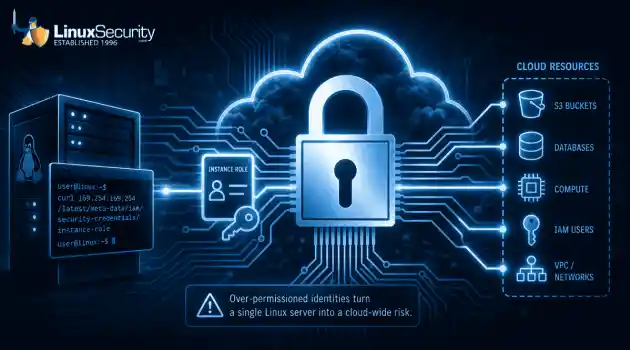
 identity management security tactics
 For years, we secured our Linux infrastructure by building walls: VPCs, security groups, and hardened SSH configurations. We treated the cloud like a virtual data center, assuming that if we kept the "bad guys" out of the network, our workloads were safe. . That model is no longer sufficient. Today, one of the most common paths from an initial compromise to a major cloud breach is the identity assigned to your Linux workload. When an attacker gains code execution on a Linux instance—through a...
 Jul 17, 2026
 security practices patch management
 Most of us don't hear about a kernel vulnerability until a CVE lands in our inbox or the vulnerability scanner starts complaining. By then, the patch isn't new anymore. Kernel developers may have been passing it around for review, arguing over the implementation, or revising it for days before anyone outside that community noticed it. None of those discussions are secret. They're sitting in mailing list archives, Git commits, and patch reviews where they've been the whole time. The strange...
Jul 14, 2026
 Linux security cyber attacks
 Every Linux server in your fleet produces thousands of events every minute. From journald logs and auditd records to kernel-level eBPF hooks, your systems are constantly talking. Most of that noise is just the mundane churn of system services, CI/CD runners, or routine administrative automation. But among that noise, an attacker might be establishing a foothold, moving laterally, or setting up persistence. The challenge for any security team is: how do you separate the routine from the...
Jul 13, 2026
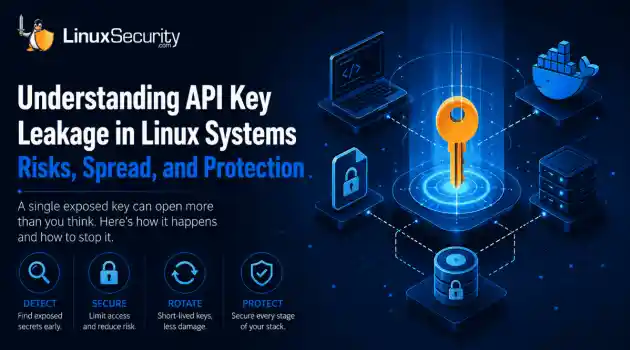 open-source infrastructure risk
 Security scanners flag exposed API keys in public repositories every day. The initial response is usually predictable: delete the commit, revoke the credential, and move on. That’s a mistake. . In a real Linux environment, an API key never stays in one place. By the time it hits a public repo, it’s already everywhere. It’s in the CI/CD pipeline. It’s in your container registry. It’s in the build logs. It’s in the backups. Git makes this worse because the history never dies. Deleting a file in...
Jul 11, 2026
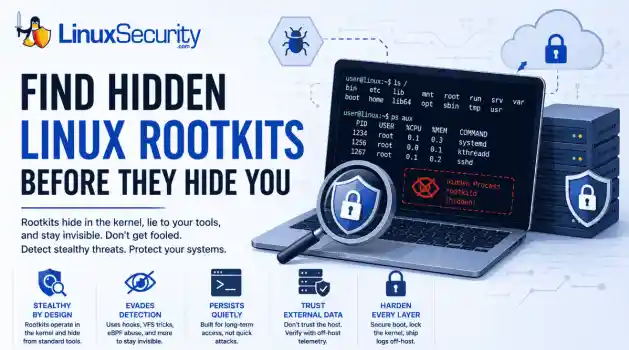 open-source rootkit
 Most of us think of Linux rootkits as ancient history—the stuff of 90s hacking forums and clunky malware that would crash your system if you looked at it the wrong way. But if you think they’ve gone away, you’re mistaken. They’ve just gotten smarter. . Modern attackers aren't using the noisy tools of the past. Today’s threats are surgical. Many of today’s most advanced Linux rootkits operate at the kernel level or abuse legitimate system features to blend in with normal traffic. They’re...
Jul 09, 2026
 Refine features
X Clear Filters
Get the latest News and Insights
Get the latest Linux and open source security news straight to your inbox.
Community Poll
Should Linux servers automatically install security updates?
Loading...
Explore Latest Linux Security features
We found -1 articles for you...
102
 network securityVPNLinux myths
Common Linux VPN Myths: Understanding Privacy and Security Issues
With concerns regarding online privacy-enhancing technology and overall security on the rise, VPNs have gained immense popularity recently. Nevertheless, an abundance of false information about this network security toolkit has circulated. A Virtual Private Network (VPN) is a tool that enables your computer to establish a secure connection with a distant server, making it seem as if it is physically located in that specific region. . Although businesses commonly employ VPNs to access data on-site, nowadays, the general application of VPNs is for regular individuals to bypass geo-restrictions and enhance their online privacy. To help increase your awareness surrounding this important topic, let's look at some of the most common Linux VPN myths and examine what is actually true. Myth: Only paranoid Linux users use a VPN. You may believe a VPN is unnecessary if you reside in a nation without stringent censorship regulations. Nevertheless, the prevalence of hacking, data collection, tracking , and targeted advertising is evident in any country with internet access. Data and cloud security breaches in any country with internet access are frequent, expensive, and endless. Often we connect to public Wi-Fi networks at places like airports or coffee shops without a second thought. However, we must always be sure that these networks are trustworthy and not operated by hackers. Even if a public network appears reliable, as long as it remains unsecured, virtually anyone with IT knowledge can gain access to your browsing activity, personal information, and passwords. Myth: Linux VPNs are only for experts. If you need more confidence in your technical abilities, the concept of VPNs and their impact on networking may seem daunting. However, modern VPNs are incredibly user-friendly and straightforward to set up. In most cases, you must download a VPN app, log in to your account, and click a button to connect. You are not required to navigate complex software or anything of that nature. This makesutilizing a VPN so easy to do, allowing you to lessen the number of network security threats you face while out of the house. Myth: Using a VPN makes me 100% anonymous. A reliable VPN service can significantly enhance your online privacy and bring you closer to achieving a level of anonymity. By establishing an encrypted tunnel between your device and the desired destination, a VPN allows you to access the internet from a different country. While this connection to a VPN server provides considerable privacy, it would be dishonest to claim that it makes you completely anonymous. Nonetheless, a VPN helps with your data and network security and involves various crucial components that ensure no information passes through the encrypted tunnel. A VPN undoubtedly enhances privacy, but it is important to note that confidentiality and anonymity are different. While a VPN can assist in maintaining confidentiality, it does not guarantee complete anonymity. Many individuals seek out VPNs to protect their privacy, but your location can still be tracked even while implementing a VPN. Recognizing that every piece of information you share online is stored in a database somewhere is crucial. Moreover, your data has likely been collected and utilized without your knowledge, whether for marketing or surveillance purposes. We are all identifiable on the internet, and our right to privacy is constantly at risk. Using a VPN and encryption certainly adds an extra layer of difficulty for hackers, making attacks on network security more difficult to achieve. However, individuals with the appropriate skills and tools can still identify their true identity by analyzing their digital footprint while browsing the internet. Myth: Using a VPN protects me from all risks online. While a VPN is a valuable network security toolkit and privacy-enhancing technology, it should not be the universal solution that you use. You must remain cautious while browsing, as even with a VPN enabled, you need to avoid clicking onquestionable links since a VPN cannot shield you from network security threats if you willingly provide personal information to scammers. While specific VPNs offer features that conceal suspicious links and protect against phishing attempts , it is still necessary to exercise caution when selecting what to click on. Although a VPN makes it more challenging for individuals to target you, if you choose to trust scammers, VPNs are unable to protect you from their actions. Additionally, it is essential to acknowledge that a VPN does not serve as a substitute for antivirus software. To combat malware infecting your device, antivirus software remains your best option. Typically, it functions by promptly alerting you through a pop-up message when attempting to visit a hazardous website. Although a VPN is highly effective in preventing hacking attempts and safeguarding your privacy by concealing your IP address, it should not be mistaken for an antivirus solution. Myth: I don’t need a VPN because I don’t do anything illegal. It would be unwise to assume that no one utilizes VPNs for illicit activities. However, VPNs serve many purposes beyond merely acquiring copyrighted content or engaging in dubious dealings. Online anonymity proves beneficial when safeguarding oneself on public WiFi and evading data theft, tracking, and surveillance. Additionally, a VPN is essential for bypassing censorship while traveling and accessing banking apps from anywhere and at any time. It is necessary to dispel the misconception that VPNs are illegal, as this notion is far from accurate, and there are lots of companies that use VPNs to maintain data and network security. The use of VPNs is restricted in countries such as China, Russia, Turkey, and Iraq due to the government's desire to exert control over their citizens' online activities. These countries are particularly opposed to VPNs because they are tools that actively counteract censorship. Myth: Using a VPN will slow down my Internet connection. Althougha VPN may cause a decrease in internet speed, this is not always the case. When traffic passes through a VPN server, the encryption and decryption process can result in a slower connection. However, this issue is more commonly experienced when connected to remote servers. The optimal connection is achieved when servers that are closer in proximity are used. Therefore, unless there is a specific need to connect to a distant server, choosing nearby cities or neighboring countries is advisable. Interestingly, a VPN can even enhance your connection speed. It is particularly beneficial for internet users in the US and other countries. VPNs are essential for those who often encounter ISP throttling while engaging in activities such as streaming Netflix, watching YouTube, or performing online tasks demanding high bandwidth. ISPs implement this measure to conserve their network resources, although it may be deemed unfair since users have already paid for their internet service and its associated speed. This is where a VPN comes into play, enhancing your internet connection speed by concealing your online activities from your ISP while maintaining your overall data and network security. Myth: I can use Tor and Proxies instead of a VPN. Tor networks and proxies often get mentioned alongside VPNs but should be considered different. While they may appear similar, their functionalities differ significantly when it comes to how the services protect your data and network security. Proxies solely conceal your IP address without encrypting your data, making them less effective than VPNs. It's important to note that free proxy servers can be highly unsafe since their ownership is often unknown. You should also be cautious when utilizing both free proxies or free VPNs. Tor offers a certain level of anonymity to its users, but regular internet users do not typically benefit significantly from this service due to its slow connection speed and poor user experience. Is Tor a VPN? While Tor is not classified as a VPN,it offers similar advantages and features. It employs robust encryption to conceal your whereabouts, identity, and online auctions. However, instead of creating a virtual private network that directs data through an encrypted passage, Tor masks internet traffic through nodes in the Onion overlay network. Despite its sluggish reputation and lack of complete end-to-end encryption like a VPN, Tor enables users to access dark web platforms, including search engines and markets. Myth: All VPNs are the same. Navigating the saturated VPN market can be confusing. The primary feature of a VPN is its ability to conceal your IP address and ensure private browsing. This is the key selling point for most VPNs, so they may seem similar. However, not all VPNs offer the same level of encryption or a wide range of server locations. While some VPNs allow up to five simultaneous connections, others, like Surfshark , have no limit. Also, various VPN providers offer additional features such as ad and malware blocking, connecting to multiple servers simultaneously, and whitelisting capabilities. It is essential to consider these factors when choosing a modern and up-to-date VPN provider to use as a network security toolkit. Myth: I don’t need to pay for a VPN when I can get one for fre e. A VPN is a complex network security toolkit designed to safeguard your privacy, requiring resources to ensure its functionality and security. Even free VPN providers need funds to develop their products, so where do they get the money from? These providers often sell your browsing history, online shopping habits, and other data to the highest bidder to generate income that they use to fund your protection. Although some free VPN developers may have good intentions, it's important to remember that a VPN is still a product that requires funding for its creation and promotion. Instead of risking your online security with a free VPN, invest in an affordable option like Surfshark to protect your company. Services thatinclude cheap monthly VPN plans are available to try, without requiring a big commitment to get started. Final Thoughts on Linux VPN Usage It is important to question VPNs prior to using them, as you must understand what types of services you are signing up to receive. However, there are a lot of VPN myths that need to be debunked in order to ease workers who are using VPNs for the first time. Familiarizing yourself with the functions, advantages, and limitations of a VPN is crucial. Hopefully, this article has provided you with a fresh perspective on Linux VPNs and the common misconceptions surrounding them . Delve into prevalent misconceptions about Linux VPNs and uncover the reality regarding contemporary online privacy and cybersecurity requirements.. Linux VPN Myths, Online Privacy, Network Security Solutions, VPN Usage, VPN Misconceptions. . Brittany Day
 Jul 10, 2023
•
Jul 10, 2023
•
102
 data protectionbrowser securityinternet safety
Effective Methods To Hide Your IP Address And Secure Online Privacy
While the internet provides many benefits, it also brings new risks and challenges. One of the most common and notable of these is the threat to our privacy. Some users might think that they are protected by their browser, search engine and antivirus programs. However, the truth is that most of us aren’t doing nearly enough to keep websites from tracking us. . This article will look at how websites and other platforms track you and why you are being tracked. We’ll also discuss seven different ways to hide your IP address and keep websites from tracking you. Keep reading to find out the best ways to hide your IP, protect your online browsing and ensure you aren’t being tracked. How Are You Being Tracked? Before we can understand how to protect ourselves, we need to know how we’re tracked. There are a few different ways users can be tracked, this includes reverse email lookup . Here are four commonly used methods that websites use to track visitors. IP Address Permissions Emails Search History IP Address Your IP address is the unique identifier for your network. An IP address is critical for the internet to work as it’s responsible not just for identifying your network but also for communication between your network and the web. An IP address can easily be tracked and give the tracker a clear idea of you. From your IP address, trackers can get your location, details about your connected devices, where you go, and lots more. If you don’t hide your IP address, details of your personal preferences can be gathered by many different websites and hackers. Permissions We often give apps permissions they may not need just to start using the app. But this can be a way for the app to collect your data and track your preferences. For example, why would a navigation app need access to your contacts or photos? Or why would a game need access to your camera? These are all sly ways that apps use to legally collect information on you. Emails Emails contain a lot ofinformation. Not only could it contain sensitive information about you or your business. But, there are many other details attached to emails that users may not be aware of that can be tracked. Email trackers aren’t exactly a new concept, and they have been used by email marketers, individuals, phishers and spammers for years. Email tracking software allows the user to see exactly when an email was opened, who opened it, and their location. Search History There is a reason why clearing your search history is recommended. And no, it’s not just to keep sensitive information from your parents or significant other. The bigger reason is that your search history provides search engines and websites with a clear picture of your browsing practices and preferences. From your search history, search engines can see when you browse the web, where you’re located ( geo-tagged websites ), how long you spend on different websites and the types of sites you enjoy visiting. Who Is Collecting Your Data? Data is a very broad term. It can refer to personal identifiers such as your name, email address, social security number and financial information. It can also describe your browsing patterns, history and preferences. This data can be valuable to different people for different reasons. Businesses, websites and app developers want more data to refine and personalize their marketing strategies. By knowing more about their target audience, they can curate ads that lead to better conversions. As annoying as this may be for us, it is a legitimate way for businesses to do market research and gain valuable insights for marketing. One of the main reasons websites and apps collect your data is either for marketing purposes or because it’s a lucrative side hustle. By tracking what website you visit, where you shop and what you buy, a business can create targeted marketing strategies aimed at you. Have you ever wondered why you suddenly start seeing ads for items on special shortly after searching online for thatspecific item? Or why do you suddenly see ads for health and wellness apps after searching for healthy recipes? Alternatively, some individuals track you and collect your data for more nefarious purposes. These purposes can include stalking, launching DDoS attacks , identity theft, and even spreading ransomware. 7 Ways To Keep From Being Tracked Data breaches, websites tracking your every move, and other individuals looking to collect your data for different reasons may make browsing the internet safely seem impossible. However, you do have control over your information, and there are ways to protect yourself. Using Multiple Browsers You can use multiple browsers to confuse search engines and keep them from tracking you. Different browsers have different access to your data through your IP address. By switching browsers often, you can obscure any data collected. Also, make sure that you enable the ‘Do Not Track’ settings on any of your chosen browsers. While this option does not guarantee that you won’t get tracked, it becomes more valuable when combined with other measures. When choosing browsers, make sure that you use only secure browsers that state that they don’t track your data. On computers, you can use private browsers like Tor. Tor is also available on Android devices, or you can look at Orbot. If you need a private browser for iOS devices, the Onion browser is a good option. Using Rotating Proxies A rotating proxy is one of the best tools to hide your IP address . A proxy acts as a middleman between the user and the internet. Before accessing the internet, the user’s IP address is replaced by an IP address of the proxy. There are many different types of proxies available from reliable providers. Choosing the type of proxy you need will depend on your needs. When it comes to hiding your IP address, a rotating proxy is one of the best options. A rotating proxy uses a vast pool of residential proxies. It changes the user’s IP address with each new request, making itimpossible for anyone to track you using your IP address. Mixing User Agents User agents are essential for communication between you and the webserver. The user agent provides the website with important information such as the browser you’re using, your operating systems and the rendering engine. The webserver can then show a website optimized to these specifications with this information. This is why certain websites look different if you access them from another device. You can use a user-agent switcher to change the details of your user agent easily. This will make it appear to the website that you are using a different browser or operating system. Changing this frequently makes any tracking difficult. Use Browser Add-Ons To Identify Trackers Aside from user-agent switchers, there are also many other browser add-ons and extensions that you can use to avoid being tracked. If you are switching browsers, make sure that you get additional security and privacy measures for all the browsers you use. Privacy Badger is an add-on for Opera, Firefox and Chrome. With this extension enabled, you can clearly see third parties and ad networks tracking you. This helpful add-on also has an auto-block feature that you can use when you find someone tracking you. Disconnect is another useful browser extension available on Chrome, Firefox, Safari and Opera. This extension visually shows you which websites are tracking you in real-time. These often invisible trackers can also be blocked directly from the extension. Blur is another great extension for Chrome and Firefox. It can be used as a password manager and generator, ad-blocker, and offers additional encryption. If you sign up for the premium version, you also get access to masked cards. These throw-away virtual cards can be used for online shopping in place of your debit or credit cards. Check And Adjust All Privacy Settings Make sure to check that all of your social media apps are set to private. By default, some of them are set topublic, which means that anyone can legally collect the data from your profile without your permission. This includes personal details such as an address, names, date of birth, and other information such as music preferences, where you work, your photos and more. Make it a habit to check your apps regularly to ensure they are all set to private. Use Different Passwords And Update Them Passwords can be hacked and bypassed. This is why it’s essential to change your passwords frequently. Also, make sure that you choose a complex password consisting of letters (both cases), numbers and symbols. Also, never use the same password across multiple accounts. If you use the same password, a hacker that breached one account can get easy access to all of your other accounts as well. As such, use different passwords for different accounts, and change them often. Use Services That Remove Data From Brokers Another safety measure that should form part of your privacy arsenal is using services to remove your data from any brokers or listings. If you keep getting spam calls, obnoxious ads or even spam emails, the chances are that your name is on a list somewhere that’s available to these businesses or individuals. By using one of these services (or sometimes multiple), you can remove your name and information from these lists and start protecting your privacy. Unfortunately, you may need to repeat this now and again because information has a way of getting out. A few services that remove data from brokers include DeleteMe, Safe Shepherd and Catalog Choice. Final Thoughts Technology and the internet are continually evolving. This means that it’s challenging to know precisely how you’re being tracked. As such, you must take as many measures as possible to protect yourself. Hide your IP, use multiple browsers and never use Facebook, Google or similar apps to register new accounts on other websites. By implementing a few different measures, you can browse the internet safely without being tracked. . Thisarticle will look at how websites and other platforms track you and why you are being tracked. . while, internet, provides, benefits, brings, risks, challenges. . Brittany Day
Jul 04, 2022
•

102
 online privacyshell scripttransparent proxy
Improve Privacy Using archtorify and kalitorify on Arch and Kali Linux
With the growing number of espionage scandals in recent years and the prevalence of online tracking, protecting your privacy online has never been more important. Virtually everything we do online is tracked these days, whether for profit or to obtain information to sell to third parties, which has led to the development of tools like the Tor Browser to help us navigate the Internet safely and strengthen our privacy online. . If you are an Arch Linux or Kali Linux user looking to improve your privacy online with Tor, this article will explain how you can create a Transparent Proxy through the Tor Network to redirect all traffic of your OS through the Tor Network with two two free and open-source shell scripts we love: archtorify and kalitorify . What Is the Tor Browser & How Can It Help Protect Your Privacy & Anonymity Online? The Tor Browser is an increasingly popular web browser that anonymizes your web traffic using the Tor network, making it easy to protect your privacy and anonymity online. Tor consists of a three-layer proxy, like layers of its onion logo. Tor Browser connects at random to one of the publicly listed entry nodes, bounces that traffic through a randomly selected middle relay, and finally spits out your traffic through the third and final exit node. The Tor Browser offers the best anonymous web browsing available today, and is an essential tool for anyone concerned with his or her online privacy. How To Install & Use archtorify to Redirect All Arch Linux Traffic through the Tor Network archtorify is a shell script for Arch Linux which uses iptables settings to create a Transparent Proxy through the Tor Network. In simpler terms, archtorify enables you to redirect all traffic of your Arch Linux operating system through the Tor Network. The program, which was developed by brainf+ck , also allows you to perform various checks like checking the Tor Exit Node (i.e. your public IP address when you are under Tor proxy), or if Tor has been configured correctly bychecking service and network settings. How To Install archtorify To install dependencies, run the commands: sudo pacman -Syu sudo pacman -S tor To install the archtorify package from AUR (recommended), use the following command: AUR: archtorify-git To download with git, use the command: git clone GitHub - brainfucksec/archtorify: Transparent proxy through Tor for Arch Linux OS archtorify can also be installed with the make command: cd archtorify/ sudo make install Because services and programs that use archtorify (such as iptables) work at the kernel level, be sure to reboot your OS at the end of the installation to avoid conflicts. How To Run archtorify Before starting archtorify: 1. Make sure you have read the Security section. 2. Disable your firewall or other applications related to DNS or proxy configurations. 3. Make a backup of the iptables rules if they are present, see: iptables . Once you have completed the above, run the following command to start a transparent proxy through Tor: archtorify --tor To return to clearnet, run the command: archtorify --clearnet You can view the Commands list for archtorify on Github . How To Install & Use kalitorify to Redirect All Kali Linux Traffic through the Tor Network Similar to archtorify and also developed by brainf+ck , kalitorify is a shell script for Kali Linux which use iptables settings to create a Transparent Proxy through the Tor Network to redirect all traffic of your Kali Linux operating system through the Tor Network. Like archtorify, kalitorify allows Kali Linux users to perform various checks like checking the Tor Exit Node (i.e. your public IP address when you are under Tor proxy), or if Tor has been configured correctly by checking service and network settings. How To Install kalitorify To download with git, use the command: git clone GitHub - brainfucksec/kalitorify: Transparent proxy through Tor for Kali Linux OS To install dependencies, runthe commands: sudo apt-get update && sudo apt-get dist-upgrade -y sudo apt-get install -y tor curl To install kalitorify, run the following commands: cd kalitorify/ sudo make install Because services and programs that use kalitorify (such as iptables) work at the kernel level, be sure to reboot your OS at the end of the installation to avoid conflicts. How To Run kalitorify Before starting kalitorify: 1. Make sure you have read the Security section. 2. Disable your firewall or other applications related to DNS or proxy configurations. 3. Make a backup of the iptables rules if they are present, see: iptables . Once you have completed the above, run the following command to start a transparent proxy through Tor: kalitorify --tor To return to clearnet, run the command: kalitorify --clearnet You can view the Commands list for kalitorify and a demo of the program on Github . Security Considerations It should be noted that users looking for a more secure solution to connect to the Tor Network should use Whonix OS or Tails OS , as a Transparent Proxy is considered unstable by the Tor project team (although by running several tests on kalitorify you will discover no leaks ). It is also important to avoid starting the Tor Browser when transparent browsing (kalitorify) is active. An Open Letter to the Community from the Brains behind archtorify & kalitorify My "name" is brainf+ck. I know that is not a nice nickname, but it comes from the esoteric programming language " Brainfuck ". Over the years, I have developed a lot of respect for Science, and for Computer Science. Often, this continuous study and research leaves me exhausted, but it has also taught me that in life you should never give up, that one must persevere, always. My goal is to make a difference in the community, by raising awareness of the benefits of Open Source and helping people protect their security and privacy online. If I can train people to use FOSS products (with all thedifficulties that come with them), I will try. If I can train people to install an application that is more secure, I'll try. If I can offer a free service, I'll try. If I can program a useful application for security and privacy, I'll try. I am thankful for those who express interest in my work by offering support and feedback on my projects. - brainf+ck Next Steps In the words of brainf+ck: “A user who uses these programs or is interested in these areas must be invited to inform himself. I think that using security or privacy applications without knowing what you are using is very dangerous. Please explore archtorify and kalitorify on Github, download the programs and test them out. Do not hesitate to inquire and perhaps report what can be improved!” Found this article helpful? Be sure to frequent LinuxSecurity.com and follow LinuxSecurity on social media to learn about other Linux security tools to help improve your security and privacy online. Connect with LinuxSecurity on social media: Twitter | Facebook | LinkedIn . Learn techniques to boost your web anonymity using Arch and Kali Linux with archtorify and kalitorify while routing traffic through Tor.. Transparent Proxy, Privacy Enhancement, Tor Network, Privacy Tools, ArchLinux. . Brittany Day
Apr 18, 2022
•
102
 VPNonline privacyprivacy tools
Ultimate Guide To Preventing Online Tracking With Privacy Tools
Every day in the headlines, we're made aware of how limited our online privacy truly is. These days, it's so easy for apps, websites and search engines to track our every move. While most tracking is done to improve targeted marketing efforts, this can be very annoying and isn't the only way our data is used. Staying private online and avoiding being tracked is the best option to ensure our security while browsing and using apps. . This article will discuss how you are being tracked and what happens to your data. Then we’ll also look at different ways to avoid being tracked online, such as using a datacenter proxy , rotating browsers and using helpful browser add-ons. Keep reading to find out what you can do to keep from being tracked while online. How Are You Being Tracked Online? There are many different ways that you can be tracked online. Your IP address can track you. Your IP address is a unique identifier essential for using the internet. This IP contains a lot of information about you, such as your location, your name (if listed with your ISP), and even details about your devices and operating systems. Not only that, but by tracking your IP address, trackers can get a clear picture of you. They can see where you buy groceries, which doctors you visit, which restaurants you frequent and even where you spend the night. Your IP address isn’t the only way you can be tracked. When visiting websites, they have numerous trackers such as cookies, web beacons, pixel tags, and more stored on your device. As long as they are stored, they can track your online behavior. Another way that you are tracked is through apps and the permissions you give. Many apps track you in some way or another. If you allow an app access to your GPS, they can track your location, if you give an app permission to your files, they can track your documents, and if you give an app permission to your photos, they can use the background information to track your location. What Happens To Your Data? In mostcases, the websites, apps, or browsers use the data collected to improve the user experience. However, there are certain cases where your data ‘may be shared with other third parties, which is a nice way of letting you know your information may be sold. Unfortunately, there are also characters that track your online behavior with malicious intent. This can be to create specific attacks such as phishing or ransomware . In addition to limiting the data that websites and advertisers collect about you, a data removal service can help identify personal information already exposed on people-search sites and data broker databases, reducing the amount of publicly accessible information available for profiling, tracking, or social engineering attacks. How To Avoid Being Tracked Online? Let’s look at a few things you can do to avoid being tracked online. The more precautions you take when it comes to online anonymity, the safer you’ll be. Use Rotating Proxies A rotating datacenter proxy is one of the best ways to ensure your online privacy. These specialized datacenter proxy types rotate the IP address with each new request or after a specific period (such as every ten minutes). A datacenter proxy camouflages your IP address and replaces it with one of theirs. This means that your IP will be changing all the time, making it impossible to track. VPN Using a virtual private network (VPN) is another great tool to ensure online anonymity. These networks extend a private connection across all the devices on your network. Even if the network is a public one, such as the network you might find at the office, by using a VPN you can ensure your connection is private. A VPN is also useful for masking your online identity, encrypting your data and protecting you from snooping parties. Opt Out Of Targeted Advertising Many browsers, such as Chrome, have a default setting enabled that gives them permission to track you for targeted advertising purposes. Luckily, this is a setting which you canopt-out of from within the settings menu in your chosen browser. Look for any options that mention the browser can collect data for advertising purposes and disable any ad personalization options. You’ll have to look closely as this setting can be disguised and could read ‘Show Me Products That Would Interest Me’ or similar. Use Multiple Browsers As we mentioned, browsers store many different trackers on your device as you visit various websites. By frequently changing your browser, they cannot get a clear picture of your browsing behavior. Better yet, clear your browsing history, cache and cookies every time you switch between browsers to be more effective. Use Private Browser, Incognito Mode And Don’t Allow Tracking When deciding which browsers you want to use, try looking at private browsers or browsers that specify that they don’t track users. Examples of these are the Tor browser, DuckDuckGo and similar. For every browser you use, make sure that you enable the ‘Do Not Track’ setting for each browser. You should also try using all your selected browsers in incognito mode, although this mode on its own cannot guarantee you won’t get tracked, when combined with other measures on this list you can make it more difficult to be tracked. Don’t Allow Cookies If you're browsing different websites you might notice pop-ups asking you to allow cookies. Cookies are created by the web server while you browse the website. These contain data and get stored on the user's computer. These cookies are used to track, personalize and save information about each user's session. Use Browser User-Agent Switchers User-agent switchers are another helpful way to increase your online privacy. These useful browser extensions allow users to change the information given to websites and search engines. When entering a website, that website gets information such as the browser you’re using, the device you’re using, and your operating system to display the website optimally. By using a browseruser-agent switcher, you can specify (and frequently change) what information is given to the websites. In other words, you can make the website think you’re using a specific Mac when in fact, you’re using a Windows laptop. Use Add-Ons That Block Trackers There are also add-ons that you can use that actively block trackers. This adds another layer of security and privacy to your online browsing. A few popular browser extensions that block trackers include Privacy Badger, Adblock Plus and Disconnect. Use Secure Passwords Passwords are an important way that people protect their online privacy. However, many users don’t use strong passwords , use the same password for everything, or have been using the same password since they first created a password. This makes it easier for hackers to get through. Instead, you should be using different passwords for all your accounts, make sure that they are strong and completely random and change them frequently. Use Privacy Settings and Permissions Carefully To ensure your online anonymity, you need to carefully review your privacy settings and permissions. Make sure that your social media accounts are set to private and not public as public data can be collected and tracked. Also, check that you enable the ‘Do Not Track’ option in the settings of the browsers you use. Finally, review your app permissions and disable any that aren’t needed. A navigation app doesn’t need access to your photos, for example. Disable Social Media Tracking We’re all aware that social media tracks us while we use them, and even when we don’t. By simply clicking on the share buttons found on other websites these social medias can get information on you. The same for the mobile apps of these platforms. To ensure that you aren’t being tracked you need to disable social media tracking. You can start this process by disabling all permissions from your social media account settings. Furthermore, there are also browser extensions such as Adblock Plus, that cankeep social media pages from tracking you. Use an Encrypted and Anonymous OS For those who are really serious about their online privacy, a secure, encrypted operating system (OS) might be the best solution. Solutions like Tails, a Linux Live Image, can ensure complete privacy and online anonymity. Tails is an encrypted, private OS that includes other privacy tools on a tiny device. This device, once connected to your PC will change the OS to Tails. This OS is widely recognized as the most secure operating system in the world. Final Thoughts The internet, as well as the threats that cybercriminals use to exploit their victims, are constantly evolving and often users will fall short in implementing best practices. Tracking users online is not only seen as a marketing strategy for websites, it is often a resource for third parties to buy your information. Once this information has gotten into the wrong hands, there is a strong possibility of eventually facing a phishing or ransomware attack. Because of this, it is important to have as many safeguards in place as possible and change methods frequently to protect yourself online. Consider Tor and Tor Browser (based on Firefox), a web browser that anonymizes your web traffic when using the Tor network, making it easy to protect your identity online. This can be very appropriate for navigating without being tracked at specific times. . Uncover strategies to bolster your digital privacy and evade surveillance, ranging from the use of virtual private networks to secure browser configurations.. protecting Data, privacy tools, tracking prevention, secure browsing, online anonymity. . Dave Wreski
Apr 08, 2022
•

Get the latest News and Insights
Get the latest Linux and open source security news straight to your inbox.
Community Poll
Should Linux servers automatically install security updates?
Search Topics
Powered By

Linux Security - Your source for Top Linux News, Advisories, HOWTOs and Feature Releases
QUICK LINKS
subscribe to newsletters!
Like staying secure? So do we.
Sign up for updates, tips, and alerts!