Audit Linux privileges now to limit compromise, escalation, and system-wide damage. Review Linux Privileges×


Stay Ahead With Linux Security Features
 security advisory path traversal
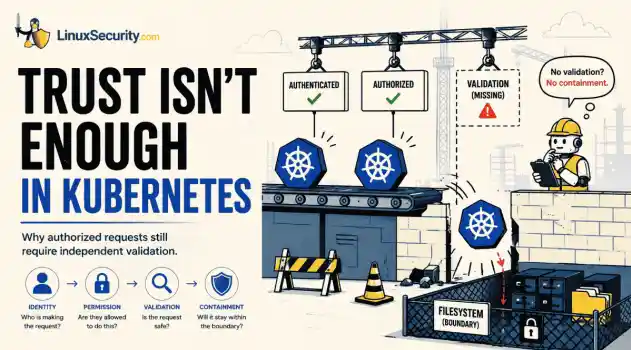
 Two newly fixed storage bugs in Kubernetes showed more than just a problem with path traversal. They found a common security flaw in the cloud: powerful parts often think that requests accepted by a higher system are safe to run. This is a simple lesson for the platform and security teams: RBAC can accept a request without showing that its parameters will stay within a certain filesystem boundary. This is clear from a new study from SentinelLabs into flaws in the Kubernetes CSI drivers for NFS...
 Jul 24, 2026
 security advisory update
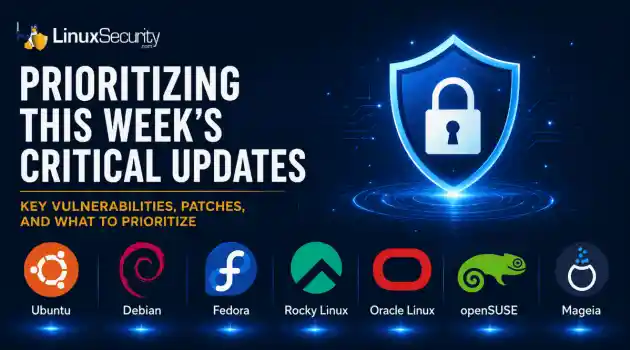
 A large volume of Linux security updates and advisories this week across major distributions once again, but it wasn't just the volume that was the story. Where maintainers and security teams focused their attention was evident in the concentration of fixes targeting Linux kernel updates, identity services, DNS infrastructure, and internet-facing software. . Instead of looking at each advisory in isolation, administrators gain more value from the general trends they reveal about Linux security...
Jul 23, 2026
 identity management security tactics
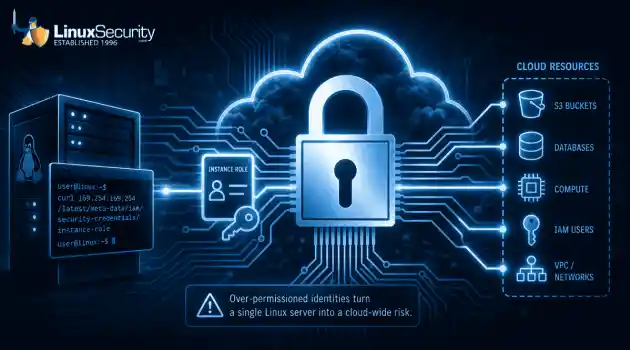
 For years, we secured our Linux infrastructure by building walls: VPCs, security groups, and hardened SSH configurations. We treated the cloud like a virtual data center, assuming that if we kept the "bad guys" out of the network, our workloads were safe. . That model is no longer sufficient. Today, one of the most common paths from an initial compromise to a major cloud breach is the identity assigned to your Linux workload. When an attacker gains code execution on a Linux instance—through a...
Jul 17, 2026
 security practices patch management
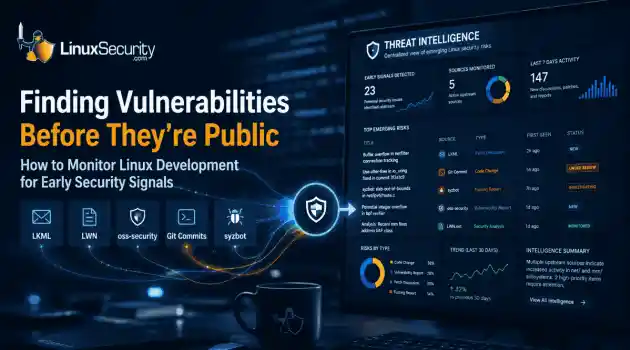
 Most of us don't hear about a kernel vulnerability until a CVE lands in our inbox or the vulnerability scanner starts complaining. By then, the patch isn't new anymore. Kernel developers may have been passing it around for review, arguing over the implementation, or revising it for days before anyone outside that community noticed it. None of those discussions are secret. They're sitting in mailing list archives, Git commits, and patch reviews where they've been the whole time. The strange...
Jul 14, 2026
 Linux security cyber attacks
 Every Linux server in your fleet produces thousands of events every minute. From journald logs and auditd records to kernel-level eBPF hooks, your systems are constantly talking. Most of that noise is just the mundane churn of system services, CI/CD runners, or routine administrative automation. But among that noise, an attacker might be establishing a foothold, moving laterally, or setting up persistence. The challenge for any security team is: how do you separate the routine from the...
Jul 13, 2026
 Refine features
X Clear Filters
Get the latest News and Insights
Get the latest Linux and open source security news straight to your inbox.
Community Poll
Should Linux servers automatically install security updates?
Loading...
Explore Latest Linux Security features
We found -2 articles for you...
102
 network securitylinux toolssecurity assessment
How Linux Pentesting Improves Network Security
When setting up network security systems, it is critical to ensure they work correctly and do not have flaws waiting to be exploited. . The best way to improve network security and prevent attacks is to conduct vulnerability scanning and continuously test the system for weak points. Penetration testing, or pentesting, is an incredibly helpful tool to protect your company from potential cyberattacks. This article will introduce Linux pentesting and its benefits, explain the basic methodology, and explore some of the penetration testing tools available to Linux users. What Is Pentesting? How Are Tests Executed? Pentesting is the practice of staging attacks in network security that mimic actual security incidents. This is a form of ethical hacking that helps identify the exploits that cybercriminals could use to attack. Pentests can vary greatly depending on the threat being tested, the information the ethical hacker can obtain beforehand, the types of penetration testing tools they use, and the limitations imposed by an employer. The majority of pentests fall into one or multiple of the following categories: Insider pentests simulate an insider attack, where a malicious hacker poses as a legitimate employee to gain access to the company’s internal network. This type of pentest relies on vulnerability scanning for internal network security issues, such as access privilege and network monitoring flaws, rather than external cybersecurity vulnerabilities, like firewall, antivirus, and endpoint protection problems. Outsider pentests don’t give hackers access to the company’s internal network or employees, forcing them to get in through external means, such as public websites or open communication ports. This type of pentest can overlap with social engineering pentests, in which a hacker evades external protection by tricking an employee into granting them access to the company’s internal network. Data-driven pentests provide the hacker with security information aboutthe target to simulate an attack by a former employee or someone who obtained leaked security data. Blind pentests give the hacker no information about the target other than their name and publicly available information. This leaves the employee entirely on their own in figuring out how to find the holes in network security websites and systems that have been implemented. Double-blind pentests test security and IT staff along with digital security measures. No one in the company is aware of the simulated attack, forcing them to react as they would in the event of a real cloud security breach. Double-blind pentests provide valuable information regarding how to improve the security posture for an entire company, such as staff readiness. Linux Pentesting Methodology Just like malicious cyberattacks, pentests require careful planning to be successful. They follow a sequence of clearly defined steps to yield the data and insights sought by the pentester. Let’s examine the basic pentesting methodology: Gather Information & Plan: The ethical hacker starts by collecting details on the target. Systems, users, exposed services, anything that shapes the attack surface. From there, they sketch out a plan. Not rigid, but enough to guide where to probe first and what paths might actually go somewhere. Vulnerability Evaluation: Scanning comes next. Vulnerability scanning tools flag weak spots, but the real work is sorting signal from noise. Small tests get run against those findings, just to see how the system reacts under pressure and which issues are worth pushing further. Vulnerability Exploitation: Once an entry point looks viable, they move in. Known flaws get tested in a controlled way, trying to turn access from theoretical to real. Some attempts fail outright. Others open just enough of a door to keep going. Maintaining Covert Access: Getting in isn’t the end of it. Staying in without tripping alarms is where things usually get messy. If access holds, the testerworks toward the goal of the engagement, maybe pulling data, maybe moving laterally, sometimes just proving it can be done without being seen. Reporting, Analyzing, & Repairing: Everything gets documented at the end. What worked, what didn’t, and what defenses actually caught. Security teams dig through that data, line it up with their own logs, and start making fixes where things clearly broke or never fired at all. Rinse & Repeat: Companies will often test the improvements they make to their security system by staging another pentest. How Can Linux Pentesting Be Used to Improve Security Posture & Verify Network Security Safety? As you can see, pentesting is an important piece of a successful network security toolkit. Linux pentesting identifies weak points (or a lack thereof) in a company’s system, providing professionals with valuable data. This vulnerability scanning allows administrators to anticipate threats and modify their network security system before malicious hackers exploit the gaps. Pentesting is also an excellent method of testing security changes, verifying that their systems can prevent malicious attacks on network security. Penetration Testing Tools for Linux Below, we list some of the best free and open-source tools to assist ethical hackers with Linux pentesting. Kali Linux Kali Linux is one of the most popular Linux distros among pentesters and security researchers, as it is flexible, customizable, and full-featured. It also protects sensitive data with LUKS full-disk encryption. You can download Kali Linux here. Parrot Security OS Parrot Security OS is a free Linux-based OS designed for pentesting, reverse engineering, and digital forensics. It is lightweight, user-friendly, and supportive of a wide selection of open-source pentesting and software development tools and utilities. Parrot Security OS is known for the impressive security and control it provides users. It is frequently updated and offers various hardening and privacy sandboxingoptions. You can download Parrot Security OS here . Nmap Nmap (“Network Mapper”) is an Open-Source Intelligence (OSINT) network monitoring tool that collects and analyzes data about a device’s hosts and servers. The widespread utility is flexible, powerful, and user-friendly, earning it numerous awards, including "Information Security Product of the Year" by Linux Journal, InfoWorld, and Codetalker Digest. You can download Nmap here. WebShag WebShag is an OSINT system auditing tool that scans HTTPS and HTTP protocols, collecting relevant data. It is used by ethical hackers performing outsider pentests through public websites. Final Thoughts on Linux Pentesting Staging cyberattacks that mimic legitimate security incidents can help improve company security by allowing administrators to identify and remediate vulnerabilities in network security systems and websites. Pentesting verifies that the modifications a business makes work as they should to prevent future attacks. There are many excellent penetration testing tools to assist Linux users in this process, but it's not something you can wing. Linux pentesting takes planning and a clear method. It should sit inside a broader defense-in-depth strategy, not run as a one-off exercise. Are you using pentesting to assess, validate, and actually improve your network security posture over time? We want to hear how that’s working in practice, not just on paper, so connect with us on social media: Twitter | Facebook . Explore the domain of Linux cybersecurity and uncover techniques and tools to enhance system protection in this enlightening article.. Linux Pentesting, Network Security Tools, Ethical Hacking, Cybersecurity Strategies. . Andrew Kowal
 Apr 25, 2026
•
Apr 25, 2026
•
102
 security advisorythreat analysisprivacy
Explore 2026 Secure Linux Distros for Enhanced Privacy and Security
Privacy and security have never been more important—or more under threat. With headlines constantly reporting data breaches, hacks, and the unchecked collection of sensitive personal information, it’s easy to feel like your digital life is always at risk. . However, there’s a silver lining for Linux users: experts widely agree that Linux is a highly secure OS—arguably the most secure OS available. That said, not all Linux distributions are created equal. While every distro benefits from the inherent strengths of Linux, some go the extra mile in safeguarding your privacy and security. From those designed for enterprise-grade reliability to others explicitly built for anonymity, there’s a distro tailored to meet your needs. We’ve explored some of the best specialized secure Linux distros, including insights from their developers, to help you navigate the options. Whether you’re focused on advanced security frameworks, protecting personal data, or simply locking down your system, this guide will help you choose the Linux distro that fits your priorities and gives you confidence in your digital security. Linux Security in 2026: Key Vulnerabilities and Solutions When it comes to security, Linux users undoubtedly fare better than their Windows or Mac-using counterparts. Linux offers inherent security advantages over proprietary OSes due to its diversity, flexibility, transparency of its open-source code, and role as a foundation for open-source intelligence tools. Distributions like Rocky Linux remain secure, RHEL-compatible options for users seeking enterprise-grade reliability in 2026. Thanks to its community-driven nature, security issues are caught and fixed quickly. Security technical implementation guides, like the DISA STIG, now support benchmarks for RHEL 9, ensuring compatibility with modern distributions like Rocky Linux. These guides provide clear security standards for users to follow, enhancing system resilience. Tools like the DISA STIG, on the otherhand, give you a solid framework for finding and managing these security gaps yourself. Along with its secure open-source roots, Linux's diversity within environments, the high level of configurability and control it provides sysadmins with features built into the kernel, such as SELinux and AppArmor, and the high level of security it offers also help defend against attacks. In this sense, Linux is, in many ways, secure by design. Implementing reliable backup Linux solutions is another crucial step in maintaining system resilience. Although attacks targeting Linux systems are on the rise due to its relatively small user base, Linux is still a relatively unpopular target among malware operators and malicious hackers. Most malware still targets Windows, but the growing adoption of Linux in cloud and IoT environments has made it a target in 2026. Attackers increasingly exploit kernel vulnerabilities and IoT-specific malware to compromise Linux systems. Top Reasons to Choose Secure Linux Distros Like Rocky Linux Switching from a proprietary OS to a Linux distro like Ubuntu, Fedora, or Debian is an excellent step for privacy and security. In 2026, alternatives like Rocky Linux will continue to offer robust RHEL-compatible solutions, delivering enterprise-grade reliability and scalability for modern applications. If you really want to take things up a notch, implementing a security technical implementation guide ensures your system is locked down to meet top security standards. Secure Linux distros are built to focus on security, privacy, and anonymity. Understanding Linux distributions can help users choose the best option for their needs. Adding the DISA STIG into the mix makes sure your system lines up with well-established security standards, giving you extra peace of mind. Many of them incorporate Tor technologies and offer an impressive selection of hacking, pentesting, and digital forensics tools. As you can imagine, these characteristics and resources are invaluable whenassessing an organization's security infrastructure or conducting a security audit. Each distro offers a different balance of privacy and convenience. Rocky Linux emerges as a secure and reliable choice for those seeking stability in enterprise environments. Distros like Tails and Whonix leverage the Tor browser for Linux to maximize anonymity. However, these benefits come with some tradeoffs. The most popular programs and OSes typically have the weakest privacy protections, but are also compatible with the majority of websites and offer the most support. While certain secure Linux distros are relatively mainstream and user-friendly, others have a steep learning curve, especially for less tech-savvy users. Explore the Top Secure Linux Distros for Privacy & Security 1. Qubes OS Qubes OS is ideal for users looking to mitigate risk by compartmentalizing their digital lives. As of 2025, version 4.2 introduces enhanced hardware compatibility and faster Qube management tools, making it even more user-friendly. Qubes OS uses multiple virtual machines—or 'Qubes'—to separate your systems into categories like 'work,' 'personal,' and 'Internet.' In its latest release, version 4.2, Qubes OS enhances hardware compatibility and improves Qube management tools, making it even more accessible to users in 2026. Users can ensure consistent security across these Qubes by following a security technical implementation guide. These Qubes, conveniently color-coded to help users differentiate them, are highly secure and can offer privacy advocates peace of mind in an increasingly invasive digital environment. As a result of this compartmentalization, if you happen to download malware to your work machine, your personal files won’t be affected, and vice versa. Integration of various Qubes is provided by the Application Viewer, which creates an illusion for the user that all system applications execute natively on the desktop - when, in reality, they are hosted in isolation in separate Qubes. The Dom0 domain manager, which manages the virtual disks of all other VMs, is isolated from the network to prevent attacks originating from an infected VM. In a conversation with the LinuxSecurity editors, Qubes OS Community Manager Andrew David Wong elaborated: “Rather than attempting to fix all of the security bugs in software, Qubes assumes that all software is buggy and compartmentalizes it accordingly, so that when flaws are inevitably exploited, the damage is contained and the user's most valuable data is protected.” Why We Love Qubes OS: Its “Security by Isolation” approach, which uses containers—aka “Qubes”—eliminates the concern of compromised programs. These Qubes are integrated into one everyday desktop environment and color-coded to help users stay organized. Sandboxing protects system components. Qubes OS offers full disk encryption for maximum file protection. 2. Tails Tails keeps users safe online by using the Tor network , which is heralded for privacy and anonymity. In version 5.15, released in 2025, Tails introduces streamlined USB installation and an updated Tor browser, further enhancing its ease of use and privacy protections. Tails comes with the Tor browser for Linux, a secure email client, and other secure Internet tools. Tails is the most well-known privacy-focused distro and a popular choice among less tech-savvy security enthusiasts. A Tails Project contributor explains, “With Tails, anybody can turn any computer into a secure environment free from malware and capable of circumventing censorship.” On top of Tor's privacy and anti-censorship properties, Tails empowers users worldwide by developing and distributing an integrated and secure operating system that protects users from most surveillance and censorship threats by default. The distro provides a level of security that individual applications cannot achieve because they ultimately depend on the safety of the underlying operating system. The TailsProject relies heavily on donations and partnerships to maintain its independence and to continue serving the Linux community. Why We Love Tails: Its tight integration with the Tor network ensures anonymity online. The included web browser is pre-configured for maximum security and includes add-ons like NoScript, Ublock Origin, and HTTPS Everywhere. Users get access to Onion Circuits, a valuable tool that allows them to view how their PC traverses through the Tor network. Tails comes with the Aircrack-NG wireless network auditing tool. The OS is encrypted and designed to run with full functionality on a USB drive. The distro features a built-in Bitcoin wallet ideal for users looking to make secure cryptocurrency transactions. 3. Kali Linux Kali Linux is an industry-standard pentesting distro. In 2025, its latest updates include AI-driven pentesting tools, automating vulnerability detection, and improving workflow efficiency for security professionals. It is one of the most popular distros among pentesters , ethical hackers, and security researchers worldwide and contains hundreds of tools. A Kali Linux contributor provides some insight into the distro’s history and the benefits it offers users: “Named after a Hindu goddess, Kali has been around for a long time – but it’s still updated weekly, can be run in live mode or installed to a drive, and can also be used on ARM devices like Raspberry Pi.” Why We Love Kali Linux: Kali Linux uses LUKS full-disk encryption to protect sensitive pentesting data from loss, tampering, and theft. This flexible distro offers complete customization with live build . Users can automate and customize their Kali Linux installations over the network. “Forensics” mode makes this distro perfect for forensics work. A Kali Linux training suite, Kali Linux Dojo, is available, where users can learn how to customize their own Kali ISO and learn the basics of pentesting. These resources areavailable on Kali’s website , free of charge. Kali Linux also boasts a paid-for pentesting course that can be taken online, with a 24-hour certification exam. Once you pass this exam, you’re a qualified pentester! 4. Parrot OS Parrot OS is constantly updated and has tons of hardening and sandboxing tools. By using the DISA STIG, you can configure Parrot OS to meet strict security requirements and get the most out of its features, from pentesting to reverse engineering and digital forensics - but this Debian -based distro also includes everything you need to secure your data and develop your own software. Parrot OS is frequently updated and offers users a wide selection of hardening and sandboxing options. Including backup Linux strategies further enhances its reliability. The distro’s tools are designed to be compatible with most devices via containerization technologies such as Docker or Podman . For projects that require a high degree of backend customization and security-focused engineering, many teams choose to hire dedicated backend developers . These professionals can help implement tailored Linux-based environments and reinforce system resilience with advanced configurations. Parrot OS is very lightweight and runs surprisingly fast on all machines, making it an excellent option for systems with old hardware or limited resources. Why We Love Parrot OS: The distro provides pentesters and digital forensics experts with the best of both worlds - a state-of-the-art “laboratory” with a full suite of tools and standard privacy and security features. Applications that run on Parrot OS are fully sandboxed and protected. Parrot OS is fast, lightweight, and compatible with most devices. 5. BlackArch Linux This popular pentesting distro hails from Arch Linux and contains over 2,000 hacking tools - allowing you to use whatever you need without downloading new tools. BlackArch Linux offers frequent updates and can be run from a USB stick, CD, or installedon your computer. BlackArch Linux is similar to Kali Linux and Parrot OS in that it can be burned to an ISO and run as a live system. This makes it a robust open-source intelligence tool for security professionals. However, this up-and-coming distro does offer a large selection of preconfigured Window Managers. Why We Love BlackArch Linux: BlackArch Linux offers a large selection of hacking tools and preconfigured Window Managers. The distro provides an installer with the ability to build from source. Users can install tools either individually or in groups with the modular package feature. 6. Whonix Sometimes, using a live OS can be inconvenient – you have to restart your machine each time you want to use it, which is tedious and time-consuming. By installing an OS on your HD, however, you run the risk of the OS being compromised. Whonix offers a solution to this predicament – a virtual machine that works inside the free program VirtualBox and aims to provide security, privacy, and anonymity on the Internet. This Debian-based distro operates in two parts. The first part, known as the Gateway, routes all connections to the Tor network. The second part, referred to as the Workstation, runs user applications and can communicate directly only with the Gateway. The Workstation VM can only “see” IP addresses on the Internal LAN, which are identical in every Whonix installation. Therefore, user applications do not know the user’s actual IP address, nor do they have access to any information about the physical hardware of the machine on which the OS is running. This split design allows the user to remain completely anonymous and mitigates the risk of DNS leaks, which reveal private information such as web browsing history. Whonix has recently added an amnesic live mode that “forgets” users’ activities, leaving no traces on disk. The distro is currently working to create a unified desktop experience. Whonix developer Patrick Schleizer explains:“Our upcoming Whonix-Host extends many of our usability and hardening features to the entire desktop.” Whonix encourages users to provide feedback on their experience and sincerely appreciates donations and contributions to support the project’s ongoing efforts. Why We Love Whonix: Whonix comes with the Tor Browser and the Tox privacy instant messenger application, which ensures full-anonymous web browsing and instant messaging. The OS employs an innovative Host/Guest design to conceal users’ identities behind the anonymous proxy and prevent IP and DNS leaks. The distro features pre-setup Mozilla Thunderbird PGP email. Linux Kernel Runtime Guard (LKRG) , a kernel module that performs runtime integrity checking of the Linux kernel to detect security vulnerabilities and exploits, can be easily installed on Whonix . Best Secure Linux Comparison Table The comparison table comprehensively overviews several Linux distributions tailored for security-focused users. It encapsulates key factors such as User Friendliness, GUI Availability, Tutorial Availability, Community Support, Recommended User Level, Open Source License, and Top 3 Security Applications for each distribution. Tails OS, known for its strong privacy features, is moderately user-friendly. It offers abundant tutorials and robust community support, suggesting it's well-suited for intermediate users. Parrot Security OS (my favorite) is highly user-friendly, making it accessible to beginners and intermediates. It offers a plethora of tutorials and strong community support. Kali Linux is recommended for advanced users. It offers moderate user-friendliness, many tutorials, and a supportive community. Qubes OS scores low in user-friendliness, suggesting it's best for advanced users. It has a limited GUI, moderate tutorials, and community support. BlackArch Linux is also geared toward advanced users with low user-friendliness, while Whonix provides an intermediate level of user-friendliness with moderatetutorials and community support. Each Linux distribution is backed by an open-source license. The table highlights three key security tools, helping readers discern which Linux distribution best suits their experience level and security needs. This comparison is an invaluable resource for users to select a distribution that offers the appropriate balance of ease of use, educational resources, support, and advanced security functionalities to meet their specific requirements. Distribution User Friendliness GUI Availability Tutorial Availability Community Support Recommended User Level Open Source License Top 3 Security Applications Tails OS Moderate Yes High High Intermediate GPLv3 and others Tor, KeePassXC, Electrum Parrot Security OS High Yes High High Beginner to Intermediate GPLv3 and others Metasploit Framework, Nmap, Aircrack-ng Kali Linux Moderate Yes High High Advanced Various OSI approved Nmap, Metasploit Framework, Wireshark Qubes OS Low Limited Moderate Moderate Advanced GPLv2 Xen, FirewallVM, Whonix BlackArch Linux Low Yes Moderate Moderate Advanced Various OSI approved Metasploit, Wireshark, SQLmap Whonix Moderate Yes High Moderate Intermediate GPLv3 and others Tor, Onionshare, sdwdate Our Final Thoughts on Choosing a Secure Linux Distro There is a selection of excellent, specialized, secure Linux distros available to pentesters, software developers, security researchers, and users with a heightened concern for their security and privacy online. Picking the right Linux distro is about finding the balance that works for you. The DISA STIG helps standardize your setup, so it’s secure and follows proven best practices. A security technical implementation guide enables you to set things up correctly so you’re meeting solid security benchmarks right out of the gate. Based on your specific requirements and concerns, it is likely that one (or many!) of the distros profiled above could be an excellent fit for you, offering the tools and capabilities you are looking for in a distro, coupled with the peace of mind that your system is secure and your privacy is protected online. . However, there’s a silver lining for Linux users: experts widely agree that Linux is a highly secu. privacy, security, never, important—or, under, threat, headlines, constantl. . Brittany Day
Dec 22, 2025
•

218
security advisorylinux distributionprivacyExploring Privacy Focused Secure Linux Distros for Enhanced Security
Privacy and security have never been more important—or more under threat. With headlines constantly reporting data breaches, hacks, and the unchecked collection of sensitive personal information, it’s easy to feel like your digital life is always at risk. . However, there’s a silver lining for Linux users: experts widely agree that Linux is a highly secure OS —arguably the most secure OS available. That said, not all Linux distributions are created equal. While every distro benefits from the inherent strengths of Linux, some go the extra mile in safeguarding your privacy and security. From those designed for enterprise-grade reliability to others explicitly built for anonymity, there’s a distro tailored to meet your needs. We’ve explored some of the best specialized secure Linux distros, including insights from their developers, to help you navigate the options. Whether you’re focused on advanced security frameworks, protecting personal data, or simply locking down your system, this guide will help you choose the Linux distro that fits your priorities and gives you confidence in your digital security. Linux Security in 2026: Key Vulnerabilities and Solutions When it comes to security, Linux users undoubtedly fare better than their Windows or Mac-using counterparts. Linux offers inherent security advantages over proprietary OSes due to its diversity, flexibility, transparency of its open-source code, and role as a foundation for open-source intelligence tools. Distributions like Rocky Linux remain secure, RHEL-compatible options for users seeking enterprise-grade reliability in 2026. Thanks to its community-driven nature, security issues are caught and fixed quickly. Security technical implementation guides, like the DISA STIG, now support benchmarks for RHEL 9, ensuring compatibility with modern distributions like Rocky Linux. These guides provide clear security standards for users to follow, enhancing system resilience. Tools like the DISA STIG, on the otherhand, give you a solid framework for finding and managing these security gaps yourself. Along with its secure open-source roots, Linux's diversity within environments, the high level of configurability and control it provides sysadmins with features built into the kernel, such as SELinux and AppArmo, and the high level of security it offers also helps defend against attacks. In this sense, Linux is, in many ways, secure by design. Implementing reliable backup Linux solutions is another crucial step in maintaining system resilience. Although attacks targeting Linux systems are on the rise due to its relatively small user base, Linux is still a relatively unpopular target among malware operators and malicious hackers. Most malware still targets Windows, but the growing adoption of Linux in cloud and IoT environments has made it a target in 2026. Attackers increasingly exploit kernel vulnerabilities and IoT-specific malware to compromise Linux systems. Top Reasons to Choose Secure Linux Distros Like Rocky Linux Switching from a proprietary OS to a Linux distro like Ubuntu, Fedora, or Debian is an excellent step for privacy and security. In 2026, alternatives like Rocky Linux will continue to offer robust RHEL-compatible solutions, delivering enterprise-grade reliability and scalability for modern applications. If you really want to take things up a notch, implementing a security technical implementation guide ensures your system is locked down to meet top security standards. Secure Linux distros are built to focus on security, privacy, and anonymity. Understanding Linux distributions can help users choose the best option for their needs. Adding the DISA STIG into the mix makes sure your system lines up with well-established security standards, giving you extra peace of mind. Many of them incorporate Tor technologies and offer an impressive selection of hacking, pentesting, and digital forensics tools. As you can imagine, these characteristics and resources are invaluable whenassessing an organization's security infrastructure or conducting a security audit. Each distro offers a different balance of privacy and convenience. Rocky Linux emerges as a secure and reliable choice for those seeking stability in enterprise environments. Distros like Tails and Whonix leverage the Tor browser for Linux to maximize anonymity. However, these benefits come with some tradeoffs. The most popular programs and OSes typically have the weakest privacy protections but are also compatible with the majority of websites and offer the most support. While certain secure Linux distros are relatively mainstream and user-friendly, others have a steep learning curve, especially for less tech-savvy users. Explore the Top Secure Linux Distros for Privacy & Security 1. Qubes OS Qubes OS is ideal for users looking to mitigate risk by compartmentalizing their digital lives. As of 2025, version 4.2 introduces enhanced hardware compatibility and faster Qube management tools, making it even more user-friendly. Qubes OS uses multiple virtual machines—or 'Qubes'—to separate your systems into categories like 'work,' 'personal,' and 'Internet.' In its latest release, version 4.2, Qubes OS enhances hardware compatibility and improves Qube management tools, making it even more accessible to users in 2026. Users can ensure consistent security across these Qubes by following a security technical implementation guide. These Qubes, conveniently color-coded to help users differentiate them, are highly secure and can offer privacy advocates peace of mind in an increasingly invasive digital environment. As a result of this compartmentalization, if you happen to download malware to your work machine, your personal files won’t be affected, and vice versa. Integration of various Qubes is provided by the Application Viewer, which creates an illusion for the user that all system applications execute natively on the desktop - when, in reality, they are hosted in isolation in separate Qubes. The Dom0 domain manager, which manages the virtual disks of all other VMs, is isolated from the network to prevent attacks originating from an infected VM. In a conversation with the LinuxSecurity editors, Qubes OS Community Manager Andrew David Wong elaborated: “Rather than attempting to fix all of the security bugs in software, Qubes assumes that all software is buggy and compartmentalizes it accordingly, so that when flaws are inevitably exploited, the damage is contained and the user's most valuable data is protected.” Why We Love Qubes OS: Its “Security by Isolation” approach, which uses containers—aka “Qubes”—eliminates the concern of compromised programs. These Qubes are integrated into one everyday desktop environment and color-coded to help users stay organized. Sandboxing protects system components. Qubes OS offers full disk encryption for maximum file protection. 2. Tails Tails keep users safe online by using the Tor network , which is heralded for privacy and anonymity. In version 5.15, released in 2025, Tails introduces streamlined USB installation and an updated Tor browser, further enhancing its ease of use and privacy protections. Tails comes with the Tor browser for Linux, a secure email client, and other secure Internet tools. Tails is the most well-known privacy-focused distro and a popular choice among less tech-savvy security enthusiasts. A Tails Project contributor explains, “With Tails, anybody can turn any computer into a secure environment free from malware and capable of circumventing censorship.” On top of Tor's privacy and anti-censorship properties, Tails empowers users worldwide by developing and distributing an integrated and secure operating system that protects users from most surveillance and censorship threats by default. The distro provides a level of security that individual applications cannot achieve because they ultimately depend on the safety of the underlying operating system. The TailsProject relies heavily on donations and partnerships to maintain its independence and to continue serving the Linux community. Why We Love Tails: Its tight integration with the Tor network ensures anonymity online. The included web browser is pre-configured for maximum security and includes add-ons like NoScript, Ublock Origin, and HTTPS Everywhere. Users get access to Onion Circuits, a valuable tool that allows them to view how their PC traverses through the Tor network. Tails comes with the Aircrack-NG wireless network auditing tool. The OS is encrypted and designed to run with full functionality on a USB drive. The distro features a built-in Bitcoin wallet ideal for users looking to make secure cryptocurrency transactions. 3. Kali Linux Kali Linux is an industry-standard pentesting distro. In 2025, its latest updates include AI-driven pentesting tools, automating vulnerability detection, and improving workflow efficiency for security professionals. It is one of the most popular distros among pentesters , ethical hackers, and security researchers worldwide and contains hundreds of tools. A Kali Linux contributor provides some insight into the distro’s history and the benefits it offers users: “Named after a Hindu goddess, Kali has been around for a long time – but it’s still updated weekly, can be run in live mode or installed to a drive, and can also be used on ARM devices like Raspberry Pi.” Why We Love Kali Linux: Kali Linux uses LUKS full-disk encryption to protect sensitive pentesting data from loss, tampering, and theft. This flexible distro offers complete customization with live build . Users can automate and customize their Kali Linux installations over the network. “Forensics” mode makes this distro perfect for forensics work. A Kaili Linux training suite, Kali Linux Dojo , is available, where users can learn how to customize their own Kali ISO and learn the basics of pentesting. Theseresources are available on Kali’s website , free of charge. Kali Linux also boasts a paid-for pentesting course that can be taken online, with a 24-hour certification exam. Once you pass this exam, you’re a qualified pentester! 4. Parrot OS Parrot OS is constantly updated and has tons of hardening and sandboxing tools. By using the DISA STIG, you can configure Parrot OS to meet strict security requirements and get the most out of its features, from pentesting to reverse engineering and digital forensics - but this Debian -based distro also includes everything you need to secure your data and develop your own software. Parrot OS is frequently updated and offers users a wide selection of hardening and sandboxing options. Including backup Linux strategies further enhances its reliability. The distro’s tools are designed to be compatible with most devices via containerization technologies such as Docker or Podman . Parrot OS is very lightweight and runs surprisingly fast on all machines, making it an excellent option for systems with old hardware or limited resources. Why We Love Parrot OS: The distro provides pentesters and digital forensics experts with the best of both worlds - a state-of-the-art “laboratory” with a full suite of tools and standard privacy and security features. Applications that run on Parrot OS are fully sandboxed and protected. Parrot OS is fast, lightweight, and compatible with most devices. 5. BlackArch Linux This popular pentesting distro hails from Arch Linux and contains over 2,000 hacking tools - allowing you to use whatever you need without downloading new tools. BlackArch Linux offers frequent updates and can be run from a USB stick or CD or installed on your computer. BlackArch Linux is similar to Kali Linux and Parrot OS in that it can be burned to an ISO and run as a live system. This makes it a robust open-source intelligence tool for security professionals. However, this up-and-coming distro does offer a largeselection of preconfigured Window Managers. Why We Love BlackArch Linux: BlackArch Linux offers a large selection of hacking tools and preconfigured Window Managers. The distro provides an installer with the ability to build from source. Users can install tools either individually or in groups with the modular package feature. 6. Whonix Sometimes, using a live OS can be inconvenient – you have to restart your machine each time you want to use it, which is tedious and time-consuming. By installing an OS on your HD, however, you run the risk of the OS being compromised. Whonix offers a solution to this predicament – a virtual machine that works inside the free program Virtualbox and aims to provide security, privacy, and anonymity on the Internet. This Debian -based distro operates in two parts. The first part, known as the Gateway, routes all connections to the Tor network. The second part, referred to as the Workstation, runs user applications and can directly communicate only with the Gateway. The Workstation VM can only “see” IP addresses on the Internal LAN, which are identical in every Whonix installation. Therefore, user applications do not know the user’s actual IP address, nor do they have access to any information about the physical hardware of the machine on which the OS is running. This split design allows the user to remain completely anonymous and mitigates the risk of DNS leaks, which reveal private information such as web browsing history. Whonix has recently added an amnesic live mode that “forgets” users’ activities, leaving no traces on disk. The distro is currently working to create a unified desktop experience. Whonix developer Patrick Schleizer explains: “Our upcoming Whonix-Host extends many of our usability and hardening features to the entire desktop.” Whonix encourages users to provide feedback on their experience and sincerely appreciates donations and contributions to support the project’s ongoing efforts. Why We Love Whonix: Whonix comes with the Tor Browser and the Tox privacy instant messenger application, which ensures full-anonymous web browsing and instant messaging. The OS employs an innovative Host/Guest design to conceal users’ identities behind the anonymous proxy and prevent IP and DNS leaks. The distro features pre-setup Mozilla Thunderbird PGP email. Linux Kernel Runtime Guard (LKRG) , a kernel module that performs runtime integrity checking of the Linux kernel to detect security vulnerabilities and exploits, can be easily installed on Whonix . Best Secure Linux Comparison Table The comparison table comprehensively overviews several Linux distributions tailored for security-focused users. It encapsulates key factors such as User Friendliness, GUI Availability, Tutorial Availability, Community Support, Recommended User Level, Open Source License, and Top 3 Security Applications for each distribution. Tails OS, known for its strong privacy features, is moderately user-friendly. It offers abundant tutorials and robust community support, suggesting it's well-suited for intermediate users. Parrot Security OS (my favorite) is highly user-friendly, making it accessible to beginners and intermediates. It offers a plethora of tutorials and strong community support. Kali Linux is recommended for advanced users. It offers moderate user-friendliness, many tutorials, and a supportive community. Qubes OS scores low in user-friendliness, suggesting it's best for advanced users. It has limited GUI, moderate tutorials, and community support. BlackArch Linux is also geared toward advanced users with low user-friendliness, while Whonix provides an intermediate level of user-friendliness with moderate tutorials and community support. Each Linux distribution is backed by an open-source license. The table highlights three key security tools, helping readers discern which Linux distribution best suits their experience level and security needs. This comparison is aninvaluable resource for users to select a distribution that offers the appropriate balance of ease of use, educational resources, support, and advanced security functionalities to meet their specific requirements. Distribution User Friendliness GUI Availability Tutorial Availability Community Support Recommended User Level Open Source License Top 3 Security Applications Tails OS Moderate Yes High High Intermediate GPLv3 and others Tor, KeePassXC, Electrum Parrot Security OS High Yes High High Beginner to Intermediate GPLv3 and others Metasploit Framework, Nmap, Aircrack-ng Kali Linux Moderate Yes High High Advanced Various OSI approved Nmap, Metasploit Framework, Wireshark Qubes OS Low Limited Moderate Moderate Advanced GPLv2 Xen, FirewallVM, Whonix BlackArch Linux Low Yes Moderate Moderate Advanced Various OSI approved Metasploit, Wireshark, SQLmap Whonix Moderate Yes High Moderate Intermediate GPLv3 and others Tor, Onionshare, sdwdate Our Final Thoughts on Choosing a Secure Linux Distro There is a selection of excellent specialized secure Linux distros available to pentesters, software developers, security researchers, and users with a heightened concern for their security and privacy online. Picking the right Linux distro is about finding the balance that works for you. The DISA STIG helps standardize your setup, so it’s secure and follows proven best practices. A security technical implementation guide enables you to set things up correctly so you’re meeting solid security benchmarks right out of the gate. Based on your specific requirements and concerns, it is likely that one (or many!) of the distros profiled above could be an excellent fit for you, offering the tools and capabilities you are looking for in a distro, coupled with the peace of mind that your systemis secure and your privacy is protected online. . However, there’s a silver lining for Linux users: experts widely agree that Linux is a highly secu. privacy, security, never, important—or, under, threat, headlines, constantl. . Brittany Day
Dec 22, 2025
•

Get the latest News and Insights
Get the latest Linux and open source security news straight to your inbox.
Community Poll
Should Linux servers automatically install security updates?
Search Topics
Powered By

Linux Security - Your source for Top Linux News, Advisories, HOWTOs and Feature Releases
QUICK LINKS
subscribe to newsletters!
Like staying secure? So do we.
Sign up for updates, tips, and alerts!