Audit Linux privileges now to limit compromise, escalation, and system-wide damage. Review Linux Privileges×


Stay Ahead With Linux Security Features
 security advisory update
 A large volume of Linux security updates and advisories this week across major distributions once again, but it wasn't just the volume that was the story. Where maintainers and security teams focused their attention was evident in the concentration of fixes targeting Linux kernel updates, identity services, DNS infrastructure, and internet-facing software. . Instead of looking at each advisory in isolation, administrators gain more value from the general trends they reveal about Linux security...
 Jul 23, 2026
 identity management security tactics
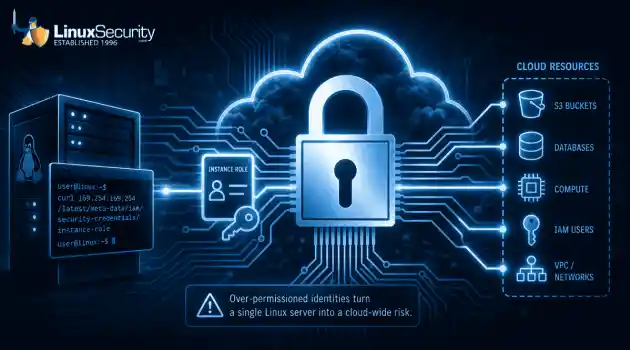
 For years, we secured our Linux infrastructure by building walls: VPCs, security groups, and hardened SSH configurations. We treated the cloud like a virtual data center, assuming that if we kept the "bad guys" out of the network, our workloads were safe. . That model is no longer sufficient. Today, one of the most common paths from an initial compromise to a major cloud breach is the identity assigned to your Linux workload. When an attacker gains code execution on a Linux instance—through a...
Jul 17, 2026
 security practices patch management
 Most of us don't hear about a kernel vulnerability until a CVE lands in our inbox or the vulnerability scanner starts complaining. By then, the patch isn't new anymore. Kernel developers may have been passing it around for review, arguing over the implementation, or revising it for days before anyone outside that community noticed it. None of those discussions are secret. They're sitting in mailing list archives, Git commits, and patch reviews where they've been the whole time. The strange...
Jul 14, 2026
 Linux security cyber attacks
 Every Linux server in your fleet produces thousands of events every minute. From journald logs and auditd records to kernel-level eBPF hooks, your systems are constantly talking. Most of that noise is just the mundane churn of system services, CI/CD runners, or routine administrative automation. But among that noise, an attacker might be establishing a foothold, moving laterally, or setting up persistence. The challenge for any security team is: how do you separate the routine from the...
Jul 13, 2026
 open-source infrastructure risk
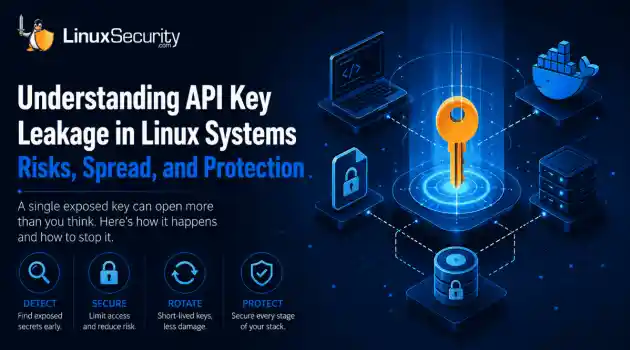
 Security scanners flag exposed API keys in public repositories every day. The initial response is usually predictable: delete the commit, revoke the credential, and move on. That’s a mistake. . In a real Linux environment, an API key never stays in one place. By the time it hits a public repo, it’s already everywhere. It’s in the CI/CD pipeline. It’s in your container registry. It’s in the build logs. It’s in the backups. Git makes this worse because the history never dies. Deleting a file in...
Jul 11, 2026
 Refine features
X Clear Filters
Get the latest News and Insights
Get the latest Linux and open source security news straight to your inbox.
Community Poll
Should Linux servers automatically install security updates?
Loading...
Explore Latest Linux Security features
We found -3 articles for you...
102
 threat detectionperformanceeBPF
Auditd vs eBPF: Modern Approaches to Linux System Monitoring
Most teams rely on logs to understand what’s happening on a Linux system. Think of a log like a digital paper trail; every action leaves a trace somewhere. The assumption is that if something goes wrong, you can go back and piece the story together using these records. . That approach worked well when systems were small, and attackers moved slowly. However, that logic breaks down as systems grow. Modern attacks move fast, often chaining different actions together in seconds. Logs get noisy quickly. Important signals get buried under thousands of "normal" events, and by the time a human reviews them, the damage is already done. This is where the conversation around Linux security and threat detection is changing. Auditd takes the traditional approach of recording everything it possibly can. On the other hand, eBPF focuses on filtering activity the very instant it happens. Understanding the difference between them is the key to modern system visibility. What Auditd Was Built to Do The auditd Linux tool is a part of the Linux auditing system. Its job is simple on paper: record what happens on a system so you can review it later. To understand it, you need to understand system calls. Every time a program interacts with the kernel—like opening a file, starting a process, or changing permissions—it makes a system call. Auditd hooks into those calls and logs them based on rules you define. You can see how those rules are structured in the [suspicious link removed]. If a user opens a sensitive file or fails a login attempt, Auditd can record that event. It writes everything to log files, usually on disk, where it can be sent to other systems. This is why compliance teams like it. You get a full audit trail of who did what, when, and on which system. That level of detail matters during an investigation. But there is a tradeoff. Auditd doesn’t decide what is important in the moment. It just records based on your rules. Those rules often end up being very broad because missing somethingis worse than logging too much. This generates a lot of data. Filtering usually happens later on a different system, and that delay is where things start to slip. What eBPF Does Differently eBPF changes where the thinking happens. Instead of collecting every single piece of data and deciding what matters later, it lets you run small, smart programs directly inside the Linux kernel. This sounds technical, but here is what it means in practice: these programs sit at the very heart of the system. According to the official eBPF overview , they can watch system calls, network traffic, or even specific functions as they run. Instead of logging every single time any file is opened, you can write a tiny program that says: "Only tell me if a sensitive folder is accessed by a program I don't recognize." Everything else is ignored before it ever leaves the kernel. This is the power of ebpf monitoring. You reduce the "noise" at the source. You aren't moving mountains of data; you are only moving the data that actually has meaning. From an ebpf security perspective, it’s about having better control over your visibility so you don't drown in it later. System Spotlight While Auditd acts like a security camera recording everything for later review, eBPF acts like a smart bouncer at the door, deciding in real-time who belongs and who doesn't before they even enter the room. Key Difference: Where the Work Happens Most Linux monitoring tools follow a "pipeline" model: collect everything first, and analyze it later. Auditd fits this model perfectly. It captures an event, writes it to a file, and relies on a human or another piece of software to interpret it. eBPF breaks that pattern. It processes the event inside the kernel—right where it occurs. It decides immediately if the event should be kept or thrown away. This shift matters more than it might seem. By moving less data, you save storage space, use less internet bandwidth, and spend less time parsing logs. It’s the differencebetween recording 24 hours of security footage and only having a camera that turns on when it sees someone climbing a fence. Performance and System Impact Performance is where the differences become very obvious. When you are running runtime security tools, you have to consider how much "tax" they put on the system’s CPU and memory. Auditd writes a steady stream of data to the disk. On a busy system, this creates "overhead"—basically, the computer spends more time recording what it is doing than actually doing its job. This impact has been studied in detail in performance reports from EuroBSDCon and through practical analysis by experts like Brendan Gregg . eBPF reduces this pressure. Because it filters the data early, there is less data to move around. However, it isn't "free." Since eBPF programs run in the kernel, a poorly written program can still slow things down. It’s like a filter on a faucet: if the filter is too thick, the water won't flow, no matter how clean it is. What This Means for Threat Detection Threat detection is a race against time. The gap between when an attacker does something and when a security team sees it determines who wins. With Auditd, detection usually happens later in a central log platform (often called a SIEM). This creates a delay—sometimes seconds, sometimes minutes. eBPF closes that gap. Because it makes decisions at the source, it can surface suspicious behavior the moment it happens. This leads to a much faster response. It also works better for network security monitoring, where seeing a suspicious connection immediately is much more valuable than reading about it in a report the next morning. Real-World Impact: The Detection Gap To see why this timing matters, we can look at the security challenges faced by Citibank in recent years. In recent data breach reports , it was revealed that unauthorized actors exploited web vulnerabilities to gain access to customer information. In a traditional setup using Auditd, the bank wouldhave a perfect record of the breach after the fact. Investigators could see exactly which records were touched. But for a global bank, the problem isn't just knowing you were robbed—it's stopping the theft while it's happening. As security experts often point out, banks are reluctant to admit breaches because, by the time the logs are analyzed, the "booty" is already gone. By using eBPF-based tools, teams can move from "hindsight" to "real-time." Instead of waiting for a log to be written to a disk and then sent to a server, eBPF can flag the suspicious behavior the microsecond it occurs in the kernel. It turns a "lawsuit waiting to happen" into a "threat blocked at the door." The Detection Gap: In modern breaches, the "Time to Detect" (TTD) is the only metric that matters. Auditd helps you understand the past , while eBPF helps you control the present . Where Auditd Still Makes Sense Despite the new technology, Auditd is not dead. It still makes sense in environments where "completeness" is the most important thing. If your organization is required by law to keep a record of every single action for legal reasons, Auditd is a proven, reliable tool for that job. It also works well on smaller, stable systems where there isn't a massive flood of data. Sometimes, you don't need the fastest technology; you just need a reliable record to explain what happened after the fact. Where eBPF Is Gaining Ground eBPF is becoming the standard for modern environments like the "Cloud" and "Containers." These systems are very fast and generate a lot of unpredictable activity. These setups need visibility that doesn't slow the system down. The industry is moving in this direction quickly. Even Microsoft has integrated eBPF support into its Linux security tools. The trend is clear: the world is moving away from raw, bulky logs and toward "smart" filtering. Why Many Teams Use Both In the real world, it isn’t a competition. Many teams use both tools together because they solve differentproblems. Auditd provides the long-term, historical record for the lawyers and auditors. eBPF provides real-time visibility for security responders. Using them together covers the gaps that either tool would leave open if used alone. What to Watch For: Spotting the Escape If you’re defending these systems, you can’t just wait for a summary report. You need to know what a breakout looks like while it's happening. Depending on your Linux monitoring tools, that data is going to look very different. The Auditd Trail When an attacker tries to escape, they usually need to interact with sensitive parts of the host. In Auditd Linux, you’ll see this as a flood of system calls. You might see a container suddenly trying to use mount() to grab a host directory or execve() to run a shell with root privileges. The problem? On a busy server, Auditd is recording every mount and every process. By the time you find the one "evil" line in a 50GB log file, the attacker has already moved on. It’s a great record for a post-mortem, but it’s a tough way to catch a live runner. The eBPF Signal This is where eBPF monitoring changes the game. Instead of looking at a list of everything that happened, you can set "tripwires." For example, you can use ebpf security tools to alert you only if a container process attempts to access a file outside of its own virtual environment. Because eBPF lives in the kernel, it sees the attempt in the microsecond it happens. It’s the difference between reading a police report the next day and having a silent alarm go off the moment someone touches the safe. The Visibility Gap Traditional tools often see what is inside the container, but they miss how the container is talking to the host. Real-time threat detection requires seeing that interaction as it happens, not after it's logged. A Pragmatic Path Forward If you’ve already got Auditd running, don't feel like you have to rip it out tomorrow morning. It’s a workhorse.It does exactly what it was built for—creating that rock-solid, line-by-line record that auditors and investigators live for. But here’s the harder question you have to ask yourself: Are you actually catching threats as they happen, or are you just doing a high-tech autopsy after you've already been breached? If you're managing cloud-native apps or complex container setups, raw logs usually aren't enough. They're too slow. Adding eBPF-based monitoring into the mix fills that gap. It gives you a way to filter for the high-priority events right at the source, so you aren't drowning in data later on. Most teams I talk to don't actually pick a "winner" here. They use both. Auditd handles the history; eBPF handles the "right now." At the end of the day, it just comes down to what you need more: a perfect paper trail or an immediate answer. Conclusion: It’s Not About Replacing Auditd Auditd still has a role; it provides the complete, reliable record that compliance teams require. eBPF solves a different problem by reducing noise and improving visibility in real-time. The real shift is in the approach. Older systems collect everything and figure it out later, while newer systems decide what matters immediately. Most teams end up somewhere in the middle, balancing historical compliance with modern speed. Stay Ahead of the Curve If you want to keep up with how the Linux kernel and security landscape are evolving, subscribe to our Linux Security Newsletter . We deliver the latest on eBPF, threat hunting, and system hardening directly to your inbox so you never miss a beat. . That approach worked well when systems were small, and attackers moved slowly. However, that logic b. teams, understand, what’s, happening, linux, system, think. . MaK Ulac
 Apr 20, 2026
•
Apr 20, 2026
•
102
 open sourcee-commercecloud security
Improve E-Commerce Flexibility and Security with Cloud-Based Linux
Perhaps you’re thinking of launching an e-commerce store, or you already have one and are looking for a flexible and secure way to run it. If so, using Linux in the cloud could be highly beneficial for your business. . Cloud-based Linux solutions offer the inherent security and stability of Linux , along with the well-known flexibility of cloud computing. This article will explore why using Linux in the cloud is beneficial for e-commerce stores, along with some potential challenges you may encounter, to equip you with the knowledge you need to make an informed decision. A Cloud-Based Linux Solution Helps Your Store Adapt Today’s e-commerce stores must be flexible. Using Linux in the cloud supports that reality, giving you room to grow. Linux is an open-source operating system that helps you avoid vendor lock-in. You then have more control over the type of infrastructure you want for your e-commerce store and your preferred operating model. In order for your business to succeed and grow, your website must also offer top performance at all times. Otherwise, customers will likely get frustrated, and many will take their business elsewhere given that they have many other options to choose from. Alternatively, customers with consistently excellent experiences at your e-commerce store are more likely to return for future purchases and even recommend it to their friends. Once you begin running your e-commerce site on Linux in the cloud, it’s easy to use website optimization tools to fix problems such as sites that load too slowly. However, it’s critical to keep in mind that while it is a major component, the website experience is not the sole indicator of customer satisfaction. Some cloud-based Linux products also support clients who oversee shared servers. It’s more common for e-commerce customers to benefit from shared servers rather than operate them. That’s because the shared model is typically more affordable and can enhance a website's performance. It’s also ideal ifyou’re on a limited budget and want to build a reliable online presence without overspending. Linux Is a Security-Focused Operating System The general consensus among experts is that Linux is the most secure OS for businesses . Security is built into the design in the Linux environment. It’s also advantageous that the open-source community regularly reviews Linux source code. Because of the constant scrutiny that Linux source code undergoes by this vibrant worldwide community, people are more likely to spot potential vulnerabilities that could lead to outages for your e-commerce store or other sites if left unaddressed. Microsoft made headlines in 2015 when it began offering its cloud-based Azure services to Linux users. The company also relied on Linux to run many of its associated cloud servers. A major tech name such as Microsoft offering these options is a strong approval for Linux and its security-related benefits. Linux Has Tight Safeguards for Administrative Permissions Things can go wrong at your e-commerce company if too many people have administrative privileges. In such cases, there’s a higher likelihood of individuals making mistakes that could severely impact the site’s functionality. Many threat actors also use administrative privileges as gateways to cause damage. One of the main advantages of using Linux is that, unlike Windows, it does not create administrative accounts by default. Users can engage with the home directory without restrictions but must enter root passwords before making system-level changes. Windows users have the option to improve security by properly configuring user permissions, but the reality is that this often doesn’t always happen on Windows machines. Thus, the fact that Linux provides tight administrative controls by default is a marked security advantage. Additionally, if you use Linux in the cloud, your provider will probably have separate user-based permissions to configure after installation, which can provide evenstronger safeguards. However, you should always set aside adequate time to learn about any available security-related cloud features and whether they’re worthwhile for your e-commerce enterprise. Linux Maintains Security With Package Managers and Repositories Getting an app from the Windows or MacOS operating systems usually involves going to an application marketplace, selecting the desired product, and downloading and installing it. However, things work differently on Linux. Linux users use package managers to download the programs they need. These programs come from repositories, which open-source community members usually manage. It takes comparatively longer for packages to be verified and accepted; however, the user experience is ultimately more secure because of this process. There’s also no need to do an Internet search for the package managers. You can find them with simple commands, making the experience more straightforward. Some providers of Linux offerings in the cloud also have dedicated tools for their customers. You might find apps that allow you to boost your e-commerce site’s functionality or give you a better idea of how its traffic levels change from month to month. Cloud Linux Resources Help You Focus on E-Commerce Growth A benefit of operating in the e-commerce industry is that it gives you numerous options for pursuing ongoing growth. You might want to build a progressive web app for your store, believing its fast loading time and offline usability will provide your customers’ desired features. Progressive web apps behave like websites but include several enhancements ideal for e-commerce stores. For example, they’re fully responsive, making them look great across devices and operating systems. The global e-commerce market has seen tremendous growth in recent years and, according to Insider Intelligence, is expected to total $6.3 trillion in 2023. This recent growth was largely due largely to the COVID-19 pandemic that caused manypeople to shop online much more frequently than they previously did. Remote working was another trend spurred by the pandemic, which businesses capitalized on to grow their e-commerce presence. Linux is not a frequent target for hackers due to its niche usage. You can even use open-source monitoring and authentication tools on Linux, helping you secure your store after hiring remote workers. Potential Challenges of Using Linux in the Cloud Company growth becomes more challenging if you spend too much of your time trying to resolve unexpected tech issues. Fortunately, Linux is a highly stable operating system, so you can anticipate using it with few or no delays. Rest assured in the reliability of your chosen technological solution and get back to the details of how to help your e-commerce business succeed. Even so, you should know the potential obstacles you may encounter by moving to a cloud-based Linux solution. The main one is that Linux is not as widely used as the Windows MacOS operating systems. People who are less familiar with it or have not used it at all may be hesitant to use it for their e-commerce store. Similarly, some people need time to get used to the community aspect of open-source products, including Linux. The benefits include getting feedback from community members that could allow you to improve your online store faster. However, if your company has solely or mostly used closed-source software, you’ll undoubtedly need to put time and effort into making a smooth transition. Don’t rush into finding a suitable cloud provider. Account for your budget, employees’ familiarity with the cloud and how much you hope to scale your business over the coming years before finalizing your decision. The more forethought you put into the early stages, the easier it will be to mitigate challenges and view them as valuable learning experiences. A Cloud-Based Linux Product Is Well Worth Your Consideration In this article, we discussed some key reasons that cloud-basedLinux solutions deserve your attention when looking for a way to improve your e-commerce site. These solutions have the potential to help your business adapt and grow, while improving the security of your e-commerce store. No matter what you sell or when you established your online store, it’s easy to find cloud-based Linux products with features and support to help your business run smoothly and achieve lasting success. . Cloud-based Linux solutions enhance e-commerce flexibility and security, offering stability and scalability for online stores.. perhaps, you’re, thinking, launching, e-commerce, store, already, looking. . Brittany Day
May 08, 2023
•


Get the latest News and Insights
Get the latest Linux and open source security news straight to your inbox.
Community Poll
Should Linux servers automatically install security updates?
Search Topics
Powered By

Linux Security - Your source for Top Linux News, Advisories, HOWTOs and Feature Releases
QUICK LINKS
subscribe to newsletters!
Like staying secure? So do we.
Sign up for updates, tips, and alerts!