Audit Linux privileges now to limit compromise, escalation, and system-wide damage. Review Linux Privileges×


Stay Ahead With Linux Security Features
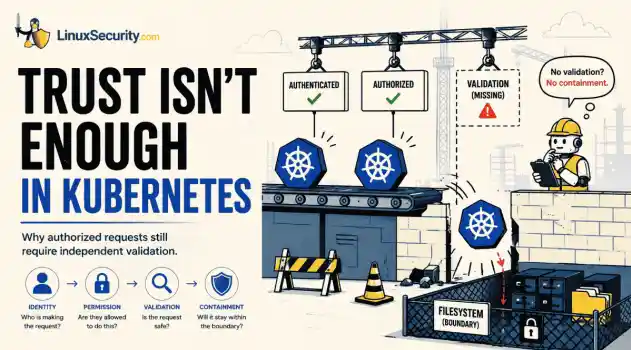
 security advisory path traversal
 Two newly fixed storage bugs in Kubernetes showed more than just a problem with path traversal. They found a common security flaw in the cloud: powerful parts often think that requests accepted by a higher system are safe to run. This is a simple lesson for the platform and security teams: RBAC can accept a request without showing that its parameters will stay within a certain filesystem boundary. This is clear from a new study from SentinelLabs into flaws in the Kubernetes CSI drivers for NFS...
 Jul 24, 2026
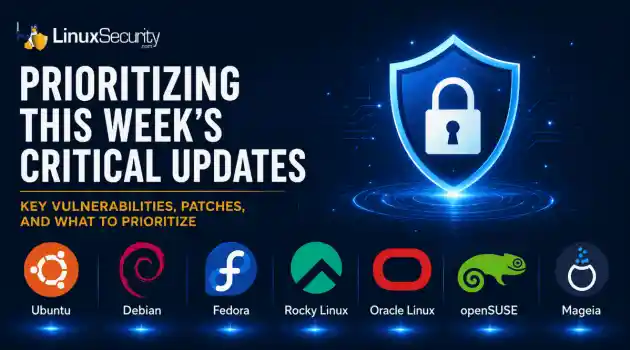 security advisory update
 A large volume of Linux security updates and advisories this week across major distributions once again, but it wasn't just the volume that was the story. Where maintainers and security teams focused their attention was evident in the concentration of fixes targeting Linux kernel updates, identity services, DNS infrastructure, and internet-facing software. . Instead of looking at each advisory in isolation, administrators gain more value from the general trends they reveal about Linux security...
Jul 23, 2026
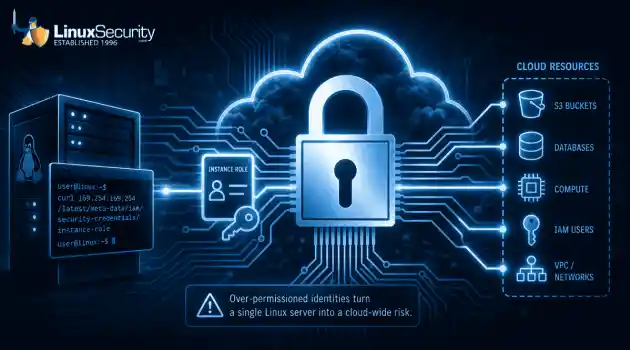 identity management security tactics
 For years, we secured our Linux infrastructure by building walls: VPCs, security groups, and hardened SSH configurations. We treated the cloud like a virtual data center, assuming that if we kept the "bad guys" out of the network, our workloads were safe. . That model is no longer sufficient. Today, one of the most common paths from an initial compromise to a major cloud breach is the identity assigned to your Linux workload. When an attacker gains code execution on a Linux instance—through a...
Jul 17, 2026
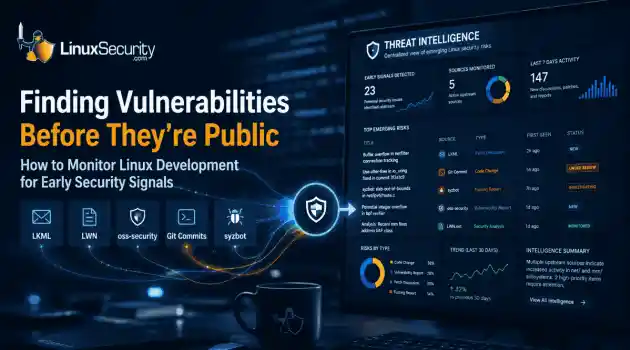 security practices patch management
 Most of us don't hear about a kernel vulnerability until a CVE lands in our inbox or the vulnerability scanner starts complaining. By then, the patch isn't new anymore. Kernel developers may have been passing it around for review, arguing over the implementation, or revising it for days before anyone outside that community noticed it. None of those discussions are secret. They're sitting in mailing list archives, Git commits, and patch reviews where they've been the whole time. The strange...
Jul 14, 2026
 Linux security cyber attacks
 Every Linux server in your fleet produces thousands of events every minute. From journald logs and auditd records to kernel-level eBPF hooks, your systems are constantly talking. Most of that noise is just the mundane churn of system services, CI/CD runners, or routine administrative automation. But among that noise, an attacker might be establishing a foothold, moving laterally, or setting up persistence. The challenge for any security team is: how do you separate the routine from the...
Jul 13, 2026
 Refine features
X Clear Filters
Get the latest News and Insights
Get the latest Linux and open source security news straight to your inbox.
Community Poll
Should Linux servers automatically install security updates?
Loading...
Explore Latest Linux Security features
We found -3 articles for you...
102
 security researchprocess managementanti-debugging
Advanced Anti-Debugging Techniques Using Self-Modifying Code
In our previous Hacker's Corner article, we covered some simple anti-debugging. Here, we will see some better techniques. . Self-Modifying Code Last time we tried to attach to own process, and used that as detection/prevention mechanism for debugging by someone else. Here, we will improve it by making it much harder to run code under debugger. This technique relies on using incorrect code, and patching it dynamically to make it correct. The patching part is done by same ptrace mechanism. Here, we have to ensure that our incorrect code should not kill the code. Instead we should be able to intercept the error, and then patch the code on the fly before re-attempting the execution. There are many ways to achieve this: 1. Raising a signal like SIGCONT 2. Forcibly triggering CPU fault (like illegal instruction fault) 3. Segmentation Fault 4. and many more... For sake of example, we will use an illegal syscall (that does not even exist) for our incorrect code. To ensure that we get a signal right before said code is called, we will raise SIGCONT, and capture that. The scheme goes something like this: Parent Process 1. Fork 2. Run protected function in child process 3. Wait for child process to change its status 4. Continue the process until it hits a syscall. 5. Check if syscall number matches to illegal syscall number used. 6. Change the syscall to correct one. 7. Let the process run. Go back to step 3. Child Process 1. Attach to self 2. Raise SIGCONT 3. Run the code which is using illegal syscall The syscall we are going to use is syscall number 10000, which is slightly modified version of **write** syscall: Original Syscall - Syscall number: 1 - RAX: 1 - RDI: File descriptor - RSI: Pointer to buffer - RDX: Number of bytes Our Syscall - Syscall number: 10000 - RAX: 10000 - RDI: Pointer to buffer - RSI: File descriptor - RDX: Number of bytes This means, patching the code is as simple as: 1. Put 1 in RAX 2. Swap RDI and RSI The complete code for this will looksomething like this: #include #include #include #include #include #include #include #define SYS_CUSTOM_write 10000 void print_custom(char *str) { syscall(SYS_CUSTOM_write, str, 1, strlen(str)); } void tracee() { ptrace(PTRACE_TRACEME, 0, 0, 0); raise(SIGCONT); std::cout
 Jul 13, 2022
•
Jul 13, 2022
•
102
 denial of serviceprocess managementattack prevention
Understanding Fork Bombing Attacks: Mechanisms And Prevention
Thanks to Anand Jahagirdar for this feature! As the variety of attacks and threats grow, you need to be prepared. In this HOWTO, get a feeling for the Fork Bombing Attack, what it is, how it works, where it comes from, how to deal with it and more. . Fork Bombing: Eckie S. Fork bombing means invoking fork system call infinite times by one or more processes. It is also defined as Spawning nearly infinite processes by one or more user processes. E.g. Simple C Loop *: - while (1) fork (); It spawns infinite processes which in turn lead to fork bombing. Fork bombing attack is usually done by a non root user. For example, a non root user, as an attacker, sends infinite requests to the server for denial of service. Another example of fork bombing attack is a simple loop *: - main () {fork() main () ;} In this case main function calls itself recursively. This loop can make the system crawl. (* warning: - execute both the loop at your own risk). It . Fork Bombing: Eckie S. Fork bombing means invoking fork system call infinite times by one or more pr. thanks, anand, jahagirdar, feature, variety, attacks, threats. . Anthony Pell
Jun 08, 2010
•


Get the latest News and Insights
Get the latest Linux and open source security news straight to your inbox.
Community Poll
Should Linux servers automatically install security updates?
Search Topics
Powered By

Linux Security - Your source for Top Linux News, Advisories, HOWTOs and Feature Releases
QUICK LINKS
subscribe to newsletters!
Like staying secure? So do we.
Sign up for updates, tips, and alerts!