Audit Linux privileges now to limit compromise, escalation, and system-wide damage. Review Linux Privileges×


Stay Ahead With Linux Security Features
 security advisory path traversal
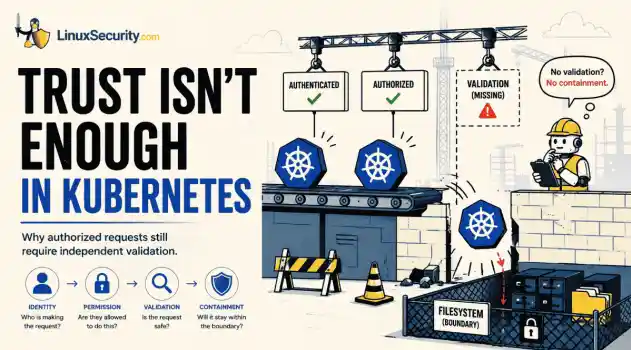
 Two newly fixed storage bugs in Kubernetes showed more than just a problem with path traversal. They found a common security flaw in the cloud: powerful parts often think that requests accepted by a higher system are safe to run. This is a simple lesson for the platform and security teams: RBAC can accept a request without showing that its parameters will stay within a certain filesystem boundary. This is clear from a new study from SentinelLabs into flaws in the Kubernetes CSI drivers for NFS...
 Jul 24, 2026
 security advisory update
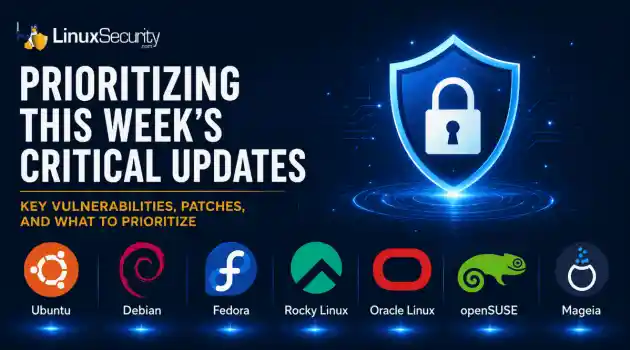
 A large volume of Linux security updates and advisories this week across major distributions once again, but it wasn't just the volume that was the story. Where maintainers and security teams focused their attention was evident in the concentration of fixes targeting Linux kernel updates, identity services, DNS infrastructure, and internet-facing software. . Instead of looking at each advisory in isolation, administrators gain more value from the general trends they reveal about Linux security...
Jul 23, 2026
 identity management security tactics
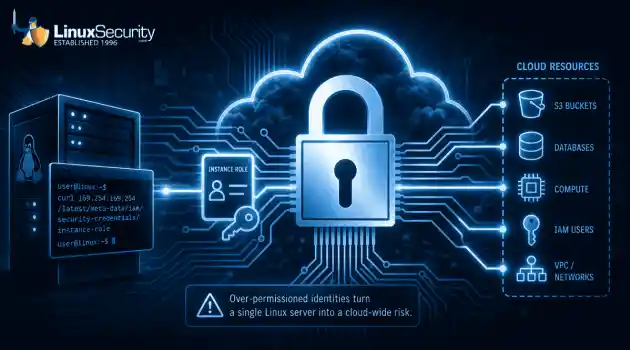
 For years, we secured our Linux infrastructure by building walls: VPCs, security groups, and hardened SSH configurations. We treated the cloud like a virtual data center, assuming that if we kept the "bad guys" out of the network, our workloads were safe. . That model is no longer sufficient. Today, one of the most common paths from an initial compromise to a major cloud breach is the identity assigned to your Linux workload. When an attacker gains code execution on a Linux instance—through a...
Jul 17, 2026
 security practices patch management
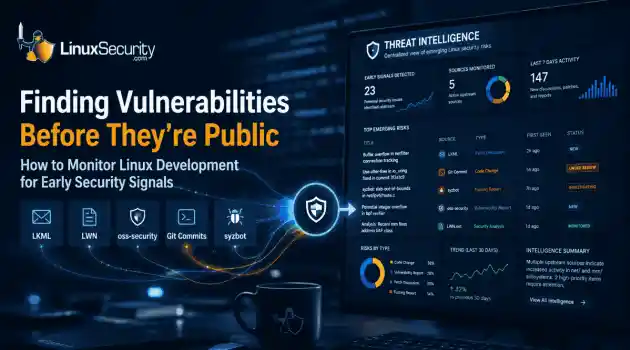
 Most of us don't hear about a kernel vulnerability until a CVE lands in our inbox or the vulnerability scanner starts complaining. By then, the patch isn't new anymore. Kernel developers may have been passing it around for review, arguing over the implementation, or revising it for days before anyone outside that community noticed it. None of those discussions are secret. They're sitting in mailing list archives, Git commits, and patch reviews where they've been the whole time. The strange...
Jul 14, 2026
 Linux security cyber attacks
 Every Linux server in your fleet produces thousands of events every minute. From journald logs and auditd records to kernel-level eBPF hooks, your systems are constantly talking. Most of that noise is just the mundane churn of system services, CI/CD runners, or routine administrative automation. But among that noise, an attacker might be establishing a foothold, moving laterally, or setting up persistence. The challenge for any security team is: how do you separate the routine from the...
Jul 13, 2026
 Refine features
X Clear Filters
Get the latest News and Insights
Get the latest Linux and open source security news straight to your inbox.
Community Poll
Should Linux servers automatically install security updates?
Loading...
Explore Latest Linux Security features
We found -2 articles for you...
102
 web applicationLinux securitysecurity architecture
What Is a WAF? A Linux Security Admin’s Practical Guide
If you manage Linux systems in production, you already operate with multiple layers in place. Network firewalls, SELinux or AppArmor, IDS and IPS, and regular patching. From the operating system’s perspective, the environment is controlled. Still, web applications running on top of that stack continue to be the source of incidents, audit findings, and late-night investigations. Not because the OS failed, but because most modern attacks never need to touch it. . This is the gap a web application firewall (WAF) addresses. Linux security tools are designed to protect the system and the processes it runs. They are not designed to interpret the intent of an HTTP request or notice when a parameter is shaped just slightly wrong. Application-layer attacks tend to look like ordinary traffic until you examine structure, behavior, and repetition over time. Once you start reviewing real request logs, the limitation becomes obvious. In this guide, we’ll focus on what a WAF actually does in that space and what it changes for you as an administrator. Where it fits in a Linux security stack, what visibility it adds, and what tradeoffs come with running one in production. The goal is not to convince you to deploy a WAF, but to give you a clear framework for deciding when it makes sense and what deploying it really involves. What Is a WAF (Web Application Firewall)? At its core, a WAF is a control that sits close to your application and pays attention to the parts of a request that Linux itself never interprets. It inspects HTTP and HTTPS traffic at the application layer, looking at URLs, headers, cookies, request bodies, and sometimes responses. Instead of asking whether a packet is allowed onto the system, it asks whether a request makes sense in the context of how the application is supposed to behave. This is what separates a WAF from the firewalls you already run . iptables and nftables work at the network and transport layers. They decide which connections are allowed to exist. A WAF operates atLayer 7, where requests are already accepted and being handled by a web server or reverse proxy. That distinction matters in linux security because most application attacks arrive over ports and protocols you cannot reasonably block. Port 443 has to stay open. The difference between a normal request and a malicious one is often buried inside the payload. The Core Definition A WAF focuses on the semantics of web traffic rather than its transport characteristics. In practical terms, it evaluates things like: Request structure and parameter format Known attack patterns such as SQL injection or cross-site scripting Behavioral signals like request rate, repetition, and sequencing Protocol compliance issues that indicate fuzzing or probing Because it understands HTTP, a WAF can block or flag traffic that would otherwise look legitimate to a network firewall. This is why it is often described as an application-layer firewall rather than a system firewall. It does not protect the Linux host directly. It protects the application’s attack surface. Where a WAF Sits in a Linux Security Architecture In Linux environments, a WAF usually lives in one of a few places. It might run as a module inside a web server like Apache or NGINX, operate as a reverse proxy in front of your application, or sit at an edge layer managed outside the host entirely. Each placement changes what the WAF can see and how tightly it integrates with your existing controls. What matters is how traffic flows. A request typically passes through network filtering, reaches the WAF for inspection, and only then is handed to the application running on Linux. At no point does the WAF replace iptables, fail2ban, or SELinux . It complements them by narrowing the set of requests that ever reach application code. Once you visualize that flow, the role of a WAF in a broader linux security strategy becomes easier to reason about. Why WAFs Exist (and Why Linux Security Alone Isn’t Enough) Linux systems can be hardened to a high standard and still be exposed in ways that have nothing to do with the operating system. A fully patched kernel does not prevent a malformed query from reaching application code. Mandatory access controls do not notice when input is reused across requests in a way that leaks data. From the system’s point of view, the process is behaving exactly as expected. The problem lives higher up. This is where many teams get stuck conceptually. Linux security is very good at protecting resources. Web attacks are often about manipulating logic. An attacker is not trying to break out of a process or escalate privileges. They are trying to convince the application to do something unintended while staying entirely within allowed execution paths. When you review incident timelines, you start to see the pattern. The OS logs stay quiet while application logs slowly fill with strange but technically valid requests. The Gap Between OS Security and Application Attacks Most application-layer attacks succeed because they exploit assumptions, not vulnerabilities the kernel can see. A SQL injection attempt is just text inside a parameter. Cross-site scripting payloads are delivered as user input that passes every system-level check. Request smuggling relies on edge-case behavior in HTTP parsing, not on breaking Linux isolation. If you have spent time digging through web server logs, you have likely seen this already. Repeated requests with slightly altered parameters. Odd header combinations. Long query strings that never quite trigger an error. These are not things SELinux is meant to evaluate. They are signals that only appear once you inspect traffic in the context of the application. Common Web Attacks a WAF Is Designed to Mitigate A WAF exists to recognize and respond to these patterns before they reach application logic. In practice, this usually includes: Injection attacks, such as SQL injection and command injection Cross-site scripting that targets users rather than the server Fileinclusion and path traversal attempts that abuse routing or templating Automated abuse like credential stuffing and scraping Attack classes documented in the OWASP Top 10 None of these are stopped by traditional Linux security controls alone, and that is not a failure of those controls. It is a boundary issue. A WAF sits at that boundary, where requests are still just data and decisions can be made without modifying application code. How Does a WAF Impact You as a Linux Security Admin? Once a WAF is in place, your relationship with web traffic changes. Requests that used to flow straight from the network into the application now stop, get evaluated, and sometimes get rejected. That evaluation produces data, and that data becomes part of your operational reality. Some of it is genuinely useful. Some of it is noise you now have to understand well enough to ignore safely. The impact shows up less in architecture diagrams and more in day-to-day work. You gain another policy surface to manage and another source of truth during incidents. Over time, you also start to notice that problems blamed on “the app” or “the network” often live in the space between them, where the WAF operates. What a WAF Changes in Your Daily Workflow A WAF introduces its own stream of logs, alerts, and decisions that you are expected to interpret. This changes how investigations unfold. You review blocked requests alongside web server and application logs You tune rules to reduce false positives without opening obvious gaps You correlate WAF events with IDS alerts and authentication failures You answer questions from developers and auditors about why traffic was blocked Rule management also feels different from managing Linux policies. Instead of defining what a process may access, you are defining what a request is allowed to look like. That mental shift takes time, especially when legitimate traffic gets caught by generic rules. Performance, Latency, and AvailabilityConsiderations Every request a WAF inspects adds work to the request path. In low-traffic environments, this is rarely noticeable. At scale, it becomes part of capacity planning. Inline inspection can introduce latency, and TLS termination at the WAF changes where encryption starts and ends. Misconfiguration is where most pain comes from. An overly strict rule can break a login flow or block an API endpoint without obvious errors. From the outside, the service looks up. From the user’s perspective, it is not. When that happens, you are often the one tracing the failure across layers to find the rule responsible. Visibility and Control You Gain (or Lose) A well-integrated WAF gives you visibility into request behavior that Linux tools do not provide. You can see which endpoints are being probed, how bots behave over time, and which inputs attract the most abuse. That context can be valuable during risk assessments and post-incident reviews. At the same time, not all WAFs are equally transparent. Managed or black-box deployments may block traffic without exposing the exact reasoning. That complicates troubleshooting and raises questions during audits. In linux security work, control and observability tend to matter as much as protection. A WAF shifts that balance, and understanding how much insight you retain is part of owning the decision. WAF Deployment Models in Linux Environments How a WAF is deployed matters as much as whether you deploy one at all. The same ruleset behaves very differently depending on where inspection happens and how tightly it is coupled to your Linux systems. This is usually where theoretical discussions turn practical, because deployment choices affect performance, visibility, and who gets paged when something breaks. Most Linux environments end up with one of a few common models. None are universally better. Each trades control for convenience in a slightly different way. Host-Based WAFs on Linux A host-based WAF runs directly on the Linux system thatserves the application, often as a module inside the web server. ModSecurity paired with Apache or NGINX is a common example. In this model, inspection happens very close to the application. The advantages are mostly about control and transparency. Full access to rules, logs, and request context Easier correlation with local web server and system logs Fine-grained tuning for specific applications The drawbacks show up over time. Inspection consumes CPU and memory on the host. Rulesets require ongoing maintenance. Updates and exceptions become part of your configuration management process. In busy environments, the operational overhead can be nontrivial. Reverse Proxy and Edge WAFs In proxy-based models, the WAF sits in front of the application, either as a dedicated reverse proxy or as part of an edge service. NGINX configured as a reverse proxy, Apache in front of application servers, or CDN-based WAFs fall into this category. This changes trust boundaries. The application servers see traffic that has already been filtered, but they no longer see everything. Operationally, this can simplify hosts and centralize control. It can also make debugging harder when blocked requests never reach the Linux system at all. The main differences compared to host-based deployment are: Reduced load on application hosts Centralized rule management across multiple services Less direct visibility from the Linux system itself Managed vs. Self-Managed WAFs Managed WAFs offload rule updates and tuning to a third party. Self-managed WAFs keep that responsibility in-house. The technical difference is often smaller than the operational one. With managed services, you trade some control for speed and coverage. False positives still happen, but you may not fully understand why. In regulated Linux environments, this raises questions about auditability and incident reconstruction. With self-managed WAFs, you own the rules, the mistakes, and the learning curve. The right choice usuallydepends less on traffic volume and more on how much visibility and accountability your linux security posture requires. WAFs and Defense-in-Depth for Linux Security A WAF only makes sense when you place it correctly in your mental model of defense in depth. It is not a perimeter replacement and it is not a safety net for weak system hardening. It is a layer that operates in a very specific slice of the stack, one that Linux security controls intentionally do not cover. Once you view it that way, the role of a WAF becomes clearer. It reduces exposure at the application boundary while the operating system continues to enforce isolation, least privilege , and integrity underneath. How WAFs Complement Linux Security Controls Linux security controls focus on what processes can do once they are running. A WAF focuses on which requests are allowed to reach those processes in the first place. Used together, they narrow both the attack surface and the blast radius. Common pairings tend to look like this: A WAF filtering malformed or abusive requests before they hit application code SELinux or AppArmor constraining what that application can access if something slips through IDS or IPS systems watching for broader patterns across hosts SIEM platforms correlating WAF events with system and authentication logs In mature environments, the WAF often becomes an early warning signal. Spikes in blocked requests or unusual patterns show up there first, long before anything triggers a system-level alert. That visibility is often its quietest contribution to linux security. What a WAF Will Never Do for You There are limits that are worth stating plainly. A WAF does not fix vulnerable code. It does not understand business logic beyond generic patterns. It cannot patch dependencies or rewrite unsafe queries. At best, it buys time and reduces exposure. Over-reliance is the common failure mode. Teams deploy a WAF and gradually relax other practices, assuming coverage they do notactually have. When a bypass happens, the impact is worse because assumptions have shifted. A WAF works best when it is treated as a compensating control, not a substitute for secure development and disciplined system administration. When a WAF Makes Sense—and When It Doesn’t Whether a WAF belongs in your environment is usually less noticeable at design time and more obvious after you have lived with real traffic for a while. The question is not whether WAFs work in general, but whether they meaningfully reduce risk in your specific Linux environment without introducing more instability than they prevent. Patterns tend to repeat across teams and industries. Once you have seen a few deployments succeed and a few struggle, the dividing line becomes clearer. Scenarios Where a WAF Is Worth the Operational Cost A WAF tends to justify itself when exposure and constraints leave you with few other options. Public-facing Linux web applications are the most common case. Anything accessible from the internet will eventually attract automated scanning, credential stuffing, and low-effort exploitation attempts. Even well-written applications accumulate edge cases over time. Legacy applications are another strong candidate. When code cannot be easily refactored, a WAF becomes a practical way to reduce risk without touching the application itself. This is especially common in environments where uptime matters more than architectural purity. Compliance-driven environments also push teams toward WAFs. Standards like PCI DSS and certain government frameworks explicitly reference application-layer protections. In those cases, a WAF provides a concrete control that auditors can evaluate, even if it is not the primary security mechanism. Scenarios Where a WAF Adds More Pain Than Value Not every service benefits from application-layer inspection. Internal-only applications with strong network segmentation and limited user bases often see little real-world abuse. In those environments, the noiseintroduced by a WAF can outweigh its protective value. Static sites and low-risk services are another common mismatch. If an application does not process user input in meaningful ways, most WAF rules will never trigger. What remains is overhead, both in performance and in operational attention. The final limiting factor is people. WAFs require tuning, monitoring, and ownership. Teams without the bandwidth to review logs, investigate false positives, and adjust rules tend to end up with either overly permissive configurations or broken workflows. In linux security work, an unused or poorly understood control is often worse than none at all. Our Final Thoughts on the Role of a WAF in Your Linux Security Strategy A WAF protects a part of the stack that Linux security tools do not see. It inspects requests after they are allowed onto the network but before they reach application logic, where many modern attacks actually live. That alone explains why WAFs continue to exist alongside mature operating system controls rather than replacing them. At the same time, a WAF is not a passive addition. It introduces another policy layer, another source of logs, and another place where mistakes can surface as outages. Performance considerations, rule tuning, and ownership all become part of your operational workload. These costs are manageable, but only if they are acknowledged upfront. The real value of a WAF depends on visibility and accountability. When you can see why traffic was blocked, adjust behavior safely, and correlate events with the rest of your Linux environment, the WAF becomes a useful boundary control. When it is opaque or ignored, it becomes noise. Treated correctly, a WAF is neither a safety net nor a silver bullet. It is a focused layer in a broader linux security strategy, doing one job well and leaving the rest to the controls that were designed for it. . Explore the role and effectiveness of Web Application Firewalls in enhancing Linux security for web applications.. Web ApplicationFirewall, Linux Security Tools, Application Layer Protection, Security Strategy, Incident Response. . Brittany Day
 Jan 10, 2026
•
Jan 10, 2026
•
102
 network securitysecurity controlsdata encryption
Strategies To Secure Data Warehouses In Linux Environments
The world of enterprise solutions relies heavily on effective data management. Standard systems, which work great for small businesses, simply break down once you have thousands of moving components operating worldwide - if not hundreds of thousands. Maintaining unstructured data, primarily if your business operates on a global scale, isn’t just a waste of resources; it’s also a risk to your company. . Understanding how to properly organize and secure your information in a data warehouse within a Linux system can help you prevent cyberattacks from inside and outside your company while keeping your data safe. So, where do you get started? Let's begin by examining what a data warehouse is and what may put yours at risk. I’ll then share practical measures for improving data warehouse security. What is a Data Warehouse? Data warehouses are one of the prime options for large enterprises to sort, secure, and silo their data so that it can quickly be processed, analyzed, and used for more in-depth insights and recommendations. This is because a data warehouse works beyond simply structuring your most recent data; it provides a framework that allows you to store historical versions of documents alongside their modern counterparts. They work by regularly transferring data from operational system databases like ERPs or CRMs, apps, social media, the Internet of Things, and more. This produces a histography of the data you need for your business, allowing you to tackle current issues and better map trends as they adapt over the years. Why Does Your Large-Scale System Need a Data Warehouse? There are several reasons why building a data warehouse to structure and store your data should be the number one step when it comes to securing your data on Linux, especially when it comes to cloud-based warehouses: Historical documents are automatically sorted. Data is automatically duplicated and backed up on multiple servers. Centralized data is easier to keep track ofand secure. Access controls are a breeze to implement. What’s Putting Your Data Warehouse at Risk? Linux systems are known for their security and scalability. Thanks to the open-source nature of the system itself, which is constantly being updated and provides more user access control for businesses, you are right on track for securing your large datasets (and their historical versions). Before we get into what steps you can take to prevent data breaches in a Linux system further, let’s recap just what type of threats you’re defending against: Data Breaches : Unauthorized access to confidential data often leads to the exposure or theft of sensitive data, such as financial or personal information. Financial loss, reputational damage, and legal consequences are all possible outcomes. Ransomware: Ransomware is malicious software that encrypts a victim's files and demands payment for the key to decrypt them. Data loss, disruption of operations, and financial extortion are all possible consequences. SQL Injection: SQL injection is a code injection technique that exploits vulnerabilities within a web application’s database layer through malicious SQL queries. Its impacts include unauthorized data access and manipulation and potential database corruption. Insider threats : Insider threats are security risks that originate within an organization. They usually involve employees or contractors misusing their access to systems and data. Data breaches, intellectual theft, and operational sabotage could be severe consequences of insider threats. DDoS attacks: Distributed denial-of-service attacks overwhelm a system, network, or service with internet traffic and make it unusable for users. Service downtime, user distrust, and financial losses are all possible consequences. Implement these Key Methods to Boost Data Warehouse Security You will next need to take proactive steps towards securing your data warehouse. This willfurther minimize the risk of cyberattacks or insider attacks from harming your business. Implement Robust Access Controls The first step will always be to implement robust access controls . Think of these controls as keys to a building. Users should only be able to access the rooms available and no one else’s. This prevents large-scale data breaches and potential insider attacks from interfering with your operations. To do this, you will need to define: Users and Roles : Everyone who has access to your data warehouse must have a unique user identification, and each user must have a defined role (level of access). Permissions : You need to define and set more than just the level of access. You also need to set each user’s permissions, which refer to what they can do with the data they can access. Examples of permissions include read-only, access, or edit. Create Access Controls You can create these access controls using Role-Based Access Control, which works wonders for businesses employing hundreds or thousands of people. In this approach, each role is clearly defined beforehand, and the level of access is locked. You can also use services like OpenLDAP, which allows you to manage user accounts centrally, group those accounts, and create access control policies for your data warehouse. This approach works to simplify your administration efforts and provides consistent access levels across your entire network. Encrypt Data in Transit and at Rest Data is at risk in transit (during a download or upload) and at rest (in your data warehouse). The best way to secure data in both situations is to encrypt it. This way, if someone intercepts the data at any stage, they will need a decryption key to make sense of the information. Organizations that routinely exchange sensitive documents with external stakeholders should also implement secure file sharing practices that maintain encryption, access controls, and auditability throughout the document lifecycle.Dedicated virtual data room platforms can help ensure confidential files remain protected while still allowing authorized users to collaborate, review, and share information efficiently. The open-source tools you will want to look at to accomplish this encryption include: LUKS : Linux Unified Key Setup (LUKS) provides full disk encryption if you store data on-site. SSL/TLS Protocols : This protocol encrypts data as it is transferred over a network, essential when managing a cloud-based warehouse. PostgreSQL: If you are looking for a built-in encryption solution, PostgreSQL encrypts your entire database or specific columns containing sensitive data. Implement Top-Notch Network Security Several security solutions must be standard to protect your Linux system and data warehouse. Firewalls Firewalls are the security guards that protect your entire network. They work to filter incoming traffic to block out suspicious users and connections before they even have a chance to peek at your data. Thankfully, Linux has top-notch firewall options available, but you are likely to use the below: iptables : this is the built-in firewall option for Linux. While powerful, you will need a technical expert to configure your settings based on your needs fully. ufw (Uncomplicated Firewall) : This is just a user-friendly frontend for iptables, so if you need a simplified solution to implement Linux’s iptables firewall system, use this option. Establishing rules beforehand is good practice when setting up your firewall. This can mean only allowing traffic from certain IP addresses or endpoints while blocking everything else. You can also filter services, allowing access only to essential services like database ports through your firewall. VPNs Virtual Private Networks (VPNs) are essential for Linux administrators to secure remote access to data stores. VPNs create encrypted tunnels that ensure data is transmitted securely between users anddata warehouses. Selecting a VPN that uses robust encryption algorithms like AES-256 and supports multi-factor authentication (MFA) is essential. These measures enhance security significantly by preventing eavesdropping and making it unlikely that unauthorized access will occur even if login credentials have been compromised. Administrators should also focus on network segmentation and monitoring. They should log VPN connections to detect any unusual activity. It is important to keep VPN software up-to-date with the latest security updates to minimize vulnerabilities. Linux administrators can secure sensitive data and comply with regulatory requirements by implementing a robust VPN. They can also ensure business continuity via secure remote access. A well-managed VPN is essential to maintaining data warehouse security and integrity. Intrusion Detection Systems (IDS) Intrusion Detection Systems (IDSs) are essential in providing data warehouse security by constantly monitoring network traffic and system activities for signs of malicious behavior, such as port scans, malware communications, or hacking attempts in real-time and alerting administrators immediately with immediate alerts that enable swift responses. IDS is available both Network-based (NIDS) for network traffic monitoring and Host-based (HIDS) for individual devices. Administrators should regularly update signatures to recognize emerging threats and fine-tune rules to limit false positive alerts so alerts remain meaningful and actionable, ensuring data warehouse security is maintained. IDS also helps meet regulatory compliance by providing logs and reports on security incidents. They're indispensable tools for proactive threat detection, incident response management, risk analysis, risk mitigation, and improved data warehouse operations security and integrity. Conduct Regular Penetration Tests and Security Audits Penetration testing (pentesting) is an essential security practice that simulates cyberattacks to identify andexploit vulnerabilities within data warehouse environments, with the objective being to uncover security gaps before malicious actors exploit them. Effective pentesting requires an in-depth knowledge of internal and external attack vectors, such as network security issues, application vulnerabilities, and configuration weaknesses. This involves both automated tools and manual techniques mimicking potential attack scenarios to assess your security posture. Pentesting is essential to increasing data warehouse security as it gives administrators actionable insights into vulnerabilities and their potential impact. By addressing these vulnerabilities, they can implement targeted security measures to strengthen the warehouse further. In addition, regular pentesting helps administrators ensure compliance with regulatory standards and industry best practices, taking a proactive approach to risk management while increasing security awareness among IT teams and helping protect data integrity and confidentiality for long-term storage within warehouses. Use These Security Frameworks and Standards There are several famous Linux-friendly security frameworks and standards in which to invest. By building such a structured approach, you cover all your bases, ensure your business is protected with industry best practices, and reduce the risk of a cyberattack. Just a few of the frameworks and standards you should have in your Linux system to protect your data include: ISO/IEC 27001 : This international standard outlines the best practices for security management. To properly secure your data, follow this framework’s instructions. NIST Cybersecurity Framework (CSF) : This framework provides a high-level structure for identifying, protecting, detecting, and recovering from cyber-attacks. CIS Benchmarks: This set of configuration recommendations for Linux helps ensure your data warehouse is secure. Consider These Open-Source Security Tools One of the prime reasons to investin a Linux system is the sheer number of open-source tools that allow you to customize every element of your setup. When it comes to securing your data specifically, however, you’ll want to look at these options: Security Information and Event Management (SIEM): This tool centralizes log data across all security measures, from firewalls to servers. It’s used to identify security events and suspicious activity in real-time. Endpoint Detection and Response (EDR): Endpoints, or devices, are a significant security threat. EDR works on securing those endpoints and monitoring suspicious activity to minimize threats. Network Security Monitoring (NSM): This tool analyzes network traffic to identify suspicious activity and potential threats. Our Final Thoughts on Improving Data Warehouse Security Unstructured data is a big red target on your back. Compiling all that information into a data warehouse allows you to use your data more intelligently while also making it easier to protect yourself with the array of Linux security and open-source solutions available. Implement the best practices discussed in this article and rest easy knowing your critical data is secure from tampering, theft, and compromise. . Enhance your Linux data hub security by implementing robust controls, utilizing encryption techniques, establishing network safeguards, and adhering to industry best practices.. Data Warehouse Security, Linux Security Tools, Network Security Best Practices, Encryption Techniques, Cybersecurity Standards. . Brittany Day
Aug 09, 2024
•

102
 data protectionweb applicationrisk assessment
Linux Web Apps: Achieve SOC 2 Compliance and Secure Your Applications
Security is vital for your Linux web apps, but keeping up with the latest exploits and meeting compliance standards can quickly become overwhelming. . This article breaks down the essentials of locking down your Linux web apps and simplifies the process of meeting essential compliance standards like SOC 2. You'll learn the key steps to safeguarding your web apps using proven security controls and get pointers for tackling SOC 2 requirements . Whether you're a startup looking to assure customers or an enterprise preparing for an audit, you'll learn how easy it is to protect your apps and prove your security posture. What Vulnerabilities and Attacks Threaten Linux Web Apps? Web app vulnerabilities refer to weaknesses or flaws within web applications that attackers can exploit to compromise the security of the application, its data, or its users. These vulnerabilities can exist in various web application components, including the frontend user interface, backend server logic, and the interaction between different components. Common types of web app vulnerabilities include: Injection: Attackers can inject malicious code into the application to steal data or disrupt operations. Broken Authentication: Attackers can gain unauthorized access to accounts by exploiting weaknesses in authentication procedures. Sensitive Data Exposure: Sensitive data can be exposed if not adequately secured. Broken Access Control: Attackers can gain access to data they shouldn't be able to see. Security Misconfiguration: Applications can be vulnerable if not correctly configured. Cross-Site Scripting : Attackers can inject malicious scripts into an application to steal data or hijack user sessions. Insecure Direct Object References: Attackers can access data they shouldn't be able to see by exploiting weaknesses in how applications handle object references. Cross-Site Request Forgery: Attackers can trick users into performing actions in an application they don't intend toperform. Failed Logging & Monitoring: Organizations may be unable to detect attacks if they don't correctly log and monitor activity. What Is SOC 2 Compliance and Why Does It Matter? If you manage a web application, data security must be a top priority. One of the best ways to do that is to achieve SOC 2 compliance with the help of SOC 2 compliance automation, which ensures your controls and safeguards meet industry standards. SOC 2, short for Service Organization Control 2, is a comprehensive framework designed to assess the security, availability, processing integrity, confidentiality, and privacy of data handled by service providers. Achieving SOC 2 compliance means that a company's systems and processes meet rigorous American Institute of Certified Public Accountants (AICPA) standards. This certification assures customers that their data is handled carefully and meets industry best practices. Failing to meet SOC 2 compliance standards can have several repercussions for an organization, particularly those that deal with sensitive data or provide services to other businesses. Some potential repercussions include loss of customer trust and confidence, increased risk of data breaches and security incidents, and difficulty obtaining contracts with new customers and forming partnerships. How Can I Achieve SOC 2 Compliance for My Linux Web Apps? Admins and organizations should implement the following best practices to ensure their Linux web apps are secure and compliant with industry standards and regulations: Conduct a risk assessment. The first step is identifying potential risks and threats to your web app infrastructure and data. This involves evaluating an organization's information systems, infrastructure, and processes to identify vulnerabilities, assess risks, and recommend measures to mitigate those risks (like unauthorized access, data breaches , and system failures). Evaluating your risk exposure will help determine the appropriate SOC 2 controls to implement. Thisevaluation typically involves the following key steps: 1. Identifying Assets : This involves identifying all the assets within the web application infrastructure, including hardware, software, data, and personnel. 2. Risk Assessment: In this step, the identified threats and vulnerabilities are assessed to determine their potential impact and likelihood of occurrence. Risk assessment helps prioritize security measures based on the level of risk they pose to the organization. 3. Vulnerability Scanning and Penetration Testing: Vulnerability scanning involves using automated tools to scan the web application for known vulnerabilities such as outdated software versions, misconfigurations, or insecure coding practices. Penetration testing , however, involves simulating real-world attacks to identify security weaknesses that automated tools may not detect. 4. Remediation: Based on the assessment's findings, organizations should prioritize and implement remediation measures to address the identified security vulnerabilities and weaknesses. 5. Continuous Monitoring and Review: Security is an ongoing process, and continuous monitoring and review of the web application infrastructure are essential to detect and respond to new threats and vulnerabilities as they emerge. Establish and document security policies. You'll need written policies covering data access, storage, transmission, and disposal. These should map to the SOC 2 Trust Service Criteria, which, in summary, are the following: Security: This principle focuses on protecting the system against unauthorized access, both physical and logical. It involves implementing safeguards to prevent unauthorized access to data and ensuring the confidentiality and integrity of information. Availability: Availability concerns the system's accessibility, ensuring it is reliably available for operation and use as agreed upon or required. This includes measures to prevent and mitigate downtime and disruptions impacting service availability. Processing Integrity: Processing integrity ensures system processing is complete, valid, accurate, timely, and authorized. It encompasses controls to prevent errors, inaccuracies, or unauthorized alterations during data processing. Confidentiality: Confidentiality addresses the protection of sensitive information from unauthorized disclosure. It involves controls to restrict access to data only to authorized individuals or entities and to prevent unauthorized disclosure or exposure. Privacy: Privacy focuses on the collection, use, retention, disclosure, and disposal of personal information by an organization's privacy notice and regulatory requirements. It involves implementing controls to safeguard individual's personal data and ensure compliance with applicable privacy laws and regulations. Implement robust access control. Organizations should employ password protection, two-factor authentication (2FA), role-based access control, and user activity monitoring to restrict access to sensitive data and systems. Password protection involves enforcing strong password policies, encrypting passwords, and implementing multi-factor authentication (MFA) for an added layer of security. 2FA requires users to provide a second verification form, like a code sent to their phone and their password. Role-based access ensures that users only have access to the resources relevant to their roles within the organization, reducing the risk of unauthorized access. User activity monitoring involves logging and analyzing user actions to detect suspicious behavior, allowing for timely responses to potential security threats. Encrypt sensitive data. Any confidential information stored or transmitted by your web app should be encrypted. Several crucial measures should be implemented to safeguard encryption keys effectively. Firstly, robust industry-standard encryption algorithms such as AES (Advanced Encryption Standard) must be employed to secure the keys. Utilize hardware security modules (HSMs) ortrusted execution environments (TEEs) to provide a secure key generation, storage, and operations environment. Implement proper key management practices, including regular key rotation and securely storing keys in a centralized key management system. Additionally, strict access controls and authentication mechanisms should be enforced to restrict access to the keys only to authorized users and services. Audit and monitor key usage and access regularly for suspicious activities. By implementing these measures, organizations can significantly enhance the protection of encryption keys and safeguard sensitive data from unauthorized access or compromise. Conduct employee training. Educating your staff on security best practices and policies is crucial for safeguarding your organization's data. Train them on password hygiene, phishing awareness, and proper data handling procedures to minimize the risk of security breaches. Regular refreshers will reinforce the importance of data security and compliance. Additionally, LinuxSecurity offers excellent educational resources and newsletters specifically tailored to educate users on topics related to Linux security, providing valuable insights and updates to enhance your organization's security posture. Use web app pentesting to identify threats. Web application penetration testing, commonly known as web app pentesting, is a proactive approach to identifying and addressing security vulnerabilities within web applications. It involves simulating real-world attacks on a web application to uncover weaknesses that malicious actors could exploit. The primary goal is to identify and mitigate security flaws before attackers can exploit them. During a web app pentesting process, trained security professionals, known as penetration testers or ethical hackers, systematically assess the application's security. This assessment typically involves the following steps: Reconnaissance: Gather information about the web application, infrastructure,technologies, and potential attack vectors. Scanning: Identify all the entry points, functionality, and endpoints exposed by the web application, such as forms, input fields, APIs, and URLs. Vulnerability Assessment: Perform automated and manual testing to identify common security vulnerabilities, including but not limited to injection flaws (e.g., SQL injection, XSS), authentication bypass, insecure direct object references (IDOR), insecure deserialization, and misconfigurations. Gain Access: Attempt to exploit the identified vulnerabilities to demonstrate their impact and severity. This step involves validating vulnerabilities by executing attacks within a controlled environment without causing harm to the application or its users. Post-Access Analysis: Analyze the penetration test results, prioritize vulnerabilities based on their severity and potential impact, and provide actionable recommendations for remediation. Reporting: Document the findings, including detailed descriptions of identified vulnerabilities, their potential impact, and recommended remediation steps. The report should be comprehensive and understandable to technical and non-technical stakeholders and include evidence of successful exploitation where applicable. Implement advanced secure coding practices. Implementing advanced secure coding practices is essential for improving Linux web app security. These practices help prevent vulnerabilities that attackers could exploit. By following these practices, developers can significantly reduce the risk of security breaches and protect sensitive data from unauthorized access or manipulation. Some key advanced secure coding practices for Linux web app security include: Input Validation: Validate all user input to prevent attacks such as SQL injection and Cross-Site Scripting (XSS). Use libraries or frameworks that offer built-in input validation functions to ensure data integrity. Authentication and Authorization: Implement robust authenticationmechanisms, such as multi-factor authentication (MFA), and enforce proper authorization controls to restrict access to sensitive resources based on user roles and permissions. Session Management: Use secure session management techniques, such as generating unique session IDs, encrypting session data, and implementing session expiration policies to prevent session hijacking and fixation attacks. Encryption: Use HTTPS with TLS encryption to secure data transmission between clients and servers. Employ strong cipher suites, enable HSTS (HTTP Strict Transport Security), and implement certificate pinning to protect against man-in-the-middle attacks. Error Handling: Implement proper error handling mechanisms to avoid leaking sensitive information to attackers. Provide informative error messages to users without revealing internal system details that could be exploited. Prevent Injection Attacks: Use parameterized queries and input validation to prevent injection attacks, such as SQL injection and command injection. Regular Security Audits and Penetration Testing: Conduct routine security audits and penetration tests to identify vulnerabilities and assess security measures' effectiveness. How Can I Automate SOC 2 Compliance Processes for Efficiency? Automating essential parts of the SOC 2 compliance process can save your team considerable time and effort. Rather than manual data collection and report generation, automation tools can handle many of these tasks for you. Continuous Compliance Monitoring With automation, you can continuously monitor your web apps and systems. Automated scans will check for vulnerabilities or configuration issues that could impact security or compliance on an ongoing basis. You'll get alerts when problems are detected so you can address them immediately. Streamlined Audit Preparation When it's time for your annual SOC 2 audit, much of the work will already be done. Automated tracking of risks, controls, and processes means you'll have readyevidence for auditors. Rather than scrambling to gather documentation, your team can focus on higher-value initiatives. Automated report generation also simplifies creating materials for your auditors. Optimized Control Testing Control testing procedures ensure your web apps meet all necessary compliance standards. However, testing controls manually can require significant time and resources. Automation tools can execute control tests on your behalf and provide detailed results, allowing your team to optimize control testing processes. What Tools Can Help with Automated Vulnerability Scanning? Automated vulnerability scanning tools are crucial in identifying security weaknesses within Linux web applications. These tools streamline the process of detecting vulnerabilities and provide actionable insights for remediation. Some popular tools can be found in this list . Final Thoughts: Are Your Web Apps SOC 2 Compliant? So, in closing, you've got this. Keeping your web apps secure and compliant may feel daunting, but taking it step-by-step and leveraging frameworks like SOC 2 can make it very manageable. Start by speaking to an expert to see where you stand before proceeding with the audit. You'll meet essential compliance standards and protect sensitive data in no time. The peace of mind and trust you'll build with customers will be worth the effort. . Lock down your Linux web apps with essential security steps and ensure compliance with SOC 2 standards effectively.. security, vital, linux, keeping, latest, exploits, meeting, compl. . Brittany Day
May 18, 2024
•

Get the latest News and Insights
Get the latest Linux and open source security news straight to your inbox.
Community Poll
Should Linux servers automatically install security updates?
Search Topics
Powered By

Linux Security - Your source for Top Linux News, Advisories, HOWTOs and Feature Releases
QUICK LINKS
subscribe to newsletters!
Like staying secure? So do we.
Sign up for updates, tips, and alerts!