Audit Linux privileges now to limit compromise, escalation, and system-wide damage. Review Linux Privileges×


Stay Ahead With Linux Security Features
 security advisory path traversal
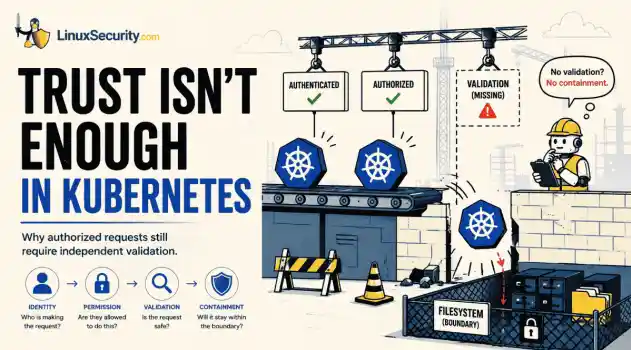
 Two newly fixed storage bugs in Kubernetes showed more than just a problem with path traversal. They found a common security flaw in the cloud: powerful parts often think that requests accepted by a higher system are safe to run. This is a simple lesson for the platform and security teams: RBAC can accept a request without showing that its parameters will stay within a certain filesystem boundary. This is clear from a new study from SentinelLabs into flaws in the Kubernetes CSI drivers for NFS...
 Jul 24, 2026
 security advisory update
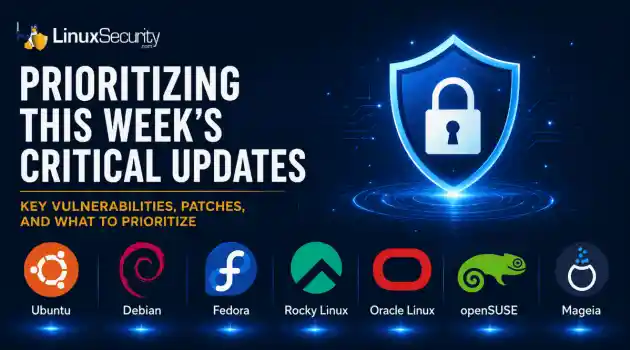
 A large volume of Linux security updates and advisories this week across major distributions once again, but it wasn't just the volume that was the story. Where maintainers and security teams focused their attention was evident in the concentration of fixes targeting Linux kernel updates, identity services, DNS infrastructure, and internet-facing software. . Instead of looking at each advisory in isolation, administrators gain more value from the general trends they reveal about Linux security...
Jul 23, 2026
 identity management security tactics
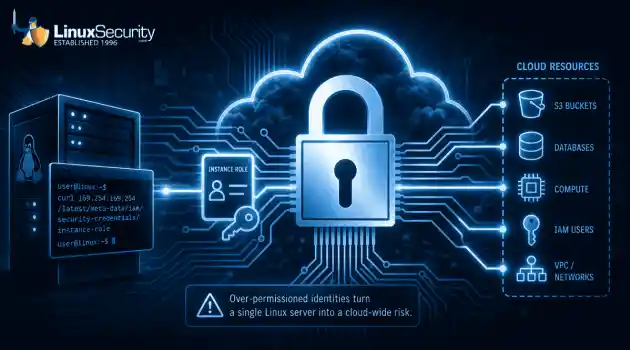
 For years, we secured our Linux infrastructure by building walls: VPCs, security groups, and hardened SSH configurations. We treated the cloud like a virtual data center, assuming that if we kept the "bad guys" out of the network, our workloads were safe. . That model is no longer sufficient. Today, one of the most common paths from an initial compromise to a major cloud breach is the identity assigned to your Linux workload. When an attacker gains code execution on a Linux instance—through a...
Jul 17, 2026
 security practices patch management
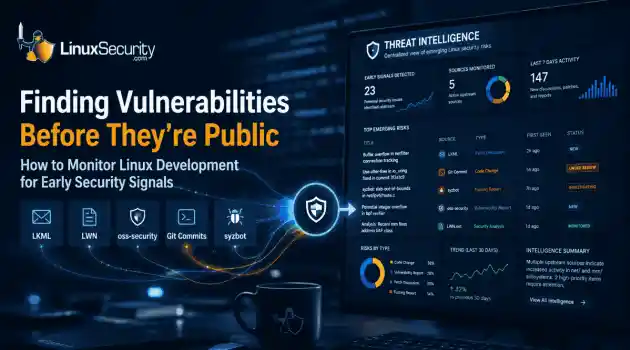
 Most of us don't hear about a kernel vulnerability until a CVE lands in our inbox or the vulnerability scanner starts complaining. By then, the patch isn't new anymore. Kernel developers may have been passing it around for review, arguing over the implementation, or revising it for days before anyone outside that community noticed it. None of those discussions are secret. They're sitting in mailing list archives, Git commits, and patch reviews where they've been the whole time. The strange...
Jul 14, 2026
 Linux security cyber attacks
 Every Linux server in your fleet produces thousands of events every minute. From journald logs and auditd records to kernel-level eBPF hooks, your systems are constantly talking. Most of that noise is just the mundane churn of system services, CI/CD runners, or routine administrative automation. But among that noise, an attacker might be establishing a foothold, moving laterally, or setting up persistence. The challenge for any security team is: how do you separate the routine from the...
Jul 13, 2026
 Refine features
X Clear Filters
Get the latest News and Insights
Get the latest Linux and open source security news straight to your inbox.
Community Poll
Should Linux servers automatically install security updates?
Loading...
Explore Latest Linux Security features
We found -2 articles for you...
102
 network securitycybersecurityrisk mitigation
Strategies to Enhance Linux Compliance and Security Resilience
Linux has various robust cybersecurity features, making it a popular choice among enterprises. Businesses can carry out critical operations with the peace of mind that they have the support of comprehensive, multi-layered cloud security frameworks to keep all data safe. Effective compliance management, all-encompassing data and network security measures, risk mitigation, and security patching help Linux Security harden your platform, keep away threats, and maintain integrity. . Linux can tighten security settings, reduce attack surfaces, and implement Linux patching best practices to protect your system from cybersecurity vulnerabilities and network security threats. Organizations must integrate the most effective strategies to combat issues the server might encounter. This article will discuss the basics of Linux Security, how to enhance compliance and security, how to evade threats, and a variety of solutions you can incorporate immediately. What is Linux Security Hardening? Bolster your Linux systems with the correct data and network security protocols. Hardening your server is the first step to having proper defense-in-depth protection. Here are the various suggestions to consider when strengthening your platform: Keep your system up-to-date , so you have the latest security patching solutions in place to keep your organization safe. Your Linux kernel, system libraries, and software packages require these updates to ensure you can discover and address data and network security issues immediately. Mitigate vulnerabilities to remediate threats with proper configurations and prevent cybersecurity vulnerabilities from weakening your server. Minimize open ports by removing unnecessary ones and monitoring the ones you keep to reduce your risk of exploits in cybersecurity. Enable Two-Factor or Multi-Factor authentication so that you have secure access to Linux systems, neutralizing threats that come with compromised passwords. Strengthen password policies toavoid brute-force attacks by requiring upper and lowercase letters, numbers, and special characters. Update the BIOS to ensure your server remains compatible with the latest hardware, resolve potential bugs, and enhance system performance. The cybersecurity trends the BIOS helps you patch can also improve your security posture. Uninstall end-of-life software to reduce your attack surface. Any unnecessary software is another way for cybercriminals to enter your system and steal your data. Employ regular cloud security auditing to see if your system is secure and complies with industry mandates, offering the opportunity to discover and suspend anomalies in your network quickly and efficiently. How Can I Achieve Compliance on My Server? Organizations in Linux environments struggle to maintain compliance with industry-specific regulations and standards. However, businesses must adhere to these policies to avoid legal ramifications and minimize clo ud security breaches that could cause financial loss, reputational damage, and significant downtime. Companies must review and comply with the Center for Internet Security's (CIS) industry-standard security benchmarks to secure systems and combat network security threats. Here are a few ways to achieve compliance on your Linux Security server: Conduct a comprehensive assessment of your Linux cloud security frameworks to identify security gaps and determine how compliant your server is with CIS benchmarks. Implement CIS-recommended security configurations , including user setting adjustments, system configurations, and network parameters. Enforce stringent access control by configuring user accounts, permissions, and privileges to coincide with CIS benchmarks, preventing authorized access and cloud security breaches. Secure the network infrastructure through proper firewall rules and configuration, encryption protocol implementation, and network traffic monitoring to protect your environment from data and network securitythreats. Why Must We Enhance Linux Security? Cybercriminals, with attacks like WannaCry ransomware (2017) and OpenSSL Heartbleed cybersecurity vulnerabilities (2014), require that businesses upgrade their Linux Security patching and compliance to reduce the chances of facing network security issues. The immediate operational disruptions, long-term reputational risks, and financial setbacks from these compromised accounts can affect organizations, stakeholders, clients, and employees. Ransomware gangs have increasingly targeted Linux security systems after developing effective Linux-specific malware to harm servers. SprySOCKs, one such malware, conducts espionage attacks that China-linked threat actors utilize to exfiltrate documents and email credentials from government bodies. As these data and network security risks grow, Linux Security systems must enhance their protection to prevent these attacks from causing lifetime impacts on a business. How Can You Evade the Rising Threats Targeting Linux? Organizations must establish a robust and comprehensive data and network security solution with multi-layered defense mechanisms that can effectively shield critical assets and data from malicious actors and attacks in network security. Elevating your security posture is crucial to company success, though it can be challenging without the right tools. Unfortunately, most solutions pay attention to a specific aspect of exploits in cybersecurity rather than offering comprehensive, holistic approaches to management. These limited functions include vulnerability scanning, single-layered threat detection, and simple compliance checks. To safeguard your server, you need more than just one aspect of a solution. Let’s clarify a few shortcomings with network security toolkits: Traditional vulnerability scanners detect and report issues but do not always have the advanced, automated remediation and monitoring you need. Basic firewalls only carry standard protection features and no advancedfunctionalities that combat sophisticated threats effectively. Conventional compliance tools offer minimal regulatory checks that do not provide comprehensive insights into cyber security gaps and risks. The Ultimate Security Solution Checklist Here is a varied list of network security toolkits and the features they must have to boost your server and keep your data safe: Vulnerability scanner Real-time vulnerability and Zero-Day attack detection Vulnerability assessments Scheduled scans Patch deployment Automated patch deployment Zero-day mitigation Multi-platform security patching Patch testing and approval Security configuration management Firewall auditing Password policies Account lockout and login security User account management Compliance management Industry-specific compliance reports Group policies Mapping and auditing of systems Flexible deployments Audit ports and high-risk software Elimination of outdated software Remote desktop sharing software and peer-to-peer software uninstallation Active port monitoring Identification of the types of ports Reports and dashboards Security reports on vulnerabilities, patches, and more Interactive dashboards with comprehensive insights Other important aspects Failover server to prevent downtime Secure gateway server for enhanced protection You must assess how comprehensive the features and functionalities you utilize so that you have the security patching and compliance management you need. Then, organizations can prepare themselves for any future data and network security risks. Final Thoughts on Synergizing Linux Hardening, Compliance, and Risk Mitigation Enhance Linux Security by integrating robust principles like hardening, compliance, and risk management. These principles can foster a resilient cloud security framework that protects all vital assets of your data. Combining data and network security can improvesecurity posture by helping you identify and neutralize potential threats before it is too late. ManageEngine Vulnerability Manager Plus is an integrated threat and vulnerability management solution that helps craft a bulletproof defense for your organization. Its advanced features and capabilities streamline the vulnerability management process from one console. Vulnerability Manager Plus is a cornerstone for organizations fortifying their Linux infrastructure. . Businesses face ongoing challenges in meeting regulatory requirements while simultaneously addressing risks that could endanger their operations.. Linux Resilience, Cybersecurity Strategies, Security Hardening, Compliance Management. . Brittany Day
 Oct 31, 2023
•
Oct 31, 2023
•
102
 intrusion detectionsystem hardeningsecurity hardening
Jay Beale Discusses Bastille Project: Effective Linux Hardening
Jay Beale talks about his efforts as lead developer of one of the hottest projects in the Internet security space today.. R ecently I got an opportunity to speak with Jay Beale, the Lead Developer of the Bastille Project. Jay is the author of several articles on Unix/Linux security, along with the upcoming book "Securing Linux the Bastille Way," to be published by Addison Wesley. At his day job, Jay is a security admin working on Solaris and Linux boxes. You can learn more about his articles, talks and favorite security links via . LinuxSecurity.com: Can you briefly describe the bastille-linux project? What is the goal/objective of bastille? Jay Beale: Bastille Linux is a project to harden, or "lock-down," Linux systems. It asks the user a number of questions, which it uses to provide the most comprehensive security, without removing needed functionality. We're trying to make a more secure environment for every class of user, without restricting them too much. We've been very successful so far - Bastille can stop almost every single root grab vulnerability that I know of against Red Hat 6.x. In the case of the well-known BIND remote root vulnerability, we had secured against that one before it was even discovered! LinuxSecurity.com: How was it started? Jay Beale: Bastille started about almost two years ago, when Jon Lasser began making UMBC Linux, a secure distribution that he could give out to students and faculty, without worrying that their new boxes would be quickly "rooted." While at a SANS conference, he met a number of people who were doing the same thing. Through a beer-enabled Birds of a Feather (BoF) session, they decided to stop duplicating effort, banding together to create the new Bastille Linux distribution. Fast forward a few months. As many would-be distribution makers quickly learn, this group found out that making a new distribution was very hard work, before you even tried to secure it. They shifted strategy, and instead decided tomodify the existing Red Hat distribution. This was faster and could be far more comprehensive. I joined up then, bringing a rather long Perl script with me that would turn a virgin Red Hat 6.0 box into more secure one. Jon and I became partners, Lead Coordinator and Lead Developer, and I posted a "modules wanted" sign in the form of a Spec Document for the script. At that point, we were joined by the people that make up our core team, including Pete Watkins, who brought his strong and comprehensive IPCHAINS firewall, Sweth Chandramouli, who's helping me with architecture design, and Mike Rash, who's working on Intrusion Detection. We've got a great team on board, really, with a number of people dedicated to testing Bastille and generating ideas. LinuxSecurity.com: Can you describe your background? How long have you been involved with security and Linux? Jay Beale: Two years ago, I was a mathematician with an interest in computing and physics. I became interested in computer security when I took my first sysadmin job about two years ago. Security is one of the few areas of computing that is rather complex - yet, there's an underlying structure running through the entire field. It really fascinated me from the beginning, so I read everything I could find and started tinkering at home and at work. Later on, I began working as a security admin., doing everything from writing host-based Intrusion Detection, to handling hacker break-ins, to writing hardening scripts. Bastille's main module development started as an extension of ideas I implemented for Solaris, actually. Now, I'm writing a book on applied Linux Security for Addison Wesley and writing articles for various sites, in addition to keeping up with Bastille, which is no small task. LinuxSecurity.com: Do you ever expect vendors to ship Linux in a configuration that obviates the need for such a project? Jay Beale: This really is possible, though it's a long shot... The problem is that users need theirsystems to "work" and, more and more, they don't have the time to tinker with them a great deal first. So, most vendors ship with ftp on, Apache with server-side-includes/cgi enabled, and no password on single user mode. You see, to secure a system, you'll have to remove some functionality. This is due to a basic premise of computer security: to fully secure a system, you really have to grind it into dust, scatter the pieces to the wind, and hope that Entropy does it's part. Since you can't do this, you make tradeoffs. I think things like Bastille will always be around for three reasons. First, vendors have incentives to make systems easy to use - Bastille works against this, but educates the admin/user to compensate. Second, we're going to keep researching, creating and implementing ideas before the vendors. Third, much of what we do isn't necessarily the vendor's "job" - implementing an intrusion detection system is usually a third party function. Bastille does a great deal to systems and we're about to start doing even more - we're growing beyond a simple hardening system into more facets of system security. LinuxSecurity.com: What are the most difficult challenges you've faced while developing it? Jay Beale: The toughest problems are really in the architecture, rather than features. Bastille's original goal to make a new distribution, press our own CD's and such. Then, we were still making a new distro, by installing Red Hat and modifying that directly after install. Now, we can modify a year-old system, but that took an architecture overhaul and an intense code audit to implement. This wasn't so much an added feature, as the problem was getting redefined after we implemented our first solution! Actually, another problem that we're considering over time is that as Bastille does more and more, it has to ask a lot more questions! Right now, if you read all the explanations, it takes about an hour to run through the interactive portion. It's nowhere near as bad asa Linux kernel, but it annoys some users who just want a quick fix. Rather than abandoning these users, we're making "One Shot" configurations, where they can choose a sample configuration that matches their own and deploy that. While they miss a crucial part of securing the system (Secure the Admin!) they still get a safer system... LinuxSecurity.com: What type of user would be most interested in running bastille? Jay Beale: I think Bastille is accessible to every class of user, from the newbie to experienced admins. Every class of user tends to find it more comprehensive than anything they do by hand. Newbies find it useful because it explains everything it wants to do and asks questions, so as not to break anything. Experienced sysadmins find it useful because it automates what would normally take many man-hours, especially when you scale it to hundreds of systems. Further, many experienced sysadmins haven't ever had the time to learn about or implement security on their systems. They find themselves trying to make time, in the middle of the night, right after someone "hacks" their systems. LinuxSecurity.com: What do you think of the state of security today on Linux? Jay Beale: I think Linux security is getting better, but we're in a tough arena. Given the accessibility of Linux, most crackers have it on hand and are coding exploits for it first. Using Open source makes a program that much easier to audit for holes, so people are discovering some of the vulnerabilities very quickly and not all of them are White Hats. It's also a difficult situation, in that development is moving so much faster than audits. Honestly, we've also got an amazing advantage: we've got the numbers, baby. The "Ping of Death" vulnerability was corrected in, if reports are to be believed, 1 hour for Linux. No vendor came close to that! While Linux may have had many more security vulnerabilities than Solaris in the past three years, these holes get patched a whole lot faster. KurtSeifried's report on this noted that while Sun has, on average, only six announced vulnerabilities per year, it takes then around 90 days to fix them - this doesn't even account for all the programs, like WU-ftpd or BIND 8, that you generally add to a Sun box. The thing to remember, though, is that every operating system will have holes. It is human nature to make mistakes, no matter how many geniuses work on a system. Further, there are many creative, bright people in the cracking community - they will win many battles here. LinuxSecurity.com: What features does it offer the average Linux user? Jay Beale: Bastille is very accessible to the average user. It doesn't just start securing, but instead asks permission for every step it takes. Further, it educates. This key feature came out of a design problem I faced about a quarter way through writing the first script. The average Linux user tends to install their distro with everything installed and everything turned on, because they're not sure what it all does and they don't want to miss something. Bastille was asking the user questions, like "can we disable routing daemons?" when we hadn't explained what a routing daemon was or why they shouldn't need one. Pete and I ended up writing explanations for each question, so anyone could make educated choices, whether they were a newbie or an experienced sysadmin. Bastille also has lots of other nice features: it can be re-run to keep a system secure after patches, everything it does can be undone, and it's fairly comprehensive. It tightens user account security, configures a well-tuned firewall, configures Apache, makes sane boot security choices, configures some smart PAM options, chroot's your DNS server, restricts access within your FTP server, sets better file permissions and audits your Set-UID root programs. It also configures stronger logging, locks down Sendmail a bit, and tries to turn off services and daemons that you don't need. This is really just the start,though! We're expanding this right now with new modules, including a basic network IDS system and a number of other modules under development. LinuxSecurity.com: What new features are you working on? Jay Beale: Expect some really incredible news on this in a few months. We're kicking around some great architecture ideas with the help of Yoann Vandoorselaere, from Mandrake. Sweth and others are helping us move rapidly to support far more than just Red Hat and Mandrake. We're eyeing FreeBSD, Solaris, Irix, Slackware, Debian and everything we can possibly generalize this to. LinuxSecurity.com: What do you think are the biggest security concerns with using Linux today? Jay Beale: Honestly, there aren't too many other security concerns that are specific to Linux. All of it generalizes to Unix and most of it applies to operating systems as a whole. I think too many programs run with superuser privilege. We can kludge this, the way we do with programs that drop privilege, but we can also stop making this an all-or-nothing, user-or-root game. We should think beyond the basic security mechanisms present in Unix/Linux. Let's start implementing our programs using capabilities and dropping the number of programs on the system which use root. Actually, I think computer security as a whole is a very tough problem. We're trying to make computers easier and easier to use, often at the cost of security. Cracker activity has grown immensely, as many more would-be script kiddies get Internet access. When I got my first shell account, the Internet was well known mostly among the University crowd - now, everyone's got access to the Internet and it's becoming a rougher neighborhood. I'm not saying world-wide Internet access is bad - it's an amazing resource, but one that some people are choosing to abuse. LinuxSecurity.com: Security is always about tradeoffs. What tradeoffs do you face while developing bastille? Certainly it would be easiest to just remove rlogin, telnet,and other inherently-insecure programs, but this isn't always possible. Jay Beale: Well, I think we've got a nice solution here. We're letting the user decide what tradeoffs to make and we're providing the user with the background to make that decision. Bastille is highly granular, taking many actions and asking the user about each one. In the end, the user decides whether or not to kill telnet, but we try to help them make an educated decision, by presenting facts like these: telnet is cleartext, so that someone eavesdropping can steal your account from under you - using programs like hunt, they can even steal your entire session! Educating the end-user and letting them make all the decisions was a new approach, but we felt it was the only one that worked for a community as diverse in background as the Linux community. LinuxSecurity.com: Thanks for taking the time with us today, and we wish you and your team members the greatest of success with this project! . Explore perspectives from Jay Beale regarding the Bastille Project and its significance in fortifying Linux systems against various security vulnerabilities.. Linux Hardening, Bastille Project, System Security, Jay Beale, Intrusion Detection. . Brittany Day
Jul 14, 2000
•

102
intrusion detectionkernel securitysystem protectionSteps to Create a Robust and Secure Linux Environment Using LIDS
LIDS (Linux Intrusion Detection System) is a Linux kernel patch to enhance the Linux kernel. In this article, we will talk about LIDS, including what it can do and how to use it to build a secure linux system.. Xie Huagang (
May 16, 2000
•

Get the latest News and Insights
Get the latest Linux and open source security news straight to your inbox.
Community Poll
Should Linux servers automatically install security updates?
Search Topics
Powered By

Linux Security - Your source for Top Linux News, Advisories, HOWTOs and Feature Releases
QUICK LINKS
subscribe to newsletters!
Like staying secure? So do we.
Sign up for updates, tips, and alerts!