Explore top 10 tips to secure your open-source projects now. Read More
×


Stay Ahead With Linux Security Features
 security practices patch management
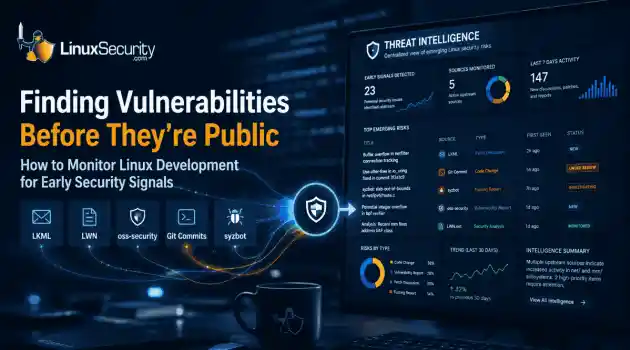
 Most of us don't hear about a kernel vulnerability until a CVE lands in our inbox or the vulnerability scanner starts complaining. By then, the patch isn't new anymore. Kernel developers may have been passing it around for review, arguing over the implementation, or revising it for days before anyone outside that community noticed it. None of those discussions are secret. They're sitting in mailing list archives, Git commits, and patch reviews where they've been the whole time. The strange...
 Jul 14, 2026
 Linux security cyber attacks
 Every Linux server in your fleet produces thousands of events every minute. From journald logs and auditd records to kernel-level eBPF hooks, your systems are constantly talking. Most of that noise is just the mundane churn of system services, CI/CD runners, or routine administrative automation. But among that noise, an attacker might be establishing a foothold, moving laterally, or setting up persistence. The challenge for any security team is: how do you separate the routine from the...
Jul 13, 2026
 open-source infrastructure risk
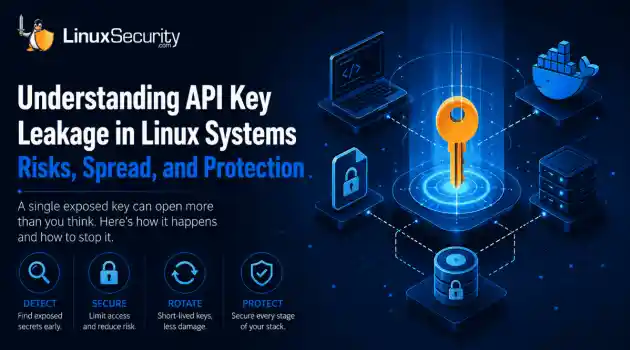
 Security scanners flag exposed API keys in public repositories every day. The initial response is usually predictable: delete the commit, revoke the credential, and move on. That’s a mistake. . In a real Linux environment, an API key never stays in one place. By the time it hits a public repo, it’s already everywhere. It’s in the CI/CD pipeline. It’s in your container registry. It’s in the build logs. It’s in the backups. Git makes this worse because the history never dies. Deleting a file in...
Jul 11, 2026
 open-source rootkit
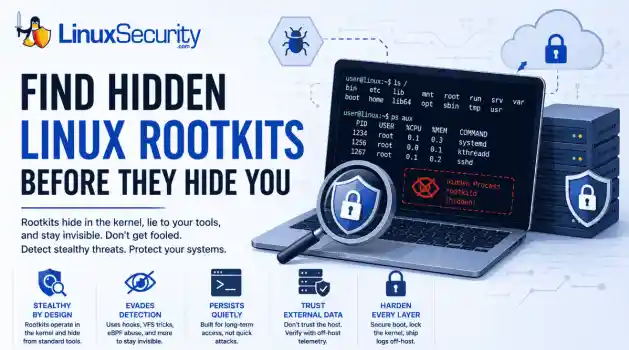
 Most of us think of Linux rootkits as ancient history—the stuff of 90s hacking forums and clunky malware that would crash your system if you looked at it the wrong way. But if you think they’ve gone away, you’re mistaken. They’ve just gotten smarter. . Modern attackers aren't using the noisy tools of the past. Today’s threats are surgical. Many of today’s most advanced Linux rootkits operate at the kernel level or abuse legitimate system features to blend in with normal traffic. They’re...
Jul 09, 2026
 security advisory hardening
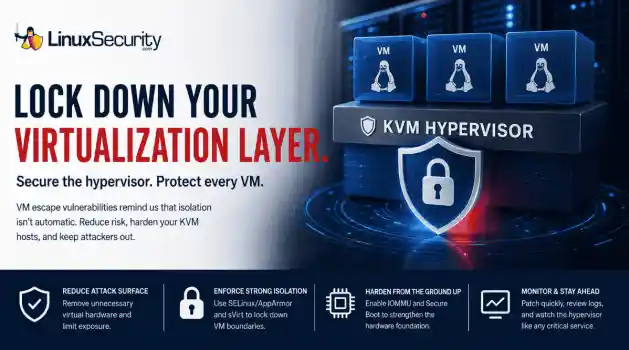
 A 16-year-old KVM vulnerability recently hit the news, and honestly? It’s a healthy dose of reality. We like to think of our hypervisors as these impenetrable walls, but this is a reminder that VM isolation isn't a permanent guarantee. Even in the most mature Linux virtualization stacks, you’ve got code paths that haven't been touched in over a decade, just waiting for the right researcher to pull on the wrong thread. For those of us running KVM hosts, this isn't just about grabbing the latest...
Jul 07, 2026
 Refine features
X Clear Filters
Get the latest News and Insights
Get the latest Linux and open source security news straight to your inbox.
Community Poll
Is continuous patching actually viable?
Loading...
Explore Latest Linux Security features
We found 10 articles for you...
102
 security measuresdata privacybiometric security
Navigating Data Privacy Laws and AI Risks in 2025 for Linux Admins
In 2025, we Linux security admins face new challenges brought on by growing data privacy concerns that demand increased attention to detail and strict compliance . The rise of biometric security—a powerful tool for authentication—also brings significant risks if not managed correctly. Look no further than the high-profile troubles of Bunnings Group and White Castle , where failures in obtaining explicit user consent for biometric data collection led to legal and financial repercussions. Ensuring transparent, consent-based data collection practices is key to avoiding similar pitfalls. . Further, the lack of unified federal data privacy legislation means admins must navigate a patchwork of state-specific laws from places like Delaware, Iowa, and New Jersey. Staying updated and compliant with these diverse regulations is crucial. Additionally, with AI development continuing unabated following the rollback of federal restrictions, it's imperative to adopt robust data privacy measures to protect sensitive information processed by AI models. Proactive security measures and vigilant compliance practices are increasingly essential in this fragmented regulatory environment, and data privacy must be a priority for all Linux security professionals. Let's examine common data privacy concerns and practical measures for improving data privacy in 2025 and beyond. The Rise of Biometric Security: Boon and Bane Biometric security has become a critical component of modern authentication methods. Identifying individuals based on unique physical characteristics—such as fingerprints, facial features, or even iris patterns—offers a higher security level than traditional passwords. As convenient and secure as biometrics may seem, Linux security admins must tread carefully. The legal troubles faced by companies like Bunnings Group and White Castle underscore the importance of obtaining explicit consent before collecting and storing biometric data. In the case of Bunnings Group in Australia and WhiteCastle in the U.S., the lack of clear, explicit consent from users resulted in significant backlash and legal consequences. For security admins, the lesson is clear: always prioritize transparency regarding biometric data. This means implementing robust mechanisms to inform users about what data is being collected, how it will be used, and obtaining explicit consent. Even the most secure biometric system can become a liability without these measures. This could involve integrating consent management platforms into your existing systems, ensuring that every user interaction involving biometric data is logged and retrievable for auditing purposes . Additionally, staying updated with regional and international regulations concerning biometric data will help admins maintain compliance and avoid the pitfalls experienced by others. Navigating State-Level Data Privacy Regulations As federal data privacy legislation remains elusive, state-level regulations have emerged to fill the void. Unfortunately, this fragmented regulatory landscape creates a unique challenge for Linux security admins, who now must ensure compliance with varying state laws. Delaware, Iowa, and New Jersey have established data privacy regulations, each with nuances and requirements. Because there is no single federal framework, security administrators must remain constantly alert and adaptive. Understanding each state's legal requirements is paramount to designing compliant systems. For instance, Delaware may have different privacy laws from Iowa or New Jersey, necessitating tailored data collection, storage, and user consent approaches. To handle this complexity, it is crucial to implement regular training and updates for your team on state regulations. Compliance management software is also invaluable for automating and monitoring legal requirements to keep systems compliant. Fostering privacy awareness among your employees can go far in mitigating risks associated with noncompliance. By encouraging engaging in best practices andtaking a proactive stance, Linux security admins can successfully navigate various state regulations. The Impact of AI on Data Privacy Artificial Intelligence has brought profound change across various industries, particularly cybersecurity. However, with potential executive orders concerning AI being repealed and development continuing apace without as many restrictions as possible, data privacy is becoming more complicated than ever, requiring even greater diligence in protecting one's information. AI models thrive off large amounts of data, including sensitive material. Linux security admins must take precautionary steps to safeguard this sensitive information against breaches or misuse. Due to a lack of federal oversight, individual organizations bear greater responsibility in ensuring their AI systems meet regulations. Start by conducting thorough data impact assessments to understand the implications of incorporating AI systems with existing infrastructure, identify any privacy risks, and devise strategies to counter them. This may include anonymizing data before feeding it into AI models or installing robust access controls that restrict usage. Regular audits and evaluations will ensure ongoing compliance with data privacy standards. Maintaining transparency with users about how AI systems use their data is also key in building trust and alleviating concerns. Communicate the purpose and role of data collection and any safeguards to protect user information. Linux security administrators can successfully navigate AI development by prioritizing transparency and proactive privacy measures while guaranteeing robust data protection. Proactive Security Measures for a Fragmented Regulatory Environment Given the growing incidence of lawsuits alleging privacy violations, proactive security measures are becoming more crucial to maintaining compliance. With numerous fragmented regulatory landscapes and an increased focus on data privacy concerns, waiting until issues arise isn't an option.Instead, preventive strategies should be implemented to protect user data and maintain compliance. Regular vulnerability and penetration testing must be conducted to identify and address security gaps. Implement robust encryption protocols both for data at rest and in transit to protect it against unauthorized access and check that access controls and authentication mechanisms meet industry best practices. Establishing a comprehensive data privacy policy is equally essential to protecting user information. A policy such as this should detail how data is collected, stored, and shared, as well as safeguards in place to protect it. Regular reviews should take place to make necessary updates as regulations change or new threats emerge. Fostering privacy awareness within your organization is also key. Hold regular training sessions to educate employees about the significance of data privacy and their roles in upholding it, encourage best practices such as securing devices with strong passwords, and implement security-first measures whenever possible. Embedding data protection practices into daily operations creates an atmosphere where data protection becomes part of daily operations. Staying Informed and Adaptive With ever-evolving data privacy concerns, remaining informed and adaptive is critical for Linux security admins. Regularly tracking updates to and developments of data privacy laws at both state and federal levels will help ensure ongoing compliance. Fostering a culture of continuous learning within your team can strengthen your organization's adaptability. Encouraging employees to pursue certifications or participate in training programs related to data privacy and security can ensure your organization has enough expertise and skillsets available to handle evolving regulations and concerns. Establishing strong collaboration and communication channels between legal and compliance teams can significantly strengthen your ability to stay compliant. Engage them regularly inreviewing regulatory changes, potential risks, and mitigation strategies. Working together, you can develop a robust framework that protects user data while navigating the complex regulatory environment. Our Final Thoughts on Ensuring Data Privacy in 2025 Linux security admins facing data privacy challenges in 2025 must adopt proactive measures, transparency, and adaptability to navigate them effectively. Biometric security, fragmented state regulations, and Artificial Intelligence all present unique obstacles that require robust data protection strategies. Admins can navigate these difficulties by prioritizing user consent, keeping informed about state laws about AI systems, and cultivating an awareness culture surrounding privacy issues. Maintaining trust and security with robust data privacy practices is essential to your organization's safety and success in 2025 and beyond. . Compliance with various state data privacy regulations and biometric security is crucial for Linux admins facing 2025 challenges.. linux, security, admins, challenges, brought, growing data, privacy c. . Brittany Day
 Jan 29, 2025
•
Jan 29, 2025
•
102
security measuresdata complianceAWSTop Strategies for Ensuring Security in Linux Environments on AWS
Organizations prefer Linux because it's more stable and secure than nearly all operating systems. This OS is an excellent solution for managing databases, hosting websites, and game servers. . Linux servers offer a reliable environment for executing various Amazon Web Services (AWS) applications. Linux and AWS are built with strong security walls, but users need to strengthen these features. They should observe cloud security best practices and avoid common security setbacks. Understanding Linux server security Linux servers contain a strong security architecture built around the entire system. Linux provides excellent access controls, firewall protection, and the Kernel Lockdown mechanism . As an open-source operating system, it has a broad community of expert, decentralized programmers who contribute to its continuing improvement. Passwords and SSH keys are strong tools enterprises employ to safeguard their Linux servers, ensuring proper authentication and access. While these strategies are a good starting point, they are far from sufficient to achieve an optimal AWS security configuration for a Linux system. While this is a good security measure, more needs to be done to optimize AWS security for this system. As an open-source enthusiast, you know the importance of creating different admin accounts on your laptop to ensure data safety and privacy. The same principle applies to many apps and websites, including those focused on privacy and security. For example, in open-source software, numerous tools and practices are designed to protect your personal and sensitive information. It is advisable to remove Amazon purchases history as a proactive step toward personal security. Streaming services often employ user-specific profiles to tailor content recommendations while maintaining privacy for each admin. Unfortunately, some popular platforms may not prioritize user privacy to the same extent. For example, not all platforms allow users to create separate accounts or profiles tokeep their personal data and activity private. When it comes to managing your data, there are open-source solutions that allow you to hide or delete sensitive information effectively. By utilizing these tools, you can ensure that your usage history remains confidential and secure. Detailed guides from trustworthy sources can provide step-by-step instructions on managing and protecting your data, allowing you to confidently share your devices and platforms with family members without compromising your privacy. Cloud security best practices for Linux in AWS Play Your Role The Amazon Web Services environment is secure and protects users and their data in many ways. Its security architecture incorporates powerful encryption, keys, workload and account access control, threat detection, and other security mechanisms. AWS expects users to play their part and help keep the system safe from all forms of attacks. They expect users to secure their Linux environments, including apps and workloads. The security of the entire system is strengthened when everyone plays their part. Observe Data Protection Best Practices Use the data protection solutions available within the AWS system combined with solutions in the Linux environment. These two will help build a strong wall around your system and AWS. Amazon Web Security provides several solutions, such as KMS (Key Management Service) and ACM (AWS Certificate Manager) . These help users create and manage data security encryption keys and renewal of SSL or TLS certificates. Observe protection practices, ensuring you protect data in transit and at rest. Establish policies for backups and recovery in case a breach happens. Combine these with Linux environment data security features such as Firewalls, backups, and Unix security. Be Compliant Compliance needs differ depending on the kind of data you are handling on the AWS system. You could be handling customer, health, credit card, and other types of data. Compliance laws require AWS and other cloudservices users to understand the HIPAA, SOC 2, PCI DSS, GDPR, and ISO compliance laws. As a general rule, handle user data transparently and protect it from all forms of breaches. You can harness trust with your customers and the AWS system managers by ensuring compliance. This will free you from many legal issues, penalties, and loss of trust in online communities. Protect Network Security Network security best practices require users to protect their workload by ensuring the safety of their apps and device infrastructure. Network configurations must be carefully monitored to ensure no security gaps are left that can be used as attack launch platforms. These measures protect the integrity of your cloud infrastructure by keeping it available and confidential. The Linux environment requires users to customize their hardware, applications, and data. This ensures they observe the three important network security measures: physical, technical, and administrative. Install AWS Security for Linux-compliant Tools Securing AWS resources on Linux systems requires carefully protecting all points of connection in order to prevent potential breaches and vulnerabilities that may emerge as an open-source administrator. You are likely aware of the vulnerabilities associated with improperly secured connections; otherwise, they could expose your AWS environment to attacks like DDoS, XSS injections, or SQL injections, which could pose significant threats against it. Thankfully, several open-source tools can help protect the Linux AWS environment: OSSEC : An intrusion detection system that offers several capabilities, such as log analysis, file integrity checking, and real-time alerting, keeping an eye on suspicious activity within your system and responding quickly to threats that arise. By employing this tool, you can monitor suspicious activity across your entire network in real-time, and immediate action can be taken against potential threats. Fail2Ban : An invaluable security tool that can quicklyscan log files and block IP addresses that exhibit malicious behavior, such as repeated failed login attempts. This powerful solution can greatly increase security by blocking brute force attacks quickly and thwarting attempts at unauthorized access attempts. Wazuh : An open-source security monitoring platform. Specifically, it provides threat detection, integrity monitoring, and incident response - providing comprehensive protection from threats. By adding Wazuh to your AWS setup, you can increase its security through continuous monitoring with real-time alerts. OpenSCAP : Provides a suite of tools for enforcing security policies, performing vulnerability scans, checking compliance configuration , and detecting security issues, making this tool indispensable when maintaining an AWS environment in terms of compliance and security. ModSecurity : An effective web application firewall (WAF) that filters and monitors HTTP traffic. It blocks known threats while protecting applications against web exploits and vulnerabilities. Although not open-source, AWS Identity and Access Management (IAM) can be integrated with existing tools to further enhance security. IAM allows for precise control over user permissions and multi-factor authentication, reducing the risk of unapproved access. Docker Bench for Security : Finally, Docker Bench for Security helps to ensure that Docker containers are deployed securely within AWS environments. Running regular checks detects configuration errors and potential vulnerabilities to provide another layer of protection for containerized applications. Automate and Monitor Your System Implement protocols and guidelines for consistently monitoring your system to ensure it is safe from attacks. This process should include monitoring logging processes to ensure users follow the rules. It ensures no unauthorized person logs into the system to perform malicious activities. Automating your security monitoring system makes these processes easier. Once the systemdetects anomalies in configuration, logging, malware, or breaches, implement a response procedure. Understand Common Pitfalls and Avoid Them Most users fail to properly configure their AWS network, applications, accounts, and databases, which leaves gaps in the various AWS resources connected to their Linux environment. Another mistake people make is implementing weak access protocols, which exposes the system to easy penetration and data theft. Avoid storing or transmitting data without encrypting it, as this makes it easier for anyone to access it. Failure to comply with laws and guidelines could compromise your AWS space. Always read and understand the guidelines before using your AWS resources. Your account could experience identity theft and banking information compromise due to failure to secure your API and gateways. Observe all security demands, and your AWS and Linux environment will be secure from breaches. Final Strategies for Securing Linux in AWS Implementing AWS security for Linux requires a multifaceted approach where users understand how security works in these environments and the protection measures available. Precise system configuration, continuous monitoring of data and network activities, and hardware security are some of the best practices for reducing vulnerabilities and responding quickly to potential problems. Frequent security audits and developing a security culture aid in the rapid identification and mitigation of vulnerabilities. A well-secured Linux system on AWS safeguards sensitive data while allowing critical applications to run reliably. Following the principles stated above will allow an organization's cloud infrastructure to remain resilient and secure despite rising security issues. . Explore key strategies to enhance Linux security on AWS environments, ensuring data protection and compliance.. organizations, prefer, linux, because, it', stable, secure, nearly, operating, systems. . MaK Ulac
Jan 03, 2025
•

102
 security measuresmalwarephishing
DISGOMOJI Spyware: Targeting Indian Government with Emoji Commands
DISGOMOJI malware represents an innovative development in cyber espionage tactics, particularly its refined approach to targeting government agencies in India. Originating from altering an open-source cybersecurity project previously known as discord-c2, its appearance reinforces an emerging trend of adapting and evolving existing tools into intricate cyberespionage campaigns.. DISGOMOJI's deployment is highly sophisticated. It employs Discord's widespread use to communicate command and control (C2) messages using emojis, effectively concealing malicious activities within seemingly innocent traffic and complicating efforts to detect and neutralize this threat. A recent analysis by cybersecurity firm Volexity reports that the DISGOMOJI malware appears to be targeting systems running the Linux distribution BOSS, which is widely utilized by Indian government entities. The attackers behind this initiative--identified by Pakistan-based threat actor UTA0137--is clearly intent on infiltrating and potentially breaching Indian government infrastructure. DISGOMOJI appears to gain entry through phishing attacks , an effective and common method for credential theft and malware delivery. What distinguishes DISGOMOJI is its persistent mechanism and use of emoji commands, like using a camera with the flash emoji to take screenshots or the Fox Emoji to zip all Firefox profiles on target devices. Such commands demonstrate its clever design and allow attackers to acquire sensitive data without leaving a trace on compromised systems. DISGOMOJI's open-source nature and adaptable design create a further risk; the malware can be adjusted and deployed against additional targets beyond India's government. Furthermore, its ability to bypass Discord's attempts at shutting down malicious servers by managing tokens to allow attackers to update client configuration easily demonstrates the difficulty of countering such an advanced threat. Additional Considerations The open-source nature of DISGOMOJI raises importantissues about the duality of publicly available cybersecurity tools and projects. While open-source projects provide great resources for research, education, and legitimate defensive purposes, they also serve as blueprints that could be modified maliciously. Linux administrators and cybersecurity professionals, particularly in industries vulnerable to being targeted by espionage-focused malware, should view DISGOMOJI as an illustration of cyberspace's ongoing arms race. This would emphasize the necessity for constant vigilance, education on emerging threat vectors, and implementation of multilayered security measures that detect and prevent such targeted threats. DISGOMOJI malware targeting Linux systems marks a striking change in cyber threats targeting these environments. While traditional malware relies on textual-based command and control (C2) mechanisms, DISGOMOJI's use of emoticons for command transmission through Discord is both novel and alarming - bypassing security systems designed to monitor more conventional indicators of compromise thereby creating new difficulties for detection and mitigation. How Does DISGOMOJI Compare with Other Linux Malware and Ransomware? To better assess this threat, it would be useful to compare DISGOMOJI against other significant malware threats like other significant Linux malware and ransomware such as DISGOMOJI that has appeared lately. When comparing them side-by-side, several aspects stand out: Method of Communication: Most Linux-targeting threats, like Ebury botnet, employ traditional botnet communication methods like IRC channels or HTTP-based C2 infrastructures for command and control (C2). But DISGOMOJI stands out by employing popular, legitimate services for C2, making its traffic harder to distinguish from benign communications. Targeting and Sophistication: Where Mirai uses brute-force attacks against IoT devices to create large botnets for DDoS purposes, DISGOMOJI appears more focused on espionage with targeted attacks against specificgovernment agencies - suggesting an even higher level of sophistication behind its operations that may include state actors. Stealth and Persistence: DISGOMOJI utilizes advanced stealth techniques, such as displaying a decoy PDF, to avoid detection while employing persistence mechanisms like cron jobs and XDG autostart entries, similar to those used by other sophisticated malware. This makes it more complex and more challenging for security analysts to detect and remove it, making it resistant to removal. How Concerned Should Linux and InfoSec Administrators Be? Linux and InfoSec administrators should view DISGOMOJI with great concern due to its unique C2 strategy, targeted nature, sophisticated deployment mechanisms, and sophisticated persistence mechanisms. Awareness and preparation can greatly reduce its threat; an understanding that Linux systems are susceptible to targeted attacks is paramount, so security posture adjustments must be made accordingly. mes Mitigation Strategies Administrators need to implement various mitigation strategies to protect themselves from threats such as DISGOMOJI: Enhance Monitoring and Detection : Employ advanced monitoring solutions capable of analyzing network traffic behavior and detecting anomalous patterns such as using legitimate services like Discord for potential C2 communications. Regular System and Patch Updates and Patching : Regular system and application updates help protect against vulnerabilities that could serve as entryways to infections, acting as initial infection vectors for hackers and cybercriminals. Phishing Awareness Training : Since DISGOMOJI utilizes phishing as the initial entryway into their network, training staff to identify and respond to any attempted phishing is an essential defense against infection. Segregation : By isolating critical networks and restricting access to essential services only, network segmentation helps contain any malware outbreaks should an infection arise. Application Whitelisting andRestricted Script Execution : Block any unapproved applications from running and restrict script execution capabilities to limit malware's ability to launch payload or establish persistence. Utilize Security Tools with Machine Learning Capabilities : For effective defense against new attack vectors, implement solutions that leverage machine learning for threat identification and blocking using behavioral analysis. This approach may be more successful in blocking threats with novel behaviors than traditional solutions. Improved Email Filtering : Email security measures must be strengthened with robust filtering rules to prevent phishing scams from succeeding. Discord Usage Policy : Organizations should implement policies to review and potentially restrict the use of Discord and similar platforms when necessary or monitor its usage on sensitive systems. Community Vigilance : As this open-source malware is spread widely through threat vectors, cybersecurity communities should remain vigilant in monitoring and sharing intelligence on variations of DISGOMOJI malware as a collective defense approach. While DISGOMOJI poses a substantial threat to Linux systems, increased awareness, advanced detection tools, and robust security practices can reduce its threat. . The ANIMALI malware employs groundbreaking methods to infiltrate IoT devices in corporations, using animal symbols to bypass security measures.. DISGOMOJI Malware, Linux Malware, Cyber Espionage Tools, Phishing Defense. . Dave Wreski
Jun 17, 2024
•
102
 security measuresdos attacktcp syn flood
TCP SYN Flood Attacks: Understanding Protocol Exploits In VoIP Networks
There are several general categories of DoS attacks . Some groups divide attacks into three classes: bandwidth attacks, protocol attacks, and logic attacks. Following are brief descriptions of some common types of DoS attacks. . Bandwidth Attacks Bandwidth attacks are relatively straightforward attempts to consume resources, such as network bandwidth or equipment throughput. High-data-volume attacks can consume all available bandwidth between an ISP and your site. The link fills up, and legitimate traffic slows down. Timeouts may occur, causing retransmission and generating even more traffic. An attacker can consume bandwidth by transmitting any traffic at all on your network connection. A basic flood attack might use UDP or ICMP packets to consume all available bandwidth simply. For that matter, an attack could consist of TCP or raw IP packets as long as the traffic is routed to your network. A simple bandwidth-consumption attack can exploit the throughput limits of servers or network equipment by focusing on high packet rates—sending large numbers of small packets. High-packet-rate attacks typically overwhelm network equipment before the traffic reaches the available bandwidth limit. Routers, servers, and firewalls all have constraints on input-output processing, interrupt processing, CPU, and memory resources. Network equipment that reads packet headers to route properly traffic becomes stressed handling the high packet rate (PPS), not the volume of the data (Mbps). In practice, denial of service is often accomplished by high packet rates, not by sheer traffic volume. Protocol Attacks The basic flood attack can be further refined to take advantage of the inherent design of common network protocols. These attacks do not directly exploit weaknesses in TCP/IP stacks or network applications but, instead, use the expected behavior of protocols such as TCP, UDP, and ICMP to the attacker's advantage. Examples of protocol attacks include the following: SYN flood is an asymmetric resourcestarvation attack in which the attacker floods the victim with TCP SYN packets, and the victim allocates resources to accept perceived incoming connections. As mentioned above, the proposed Host Identity Payload and Protocol (HIP) are designed to mitigate the effects of a SYN flood attack. Another technique, SYN Cookies, is implemented in some TCP/IP stacks. Smurf is an asymmetric reflector attack that targets a vulnerable network broadcast address with ICMP ECHO REQUEST packets and spoofs the source of the victim. Fraggle is a variant of Smurf that sends UDP packets to echo or charging ports on broadcast addresses and spoofs the source of the victim. Software Vulnerability Attacks Unlike flooding and protocol attacks, which seek to consume network or state resources, logic attacks exploit vulnerabilities in network software, such as a web server, or the underlying TCP/IP stack. Some vulnerabilities by crafting even a single malformed packet. Teardrop (bonk, boink) exploits TCP/IP IP stacks that do not properly handle overlapping IP fragments. Land crafts IP packets with the source address and port set to be the same as the destination address and port. Ping of death sends a single large ICMP ECHO REQUEST packet to the target. Naptha is a resource-starvation attack that exploits vulnerable TCP/IP stacks using crafted TCP packets. There are many variations on these common types of attacks and many varieties of attack tools to implement them. . Investigating TCP SYN Flood threats in VoIP systems and the diverse range of Denial-of-Service incidents affecting network infrastructure.. TCP SYN Flood, VoIP Security, Network Attacks, Bandwidth Attack, Protocol Exploits. . Benjamin D. Thomas
Jan 11, 2024
•
102
 security measuresuser experienceopen source framework
Understanding Web Apps and Progressive Web Apps for Better User Experience
Technology is developing and advancing tremendously. New inventions are delivered to the market every year and all of these improve the entire domain a lot. But because there are so many options and opportunities on the market, you might end up feeling more confused than at the beginning. . Which one is the right option for you? How can you improve the website of your business so that it will attract more customers? How can you enhance the overall customer experience? Well, these are some very good questions. And you can find the answers to all of them in technology. Today, the great majority of people are using their smartphones to navigate the internet, order food or clothes, or find an available cab. So, web developers and business owners are looking for ways to make the online experience more engaging and pleasant for their customers. And because everyone is looking to do this, there are new solutions on the market. And Progressive Web Apps (PWA) will surely rule the future. For now, they are still at the beginning but are slowly gaining more momentum in the development world. So, what is PWA? How is it different from a regular web app? You will find the answers to these questions and many more details on this topic below. Regular Web Apps The first thing we need to shed more light on is regular web apps. To make the comparison between these and PWAs, we need to share more information about each of them. So, a regular web app can be translated into a website. Everyone has websites and knows how these look. A regular one means that the content that is on the website is adjusted and fits all the devices. Usually, they are built using a nice combination of front-end and back-end technologies. The most important feature of regular web apps is that they work on web browsers. However, every browser is different, so some functionalities might not work on some of them. So, the functionality of the website depends on the browser the user uses. Furthermore, the user needs to beonline to interact with any of the features available on this app. Progressive Web Apps So, what is a progressive web app? It is just a regular website but with some improvements. To build it, you pretty much need the same developer stack as for a regular web app. You need front-end technologies (HTML, CSS, and so on), but also back-end ones (JavaScript and many more). It’s also possible to upgrade your standard website and build it into a progressive web app, as long as you have a firm responsive foundation to build upon. Most e-Commerce businesses turn to progressive web apps so they can meet ever-increasing customer demands. They allow seamless usability with fast loading time and offline usability while reducing data consumption, which is perfect for limited mobile data plans. One of the most important characteristics of progressive web apps is that they behave like native apps. A major benefit is that the users don't have to go through a regular app installation process that takes too much time and takes up device storage. Open Source Frameworks For Building Progressive Web Apps Open-source frameworks are free templates that software developers can use as a foundation for apps. Frameworks are usually language-oriented, which means that each framework is used to build apps using a certain programming language. Coders often band together and create free-to-use frameworks to help each other in app development. Here are some examples of free open source frameworks that can be used for the development of PWA. Webpack Is an open-source tool that allows the bundling of numerous JavaScript modules. This means that instead of generating a multitude of files Webpack compiles them into a single or just a few files that could run an app. For progressive web apps, this allows faster load times and resource-saving. Ionic is a cross-platform open-source framework that provides tools to build both native and progressive web apps using the HTML5 programming language. It's perfect for bothmobile and desktop use which makes it the perfect PWA building tool. ReactJS is an open-source front-end development tool that allows building user-interface components. It allows you to build interactive components visible to users. PWA Builder is a free framework that can be used to build a PWA using an available template or an existing website that we wish to turn into a PWA. It also allows numerous adjustments, maintenance, and introduction of new web capabilities to progressive web apps. Angular is a framework designed for TypeScript and HTML users. It allows building single-page applications which makes it perfect for eCommerce users. Svelte is a compiler before all else because its best use is to compile components built by Angular and other frameworks. Based on JavaScript, Svelte is lightweight and allows building fast and reliable static pages. AMP / Accelerated Mobile Pages is a project developed by Google that allows the creation of pages that load fast. AMP allows you to build a version of your landing page that's instantly cashed on Google so it loads faster. Another reason why AMPs are faster is that they restrict HTML and CSS components for quicker mobile page rendering. Which framework we’re going to use to build our PWAs, depends on the purpose of the software solution we’re developing. Some frameworks are used to improve PWA capabilities, others allow you to build your progressive web app from scratch. Differences Between Regular Web Apps and Progressive Web Apps So, what are the differences between these two? Let's find out! Even though they are pretty similar, there are also a lot of differences that tell these two apart. The most notable difference is the native experience that PWAs provide, without the hustle of installing and constantly updating the app to use it. Furthermore, PWAs are fully responsive, meaning they will run optimally across different devices and operating systems. It’s logistically and economically beneficial because you don’t haveto build different apps for each platform you wish to serve. Unlike regular web apps that depend on the availability of internet connection, progressive web apps allow you to use basic features even if you're not connected to the internet. Since most resources are cashed, loading times are faster and data consumption is lower. As a result, the user experience is enhanced. Users can also choose to receive push notifications, which eCommerce business owners use to inform their customers of impending sales and special offers. Progressive Web Apps Security Secure tokens allow users to log in to different web portals using a single username and password. This is beneficial because it allows seamless access to different portals without remembering dozens of different security instructions. To enhance PWA security, we can use a series of different safety techniques and concepts. Here are a few suggestions and how they work: The use of OAuth and DIS Imagine having a PWA that's authorized through OAuth integrated with the Azure Active directory. The app will request access to the API that's located on the Azure server. Each time the app makes a request for access it needs to provide an OAuth token. Be Aware that Securing Tokens Using Web Storage Is Highly Risky! Securing tokens using web storage, however, is highly risky because web storages are vulnerable to cross-platform attacks. For this reason, developers use HTTP-only cookies, which means that retrieved tokens are not going to be stored on the client's side. One of the best ways to diminish all safety issues regarding secure tokens is to develop your PWA in such a way that all API calls are directed to the domain that hosts both PWA and web API. The Main Benefits of Secure Tokens Service workers are scripts that allow the transfer of information between the front and the backend of a PWA. Since they are registered only on browsers that are encrypted using an HTTPS security protocol they can't be endangered by a third partysuch as a malicious script. Service workers don't interact with cookies or DOM directly, their access to cache storage is constrained to caching purposes, and they can't read or set forbidden headers, which makes them an important security benefit. Another benefit of PWAs is the manifest file which is set in the HTML and holds information such as app name, and other front-end features. The existence of a manifest file prevents malicious software from targeting the app and changing any of its features. Final Thoughts Wondering what is the difference between regular web apps and progressive ones? Hopefully, this article shed more light on the features they come with. Progressive web apps or PWAs are developed using the same technology stack. You need both front-end and back-end technologies to build it, but also a few frameworks. But the differences are immense. For example, if you want to offer your customers a native app experience, you can use PWAs. you can update the app in real-time, without waiting for users to allow the update to happen. They are also more engaging and can help you accomplish your audience retention target. Progressive web apps are easier to use than regular web apps, which makes them the first choice of businesses and developers. Technology is developing a lot and will improve even more in the following years. So, keep an eye on the changes that will follow and make sure you implement the already available ones. . Understanding the differences between traditional web apps and progressive web apps is vital for improving online interaction and boosting customer satisfaction. Progressive Web Apps, Web Development, Open Source Frameworks, Customer Experience. . Brittany Day
Jun 22, 2022
•
102
security measuressecurity riskvulnerability managementExploring Open-Source Security Risks And Improving Software Safety
While allowing public access to the sensitive behind-the-scenes operation of a program sounds risky, open-source software actually has the potential to be even more secure than a program with hidden code. However, as with any type of software, vulnerabilities still exist and can present a serious security risk if they remain unidentified and unpatched. . Open-source is software with publicly accessible code that anyone can view and contribute to, and forms the foundation of the Internet we use today. The popularity of open-source code is rising–not only are more programs using open-source code but a larger portion of the average software comes from open-source resources than ever. Today, open-source code can be found in virtually every application we use online, and open-source development is the focus of many of the world’s largest companies. In order to ensure our data online is secure, we must first make sure that the technology that provides this capability is secure. This article will explore the security risks that bugs in open-source software pose and measures that are being taken to secure open-source software against vulnerabilities and exploits. A Brief History of Open-Source Software Open Source first became mainstream in the 1990s thanks to the creation of Linux and the publication of the source code of the Netscape Communicator Internet suite. While the development of software has always been collaborative, the spread of open-source software represented a new step in the collaboration that is necessary for large scale software development. By allowing anyone to view, modify, and borrow from their code, developers can let anyone improve and contribute to their ideas. Security-wise, open source code means that bugs and security flaws no longer sit unnoticed until they are exploited—anyone can find, report, or fix mistakes. Vulnerabilities in Open-Source Software Pose a Great Security Risk As open source software and libraries become a bigger part of the code used for theinfrastructure of the technology that society relies upon, it is essential that open source code is properly checked for security issues. While most exploits are patched before they are taken advantage of, there have been attacks on open-source software in the past, such as the event-stream attack, in which a programmer purposely added malware to the popular event-stream Node.js library. One recent example of a major bug in open-source software is an exploit found in Log4j , an open-source library used by countless programs to log the actions that they perform. The exploit, known as Log4Shell, made it possible for attackers to execute malicious code in software that used Log4j. Because so many programs use the Log4j library, the potential for damage using the exploit was more widespread than if every program had its own unique logging code. Even though open-source software is not inherently more secure and is susceptible to larger scale attacks because of its widespread use, it has a great potential to be infinitely more secure than closed source programs because it allows anyone to contribute to its code and for users to fix bugs that they find. Because libraries like Log4j are so heavily reliant on unpaid volunteers to maintain, they often do not get enough attention relative to their importance. It has been recognized by security experts for some time that the widespread use of outdated open-source software is becoming a national security risk; however, due to Log4Shell, more people are becoming aware of the flaws of open source and the importance of only using up to date and secure open source projects. Since the log4j incident, developers and security researchers have been emphasizing the need for greater security in open-source software more than ever. Measures Are Being Taken to Improve the Security of Open-Source Software One way that open source-security is being promoted is through bug bounties . Bug bounties are a system in which organizations offer incentives forreporting bugs in their software. Bug bounties are not simply a lazy way for companies to test their code for bugs; as the scale of software grows and code gets more complex over time, bug bounties allow smaller teams to make bigger programs without sacrificing security. Additionally, it allows users to report bugs before they are taken advantage of. One bug bounty program is Open Bug Bounty, a website created in 2014 as a way to allow users to submit bugs they find using non-intrusive methods, which are then reported to the company. Over 800,000 vulnerabilities have been patched thanks to Open Bug Bounty. Another way open source is becoming more secure is sponsorship. According to Kent Walker, the President of Global Affairs at Google and Alphabet, one of the biggest flaws of open-source software is that there is “no official resource allocation and few formal requirements or standards” for its maintenance. Because open-source software is a fundamental part of so many companies– some estimates say that almost all commercial programs use open source code– organizations have begun to sponsor open-source development as a way to support the development and maintenance of the open-source code that they use. Dozens of companies recently committed $30 million dollars to fund The Open Source Software Security Mobilization Plan’s 10 step plan to improve the security of open-source software. Additionally, programs like GitHub Sponsors allow users to pay developers of open-source projects hosted on GitHub, one of the largest resources for open-source code. In addition to the measures being taken to check open source code for bugs, steps are being taken to better prevent errors. Organizations like OpenSSF, the Open Source Security Foundation, are attempting to rectify the lack of standards for open-source maintenance. In addition to hosting courses that teach secure development, OSSFs goal is to enhance the security of open-source projects by creating standards and training foropen-source software. After the Log4j incident, the government has also increased their role in the security of open-source software. The White House recently held a summit to discuss ways to improve the security of open source software, and President Biden signed an executive order recommending the writing of software bills of materials, or SBOMs. SBOMs are documents that list everything that a program uses as part of its supply chain in order to make the program easier to keep secure. For example, an SBOM might list what version of a programming language a software is written in, what libraries it uses, and what open source code it borrows from. This way, if an exploit is found in any of those individual components that could compromise the software, the software can be quickly updated. Some resources for staying up to date on software security include: LinuxSecurity Advisories NIST National Vulnerability Database CISA Known Exploited Vulnerabilities Catalog CERT Vulnerability Notes Database Final Thoughts As Open Source becomes a bigger part of software development, measures should be taken in order to improve the security of open-source projects. Software scanning tools can help analyze code for exploits and bugs in open source components that it uses. Additionally, average users can help keep open-source projects secure by contributing to code or bug bounties. It is also important to stay up to date on the latest exploits, something made easier with an SBOM. Ultimately, while open-source software has had security issues, it can be even more secure than closed source code when properly reviewed, and the growth of open-source software means greater potential for secure software. . Explore the journey of open-source software security, the challenges encountered, and tactics to protect both users and developers.. Open-Source Software Security, Security Measures, Vulnerability Management, Bug Bounty Programs, Software Development. . Yosef Davidowitz
May 31, 2022
•
102
 data protectionLinux securitysecurity measures
Fileless Malware Attack on Linux: Techniques and Mitigation Strategies
Recent years have demonstrated that Windows users are not the only ones who should be concerned about malware. Linux is becoming an increasingly popular target among malware operators due to the growing popularity of the open-source OS and the high-value devices it powers worldwide. Security researchers from AT&T Alien Labs are now warning that “cyber gangs have started infecting Linux machines via a fileless malware installation technique that until recently was more commonly used against Windows-based systems”. . So what exactly is fileless malware and how does a fileless malware attack on Linux work? This article will provide you with answers to these questions by honing in on the anatomy of a Linux fileless malware attack - equipping you with the knowledge necessary to secure your systems and your data against this stealthy and malicious threat. Let’s begin by exploring the concept of fileless malware. Fileless Malware 101 Unlike traditional malware which leverages executive files to infect systems, fileless malware does not rely on files to accomplish this - as its name suggests. Rather, this stealthy new type of malware infiltrates a server’s random-access memory (RAM) and exploits existing, trusted software and applications known as LOLBins to install and run malicious code on target systems. This strategy of essentially turning systems against themselves is referred to as “living off the land”. Malicious code downloaded on the target system is often used to encrypt and exfiltrate sensitive data, and transfer it directly into the hands of the attacker. Fileless malware attacks leave no trace on the systems they infect, as all malicious activity is performed directly in RAM and no files are written to the hard drive. This type of attack is considered an Advanced Volatile Threat (AVT) - after the affected system reboots all malicious code present on it disappears, but damage has already been done to the impacted server. Because fileless malware does not leverage executablefiles to infect systems and therefore has no signature, it is able to evade the detection of signature-based antivirus software and many traditional security solutions. How Does a Fileless Malware Attack on Linux Work? Fileless malware attacks targeting Linux systems are carried out in a series of clearly-defined steps, beginning with infection via the exploitation of a vulnerability and ending with the compromise of a server and the data it houses. Let’s take a closer look at how fileless malware attacks on Linux systems work, broken down step-by-step, to help you better understand this growing threat to your systems and your data. Step 1: Infection via Exploitation of a Vulnerability Whereas fileless malware infects Windows systems via a malicious link delivered in a phishing email, fileless malware infects Linux systems by exploiting a vulnerability such as a flaw in a network protocol or in a browser’s Flash plugin. For instance, TeamTNT’s infamous Ezuri Golang malware exploits misconfigured Docker instances and exposed APIs to turn vulnerable systems into DDoS bots and cryptominers. Step 2: Modification of a Linux Process Once it has gained access to the target system through the exploitation of an unpatched security bug, the malware modifies and crashes a running Linux process using the ptrace() system call. This system call is commonly used by debuggers to inspect and manage the internal state of the target process, and is useful in software development. Step 3: Insertion of Malicious Code into Memory Once the malware has crashed a running process using ptrace() , it is able to cause the process to insert malicious code into memory without writing to the disk. This is frequently accomplished by exploiting a buffer overflow, or a situation in which a program, while writing data to a buffer, or an area of memory, overruns a buffer’s boundary and overwrites adjacent memory locations. Step 4: Execution of Malicious Code = System Compromise Most installed Linuxdistributions have pre-installed software, which usually has programming language interpreters such as Python, Perl, С Compiler and PHP. Fileless malware exploits these interpreters to execute the malicious code it has inserted into the memory of the target system. By placing malicious code in /dev/shm or/run/shm directory, it is possible to run the file directly in the RAM. Attacks such as those leveraging the Ezuri encryption tool, which use system calls such as memfd_create() to create an anonymous file in the RAM that can be run, have gained popularity recently. Once the malicious code is executed, the attacker has successfully compromised the target system. He or she is now capable of performing an array of malicious actions such as damaging the impacted server, stealing sensitive data and encrypting critical files on the system . Download Infographic How Can I Protect Against Fileless Malware? Securing a Linux system against fileless malware and other sophisticated modern threats requires a proactive, layered security strategy . The majority of attacks on Linux systems can be attributed to misconfigurations and poor administration, making it essential that administratorsremain vigilant about testing and verifying the security of their servers . In addition, we recommend that administrators implement these security best practices to protect against filelessmalware and other dangerous exploits: Make sure that all software and patches are up-to-date. Uninstall applications that are not being used and disable unnecessary services and program features for all necessary applications. Restrict admin privileges - only grant the privileges that are necessary for a user to do his or her job. Monitor network traffic and check activity logs frequently. In the event that an infection does occur, change passwords immediately once you become aware of the infection and again after disinfection. Implement adaptive security solutions capable of detecting malicious code –not just on the file system, but also in the RAM. The Bottom Line Fileless malware is a growing concern for Linux administrators. Linux is considered a very secure OS by design - and rightfully so. With its robust privilege system and the “many eyes” of the open-source community scrutinizing the increasingly popular OS’s code for security vulnerabilities, Linux users are generally much safer than their Windows-using counterparts . That being said, sound administration and the implementation of security best practices can help prevent fileless malware attacks and other dangerous modern exploits that threaten Linux systems. . Delve into the mechanisms behind fileless malware on Linux platforms and learn effective strategies to safeguard your systems against this elusive danger.. Fileless Malware, Malware Attack Strategies, Linux Threat Prevention, Advanced Malware Techniques. . Brittany Day
Mar 25, 2022
•
102
 security measuresopen sourcesecurity incident
PHP Server Breach Highlights Urgent Need For Enhanced Security Measures
This weekend’s PHP hack serves as the latest reminder of the importance of server security-and the need to do better. . Just two days ago (Sunday, March 28), hackers were able to breach the internal Git repository of the immensely popular PHP programming language used by almost 80% of all websites on the Internet, and have added a backdoor to the PHP source code. According to a message that the PHP team posted on its mailing list late Sunday night, the malicious code was added to the PHP source code through the accounts of two core PHP team members, Rasmus Lerdorf and Nikita Popov, neither of whom were involved. Popov stated in this message: “We don’t yet know how exactly this happened, but everything points towards a compromise of the git.php.net server.” Luckily, the backdoor mechanism was first spotted by Michael Voříšek , a Czech-based software engineer, before it made it into production. As a result of this security breach, the PHP team made the collective decision on Monday, March 29, to move source code management operations from its internal Git server to its official GitHub account, which will be PHP’s official Git repository going forward. Although we are pleased that this backdoor was mitigated before it made it into production, the incident highlights the need for stronger PHP security through the implementation of preventative server security measures and secure server administration. Had this backdoor made it into production, the malicious code would have allowed threat actors to execute their own malicious PHP commands on victims’ servers. On a broader scale, the majority of attacks on PHP servers can be attributed to misconfigurations and poor server administration. In another notable security incident that occurred less than three years ago which has yet to be explained today, hackers compromised the official website of the PHP PEAR extensions system and hosted a backdoored version of the PHP PEAR package manager for nearly six months. This string ofPHP hacks should serve as a collective call to action for the open-source community to hold open-source projects accountable for the security of their source code and their servers to prevent future vulnerabilities and hacks. And it is not only core team members who are responsible. Users should be contributing to the security of the projects they benefit from, whether it be by reviewing source code, making a donation or helping others get involved. The security of open-source projects is highly dependent upon community involvement, and regardless of your education, experience or skill set, there is something you can do to contribute to the security of Open Source. Right now, attackers are running the show. It’s time to come together as a community and level up! What are your thoughts on this weekend’s hack? Need guidance on how you can get involved in improving PHP security? Let’s chat! Connect with us on social media: Twitter | Facebook . The recent compromise of Apache's server underscores the critical importance of integrating robust security protocols in publicly available software initiatives.. PHP Security, Open Source Security, Server Management. . Brittany Day
Mar 30, 2021
•

Get the latest News and Insights
Get the latest Linux and open source security news straight to your inbox.
Community Poll
Is continuous patching actually viable?
Search Topics
Powered By

Linux Security - Your source for Top Linux News, Advisories, HOWTOs and Feature Releases
QUICK LINKS
subscribe to newsletters!
Like staying secure? So do we.
Sign up for updates, tips, and alerts!