Audit Linux privileges now to limit compromise, escalation, and system-wide damage. Review Linux Privileges×


Stay Ahead With Linux Security Features
 security advisory path traversal
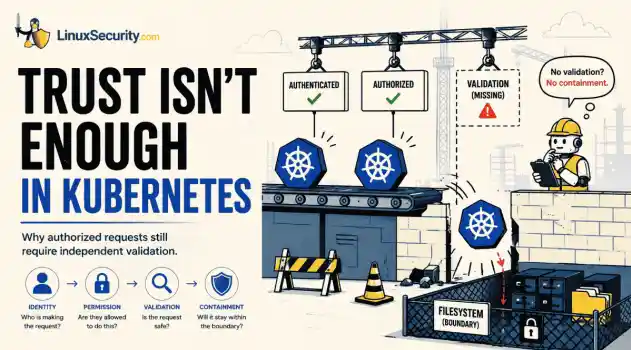
 Two newly fixed storage bugs in Kubernetes showed more than just a problem with path traversal. They found a common security flaw in the cloud: powerful parts often think that requests accepted by a higher system are safe to run. This is a simple lesson for the platform and security teams: RBAC can accept a request without showing that its parameters will stay within a certain filesystem boundary. This is clear from a new study from SentinelLabs into flaws in the Kubernetes CSI drivers for NFS...
 Jul 24, 2026
 security advisory update
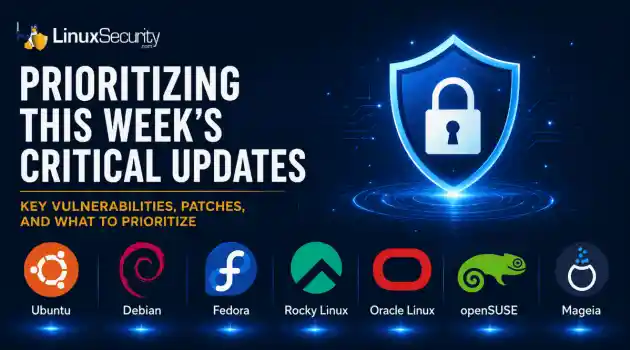
 A large volume of Linux security updates and advisories this week across major distributions once again, but it wasn't just the volume that was the story. Where maintainers and security teams focused their attention was evident in the concentration of fixes targeting Linux kernel updates, identity services, DNS infrastructure, and internet-facing software. . Instead of looking at each advisory in isolation, administrators gain more value from the general trends they reveal about Linux security...
Jul 23, 2026
 identity management security tactics
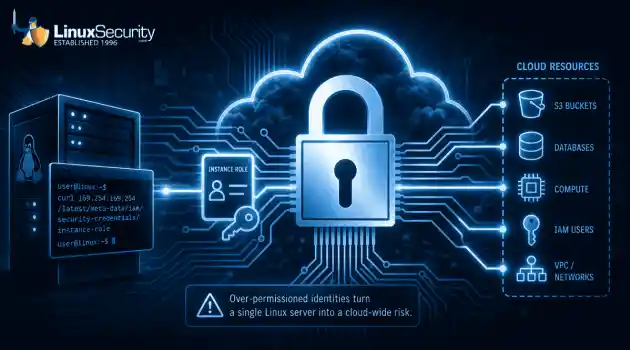
 For years, we secured our Linux infrastructure by building walls: VPCs, security groups, and hardened SSH configurations. We treated the cloud like a virtual data center, assuming that if we kept the "bad guys" out of the network, our workloads were safe. . That model is no longer sufficient. Today, one of the most common paths from an initial compromise to a major cloud breach is the identity assigned to your Linux workload. When an attacker gains code execution on a Linux instance—through a...
Jul 17, 2026
 security practices patch management
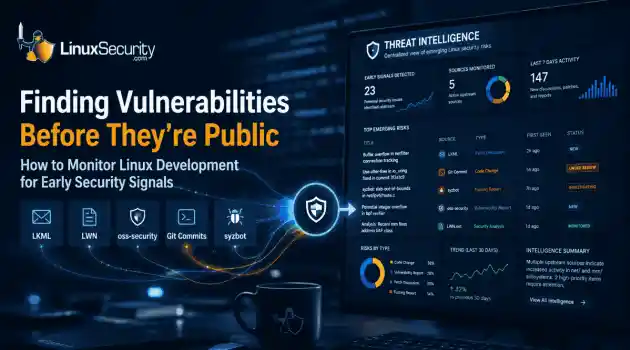
 Most of us don't hear about a kernel vulnerability until a CVE lands in our inbox or the vulnerability scanner starts complaining. By then, the patch isn't new anymore. Kernel developers may have been passing it around for review, arguing over the implementation, or revising it for days before anyone outside that community noticed it. None of those discussions are secret. They're sitting in mailing list archives, Git commits, and patch reviews where they've been the whole time. The strange...
Jul 14, 2026
 Linux security cyber attacks
 Every Linux server in your fleet produces thousands of events every minute. From journald logs and auditd records to kernel-level eBPF hooks, your systems are constantly talking. Most of that noise is just the mundane churn of system services, CI/CD runners, or routine administrative automation. But among that noise, an attacker might be establishing a foothold, moving laterally, or setting up persistence. The challenge for any security team is: how do you separate the routine from the...
Jul 13, 2026
 Refine features
X Clear Filters
Get the latest News and Insights
Get the latest Linux and open source security news straight to your inbox.
Community Poll
Should Linux servers automatically install security updates?
Loading...
Explore Latest Linux Security features
We found -1 articles for you...
102
 network assessmentvulnerability scanneropen source tool
Top Linux Vulnerability Scanners in 2026: A Guide to Open-Source Security Tools
Computer systems, software, applications, and Linux servers are all vulnerable to network security threats. Failure to identify these cybersecurity vulnerabilities, often through modern vulnerability scanning tools, can leave companies exposed . Running vulnerability scans regularly makes it easier to spot weaknesses and close them through security patching. Assessment results help developers and network administrators understand potential network security issues so they can implement the right defensive measures against them. In this article, we’ll discuss what a vulnerability scanner is and introduce our top free, adaptable tools, including practical vulnerability assessment tools and open-source vulnerability scanning software designed to improve security without adding cost. What is a Vulnerability Scanner? A Linux vulnerability scanner assesses the network security issues in a system or application. Scanners automate website, server, and cloud security auditing to improve security posture by checking for threats. Vulnerability scanners can also provide a prioritized list of issues you should patch. This list describes the type of vulnerability and the steps to fix it. Some vulnerability tools integrate with patch management systems, but fully automated patching is uncommon — most scanners focus on detection and reporting. It’s crucial to patch problems quickly because leaving them unaddressed puts a system at higher risk of attack. These network security threats let hackers enter your system and exploit weaknesses, potentially causing serious damage to your business. Vulnerability scanning tools rely on large databases of known flaws to automatically test systems — this is where a vulnerability scanner Linux setup shows its strength. Like fail2ban or antivirus software, these scanners are essential in maintaining maximum data and network security. The best open-source vulnerability assessment tools make this process affordable and adaptable for anyenvironment. Types of Vulnerability Scanners Vulnerability scanners are often categorized into types such as network-based, host-based, web application, and cloud-based. Database scanning tools also exist, but they are usually considered a subset of host or application-level scanning. Network-based vulnerability scanners Network-based vulnerability scanners scan the devices, services, and ports across a network to find weaknesses like misconfigurations, open ports, or version issues. They don’t generally monitor traffic in real time — instead, they take snapshots of your network at scheduled intervals. On wired and wireless subnets alike, they help you map out network exposures so you can take action before attackers find them. Host-based vulnerability scanners Even though web hosting and Linux servers include built-in protections, weak spots remain. A Linux security scanner can be installed on every host to provide in-depth insight into potential vulnerabilities, whether from insiders or outsiders with partial access. Web application vulnerability scanners Web applications are a common attack target, especially those relying on user input or integrations. A vulnerability scanner Linux setup can help test for issues such as SQL injection, cross-site scripting, and insecure configurations — areas that attackers often probe to gain access. Cloud-based vulnerability scanners The growing shift to cloud security solutions , especially with remote work, has pushed more companies to adopt cloud-focused scanning. Instead of just checking websites, these tools look at virtual machines, containers, and APIs. A Linux vulnerability scanner built for the cloud can catch weaknesses in those environments before they’re exploited. Top Linux Vulnerability Scanners in 2026 These tools range from lightweight scripts to full vulnerability assessment software platforms used in enterprise environments. Many vulnerability scanners are available online that you can purchase, grab for free,or run as open source. The key is choosing a Linux vulnerability scanner you can rely on. Here are some free and open-source vulnerability scanners worth considering. Modern teams are shifting toward actively maintained alternatives, increasingly leveraging AI-assisted vulnerability scanners to help prioritize critical risks and reduce noise in their security workflows. Aircrack-NG Open Source Vulnerability Scanner Aircrack-ng is an open-source wireless auditing toolkit used for Wi-Fi security. It captures traffic and can crack WEP and WPA keys, but it’s not a general-purpose vulnerability scanner and doesn’t cover web application issues. Here are Aircrack-ng’s key benefits : Support for a wide range of wireless hardware and protocols Coverage of Wi-Fi security issues, including WEP and WPA-PSK cracking Command-line driven, with extensive documentation and tutorials Can perform both active and passive scanning Aircrack-ng’s specialized focus on wireless networks makes it a useful tool for testing and improving Wi-Fi security. For a broader Linux setup, it’s often combined with other tools in a full security stack (see our best secure Linux distros ). Anchore Open Source Vulnerability Scanner Anchore is an open-source Docker container policy compliance and static analysis tool. It looks inside container images to analyze and evaluate them against security and policy requirements. The result is a report that indicates whether each image passes or fails, making Anchore one of the more practical open-source vulnerability assessment tools for container security. Anchore runs static analysis at the build or registry stages. It does not run real-time or runtime scans; it focuses on image content before deployment. Anchore checks image contents — packages, dependencies, configurations — to catch problems early. It also integrates with registries and CI/CD pipelines, which makes it easier to fold into DevOps workflows. Anchore is often describedas a Linux vulnerability scanner for containerized environments, though its focus is image analysis. It’s well-suited for teams running containerized workloads that need a reliable way to find and track vulnerabilities. Security teams also use it alongside other open source VAPT tools to cover more ground in testing. Here are Anchore’s key features: Scans container images for known vulnerabilities and provides detailed reports Breaks down image contents, including software packages and dependencies Gives you control to define and enforce policies, making sure that only trusted images are deployed. Integrates directly into CI/CD pipelines to catch issues early Anchore is actively maintained and supported by a strong open-source community. You can find it on Anchore Engine and adapt it to your environment as part of a broader container security stack. Arachni Open Source Vulnerability Scanner Arachni is an open-source vulnerability scanner built for web applications. It was widely used for its speed and flexibility, and for a while, it was one of the more capable tools in this space. Here are Arachni’s key benefits: Detects common web vulnerabilities like SQL injection, cross-site scripting, and directory traversal Built for scanning dynamic applications — it does not cover static HTML content. Customizable scan options and detailed reports Works with other security frameworks and toolkits Includes documentation and tutorials for setup and use Arachni’s scanning engine combined heuristics and signatures to catch issues that other tools sometimes missed. The modular setup meant you could extend it or plug in new modules as needed. For years, it was a go-to for web app testing on Linux, but that time has passed. Note: Arachni hasn’t been updated since 2017. You can still find the Arachni scanner, though it’s long outdated Burp Suite Free Edition Open Source Vulnerability Scanner Burp Suite Free Edition is a proprietarytool with a free version, not an open-source vulnerability scanner. It’s part of the larger Burp Suite platform and is often used for web application security testing by intercepting and modifying HTTP requests. Here are Burp Suite Free Edition’s benefits: Runs on multiple operating systems and platforms Provides manual testing features for web applications It lets you intercept and modify HTTP requests and analyze responses User-friendly interface with documentation and tutorials Can be paired with other frameworks and toolkits The Free Edition does not include automated scanning for issues like SQL injection or cross-site scripting — that’s only available in the Professional or Enterprise editions. Still, the ability to intercept and work with requests makes it useful for testing smaller applications and APIs. For Linux users, it’s often added to a toolkit as a linux vulnerability scanner companion, even though its scope is limited in the free version. Clair Open Source Vulnerability Scanner Clair is an open-source vulnerability scanner project designed for container security. It’s API-based, letting you query and analyze container layers for known issues. Clair regularly collects vulnerability metadata from multiple sources, indexes container images, and exposes this information through an API for security teams to use in their workflows. Here are Clair’s key benefits: Comprehensive coverage of container images and their associated vulnerabilities Support for many container image formats and registries Integration with orchestration systems like Kubernetes and Docker Swarm Reports that are detailed but easy to work with Performs static image analysis before deployment — it does not scan in real time and is not designed to detect wireless vulnerabilities. Clair is focused on containerized environments, not general-purpose scanning. Security teams often add it to their stack as a linux vulnerability scanner for images, usingit to flag problems before containers move into production. You can find and contribute to the project on Clair GitHub . Lynis Open Source Host Vulnerability Scanner Lynis is an open-source vulnerability scanner built for hosts, especially Linux and other UNIX-based systems. Lynis is widely used among vulnerability assessment tools for Linux system auditing and hardening, valued for its lightweight design and flexibility. You’ll find it running on everything from production servers to lab VMs. Key features include: Detects misconfigurations, weak permissions, service issues, and vulnerabilities Opportunistic scanning that adapts to the system without external dependencies Compliance checks for standards like PCI, HIPAA, and CIS Clear reports with scoring and step-by-step guidance Customizable controls to fine-tune what gets tested Installation is straightforward and works across most major distributions. The Lynis installation guide explains the basics, while administrators on Ubuntu or Rocky can follow a setup tutorial tailored to those platforms. Once installed, Lynis scans in stages — detecting components, applying the right tests, and producing both logs and reports with prioritized findings. Reports are one of its strengths. They don’t just list issues; they provide warnings, suggested fixes, and a scoring system to track improvements over time. The complete Lynis guide shows how to interpret these results and fold them into regular security workflows. Beyond scanning, Lynis plays a role in system hardening. Many organizations pair it with other Unix hardening tools to enforce stronger defaults across fleets of servers. That combination gives teams a practical way to improve resilience without adding commercial software or heavy overhead. Metasploit Open Source Vulnerability Scanner and Framework Metasploit is a penetration-testing framework that can identify and exploit holes in systems and networks. While it’s sometimes lumpedin with scanners, Metasploit is not a traditional vulnerability scanner — it’s a framework for exploitation and validation. For that reason, teams usually run a vulnerability scanner on linux first, then use Metasploit to validate the findings. Metasploit can be used to test for: Remote code execution SQL injection Cross-site scripting (XSS) Directory traversal Buffer overflow issues Authentication bypasses File inclusion problems Misconfigured services and applications Beyond listing issues, Metasploit can launch controlled attacks and exploit them directly. That makes it useful for testing defenses and showing what a real compromise would look like. With its large library of modules and payloads, it’s a standard framework for penetration testers and red teams. Nmap Open Source Vulnerability Scanner Nmap is best known as a network mapper and port scanning tool. It was built for network discovery, finding hosts, services, and open ports, and it remains one of the most widely used tools in security. With its scripting engine (NSE), Nmap can also probe for specific flaws; however, it’s not a comprehensive vulnerability scanner. It doesn’t patch or sandbox systems; it focuses on reconnaissance. Key things Nmap can do: Scan large networks quickly and identify live hosts Detect open ports and the services running on them Fingerprint operating systems and service versions Run scripts to check for misconfigurations and known vulnerabilities Because of that flexibility, Nmap is often treated as a linux vulnerability scanner even though that’s not its primary role. For administrators, it’s a way to map networks and spot weak points before attackers do. Linux setups can be extended with custom scripts, making it a bridge between simple port scanning and deeper assessment tools. Nmap is still under active development and works across all major platforms. That consistency is why it’s trusted in open-source security circles.It’s flexible enough for quick scans but can also be tuned for deeper checks. For a closer look at how it fits into Linux workflows, see our guide on Nmap basics . OpenSCAP Open Source Vulnerability Scanner OpenSCAP is an open-source framework for compliance and vulnerability scanning. It’s widely used in enterprise Linux environments because it combines automated compliance checks with configuration management and security assessments. Key benefits of OpenSCAP: Runs on multiple operating systems and platforms Automates compliance checks with standards like PCI-DSS and CIS benchmarks Manages configurations at scale across large environments Integrates with other security frameworks and toolkits Open-source, with ongoing development and community support OpenSCAP is more than a simple scanner. It can audit Linux systems against compliance baselines, report vulnerabilities, and suggest remediation steps. For administrators who want a Linux vulnerability scanner with built-in compliance features, it’s one of the most practical open-source vulnerability assessment tools available today. OpenVAS Open Source Vulnerability Scanner OpenVAS is an open-source vulnerability scanner used across many Linux distributions. It’s free under the GNU General Public License (GPL) and actively maintained by Greenbone. Because of that support, OpenVAS is one of the most comprehensive vulnerability scanning tools available today. OpenVAS utilizes an automatically updated community-sourced vulnerability database of over 50,000 known Network Vulnerability Tests. It thoroughly examines entire systems and tests both authenticated and unauthenticated protocols. The scanning is detailed, providing an in-depth look at how well protected your computers and servers are. OpenVAS can also run from external servers to give administrators the perspective of an attacker, allowing issues to be fixed before they can be exploited. Some of the criticalbenefits of OpenVAS include: Support for multiple operating systems, making it a dependable Ubuntu vulnerability scanner Ability to scan for more than 50,000 known vulnerabilities Customizable scanning options and detailed reports Integration with other network security toolkits and frameworks Ongoing development and improvement from the Greenbone community OpenVAS works as both a linux vulnerability scanner and a linux security scanner, giving administrators detailed reports and compliance checks. It’s still actively maintained by Greenbone, which makes it a dependable option in the open-source space. Trivy Open Source Vulnerability Scanner Trivy is an open-source vulnerability scanner that detects CVEs in open-source software. Trivy has become a popular option among lightweight vulnerability scanners for container environments, providing a quick explanation of network security issues so developers can decide whether to use it for security patching. Most scanners run static image checks after the fact, but Trivy can be integrated earlier in the process. Teams often add it to build pipelines or IDEs so vulnerabilities surface during development, not just in production. With strong backing from Aqua Security and the open-source community, Trivy has wide support and steady updates. It also complements other open-source VAPT tools well, making it a practical choice for anyone who needs a lightweight Linux vulnerability scanner in containerized environments. Wapiti Open Source Vulnerability Scanner Wapiti is an open-source vulnerability scanner designed for web applications. It’s known for speed and accuracy, and many security professionals use it to test sites and services running on Linux. Key benefits of Wapiti include: Finds common flaws like SQL injection, cross-site scripting, and file inclusion Works with both static pages and dynamic content Customizable scans to fit different environments Generates clear, actionable reports Can be extended or paired with other toolkits Wapiti’s scanning engine combines heuristics with signatures, increasing its ability to detect issues that lighter tools might overlook. Its modular setup also makes it easy to adapt. While it doesn’t cover wireless networks, it remains a practical linux vulnerability scanner for web application testing. Wireshark Open Source Protocol Analyzer Wireshark is an open-source protocol analyzer, often referred to as a packet sniffer. It doesn’t scan for vulnerabilities — instead, it shows you what’s happening on the network. Security teams, universities, and even government agencies use it to trace issues and spot suspicious traffic. It can capture data across various protocols, including Bluetooth, wireless, Ethernet, Token Ring, and Frame Relay. The output isn’t locked to a complex interface either. You can export results into plain text, which makes them easier to read and share, even with less technical users. Key benefits of Wireshark: Captures and inspects network traffic in real time Works with a wide range of protocols Filters traffic for targeted analysis Visualizes network patterns and anomalies Backed by strong documentation and community support Useful for finding bottlenecks and performance issues Wireshark is not a linux vulnerability scanner, but it adds another layer to security workflows. By analyzing network traffic in detail, it can highlight behaviors that other scanners might miss. SQLmap Open-Source Vulnerability Scanner SQLmap is a penetration testing tool designed to detect and exploit SQL injection vulnerabilities. It automates much of the process, helping security teams evaluate risk and document results. While sometimes grouped with linux vulnerability scanner tools, SQLmap is focused specifically on SQL injection, not general system flaws. Sqlmap is written in Python and runs on any system with a Python interpreter. It can recognize password hashes and supportsmultiple techniques to detect SQL injection. An SQL injection attack targets a database by inserting malicious code into input fields, search forms, or login pages. More on this type of attack can be found in the OWASP SQL Injection guide . SQL injection can expose sensitive data, allow changes to records, or even hand control of a system to an attacker. These attacks are common in: Web applications that rely on user input Content management systems and e-commerce platforms Legacy systems with outdated database code Mobile apps that query a backend database through APIs Mitigation requires secure coding practices such as parameterized queries and strict input validation. Sqlmap itself supports a wide range of databases, including Oracle, PostgreSQL, MySQL, SQL Server, and Access. Within the space of open source vulnerability assessment tools, it remains one of the most recognized options for testing SQL injection. OnSecurity (Honorable Mention) It’s designed to run continuous checks on internet-facing assets, carrying out more than 70,000 tests for missing patches, weak or default passwords, and common misconfigurations. The platform keeps an inventory of assets and applies CVSS scores to each issue, making it clear which ones matter most. Alerts show up in the portal but can also be pushed to Slack or Microsoft Teams. If needed, findings can even be turned into tickets in Jira or ServiceNow. While OnSecurity isn’t open source, some teams still use it alongside community tools. For those managing Linux environments, a linux vulnerability scanner that’s community-driven and transparent often remains the preferred option. Final Thoughts on Using Open-Source Vulnerability Scanning Tools to Secure Your Linux Systems Regular scanning is one of the simplest defenses against attack. A properly configured vulnerability scan can flag weak spots early. That might be a misconfigured service, an outdated package, or a forgotten policy rule. Catching theseissues before they’re exploited gives teams time to respond. It also reduces guesswork and provides a clearer view of overall risk. The open-source ecosystem has grown wide. Wireshark looks at traffic. OpenVAS digs into hosts and services. Nmap maps networks and finds what’s running where. None covers everything, but together they paint a fuller picture of your environment. That mix is what allows administrators to prioritize fixes instead of chasing noise. Cost is another reason these tools matter. Open-source scanners are free to use, and they don’t stand still. Communities update signatures, refine features, and share improvements. They’re transparent enough to audit and flexible enough to adapt to different workflows. For example, see our work on open-source security automation and this guide to open-source security scanners. Used consistently, these scanners form the backbone of an open-source security program. They won’t replace strategy, but they give it something solid to stand on. . Running vulnerability scans regularly makes it easier to spot weaknesses and close them th. computer, systems, software, applications, linux, servers, vulnerable, network, security. . MaK Ulac
 Apr 14, 2026
•
Apr 14, 2026
•
102
 network securitywebsite developmentcybersecurity practices
Utilizing Open-Source Tools For Secure Website Development
Designing, developing, or managing a website requires a lot of effort. Fortunately, with modern open-source website builders and free online resources, even beginners can launch professional and secure websites. This article will discuss the basics of creating a website, including the technologies involved, best practices, and the best network security toolkits to implement. . There are no quick answers to the questions we will be reviewing. However, launching a website is faster and easier than most people expect. Resources like The Blog Starter help amateurs learn website creation, blog management, Search Engine Optimization (SEO), and blog growth techniques. Website builders and services like Expert Web Development in Hong Kong help beginners set up websites they are proud of. How Long Does It Take to Launch a Website? People planning to establish a website need to consider what variables are in play that could influence how long creation takes. Here are a few variables to keep in mind: Personal experience : Previous practice with designing and launching websites can give you a leg-up in building a new one. You might know some of the fundamentals of network security and basic setup that a beginner would not, and if you are new to the website-creating process, you could learn the basics in a matter of weeks. Project size and scope : Launching a blog with a few core and landing pages will take significantly less time than a completely new web application, which would require months in development. Ensuring you install the basics and network security websites required is also essential. Tools and staff : A free website builder or an entire team of in-house developers can make a project go much faster than if you are working alone or need more sophisticated tools to build your site. Budget : If you have the money, spending a little extra can expedite the development process to accelerate your timeline and finish the project sooner. Possible disruptions : Miscommunications andother issues can lead to delays or compromises within your process, interfering with your timeline. What Does the Website Creation Process Involve? Building and launching a website depends on how you approach the entire process. However, these are the general steps most people take throughout the creation: Initial brainstorming: Deciding the site's purpose and design is the critical first step to developing a plan for your website. Design: Create the site's architecture, aesthetics, and general design. Development: Work in tandem with design to approve each step of the process. Testing: Understand the importance of privacy sandboxes and cloud security scanners to employ ultimate security patching as quickly as possible to ensure your website offers quality and functionality to users. Launch: Promote your website once testing is complete. What Are the Best Cybersecurity Practices for a Website? When launching a website, you are responsible for the data and network security of the site, so ensuring you have the open-source tools in place to combat cloud security breaches is essential. Employing security patching for cybersecurity vulnerabilities prevents future attacks in network security that could inflict significant downtime, data loss, and website crashes. Here are the suggestions we recommend website builders utilize: Prioritize Security Patching : Developers must work quickly to download and install patches on a server. Fast, efficient patching in cybersecurity and enabling automatic updates is crucial for data and network security. Check for Server Vulnerabilities: Even a secure Operating System (OS) like Linux can face cybersecurity vulnerabilities if a server has poor administration and frequent misconfigurations. Port scanning, Linux intrusion detection systems, and reverse engineering can allow organizations to identify and fix network security issues. Understanding your system's architecture can help you notice any insecurities that could permitmalware into your system. So, cloud security scanners and Linux penetration testing for websites can help you find these risks before it is too late. Use a Web Access Firewall (WAF): A WAF in an uncomplicated firewall that protects web and API applications by monitoring and filtering HTTP/HTTPS traffic between senders and recipients to block malicious sources from entering a server, keeping suspicious activity out of a system. Initiate a Bug Bounty Program : A bug bounty program helps you to offer cash rewards to users who notify you of any cybersecurity vulnerabilities on your website. Developers can serve as your testers daily and benefit your business so no cybercriminals can bypass security. Leverage Penetration Testing : Penetration testing is a deliberate practice of white hat hacking that encourages your team to attempt to hack into your system so you can see how effective your data and network security protocols are. If someone breaks in, you need to improve security posture and defenses. Set up an SSL Certificate : Secure Sockets Layer (SSL) or Transport Layer Security (TLS) is a protocol for encrypting, securing, and authenticating communications on the Internet, providing encryption security that protects your site from malicious users. Analyze Logs : Flag and address any suspicious activity before it becomes detrimental. Scan Your Server Frequently : If you notice malware or suspicious activity, prevent those exploits in cybersecurity by taking care of the risk immediately following a scan. What Popular, Effective Open-Source Tools Should I Use? Here are the more reliable open-source network security websites and tools to employ that offer robust communities and efficient communication: Joomla Joomla offers a platform from which you can build a website, manage data, and publish content quickly. The thousands of free templates provide users with a chance to showcase their work. Intuitive What You See Is What You Get (WYSIWYG) editors help Joomlabeginners and experts enhance their websites, manage their media, and prioritize SEO capabilities. Unfortunately, there is no free hosting, and speed and compatibility issues could lead to data and network security threats if they are not patched. WordPress WordPress has over 8,000 free themes, media management tools, and draft and scheduling features. It offers control over user roles, permission, and more than 50,000 individual plugins to enhance your website. However, configuring the setup and data and network security is entirely up to the user, so beginners may not configure them appropriately, making WordPress security vulnerabilities possible. Drupal Drupal allows you to build a website without ever touching code. It's free and open-source, giving you the structure, content formats, roles, and permissions you need to build a website from scratch. There are 3,000 free themes available and more than 40,000 free modules. Nevertheless, Drupal has a steep learning curve, significant updates require additional effort, and specific custom applications may not mesh well with the software. Final Thoughts on Using Open-Source Technology to Quickly & Securely Launch a Website as a Beginner Open-source technology has democratized website building, allowing more people, including non-experts, to build, design, and secure the websites they've always envisioned. These free website and network security toolkits are often accessible, enabling quick launches. However, they also require you to remain conscientious about data and network security. By engaging in the best cybersecurity practices and understanding the unique downsides of open-source technology, you can launch your website quickly and cautiously. The future of network security threats could pose detrimental issues for organizations, and making sure your website is secure when creating it is the first step to bypassing any such risks. . Uncover strategies for leveraging open-source tools to create a fortified web platform whileadhering to industry standards.. Open-Source Technology, Website Builders, Network Security. . Brittany Day
Oct 05, 2023
•

102
 security advisoryDoSattack mitigation
CISA Advisory: Linux Kernel DoS and Use-After-Free Security Issues
LinuxSecurity discovered and identified various network security issues that cybercriminals could utilize as exploits in cybersecurity that can severely harm the productivity of a business. Cloud security breach opportunities can significantly impact companies by causing memory exhaustion, system crashes, data loss, and arbitrary code execution. Even worse, Denial of Service (DoS), Cross-Site Scripting (XSS) , and privilege escalation attacks can impact an organization’s runtime, reputation, and trustworthiness. . The Cybersecurity and Infrastructure Security Agency (CISA) keeps track of the most common, frequent, and active attacks in network security in their Known Exploited Vulnerabilities Catalog so that businesses can prepare their company before the network security threats reach their system. Users must implement frequent Linux kernel security updates to protect their systems' confidentiality, integrity, availability, and sensitive data. This article will discuss the various Common Vulnerabilities and Exposures (CVEs) entering kernels, their impacts on data and network security, and how security patching can strengthen an organization's ability to combat these risks. What Vulnerabilities Have Been Found in the Linux Kernel? There are various network security issues to remember, so patch your kernel to prevent these issues from harming your business. Cybercriminals frequently install malicious code on a server or formulate a Denial of Service attack. The National Vulnerability Database rated many cybersecurity vulnerabilities so that you know how they impact your company's confidentiality, integrity, and availability. Here are some of the cloud security breach opportunities our IT security professionals have discovered and patched in the Linux kernel as of late: CVE-2023-0266 The most recent exploits in cybersecurity resulted from CVE-2023-0266, a use-after-free vulnerability that has existed in the Advanced Linux Sound Architecture (ALSA) subsystem for a while now. The CISAhas evidence of this cloud security breach remaining active across servers. CVE-2023-0045 This CVE can expose an organization's sensitive information if users do not appropriately configure the LinuxSecurity kernel settings. Indirect branch prediction attacks can result from incorrectly setting up the System V IPC implementation. CVE-2023-0394 In specific situations, IPv6 can contain a NULL pointer dereference vulnerability that can permit local threat actors the ability to harm a company’s productivity and reputation. CVE-2023-23455 Having a confusion vulnerability implemented as an ATM VC queuing discipline can negatively impact online communications should a cybercriminal abuse these exploits in cybersecurity. CVE-2023-23559 This integer overflow vulnerability, installed on RNDIS USB drivers in the Linux kernel, can give local attackers with physical access the ability to plug in malicious USBs to hack servers. CVE-2023-28328 Cybercriminals install the DVB USB AZ6027 driver and its null pointer dereference for handling specific messages in user space. CVE-2022-3434 Local attackers can infect SGI GRU drivers with use-after-free vulnerabilities to execute various network security threats. CVE-2022-36280 VMware Virtual GPU DRM drivers in the Linux kernel contain out-of-bounds write cybersecurity vulnerabilities that threat actors can utilize to their advantage in an attack. CVE-2022-41218 Use-after-free vulnerabilities can result from a DVB Core driver not properly performing reference counts. CVE-2022-47929 In a few situations, network queuing discipline implementation in a Linux kernel led to null pointer dereferences harming a server. CVE-2022-2196 The KVM VMX implementation in the kernel did not correctly handle indirect branch prediction isolation between L1 and L2 VMs, allowing for speculative execution attacks in network security. CVE-2021-3669 System V IPC misconfigured large shared memory counts, and now a Linux kernel could sufferfrom memory exhaustion. Knowing these network security issues and how they can impact your organization is vital to combating threats. You can use various methods to prevent these exploits in cybersecurity from becoming detrimental to your server and causing your system to suffer long-term damage. How Can I Fix These Common Linux Kernel Vulnerabilities? Mitigate these network security risks by following various Linux security best cybersecurity practices that can prevent significant downtime, account compromise, and cloud security breaches. Here are some suggestions we offer to you so you can start to improve your security posture: Update your systems regularly . If you leave your servers outdated, the built-in cloud security frameworks will not have solutions to the latest security news issues. Then, your server could face significantly large attacks on network security. With an update, your company will know threats immediately, and your system can combat them quickly. Utilize privacy sandboxing to identify cybersecurity vulnerabilities . Once you notice these issues, you can use Linux patching to take care of the risk before a cybercriminal can exploit the hole. Follow security news websites, blogs, and chat pages so that you can stay up-to-date on network security threats that IT security professionals discover weekly. There are so many new cybersecurity vulnerabilities, types of ransomware, and other attacks in network security that get identified frequently, and knowing up-front is one extra step you can take to protect your company, employees, and users. Register as a LinuxSecurity user to get Linux-specific information about open-source programs and applications you can use to customize your server and stay notified regarding threats to your distros. Follow @LS_Advisories on X for real-time updates on advisories related to distros. Linux security Expert and Website Founder Dave Wreski warns, “Threat actors frequently exploit unpatched securityvulnerabilities to gain access to corporate networks, enable malicious code, and compromise critical systems. It is crucial that all admins and organizations track security advisories diligently and apply patches as soon as they are released.” Stay Up-to-Date on Linux Security Vulnerabilities As cybercriminals develop new ways to implement malicious coding, Denial of Service attacks, and other network security issues into servers, organizations must learn how to combat the threats and prepare themselves for any possible exploits in cybersecurity. We encourage you to subscribe to our weekly newsletters to stay up-to-date and help improve your security posture against pending issues. As a Linux user, the best way to remain in the loop is to adhere to the practices we mentioned above so you can get Linux-specific updates, security news, and more without overlooking any weaknesses. . Hackers take advantage of vulnerabilities in the Linux kernel, posing significant threats to security; discover solutions and protective strategies.. Linux Kernel Exploits, Cybersecurity Risks, Patching Best Practices, Network Security Issues. . Brittany Day
Apr 17, 2023
•
102
 security toolsnetwork threatworm mitigation
Cheese Worm Patches 1i0n Worm Threats: Security Implications
This is exactly the question many security personnel are asking themselves with the new Cheese worm. The Cheese worm basically patches up the backdoor that the 1i0n worm created and then looks for more 1i0n worm cracked machines. . Even though it does close the backdoor, it is generally thought that once a system is cracked, it cannot be resecured in any other way than wiping the disks and starting over. Assuming that the worm is written well enough that it always does exactly what it is supposed to do, I feel a patcher worm is a good thing for the Internet. The systems that the Cheese worm is breaking into are already wide open due to the 1i0n worm. After finding an open system, a cracker could use it to mask their identity during further attacks, but after the Cheese worm has patched a system, it becomes significantly harder for a cracker to use a 1i0n worm infected system for attacking other computers. Since it is impossible for the cracked systems to be resecured until the system's disks are wiped and everything reinstalled, the administrators of 1i0n infected systems have nothing to lose from the Cheese worm patching their system. Furthermore, bandwidth usage of the scans by the Cheese worm is similar to the amount used by 1i0n worm scans. The Cheese worm simply increases the security on the systems it invades. Considering it has been 3 months since the 1i0n worm was released, it is fair to assume that systems still infected by the 1i0n worm have administrators that do not plan to fix the systems in the near future. While it is illegal to access another computer without authorization (IANAL), the Cheese worm does help the internet as a whole become a better place by limiting the number of open systems for less experienced crackers to use for attacks. Still, the Cheese worm sets a dangerous precedent if widely accepted as a positive contribution to the field of security because that sounds like the security community is saying it is okay for a cracker to takeover a person's computer as long as the cracker's heart is in the right place.. Larvae cheese proposes a remedy for systems compromised by 1i0n, prompting concerns about security among IT managers. Learn further.. Cheese Worm, 1i0n Worm, Network Threats, Security Patching. . Brittany Day
Jun 04, 2001
•

Get the latest News and Insights
Get the latest Linux and open source security news straight to your inbox.
Community Poll
Should Linux servers automatically install security updates?
Search Topics
Powered By

Linux Security - Your source for Top Linux News, Advisories, HOWTOs and Feature Releases
QUICK LINKS
subscribe to newsletters!
Like staying secure? So do we.
Sign up for updates, tips, and alerts!