Audit Linux privileges now to limit compromise, escalation, and system-wide damage. Review Linux Privileges×


Stay Ahead With Linux Security Features
 security advisory path traversal
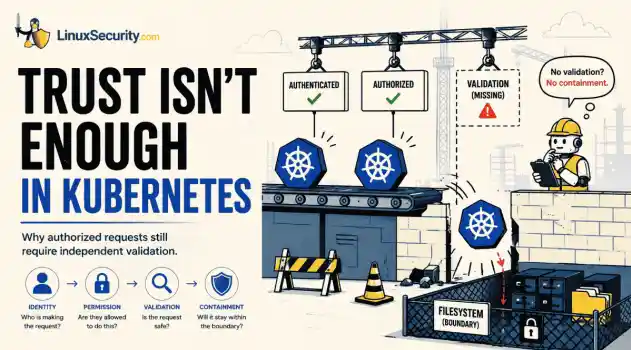
 Two newly fixed storage bugs in Kubernetes showed more than just a problem with path traversal. They found a common security flaw in the cloud: powerful parts often think that requests accepted by a higher system are safe to run. This is a simple lesson for the platform and security teams: RBAC can accept a request without showing that its parameters will stay within a certain filesystem boundary. This is clear from a new study from SentinelLabs into flaws in the Kubernetes CSI drivers for NFS...
 Jul 24, 2026
 security advisory update
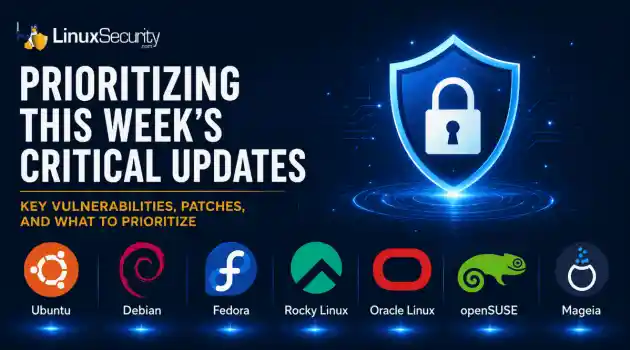
 A large volume of Linux security updates and advisories this week across major distributions once again, but it wasn't just the volume that was the story. Where maintainers and security teams focused their attention was evident in the concentration of fixes targeting Linux kernel updates, identity services, DNS infrastructure, and internet-facing software. . Instead of looking at each advisory in isolation, administrators gain more value from the general trends they reveal about Linux security...
Jul 23, 2026
 identity management security tactics
 For years, we secured our Linux infrastructure by building walls: VPCs, security groups, and hardened SSH configurations. We treated the cloud like a virtual data center, assuming that if we kept the "bad guys" out of the network, our workloads were safe. . That model is no longer sufficient. Today, one of the most common paths from an initial compromise to a major cloud breach is the identity assigned to your Linux workload. When an attacker gains code execution on a Linux instance—through a...
Jul 17, 2026
 security practices patch management
 Most of us don't hear about a kernel vulnerability until a CVE lands in our inbox or the vulnerability scanner starts complaining. By then, the patch isn't new anymore. Kernel developers may have been passing it around for review, arguing over the implementation, or revising it for days before anyone outside that community noticed it. None of those discussions are secret. They're sitting in mailing list archives, Git commits, and patch reviews where they've been the whole time. The strange...
Jul 14, 2026
 Linux security cyber attacks
 Every Linux server in your fleet produces thousands of events every minute. From journald logs and auditd records to kernel-level eBPF hooks, your systems are constantly talking. Most of that noise is just the mundane churn of system services, CI/CD runners, or routine administrative automation. But among that noise, an attacker might be establishing a foothold, moving laterally, or setting up persistence. The challenge for any security team is: how do you separate the routine from the...
Jul 13, 2026
 Refine features
X Clear Filters
Get the latest News and Insights
Get the latest Linux and open source security news straight to your inbox.
Community Poll
Should Linux servers automatically install security updates?
Loading...
Explore Latest Linux Security features
We found 0 articles for you...
102
 security testingweb developmentuser experience
Strategies for Cross-Browser Compatibility Testing on Linux
In the dynamic landscape of web development , ensuring that applications perform uniformly across various web browsers is a vital aspect of user experience. This becomes increasingly important for Linux systems, where the default browsers and configurations range presents unique challenges. Cross-browser compatibility testing on Linux helps to identify and resolve these discrepancies, thereby enhancing the accessibility and functionality of web applications for all users. . Effective testing strategies on Linux involve a combination of manual checks and automated tests. Specialized multiple-browser testing tools listed by Functionize facilitate developers in assessing and verifying the consistency of web applications across different browser environments. As Linux users might gravitate towards browsers like Firefox or Chrome, it's essential that testing covers these along with any less common alternatives that are also in use. Understanding Cross-Browser Compatibility on Linux Systems Cross-browser compatibility on Linux systems ensures that web applications provide a consistent user experience across various browsers. Since Linux can be paired with multiple browsers, developers must verify that HTML, CSS, and JavaScript work as intended. The Importance of Cross-Browser Testing Testing across different browsers ensures that all users have access to the same quality of content and functionality, regardless of their choice of browser or Linux distribution. Web development on Linux must account for different rendering engines, as they interpret code differently, affecting the user experience (UX) and design integrity. Access to a site or application can be hindered by compatibility issues, making cross-browser compatibility a non-negotiable facet of a quality-focused development process. Cross-browser compatibility testing can improve user experience and search engine optimization (SEO), maximize market reach and accessibility, maintain credibility, ensure accessibility compliance, andprovide a competitive advantage. Critical Challenges in Cross-Browser Compatibility One significant challenge is managing the assortment of browsers on Linux, such as Firefox and Chrome, which may have different versions in circulation. The responsive design must be checked meticulously to ensure accessibility and usability on various screen sizes. Additionally, JavaScript functionality can exhibit divergent behaviors across browsers, leading to tricky compatibility issues. Therefore, browser compatibility testing on Linux concerns visual consistency, functionality maintenance, and ease of access for a diverse user base. What Are Common Cross-Browser Compatibility Issues? Common cross-browser compatibility issues Linux users may encounter include: CSS adds a layer of complexity . Browsers can interpret and apply styles inconsistently, resulting in visual disparities such as font size, color, spacing, and layout. These differences can compromise a website's design integrity and user experience. Some browsers disable plugins such as Flash or Java , which can cause compatibility issues. Certain site features may not work as intended or be inaccessible for certain browsers. Web developers often use third-party frameworks and libraries to streamline the development process. These dependencies are not always compatible with all browsers. These external tools may cause malfunctions and performance bottlenecks that can affect the overall functionality of your website. Developers can be plagued by browser-specific bugs that affect form submission, caching, and other crucial functions. These bugs can manifest differently in each browser, requiring meticulous testing and workarounds to ensure consistency and functionality across all browsers. Why Is Cross-Browser Compatibility Testing Critical for Robust Linux Security? Cross-browser compatibility testing is critical for robust Linux security. It can help protect against various threats and attacks targeting Linuxenvironments, including cross-site scripting (XSS) and SQL injection (SQLi) attacks. XSS attacks occur when a threat actor injects malicious, executable scripts into the code of a trusted application or website. Over 60% of web applications are susceptible to XSS attacks, accounting for over 30% of all web application cybersecurity exploits. SQL injection attacks involve inserting or” injecting” an SQL query into the input data from the client into the application. What Types of Cross-Browser Compatibility Testing Exist? The main types of cross-browser compatibility testing include: Functional Testing This type of testing is used to check if the website's interactive features and functionality work across browsers. For example, these tests ensure the forms are submittable, the buttons are clickable, and the navigation menus work correctly. Visual Testing This testing type focuses on the visual appearance and functionality of a web page or application in different browsers. These tests verify fonts, color, layout, and images to ensure they are displayed consistently and without visual glitches. Performance Testing This type of testing measures how responsive a site is across different browsers and devices. For example, you can measure the page loading time, check your site's responsiveness across various screen sizes, and ensure that resource-intensive elements (videos or animated graphics) don't cause performance problems. Cross-Device Testing This testing ensures the website works properly on all devices, including desktops, laptops, tablets, and mobile phones. Examples include testing touch interactions on mobile phones, ensuring responsiveness with different screen resolutions, and checking compatibility with various device orientations. Cross-Platform Testing This type of testing involves checking the compatibility between operating systems and web browsers. For example, you can test your website to see if it works on Linux, Windows, MacOS, and Androiddevices. Browser Version Testing This type of testing involves testing the website on various browser versions to ensure compatibility. Tests can be conducted on older versions, such as Internet Explorer 11, Firefox, or Chrome, to help users who may not have updated their browsers. Accessibility Testing This testing ensures a site is accessible to people with disabilities and complies with accessibility standards like WCAG (Web Content Accessibility Guidelines). To make your site more accessible to people with disabilities, test keyboard navigation, screen reader compatibility, and the use of ARIA attributes (Accessible Rich Internet Applications) , for example. Security Testing Security testing ensures a website's security features and protocols work consistently on different platforms and browsers. For example, it ensures that SSL certificates (Secure Sockets Layers) are implemented correctly and that login forms and security headers such as Content Security Policy (CSP) are effective. This comprehensive testing method helps to ensure a seamless, consistent user experience in diverse environments. Understanding how to incorporate security testing into cross-browser compatibility testing is an implied and necessary step in identifying and mitigating security vulnerabilities that could affect application performance across different browsers. Effective Testing Strategies for Ensuring Compatibility Effective cross-browser compatibility testing on Linux systems demands a strategic approach incorporating manual and automated methods. Ensuring web applications work flawlessly across various browsers, operating systems, and devices, such as smartphones, tablets, and laptops, requires a careful balance of testing techniques. Web developers use these strategies to validate HTML, CSS, and JavaScript functions across platforms like Chrome, Firefox, Safari, Edge, and Opera. Manual Testing Approaches Manual testing allows developers to experience the web application's performance andappearance on different browsers. Focused manual testing is essential, especially for critical functionalities and key user flows. Testers should begin with browsers that capture the highest traffic for the application, as these most represent the user base. For example, these should be the priorities for most users on Chrome or Firefox on Linux. Browser Installation : Install various browsers and their versions on Linux systems. Device Testing : Manually operate the application on various Linux-compatible mobile devices, tablets, and laptops. Emulation/Simulation : Utilize browser tools to emulate different screen sizes and resolutions, even without physical devices. Automated Testing Tools and Frameworks Automated testing enhances the efficiency of cross-browser compatibility tests, allowing for the execution of repetitive tasks without manual intervention. Utilizing frameworks and tools enables web developers to create and execute test scripts across multiple browsers and systems simultaneously. Selenium is an open-source tool that automates web browsers, supports Linux, and facilitates tests on various browsers, such as Mozilla Firefox and Google Chrome. Cloud-Based Platforms : Tools such as Lambdatest or BrowserStack provide access to many browsers and devices, including those not physically available. Parallel Testing : Run multiple tests across different browsers simultaneously to save time and increase test coverage. Continuous Integration (CI) : Integrate automated tests into the CI pipeline to ensure compatibility checks occur during every code push. Combining these manual and automated strategies helps maintain adherence to web standards and ensures a consistent and high-quality user experience across all supported platforms. Our Final Thoughts on Cross-browser Compatibility Testing On Linux Systems Cross-browser compatibility testing on Linux systems is essential for delivering a consistent web experience to all users. Developers mustprioritize effective testing strategies, such as assessing critical functionalities first and then branching out to other aspects of the site. Enhanced user experience and functionality across multiple browsers can be achieved by meticulously testing and addressing issues specific to different browsers and versions. By integrating best practices and tools, websites will perform reliably on Linux and other operating environments. . Robust assessment methods on Linux integrate manual evaluations and automated scripts to guarantee uniformity across various browsers.. Cross Browser Compatibility, Linux Security Tests, Web Development, User Experience Testing, Security Automation. . Brittany Day
 May 18, 2024
•
May 18, 2024
•
102
 security testingvulnerability managementruntime protection
Effective Docker Security Techniques: Manage, Test, and Automate
In the dynamic landscape of contemporary software development, Docker containerization has emerged as a cornerstone, facilitating the efficient deployment and scaling of applications. However, fortifying their security measures becomes paramount as organizations increasingly embrace Docker containers. . This necessitates a comprehensive approach to Docker Container Security Vulnerability Management and Testing, incorporating industry best practices. Since security is not a universal concept, container security best practices offer a comprehensive framework that spans the entire software development lifecycle, from creating secure container images to runtime protection. Below is a complete guide on Docker container security vulnerability management and testing. Container Security and The Importance of Integrating Security Testing and Automated Deployment Container security refers to measures to secure the entire containerized application development and deployment process. This includes securing the container runtime, orchestration tools, and images. Integrating security testing and automated deployment into the container lifecycle is crucial to identify and mitigate vulnerabilities early in development. Security testing involves assessing the security posture of containerized applications through vulnerability scanning, penetration testing, and static code analysis. Automated deployment ensures a streamlined and consistent process for deploying containerized applications across different environments. Understanding Container Security Testing and Deployment Automation Container orchestrators, exemplified by prominent platforms such as Kubernetes, play a pivotal role in shaping the security landscape of containerized environments. These orchestrators are the backbone, providing a robust framework for managing, scaling, and orchestrating containerized applications. In the security realm, container orchestrators contribute significantly by offering advanced features and tools that bolster theoverall protection of containerized ecosystems. One fundamental security feature container orchestrators provide is Role-Based Access Control (RBAC). Kubernetes, for instance, offers a sophisticated RBAC system that enables organizations to define fine-grained access policies. By implementing RBAC best practices, organizations can ensure that users and processes within the container orchestration platform adhere to the principle of least privilege. This not only enhances security but also fosters a structured and controlled environment. Container orchestrators also offer comprehensive hardening guides and security checklists. Kubernetes, for instance, provides a detailed hardening guide that outlines best practices for securing various components of the orchestrator. This includes securing the control plane, worker nodes, and associated components. Security checklists offered by orchestrators act as practical guides for administrators, helping them configure and manage the environment with security in mind. In addition to RBAC, container orchestrators implement network policies to enhance security. These policies dictate communication rules between containers, ensuring only authorized interactions occur. By segmenting the network, orchestrators reduce the attack surface, limiting the potential impact of security breaches. Container orchestrators are designed with security in mind, providing an array of features to safeguard the deployment and runtime of containerized applications. They facilitate the implementation of security standards and best practices, guiding organizations in fortifying their container environments against potential threats. As container orchestrators manage the deployment and scaling of applications, they inherently contribute to security testing and deployment automation. Integration with CI/CD pipelines ensures that security testing becomes integral to the application delivery process. Security checks can be automated at different stages, from the creation of containerimages to their deployment in a production environment. What Is The Role of Container Orchestrator in Security Testing and Deployment Automation? Container orchestrators play a crucial role in managing and scaling containerized applications. These orchestrators also contribute to security testing and deployment automation by providing features that enhance the overall security posture of containerized environments. One key security feature provided by container orchestrators is network segmentation. By isolating containers into separate network segments, orchestrators prevent unauthorized container communication, reducing the attack surface. Additionally, orchestrators often include features for secrets management, allowing developers to securely store and manage sensitive information, such as API keys and passwords. This helps prevent security breaches arising from the exposure of sensitive data within containerized applications. Linux Container Vulnerability Management Linux container vulnerability management is a critical aspect of securing containerized environments. As containers share the host operating system's kernel, keeping the underlying Linux system secure is paramount. Regularly updating the host operating system and its components is fundamental to mitigating known vulnerabilities and maintaining a robust security posture. Vulnerability management tools , including OpenSCAP and Nessus, scan the Linux host for potential security risks. Proactive measures involve monitoring security advisories, subscribing to relevant mailing lists, and staying informed about the latest patches. By addressing vulnerabilities at the operating system level, organizations bolster the overall security of their containerized applications, creating a foundation for a resilient and protected container environment. Docker Container Security Testing Docker, a widely used containerization platform, requires specific attention to security testing. Docker container security testing involves examiningvarious aspects of the Docker ecosystem, including the Docker daemon, container images, and the Docker API. One crucial aspect of Docker security testing is ensuring the integrity of container images. Developers should verify the authenticity and origin of container images to prevent the deployment of compromised or malicious images. Implementing image signing and verification mechanisms, such as Docker Content Trust (DCT), adds more security to container images. In addition to image integrity, Docker security testing should focus on securing the Docker daemon. Access controls, network policies, and secure configuration settings are essential to prevent unauthorized access and potential exploitation of vulnerabilities in the Docker daemon. What Is The Role of Automation in Container Security? Automation is integral to adequate container security, allowing organizations to scale security processes, reduce human error, and respond swiftly to emerging threats. Automated security processes can be incorporated at various stages of the container lifecycle, from image build to deployment and runtime monitoring. Automated vulnerability scanning ensures that container images are regularly scanned for known vulnerabilities, and security teams receive immediate feedback on potential risks. This proactive approach enables developers to address vulnerabilities early in development, minimizing the exposure window. Access control and permission management automation help enforce the principle of least privilege, reducing the risk of unauthorized access and potential security breaches. Role-based access control (RBAC) mechanisms provided by container orchestration platforms enable fine-grained control over user permissions. Continuous monitoring and automated threat detection contribute to runtime security. Tools that monitor container behavior and detect anomalous activities help organizations identify and respond to security incidents in real-time. Practical Approaches to Integrate Security Testingand Automate Deployment Integrating security testing and automating deployment requires a strategic and collaborative approach within development and operations teams. Here are practical approaches to seamlessly embed security into the container development and deployment lifecycle: Incorporate security into CI/CD pipelines: Integrate security testing tools into CI/CD pipelines to automatically scan container images for vulnerabilities during the build process. This ensures that security checks are part of the automated deployment workflow. Automate compliance checks: Implement automated tools to check and enforce compliance with security policies and industry regulations. This includes scanning container images for compliance with security benchmarks and standards. Implement infrastructure as code (IaC): Use IaC tools like Terraform or Ansible to define and provision infrastructure in a repeatable and consistent manner. This ensures that security configurations are applied consistently across different environments. Security training for development teams: Provide security training to development teams to raise awareness about secure coding practices and potential security risks in containerized environments. Empowering developers with security knowledge enhances their ability to write secure code from the outset. Use secure base images: Start with secure images with minimal attack surfaces. Regularly update these base images to include the latest security patches. Tools like Docker Bench for Security can be used to check the security configuration of Docker hosts. Implement image scanning in registries: Utilize container image registries that support image scanning for vulnerabilities. This adds an extra layer of security by automatically scanning images before they are deployed, preventing the use of compromised images. Container runtime security: Implement runtime security measures, such as container network policies and runtime monitoring, to detect andrespond to security incidents during the execution of containerized applications . Collaborate across teams: Foster collaboration between development, operations, and security teams to ensure a holistic approach to container security. Regular communication and knowledge sharing help address security concerns at every stage of development. Future Trends in Container Security Testing and Deployment Automation As technology evolves, so do the challenges and solutions in container security. Several trends are likely to shape the future of container security testing and deployment automation: Shift left security: The trend of shifting security left in the development lifecycle will continue to gain prominence. Embedding security testing early in the development process allows for identifying and remedying vulnerabilities before they reach production. Enhanced orchestration security: Container orchestrators will continue to enhance their built-in security features, providing more robust tools for network segmentation , access controls, and secrets management. This will contribute to a more secure and manageable container environment. Integration of artificial intelligence (AI) and machine learning (ML): AI and ML technologies will significantly improve threat detection and response in containerized environments. Automated anomaly detection and intelligent security analytics will become crucial for identifying sophisticated attacks. DevSecOps adoption: The DevSecOps paradigm integrates security into the DevOps workflow and will become more mainstream. Collaboration between development, operations, and security teams will be further strengthened to ensure a holistic and continuous approach to security. Immutable infrastructure: The concept of immutable infrastructure, which is treated as code and cannot be modified after deployment, will continue gaining traction. This approach reduces the attack surface and ensures consistency in the environment. Zero trustsecurity model: Adopting a Zero Trust security model, where no entity, whether inside or outside the network, is trusted by default, will become more prevalent. This model aligns with the dynamic and distributed nature of containerized applications. Compliance as code: Compliance requirements will be increasingly addressed through code, using tools and frameworks that enable organizations to define, enforce, and audit compliance as part of their automated workflows. Container-native security solutions: Security solutions designed explicitly for containerized environments will continue to emerge. These solutions will provide specialized features to address containers' unique security challenges. Final Thoughts on the Importance of Docker Container Security Testing In an era where software development is becoming faster and more dynamic, the importance of robust security measures cannot be overstated. Docker container security testing is not merely a compliance checkbox but a critical aspect of building and deploying resilient applications. By integrating security testing and automation into the container development lifecycle, organizations can identify and remediate vulnerabilities early, reducing the risk of security breaches. The collaboration between development, operations, and security teams is pivotal in establishing a culture of security that permeates every stage of the containerized application lifecycle. As container technologies evolve, staying informed about emerging security trends and adopting best practices will be essential for organizations aiming to build and maintain secure container environments . The future of container security lies in proactive, automated, and collaborative approaches that prioritize the protection of applications and data in an increasingly complex digital landscape. . Uncover vital security tactics for Docker to protect against threats and guarantee safe application rollout.. Docker Security, Container Vulnerability Management, AutomatedDeployment, Security Testing Framework, Container Orchestration. . Duane Dunston
Dec 12, 2023
•

102
 network securitycyber attackssecurity testing
Enhancing Security Posture With Effective Password Strength Testing Tools
Simple passwords can be incredibly weak, whether they match the username, are a blank password, or use keyboard combinations ("qwerty"). These types of passwords may be more accessible to remember, but they do not combat cybercriminals interested in stealing your information and threatening your data and network security. . A 2019 Google study showed that seventy-five percent of Americans were frustrated with keeping track of their passwords. This statistic supports the OWASP's SecLists project study that found that the five most common weak passwords are "123456," "Password," "12345678," "qwerty," and "123456789." Therefore, instigating cloud security breaches through brute-force attacks in network security has become the norm for cybercriminals. Weak passwords allow unauthorized access into a server, leading to catastrophic consequences like data loss and long-term downtime. Understanding how to store passwords and prevent attacks is crucial to maintaining data and network security. This article will discuss password cracking and testing tools that sysadmins can implement to improve security posture. What is Password Cracking? Password cracking is a hacking technique where cybercriminals obtain passwords through encrypted data stored in a computer or communicated through a server. System administrators can use password-cracking instruments as network security toolkits to see how hackable company passwords are. Then, they can have employees change weak passwords to prevent related cybersecurity vulnerabilities from continuing to be risky. The best tools can handle various targets simultaneously so you can see how effective different protocols and cybersecurity platforms are against a network security threat. What Types of Password Cracking Attacks Exist? There are three common types of password-cracking attacks in network security that businesses must keep in mind while testing their servers for weaknesses that require security patching: Dictionary attack : These cloud security breachesstart by collecting a list of previously leaked data that offers words, phrases, and possible passwords that a server uses. A dictionary attack goes through every password and phrase in the list to find the right one and break into the system. Brute-force attack : During these attacks in network security, password cracking tools will try to guess every password combination possible within a specific range and criteria that the user specifies. While this process is effective, it also moves quite slowly, as a nine-character password with upper- and lowercase letters and special characters can take up to nine years to crack. Rainbow tables : A cybercriminal will compare an existing data dump to a list of password hashes to see if they can determine the correct password in plaintext. Security-oriented applications usually have passwords stored in fixed-length hashes to make it more difficult to hack, so using rainbow tables works through these difficulties much easier and faster than brute-force attacks in network security. However, these cloud security breaches do not work when password hashes have been salted and their salt values are too large, as cracking the password would be a much more complex task. What Tools Can I Use to Test Password Cracking? An effective password cracker tool is essential so a business can determine if passwords are a site for cybersecurity vulnerabilities within their company. Here are a few options from which to choose when deciding how to test password cracking on your server. John the Ripper Released in 1996, John the Ripper is an open-source native, password cracker tool that was originally produced for UNIX-based systems. Today, the tool can run on many different operating systems including Android, Linux, macOS, and Windows. Designed to test password strength, brute-force encrypted passwords, and crack passwords via dictionary attacks, the tool quickly grew in popularity, and today is one of the most recognizable password cracker tools. Some of its keyfeatures include multiple modes to speed up password cracking, automatically detecting the hashing algorithm used by the encrypted passwords and the ease of configuring and running the tool. The tool comes in both GNU-licensed and proprietary versions with the latter being designed for use by professional penetration testers. John the Ripper Modes and a Use-Case John the Ripper utilizes modes to best meet the needs of its users. Three modes come with the tool: Single crack mode: This mode is recommended to be run first since it is the quickest mode. Single crack mode utilizes information from UNIX passwd files as presented in GECOS fields within UNIX passwd files or shadow files to guess passwords. This is helpful for use cases where a user has to set a password for an account based on commonly available information or a phrase in the username such as root:root or radha:radha456. Wordlist mode: Similar in its operation to a dictionary attack, this mode relies on the user providing a text file with a list of passwords, ideally one per line with no duplicates. The application also comes with a set of default wordlists, with the proprietary version offering more choice. Incremental mode: An equivalent mode to a brute-force attack method, this mode is only effective for most weak passwords. If a password is long enough or complex enough, this mode may never be able to complete in a decent amount of time and never terminate. In the case of several combinations being too large, the user will have to interrupt this mode. Here are some examples of use-cases for John the Ripper: Cracking a user account password in Kali Linux: This use-case scenario demonstrates the simplicity of using John the Ripper for cracking a user account password on Kali Linux. Say the user creates an account using the command: Say the user then sets the password for this account: To crack the password for the account with the username ‘James’ run the following command: Notonly will John the Ripper identify the hash method and display it on the terminal, but it will also decode the password hash into a raw password and display this password as well. Hashcat Hashcat is a popular and effective open-source password cracking tool widely used by penetration testers and system administrators. Considered the world’s first and only in-kernel engine, Hashcat supports many different platforms and operating systems such as Linux, macOS, and Windows for desktops. The tool also has mobile support for Android, iOS, and Windows as well. However, an issue with Hashcat is that it’s limited in the kinds of passwords that can be recovered since, unlike John the Ripper which can recover passwords for databases and operating systems, this tool is mostly limited to documents such as PDF files, and WIFI passwords. Still, Hashcat is very much an effective password cracker tool to consider. Hashcat’s Attack Arsenal and Use-Case At the most basic level Hashcat can guess a password, hash it, and then compare the resulting hash to the one it’s trying to crack. In addition to these brute-force attempts, Hashcat also supports dictionary attacks, combinator attacks, mask attacks, and rule-based attacks. Dictionary attack: Hashcat can utilize a word list text file to perform a dictionary attack. Users can start with the word list rockyou.txt . Containing more than 14 million passwords sorted by the frequency of use, using the word list with Hashcat can make for a very effective password cracker test. Combinator attack: These kinds of attacks work best for passwords that are two words together without a space. For example, passwords such as ‘yellowcar’ or ‘blackbike’ count as passwords that are vulnerable to a combinator attack. Hashcat’s way of doing a combinator attack is by taking a dictionary list and creating a new word list of every word combined with every other word. Hashcat can also add punctuation such as hyphens, exclamation points, and other specialcharacters to create a final word list with passwords such as ‘yellow-car!’ and ‘black-bike!’. Mask attack: A mask attack works by looking for passwords with a similar outline. For instance, passwords with one upper case letter followed by six letters and a digit at the end are common for older passwords. Hashcat can search for similar passwords using a mask attack. Mask attacks are often orders of magnitude faster than a brute-force attack, with some brute-force attacks taking 4 years to crack a password compared to 40 minutes for mask attacks. Rule-based attack: Hashcat offers a programming language-like syntax for rule-based attacks in which users can specify what kind of passwords to try. This is useful for cases where a user has a sense of how their target constructs a password. One of the most complicated of all the attacks offered by Hashcat, the rule-based attack offers functions to modify, cut or extend words and has conditional operators, making it the most flexible, accurate, and efficient kind of attack. Here is an example of a use-case for Hashcat: Word-list attack on a list of passwords stored in a hash file: A user has two files for the word-list and hash digest. The digest is a bcrypt-md5 hash Since Hashcat does not support the name of the hash, the user needs to provide the numeric id of it while launching the attack. These values can be found from hashcat help or the example page on AttackDefense . Now that the user has everything required for cracking the password, they can launch the brute-force attack by executing the following command: Once the kernel is initialized and the comparison starts, the password will be broken and given to the user in the format HASH:PlainText CrackStation What differentiates CrackStation from John the Ripper and Hashcat is that CrackStation does not offer a standalone program to be installed on the computer. Instead, the tool is a free web-based password cracker that uses the dictionary attacktechnique to crack hashes. This allows the program to be used on any kind of operating system, desktop and mobile included. The program also supports multiple protocols, such as LM, md2, md4, md5, ,d5(md5_hex), md5-half, MySQL 4.1+ (sha1(sha1_bin)). NTLM, sha1, sha224, sha256, sha384, sha512, ripeMD160, whirlpool,), and QubesV3.1BackupDefaults. The only downside to CrackStation is that only non-salted hashes without random strings can be used. How Does Crackstation Work and What is a Use-Case? Crackstation uses large pre-computed look-up tables to crack password hashes. These tables can store a mapping between the hash of a password, and the correct password for that hash. What makes it possible to quickly search the database for a given hash is that CrackStation indexes the hash values. If the hash is within the database, the password can be recovered in less than a second. However, this can only work for non-salted hashes. CrackStation offers a hashing security page to check password hashing systems that are not vulnerable to pre-computed look-up tables. Here is an example of a use-case for CrackStation: Cracking MD5 hashes: One of the most simple use-cases for CrackStation, the MD5 hash of a password can easily be translated to syntax using CrackStation. Let’s say for the password ‘ P@ssw0rd ’ the corresponding MD5 hash is. Plugging in this MD5 hash into CrackStation, the tool returns ‘ P@ssw0rd’. Final Thoughts on Password Cracking Password-cracking tests are essential to network security toolkits so sysadmins know how to create strong passwords that prevent issues in the future. Sysadmins should implement security measures that safeguard passwords appropriately and keep all information in secure locations. Consider changing passwords every ninety days and creating specifications for passwords so domain administrators can be sure that passwords are secure. Ensure employees understand not to include passwords or login credentials through electronic communications,whether through email or text message, to prevent a cybercriminal from accessing such details during cloud security breaches. Storing passwords safely is crucial for mitigating password cracking attacks in network security before they occur. Use trustworthy password managers so you can oversee and create complex, unique passwords and create new ones that protect and improve security posture. . A 2019 Google study showed that seventy-five percent of Americans were frustrated with keeping track. simple, passwords, incredibly, whether, match, username, blank, password. Hithesh Sathian. Anthony Pell
Dec 07, 2023
•
102
 application securitySQL injectionsecurity testing
Protect Your Websites With Wapiti: A Comprehensive Security Audit
Globally, there are roughly 30,000 web-based cyberattacks daily, primarily targeting smaller businesses and smaller websites. To put it into perspective, that is an estimated 1 cyberattack every 3 seconds that targets websites specifically. . Cybercriminals will not hesitate to attack your website, so how can you possibly find any security issues and entry points? The answer is simple: Website Vulnerability Scanners. Follow along with us as we take a look at what a Vulnerability Scanner is and how we use WAPITI Web Scanner to test some websites. What is a Website Vulnerability Scanner? Do YOU Need It? Before we get into WAPITI Scanner, let's define a Website vulnerability and how a Website Vulnerability Scanner can help you. A website vulnerability is a flaw or vulnerability in the code of a website or web application that allows cybercriminals to gain control of the site and possibly even the web hosting server. Cybercriminals have gone so far as to write scripts that scrape the web for specific platforms in search of familiar and publicized vulnerabilities that they can exploit to steal information, access confidential documents or data, spam the site, or even inject scripts. If these attacks are successful, cybercriminals can cause irreparable damage to a business's hardware and public image, as well as raise questions about whether that company has the resources to keep their data secure, as well as the data of potential future clients. Understanding and preventing website vulnerabilities is especially important for any business or corporate institution that maintains or plans to maintain a website or web application. A website vulnerability scanner is designed to look for these security flaws in a website. It searches for flaws in web services and web servers. Because cybercriminals are quick to exploit these vulnerabilities, you should be implementing regular use of a web scanner as well. Routine web vulnerability testing will allow you to patch security flaws before cyber attackers canmanipulate them. These scanners simply examine the application's code for web flaws like SQL injections, cross-site scripting (XSS), and path traversal. Wapiti Scanner: Brief Description Wapiti gives you the ability to audit the security of your web apps. It performs "black-box" scans, which means it does not examine the application's source code but instead scans the deployed web app's webpages for scripts and forms into which it can inject data. Wapiti then acts like a fuzzer, injecting payloads to see if a script is vulnerable. Watch: Wapiti Web Vulnerability Scanner - Review + Test Wapiti Features Main Scanning Features: SQL Injections (Error based, boolean-based, time-based) and XPath Injections SQL Injection is a type of injection attack that makes it possible to execute malicious SQL statements that can control a database server behind web applications. Attackers can use SQL Injection vulnerabilities to bypass application security measures. Scanning for SQLi vulnerabilities is a must to make sure that important information is not accessed and to furthermore, be able to reinforce your server to mitigate SQL injection attacks. XPath injections are attacks where malicious user input can be used to grant unauthorized access or reveal sensitive information such as XML document structure and content. These attacks are carried out by making the user's input be used in the construction of the query string. XPath Injection scans check how your server handles malicious XPath queries. If the scan does not return information on vulnerabilities, it will be considered secure. Cross-Site Scripting (XSS) reflected and permanent Cross-site scripting targets an application's users by injecting code, usually a client-side script such as JavaScript, into a web application's output. The concept of XSS is to manipulate client-side scripts of a web application to execute in the manner desired by the attacker. XSS allows attackers to execute scripts in the victim's browser which can hijack usersessions, deface websites or redirect the user to malicious sites. Cross-Site Request Forgery (CSRF) basic detection Cross-Site Request Forgery is a malicious attack where a user is tricked into performing an action he or she didn't intend to do. A third-party website will send a request to a web application that a user is already authenticated against (e.g. their bank). The attacker can then access functionality via the victim's already authenticated browser. Targets include web applications like social media, in browser email clients, online banking, and web interfaces for network devices. CRLF Injection CRLF injection attacks are one of several types of injection attacks. It can be used to extend more malicious attacks such as cross-site scripting, page injection, cache poisoning, and cache-based tampering. A CRLF injection attack occurs when Cyber Criminals are able to inject CRLF characters into a web application. The most common use for CRLF injection attacks is log poisoning, where the Cyber Criminal forges log file entries which ultimately, can be used to hide other attacks or confuse system administrators. Although CRLF isn’t amongst the most commonly known web vulnerabilities, it is still a big threat. Due to the fact that CRLF injections are used to hide and escalate possibly stronger and potentially more dangerous attacks, it is best to use a scanner to help mitigate the exploitation of this vulnerability. XXE (Xml eXternal Entity) injection An XML External Entity attack is an attack that abuses a widely available but rarely used feature of XML parsers. Using XXE, Cyber Criminals are able to cause Denial of Service attacks on top of being able to access local and remote content and services. XXE can be used to perform Server Side Request Forgery forcing the web application to make requests to other applications. Furthermore, XXE may even enable port scanning and lead to remote code execution. There are two types of XXE attacks: in-band and out-of-band. Cyber Criminals can use XMLentities to cause a denial of service by embedding entities within entities within entities. Other Scanning Features: File disclosure detection (local and remote include, require, fopen, readfile...) Command Execution detection (eval(), system(), passtru()) Search for potentially dangerous files on the server Bypass of weak htaccess configurations Search for copies (backup) of scripts on the server Shellshock Folder and file enumeration Server Side Request Forgery Open Redirects Detection of uncommon HTTP methods Basic CSP Evaluator Brute Force login form Checking HTTP security headers Checking cookie security flags Fingerprinting of web applications using the Wappalyzer database Enumeration of Wordpress and Drupal modules Subdomain takeovers detection Log4Shell (CVE-2021-44228) detection Wapiti supports both GET and POST HTTP methods for attacks. It also supports multipart and can inject payloads in filenames. Furthermore, Wapiti displays a warning when an anomaly is found which makes the difference between permanent and reflected XSS vulnerabilities. How to Install Wapiti for Linux Distributions: With root permission, update the apt database with apt-get using the command: root@server:~# apt-get update Kali Linux and Ubuntu Installation: root@kali:~# apt-get install wapiti Debian Installation: root@debian:~# apt -y install wapiti UNIX-like Systems Installation: Prerequisites: Packages must be updated and Python must be installed. Run the command apt-get install python3 OR apt-get install python Let's grab the most recent Wapiti tar file from their page using this command below: root@kali:~# wget githubusercontent Lets extract the tar file from our download using this command below: root@kali:~# tar -xzvf wapiti3-3.1.2.tar.gz Extracting the tar file will create a directory in the directory in which you downloaded and extracted the tar file. Below, lets change to that directory using the cdcommand: root@kali:~# cd wapiti3-3.1.2/ We should now be in the wapiti3-3.1.2 directory. If we run the ls command, we should see the contents of the directory: root@kali:~/wapiti3-3.1.2# ls Bin INSTALL.md MANIFEST.in README.rst setup.py wapiti3.egg-info Doc LICENSE PKG-INFO setup.cfg VERSION wapitiCore We should now be able to install Wapiti by running the command python3 setup.py install just like below: root@server:~/wapiti3-3.1.2# python3 setup.py install Wapiti Help: For this instance, I used Kali Linux. Run the command wapiti -h to pull up a list of arguments that wapiti accepts. Wapiti in Action: For this instance, I will be using Kali Linux. Let’s use Wapiti to test Two sites, one that is generally considered secure and one that is vulnerable. Run the command below, substituting the proper url: root@kali:~# wapiti -v2 -u https://monsterhost.com/promo/ Google.com Test: For this example, we ran this command against Google . This is what wapiti will output: As you can see in the example above, we ran wapiti in verbose mode and it generated a report in html format. We use open /path/to/file to open the html file in a web browser. Below is what that looks likes: From this generated report, we see that we have a possible vulnerability with Content Security Policy Configuration. As you can see, the issue is with our CSP which helps mitigate and detect attacks such as XSS. Keep following along below to see the solution wapiti returns: The solution above is provided by wapiti. Rather than a solution, it is more of a highly recommended suggestion that you can choose to heed or not. Configuring our CSP would allow for better deterrence of attacks. HTTP Flag Cookie: In the image above, we also see that we receive a vulnerability with the HTTPOnly Flag cookie. The HttpOnly flag is not set to true in this instance. Setting it to true will help mitigate the risk of client side scripts accessing protected cookies. Secure Headers Error: In the image above, we also see that we receive a vulnerability stating it is an HTTP Secure Headers Error. Modern browsers support many HTTP headers that can improve web application security to protect against clickjacking, cross-site scripting, and other common attacks. Wapiti refers to some links that will help in hardening your web applications. Mutillidae Test: For this example, we ran this command against Mutillidae, a deliberately vulnerable web application. Whilst running, wapiti will show you real-time the tests it is running like below: In the image above, whilst wapiti was running tests, it found an XSS Vulnerability. In the image below, it found a SSRF vulnerability: When wapiti is all finished with its scans, this is what it will output: As you can see in the example above, we ran wapiti in verbose mode and it generated a report in html format. We use open /path/to/file to open the html file in a web browser. Below is what that looks like: From this generated report, we see that we have possible vulnerabilities with Content Security Policy Configuration. As you can see, the issue is with our CSP which helps mitigate and detect attacks such as XSS. Keep following along below to see the solution wapiti returns: The solution above is provided by wapiti. Rather than a solution, it is more of a highly recommended suggestion that you can choose to heed or not. The CSP is not set; configuring our CSP would allow for better deterrence of attacks. Path Traversal: A path traversal vulnerability allows Cyber Criminals to access files on your web server to which they should not have access. They do this by tricking either the web server or the web application running on it into returning files that exist outside of the web root folder. Using code access policies and chrooted jails along with using file path code to prevent users from entering the full path, we can fix thesen vulnerabilities. HTTPOnly Flag Cookie: In the image above,we also see that we receive a vulnerability with the HTTPOnly Flag cookie. The HttpOnly flag is not set to true in this instance. Setting it to true will help mitigate the risk of client-side scripts accessing protected cookies as shown in the solution below: Secure Headers Error: In the image above, we also see that we receive a vulnerability stating it is an HTTP Secure Headers Error. Modern browsers support many HTTP headers that can improve web application security to protect against clickjacking, cross-site scripting, and other common attacks. Wapiti refers to some links that will help in hardening your web applications like below: SQL Injection (SQLi): SQL injection attacks allow CyberCriminals to spoof identity, tamper with existing data, destroy the data or make it otherwise unavailable, and possibly, even become administrators of the database server. Scanning for possible SQLi vulnerabilities will help prevent your database from possibly taking over. As you can see above, Wapiti even provides us with a solution: User input must not directly be embedded in SQL statements. Instead, user input must be escaped or filtered or parameterized statements must be used. Depending on the company, getting this information to the proper team is essential to get it resolved. Server Side Request Forgery (SSRF): Solution: SSRF allows attackers to carry out scans and collect information about internal networks. Once an attacker has gained access to the server, they can use this information to compromise other servers within the network. Quite a few breaches within the past couple years such as Capital One and MS Exchange have all included SSRF attacks. SSRF vulnerabilities allow CyberCriminals to send requests from the back-end server of the web application and they do this to target internal systems that are behind firewalls and are not accessible externally. Scanning against SSRF will aide in mitigating these attacks and hopefully, keeping your system secure. Wapiti provides uswith a solution as shown above. The more frequently you scan, the closer we are to avoiding another Capital One-like instance. Cross-Site Scripting (XSS): Solution: Cross-site scripting works by manipulating a vulnerable website so that it returns malicious JavaScript to users. Cybercriminals can fully compromise users interaction with web applications by executing this malicious Javascript code/scripts. The way to ensure that you, your users, and your web app are safe is to ensure that the application does checking and validation of headers, cookies, query string, forms, and hidden field. Moreover, encoding user output can help mitigate these types of attacks. Wapiti Summary Wapiti is a well-known tool that is widely used amongst security researchers, regular users, and even System Administrators. As Cyber Criminals continue to exploit new found vulnerabilities and even existing ones due to poor security management, Wapiti is the perfect solution to auditing your website and webservers. The commands and arguments are fairly simple to use, it is a powerful tool, and the report provided in HTML format allows for any user to see urgent issues and their possible solutions without having to sit, search, and create a solution. It provides you with a baseline understanding of your vulnerabilities and a baseline path to a solution. Our Thoughts Web applications are the technological base of modern companies. That’s why more and more businesses and corporate institutions are looking to monitor their websites and web apps more often and wapiti is the perfect tool to do so. It is amongst many well-known web vulnerability scanners and can play an essential role in assisting daily users and System Administrators alike to deter attacks. We hope you found this article useful! Be sure to stay tuned for more tips and advice on Linux security tools. . Cybercriminals will not hesitate to attack your website, so how can you possibly find any security i. globally, there, roughly, web-based,cyberattacks, daily, primarily, targeting, smaller, busines. . Brian Gomez
Jul 04, 2022
•
102
 open sourcesoftware developmentsecurity testing
Benefits and Operations of Bug Bounty Programs for Open Source Security
Ethical hacking might sound contradictory, but leveraging the skills of the ‘white hat’ hacker community has done a great deal for safety and security on the internet. Nowhere does this show more than through so-called bug bounty programs created to tackle different issues within the code. Many bug bounty programs focus on identifying issues within software or applications. However, others focus on server or website vulnerabilities . . The Benefits of Open Source (and Its Primary Challenge) With the rapid development and sustainable iterations, open-source software (OSS) libraries and frameworks have been in massive demand. There are few traditional proprietary software that can match the fast-track development cycle using OSS. Additionally, it helps to pull down costs and reduce the time-to-market cycle by cutting down on time needed for custom coding. Instead, it mines existing OSS, which can be quickly shared, modified, and copied. While proprietary coding is far from dead, OSS now plays a huge role in the market. According to statistics: Both LAMP (Linux, Apache, MySQL, and PHP) and MEAN (MongoDB, Express.js, AngularJS, and Node.js) development stacks have become hugely popular, Android, one of the most popular Linux kernel operating systems on the market, runs on 85% of the world’s smartphones, Linux also powered three quarters of the public cloud workload over the pandemic. Statistics on the use of OpenSource suggest up to 70% of the world’s code databases are drawing on OpenSource. That’s impressive, but that means any risk related to OSS use has become critical to tackle. Open source has never been more important in the software community. The time when a vulnerability could come to light a few years later and be tackled then is long past. A fast, responsive debugging is our critical priority. What Are Bug Bounties & How Do They Work? So, how do we incentivize an unpaid, sharing space that brings the coders no revenue to produce results quickly? Cybercriminals are not going to come forward, after all. While many Linux and Open-Source developers take pride in their development and offer fixes as soon as possible, we can’t expect miracles from a product offered for free and often created in the developer’s spare time. How Do Bug Bounties Work? Bug bounty programs have stepped into this role. You’ll find them throughout the ‘Big Tech’ space, including those from Google, Microsoft, Facebook, and Apple, as well as smaller firms. Bug bounties are programs which pay out to interested parties who find and fix vulnerabilities in open-source code before impacting the platforms using them, adding an additional layer of security to software developed with OSS. Types of Bug Bounty Programs Bug Bounties fall into two categories - Private and Public. Public programs allow anyone who is interested to participate. While some may have specific restrictions based on the participants existing track rec ord or skill level, mostly anyone can report a potential exploit (and fix) to them within the bounty’s guidelines. Some are even offered off of the specific platform, focusing instead on the general body of OS code. Private programs work differently. They’re invite-only programs, choosing hand-picked ethical hackers based on their skill level and existing stats. Typically, invitees have already demonstrated great skill in testing the kind of applications the program is focusing on. While some will evolve to a public-style bug bounty later on, some remain private for their entire lifecycle. Many private programs are also specifically focused on critical coding sections of the platform, intending to boost security and limit vulnerabilities in their product offerings. What Are the Benefits of Bug Bounties? So, the primary benefit of bug bounties is easy to see. They offer a way to financially incentivize researchers to analyze code, report vulnerabilities, and close them before they become an issue. Critically, they also don’t ‘break’the primary value of OSS code - it stays free, shareable, and accessible to any party who needs it. What else do they do? Public Disclosure A more hidden side of the business is incentivizing these white-hat hackers to not publicly disclose what they find until the matter is fixed. This means cybercriminals don’t get an advanced warning of the issue until it’s too late to do anything with that information. Pay for Results Bug bounty programs only pay out when a specific chain of reporting and fixing has been followed. This means they don’t incentivize the wrong people to ‘milk the market’ by creating these issues, nor reward bad behavior - only the ethical hacker who closes, rather than exploits, the vulnerability. Discretion In some private bug bounty programs, you can even hand-pick who you want to invite to ‘hack’ your product, providing greater control and discretion to the market. Of course, a public program can get results faster, but it can also be overwhelmingly difficult to manage for smaller security teams. Continual Testing We’ve emphasized this already, but it bears repeating. Use of a bug bounty program allows programmers and software companies to keep a fresh and vigilant taskforce on the job, meaning that bug loopholes don’t only get identified in Beta, but continuously come to light. This becomes especially helpful as updates and new innovations to older software go live. Vast Body of Testers Even the largest companies cannot employ thousands of testers in-house. They can, however, access them through bug bounty programs. They give access to a huge body of willing testers, continually working to better the software and close dangerous loopholes. Diversity Working in tandem with our previous point, you also remove almost all bias when you run a bug bounty program. Testers come from wildly different backgrounds, skill sets, and walks of life, across all geographical boundaries. This allows a phenomenal testing pool. Scalability Bug bounty programscan be scaled up or down to suit the company. Smaller entities can start gently, but expand their testing if their product gains marketplace traction. You can onboard more expertise at critical times, such as during new updates or product launches, and scale it back when there’s less demand. Expense Despite the need to pay out on successful presentation of a solution, bug bounties typically work out cheaper in the long run than in-house testing. They certainly are cheaper than the loss to reputation and customer trust that can come when a critical vulnerability remains live, too. Skilled Labor It’s worth mentioning that you’re not paying for unskilled eyes, either. Private bug bounty programs get to hand-pick who they’re working with. Even public programs are working with skilled testers who have to demonstrate that they can close, not just identify, loopholes. So you’re always using the right people for the job. Control This also places a great deal of control in the hands of the company running a bug bounty. You set the rules, and the ethical hackers engaging with your product come to you with the solutions. You can choose how long the program runs, what sort of bugs are being tested for, what you pay out for, and a lot more. One single bug bounty program- the Internet Bug Bounty- has managed to uncover over a thousand defects in existing open-source programs, paying out a combined total of $750,000 to the hackers that came forward. On average, each bounty netted $500-$750, although some high-end bounties have capped at $25,000 for particularly lucrative loopholes. They’ve even used a ‘bragging rights’ billboard as extra incentive. Closing the Door on Open Source Loopholes with Bug Bounties Fortunately, Open Source software has the support of a very robust and engaged programming community. They’re already engag ed in making open source solutions faster, more effective, efficient, and secure. Bug bounties, however, offer an additional bonus for achieving results fast.They’re also a great way for an app, API, or other software to ensure it’s offering its customers only the best security in robustly examined and policed software, eliminating one of the biggest concerns with using OSS in the first place. What Are Some Notable Vulnerabilities that Were Fixed as a Result of a Bug Bounty? Part of the allure of an effective bug bounty program is that we never hear exactly what was fixed. Or, if we do, we only hear about it years after the exploit was live. While the results of ethical hackers’ hard work go live almost daily, part of the idea is that we never know quite what the original exploit was. However, one key bug bounty-created solution was the recent vulnerability patch released by Microsoft surrounding the CVE-2022-26904, which was uncovered as part of joint information shared by CrowdStrike and the US National Security Agency. This particular fix tackled a privilege escalation issue that allowed a ‘win a race condition to fall over into exploitation. In fact, a high number of the fixes now being released by Microsoft as part of their ‘Patch Tuesdays’ updates have been found through Microsoft-specific bug bounty programs. Multiply that by the many software and API updates going live daily, and you have a great idea of how important a solid bug bounty program can be to both companies and their end users. What Is Coordinated Vulnerability Disclosure? Coordinated vulnerability disclosure (CVD), formerly known as responsible disclosure, is a system for disclosure of vulnerabilities or flaws to the public after patches or remedies have been issued. This coordination distinguishes the CVD model from the "full disclosure" model. Because software developers often require time and resources to repair their mistakes, ethical hackers find these vulnerabilities. Hackers and cybersecurity experts consider it their social responsibility to make vulnerabilities public knowledge as hiding problems could cause a feeling of false security. To avoid this, thoseinvolved arrange a specific amount of time to repair the vulnerability. The time needed for an emergency fix or workaround depends on the potential impact of the vulnerability, ranging from a few days to several months. The market for bug bounties has developed over recent years, sparking heavy debate over the ethics of monetizing vulnerability reports. Some security experts have the expectation of compensation while others view this as extortion. How Do I Get Started with a Bug Bounty? What Skills Do I Need? Wondering how to get started with bug bounties? Obviously, participating in a bug bounty program needs a wealth of specialist knowledge. Participants need a solid grounding in computer networking, web technologies and protocol, and security mechanisms. This includes a solid grounding in security practices (and their hacking bypasses), common vulnerabilities in applications and the web, and how to find them. You will also need the skill set to patch and prevent these vulnerabilities, so most bug bounty program participants are either coders themselves, or the so-called ‘ethical hackers’ who test their coding boundaries with the aim to help resolve, rather than exploit, them. Remember that these are ever-evolving skill sets, and you will need to stay up-to-date on current industry trends and changes. If you’re starting from scratch, there are bug bounties for beginners resources you can use to start honing your skills. From there, most potential program participants will start in public bug bounty programs to build and polish their skills. Bug bounties lists are pretty easy to find. There’s even a bug bounties Reddit sub to explore! So it’s less a case of where to find bug bounties, and more. Focus on companies with bug bounties for software you feel most confident in. Earning a reputation in public programs is often the key first step to being invited to private programs. Is There Training on How to Get Into Bug Bounties? Yes, there are! If you’re brand new to the idea,but keen to get started, there are some quality resources you can use to help you get going. Books & e-Books Believe it or not, there’s a wealth of traditional book and e-book resources that can break you into the basics of ethical hacking. Kevin Mitnick’s Ghost In The Wires: My Adventures as the World’s Most Wanted Hacker, The Web Application Hacker’s Handbook: Finding and Exploiting Security Flaws, and Peter Yarworski’s Web Hacking 101: How to Make Money Hacking Ethically are three great places to get started if you like this learning format. There’s plenty more. Training Courses Many sites also offer training on ethical hacking, especially now that bug bounties have taken off. Of course, you’ll want to do your due diligence and make sure you aren’t forking over cash without vetting the true credentials of the learning portal. Here’s some tuition providers with the experience to back their claims: Bug Bounty Hunting on YouTube 100 Bug Bounty Training Lessons Portswigger’s Web Security Academy SANS Cybersecurity Roadmap from the SANS Institute [Would you like to be listed here? Send us a note at
May 26, 2022
•

Get the latest News and Insights
Get the latest Linux and open source security news straight to your inbox.
Community Poll
Should Linux servers automatically install security updates?
Search Topics
Powered By

Linux Security - Your source for Top Linux News, Advisories, HOWTOs and Feature Releases
QUICK LINKS
subscribe to newsletters!
Like staying secure? So do we.
Sign up for updates, tips, and alerts!