Explore top 10 tips to secure your open-source projects now. Read More
×


Stay Ahead With Linux Security Features
 identity management security tactics
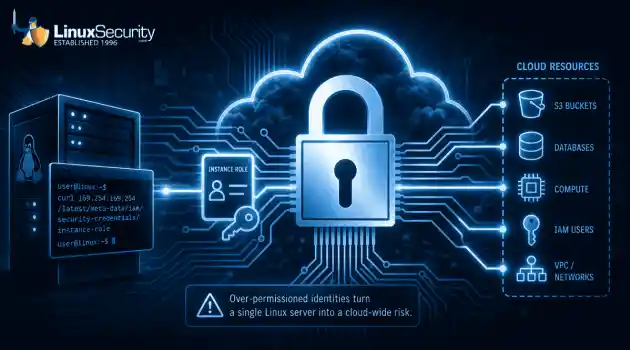
 For years, we secured our Linux infrastructure by building walls: VPCs, security groups, and hardened SSH configurations. We treated the cloud like a virtual data center, assuming that if we kept the "bad guys" out of the network, our workloads were safe. . That model is no longer sufficient. Today, one of the most common paths from an initial compromise to a major cloud breach is the identity assigned to your Linux workload. When an attacker gains code execution on a Linux instance—through a...
 Jul 17, 2026
 security practices patch management
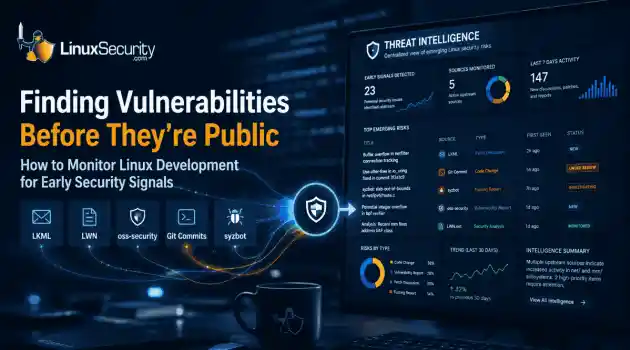
 Most of us don't hear about a kernel vulnerability until a CVE lands in our inbox or the vulnerability scanner starts complaining. By then, the patch isn't new anymore. Kernel developers may have been passing it around for review, arguing over the implementation, or revising it for days before anyone outside that community noticed it. None of those discussions are secret. They're sitting in mailing list archives, Git commits, and patch reviews where they've been the whole time. The strange...
Jul 14, 2026
 Linux security cyber attacks
 Every Linux server in your fleet produces thousands of events every minute. From journald logs and auditd records to kernel-level eBPF hooks, your systems are constantly talking. Most of that noise is just the mundane churn of system services, CI/CD runners, or routine administrative automation. But among that noise, an attacker might be establishing a foothold, moving laterally, or setting up persistence. The challenge for any security team is: how do you separate the routine from the...
Jul 13, 2026
 open-source infrastructure risk
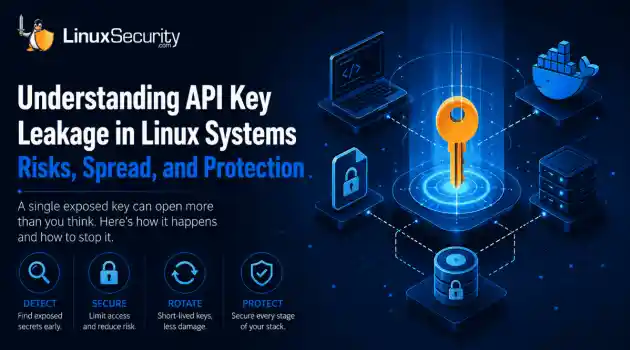
 Security scanners flag exposed API keys in public repositories every day. The initial response is usually predictable: delete the commit, revoke the credential, and move on. That’s a mistake. . In a real Linux environment, an API key never stays in one place. By the time it hits a public repo, it’s already everywhere. It’s in the CI/CD pipeline. It’s in your container registry. It’s in the build logs. It’s in the backups. Git makes this worse because the history never dies. Deleting a file in...
Jul 11, 2026
 open-source rootkit
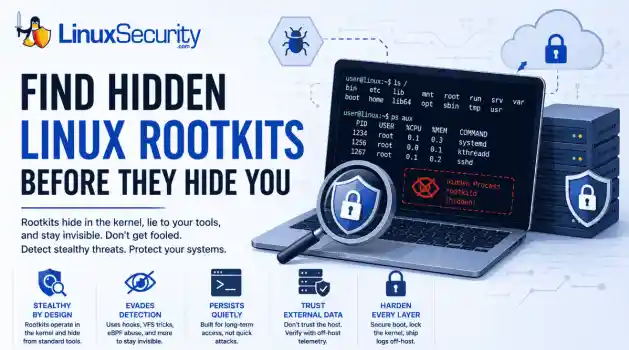
 Most of us think of Linux rootkits as ancient history—the stuff of 90s hacking forums and clunky malware that would crash your system if you looked at it the wrong way. But if you think they’ve gone away, you’re mistaken. They’ve just gotten smarter. . Modern attackers aren't using the noisy tools of the past. Today’s threats are surgical. Many of today’s most advanced Linux rootkits operate at the kernel level or abuse legitimate system features to blend in with normal traffic. They’re...
Jul 09, 2026
 Refine features
X Clear Filters
Get the latest News and Insights
Get the latest Linux and open source security news straight to your inbox.
Community Poll
Is continuous patching actually viable?
Trending Features
Loading...
Explore Latest Linux Security features
We found -2 articles for you...
102
 open-sourcesecurity traininguser habits
The Linux Command Line: Bridging Security Awareness for Sysadmins
I’ve been around Linux long enough to stop expecting much from intro books. Most of them walk through commands — maybe a few flags — and never explain why those commands behave the way they do. You end up memorizing steps instead of understanding the system underneath. . When I picked up William Shotts’ The Linux Command Line (3rd Edition) again, I expected more of the same. A quick brush-up, maybe a reminder of a few forgotten shortcuts. Nothing major. What surprised me wasn’t the content, it was the way it’s taught. The book teaches you to think in sequences, not one command at a time. You learn how actions connect and how a simple pipeline becomes a habit of reasoning through cause and effect. What it really teaches is patience. Precision builds with time, and repetition becomes intuition. That steady rhythm mirrors how experienced operators work — calm, careful, and deliberate. Shotts doesn’t talk about security directly, but the discipline he teaches is the same foundation. Knowing why something happens before it breaks. Building habits that prevent mistakes instead of reacting to them. That’s the part people skip when they chase tools instead of understanding. Core Lessons: What The Linux Command Line Gets Right for Security Most Linux books stop at syntax. Shotts keeps going, showing how awareness, not just commands, keeps a system steady. Shotts’ The Linux Command Line (3rd Edition) isn’t branded as a security guide, but it builds the habits that make one. It trains you to think like the system thinks — not just run commands until something works. A. Building Real Command Fluency for Security Incidents Shotts doesn’t treat the shell as a collection of syntax rules. He treats the shell as the system’s center of gravity, where every process and command eventually intersects. Each lesson moves from simple operations to understanding how those operations behave — a theme repeated across Shotts’ tutorials on redirection, piping, andprocess management (Shotts, The Linux Command Line, Ch. 7–11). When you redirect output or manage processes with ps and kill , you’re learning how Linux decides what runs, what waits, and what dies. That’s not trivia; it’s what real system literacy looks like when you’re solving problems instead of memorizing fixes. Most security training skips this layer. It tells you how to lock things down, not how they move. The book forces you to slow down and see how actions cascade, which is how you spot risk before it turns into an outage or an alert. B. Developing Situational Awareness in Linux Environments Many of the book’s exercises echo real-world triage. You collect evidence, compare behavior, and test assumptions. Commands like grep , find , and top appear again and again, used the same way you would during an incident or investigation. Over time, you start to recognize what “normal” feels like — which processes belong, how logs behave, when a system’s idle state feels right. That sense of baseline awareness comes straight from practice. That baseline awareness is what sharpens your response when something breaks. The perspective ties neatly to Cutting-edge Security Tools for Your Linux Environment in 2024 , which outlines how monitoring and automation tools can improve that same kind of visibility. His method doesn’t start with tools at all. It begins with awareness, such as learning to read the system before you try to automate it. C. Learning Secure Shell Scripting and Automation Habits When Shotts introduces shell scripting, he keeps it grounded in practice. He explains why quoting variables prevents unwanted expansion, why exit codes matter, and how to handle user input without breaking your script. None of it is framed as “security,” but every bit of it prevents sloppy automation from becoming a liability. The book’s examples of careful scripting tie directly to what the OWASP Secure Coding Practices guide still recommends: quote every variable,validate every input, and avoid unsafe paths. It’s the kind of training that sticks because it’s routine. You’re not memorizing a checklist; you’re building safe defaults into your workflow. Most admins think of that as working defensively, building systems that keep running when everything else starts to strain. Modern Gaps: Updating Linux Security Fundamentals for 2025 Shotts covers the essentials well—permissions, scripting, navigation. But Linux has shifted, and some parts haven’t caught up. Modernizing Privilege and Access Control The book handles file permissions, users, and groups, but production systems now run with layered privilege: sudo policies, ACLs, temporary access tokens, and even container roles (Red Hat Enterprise Linux Security Guide, 2025) . That’s the reality most admins live in. Bringing Network Awareness Into the Security Picture The book’s treatment of tools like netstat and lsof is solid but limited. In production, those tools are your first defense. According to the MITRE ATT&CK framework (T1049) , unknown ports and unexpected listeners are often the first indicators of compromise A short example of using these commands to spot anomalies would turn them from utilities into investigative tools. Adding Real-World Consequences to Secure Automation The scripting chapters teach structure but skip consequence. In real systems, a single unquoted variable or unsafe $PATH can lead to privilege escalation or broken automation. Even a few paragraphs about what happens when those oversights hit production would connect syntax to security. Shotts already nails discipline. A bit of modern context would show exactly why it matters. Why Command-Line Literacy Still Matters for Security Teams Most security issues trace back to how people use their tools, not the alerts themselves. Shotts’ book reinforces that by teaching you to slow down and understand what the system’s telling you before you move on. With automated patching,scanners, and AI filters running in the background, it’s easy to forget how much still depends on basic literacy. You have to recognize a normal process list, notice when a log line feels off, and catch how a bad redirect can ripple through a pipeline. Those aren’t new skills; they’re what make everything else work. That’s why The Linux Command Line holds up. It doesn’t chase trends; it builds habits that last. You read it once for the commands, and again years later to remember what discipline looks like in practice. Real security doesn’t start with tools. It starts in the shell, in how carefully you type, test, and pay attention to what’s in front of you. Why The Linux Command Line Still Works as Security Training Even with its gaps, The Linux Command Line (3rd Edition) gets something right that a lot of technical books miss. It drills the fundamentals that most professionals stop practicing once they’re deep in automation or cloud work. It builds instincts that harden systems almost by habit: Always verify before trusting. Understand what’s running before you patch it. Never automate what you don’t understand. Those rules sound simple, but they scale. They’re the same logic is behind the new wave of AI-powered tooling covered in AI-Driven Tools Enhance Linux Security Against Emerging Threats . Even as platforms evolve, that base layer of awareness — checking, confirming, understanding — still holds everything else together. So I don’t read Shotts’ book as a beginner’s guide anymore. I read it as a reset. A reminder that most secure behavior starts with knowing exactly what your system is doing before you tell it to do more. What Seasoned Linux Pros Still Learn from The Linux Command Line Many books promise to teach security, but lose focus after the first chapter. Shotts doesn’t make that claim, but the lessons in The Linux Command Line get there anyway — through practice, discipline, and repetition. It’s not about syntaxor tools; it’s about restraint. Reading logs first. Checking permissions. Understanding before acting. That’s how the book teaches security without ever calling it that. It’s a good read for anyone who works close to the system: New Linux users who want to understand the environment beneath every interface. Junior sysadmins are learning how to think defensively. Security practitioners sharpening instincts that have grown dull. Anyone who still believes that typing carefully matters. That’s the real lesson here. Security isn’t a new tool or framework. It’s discipline — practiced one command at a time. . Explore the importance of command-line discipline for security in Linux environments focusing on foundational habits.. Linux Command Line, security training, situational awareness, command fluency. . MaK Ulac
 Oct 28, 2025
•
Oct 28, 2025
•
102
 network securitysecurity trainingcybersecurity education
Boost Your Cybersecurity Knowledge Through Linux Learning Opportunities
It can be pretty fulfilling to improve your career in cybersecurity, and there are plenty of methods you can consider that will help boost your capabilities. The need for cybersecurity professionals has increased over the past few years; an Accenture report stated that 68% of business leaders find their cybersecurity risks to be increasing, and a survey from the Linux Foundation explained that companies are trying to hire more open-source talent to help companies install protection throughout their systems.. Try to refine your knowledge of how to use Linux Security, an invaluable cybersecurity resource that is secure, cost-effective, and supportive of various programming languages. Strong open-source skills are one of the best things you can do to secure a well-paying job. Learning an array of open-source skills, from cloud security to DevOps, will provide you with more opportunities that can provide salaries nearing $145,000. This article will discuss the basics of engaging in Linux Security training and how to utilize Linux Security classes in your future career paths. What is Linux Security? Why Do Companies Use It for Network Security? Linux is a security software capable of protecting your company’s systems from any kind of online or cloud security breach, including phishing attacks, malware or ransomware, data theft, and more. Linux Security provides various services to combat network security threats, such as malware scanning, file protection, system monitoring, and scam detection. Using Linux Security to back your company’s system is vital for preventing attacks in network security because it works 24/7/365 to protect you from anything that could harm your system. Linux Security can work across multiple servers to keep unauthorized outsiders from accessing your files, stop any malware threat in its tracks, and constantly watch over your system as a whole. Certifications that Require an Understanding of Linux Security If you plan to work in the realm of cybersecurity, you will mostdefinitely encounter a Linux environment at some point, perhaps for administrative functions like pulling logs or for accessing tools used in daily operations. Due to its expansive nature, understanding Linux security is required for cybersecurity certifications. Here are a few certificates that would ask you to have concrete knowledge of Linux Security modules and systems: Certified Information Systems Security Professional (CISSP) is administered by (ISC)², a cybersecurity organization, and is one of the most sought-after credentials in the industry. Earning your CISSP demonstrates that you’re experienced in IT security and capable of designing, implementing, and monitoring a cybersecurity program. Certified Information Systems Auditor (CISA) from the IT professional association ISACA helps demonstrate your expertise in assessing cybersecurity vulnerabilities, designing implementation controls, and reporting on compliance and the most recognized certifications for cyber and cloud security auditing careers. Certified Information Security Manager (CISM) , also from ISACA, can validate your expertise in the management side of information security, including topics like governance, program development, and program, incident, and risk management. CompTIA Security+ (Security+) is an entry-level security certification that validates the core skills needed in any cybersecurity role. This certification demonstrates your ability to assess an organization's security by monitoring and securing cloud, mobile, and Internet of Things (IoT) environments, understanding laws and regulations related to risk and compliance, and identifying and responding to network security issues and incidents. GIAC Security Essentials Certification (GSEC) , from the Global Information Assurance Certification (GIAC), is an entry-level security credential for those with a background in information systems and networking. Earning this credential validates your skills in security tasks like active defense, networksecurity, cryptography, incident response, and cloud security. A Systems Security Certified Practitioner (SSCP) is an intermediate security credential from (ISC)² that demonstrates to employers that you have the skills to design, implement, and monitor a secure IT infrastructure. The exam tests your expertise in access controls, risk identification, analysis, security administration, incident response, lightweight cryptography, and network, communications, systems, and application security trends and issues. CompTIA Advanced Security Practitioner (CASP) is designed for cybersecurity professio nals who demonstrate advanced skills but want to continue working in technology (as opposed to management). The exam covers topics like enterprise security domain, risk analysis, software and cybersecurity vulnerabilities, cloud and virtualization technologies, and cryptography cybersecurity techniques. It is a good idea to make the most of your Linux Security training and skills while also earning your certification(s), and the following knowledge will improve your experience, strengthen your capabilities, and grow your career in cybersecurity: Broadening your understanding of Linux security modules, systems, and network administration, including the large volume of commands and file locations Searching system files and logs for critical events on a range of different servers Using Linux security modules like SELinux and AppArmor to protect against attacks Familiarizing yourself with open-source network security toolkits, both ones that can be pre-installed and added on Learning how to use bash scripting inputs a series of commands written in a file that the bash program can execute. Obtaining certifications in and expanding your knowledge regarding Linux will be helpful as you seek a cybersecurity career; these options are a great place to get started. Linux Security Certifications Certifications play an essential role in cybersecurity by verifying your proficiency in suchprograms to prospective employers after they teach you new skills or enabling IT professionals to build upon their experience and expertise. The Linux Security Certification (LFS416) contains some of the best and most extensive courses you can take since it specifically aims to improve your Linux knowledge and skills. Linux Security classes provide insight on a variety of topics specific to Linux security, including how to: Assess network security issues and risks in your enterprise Linux environment. Increase data and network security with proper techniques and tools Deploy and use monitoring and detection tools to stop attacks on network security Gain visibility into possible cybersecurity vulnerabilities Configure your systems for compliance with HIPAA, DISA STIG, etc. The Linux Security Certification also teaches you the art and science of developing your Linux security policy and response strategy to ensure security throughout your system. Careers in Cybersecurity Be sure to choose an ideal career path within the world of cybersecurity by considering all of the possibilities provided to you. Here are a few more robust options: Cybersecurity Specialists maintain data and network security for companies by keeping tabs on systems, reporting any network security issues to management, anticipating future network security threats, and advising companies on how to deal with them. Information Security or Vulnerability Analysts detect weaknesses in networks or software so changes can be made to improve them and strengthen the company’s data and network security. Penetration Testers help organizations identify and mitigate cybersecurity vulnerabilities that affect their digital assets and computer networks. Cybersecurity Architects are responsible for planning, designing, testing, implementing, and maintaining an organization’s computer data and network security infrastructure. Security or Cybersecurity Engineers identify network security threats andcybersecurity vulnerabilities in systems and software, developing and implementing solutions to defend against hacking, malware, ransomware, and insider network security issues. Incident Responders, Intrusion Analysts, or CSIRT Engineers provide a rapid initial response to any IT network security threats, incidents, or cyber-attacks within your organization. What Are Cybersecurity Analysts and How Can They Help Protect an Organization Against Threats? Cybersecurity analysts are trained professionals specializing in IT infrastructure and network security protection. They have an extensive understanding of cyberattacks, malware, and cybercriminal behavior, which they utilize to comprehend a company’s IT infrastructure. Analysts are responsible for monitoring and evaluating a company’s cybersecurity vulnerabilities and network security threats to their systems and anticipating attacks in network security so they can prevent them. Cybersecurity analysts continuously look for ways to enhance company network security and protect sensitive information by configuring tools, reporting issues, and evaluating weaknesses. How Can I Advance My Cybersecurity Career? You must provide yourself the opportunity to understand cybersecurity and the field in order to help you solidify your career. Here are some suggestions: Research the market: Make sure you understand how cybersecurity works in order to make the right business decisions regarding all aspects of its functionality, all of which will be helpful in expanding your knowledge of the field. Apply to fitting roles: Focus on applying for positions that relate to your skill set as much as possible rather than ones where you do not have comprehensive knowledge of the information required. Keep your resume polished: Improving and perfecting your resume is vital to impressing possible employers on your hunt for a job position. Avoid overselling yourself: Lying about your experiences and capabilities or promising proficiency insystems you are not strong in will not help boost your career, so try to be honest about your skills. Continue Expanding Your Linux Security Knowledge Learning to navigate Linux security platforms is helpful for current or future cybersecurity professionals, as the demand for people with this knowledge is constantly growing. Having the education and certifications needed to broaden the possibilities for your career is helpful in providing you with as many opportunities as possible. Taking Linux security classes will provide you with significantly more options for a career, so do consider taking one or two to assist yourself. . Advance your professional journey with Linux Security training, essential for fighting off cyber attacks and boosting employment opportunities.. Linux Certifications, Cybersecurity Skills, Open Source Security, Career Advancement, Linux Training. . Brittany Day
Jun 03, 2022
•

102
 security trainingonline learninginformation assurance
Enroll in the Free LearnSIA Course on Security Principles and Networking
The Survivability and Information Assurance (SIA) course was originally developed by a team at Carnegie Mellon, led by Lawrence Rogers ( /about/divisions/cert/index.cfm ). Back in 2010, I requested a license to continue the development of the course because it provides useful information on Information Assurance. Also, this course will always be freely available for anyone to use in the classroom or self-study. There are three parts to the LearnSIA curriculum. . 1. Principles of Survivability and Information Assurance: This course presents in detail the ten principles of survivability and information assurance, on which the entire SIA curriculum is based. 2. Information Assurance Networking Fundamentals: This course applies the ten principles to the concepts and an implementation of TCP/IP networking. This is an in-depth look at networking protocols, namely TCP/IP. There are a lot of exercises that show how to read and interpret those protocols using Wireshark, formerly Ethereal. The current tutorials will have to be upgraded to reflect the use of Wireshark since it was, then, called Ethereal. 3. Sustaining, Improving, and Building Survivable Functional Units (SFUs). The third part is SIA III, which combines SIA I and SIA II and uses a fictitious company that the students learn to secure by setting up secure services on virtual machines. Again, it is also a very hands-on portion of the course. LearnSIA doesn't attempt to compete with commercial vendors and it doesn't offer certifications. Those interested in certifications should seek out certifications with SANS ( Cyber Security Training, Degrees & Resources | SANS Institute ), Certified Ethical Hacker (https://www.eccouncil.org/ Security+ ( Security+ (Plus) Certification | CompTIA IT Certifications ) or other security certification vendors. The LearnSIA curriculum provides a solid foundation for a systems administrator or security administrator to be able to effectively approach security with a wholistic view of how it applies to the entireorganization. That is the fundamental approach for the SIA I course. This is a call for those that would like to help keep this course updated, help create video tutorials, transcribing audio from the videos for those that are blind or hard of hearing, maintain lesson plans, or just proofread. Of course, you can also enjoy free access to the course. The current needs for participating in developing the LearnSIA curriculum are all outlined on the website learnsia. One important note about the LearnSIA curriculum is that it is a living course. It will never be in a "final" state. The content will change as long as the industry continues to change. Please join me in this endeavor to provide a good quality, free, and ever changing course online for anyone to learn. About the Author Duane Dunston is an Information Security practitioner for STG Inc. and has contributed several articles to Linuxsecurity.com and has been in the Information Security industry since 1997. He is also an adjunct Information Assurance instructor at Pfeiffer University, his alma matter ('97 & '99). Duane is a member of the Asheville River Arts District where he works with silver and copper under the Iron Fist of Bill Churlik at Earth Speak Arts ( ). . 1. Principles of Survivability and Information Assurance: This course presents in detail the ten pri. survivability, information, assurance, (sia), course, originally, developed, carne. . Dave Wreski
Oct 04, 2011
•

Get the latest News and Insights
Get the latest Linux and open source security news straight to your inbox.
Community Poll
Is continuous patching actually viable?
Trending Features
Search Topics
Powered By

Linux Security - Your source for Top Linux News, Advisories, HOWTOs and Feature Releases
QUICK LINKS
subscribe to newsletters!
Like staying secure? So do we.
Sign up for updates, tips, and alerts!