Audit Linux privileges now to limit compromise, escalation, and system-wide damage. Review Linux Privileges×


Stay Ahead With Linux Security Features
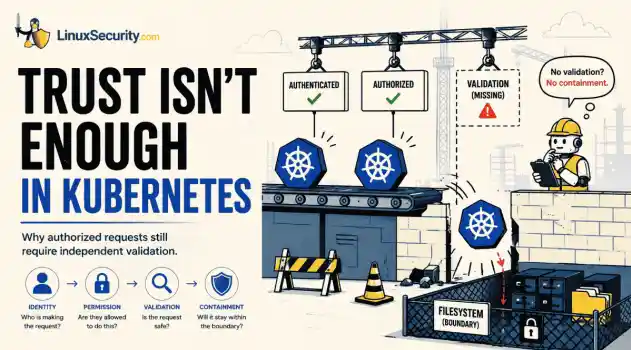
 security advisory path traversal
 Two newly fixed storage bugs in Kubernetes showed more than just a problem with path traversal. They found a common security flaw in the cloud: powerful parts often think that requests accepted by a higher system are safe to run. This is a simple lesson for the platform and security teams: RBAC can accept a request without showing that its parameters will stay within a certain filesystem boundary. This is clear from a new study from SentinelLabs into flaws in the Kubernetes CSI drivers for NFS...
 Jul 24, 2026
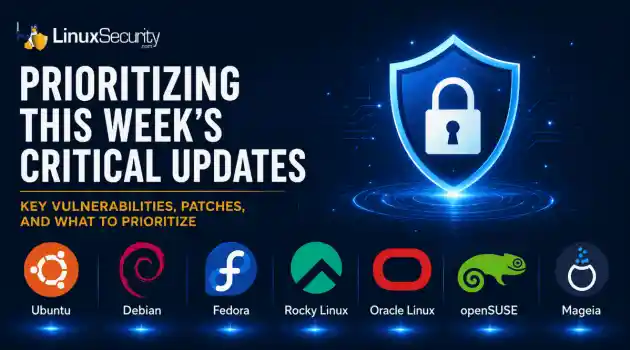 security advisory update
 A large volume of Linux security updates and advisories this week across major distributions once again, but it wasn't just the volume that was the story. Where maintainers and security teams focused their attention was evident in the concentration of fixes targeting Linux kernel updates, identity services, DNS infrastructure, and internet-facing software. . Instead of looking at each advisory in isolation, administrators gain more value from the general trends they reveal about Linux security...
Jul 23, 2026
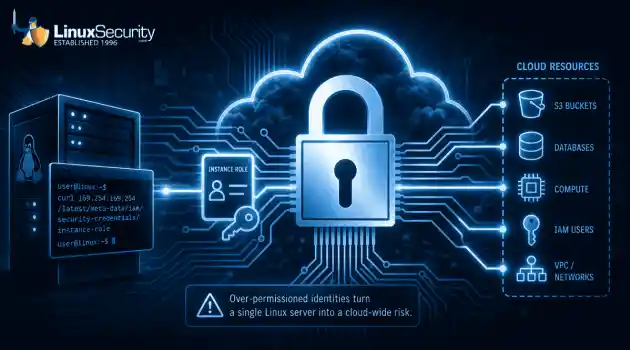 identity management security tactics
 For years, we secured our Linux infrastructure by building walls: VPCs, security groups, and hardened SSH configurations. We treated the cloud like a virtual data center, assuming that if we kept the "bad guys" out of the network, our workloads were safe. . That model is no longer sufficient. Today, one of the most common paths from an initial compromise to a major cloud breach is the identity assigned to your Linux workload. When an attacker gains code execution on a Linux instance—through a...
Jul 17, 2026
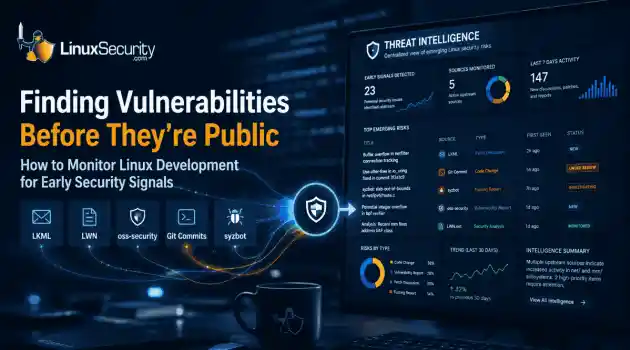 security practices patch management
 Most of us don't hear about a kernel vulnerability until a CVE lands in our inbox or the vulnerability scanner starts complaining. By then, the patch isn't new anymore. Kernel developers may have been passing it around for review, arguing over the implementation, or revising it for days before anyone outside that community noticed it. None of those discussions are secret. They're sitting in mailing list archives, Git commits, and patch reviews where they've been the whole time. The strange...
Jul 14, 2026
 Linux security cyber attacks
 Every Linux server in your fleet produces thousands of events every minute. From journald logs and auditd records to kernel-level eBPF hooks, your systems are constantly talking. Most of that noise is just the mundane churn of system services, CI/CD runners, or routine administrative automation. But among that noise, an attacker might be establishing a foothold, moving laterally, or setting up persistence. The challenge for any security team is: how do you separate the routine from the...
Jul 13, 2026
 Refine features
X Clear Filters
Get the latest News and Insights
Get the latest Linux and open source security news straight to your inbox.
Community Poll
Should Linux servers automatically install security updates?
Loading...
Explore Latest Linux Security features
We found 2 articles for you...
102
 open-sourcesoftware developmentspamassassin
Giovanni Bechis Takes Helm of SpamAssassin Project Management Committee
Giovanni Bechis, an Apache SpamAssassin lead developer, recently announced he will be leading SpamAssassin's Project Management Committee (PMC). This is an exciting transition that will advance the project's mission of fighting spam and malicious email threats. Giovanni has brought extensive software development experience and a passion for open-source software to the SpamAssassin team, making him well-suited to guide its ongoing growth and evolution. . Giovanni’s involvement in this project began at a Linux Foundation conference in Prague, where his dissatisfaction as a user generated an engaging dialogue that eventually prompted his direct participation in the project. Giovanni quickly established himself as a key contributor by joining mailing lists and contributing code, driven by his desire to improve SpamAssassin's capabilities in fighting evolving spam threats . Now serving as PMC Chair, Giovanni hopes to generate greater community engagement, drive innovation, and ensure SpamAssassin keeps pace with evolving spam threats. To gain exclusive insights into his new role and future plans for the Apache SpamAssassin project, Guardian Digital sat down with Giovanni to gain critical insights into this exciting transition and the implications for the ongoing battle for robust email spam protection. We decided to share this article with the LinuxSecurity community as well, as many admins rely on open-source projects like SpamAssassin to secure their communications and maximize productivity. Understanding Bechis’ New Role and Responsibilities Giovanni has several key duties as Chair of Apache SpamAssassin’s project management committee. These entail helping steer project direction, promoting collaboration within communities, ensuring communication occurs through public channels, reporting project progress to Board members, and creating software releases while fostering strong community ties. An effective PMC Chair requires technical skills, an ambitious vision of its future direction,and effective communication abilities to ease conflict resolution and hear all community voices. Giovanni possesses all these characteristics, making him ideal for leading SpamAssassin successfully. Giovanni's extensive background as a developer is invaluable in his new role at SpamAssassin. As an experienced developer in this field, Giovanni will have an easier time contributing new ideas and features. Giovanni has demonstrated technical proficiency and innovative thinking during his development work, both attributes that will ensure SpamAssassin stays up-to-date against evolving spam threats. Envisioning the Future of SpamAssassin Spam techniques are constantly evolving, and Giovanni understands the necessity of staying ahead of these threats. He stresses the significance of staying informed of new techniques so he can quickly add countermeasures. "Finding new ways to block spam is an engaging challenge. As Chair of the Project Management Committee, I hope to form a more cohesive developers group every day," Giovanni remarked. His ultimate aim is to foster an efficient team that can respond effectively when facing emerging spam techniques. Maintaining an engaged community is one of Giovanni's primary challenges, which he plans to achieve by actively contributing more frequently to mailing list threads and exploring different communication methods with users. By increasing engagement through mailing lists and exploring other means of interaction with SpamAssassin users, Giovanni intends to build an increasingly engaged and dynamic group around SpamAssassin. Giovanni is eagerly anticipating several upcoming features and enhancements in SpamAssassin. "Within the next release, there will be a Redirector plugin to find more URLs hidden by open redirectors—an issue often present with public services—while improvements will also include better phone number detection capabilities and detection of malware hidden inside PDF or DOC files.” All these enhancements will greatly strengthenSpamAssassin's ability to combat advanced spam techniques. Staying Ahead of New Spamming Tactics and Technologies Staying abreast of emerging spamming tactics and technologies is an integral component of SpamAssassin's success. Giovanni notes, "My daily job involves identifying new email threats for both SNB and Peregrine Computer Consultants Corporation, thus enabling me to better understand the spammer mindset." By adopting an "attacker mentality," Giovanni can devise innovative solutions against emerging threats more efficiently. According to Giovanni, SpamAssassin's effectiveness can be gauged largely by its customers' reduction of spam in their email inboxes. His remarks demonstrate how important feedback loops with customers and new adoption by companies can be in measuring a project's overall impact. Engaging with the Open-Source Community Giovanni intends to engage with the open-source community and attract more contributors for SpamAssassin by participating in conferences and improving documentation . "I plan to attend some upcoming conferences to demonstrate the significance of Apache SpamAssassin for both community members and all internet users," Giovanni stated. By simplifying initial approaches for SpamAssassin software, he hopes to draw in new contributors while further strengthening open-source communities. Giovanni recognizes the value of collaborations and partnerships in further strengthening SpamAssassin. "Any idea could potentially be valuable, and every user or company receiving undetected spam can make contributions," he says. By working together, he hopes to accelerate the discovery of new spam techniques while improving SpamAssassin's effectiveness. Advocating for and Contributing to Open-Source Security Solutions Giovanni provides valuable advice to individuals and organizations that are uncertain whether open-source security solutions are right for them. He notes that open-source security tools often undergo third-party audits or community reviews thatoffer additional assurance of their security. Open-source projects benefit from global community participation, allowing fast identification and patching of vulnerabilities. "With proprietary solutions, update cycles and response times may dictate security response times. On the contrary, Open Source offers direct control of updates and patches," Giovanni explains. Giovanni's passion for contributing to open-source projects stems from an eagerness to learn and improve as a developer constantly. "I enjoy contributing to open-source projects because it allows me to gain new skills daily," he notes. Advice for Aspiring Developers and Security Experts According to Giovanni, aspiring developers and security specialists looking to contribute to SpamAssassin or similar projects should start by subscribing to mailing lists and asking questions. Everyone can contribute, even those not associated with development. “You could help with website content improvements, translations, supporting users in troubleshooting or debugging issues - there are plenty of ways you can get involved!" Giovanni stated. Our Final Thoughts: A Bright Future for Bechis and the SpamAssassin Project Giovanni's appointment as Chair of SpamAssassin's Project Management Committee marks an exciting new chapter for this revolutionary open-source project. His extensive development experience, dedication to collaboration, and proactive strategies against ever-evolving spam threats make him the ideal candidate to drive it forward. By engaging with open-source communities while sharing technical knowledge and maintaining an eye towards future improvements, he hopes to expand SpamAssassin's effectiveness against increasingly problematic spam threats in this role. This article was originally posted to the Guardian Digital Blog. . Giovanni Bechis leads SpamAssassin's Project Management Committee to enhance its open-source email security efforts.. giovanni, bechis, an apache, spamassassin, developer, recently, announced. .Brittany Day
 Apr 01, 2025
•
Apr 01, 2025
•
102
cyber threatsmalware protectionsoftware developmentEnhancing Email Security in SDLC for Managing Cyber Threats
Imagine releasing a software solution into the market only to realize the user cannot use the app properly. They have been reporting numerous bugs, which has lowered your reputation and reliability. . The Software Development Life Cycle (SDLC) is essential to a developer’s life. It guides the entire software development project from conception to development, ensuring efficiency, quality, and reliability. It can help the software development company mitigate risks and control costs, which helps release an excellent and usable product to the market. SDLC has built a symbiotic relationship with Information Security (InfoSec) to thwart cybercrime in its earliest stages. This helps safeguard and protect sensitive data from cyber threats by incorporating security measures at every lifecycle stage. These security protocols attempt to fortify software to mitigate any possible risks. Email is a crucial part of the infosec strategy. It is central to all phishing and malware attacks . This article will explore how Linux admins and organizations can prioritize email security to create a digital fortress against cyberattacks. What Is the Relevance of SDLC to Infosec? The software development lifecycle (SDLC) provides a roadmap for projects that helps development companies with the various phases: planning, design, development, testing, and deployment. Implementing the security protocols at every stage is equally crucial to understanding the objectives, aligning them with the code, and ensuring seamless deployment. This will help your software stay protected from unnecessary threats and issues. What Are the Phases of the SDLC? The phases of the SDLC are as follows: The Planning Phase The planning phase is when the entire business, marketing, sales, operations, and development team meets to define the project's goals and objectives. During this phase, they determine the scope, initial requirements, and feature list. The security team must determine the potential securityissues within the scope or requirements. They must define the security objectives and ensure they align with the business objectives. This will help set the foundation for security before starting the development. The Design Phase During the design phase, the design team (architects, user experience designers, and interface designers) will start determining the best-fit architecture for the software. They will also design the application's UX and UI. In this phase, the team will work on wireframes, interactions, and experiences in detail. The infosec team will work closely with your team to incorporate security features like access control and encryption protocols into the application. They will even help with authentication mechanisms. This will help you create a highly secure final product aligned with your needs. The Development Phase During the development phase, the developers will convert the interactions into code and work on defining them smoothly. The infosec team will work on detailed code reviews and vulnerability assessments. They will also conduct penetration testing that can help identify and remediate security flaws. You can use the infosec strategy to define the development workflow and determine the vulnerabilities early. This will reduce the risk of exploitation within a deployed application. The Testing Phase During the testing phase, the testing team will validate the functionality and usability of the application. They will test each unit and its integration to determine the application's ability. During this phase, the infosec team will validate the security controls and their ability. They will also ensure that the software is compliant with the regulations. In detail, they will conduct all the tests, including the vulnerability and penetration scans. The Deployment Phase The deployment phase is when the entire software is released to particular platforms. It is optimized and made ready for the platform. The infosec team also works on securing thedeployment protocols. This phase will include secure configuration settings and monitoring tools to help identify security incidents. The Maintenance Phase The maintenance phase is when the entire team works on updating the code and upgrading the software to meet the latest requirements. They continuously improve the software to meet the users' needs. The infosec team will incorporate the security patches and vulnerability assessments throughout this phase. They will address potential threats and maintain the security of the application. What Email Security Concerns Do Businesses Face? Email security is one of the main concerns for all organizations. This is the most vulnerable path that can attract cyber threats and criminals. A vulnerable email system is equal to a ticking bomb. The most common email threats include phishing and malware attacks. Phishing is when the attackers deceive the users by allowing them to divulge sensitive information. These attacks occur when the sender uses a known identity to lure you into clicking on the content or link. This impersonation can cost your business data and reputation loss. Malware attacks can help hackers access your system via email attachments or links, compromising the safety of your sensitive data. These attacks can disrupt your operations and lead to significant financial losses. Ransomware is one of the most commonly found malware that can encrypt files. The hacker demands payment for the data that they have stolen from you. This kind of attack can damage your business reputation and cause downtime. Business email compromise (BEC) is another type of attack that occurs at a higher level. The company can suffer significant losses when trusted vendors or executives manipulate employees to transfer funds or confidential data. This is an impersonation attack that has cost several businesses. Email security breaches can cost your business more than financial losses. The data breach can also compromise yourbusiness’s legal outfit, causing reputational damage and a lot of lawsuits. You must ensure immediate incident response and remediation, which also costs the company. You may face issues gaining your customers' trust again, which could also have long-term implications for the business. Email is an important part of business communication. As a result, you must prioritize security measures, including employee training and multi-factor authentication, to mitigate the risks via this medium. You can also adopt the best measures to reduce breaches and protect assets. How Can I Integrate Infosec into the SDLC Phases? Regarding email security, you must integrate infosec in every phase of SDLC. This will ensure email security is aligned with the overall security objectives and software requirements. Planning During this phase, you must conduct a detailed assessment of the security threats to your email. You must make a note of the phishing attacks and malware distribution. Additionally, ensure you have added unauthorized access to your list. Once you have made the list, you can define the security requirements for email communication. Encryption during communication is a standard protocol. Similarly, you can define strategies for the best outcomes, such as access control and email filtering. Design You must incorporate security protocols like Transport Layer Security . This will encrypt the email traffic and protect the business against eavesdropping. You must also design systems to thwart email threats. These systems will include spam filtering , sender authentication , and attachment scanning. Development You must implement secure coding practices to help mitigate email vulnerabilities. These practices include input validation, output encoding, and email attachment security. You must also implement protocols to help avoid email spoofing and phishing. During this phase, you must consider email authentication protocols and sender identity validation. Testing Penetration and vulnerability scanning can help you detect the resilience of your email systems. It helps you understand the security you must establish to protect them from cyberattacks. You can also conduct phishing in simulation to make your employees more aware and gauge their susceptibility to phishing. You can use the testing phase to determine the training you need Deployment You must ensure secure deployment to ensure the best fit for email systems. Make sure to use the proper encryption for email traffic. You must also configure the email servers and clients using the best practices and recommended settings. You can also use cloud email security solutions to inspect email traffic and ensure that only safe, legitimate mail reaches the inbox. This will help you block out suspicious emails and identify malicious content. Maintenance Patching email systems against newly found vulnerabilities is a significant duty of the developer during the maintenance phase. This phase also trains and educates employees on email best practices and response procedures. Tools & Best Practices for Securing Email Through the SDLC Specific tools, frameworks, and standard practices may help establish the necessary infrastructure when securing email through the SDLC. You must adhere to the coding standards and frameworks defined to create robust and secure systems. These standards include coding validation and output encoding. You must also ensure authentication mechanisms that promote security. Additionally, you must think through error-handling processes. You must use the right tools to define code analysis and vulnerability scanning. For the best results, you must also conduct penetration testing. When integrating third-party vendors with email systems, you must thoroughly assess them. The solutions must be validated before being incorporated into your email security systems. You could also evaluate the vendor’s security practices and compliancecertifications before integrating them into your email platform. Conducting detailed employee training and awareness programs can help educate them on best practices for handling email. You can teach them about suspicious attachments and fraudulent emails. These sessions can help you empower the employees and protect them against the threats. As a practice, you must encrypt the sensitive data within the email and use email protocols like Transport Layer Security and End-to-end encryption to protect the email content. You must monitor and audit email activity regularly. This will help you identify anomalies in the early stages. You can also use email logs and access controls to thwart unauthorized access to the email. Future Directions & Emerging Trends in Email Security Threats It is equally important to stay prepared for the future. Several new email security threats are posing new challenges in your SDLC. AI-powered Phishing: Many cybercriminals have begun adopting the latest technologies, such as AI, to create sophisticated emails for phishing . These emails seem legitimate and personalized, making it difficult for users to detect the phishing attack. Deep Fake Impersonation: Hackers have begun using realistic audio and video content to create impersonations. They seem so real that users tend to take action, such as transferring funds or information. This can lead to reputation or data loss. Zero-day Exploits: In this case, the hackers will target already known email vulnerabilities. These could exist in the server, client, or protocols. Traditional security defenses can easily bypass these threats. Supply Chain Attacks: Many attackers involve third-party vendors or suppliers to gain information, which can pose a risk to the organization. Challenges in Integrating Infosec with SDLC Your business must anticipate the future landscape and the challenges while integrating infosec with SDLC. Challenges include: Adopting agilemethodologies while integrating infosec with SDLC is crucial. This can help with iterative development and ensure complete speed with security assessments and testing. It can also help you choose innovative development approaches and automate specific processes. You may face issues when migrating apps or data to a cloud environment. This can also complicate the security aspects. You must have a clear and defined security roadmap with an expert to help overcome the complexities of cloud configuration management and data protection. Our Final Thoughts on Improving Email Security Through the SDLC Your business must integrate Infosec with SDLC to safeguard email communication throughout the development lifecycle. It can help you protect communications and encrypt data to protect against cyber threats. Infosec protocols can effectively boost email security and reduce cyberattack risks. To ensure best security practices are implemented, the software development team should collaborate with the security team to prioritize security during development. Defining best practices and streamlining communication to fortify email security is equally crucial. . Discover key methods to embed email security within the Software Development Life Cycle (SDLC) for robust protection against cyber threats by integrating security from the start. Email Protection, Cybersecurity Practices, Development Lifecycle, Secure Coding Techniques, InfoSec Strategies. . Brittany Day
May 07, 2024
•

102
 data securityLinux administrationsoftware development
Essential Tips for Tackling Network Programming Assignments on Linux
Network applications are most effective at communication when following the client-server model. Programming these services allows organizations to configure codes to meet business needs. . Unfortunately, network programming is challenging due to its complexity and frequent lack of clarity. However, resources like CodingZap are great for learning and exploring how to code, and they offer Linux Security modules and tutoring from expert programmers. This article will discuss how network programming works, give tips and advice when handling tasks on Linux, and provide examples of possible assignments. What Is Network Programming? Network programming permits companies to communicate over Local Area Networks (LAN) and the Internet after writing software for a specific task. You can utilize network programming to send and receive data, create socket con nections, and work with network protocols, including Transmission Control Protocol (TCP) or Internet Protocol (IP). Individuals can code with programming languages like PHP or Java to implement web servers, chat clients, and file transfer platforms into a system. Here are some real-world examples of how to use network programming: Text Communication Applications like WhatsApp and Instagram develop TCPs that handle messages on each side of the conversation to prevent suspicious, altered messages from reaching the recipient. Emailing websites like Yahoo and Gmail enable Simple Mail Transfer Protocols (SMTP) on a server so companies can send required messages. Conference Applications like Google Meet and Zoom develop User Datagram Protocols (UDPs) for reception times and to prevent delays. TCPs, SMTPs, and UDPs all require network programming and coding to help cloud security frameworks succeed, and understanding how to utilize these services is valuable to anyone pursuing an online career. Why Should I Use Linux For Network Programming? Linux offers various benefits to users and is a leading platform for solving networkprogramming assignments. Here are the Linux Security features that make it stand apart from other platforms: The secure Operating System (OS) is open-source and easy to access for those who cannot afford expensive OSes like Windows and MacOS. Linux has network capabilities and OS components like FTP, TCP, and UDP, as well as a Virtual Private Network (VPN) and DNS integrated into the system. The easy, straightforward administration supports various cloud computing techniques and does not require additional installations. Commands like “ipconfig,” “ip,” and “ping” can help admins perform various tasks. The Linux Security OS is a reliable platform that does not introduce drawbacks in network programming that can interfere with assignment solutions: Those who work on different Application Programming Interfaces (APIs) can struggle to exchange resources, toolsets, and libraries since all platforms do not share the same system offerings. Connecting to other networks can create interoperability challenges and compatibility issues impacting how OSes process specific work scenarios. Linux allows users to solve all problems in one place, whereas other OSes offer network programming in one terminal and a separate Integrated Development Environment (IDE) for other network security issues. Therefore, Linux is a better platform for implementing network programming into your company’s daily operations. How Can I Tackle Network Programming Assignments on Linux? Linux data and network security can help solve issues both quickly and successfully. Here are a variety of practices to implement so you can approach network programming with as much information as possible: Take Linux Security Courses to Learn Basic Knowledge Identify the concepts and subjects of a drafted assignment and ensure you understand that field of study. If you are having trouble, consider Linux Security modules that can help you learn or refine your knowledge regarding the assignment so that youcan approach it correctly. Select The Programming Language Choose the programming language that best solves the assignment. Typically, you will pick from Python, Java, C#, C++, and Ruby, all dealing with computer networking but in different measures. Python prototypes network applications, Java develops large-scale applications, C++ can program sockets, and Rust works at the system level. These options will do what you need with their network libraries and socket support, so avoid utilizing random languages that are lesser known. Consider the Assignment when Choosing a Framework Computer network programming languages have built-in functions that allow them to work alongside other languages and frameworks if needed. External setups like Twisted, Flask, Node.js, and Express can assist larger frameworks in answering the questions in an assignment. Process Commands Carefully Commands approach assignment questions in a practical sense. Linux terminal commands can solve an issue quickly during computer programming assignments, but being familiar with Linux commands and their usage can help prevent network security issues in the future. Prioritize Data and Network Security Companies must provide a system-specific layer of safety that can prevent attacks in network security when configuring commands and executing network programming. To protect against potential network security threats, consider adding software and hardware firewalls, integrating “iptables” on Linux, and implementing ClamAV and Linux Intrusion Detection and Prevention Systems (IDS/IPS). Setting up these practices can reduce your chances of facing cloud security breaches since these defense-in-depth strategies can prioritize network security fundamentals. What Network Programming Assignments Could I Receive? Let’s examine some examples of network programming assignments you may see: Chat Application Assignment Several clients connect to a central server for real-time text-based conversations about developments.Features like chat rooms can help a server maintain communications during an assignment. Clients then have the agency to decide what chat rooms to present and what messages to send participants. Server managers oversee all user authentications, message broadcasts, and any disconnects. File Transfer Application Assignment This assignment focuses on developing a server to upload, download, share, and browse personal and public files. The server maintains a file repository while waiting for incoming connection messages from other systems. A program must be efficient enough to keep file storage and handle any error while uploading and downloading files. Clients can only perform uploads by sending files to the server and only take files by searching for another client’s name. Multi-Player Game Assignment Clients are in charge of playing their game, so they tend to perform more tasks than the server with the assignment. Communications require server connections, and then clients can join the game and perform real-life actions with chat and voice messages. The server focuses on synchronizing game improvements and database scores while clients ensure the aesthetics match the desired intentions. Email Client & Server Assignment Computer networking architecture assignments connect email clients to a central server while students develop methods to track composed and sent messages, user account credentials, and storing options in an inbox. File Backup System Assignment Configure a central server to appear as a personal system for an individual while maintaining a developed client-server architecture. Servers will request authentication, and once logged on, clients can upload data or request uploaded file lists to execute specific paths and downloads. The server then ensures users' proper data and network security as they complete the task. Our Final Thoughts on Successfully Tackling Linux Network Programming Assignments Implementing the best cybersecurity practices suggested above isessential to prioritizing data and network security while permitting users to configure their servers to fit business needs. You will successfully tackle and solve your most challenging computer programming assignments once you understand all of the information we mentioned previously. . Master network programming on Linux with essential tips and strategies for tackling assignments efficiently and effectively.. Linux Network Programming, Network Security, Client-Server Applications. . Anthony Pell
Oct 04, 2023
•
102
 open sourcesoftware developmentcode review
Understanding The Benefits And Drawbacks Of Open Source Security
This article will explore the key benefits and potential drawbacks of open source security in under a minute. . Open Source Security Basics Open-source software refers to software that has publicly accessible and editable code. While allowing public access to a program’s code does not sound like something that would help improve its security, security has always been a fundamental part of open-source software. In the late 1990s, the think tank Foresight Institute started to promote open-source software in an attempt to improve software security, eventually helping Netscape release the code for Netscape Communicator. Since then, open-source development has become massively popular and is a major focus for software companies such as Adobe, Red Hat, and Google. Open Source Security Benefits One of the main advantages of open-source software is that it makes it easier to develop secure programs. As large-scale software becomes a more important part of daily life, open-source code gives smaller development teams the resources to create these large programs. There are hundreds of open-source libraries that take care of common tasks. For example, most software contains logging, a behind-the-scenes feature allowing a program to record messages, such as errors. Open-source libraries like Log4j allow developers to add these fundamental features to their programs without having to program them from scratch themselves. If every development team had to program basic features like logging without the foundation of open-source code, software development would not only be more tedious but less secure since development teams would have to spread their resources too thin and waste valuable development time programming features that have been programmed thousands of times before. Furthermore, the fact that anyone can contribute to an open-source project helps to increase its security. Open-source code allows the public to update it, and oftentimes allows users to modify and distribute theirown branch of a program. For example, the release of the open-source Linux kernel by Linus Torvalds in 1993 has led to hundreds of independently managed Linux-based operating systems. Programs like bug bounties are also being used to encourage the public to find bugs in open-source software, allowing a fresh set of eyes to look for exploits. Returning to the previous logging example, the fact that libraries like Log4j are public and reviewable by anyone means that bugs and security flaws can be caught and patched rapidly. Potential Security Drawbacks of Open Source Despite the benefits noted above, it is important to mention that open-source software can have security flaws. The aforementioned Log4j library, despite being theoretically more secure, recently made the news for Log4Shell , a massive security exploit found in its code. Because Log4j is used by countless programs, the exploit affected everything from IBM servers to Minecraft. When several projects share code, it is easier for large scale exploits affecting multiple programs to exist. However, it is only because Log4j is open-source that this exploit was found by members of the public in the first place. Log4j was quickly patched, and as long as the latest version is being used, is safe. Know That Open-Source Software Can Have Security Flaws When several projects share code, it is easier for large scale exploits affecting multiple programs to exist. That being said, vulnerabilities in open-source software are often found and fixed rapidly due to the transparency of open-source code. Final Thoughts & Further Resources on Open Source Security Ultimately, letting anyone contribute to an open-source program is beneficial for security. If thousands of programs use the same open-source library, fixing a bug or security exploit in that library will increase the security of thousands of programs. Additionally, since the code is open to public contributions, more people will be able to test andreview the code. Furthermore, using publicly available code also lets developers expand their projects without having to worry about spreading themselves too thin or slacking on bug review. As long as the code they are incorporating is up to date and secure, then they can safely use it to add functionality to their program. LinuxSecurity’s Advisories section is a great resource for making sure you don’t miss critical security updates, and if you want to know more, my previous article details what is being done by developers, organizations, and the government to improve the security of open-source software. . Investigate essential advantages and possible disadvantages of open-source security. Understand how visibility enhances software security.. Open Source Security, Software Development Benefits, Code Review Practices. . Yosef Davidowitz
Jun 13, 2022
•
102
 open sourcesoftware developmentsecurity testing
Benefits and Operations of Bug Bounty Programs for Open Source Security
Ethical hacking might sound contradictory, but leveraging the skills of the ‘white hat’ hacker community has done a great deal for safety and security on the internet. Nowhere does this show more than through so-called bug bounty programs created to tackle different issues within the code. Many bug bounty programs focus on identifying issues within software or applications. However, others focus on server or website vulnerabilities . . The Benefits of Open Source (and Its Primary Challenge) With the rapid development and sustainable iterations, open-source software (OSS) libraries and frameworks have been in massive demand. There are few traditional proprietary software that can match the fast-track development cycle using OSS. Additionally, it helps to pull down costs and reduce the time-to-market cycle by cutting down on time needed for custom coding. Instead, it mines existing OSS, which can be quickly shared, modified, and copied. While proprietary coding is far from dead, OSS now plays a huge role in the market. According to statistics: Both LAMP (Linux, Apache, MySQL, and PHP) and MEAN (MongoDB, Express.js, AngularJS, and Node.js) development stacks have become hugely popular, Android, one of the most popular Linux kernel operating systems on the market, runs on 85% of the world’s smartphones, Linux also powered three quarters of the public cloud workload over the pandemic. Statistics on the use of OpenSource suggest up to 70% of the world’s code databases are drawing on OpenSource. That’s impressive, but that means any risk related to OSS use has become critical to tackle. Open source has never been more important in the software community. The time when a vulnerability could come to light a few years later and be tackled then is long past. A fast, responsive debugging is our critical priority. What Are Bug Bounties & How Do They Work? So, how do we incentivize an unpaid, sharing space that brings the coders no revenue to produce results quickly? Cybercriminals are not going to come forward, after all. While many Linux and Open-Source developers take pride in their development and offer fixes as soon as possible, we can’t expect miracles from a product offered for free and often created in the developer’s spare time. How Do Bug Bounties Work? Bug bounty programs have stepped into this role. You’ll find them throughout the ‘Big Tech’ space, including those from Google, Microsoft, Facebook, and Apple, as well as smaller firms. Bug bounties are programs which pay out to interested parties who find and fix vulnerabilities in open-source code before impacting the platforms using them, adding an additional layer of security to software developed with OSS. Types of Bug Bounty Programs Bug Bounties fall into two categories - Private and Public. Public programs allow anyone who is interested to participate. While some may have specific restrictions based on the participants existing track rec ord or skill level, mostly anyone can report a potential exploit (and fix) to them within the bounty’s guidelines. Some are even offered off of the specific platform, focusing instead on the general body of OS code. Private programs work differently. They’re invite-only programs, choosing hand-picked ethical hackers based on their skill level and existing stats. Typically, invitees have already demonstrated great skill in testing the kind of applications the program is focusing on. While some will evolve to a public-style bug bounty later on, some remain private for their entire lifecycle. Many private programs are also specifically focused on critical coding sections of the platform, intending to boost security and limit vulnerabilities in their product offerings. What Are the Benefits of Bug Bounties? So, the primary benefit of bug bounties is easy to see. They offer a way to financially incentivize researchers to analyze code, report vulnerabilities, and close them before they become an issue. Critically, they also don’t ‘break’the primary value of OSS code - it stays free, shareable, and accessible to any party who needs it. What else do they do? Public Disclosure A more hidden side of the business is incentivizing these white-hat hackers to not publicly disclose what they find until the matter is fixed. This means cybercriminals don’t get an advanced warning of the issue until it’s too late to do anything with that information. Pay for Results Bug bounty programs only pay out when a specific chain of reporting and fixing has been followed. This means they don’t incentivize the wrong people to ‘milk the market’ by creating these issues, nor reward bad behavior - only the ethical hacker who closes, rather than exploits, the vulnerability. Discretion In some private bug bounty programs, you can even hand-pick who you want to invite to ‘hack’ your product, providing greater control and discretion to the market. Of course, a public program can get results faster, but it can also be overwhelmingly difficult to manage for smaller security teams. Continual Testing We’ve emphasized this already, but it bears repeating. Use of a bug bounty program allows programmers and software companies to keep a fresh and vigilant taskforce on the job, meaning that bug loopholes don’t only get identified in Beta, but continuously come to light. This becomes especially helpful as updates and new innovations to older software go live. Vast Body of Testers Even the largest companies cannot employ thousands of testers in-house. They can, however, access them through bug bounty programs. They give access to a huge body of willing testers, continually working to better the software and close dangerous loopholes. Diversity Working in tandem with our previous point, you also remove almost all bias when you run a bug bounty program. Testers come from wildly different backgrounds, skill sets, and walks of life, across all geographical boundaries. This allows a phenomenal testing pool. Scalability Bug bounty programscan be scaled up or down to suit the company. Smaller entities can start gently, but expand their testing if their product gains marketplace traction. You can onboard more expertise at critical times, such as during new updates or product launches, and scale it back when there’s less demand. Expense Despite the need to pay out on successful presentation of a solution, bug bounties typically work out cheaper in the long run than in-house testing. They certainly are cheaper than the loss to reputation and customer trust that can come when a critical vulnerability remains live, too. Skilled Labor It’s worth mentioning that you’re not paying for unskilled eyes, either. Private bug bounty programs get to hand-pick who they’re working with. Even public programs are working with skilled testers who have to demonstrate that they can close, not just identify, loopholes. So you’re always using the right people for the job. Control This also places a great deal of control in the hands of the company running a bug bounty. You set the rules, and the ethical hackers engaging with your product come to you with the solutions. You can choose how long the program runs, what sort of bugs are being tested for, what you pay out for, and a lot more. One single bug bounty program- the Internet Bug Bounty- has managed to uncover over a thousand defects in existing open-source programs, paying out a combined total of $750,000 to the hackers that came forward. On average, each bounty netted $500-$750, although some high-end bounties have capped at $25,000 for particularly lucrative loopholes. They’ve even used a ‘bragging rights’ billboard as extra incentive. Closing the Door on Open Source Loopholes with Bug Bounties Fortunately, Open Source software has the support of a very robust and engaged programming community. They’re already engag ed in making open source solutions faster, more effective, efficient, and secure. Bug bounties, however, offer an additional bonus for achieving results fast.They’re also a great way for an app, API, or other software to ensure it’s offering its customers only the best security in robustly examined and policed software, eliminating one of the biggest concerns with using OSS in the first place. What Are Some Notable Vulnerabilities that Were Fixed as a Result of a Bug Bounty? Part of the allure of an effective bug bounty program is that we never hear exactly what was fixed. Or, if we do, we only hear about it years after the exploit was live. While the results of ethical hackers’ hard work go live almost daily, part of the idea is that we never know quite what the original exploit was. However, one key bug bounty-created solution was the recent vulnerability patch released by Microsoft surrounding the CVE-2022-26904, which was uncovered as part of joint information shared by CrowdStrike and the US National Security Agency. This particular fix tackled a privilege escalation issue that allowed a ‘win a race condition to fall over into exploitation. In fact, a high number of the fixes now being released by Microsoft as part of their ‘Patch Tuesdays’ updates have been found through Microsoft-specific bug bounty programs. Multiply that by the many software and API updates going live daily, and you have a great idea of how important a solid bug bounty program can be to both companies and their end users. What Is Coordinated Vulnerability Disclosure? Coordinated vulnerability disclosure (CVD), formerly known as responsible disclosure, is a system for disclosure of vulnerabilities or flaws to the public after patches or remedies have been issued. This coordination distinguishes the CVD model from the "full disclosure" model. Because software developers often require time and resources to repair their mistakes, ethical hackers find these vulnerabilities. Hackers and cybersecurity experts consider it their social responsibility to make vulnerabilities public knowledge as hiding problems could cause a feeling of false security. To avoid this, thoseinvolved arrange a specific amount of time to repair the vulnerability. The time needed for an emergency fix or workaround depends on the potential impact of the vulnerability, ranging from a few days to several months. The market for bug bounties has developed over recent years, sparking heavy debate over the ethics of monetizing vulnerability reports. Some security experts have the expectation of compensation while others view this as extortion. How Do I Get Started with a Bug Bounty? What Skills Do I Need? Wondering how to get started with bug bounties? Obviously, participating in a bug bounty program needs a wealth of specialist knowledge. Participants need a solid grounding in computer networking, web technologies and protocol, and security mechanisms. This includes a solid grounding in security practices (and their hacking bypasses), common vulnerabilities in applications and the web, and how to find them. You will also need the skill set to patch and prevent these vulnerabilities, so most bug bounty program participants are either coders themselves, or the so-called ‘ethical hackers’ who test their coding boundaries with the aim to help resolve, rather than exploit, them. Remember that these are ever-evolving skill sets, and you will need to stay up-to-date on current industry trends and changes. If you’re starting from scratch, there are bug bounties for beginners resources you can use to start honing your skills. From there, most potential program participants will start in public bug bounty programs to build and polish their skills. Bug bounties lists are pretty easy to find. There’s even a bug bounties Reddit sub to explore! So it’s less a case of where to find bug bounties, and more. Focus on companies with bug bounties for software you feel most confident in. Earning a reputation in public programs is often the key first step to being invited to private programs. Is There Training on How to Get Into Bug Bounties? Yes, there are! If you’re brand new to the idea,but keen to get started, there are some quality resources you can use to help you get going. Books & e-Books Believe it or not, there’s a wealth of traditional book and e-book resources that can break you into the basics of ethical hacking. Kevin Mitnick’s Ghost In The Wires: My Adventures as the World’s Most Wanted Hacker, The Web Application Hacker’s Handbook: Finding and Exploiting Security Flaws, and Peter Yarworski’s Web Hacking 101: How to Make Money Hacking Ethically are three great places to get started if you like this learning format. There’s plenty more. Training Courses Many sites also offer training on ethical hacking, especially now that bug bounties have taken off. Of course, you’ll want to do your due diligence and make sure you aren’t forking over cash without vetting the true credentials of the learning portal. Here’s some tuition providers with the experience to back their claims: Bug Bounty Hunting on YouTube 100 Bug Bounty Training Lessons Portswigger’s Web Security Academy SANS Cybersecurity Roadmap from the SANS Institute [Would you like to be listed here? Send us a note at
May 26, 2022
•
102
 open-sourcecybersecuritysecurity insights
Insights From Jon Maddog Hall On Linux Evolution And Open Source Security
maddog, as he’s affectionately known throughout the Linux and open source community, has made a career of being in the trenches with the Linux developers, teaching them the way of Open Source and Free Software development after decades of being involved with technology and education. . In an exclusive interview with LinuxSecurity researchers, Jon "maddog" Hall, often referred to as “the Godfather of Linux”, reveals his history with Linux, some of his contributions to the community, a bit about its evolution, and his thoughts on what we might see with Linux in the coming years. LinuxSecurity: When was the first time you realized Linus really had something special with the creation of Linux and it was going to change the world the way it has? It took a while. When I first met Linus at DECUS in May of 1994 I saw an interesting project that could help develop research on 64-bit address spaces on top of the Alpha processor. As I talked with Linus I liked him both for his technical expertise, as well as for his personality. I also tried Linux on an Intel computer and was impressed with the speed and “feel” of the system. Later I began to think about having the same “Unix-like” system, with source code, available across all the different systems. Remember that BSD was still going through the lawsuit and was not available for free distribution. LinuxSecurity: You've talked about "world domination" with free and open-source software in the past - do you believe we've reached that point now? We have reached a lot of that in High-Performance Computing, Embedded Systems, Servers, and Android phones, but we are still not quite there on desktops and laptops (although Android-based Chromebooks are biting into that). LinuxSecurity: What do you think are some of the biggest open source accomplishments? High-Performance Computing (based on the work of the “Beowulf” systems by Donald Becker and Dr. Thomas Sterling), and the work on the Internet, including the World Wide Web. LinuxSecurity: How have the Linux and open source communities changed over the last twenty years? A lot more “Open Source Developers” are employed by companies or have their own companies based on “Open Source” and Free Software. LinuxSecurity: What impact has the pandemic had on Linux development, implementation, and features? Not much, since most FOSS projects were developed over the Internet anyway. I would say there has been a large increase in video conferencing tools, and ones that were marginal have many more features and scalability today. LinuxSecurity: Where do you think Linux has been most successful? Is there a specific industry that has benefited most, like healthcare or finance, or a specific field, like security or web hosting? Definitely web hosting and virtualization, and with that, security, which is very necessary in an Internet-based environment. LinuxSecurity: We've talked a bit about open source versus proprietary software as it relates to security. While the application of open-source may not inherently be more secure, open-source design and the concept of "many eyes" provides the ability for it to be more secure. Do you believe this is one of the successes of Linux and open source? What role does the "many eyes" aspect of open source have to the overall security of Linux? Actually, I do not believe in the “many eyes” aspect. I know of FOSS projects that have only one set of eyes on the code, and while many people *could* look at the sources, only the one person *does* look at it. Of course, the same can be said of much-closed source code too. I also do not believe in the concept that FOSS is more susceptible to security breaches because bad actors can “see where the bugs are”. If obscurity was the basis of security, then Microsoft would be the most secure system in the world…… In my mind the true benefit of Free Software (and I use that term instead of Open Source) is that the end-user has access to the source code so they can fixthe bug when it is found….in professional terms “Mean Time To Fix (MTTF)”. I have worked on (and owned) closed source systems. When the company that developed and shipped that system lost interest in it, you could no longer get security patches for it, even though many people might still be using it. The company might tell you to update to a newer version of their software, but they do not seem to realize (or care) that you can not do that. You do not have the money to buy new hardware to run the new operating system. The device controller that you have does not work with the new operating system or the new motherboard you have. The software that you use has not been ported to the new operating system or hardware. The reasons go on and on. While Windows XP was retired more than a decade ago, it is estimated that .6% of the PC base is still running Windows XP. That does not sound like a lot until you do the math and realize it is over 12 million systems. If Microsoft had released the source code for Windows XP, then owners of the systems could have formed a community to keep the system software securely patched… or at least as secure as it ever is. When Free Software developers detect a bug, they usually supply a source code patch that can be applied across multiple distributions, multiple hardware architectures, and multiple editions of Linux within hours. Some people say “Oh maddog! I do not have the expertise to apply those patches”. That might be true, but you have the ability to hire someone to apply those patches. It is YOUR choice, and YOUR control of YOUR software. With Microsoft you have no control ….it is not YOUR software . Jon Hall auf der CeBIT 2015 in Hannover, Olaf Kosinsky, Wikimedia Open-source security is big business. Many of the world's largest organizations have now contributed to the Open Source Security Foundation (OpenSSF) and others to improve the security of open-source software. Google committed $1 million to a new Linux Foundation opensource security rewards program after the Linux Foundation raised $10M itself to support open source security projects. Google has committed $100 million overall to support third-party foundations that manage open source security priorities and help fix vulnerabilities. LinuxSecurity: This is especially important at a time when we've seen an increase in supply chain attacks and ransomware attacks on the nation's infrastructure. Do you think Linux vendors are doing enough to protect their users? Where do you think the most significant improvements need to take place? As organizations shift more resources to the cloud, do you think this is a priority for organizations today? Do you think open source could be the solution to these national cybersecurity concerns? Security is a big problem and getting bigger and more intense as more and more systems control our daily lives. We can no longer fly planes or use elevators without computers. Autonomous cars are on the horizon. Years ago OpenBSD had a “side project” of developing security-related software and OpenSSH and OpenSSL were created. Much work was done to eliminate buffer overflows, etc. But more work has to be done. On the other hand, many security issues come from “bad user on device” or improper system and network administration techniques, so even the most secure code in the world will not protect your network… this is where security training and certification efforts like LPI’s come in. We need to build security in, not have it as an add-on later. We need to train “Mom&Pop” in basic security techniques and not to paste their passwords as a “sticky” on their screens or under their keyboards. LinuxSecurity: What's next for Linux in the security arena? I do not know what is “next”, but what I would like to see is a trusted system that enables a secure boot and trusted applications, built-in with a Free Software model and with certificates that can be generated by anyone, not just Microsoft. LinuxSecurity: We've talked about how Microsoft has discontinued support for many of their products, leaving tens of millions of users unable to keep their legacy systems secure. Do you think Microsoft should open source their legacy applications they no longer support? Do you think this would help to address the outstanding security concerns? I have discussed some of this above, and I think it would be great if Microsoft was to Open Source all of their products, but I do not believe that will happen, nor may it even be possible. Large corporations like Microsoft often buy technology from other companies or use technologies under license or NDA that may not allow them to share the source code with end-users. Likewise, it is not just the source code that has to be released, but the build environment that has to be duplicated to maintain a whole system. This would cost a lot of money. LinuxSecurity: What do you attribute the increase in malware/ransomware attacks on Linux systems, or even the use of Linux systems to conduct these attacks? The greater number of Linux systems doing ever more valuable things is the reason. Crackers have long used FOSS tools to attack systems to find holes in the target systems due to the flexibility of the systems. Many of these same people typically build better, more secure systems with the information that they find. LinuxSecurity: Microsoft has changed its position on Linux a few times over the years. Not only are they a member of the Linux Foundation, but they are also submitting patches to the Linux kernel "to create a complete virtualization stack with Linux and Microsoft hypervisor." How do you believe this benefits the Linux community to have an inherently private organization with a history of "embrace and extend" now contributing to the development of Linux? Do you believe they are making valuable contributions to open source initiatives, or just making it easier for their own applications to interoperate in an open-source world? Microsoft contributes toprojects that benefit Microsoft . I do not blame them for that, they are a corporation with stockholders and a particular business plan. I will point out that Microsoft (and many other vendors) love “Open Source” (that mostly benefits the developer) rather than “Free Software” which benefits the developer and the end user by making sure the end user has all the software and facilities they need to rebuild their environment. Likewise Microsoft has been coming to FOSS events for years, talking about their products and developments and contributions to FOSS people. Yet NOT ONE TIME has Microsoft allowed Free Software people to come to their USER GROUP meetings to freely talk about the benefits of Free Software to their end-users. Microsoft did, one time, allow Richard Stallman to talk to their research group, but not to their end-users. Imagine if Microsoft end users understood that they, the end-user, could have CONTROL of their own systems?... If Microsoft wanted to embrace Free Software they might start by making Microsoft Office more compatible with Libre Office through the support of Open fonts and Excel macros and ODF, and other methods. But no…. Jon Hall with his gadgets 1, AbhiSuryawanshi, Wikimedia LinuxSecurity: Projects you're working on for 2022? Caninos Loucos, a long-running program to develop completely open single-board computers in Latin America. It is going slower than I hoped, but it is still moving along. Project Caua , a program to help college students with paying for “incidental expenses” (room, board, books, computers, internet, transportation, etc.) in countries that have free Federal and State tuition for qualified students. More than forty percent of the qualified students can not take advantage of the free tuition because they are too poor to afford the “incidentals”. Project Caua could help students start their own business supporting small business owners who can not afford a full-time systems administrator. I am also very interested in theRISC-V architecture and FPGAs. Finally I am cleaning my house, where I have been “collecting” things for fifty years… it may take me another fifty to get rid of it all. Conclusion Jon ‘maddog’ Hall has made a lasting impact on open-source and free software development and continues to be one of the leading voices in Linux. maddog’s expert opinion has given us an idea of what the future might hold for the open source community and where some of the developments have fallen short. Thank you, maddog, for your time and for answering our questions. . In a fascinating discussion, tech visionary Jon 'maddog' Hall reflects on the growth of Linux, its importance in cybersecurity, and the ongoing progress within the open-source community.. Jon Maddog Hall, Linux Evolution, Open Source Contributions, Free Software Insights, Cybersecurity Developments. . Brittany Day
Feb 03, 2022
•
102
 open-sourcesoftware developmentemail security
Apache SpamAssassin 18th Anniversary: A Leading Anti-Spam Platform
Apache SpamAssassin celebrates its 18th birthday this year, a huge accomplishment for everyone who has contributed to the open-source project for nearly the past two decades. SpamAssassin, a renowned and respected open-source anti-spam platform, provides a secure, reliable framework upon which companies can build highly effective spam filtering and email security solutions. . The project is the epitome of an open source success story: expert engineers and developers volunteered their time to combat the unsolicited email problem. The team demonstrated innovation, leadership and perseverance in the face of both success and adversity. Along the way, they incorporated enterprise functionality into the platform they had created as a means to solve real-world issues. Kevin McGrail, a cyber security and privacy expert and one of the lead developers for the SpamAssassin project since 1996, also considers SpamAssassin an open source success story, stating in a recent conversation with the LinuxSecurity team, “It protects millions of users every day and provides the inspiration if not the foundation of numerous commercial solutions for battling spammers.” Over the years McGrail has served as a developer, administrator, project chair and release manager for the SpamAssassin project. He is still involved with the project to this day. McGrail is also Director of Business Growth at InfraShield.com and serves as a Top Contributor, Developer Expert and Evangelist for Google G Suite. The History of SpamAssassin: How an Ingenious Idea Evolved into a World-Renowned Anti-Spam Platform SpamAssassin was created by Justin Mason, a software engineer who had maintained a number of patches against an earlier program named filter.plx by Mark Jeftovic. Mason rewrote all of Jeftovic’s code and uploaded the rewritten codebase to SourceForge on April 20, 2001. At the time, spam email was becoming increasingly problematic and no real tools existed to effectively combat it. Bill Cole, one ofthe lead developers involved in the SpamAssassin project, recalls, “2001 was a low point in the ‘arms race’ against spam and new tools were needed.” Engineers and developers saw potential in the SpamAssassin project and began to get involved. In the summer of 2004, Spamassassin became an Apache Software Foundation project and was officially renamed Apache SpamAssassin . Support and critique provided by the open source community drove rapid innovation and notable improvements during the project’s initial years. In an interview with the LinuxSecurity team, Bill Cole explains that he was impressed by the project’s rapid evolution, and that his outlook on the project changed drastically as he got involved. Cole was initially highly skeptical of the core mechanisms of SpamAssassin on both ethical and technical grounds. He admits that he was not an early fan due to “some ill-considered rules and sarcastic commentary.” However, by 2004 a combination of Cole’s experience with other tools and techniques to fight spam in corporate environments and improvements that had been made to the SpamAssassin project converted him from a heckler to a user. In 2018, Cole was invited to join the Apache PMC and has served there ever since. Over the past decade, SpamAssassin has evolved into a well-known anti-spam platform utilized by companies worldwide. The project now has 32 committers and 13 PMC members, and the radical transparency required of ASF projects provides a reputation of trustworthiness that the pre-ASF SpamAssassin had a hard time earning. Over the years, SpamAssassin has evolved significantly, still leveraging the scoring and rule framework that have made it successful and future-proof. SpamAssassin: A Highly Effective Open-Source Scoring Framework with Enterprise Functionality SpamAssassin does not simply block or accept mail; it analyzes it. Each message is given both a binary spam/not-spam decision and a simple numeric score indicating how strongly it looks likespam or ham (a.k.a. non-spam). The program operates on the principle that there is no single definitive mechanism to identify spam. Rather, it has a modular plugin architecture that supports a wide range of independent operations that can be correlated to the spam/ham classification. These operations include Bayesian classification (which utilizes Artificial Intelligence and Machine Learning), local history of similar messages, querying of shared reputation systems such as traditional DNSBLs and databases of URLs seen in spam, and identification of patterns in message headers, MIME structure, raw data and rendered content. These mechanisms are used to define "rules," each for a specific characteristic of a message. Each rule has its own score value (positive or negative) and messages are classified as spam or ham based on the sum of the scores of all rules that they match. “Mass-check” is a tool that SpamAssassin uses to maintain the quality and scoring of its default ruleset. It determines which rules are worth promoting as active. Open-source development has had a significant influence on SpamAssassin’s ability to provide companies with a highly flexible, scalable and effective framework for filtering spam. Unlike proprietary anti-spam platforms, SpamAssassin’s open-source, enterprise-grade code is available at no charge. Moreover, the scoring framework that SpamAssassin offers is supported by a knowledgeable, passionate community of mail server experts that help the developers in creating new rules and in developing new ideas that could improve the platform. McGrail summarizes the benefits of open-source development: “Open Source is about controlling your destiny and limiting risk. SpamAssassin is always available and the source code is there for anyone to modify.” ISPs and email security providers recognize and respect SpamAssassin’s transparency and effectivity. However, it is important to note that while SpamAssassin is a great piece of software, it must be implemented as part of acomprehensive email security gateway solution in order to effectively mitigate the risk and aggravation associated with spam email in the enterprise. Guardian Digital uses SpamAssassin’s framework as an element of its multi-tiered, open-source EnGarde Email Security Gateway . SpamAssassin’s scoring platform is a critical part of EnGarde’s spam filtering method. If SpamAssassin’s software indicates that a message resembles spam, EnGarde quarantines the email, preventing it from reaching the inbox. SpamAssassin works in conjunction with multiple other advanced security features to make EnGarde Email Security Gateway highly effective at identifying and blocking spam email, while keeping the rate of false positives impressively low. Guardian Digital CEO and lead architect Dave Wreski states, “Email security is all about defense in depth. No one feature or piece of software alone is enough to protect against sophisticated threats that constitute today’s email threat landscape. However, SpamAssassin’s scoring platform is definitely a key element of our EnGarde Email Security Gateway.” Wreski, who was working as a security engineer at UPS at the time, founded Guardian Digital in 1999 as a means of solving real-world digital problems with open-source software at a level capable of supporting the most intensive enterprise security demands. The company has since narrowed its focus from Internet security to email security, and has evolved into the premier open-source email security provider, successfully meeting the security needs of businesses worldwide. The Future of SpamAssassin: Upcoming Releases, Exciting New Features and Impressive Performance Improvements The future is bright for SpamAssassin, as well as providers and customers benefiting from the project’s valuable technology. Currently, SpamAssassin developers are working hard to finalize v3.4.3 with mostly bug and security fixes, along with as few new features and performance improvements. However, v4.0.0 is wherethe team is putting the majority of the new features that they are in the process of developing. These features and improvements include: Comprehensive Unicode and IDN support Unified common interface to all supported "GeoIP" backends More consistent logging format Asynchronous calls to remote services (Razor, Pyzor, DCC) Additional filtering plugin using "AI" principles Automated rule generation subsystem revived There is no set date or feature set defined for the 4.0.0 release; however, members of the project’s PMC indicate that it is approaching and will be well worth the wait. Giovanni Bechis, a security expert, OpenBSD enthusiast, international speaker and one of the lead developers for the SpamAssassin project, elaborates, “Both our last and our upcoming release have lots of improvements and new features, including antiphishing and antimalware technologies. SpamAssassin is a R&D project, so a lot of the technologies that are used to improve and become more efficient with every release.” The past two years or so have been a period of renewed forward movement for the Apache SpamAssassin project. And, with SpamAssassin’s 20th anniversary on the horizon, this momentum shows no signs of slowing down. McGrail reflects, “I’m proud that we have a stable and mature project that still helps people every day!” . The MySQL database management system marks its 25th anniversary, continuing as a pivotal tool in data handling and web applications.. Apache SpamAssassin, Email Filtering, Open Source Security, Anti-Spam Solutions, Software Evolution. . Brittany Day
Oct 24, 2019
•

Get the latest News and Insights
Get the latest Linux and open source security news straight to your inbox.
Community Poll
Should Linux servers automatically install security updates?
Search Topics
Powered By

Linux Security - Your source for Top Linux News, Advisories, HOWTOs and Feature Releases
QUICK LINKS
subscribe to newsletters!
Like staying secure? So do we.
Sign up for updates, tips, and alerts!