Audit Linux privileges now to limit compromise, escalation, and system-wide damage. Review Linux Privileges×


Stay Ahead With Linux Security Features
 security advisory path traversal
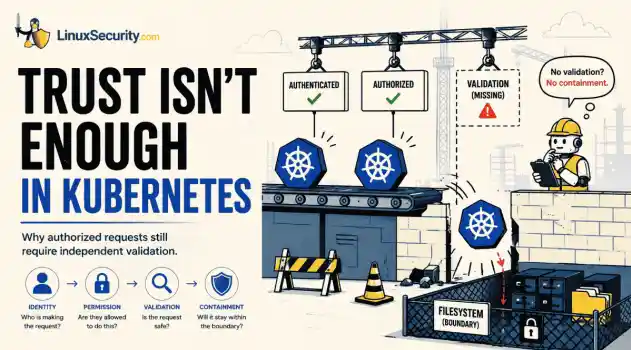
 Two newly fixed storage bugs in Kubernetes showed more than just a problem with path traversal. They found a common security flaw in the cloud: powerful parts often think that requests accepted by a higher system are safe to run. This is a simple lesson for the platform and security teams: RBAC can accept a request without showing that its parameters will stay within a certain filesystem boundary. This is clear from a new study from SentinelLabs into flaws in the Kubernetes CSI drivers for NFS...
 Jul 24, 2026
 security advisory update
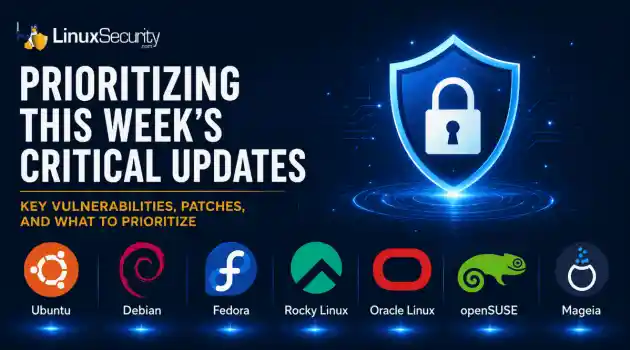
 A large volume of Linux security updates and advisories this week across major distributions once again, but it wasn't just the volume that was the story. Where maintainers and security teams focused their attention was evident in the concentration of fixes targeting Linux kernel updates, identity services, DNS infrastructure, and internet-facing software. . Instead of looking at each advisory in isolation, administrators gain more value from the general trends they reveal about Linux security...
Jul 23, 2026
 identity management security tactics
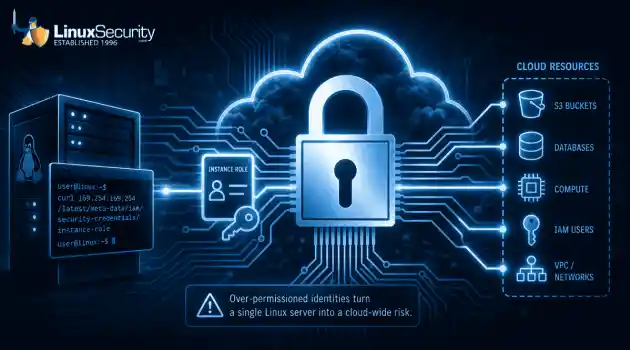
 For years, we secured our Linux infrastructure by building walls: VPCs, security groups, and hardened SSH configurations. We treated the cloud like a virtual data center, assuming that if we kept the "bad guys" out of the network, our workloads were safe. . That model is no longer sufficient. Today, one of the most common paths from an initial compromise to a major cloud breach is the identity assigned to your Linux workload. When an attacker gains code execution on a Linux instance—through a...
Jul 17, 2026
 security practices patch management
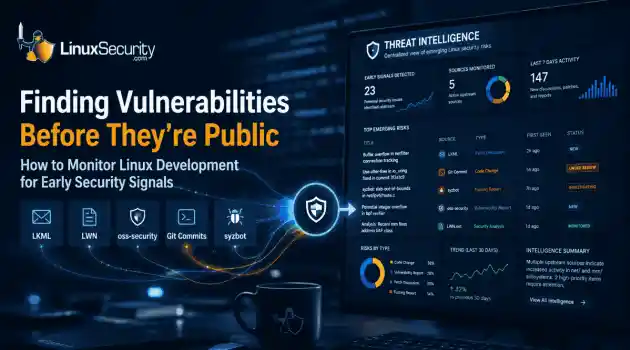
 Most of us don't hear about a kernel vulnerability until a CVE lands in our inbox or the vulnerability scanner starts complaining. By then, the patch isn't new anymore. Kernel developers may have been passing it around for review, arguing over the implementation, or revising it for days before anyone outside that community noticed it. None of those discussions are secret. They're sitting in mailing list archives, Git commits, and patch reviews where they've been the whole time. The strange...
Jul 14, 2026
 Linux security cyber attacks
 Every Linux server in your fleet produces thousands of events every minute. From journald logs and auditd records to kernel-level eBPF hooks, your systems are constantly talking. Most of that noise is just the mundane churn of system services, CI/CD runners, or routine administrative automation. But among that noise, an attacker might be establishing a foothold, moving laterally, or setting up persistence. The challenge for any security team is: how do you separate the routine from the...
Jul 13, 2026
 Refine features
X Clear Filters
Get the latest News and Insights
Get the latest Linux and open source security news straight to your inbox.
Community Poll
Should Linux servers automatically install security updates?
Loading...
Explore Latest Linux Security features
We found -3 articles for you...
102
 security advisoryhardeningenforcement
The Ultimate Handbook for Linux Security Tools and Hardening Tips 2026
Linux systems give operators more visibility and control than almost any other platform, which is why hardening them depends so heavily on using the right Linux security tools in the right sequence. These tools reveal activity inside the environment, enforce constraints, and help the system maintain a predictable, secure state. When used together, they support Linux hardening as an ongoing process rather than a one-time configuration push. . This guide shows how the major tool categories fit into a complete hardening workflow. You’ll see where each layer belongs, how they reinforce one another, and how they tie into broader Linux security best practices across real environments. What Linux Security Tools Are and How They Support Hardening Linux security tools aren’t a product list. They’re a collection of categories that shape how the operating system handles risk, visibility, identity, and policy. Each category supports a different part of Linux hardening, and together they form the structure administrators rely on when building or maintaining secure systems. Hardening works because Linux exposes internal details clearly. Logs, processes, sockets, file contexts, and kernel signals are all visible with minimal friction. The tools built around those capabilities strengthen that visibility, apply controls, and enforce the rules that keep workloads contained. This is why Linux security tools often feel embedded in the operating system itself: they’re aligned with how Linux surfaces information and how changes propagate. Readers can expect this guide to walk through the hardening model first, then show how each major tool category fits into it. The structure keeps the focus where it belongs: strengthening the system through layered controls and the Linux security best practices that make those layers hold. The Linux Hardening Model (Visibility, Control, Enforcement) Effective Linux hardening follows a pattern that shows up consistently across distributions and deploymentstyles. The process moves through three stages: gaining visibility into system state, applying controls that shape how services behave, and enforcing those controls so they hold under pressure. Linux offers strong primitives for each stage, and Linux security commands play a quiet but central role. Operators read the system with journalctl or ss, verify states with ps or systemd queries, validate policy with SELinux tools, and confirm integrity through signature checks. These commands map the environment, adjust it, and confirm that the enforcement layer is doing what it should. This model appears throughout the rest of the guide. Visibility lays the groundwork for deciding what needs to change. Control narrows the system’s exposure. Enforcement ensures those boundaries stay intact. Every tool category later in the guide connects back to one of these layers, keeping the focus firmly on strengthening the host. Visibility and Assessment Visibility is always the first step in a hardening workflow. Without a clear read on processes, services, network exposure, or logs, administrators risk applying controls to an environment they don’t fully understand. Scanning, auditing, and monitoring all contribute to this baseline. System logs highlight misconfigurations early. Socket checks show unexpected listeners. Lightweight assessments reveal packages or services drifting from expected baselines. This visibility sets the stage for decisions that come later and prepares the ground for vulnerability scanning tools , which expand the view into configuration weaknesses and outdated software. Network Filtering and Policy Enforcement Once visibility is established, network boundaries become the next hardening layer. These controls reduce unnecessary exposure and make later enforcement steps more reliable. Policy engines such as SELinux extend this idea deeper into the system. Traditional permissions govern who can act, but SELinux governs what a process can attempt. That shift adds mandatoryenforcement to the workflow and reinforces the hardening model by limiting movement inside the host, not just at its edge. Identity, Authentication, and Credential Security Authentication failures are one of the most common sources of security issues in Linux environments. Password storage, session handling, and credential reuse all create risk, especially in systems that have been running for years without review. Hardening this layer means tightening how credentials are stored, how accounts are managed, and how identity is verified. Centralized authentication through services like SSSD creates more consistent behavior across hosts and reduces the drift that appears when machines hold their own copies of identity data. This section prepares the ground for later discussions about tools like sshpass and SSSD, both of which reflect different approaches to credential workflows. Encryption and Data Protection Encryption protects the data that the system depends on, whether it’s stored locally or moving between services. Hardening here focuses on key management, integrity, and trust. Strong cryptography only works when the keys behind it are handled correctly. Linux offers mature support for encrypted storage, protected channels, and signed content, but the effectiveness of those controls depends on proper key rotation, secure storage, and clear trust relationships. This foundation leads naturally into tools built around GPG , which give operators a way to verify, protect, and authenticate the data their environment relies on. Categories of Linux Security Tools With the hardening model established, the next step is understanding how each category of Linux security tools supports it. The sections below break the tool categories down so their role in visibility, control, and enforcement is clear before exploring how administrators use them in practice. Vulnerability Scanners Visibility begins with assessment. Vulnerability scanning tools give operators a structured look atconfiguration issues, outdated packages, unnecessary services, weak permissions, and inconsistent policy states. Scanning reveals the conditions that hardening must address before controls are applied. Many teams rely on an open-source vulnerability scanner to establish that baseline, since transparent, host-level assessments align naturally with how Linux exposes its internal state. Scanners don’t enforce anything on their own, but they reveal the gaps that hardening needs to close and help determine where controls need to be tightened. Their reports guide decisions about which services require correction, which packages need updates, and where policy enforcement should become stricter. Firewall Tools Network controls act as the system’s outer boundary. Host firewalls are where hardening becomes visible to external traffic, and they often serve as the first real enforcement point for policy. By limiting exposure to only the services the workload must provide, firewalls reinforce a predictable, narrow attack surface. Filtering traffic at the host level limits which services can be reached, and tools like UFW and nftables give operators precise control over what crosses those boundaries. This forms part of firewall security on Linux hosts, giving administrators a predictable surface to harden and reducing unnecessary exposure early in the workflow. When operators reduce the exposed surface to only what the workload needs, the system becomes far easier to protect. Clear, minimal rulesets reduce ambiguity and limit the pathways later enforcement layers must manage. Password and Credential Handling Tools Credentials influence how users, automation, and services interact with the system. Weak patterns compound risk quickly because authentication touches every layer of a Linux environment. Hardening this area means tightening password storage, reducing credential reuse, strengthening session handling, and improving identity consistency. Tools that move passwords through scripts,such as sshpass, often indicate where automation practices need attention. They may work in transitional workflows, but over time, they introduce risk and make authentication behavior less predictable across hosts. By contrast, centralized identity through SSSD creates consistent access decisions across systems. With authentication sourced from a shared authority, Linux hosts rely on the same identity data, reducing drift and stabilizing the hardening model. Credential-aligned tools belong to the control layer: they limit uncertainty about who can authenticate and how those credentials are managed. Encryption and Key Management Tools Encryption reinforces the enforcement layer by protecting data even if another boundary fails. Hardening here focuses on controlling access to cryptographic keys, verifying signatures, and maintaining trusted relationships between hosts, users, and sensitive data. Linux provides strong support for encrypted storage, protected transport channels, and signed content, but these controls only work when administrators maintain proper key rotation, secure key storage, and accurate trust mappings. Tools built around GPG play a key role in this process. They allow operators to sign or verify content, encrypt material, and manage the trust needed to confirm that the system is using authenticated, unmodified data. In many environments, GPG-backed signatures form a core part of update validation, deployment pipelines, and configuration integrity checks. Mandatory Access Controls with SELinux SELinux extends hardening beyond identity and permissions by imposing mandatory access control. Instead of relying solely on discretionary permission models, SELinux policies dictate what a process is allowed to attempt, confining its behavior even when running under a privileged account. By restricting how services interact with the filesystem, network, and other processes, SELinux provides enforcement at a granular level. It prevents movement inside the host, limits theimpact of vulnerabilities, and reinforces the boundaries established by earlier hardening layers. In a modern Linux hardening strategy, SELinux becomes the control that holds the system together when other layers strain. When configured correctly, it prevents misconfigurations from becoming high-impact failures. Linux Security Best Practices Using the Right Tool Mix Linux security best practices follow the same structure outlined earlier: build visibility into the system, apply controls that reduce exposure, and enforce those controls so they hold during real-world workload shifts. Hardening is strongest when these layers work together instead of living as isolated checks. Visibility tools surface weak points early. They show which services are exposed, where configurations deviate from expectations, and which packages or components need attention. Without this view, hardening turns into guesswork instead of targeted change. Control tools narrow the system’s footprint. Firewalls, identity controls, and credential policies reduce the number of paths an attacker or misconfiguration can take. When controls map to how workloads actually run, risk has fewer places to accumulate. Enforcement tools keep those boundaries in place. SELinux policy, cryptographic signatures, and key management ensure that the system continues to behave as intended, even as it evolves. They stop small errors from becoming larger failures. How much weight each environment puts on visibility, control, or enforcement depends on its threat model. Some stacks need deeper identity and credential controls. Others lean more on policy enforcement or more frequent scanning. What matters is balance. When one layer carries too much of the load, gaps tend to open elsewhere. In practice, these patterns settle into Linux security best practices that teams follow, whether they formalize them or not. Operators rely on visibility to see what changed, on controls to shape system behavior, and on enforcement to keep thatbehavior aligned with policy. A balanced mix of tools reduces blind spots and makes workloads more predictable as updates, new packages, and configuration changes accumulate. That layered, repeatable approach is what gives a hardening strategy its strength and creates a workflow that lines up naturally with a practical Linux security checklist without turning into a rigid, step-by-step script. Conclusion: Building a Complete Linux Security Tools Strategy A complete strategy forms when each tool category aligns with how a Linux system naturally operates. Visibility reveals what is shifting inside the host. Control limits where risk can settle. Enforcement ensures that those constraints hold, even when workloads or configurations change. Together, these layers turn the broader set of Linux security tools into a cohesive structure rather than a loose collection of utilities. Hardening remains an ongoing cycle, supported by scanning routines, firewall rules, identity controls, encryption practices, and mandatory access policies. Each tool contributes to a workflow that adapts to change without losing integrity. When approached this way, Linux hardening becomes predictable and durable. Systems stay aligned with their intended configuration because every layer reinforces the next, creating a security posture that remains steady even as the environment evolves. . This guide shows how the major tool categories fit into a complete hardening workflow. You’ll see . linux, systems, operators, visibility, control, almost, other, platform, which. . MaK Ulac
 Nov 28, 2025
•
Nov 28, 2025
•
102
 security managementsudosystem administration
Mastering Sudo: Essential Insights for Secure Command Access Management
This month the editors at LinuxSecurity.com have chosen sudo as the Open Source Tool of the Month! . Every good systems adminstrator knows that you should never log directly into your machine as root: you should always log in as a normal user then, as you need root access, su(1) to root. The dangers and perils of performing unnecessary operations as root are well-known and the main problem with su -- that the person using it needs the root password -- is more than obvious. Every good product finds a need and fills it, and that's exactly what sudo did, according to it's Wikpedia page , "around 1980." sudo (su "do") "allows a system administrator to delegate authority to give certain users (or groups of users) the ability to run some (or all) commands as root or another user while providing an audit trail of the commands and their arguments." Setting up sudo is a snap: use visudo(8) to safely edit /etc/sudoers, add the appropriate aliases and user specifictions, and then run sudo to test it. Because you use your own password "to sudo to root" the systems administrator does not have to divulge the root password and because of sudo's flexibility, you can run individual commands instead of having to drop to a full-blown shell. For example, to restart apache, you can just run "sudo /etc/init.d/httpd restart" instead of "su -; /etc/init.d/httpd restart; exit". For the month of April we will post as many articles and HOWTO's on sudo as possible, so if you have any of your own and would like to see them featured on LinuxSecurity.com, send them along! . Every good systems adminstrator knows that you should never log directly into your machine as root: . month, editors, linuxsecurity, chosen, source. . Brittany Day
Apr 01, 2008
•


Get the latest News and Insights
Get the latest Linux and open source security news straight to your inbox.
Community Poll
Should Linux servers automatically install security updates?
Search Topics
Powered By

Linux Security - Your source for Top Linux News, Advisories, HOWTOs and Feature Releases
QUICK LINKS
subscribe to newsletters!
Like staying secure? So do we.
Sign up for updates, tips, and alerts!