


Stay Ahead With Linux Security Features
 threat detection scalability
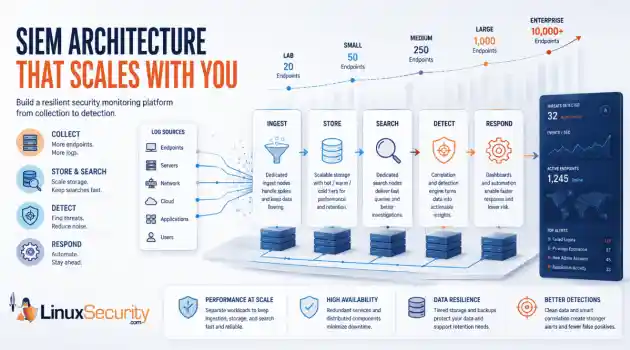
 Building a SIEM is easier than scaling one. Most open-source deployments start as a simple "all-in-one" server. It is easy to set up, but that design rarely survives the transition from a lab to a production workload. . A SIEM watching 20 endpoints is not doing the same job as one watching 500. More endpoints mean more logs; more logs require more storage; more storage makes search heavier. Eventually, the very architecture that made your lab easy to deploy becomes the reason your production...
 Jun 04, 2026
 security advisory apache
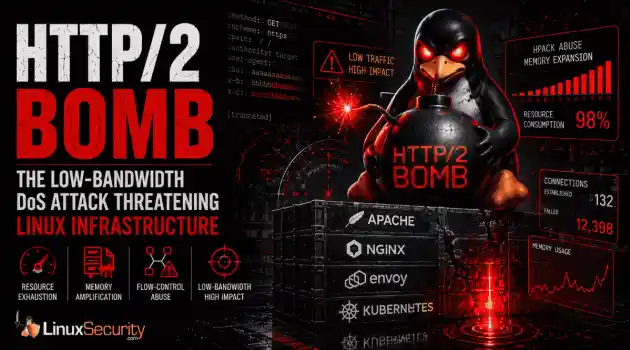
 A newly disclosed attack technique called HTTP/2 Bomb is drawing attention because it targets the software that sits at the front of much of the Linux internet. Apache HTTP Server, NGINX, Envoy, and the ingress layers that many Kubernetes environments depend on can be forced into consuming disproportionate amounts of memory using relatively small amounts of attacker traffic. . For Linux administrators, the concern is not the HTTP/2 protocol itself. It is the possibility that a single...
Jun 04, 2026
 security advisory important
 The compromise of Nx Console shows how much infrastructure now sits behind a single developer account. GitHub repositories, CI/CD pipelines, container build systems, Terraform projects, Kubernetes deployments. None of those systems was the initial target. The workstation was. . Attackers did not need a Linux privilege escalation bug or a remote code execution chain. They needed developers to trust a tool they were already using. For many organizations, that was enough. What Happened? Federal...
Jun 03, 2026
 security advisory open-source
 You remove the malware. You rotate the compromised credentials. You patch the original vulnerability and close the ticket. Two weeks later, the attacker is back. . What happened? You didn't lose the battle at the exploit; you lost it at the cleanup. In many modern Linux intrusions, the malware you found wasn't the main problem—it was the fallback mechanisms left behind. These hooks quietly restore attacker access the moment you look away. If you clean a host but miss these persistence layers,...
Jun 02, 2026
 security advisory Red Hat
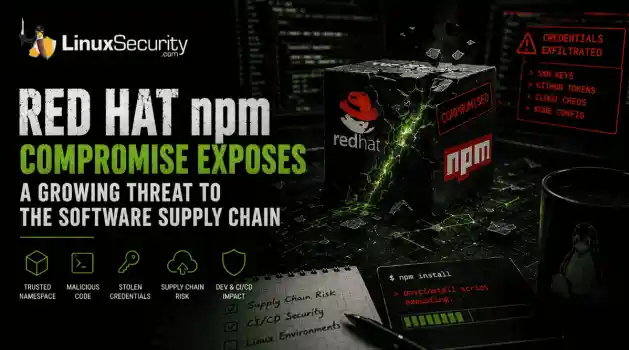
 Researchers investigating a campaign now tracked as Miasma found that more than 30 packages in Red Hat's @redhat-cloud-services npm namespace had been altered to deliver credential-stealing malware. . The packages weren't being used to deploy ransomware or sabotage systems. From what has been reported so far, the objective appears to have been much simpler: collect credentials from developer environments and use that access elsewhere. GitHub tokens, cloud credentials, SSH keys, and other...
Jun 02, 2026
 Refine features
X Clear Filters
Get the latest News and Insights
Get the latest Linux and open source security news straight to your inbox.
Community Poll
What got you started with Linux?
Loading...
Explore Latest Linux Security features
We found -2 articles for you...
218
 open-sourcesecurity toolssoftware risks
Examining Open-Source Security: Benefits and Risks for the Future
Open-source security sits right in the middle of how we build software now. Most teams grab code from public repos, plug it in, and move fast. That’s fine until something deep in the stack breaks or turns out to be risky. Transparency helps, but that value depends on the people behind it. . At its core, open-source security is about keeping track of what you’re using and how safe it really is. It’s not just patching when a CVE drops. It’s knowing your dependencies, watching for abandoned projects, and spotting weak code before it becomes a bigger problem. We’ll go through the tradeoffs. Why open-source stays essential, where it trips people up, and what the community’s learned from real incidents. Then we’ll get into how teams can keep using open code without opening the door too wide. Overview & History of Open-Source Security When community-driven code-first took off, the real meaning of open-source security began to take shape. Early open-source projects made transparency and collaboration the basis of how software was built and maintained. Code stayed open for review, changes visible to everyone, which helped surface flaws faster and build trust in the process. The rise of projects like Linux, Apache HTTP Server, and OpenSSL set the pattern for community trust and faster patching cycles. Linux showed what a distributed review could look like. Apache built a governance model that kept collaboration organized. OpenSSL reminded everyone what happens when critical code runs without enough resources or oversight. Together, these projects shaped how we think about open-source security today. Key Milestones in Open-Source Security Year Event Security Significance 1985 Free Software Foundation founded Established the principle of peer-reviewed, open development. 1989 GNU General Public License introduced Ensured transparency and shared rights to audit code. 1990s–2000s Linux, Apache, OpenSSL projects grow Pioneered collaborative patching and community-based response models. 2025 Open-source software (OSS) reports highlight ubiquity and governance shift The 2025 OSSRA report found that 97% of audited codebases include open-source components. The findings pushed organizations toward tighter governance and better tracking of supply chain risk. Advantages of Open-Source Software Open-source has always been about shared visibility. Anyone can read the code, test it, and fix it. That openness is what gives open-source security its edge. Problems don’t hide for long when thousands of developers use the same libraries every day. Teams also stay in control. They patch when they need to, not when a vendor releases a fix. With the right application security tools, open code becomes a living system that adjusts faster than most commercial software ever could. Transparency Accelerates Detection When code is public, mistakes surface fast. People test, report, and correct issues as part of their daily work. Linus’s Law still applies: “Given enough eyeballs, all bugs are shallow.” That pace is visible in the Linux community. Researchers and maintainers watch the same codebase, often catching small flaws before they reach production. Collaboration Builds Stronger Defenses The best-known application security tools — OWASP ZAP, SonarQube, ClamAV — were built the same way. Openly, by distributed teams that review each other’s work. That rhythm of contribution and critique shortens patch cycles and improves testing coverage. Each project benefits from another. A detection rule refined in one tool shows up somewhere else. Regular security patches and updates keep the loop active. Transparency Prevents Malicious Code It’s hard to hide something malicious when everyone can read the diff. Public review doesn’t stop every bad actor, but itlimits how long bad code can stay unnoticed. That visibility builds quiet trust. Contributors know their work can be checked by anyone. Auditing becomes a habit, not a policy, and trust builds one review at a time. Forking and Independence Preserve Longevity Projects don’t have to die when interest fades. Forking lets them keep moving under new hands. It’s one of the quieter strengths of open-source security, driven by community. LibreOffice carried forward from OpenOffice when updates slowed. LineageOS did the same for Android, keeping security patches alive for devices long past official support. Forking maintains, not just running, which is the difference between old code and abandoned code. Challenges and Limitations of Open-Source Open-source survives on steady maintenance, not just good code. When those people stop, things slow down fast. A lot of projects run on volunteers or small teams with no budget. If they get busy or lose interest, patches stall and bugs linger. That’s the real problem in open-source security, not the code itself, but keeping enough hands on it to stay current. When teams know a project is slowing down, they usually add backups. They’ll deploy network security tools like Snort or Suricata to monitor traffic and flag anything suspicious. It’s a safety net, not a fix. Vulnerability scanning tools help too — Nessus, OpenVAS, whatever you’re running — but they can only point out what’s broken. If no one’s maintaining the code, nothing gets patched. That’s the real gap with open-source. The problems are visible; the question is whether someone’s still there to fix them. Case Studies: When Open-Source Security Failed Open-source works because people stay involved. When they don’t, things slip through. Open-source security depends on steady attention, and that doesn’t always hold. Heartbleed and Shellshock showed what happens when code outlives its oversight. The 2025 supply chain attacks proved it’s not just oldbugs anymore — attackers now go straight after the systems we use to share code. Heartbleed Bug (OpenSSL) The Heartbleed bug hit OpenSSL in 2014. It had been sitting in the code for years, missed by everyone. A few volunteers were keeping the project afloat with almost no funding. When the flaw came out, it forced emergency patching across most of the internet. It was a turning point. After that, companies began investing real money in the projects they relied on. Open-source security stopped being something everyone assumed “just worked.” Shellshock (Bash) Shellshock surfaced a few months later. The bug had been in Bash for decades, hiding in plain sight. People trusted it because it was old and familiar. Once exposed, it spread fast and forced admins to rethink what “stable” really means. The takeaway was simple. Even legacy code needs structured testing and reviews. Age doesn’t equal safety. 2025 Supply Chain Attacks (NPM, PyPI, Docker Hub) In 2025, attackers went after the source instead of the code. They got into developer accounts on NPM, PyPI, and Docker Hub , then pushed poisoned updates straight into trusted packages. Some of those updates had millions of downloads before anyone caught them. That changed how people handle releases. Teams started locking down who could publish, signing builds, and tracking dependencies tightly. It made everyone realize open-source security isn’t just about fixing bugs — it’s about securing the path that code takes to production. What These Incidents Changed Transparency helps, but only if people stay engaged. Legacy code carries risk just like new projects do. Funding and structured review matter more than trust. Supply chain defense is now part of everyday maintenance. Strengthening Open-Source Through Better Management Most teams learn the same thing the hard way — staying secure isn’t just about code. It’s about process. Good open-source security comes from maintaining updates,regularly scanning, and restricting access to what is needed. A few habits make the biggest difference. Automate what you can. Tools like Ansible and Puppet handle repetitive updates faster than humans ever will. Automation maintains systems and closes the gap between patch release and deployment. Run regular scans. Use application security tools such as OpenVAS or Nessus to identify weak spots early. These scans detect configuration drift and outdated dependencies before they become incidents. Layer your defenses . Pair those scanners with network security tools and continuous monitoring. Each layer catches what the others miss, such as traffic anomalies, misconfigured endpoints, and unpatched services. Tighten access. Role-based access control and least privilege go a long way toward security. Fewer admin rights mean fewer attack paths. It’s basic, but it works. It’s steady management, the kind that holds the rest of your security together. Global Initiatives Strengthening Open-Source Security The push to improve open-source security has gone global. Groups like the OpenSSF now fund audits, education, and full-time maintainers for critical projects. Bug bounty programs pull in fresh eyes, and training helps developers spot problems before they commit them. CI/CD systems play a significant role as well. Integrated testing and automated release checks keep patches moving fast through CI/CD pipelines , closing gaps before they reach production. Together, these efforts are turning open-source maintenance into a shared responsibility — not just for communities, but for the entire software ecosystem. Takeaway: The Future of Open-Source Security Open-source has always worked because people care enough to maintain it. Someone still has to patch, test, and manage the flow of updates. When that slips, so does open-source security. The path forward’s pretty simple. Keep the collaboration, but add structure. Fund the projects you rely on. Make maintenanceroutine, not a side task. That’s what keeps the ecosystem healthy and predictable. We’ll keep depending on open-source; that’s not changing. The question now is whether we’ll keep supporting it the way it needs. Do the benefits of OSS outweigh the risks? Connect with us @lnxsec . . At its core, open-source security is about keeping track of what you’re using and how safe i. open-source, security, right, middle, build, software, teams. . MaK Ulac
 Nov 03, 2025
•
Nov 03, 2025
•
102
 open-sourcetrustworthinesssecurity audits
Transforming AI Security with Open-Source LLMs for Linux Administrators
As Linux security admins, we understand the many advantages that open-source software brings . Open-sourcing Large Language Models (LLMs) used in AI development offer similar benefits, especially regarding security. Making their source code publicly available enables community audits that quickly discover vulnerabilities - essential in building trust with users while guaranteeing there are no backdoors or malicious code present. . Open-source LLMs offer additional benefits by quickly allowing for rapid integration of new security features and interoperability with existing secure systems, which is key for maintaining an effective security posture. Linux admins can easily customize or adapt these AI tools to their requirements for enhanced and tailored security environments. Incorporating open-source LLMs benefits AI security and aligns with Linux's fundamental principles that have enabled its reliability and safety over the years. In this article, I'll delve into how open-sourcing LLMs can enhance security, increase trustworthiness, and enable greater control and customization - all while adhering to the core values that have made open-source software so important in our lives. Transparency and Trust Transparency is one of the cornerstones of open-source software. When developers and security experts can review the source code of an LLM, trust is fostered, which may otherwise be hard to come by in proprietary systems. Furthermore, unlike closed-source models, where users must take their vendor's word as to its security or integrity of use for verification purposes alone, open-source models allow independent user verification. Transparency ensures no vulnerabilities, backdoors, or malicious code are buried within an AI model. For Linux security admins already experienced in auditing open-source software , this can add another level of assurance. AI systems integrated into environments will be as secure as their community can make them and provide similar levels of reliability aswell-maintained Linux distributions. Collaborative Security Audits An outstanding advantage of open-sourcing LLMs is their capacity for collaborative security audits. In a closed-source environment, security audits and vulnerability assessments typically consist of internal teams or third-party auditors hired by vendors. These audits may be thorough but lack the varied perspectives that a global community provides. Open-source environments enable individuals with sufficient knowledge to scrutinize code, identify potential issues, and suggest solutions. This global peer review process dramatically speeds up and broadens security assessments. Vulnerabilities can be discovered much quicker, decreasing malicious actors' window of opportunity for exploiting them - providing Linux security administrators an advantage in staying one step ahead of potential threats while keeping their systems protected and resilient. Rapid Identification and Fixes for Vulnerabilities Proprietary software often requires official patches and updates from a vendor, which may take time to implement when vulnerabilities are not considered urgent. In contrast, open-source communities tend to act quickly, rapidly responding to security issues reported within the community, with updates being disseminated quickly as patches. Open-source projects facilitate rapid response through their collaborative nature, where developers and security professionals from around the globe contribute their expertise. We Linux administrators are already familiar with this model for updating and patching open-source systems. By applying it to LLMs, we can protect our AI systems against emerging threats. Enhanced Security Features Open-source communities are hubs of innovation when it comes to security. By making LLMs Open Source, the development and integration of new security features can be greatly accelerated. Improvements that one organization might not have prioritized quickly become the responsibility of an entire community. Increased encryption methods , enhanced access controls , and better auditing capabilities are among the many security features developed and integrated by contributors to Linux security admins' benefit without waiting for proprietary solutions to catch up. Through open-source community contributions, they ensure their AI systems offer security protection and incorporate cutting-edge technology. Educational Value Open-sourcing LLMs offer significant educational value. Security professionals, students, and enthusiasts can all take advantage of real-world examples of AI code to study its structure, strengths, and weaknesses, providing hands-on experience that deepens their understanding of AI and security principles. This education will lead to a more knowledgeable and skilled workforce. Engaging with these LLMs enables us admins to continuously develop our expertise, stay abreast of emerging technologies, and apply these learnings to strengthen our organization's security posture. Interoperability with Secure Systems One of the key challenges associated with incorporating AI into existing IT infrastructures is ensuring its compatibility and interoperability with secure systems. Open-source software tends to be flexible enough to work across systems and standards. This makes it much simpler for LLMs to integrate securely into different environments. Linux security admins benefit from open-source LLMs being easily integrated into existing security frameworks. Open-source models provide the adaptability needed to ensure compatibility with encryption standards, SIEM systems , and compliance requirements - helping create an organized and safe IT environment. Better Control and Customization Open-source software enables organizations to gain unprecedented control and customization, and LLMs are no different. While proprietary AI models often come equipped with predetermined features and capabilities that limit an organization's ability to adapt to its unique securityrequirements, open-source LLMs can be customized according to individual and organizational needs. Linux security admins, for instance, can manipulate model algorithms or adjust security parameters as necessary, even adding custom modules for enhanced functionality. This ensures that AI systems align perfectly with an organization's policies and objectives and enables more customized AI apps tailored to individual industries' requirements. Aligning with Open-Source Principles Collaboration, transparency, and innovation--principles central to Linux's rise--are equally applicable in AI. By open-sourcing LLMs, AI practitioners can adopt these ideals more readily, leading to safer, reliable systems with advanced features. As Linux security admins, this approach feels familiar and aligns well with our values. Open-source LLMs support community-driven progress and a shared responsibility approach to open-source technologies, similar to Linux. Just as this collaboration led to the creation of an extremely secure operating system in Linux , AI communities can achieve similar goals through their collective efforts - providing security administrators with confidence in the systems they deploy. The Future of AI Security in an Open-Source World As AI becomes increasingly ingrained into our digital infrastructures, its impact on security cannot be overstated. Open-sourcing LLMs offer a straightforward means of improving this safety while encouraging innovation and trust. Adopting open-source AI models as part of their work with open-source operating systems and software is a natural extension of their philosophies. The deployment of open-source LLMs offers numerous benefits, including transparent and trustworthy code, rapid and collaborative security audits, quick vulnerability patches, and ongoing feature enhancements. Some of its many advantages are educational opportunities galore, seamless interoperability, and unmatched control and customization. At a time when AI could significantly changevarious aspects of our lives and industries, its security must be ensured. With Linux security administrators' help harnessing the open-source community's influence to build AI systems that advance innovative techniques and are robust and secure, secure AI development is attainable. Open-source software has already revolutionized IT; let's extend its impactful principles to AI as well! . Open-source LLMs enhance AI security with transparency, rapid updates, and community-driven collaboration.. linux, security, admins, understand, advantages, open-source, software, brings, open-s. . Brittany Day
Feb 17, 2025
•

102
 security measuresdata privacybiometric security
Navigating Data Privacy Laws and AI Risks in 2025 for Linux Admins
In 2025, we Linux security admins face new challenges brought on by growing data privacy concerns that demand increased attention to detail and strict compliance . The rise of biometric security—a powerful tool for authentication—also brings significant risks if not managed correctly. Look no further than the high-profile troubles of Bunnings Group and White Castle , where failures in obtaining explicit user consent for biometric data collection led to legal and financial repercussions. Ensuring transparent, consent-based data collection practices is key to avoiding similar pitfalls. . Further, the lack of unified federal data privacy legislation means admins must navigate a patchwork of state-specific laws from places like Delaware, Iowa, and New Jersey. Staying updated and compliant with these diverse regulations is crucial. Additionally, with AI development continuing unabated following the rollback of federal restrictions, it's imperative to adopt robust data privacy measures to protect sensitive information processed by AI models. Proactive security measures and vigilant compliance practices are increasingly essential in this fragmented regulatory environment, and data privacy must be a priority for all Linux security professionals. Let's examine common data privacy concerns and practical measures for improving data privacy in 2025 and beyond. The Rise of Biometric Security: Boon and Bane Biometric security has become a critical component of modern authentication methods. Identifying individuals based on unique physical characteristics—such as fingerprints, facial features, or even iris patterns—offers a higher security level than traditional passwords. As convenient and secure as biometrics may seem, Linux security admins must tread carefully. The legal troubles faced by companies like Bunnings Group and White Castle underscore the importance of obtaining explicit consent before collecting and storing biometric data. In the case of Bunnings Group in Australia and WhiteCastle in the U.S., the lack of clear, explicit consent from users resulted in significant backlash and legal consequences. For security admins, the lesson is clear: always prioritize transparency regarding biometric data. This means implementing robust mechanisms to inform users about what data is being collected, how it will be used, and obtaining explicit consent. Even the most secure biometric system can become a liability without these measures. This could involve integrating consent management platforms into your existing systems, ensuring that every user interaction involving biometric data is logged and retrievable for auditing purposes . Additionally, staying updated with regional and international regulations concerning biometric data will help admins maintain compliance and avoid the pitfalls experienced by others. Navigating State-Level Data Privacy Regulations As federal data privacy legislation remains elusive, state-level regulations have emerged to fill the void. Unfortunately, this fragmented regulatory landscape creates a unique challenge for Linux security admins, who now must ensure compliance with varying state laws. Delaware, Iowa, and New Jersey have established data privacy regulations, each with nuances and requirements. Because there is no single federal framework, security administrators must remain constantly alert and adaptive. Understanding each state's legal requirements is paramount to designing compliant systems. For instance, Delaware may have different privacy laws from Iowa or New Jersey, necessitating tailored data collection, storage, and user consent approaches. To handle this complexity, it is crucial to implement regular training and updates for your team on state regulations. Compliance management software is also invaluable for automating and monitoring legal requirements to keep systems compliant. Fostering privacy awareness among your employees can go far in mitigating risks associated with noncompliance. By encouraging engaging in best practices andtaking a proactive stance, Linux security admins can successfully navigate various state regulations. The Impact of AI on Data Privacy Artificial Intelligence has brought profound change across various industries, particularly cybersecurity. However, with potential executive orders concerning AI being repealed and development continuing apace without as many restrictions as possible, data privacy is becoming more complicated than ever, requiring even greater diligence in protecting one's information. AI models thrive off large amounts of data, including sensitive material. Linux security admins must take precautionary steps to safeguard this sensitive information against breaches or misuse. Due to a lack of federal oversight, individual organizations bear greater responsibility in ensuring their AI systems meet regulations. Start by conducting thorough data impact assessments to understand the implications of incorporating AI systems with existing infrastructure, identify any privacy risks, and devise strategies to counter them. This may include anonymizing data before feeding it into AI models or installing robust access controls that restrict usage. Regular audits and evaluations will ensure ongoing compliance with data privacy standards. Maintaining transparency with users about how AI systems use their data is also key in building trust and alleviating concerns. Communicate the purpose and role of data collection and any safeguards to protect user information. Linux security administrators can successfully navigate AI development by prioritizing transparency and proactive privacy measures while guaranteeing robust data protection. Proactive Security Measures for a Fragmented Regulatory Environment Given the growing incidence of lawsuits alleging privacy violations, proactive security measures are becoming more crucial to maintaining compliance. With numerous fragmented regulatory landscapes and an increased focus on data privacy concerns, waiting until issues arise isn't an option.Instead, preventive strategies should be implemented to protect user data and maintain compliance. Regular vulnerability and penetration testing must be conducted to identify and address security gaps. Implement robust encryption protocols both for data at rest and in transit to protect it against unauthorized access and check that access controls and authentication mechanisms meet industry best practices. Establishing a comprehensive data privacy policy is equally essential to protecting user information. A policy such as this should detail how data is collected, stored, and shared, as well as safeguards in place to protect it. Regular reviews should take place to make necessary updates as regulations change or new threats emerge. Fostering privacy awareness within your organization is also key. Hold regular training sessions to educate employees about the significance of data privacy and their roles in upholding it, encourage best practices such as securing devices with strong passwords, and implement security-first measures whenever possible. Embedding data protection practices into daily operations creates an atmosphere where data protection becomes part of daily operations. Staying Informed and Adaptive With ever-evolving data privacy concerns, remaining informed and adaptive is critical for Linux security admins. Regularly tracking updates to and developments of data privacy laws at both state and federal levels will help ensure ongoing compliance. Fostering a culture of continuous learning within your team can strengthen your organization's adaptability. Encouraging employees to pursue certifications or participate in training programs related to data privacy and security can ensure your organization has enough expertise and skillsets available to handle evolving regulations and concerns. Establishing strong collaboration and communication channels between legal and compliance teams can significantly strengthen your ability to stay compliant. Engage them regularly inreviewing regulatory changes, potential risks, and mitigation strategies. Working together, you can develop a robust framework that protects user data while navigating the complex regulatory environment. Our Final Thoughts on Ensuring Data Privacy in 2025 Linux security admins facing data privacy challenges in 2025 must adopt proactive measures, transparency, and adaptability to navigate them effectively. Biometric security, fragmented state regulations, and Artificial Intelligence all present unique obstacles that require robust data protection strategies. Admins can navigate these difficulties by prioritizing user consent, keeping informed about state laws about AI systems, and cultivating an awareness culture surrounding privacy issues. Maintaining trust and security with robust data privacy practices is essential to your organization's safety and success in 2025 and beyond. . Compliance with various state data privacy regulations and biometric security is crucial for Linux admins facing 2025 challenges.. linux, security, admins, challenges, brought, growing data, privacy c. . Brittany Day
Jan 29, 2025
•

Get the latest News and Insights
Get the latest Linux and open source security news straight to your inbox.
Community Poll
What got you started with Linux?
Search Topics
Powered By

Linux Security - Your source for Top Linux News, Advisories, HOWTOs and Feature Releases
QUICK LINKS
subscribe to newsletters!
Like staying secure? So do we.
Sign up for updates, tips, and alerts!
Discover faster search, smarter navigation, and deeper Linux security insights. Read More