Audit Linux privileges now to limit compromise, escalation, and system-wide damage. Review Linux Privileges×


Stay Ahead With Linux Security Features
 security advisory path traversal
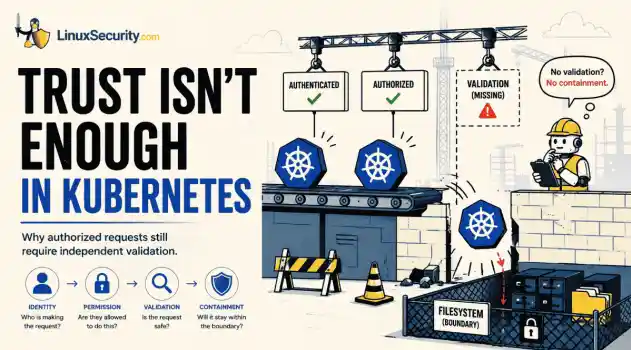
 Two newly fixed storage bugs in Kubernetes showed more than just a problem with path traversal. They found a common security flaw in the cloud: powerful parts often think that requests accepted by a higher system are safe to run. This is a simple lesson for the platform and security teams: RBAC can accept a request without showing that its parameters will stay within a certain filesystem boundary. This is clear from a new study from SentinelLabs into flaws in the Kubernetes CSI drivers for NFS...
 Jul 24, 2026
 security advisory update
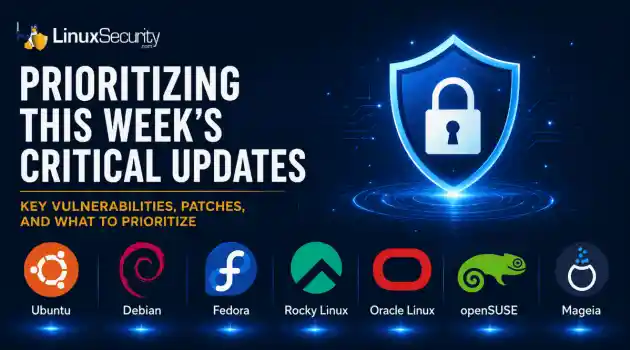
 A large volume of Linux security updates and advisories this week across major distributions once again, but it wasn't just the volume that was the story. Where maintainers and security teams focused their attention was evident in the concentration of fixes targeting Linux kernel updates, identity services, DNS infrastructure, and internet-facing software. . Instead of looking at each advisory in isolation, administrators gain more value from the general trends they reveal about Linux security...
Jul 23, 2026
 identity management security tactics
 For years, we secured our Linux infrastructure by building walls: VPCs, security groups, and hardened SSH configurations. We treated the cloud like a virtual data center, assuming that if we kept the "bad guys" out of the network, our workloads were safe. . That model is no longer sufficient. Today, one of the most common paths from an initial compromise to a major cloud breach is the identity assigned to your Linux workload. When an attacker gains code execution on a Linux instance—through a...
Jul 17, 2026
 security practices patch management
 Most of us don't hear about a kernel vulnerability until a CVE lands in our inbox or the vulnerability scanner starts complaining. By then, the patch isn't new anymore. Kernel developers may have been passing it around for review, arguing over the implementation, or revising it for days before anyone outside that community noticed it. None of those discussions are secret. They're sitting in mailing list archives, Git commits, and patch reviews where they've been the whole time. The strange...
Jul 14, 2026
 Linux security cyber attacks
 Every Linux server in your fleet produces thousands of events every minute. From journald logs and auditd records to kernel-level eBPF hooks, your systems are constantly talking. Most of that noise is just the mundane churn of system services, CI/CD runners, or routine administrative automation. But among that noise, an attacker might be establishing a foothold, moving laterally, or setting up persistence. The challenge for any security team is: how do you separate the routine from the...
Jul 13, 2026
 Refine features
X Clear Filters
Get the latest News and Insights
Get the latest Linux and open source security news straight to your inbox.
Community Poll
Should Linux servers automatically install security updates?
Loading...
Explore Latest Linux Security features
We found -2 articles for you...
102
 security practicespatch managementvulnerability assessment
How Linux Security Teams Spot Vulnerabilities Before CVEs Are Published
Most of us don't hear about a kernel vulnerability until a CVE lands in our inbox or the vulnerability scanner starts complaining. By then, the patch isn't new anymore. Kernel developers may have been passing it around for review, arguing over the implementation, or revising it for days before anyone outside that community noticed it. None of those discussions are secret. They're sitting in mailing list archives, Git commits, and patch reviews where they've been the whole time. The strange part isn't that the information is hard to find. It's that most of us never think to look there. . The Linux Vulnerability Lifecycle To understand how to spot vulnerabilities early, it helps to visualize the typical path from discovery to disclosure: Where Early Security Signals Actually Appear Security fixes rarely appear in just one place. A patch might start as a mailing list discussion, move through several revisions, show up in the stable tree, and only later receive a CVE. Following that entire path isn't realistic for most teams, but knowing where those conversations happen makes it much easier to understand why some fixes deserve closer attention than others. LKML is where most of that story begins. It's also noisy. Hundreds of patches move across the mailing list every day, so the interesting part usually isn't the existence of a patch. It's the discussion around it. Long review threads, repeated revisions, or several maintainers debating the same change are often more revealing than the patch itself. oss-security feels different. Instead of watching development unfold, you're watching researchers, vendors, and Linux distributions compare notes as a disclosure moves toward becoming public. If something significant is about to land in multiple distributions, there's a good chance the discussion shows up there first. Most people aren't going to spend their mornings reading LKML archives, and that's where LWN.net becomes useful. Rather than reproducing every discussion, itexplains why a particular thread mattered and what changed before the patch reached users. When a fix is merged, kernel.org becomes the reference point. Stable releases and Git history make it possible to follow how quickly a change moved from development into supported kernels. Then there's syzbot . It never gets tired, never stops fuzzing, and produces far more crash reports than anyone could read. Most don't turn into vulnerabilities. The interesting part is when the same area of the kernel keeps showing up. That's usually a sign that developers haven't reached the end of the story yet. Reading Between the Lines of a Kernel Patch Most kernel commit titles aren't especially descriptive. A subject line like "net: validate skb length before parsing" could be anything from routine maintenance to the first step in fixing a serious security problem. The title rarely provides enough information on its own. The commit footer is often more revealing than the first line. net: validate skb length before parsing Fixes: a34be7... Cc: Reported-by: syzbot A Fixes: tag points back to the commit that introduced the bug. Cc: stable tells stable kernel maintainers that the patch should be considered for backporting to supported releases. Reported-by: syzbot means the issue was uncovered during automated fuzz testing. None of those details say "security vulnerability," and many commits with those tags never receive a CVE. Even so, seeing them together is usually enough to slow down and read the patch more carefully. The commit title might be ordinary, but the surrounding metadata often isn't. Common Security Clues Hidden in Commit Metadata Some clues appear over and over again in kernel development, although none of them should be treated as proof that a security issue exists. Take syzbot reports. Most never become serious vulnerabilities, but recurring reports against the same subsystem can indicate that developers are chasing a difficult bug. The report itselfisn't the story. The pattern is. KASAN and UBSAN findings deserve similar attention. Developers use these sanitizers to expose memory corruption and undefined behavior, so seeing them referenced in commit messages usually means someone found a genuine defect rather than a cosmetic bug. It's also worth paying attention to how maintainers react. A patch that attracts multiple revisions, lengthy review threads, or several subsystem maintainers often involves code that's difficult to change safely. The same goes for fixes that are rapidly backported to stable kernels or unexpectedly reverted after merging. Neither guarantees a vulnerability, but both suggest there's more happening beneath the surface than the commit title alone reveals. Building a Layered Intelligence Workflow Mature security teams treat upstream intelligence as a tiered model. Most organizations stop at the first two layers; high-maturity teams integrate the rest to gain an edge. Vendor Advisories: Your baseline for compliance. NVD/CVEs: The historical record for tracking exposure. Openwall (oss-security): The best source for identifying when a public disclosure is imminent. LWN.net: The bridge between raw discussions and finished advisories. Kernel Mailing List (LKML): The raw stream for monitoring specific subsystems. Git Commits: The authoritative record of what actually changed. By framing your process this way, you realize that upstream monitoring isn't about replacing traditional vulnerability management; it’s about contextualizing it. You aren't reading the mailing list to panic; you're reading it to know which servers to prioritize the moment the stable kernel release lands. Improving Patch Prioritization Through Context When you understand the upstream flow, your patch management changes. Instead of treating every kernel change as a generic update, you can assess the risk yourself: Assess the Subsystem: Is the affected code even used in your environment? Evaluate the Bug Class: Does the fix address memory corruption (high risk) or a rare race condition (lower risk)? Review Discussion: Extensive review cycles, multiple revisions, or involvement from several maintainers can indicate that a change affects complex or security-sensitive code paths. Check the "Stable" Signal: If a patch is being pushed to all stable branches, consider increasing its priority for testing and deployment. Conclusion It's easy to see a CVE as the starting point because that's when most security teams first encounter it. In reality, it's usually the point where everyone else has caught up. The debugging, code review, disagreements, testing, and patch revisions have often already happened in public, leaving behind a trail that anyone can follow. That doesn't mean every administrator needs to spend the day reading LKML threads or reviewing kernel commits. Most organizations won't, and they don't need to. But understanding where those discussions happen and knowing what they're telling you changes the way you look at a security update. A kernel patch stops being just another package to install and becomes the final result of a much longer investigation. The Linux development process has always favored openness. For security teams willing to look upstream, that transparency offers something no CVE score can provide: the opportunity to understand how a vulnerability evolved before it became another entry in a database. Organizations looking to strengthen this process should also review best practices around Linux security patches , Linux kernel security , and staying current with Linux security news . . Discover how Linux security teams identify vulnerabilities before CVEs are published, enhancing patch management and awareness.. Linux Kernel Vulnerability Management, Early Security Signals, Patch Management Practices. . Dave Wreski
 Jul 14, 2026
•
Jul 14, 2026
•
102
 network threatsdata protectionvulnerability assessment
Effective XSS Protection: Top Open Source Scanners for Security
Linux Cross-Site Scripting (XSS) attacks take place when a threat actor injects malicious, executable scripts into the code of a trusted application or website. XSS is a prevalent and serious data and network security threat for developers and their projects. It is estimated that more than 60% of web applications are susceptible to XSS attacks, which eventually account for more than 30% of all web application exploits in cybersecurity. . If the proper security measures have not been taken to secure applications and websites against these attacks, Linux Cross-Site Scripting can enable a hacker to steal the user’s active session cookies. The higher the compromised user's privileges are in an application, the more critical the impact of the attack is likely to be, and if users input sensitive, personally identifiable information, the repercussions of an attack can be even more severe. Luckily there are many great Linux Cross-Site Scripting open source vulnerability scanners available to Linux users. Such cloud security scanners enable developers to find and fix XSS cybersecurity vulnerabilities before they are exploited by attackers. This article will introduce six great open source Linux Cross-Site Scripting vulnerability scanners you should know about that will help you protect your websites and applications against any data and network security threats. What Is A Cross-Site Scripting Attack? How Does It Work? As previously mentioned, Linux Cross-Site Scripting attacks are when a threat actor injects malicious executable scripts into the code of a trusted application or website. Attackers often initiate a Linux Cross-Site Scripting attack by tricking a user into clicking through a malicious link. If the app or website lacks proper data sanitization, the malicious link executes the attacker’s chosen code on the user’s system. The following criteria must be met in order for a Linux Cross-Site Scripting attack to occur: Data enters a web application through an untrusted source,most frequently a web request. The data is included in dynamic content that is sent to a web user without being validated for malicious content. The variety of cloud security breaches that can be carried out based on Linux Cross-Site Scripting is almost limitless, but these attacks in network security commonly include transmitting private data to the attacker, redirecting the victim to web content controlled by the attacker, or performing other malicious operations on the user’s machine under the guise of the vulnerable site. Cross-Site Scripting Vulnerability Categories to Know There are multiple types or categories of Linux Cross-Site Scripting (XSS) attacks and vulnerabilities you should keep in mind. Here is a list: Reflected XSS (Non-Persistent or Type I) occurs when user inputs immediately get returned by a web application in an error message, search result, or other response that includes some or all of the input provided by the user as part of the request without that data being made safe to render in the browser and without permanently storing the user provided data. Stored XSS (Persistent or Type II) Stored XSS generally occurs when user input is stored on the target server, like a database, message forum, visitor log, or comment field. Then, a victim retrieves the stored data from the web application without that data being made safe to render in the browser. DOM-based XSS (Type-0) is a form of XSS where the entire tainted data flow from source to sink takes place in the browser. The source of the data is in the DOM, the sink is also in the DOM, and the data flow never leaves the browser. Server XSS occurs when untrusted user-supplied data is included in an HTTP response generated by the server. Client XSS occurs when untrusted user-supplied data is used to update the DOM with an unsafe JavaScript call. Tips to Protect Against XSS Attacks Here are some of the best practices to utilize against Linux Cross-Site Scripting attacks innetwork security: Never trust user input. Implement output encoding. Perform user input validation. Use a Web Application Firewall (WAF) . Use one of the XSS open-source vulnerability scanners we recommend below. Implement an in-depth defense strategy for securing websites and applications. Ensure that web application development aligns with OWASP’s XSS Prevention Cheat Sheet . After remediation, perform penetration testing to confirm it was successful. Top Open Source Vulnerability Scanners for Cross-Site Scripting Open source Cross-Site Scripting (XSS) vulnerability scanners are a helpful part of network security toolkits designed to help identify and prevent Linux Cross-Site Scripting exploits in cybersecurity by automating the process of searching for potential web application security vulnerabilities. Here are some of the top open-source vulnerability scanners for Linux Cross-Site Scripting: Damn Small XSS Scanner Damn Small XSS Scanner (DSXS) is a free and open-source Cross-Site Scripting (XSS) vulnerability scanner. Some of DSXS’ key features include: Simplicity: DSXS is designed to be a simple and easy-to-use tool for identifying XSS web application security vulnerabilities, making it accessible to a wide range of users, including those with limited technical expertise. Automated scanning: DSXS automates the searching process, reducing the time and effort required to identify potential network security issues. Payload generation: DSXS provides a range of payloads to test for XSS cybersecurity vulnerabilities, allowing administrators to test for a wide range of possible network security threats. Reporting: DSXS provides basic reporting of the results of its scans, including information on found vulnerabilities, the payload used, and the affected URL. DSXS is unique in its simplicity. Its straightforward and easy-to-use interface makes it a good choice for users who may be new to XSS scanning and web application security.This network security toolkit is great for learning purposes because of its small, understandable code base. Below you will see how Damn Small XSS is utilized in an actual Cross-Site Scripting attack scan: Pwnxss Pwnxss is a free and open-source vulnerability scanner for Cross-Site Scripting. Here are its key features: Automated scanning: PwnXSS automates the process of finding potential XSS web application security vulnerabilities so that companies can use their time and effort elsewhere. Real-time detection: PwnXSS provides real-time detection of XSS network security issues, allowing administrators to take immediate action to prevent exploits in cybersecurity. Payload generation: PwnXSS offers administrators the chance to run tests for various network security threats that could result in XSS attacks so businesses can utilize security patching to take care of risks quickly. Reporting: PwnXSS provides detailed reporting of the results of its scans, including information on the type of vulnerability found, the payload used, and the affected URL. PwnXSS offers real-time detection of XSS vulnerabilities and provides instant feedback on potential security risks, which allows administrators to take immediate action to mitigate attacks in network security. Here are the programming steps or inputs you need in order to install PwnXSS: pip install bs4 pip install requests git clone https://github.com/pwn0sec/PwnXSS chmod 755 -R PwnXSS cd PwnXSS python3 pwnxss.py --help python3 pwnxss.py -u http://testphp.vulnweb.com W3af W3af is a free and open-source web application security scanner that is designed to identify cybersecurity vulnerabilities and formulate comprehensive solutions for Cross-Site Scripting attacks. Key W3af features include: Automated scanning: W3af identifies potential network security issues through an automated XSS cybersecurity vulnerabilities search process. Multiple vulnerabilitydetection: W3af is designed to detect a wide range of vulnerabilities, including XSS and SQL injection, making it a comprehensive network security toolkit for web applications. Customizable scan profiles: W3af provides customizable options so administrators can tailor the scanning process to their specific needs. Reporting: W3af provides detailed reporting of the results of its scans, including information on the type of vulnerability found, the payload used, and the affected URL. W3af has a comprehensive approach to data and network security. W3af’s ability to detect a wide range of web application security vulnerabilities and its customizable scan profiles make it a flexible and effective tool for identifying and preventing XSS attacks in network security. Below you will see how W3af is used: Audit: plugins used to detect vulnerabilities in URLs or forms provided by discovery plugins. Brute Force: plugins used for brute force login forms as well as http-auth logins. XssPy XssPy is a free and open-source vulnerability scanner for Cross-Site Scripting designed to identify and prevent X SS attacks in network security. Here are its key features: Automated scanning: XssPy automates the process of searching for cybersecurity vulnerabilities involving Cross-Site Scripting, minimizing the time and effort needed for risk identification. Multiple injection methods: XssPy supports multiple injection methods, including GET and POST requests, allowing for a more comprehensive scan of web applications. Custom payloads: XssPy allows administrators to use custom payloads when searching for XSS web application security vulnerabilities, providing more flexibility and control over the scanning process. Reporting: XssPy provides detailed reporting of the results of its scans, including information on the type of vulnerability found, the payload used, and the affected URL. XssPy has a focus on automation processes and supports multiple injectionmethods and custom payloads, providing more comprehensive and flexible scanning capabilities compared to other XSS open source vulnerability scanners. OWASP Xenotix XSS OWASP Xenotix (Open Web Application Security Project) helps identify and prevent XSS attacks in network security by automating the process of searching for potential web application security vulnerabilities. Key features of OWASP Xenotix include: Automated scanning: OWASP Xenotix reduces the time and effort workers need in order to mitigate network security issues by automating the search process for them. Multiple injection methods: OWASP Xenotix supports multiple injection methods, including GET and POST requests, allowing for a more comprehensive scan of web applications. Custom payloads: OWASP Xenotix allows administrators to use custom payloads when searching for XSS cybersecurity vulnerabilities, providing more flexibility and control over the scanning process. Reporting: OWASP Xenotix provides detailed reporting of the results of its scans, including information on the type of vulnerability found, the payload used, and the affected URL. OWASP Xenotix focuses on automation and flexibility, support for multiple injection methods, and the use of custom payloads, all of which provide a comprehensive and flexible approach to XSS cybersecurity vulnerabilities in web applications. Additionally, being part of the OWASP community ensures credibility and reliability for the network security toolkit. Final Thoughts on Preventing XSS Attacks with Open-Source Vulnerability Scanners Linux cross-site scripting attacks are common and severe data and network security threats that can put developers and their projects at risk. A successful attack can compromise sensitive personal or financial information, so it is imperative to take measures to protect against Linux Cross-Site Scripting cybersecurity vulnerabilities. By implementing the open-source vulnerability scanners and tips discussed in thisarticle, you can secure your work and sensitive data against compromise and other attacks in network security. . Open-source vulnerability scanners are essential for securing applications from XSS attacks, identifying flaws early and offering real-time feedback to developers. XSS Attack Prevention, Open Source Security Tools, Linux Scanning Tools. Terrence Bragg. Brittany Day
Mar 06, 2023
•

102
 buffer overflowvulnerability assessmentsecurity analysis
Memory Adjacent Attacks: Unpacking Buffer Overwrites and Exploits
In this paper we are going to describe a kind of vulnerability that is known in the literature but also poor documented. In fact, the problem that is going to be analyzed can be reduced to a memory adjacent overwriting attack but usually it is obtained exploiting the last null byte of a buffer, hence we are going to show that the same result is still possible writing behind a buffer, under certain conditions. To fully understand the subject of this article it's necessary to describe the memory organization1 of running processes, then the memory adjacent overwrite attack, concluding with our analysis. Read PDF . The link for this article located at Angelo Rosiello is no longer available. . The link for this article located at Angelo Rosiello is no longer available.. paper, going, describe, vulnerability, known, literature. . Benjamin D. Thomas
Feb 24, 2006
•

Get the latest News and Insights
Get the latest Linux and open source security news straight to your inbox.
Community Poll
Should Linux servers automatically install security updates?
Search Topics
Powered By

Linux Security - Your source for Top Linux News, Advisories, HOWTOs and Feature Releases
QUICK LINKS
subscribe to newsletters!
Like staying secure? So do we.
Sign up for updates, tips, and alerts!