Overly broad permissions can turn one compromised account into a much larger security problem. Learn how to reduce unnecessary access, review privileges, and apply least privilege across modern Linux systems. Review Linux Privileges×


Stay Ahead With Linux Security HOWTOs
How to Secure My Network incident response network traffic
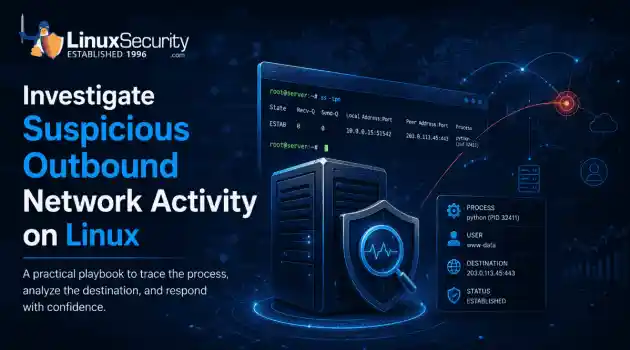
incident response network traffic Imagine logging into a production Linux server for routine maintenance and noticing background network activity connecting to an unfamiliar external IP address. Your endpoint protection agent is not popping up with an alert, there is no service failure, and on the surface, the system appears to be running normally. . For Linux administrators and security teams, such a situation is a moment of truth: Is this activity a sign of active intrusion or just a tool that was overlooked in the course of...
 Jul 21, 2026
How to Harden My Filesystemsystem hardening open source security
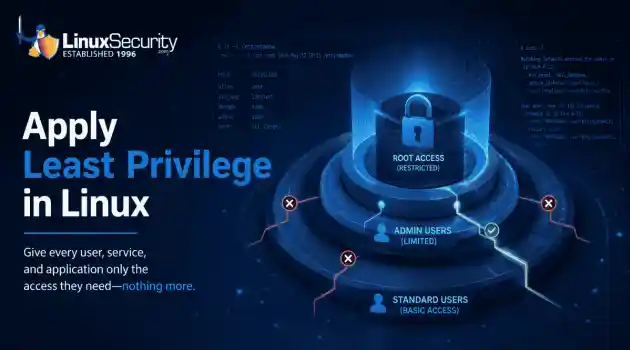
system hardening open source security We all spend a lot of time defending our systems from external threats, but the amount of damage an attacker can cause often depends on what happens after they get in. A single compromised account doesn't always lead to a major incident. The real danger begins when that account has far more access than it actually needs. . That's exactly what the principle of least privilege is designed to prevent. By limiting users, services, and applications to only the permissions required for their jobs,...
Jul 20, 2026
How to Learn Tips and Tricksthreat detection system monitoring
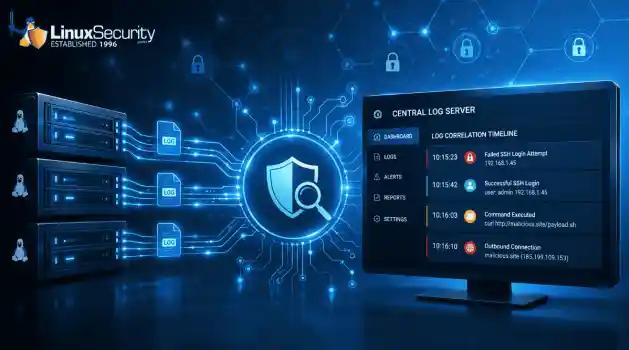
threat detection system monitoring For small security and IT teams, the "enterprise" dream of a fully automated SIEM often feels like a distant luxury. It’s a vision built on massive budgets and dedicated engineering teams—things that, frankly, most of us don't have. But here is the reality: you don’t need a six-figure platform to maintain a secure environment. . Linux systems are, by design, incredibly verbose. Every time a user authenticates, a process executes, or a configuration file changes, your system creates a record of...
Jul 17, 2026
How to Learn Tips and Tricksnetwork security centralized logging
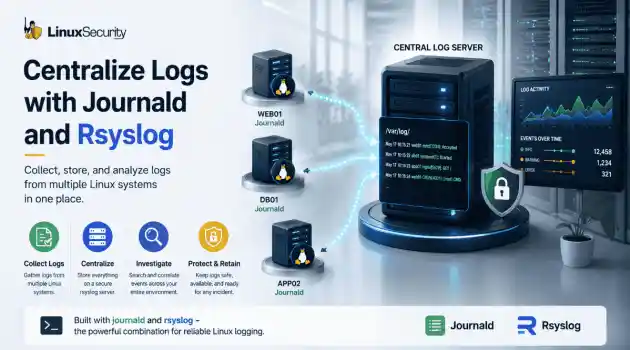
network security centralized logging Linux systems generate a steady stream of authentication, service, kernel, and application logs. On most systems, those logs never leave the machine that created them. If you're responsible for ten or twenty servers, that means checking each one separately. If one disappears before you can investigate it, its logs may disappear with it. Centralized logging solves that by sending log messages to another server as they're created. Instead of searching every machine, you have one place to review...
Jul 15, 2026
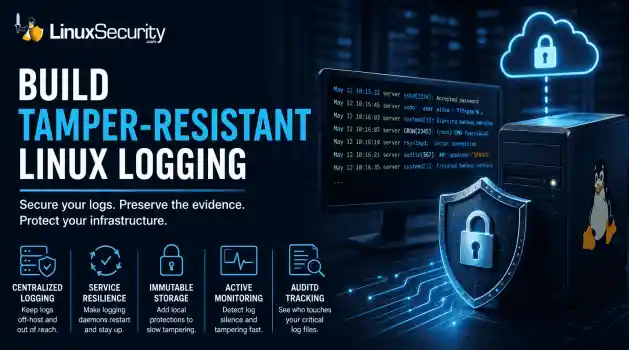
How to Secure My Networksecurity advisory audit
security advisory audit When you’re digging through an incident, your logs are the only thing you can actually trust. The problem is, attackers know that too. If someone gets root on your server, their first move is almost always to delete the evidence and cover their tracks. . If you aren't actively protecting your logs, you're basically flying blind the second a breach happens. It’s a miserable feeling to realize you have no idea what an attacker did because they wiped the logs before you even got there. In this...
Jul 11, 2026
 Refine HOWTOs
X Clear Filters
Get the latest News and Insights
Get the latest Linux and open source security news straight to your inbox.
Community Poll
Should Linux servers automatically install security updates?
Loading...
Explore Latest Linux Security HOWTOs
We found 0 articles for you...
169
 cyber threatskey managementdata privacy
Email Encryption: Securing Linux Communications Against Cyber Threats
Communication integrity is a primary concern for all individuals and organizations in this modern digital world. Email is one of the most prevalent modes of communication, and messages often contain sensitive information that, if intercepted by unauthorized personnel, might have serious consequences. Email encryption is vital for ensuring advanced electronic communication security in such scenarios. . In this article, I look at some of the intricacies around email encryption along with Fedora hardening advisories , how it differs from secure email practices, its pros and cons, and why it matters in securing Linux communications against cyber threats. Understanding Email Encryption: Definition & Mechanisms Email encryption refers to the process by which different algorithms change the contents of an email into an unreadable format. Only the intended recipient with the correct decryption key can read this. The information changed in cipher text is protected from unauthorized use, and data breaches cannot occur through interception or compromise. CISA recommends email encryption when sensitive information is being sent out. This minimizes the risk of unauthorized access and maintains confidentiality. On the other hand, secure email is a more general term referring to the mechanisms that ensure the integrity and confidentiality of emails during transfer. Secure emails provide a safe channel between the sender and the recipient using protocols like Transport Layer Security (TLS) or Secure Sockets Layer (SSL) . While encryption is a major part of secure email best practices, not all emails are encrypted end-to-end. What is an encrypted email? An encrypted email is a message whose content is encoded through encryption techniques. The sender encrypts the email content with a public key, and the receiver decrypts it with their private key. In this way, interception may occur, but the content of the email will remain confidential. GnuPG and S/MIME are two applications that offerend-to-end encryption. Encryption ensures that the intercepted content can't be deciphered even when the attackers access the email servers without the proper keys. The general features associated with encrypted email include the following: protection against transport of sensitive data between the mail servers by using cryptographic keys-a public key for encryption and a private key for decryption-can be provided with the Transport Layer Security, standard for public key encryption and digital signing of emails using Secure/Multipurpose Internet Mail Extensions, and verification regarding authenticity and integrity of the content by digital signatures. What is a secure email? Secure email uses different forms of protection through safe transmission across networks. It aggregates several security protocols that ensure integrity, authenticity, and confidentiality in email transmissions. Secure email often involves encryption, but it might be initiated with other approaches, such as MFA , which would involve two-factor authentication using an extra layer of security with OTPs or biometric scans. Passwords are significant and should be strong, long, and complicated to avoid hacking. Access rights can confine access to email by allowing only the right people in. Malware protection can scan any attachment or link because of its threat potential. Anti-phishing tools help prevent phishing attacks by verifying the sender's authenticity. The Significance of Email Encryption Research denotes that 94% of organizations have fallen prey to phishing attacks , and cybercrime has become pervasive. Poor email security can have devastating ramifications: financial loss, damage to brand reputation, and eroded customer confidence. As Edward Snowden said, "Arguing that you don't care about the right to privacy because you have nothing to hide is no different than saying you don't care about free speech because you have nothing to say." This cannot be emphasized when taking proactive preventative measuresto protect sensitive information, such as encrypting emails. Advantages of Sending Encrypted Emails One of the major benefits of sending encrypted emails is security. Astoundingly, 95% of business leaders report they are concerned about email security because the results of a cyber intrusion can be devastating. Encrypted emails prevent unauthorized access, meaning only those intended to receive the information in the content can read it, even if hackers compromise the recipient's email account. Meanwhile, despite all the publicity about cybersecurity, only 14% of email operatives use encryption. Individuals and organizations must protect personal and sensitive information like social security numbers, health data, and credit card details. Email encryption keeps the privacy of one's data intact by safeguarding the contents of an email from unauthorized exposure. Moreover, organizations operating in regulated industries such as healthcare or finance are bound by strict regulations like GDPR, HIPAA, and PCI DSS . Encryption of emails enables such organizations to comply with these regulations by responsibly handling data and avoiding potential penalties. This email encryption feature will allow businesses to uphold customer trust and thus minimize risks related to data breaches. Yet another considerable advantage is being able to distinguish real emails from spam. Of the 162 billion emails sent daily, determining the real ones from malicious spam is a substantial task. Encrypted emails that use digital signatures guarantee the sender's authenticity. This feature helps reduce the risks of phishing attacks and malware infiltrations. Drawbacks of Sending Encrypted Emails Despite these benefits, sending encrypted emails has a fair number of drawbacks. Email encryption can be complicated and require substantial time, particularly for entities that use end-to-end email encryption or S/MIME and PGP protocols. Secondly, compatibility issues might vary because encrypting emails requires boththe sender and the receiver to use compatible encryption techniques. Any mismatch in the mail clients or systems could congest the decryption process, and hence, the encrypted message would not be accessible. Besides that, decryption may be a bit inconvenient for many recipients, especially those not as well-versed in technology. Additionally, should access to the encryption keys be lost, retrieving some crucial information on time could be a problem, thus delaying communication and probably decision-making. More challenging is the management of the encryption keys themselves. Poor key management consists of arranging keys based on their storage on public servers, which largely creates unauthorized access to sensitive information. For example, sensitive military data once leaked out due to bureaucratic arrangements involving poor key management practices. Our Final Thoughts on the Importance of Email Encryption for Linux Users Since cyber threats change daily, the role of email encryption in making digital messages secure cannot be undermined. Understanding the differences between secure and encrypted emails is essential for any organization trying to enhance its email security. Besides improving security features, encrypted emails help ensure data privacy and compliance with regulations. However, significant challenges include reducing complexity and making key management easier. Robust email encryption practices and a general trend towards raising cybersecurity awareness will help an institution protect sensitive information against phishing attacks that lead to data compromise. An organization must also realize that email encryption creates complexity and headaches, such as incompatibility and key management problems. Regardless, the benefits of email encryption far outweigh the drawbacks. Do you have additional questions about securing your email as a Linux user? Reach out to us @lnxsec— we're here to help! . Explore the complexities of email encryption, its importance andchallenges in securing Linux communications from cyber threats.. communication, integrity, primary, concern, individuals, organizations, modern. . Brittany Day
 Feb 10, 2025
•
Feb 10, 2025
• How to Secure My E-mail
162
 data privacyprivacy toolapplication firewall
How to Install Portmaster: Control Data Privacy on Linux
The modern user is a privacy conscious one. We want to know what data is being collected and how it’s being used. For Linux users, we embody this mindset ten-fold. Portmaster gives you more control over your data. . Portmaster is an open-source application firewall. It allows you to analyze and control the network activity of individual applications. You can also see which IP addresses data is traveling to and from, allowing you to detect any services that are siphoning your data. The paid tier, Portmaster unlimited, gives you access to a VPN alternative: an SPN (Safing private network). A traditional, packet-filtering firewall is port-based. When you enter the port, the firewall will prevent all Internet traffic from flowing through it. An application-level firewall, like Portmaster, protects you from both ends. It provides you with a level of user anonymity and finer controls. Although there are more complex solutions that provide next-level security, these are often not consumer grade and are more data center oriented. . NetGuardian equips Linux enthusiasts with tools to monitor network operations and bolster information security through its community-driven firewall application.. Portmaster, Application Firewall, Data Privacy, Linux Network Control. . Brittany Day
Nov 19, 2022
•
How to Strengthen My Privacy

162
 data securitydata privacyfile management
Remove File Metadata on Linux for Enhanced Data Security Practices
All files contain some additional information about the data stored in them, also known as metadata. Here's how to remove file metadata on Linux. . When you create a file, all kinds of supplementary metadata get added to it. Anyone with access to the file can read this information, which may include details you may not want anyone else to know. Here's how to clear metadata from files on Linux. . Discover techniques to swiftly eliminate metadata from files in Linux, ensuring your confidentiality and safeguarding your data.. File Metadata, Data Privacy, Linux File Management. . Brittany Day
Oct 20, 2022
•
How to Strengthen My Privacy
160
 information securitydata privacyencryption techniques
Easy File Encryption Methods for Secure Linux Management
Learn how to easily and securely encrypt files on Linux in this tutorial. . As longtime readers know, while I try to stay knowledgeable on the many sub-disciplines of information technology, my passion is for information security. Since it's been a while since I've contributed any InfoSec knowhow, I wanted to rectify that. I couldn't have timed this realization better, because (as you'll see) the techniques on display are perfect for protecting your deluge of tax season documents. In this piece, I aim to provide a range of simple but effective options for encrypting a small number of files. In particular, these options are salient for use cases like tax filing, where users are sending sensitive documents to recipients with an unknown degree of technical proficiency. Fond as I am of PGP, I'll bet you your refund check that your accountant doesn't know the first thing about using it. . Quickly secure your documents on Linux by following this simple guide for effective file encryption.. Linux Encryption, Secure File Management, InfoSec Techniques. . Brittany Day
May 13, 2021
•
How to Harden My Filesystem
162
 security practicesdata privacysensitive data
Tutorial: Hide Sensitive Files On Linux Desktop File Managers
Want to hide sensitive files and folders from your Linux desktop file manager? Learn about one method for doing this in a helpful tutorial. . You probably already know the traditional method of hiding files on the Linux command line. If not, any file that begins with a . will not be seen with the ls command, unless you add the -a option. Those same files and directories will be hidden from the file manager unless you explicitly tell the file manager to show those secreted files. This is a handy way to hide sensitive information (such as app configurations and the like) away from prying eyes. Although not truly a means to security, it shouldn't be overlooked as an additional layer. . Discover methods to secure private documents on the Linux desktop by employing straightforward strategies.. File Hiding Techniques,Linux Sensitive Data Management,Desktop File Privacy. . Brittany Day
Aug 14, 2020
•
How to Strengthen My Privacy

Get the latest News and Insights
Get the latest Linux and open source security news straight to your inbox.
Community Poll
Should Linux servers automatically install security updates?
Search Topics
Powered By

Linux Security - Your source for Top Linux News, Advisories, HOWTOs and Feature Releases
QUICK LINKS
subscribe to newsletters!
Like staying secure? So do we.
Sign up for updates, tips, and alerts!