


Discover Top Linux Device Management Solutions for the Year 2026
 Jun 16, 2025
•
Jun 16, 2025
•
 MaK Ulac
3 - 6 min read

Enterprise environments power everything from development machines and servers to kiosks and IoT devices. However, managing these endpoints, especially across distributed teams, isn’t as straightforward as managing them on mainstream platforms like Windows or Android. That’s where Linux device management comes in.
Regardless of whether you are an IT administrator responsible for managing Ubuntu or Arch Linux laptops in a development team or overseeing field devices on Raspberry Pi, selecting the appropriate Linux device management software is essential for maintaining a balance between security, compliance, and productivity.
Let’s explore the top contenders in Linux mobile device management for 2026. This isn’t just another checklist. We’re diving into each tool’s standout strengths and evaluating how they serve today’s hybrid Linux ecosystems.
Swif.ai MDM AI-Governance Platform
Swif.ai is a unified mobile device management platform covering macOS, Windows, iOS, Android, and Linux. It provides policy enforcement controls intended to support compliance with frameworks such as SOC 2, ISO 27001, and CMMC, and includes predefined compliance templates. The platform can integrate reporting data with audit management tools such as Vanta and Drata.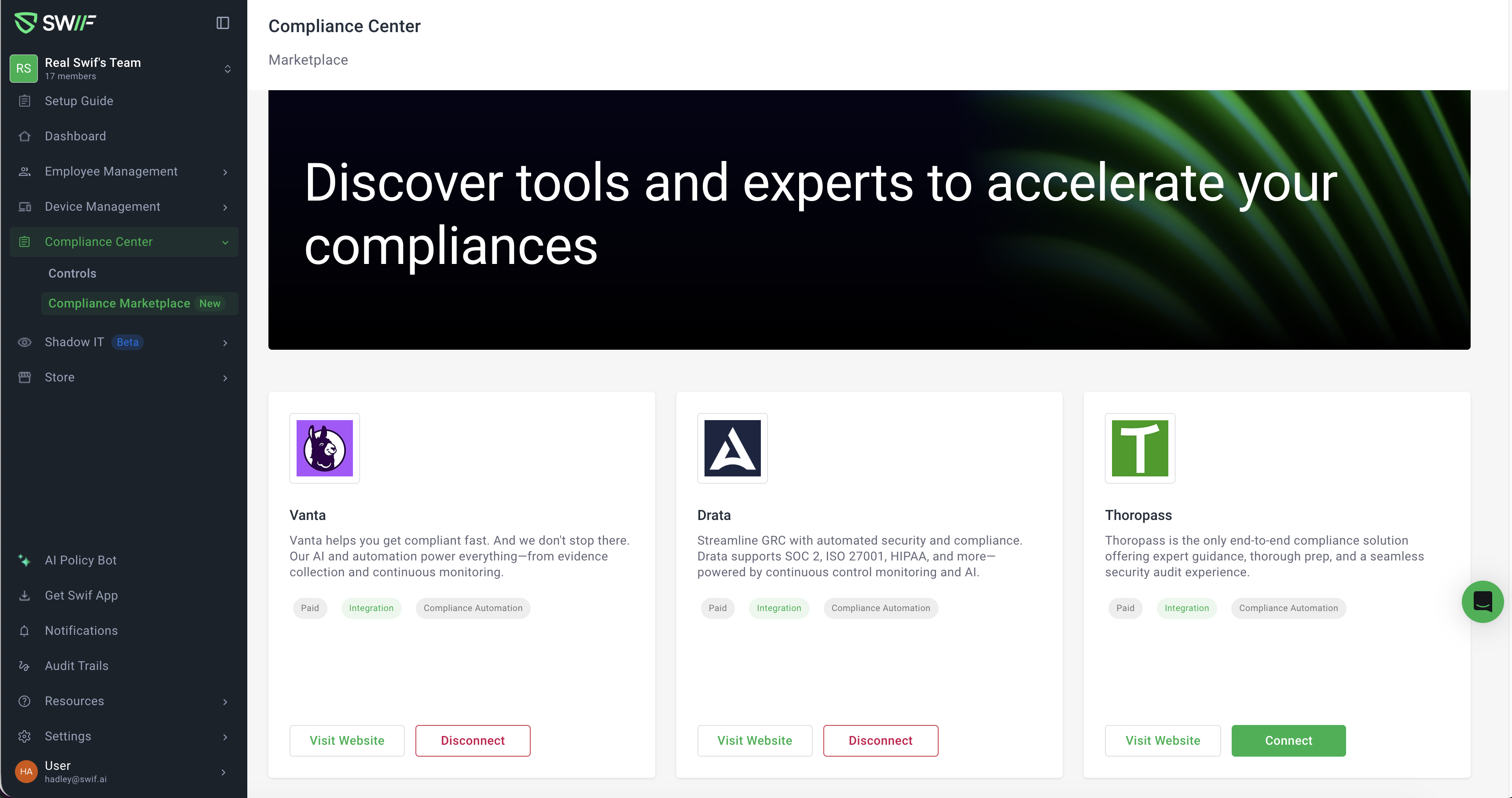
For Linux environments, it supports multiple distributions, including Ubuntu and NixOS, and provides centralized visibility into device configuration and compliance posture.
What differentiates it: Swif.ai integrates AI-assisted monitoring into traditional MDM controls, allowing IT teams to surface deviations, misconfigurations, and compliance risks without relying solely on reactive troubleshooting.
Key Capabilities:
- Policy-based compliance enforcement
- Configuration drift monitoring
- Automated governance workflows
- Centralized Linux device oversight
- Real-time posture visibility
- Security state analytics
Trial/Pricing: Available upon request
Best suited for: Enterprises seeking automated governance and compliance oversight for Linux environments
Scalefusion MDM
Scalefusion has rapidly emerged as one of the most user-centric solutions in the Linux device management space. It offers intuitive, script-based enrollment and supports Ubuntu and other Debian distributions, making it ideal for startups, education environments, and enterprise setups with remote Linux fleets.
Its centralized dashboard gives real-time access to vital system data such as battery health, encryption status, and OS compliance, all at a glance. Scalefusion also streamlines everyday tasks with policy-based automation and secure kiosk mode, ensuring devices stay locked to purpose.
Why it stands out: Because it comes with Linux shell programming, remote terminal access, and application control, IT has full command-line control over Linux machines that are far away without making them harder to use.
Notable Features:
- Linux Kiosk Mode
- Remote terminal for troubleshooting
- Location tracking and geofencing
- Password & browser policy control
- Granular content and app management
- Wi-Fi and peripheral settings
Trial/Pricing: 14-day free trial; starting at $2/device/month (billed annually)
Ideal for: Enterprises with Linux-first or mixed-device infrastructure
SOTI MobiControl
SOTI MobiControl brings enterprise mobility management (EMM) into the Linux realm with its comprehensive control for remote access, content distribution, and device lockdown. IT teams can enforce location-based rules through geofencing and reduce downtime via remote view and control capabilities.
What makes it unique: Its automated lock methods and task scheduler help cut down on manual work and make endpoints more resilient.
Features at a Glance:
- Linux device lock & monitoring
- File sync and content push
- Remote diagnostics
- Geofencing policies
- Device health alerts
Trial/Pricing: 30-day trial for 25 devices; pricing upon request
Best suited for: Logistics and field operations relying on Linux tablets or rugged devices
ManageEngine Endpoint Central (UEM)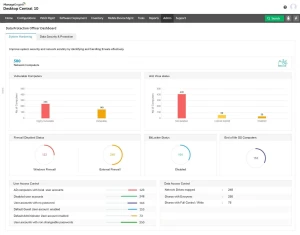
Endpoint Central from ManageEngine is a full-fledged UEM that supports Linux endpoints separately. Patch management, fixing security holes, and automatic security enforcement are some of its best features. All of these are necessary for keeping Linux systems safe in real-world work settings.
Unique proposition: This solution excels at automating repetitive tasks, such as OS patching and application deployments, across a mix of Linux flavors.
Key Capabilities:
- Malware detection & privilege control
- Patch management for Linux distros
- Asset discovery and audit reports
- Browser hardening & app whitelisting
- Remote access tools
Trial/Pricing: 30-day free trial; pricing on request
Good for: IT teams with compliance-heavy environments
JumpCloud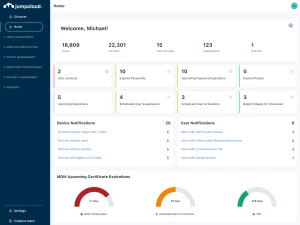
JumpCloud brings identity-centric Linux device management into the spotlight. It offers robust user access policies, remote patching, and directory-level controls for Linux systems backed by cloud-native agility.
Differentiator: It bridges the gap between Linux system control and identity and access management, all under one platform.
Top Features:
- Password management & authentication
- Remote enrollment commands
- Patch workflows
- Admin script automation
- User directory sync with SSO
Trial/Pricing: 30-day trial; starts at $9/user/year
Ideal for: Cloud-native businesses and DevOps-focused orgs
SureMDM by 42Gears
SureMDM is another strong Linux MDM platform offering a simplified yet powerful interface for managing Linux endpoints. Its emphasis on remote command execution and content filtering makes it an excellent tool for enforcing usage boundaries.
Why it’s valuable: The tool's remote Linux desktop control and web access blocking capabilities offer granular control over internet exposure on devices.
Core Features:
- Linux kiosk mode
- App and OS updates
- Script execution via terminal
- Remote file transfer
- Website blocking rules
Trial/Pricing: 30-day free trial for 100 devices; starts at $3.99/month.
Target use cases: Digital signage, POS systems, and education tech setups
Esper for Linux IoT Devices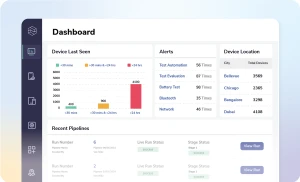
Esper is gaining popularity in the Linux-powered IoT space. It enables teams to manage embedded Linux devices such as kiosks, wearables, and POS systems by supporting custom firmware, secure OS updates, and telemetry dashboards.
Standout strength: Deep control over Linux containers and full A/B OTA updates for mission-critical deployments.
Key Features:
- Secure device provisioning
- Containerized app deployment
- OS version control
- Fleet-wide telemetry insights
- API integrations
Best for: IoT and embedded Linux device management
Trial/Pricing: Custom quote on request
Fleetsmith (Now Open Source Forks)
Although acquired by Apple, open-source forks of Fleetsmith’s original Linux client still see community updates. While limited in UI capabilities, they offer basic inventory management, scripted device configurations, and SSH-based remote controls.
Use case: For organizations with a strong DevOps team and a preference for self-hosted Linux device management solutions.
Pros:
- Lightweight agent
- Free and open-source
- Easily extensible with shell scripts
Limitations: No GUI or official support
Good for: Advanced users managing internal Linux fleets
Choose the Best Linux Device Management Tool
Selecting the right Linux remote device management tool depends on the nature of your infrastructure, your IT maturity, and whether you prioritize GUI simplicity, CLI power, or integration flexibility.
- Scalefusion leads with a great blend of ease of use, depth, and affordability, which is ideal for growing businesses and cross-platform teams.
- ManageEngine and JumpCloud shine in compliance-focused or identity-heavy setups.
- For IoT projects, Esper brings unmatched control over embedded Linux environments.
Linux device management in 2026 is no longer an afterthought—it’s the backbone of secure, productive, and compliant enterprise operations.
 PREVIOUS

 NEXT
NEXT



Powered By

Linux Security - Your source for Top Linux News, Advisories, HOWTOs and Feature Releases
QUICK LINKS
subscribe to newsletters!
Like staying secure? So do we.
Sign up for updates, tips, and alerts!