



Security Vulnerabilities  security advisory zero-day
security advisory zero-day CISA added CVE-2026-11645 to its Known Exploited Vulnerabilities catalog after Google confirmed active exploitation of the flaw. The bug sits in V8, the JavaScript engine behind Chrome and Chromium. . That's where this gets more interesting. Most coverage will focus on Chrome because that's where the patch landed. But the affected component is V8. Chromium relies on it. Electron relies on it. Plenty of desktop software Linux users interact with every day relies on it too, often without much...
 Jun 10, 2026

Network Securitysecurity advisory networking
security advisory networking For years, IPv4 was the only proxy type that really mattered for anyone running automation off a Linux box. IPv6 was the protocol everyone said they’d migrate to, but almost nobody actually did. In 2026, that’s finally starting to shift. . The problem is that most admins stick with IPv4 out of habit. They know it; it’s what their tooling defaults to, and they don’t see a reason to change. Some are overpaying for addresses they don’t need. Others would quietly break their scrapers, scripts, or...
Jun 09, 2026
Network Securityopen-source python
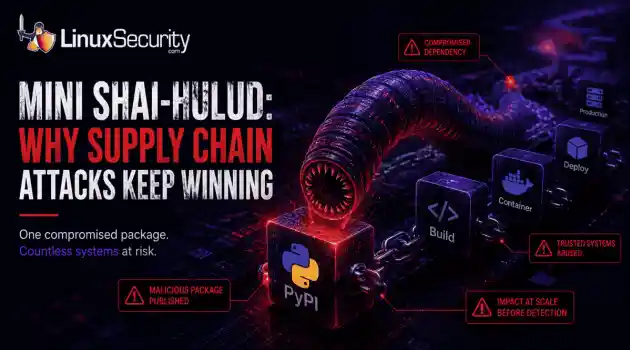
open-source python Researchers recently identified another wave of malicious packages on PyPI linked to the broader Mini Shai-Hulud campaign, a worm-like supply chain attack that spread through trusted software packages. On the surface, the packages looked no different from thousands of others published to the repository each week. . Instead of trying to break into a target network directly, the attackers hid malicious code inside software that developers were already using. A few downloads are all it takes....
Jun 09, 2026

Security Vulnerabilities malware linux
malware linux IronWorm steals credentials and uses them to spread beyond the original victim, turning developer access into a supply chain risk. . A new campaign targeting npm has evolved past simple credential theft. Researchers identified IronWorm, a self-spreading threat. It harvests high-value Linux development secrets—SSH keys, cloud tokens, package publishing credentials. One compromised workstation becomes a launchpad for downstream supply chain attacks. This is not a get-in-and-get-out operation....
Jun 08, 2026

Network Securitysystem security Linux network
system security Linux network The romanticized image of the digital nomad – a laptop on a sun-drenched balcony – rarely accounts for the actual friction of maintaining a professional development environment on the move. . The friction is amplified with Linux. We are looking for a setup that respects our kernel configurations, handles volatile network handovers, and maintains a strict security posture without the hand-holding of a consumer-grade OS – so, put simply, more than just a laptop and a sunny deck. The hardware is...
May 26, 2026
 Refine news
X Clear Filters
Get the latest News and Insights
Get the latest Linux and open source security news straight to your inbox.
Community Poll
What got you started with Linux?
Loading...

Explore Latest Linux Security news
We found -4 articles for you...
210
 security advisoryout-of-boundsmalware threats
CISA Alerts Admins: Two Active Linux Kernel Threats Identified
Two new Linux kernel vulnerabilities have been added to CISA's Known Exploited Vulnerabilities Catalog , emphasizing a pressing need for action among us admins. These Linux kernel vulnerabilities, identified as CVE-2024-53197 and CVE-2024-53150, involve out-of-bounds access problems that malicious actors have already exploited. The implications are severe, potentially allowing attackers to bypass system security, manipulate data, or execute arbitrary code, putting your systems at significant risk. . As patches are anticipated, we must stay alert by monitoring our distribution’s security advisories for updates. CISA strongly advises prioritizing the remediation of these vulnerabilities, urging us admins to act swiftly to mitigate potential attacks. By staying informed and applying necessary patches, you can enhance the security of your infrastructure and protect against these active exploits. Let's take a closer look at these newly discovered kernel bugs, their impact, and practical measures you can implement now to prevent exploits. Understanding These Kernel Vulnerabilities CVE-2024-53197 and CVE-2024-53150 are classified as out-of-bounds access vulnerabilities in the Linux Kernel. Such flaws allow unauthenticated actors to gain unauthorized access beyond designated areas of system memory, generally when programming errors miscalculate array boundaries or data fields boundaries. This leads to unexpected program behavior, which allows attackers to manipulate memory beyond its intended boundaries and read past its limits without authorization, with serious repercussions such as data corruption, system crashes, or arbitrary code execution. Noteworthy about these vulnerabilities is their current exploitation by malicious actors in the wild, emphasizing how critical it is that we administrators understand and address these risks swiftly. Assessing the Threat Landscape The implications of Linux Kernel vulnerabilities go well beyond theoretical risks; their active exploitationrepresents a real and present danger that we admins must quickly address. When these vulnerabilities compromise systems, attackers could gain unauthorized access to sensitive information or take control of an entire system by running code directly. Given Linux's widespread adoption across servers, desktop computers, and embedded devices, kernel vulnerabilities have profound implications for infrastructure security. CISA's Known Exploited Vulnerabilities Catalog identifies vulnerabilities that pose an imminent risk. It is a valuable strategic resource for IT stakeholders and security personnel, pinpointing vulnerabilities actively leveraged by threat actors. Administrators who closely examine this catalog can focus their remediation efforts effectively on bugs posing the most urgent risks to their Linux environment. Immediate Mitigation Steps for Admins Administrators should ensure they remain knowledgeable of any new vulnerabilities that arise and the availability of patches. Although updates should be expected over time, administrators must regularly monitor trusted sources like their Linux distribution's security advisories or kernel release notifications to stay aware of new security threats and patch developments. Applying patches as they become available is an integral security practice, helping prevent attackers from exploiting known vulnerabilities and closing off an attack vector. When patches cannot be applied immediately, administrators should focus on other security measures such as strengthening access controls , isolating sensitive workloads, or using intrusion detection systems to monitor for unusual activity that suggests possible exploitation attempts. A Comprehensive Security Strategy Is Crucial Though patching specific vulnerabilities is essential, we admins must also implement a comprehensive security strategy that includes regular system updates , thorough monitoring practices, and knowledge of common exploit techniques. Regularly updating the Linux kernel andassociated software components is a fundamental practice, serving to reduce risks from exploitation. Using advanced monitoring tools allows us to detect anomalies or potential breaches more rapidly, enabling swift response times. Education and training are also fundamental components of an effective security strategy. By providing ongoing IT staff education on emerging threats and the latest security protocols, your team will be equipped to identify and resolve vulnerabilities effectively. The Role of CISA and Compliance CISA plays an essential role in protecting national cybersecurity by identifying and cataloguing exploited vulnerabilities. Its recommendations are primarily targeted at federal agencies but also provide invaluable insights for private organizations or individual admins. By following its advice and aligning our security measures with CISA's recommendations, we can ensure our systems address today's most dangerous vulnerabilities. Compliance with industry standards and frameworks is another essential aspect of effectively protecting systems. Frameworks like ISO/IEC 27001 or NIST Cybersecurity Frameworks offer guidance that allows organizations to assess their security posture and prioritize vulnerabilities identified by CISA. Future-Proofing Linux Security Due to the dynamic nature of cyber threats, we admins must adopt an anticipatory mindset by investing in technologies and practices that anticipate and mitigate future risks. This involves future-proofing our security infrastructure with technologies and practices that mitigate emerging risk exposures. Implementing automatic patch management systems can facilitate keeping Linux systems current. Leveraging Machine Learning and Artificial Intelligence techniques to predict potential threats based on existing vulnerabilities is also invaluable in taking preventative rather than reactive measures against potential issues. Promoting an organizational culture of security where every stakeholder, from developersto end-users, plays their part in safeguarding system integrity is integral to creating lasting security practices. Our Final Thoughts on These Known Exploited Kernel Bugs CVE-2024-53197 and CVE-2024-53150, recently added to CISA's Known Exploited Vulnerabilities Catalog, are important wake-up calls for Linux administrators. By understanding their nature and the active threats they pose, we can take vital steps towards safeguarding our systems against current exploits and potential future ones. Proactive security practices will become increasingly critical weapons against cyber threats in an ever-evolving battle for survival. . Two active Linux kernel threats are identified, emphasizing the need for patches and administration action to safeguard systems.. vulnerabilities, linux, kernel, added, cisa', known, exploited, catal. . Brittany Day
 Apr 10, 2025
•
Apr 10, 2025
• Security Vulnerabilities

Get the latest News and Insights
Get the latest Linux and open source security news straight to your inbox.
Community Poll
What got you started with Linux?
Search Topics
Powered By

Linux Security - Your source for Top Linux News, Advisories, HOWTOs and Feature Releases
QUICK LINKS
subscribe to newsletters!
Like staying secure? So do we.
Sign up for updates, tips, and alerts!
Discover faster search, smarter navigation, and deeper Linux security insights. Read More