Overly broad permissions can turn one compromised account into a much larger security problem. Learn how to reduce unnecessary access, review privileges, and apply least privilege across modern Linux systems. Review Linux Privileges×


Stay Ahead With Linux Security Features
 identity management security tactics
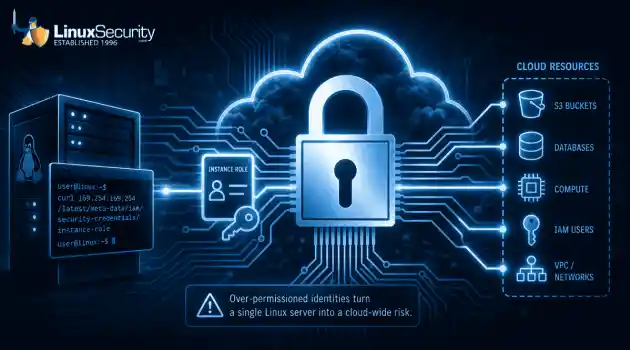
 For years, we secured our Linux infrastructure by building walls: VPCs, security groups, and hardened SSH configurations. We treated the cloud like a virtual data center, assuming that if we kept the "bad guys" out of the network, our workloads were safe. . That model is no longer sufficient. Today, one of the most common paths from an initial compromise to a major cloud breach is the identity assigned to your Linux workload. When an attacker gains code execution on a Linux instance—through a...
 Jul 17, 2026
 security practices patch management
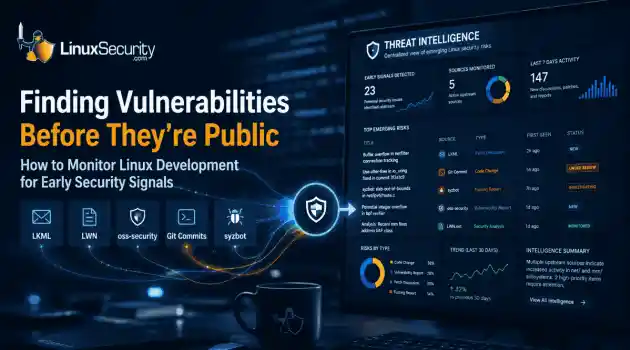
 Most of us don't hear about a kernel vulnerability until a CVE lands in our inbox or the vulnerability scanner starts complaining. By then, the patch isn't new anymore. Kernel developers may have been passing it around for review, arguing over the implementation, or revising it for days before anyone outside that community noticed it. None of those discussions are secret. They're sitting in mailing list archives, Git commits, and patch reviews where they've been the whole time. The strange...
Jul 14, 2026
 Linux security cyber attacks
 Every Linux server in your fleet produces thousands of events every minute. From journald logs and auditd records to kernel-level eBPF hooks, your systems are constantly talking. Most of that noise is just the mundane churn of system services, CI/CD runners, or routine administrative automation. But among that noise, an attacker might be establishing a foothold, moving laterally, or setting up persistence. The challenge for any security team is: how do you separate the routine from the...
Jul 13, 2026
 open-source infrastructure risk
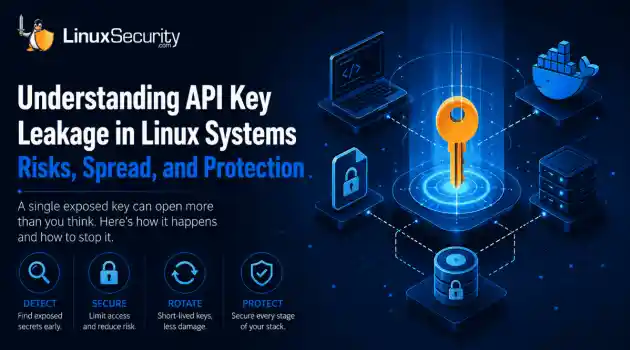
 Security scanners flag exposed API keys in public repositories every day. The initial response is usually predictable: delete the commit, revoke the credential, and move on. That’s a mistake. . In a real Linux environment, an API key never stays in one place. By the time it hits a public repo, it’s already everywhere. It’s in the CI/CD pipeline. It’s in your container registry. It’s in the build logs. It’s in the backups. Git makes this worse because the history never dies. Deleting a file in...
Jul 11, 2026
 open-source rootkit
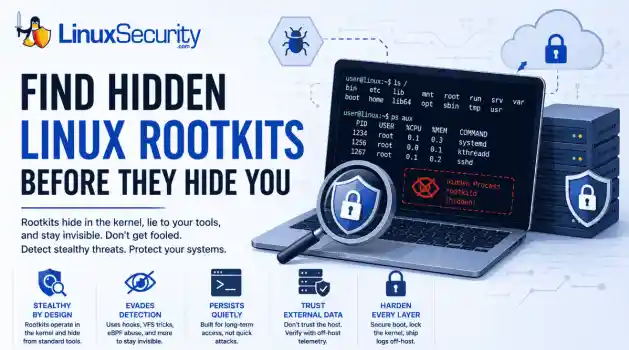
 Most of us think of Linux rootkits as ancient history—the stuff of 90s hacking forums and clunky malware that would crash your system if you looked at it the wrong way. But if you think they’ve gone away, you’re mistaken. They’ve just gotten smarter. . Modern attackers aren't using the noisy tools of the past. Today’s threats are surgical. Many of today’s most advanced Linux rootkits operate at the kernel level or abuse legitimate system features to blend in with normal traffic. They’re...
Jul 09, 2026
 Refine features
X Clear Filters
Get the latest News and Insights
Get the latest Linux and open source security news straight to your inbox.
Community Poll
Should Linux servers automatically install security updates?
Loading...
Explore Latest Linux Security features
We found -3 articles for you...
102
 data protectionbackup solutionautomation
Top Backup Tools for Linux: Prevent Data Loss from Ransomware Attacks
Linux ransomware is on the rise , and an attack on your system could result in the loss of critical data and significant downtime - if important files have not been backed up frequently and stored securely. . The Linux ransomware attacks rise, which can threaten to compromise your data security and cause operational downtime and data loss. To prevent this, a backup strategy becomes necessary. This article outlines reliable techniques to securely back up your Linux systems to guarantee that your data remains intact even in the face of a cyber attack. We present six top backup software for Linux desktops, servers, and enterprise systems. These tools allow you to automate backups, minimize risks, and protect information. These solutions offer convenience, guarantee the security of your backups, and enable swift recovery and continuity in your operations. In this article, you'll learn about our six favorite Linux backup solutions and how they compare: Timeshift Kbackup Rsync Duplicati Amanda Bacula Top Linux Backup Tools Comparison Table What Is Data Backup & How Can It Mitigate the Risk of Data Loss from a Ransomware Attack? Data backup involves copying critical files to secure and high-performing external systems to prevent a single point of failure (SPOF). A recent backup survey highlights the importance of backups; it found that while 78% of users back up their data, only 33% do so regularly. So, backing up your desktop and server regularly is critical to protect against data loss during a ransomware attack. You also should check that these files are not corrupted and that they are stored securely. This guarantees that your backups are immediately available for restoration, which allows quick recovery and minimal downtime after an attack. However, while the digital cloud is a popular storage option, as administrators can automate the backup process, statistics indicate that about 50% of users do not use physical backups for their stored data. Consequently, it is advisable to complement cloud backupswith physical storage solutions to improve security and provide data protection. It should be noted that if users implement a proactive, defense-in-depth security strategy and adhere to security best practices, they can greatly reduce their ransomware risk—but cannot eliminate it entirely. Users must maintain up-to-date servers and endpoints, implement the principle of least privilege for user accounts, closely monitor network activity and system logs, and audit systems regularly. Thus, a backup plan should be considered a critical “layer” of any successful cybersecurity strategy. 4 Top Tips for Secure Data Backup While 85% of ransomware attacks still target Windows systems, Linux is becoming an increasingly popular target due to the high value of the devices it powers, such as enterprise and government servers, web services, and large databases. Organizations capable of paying ransoms to restore operations and data are especially at risk. These attacks, which often use advanced encryption and extortion tactics, can lead to serious consequences such as data loss, damage to reputation, high recovery costs, and extensive downtime. Data backup remains the best defense against data loss should you suffer a ransomware attack. 56% of organizations recover their data from backups, compared to 26% that pay the ransom. So why are ransomware victims often unable to restore their systems from their backups? Nearly every admin and organization has backups; however, certain principles must be followed to implement a secure, successful data backup strategy. Data should be backed up frequently to meet recovery point objectives and keep potential data loss acceptable. Recovery time objectives should be established based on an acceptable period of downtime, as restore time will often determine the true impact of a ransomware attack. We recommend using folder comparison and synchronization software like FreeFileSync to resolve the differences between a source and a target folder so that only the minimum amount of datanecessary is transferred. Ransomware attacks can spread across networks, affecting backups as well. To protect backups, use a backup solution that creates unchangeable snapshots and keeps them in a read-only state to prevent encryption by ransomware. Alternatively, an “air-gapped” backup system, isolated from the rest of the IT environment, can also protect backups from malware. However, this method may be costly and complex, and there’s a risk that backups may capture the ransomware if a backup occurs before an attack is detected. Therefore, it’s necessary to check backups regularly to confirm they are not corrupted. Diversification is also a key consideration when it comes to creating and implementing a successful data backup strategy. Admins and organizations are quickly learning the importance of defense-in-depth in any type of security. Redundancy and resilience of backups can be accomplished with a “three-two-one” backup strategy, which guarantees that three copies of data are kept, with two on different media formats, one of which is off-site. This strategy makes it highly difficult for a malicious actor to encrypt and lock up every copy of their target’s data. Finally, you must restore and recover data from backups with minimal downtime in the event of a ransomware attack. This technical and time-consuming process requires that sysadmins and IT teams practice regularly to identify and improve any potential weaknesses. Luckily, the cloud facilitates easy recovery testing and makes data readily accessible. Bonus: Comparative Table of The Best Linux Backup Tools This article is extensive and contains a wealth of information. To assist you in navigating through the Linux backup software we have reviewed, we have compiled a general comparative table. We understand the importance of clear, accessible information, and this table aims to provide concise comparisons. Rsync Duplicati Timeshift Kbackup Amanda Bacula Easy to set up & configure? Yes (for simpleinstances) Yes Yes Yes Yes No Full client-side encryption? No Yes Yes Yes Yes Yes Supports file compression? Yes Yes Yes Yes Yes Yes Creates automated backups? Yes (with shell scripting) Yes Yes Yes Yes Yes Supports full backups? No Yes Yes Yes Yes Yes Supports incremental backups? Yes Yes Yes Yes Yes Yes Command-Line? Yes Yes Yes Yes Yes Yes GUI? Yes (Grsync) Yes Yes Yes Yes Yes Continuous data protection? No Yes Yes No No Yes Best suited for: Servers Desktops & servers Desktops Desktops Enterprise servers Enterprise servers Open-source version available? Yes Yes Yes Yes Yes Yes 6 Best Linux Backup Tools to Mitigate Data Loss Now that you understand the importance of data backups, we will analyze six top backup solutions for Linux. We provide a detailed overview of each tool, including general descriptions and highlighting their advantages. This analysis will help you compare the features and benefits of each tool. We recommend that you review all the tools sequentially, assess their capabilities, and then select the one that best suits your needs. Timeshift (for Desktops) Timeshift is one of the most popular Linux desktop backup tools, and LinuxSecurity users and team members rave about it. It is quick and easy to use, comes pre-installed with many popular Linux distros, and is available in the distribution repository. Timeshift supports Btrfs, a modern copy-on-write filesystem that is out of the box. Its Setup Wizard makes configuration simple, and setting up a backup configuration in Timeshift takes less than a minute. Additionally, Timeshift for Linux offers functionality similar to the System Restore feature in Windows and the Time Machine tool in MacOS. To protect systems, it takes incremental snapshots of the filesystem at regular intervals. These snapshots can later be restored to reverse any changes made to the system. It is important that Timeshift is designed to protect only system files and settings. User files such as documents, images, and music are notprotected. ✅ Why do we love Timeshift? Timeshift is ideally suited for backing up Linux desktop environments. The tool is fast and easy to navigate, which makes it accessible to users of all skill levels. Timeshift supports the Btrfs filesystem right out of the box, which improves the security and reliability of backups. Setup Wizard makes setup and configuration simple and quick. Users can create system snapshots at any moment ( Timeshift allows for multiple levels of snapshots, including Hourly, Daily, Weekly, Monthly, and Boot). 📆 Last update: The last update to Timeshift was made three years ago. 📥 Install Timeshift: For detailed instructions on how to install Timeshift, please visit the Timeshift GitHub page. These guidelines will help you set up and start using Timeshift on your system. Kbackup (for Desktops) Kbackup is a user-friendly, highly portable backup tool for both Linux and Unix that enables users to create automated, unattended backups. It creates archives, compresses them using the tar and gzip utilities, and then creates backups. Kbackup is highly reliable and supports full or incremental backups. It also offers encryption and double buffering for added security, support for tape drives, floppies, or removable media, and remote backup across networks. Kbackup has a menu-driven interface and a Command Line interface that can be included in automated scripts. ✅ Why do we love Kbackup? The software provides high reliability for securely storing data. It is designed to perform automated backups, which makes the process of data protection easier. The software supports full and incremental backups for flexibility, depending on your data protection needs. It can handle backups on various storage media, including tape drives and removable media, and also supports remote backups over networks. Features such as compression, encryption, and double buffering are available to enhance the security and efficiency of backups. The software has a user-friendly menu-driven interface and acommand line interface, ideal for integration into automated scripts. It can be easily adapted across different environments. 📆 Last update: January 9th, 2025. 📥 Install Kbackup: Visit the project’s GitHub page for detailed installation instructions. Rsync (for Desktops & Servers) Rsync is a simple but powerful utility that comes pre-installed with many popular Linux distros or is available in the repository. It is memory-friendly and can do anything a file manager can do from the Command Line, using a user-friendly command syntax. For instance, you can synchronize two directories by deleting existing files from the destination directory and copying all files from the backup directory using the command rsync -av --delete /backup/ /destination/. While rsync isn’t strictly a backup application, it’s the foundation for many of them. It’s quite possibly the most versatile file transfer application available. It was designed years ago to synchronize two files efficiently. But now, it has evolved into a powerful command-line tool to maintain files across different systems. Rsync supports any Cloud storage destination available online, including Google Cloud and an Amazon AWS instance. You can transfer backup files to remote storage using rsync with SSH ( from most modern desktops, this will automatically use SSH, but if it doesn’t, you can manually tunnel the file transfer through SSH). 🔴 Note: Rsync also has a GUI called Grsync that can be installed from your distro repository. ✅ Why do we love Rsync? These tools are ideal for backing up both Linux desktops and servers, which provide complete data protection across your entire infrastructure. Users can perform any action that a file manager can from the Command Line with a user-friendly command syntax. The tool supports incremental backups, which facilitates easy adaptation to an increased backup schedule and minimizes the storage footprint. It offers the option to tunnel through SSH, which adds an extra layer of security to protectdata during transfer. This tool supports both local and remote backups. It preserves file permissions and ownership settings during the backup process. Updates the file system and the directory tree after an operation that backs up new files on an already-established backup directory structure. They support both anonymous and authenticated rsync daemons, which is ideal for mirroring data across different locations. 📆 Last update: April 6th, 2024. 📥 Install Rsync: To install Rsync, you can find complete installation instructions on the Rsync GitHub page. Duplicati (for Desktops & Servers) Duplicati is a free and open-source Linux backup software that supports many popular third-party storage providers, including Google Drive, Dropbox, OneDrive, Amazon S3, and Google Cloud. It also stores backups on various remote file servers using SSH, making it easy to use an off-site destination far away from the original data—an important component of securing backups against ransomware. This feature also makes it a viable solution for desktop users. Duplicati supports incremental backups, so only changed parts need to be transferred. Theol features a built-in scheduler and auto-updater. It protects data privacy with AES-256 encryption and supports GPG encryption for backups. It also regularly tests backup content to detect broken backups on corrupt storage systems before it’s too late. ✅ Why do we love Duplicati? Duplicati provides data security by encrypting it before upload, which protects your information against unauthorized access. The software compresses files and supports incremental backups, which reduce both storage space requirements and bandwidth usage. Duplicati includes an integrated scheduler that automatically updates backups to keep your data protection up-to-date without manual intervention. It is available as a user-friendly graphical application and a command-line tool. Under Linux, Duplicati utilizes the Logical Volume Manager (LVM) to back up open or locked files. Users can adapttheir backup operations with various filters, deletion rules, and options for data transfer and bandwidth management. Duplicati regularly tests the integrity of backups to identify and address storage issues that may lead to corrupted data. 📆 Last update: Duplicati received its last software update in November 2024. 📥 Install Duplicati: Duplicati can be downloaded from the project’s GitHub page for free. Amanda Community (for Enterprise Servers) Amanda Community Edition is a free version of Amanda, the popular open-source data Linux backup and recovery software. It enables IT administrators to set up a single master backup server to back up many servers and workstations running multiple versions of Linux or Unix. Amanda Community Edition provides a rapid installer to minimize installation time. It also has an intelligent scheduler to automate backups. Amanda offers database, application, broad platform protection, and automated data retention in the event of transmission faults. Backup fault tolerance guarantees that initiated backups will remain synced in the case of network interference and will not compromise the entire backup. 🔴 Note: Amanda Community is available for free, while its professional version, Zmanda Pro, is a paid service that offers additional features and functionalities. ✅ Why do we love Amanda? This system enables the configuration of a single master backup server that backs up numerous servers and workstations using various Linux or Unix versions. An intelligent scheduler automates the backup process for timely updates without manual intervention. Amanda guarantees that backups remain uninterrupted and synchronized, even in network disruptions, which eliminates the need to restart the process. Users can choose from various storage media options to meet their backup needs. Maintains secure communication between the server and client via OpenSSH to allow secure backup of machines in a DMZ or on the Internet. Automated disposition policies streamline the management ofbackup lifecycles and simplify compliance and data control. 📆 Last update: Amanda was last updated on August 15th, 2023. 📥 Install Amanda: Amanda binary packages can be downloaded from the project’s website. Source packages can be downloaded from the project’s SourceForge page. Bacula (for Enterprise Servers) Bacula is a popular enterprise-level Linux backup solution available in all major Linux distro repositories. Linux security admins report that it can be difficult to set up, but once you do, you can easily manage its settings via a GUI or the Command Line. Bacula can create automatic backups on a remote or local server, manage backups using a CLI or a GUI, add volume pools, add storage blocks, include or exclude files, and more. It uses Transport Layer Security (TLS) authentication, supports virtual backup and duplicate job control, and can create accurate backups with compression support. ✅ Why do we love Bacula? This software provides an enterprise-level backup solution for data protection that is suitable for large-scale operations. It enables automatic backups on both remote and local servers. The software can be easily managed through a graphical user interface (GUI) or the Command Line. It employs Transport Layer Security (TLS) authentication to secure data transfers and improve the integrity and confidentiality of your backups. The system supports virtual backups, which allow seamless data protection in virtualized environments. It includes support for cloud storage and provides scalable and accessible backup storage options. The software offers duplicate job control to manage backup tasks and prevent redundant data storage. It allows data compression to increase the accuracy of backups, reduce storage requirements, and speed up data transfer. 📆 Last update: The software received its latest update on September 12th, 2023. 📥 Install Bacula: While the open-source tools required to build a Bacula enterprise backup system can be downloaded for free, Bacula also offerssubscription-based enterprise data backup solutions that combine Snapshots, advanced deduplication, single file restores, single mailbox restores, and data verification into one platform. Bacula Enterprise also includes assistance with onboarding and implementation and customized, ongoing support. Key Takeaways for Secure Data Backup on Linux The ransomware threat is here to stay and must be proactively addressed—but also prepared for. Data backup is an important part of secure Linux administration and can enable you to restore your system in the event of ransomware. While keeping on top of backups is difficult for most admins, using one of the automated, cloud-based tools introduced in this article can save time and improve your system's security. When choosing a Linux backup tool, admins should consider functionalities like database support, the nature of the backup media, encryption support, and supported data or file formats. It is critical to do your research and select a reliable backup solution, such as one of the tools featured in this article, to prevent the potential compromise of sensitive information. Remember, prevention is far better than reaction when it comes to ransomware and other cyber threats. Invest in your backup strategy now. Should something ever go wrong, you’ll be very thankful you did! Have additional questions about secure data backup on Linux? Are you using one of these tools in your backup strategy or another tool you think we should cover? Please reach out to us on Twitter, ask questions, and share your experience. We love to discuss topics like this with others who share our passion for Linux and security! Top Linux Backup Tools Comparison Table Timeshift Kbackup Rsync Duplicati Amanda Bacula For Desktops? Yes Yes Yes Yes No No For Servers? No No Yes Yes Yes Yes Easy to set up & configure? Yes Yes Yes (for simple instances) Yes Yes No Full client-side encryption? Yes Yes No Yes Yes Yes Supports filecompression? Yes Yes Yes Yes Yes Yes Creates automated backups? Yes Yes Yes (with shell scripting) Yes Yes Yes Supports full backups? Yes Yes No Yes Yes Yes Supports incremental backups? Yes Yes Yes Yes Yes Yes Command-Line? Yes Yes Yes Yes Yes Yes GUI? Yes Yes Yes (Grsync) Yes Yes Yes (Baculum) Continuous data protection? Yes No No Yes No Yes Best suited for: Desktops Desktops Servers Desktops & servers Enterprise servers Enterprise servers Open-source version available? Yes Yes Yes Yes Yes Yes. The Linux ransomware attacks rise, which can threaten to compromise your data security and cause ope. linux, ransomware, attack, system, critical. . Brittany Day
 Feb 24, 2025
•
Feb 24, 2025
•
102
 mysqldata integritybackup strategy
Comprehensive Guide to Repair MySQL InnoDB Table Corruption
MySQL InnoDB tables are the tables created using the InnoDB search engine. You can create InnoDB tables using the CREATE TABLE command, DATA DIRECTORY clause, and CREATETABLE … TABLESPACE system. Irrespective of your methods to create InnoDB tables, they are prone to corruption and inconsistencies. When the tables created in the InnoDB search engine are damaged or corrupted, you can face different errors and issues while accessing those tables. . Some of the common mistakes and issues that MySQL users have reported in different forums are: InnoDB: cannot open table db/site from the internal data dictionary of InnoDB through the .frm file for the table exists Error 1146: Table ‘xxxx” doesn’t exist InnoDB: Database page corruption on disk or a failure. InnoDB: file read of page 515891 Server fails to read the table in MySQL database The above error indicates there are some inconsistencies with your MySQL database. The inconsistencies can occur due to corruption in the database. The SQL database tables can get corrupted due to sudden power failure, hardware or software failure, MySQL application being killed during a write, incorrect code or configuration in MySQL storage engine (InnoDB), and more. In this write-up, we’ll learn the efficient methods to repair corruption in MySQL InnoDB tables. Methods to Resolve MySQL InnoDB Table Corruption Restore MySQL tables from backup: Restoring the backup copy from the last known backup is the easiest method to restore the database. You can use the mysqldump utility to restore corrupt MySQL tables from the logically created backup. Following are the steps to restore InnoDB tables using mysqldump utility: First, you need to create an empty database. For this, execute the below command: mysql > create db_name Once you have created the database, then use the mysqldump utility to restore the database by using the below command: mysql -u root -p db_name < dump.sql You can check the restored tables inthe database using the use and show statement below ‘mysql> use db_name; mysql > show tables Use Alter Table command: Another method to rebuild the InnoDB table is to use ALTER TABLE command. With this command, you can change the name of the InnoDB table, which forces the InnoDB table to recreate the data. Also, it defragment the InnoDB tables. Many MySQL users have confirmed that this method worked for them in resolving minor corruption issues in MySQL InnoDB tables. To use the ALTER TABLE statement to rebuild the InnoDB tables, first, ensure you have all permissions and privileges for the table. Next, run the below command: ALTER TABLE tbl_name ENGINE=INNODB Use Dump and reload method: You can use dump and reload methods to rebuild the InnoDB tables. Follow the below steps: First, restart the MySQL Server. If the MySQL server crashes suddenly due to corruption in InnoDB tables, you can use Force InnoDB recovery to rebuild the database. You can use MySQL search engine’s innodb_force_recovery settings to customize how the server behaves during the startup process when it detects corruption. To update the Inndb_force_recovery option and start the MySQL server, you need to enable the Inodb_force_recovery option. For this, you need to locate your system's configuration file and then change the existing statements from that file. Note : The configuration file is located in the etc directory in your MySQL installation folder. [mysqld] Innodb_force_recovery=1 service mysql restart Once you enable the innodb_force_recovery option, the damaged InnoDB table becomes accessible. Then, you can use the mysqldump command to dump the tables. mysqldump -u user -p database_name table_name > single_dbtable_dump.sql Next, export all the databases to the dump.sql file using the below command: mysqldump --all-databases --add-drop-database --add-drop-table > dump.sql Now restart the MySQL server and then use the DROP DATABASE commandto drop your database. Next, again go to the configuration file and then disable the InnoDB recovery mode by commenting on the “innodb_force_recovery=…" statement as follows: #innodb_force_recovery=... Now save all the applied changes in the my.cnf file and then restart the MySQL Server. The dump and reload method can also resolve issues caused by corrupt indexes in the InnoDB tables. Did you find these steps helpful? Do you have further questions? Please reach out to us on X @lnxsec. We’d love to hear about your experience! Quick Solution to Recover InnoDB MySQL Table The above repair methods can help you repair and recover the InnoDB MySQL table. But if you fail to use them or don't want to perform all the steps manually, you can use a professional MySQL database recovery software , like Stellar Repair for MySQL. It can repair MySQL tables created in both InnoDB and MyISAM search engines. It can help you recover all the objects, including deleted objects, tables, foreign keys, primary keys, etc, from the corrupt MySQL database with complete precision. It can easily address a wide range of corruption-related errors in MySQL tables. You can download a free demo version of the tool to help you check how accurately the tool works. The tool supports both Linux and Windows operating systems. Securing MySQL to Prevent InnoDB Table Corruption Corruption of MySQL InnoDB tables can greatly impact workflow and data integrity. While the methods discussed in the previous sections can help you repair corrupted InnoDB tables, a proactive approach to securing your MySQL database can reduce the likelihood of encountering these issues. Below are some strategies to secure MySQL and help prevent table corruption. Regular Backups Regularly backing up your MySQL databases is crucial. In case of a corruption incident, having recent backups allows you to restore data with minimal loss. Automate the backup process to ensure consistency and schedule regular backups during low-usageperiods. Update MySQL Ensure that you are always running the latest version of MySQL. Updates often contain security patches and performance improvements that can help prevent corruption. Additionally, newer versions have improved mechanisms for detecting and handling corruption. Monitor Disk Health Disk failures are a common cause of database corruption. Use tools to monitor the health of your storage devices and replace any failing components promptly. Implement RAID configurations to provide redundancy and reduce the risk of data loss. Secure File Permissions Restrict file permissions to the MySQL data directory. Ensure that only the MySQL process has read and write access. This helps prevent accidental or malicious changes to the database files, which can lead to corruption. Use InnoDB File Per Table Enable the innodb_file_per_table option in the MySQL configuration. This option stores each InnoDB table in its .ibd file rather than in a shared tablespace. This can help isolate corruption to individual tables and make recovery easier. Enable Binary Logging Binary logging keeps a record of all SQL operations that modify data. This can be essential in recovery situations and allows you to track changes leading to a corruption incident. Configure the binlog format and retention period according to your needs. Monitor Resources and Performance Monitor MySQL performance, resource usage, and error logs using monitoring tools. High load, insufficient memory, or other resource constraints can lead to instability and potential corruption. Proactive monitoring lets you detect and address issues before they lead to database corruption. Implement Access Controls Limit access to your MySQL server using firewalls, VPNs , and strong authentication mechanisms. Unauthorized access can result in malicious attacks that might corrupt your database. Regularly review and update user privileges and passwords. Implementing these security practices can significantly reduce the risk ofInnoDB table corruption and ensure that your MySQL database remains secure and reliable. Our Final Thoughts on Fixing Mysql InnoDB Table Corruption You may fail to open corrupt or damaged MySQL InnoDB tables, impacting your workflow. You can follow the abovementioned methods to repair the InnoDB tables in MySQL. The manual methods may take time. To save you time, the best method is to use a professional MySQL repair tool like Stellar Repair for MySQL. This tool can help you quickly repair InnoDB and MyISAM tables in MySQL with complete consistency, accuracy, and precision. . Repair MySQL InnoDB table corruption using effective methods and strategies to secure your database and prevent issues.. innodb, tables, mysql, created, using, search, engine, create. . Brittany Day
Oct 30, 2024
•


Get the latest News and Insights
Get the latest Linux and open source security news straight to your inbox.
Community Poll
Should Linux servers automatically install security updates?
Search Topics
Powered By

Linux Security - Your source for Top Linux News, Advisories, HOWTOs and Feature Releases
QUICK LINKS
subscribe to newsletters!
Like staying secure? So do we.
Sign up for updates, tips, and alerts!