Audit Linux privileges now to limit compromise, escalation, and system-wide damage. Review Linux Privileges×


Stay Ahead With Linux Security Features
 security advisory path traversal
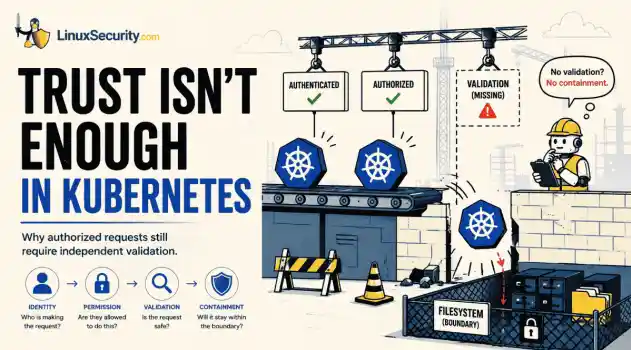
 Two newly fixed storage bugs in Kubernetes showed more than just a problem with path traversal. They found a common security flaw in the cloud: powerful parts often think that requests accepted by a higher system are safe to run. This is a simple lesson for the platform and security teams: RBAC can accept a request without showing that its parameters will stay within a certain filesystem boundary. This is clear from a new study from SentinelLabs into flaws in the Kubernetes CSI drivers for NFS...
 Jul 24, 2026
 security advisory update
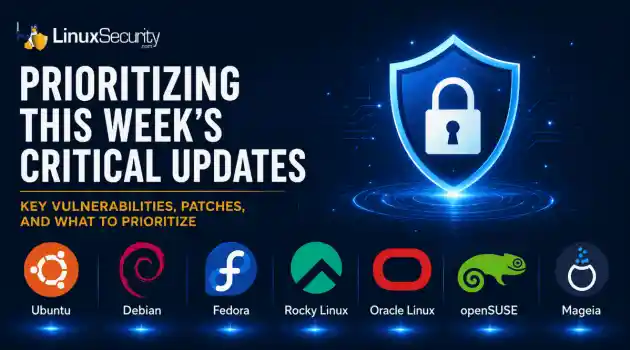
 A large volume of Linux security updates and advisories this week across major distributions once again, but it wasn't just the volume that was the story. Where maintainers and security teams focused their attention was evident in the concentration of fixes targeting Linux kernel updates, identity services, DNS infrastructure, and internet-facing software. . Instead of looking at each advisory in isolation, administrators gain more value from the general trends they reveal about Linux security...
Jul 23, 2026
 identity management security tactics
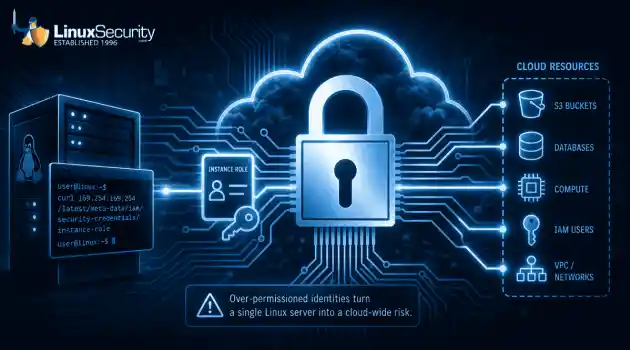
 For years, we secured our Linux infrastructure by building walls: VPCs, security groups, and hardened SSH configurations. We treated the cloud like a virtual data center, assuming that if we kept the "bad guys" out of the network, our workloads were safe. . That model is no longer sufficient. Today, one of the most common paths from an initial compromise to a major cloud breach is the identity assigned to your Linux workload. When an attacker gains code execution on a Linux instance—through a...
Jul 17, 2026
 security practices patch management
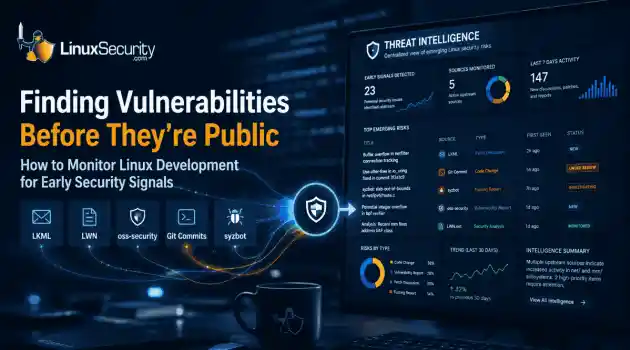
 Most of us don't hear about a kernel vulnerability until a CVE lands in our inbox or the vulnerability scanner starts complaining. By then, the patch isn't new anymore. Kernel developers may have been passing it around for review, arguing over the implementation, or revising it for days before anyone outside that community noticed it. None of those discussions are secret. They're sitting in mailing list archives, Git commits, and patch reviews where they've been the whole time. The strange...
Jul 14, 2026
 Linux security cyber attacks
 Every Linux server in your fleet produces thousands of events every minute. From journald logs and auditd records to kernel-level eBPF hooks, your systems are constantly talking. Most of that noise is just the mundane churn of system services, CI/CD runners, or routine administrative automation. But among that noise, an attacker might be establishing a foothold, moving laterally, or setting up persistence. The challenge for any security team is: how do you separate the routine from the...
Jul 13, 2026
 Refine features
X Clear Filters
Get the latest News and Insights
Get the latest Linux and open source security news straight to your inbox.
Community Poll
Should Linux servers automatically install security updates?
Loading...
Explore Latest Linux Security features
We found 19 articles for you...
102
 security toolcybersecuritythreat detection
What is Nmap? How To Use It Effectively for Network Security
Nmap, short for “Network Mapper,” is an open-source network security tool for discovery and auditing. It is one of the most widely used network mapping tools for system administrators to search for hosts and services within a network. . Nmap stands out among other monitoring and vulnerability scanning solutions used by cybersecurity professionals because it is free, incredibly flexible, portable, well-documented, and simple to use. Various abilities are combined into one package with Nmap, which makes those familiar with command-line interfaces much more comfortable. This article will discuss how to use it for port scans, other useful Nmap functions, and why threat actors also use port scanning. What is a Port Scan? How Do You Run It? Port scans are a type of vulnerability scanning used to identify open ports on a server that send or receive data. Open ports can lead to data and network security issues, making your company more susceptible to cloud security breaches. To run a port scan, you enter the domain or IP address into the port scanner tool, which then examines the entire network for any cybersecurity vulnerabilities related to open ports. Network mapping with port scans is an effective way to find network security threats within a system. As a result, they can help you to close ports and protect your business. What are Ports and Port Numbers? A port is the starting and finishing point of online communications. Ports are typically linked to a specific function or operation, are software-based, and are managed by the company using the service. Port numbers are identification codes that help a server manager determine where a network packet should be sent. This allows a steady stream of communication between two parties. However, open ports without the proper configuration are an invitation for network intrusion and a whole host of preventable security threats. How Do You Scan Ports on Nmap? The simplest way to start port scanning is to enter nmap , where is the name of a network host. From this command, Nmap converts the hostname to an IP address, pings the host, and then returns a list of port statuses for the most popular 1,000 ports listed in nmap-services. This report categorizes all ports as open, closed, filtered, unfiltered, open|filtered, or closed|filtered. Similar results are condensed into a single line, while notable statuses are highlighted for the administrator to read. Can You Detect an Nmap Scan? Nmap scans run by cybercriminals are not always picked up quickly, if at all. Threat actors can use Nmap to find vulnerable server hosts that they will target for an attack. Modern forms of port scanning detection can pick up on Nmap scans, but the best defense against hostile scanners is to stay a step ahead by preemptively scanning your ports. It is important to be aware of any and all cybersecurity vulnerabilities within your company. Routine network mapping scans will notify you of open ports so you can close them before a breach. Within Nmap, there are options listed that you can select to verify your system has proper data and network security with scanners. How to Scan with Nmap Here are a few of the more popular scans customers use with Nmap: Ping Scans The most basic function of Nmap is to identify hosts on your network, which can be done through a ping scan. This scan logs all IP addresses and hosts without sending packets to the admins. You can run more commands on the found hosts to examine them more thoroughly. Run the following command to execute a ping scan: # nmap -sp 192.168.0.1/22 Host Scans Host scans are a powerful technique that can be used to verify data and network security. They send ARP request packets to all the hosts on your network, who respond with the ARP packet status and MAC address. Run the following command to execute a host scan: # nmap -sp OS and Services Scans Nmap can run scans to detect the operating system, version, and services on a single or numerous devices.Detection scans are important to the enumeration process when conducting network penetration testing. It's critical to know where susceptible devices are on the network so they can be repaired or replaced before any attacks on network security can get to them. Run the following command to detect OS and Services: # nmap -A How Can You Prevent Port Scanning? You can prevent a port scan by installing a super-strong firewall. This keeps external networks from looking at your business’s protection (or lack thereof). If a firewall sees that someone is trying to execute a port scan, the firewall will shut the port scan down. How Do Bad Actors Use Port Scanning as an Attack Method? Cybercriminals will use port scanning to identify cybersecurity vulnerabilities in your company’s system. Network mapping helps them to find the easiest ways to access your sensitive information and collect your data. Threat actors will scan the company, identify where they can break into your business assets, and execute cloud security breaches. Final Thoughts on Port Scanning with Nmap Nmap can be used to perform various scans to gather information for network discovery and auditing. Vulnerability scanning provides actionable intelligence and ensures that your company's data and network security is not an unknown variable. This way, administrators can detect weaknesses before they become a problem. Using Nmap or other network mapping tools for firewall pentesting is an important step towards improving your overall security posture. . Nmap stands out among other monitoring and vulnerability scanning solutions used by cybersecurity pr. short, “network, mapper, open-source, network, security, discovery. . Andrew Kowal
 Apr 17, 2026
•
Apr 17, 2026
•
102
 network securitycybersecuritykeylogger
Keylogging in Linux (Part 1): Understanding Attacks and Defenses
Keylogging turns up more often than people think. You see it in audits, red team work, and during investigations where credentials quietly leak through input streams. This piece breaks down how it actually happens on Linux — where keystrokes travel, how the system reports them, and how simple code can listen in. . We’ll trace that path from keyboard to kernel to userspace, using short examples built from real testing. You’ll see how to spot legitimate keyboard devices under /dev/input, read their events, and interpret what the data means. If you work in detection or response, start here. Run the examples in a lab, watch the data move, and learn what normal looks like before you hunt for keyloggers in the wild. What Is a Keylogger Attack? A keylogger attack happens when software records keyboard input without the user knowing. The keylogger captures each key event as it’s generated, often before the system turns it into text. Where it runs changes what it can see; some operate in user space by reading device files, others sit inside X or Wayland , and a few hook deeper in the kernel. On Linux, the evdev layer makes visibility complicated since hardware events are abstracted , and several points can be tapped quietly. Attackers use keyloggers to collect credentials, monitor privileged users, or track insider activity. They’ve been found pulling SSH passphrases, sudo prompts, and desktop logins during real investigations. Keylogging also has legitimate uses in red team work, where it helps measure exposure and test how well monitoring tools detect input capture. Ethical use matters. Run this kind of testing only in a controlled lab or under written authorization. Capture baseline input traces, record what was collected, and leave an audit trail. The goal is to understand how keylogging works on Linux so you can recognize it, not exploit it. Purpose of Keylogging in Linux Systems Keylogging on Linux can serve two very different purposes. Attackers use a keylogger to capturecredentials or session data from users with elevated access. It’s one of the quieter ways to collect passwords or tokens from terminal sessions, hypervisors, or remote desktops. The same mechanics that make it stealthy also make it useful in controlled testing. In red team work, keylogging helps show how exposed a system really is. Running a basic keylogger during a simulated breach confirms whether monitoring tools catch the activity or miss it. It also exposes where input events leak across layers — from kernel space, through evdev, up to X or Wayland — and how permissions affect visibility. Blue teams approach it from the other side. By studying how a keylogger reads from devices or intercepts events, they learn what indicators to watch for in logs and memory. Both views matter. Keylogging gives offensive teams a way to measure detection coverage and gives defenders the patterns they need to spot it before real attackers do. Userspace vs Kernel Space Keylogging Where a keylogger runs changes everything: privileges, stealth, how you detect it, and how long it survives. Userspace loggers read device files or hook into X11 or Wayland. They need fewer privileges to run, and they are easier to debug. They also leave obvious signals: open file descriptors to /dev/input, suspicious processes holding device handles, and readable event streams you can trace in a lab. Detection is straightforward if you know what to look for, but noisy environments make false positives common. Kernel space keylogging sits deeper and lasts longer. Kernel modules, patched drivers, or hypervisor-level hooks capture input before userspace sees it. That gives the attacker higher persistence and fewer visible artifacts in userland. It also raises the cost and risk for the attacker, because loading or modifying kernel code often requires elevated privileges or an exploit. Detection shifts to different signals: unexpected kernel modules, unsigned or out-of-tree drivers, altered interrupt handlers, and anomalous memoryallocations around input subsystems. These are harder to spot, and they demand different tooling. Keylogging behavior crosses those boundaries. A kernel-level implant can hand-parsed events to a userspace forwarder, or a userspace keylogger can escalate by loading a helper module. The detection approach must reflect that reality. Watch for unexpected FDs to /dev/input, spikes in input event rates that do not match human activity, and kernel modules that show up without corresponding package installs. For kernel-level detection and driver hardening, see Part 3: Kernel & Driver Defenses. How Keyboard Events Are Exposed on Linux Linux exposes hardware key events through the evdev subsystem, which presents them as device files under /dev/input/eventX . GUI stacks such as X11 or Wayland sit above evdev and translate scan codes into key symbols for applications. Understanding that the stack is the baseline for any keylogging analysis. Here is a basic overview of how a keyboard fits in a larger scheme: /-----------+-----------\ /-----------+-----------\ | app 1 | app 2 | | app 3 | app 4 | \-----------+-----------/ \-----------+-----------/ ^ ^ | | +-------+ | | | | key symbol keycode | | + modifiers | | | | | +---+-------------+ +-----------+-------------+ + X server | | /dev/input/eventX | +-----------------+ +-------------------------+ ^ ^ | keycode / scancode | +---------------+---------------+ | | +---------------+--------------+ interrupt | kernel | | motherboard |-----------> | CPU | +----------+ key up/down +-------------+ +-----+ The short path is: keyboard hardware produces scan codes, the kernel converts those into input events and surfaces them on /dev/input/eventX, and the display layer or a daemon maps them to characters. Scan codes are the raw bytes the device sends on key down and key up. These become input_event records that include a timestamp, a type, a code, and a value that says press, release, or autorepeat. This is where keylogger implementations attach. Some read /dev/input/eventX directly and parse input_event records. Others ask the display server for higher-level events. That difference determines what the logger sees and what the defender can observe. Knowing the exact path lets you pick the right indicators and avoid chasing noise. This section is the foundation for the examples and the CODE 6 logger that follows. Identifying the Keyboard Device on Linux Before a keylogger can read input, it has to find which event file actually belongs to a keyboard. On Linux, every input device under /dev/input/ exposes its own event file, and not all of them are keyboards — barcode scanners, USB hubs, and even touchpads appear there too. The discovery process checks for character devices, confirms that they report key events, and filters out hardware that only mimics keyboard behavior. std::string get_kb_device() { std::string kb_device = ""; for (auto &p : std::filesystem::directory_iterator("/dev/input/")) { std::filesystem::file_status status = std::filesystem::status(p); if (std::filesystem::is_character_file(status)) { kb_device = p.path().string(); } } return kb_device; } Legitimate security tools use this same logic for diagnostics and auditing. Direct reads from input devices requireauthorization and should always be done in an isolated lab. Running this in production without proper controls can expose user data and violate privacy policies. Check that the file is a keyboard and supports actual keys. However, this can be more involved, so observe the scheme here: std::string filename = p.path().string(); int fd = open(filename.c_str(), O_RDONLY); if(fd == -1) { std::cerr
Nov 12, 2025
•

218
 Linux securitymalware protectioncybersecurity
How Secure Is Linux? Benefits of Design, Privileges, and Defenses Explained
So, how secure is Linux? That’s a question every sysadmin has probably asked themselves at some point, whether they’re setting up a shiny new server or just letting their mind wander while staring at a terminal. . You’ve likely heard the praise for Linux: open-source, robust, and designed with security baked right in. But what does that actually mean? I mean, we all know no system is impenetrable, but Linux comes pretty close in ways that make it stand out. The kernel itself is packed with features that keep things buttoned up, from user privilege management to mandatory access controls like SELinux or AppArmor. If you’ve spent time hardening a system—tweaking SELinux policies, locking down sysctl.conf, or setting up kernel lockdown—you know there’s a lot of flexibility here. More than most other operating systems can offer, that’s for sure. But here’s the thing: there’s a reason Linux stays ahead in the security game. Its open-source nature means every line of code is out there for anyone to inspect, which is pretty handy when you’re hunting bugs. Compare that to Windows, where security by obscurity leaves you relying on a small team behind closed doors—and they’re not exactly crowdsourcing their fixes. That openness isn’t flawless, but it does give Linux the edge when it comes to spotting and patching vulnerabilities fast. Between the user-driven privilege model (seriously, not everyone is root, unlike in Windows) and the sheer diversity across distros and architectures, Linux makes life hard for attackers trying to exploit systems en masse. It’s not bulletproof, and misconfigurations are still a sysadmin’s Achilles' heel. But when Linux is set up correctly, those attackers are in for an uphill battle. Much of that stability disappears when quiet changes accumulate across permissions, logs, or update chains — a wider pattern commonly described as system drift in Linux . What Makes Linux Secure by Design? When it comes to security, Linux users are ata decided advantage over their Windows- or Mac-using counterparts. Unlike proprietary OSes, Linux is the most secure OS by design, as Linux security features are built into the system. The increasingly popular open-source OS is highly flexible, configurable, and diverse. Linux also implements a strict user privilege model and offers a selection of built-in kernel security defenses to safeguard against cybersecurity vulnerabilities and attacks. Linux source code is transparent to ensure any network security issues are short-lived despite being inevitable on even the most secure OS. Let’s look at Linux's features and how they contribute to robust data and network security. If you want a deeper breakdown of the core features of Linux that shape its security, we cover them in our dedicated guide. The Open-Source Security Advantage Linux security vulnerabilities are generally identified and eliminated very rapidly since their source code undergoes constant, thorough review by the vibrant, global open-source security community. In contrast, vendors like Microsoft and Apple employ a method known as “security by obscurity,” where source code is hidden from outsiders in an attempt to conceal security issues from threat actors. This approach is generally ineffective in preventing modern exploits because it undermines the security of the “hidden” source code by preventing outsiders from identifying and reporting data and network security weaknesses before malicious actors. When it comes to discovering security bugs, a small team of proprietary developers is no match for the worldwide community of Linux user-developers who are deeply invested in helping it maintain its status as the most secure OS. A Superior User Privilege Model Unlike Windows, where “everyone is an admin,” Linux greatly restricts root access through a strict user privilege model. On Linux, a superuser owns all the privileges, and ordinary users are only granted enough permissions to accomplish their tasks. Because Linux usershave low automatic access rights and require additional permissions to open attachments, access files, or adjust kernel options, it is harder to spread malware and rootkits on a Linux system. Thus, these inherent restrictions serve as a key defense against system compromise and attacks on network security. These controls work alongside basic integrity checks such as SHA256 hashing, which we cover in our guide to Linux integrity verification methods . Built-In Kernel Security Defenses The Linux kernel boasts an array of built-in security defenses, including firewalls with packet filters, UEFI Secure Boot firmware verification mechanisms, Linux Kernel Lockdown configuration options, and SELinux or AppArmor Mandatory Access Control (MAC) security enhancement systems. By enabling and configuring these Linux security features, known as Linux kernel self-protection, administrators can maintain the safest possible OS. Security through Diversity Linux environments allow for much diversity, as there are various distros, system architectures, and component companies that businesses can pick to meet their needs. This diversity not only helps satisfy users’ individual requirements but also enhances the secure OS so that attacks in network security are more difficult to achieve and cybersecurity bugs are harder to find. If cloud security breaches are to take place, however, malicious actors cannot use those tactics on a wide range of Linux systems, thanks to their diversity. In contrast, the homogeneous Windows “monoculture” makes these systems relatively easy and efficient attack targets. In addition to the design diversity seen in Linux, certain secure Linux distros are differentiated in ways that specifically address advanced security and privacy concerns shared among pentesters, reverse engineers, and data and network security researchers. Highly Flexible & Configurable There are vastly more configuration and control options available to Linux security administrators than to Windowsusers. For instance, Linux sysadmins have the ability to use SELinux or AppArmor. to lock down their system. These security policies offer granular access controls, providing a critical additional layer of security throughout an already secure operating system. Linux Kernel Lockdown configuration options strengthen the divide between userland processes and kernel code, and admins can harden the sysctl.conf file, the main kernel parameter configuration point for a Linux system, to give their server a sturdier foundation for their secure OS. Why Is Linux an Increasingly Popular Target among Cybercriminals? Linux powers the majority of the world’s high-value devices and supercomputers, and the secure OS’s user base is steadily growing. Unfortunately, cybercriminals have taken note of these cybersecurity trends. Malware authors and operators are targeting Linux systems in their malicious campaigns more frequently. The past few years have been plagued with emerging Linux malware strains. That being said, Linux is still a relatively small target, with 96% of new malware targeting Windows. Also, the recent increase in Linux malware breaches is not a reflection of whether or not Linux is a secure OS. The majority of attacks on Linux systems can be attributed to misconfigurations and poor administration, highlighting a widespread failure among Linux sysadmins to prioritize data and network security. Luckily, as Linux malware continues to become increasingly prevalent and problematic, Linux offers built-in protection against malware attacks through its strict user privilege model and design diversity. A selection of excellent reverse engineering and malware scanning toolkits, like REMnux, Chkrootkit, Rkhunter, Lynis, and Linux Malware Detect (LMD), is available to help admins detect and analyze malware on their systems. Our Final Thoughts: How Secure Am I As A Linux User? Alright, here’s the deal: Linux is an incredibly secure operating system, but let’s not pretend it’s magic. Ifyou neglect your configuration or ignore basic security practices, even the best-built systems will eventually come crashing down. Misconfigured servers, outdated setups, or just plain laziness—these open the door for attackers, no matter how locked down the kernel is. Sure, Linux has the tools: SELinux, AppArmor, Chkrootkit, you name it. But tools don’t mean much if they’re collecting dust. At the end of the day, it’s on the sysadmin to piece it all together, steer clear of the bad habits, and maintain systems with care. It’s not glamorous or exciting, but guess what? That’s how you stay secure. Honestly, security is like a pile of Lego bricks; the potential is there, but someone has to build it right. That said, Linux is still one of the best choices you can make when it comes to online security. No platform is invincible, but Linux gives you more control, more flexibility, and some serious advantages over Windows or macOS. The diversity across distros alone makes it harder for attackers to recycle their tactics or build one-size-fits-all exploits. And while the learning curve can rear its ugly head now and then—yeah, SELinux policies will test your patience—it’s worth it. You trade a bit of convenience for peace of mind, and that’s not a bad deal. As the saying goes (alright, maybe not literally), “The most secure system is the one turned off and tossed to the bottom of the ocean.” You’ve got to strike a balance and configure Linux to be as secure as needed without making it unusable. If you’re willing to put in the effort, Linux can be as close to "locked down" as you want. . You’ve likely heard the praise for Linux: open-source, robust, and designed with security baked ri. secure, linux, that’s, question, every, sysadmin, probably, asked, themselves. . Brittany Day
Jun 09, 2025
•
102
open-sourcecybersecuritysecurity modelHow Secure Is Linux? Exploring Security Design and User Privilege Models
So, how secure is Linux? That’s a question every sysadmin has probably asked themselves at some point, whether they’re setting up a shiny new server or just letting their mind wander while staring at a terminal. . You’ve likely heard the praise for Linux: open-source, robust, and designed with security baked right in. But what does that actually mean? I mean, we all know no system is impenetrable, but Linux comes pretty close in ways that make it stand out. The kernel itself is packed with features that keep things buttoned up, from user privilege management to mandatory access controls like SELinux or AppArmor. If you’ve spent time hardening a system—tweaking SELinux policies, locking down sysctl.conf, or setting up kernel lockdown—you know there’s a lot of flexibility here. More than most other operating systems can offer, that’s for sure. But here’s the thing: there’s a reason Linux stays ahead in the security game. Its open-source nature means every line of code is out there for anyone to inspect, which is pretty handy when you’re hunting bugs. Compare that to Windows, where security by obscurity leaves you relying on a small team behind closed doors—and they’re not exactly crowdsourcing their fixes. That openness isn’t flawless, but it does give Linux the edge when it comes to spotting and patching vulnerabilities fast. Between the user-driven privilege model (seriously, not everyone is root, unlike in Windows) and the sheer diversity across distros and architectures, Linux makes life hard for attackers trying to exploit systems en masse. It’s not bulletproof, and misconfigurations are still a sysadmin’s Achilles' heel. But when Linux is set up correctly, those attackers are in for an uphill battle. Much of that stability disappears when quiet changes accumulate across permissions, logs, or update chains — a wider pattern commonly described as system drift in Linux . What Makes Linux Secure by Design? When it comes to security, Linux users are ata decided advantage over their Windows- or Mac-using counterparts. Unlike proprietary OSes, Linux is the most secure OS by design, as Linux security features are built into the system. The increasingly popular open-source OS is highly flexible, configurable, and diverse. Linux also implements a strict user privilege model and offers a selection of built-in kernel security defenses to safeguard against cybersecurity vulnerabilities and attacks. Linux source code is transparent to ensure any network security issues are short-lived despite being inevitable on even the most secure OS. Let’s look at Linux's features and how they contribute to robust data and network security. If you want a deeper breakdown of the core features of Linux that shape its security, we cover them in our dedicated guide. The Open-Source Security Advantage Linux security vulnerabilities are generally identified and eliminated very rapidly since their source code undergoes constant, thorough review by the vibrant, global open-source security community. In contrast, vendors like Microsoft and Apple employ a method known as “security by obscurity,” where source code is hidden from outsiders in an attempt to conceal security issues from threat actors. This approach is generally ineffective in preventing modern exploits because it undermines the security of the “hidden” source code by preventing outsiders from identifying and reporting data and network security weaknesses before malicious actors. When it comes to discovering security bugs, a small team of proprietary developers is no match for the worldwide community of Linux user-developers who are deeply invested in helping it maintain its status as the most secure OS. A Superior User Privilege Model Unlike Windows, where “everyone is an admin,” Linux greatly restricts root access through a strict user privilege model. On Linux, a superuser owns all the privileges, and ordinary users are only granted enough permissions to accomplish their tasks. Because Linux usershave low automatic access rights and require additional permissions to open attachments, access files, or adjust kernel options, it is harder to spread malware and rootkits on a Linux system. Thus, these inherent restrictions serve as a key defense against system compromise and attacks on network security. These controls work alongside basic integrity checks such as SHA256 hashing, which we cover in our guide to Linux integrity verification methods . Built-In Kernel Security Defenses The Linux kernel boasts an array of built-in security defenses, including firewalls with packet filters, UEFI Secure Boot firmware verification mechanisms, Linux Kernel Lockdown configuration options, and SELinux or AppArmor Mandatory Access Control (MAC) security enhancement systems. By enabling and configuring these Linux security features, known as Linux kernel self-protection, administrators can maintain the safest possible OS. Security through Diversity Linux environments allow for much diversity, as there are various distros, system architectures, and component companies that businesses can pick to meet their needs. This diversity not only helps satisfy users’ individual requirements but also enhances the secure OS so that attacks in network security are more difficult to achieve and cybersecurity bugs are harder to find. If cloud security breaches are to take place, however, malicious actors cannot use those tactics on a wide range of Linux systems, thanks to their diversity. In contrast, the homogeneous Windows “monoculture” makes these systems relatively easy and efficient attack targets. In addition to the design diversity seen in Linux, certain secure Linux distros are differentiated in ways that specifically address advanced security and privacy concerns shared among pentesters, reverse engineers, and data and network security researchers. Highly Flexible & Configurable There are vastly more configuration and control options available to Linux security administrators than to Windowsusers. For instance, Linux sysadmins have the ability to use SELinux or AppArmor. to lock down their system. These security policies offer granular access controls, providing a critical additional layer of security throughout an already secure operating system. Linux Kernel Lockdown configuration options strengthen the divide between userland processes and kernel code, and admins can harden the sysctl.conf file, the main kernel parameter configuration point for a Linux system, to give their server a sturdier foundation for their secure OS. Why Is Linux an Increasingly Popular Target among Cybercriminals? Linux powers the majority of the world’s high-value devices and supercomputers, and the secure OS’s user base is steadily growing. Unfortunately, cybercriminals have taken note of these cybersecurity trends. Malware authors and operators are targeting Linux systems in their malicious campaigns more frequently. The past few years have been plagued with emerging Linux malware strains. That being said, Linux is still a relatively small target, with 96% of new malware targeting Windows. Also, the recent increase in Linux malware breaches is not a reflection of whether or not Linux is a secure OS. The majority of attacks on Linux systems can be attributed to misconfigurations and poor administration, highlighting a widespread failure among Linux sysadmins to prioritize data and network security. Luckily, as Linux malware continues to become increasingly prevalent and problematic, Linux offers built-in protection against malware attacks through its strict user privilege model and design diversity. A selection of excellent reverse engineering and malware scanning toolkits, like REMnux, Chkrootkit, Rkhunter, Lynis, and Linux Malware Detect (LMD), is available to help admins detect and analyze malware on their systems. Our Final Thoughts: How Secure Am I As A Linux User? Alright, here’s the deal: Linux is an incredibly secure operating system, but let’s not pretend it’s magic. Ifyou neglect your configuration or ignore basic security practices, even the best-built systems will eventually come crashing down. Misconfigured servers, outdated setups, or just plain laziness—these open the door for attackers, no matter how locked down the kernel is. Sure, Linux has the tools: SELinux, AppArmor, Chkrootkit, you name it. But tools don’t mean much if they’re collecting dust. At the end of the day, it’s on the sysadmin to piece it all together, steer clear of the bad habits, and maintain systems with care. It’s not glamorous or exciting, but guess what? That’s how you stay secure. Honestly, security is like a pile of Lego bricks; the potential is there, but someone has to build it right. That said, Linux is still one of the best choices you can make when it comes to online security. No platform is invincible, but Linux gives you more control, more flexibility, and some serious advantages over Windows or macOS. The diversity across distros alone makes it harder for attackers to recycle their tactics or build one-size-fits-all exploits. And while the learning curve can rear its ugly head now and then—yeah, SELinux policies will test your patience—it’s worth it. You trade a bit of convenience for peace of mind, and that’s not a bad deal. As the saying goes (alright, maybe not literally), “The most secure system is the one turned off and tossed to the bottom of the ocean.” You’ve got to strike a balance and configure Linux to be as secure as needed without making it unusable. If you’re willing to put in the effort, Linux can be as close to "locked down" as you want. . You’ve likely heard the praise for Linux: open-source, robust, and designed with security baked ri. secure, linux, that’s, question, every, sysadmin, probably, asked, themselves. . Brittany Day
Jun 09, 2025
•
102
security advisorynetwork threatscybersecurityExploring Linux Security Features and Their Role Against Attacks
Choosing the safest operating system (OS) is a key determinant of your online security. After all, this software manages the memory and processes throughout your server. . Experts agree that Linux is a highly secure OS , if not the most secure OS by design. In this article, we will examine the key features, principles, and capabilities that contribute to Linux's robust security. Additionally, we will evaluate the protection Linux offers against cybersecurity vulnerabilities and threats like malware, viruses, and rootkits. Secure by Design When it comes to security, Linux Security users are at a decided advantage over their Windows- or Mac-using counterparts. Unlike proprietary OSes, Linux is the most secure OS by design, as Linux Security features are built into the system. The increasingly popular open-source secure OS is highly flexible, configurable, and diverse. Linux Security OS also implements a strict user privilege model and offers a selection of built-in kernel security defenses to safeguard against cyber security vulnerabilities and attacks. Linux source code is transparent to ensure any network security issues are short-lived despite being inevitable on even the most secure OS. Let’s look at Linux features and how they contribute to data and network security. The Open-Source Security Advantage Linux Security vulnerabilities are generally identified and eliminated very rapidly since their source code undergoes constant, thorough review by the vibrant, global open-source security community. In contrast, vendors like Microsoft and Apple employ a method known as “security by obscurity,” where source code is hidden from outsiders in an attempt to conceal network security issues from threat actors. This approach is generally ineffective in preventing modern exploits in cyber security because it undermines the security of the “hidden” source code by preventing outsiders from identifying and reporting data and network security weaknesses prior to malicious actors.When it comes to discovering security bugs, a small team of proprietary developers is no match for the worldwide community of Linux Security user-developers who are deeply invested in protecting Linux Security to help it maintain its status as the most secure OS. A Superior User Privilege Model Unlike Windows, where “everyone is an admin,” Linux greatly restricts root access through a strict user privilege model. On Linux, a superuser owns all the privileges, and ordinary users are only granted enough permissions to accomplish their tasks. Because Linux users have low automatic access rights and require additional permissions to open attachments, access files, or adjust kernel options, it is harder to spread malware and rootkits on a Linux system. Thus, these inherent restrictions serve as a key defense against system compromise and attacks on network security. Built-In Kernel Security Defenses The Linux Security kernel boasts an array of built-in security defenses , including firewalls with packet filters, UEFI Secure Boot firmware verification mechanisms, Linux Kernel Lockdown configuration options, and SELinux or AppArmor Mandatory Access Control (MAC) security enhancement systems. By enabling and configuring these Linux security features , known as Linux kernel self-protection, administrators can maintain the safest Operating System. Security through Diversity Linux Security environments allow for much diversity, as there are various distros, system architectures, and components companies can pick to meet their business needs. This diversity not only helps satisfy users’ individual requirements but also enhances the secure OS so that attacks in network security are more difficult to achieve and exploits in cyber security are harder to find. If such cloud security breaches are to take place, however, malicious actors cannot use those tactics on a wide range of Linux systems, as Linux Security features keep every system diverse. In contrast, the homogeneous Windows“monoculture” makes their systems a relatively easy and efficient attack target. In addition to the design diversity seen in Linux, certain secure Linux distros are differentiated in ways that specifically address advanced security and privacy concerns shared among pentesters , reverse engineers , and data and network security researchers. Highly Flexible & Configurable There are vastly more configuration and control options available to Linux Security administrators than to Windows users. For instance, Linux sysadmins have the ability to use SELinux or AppArmor to lock down their system. These security policies offer granular access controls, providing a critical additional layer of security throughout a secure operating system. Linux Kernel Lockdown configuration options strengthen the divide between userland processes and kernel code, and admins can harden the sysctl.conf file , the main kernel parameter configuration point for a Linux system, to give their server a sturdier foundation for their secure OS. Why Is Linux an Increasingly Popular Target among Cybercriminals? Linux powers the majority of the world’s high-value devices and supercomputers, and the secure OS’s user base is steadily growing. Unfortunately, cybercriminals have taken note of these cybersecurity trends. Malware authors and operators are targeting Linux systems in their malicious campaigns more frequently. The past few years have been plagued with e merging Linux malware strains. That being said, Linux is still a relatively small target, with 96% of new malware targeting Windows . Furthermore, the recent increase in Linux malware breaches is not a reflection of whether or not Linux is a secure OS. The majority of attacks on Linux systems can be attributed to misconfigurations and poor administration, highlighting a widespread failure among Linux sysadmins to prioritize data and network security. Luckily, as Linux malware continues to become increasingly prevalent and problematic, Linux offersbuilt-in protection against malware attacks through its strict user privilege model and design diversity. A selection of excellent reverse engineering and malware scanning toolkits like REMnux, Chkrootkit, Rkhunter, Lynis, and Linux Malware Detect (LMD) are available to help admins detect and analyze malware on their systems. Our Final Thoughts: How Secure Am I As A Linux User? Having a secure OS is crucial in maintaining robust data and network security online. However, the security features Linux offers are not a complete safeguard against malware, rootkits, and other attacks. Cybersecurity is dependent upon defense in depth, security practice implementation, and smart online behavior, all of which play a central role in your ability to improve your security posture. That being said, choosing a secure OS is of utmost importance, as the OS is the most critical piece of software running on your computer. Linux is an excellent choice, as it has the potential to be highly secure due to its open-source code, strict user privilege model, diversity, and relatively small user base. However, Linux is not a “silver bullet” when it comes to digital security. The OS must be properly and securely configured, and sysadmins must practice secure, responsible administration in to prevent attacks. Also, it is crucial to keep in mind that tradeoffs exist in terms of security and usability. LinuxSecurity Founder Dave Wreski explains, “The most secure system is one that is turned off, covered in cement, and located at the bottom of the ocean - but this system is obviously not very usable. Admins should configure their systems to be as secure as is practical within their environment. In regards to convenience, Linux has a bit of a learning curve but offers significant security advantages over Windows or MacOS. It’s a tradeoff that’s well worth it if you ask me.” . Discover the essential features of Linux's robust security architecture, from user permissions to kernel integrity, highlighting itsadaptability and community support. choosing, safest, operating, system, determinant, online, security. . Brittany Day
Mar 19, 2025
•
102
 cybersecurityrisk assessmentcompliance
Enhancing Risk Management: Automating Third-Party Relationships in Linux
As more vendors, suppliers, and contractors become integral to an organization's operation, the need to identify and mitigate risks associated with such external partners is significant. Third-party risk management automation (TPRM) is essential in this process. TPRM involves integrating technology that streamlines and automates various methods for identifying, assessing, and mitigating risks from external partners. . In this article, I’ll explore the transformative potential of TPRM process automation in detail, showing how technology can help improve accuracy and efficiency while enabling organizations to make speedier, data-driven decisions without compromising compliance and focusing on Linux distro solutions. What is Third-Party Risk Management Automation? Third-party risk management automation (TPRM) means integrating technology that streamlines and automates various processes for identifying, assessing, and mitigating risks from external partners. Most traditional methods rely on manual work: spreadsheets, emails, and phone calls. Such an approach is not only very resource-consumptive but also prone to errors. TPRM automation helps an organization load these activities into one single central ecosystem, thus enhancing its overall risk management strategies. Automation allows for the constant monitoring of third parties for signs of risk on an automated basis. At the same time, more productive data analysis and timely updates are ensured accordingly. According to an IBM report, organizations that use automation in their risk management processes can save up to 30% of their time on such activities. This allows them to free up resources to help drive efforts toward more strategic activities. This process of enterprise risk management is proactive rather than reactive. The Importance of TPRM Automation in the Current Threat Landscape One thing that characterizes the digital landscape is its particular challenges and opportunities for organizations. According to theCybersecurity and Infrastructure Security Agency, "Supply chain vulnerabilities can provide threat actors with a vector of entry into an organization's network and result in significant security breaches-making robust, effective risk management practices all the more critical.” A Forbes report in 2022 estimated that 63% of organizations experience a data breach caused by third-party vendors. These figures point to the dire need for effective TPRM strategies. The very interconnectedness that's the hallmark of modern business means that the failure of one vendor can cascade down the links of an entire supply chain . Therefore, it is incumbent upon every business to make the identification of potential risks within third-party relationships paramount. In addition to automating the risk assessment process, TPRM will go a long way in positioning an organization to identify and mitigate its risks before they become significant. Key Capabilities of TPRM Automation Tools When assessing TPRM automation, a core set of functionalities could make all the difference in business processes. While each automation tool has its respective functionalities, some make all the difference in third-party risk management by offering the following capabilities. Open-source TPRM scanning tools like OpenVAS provide: Continuous Monitoring The most critical capability of any TPRM automation tool involves ongoing, continuous monitoring of third-party relationships. Even in cases where the initial risk assessment of vendors has been performed, the system periodically assesses whether changes in a vendor's profile may indicate a higher level of risk. In this respect, continuous monitoring may involve a variety of risk indicators, including financial instability, inability to comply with regulatory requirements , or the emergence of new cybersecurity threats. This proactive approach enables corporations to steer clear of conditions that could be problematic and put them at an advantage in managing risk. Risk Scoring by Automation This builds on another powerful feature: automatic risk scoring, which aids organizations in determining the quick assessment of the risk level for every third party. Systems will have a generality of data, including data points from financial health to compliance records and performance history, providing a risk score. These scores help an organization filter those vendors or partners that may demand greater attention or extra controls to minimize risks. Companies can protect themselves from questionable third-party relationships by automating processes around risk assessment, enabling them to make more informed decisions based on real-time data. Custom Workflows Each organization has different needs when it comes to managing third-party risk. This is where customizable workflows emerge, meaning an organization can adapt the automation process in many ways to suit its specific needs. This can include setting risk thresholds, automating approval processes, and even system integrations. Be it whichever, the customizable workflow will ensure that TPRM automation only complements the company's overall risk management strategy. This level of flexibility will significantly enhance an organization's response to changed circumstances and risks. Central Risk Management Dashboard A Centralized Dashboard enables an enterprise to maintain real-time visibility into its third-party risk management activities. It shows current risks, pending assessments, and ongoing continuous monitoring activities. All this information in one place enables executive leadership to examine the overall risk landscape quickly and aids timely decisions for more effective risk management. According to Wikipedia , centralized dashboards can facilitate significant communication and coordination among stakeholders involved, allowing better integration of risk management strategies. Notable Benefits of Automating TPRM Among several other benefits, automation of TPRM processes offers variousadvantages to an entity in its quest to solidify its risk management capabilities. Some of the main advantages include: Enhanced Efficiency Automation affects labor-intensive operations, allowing the core business to focus on value addition in high-priority activities. A study conducted by the Institute of Risk Management used input from organizations that had already started automating their TPRM processes. It reported a 40% reduction in time spent on risk assessments. Improved Accuracy By minimizing human intervention, automated systems reduce the potential for mistakes from manual processes; hence, they are more accurate and can provide more dependable risk assessments with better-informed decisions. Proactive Risk Management With continuous monitoring capabilities, automated TPRM systems allow an organization to identify potential risks before they get out of hand. In this respect, the business would not suffer from the negative consequences of expensive disruption. Still, it would be able to maintain operational resilience. Regulatory Compliance Maintaining compliance with industry regulations is critical for any business. Automation tools can help a company ensure that each third-party relationship maintains all the standards of essential compliance and reduces the risk associated with regulatory fines and reputational damage. Challenges with TPRM Automation Despite the many benefits of automating the TPRM process, implementing such systems may pose several challenges to an organization. Some common challenges are: Integration with Existing Systems Integrating new automation tools with legacy systems can often be cumbersome and extended. In addition, an organization should ensure that its automation solution is well integrated with an existing platform. Data Quality And Accuracy Success in automating TPRM is tied to the quality of the data analyzed. Therefore, organizations must invest more in robust data management practices to ensure the information feedingthe automated systems is correct and reliable. Change Management Transitioning to an automated process can also be a cultural change. Employees must be adequately trained to accept the new tools and workflow, which often creates resistance and loss of productivity in its initial stages. Our Final Thoughts on Automating Third-Party Risk Management in Linux Environments Automating third-party risk management processes is a significant development in how organizations can identify, assess, and mitigate risks associated with their external partners. A business can bring efficiency, accuracy, and compliance into proactive risk management through technology. Organizations that embrace such developments will be better positioned to navigate the complexities associated with contemporary business operations and secure their assets against potential threats. All business entities should include TPRM automation tools in their future investment plans. The key is smoothing risk management processes to prepare businesses for success in an increasingly dynamic and competitive landscape. . Explore the potential of TPRM automation for improving risk management in organizations, enhancing efficiency and accuracy.. vendors, suppliers, contractors, become, integral, organization', operation. . Brittany Day
Nov 11, 2024
•
102
 cybersecurityhashingauthentication method
Exploring Passkeys: Simplifying Secure Authentication for Users
Passwords are becoming a concept of the past as passkeys have moved to the forefront. When users create a passkey on their device, they must select the correct key to log into the services and websites they need. . This convenient, up-and-coming cybersecurity feature can benefit countless organizations by safeguarding their sensitive data and preventing cloud security breaches. Users will store passkeys as hashes on their cyber- and email security servers. Hashes transform a key or string of characters into another value to improve security posture through encryption keys. Hashing is a one-way encryption option, which sets it apart from standard encryption network security toolkits, as this type of protection makes it more challenging for cybercriminals to decode and hack a passkey. For example, if a cybersecurity professional wants to sign a piece of software digitally before making it accessible for download on their website, they would generate a hash before and after adding their digital signature to the script or software application. This procedure makes downloading and sending the documents easier to the recipient, whose browser can decrypt the file and check for two distinct hash values. Then, the browser can execute the same hash function method to secure the information and signature again, ensuring efficient email data and network security. Hashes generate and compare data on a server whenever a user enters a passkey. Unfortunately, certain user disadvantages can arise, giving cybercriminals more opportunities to access and crack such hashes. However, threat actors cannot decrypt passwords, so they would fail in any attacks in network security that need a password to enter the server. This article will discuss passkeys, how to set them up, and the security pros and cons so you understand everything you need to set up a passkey today. What Is a Passkey? A passkey is a digital credential tying a user’s account to a website or application. Passkeys allow users to authenticatethemselves without entering a username or password or providing any additional authentication factor. This technology aims to replace legacy authentication mechanisms like passwords. Poor password selection and management can lead to data loss through cloud security breaches . According to Finance Online, such attacks in network security have affected eighty-one percent of companies. Therefore, businesses, employees, and individuals should avoid passwords and consider passkeys. How Do Public Vs. Private Mechanisms Factor into Passkeys? Now that passkeys are becoming a significant feature among many tech and software companies worldwide, users are growing accustomed to the benefits of having a passkey for logging in. Instead of dealing with the stress and time put into remembering and using traditional passwords, passkeys offer an easier way to enter your server securely. The comparison between public and private mechanisms for passkeys , however, still comes into question. A public key is stored with the company with which you created your account, and the private key is stored locally on a device used to create the passkey. After a user generates a passkey, they can log in to passkey-enabled accounts. Upon logging in, the user must complete a challenge, which will be sent to any devices or mechanisms within reach, to authenticate access. The authenticator uses the stored private key to solve the "challenge" and respond to the server. The "signing" process can confirm you own the private encryption key and verify your identity so you can log in to your account successfully. How Are Major Organizations Such As Google, Outlook, Microsoft, and Gmail Using Passkeys? Major organizations' use of passkeys instead of passwords is undoubtedly a big deal. Google has stated that passkeys provide a more straightforward, secure way to sign into online accounts. Users have received positive feedback about the new feature, so passkeys have become even more accessible on Google and will be a default optionacross personal accounts. When users sign in, they'll see a prompt to create and use passkeys, simplifying future sign-ins. There will be a "Skip password when possible" option in the Google Account settings that users can utilize to enable passkeys. However, having a password-protected Gmail will still be an option, at least for a little longer, so users can familiarize themselves with the Passkey feature. Gmail accounts are always set up through Google, but not all Google accounts function through a Gmail account, as you can use another email security server to house your email account, such as Yahoo. Either way, so long as you have a Google account, you can create, edit, and collaborate on Google Docs. Gmail, with Google, provides more accessibility for users, making it a default option across many personal accounts, saving users the hassle of figuring out passwords for both Google and other email accounts. Microsoft and Outlook, both separately and as a team, agree that passkeys are a more accessible option for email data and network security. Microsoft Exchange is a server application and an email security server solution dedicated to being a network resource management platform. Outlook is an email client installed on one's desktop for secure email. Both email security software believe passkeys provide a more secure and convenient way to sign in. With passkeys, you can use Windows Hello to sign in with a PIN, facial recognition, or fingerprint, making the authentication process faster and more convenient. Microsoft also believes that passkeys are the future of authentication since they're incredibly easy to use and intuitive, eliminating the need for complicated password creation processes and the hassle of remembering them to maintain a secure email. Essentially, Google, Outlook, Microsoft, and Gmail agree on their stance regarding passkeys and passwords and which option is more beneficial for users going forward. How Can I Set Up Passkey Security Across All Platforms? As discussed,passkey data and network security provide users less hassle by allowing them to skip the password sign-in and use a simple and more secure method for generating and storing passkeys on all devices. As a result, passkeys don’t require as much interaction or management. Here is how to set up passkeys on multiple different platforms: Google and Gmail Creation Head to myaccount.google.com On the left side of the page, click on “Security.” Under “How you sign into Google,” click on “Passkeys.” If you don’t see this option, you’ll need to click on “Use your phone to sign in” and link your account to a phone or tablet. Click on the blue “Use Passkeys” button. To manually create a passkey, click the white “Create a passkey” button. If you’re on an incompatible PC, you’ll see a dialog box with a blue button to “Use another device.” You can set up a device like a phone or tablet by scanning a QR code or a security key. Microsoft and Outlook Creation Open a website or app that supports passkeys Create a passkey from your account settings Choose where to save the passkey. By default, Windows offers to protect the passkey locally if you're using Windows Hello. If you select the option “Use another device,” you can choose to save the passkey in one of the following locations: This Windows device : the passkey is saved locally on your Windows device and protected by Windows Hello (biometrics and PIN) iPhone, iPad, or Android device : The passkey is saved on a phone or tablet and protected by the device's biometrics if offered by the device. This option requires you to scan a QR code with your phone or tablet, which must be near the Windows device. Linked device : The passkey is saved on a phone or tablet and protected by the device's biometrics if offered by the device. This option requires the linked device to be close to the Windows device, and it's only supported for Android devices. Security key : the passkey is savedto a FIDO2 security key, protected by the key's unlock mechanism (for example, biometrics or PIN) Select “Next” and complete the process on the chosen device What Are the Security Pros of Having a Passkey? There are many benefits to consider when switching from a password-protected Gmail or other web account to a passkey, including: Passkeys are more tricky to crack than passwords. Each passkey is distinct and linked to the user’s device via a public/private cryptographic pair , making it much more difficult for an attacker to gain unauthorized access without physically possessing the device. Passkeys provide a smoother user experience, allowing users to sign in conveniently and securely without a password. Individuals frequently forget and reset passwords, resulting in an unpleasant user experience. However, with passkeys, users no longer need to create or remember complex passwords. Every passkey is strong by default. You don’t have to manually generate anything or worry about whether your private key is long enough or random enough. All you have to do is create an account and request that your authenticator generate a secure public and private key pair on your behalf. Passkeys are convenient and more suitable to use than passwords. Users don’t need to remember long, complex passwords and can log in to their accounts more quickly. What Are the Security Cons of Having a Passkey? Although having a password is suitable for email security purposes and creates an extra step for hackers to try to get into a user’s device, there are still some downsides to consider: Since passkeys are a new and unfamiliar technology for many users, adopting and integrating this method into their daily routines can take time and effort. Users may need to learn how to use their passkey device and adjust to the new authentication process. Passkeys are also device-specific, and syncing functionality has yet to be widely available, though many password managers and operatingsystems should support syncing eventually. Most websites and apps do not support passkeys, which will change in the future of network security. Having only certain websites and services support this data and network security feature is not a long-lasting solution. If users lose access to all their devices, they may have trouble recovering account access. Most sites and services support account recovery options if someone forgets a password. Similar functionality may be provided for passkeys, which may involve providing IDs or other forms of legitimation. Passkeys support recovery keys, but the active users have to save them. Passkeys can only be created using biometrics, so verifying your account may be difficult. To use them, you must ensure your fingers are clean or your face is clear so the device can recognize you every time you log in. Also, passkeys may be more challenging for users with disabilities or older devices. Final Thoughts on Passkeys vs. Passwords Passkeys provide a more secure way for users and individuals to ensure information and email protection. Due to their added email security and convenience, they may eventually replace traditional passwords. Apple, Google, and Microsoft are focusing on the future of network security by developing passkeys to encourage users to implement them. Have you made the switch? . Uncover the advantages of passkeys in fortifying security and simplifying login procedures, thereby lessening dependence on conventional passwords.. Authentication Methods, Password Alternatives, Cybersecurity Innovations. . Brittany Day
Nov 30, 2023
•
102
 data protectioncybersecuritysecurity techniques
Exploring Nmap Techniques for Better Network Protection
Cybercriminals implement scanning into their attacks to find network machines with open ports that they can utilize to bypass security and harm businesses and employees. Before launching an attack, threat actors run cloud security scanners like Linux Nmap that can sweep servers and find cybersecurity vulnerabilities to exploit. Once they identify a target, an intruder can use TCP stack fingerprinting to determine the type of machine they are breaching. . Organizations must work with the same tools that threat actors implement so employees can see what network security issues permit cybercriminals into a system. This article will discuss Nmap, how to utilize it in various privacy sandboxes, and how to prevent cloud security breaches from entering your server so you can improve your security posture. What is Nmap? Nmap is a free-to-download service under the GNU General Public License (GPL) that can analyze collected data regarding hosts and services within a network. We will focus on how to work with Nmap on the command line as we move forward. Let’s start with a few basic explanations and steps that can help with your understanding of this cloud security framework: Within the "nmap" command line, scans have an -s flag specifying their type. Select one of the scanner options and what host or network you want to target. You can scan one host or an entire network with the correct configurations. Providing a network address with "/mask" appended to it can help you learn more about your targets. Once you understand how Nmap functions, you can run root commands and custom packets that prove effective in your analysis. Specify networks with wildcards such as 192.168.7.*, 192.168.7.0/24, or 192.168.7.1,4,8-12 to scan selected hosts on a subnet. What Techniques Can I Use on Nmap to Find Cybersecurity Vulnerabilities on My Server? You must learn the various methods you can implement for testing your server so you can integrate security patching as best as possible tokeep your organization and employees secure. Here are some configurations you can utilize to strengthen data and network security: Ping Sweeping Intruders can sweep entire networks looking for targets with Nmap. This is usually done with a ping scan using the "-sP" flag. By default, Nmap will send an ICMP echo and a TCP ACK to each host it scans. Nmap will consider hosts that respond to either to be up. In this example, scan all hosts on the 192.168.7.0 network: # nmap -sP 192.168.7.0/24 Starting nmap V. 2.12 by Fyodor (
Nov 27, 2023
•

Get the latest News and Insights
Get the latest Linux and open source security news straight to your inbox.
Community Poll
Should Linux servers automatically install security updates?
Search Topics
Powered By

Linux Security - Your source for Top Linux News, Advisories, HOWTOs and Feature Releases
QUICK LINKS
subscribe to newsletters!
Like staying secure? So do we.
Sign up for updates, tips, and alerts!