Audit Linux privileges now to limit compromise, escalation, and system-wide damage. Review Linux Privileges×


Stay Ahead With Linux Security Features
 identity management security tactics
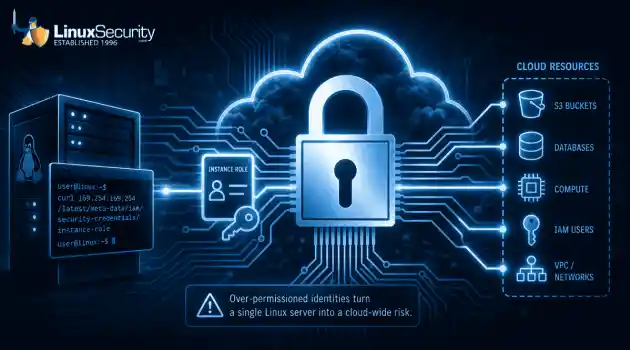
 For years, we secured our Linux infrastructure by building walls: VPCs, security groups, and hardened SSH configurations. We treated the cloud like a virtual data center, assuming that if we kept the "bad guys" out of the network, our workloads were safe. . That model is no longer sufficient. Today, one of the most common paths from an initial compromise to a major cloud breach is the identity assigned to your Linux workload. When an attacker gains code execution on a Linux instance—through a...
 Jul 17, 2026
 security practices patch management
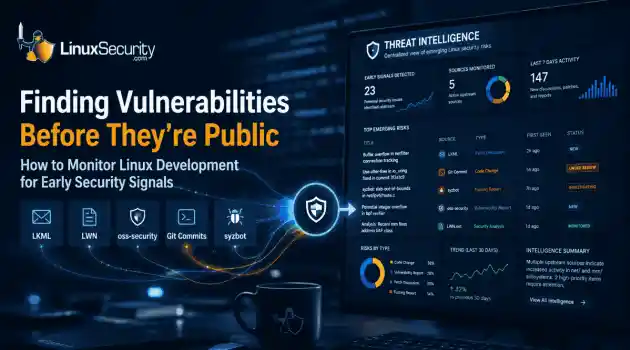
 Most of us don't hear about a kernel vulnerability until a CVE lands in our inbox or the vulnerability scanner starts complaining. By then, the patch isn't new anymore. Kernel developers may have been passing it around for review, arguing over the implementation, or revising it for days before anyone outside that community noticed it. None of those discussions are secret. They're sitting in mailing list archives, Git commits, and patch reviews where they've been the whole time. The strange...
Jul 14, 2026
 Linux security cyber attacks
 Every Linux server in your fleet produces thousands of events every minute. From journald logs and auditd records to kernel-level eBPF hooks, your systems are constantly talking. Most of that noise is just the mundane churn of system services, CI/CD runners, or routine administrative automation. But among that noise, an attacker might be establishing a foothold, moving laterally, or setting up persistence. The challenge for any security team is: how do you separate the routine from the...
Jul 13, 2026
 open-source infrastructure risk
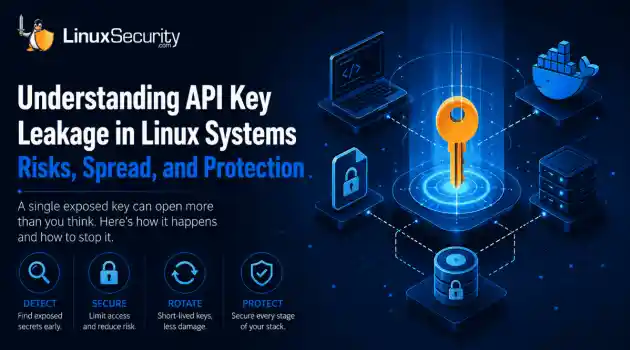
 Security scanners flag exposed API keys in public repositories every day. The initial response is usually predictable: delete the commit, revoke the credential, and move on. That’s a mistake. . In a real Linux environment, an API key never stays in one place. By the time it hits a public repo, it’s already everywhere. It’s in the CI/CD pipeline. It’s in your container registry. It’s in the build logs. It’s in the backups. Git makes this worse because the history never dies. Deleting a file in...
Jul 11, 2026
 open-source rootkit
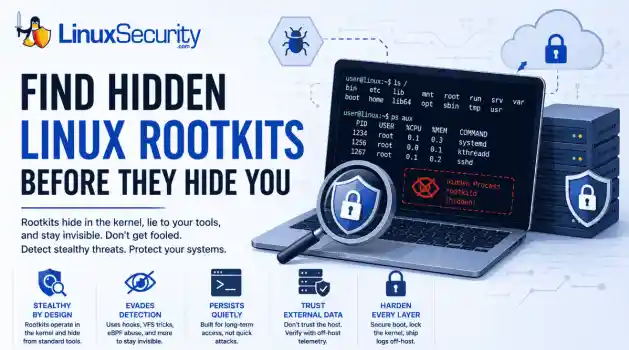
 Most of us think of Linux rootkits as ancient history—the stuff of 90s hacking forums and clunky malware that would crash your system if you looked at it the wrong way. But if you think they’ve gone away, you’re mistaken. They’ve just gotten smarter. . Modern attackers aren't using the noisy tools of the past. Today’s threats are surgical. Many of today’s most advanced Linux rootkits operate at the kernel level or abuse legitimate system features to blend in with normal traffic. They’re...
Jul 09, 2026
 Refine features
X Clear Filters
Get the latest News and Insights
Get the latest Linux and open source security news straight to your inbox.
Community Poll
Should Linux servers automatically install security updates?
Loading...
Explore Latest Linux Security features
We found -3 articles for you...
102
 data protectionGnuPGemail encryption
How to Securely Send Encrypted Emails on Linux for Data Protection
Email encryption is a great way to enhance your organization’s communication security by protecting your email content and ensuring unauthorized individuals can’t read the information. . Research shows that 94% of organizations have experienced phishing attacks . However, only some take these risks seriously until an incident happens with them. In the words of Edward Snowden, “Arguing that you don’t care about the right to privacy because you have nothing to hide is no different from saying you don’t care about free speech because you have nothing to say.” With increasing data security and privacy risks, organizations must implement advanced security measures like encrypted emails. This article will explore encrypted emails, their importance, and how to send them. Understanding Encrypted vs. Secure Email Encrypted emails are different from secure emails. Understanding their differences is vital if you want to implement email security. It will help you choose a suitable security mechanism based on your communication needs and your required confidentiality level. What’s an Encrypted Email? An encrypted email is an email whose message content is encoded and transformed into an unreadable, secure format called ciphertext through an encryption technique. This ensures only those senders and receivers with appropriate keys or access permissions view and access the content. Encoding an email’s content is called email encryption, which helps protect sensitive data from harmful exposure or cyberattacks. Tools like GnuPG , S/MIME , etc., are used for end-to-end email encryption. In end-to-end encryption, emails are encrypted at the sender’s end and are meant only for the intended receiver to decrypt them on their system and view the content. The recipient and the sender must typically have an encryption code or key to access the email. This process happens automatically if both sides leverage an email client supporting encryption. An encrypted email typically hasthese features: Cryptographic keys - one public (that the sender uses for encryption) and one private (that the recipient uses for email decryption) Transport Layer Security (TLS) to protect data transmission between servers Secure/multipurpose Internet mail extensions (S/MIME) for email encryption Digital signatures for email verification What Is a Secure Email? A secure email has protective measures implemented for its safe transmission over networks. It employs security protocols like Transport Layer Security (TLS) or Secure Sockets Layer (SSL) to secure the connection between the user’s web browser and web server. This protects data from malicious intent and ensures an email’s integrity, authenticity, and confidentiality. “Secure email” is an umbrella term that includes securing emails through various protection mechanisms rather than the content itself. A secure email doesn’t necessarily use end-to-end encryption but also many other security mechanisms, such as: Multi-factor authentication (MFA) to add another security layer through OTPs, facial recognition, fingerprint scans, etc. Strong, lengthy, and unguessable passwords make it challenging for hackers to access accounts Personalized security questions (or choosing one from the given list and using a wrong answer) to prevent account hacks Digital signatures to validate email integrity Access controls so that only authorized people have the email’s access Malware protection to scan links and attachments for threats Anti-phishing tools to prevent phishing attacks In addition, email security involves making users aware of cybersecurity risks, recognizing attacks, maintaining secure communications, and meeting compliance requirements. Differences Between an Encrypted and Secure Email Parameter Encrypted Email Secure Email Focus Anencrypted email is encrypted to secure content so only authorized people can access it. A secure email is an umbrella term that includes different protocols and secure measures to protect an email’s integrity and keep it confidential. Priority Securing the content of an email Securing the connection in which the email is being transmitted over a network Security mechanisms Mainly uses end-to-end encryption email security mechanism. It can also include TLS. Apart from end-to-end encryption, it can have several email security mechanisms such as SSL, multi-factor authentication, anti-phishing and anti-malware, and digital signatures. Goal Email encryption safeguards an email’s content from eavesdropping, data exposure, and cyberattacks. Even if someone intercepts it, they can’t read the email content without the decryption key. Its goal is to provide email and connection security from malware, data breaches, phishing attacks, and other cybersecurity risks. What Is the Importance of Encrypted Email and Secure Email in Data Protection? Both encrypted email and secure email are essential. The main focus is data security and these two are just two ways to achieve it and avoid data exposure, phishing threats, and other cyberattacks. Importance of Encrypted Email In encrypted emails, the content is first scrambled or encrypted with the help of an encryption key to make the email unreadable without the decryption key. Unlike a secure email, an encrypted one is not sent in plain text. It then gets transmitted over the network to reach the intended recipient. Thus, your email message is safe even if the email connection security breaks at any point in the network. Even if someone successfully accesses the mail server or intercepts the network,they can’t read the email message, thanks to end-to-end encryption. Encrypted emails are helpful for these scenarios: Individuals who want to protect their personal or professional communication from hackers and identity thieves Organizations that host email services on their own must use email encryption Enterprises that send or receive sensitive information must use encryption email since cyberattack risks are higher for them Organizations that operate under heavily regulated industries, such as finance, health, military, etc., need strong email encryption Companies that must meet solid regulatory compliance requirements need email encryption to secure their communications Email service providers to protect their client’s information Importance of Secure Emails Sending secure emails is vital to protect your data privacy and security. They are helpful for the following scenarios: Protecting your personal or professional data against government-led surveillance, which is common in many countries from the US and UK to Germany, China, and Australia Safeguarding data from cybercriminals that may steal your identity, or money, or compromise your social accounts Securing your personal or business data from anti-parties and competitors who may misuse your data or discover your business secrets and strategies Preventing email service providers from monitoring your emails, sharing your information with advertisers, or selling your data to third parties. What Are the Benefits and Drawbacks of Sending Encrypted Email? Knowing the potential benefits and drawbacks of sending encrypted emails will help you make informed decisions when implementing email encryption in your communication network. Benefits Enhanced Security Research reveals that 95% of business leaders are stressed about email security. Hackers who can access your email content may expose confidential data and trade secrets to competitors or sell customer data onthe dark web. They can also use the data to carry full-blown attacks, such as phishing attacks, identity theft, etc., devastating a company based on reputation, money, and customer trust. Encrypted emails protect against email interception, ensuring only the designated receiver and sender read the email content. Even if someone can access your account, they can’t read the data without the decryption key. Data Privacy Security researchers have found that only 14% of email users encrypt their email communication, and 33% of users update their email passwords after a specific interval of time. Data privacy is instrumental for every individual or business. You don’t want your personal data, like social security numbers, health information, credit card details, personal photos, etc., to go public. Similarly, no company would want their internal matters exposed, which may harm their business. If you implement email encryption, you essentially keep your email content private from unauthorized people. Compliance with Regulations Businesses, especially from highly regulated industries, must adhere to regulatory requirements applicable in their areas, such as GDPR , HIPAA, PCI DSS , etc. These regulations ensure that businesses use customer data responsibly and adequately. Sending encrypted emails allows you to support the cause and stay compliant with these regulations. It also avoids the risk of penalties and upholds customers’ trust in your business. Identify Genuine Emails from Spam In 2022, 162 billion spam emails were sent to people every day in the same year. Encrypted emails help you identify genuine emails from spam or phishing emails. You can use an email encryption service with a digital signing feature to ensure an email has an authentic sender. This way, you can reduce malware and security risks. Drawbacks of Sending Encrypted Email Setup and Usage Complexity Implementing email encryption in your communication can be a time-consuming andcomplex process. Organizations generally use end-to-end encryption, S/MIME, or PGP for configuration, which are difficult for anyone and might introduce specific vulnerabilities. Compatibility Issues Encrypted emails require recipients to use a compatible decryption method to read the email content. The sender and receiver can have different or incompatible email clients or systems, hindering decryption. Possible Inconvenience for Recipients Many recipients, especially non-tech staff, may find accessing emails inconvenient as they require decryption keys. If a recipient has lost the keys, they can’t read the email. If the email content is crucial or time-sensitive, desired actions can’t be taken on time. Key Management Challenges Managing encryption keys can be challenging for many users. If they don’t know the implications and store them on public servers, hackers may access them and harm the organization. It happened in the real world when sensitive US military information was spilled online due to human error. Thus, users must be made aware of what email encryption is and how it works through proper training. Open Source Tools for Email Encryption Linux and information security (infosec) professionals prefer using open-source tools because their source code is publicly available and can be modified according to individual needs. So, if you want to implement email encryption in your communications, let’s explore some of the best open-source email encryption tools for Linux. GnuPG (GPG) GnuPG (GPG) is an open-source, accessible, and user-friendly command-line tool for Linux systems that helps implement end-to-end email encryption. This universally accepted tool lets you encrypt data and works across various email clients, including Apple Mail, Microsoft Outlook, and Thunderbird. Major GNU/Linux Oses have this tool installed by default. GPG fully implements the OpenPGP standard defined by PGP or RFC4880. This free software was introduced in1997 and has a GNU General Public license. It allows anyone to freely use, distribute, and modify it under the GNU terms. GnuPG’s latest version is 2.4.5. GPG’s key management system is versatile and has an access module with several public key directories. It’s feature-rich, boasting many front-end libraries and applications, a graphical user interface, front-end scripting tools, and more. GPG also supports Secure Shell (SSH) and S/MIME and easily integrates with various applications. How GPG implements end-to-end email encryption GPG utilizes public key encryption to safeguard emails. It combines symmetric cryptology (Secret Key) and asymmetric cryptography (Public Key + Private Key) to ensure high protection. To encrypt email content, you can utilize someone’s public key so that only the person with the corresponding private key can decrypt the email content. Here’s how to use GPG for email encryption. It also leverages embedded digital signatures to address the risks related to non-repudiation and data authentication. Download and install GPG on your Linux system Generate a public-private key pair Share the public key securely with the intended receiver Obtain the public key from the receiver Import into GPG the receiver’s public key Compose an email In the email client you use, choose the “Encrypt” button. GPG will encrypt the email message automatically. Send your email. GPG Benefits Highly secure with asymmetric cryptographic and symmetric cryptology Customizable to meet your needs and works with various email clients Easy to use and learn and widely supported Integrates with multiple applications and tools Reliability and performance Drawbacks Can be complex to set up Requires a public key exchange Use Cases GPG is preferred by organizations that are heavily regulated and require high security, such as financial institutions, healthcare organizations, banks,government bodies, activists, and individuals to protect sensitive information. S/MIME Secure/Multipurpose Internet Mail Extensions (S/MIME) is a public key encryption standard. It’s compatible with major enterprise-level email clients like Outlook, Gmail, etc. S/MIME offers two services: Email encryption to protect email content Digital signatures to verify the sender's identity How Does S/MIME Work? S/MIME leverages asymmetric encryption using a pair of Public and Private keys. These key pairs are different but mathematically related and are used for encryption and decryption. Install a S/MIME certificate on both email clients to enable email encryption on both the sender and receiver sides. When the sender sends an email, they ask the recipient for their public key and encrypt it using this public key. When the email reaches the recipient, they decrypt it with their private key. To ensure only an authorized sender can send an email, S/MIME affixes a digital signature to it. Thus, obtain the recipient's digital signature if you want to send an email with S/MIME encryption. In addition, you’ll need S/MIME certificates. Certified authorities and third-party authorities provide these S/MIME certificates. S/MIME Benefits Native support for email clients like Outlook, Gmail, etc. High-security with encryption keys Email content confidentiality and integrity Secure digital signatures for sender authentication Safety net in legal proceedings as S/MIME voluntarily offers signature non-repudiation by the sender Drawbacks Dependency on certificate authorities Cost of obtaining certificates Use Cases S/MIME is preferred mainly in the corporate environments. Businesses need it for identity verification and to prevent unauthorized access. Other Tools Other tools for email encryption include: Mailvelope Mailvelope is an open-source add-on for Chrome, Firefox, and Edge web browsers. It allows you toencrypt emails via PGP using a webmail provider. This browser extension provides end-to-end email encryption without changing your current email provider. In this tool, encryption and decryption works on endpoints, keeping data private and secure. Enigmail Enigmail is a free, open-source security extension for Postbox, Epyrus, and SeaMonkey. It lets you utilize OpenPGP to digitally sign and encrypt your email through a simple, intuitive user interface. It also allows you to decrypt emails and verify them. You can use, distribute, and modify the tool under the Mozilla Public License terms. Digital Certificates and Encryption Digital certificates ensure sender authentication, which is why it’s crucial to obtain them. As discussed earlier, you can get them from a certified authority of a third-party provider. Let’s now understand how to obtain and manage digital certificates using providers like Let's Encrypt and OpenSSL. Let's Encrypt Let's Encrypt is an open and automated Certificate Authority (CA) that offers free SSL/TLS certificates to enable secure email transmission. Provided by the Internet Security Research Group (ISRG), Let's Encrypt certificates help protect email servers. How Let’s Encrypt Works The ACME protocol and Let’s Encrypt allow you to configure an HTTPS server and obtain a digital certificate automatically. Let’s Encrypt checks that the person who controls that domain makes the certification request. To verify this, it sends a unique token only to retrieve a key from the token later by creating a DNS or web request. If the CA verifies the client, the client can request, revoke, or renew certificates for the domain. Let's Encrypt Advantages Cost-effectiveness as it offers digital certificates for free Ease of certificate management and renewal Promotes widespread encryption adoption, making the internet safer for all Automatic digital certificate generation, configuration, and usage Offers transparency ascertificates are recorded publicly, allowing anyone to inspect them Limitations Let’s Encrypt offers domain-validated certificates, meaning validating only ownership, not the entity 90-day expiration, but are renewed automatically 5 duplicate certificates per week Lacks dedicated support Use Cases Let’s Encrypt is ideal for server authentication but not directly applicable to personal email encryption. This service helps individuals and organizations who want to enable HTTPS on their websites. OpenSSL OpenSSL is an open-source, powerful, and fully-featured toolkit for enabling SSL/TLS encryption. It helps you perform general-purpose cryptography to protect your communications. The software is developed and maintained by the OpenSSL Project. It has an Apache-style license, meaning you can use it for free for your commercial and non-commercial needs under the license terms. Its core library is coded in C and offers multiple utility functions. It also has wrappers for using the OpenSSL library in different computer languages. OpenSSL is used by many web servers and major HTTPS sites and helps secure your emails. This security toolkit has three major components: The libcrypto library comes with many APIs for cryptography The libssl library comes with functions to enable peer-to-peer communication security The command-line utility performs cryptographic tasks like encrypting or decrypting files, generating certificates, etc. How to use OpenSSL to create self-signed certificates Generate a private key for encryption using OpenSSL by entering the following command: openssl genrsa -out yourdomain.key 2048 Create your Certificate Signing Request (CSR) using the private key generated above. Here’s the command to do that: openssl req -new -key yourdomain.key -out yourdomain.csr After this, you’ll be asked to fill in some information. Enter that. Create your self-signedcertificate that uses its own private key: openssl x509 -req -days 3650 -in your domain.csr -signkey yourdomain.key -out yourdomain.crt Advantages of OpenSSL Feature-rich tool Flexibility as you’ll retain complete control over the certificate attributes and parameters Wide usage and strong community support Cost-friendly as it’s free and open-source Platform independent - Linux, Windows, and macOS Limitations and Considerations Trust issues, as self-signed certificates, are not verified by an external CA Complexity, as it requires technical knowledge to generate and manage certificates. Use Cases OpenSSL is used by organizations across the world, from startups to enterprises. Some significant users include Infosys, Panasonic Corp, Fujitsu Ltd, and more. Challenges and Solutions When Sending Encrypted Email Key Management and Exchange Managing and distributing public and private encryption keys while sending encrypted emails and keeping them secure from attackers is challenging. Solution: To overcome this challenge: Store encryption keys on a secure public cloud server like AWS, GCP, etc. It’s cheaper, convenient, and user-friendly, but it might pose compliance issues in specific legislation. Store keys on a private cloud or on-premises server in the same country for better data security and compliance with applicable laws. This could be expensive, though. Exchange encryption keys manually without relying on a third party. User Education and Adoption Using email encryption is generally difficult to use, impacting the adoption rate. Solution: To overcome this challenge, address the learning curve. Invest in training your employees on using email encryption and best practices. For example, they must know how to encrypt and decrypt emails to read email content, store keys on a private server, and more. Instead of troubling users with extra account creations, logins, orquestions, prioritize user experience. Simplify email encryption by: Leveraging user-friendly resources and tools, like ProtonMail or Hushmail, to ease the adoption process. Adjusting protocols based on different environments Enabling decryption via a web browser and verifying emails to authenticate identity Implementing data access permissions and controls to encrypted emails for information security Practical Tips for Email Encryption Best Practices for Email Encryption Encrypt your emails, all of them, for greater data security and privacy Choose a suitable email encryption system and method based on your organization’s needs. Authenticate encryption indicators while transmitting emails Backup your encryption keys and certificates Be cautious about key management and storage. Store only on secured, private servers or on-premises. Educate users on email encryption and instruct them to follow best practices. What to do if a key compromise is suspected? In case your private key is compromised or stolen: Immediately change your email passwords and modify security settings. Change the passwords of your crypto wallets or accounts Quickly move your assets or data to another, secure wallet Notify your wallet provider or crypto exchange Report the incident to regulatory bodies in your region Backup and Recovery of Encryption Keys and Certificates Consider backing up your encryption keys and certificates in a secure, private server, on-premises system, or an off-site location. If you have the backup encryption certificate, you can restore your backups. Unfortunately, if you don’t, it’s not possible. Our Final Thoughts on the Importance of Sending Secure or Encrypted Email on Linux Encrypted and secure emails are essential to protect your email and the content from unauthorized access. So, implement email encryption and secure email practices to secure your organization’s communications, keepdata private, and prevent cyberattacks. With the practical advice offered in this article, you should be well on your way to improving your email security and securing your critical data against leaks and breaches. . Adopt encryption protocols and employ secure emailing techniques to safeguard correspondence and ensure information stays protected against breaches.. Encrypted Email, Email Security, Data Protection, GnuPG, S/MIME. . Brittany Day
 Jun 22, 2024
•
Jun 22, 2024
•
102
 security advisorynetwork threatscybersecurity risks
Azure Linux: Key Security Insights Every WSL User Should Know
Azure Linux is a public computing platform developed by Microsoft that businesses can use for tasks like app development, analytics, virtual computing, networking, storage, and more. Linux uses Azure more frequently than Windows since the server can run large workloads. Windows Subsystem for Linux (WSL) permits developers to run Linux directly on Windows and is a lighter alternative to Virtual Machines. . It would be best to stay aware of the network security threats and cybersecurity vulnerabilities that Azure Linux and WSL have yet to mitigate, such as firewalls that bypass security or hackers gaining unauthorized access to root privileges. Understanding the network security issues will make using Azure security tools much easier, as you will know what solutions to apply to the problem. This article will evaluate Azure Linux and WSL security, how they react to various cybersecurity trends, and the best tips and practices to use when securing them. What Is Azure Linux? Azure Linux is a cloud-hosted Operating System (OS) based on the open-source Linux OS. You can host your preferred Linux OS and images through the community-supported distribution Azure Linux. There are various OS options to choose from on Azure Marketplace as well. Deploy and scale web apps through this cost-effective and straightforward platform. You only pay for features you want to use, and Azure Linux adjusts to your needs by monitoring resources, making the service a helpful, affordable choice. More and more people are using Azure for Linux as the years continue. In 2016, only twenty-five percent of the platform had Linux, followed by forty percent in 2017 and fifty percent in 2018, and Linux surpassed Windows in use in 2019. Linux now dominates most of Microsoft’s cloud platforms, as developers can benefit from Linux’s open-source licensing. Azure has a team of over 3,500 cybersecurity experts facilitated in state-of-the-art data centers worldwide. The highly secure platform offers various third-partysolutions to users and can strengthen data and network security. Microsoft continuously analyzes billions of web pages, emails, device updates, and authentications to help detect network security threats faster. What is Windows Subsystem for Linux (WSL)? Windows Subsystem for Linux (WSL) is a Microsoft-developed network security toolkit that allows users to run Linux natively on Windows without needing a dual-boot setup. Project Astoria provided all of the technology WSL needed during its release in 2016. Several Linux distros, Windows 10, and other servers can get support from WSL. You can download Linux distributions like Ubuntu, Debian, Gentoo, or Fedora from the app store and install WSL on your Windows PC. WSL gives developers an unbeatable Linux experience even when using Windows as their primary OS. Developers can run Linux apps on Windows, a much simpler task than doing so with dual-boot or Virtual Machines (VM). Most laptops and PCs come with Windows preinstalled, so WSL is an excellent tool for learning both systems more efficiently. WSL comes in two versions: WSL1 and WSL2, the more upgraded version from 2019. Both use advanced virtualization technology to run a Linux kernel within a Virtual Machine. However, WSL2 has more features to increase performance and add full system call compatibility. According to studies from Stack Overflow and others, over fifteen percent of developers use WSL, which is active in over 3.5 million active devices monthly. Notable Azure Linux And WSL Security Issues Here is a list of cybersecurity vulnerabilities to be aware of on Azure Linux and WSL: OMIGOD In September 2021, Microsoft’s Open Management Infrastructure (OMI) project discovered the vulnerability OMIGOD (as dubbed by Wiz), where the OMI agent gets deployed secretly. Failure to apply security patching grants attackers access to root privileges to execute ill-natured code distantly. Hackers can encrypt your files and deny you access until you pay a ransom.Sixty-five percent of Azure Linux users still face this network security threat, so run OMI version 1.6.8.1 or later to stay safe. FabricScape Bug The Service Fabric (SF) platform hosts millions of business apps, including Azure Linux. Discovered in January 2022, FabricScape allows cybercriminals to access root privileges, take control of the host node, and overwrite files with harmful content. Fortunately, security professionals have mitigated FabricScape attacks in network security. Though such exploits in cybersecurity are no longer a concern, it would be wise to upgrade to the latest SF version as soon as possible and ensure that you have enabled automatic updates on Linux clusters. WSL-Based Malware Researchers detected more than 100 WSL-based malware in the past few years. Most network security issues spy on users’ information and secretly install malicious modules. Telegram is a malware service that grants unauthorized access to attackers, as this malware has low detection rates that hackers capitalize on to inflict harm on unsuspecting Linux users. Be sure to inspect your Linux system and be alert for suspicious activity to prevent facing malware risks. Windows 10 Firewall Bypass WSL2 can bypass security in the Windows 10 Firewall and all other configured rules, unlike WSL1. WSL can still reach the internet when using a Virtual Private Network (VPN), which could expose your system to various network security threats. Fortunately, there are commands to block connections. Security Implications That WSL Users Should Be Aware Of: How Secure is WSL? WSL users debate whether using the platform creates unwarranted network security issues. Besides noting cybersecurity vulnerabilities, we must also understand how running sensitive apps on WSL can be less secure than running them on Windows or Linux. Additionally, sensitive data theft occurs when running Linux apps on WSL, and anti-virus programs cannot always detect such network security threats. However, WSL is still assecure as any other app running on your Windows OS. Ensure your OS is threat-free, and you will not need to be concerned about facing WSL compromise. Best Practices for Securing Azure Linux & WSL Software developers work around the clock to mitigate WSL and Azure Linux cybersecurity vulnerabilities. Here are a few best practices to utilize when keeping your server secure: Achieve an advanced data and network security level by using third-party Azure security tools that enhance mo nitoring and remediation capabilities. Update your OS to the latest version, and do the same with all apps you include in custom virtual images. Implement a business continuity and disaster recovery strategy to keep your data safe during unprecedented outages. Use Azure Backup to facilitate recovery if your data gets corrupted due to application errors or bugs. Use Azure Disk Encryption to make your data unreadable to hackers who may access your system without authorization. Use sophisticated anti-malware from trusted vendors like Microsoft, Symantec, or Kaspersky to protect your system from network security threats. Use Azure Key Vault to store your keys securely and ensure only authorized people can access the vault. Use Just-In-Time (JIT) VM access to restrict inbound traffic through management ports. Set up your network security groups with rules that govern your screen traffic flow so you can take care of cybersecurity vulnerabilities quickly. Take advantage of the Azure security center to identify and quickly mitigate network security threats. The security center combines all security alerts, enabling you to see messages and respond accordingly. You can also access a detailed account of network security issues and recommendations for alleviating them. Microsoft investigates the threats reported on Azure Security Center and analyzes the frequency of attacks in network security so the servers can notify users immediately. Use Azure Sentinel to collect data regarding securityactivities for analysis and threat hunting. Install Microsoft Defender for Endpoint (MDE), which utilizes behavioral sensors to collect and analyze behavioral signals from the OS. Whenever MDE detects a threat, the system alerts a Microsoft analyst, who analyzes the risks and offers appropriate remediation steps. Typically, you must disconnect the compromised devices and maintain a connection to MDE so they can monitor your server. Microsoft has a wide range of network security toolkits and features to ensure you stay safe while using Azure Linux and Windows Subsystem for Linux. Coupled with third-party data and network security tools, you can mitigate attacks. Our Final Thoughts on Security Considerations for Azure Linux & Windows Subsystem for Linux Users Azure Linux and WSL are precious tools that revolutionize how developers work with Linux. You can access the OS through the cloud or a Windows computer instead of a Linux desktop , but you would open up more attack surfaces for malicious hackers. Hopefully, these tips and best practices can assist you in mitigating cybersecurity vulnerabilities in your system so that you do not need to be concerned about attacks in network security that could lead to compromise. . It would be best to stay aware of the network security threats and cybersecurity vulnerabilities tha. azure, linux, public, computing, platform, developed, microsoft, businesses, tasks. . Brittany Day
Jan 16, 2023
•


Get the latest News and Insights
Get the latest Linux and open source security news straight to your inbox.
Community Poll
Should Linux servers automatically install security updates?
Search Topics
Powered By

Linux Security - Your source for Top Linux News, Advisories, HOWTOs and Feature Releases
QUICK LINKS
subscribe to newsletters!
Like staying secure? So do we.
Sign up for updates, tips, and alerts!