Audit Linux privileges now to limit compromise, escalation, and system-wide damage. Review Linux Privileges×


Stay Ahead With Linux Security Features
 security advisory vulnerability
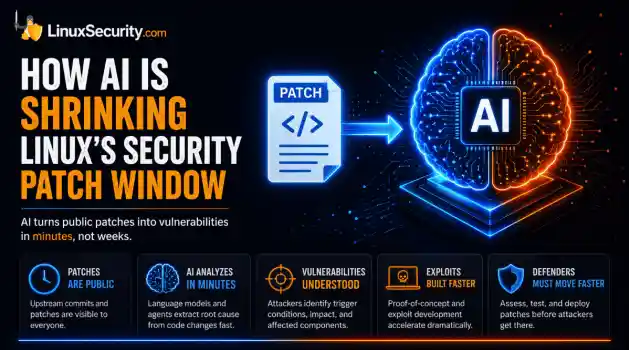
 For decades, Linux defenders relied on a comfortable assumption: a public security patch did not imply an imminent vulnerability. While open-source openness made vulnerability fixes public to everyone on kernel.org or the Linux Kernel Mailing List (LKML), converting a raw commit into a weaponized exploit took a significant amount of manual effort. This delay, estimated in weeks or months, gave businesses enough time to assess exposure, organize testing windows, and push changes across...
 Jul 27, 2026
 security advisory path traversal
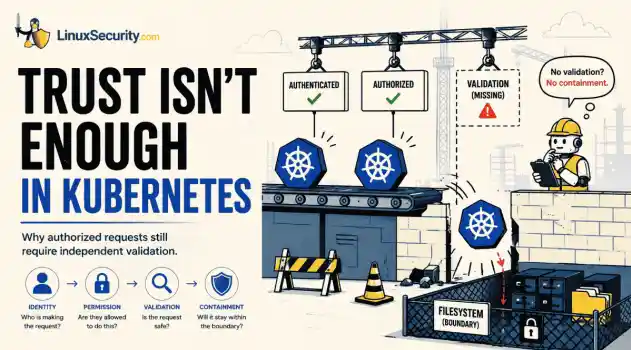
 Two newly fixed storage bugs in Kubernetes showed more than just a problem with path traversal. They found a common security flaw in the cloud: powerful parts often think that requests accepted by a higher system are safe to run. This is a simple lesson for the platform and security teams: RBAC can accept a request without showing that its parameters will stay within a certain filesystem boundary. This is clear from a new study from SentinelLabs into flaws in the Kubernetes CSI drivers for NFS...
Jul 24, 2026
 security advisory update
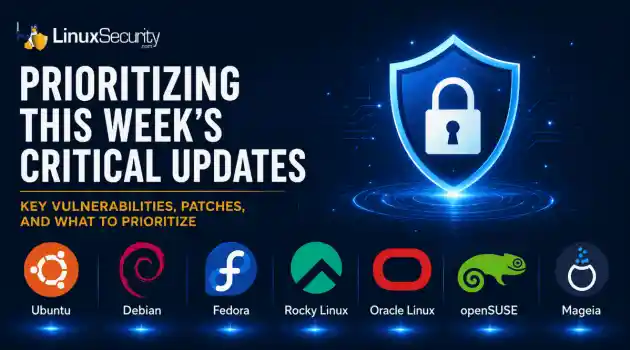
 A large volume of Linux security updates and advisories this week across major distributions once again, but it wasn't just the volume that was the story. Where maintainers and security teams focused their attention was evident in the concentration of fixes targeting Linux kernel updates, identity services, DNS infrastructure, and internet-facing software. . Instead of looking at each advisory in isolation, administrators gain more value from the general trends they reveal about Linux security...
Jul 23, 2026
 identity management security tactics
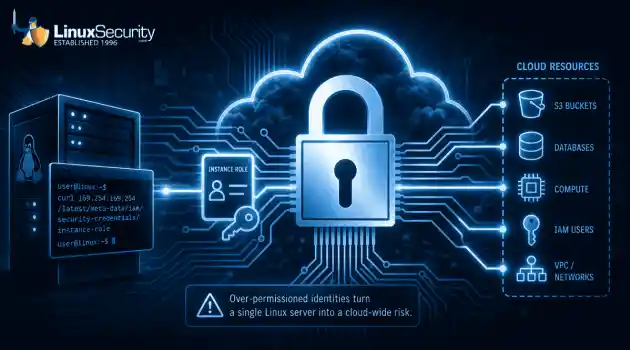
 For years, we secured our Linux infrastructure by building walls: VPCs, security groups, and hardened SSH configurations. We treated the cloud like a virtual data center, assuming that if we kept the "bad guys" out of the network, our workloads were safe. . That model is no longer sufficient. Today, one of the most common paths from an initial compromise to a major cloud breach is the identity assigned to your Linux workload. When an attacker gains code execution on a Linux instance—through a...
Jul 17, 2026
 security practices patch management
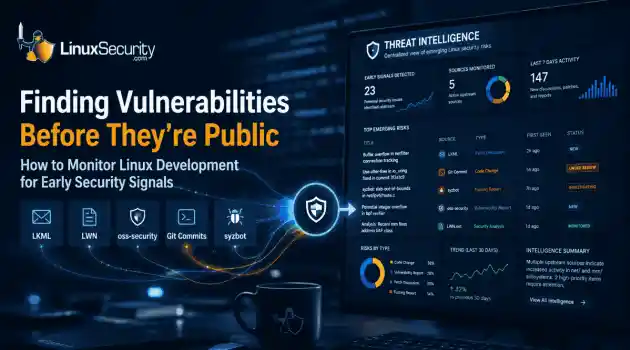
 Most of us don't hear about a kernel vulnerability until a CVE lands in our inbox or the vulnerability scanner starts complaining. By then, the patch isn't new anymore. Kernel developers may have been passing it around for review, arguing over the implementation, or revising it for days before anyone outside that community noticed it. None of those discussions are secret. They're sitting in mailing list archives, Git commits, and patch reviews where they've been the whole time. The strange...
Jul 14, 2026
 Refine features
X Clear Filters
Get the latest News and Insights
Get the latest Linux and open source security news straight to your inbox.
Community Poll
Are host-based firewalls still worth using?
Loading...
Explore Latest Linux Security features
We found -1 articles for you...
102
 data analysissecurity implementationmachine learning
Leveraging AI/ML Frameworks for Advanced Linux Security Solutions
As a Linux security admin, you understand the critical role of robust, reliable, and secure systems in any computing environment. But as AI and Machine Learning expand their horizons into AI frameworks like TensorFlow and PyTorch, there's also added responsibility and opportunity. When integrated effectively, these frameworks can provide invaluable insights by processing vast amounts of data more quickly than traditional methods. . Frameworks like Scikit-Learn and Keras offer straightforward methods of implementing ML algorithms and creating neural networks, making your security measures smarter and more proactive. With tools such as OpenCV, you can dive into computer vision tasks to better recognize and mitigate visual threats to your system. While learning curve and hardware compatibility may present hurdles, their benefits far outweigh them. Adopting AI technologies today not only means staying current but is an investment against the emerging threats of tomorrow. I'll introduce my favorite AI and ML frameworks on Linux and their unique benefits. I'll also share practical tips for overcoming challenges associated with implementing these frameworks in your Linux environment. The Power of TensorFlow TensorFlow has quickly become a household name in AI for good reason. It is indispensable for complex data analysis and is primarily designed to assist in deep learning tasks and neural network training. TensorFlow offers security admins a means of building models to detect suspicious traffic patterns or behavior and predict and identify suspicious events more quickly than traditional approaches can do. Furthermore, TensorFlow boasts robustness features like GPU acceleration support and automatic differentiation needed for efficient neural network training - two factors which are paramount when working on Linux security management tasks such as network monitoring or cyber defense activities. TensorFlow can be dauntingly complex to master, yet once learned, it can significantly enhance theidentification of threats preemptively. Linux offers seamless integration for TensorFlow that ensures full use of its computing strength with NVIDIA's CUDA and TensorRT technologies, ensuring you take advantage of every available computing resource on your hardware. PyTorch: Flexibility and Efficiency PyTorch stands out from other frameworks with its dynamic computation graph, setting it apart from others that use static graphs. Its fluid nature makes it more intuitive and user-friendly, making it ideal for iterative or experimental work such as security-related AI tasks. Using PYTorch, you will experience quicker prototyping times and more adaptable Machine Learning models! PyTorch offers solid support for cloud-based platforms and edge computing applications in Linux environments—two increasingly relevant aspects of cybersecurity. Larger deployments may need additional optimizations if scaling operations are planned. Simplifying Machine Learning with Scikit-Learn Scikit-Learn can simplify traditional ML tasks with its simple yet efficient implementation of fundamental algorithms like regression, classification, and clustering. If your goal is to enhance security through predictive analytics or anomaly detection without incurring deep learning's complexities, Scikit-Learn provides an ideal starting point. Scikit-Learn works seamlessly with Python environments on Linux, causing no cross-compatibility issues or delays in use. As a straightforward tool that delivers impressive results, Scikit-Learn is an invaluable addition to a Linux administrator's toolbox. However, its main drawback is that it is unsuitable for deep learning tasks, and more specialized frameworks will likely be necessary. Keras: High-Level Neural Network API Keras provides a high-level interface for neural network development, sitting atop more complicated engines such as TensorFlow. Suppose the direct use of TensorFlow seems daunting. In that case, Keras may simplify the experience by providing user-friendlyAPIs explicitly designed to expedite prototyping and model development quickly and efficiently. Keras running on Linux offers simplicity in model creation and the power of TensorFlow as a backend. However, its backend engine limits it; therefore, any restrictions or requirements of TensorFlow still exist when used via Keras. Delving into Computer Vision with OpenCV OpenCV has emerged as an indispensable tool in cybersecurity's computer vision field. From image and video processing to more sophisticated functions like facial recognition and motion detection, OpenCV offers an impressive set of functions to boost security measures and strengthen protection. With OpenCV, Linux users can utilize GPU acceleration with CUDA to increase performance for intensive tasks. It suits scenarios requiring large volumes of visual data processing, such as surveillance or automated monitoring systems. Unfortunately, OpenCV's complexity requires considerable knowledge of computer vision algorithms for optimal use—potentially overwhelming beginners. Benefits of Using Linux for AI and Machine Learning Linux provides the ideal foundation for seamlessly integrating AI and Machine Learning frameworks. Its open-source nature, suited for innovation-minded communities like AI developers, enables unparalleled customization and optimization—two essential benefits when running resource-intensive workloads typical of AI applications. Linux provides stability and security —essential elements in fields where data integrity and system reliability are paramount. If you work as a security admin, Linux provides an impressive ecosystem of security tools with strong community support worldwide. Its compatibility with high-performance computing tools such as CUDA or cuDNN means your AI/ML models will perform to their fullest potential! Linux also allows for increased flexibility when customizing systems for AI workloads, providing better resource management - whether on a single workstation or multiple cloud instances.Plus, its wide selection of open-source AI tools helps ensure agility and adaptability even as technology changes around you. Overcoming Challenges Integrating AI and Machine Learning in Linux security practices offers many advantages; however, its incorporation can present difficulties as the learning curve can be steep. Many frameworks for AI/ML implementation require extensive understanding of Machine Learning principles and proficiency with Python or another programming language, such as Rust , to implement effectively. Hardware compatibility can also be an issue. Not all devices and drivers play well with Linux, leading to lengthy troubleshooting sessions. Ensuring that all your hardware meets these criteria and that appropriate drivers have been installed is crucial for smooth operations. Dependency management presents another significant obstacle. Ensuring all libraries and dependencies work well together can be complicated when dealing with various versions or potential conflicts. It requires an exacting and meticulous approach to setting up and maintaining your development environment. Our Final Thoughts on Embracing AI and Machine Learning as a Linux Admin At its heart, cybersecurity relies upon predicting, detecting, and countering threats before they become critical. AI/ML frameworks like TensorFlow, PyTorch, Scikit-Learn, Keras, and OpenCV each provide specific benefits that, regardless of any obstacles they present, can transform how we approach system security. An AI and ML environment within Linux is ideal for optimizing AI/ML models. Though the road may be long, reaching your destination - fortified security systems with increased insight - makes the effort worthwhile. Deploy these technologies now and arm yourself against tomorrow's threats with skills necessary for effective security management! Are you using these AI/ML frameworks in your Linux environment? We'd love to hear about your experience @lnxsec ! . Explore how AI and ML frameworks can enhance Linuxsecurity, overcoming challenges and improving threat detection.. linux, security, admin, understand, critical, robust, reliable, secure, systems. . Brittany Day
 Mar 05, 2025
•
Mar 05, 2025
•
102
 data analysisLinux administrationsecurity tools
ClatScope: Powerful OSINT Integration for Linux Administrators
Cyber threats never clock out, and neither do the challenges of staying ahead. . For me, OSINT isn't just about gathering data —it's about cutting through the noise to find what truly matters. Searching various sources, dealing with different platforms, and manually cross-referencing information is time-consuming and inefficient. So, I'm constantly on the lookout for tools that simplify the process and put actionable intelligence front and center. ClatScope is one of these. It is a powerful OSINT research tool that efficiently processes large volumes of unstructured data, transforming it into a streamlined and well-organized workflow. Let us explain how ClatScope is changing OSINT and why every security professional needs to have it. Challenges of Traditional OSINT Research Traditional Open Source Intelligence (OSINT) research can present numerous unique challenges. The sheer volume of online data available can be daunting; with new information being created alarmingly rapidly, finding relevant and reliable information may seem impossible. Compounding this issue further is its ever-increasing pace; keeping up with it all becomes impossible while remaining accurate over time. The accuracy and reliability of online sources are also often a top concern. The internet provides both credible and dubious sources, so researchers need to develop skills for distinguishing credible data from disinformation, propaganda, or deliberately deceptive content. Verifying data's authenticity often involves gathering information from multiple independent sources - which may take considerable time and energy. Security researchers like Dancho Danchev have spent years analyzing how OSINT can be used effectively to separate reliable intelligence from misinformation. How ClatScope Simplifies OSINT Research Before ClatScope, keeping track of data from various services like Shodan and HaveIBeenPwned meant handling numerous websites separately. You would have to open several tabs, log in to eachservice, and then pull it out by hand to get the information you need. It was time-consuming, and scripts or custom tools were often needed to make it all work. For a Linux administrator who was short on time, having to go back and forth to make sure nothing got missed was a pain. This is where it revolutionizes the process. ClatScope is a game-changer because it unites all those services through APIs . No more hopping between sites; you can do everything in one interface. With this tool, it's as easy to obtain the data you need as it is to set up some API keys. Then, you have one place to extract, process, and visualize your data. Easy and a massive time-saver. You don’t need to write complex scripts or handle unnecessary complications. The tool provides simple, easy-to-follow documentation to walk you through incorporating API keys, and before you know it, you’re pulling in data from all manner of sources with ease. It streamlines the whole process, enabling you to focus on what’s important—interpreting and acting on the data itself. In short, ClatScope makes what used to be a headache a simple, streamlined process. Give it a try, and see how much simpler your workflow can be. ClatScope Tool Features ClatScope is a comprehensive OSINT (Open-Source Intelligence) tool designed for retrieving geolocation, DNS, WHOIS data, phone and email information, data breaches , and more. It now includes 60 powerful OSINT features, making it a versatile tool perfect for investigators, pentesters, or anyone conducting reconnaissance activities. Here are some standout features of it: IP Address Lookups : Retrieves IP geolocation details, ISP, and region. Performs DNSBL checks to see if an IP is blacklisted. Phone Number Lookups : Fetches basic phone number details, such as region and carrier, and conducts reverse phone lookups via the Perplexity API. Email Lookups and Analysis : Checks email validity existence of mail exchanger (MX) records, performs data breach checks against Have IBeen Pwned (HIBP), and analyzes raw email headers. Username Searches : Searches across multiple platforms like Facebook, Twitter, Instagram, etc., to see if a username exists. Domain/Website Lookups : Conducts DNS record queries, WHOIS details retrieval, SSL certificate analysis, and more. Hudson Rock Lookups : Checks if an infostealer has compromised an email, username, or IP. Fact Check & Relationship Search : Verifies data accuracy and maps connections between individuals and entities. Travel Risk Analysis : Evaluates potential security risks based on 40 parameters Additional Features: Password strength checking, reverse DNS lookups, person name searches, settings menu for color scheme customization, and more. Simplicity and Efficiency Linux administrators understand the value of simplicity without compromising functionality, which it excels in doing. Its easy interface enables swift navigation through its various features, while its central role as an OSINT hub enables seamless information gathering using API integrations. API Integrations and Their OSINT Contributions When you're working with a lot of data, using ClatScope's APIs can make all the difference. You might want to connect to services that can get the data, work with it, and show it without you having to do all the hard work. The documentation is good, so even someone who has never used APIs before can get it up and running quickly. ClatScope API Integrations for OSINT Shodan : Allows the search and analysis of internet-connected devices, unveiling potential vulnerabilities and exposed services. HaveIBeenPwned (HIBP) : Checks for compromised email accounts and usernames in data breaches, detailing the nature of each breach. VirusTotal : Offers malware scanning for files and URLs, with comprehensive reports on detected threats. Censys : Provides insights into network and system exposure by delivering detailed security and configuration analyses. Hunter.io :Identifies email addresses linked to specific domains, including source and authority information. BinaryEdge : Conducts extensive data collection on exposed devices globally, identifying potential cyber threats. Pulsedive : Delivers threat intelligence by aggregating data from diverse sources to provide in-depth threat context and analysis. Hudson Rock : Identifies email, username, domain, and IP infections linked to infostealers. Botometer : Evaluates Twitter/X accounts for automated bot activity. ClatScope brings together diverse OSINT data sources, making it easier for Linux admins to conduct thorough investigations, identify potential risks, and ensure better network security. Setting Up API Keys First, gather an API key from the service you intend to connect to. Shodan or HaveIBeenPwned will issue you one after registering with them, with ClatScope providing instructions for plugging it into their tool. Benefits of API Integration With the help of these APIs, ClatScope facilitates the scanning of vulnerable devices, the detection of compromised accounts, and the proper visualization of data. It conserves time and effort by encompassing all these activities under the umbrella of one solution. Ease of Use and Data Aggregation The greatest advantage of this approach is its ease of use. There is no need for difficult coding: simply follow the steps outlined in the documentation and insert your API key when prompted. This will not only save you time but also allow you to explore data more deeply without the usual drawbacks inherent in its procurement and processing. It excels at data aggregation from multiple sources, giving an overall picture of what information you're investigating. From email breaches and social media activity to IP address details or IP address location details, ClatScope gathers this information in an organized, digestible manner. This makes analysis accessible for ethical hackers and pentesters who require extensive reconnaissance work. ClatScope Is Great for Novices and Experts One of ClatScope's greatest strengths lies in its ability to benefit both beginners and experts alike. For beginners looking to get involved with pentesting or OSINT, it provides an accessible setup process and clear documentation, helping lower the entry barrier into this field while providing ample guidance that makes complex tasks manageable. It also provides depth and flexibility to advanced users such as ethical hackers and security advocates, offering depth in its analyses while being easy to integrate into various data sources and tailor to complex investigations effectively. Steps for getting started with ClatScope include the following: Install ClatScope : Download and install it from its GitHub repository . Installation procedures should be similar to those of other Linux apps and should be well-documented on GitHub's page. Set Up API Keys : Once configured, API keys for each service you plan to integrate are guided through this step by the tool so you can easily connect with data sources that meet your criteria. Starting Your Investigation : To start your investigation efficiently, ClatScope features an intuitive GUI. Simply input all necessary parameters, select data sources, and let it gather and analyze all collected information - leaving an organized format suitable for further analysis or reporting purposes. Subscription Program ClatScope's Subscription Program offers ongoing support and updates that include technical assistance, exclusive features, and security patches, ensuring ClatScope remains an effective OSINT tool in your arsenal . Subscribers gain access to premium features, enhanced customer support, and regular software upgrades that keep the tool aligned with cyber threats that change quickly over time. Engaging with the ClatScope community offers numerous ways to learn and develop while contributing significantly to its advancement. Start by joining official forums or websites such as Reddit orStack Overflow, where you can join discussions, exchange knowledge, and provide solutions (or request them). Attending meetups, webinars, and online hackathons via social media and mailing lists is likewise beneficial. Creating tutorials or guides and contributing to shared knowledge repositories are highly appreciated as a way to expand documentation. ClatScope also offers a subscription service for users who prefer not to configure API keys manually. Subscribers receive a pre-configured version of ClatScope with API keys included, eliminating the need to set up third-party integrations. This version ensures full functionality, with built-in security measures to prevent unauthorized access. Subscription tiers provide different levels of API access, and new keys are issued monthly. Other than documentation, ClatScope community members can contribute by suggesting new features to make the tool more functional and user-friendly, translating its application and documentation for wider release, or reporting bugs with detailed descriptions so as to assist in fixing problems. ClatScope: The Future and Its Lasting Impact The tool is still in development , with constant improvements being made to make it even more efficient. Trend analysis with machine learning , more extensive API support, and automated report generation are some of the features being considered to improve its functionality. These will continue to make intelligence gathering easier, saving security experts time and effort. ClatScope is a super-effective and user-friendly OSINT tool that simplifies data collection and analysis through an intuitive interface, seamless API integration, and comprehensive data aggregation. Whether you're a Linux administrator, open-source security professional, pentester, or ethical hacker, it provides the tools you need for efficient and detailed intelligence gathering, making it a valuable asset. Thanks so much to Joshua Clatney for his help and review of this article! . Explore howClatScope revolutionizes OSINT for Linux admins, streamlining data collection and analysis.. cyber, threats, never, clock, neither, challenges, staying, ahead, osint, isn'. . MaK Ulac
Feb 18, 2025
•

102
 data analysissecurity toolscyber defense
Harnessing Threat Intelligence For Optimal Cyber Defense Strategies
Thank you to Oyelakin Timilehin Valentina and Duane Dunston for contributing this article. Threat intelligence (or threat intell) is information used to understand past, present, and future threats targeting an organization. It is evidence-based knowledge about a previous, existing or emerging threat to organizational assets. Threat intelligence also includes settings, implications, mechanisms, context, and even action-oriented advice on the threat. Context mentioned here includes who the attackers are, what their motivation is, what their capabilities are, and what indicators of compromise are in your system. An Indicator of compromise (IOC) is forensic data in a system log file, for example, which identifies malicious activities on a system or network. . Also, threat intelligence can be defined as data analysis using tools and techniques to get information about an existing or emerging threat targeting the organization. Notice that the definitions mentioned above include using knowledge (obtained from data) to achieve a common goal of mitigating cyber threats or cyberattacks. In this series, we will define threat intelligence as collecting, processing, and analyzing data that gives us meaningful knowledge to understand the pattern of previous or present attacks and leads to the building of a stronger and better cyber defense to help mitigate or prevent future attack. Importance of Threat Intelligence Threat intelligence provides deep knowledge on the potential threats to an organization. It helps to know all that is happening outside of the network, because it helps to recognize threats and exploits that the organization is vulnerable to using data from various tools and threat event sources to build a risk management plan to prevent future threats. Cyberattacks and data breaches lead to loss of data, but it also leads to costs like damage to the organization's reputation, market position, fines, lawsuits, expenses that come from investigation, and post-incident restoration andremediation. Practical threat intelligence that comes with effective defense strategies can also save an organization by cutting down or avoiding the cost of data breaches. With vulnerabilities being actively exploited, practical threat intelligence can quickly identify and mitigate their impact and increase the security team's efficiency in handling security alerts. Also, threat intelligence helps gather IOCs like signatures of tools used by the attackers, malware characteristics, and behavior. In this series, we will explore some tools that can be used for creating a threat intelligence program for an organization. The tools will be explained along with examples of how to run it and interpreting its output. While it cannot cover all possible implications to an organization, it can help provide a starting point for interpreting the output in context to your organization. We will begin with discussing how nmap can be used as one source to gather information to add to a threat intelligence program. Stay tuned! About the Authors Oyelakin Timilehin Valentina is a self-taught cybersecurity professional. As someone who loves to contribute to social responsibility, she volunteers for Cybersafe Foundation with its initiative #NoGoFallMaga. She is also a volunteer for The Young Ciso Network and The Diana Initiative. Duane Dunston is an Associate Professor of Information Security at Champlain College. He has been in information security since 1997, starting in the education sector, then to federal, and then into academia. . Profound understanding of threat intelligence and its importance in counteracting cyber risks for enhanced organizational safeguarding.. Threat Intelligence, Cyber Defense, Risk Management, Security Strategies. . Duane Dunston
Jun 03, 2021
•
102
 forensic methodologydata analysissecurity solutions
Comprehensive Guide to Network Forensics Best Practices and Methodologies
Proper methodology for computer forensics would involve a laundry-list of actions and thought processes that an investigator needs to consider in order to have the basics covered.. Customized Scripts Also of note is the topic of scripting to perform investigations on a large scale network. Brought up as a possible solution to utilizing a forensic toolkit, customized scripts, coded by the IT sys. admin., have been talked about as a good alternative. While properly coded scripts are of great use to investigators in gathering data from unattended areas of the network, they are a compliment to, and not a fix for a good forensic solution. Fowler adds, The nice thing about using Perl scripts is that it automates many log and data collection activities that may otherwise be forgotten due to limited time on the part of the system administrator. Tedious tasks such as collecting, analyzing, and storing log files from a number of locations can often be overlooked. A properly created Perl script can free up a system administrator so he/she can concentrate their investigative efforts in areas of the network or system that sometimes forego attention due to time constraints. Methodology The process behind most analytical tasks is based on a generally accepted checklist of duties and/or considerations to perform such a task. Proper methodology for computer forensics would involve a laundry-list of actions and thought processes that an investigator needs to consider in order to have the basics covered. While one would think forensics methodology would come naturally to most high level sys. admins., its not that simple. Which part of training methodology deserves special attention and what should one already know and be practicing? Fowler explains, The question of training methodology is a great one. We are hearing from investigators that testify during investigations. The consensus is that the focus on the product used, is of less concern than the methodology used during the investigation itself. When trainingLaw Enforcement students, they are often seasoned veterans with years of experience dealing with issues such as evidence handling and investigative best practices. The transition to the computer forensic mindset is usually a painless one given that they possess the basic knowledge and can apply it to most investigations. IT professionals present an additional challenge. Although they have years of knowledge dealing with computers and networked systems, frequently the methods of protecting items of evidentiary value and utilizing accepted evidence gathering practices have not been a part of their training. I have always said, Give me an investigator and I can train him in the technical issues in my class. Taking an IT professional and giving him the investigative mindset needed is something that cannot be covered in a 4 to 5 day class. What we can teach is sound forensic methodology that they can use while gaining the required investigative experience they need. What Is Needed? Fowler continues, One of the chief questions I get asked when teaching our corporate investigations course, is if I can provide a checklist of items that need to be completed in order to let the investigator know that the investigation is finished. The short answer is No. There is no checklist or special script that an investigator can run that will log in your evidence, examine the drive, chronicle the items of evidentiary value and write your reports. Each case worked will have its own set of idiosyncrasies and areas that require in-depth review. This is what separates an investigator, the compulsion to dig deeper until he is satisfied that he knows everything there is to know about the case. Time on your hands? Should an IT examiner have excess time on their hands, they could conduct a network investigation utilizing several types of forensic utilities to do the job of a comprehensive toolkit. There is the option of shareware, specialized forensic components, log files, scripting and much more available forconsideration. In reality, todays IT administrator already does the job of ten people and needs a solution that is customizable, expandable, upgradeable, and can adhere to industry best practices and legal protocols. Thats a tall order indeed. There are solutions out there that can perform at this level, and some are considered costly when not measured against immediate ROI and performance metrics. One should not gauge a forensic solution by its cost alone but rather by the accumulated cost of procuring multiple utilities, time constraints on the administrators, possible data loss of the company, inadequate reporting that may not be upheld in a court of law, and immeasurable loss due to employee misconduct and policy violations. I revisit the argument of how secure do you want to be? This is a question best asked around a conference table with all the big players present. Human Resources, CFO, CSO, CEO, CIO, VP of Engineering, VP of Sales, and of course IT. All of these critical functions are directly affected by the efficiency of a good forensic solution. Instead of asking, How much does it cost? One should be asking How much is our company worth to us? There are solutions that are definitely good enough. Think about it. When questioning Mike Fowler about the pros and cons of using Guidances solution as opposed to various solutions on the market, he replied, Remember, I was a customer of Guidances (having been in Law Enforcement conducting investigations) long before I came on board. A comprehensive enterprise solution offers comprehensive one-stop shopping in conducting drive examinations, ease of use, and the best customer service in the industry! Summary Computer forensics are being injected into the corporate world to fulfill a large gap in IT capabilities and a greater need for comprehensive security. There are many common misconceptions about what the technology can and cannot do. Single solutions and cutting edge tools can accomplish their goals at the hands of trainedexaminers employing investigative mindsets and utilizing proper methodologies. There is no quick fix forensic solution, there are brilliant tools on the market that are well worth a companys time and energy to explore. The cost in dollars is dwarfed overall by the multiple uses for enterprise forensics and their total, almost immeasurable ROI. While not at all magic, complete enterprise forensic solutions are efficient, comprehensive, and always ahead of the game. *Guidance Software is the world's largest provider of computer and enterprise forensic investigation solutions and training. Founded in 1997 and headquartered in Pasadena, CA, Guidance Software, Inc., has offices and training facilities in California, Virginia and the United Kingdom. More than 8,000 corporate and government investigators employ EnCase software, while more than 2,300 investigators attend Guidance Software's forensic methodology training annually. Validated by numerous courts and awarded several industry awards, EnCase software is considered the standard in forensic tools /products/cybersecurity-cloud . Melisa LaBancz is a freelance journalist in the San Francisco Bay Area who has spent the past several years writing unique pieces about the security industry. With a special fascination for encryption technology and computer forensics, she has called upon the industry's best to assist in the quest for layman's terms and a trailer park understanding. Her day job consists of being a security export analyst and a security PR consultant to some of the nation's most cutting edge security vendors. When not feverish over worldwide security conferences, she can be found photographing random glass and steel architecture, antagonizing her garden into growing and finishing off her Japanese half sleeves. In an effort to articulate complex topics for a wider variety of readers, Melisa is known to rely on her belief in comparative nonsense to build her case and has developed strong relationships among the industry'sbest known thought leaders. A few selected pieces: Super! Ultra! Jumbo! Privacy as the New Multi-Purpose Word Do It Yourself Security: Cutting Our Umbilical Dependence on the Consultant Community Fire and Brimstone in 21st Century Security . Delve into sophisticated strategies and instruments designed to enhance network forensic analyses within extensive operational frameworks.. Network Forensics, IT Investigations, Forensic Methodology, Custom Scripts, Enterprise Solutions. . Brittany Day
Mar 21, 2003
•

Get the latest News and Insights
Get the latest Linux and open source security news straight to your inbox.
Community Poll
Are host-based firewalls still worth using?
Search Topics
Powered By

Linux Security - Your source for Top Linux News, Advisories, HOWTOs and Feature Releases
QUICK LINKS
subscribe to newsletters!
Like staying secure? So do we.
Sign up for updates, tips, and alerts!