Overly broad permissions can turn one compromised account into a much larger security problem. Learn how to reduce unnecessary access, review privileges, and apply least privilege across modern Linux systems. Review Linux Privileges×


Stay Ahead With Linux Security Features
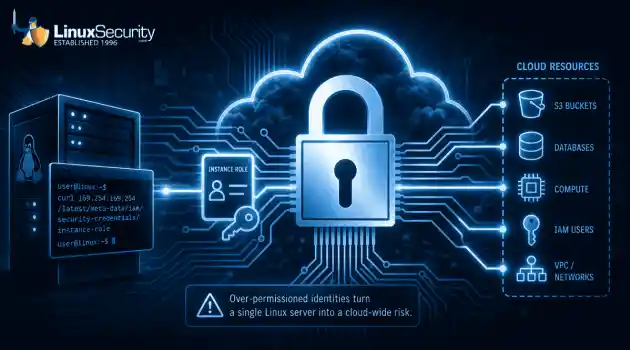
 identity management security tactics
 For years, we secured our Linux infrastructure by building walls: VPCs, security groups, and hardened SSH configurations. We treated the cloud like a virtual data center, assuming that if we kept the "bad guys" out of the network, our workloads were safe. . That model is no longer sufficient. Today, one of the most common paths from an initial compromise to a major cloud breach is the identity assigned to your Linux workload. When an attacker gains code execution on a Linux instance—through a...
 Jul 17, 2026
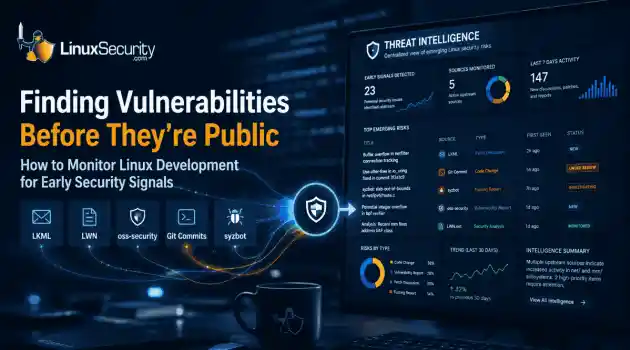 security practices patch management
 Most of us don't hear about a kernel vulnerability until a CVE lands in our inbox or the vulnerability scanner starts complaining. By then, the patch isn't new anymore. Kernel developers may have been passing it around for review, arguing over the implementation, or revising it for days before anyone outside that community noticed it. None of those discussions are secret. They're sitting in mailing list archives, Git commits, and patch reviews where they've been the whole time. The strange...
Jul 14, 2026
 Linux security cyber attacks
 Every Linux server in your fleet produces thousands of events every minute. From journald logs and auditd records to kernel-level eBPF hooks, your systems are constantly talking. Most of that noise is just the mundane churn of system services, CI/CD runners, or routine administrative automation. But among that noise, an attacker might be establishing a foothold, moving laterally, or setting up persistence. The challenge for any security team is: how do you separate the routine from the...
Jul 13, 2026
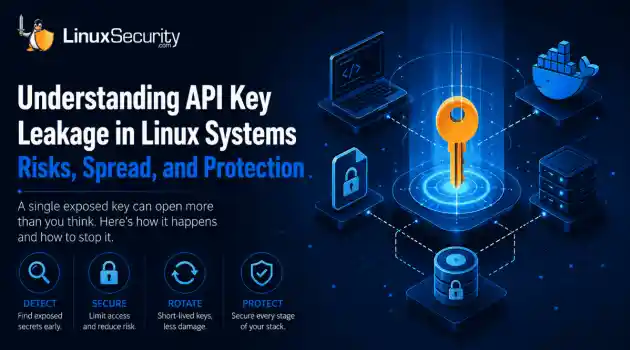 open-source infrastructure risk
 Security scanners flag exposed API keys in public repositories every day. The initial response is usually predictable: delete the commit, revoke the credential, and move on. That’s a mistake. . In a real Linux environment, an API key never stays in one place. By the time it hits a public repo, it’s already everywhere. It’s in the CI/CD pipeline. It’s in your container registry. It’s in the build logs. It’s in the backups. Git makes this worse because the history never dies. Deleting a file in...
Jul 11, 2026
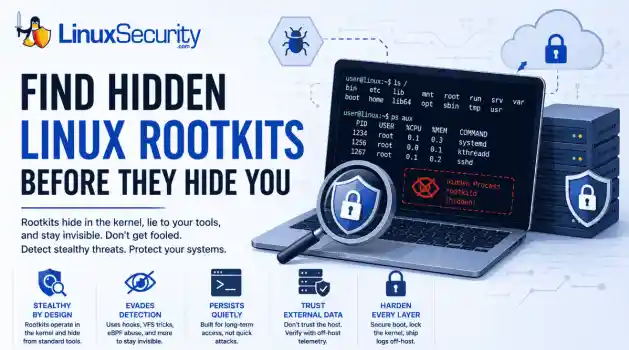 open-source rootkit
 Most of us think of Linux rootkits as ancient history—the stuff of 90s hacking forums and clunky malware that would crash your system if you looked at it the wrong way. But if you think they’ve gone away, you’re mistaken. They’ve just gotten smarter. . Modern attackers aren't using the noisy tools of the past. Today’s threats are surgical. Many of today’s most advanced Linux rootkits operate at the kernel level or abuse legitimate system features to blend in with normal traffic. They’re...
Jul 09, 2026
 Refine features
X Clear Filters
Get the latest News and Insights
Get the latest Linux and open source security news straight to your inbox.
Community Poll
Should Linux servers automatically install security updates?
Loading...
Explore Latest Linux Security features
We found 2 articles for you...
102
 data integrityhash functionalgorithm
What Is a Checksum? Meaning, Examples & Why You Should Use Them
A checksum is a calculated value that represents the exact contents of a file or message. If the file changes — even by a single byte — the checksum changes as well. That’s why it’s often described as a digital fingerprint for data integrity. . For sysadmins and Linux users, this isn’t theory. Checksums are a routine safeguard. When you download an ISO, apply a patch, or move data across a network, the step before trust is verification. One quick command in the terminal tells you if the file you grabbed is the same one the project published. Checksums in 2026 Snapshot: What You Need to Know A checksum is a unique value tied to a file. Any change alters the value. Linux distributions rely on SHA-256 and SHA-512 for ISOs and updates. Integrity isn’t authenticity — GPG signatures prove the source. Legacy algorithms like MD5 and SHA-1 still exist, but they’re unsafe for security. In this guide, we’ll cover checksum meaning in Linux and networking, how checksum algorithms work, the ones that matter in 2026, and the weaknesses to keep in mind. You’ll also see real Linux examples alongside tools on other systems, so you’ll know exactly how and when to use checksums. What Is a Checksum in Linux and Networking? Data is processed, reduced to a smaller value, and that value rides along with the file or packet. On the other side, the same calculation runs again. If the two match, integrity holds. If not, something changed. In networking, checksums flag errors in TCP and UDP packets. The protocol runs quick arithmetic against packet data, enough to catch a flipped bit or missing piece. It works for error detection, not security — attackers can forge it. In Linux, checksums serve a stronger role. Distributions rely on cryptographic checksums like SHA-256 , where even a single byte change produces a completely different value. A checksum confirms integrity, but not authenticity. An attacker could replace a file and generate a matching checksum.That’s why distributions pair SHA-256 with GPG signatures : the checksum proves the file hasn’t changed, the signature proves it came from the right source. For a detailed guide on Linux integrity verification methods , see our complete article. In practice, this also matters when evaluating an open-source security baseline , since integrity checks sit at the foundation of trust. Overall, from packets on the wire to Linux ISOs, the purpose stays the same — verify integrity before you trust the data. What Is a Checksum Algorithm? Common Types Explained Legacy algorithms like MD5 and SHA-1 still exist, but they’re unsafe for security. Algorithm Output Size Status in 2026 Notes / Use Case SHA-256 256 bits Secure Standard for Linux ISOs, TLS, and SSH. Detects any change. SHA-512 512 bits Secure Stronger variant of SHA-256. Used where higher assurance is needed. MD5 128 bits Broken Collisions proven. Only useful for quick corruption checks, not security. SHA-1 160 bits Broken Deprecated. Still shows up in legacy systems, but not safe. SHA-0 160 bits Historical Pulled in the ’90s after flaws. Mentioned only in history. In practice, Linux admins stick with SHA-256 or SHA-512 . What Does Checksum Mean in Linux A checksum in Linux is a hash value used to confirm that a file or package hasn’t changed. Distros publish SHA-256 or SHA-512 alongside their ISOs, and sysadmins run the command before they trust the file. Whether you’re patching a server or installing a fresh image, that one step confirms integrity. Advantages of Using Checksums in Linux Checksums aren’t just a background process — they’re a daily safety net for Linux admins. Lightweight, reliable, and easy to run, they giveyou quick proof that a file hasn’t silently changed. Here’s why checksums remain essential in Linux workflows today: Fast and lightweight : checksums confirm file integrity without slowing down Linux systems. ISO and patch verification : before installing an ISO, patching a server, or pushing configs, checksums confirm the file matches the published version. Error detection beyond downloads : they can surface disk errors in backups, spot corruption in archived data, and maintain accountability in shared storage. Long-term integrity checks : Over the years, checksums ensure that data pulled from archives is the same as the original. Scalable across datasets : because they are small and computationally cheap, admins can run checksums against large datasets, log files, or repositories with minimal overhead. Reliable in 2026 Linux systems : the balance of speed and reliability is why checksums remain a standard integrity tool across Linux environments today. In practice, the advantages of using checksums in Linux come down to one thing: confidence. Whether you’re validating a fresh ISO, restoring an old backup, or syncing shared storage, a quick checksum is the simplest way to make sure the data you’re working with is still the data you trust. Limitations and Disadvantages of Checksums A checksum confirms that data hasn’t changed, but it has limits. Some errors slip through. A basic checksum might not flag reordered bytes or missing sections. More advanced algorithms reduce these gaps, but no checksum is perfect. Another drawback: detection without correction. If the numbers don’t line up, you know the file is wrong, but you still have to re-download, restore from backup, or verify against a signed copy. The risks aren’t theoretical. CVE-2025-3576 showed how RC4-HMAC- MD5 checksums in MIT Kerberos could be forged if RC4 was still enabled. Around the same time, reports highlighted new supply chain attack targets telegram bots . The message is clear:whether it’s a legacy cipher or a modern service, weak or missing verification leaves room for attackers. Generating checksums on large ISOs or archives uses resources, but the overhead is small compared to the protection they provide against corrupted or tampered files. For Linux distributions, that’s why checksums are always paired with signed releases — one verifies the data, the other verifies the source. Real-World Applications of Checksums in Linux and Beyond Checksums are everywhere. In Linux, they’re part of the daily workflow. Package managers like apt, yum, and dnf handle verification behind the scenes. They use checksums to confirm that updates and dependencies haven’t been corrupted in transit. It’s a small but vital part of the open-source software supply chain security . Admins also rely on checksums to validate logs and configuration files, where a silent edit could cause outages or weaken security. Outside Linux, the same principle applies elsewhere. Network protocols use checksums to flag dropped packets. Cloud providers apply them to detect corruption in stored data. Banks apply checksums in Know Your Customer (KYC) checks to confirm the integrity of sensitive data. Healthcare systems attach checksums to patient records and lab results, and e-commerce platforms use them to confirm transaction data hasn’t been altered. Across industries, the role remains the same: checksums provide quick proof that data is trustworthy. The contexts differ, but the role of checksums doesn’t: provide a quick, reliable way to confirm that data is still what it was meant to be. Troubleshooting Checksum Errors Checksum errors aren’t always a sign of tampering. More often, they come down to routine issues that can be fixed quickly. Common causes of checksum errors: Interrupted or incomplete downloads. Failing USB sticks, DVDs, or other install media. Bad sectors on a disk. Network hiccups that disrupt transfers. How to fix checksum errors onLinux: Re-download the file from a reliable mirror. Use a torrent for ISOs — integrity checks are built in. Always verify against the project’s GPG-signed checksum list to confirm the hash itself hasn’t been altered. A checksum mismatch should always be treated as a warning. Often, the cause is routine — a bad transfer or failing media — but the checksum is doing its job by flagging the change before you trust the file. But recent cases like Chaos Rat in AUR show that malicious uploads do happen, and the only safe move is to verify before you run the file. The point is simple: don’t trust the file until you know why the checksum doesn’t line up. Many of the mismatches that checksums catch trace back to quiet upstream changes in mirrors or metadata — the broader pattern of system drift in Linux that affects long-running environments. How to Verify a Checksum on Linux A checksum verification in Linux means comparing the file’s calculated hash against the project’s published value. The tools you need are already on every major distro — no extra installs required. Here’s how you’d do it with a Rocky Linux 9 ISO. 1. Download the ISO and checksum file First, download the ISO from the official Rocky Linux site. Then download the checksum file from the same location. Example: wget wget https://download.rockylinux.org/pub/rocky/9/isos/x86_64/CHECKSUM Both files need to be in the same directory. 2. Confirm the files are present Run: ls You should see both: the .iso file the CHECKSUM file If one is missing, the verification step won’t work. 3. Verify the checksum There are two ways to do this. Option 1: Automatic verification (recommended) Run: sha256sum -c CHECKSUM This reads the checksum file and compares it against your downloaded ISO automatically. If everything is correct, you’ll see: Rocky-9.x-x86_64-dvd.iso: OK Option 2: Manual comparison Run: sha256sumRocky-9.x-x86_64-dvd.iso This generates a hash for your file. Then open the CHECKSUM file and find the matching ISO entry. Compare the two values. If they match exactly, the file is valid. 4. What if it doesn’t match? If you see anything other than OK , or the values don’t match: The download may be incomplete The file could be corrupted In rare cases, it could have been tampered with Delete the file and download it again from the official source. Why this matters ISO files are often used to install operating systems. If the file is modified or corrupted, you could end up installing a compromised system. Checksum verification is a quick step that helps avoid that risk. How to Verify a Checksum on Other Systems A checksum on Windows or macOS works the same way: calculate the file’s hash and compare it against the official value. If you’re not on Linux, the same process works — just with different tools. Windows: certutil -hashfile SHA256 macOS: shasum -a 256 Older versions may still use: md5 Different commands, same idea: calculate the checksum and check it against what the project published before you trust the file. FAQ: Checksums in Linux Checksums come up in everyday Linux work. These are the questions that matter most. What is a checksum in Linux? A checksum in Linux is a hash value tied to a file. Distros post SHA-256 sums with ISOs and packages. You run sha256sum and compare. If it lines up, the file’s clean. What causes an inconsistent checksum? Bad downloads, failing disks, sketchy USB media, and network drops. Not always an attack — but always a reason to stop and re-verify. Is a checksum the same as a hash? Close, but not the same. A checksum uses hashing for error checks. Linux distros lean on SHA-256 for integrity. How do I check if a download is safe using checksums? Run sha256sum . Compare it against the project’s value. For ISOs, confirm with the GPG-signedlist. That’s the safest way to trust what you pulled. With the basics covered, here’s why checksums remain part of daily Linux security practice in 2026. Final Thoughts Checksums still matter. On Linux, they remain the quickest way to confirm file integrity before you run anything. In 2026, the best practice is clear: use SHA-256 or SHA-512 and always pair them with digital signatures. What is a checksum at the end of the day? A simple value that protects against silent corruption and flags tampering before it becomes a problem. One check, one command — worth doing every time. . For sysadmins and Linux users, this isn’t theory. Checksums are a routine safeguard. When you down. checksum, calculated, value, represents, exact, contents, message. . MaK Ulac
 Mar 27, 2026
•
Mar 27, 2026
•
102
 security advisorydata integritylinux
Linux Kernel Encryption Changes Prevent Physical Hardware Attacks
PCIe traffic has long been treated as trusted by default, with data moving in plaintext between CPUs, memory, and devices under the assumption that anything inside the chassis is safe. That model no longer fits modern Linux deployments. Servers are dense, extensible, and shared across tenants, virtual machines, and administrative boundaries. In cloud and edge environments, especially, the PCIe fabric increasingly resembles a network—one that until now has operated without encryption. . Linux kernel support for PCIe Link Encryption in Linux 6.19 changes that baseline. By implementing PCIe IDE (Integrity and Data Encryption), Linux treats the PCIe bus as an attack surface rather than a trusted backplane, protecting data in transit against snooping, tampering, and malicious devices. This closes a long-standing gap in Linux hardening and confidential computing, complementing technologies like AMD SEV by extending protection beyond memory and storage to the hardware interconnect itself, where plaintext PCIe traffic has remained a critical blind spot. What Is PCIe IDE & Why Is Linux’s Support for This Feature Such a Big Deal? PCIe IDE, short for Integrity and Data Encryption, is a feature defined in the PCI Express specification itself. It is not a Linux-specific invention, and it does not rely on drivers implementing custom cryptography. The mechanism lives at the link layer, below the operating system, the hypervisor, and the device driver model. At a high level, PCIe IDE encrypts traffic as it moves across a PCIe link. Data leaving the root complex is encrypted before it hits the bus, and decrypted only by the intended endpoint device. The same applies in the opposite direction. Alongside confidentiality, IDE also provides integrity protection, allowing the receiver to detect tampering or replay attempts. This design matters because it addresses an entire class of attacks that operate beneath the OS, including: Bus snooping DMA interception Device-level manipulation belowkernel visibility Firewalls, SELinux policies , and virtualization boundaries cannot see or stop traffic that is already on the wire. IDE also includes endpoint authentication. During link setup, the root complex and the device establish trust and negotiate per-link encryption keys. A rogue or spoofed device that cannot complete this exchange is prevented from participating in protected communication. Once the link is established, encryption operates transparently. From the driver’s perspective, reads and writes behave the same as they always have. Linux’s role here is careful and constrained. Linux 6.19 implements support for enabling and managing PCIe IDE where the hardware allows it. It is not redefining the protocol or inventing new cryptographic behavior. CPUs, chipsets, and devices must explicitly support IDE for it to function. When they do, Linux provides the plumbing to turn it on and integrate it into system initialization and policy. Linux support matters because it turns a long-defined but rarely enforced capability into a practical security control, allowing the PCIe fabric itself to be treated as an attack surface rather than an implicit trust boundary. The result is cryptographic protection that exists below both the OS and the hypervisor. That positioning is what makes PCIe IDE especially relevant to linux secure boot, confidential computing, and SEV-based systems. Memory can be encrypted, workloads can be isolated, and now the paths that connect them to hardware can be protected as well. How Does PCIe IDE Work? PCIe IDE operates during link initialization, not at runtime through software hooks. When a system boots or a PCIe link is brought up, the root complex and the attached device negotiate whether IDE is supported and, if so, how it will be used. Encryption keys are generated per link, scoped narrowly, and never exposed to drivers or user space. Once the link is established, every PCIe transaction on that path is protected. Reads, writes, completions, andmetadata all move under encryption with integrity checks applied. If data is modified in transit, the receiver detects it. If a device attempts to inject traffic without participating in the key exchange, it fails to authenticate, and the link does not carry protected traffic. From the Linux driver’s point of view, nothing changes. Drivers still issue DMA mappings, submit commands, and process responses the same way they always have. There is no new API for drivers to call and no requirement for device-specific crypto handling. That transparency is deliberate. Security at this layer only works if it is difficult to bypass and easy to deploy. This is also why IDE sits cleanly alongside existing Linux encryption mechanisms rather than replacing them. Disk encryption protects data at rest. Memory encryption protects data in use. PCIe IDE protects data in transit between trusted components. Each layer assumes the others can fail, and compensates accordingly. You can see the kernel community starting to treat PCIe as a potentially hostile fabric in how this work is landing. During the Linux 6.19 merge window, early enablement and foundational plumbing for PCIe Link Encryption entered upstream discussion and review. The patches do not flip everything on overnight. They lay the groundwork for discovery, capability reporting, and policy control as vendors ship compliant hardware. That timing is not accidental. Concerns around physical access attacks, hardware implants, and cross-tenant data exposure have grown alongside the adoption of confidential computing. In sev-based environments, especially, encrypted memory without encrypted I/O leaves an uncomfortable gap. PCIe IDE is one of the first serious attempts to close it at scale. How PCIe Link Encryption Complements Confidential Computing in Linux Confidential computing shifts the security boundary inward. Instead of trusting the host, the hypervisor, and the surrounding infrastructure, it narrows trust to a defined execution context. In the caseof AMD SEV, that context is the virtual machine itself. Memory is encrypted, CPU state is isolated, and the hypervisor is treated as potentially hostile. Intel TDX follows a similar model, defining hardware-backed trust domains with strict isolation guarantees. What these models have always struggled with is I/O. Virtual machines still need to talk to the outside world. They need network interfaces, storage, GPUs, and accelerators. In linux virtualization environments, that usually means PCIe passthrough or mediated devices. Even when memory is encrypted, data leaving the CPU and crossing the PCIe fabric has historically been exposed. The trusted execution environment ended at the package boundary. PCIe Link Encryption extends that boundary. By encrypting traffic between the root complex and the device, it reduces how much the host and other tenants can infer or interfere with. A virtual machine using a passthrough device can exchange data without that data being visible on a shared bus. The hypervisor still controls scheduling and configuration, but it loses visibility into the contents of the traffic itself. This matters most in multi-tenant systems, where different workloads share the same physical PCIe fabric. Without encryption, a compromised device or a malicious tenant with access to a shared accelerator can potentially observe patterns or data belonging to others. IDE limits that exposure. It does not make devices trustworthy, but it narrows what they can learn or manipulate. You can think of this as reducing ambient authority. PCIe devices have always been powerful. They still are. But their ability to silently observe everything on the bus is curtailed once links are encrypted and authenticated. For sev and similar technologies, that is a meaningful step toward end-to-end isolation rather than partial protection. This also strengthens Linux hardening strategies around device access. When combined with IOMMU enforcement, device allowlisting, and Linux secure boot, PCIe IDE turnshardware access into something that is both constrained and observable. Each layer covers a different failure mode. None of them assumes the others are perfect. How Will Linux’s Support for PCIe IDE Impact Servers, Cloud hosts, and Edge Systems? When PCIe traffic is unencrypted, the attack surface extends far beyond the operating system. Any actor that can influence the hardware path gains opportunities that kernel controls were never designed to handle. This is not hypothetical. Many of the most durable hardware attacks exploit exactly this gap. Plaintext PCIe traffic enables passive observation. A malicious peripheral, a compromised accelerator, or a hardware implant can monitor DMA transfers without altering system behavior. Sensitive data passes by at line rate, invisible to logging or intrusion detection. In shared systems, this becomes a cross-tenant risk rather than a single-host problem. Active manipulation is also possible. Devices can tamper with transactions, inject malformed requests, or replay previously captured data. Because these actions occur below the OS, traditional Linux hardening measures often see only the outcome, not the cause. Even with an IOMMU in place, the integrity of the data itself has historically been assumed rather than verified. These risks show up differently depending on deployment: Multi-tenant cloud environments: Shared PCIe fabrics and passthrough devices allow a compromised PCIe device to observe or infer data across workloads. At cloud scale, even low-probability hardware attacks become economically attractive when they can be repeated across many hosts. Edge and colocation deployments: Physical access is less controlled, and hardware is often installed or serviced by third parties. Plaintext PCIe traffic turns operational trust failures into direct data exposure events. Systems using third-party accelerators: GPUs and specialized cards run complex firmware that is frequently updated outside the host’s control. Firmwarevulnerabilities can be exploited to observe or manipulate PCIe traffic in ways the kernel cannot see or prevent. PCIe Link Encryption does not eliminate these risks entirely, but it changes their shape. Passive observation becomes significantly harder. Active tampering becomes detectable. Rogue devices fail to authenticate. The bus itself stops being a silent side channel. That shift is why this work matters beyond a single kernel release. It changes what kinds of failures turn into data breaches, and which ones degrade more safely. What Should Admins Do As This Support Lands? From an administrative perspective, PCIe Link Encryption is not a switch you flip once and forget. It sits at the intersection of hardware capability, firmware policy, and kernel support. Adoption will be gradual and uneven because every layer has to participate. The first step is hardware awareness. IDE support must exist in the CPU, the platform chipset, and the attached pci device. If any link in that chain lacks support, encryption cannot be enforced on that path. This is especially relevant for mixed environments, where newer hosts coexist with legacy accelerators or network cards. Firmware configuration comes next. Many platforms gate PCIe IDE behind BIOS or UEFI settings, often grouped with security or platform trust features. This is where Linux Secure Boot and PCIe security policy start to overlap. Secure boot establishes trust in the software stack. IDE extends that trust into the hardware interconnect, but only if firmware allows the kernel to enable it. On the Linux side, kernel support determines what is possible. As support matures, administrators will need to watch kernel release notes and vendor documentation to understand which devices are covered and how enforcement is handled. Early implementations focus on discovery, negotiation, and safe enablement rather than blanket enforcement. PCIe IDE should be treated as complementary to existing controls, not a replacement. IOMMU isolationremains critical for limiting DMA scope. Device allowlisting reduces exposure to unknown hardware. Monitoring for unexpected device behavior still matters. IDE strengthens linux encryption, but it does not make devices trustworthy by default. What changes is the failure mode. A compromised or malicious device has less opportunity to quietly observe or manipulate data. Attacks become noisier, more constrained, and easier to reason about. Over time, that shifts how administrators think about physical and local threats, especially in shared environments. The Broader Takeaway: What Does This Signal About Where Linux Security Is Heading? Linux security has been moving steadily downward through the stack. First storage. Then memory. Now, the interconnects that tie CPUs, devices, and accelerators together. PCIe Link Encryption fits that trajectory. It treats the hardware fabric itself as something that needs protection, not just configuration. This reflects a broader shift in threat modeling. Implicit trust in legacy components has become a recurring source of failure. Buses assumed to be private turn out to be shared. Devices assumed to be benign turn out to be complex, networked, and vulnerable. Once you see that pattern, it becomes hard to justify leaving high-value data unprotected simply because it never crossed a network boundary. For sev and other trusted execution environment designs, this change closes an important gap. Memory encryption protects data in use. Disk encryption protects data at rest. PCIe IDE protects data in transit across hardware boundaries that were previously invisible to policy. The result is not absolute security, but a tighter, more coherent defense-in-depth model. The significance of this kernel work is not that it introduces a new feature. It is that it revises an old assumption. PCIe is no longer treated as inherently safe just because it is fast and local. In modern linux virtualization and multi-tenant systems, that assumption no longer holds. Over time, thisapproach is likely to extend further. More hardware paths will be treated as hostile by default. More security decisions will be enforced below the OS layer. And more of Linux hardening will be shaped by how real systems are actually built and shared, rather than how they used to look on paper. That is the real signal here. . Explore the importance of PCIe Link Encryption for Linux, enabling secure data transmission and protecting against threats.. PCIe encryption, data integrity, Linux security. . Brittany Day
Dec 22, 2025
•

102
 mysqldata integritybackup strategy
Comprehensive Guide to Repair MySQL InnoDB Table Corruption
MySQL InnoDB tables are the tables created using the InnoDB search engine. You can create InnoDB tables using the CREATE TABLE command, DATA DIRECTORY clause, and CREATETABLE … TABLESPACE system. Irrespective of your methods to create InnoDB tables, they are prone to corruption and inconsistencies. When the tables created in the InnoDB search engine are damaged or corrupted, you can face different errors and issues while accessing those tables. . Some of the common mistakes and issues that MySQL users have reported in different forums are: InnoDB: cannot open table db/site from the internal data dictionary of InnoDB through the .frm file for the table exists Error 1146: Table ‘xxxx” doesn’t exist InnoDB: Database page corruption on disk or a failure. InnoDB: file read of page 515891 Server fails to read the table in MySQL database The above error indicates there are some inconsistencies with your MySQL database. The inconsistencies can occur due to corruption in the database. The SQL database tables can get corrupted due to sudden power failure, hardware or software failure, MySQL application being killed during a write, incorrect code or configuration in MySQL storage engine (InnoDB), and more. In this write-up, we’ll learn the efficient methods to repair corruption in MySQL InnoDB tables. Methods to Resolve MySQL InnoDB Table Corruption Restore MySQL tables from backup: Restoring the backup copy from the last known backup is the easiest method to restore the database. You can use the mysqldump utility to restore corrupt MySQL tables from the logically created backup. Following are the steps to restore InnoDB tables using mysqldump utility: First, you need to create an empty database. For this, execute the below command: mysql > create db_name Once you have created the database, then use the mysqldump utility to restore the database by using the below command: mysql -u root -p db_name < dump.sql You can check the restored tables inthe database using the use and show statement below ‘mysql> use db_name; mysql > show tables Use Alter Table command: Another method to rebuild the InnoDB table is to use ALTER TABLE command. With this command, you can change the name of the InnoDB table, which forces the InnoDB table to recreate the data. Also, it defragment the InnoDB tables. Many MySQL users have confirmed that this method worked for them in resolving minor corruption issues in MySQL InnoDB tables. To use the ALTER TABLE statement to rebuild the InnoDB tables, first, ensure you have all permissions and privileges for the table. Next, run the below command: ALTER TABLE tbl_name ENGINE=INNODB Use Dump and reload method: You can use dump and reload methods to rebuild the InnoDB tables. Follow the below steps: First, restart the MySQL Server. If the MySQL server crashes suddenly due to corruption in InnoDB tables, you can use Force InnoDB recovery to rebuild the database. You can use MySQL search engine’s innodb_force_recovery settings to customize how the server behaves during the startup process when it detects corruption. To update the Inndb_force_recovery option and start the MySQL server, you need to enable the Inodb_force_recovery option. For this, you need to locate your system's configuration file and then change the existing statements from that file. Note : The configuration file is located in the etc directory in your MySQL installation folder. [mysqld] Innodb_force_recovery=1 service mysql restart Once you enable the innodb_force_recovery option, the damaged InnoDB table becomes accessible. Then, you can use the mysqldump command to dump the tables. mysqldump -u user -p database_name table_name > single_dbtable_dump.sql Next, export all the databases to the dump.sql file using the below command: mysqldump --all-databases --add-drop-database --add-drop-table > dump.sql Now restart the MySQL server and then use the DROP DATABASE commandto drop your database. Next, again go to the configuration file and then disable the InnoDB recovery mode by commenting on the “innodb_force_recovery=…" statement as follows: #innodb_force_recovery=... Now save all the applied changes in the my.cnf file and then restart the MySQL Server. The dump and reload method can also resolve issues caused by corrupt indexes in the InnoDB tables. Did you find these steps helpful? Do you have further questions? Please reach out to us on X @lnxsec. We’d love to hear about your experience! Quick Solution to Recover InnoDB MySQL Table The above repair methods can help you repair and recover the InnoDB MySQL table. But if you fail to use them or don't want to perform all the steps manually, you can use a professional MySQL database recovery software , like Stellar Repair for MySQL. It can repair MySQL tables created in both InnoDB and MyISAM search engines. It can help you recover all the objects, including deleted objects, tables, foreign keys, primary keys, etc, from the corrupt MySQL database with complete precision. It can easily address a wide range of corruption-related errors in MySQL tables. You can download a free demo version of the tool to help you check how accurately the tool works. The tool supports both Linux and Windows operating systems. Securing MySQL to Prevent InnoDB Table Corruption Corruption of MySQL InnoDB tables can greatly impact workflow and data integrity. While the methods discussed in the previous sections can help you repair corrupted InnoDB tables, a proactive approach to securing your MySQL database can reduce the likelihood of encountering these issues. Below are some strategies to secure MySQL and help prevent table corruption. Regular Backups Regularly backing up your MySQL databases is crucial. In case of a corruption incident, having recent backups allows you to restore data with minimal loss. Automate the backup process to ensure consistency and schedule regular backups during low-usageperiods. Update MySQL Ensure that you are always running the latest version of MySQL. Updates often contain security patches and performance improvements that can help prevent corruption. Additionally, newer versions have improved mechanisms for detecting and handling corruption. Monitor Disk Health Disk failures are a common cause of database corruption. Use tools to monitor the health of your storage devices and replace any failing components promptly. Implement RAID configurations to provide redundancy and reduce the risk of data loss. Secure File Permissions Restrict file permissions to the MySQL data directory. Ensure that only the MySQL process has read and write access. This helps prevent accidental or malicious changes to the database files, which can lead to corruption. Use InnoDB File Per Table Enable the innodb_file_per_table option in the MySQL configuration. This option stores each InnoDB table in its .ibd file rather than in a shared tablespace. This can help isolate corruption to individual tables and make recovery easier. Enable Binary Logging Binary logging keeps a record of all SQL operations that modify data. This can be essential in recovery situations and allows you to track changes leading to a corruption incident. Configure the binlog format and retention period according to your needs. Monitor Resources and Performance Monitor MySQL performance, resource usage, and error logs using monitoring tools. High load, insufficient memory, or other resource constraints can lead to instability and potential corruption. Proactive monitoring lets you detect and address issues before they lead to database corruption. Implement Access Controls Limit access to your MySQL server using firewalls, VPNs , and strong authentication mechanisms. Unauthorized access can result in malicious attacks that might corrupt your database. Regularly review and update user privileges and passwords. Implementing these security practices can significantly reduce the risk ofInnoDB table corruption and ensure that your MySQL database remains secure and reliable. Our Final Thoughts on Fixing Mysql InnoDB Table Corruption You may fail to open corrupt or damaged MySQL InnoDB tables, impacting your workflow. You can follow the abovementioned methods to repair the InnoDB tables in MySQL. The manual methods may take time. To save you time, the best method is to use a professional MySQL repair tool like Stellar Repair for MySQL. This tool can help you quickly repair InnoDB and MyISAM tables in MySQL with complete consistency, accuracy, and precision. . Repair MySQL InnoDB table corruption using effective methods and strategies to secure your database and prevent issues.. innodb, tables, mysql, created, using, search, engine, create. . Brittany Day
Oct 30, 2024
•
102
 risk managementdata integritycompliance
Streamlining Third-Party Risk Management: Benefits and Best Practices
Managing third-party risks is critical to business operations, especially in today’s interconnected global economy. With organizations relying on vendors, suppliers, and contractors more than ever, identifying and mitigating risks associated with these external parties is essential. . Meanwhile, keeping up with the latest advancements in linux security and linux news is crucial for IT departments to protect their systems. Traditionally, third-party risk management (TPRM) processes have been manual, resource-intensive, and error-prone. However, technological advancements have ushered in a new era: TPRM automation . Incorporating automation into third-party risk management enhances accuracy and efficiency, helping businesses make faster, data-driven decisions without compromising on compliance. This article explores how TPRM automation can revolutionize risk management and why businesses should automate third-party risk processes. What Is Third-Party Risk Management Automation? Third-party risk management (TPRM) automation refers to using technology to streamline and automate the processes involved in identifying, assessing, and mitigating risks associated with external partners. Instead of relying on manual methods such as spreadsheets, emails, and phone calls, TPRM automation allows companies to centralize and automate these tasks. Automated systems can continuously monitor third parties for risk indicators, analyze data more efficiently, and provide real-time updates. This not only reduces the time spent managing risks but also helps in the early identification of potential issues, allowing businesses to act proactively. Benefits of Automating TPRM There are several advantages to implementing TPRM automation for businesses of all sizes. Let’s dive into some of the key benefits: Increased Efficiency and Speed Manual risk management processes often involve tedious tasks that can slow down the entire workflow. Automation eliminates the need for repetitive data entry,cross-referencing, and manual follow-ups. With automation tools, you can set predefined workflows, enabling quicker identification and resolution of risks. This increased speed allows businesses to respond to potential threats in real-time rather than after the damage has been done. Cost Savings Reducing manual labor leads to significant cost savings. Organizations can reduce the number of employees required to manage risk by automating third-party risk management processes. The system handles much of the legwork, such as gathering information, assessing risks, and generating reports, freeing up employees to focus on higher-level strategic tasks. Furthermore, automation reduces human error, which can be costly in risk management scenarios. Correcting mistakes often requires additional time, effort, and resources, but automation minimizes this risk, ensuring that the processes are carried out accurately the first time. Improved Accuracy and Data Integrity Manual processes are not only time-consuming but also prone to mistakes. Automating TPRM ensures that data is captured consistently and accurately. This means fewer errors in risk assessments and a more reliable system for tracking risks. Automation tools can integrate with multiple data sources to gather relevant information, ensuring the data you’re working with is up-to-date and precise. Scalability As a business grows, so does its network of third-party relationships. Managing the associated risks can become overwhelming if relying on manual processes. TPRM automation provides scalability, allowing companies to efficiently manage an increasing number of third parties without additional administrative burden. Automated systems can handle large volumes of data and scale to meet your business needs. Key Features of TPRM Automation Tools When considering TPRM automation, it’s essential to understand the features that will impact your business most. While each automation tool may differ, certain features are particularly valuablein open-source third-party risk management tools like OpenVAS: Continuous Monitoring One of the most critical features of a TPRM automation tool is the ability to monitor third-party relationships continuously. This means that even after an initial risk assessment, the system will regularly check for any changes in the vendor’s profile that might indicate increased risk. Whether it's financial instability, regulatory non-compliance, or cybersecurity threats, continuous monitoring helps businesses avoid potential problems. Automated Risk Scoring Automated risk scoring is a valuable feature that allows businesses to assess the risk levels of each third party quickly. The system analyzes various factors such as financial health, compliance records, and past performance to assign a risk score. This helps prioritize which vendors or partners need closer scrutiny or additional risk mitigation strategies. Customizable Workflows Every business has unique needs when it comes to third-party risk management. Customizing workflows allows businesses to tailor the automation process to fit their specific requirements. Whether setting different risk thresholds, automating approval processes, or integrating with other systems, customizable workflows ensure that TPRM automation aligns with the company’s risk management strategy. Centralized Risk Management Dashboard A centralized dashboard gives businesses a real-time view of all third-party risk management activities. This feature overviews current risk levels, pending assessments, and ongoing monitoring efforts. With all information in one place, it’s easier for decision-makers to take action and manage risks more effectively. Challenges of Implementing TPRM Automation While the benefits of TPRM automation are significant, businesses may face certain challenges during implementation. Understanding these challenges can help organizations plan accordingly and mitigate any potential obstacles. Integration with Existing Systems One ofthe biggest challenges is ensuring that TPRM automation tools integrate seamlessly with existing systems. Businesses often have multiple platforms handling different aspects of operations, and integrating a new system can sometimes cause disruptions. Companies need to ensure that the automation tool they choose is compatible with their current infrastructure to avoid any implementation hiccups. Data Security and Privacy Concerns Automating third-party risk management involves handling large amounts of sensitive data. While automation tools are designed to improve security, businesses must still be mindful of potential data breaches or privacy concerns. Implementing strong cybersecurity measures and ensuring compliance with data protection regulations is essential when automating TPRM. Initial Costs and Resource Allocation Although automation can lead to long-term cost savings, the initial implementation costs can be significant. Companies must invest in the right technology, train staff, and allocate resources for successful deployment. However, these costs are a necessary investment for improved risk management in the long run. Best Practices for Adopting TPRM Automation For businesses considering automating their third-party risk management processes, here are some best practices to ensure a smooth transition: Assess Your Current TPRM Program Before implementing automation, it’s crucial to assess your current TPRM program. Identify the manual processes that consume the most time and resources and consider how automation can streamline them. Understanding your business's pain points will help you choose the right automation tool. Choose the Right Automation Tool Not all TPRM automation tools are created equal. Research different options to find one that suits your business’s needs, integrates with your existing systems and offers the features that are most important to you, such as continuous monitoring, risk scoring, and customizable workflows. Train Your Team Automation won’t be effective if your team isn’t equipped to use it. Provide training to your staff to ensure they understand how the system works, how to interpret automated risk reports, and how to respond to alerts. Automation Tool Selection Not all TPRM automation tools are created equal. Research different options to find one that suits your business’s needs integrates with your existing systems, and offers the most important features, such as continuous monitoring, risk scoring, and customizable workflows. For instance, staying updated with linux security and linux news can help you choose automation tools that comply with the latest security standards and technological trends. Ensure that the selected tool seamlessly integrates with your business's IT infrastructure, which might be based on Linux environments. Security Considerations While automation tools are designed to improve security, businesses must still be mindful of potential data breaches or privacy concerns . Implementing strong cybersecurity measures and ensuring compliance with data protection regulations is essential when automating TPRM. Following linux security best practices can provide additional layers of protection. Additionally, keeping up with linux news can inform you about the latest vulnerabilities and patches , helping to keep your automated TPRM systems secure. Our Final Thoughts on Streamlining Third-Party Risk Management Third-party risk management automation is no longer a luxury but a necessity for businesses looking to stay competitive in a fast-paced, risk-laden environment. Automating TPRM helps companies save time, reduce costs, and improve accuracy, all while enhancing their ability to mitigate risks effectively. As the business world becomes increasingly complex, adopting TPRM automation ensures that companies can manage third-party risks with greater confidence and agility. . Keeping up with Linux security advancements safeguards business operations and boosts third-party risk managementefficiency.. managing, third-party, risks, critical, business, operations, especially, today’s, interconnecte. . Brittany Day
Oct 11, 2024
•
102
 data integrityencryption toolslinux best practices
The CIA Triad: Enhancing Open Source Security in Linux Systems
The CIA triad — no relation to the Central Intelligence Agency — is an information security framework for protecting information. It examines the confidentiality, integrity, and availability of an organization’s data, giving users a valuable tool for assessing and implementing systems or finding weaknesses. . It’s particularly relevant to your open-source and Linux environments. Although Linux has comparatively fewer security vulnerabilities than Windows , some open-source projects are small, volunteer-led endeavors. That could make it easier to introduce vulnerabilities that go unnoticed before it’s too late. No matter your company’s size or type, the CIA triad provides a methodical approach to evaluating your current data security approach and breach preparedness strategies. Learning about tools, tips, and best practices associated with this framework will give you the confidence to implement the CIA triad successfully in your Linux systems and guide others in doing the same. In this article, you’ll also see how each triad component applies in the real world and what to do when overcoming specific challenges. They’ll help you compare what your company does now to how it should alter cybersecurity to meet each framework’s ideals. The associated preparedness reduces breach risks while minimizing the likelihood of other cybersecurity issues that could disrupt operations. Confidentiality in Open-Source Linux Environments Confidentiality involves maintaining information’s privacy and ensuring only authorized parties can access it. A related aspect requires implementing appropriate safeguards to stop malicious individuals from stealing it. These preventive measures reduce breach likelihood and limit cybercriminals’ efforts once they obtain data. Methods such as multifactor authentication and the principle of least privilege also support confidentiality as defined in the CIA triad. In the first instance, people need more than passwords to access data andorganizational resources. That way, stolen passwords or those leaked online are insufficient. Someone must also enter a piece of information only they have, such as a temporary code sent to their phones. The principle of least privilege restricts what people can access, only allowing them to proceed if the data or another resource relates to their task or role. Those checks prevent someone from hacking an account and quickly escalating their privileges. Linux users can ensure confidentiality through encryption by making the information indecipherable without the correct decryption key. This approach also works well in environments where the theft or loss of physical storage devices could compromise data confidentiality. Are you looking for more encryption tools in your Linux environment, or are you ready to use them? Consider GnuPG, which lets you encrypt and sign your communications or implement a key-management strategy. You can rely on it to transfer files between devices securely or encrypt and sign sensitive documents stored in cloud services. Alternatively, OpenSSL is a commercial-grade, feature-rich toolkit for secure communications and general-purpose cryptography. Try it when you need to generate self-signed certificates or want to work with symmetric key algorithms for encryption. Since disk encryption is essential for data confidentiality, you need an open-source tool to handle it. One option is VeraCrypt, which creates a virtual encrypted disk inside a file and mounts it like a real one. The encryption occurs automatically and in real-time, supporting your workflow. Consider using VeraCrypt to encrypt a partition or your entire computer, protecting the files on it, as well as browser-based content. Pre-Encryption Considerations Although encryption improves data confidentiality, it also causes a slight but measurable performance decrease because of the extra step required for disk access. However, the effect is less noticeable when people only encrypt particularfiles or folders rather than their whole computers. Additionally, encryption provides an unnecessary level of security for some settings. Consider the type of data you must protect and who accesses it before determining how and what to encrypt. Fortunately, the wide assortment of tools available — including those mentioned — makes it easy to find user-friendly options for your existing or anticipated needs. Finally, assess whether privacy laws such as the General Data Protection Regulation (GDPR) or the Health Insurance Portability and Accountability Act (HIPAA) have influenced your decision to focus on encryption to improve data confidentiality. Such laws place increasing responsibilities on those who collect, store, or handle information, requiring them to keep it safe with appropriate cybersecurity measures. Integrity in Open-Source Linux Environments Data integrity supports the accuracy and trustworthiness of information used throughout organizations. This CIA triad aspect is critical for executives who use business intelligence tools and other products to guide their decisions with up-to-date data. Excellent data integrity also reassures customers that the company has robust processes for preventing accidental or malicious changes that could erode integrity and cause confusion. Many organizations develop methods to track changes, showing which party made them, when, and for what reasons. Cryptographic hashing is one way for Linux users to maintain and ensure data integrity, especially since most distributions have built-in cryptography tools. This one-way method proves that no one changed the information in transit, which is helpful for communications such as email. Secure hash algorithms (SHA) are the most widely used for data integrity and have three types. Besides relying on SHA for password storage and authentication, people use them to verify digital signatures. In this approach, the signer’s private key encrypts the hash, creating a document’s digitalsignature. Digital signatures are popular safeguards that show people have downloaded authentic software versions. Version control systems (VCS) also support data integrity by providing all contributors and collaborators with unified and consistent views of a project’s data. Git is a popular VCS made in 2005 by developers working on Linux. It allows users to see a complete timeline of changes and information about a project’s progress. Businesses can use it to streamline communications and increase productivity, especially among users in various time zones. Data Integrity Considerations Secure hashing through SHA and other algorithms is slow by design, which affects data transfer speeds and can slow down your computer if the hashing requires significant overhead. However, since SHA speeds vary by string length, choosing the appropriate one for your hashing needs keeps speeds as high as possible. Additionally, any good-quality hash should have collision resistance, meaning it’s incredibly challenging to find two hashes that produce the same output. Collision resistance stops file tampering and keeps passwords secure. Besides the increased security, one of the good things about SHA resource requirements is that the necessary storage space is only fractionally more than what the data itself takes up. Before moving forward with a data integrity plan, consider the potential impact of standards such as ISO/IEC 27001. This international computer security standard has a significant data integrity aspect. This part of the CIA triad also supports non-repudiation, confirming information’s authenticity and origin while proving it was sent, when applicable. Availability in Open Source Linux Environments The CIA triad’s third prong concerns whether the people who need to access data can do so without negatively impacting its confidentiality or integrity. Meeting this goal can be tricky because users may find availability competes with the other two parts of the triad, making itchallenging to satisfy all three simultaneously. Complications also arise when addressing the data availability needs of various groups, such as customers or employees. However, when people can smoothly access information as needed, their productivity and overall perception of the company will rise. You can prioritize high availability with a redundant array of independent disk (RAID) configurations. They support data availability by combining several physical hard or solid-state drives into one logical unit. Although some focus on speed, others improve fault tolerance. You must select the most appropriate options for your organization, but Linux offers several integrated tools for configuring and managing RAID arrays. Implementing failover solutions is another essential part of upholding data availability within the CIA triad. Companies can switch automatically and seamlessly to backup systems when outages occur. That capability supports business continuity during and after cyberattacks. Since data breaches cost an average of $3.9 million , reducing damages is imperative. What Tools and Patch Management Strategies Support Data Availability? Expand your Linux toolbox of failover solutions by using open-source products. Consider Pacemaker, which allows recovery from machine and application-level failures and can detect if they occur. The company behind Pacemaker also offers Corosync, an availability manager that automatically restarts failed application processes. Robust patch management processes also support high data availability by decreasing the chances of cybercriminals exploiting known vulnerabilities. Consider the unattended upgrades feature within Debian and Ubuntu-based distributions as part of your strategy. Once activated, it keeps the machines updated without your manual input. Similarly, the yum-cron package allows scheduling when those automatic updates run. One popular option is to make it happen during every system start. How Can I Implement Data AvailabilityStrategies? While developing your organization’s data availability use cases, always consider the information involved and who must access it. Getting stakeholder feedback regarding what they like and dislike about current strategies will help you keep what works and identify new ways to cope with the stated challenges. Consider applicable availability-related regulations, such as service level agreements, too. Ensure decisions align with your business continuity efforts and disaster recovery plans. Decision-makers must also take a cost-versus-benefit approach with their redundancy and failover systems. Since it’s likely too expensive and demanding to create them for all of a company’s data, the practical approach is to consider which information would be most disruptive if lost or inaccessible. Additionally, people must balance system performance and high availability, especially when using RAID configurations. Some prioritize speed, while others emphasize reliability. Options such as RAID 10 provide the best of both worlds. Implementing the CIA Triad: A Holistic Approach Bringing the CIA triad into your existing Linux cybersecurity practices requires thoroughness and attentiveness to your company’s data, who uses it, and for what purposes. Use this best practices checklist for the best outcomes, referring to it along with the above suggestions: Ensure your robust encryption protocols cover data storage and transmission. Establish effective access control measures to keep information safe without limiting productivity. Perform detailed audits to compare your company’s status against the recommendations contained in reputable cybersecurity frameworks. Deploy digital signatures, hashing algorithms, and VSC to establish and maintain data integrity. Create and uphold systems for documenting changes and seeking the appropriate approval. Become familiar with built-in and third-party Linux tools that support the CIA triad. Hold regular employee trainingsessions to illustrate how workers can uphold the CIA triad. Understand the potential performance tradeoffs associated with some security measures and reach suitable compromises. Consider the internal and external factors that would necessitate updating how your company uses the CIA triad. Further Challenges and Considerations of Using the CIA Triad in Linux Environments The tradeoffs between security, performance, and usability require people to carefully consider their current needs and how they may change. This information will also help them set accurate expectations for how some of the CIA triad’s elements may slightly change workflows, such as causing small but noticeable slowdowns. Informing workers about those potential performance decreases and the reasons behind them will encourage everyone to commit to the CIA triad’s principles despite encountering occasional downsides. Although the evolving threat landscape poses perpetual cybersecurity challenges, the CIA triad’s key advantage is that it remains relevant despite those changes. Even when new risks arise, confidentiality, integrity, and availability will be necessary for data and those using it. Additionally, you can adapt the CIA triad as your organization grows or changes its focus. Since Linux prioritizes open-source collaboration , it allows people to work faster to patch known vulnerabilities or update security tools to protect against new threats. Additionally, although open source is not always more secure, people find and flag problems faster, potentially resulting in less vulnerable systems and software. Our Final Thoughts: The CIA Triad Will Remain Relevant Even as company leaders hire more team members, acquire additional customers, or enter new market segments, they must maintain data confidentiality, integrity, and availability. The CIA triad maintains those aspects as organizations change and grow, ensuring they retain tight cybersecurity and follow best practices for Linuxsecurity. The CIA triad is also an excellent way to keep a proactive security posture in the ever-changing open-source landscape and its associated cybersecurity threats. No matter your organization’s size or data, this framework supports better security preparedness now and for the foreseeable future. . Discover the techniques to incorporate the CIA triad into your Linux safeguarding approach for optimal data security.. CIA Triad, Linux Security, Data Protection, Information Assurance, Open Source Tools. . Brittany Day
Jun 22, 2024
•
102
 network securitydata protectionencryption
The Importance of Strong Encryption in Digital Privacy and Security
If you’ve been keeping up with recent security news, you are most likely aware of the heated worldwide debate about encryption that is currently underway. Strong encryption is imperative to securing sensitive data and protecting individuals’ privacy online, yet governments around the world refuse to recognize this, and are continually aiming to break encryption in an effort to increase the power of their law enforcement agencies. . Governments have been trying for years to require that companies build backdoors, or deliberate weaknesses in encryption intended to provide easy access to encrypted data, into encrypted software and technology, arguing that unbroken encryption makes criminal investigations too difficult. The FBI has been using the term “going dark” since the late 90’s to describe the “threat” that strong encryption poses to omnipresent government surveillance. This fear of strong, unbroken encryption is not only unfounded - it is dangerous. Encryption with built-in backdoors which provide special access for select groups not only has the potential to be abused by law enforcement and government agencies by allowing them to eavesdrop on potentially any digital conversation, it could also be easily exploited by threat actors and criminals. US Attorney General William Barr and US senators are currently pushing for legislation that would force technology companies to build backdoors into their products, but technology companies are fighting back full force. Apple and Facebook have spoken out against the introduction of encryption backdoors, warning that it would introduce massive security and privacy threats and would serve as an incentive for users to choose devices from overseas. Apple’s user privacy manager Erik Neuenschwander states, “We’ve been unable to identify any way to create a backdoor that would work only for the good guys.” Facebook has taken a more defiant stance on the issue, adamantly saying that it would not provide access to encrypted messagesin Facebook and WhatsApp. Senator Lindsey Graham has responded to this resistance authoritatively, advising the technology giants to “get on with it”, and stating that the Senate will ultimately “impose its will” on privacy advocates and technologists. However, Graham’s statement appears unrealistic, and several lawmakers have indicated that Congress won’t make much progress on this front in 2020. This article will examine the pivotal role that strong encryption plays in digital privacy and security, and hopefully dispel some of the common and detrimental myths that exist surrounding encryption. What is Encryption and Why Is It So Important? Encryption is the process of encoding information in a manner in which only authorized parties can access it and unauthorized parties cannot. Encryption does not prevent interference, but rather denies intelligible content to anyone who does not have access to a specific encryption key. The right encryption is highly effective in preventing data theft, and has a long history of being used by governments and militaries to facilitate secret communication. Encryption is now commonly used to protect sensitive or confidential information for all types of uses and users. It is essential in protecting data in transit in cases such as email communications, information transferred via networks and mobile phone conversations. The Advanced Encryption Standard (AES) is the standard algorithm that is used in virtually all cryptography today. AES was established by the United States National Institute of Standards and Technology (NIST) and is the only publicly accessible cipher approved by the National Security Agency (NSA) for government use. Encryption: Vital to Effective Email Security Encryption is an essential part of any email strategy or solution. It protects sensitive information shared via email such as financials, customer records and intellectual property, while preventing data loss. All effectiveemail security gateway solutions utilize strong encryption as a means of providing complete, end-to-end email email protection. When it comes to encrypting email, there are various protocols that email security providers often incorporate into their solutions. They include: Transport Layer Security (TLS): TLS is a cryptographic protocol designed to secure communications over a computer network. The protocol aims to provide privacy and data integrity by encrypting email traffic from server to server. Domain-based Message Authentication, Reporting & Conformance (DMARC): DMARC is an email authentication protocol that gives email domain owners the ability to protect their domain from unauthorized users. Once a DMARC Domain Name System (DNS) is published, receiving email servers can authenticate incoming emails based on the instructions published by the domain owner within their DNS entry. DMARC helps protect a domain from threats such as phishing and business email compromise (BEC) . Sender Policy Framework (SPF): SPF is a method of email authentication which detects the forging of sender addresses during the delivery of an email message. This protocol allows a receiving mail server to confirm that mail claiming to come from a specific domain is submitted by an IP address authorized by the administrators of that domain. Only in combination with DMARC is SPF capable of identifying email spoofing, or the creation of email messages with a forged sender address which is often used in phishing and email spam . DomainKeys Identified Mail (DKIM): DKIM is an email authentication method designed to detect email spoofing. By attaching a digital signature linked to a domain name to each outgoing email message, it allows either technology or end users to confirm that an email claimed to have come from a certain domain was indeed authorized by the owner of that domain. When choosing an email security gateway solution, look for one that utilizes most, orpreferably all, of these encryption protocols. As with any aspect of security, defense in depth is key to effective protection, and encryption is no exception. Multiple methods of email authentication working in concert will be highly beneficial in terms of protecting your privacy and the integrity of your data. Guardian Digital EnGarde Cloud Email Security is an ideal solution for organizations looking to secure their email accounts with multiple layers of encryption and email authentication protocols. EnGarde provides comprehensive end-to-end business email protection using TLS, DMARC, SPF and DKIM to protect sensitive data and authenticate every email that is delivered, mitigating the risks associated with malicious emails reaching the inbox. Encryption and Network Security In addition to the vital role that it plays in email security, encryption is also a critical aspect of network security. Network encryption, or the process of encrypting messages transmitted over a computer network, is essential in protecting the privacy and integrity of data in transit between networks. It ensures that data is unreadable when it is transferred between network nodes, preventing eavesdropping of network traffic by unauthorized users. The SSL standard is the default form of network data protection for Internet communications; however, many companies also choose to secure their internal networks, virtual private networks (VPNs) and corporate backbone networks with network level encryption to help protect against cyber attacks and data breaches. On IP-based networks, Internet Protocol Security (IPSec) is an open standard which provides encryption at the network level, acting as a framework that can authenticate connections and confirm the integrity of data. IPSec can be used to securely transfer data from network-to-network, host-to-host or network-to-host. With IPSec, individual messages may also be encrypted at the application level with tools such as GNU Privacy Guard and OpenSSH . Ransomware: The Dark Side of Encryption While encryption has had a largely positive impact on cybersecurity, like any powerful tool, threat actors have developed ways to incorporate it into their exploits. The primary example of this “dark side” of encryption is ransomware , a type of malware designed to encrypt a victim’s files until they have paid the sum of money that the attack demands. While ransomware decryption tools exist for many common ransomware variants, these tools are typically not available for newer or less common strains of ransomware. Ransomware attacks are on the rise and can have severe consequences for organizations. Over the past year, ransomware attacks from phishing emails have increased by an alarming 109 percent , putting 60% of small companies victimized out of business with six months of getting hit with an attack . Implementing an advanced, comprehensive business email security gateway solution that identifies and combats sophisticated threats like ransomware in real time is the most effective way for organizations to mitigate their risk. The Bottom Line Encryption is an essential component of digital security that should be embraced, not feared. In any scenario, unencrypted data is subject to prying eyes. Strong, unbroken encryption is vital in protecting privacy and securing data both in transit and in storage, and backdoors would leave sensitive data vulnerable to tampering and theft. Encryption prevents governments from spying on companies and citizens, a task that is more critical than ever after the implementation of the PRISM surveillance program , in which the National Security Agency (NSA) indiscriminantly monitors communications en masse, supposedly in an effort to combat terrorism. The argument for incorporating backdoors into encrypted communications is unfounded and fundamentally flawed, and is ultimately a disguise for government surveillance and the abuse of power. What are your thoughts on the currentdebate surrounding encryption? Leave a comment below and let us know - we are passionate about this topic and would love to have a discussion! . Encryption is a crucial tool for digital privacy, protecting personal data from cyber threats while sparking debates on national security and law enforcement practices. Digital Encryption, Privacy Protection, Email Security Solutions, Ransomware Prevention, Data Integrity Tools. . Brittany Day
Jan 07, 2020
•
102
 remote accessdisaster recoverydata integrity
ARCserveIT v6.61: Comprehensive Backup Solution for Linux Users
ARCServeIT, the Computer Associates Backup Software Solution for Linux, Helps Linux Users Stay on Top of Storage Issues/Disaster Recovery . Introduction: Data backup and recovery is one of the most essential parts in administering computer networks. Up to this point, many system administrators have relied on a combination of shell scripts and dump to backup their system. Many administrators have already found from experience that this combination has limited functionality and often requires custom scripting to fit the needs of each individual. Last month, Computer Associates, Inc . asked us to review ARCserveIT v6.61 Advanced Edition for Linux. The initial installation was not complicated and each function executed as documented. The Advanced Edition for Linux has many interesting features. Perhaps the most interesting one is the Java interface. ARCserveIT requires apache and installs the Java control panel at ( ) It can be accessed locally or via a network. This makes ARCserveIT administration easy. ARCserveIT also can be access and controlled from the command line. The appearance, ease of use, and functionality of ARCserveIT were all excellent. In the two week testing period, ARCserveIT remained stable, executed all jobs, and logged all events. If you are looking for a better Linux backup solution, ARCserveIT may be what you need. To the left: A screen shot of ARCServeIT's Java based user interface. After apache is configured, this interface can be called from any remote location with WWW access. Overall Grade: A Features of ARCserveIT v6.61: Integrated Client Support Multiple Server Support (Deploy ARCserveIT to backup unlimited servers throughout the network.) Integrated Tape and Optical Library Support Extensive Device Support Advanced Scheduling Data Verification (CRC - byte by byte verification) Parallel Streaming (Back up/restore data simultaneously, to or fromup to 32 devices) Automatic Alerts ARCserveIT writes data to tape using the Universal Tape Format (UTF). Functions of ARCserveIT v6.61: Backup: (Backup Manager) This section is used to configure which computer(s) on the network you wish to back up, path, destination media, and backup schedule. Restore: (Restore Manager) This section is obviously for restoring previous backups. It can be used to restore local or networked machines. Job Status: (Job Status Manager) This section displays the current jobs to be executed. It can also be used to configure more advanced backup schedules. Backup schedules can be extremely complex. (ie. M-W-F full backup, T-H incremental, every 6 days regardless, full backup, etc. ) Devices: (Device Manager) This section gives a detailed summary of the backup devices installed. Other commands such as format, erase, compress, clean, can be executed. Database: (Database Manager) This section gives a more detailed view of the hard drive, network, and ARCserveIT configuration. Merge: (Merge Manager) This section is used to determine/choose how a particular media source is merged. Scan: (Scan Manager) This section is used to configure backup scans. Reports: (Report Manager) This section is used to organize log messages, and to gatherbackup job reports. Profiles: (Profile Manage) This section is used to add, remove, and configure backup managers. *NOTE: It is extremely important that you set a password for the arcroot user. The default password is blank. Evaluation Platform: Pentium 466 mhz, 64 mb Ram, SyQuest Syjet 1.5GB Portable SCSI tape Backup, Red Hat Linux v6.1, Apache 1.3.12 System Software Requirements: Apache Web Server and pdksh need to be preinstalled. pd-ksh is a clone of the Korn Shell.The ksh shell is a command interpreter intended for both interactive and shell script use. Ksh's command language is a superset of the sh shell language. Browser With Java Support, and at least 800x600 resolution to view httpd interface frames correctly. Supported Distributions: Red Hat 6.1, SuSE 6.3 , Caldera OpenLinux 2.3 , Turbo Linux 6.0 Hardware Requirements:(server) Pentium class processor with minimum 64 mb RAM, although it did not seem to be RAM intensive Minimum of 30 mb Hard Disk space. You must have at least one tape drive. ARCserveIT supports any drive that is supported under Linux. Restore Basics: ARCserveIT can restore entire hosts, drives, file systems, and volumes. The restore capabilities are flexible enough to backup/restore the data from Linux, Unix, Netware, and Windows servers. In order to restore a host back its original filestate, ARCserveIT must be reinstalled on the system. To perform the restore, pull up the administrative menus ( ), and follow the restore wizard menus. General ARCserveIT Security: ARCserveIT has built-in data encryption functionality to better secure critical data against malicious activities. ARCserveIT also has its own methods of data verification to help ensure data integrity and minimize errors. The security of ARCserveIT is comparable to other backup packages. The http administrative menus have password protection by default. If you are planning to use the http administrative menus remotely, I would suggest adding password protection to the general web directory. This can be done by adding a .htaccess file to the default web directory. ( ie. /opt/ARCservIT/httpd ) - Use htpasswd to generate a password file: # htpasswd .password_file_name username - A general .htaccess file ( located in /opt/ARCservIT/httpd ) should look like: AuthUserFile /path/to/.password_file_name AuthName "ARCserveIT Backup" AuthType Basic deny from all allow from 123.123.123.123
Apr 25, 2000
•

Get the latest News and Insights
Get the latest Linux and open source security news straight to your inbox.
Community Poll
Should Linux servers automatically install security updates?
Search Topics
Powered By

Linux Security - Your source for Top Linux News, Advisories, HOWTOs and Feature Releases
QUICK LINKS
subscribe to newsletters!
Like staying secure? So do we.
Sign up for updates, tips, and alerts!