Overly broad permissions can turn one compromised account into a much larger security problem. Learn how to reduce unnecessary access, review privileges, and apply least privilege across modern Linux systems. Review Linux Privileges×


Stay Ahead With Linux Security Features
 identity management security tactics
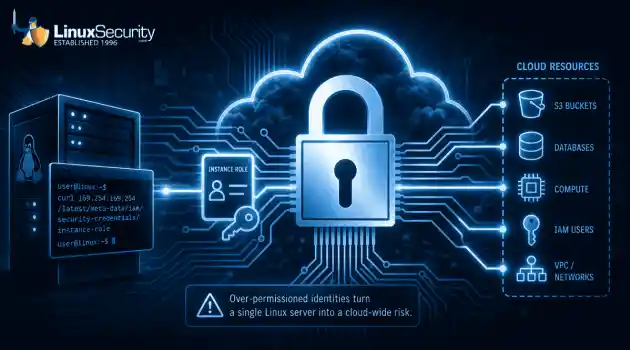
 For years, we secured our Linux infrastructure by building walls: VPCs, security groups, and hardened SSH configurations. We treated the cloud like a virtual data center, assuming that if we kept the "bad guys" out of the network, our workloads were safe. . That model is no longer sufficient. Today, one of the most common paths from an initial compromise to a major cloud breach is the identity assigned to your Linux workload. When an attacker gains code execution on a Linux instance—through a...
 Jul 17, 2026
 security practices patch management
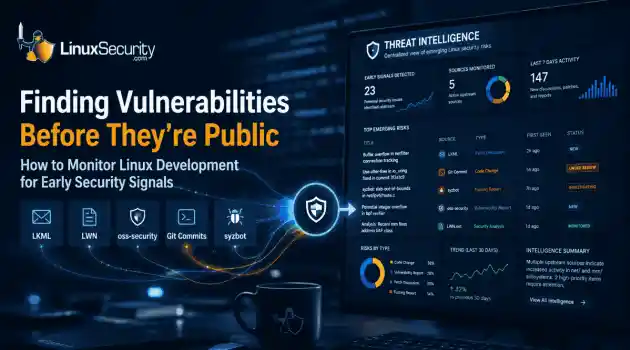
 Most of us don't hear about a kernel vulnerability until a CVE lands in our inbox or the vulnerability scanner starts complaining. By then, the patch isn't new anymore. Kernel developers may have been passing it around for review, arguing over the implementation, or revising it for days before anyone outside that community noticed it. None of those discussions are secret. They're sitting in mailing list archives, Git commits, and patch reviews where they've been the whole time. The strange...
Jul 14, 2026
 Linux security cyber attacks
 Every Linux server in your fleet produces thousands of events every minute. From journald logs and auditd records to kernel-level eBPF hooks, your systems are constantly talking. Most of that noise is just the mundane churn of system services, CI/CD runners, or routine administrative automation. But among that noise, an attacker might be establishing a foothold, moving laterally, or setting up persistence. The challenge for any security team is: how do you separate the routine from the...
Jul 13, 2026
 open-source infrastructure risk
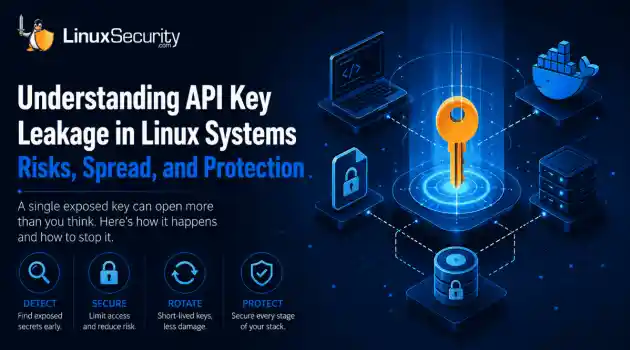
 Security scanners flag exposed API keys in public repositories every day. The initial response is usually predictable: delete the commit, revoke the credential, and move on. That’s a mistake. . In a real Linux environment, an API key never stays in one place. By the time it hits a public repo, it’s already everywhere. It’s in the CI/CD pipeline. It’s in your container registry. It’s in the build logs. It’s in the backups. Git makes this worse because the history never dies. Deleting a file in...
Jul 11, 2026
 open-source rootkit
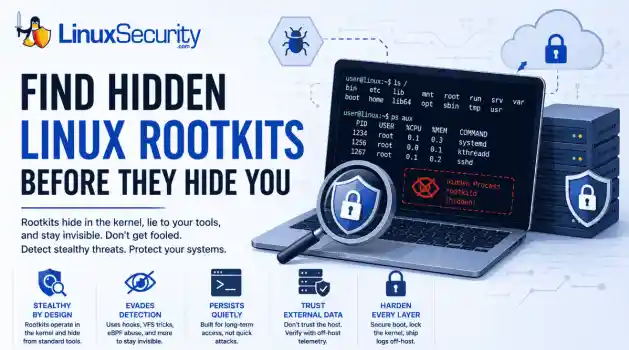
 Most of us think of Linux rootkits as ancient history—the stuff of 90s hacking forums and clunky malware that would crash your system if you looked at it the wrong way. But if you think they’ve gone away, you’re mistaken. They’ve just gotten smarter. . Modern attackers aren't using the noisy tools of the past. Today’s threats are surgical. Many of today’s most advanced Linux rootkits operate at the kernel level or abuse legitimate system features to blend in with normal traffic. They’re...
Jul 09, 2026
 Refine features
X Clear Filters
Get the latest News and Insights
Get the latest Linux and open source security news straight to your inbox.
Community Poll
Should Linux servers automatically install security updates?
Loading...

Explore Latest Linux Security features
We found -4 articles for you...
102
 security advisorydependency managementlinux
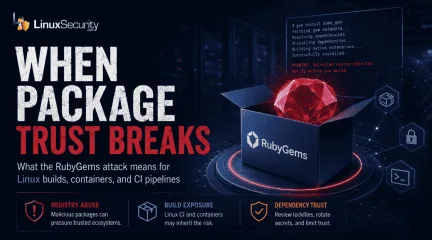
RubyGems Attack Highlights Open Source Supply Chain Risks for Linux Teams
RubyGems temporarily suspended new account registrations this week after threat actors pushed hundreds of malicious packages into the Ruby package ecosystem. At first glance, that may sound like a Ruby-specific problem. It is not. . The official hosting service for Ruby packages paused new signups on May 12 after what maintainers described as an ongoing attack against the platform. Hundreds of malicious packages were involved, though the attack appeared to target RubyGems infrastructure more than end users directly. Existing packages were not reported as compromised, and the malicious packages were removed. Still, the incident exposed how quickly automated package abuse can put pressure on a major open-source registry. For Linux administrators, DevOps teams, and security engineers, this incident is another reminder that modern Linux security does not stop at kernel patches, firewall rules, or CVE remediation. It also depends on the trustworthiness of the open-source repositories that feed Linux servers, containers, build systems, and developer workstations every day. What Happened to RubyGems RubyGems is the package hosting service behind much of the Ruby software ecosystem. Developers use it to install libraries, manage dependencies, and build applications, including many applications deployed on Linux systems. According to public reporting, RubyGems temporarily disabled new account registration after a wave of malicious package uploads. The Hacker News reported that the attack involved hundreds of packages, with some carrying exploit code, while RubyGems’ own status page described the activity as an ongoing DDoS attack and said registrations were disabled while maintainers worked on protections for legitimate users and abuse prevention. That distinction matters. This was not reported as a mass compromise of existing legitimate gems. It was a registry abuse event in which attackers used large-scale package publication to disrupt or exploit trust in the ecosystem. That makes itless dramatic than a confirmed compromise of a widely used dependency, but not less important. Package registries sit upstream from thousands of Linux systems. When attackers test, flood, poison, or abuse those registries, the impact can move quickly into development and production environments. Why RubyGems Abuse Becomes a Linux Security Problem Linux systems run a large share of the infrastructure that consumes open source packages. RubyGems may be language-specific, but the systems installing those gems are often Linux-based. A Ruby package can end up on: Linux servers running Rails applications or internal automation tools CI/CD runners that install dependencies during builds Docker images built from Linux base images Kubernetes workloads deployed into production clusters Developer workstations using Linux or WSL-based environments Internal scripts used by operations, security, or engineering teams That makes package repository abuse a Linux security issue, even when the affected ecosystem is not Linux-specific. A malicious package does not need kernel-level access to create damage. It may only need to run during installation, inspect environment variables, read local files, or reach out to an attacker-controlled server. In many build environments, that is enough to expose API keys, Git tokens, cloud credentials, SSH material, registry tokens, or deployment secrets. This is where the RubyGems incident becomes relevant to LinuxSecurity readers. The risk is not simply “someone uploaded bad Ruby packages.” The risk is that Linux-based infrastructure often trusts package managers by default. How Bad Packages Move Through Linux Build Pipelines Most software teams do not manually inspect every dependency before it reaches a Linux system. Dependencies are installed automatically because automation is the point. That automation creates several paths for malicious packages to spread. A developer may install a gem locally while testing a tool. A CI pipelinemay run bundle install during every build. A Dockerfile may pull dependencies into an image before pushing it to a registry. A deployment process may rebuild containers from scratch using upstream package sources. A scheduled job may install or update packages as part of maintenance. Each step is convenient. Each step can also become a trust boundary. Attackers understand this. Open source package attacks often rely on typosquatting, dependency confusion, fake utility packages, copied metadata, misleading names, or packages that appear harmless until install-time scripts execute. Once a package runs in a Linux build or runtime environment, the attacker may not need persistence. A one-time credential grab can be enough. This is why supply chain attacks keep showing up across package ecosystems. RubyGems has seen malicious packages before, including prior credential-theft campaigns involving fake automation tools. Similar tactics have affected PyPI, npm, and other open source repositories. The pattern is clear. Attackers are not only looking for vulnerable software. They are looking for trusted software paths. Where the Real Linux Risk Lives: CI/CD, Containers, and Secrets The most serious Linux exposure is often not the application server itself. It is the build pipeline behind it. CI/CD systems are attractive because they tend to have access to everything attackers want: source code, deployment credentials, package registry tokens, cloud APIs, signing keys, and internal network access. They also run dependency installation commands constantly. In a Linux-based pipeline, a malicious package may be able to: Read environment variables containing credentials Access files mounted into the build environment Steal GitHub, GitLab, npm, RubyGems, Docker, or cloud tokens Modify build artifacts before deployment Add backdoors to generated packages or container images Reach out to the external infrastructure during installation Enumerate internal services reachable fromthe runner Containers do not eliminate this risk. They can reduce blast radius when configured properly, but many container builds still run with broad network access, inherited secrets, cached credentials, or privileged build settings. If a malicious package executes during docker build, it may only need seconds to collect useful data. That is why Linux teams should treat package installation as code execution, not as a passive download. What Linux Admins and DevSecOps Teams Should Check The RubyGems incident does not mean every Ruby application is compromised. Based on public reporting, RubyGems removed the malicious packages and paused signups to address abuse. Still, Linux teams using Ruby in production or CI should take the opportunity to review their exposure. Start with the dependency activity . Review recent gem install and bundle install logs, especially from May 12 onward. Look for unfamiliar package names, unexpected version changes, new dependencies, or failed installs tied to packages that are no longer available. Review Gemfile and Gemfile.lock changes. A lockfile can help prevent unexpected dependency movement, but only if teams actually review changes before merging them. Watch for broad version ranges, newly added packages, or dependencies introduced through pull requests from external contributors. Check CI/CD secrets. If a build environment installed suspicious packages, rotate exposed tokens. That includes Git credentials, deployment keys, cloud credentials, container registry tokens, and package publishing tokens. Treat build logs carefully, too. Some secrets may appear in logs if malicious or broken scripts print environment data. Scan container images . If Ruby dependencies are baked into Linux containers, inspect recently built images for unexpected gems or build artifacts. Rebuild trusted images from known-good lockfiles when necessary. Limit network access during builds. Many build jobs do not need unrestricted outbound access.Restricting egress can make package-based credential theft harder, especially when paired with artifact allowlisting and internal mirrors. Use private mirrors or allowlisted sources for production builds. Not every environment should pull directly from the public internet. For production, pinned dependencies and controlled registries reduce exposure to sudden upstream abuse. Require MFA and scoped tokens for publishing. Package maintainer accounts remain a high-value target. Tokens should be scoped, rotated, and separated by environment. A CI token should not have the same power as a maintainer’s full account. Open Source Trust Needs More Than Patching Linux teams are good at patching known vulnerabilities. The harder problem is deciding what code should be trusted before it becomes part of a system. Package managers changed how software is built. They made development faster, but they also created a model where one command can pull in large dependency trees from public repositories. That model works only when teams understand the risk and add controls around it. The RubyGems registration pause shows how platform-level abuse can happen quickly. Even if existing packages were not compromised, attackers were still able to create enough malicious activity to force a defensive response from a major package registry. For Linux security teams, the lesson is straightforward: dependency trust is infrastructure trust. If a Linux server, container, or CI runner installs packages automatically, then the package registry becomes part of the security perimeter. So do the package names, maintainer accounts, lockfiles, build scripts, and tokens that support the workflow. Final Thoughts The RubyGems attack was not a Linux vulnerability in the traditional sense. There was no kernel flaw, no Linux privilege escalation bug, and no distribution-specific advisory driving the story. It still matters to Linux security. Linux environments are where many open source packages are built, tested,deployed, and run. When attackers abuse package repositories, the risk can move through CI/CD pipelines , container images, developer systems, and production workloads before defenders notice. That is why Linux security teams should treat this incident as more than Ruby ecosystem news. It is another warning that open source supply chain security now sits at the center of Linux operations. Patching remains important, but it is no longer enough. Teams also need to know where their code comes from, how dependencies enter their systems, and what those dependencies can access once they run. Stay Ahead of Linux Security & Infrastructure Trends Interested in more in-depth coverage of Linux security, CI/CD security, software supply chain defense, DevSecOps, dependency risk, and enterprise hardening strategies? Subscribe to the LinuxSecurity newsletter for weekly threat analysis, infrastructure security insights, and practical guidance covering the Linux and open-source ecosystem. Related Reading The Next Wave of Supply Chain Attacks: NPM, PyPI, and Docker Hub Incidents Set the Stage for 2026 NPM Attack Exposes Supply Chain Risks in Open Source Software Addressing Risks in Open Source Supply Chain Security for Linux New Supply Chain Attack: Protect Linux Systems from Typosquatting Threats Managing Your Software Supply Chain Security With Backstage . The official hosting service for Ruby packages paused new signups on May 12 after what maintainers d. rubygems, temporarily, suspended, account, registrations, threat, actors, pushed, hundre. . MaK Ulac
 May 14, 2026
•
May 14, 2026
•

Get the latest News and Insights
Get the latest Linux and open source security news straight to your inbox.
Community Poll
Should Linux servers automatically install security updates?
Search Topics
Powered By

Linux Security - Your source for Top Linux News, Advisories, HOWTOs and Feature Releases
QUICK LINKS
subscribe to newsletters!
Like staying secure? So do we.
Sign up for updates, tips, and alerts!