Audit Linux privileges now to limit compromise, escalation, and system-wide damage. Review Linux Privileges×


Stay Ahead With Linux Security Features
 security advisory vulnerability
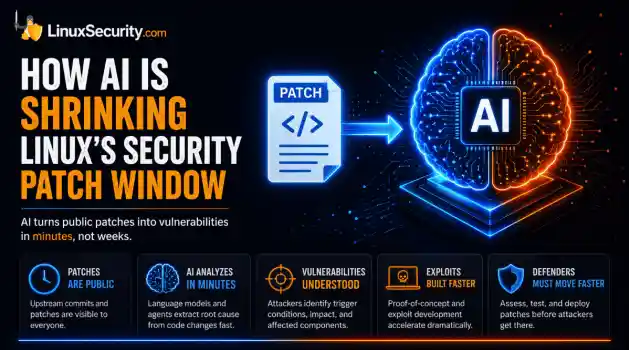
 For decades, Linux defenders relied on a comfortable assumption: a public security patch did not imply an imminent vulnerability. While open-source openness made vulnerability fixes public to everyone on kernel.org or the Linux Kernel Mailing List (LKML), converting a raw commit into a weaponized exploit took a significant amount of manual effort. This delay, estimated in weeks or months, gave businesses enough time to assess exposure, organize testing windows, and push changes across...
 Jul 27, 2026
 security advisory path traversal
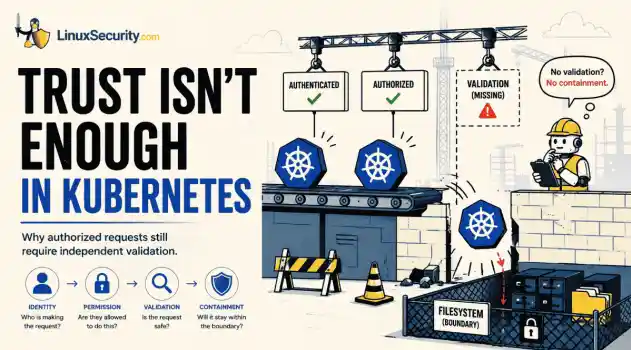
 Two newly fixed storage bugs in Kubernetes showed more than just a problem with path traversal. They found a common security flaw in the cloud: powerful parts often think that requests accepted by a higher system are safe to run. This is a simple lesson for the platform and security teams: RBAC can accept a request without showing that its parameters will stay within a certain filesystem boundary. This is clear from a new study from SentinelLabs into flaws in the Kubernetes CSI drivers for NFS...
Jul 24, 2026
 security advisory update
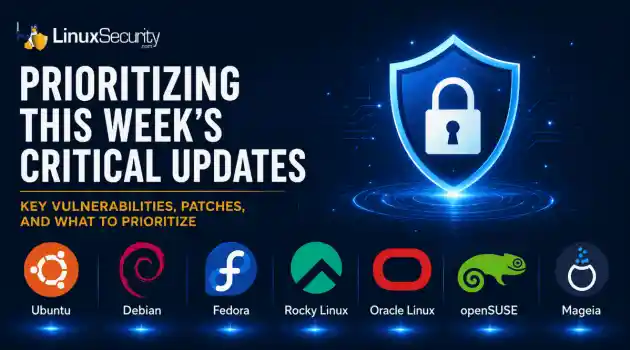
 A large volume of Linux security updates and advisories this week across major distributions once again, but it wasn't just the volume that was the story. Where maintainers and security teams focused their attention was evident in the concentration of fixes targeting Linux kernel updates, identity services, DNS infrastructure, and internet-facing software. . Instead of looking at each advisory in isolation, administrators gain more value from the general trends they reveal about Linux security...
Jul 23, 2026
 identity management security tactics
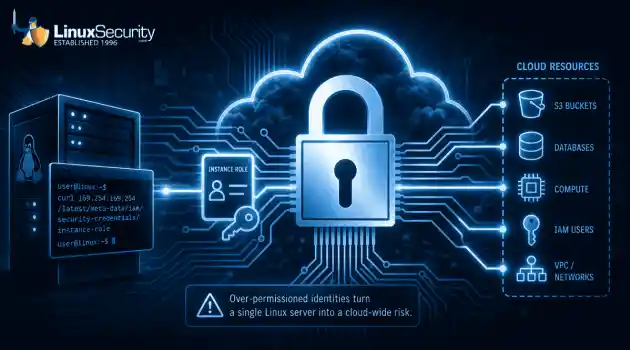
 For years, we secured our Linux infrastructure by building walls: VPCs, security groups, and hardened SSH configurations. We treated the cloud like a virtual data center, assuming that if we kept the "bad guys" out of the network, our workloads were safe. . That model is no longer sufficient. Today, one of the most common paths from an initial compromise to a major cloud breach is the identity assigned to your Linux workload. When an attacker gains code execution on a Linux instance—through a...
Jul 17, 2026
 security practices patch management
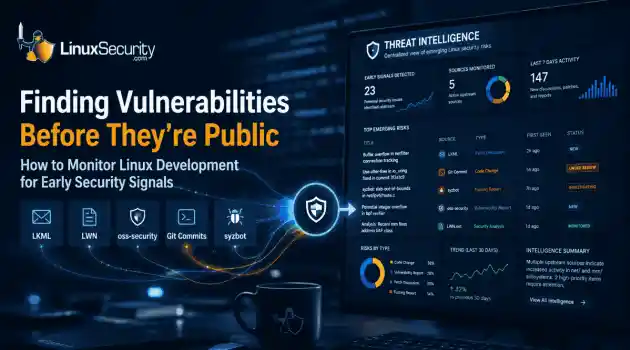
 Most of us don't hear about a kernel vulnerability until a CVE lands in our inbox or the vulnerability scanner starts complaining. By then, the patch isn't new anymore. Kernel developers may have been passing it around for review, arguing over the implementation, or revising it for days before anyone outside that community noticed it. None of those discussions are secret. They're sitting in mailing list archives, Git commits, and patch reviews where they've been the whole time. The strange...
Jul 14, 2026
 Refine features
X Clear Filters
Get the latest News and Insights
Get the latest Linux and open source security news straight to your inbox.
Community Poll
Are host-based firewalls still worth using?
Loading...
Explore Latest Linux Security features
We found -3 articles for you...
102
 network securityremote accessinternet access
Private Internet Access VPN for Linux: Secure Your Privacy and Browsing
As network security threats to digital privacy, safety, and anonymity become a growing concern, organizations and individuals alike are increasingly turning to Virtual Private Networks (VPNs) to bolster security without sacrificing convenience. One of the most economical cybersecurity technologies available today, VPNs are simple to set up and use, and nearly all businesses have a corporate VPN as part of their IT infrastructure. . Implementing a VPN can be an excellent way to protect your privacy, overcome government restrictions, and improve security posture on insecure networks. However, not all VPNs are equally efficient and effective. As security and privacy enthusiasts, we at LinuxSecurity love the Private Internet Access (PIA) VPN. PIA meets all the criteria for being the best available VPN for Linux, as it is fast, flexible, transparent, and secure. This article will explore the importance of using a VPN on Linux to protect your digital privacy, anonymity, and data and network security. It will also explain why PIA is arguably the best VPN available for Linux users. What Is A VPN & How Does It Work? A VPN is a private network that connects remote sites or users through a public network (usually the Internet). It uses "virtual" connections routed through the Internet from the private network or a third-party VPN service to the remote site or person. VPNs help strengthen data and network security and mask online behavior from snooping third parties by creating an encrypted connection (often called a "tunnel") between your device and a remote server operated by the VPN service. This ensures that anyone who intercepts the encrypted data can't read it. What Are VPNs Used For & What Are the Benefits of Using a VPN on Linux? VPNs can be used for different purposes and offer numerous benefits . Here are the reasons why using a VPN on Linux can be beneficial to users: Privacy & Tracking Prevention When browsing the web, you are leaving behind more trails than you realize .Strangers, your apps and services, your ISP, and your government can all access your internet data, which can be collected and sold to advertisers (even if you’re using the “private” browsing function), causing compromise in data or cloud security breaches. Using a VPN will disguise your IP , encrypt your connection to make it anonymous, and add an extra layer of protection for your device by blocking harmful ads, scripts, malware, and trackers before they even have a chance to load. Security & Access Control Public Wi-Fi is convenient but comes at the expense of data network security and anonymity. When using a VPN, you have a new IP address every time you go online, which can be enough to deter DDoS attacks in network security and other network security threats. A VPN also allows remote workers to securely log into the shared company network while providing data protection for projects and files. In addition, VPNs also offer private internet access control options that can be used to make confidential information only accessible to certain employees and groups. Users will need to log in and verify that they have authorization before access is granted. Unblocking Websites & Bypassing Restrictions VPNs can be very helpful in unblocking websites, especially in more restrictive countries. For instance, those living in Europe can't just go to the Hulu webpage and pay for a subscription. The website is off-limits if you're not from the US or Canada. Using a VPN helps users and organizations overcome such restrictions. Torrenting As a Linux user, you rely heavily on P2P networks to exchange OS ISO files. However, these networks tend to be insecure, and you don’t always know what you're downloading. A VPN has privacy-enhancing technology to protect you when downloading and to assist you in avoiding copyright infringement notices. Avoiding Bandwidth Throttling & Improving Internet Speed Some ISPs impose restrictions on a particular type of traffic. If web pages load almost instantlybut downloading files takes forever, chances are the culprit is your ISP. A VPN disguises your traffic type, improving Internet speed by making it impossible for ISPs to restrict based on traffic type. How Open-Source VPN Clients Provide the Highest Level of Security & Transparency The benefit of choosing an open-source VPN is that the code is publicly available, and, as with any type of software , it can be inspected and reviewed by other developers and experts worldwide. Therefore, any data and network security flaws or cybersecurity vulnerabilities are revealed and fixed quickly. Unlike with closed-source VPNs, developers cannot hide potentially risky network security issues. Closed-source software and tools don’t offer the same level of transparency, forcing users to blindly trust that there are no hidden security loopholes that have gone unnoticed. How Private Internet Access (PIA) Meets All Criteria for the Best VPN Available for Linux Private Internet Access (PIA) is the most transparent VPN on the market. With more than 30 million downloads, over ten years of experience, and 100% open-source software, PIA meets all the criteria for the best Linux VPN available, and here is why. Our Favorite Features Here’s what we love most about PIA as security and privacy enthusiasts: Great for the Linux desktop Extremely simple to setup and configure Virtually no difference in performance between VPN enabled and disabled, regardless of the VPN protocol used Open-source design provides additional security assurances “Allow LAN Traffic” option makes it super easy to connect to other local network shares, printers, and other local resources while also encrypting remote traffic Very easy to switch from one VPN server to another without interrupting the streaming DNS leak protection encrypts DNS requests with DNS over HTTPS or DNS over TLS, which prevents the requests from being seen by on-path eavesdroppers, so no one can surmise where you might be going on the Internet Torrenting supported Privacy Protection Online privacy is no longer a given on the Internet and has become a growing concern for users and businesses alike. PIA prioritizes online freedom and digital privacy-enhancing technology. Their VPN reroutes the user’s Internet traffic through an encrypted tunnel, giving the user a new IP address and hiding browsing data from Internet Service Providers, network administrators, and government censors. By using PIA VPN , individuals and organizations can better protect the privacy of their personal identity, geographic location, and Internet traffic. No Usage Logs (Independently Verified No Logs Policy) VPNs offer an encrypted channel for your data, but that doesn’t mean the VPN itself can’t log your personal information. Many leading VPNs like PIA have a no-logging policy, meaning they can’t keep your personal information on record and may even have independent audit certifications for no-logging. PIA never records or stores any usage data, which has been proven multiple times in court. The company also invited an independent audit by Deloitte to verify that their server network and management systems are in full compliance with their No Logs Policy. PIA’s virus and malware protection removes malware without user tracking or logging, making PIA the only antivirus that gives you full control over your data network security and digital privacy. It’s one of the many reasons they're the most transparent VPN on the market, which we value greatly. Smooth Streaming To keep your work, education, and entertainment running smoothly, streaming performance is a critical factor that must be taken into account when evaluating a VPN. Most streaming platforms have some sort of VPN block in place, though that VPN never unblocks everything in the way it promises. PIA apps work with all major streaming services, so you can access more content than ever before from anywhere in the world. In addition, PIA is one of the few VPNs that support P2P file sharingon all servers. When using PIA, you can enjoy an impressive speed. PIA has a global network of VPN servers that’s been optimized for 10 Gbps connection speeds and uses some of the world’s fastest VPN protocols, meaning no more buffering, stuttering, lagging, or freezing. Regardless of how much content you stream, download, or upload, every PIA user receives unlimited bandwidth to ensure that their data and speeds are never limited. PIA’s VPN comes with OpenVPN and WireGuard VPN , the fastest open-source VPN protocols available that are respected for their security and transparency. State-of-the-Art Tech Standard web encryption is great at protecting your passwords, payment details, and other personal information on most websites and apps you visit. However, it falls short of protecting this sensitive information from many third parties (like ISPs) who often collect, store, and sell data regarding your Internet usage. To fully protect this confidential information, you’ll need a trustworthy VPN like PIA. PIA only uses the best available encryption standards (128-bit and 256-bit AES) and VPN protocols (OpenVPN and WireGuard). Their entire infrastructure is top-notch, so you can be confident you’re always getting the best VPN performance. Fully Open Source Choosing an open-source VPN like PIA offers a notable advantage when it comes to data and network security and transparency. Being completely transparent is one of PIA’s guiding principles, so all PIA apps are 100% open-source. As a result, users can always take a look under the hood and see how everything works. Convenient & Completely Customizable Certain apps or websites aren’t VPN-friendly, but luckily PIA’s advanced split-tunneling settings allow you to choose which apps or IP addresses bypass the VPN tunnel, making your VPN experience automated and smooth. Giving users control is a core value of PIA’s, so they’ve made their VPN highly customizable. PIA apps give you complete control over your connection, network, andconfiguration settings as well as provide you with split tunneling. To start protecting your digital life, all you have to do is choose a plan , download Private Internet Access, and tap the “Connect” button. Then you're good to go! Token-Based Dedicated IPs & IP Addresses Available in All 50 States With Private Internet Access, you can get a unique, personal IP address without sacrificing privacy or security. Dedicated IPs can be used to work remotely, see fewer CAPTCHAs, and protect your IoT devices. PIA now has servers in all 50 states in the US . Need to look like you are surfing the web from Oklahoma? They have an IP for that. Do you need to visit a website that can only be accessed within Alaska’s borders? They have an IP address for that, too! With IP addresses available in all 50 states, you can: Avoid sporting event blackouts if your state’s local network opts out of the rights to televise the game. Access local websites that are blocked outside of state borders, including local news stations and online banking details. Watch television premieres before they show up in your time zone (and avoid spoilers!). Our Thoughts on PIA VPN for Linux As digital risks continue to grow and remote work becomes increasingly common, using a VPN has never been more crucial in protecting your security, privacy, and anonymity online. While a VPN is not a silver bullet when it comes to such safety measures, many organizations and users have opted to utilize one to mitigate as many cybersecurity vulnerabilities as possible. Here at LinuxSecurity, we strongly encourage you to make an investment in the online security of your organization, its clients, and yourself. If you are in search of a user-friendly, flexible, efficient, and effective VPN to use for Linux, we recommend that you look into PIA, as it is a VPN that has thoroughly impressed us with its ability to meet all criteria for the best Linux VPN. . Utilizing a Virtual Private Network (VPN) is essential for safeguarding yourprivacy, enhancing security, and promoting safe browsing on Linux systems.. Linux VPN,Pawn Network Security,Digital Privacy Control,Anonymity Protection,Secure Internet Browsing. . Brittany Day
 Mar 06, 2023
•
Mar 06, 2023
•
102
 network securitydata protectionencryption
The Importance of Strong Encryption in Digital Privacy and Security
If you’ve been keeping up with recent security news, you are most likely aware of the heated worldwide debate about encryption that is currently underway. Strong encryption is imperative to securing sensitive data and protecting individuals’ privacy online, yet governments around the world refuse to recognize this, and are continually aiming to break encryption in an effort to increase the power of their law enforcement agencies. . Governments have been trying for years to require that companies build backdoors, or deliberate weaknesses in encryption intended to provide easy access to encrypted data, into encrypted software and technology, arguing that unbroken encryption makes criminal investigations too difficult. The FBI has been using the term “going dark” since the late 90’s to describe the “threat” that strong encryption poses to omnipresent government surveillance. This fear of strong, unbroken encryption is not only unfounded - it is dangerous. Encryption with built-in backdoors which provide special access for select groups not only has the potential to be abused by law enforcement and government agencies by allowing them to eavesdrop on potentially any digital conversation, it could also be easily exploited by threat actors and criminals. US Attorney General William Barr and US senators are currently pushing for legislation that would force technology companies to build backdoors into their products, but technology companies are fighting back full force. Apple and Facebook have spoken out against the introduction of encryption backdoors, warning that it would introduce massive security and privacy threats and would serve as an incentive for users to choose devices from overseas. Apple’s user privacy manager Erik Neuenschwander states, “We’ve been unable to identify any way to create a backdoor that would work only for the good guys.” Facebook has taken a more defiant stance on the issue, adamantly saying that it would not provide access to encrypted messagesin Facebook and WhatsApp. Senator Lindsey Graham has responded to this resistance authoritatively, advising the technology giants to “get on with it”, and stating that the Senate will ultimately “impose its will” on privacy advocates and technologists. However, Graham’s statement appears unrealistic, and several lawmakers have indicated that Congress won’t make much progress on this front in 2020. This article will examine the pivotal role that strong encryption plays in digital privacy and security, and hopefully dispel some of the common and detrimental myths that exist surrounding encryption. What is Encryption and Why Is It So Important? Encryption is the process of encoding information in a manner in which only authorized parties can access it and unauthorized parties cannot. Encryption does not prevent interference, but rather denies intelligible content to anyone who does not have access to a specific encryption key. The right encryption is highly effective in preventing data theft, and has a long history of being used by governments and militaries to facilitate secret communication. Encryption is now commonly used to protect sensitive or confidential information for all types of uses and users. It is essential in protecting data in transit in cases such as email communications, information transferred via networks and mobile phone conversations. The Advanced Encryption Standard (AES) is the standard algorithm that is used in virtually all cryptography today. AES was established by the United States National Institute of Standards and Technology (NIST) and is the only publicly accessible cipher approved by the National Security Agency (NSA) for government use. Encryption: Vital to Effective Email Security Encryption is an essential part of any email strategy or solution. It protects sensitive information shared via email such as financials, customer records and intellectual property, while preventing data loss. All effectiveemail security gateway solutions utilize strong encryption as a means of providing complete, end-to-end email email protection. When it comes to encrypting email, there are various protocols that email security providers often incorporate into their solutions. They include: Transport Layer Security (TLS): TLS is a cryptographic protocol designed to secure communications over a computer network. The protocol aims to provide privacy and data integrity by encrypting email traffic from server to server. Domain-based Message Authentication, Reporting & Conformance (DMARC): DMARC is an email authentication protocol that gives email domain owners the ability to protect their domain from unauthorized users. Once a DMARC Domain Name System (DNS) is published, receiving email servers can authenticate incoming emails based on the instructions published by the domain owner within their DNS entry. DMARC helps protect a domain from threats such as phishing and business email compromise (BEC) . Sender Policy Framework (SPF): SPF is a method of email authentication which detects the forging of sender addresses during the delivery of an email message. This protocol allows a receiving mail server to confirm that mail claiming to come from a specific domain is submitted by an IP address authorized by the administrators of that domain. Only in combination with DMARC is SPF capable of identifying email spoofing, or the creation of email messages with a forged sender address which is often used in phishing and email spam . DomainKeys Identified Mail (DKIM): DKIM is an email authentication method designed to detect email spoofing. By attaching a digital signature linked to a domain name to each outgoing email message, it allows either technology or end users to confirm that an email claimed to have come from a certain domain was indeed authorized by the owner of that domain. When choosing an email security gateway solution, look for one that utilizes most, orpreferably all, of these encryption protocols. As with any aspect of security, defense in depth is key to effective protection, and encryption is no exception. Multiple methods of email authentication working in concert will be highly beneficial in terms of protecting your privacy and the integrity of your data. Guardian Digital EnGarde Cloud Email Security is an ideal solution for organizations looking to secure their email accounts with multiple layers of encryption and email authentication protocols. EnGarde provides comprehensive end-to-end business email protection using TLS, DMARC, SPF and DKIM to protect sensitive data and authenticate every email that is delivered, mitigating the risks associated with malicious emails reaching the inbox. Encryption and Network Security In addition to the vital role that it plays in email security, encryption is also a critical aspect of network security. Network encryption, or the process of encrypting messages transmitted over a computer network, is essential in protecting the privacy and integrity of data in transit between networks. It ensures that data is unreadable when it is transferred between network nodes, preventing eavesdropping of network traffic by unauthorized users. The SSL standard is the default form of network data protection for Internet communications; however, many companies also choose to secure their internal networks, virtual private networks (VPNs) and corporate backbone networks with network level encryption to help protect against cyber attacks and data breaches. On IP-based networks, Internet Protocol Security (IPSec) is an open standard which provides encryption at the network level, acting as a framework that can authenticate connections and confirm the integrity of data. IPSec can be used to securely transfer data from network-to-network, host-to-host or network-to-host. With IPSec, individual messages may also be encrypted at the application level with tools such as GNU Privacy Guard and OpenSSH . Ransomware: The Dark Side of Encryption While encryption has had a largely positive impact on cybersecurity, like any powerful tool, threat actors have developed ways to incorporate it into their exploits. The primary example of this “dark side” of encryption is ransomware , a type of malware designed to encrypt a victim’s files until they have paid the sum of money that the attack demands. While ransomware decryption tools exist for many common ransomware variants, these tools are typically not available for newer or less common strains of ransomware. Ransomware attacks are on the rise and can have severe consequences for organizations. Over the past year, ransomware attacks from phishing emails have increased by an alarming 109 percent , putting 60% of small companies victimized out of business with six months of getting hit with an attack . Implementing an advanced, comprehensive business email security gateway solution that identifies and combats sophisticated threats like ransomware in real time is the most effective way for organizations to mitigate their risk. The Bottom Line Encryption is an essential component of digital security that should be embraced, not feared. In any scenario, unencrypted data is subject to prying eyes. Strong, unbroken encryption is vital in protecting privacy and securing data both in transit and in storage, and backdoors would leave sensitive data vulnerable to tampering and theft. Encryption prevents governments from spying on companies and citizens, a task that is more critical than ever after the implementation of the PRISM surveillance program , in which the National Security Agency (NSA) indiscriminantly monitors communications en masse, supposedly in an effort to combat terrorism. The argument for incorporating backdoors into encrypted communications is unfounded and fundamentally flawed, and is ultimately a disguise for government surveillance and the abuse of power. What are your thoughts on the currentdebate surrounding encryption? Leave a comment below and let us know - we are passionate about this topic and would love to have a discussion! . Encryption is a crucial tool for digital privacy, protecting personal data from cyber threats while sparking debates on national security and law enforcement practices. Digital Encryption, Privacy Protection, Email Security Solutions, Ransomware Prevention, Data Integrity Tools. . Brittany Day
Jan 07, 2020
•


Get the latest News and Insights
Get the latest Linux and open source security news straight to your inbox.
Community Poll
Are host-based firewalls still worth using?
Search Topics
Powered By

Linux Security - Your source for Top Linux News, Advisories, HOWTOs and Feature Releases
QUICK LINKS
subscribe to newsletters!
Like staying secure? So do we.
Sign up for updates, tips, and alerts!