Overly broad permissions can turn one compromised account into a much larger security problem. Learn how to reduce unnecessary access, review privileges, and apply least privilege across modern Linux systems. Review Linux Privileges×


Stay Ahead With Linux Security Features
 identity management security tactics
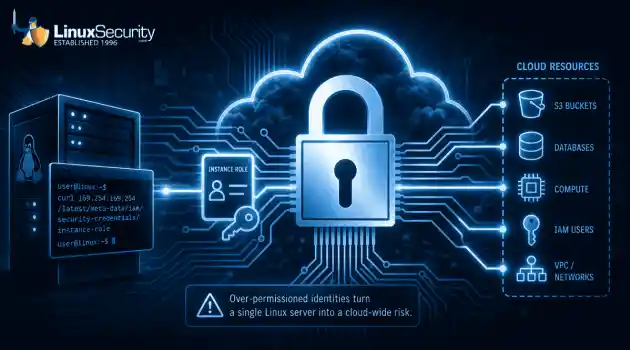
 For years, we secured our Linux infrastructure by building walls: VPCs, security groups, and hardened SSH configurations. We treated the cloud like a virtual data center, assuming that if we kept the "bad guys" out of the network, our workloads were safe. . That model is no longer sufficient. Today, one of the most common paths from an initial compromise to a major cloud breach is the identity assigned to your Linux workload. When an attacker gains code execution on a Linux instance—through a...
 Jul 17, 2026
 security practices patch management
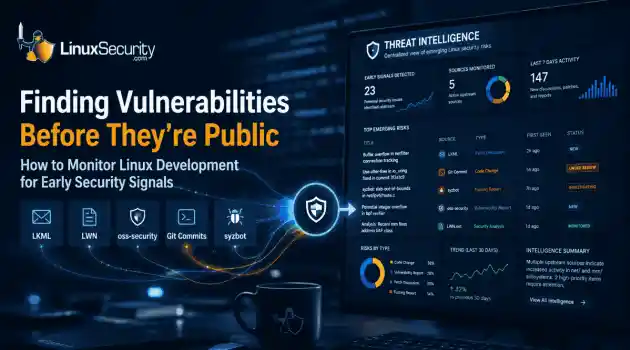
 Most of us don't hear about a kernel vulnerability until a CVE lands in our inbox or the vulnerability scanner starts complaining. By then, the patch isn't new anymore. Kernel developers may have been passing it around for review, arguing over the implementation, or revising it for days before anyone outside that community noticed it. None of those discussions are secret. They're sitting in mailing list archives, Git commits, and patch reviews where they've been the whole time. The strange...
Jul 14, 2026
 Linux security cyber attacks
 Every Linux server in your fleet produces thousands of events every minute. From journald logs and auditd records to kernel-level eBPF hooks, your systems are constantly talking. Most of that noise is just the mundane churn of system services, CI/CD runners, or routine administrative automation. But among that noise, an attacker might be establishing a foothold, moving laterally, or setting up persistence. The challenge for any security team is: how do you separate the routine from the...
Jul 13, 2026
 open-source infrastructure risk
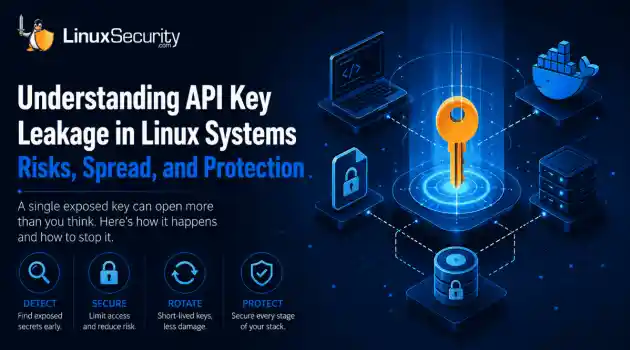
 Security scanners flag exposed API keys in public repositories every day. The initial response is usually predictable: delete the commit, revoke the credential, and move on. That’s a mistake. . In a real Linux environment, an API key never stays in one place. By the time it hits a public repo, it’s already everywhere. It’s in the CI/CD pipeline. It’s in your container registry. It’s in the build logs. It’s in the backups. Git makes this worse because the history never dies. Deleting a file in...
Jul 11, 2026
 open-source rootkit
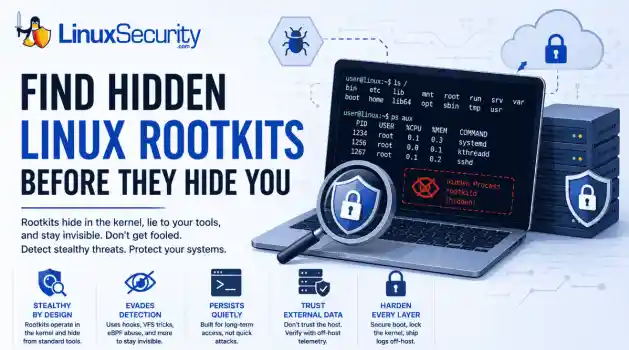
 Most of us think of Linux rootkits as ancient history—the stuff of 90s hacking forums and clunky malware that would crash your system if you looked at it the wrong way. But if you think they’ve gone away, you’re mistaken. They’ve just gotten smarter. . Modern attackers aren't using the noisy tools of the past. Today’s threats are surgical. Many of today’s most advanced Linux rootkits operate at the kernel level or abuse legitimate system features to blend in with normal traffic. They’re...
Jul 09, 2026
 Refine features
X Clear Filters
Get the latest News and Insights
Get the latest Linux and open source security news straight to your inbox.
Community Poll
Should Linux servers automatically install security updates?
Loading...
Explore Latest Linux Security features
We found 14 articles for you...
102
 cyber threatsmalware protectionsoftware development
Enhancing Email Security in SDLC for Managing Cyber Threats
Imagine releasing a software solution into the market only to realize the user cannot use the app properly. They have been reporting numerous bugs, which has lowered your reputation and reliability. . The Software Development Life Cycle (SDLC) is essential to a developer’s life. It guides the entire software development project from conception to development, ensuring efficiency, quality, and reliability. It can help the software development company mitigate risks and control costs, which helps release an excellent and usable product to the market. SDLC has built a symbiotic relationship with Information Security (InfoSec) to thwart cybercrime in its earliest stages. This helps safeguard and protect sensitive data from cyber threats by incorporating security measures at every lifecycle stage. These security protocols attempt to fortify software to mitigate any possible risks. Email is a crucial part of the infosec strategy. It is central to all phishing and malware attacks . This article will explore how Linux admins and organizations can prioritize email security to create a digital fortress against cyberattacks. What Is the Relevance of SDLC to Infosec? The software development lifecycle (SDLC) provides a roadmap for projects that helps development companies with the various phases: planning, design, development, testing, and deployment. Implementing the security protocols at every stage is equally crucial to understanding the objectives, aligning them with the code, and ensuring seamless deployment. This will help your software stay protected from unnecessary threats and issues. What Are the Phases of the SDLC? The phases of the SDLC are as follows: The Planning Phase The planning phase is when the entire business, marketing, sales, operations, and development team meets to define the project's goals and objectives. During this phase, they determine the scope, initial requirements, and feature list. The security team must determine the potential securityissues within the scope or requirements. They must define the security objectives and ensure they align with the business objectives. This will help set the foundation for security before starting the development. The Design Phase During the design phase, the design team (architects, user experience designers, and interface designers) will start determining the best-fit architecture for the software. They will also design the application's UX and UI. In this phase, the team will work on wireframes, interactions, and experiences in detail. The infosec team will work closely with your team to incorporate security features like access control and encryption protocols into the application. They will even help with authentication mechanisms. This will help you create a highly secure final product aligned with your needs. The Development Phase During the development phase, the developers will convert the interactions into code and work on defining them smoothly. The infosec team will work on detailed code reviews and vulnerability assessments. They will also conduct penetration testing that can help identify and remediate security flaws. You can use the infosec strategy to define the development workflow and determine the vulnerabilities early. This will reduce the risk of exploitation within a deployed application. The Testing Phase During the testing phase, the testing team will validate the functionality and usability of the application. They will test each unit and its integration to determine the application's ability. During this phase, the infosec team will validate the security controls and their ability. They will also ensure that the software is compliant with the regulations. In detail, they will conduct all the tests, including the vulnerability and penetration scans. The Deployment Phase The deployment phase is when the entire software is released to particular platforms. It is optimized and made ready for the platform. The infosec team also works on securing thedeployment protocols. This phase will include secure configuration settings and monitoring tools to help identify security incidents. The Maintenance Phase The maintenance phase is when the entire team works on updating the code and upgrading the software to meet the latest requirements. They continuously improve the software to meet the users' needs. The infosec team will incorporate the security patches and vulnerability assessments throughout this phase. They will address potential threats and maintain the security of the application. What Email Security Concerns Do Businesses Face? Email security is one of the main concerns for all organizations. This is the most vulnerable path that can attract cyber threats and criminals. A vulnerable email system is equal to a ticking bomb. The most common email threats include phishing and malware attacks. Phishing is when the attackers deceive the users by allowing them to divulge sensitive information. These attacks occur when the sender uses a known identity to lure you into clicking on the content or link. This impersonation can cost your business data and reputation loss. Malware attacks can help hackers access your system via email attachments or links, compromising the safety of your sensitive data. These attacks can disrupt your operations and lead to significant financial losses. Ransomware is one of the most commonly found malware that can encrypt files. The hacker demands payment for the data that they have stolen from you. This kind of attack can damage your business reputation and cause downtime. Business email compromise (BEC) is another type of attack that occurs at a higher level. The company can suffer significant losses when trusted vendors or executives manipulate employees to transfer funds or confidential data. This is an impersonation attack that has cost several businesses. Email security breaches can cost your business more than financial losses. The data breach can also compromise yourbusiness’s legal outfit, causing reputational damage and a lot of lawsuits. You must ensure immediate incident response and remediation, which also costs the company. You may face issues gaining your customers' trust again, which could also have long-term implications for the business. Email is an important part of business communication. As a result, you must prioritize security measures, including employee training and multi-factor authentication, to mitigate the risks via this medium. You can also adopt the best measures to reduce breaches and protect assets. How Can I Integrate Infosec into the SDLC Phases? Regarding email security, you must integrate infosec in every phase of SDLC. This will ensure email security is aligned with the overall security objectives and software requirements. Planning During this phase, you must conduct a detailed assessment of the security threats to your email. You must make a note of the phishing attacks and malware distribution. Additionally, ensure you have added unauthorized access to your list. Once you have made the list, you can define the security requirements for email communication. Encryption during communication is a standard protocol. Similarly, you can define strategies for the best outcomes, such as access control and email filtering. Design You must incorporate security protocols like Transport Layer Security . This will encrypt the email traffic and protect the business against eavesdropping. You must also design systems to thwart email threats. These systems will include spam filtering , sender authentication , and attachment scanning. Development You must implement secure coding practices to help mitigate email vulnerabilities. These practices include input validation, output encoding, and email attachment security. You must also implement protocols to help avoid email spoofing and phishing. During this phase, you must consider email authentication protocols and sender identity validation. Testing Penetration and vulnerability scanning can help you detect the resilience of your email systems. It helps you understand the security you must establish to protect them from cyberattacks. You can also conduct phishing in simulation to make your employees more aware and gauge their susceptibility to phishing. You can use the testing phase to determine the training you need Deployment You must ensure secure deployment to ensure the best fit for email systems. Make sure to use the proper encryption for email traffic. You must also configure the email servers and clients using the best practices and recommended settings. You can also use cloud email security solutions to inspect email traffic and ensure that only safe, legitimate mail reaches the inbox. This will help you block out suspicious emails and identify malicious content. Maintenance Patching email systems against newly found vulnerabilities is a significant duty of the developer during the maintenance phase. This phase also trains and educates employees on email best practices and response procedures. Tools & Best Practices for Securing Email Through the SDLC Specific tools, frameworks, and standard practices may help establish the necessary infrastructure when securing email through the SDLC. You must adhere to the coding standards and frameworks defined to create robust and secure systems. These standards include coding validation and output encoding. You must also ensure authentication mechanisms that promote security. Additionally, you must think through error-handling processes. You must use the right tools to define code analysis and vulnerability scanning. For the best results, you must also conduct penetration testing. When integrating third-party vendors with email systems, you must thoroughly assess them. The solutions must be validated before being incorporated into your email security systems. You could also evaluate the vendor’s security practices and compliancecertifications before integrating them into your email platform. Conducting detailed employee training and awareness programs can help educate them on best practices for handling email. You can teach them about suspicious attachments and fraudulent emails. These sessions can help you empower the employees and protect them against the threats. As a practice, you must encrypt the sensitive data within the email and use email protocols like Transport Layer Security and End-to-end encryption to protect the email content. You must monitor and audit email activity regularly. This will help you identify anomalies in the early stages. You can also use email logs and access controls to thwart unauthorized access to the email. Future Directions & Emerging Trends in Email Security Threats It is equally important to stay prepared for the future. Several new email security threats are posing new challenges in your SDLC. AI-powered Phishing: Many cybercriminals have begun adopting the latest technologies, such as AI, to create sophisticated emails for phishing . These emails seem legitimate and personalized, making it difficult for users to detect the phishing attack. Deep Fake Impersonation: Hackers have begun using realistic audio and video content to create impersonations. They seem so real that users tend to take action, such as transferring funds or information. This can lead to reputation or data loss. Zero-day Exploits: In this case, the hackers will target already known email vulnerabilities. These could exist in the server, client, or protocols. Traditional security defenses can easily bypass these threats. Supply Chain Attacks: Many attackers involve third-party vendors or suppliers to gain information, which can pose a risk to the organization. Challenges in Integrating Infosec with SDLC Your business must anticipate the future landscape and the challenges while integrating infosec with SDLC. Challenges include: Adopting agilemethodologies while integrating infosec with SDLC is crucial. This can help with iterative development and ensure complete speed with security assessments and testing. It can also help you choose innovative development approaches and automate specific processes. You may face issues when migrating apps or data to a cloud environment. This can also complicate the security aspects. You must have a clear and defined security roadmap with an expert to help overcome the complexities of cloud configuration management and data protection. Our Final Thoughts on Improving Email Security Through the SDLC Your business must integrate Infosec with SDLC to safeguard email communication throughout the development lifecycle. It can help you protect communications and encrypt data to protect against cyber threats. Infosec protocols can effectively boost email security and reduce cyberattack risks. To ensure best security practices are implemented, the software development team should collaborate with the security team to prioritize security during development. Defining best practices and streamlining communication to fortify email security is equally crucial. . Discover key methods to embed email security within the Software Development Life Cycle (SDLC) for robust protection against cyber threats by integrating security from the start. Email Protection, Cybersecurity Practices, Development Lifecycle, Secure Coding Techniques, InfoSec Strategies. . Brittany Day
 May 07, 2024
•
May 07, 2024
•
102
 network threatsemail securityemail protection
Best Practices for Email Security on Linux With Open Source Solutions
Email is one of the most prominent methods of modern business communication. It is a critical dissemination channel for sharing legal documents and other confidential business information in any formal environment. However, email is also the root cause of over 90% of all attacks in network security, such as phishing, URL spoofing, malicious attachments, trojans, and malware. . Hackers design these messages to look harmless, but a successful attack can cause severe, lasting damage , including data loss, reputational harm, and financial damage to your organization. The impact of data and cloud security breaches can be devastating for a company. Therefore, it is essential to take precautions to help your organization thwart email threats and use reputable open-source network security toolkits to secure business email. This article will explore why the collaborative, transparent, open-source development model is superior to engineering flexible and adequate email protection. It will also offer other tips and practices Linux users should implement to ensure their data and network security within their email. What Are Common & Costly Email Threats Organizations Face? Email is a primary form of communication but, as a result, has become a target for cybercriminals seeking to take advantage of cybersecurity vulnerabilities. Organizations face various email threats that can lead to significant financial losses, reputation damage, and cloud security breaches . Companies should understand what they are facing to protect sensitive information and avoid network security threats. Phishing Phishing attacks are among the most popular and damaging network security threats for email. A cybercriminal poses as a legitimate entity, such as a bank, government agency, or well-known brand. They then use this identity to deceive recipients and obtain sensitive information that can allow them to breach data and network security. Phishing emails often contain persuasive messages that urgerecipients to click on malicious links, provide login credentials, or disclose confidential data. It is important to decipher between typical phishing and spear phishing. While phishing targets many users, a spear attack targets a particular person, such as a company CEO. This distinction shows who faces the network security threat the most in a given attack. There can be severe consequences for financial fraud, data loss, and cloud security breaches. The business's personal information, financial data, or login credentials could be compromised, and such knowledge could allow more attacks on network security, such as installing malware or gaining unauthorized access to an organization's network. Ransomware Malicious actors will use software to encrypt a victim’s data until a ransom is paid. A business can face operational disruptions, financial losses, and reputational damage due to these attacks on network security. Ransomware emails are often disguised as legitimate messages. When one opens an attachment or clicks on a link, the ransomware is activated, rapidly encrypting files and rendering them unusable. In some cases, it can also spread throughout the organization's network, infecting multiple systems. Remember: ransomware recovery is often problematic. Therefore, learning to prevent email threats is incredibly valuable so you never have to deal with the consequences. Business Email Compromise (BEC) Business Email Compromise (BEC) attacks specifically targeted organizations and their employees. Cybercriminals gain unauthorized access to an employee's or a high-ranking executive's email address. They then use these compromised accounts to deceive employees into performing fraudulent actions. Business Email Compromise includes manipulations to make people transfer money or disclose sensitive information. These attacks in network security involve a threat actor studying an organization and monitoring email communications so they can send more convincing messagesduring a network security threat. A company needs a multi-layered approach to address these network security issues. This approach combines technological solutions, employee education, and robust security practices. Open-source software provides cost-effective and customizable network security toolkits to detect and mitigate these risks, enhancing overall data and network security. Why Should My Organization Prioritize Email Data and Network Security? Email security is vital for all companies. Here is why: Email is a primary means of communication for sharing sensitive information and conducting important business transactions. This makes email communications an easy access point for cybercriminals to initiate attacks on network security. Phishing, ransomware, and other network security threats are constantly growing in sophistication, making them even more substantial risks to organizations, regardless of the size. Data and network security regulations and industry standards require strict email security measures to ensure sensitive information confidentiality, integrity, and availability. In addition to security concerns, businesses focus on engaging customers more effectively while maintaining high-security standards. Personalized email outreach helps organizations connect more individually, enhancing communication relevance and boosting response rates. However, pairing these efforts with strong security measures is essential to protect sensitive information. Open Source Utilization in Email Security Organizations can enhance email security by implementing open-source software into their system, which is a community-driven approach to software development. Workers can review and improve the solutions observed by developers who keep track of cybersecurity vulnerabilities so they can fix them immediately. Open-source software can be customized and tailored to the needs of the organization. This dedication to data and network security makes open-sourcesoftware more reliable and secure, minimizing the risk of bugs and other exploits in cybersecurity. Email Security Tips & Best Practices for Linux Users Although Linux is more secure than other operating systems, users must still implement email security measures to defend the system and combat any data and network security threats. Here are a few suggestions to consider to protect the integrity of your company: Use End-To-End Encryption (E2EE) Only the intended recipient of an email can decrypt and read the message when using End-to-End Encryption. This protects the email should it be intercepted, as it will be unreadable to malicious hackers without the correct decryption key, protecting your emails from any network security threats. The intended recipient will get the email and use the private key they have to access the content in the message. The sender and the recipient must have compatible encryption software and exchange public encryption keys securely for E2EE to work appropriately and effectively. You can check our practical guide to using E2EE on Linux for more information. Leverage VPN Using Virtual Private Network offers several email security benefits . VPN has privacy-enhancing technology and monitors internet traffic like email communications to ensure that all your information is encrypted and safe. As a result, hackers and unauthorized entities cannot easily access or intercept information. While VPN can enhance email protection and data and network security, it should be used with other safety measures such as End-to-End Encryption, secure email clients, and robust authentication methods. Deploy an Open-Source Email Security Solution Open-source solutions offer transparency and flexibility so you can customize data and network security configurations according to your needs. Collaboration on such products often includes regular updates, security audits, and improvements driven by a dedicated community. An open-source cloud email security solution allows users to inspect the underlying code for security measures. Utilize Anti-Spoofing Technology Spoofing is a network security threat that occurs when an intruder impersonates a legitimate sender to gain unauthorized access to sensitive information. To prevent these exploits in cybersecurity, Linux users can implement anti-spoofing software or technologies such as Sender Policy Framework (SPF), DomainKeys Identified Mail (DKIM), and Domain-based Message Authentication, Reporting, and Conformance (DMARC). SPF verifies the sender's IP address against a list of authorized ones, ensuring that only legitimate senders can successfully deliver emails. DKIM adds a digital signature to email messages for the recipient to verify the message's authenticity and integrity. DMARC builds upon SPF and DKIM to reduce the risk of domain spoofing, providing a comprehensive framework to authenticate and monitor email domains. Ensure client software is patched and up-to-date Developers constantly release security patching and updates to fix flaws and improve security postures, performance, and stability within a software. Updating email clients and their associated software allows Linux users to experience a more seamless integration of newer hardware components. A business must frequently utilize security patching and software updates, which are critical to ensuring no cybersecurity vulnerabilities that threat actors can exploit. Enabling automatic updates or setting up regular reminders to manually update email client software guarantees that the latest cybersecurity trends are implemented promptly and appropriately. To keep track of newly emerging network security threats, Linux users can check security advisories . There are databases within that discuss the various network security issues different software run the risk of experiencing. This information is available publicly and allows businesses to jump into action when a potential threat appears quickly. Use Securely DevelopedSoftware When choosing an email security solution, options with safe development practices are essential. Your choice should include software that undergoes regular security audits, follows secure coding guidelines, and has a responsive developer community. Security software developers often try to reduce the risk of cybersecurity vulnerabilities and ensure that potential network security issues are identified and addressed quickly. Software choices provide customers confidence in the product, as they can be sure it has undergone rigorous security checks. Therefore, it can help reduce the likelihood of email-based security incidents and protect sensitive information. Educate Users Software users within an organization must be educated about the various email threats a company faces to prevent such workers from being cybersecurity vulnerabilities. Such people end up being the most significant risk to a company. Still, these free educational tips and resources will enable the users to identify and respond effectively to suspicious emails. The training may cover topics including recognizing phishing attempts, avoiding clicking on suspicious links, preventing downloads for attachments from unknown sources, and practicing good password hygiene. Furthermore, users should understand the importance of regular email security assessments , frequent software updates, strong passwords, and enabling two-factor authentication for email accounts, all of which can guarantee improved data and network security. Limit Administrator Privileges There should not be a large number of users that have administrative access within your organization, as it will reduce the potential damages you risk by providing privileged permissions to too many individuals. This decreases the chances of privilege escalation attacks and other email-based security incidents. Granting administrator privileges only to authorized personnel minimizes undesired access, accidental misconfigurations, or intentional misuse ofemail systems. Linux users should ensure that individuals have the level of access required to perform their specific tasks only, no more. Implement Innovative Email Security Technologies To stay ahead of evolving network security threats, embrace innovative email security technologies. These solutions use cutting-edge techniques to detect and mitigate real-time email attacks. Some of the best open-source network security toolkits you can utilize in innovation include Apache SpamAssassin , Amavis Email Content Filter , FuGlu Mail Content Scanner . These instruments provide valuable email security benefits such as effective spam detection, malware prevention, virus protection, content filtering, phishing prevention, and customization options. As open-source solutions with active communities, they offer continuous updates and improvements, ensuring robust protection against all email threats. Other technologies can enhance email security in different ways. Virtual security patching helps protect against known cybersecurity vulnerabilities by providing temporary fixes until permanent patches are applied. Application control enables organizations to restrict the execution of unauthorized or potentially malicious software. Log inspection allows for analyzing email server logs, helping to detect and investigate suspicious activities or potential cloud security breaches. Advanced security technologies employ Machine Learning (ML) algorithms and behavioral analysis to identify and block malicious emails. Using ML in data and network security helps prevent phishing attempts, malware infections, and other email threats. Moreover, ML-based email filtering enhances spam detection accuracy by continuously adapting to new spamming techniques, which reduces the risk of users falling victim to fraudulent emails or unsolicited messages. Defend Against Email Threats with Guardian Digital Open-Source Email Security Solutions Guardian Digital protects businesses against new and known email threatswith its comprehensive EnGarde Cloud Email Security solution. Guardian Digital anticipates the network security threats specific to your users so workers can stop the attacks using flexible filters that adapt to your environment. EnGarde uniquely draws on network security toolkits, resources, and intelligence available through its vibrant, global open-source community to enhance protection against all email-borne threats to your business. A product of open-source development , EnGarde is supported by an innovative, collaborative international input program, resulting in rapid updates and superior security and resiliency. Final Thoughts on Protecting Against Email Threats with Open Source Email is a vital communication channel for all businesses, but it can also present serious network security issues if email protection is not implemented. Utilizing reputable open-source technology and implementing other tips and practices discussed in this article are excellent ways to improve the security posture of your email to defend against cyberattacks in network security and other cloud security breaches. . Fortify your email defenses against phishing attacks and ransomware threats by implementing these crucial strategies and leveraging powerful open-source tools available on Linux.. Email Security Best Practices, Open Source Email Tools, Cyber Threat Prevention, Linux Email Protection. . Brittany Day
Jul 03, 2023
•

102
network threatsemail securitycybersecurity practicesInterview With Guardian Digital CEO: Open-Source Email Security Insights
In this interview, Dave Wreski, Guardian Digital CEO and Founder discusses Guardian Digital's utilization of Open Source in the development of cutting-edge email security solutions and their advantages for your business email. . Security Spotlight: Interview with Dave Wreski, Founder and CEO of Guardian Digital Interviewed by Brittany Day Dave Wreski is the CEO and founder of Guardian Digital, a company that provides open-source email solutions to the many network security threats that impact individuals and businesses. Mr. Wreski started Guardian Digital as an Internet security enterprise offering open-source solutions to critical business problems in 1999 and has narrowed its focus on email security over time. Guardian Digital offers products that are highly effective in preventing phishing, spam, malware, and other attacks on network security. Dave Wreski is an expert in the field of email security, as well as an open-source advocate and active member of the Linux community. In this interview, he shares his knowledge of email security, email-related network security issues, and solutions Guardian Digital provides . Guardian Digital's email security solutions are unique in that they utilize open-source development and open-source software. What advantages does open-source email security provide over alternative proprietary email security solutions? There are multitudes of inherent advantages to using open-source development and open-source software that we provide to our customers so they can utilize them in their data and network security solutions. Compared to proprietary methods, open-source development often results in superior products because many developers are able to collaborate and improve upon ideas, leading to high levels of innovation in engineering. We believe open-source software is more secure over its lifecycle because of its transparency and accessibility. Open-source products with cybersecurity vulnerabilities are fixed rapidly upon detection. The specificopen-source programs we have chosen to use for our email security solutions have a long history of being highly secure, and any network security issues that existed prior to this were identified through peer review so they could be taken care of immediately. Open-source products are standards-based, making them freely accessible to everyone, unlike many proprietary alternatives. What are the shortcomings or downfalls of many email security solutions on the market today? In what ways is the email security that Guardian Digital provides superior? Guardian Digital’s email security solutions offer many advantages over our competitors’ solutions. We utilize a purpose-built operating system that is designed to be extremely secure. We stay updated on the latest cybersecurity trends so we can adhere to the latest standards in email security, which include implementing the highest level of encryption to protect information from unauthorized parties. Guardian Digital also provides the highest level of data and network security for email for no charge, unlike many companies that require customers to pay more for an upgrade. Can you talk a little bit about how being an active member of the Linux community has influenced your views on email security? How has Linux impacted Guardian Digital as an enterprise? We are very passionate about Linux and open source and have used it as the foundation of everything we do since our inception in 1999. Linux is an extremely reliable operating system with customizable software. As a result, we have always been an active member of the Linux community and give back as much as we can. One way we have done this is by sponsoring the development of LinuxSecurity.com, a website that Linux users can visit for the latest open-source updates and cybersecurity news. What do you feel are the biggest email-related threats that exist today? What do you recommend that companies do to protect themselves from these threats? How do the services that Guardian Digital offers protectorganizations from current email-related threats? Phishing is one of the most dangerous email-related network security threats because of the financial damage that can result from these types of scams. Phishing attacks in network security have become highly targeted and sophisticated, making them very difficult to detect. Spam is another significant problem because it has become so prevalent and negatively impacts all email users. Spam is difficult to detect and block and decreases worker productivity. Spam emails can convince people to share personal information or transfer money to criminals. Using a comprehensive, state-of-the-art email security solution like the ones that Guardian Digital provides is the most effective method of protection from any email-related network security issues. Guardian Digital's email security solutions are cloud-based. Can you discuss the various advantages of cloud services in regard to email security? Our open-source, cloud-based email security offers our customers various advantages. First, the server is built to be highly secure, adding yet another element of data and network security to our solutions. Emails must pass through an additional filter before they reach end users. We are able to store spam in the cloud, where we either eliminate it or quarantine it. We have developed highly secure cloud-based solutions to protect email accounts so that companies and individuals can focus on other aspects of business and life rather than whether or not they run the risk of facing cloud security breaches. Guardian Digital prioritizes top-notch customer service. In what ways is outstanding customer service a critical aspect of an effective email security solution? Offering our customers outstanding support and services is and always has been a priority for us. In many ways, the quality of the services we offer is just as important as the email security products we provide. Being an open-source email security company, we view the unrivaled service we offer our customersas the unique value that sets us apart from other enterprises. We realize email is a critical business function and have designed our services to ensure we’re there to help every step of the way with ensuring email is always secure. Guardian Digital is the first of its kind to take the best-of-breed network security toolkits in the Linux community and integrate them into enterprise email solutions with an intense focus on security and unrivaled customer support, designed to ease information technology overhead for its customers. It is this pioneering role we have played in engineering an unprecedented level of open-source security that has made Guardian Digital trusted by so many clients worldwide for almost twenty years. We don't just use existing programs but develop a whole infrastructure of services around them. We are continually at the forefront of the security field to ensure that our engineers preserve our leading-edge products and services as data and network security threats continue to evolve. . Discover insights from Guardian Digital's CEO, Dave Wreski, on how open-source solutions are transforming email security amid ongoing network threat challenges. Email Security, Open Source Solutions, Guardian Digital, Cybersecurity Practices, Cloud Services. . Brittany Day
Mar 28, 2023
•
102
 network securitycybersecurityransomware
IceFire Ransomware: Tactics, Protection, and Security Practices for Linux
IceFire Ransomware, which already utilizes exploits in cybersecurity to attack Linux systems, has recently developed a new strain . This threat takes advantage of an IBM Aspera Faspex file-sharing vulnerability ( CVE-2022-47986 ) that had previously only targeted Windows systems and media and entertainment companies. Since Linux systems tend to be quite powerful in mitigating risks, IceFire Ransomware is all the more concerning, as it can breach robust cybersecurity systems and cause substantial harm. . The ransomware operators' tactics are consistent with those of the "Big-Game Hunting (BGH)" ransomware families, as the variant focuses on attacking large enterprises, leveraging double extortion, utilizing evasion techniques like deleting log files, and implementing numerous persistence mechanisms. Double extortions are detrimental since these attacks in network security typically demand twice as much for the ransom payment. As network security issues rise, you must stay up-to-date on the latest security news. Knowing the best security practices can help you mitigate risks before they damage your server. This article will review ransomware, dive into IceFire Ransomware, and show you how to protect your server. What Is Ransomware? Ransomware cybercriminals focus on breaching a company’s system, decrypting sensitive files and valuable data, and forcing victims to pay a ransom, or a large sum of money, before returning company work to employees. This type of malware is more damaging to a business than typical malware and phishing email attacks since money is involved. What Does a Ransomware Attack Look Like? During a ransomware attack, users might receive a phishing email that appears to be from a trustworthy sender due to the use of social engineering tactics. Users will open the message and download attachments or links that lead to legitimate-looking documents and websites. Then, cybercriminals can install ransomware they please onto a server, infecting a system and taking away primaryaccess to data companies need for daily operations. What is IceFire Ransomware and its Characteristics? IceFire Ransomware on Linux systems comes across as 2.18 MBs, 64-bit Executables, and Linkable Binary Files (ELF) with open-source GNU Compiler Collection (GCC) for AMD64 system processor architecture. Cybercriminals deployed the services against CentOS hosts so they could run successfully on Intel-based Ubuntu and Debian distributions. Impacted systems download the IceFire payloads, execute them to encrypt files, and rename them with the ".ifire" extension. Then the payload stealthily deletes itself to avoid detection. IceFire Linux payload scripts exclude encryption for specific system-critical files and paths like the following: .cfg, .o, .sh, .img, .txt, .xml, .jar, .pid, .ini, .pyc, .a, .so, .run, .env, .cache, .xmlb, p, /boot, /dev, /etc, /lib, /proc, /srv, /sys, /usr, /var, /run. This intentional deletion prevents encryption so companies can still operate their server. The variant exploits cybersecurity vulnerabilities by implementing itself into the system rather than relying on phishing emails and third-party frameworks. As a result, network security threats may go undetected for an extended period while devising a plan of attack. Once the business faces a breach, there is very little they can do to stop it since the cybercriminals have done extensive research when sitting inside the company's server for so long. The Linux IceFire ransomware payload uses an RSA encryption algorithm with an RSA public key hard-coded into the binary. The payload drops a ransom note from an embedded resource and writes it to each directory targeted for file encryption. The ransom note includes a predefined username and password that you must use to access the ransom payment website hosted on a Tor hidden service to ensure anonymity. How Could IceFire Break Into Secure Linux Systems? Linux security expert and LinuxSecurity.com Founder Dave Wreski remarks, “Linux presents more challenges forransomware operators than Windows, especially on a large scale. Many Linux systems are servers less susceptible to common infection methods like phishing or drive-by downloads. Thus, attackers have resorted to exploiting application vulnerabilities, as we have recently seen with the IceFire ransomware group.” How Can I Secure My Linux Systems Against IceFire Ransomware? Cybercriminals target Linux operating systems more frequently since their highly secure servers outperform Windows and macOS in data and network security. More online customers rely on Linux to power a company's high-value devices as the necessity for email protection skyrockets. Malware , rootkits , and more malicious network security threats put Linux users at risk even more as the system popularizes. Unfortunately, we know only one threat management platform that can combat and stop evasive ransomware attacks in network security: Vali Cyber's ZeroLock . What is ZeroLock? How Can It Protect Against IceFire? ZeroLock rapidly and reliably reacts to attacks in network security by deploying email security solutions that effectively combat malware, rootkits, and ransomware. This service injects code into all aspects of a system so it can monitor the controls organizations use frequently. ZeroLock can suspend, delete, or cache any files, links, or downloads that it considers suspicious. Cybersecurity hardening with ZeroLock keeps cloud security breaches far away from your business and ensures email protection throughout your server. What Other Email Security Options Do I Have to Combat Threats? If you are searching for solutions to add to your security tactics on top of Vali Cyber’s ZeroLock, consider implementing these best email security practices that can improve security posture in your Linux system: Stay up-to-date on the latest cybersecurity vulnerabilities impacting your systems. Register as a LinuxSecurity user, subscribe to our Advisory Watch newsletter, and customize your advisories based on distros toknow the latest security news that could cause network security issues for your business. Follow @LS_Advisories on X for real-time updates. Avoid a Single Point of Failure (SPOF) attack by backing up critical files and diversifying your storage media so cybercriminals cannot utilize repetition in a breach. This solution will not stop attacks, but it can mitigate damage. Integrate the principle of least privilege for your users so accounts only provide the access an employee needs and nothing more, reducing the likeliness of an internal breach. Monitor network activity and system logs closely to stop any attack or risk as quickly as possible. Identify anomalous behavior when keeping tabs on event activity. Regularly checking prevents harm from reaching your company. Use a combination of IP filtering, an Intrusion Detection System (IDS), and an Intrusion Prevention System (IPS). These three options can quickly improve security posture and combat more network security threats. Use Linux security extensions that control and restrict access to data or network resources. Such applications will prevent cybersecurity vulnerabilities from being abused during a possible attack. Implement robust network segmentation and data compartmentalization to minimize the impact of a potential ransomware attack. Utilize cloud security audits on systems regularly. Test them and utilize security patching as needed to prevent any risk that could severely harm the productivity of your business. Our Final Thoughts on Securing Linux Systems Against Ransomware Understanding the data and network security issues you may face during a ransomware attack is vital in guaranteeing your company knows how to protect itself from such threats in the first place. IceFire can encrypt files and delete itself from servers to go undetected when hacking into a system and inflicting damage. Although IceFire Ransomware is not the most significant risk out there, it can be detrimental to a business, especially considering itcan get through Linux security systems, which are relatively defensive in their approach to email security. Fortunately, you can utilize various solutions to prevent an IceFire attack from reaching your organization. Wreski concludes, "Linux ransomware is a serious and increasingly prevalent threat, but luckily, attacks can be prevented with sound administration, the implementation of the right technology, and the other security best practices shared in this article." Continue learning how to strengthen your server's email protection by checking out our blog and articles about other types of ransomware and phishing attacks reaching Linux systems. . Discover IceFire ransomware's strategies and implement robust measures to protect Linux environments from evolving cyber threats successfully.. IceFire Ransomware, Linux Security Threats, Protect Linux Servers, Ransomware Prevention Tips, Cybersecurity Practices. . Brittany Day
Mar 13, 2023
•
102
 email securityemail encryptionsecure communication
GPG Encryption: Secure Email Communication on Linux Systems
Much of today’s communication in the professional world occurs via email. What could be worse than sending an email to the wrong recipient or having an email intercepted by an attacker? . There are many reasons that emails should not contain information, especially confidential or personal identifiable information, in plain text. Doing so could put a full organization at risk. Is there a solution? Yes, encryption. Asymmetric cryptography, also known as public-key cryptography, is a cryptography process that is done through a public key and a private key. In asymmetric cryptography, the encryption of data is done with the public key. Once a person encrypts the data with the recipient’s public key, and sends the data, it can only be decrypted using the private, or secret, key. No one should have access to your private key, that way even if communication is intercepted or data is sent to an unintended person, they will not be able to decrypt and read the contents of the message. GPG, or GnuPG , is an implementation of PGP that can be used with different operating systems, including Linux. It is a software that allows for secure communication. GPG is also easily integrated with other applications, making it very simple to encrypt emails and share keys. This article will introduce GPG as a great way to keep private files private on Linux. How Does GPG Work? Using GPG on Linux is extremely uncomplicated. All you need to do is install it, generate your keys, share them, and then you can start using it. To install GPG, you can run sudo apt-get install gnupg in your command line. Once that is complete, run gpg --gen-key to generate a key pair. To allow people to send you encrypted data that you can decrypt using the private key, you need to share the public key. This is done by typing gpg --output ~/mygpg.key --armor --export
Nov 21, 2022
•
102
 malwaresecurity solutionsphishing
Guardian Digital Email Solutions Against Phishing And Malware Threats
With email-related attacks becoming increasingly prevalent and serious, securing your business email accounts is more important than ever before. . With the wide selection of email security solutions that are currently available, selecting the best option may seem a bit overwhelming. If you are in the process of choosing a company to protect your email accounts from the latest and most serious threats, Guardian Digital , the open source email security company, hopes to make this choice a bit simpler by answering some frequently asked questions pertaining to email security and email-related attacks. Guardian Digital Answers Common Email Security Questions What components/characteristics should I look for when choosing an email security solution? How do these qualities make a solution effective at protecting against email-related threats? An effective email security solution recognizes that the email threat landscape is anything but stagnant, and that email-related threats are constantly evolving to become more targeted and sophisticated, making them increasingly difficult to detect. Technologies like Machine Learning, Big Data and heuristics techniques should be used to identify both new and known threats. It is crucial to choose an email security provider that adheres to the latest security standards, which include implementing the highest level of encryption to protect sensitive information from unauthorized parties. What are currently the most common and most serious email-related threats? How could these threats potentially affect my business? Phishing, malware, ransomware, and spam email are some of today’s most serious and most prevalent email-related threats. Phishing attacks can result in significant financial damage, and can be very difficult to detect and stop. Spam is another serious threat that impacts all email users, and can result in a significant decrease in worker productivity. Malware and ransomware attacks can have catastrophic consequences for organizations. SMBs are themost popular targets for ransomware attacks and 60% shut down within 6 months of an attack. (US National Cyber Security Alliance) Be Aware of Common Shortcomings in Anti-Phishing Defenses 40% of companies report that their email security falls short in protecting against phishing, and 13% have no system in place at all. What is a cloud email security solution and what role does it play in securing email accounts? A cloud email security solution is essential in protecting your email accounts from today’s dangerous array of email-related attacks and preventing data loss due to leakage of sensitive information. Guardian Digital EnGarde Cloud Email Security uses multi-layered detection and encryption to filter email and to secure private information from attackers and unauthorized parties. Guardian Digital’s cloud-based solution also provides additional email filtration that results in the highly accurate identification, quarantine and elimination of spam. What are the advantages of choosing Guardian Digital to secure my email accounts? Guardian Digital uses a purpose-built operating system that is designed to be highly secure, unlike many companies that take a “bolted-on” approach to security. The comprehensive, customizable security that Guardian Digital provides is multi-tiered and uses advanced security technologies coupled with expert, ongoing system management and support to protect your email from even the stealthiest attacks. For more information on Guardian Digital and the services we offer, please visit https://guardiandigital.com/ . If you have additional questions related to email security or email-related threats, please reach out to us on social media: Twitter | Facebook | LinkedIn . With the wide selection of email security solutions that are currently available, selecting the best. email-related, attacks, becoming, increasingly, prevalent, serious, securing, business, email. . Brittany Day
Jun 20, 2022
•
102
data protectionencryptioncryptographyHow to Secure Email with TLS in Postfix Configuration for Businesses
It is no secret that email is the preferred method of communication for businesses - a trend that has only been magnified with the increase in remote workers brought on by the pandemic. That being said, email is effectively a plaintext communication sent from email clients to receiving email servers or from one server to another, leaving the content of messages in transit vulnerable to compromise without additional protection via encryption technology such as the Transport Layer Security (TLS) standard. . Learn how TLS works to help secure email communications, and how to securely implement TLS in the Postfix open-source mail transfer agent (MTA) to help fortify email against spoofing and data theft. TLS Basics: What is Transport Layer Security (TLS)? Transport Layer Security ( TLS) is a cryptographic protocol that offers end-to-end encryption technology for messages “in transit” from one secure email server that has TLS enabled to another, helping to protect user privacy and prevent eavesdropping or content alteration. TLS is the successor protocol to SSL. It works in much the same way as the SSL, using encryption to protect the transfer of data and information. TLS is an Internet Engineering Task Force (IETF) standard protocol that provides authentication, privacy and data integrity between two communicating computer applications. For optimal security and privacy of message content, TLS is required between all servers handling email communications (including hops between internal and external servers). It is recommended that all clients and servers insist on mandatory usage of TLS in their email communications - preferably the most recent version, TLS 1.3. TLS is used by leading email providers and ISPs including Google, Microsoft, Yahoo and Comcast, and is also used to secure web communications via HTTPS. How Does TLS Help Secure Email Communications? TLS secures email communications by encrypting messages from mail server to mail server, making it more difficult forhackers to intercept and read messages. The TLS protocol uses a combination of symmetric cryptography - where data is encrypted and decrypted with a secret key known to both sender and recipient - and asymmetric cryptography - which uses a public and private key pair to encrypt and decrypt data - to maintain a balance between performance and security. TLS supports the use of digital certificates to authenticate receiving servers (authentication of sending servers is optional), helping to prevent email fraud and data compromise by verifying that receivers (or senders) are in fact who they claim to be. “Opportunistic TLS” describes a scenario in which TLS is used by both sending and receiving parties to negotiate a secured session and encrypt a message, and represents the most secure implementation of the TLS protocol. The widely used open-source Postfix mail transfer agent (MTA) - which has earned a reputation of being highly secure - can be configured to support TLS , giving Postfix users the ability to encrypt mail and to authenticate remote SMTP clients or servers. Get simplified instructions on how to configure TLS for Postfix configuring ssl tls for postfix 5c87cb54aa89 . Summary Using and enforcing the use of TLS in your email communications must be viewed as an important part of a defense-in-depth approach to securing business email and protecting sensitive information.TLS is used by almost all leading email providers and ISPs; however, the protocol must be properly set up and configured to provide optimal security. In this article, you learned the basics on implementing TLS to help secure against sender fraud and data compromise. If you are would like further details, or have additional questions, please comment below. We'd love to help! This article was originally published on the Guardian Digital blog. . TLS, or Transport Layer Security, is key for secure email communication, encrypting data to protect sensitive info from interception and eavesdropping. TLS Implementation,Email Security, Postfix Configuration, Encrypted Email, Data Protection. . Brittany Day
Jul 19, 2021
•
102
 open sourceemail securitycommunity collaboration
Benefits of Open Source Email Security Over Proprietary Solutions
Open Source is currently being recognized by more organizations than ever before for its ability to give rise to flexible, cost-effective and exceptionally secure software and technologies. Over 75% of organizations worldwide are now contributing to and consuming open-source software and products. . The open-source community is expected to continue to grow and thrive in the coming years, which will further increase the overall credibility of Open Source and enhance the various benefits that open-source options are able to offer businesses and individuals alike. This article will explore why choosing an open-source email security solution can offer key advantages over proprietary alternatives including superior security, reliability, resiliency, flexibility and cost-efficiency. The Open Source Philosophy The term “Open Source” refers to software, products, projects or initiatives that are developed and designed to be highly transparent and publicly accessible. That being said, the true meaning of the term “open source” extends far beyond its basic definition. Open source is a philosophy that emphasizes innovation through collaboration. Ideas and initiatives are freely accessible to everyone, encouraging community involvement and tapping into worldwide talent. Products created using the open-source development model are able to be reviewed, modified and shared by experts worldwide. The driving force behind open-source development is the motivation to create software and solutions that are as effective as possible at serving a specific purpose, often benefiting the global community in the process. Open-source software and products are held to a higher standard than proprietary alternatives due to the fact that customers can view open-source code and access information about development methodology. This community-powered, transparent approach fosters honesty and genuinely high product quality as a competitive advantage. A Brief History of Open Source Although Open Source is nowrecognized as superior to proprietary development in many regards, it was not until the late 1990s that open-source software became fairly mainstream. In prior years, individuals had no choice but to utilize proprietary software sold by companies that provided no insight into their software development and the source code of their products. The concept of free software was introduced with the creation of the GNU project in 1983, and flourished with the release of the General Public Licence (GPL) in 1989. At this point, free software and the idea of open-source development lacked credibility and were quickly dismissed by proprietary vendors who felt threatened by the emerging movement. This further propagated the idea that Open Source was risky and unprofessional. In the decade following the creation of the GPL, a series of high-profile events led to a significant increase in the professionalization and the public acceptance of free and open-source software. In 1999, the IPOs of Red Hat and VA Linux had massive gains in share price on their opening days as publicly traded companies, a testament to the fact that Open Source was going commercial and that open-source technology had the potential to offer businesses various benefits in terms of product quality, security, flexibility and cost-effectiveness that proprietary technology could not match. In 1999, IBM announced that it was investing $1 billion in the development of Linux, convincing traditional enterprise users that switching to the open-source operating system was far less risky than they had previously assumed. The following year, Sun Microsystems created the OpenOffice project, releasing the source code to its cross-platform office suite, StarOffice. The combination of the market credibility that tech giants like IBM and Sun Microsystems gave Open Source, the massive Silicon Valley funding of open-source projects and the attention that Wall Street brought to relatively new open-source companies resulted in the widespread embrace of the open-sourcedevelopment model and the prevalence of Open Source and Linux in the tech industry today. What Are the Advantages of Choosing Open Source over Proprietary? Because of the availability and transparency of open-source code, open-source products can be engineered to achieve superior levels of quality, reliability and security over a longer duration of time than projects that do not utilize the open-source development model. Here is a brief summary of some of the key advantages associated with choosing Open Source. Increased Security The visibility of open-source code allows developers and engineers to freely access open-source projects. As a result, IT and security experts worldwide are able to review and improve upon open-source programs. Because open-source products are thoroughly reviewed by the community both as they are being developed and while they are in use, vulnerabilities are identified and corrected very rapidly. As the open-source community continues to grow, open-source development is becoming increasingly secure. Of the 750 million lines of open-source code that are currently part of the Coverity Scan database, only 1.1 million defects have been identified and 650,000 have already been addressed. Furthermore, because the source code of open-source software is easily accessible, customers have the ability to apply their own patches. This often results in exceptionally secure products, with much fewer flaws and bugs than proprietary alternatives on average. Superior Product Quality Validated by the Community Open Source is highly dependent on the principles of communication and collaboration. This encourages active discussion surrounding the development of new features and the resolution of problems. Open Source fosters rapid innovation as a competitive advantage, and the high standards of the community result in extremely high quality products. In a recent survey conducted by the Linux Foundation, 49% of companies utilizing open-source programs felt that Open Source ensures a high levelof quality and frequent releases of code to the community. Open-source projects and programs are under constant scrutiny from experts worldwide, which serves as continuous validation that measures such as performance and security are optimal. Community Values Foster Innovation & Problem Solving The community that surrounds open source development has much more to offer in regard to innovation and problem solving than small, private groups working on proprietary projects do. Open-source developers aim to create products that are as effective and useful to the community as possible, while proprietary products are often developed with the main goal of benefiting the vendor. Fifty-seven percent of businesses currently running open-source programs identify open-source culture within the company as the most significant measure of a program’s success. In general, the open-source community is an inclusive environment that values diverse perspectives and ideas. This community-powered approach to development fosters high levels of innovation and results in exceptional software and technology. Freedom & Flexibility Both the open-source community and its programs and projects are diverse and distributed, so by choosing open-source options individuals and enterprises avoid the risk of vendor lock-in or holding orphaned software that a proprietary vendor has abandoned. Open-source products and solutions are also highly scalable and customizable, so they can often be adjusted relatively easily and cost-effectively to meet businesses’ specific and evolving needs. Cost-Efficiency Open-source development is significantly more cost-effective than proprietary development. Because opacity does not exist in Open Source, code is shared and utilized by developers and engineers around the world, thus keeping the cost of open-source development to a minimum. In addition, proprietary software requires expensive licensing fees. This automatically drives the prices of proprietary technology up, while open-source products areoften able to offer far more competitive pricing. According to Red Hat’s The State of Enterprise Open Source report, 33% of businesses worldwide feel that lower total cost of ownership is a key benefit associated with choosing open-source technologies and solutions. What Are the Potential Drawbacks of Choosing Open Source over Proprietary? There are relatively few downsides associated with choosing open-source software or products over proprietary options. However, there are a few potential drawbacks that should be considered. Quality Support Is Not a Given Since the scope of open-source initiatives is usually much broader than that of proprietary projects, it can sometimes be difficult to find quality customer support. Before investing in an open-source product or technology, be sure to adequately research the vendor and the support they provide. Many open-source companies do offer outstanding customer support. Product Use Is Not Always Easy to Master Open-source products can offer a large assortment of features and abilities and, as a result, can sometimes be a bit difficult to use and master at first. In comparison, closed-source technology is often focused on a narrower market of end users, and can be designed to be more user-friendly to a specific segment of the population. Also, consumers of proprietary technology are often more concerned with functionality and ease-of-use than how those factors are accomplished. In general, it is usually better to invest some time in familiarizing yourself with an open-source product (many of which are quite easy to use) than to settle for a closed-source alternative simply for its apparent convenience. Increased Risk In certain cases, choosing Open Source can be a bit more risky than settling for commercial, proprietary options. Some open-source software vendors are small and relatively nimble companies, while others are large and financially strong. A growing number of large corporations are recognizing the many benefits of adopting Open Source andmany are acquiring smaller open-source vendors. IBM recently announced its purchase of RedHat for $34 billion, a decision that serves as direct validation of the credibility associated with Open Source. Choosing a smaller open-source vendor is not always associated with increased risk; however, as with any important decision, it is critical to do adequate research before making a commitment. What Are the Benefits of Choosing an Open-Source Operating System Like Linux? Similar to open-source products and open-source software, open-source operating systems like Linux offer inherent advantages because of the way in which they are designed and maintained. Thus, solutions and technology that run on Linux can be crafted to offer a higher level of security, stability, customization and compatibility than technology that runs on a proprietary operating system. As more people continue to become aware of the benefits of Open Source, the net market share of Open Source products and operating systems is expected to increase. Because there are so many variations of Linux across various types of technology, it is impossible to determine a figure that accurately represents the current net market share for Linux. However, Linux is consistently the most used operating system for IoT and smart devices. Here is a summary of two prominent advantages that Linux users enjoy: Linux is Inherently Secure Because Linux is composed of open source technology, security flaws are recognized and eliminated before they become an issue for the public. In the words of Linux creator Linus Torvalds, “Given enough eyeballs, all bugs are shallow”. Because of the intense review that Linux is continuously undergoing, fewer viruses and worms are written to attack Linux programs. In comparison, opaque proprietary alternatives like Microsoft Windows are relatively easy targets for malicious coders, making these operating systems likely victims of malware and viruses. Linux also offers rock-solid stability, which the operating systeminherited from its predecessor Unix. Linux Is Highly Customizable Linux has been customized by various distributions to create diverse programs and applications. Third parties are often able to further customize distributions’ programs to meet companies’ evolving needs more specifically. The high level of customization that is possible within all Linux distributions makes Linux compatible with a wide array of software, applications and solutions. Linux is harmonious with any network and can be supported by numerous hardware platforms through basic levels of customization. What Are the Advantages of Choosing an Open-Source Email Security Solution? The advantages that Open Source offers in regard to both performance and security are magnified in open-source solutions that run on an open-source OS like Linux. Provided that an email security solution is well-designed and optimally engineered to combat advanced and emerging threats like spear phishing and zero-day attacks, open-source technology provides an optimal foundation on which exceptional levels of security and dependability can be achieved. Guardian Digital EnGarde Cloud Email Security utilizes a hardened version of Linux and entirely open-source software to provide intuitive real-time protection against the most sophisticated and evasive threats. EnGarde leverages resources and intelligence from the vibrant, global open-source community, and employs the most advanced security and productivity features available including Artificial Intelligence, Machine Learning and the highest levels of encryption. Through a combination of an innovative open-source design, expert engineering and ongoing system monitoring, maintenance and support, EnGarde provides organizations with the proactive, multi-layered email security defenses and real-time cybersecurity business insights required to make email safe for business in this modern digital threat environment. Guardian Digital’s Contributions to the Open-Source Community: Guardian Digital recognizes that it has benefited immensely from Open Source, and desires to give back to a community that has provided incredible intelligence and unwavering support. For this reason, Guardian Digital sponsors and maintains LinuxSecurity.com . For the past 25 years, the site has been a go-to resource for the Linux community which provides the latest open-source news, advisories, updates and information. Guardian Digital has also contributed to or spearheaded a selection of other open-source projects , including EnGarde Secure Linux and Apache SpamAssassin. This article was originally published on the Guardian Digital Blog. . Explore the benefits of open-source email protection tools compared to proprietary alternatives, emphasizing both security and affordability.. Open Source Email Security, Cost-Effective Solutions, Community Driven Technology. . Brittany Day
Jun 29, 2021
•

Get the latest News and Insights
Get the latest Linux and open source security news straight to your inbox.
Community Poll
Should Linux servers automatically install security updates?
Search Topics
Powered By

Linux Security - Your source for Top Linux News, Advisories, HOWTOs and Feature Releases
QUICK LINKS
subscribe to newsletters!
Like staying secure? So do we.
Sign up for updates, tips, and alerts!