Overly broad permissions can turn one compromised account into a much larger security problem. Learn how to reduce unnecessary access, review privileges, and apply least privilege across modern Linux systems. Review Linux Privileges×


Stay Ahead With Linux Security Features
 identity management security tactics
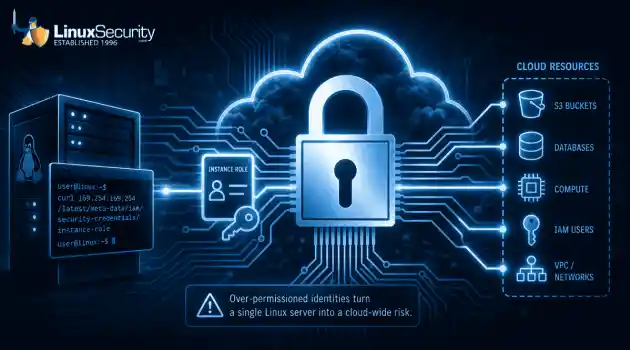
 For years, we secured our Linux infrastructure by building walls: VPCs, security groups, and hardened SSH configurations. We treated the cloud like a virtual data center, assuming that if we kept the "bad guys" out of the network, our workloads were safe. . That model is no longer sufficient. Today, one of the most common paths from an initial compromise to a major cloud breach is the identity assigned to your Linux workload. When an attacker gains code execution on a Linux instance—through a...
 Jul 17, 2026
 security practices patch management
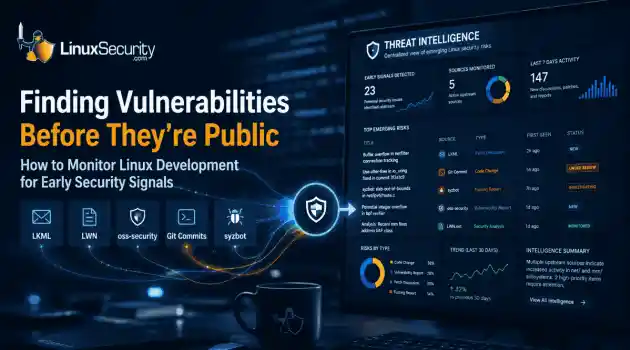
 Most of us don't hear about a kernel vulnerability until a CVE lands in our inbox or the vulnerability scanner starts complaining. By then, the patch isn't new anymore. Kernel developers may have been passing it around for review, arguing over the implementation, or revising it for days before anyone outside that community noticed it. None of those discussions are secret. They're sitting in mailing list archives, Git commits, and patch reviews where they've been the whole time. The strange...
Jul 14, 2026
 Linux security cyber attacks
 Every Linux server in your fleet produces thousands of events every minute. From journald logs and auditd records to kernel-level eBPF hooks, your systems are constantly talking. Most of that noise is just the mundane churn of system services, CI/CD runners, or routine administrative automation. But among that noise, an attacker might be establishing a foothold, moving laterally, or setting up persistence. The challenge for any security team is: how do you separate the routine from the...
Jul 13, 2026
 open-source infrastructure risk
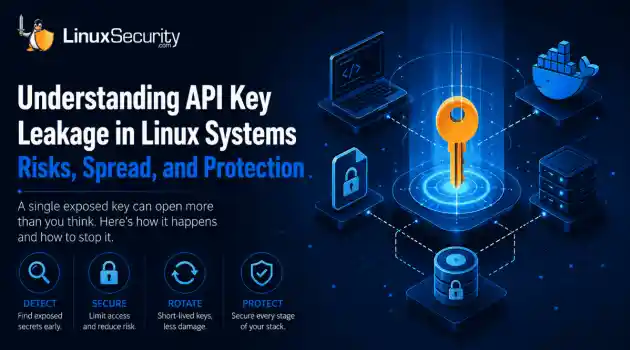
 Security scanners flag exposed API keys in public repositories every day. The initial response is usually predictable: delete the commit, revoke the credential, and move on. That’s a mistake. . In a real Linux environment, an API key never stays in one place. By the time it hits a public repo, it’s already everywhere. It’s in the CI/CD pipeline. It’s in your container registry. It’s in the build logs. It’s in the backups. Git makes this worse because the history never dies. Deleting a file in...
Jul 11, 2026
 open-source rootkit
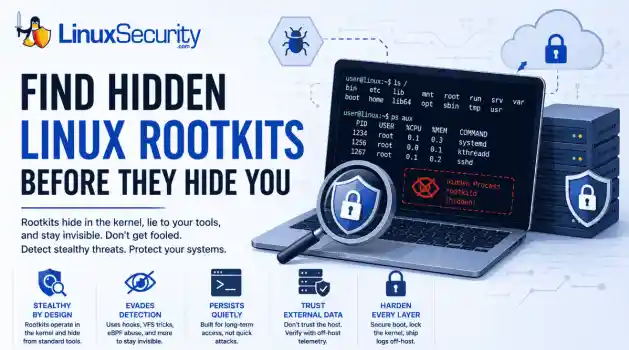
 Most of us think of Linux rootkits as ancient history—the stuff of 90s hacking forums and clunky malware that would crash your system if you looked at it the wrong way. But if you think they’ve gone away, you’re mistaken. They’ve just gotten smarter. . Modern attackers aren't using the noisy tools of the past. Today’s threats are surgical. Many of today’s most advanced Linux rootkits operate at the kernel level or abuse legitimate system features to blend in with normal traffic. They’re...
Jul 09, 2026
 Refine features
X Clear Filters
Get the latest News and Insights
Get the latest Linux and open source security news straight to your inbox.
Community Poll
Should Linux servers automatically install security updates?
Loading...
Explore Latest Linux Security features
We found -2 articles for you...
102
 security best practicesdigital securitycommunity trust
Cultivating a Collaborative Cybersecurity Culture Against Phishing
Remember when you were sent an email from a purported "bank" informing you of suspicious transactions? Phishing attacks - those deceptive attempts at stealing your information through deception - can be overwhelming and potentially stressful, but not with cybersecurity awareness! . Developing a collective culture around cybersecurity awareness can turn these "phishing for trouble" emails into collective eye rolls rather than cause anxiety among internet denizens. Let’s delve into phishing, why it is such a problem for organizations, and practical measures organizations can implement to increase cybersecurity awareness and strengthen their digital security posture to protect against phishing attacks. What is Phishing, and Why Should We Care About This Threat? Imagine this: an email purporting to be from one of your favorite online stores offers you an irresistible discount that you simply must have. So you click through, enter your credit card information to "claim" it, and WHAM! Your data has just entered the wrong hands (not the kind you would want it with!). Phishing emails (and text messages, phone calls, and even phone numbers - phishers can be clever!) are designed to trick people into disclosing sensitive data or clicking malicious links , which could result in stolen passwords, bank accounts being depleted, and other damaging repercussions. Here is an example of just how sneaky these phishers can be: One of my friends almost fell victim to an email that appeared from Netflix. The email claimed an issue with her payment information and instructed her to click a link to "update" it. Luckily, she double-checked the sender's address (it didn't quite match) before clicking through and thus avoided an impending data disaster. Businesses are just as vulnerable to phishing attacks. A recent news story detailed how one such company lost significant funds due to a phishing email purporting to come from a trusted vendor. When opened, the email contained a malicious attachment with an invoicethat downloaded malware onto their network. Phishing attacks can have devastating financial and emotional repercussions for individuals and organizations. Therefore, we must remain alert to threats like these and take proactive steps to safeguard ourselves and our organizations against potential dangers. Building a Culture of Cybersecurity Smarts: It's Not Just About Boring Training Videos Let's face it: traditional security training can be about as exciting as watching paint dry. But building a culture of cybersecurity awareness goes way beyond a one-time snoozefest. We're talking about fostering a shared responsibility for online safety, where everyone – from the CEO to the intern – is on the same page. Here's how we can make it happen: Leaders Who Walk the Walk, Not Just Talk the Talk: Imagine your boss championing cybersecurity awareness – pretty cool, right? Leaders who openly discuss online safety and integrate security best practices into company policies set the tone for everyone else. They can initiate phishing prevention training sessions, lead by example with good cyber hygiene practices, and make clear that security is a top priority. Learning Shouldn't Feel Like Homework: Ditch the outdated training manuals! Gamified simulations, interactive workshops, and bite-sized online modules can keep employees engaged and make learning about cybersecurity fun (not fun , but less painful). Consider incorporating real-world scenarios and case studies to make the training relatable. Employees might find it helpful to see examples of recent phishing attempts and how they were identified. Real-World Scenarios, Not Fake News: Instead of memorizing a list of red flags (which phishers are constantly changing anyway), train employees to identify suspicious elements in emails. This could involve urgency, generic greetings, odd grammar, and links that look fishy (pun intended). Encourage employees to think critically about the content of the email and the sender's identity. Doesthe email address seem legitimate? Is the tone consistent with how the sender usually communicates? Championing Security in Open-Source Projects In the vast and collaborative world of open source, security becomes a collective responsibility. It is not only about the code written but also about the practices followed and the culture fostered within communities. Leaders in open-source projects play a critical role in setting the tone for how security is addressed. Leaders can emphasize security in open-source projects and the communities surrounding them in the following ways: Security by Design: Strong leaders can advocate for and implement security-by-design principles from the start of the project. This involves integrating security into the software development lifecycle, such as conducting code reviews with a security focus and using static and dynamic code analysis tools. Establishing a Security Workgroup: Open source projects can benefit from having a dedicated team or workgroup focusing on security issues. Leaders can initiate this by identifying volunteers or contributors with a keen interest in security to form a task force responsible for identifying security vulnerabilities , developing patches, and disseminating information on best practices. Contributor Guidelines with Security Focus: Project leaders should ensure that their contribution guidelines include sections on security. By providing clear instructions on how to contribute to the project securely, they set a standard that helps prevent vulnerabilities at the source. The Importance of Transparency and Disclosure Leadership in open-source projects entails a commitment to transparency, especially regarding security. When a vulnerability is discovered, it's crucial to disclose it responsibly: Clear Vulnerability Disclosure Policies: Develop a clear policy for reporting, reviewing, and disclosing vulnerabilities. Encourage users and contributors to report security issues and provide a securechannel. Security Updates and Patch Releases: Communicate regularly with the user community about security updates, patches, and releases . Make this information easily accessible, ensuring users can quickly protect themselves against known vulnerabilities. Strengthening Community Trust: By showing that the leadership is proactive in managing security, trust within the community is reinforced. This encourages a more security-minded contribution base and user community. Encouraging Best Practices Through Example Leadership in open-source projects is as much about setting precedents as it is about governance. When leaders uphold high standards for security, the entire community is inspired to follow. This encompasses advocating for secure coding practices and involves using and endorsing tools that help maintain the project's integrity. Here’s how leaders can set a benchmark for security practices by leveraging open-source tools: Embracing Open Source Security Tools In the spirit of open source, numerous community-developed tools are at the forefront of software security . These tools provide functionalities ranging from static code analysis to network monitoring and are essential for safeguarding projects against common vulnerabilities. Static Code Analysis Tools SonarQube : An open-source platform for continuously inspecting code quality, SonarQube can detect bugs, vulnerabilities, and code smells across several programming languages. Leaders can integrate SonarQube into their CI/CD pipeline to ensure code is scrutinized for security issues before merging. Brakeman : Specifically designed for Ruby on Rails applications, Brakeman is a static analysis tool that scans Rails applications for vulnerabilities and security issues. It can be used as part of the development process to catch potential security flaws early on. Network Security and Monitoring Wireshark : As a network protocol analyzer, Wireshark is invaluable for troubleshooting networkissues, but it's also a powerful tool for analyzing the security of network protocols. Open-source leaders can use Wireshark to educate contributors on the importance of secure network practices. Snort : A free network intrusion detection system (NIDS), Snort can perform real-time traffic analysis and packet logging on IP networks. It helps detect probes or attacks, including operating system fingerprinting attempts, semantic URL attacks, and buffer overflows. Vulnerability Scanning and Management OpenVAS : The Open Vulnerability Assessment System offers a framework of services and tools for vulnerability scanning and management. Regular project infrastructure scans can uncover vulnerabilities before attackers exploit them. Clair : An open-source project designed by CoreOS, Clair statically analyzes vulnerabilities in application containers. With the rise of containerized applications, using Clair can help maintainers secure their projects' dependencies. Leading by Example Leaders of open-source projects can influence the community by not only using but also sharing insights gained from tools like SonarQube and Wireshark—including how these were integrated into CI/CD processes or case studies on how Wireshark helped resolve security issues—with their peers. Furthermore, leadership may involve giving back by contributing to these tools, either through improving features or developing plugins explicitly tailored to the project's needs. Empowering Employees to Be Our Digital Bodyguards - Because We All Need One! Think of your employees as the first defense against those pesky phishing attempts. By equipping them with the right skills, we can turn them into digital security ninjas: Spotting the Phish Factor: Train employees to recognize common phishing tactics. Think, "Is this email really from my bank, or is it just trying to be?" Encourage a healthy dose of skepticism when dealing with emails and online requests. Phrases like "urgent action required" or"limited-time offer" can be red flags. Verification is Key: Hovering over a link to see the actual URL (without clicking on it!) or contacting the sender directly through a trusted channel (like a phone number you know is legit) are simple steps that can help verify an email's legitimacy. It's always safer to err on the side of caution. If something about an email feels off, it probably is. Security Beyond the Office Walls: Cybersecurity awareness shouldn't stop at the office door. Encourage employees to extend these practices to their personal lives. Sharing educational resources about creating strong passwords and securing home Wi-Fi networks can go a long way. Consider offering workshops or webinars for employees and their families to promote good cyber hygiene habits in everyday life. Phishing Champions: Identify enthusiastic and tech-savvy employees who can act as "phishing champions" within their teams. These champions can help answer questions, share best practices, and keep cybersecurity awareness among their colleagues. How Can Organizations Build a Culture of Open Communication and Trust? A crucial element of a strong cybersecurity culture is open communication and trust. Employees should feel comfortable reporting suspicious emails or concerns about online security without fear of reprisal. This can be achieved by: Establishing Clear Reporting Channels: Make it easy for employees to report suspicious activity. This could involve setting up a dedicated email address, a hotline, or an anonymous reporting system. Positive Reinforcement: Recognize and reward employees who report suspicious emails or identify potential security risks. This shows appreciation for their vigilance and encourages others to raise concerns. Focus on Learning: When a phishing attempt is reported, use it as a learning opportunity for everyone. Analyze the email, discuss the red flags, and share this information with the broader team. By fostering a culture of opencommunication and trust, we can create a safe space for employees to ask questions and share concerns, ultimately strengthening our overall cybersecurity posture. Our Final Thoughts: Keeping Our Digital World Safe, One Email at a Time Cybersecurity awareness is an ongoing battle, but we can create a culture of online safety by working together. Let's make "No Phishing Allowed" a reality and turn those phishing attempts into a collective sigh of relief (and maybe a little laughter at how transparent they've become). Remember, everyone has a role in keeping our digital world safe. So, stay vigilant, stay informed , and let's outsmart those phishers together! . Fostering a robust environment centered on cybersecurity diminishes the threats posed by phishing and equips staff to act as vigilant protectors in the digital realm.. Phishing Awareness, Cybersecurity Culture, Employee Training, Open Source Security, Digital Safety. . Brittany Day
 Jun 12, 2024
•
Jun 12, 2024
•
102
 network securitysecurity best practicesmalware defense
Guide to Business Cybersecurity: Best Practices Against Cyber Threats
Businesses have been increasing the amount of technology they integrate into their workflows. In America, 94% of businesses use technology to improve efficiency. . Virtual tools allow them to complete tasks quickly and accurately with fewer resources. However, these employed processing and storage techniques are prone to cyberattacks that can corrupt a business’s electronic system, resulting in data and money loss and a negatively impacted reputation. Companies must implement the best cybersecurity practices and solutions for smooth and secure business operations. Cybersecurity entails securing your data, servers, programs, and systems against external and internal attacks in network security. Here is a guide to help you understand various cybersecurity vulnerabilities and how to implement protective measures against them. What Are Common Types of Cyberattacks Businesses Experience? To protect your system against different types of cyberattacks, you must understand the various kinds, their origin, and the harm they can do. Here are the more common risks to keep in mind: Password Guessing Attacks A password-guessing attack entails hackers trying to guess an organization’s usernames and passwords. The sample information they use comes from previous data and cloud security breaches, which occur when employees keep the same weak or default passwords for multiple logins and command servers. Hence, the credentials are easy to remember. To avoid password-guessing attackers, encourage employees to use unique and complex passwords with a mixture of letters and numbers. Advise them to type the password when logging into the company’s servers rather than having the system remember it. It’s also best to introduce a password-changing policy where everyone must reset their passwords after a set period. Organizations should also use password cracking, or the technique of retrieving passwords from encrypted data stored in or communicated by a computer, to help identify easily hackablepasswords and test passwords to create stronger ones. Many great open-source password-cracking network security toolkits are available to assist. Distributed Denial of Service Attacks Distributed Denial of Service attacks (DDoS) occur when a hacker paralyzes an organization’s system with a massive influx of fake activity, such as messages, requests, and web traffic. DDoS attacks are made through malware-infected, interconnected devices (computers, servers) on botnets. This attack weakens business cybersecurity measures, allowing hackers to access data. Identifying DDoS attacks is challenging because their symptoms, like slower servers, are confused with regular high traffic. On closer inspection, the fake activity comes from one IP address and occurs at odd hours of the day. You can eliminate these types of cyberattacks by creating a black hole to remove the fake traffic or limit the requests a server receives in a certain period. Malware Attacks Malware attacks are when hackers infiltrate software through private networks to access information. Some types of malware attacks include: Keyloggers : These track the information users type with keyboards, such as passwords and Social Security Numbers. Ransomware entails encrypting vital data where the hacker forces users to pay a ransom to access it. If their demands are unmet, they threaten to delete, sell, or publish it on the dark web. Spyware : This monitors a user’s online activity, like web browsing, to gather personal information for hackers. It can also hack into webcams and turn them on to collect sensitive and identifiable information. Adware : Also known as spam, adware is relatively harmless. It decreases the performance of your computer but can download other harmful malware without your knowledge. Malware attacks enter networks through viruses, trojan horses, and worms. They spread quickly in interconnected systems, but you can eliminate them through updated antivirus software and properauthentications. Phishing Attacks In phishing attacks, hackers deceive employees through fake websites and emails to release private information, such as login credentials, credit card numbers, and Social Security information. Threat actors disguise themselves as trusted agencies, like banks, to obtain sensitive information. In a survey, 57% of organizations reported facing successful online or email phishing attacks. Spear phishing attacks are personalized to target a specific organization or person, creating emails using their names to make it harder to distinguish them. Authentication software and awareness programs can reduce the chances of victimizing such cyberattacks. Business Cybersecurity Best Practices Many businesses use outsourced IT support to implement the best cybersecurity practices. These third-party companies are skilled in managing and updating cybersecurity elements to guarantee data and network security. If you want to save money, consider applying cybersecurity yourself. Here are the most essential, best cybersecurity practices businesses need to prevent most cyberattacks. Use a Secure OS It is no secret that the OS you choose is a key determinant of your security online. After all, your OS is the most critical software running on your computer, managing memory, processes, software, and hardware. Experts agree that Linux is a highly secure OS and, arguably, the most secure OS by design. Some key factors that contribute to Linux being a more secure OS than Windows for businesses include: The Open-Source Security Advantage : Linux source code undergoes constant, thorough review by members of the vibrant, global open-source community so that any cybersecurity vulnerabilities in Linux can be identified and eliminated rapidly. A Superior User Privilege Model : Unlike Windows, where “everyone is an admin,” Linux greatly restricts root access through a strict user privilege model. Because Linux users have low automatic access rights andrequire additional permissions to open attachments, access files, or adjust kernel options, spreading malware and rootkits on a Linux system is harder. Built-In Kernel Security Defenses : The Linux kernel offers a selection of built-in security defenses , including firewalls that use packet filters in the kernel, the UEFI Secure Boot firmware verification mechanism, the Linux Kernel Lockdown configuration option, and the SELinux or AppArmor Mandatory Access Control (MAC) security enhancement systems. Admins can add layers of data and network security to their systems by enabling these features and configuring them during Linux kernel self-protection. Security through Diversity : A high level of diversity is possible within Linux environments due to the many Linux distributions (distros) available and the different system architectures and components featured. This diversity helps satisfy users’ requirements and can protect against different types of cyberattacks by making it difficult for adversaries to efficiently craft exploits in network security that can be used against a wide range of Linux systems. Highly Flexible & Configurable : There are vastly more configuration and control options available to Linux admins than to Windows users, many of which can be used to enhance security. For instance, Linux sysadmins have the ability to use SELinux or AppArmor to lock down their system with security policies offering granular access controls, providing a critical additional layer of security throughout a system. Despite the key benefits Linux offers, it is crucial to remember Linux is not a “silver bullet” in security. The OS must be correctly and securely configured, and sysadmins must practice secure, responsible administration to prevent attacks on network security. Use Antivirus Software Antivirus software scans, detects and removes known malware from a computer. It runs in the background and occasionally pops up to notify you of potential network security threats froma website, download link, or hardware. However, since new malware codes constantly appear, ensuring your antivirus software is constantly updated is crucial. Use a Firewall & a VPN A firewall is a barrier between an organization’s network and the public internet. It constantly monitors and filters traffic into the personal network according to your organization’s data and network security policies. In simpler words, firewalls ensure that different types of cyberattacks, like DDoS, do not enter the organization. Like antivirus software, you must regularly update firewalls to prevent newer network security threats. Firewalls also perform NAT and VPN functions. Network Address Translation (NAT) hides IP addresses, allowing users to access the internet with more security and privacy. In contrast, a Virtual Private Network (VPN) creates a tunnel between private and public networks, ensuring that the data packets shared remain secure. Use Two-Factor Authentication Two-factor authentication (2FA) is an extra layer of protection used after you enter your username and password. The second authentication check can be one of three types: Something you know : This can be a personal PIN or question, such as the name of your first pet. Something you have : This includes verification through something users would often have. For example, you can gain access by entering a one-time passcode (OTP) sent to your phone. Something you are : This authentication includes fingerprints, eye scans, and voice prints. Invest in Security Awareness and Training Programs You must train your employees regarding the best cybersecurity practices so they can be aware of common hacking and phishing attacks and techniques. Since employees are the first defense against specific cyberattacks, preparing them can protect your organization’s data, network security, and all your business systems. You should also instruct employees not to plug unknown devices into PCs, download unknown orunsafe files, open spam emails on the business’s computers, or enter their passwords on random websites to avoid malware attacks. Similarly, employees must use different computers for payment processing and web surfing to prevent identity theft incidents. Your employees must have the right platform to report cloud security breaches, such as suspicious emails they receive or a sudden increase in server traffic. The IT department must promptly address such concerns to ensure these cyberattacks are not established or spread. What Should I Do After a Cyberattack? Despite your best efforts, your system can still be susceptible to cyberattacks. As soon as the attack is identified, you must contain it. Disconnect your computers from the internet and isolate essential computers from the interconnected devices . As an extra precaution, consider changing the sensitive file passwords. You can also configure additional email authentication methods like MTA-STS to prevent man-in-the-middle attacks like TLS downgrades and DNS spoofing on future attacks. You must then identify the attack’s source. The network connections at the time will help your IT department understand any cybersecurity vulnerabilities that would have allowed the threat to bypass security measures and what further improvement they require. You must also analyze the information you lost and take measures accordingly. For example, if you lose payment processing credentials, you must report the incident to law enforcement agencies and change your passwords. Be transparent about the cyberattack with clients, as their data and network security may also be compromised. Final Thoughts on Business Cybersecurity Data is essential for businesses, allowing companies to make informed decisions that increase profit margins. A greater reliance on technology also makes businesses susceptible to different types of cyberattacks, like the ones mentioned in this guide, so safeguarding data is a must, albeit complex. You canindependently apply the best cybersecurity practices, like choosing a secure OS, using antivirus software and firewalls, and two-factor authentication to protect your business’s sensitive data. Without the proper experience and knowledge, your business will remain susceptible to attacks on network security. Hiring trained IT professionals or considering outsourcing to a cybersecurity provider is best. They will ensure your data and network security measures are constantly updated, and your employees are trained in security protocols. . Understanding prevalent cyber threats and implementing strong security measures is vital for tech-dependent businesses. Business Cybersecurity, Cyber Attack Prevention, Cybersecurity Tools, Malware Defense, Security Best Practices. . Brittany Day
Mar 13, 2023
•

102
 data protectionaccess controlpassword management
Effective Strategies For Strengthening Linux Cloud Security
Technology, in many ways, has changed the way people do business. Modern society is highly digitalized, thanks to technological advancements in the Internet of Things (IoT). . Along with it, cloud computing has garnered much attention, too. More and more cloud-based solutions emerge on the market; in fact, businesses worldwide are looking to or have already invested in cloud-based storage solutions. Cloud storage is an effective way of streamlining a business’s operations. It’s also relatively secure in some respects. However, this doesn’t mean that cloud systems are infallible. Their exposure to the IoT and the Internet makes them vulnerable to cyberattacks, which are reported to have drastically increased recently. So, businesses need to bolster their cloud security. Fortunately, this is something with which cybersecurity experts can help you. Data is now a major asset for most companies, and of course it's critical to keep it secure. Here’s a guide on how businesses can strengthen their cloud and data security. The Importance Of Linux Cloud Security Cloud security describes the various procedures and policies that protect cloud users and company data. A cloud security policy guides how you implement security measures, like antimalware tools, authentication, permissions, and antivirus software updates. The reason why Linux cloud security is important is that most cloud systems run on Linux architecture. Given how distributed systems are constructed, there's a relatively high probability of insecure configuration, which may result in security gaps. Misconfiguring a web application, for example, might create a pathway for cyber attackers to remotely control the cloud server. The rising popularity of the cloud suggests that cloud-based solutions are in great demand. But, because a lot of data passes through IoT, it puts organizations in a difficult position. IT administrators now have to proactively consider how they’ll store root passwords, the strength of thosepasswords, system integrity, and application security, among other things. As a result, every firm must foster a culture of security awareness. This begins by incorporating a zero-trust approach into your cloud security procedures. It implies you create security solutions based on the notion that interactions begin in an untrustworthy state. Given the constant evolution of cyber threats, a proactive approach to cybersecurity is essential today. This method allows you to stay on top of security threats and build effective counter-strategies. Top Tips And Advice For Improving Linux Cloud Security Cloud Backup There’s probably not a day when you can firmly assert that your systems are 100% secure or impenetrable. The reality is that no matter how well you implement techniques to strengthen cloud security, the risk of data loss will still exist. Even though you shouldn't live in constant worry, you must always maintain a backup in case of a data breach or disaster to prevent your entire operations from falling apart. Organizations can’t afford to lose their data. A data breach may cause severe interruptions in workflow and productivity for some firms that depend heavily on data. That’s why it’s extremely important to invest in cloud backup services. Moreover, it’s important that you consider your system requirements before using any cloud backup solution. For example, you should note that not all cloud backup service providers support Linux operating systems. Therefore, if you have such a system, Linux cloud backup solution or any comparable alternative you can find would be ideal. Use Access Controls Some cloud solutions may have optional access control features you could get to improve security even further, however, it’s ultimately your responsibility to set up the appropriate access controls to promote data safety. Proper access controls are extremely useful in preventing insider theft. It’s frequently the case that many cyberattacks are launched from within theorganization, whether deliberate or unintentional. So, it’s important to always know who has access to what. However, note that you could also set up your system so that select individuals can access certain parts of the system. That way, your employees can access the resources they need to be productive and get their respective jobs done. Encrypt Your Data Data encryption is important as far as cybersecurity is concerned. The public networks that all traffic goes through to connect with cloud servers may be infiltrated with hackers. Given that your employees will constantly be sharing, uploading, and retrieving data via the cloud, there’s a possibility that hackers could intercept these exchanges and steal valuable information. Fortunately, there are several cloud encryption tools you can utilize. Nevertheless, it’d be best if you encrypt all of your enterprise's data , regardless of the format, to strengthen your cloud infrastructure's security. You should encrypt data in transit and at rest. When transferring files, ensure that you only use secure transfer protocols, such as Secure Shell (SSH), Secure Copy (SCP), and SSH File Transfer Protocol (SFTP). This way, your vulnerability to online cyberattacks and risk of data security breaches are significantly reduced. Monitor Cloud Threats Even if you’re confident that your cloud system is secure, you should always monitor your system for threats. This enables you to identify threats and deal with them before they fester. So, your company must continuously maintain visibility in all of its cloud technology. You can achieve this by continuously monitoring user behavior to gain insights and real-time data on how your cloud infrastructure is being used. Cyber attackers shouldn’t be underestimated regardless of how sophisticated you believe your defenses are. In fact, it’d be better to adopt a proactive approach in which you anticipate and prepare for cyber threats as much as possible. Hackers are constantly probing theInternet of Things in search of loopholes, that’s why continuous threat monitoring is essential. You may have witnessed circumstances in which several unsuccessful login attempts from various IP addresses occurred. This should be a cause for alarm because hackers frequently utilize passwords to penetrate networks. Fortunately, most Linux systems keep authentication logs that allow you to monitor login activities. But, for added visibility, consider using malware scanning and intrusion detection programs. Thankfully, many cloud service providers are equipping their systems with built-in cloud threat detection features. You must ensure that such capabilities are enabled at all times. Most systems employ a mix of telemetry sources, such as network flow logs that use analytics and supplementary threat intelligence sources, to identify threats. Invest In Employee Training Your employees might be the biggest indirect threat to your business’s cloud security. Bear in mind that they’re the ones interacting with your cloud systems most of the time. Plus, they’re the ones interacting with customers and handling customer information a lot of the time. And, one of the easiest methods for hackers to get your data is through phishing. Therefore, giving your staff frequent, thorough training is crucial. You must equip your employees with the knowledge to responsibly use IT resources and networks. One way of doing this is by creating a clear and sound cybersecurity policy. This will guide employees on how to use the connected IoT devices and systems in the company. By doing this, your staff will be able to recognize phishing attacks and avoid them. Regular staff training can help avoid any misuse resulting from ignorance or carelessness. Monitor Usage & Conduct Regular Audits Ideally, you should audit the personnel who have access to the cloud. You should also keep track of how these users interact with the system. Keep an eye out for unauthorized file sharing and investigate any otherquestionable behavior you notice. This allows you to detect people who’ve gained illegal access to your cloud servers. As mentioned previously, you need to work with the presumption that vulnerabilities may be present. So, consider implementing procedures that hold your workers or anyone with access to your systems accountable. Improve Password Security Strong passwords are a crucial cybersecurity measure that can improve your cloud security. One of the other ways that hackers can infiltrate a system, profile, or account is through hacking passwords. Some people set simple passwords because of the fear of forgetting them. But, that’s a fatal mistake. Setting an easy password makes the cyberattacker's job much easier. Most people that get their accounts hacked or their identity stolen experience those things because of poor password management practices. That’s why it’s extremely important to set up strong passwords for all your cloud infrastructure and services. Multi-factor authentication is one method of enhancing password security. There are countless possibilities for multi-factor authentication; pick the one that works best for you. Another fantastic idea is to invest in a password manager that can keep all your passwords safe so you won’t have to worry about forgetting them. You could also urge your employees to invest in a good password manager. Also, consider using SSH keys in place of passwords. Establish Cloud Deletion Policies Whether you want to switch to a new cloud system or stick with your current one, managing the data of your former clients should be your top priority. Customer data should be systematically erased when the data retention time has passed. Therefore, strict data deletion rules must be established by organizations to properly and securely erase data from the system while upholding strict GDPR compliance . Also, always choose reputable cloud service providers since, at least with them, you can trust that all concerned data are deleted safely. Conclusion Given the increasing frequency of cyberattacks, every firm must invest in cloud security. While cloud solutions typically have built-in security safeguards, you should go a step further to strengthen your system security. So, consider applying some of the ideas stated above, or talk with a reputable specialist who can assist you in developing a solid cybersecurity strategy. . Enhance your Linux cloud security with a multifaceted strategy including automated encrypted backups, strong encryption, strict access controls, and regular updates. Linux Cloud Security, Data Protection, Cloud Backup Solutions, Access Control, Cybersecurity Strategies. . Brittany Day
Nov 28, 2022
•

Get the latest News and Insights
Get the latest Linux and open source security news straight to your inbox.
Community Poll
Should Linux servers automatically install security updates?
Search Topics
Powered By

Linux Security - Your source for Top Linux News, Advisories, HOWTOs and Feature Releases
QUICK LINKS
subscribe to newsletters!
Like staying secure? So do we.
Sign up for updates, tips, and alerts!