Explore top 10 tips to secure your open-source projects now. Read More
×


Stay Ahead With Linux Security Features
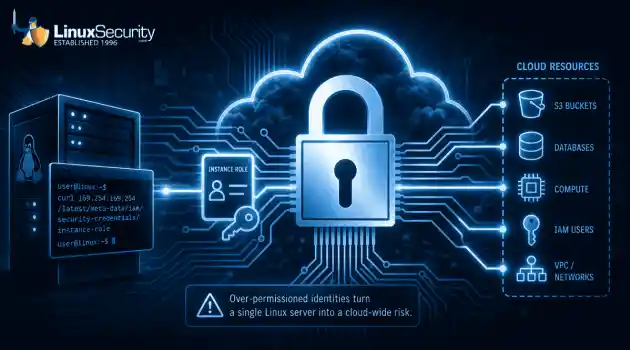
 identity management security tactics
 For years, we secured our Linux infrastructure by building walls: VPCs, security groups, and hardened SSH configurations. We treated the cloud like a virtual data center, assuming that if we kept the "bad guys" out of the network, our workloads were safe. . That model is no longer sufficient. Today, one of the most common paths from an initial compromise to a major cloud breach is the identity assigned to your Linux workload. When an attacker gains code execution on a Linux instance—through a...
 Jul 17, 2026
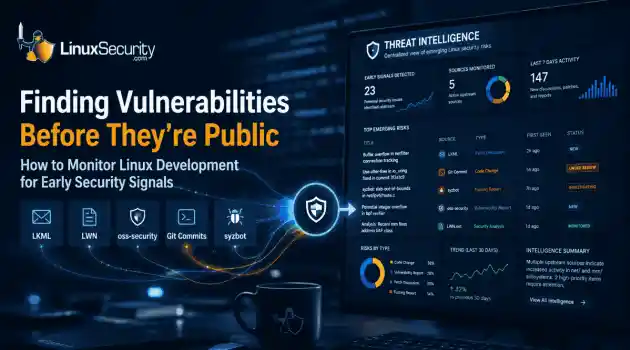 security practices patch management
 Most of us don't hear about a kernel vulnerability until a CVE lands in our inbox or the vulnerability scanner starts complaining. By then, the patch isn't new anymore. Kernel developers may have been passing it around for review, arguing over the implementation, or revising it for days before anyone outside that community noticed it. None of those discussions are secret. They're sitting in mailing list archives, Git commits, and patch reviews where they've been the whole time. The strange...
Jul 14, 2026
 Linux security cyber attacks
 Every Linux server in your fleet produces thousands of events every minute. From journald logs and auditd records to kernel-level eBPF hooks, your systems are constantly talking. Most of that noise is just the mundane churn of system services, CI/CD runners, or routine administrative automation. But among that noise, an attacker might be establishing a foothold, moving laterally, or setting up persistence. The challenge for any security team is: how do you separate the routine from the...
Jul 13, 2026
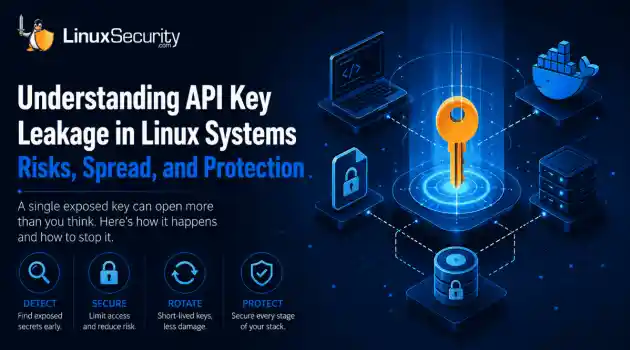 open-source infrastructure risk
 Security scanners flag exposed API keys in public repositories every day. The initial response is usually predictable: delete the commit, revoke the credential, and move on. That’s a mistake. . In a real Linux environment, an API key never stays in one place. By the time it hits a public repo, it’s already everywhere. It’s in the CI/CD pipeline. It’s in your container registry. It’s in the build logs. It’s in the backups. Git makes this worse because the history never dies. Deleting a file in...
Jul 11, 2026
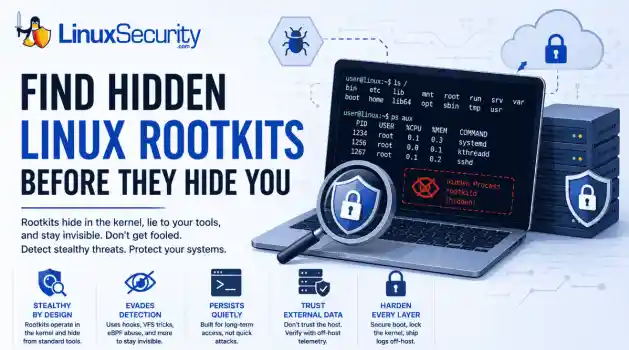 open-source rootkit
 Most of us think of Linux rootkits as ancient history—the stuff of 90s hacking forums and clunky malware that would crash your system if you looked at it the wrong way. But if you think they’ve gone away, you’re mistaken. They’ve just gotten smarter. . Modern attackers aren't using the noisy tools of the past. Today’s threats are surgical. Many of today’s most advanced Linux rootkits operate at the kernel level or abuse legitimate system features to blend in with normal traffic. They’re...
Jul 09, 2026
 Refine features
X Clear Filters
Get the latest News and Insights
Get the latest Linux and open source security news straight to your inbox.
Community Poll
Is continuous patching actually viable?
Trending Features
Loading...
Explore Latest Linux Security features
We found 8 articles for you...
102
 encryptionkey managementpackage management
What Is GNU Privacy Guard (GPG)? A Practical Guide for Linux Security
You’ve probably used GPG already. Maybe indirectly through package updates, maybe signing a Git commit because the repo required it, maybe encrypting a backup before pushing it offsite. It tends to show up quietly, and once it’s working, nobody touches it again. . That’s usually where the risk starts. GNU Privacy Guard sits underneath a lot of Linux security controls that people assume are handled. Repository trust. Software integrity. Encrypted file exchange. Signed releases. The mechanics are solid, but the operational ownership is often vague. Keys get created during a project kickoff, copied to a server, added to a CI job, and then slowly fade into the background. GPG is not just a file encryption tool. It is a trust system. Every time you verify a package, sign a commit, or decrypt a backup, you are making a decision about which keys you trust and how well they are protected. If you have not defined how keys are generated, stored, rotated, revoked, and monitored, then your Linux security model has a quiet dependency you are not actively managing. This guide is not about cryptography theory. It is about what changes in your environment once GPG is in play. We’ll walk through how it actually works on Linux systems, where it shows up in daily operations, how it shifts your threat model, what tends to break in the real world, what you can realistically monitor, and what needs to be written into policy so you are not guessing during an incident. If you are responsible for systems, backups, CI pipelines, or package repositories, this touches you whether you planned for it or not. What GPG Is and How It Actually Works on Linux GNU Privacy Guard is the GNU implementation of the OpenPGP standard. In practical terms, GPG gives you two core capabilities on a Linux system. It encrypts data so only the intended recipient can read it, and it creates digital signatures so others can verify that something really came from you and has not been altered. Under the hood, it uses public andprivate key cryptography. The public key is shared and used to encrypt data or verify a signature. The private key stays with the owner and is used to decrypt data or create signatures. That sounds simple enough, but the moment you generate a keypair, you have introduced something that must be protected, backed up, possibly rotated, and eventually revoked. It is not just a file sitting on disk. On most Linux systems, key material lives under ~/.gnupg/. That directory holds your keyrings, trust database, and configuration files. Private keys are stored there unless you offload them to hardware such as a smart card or HSM. The gpg-agent process handles private key operations and passphrase caching, which means decrypted private keys may exist in memory longer than you expect if cache settings are permissive. Trust is handled through a web-of-trust model by default. There is no central certificate authority unless you build one around it. You decide which keys you trust and to what degree. That decision directly affects whether a signature is treated as valid. On a multi-user Linux system, two users can import the same public key and assign it different trust levels, which leads to very different verification outcomes. In day-to-day use, the commands are straightforward. gpg --encrypt to protect a file. gpg --decrypt to recover it. gpg --sign to create a signature. gpg --verify to check one. The complexity is not in the commands. It is in what those commands imply about key custody and trust relationships. Once GPG is installed on a server, you are not just encrypting data. You are taking on key lifecycle risk. That affects how you harden home directories, how you manage service accounts, how you configure gpg-agent, and how you think about backups of private keys. If you do not treat keys as sensitive assets with defined ownership, the encryption itself becomes the least interesting part of the system. Where Does GPG Show Up in Real Linux Environments? Most teams do not deploy GPG as a formalproject. It just accumulates. You enable signed packages because the distribution defaults to it. A developer turns on commit signing. A backup script pipes a tar archive through gpg --encrypt before pushing it to object storage. Now it is part of your Linux security posture whether you documented it or not. Package management is usually the first place it matters. APT, DNF, and RPM repositories rely on GPG keys to verify that packages have not been tampered with. When a repository key expires or is replaced, updates start failing. You see errors about missing or untrusted signatures, and suddenly, patching stalls across systems. It looks like a routine package issue, but it is really a trust chain problem. Then there is source control. Git commit signing and tag verification are increasingly required in regulated environments. A signed tag is treated as proof that a release came from a specific developer key. If that key is shared, poorly protected, or never rotated, the assurance is weaker than it appears. Backups are another common entry point. I have seen environments where nightly archives are encrypted with GPG and shipped offsite, but the only copy of the private key lived in one admin’s home directory. The encryption was strong. The operational planning was not. You only notice that mismatch during a restore test, or worse, during an incident. You will also see GPG in automation and CI pipelines. For example: Encrypting configuration files before committing them to a private repository Signing release artifacts during a build job Importing a repository public key as part of a provisioning script Encrypting secrets before storing them in artifact storage Each of those steps assumes something about key availability and trust. If a CI runner has access to a private signing key, that runner becomes a high-value target. If a provisioning script imports a public key over HTTP without verification, you have created a supply chain risk in the name of convenience. Beforeyou can assess risk, you need visibility. Inventory where GPG is already used. Look at your package manager configs, CI definitions, backup scripts, and developer guidelines. Once you map those touchpoints, you can start evaluating whether the keys involved are owned, documented, and monitored. Until then, you are operating on assumptions. What GPG Changes in Your Threat Model Once GPG is in use, your threat model shifts in ways that are easy to overlook. The cryptography itself is rarely the weak point. The weak point is almost always how keys are handled and how trust decisions are made. Confidentiality now depends entirely on private key protection . If someone gains access to a private decryption key, encrypted backups or files are readable. It does not matter how strong the algorithm is. I have seen environments with encrypted archives sitting in cloud storage, fully exposed, because the corresponding private key was copied to multiple servers for convenience. Integrity works the same way. A digital signature is only meaningful if the verifying system actually trusts the correct public key. If a malicious key is imported and marked as trusted, GPG will happily validate a forged package or release artifact. The tool is doing what it was told to do. The mistake is in the trust assignment. Revocation adds another layer. If a signing key is compromised, you need a revocation certificate and a way to distribute that information. On a single laptop, that is straightforward. Across dozens of servers and CI runners, it becomes coordination work. Some systems may continue trusting a key long after it should have been retired. Key loss is the other side of the problem. If the only private key capable of decrypting critical backups is lost, the data is effectively gone. There is no password reset. No recovery ticket. The math is unforgiving. From a Linux security perspective, GPG introduces a new class of high-impact events. A private key compromise is closer to credential theft than a typicalmisconfiguration. An incorrect trust setting can undermine package verification across a fleet. You need defined response steps for both scenarios, not just an assumption that encryption equals safety. The shift is subtle. You are no longer just protecting data at rest or verifying downloads. You are protecting and validating trust anchors. Once you see it that way, the priority of key custody, revocation planning, and verification workflows changes. Key Management Realities Most Teams Underestimate This is where most GPG deployments start to fray. Not because the crypto is weak, but because key management quietly turns into an afterthought. I have walked into environments where private keys were sitting unencrypted on production servers under /root/.gnupg/, protected only by filesystem permissions. Technically restricted. Practically exposed to anyone with root access, backup access, or a snapshot of the disk. Once that key is copied, you will not know it happened. Passphrase practices are another weak point. A strong passphrase does not help much if gpg-agent is configured with a long cache timeout and the key stays unlocked for hours on a shared system. It feels convenient during operations. It also widens the window for misuse. Shared service account keys are common in CI pipelines and automation. One keypair, used to sign artifacts or decrypt secrets across multiple jobs. No named owner. No documented rotation schedule. When someone leaves the team, nobody knows whether the key should be replaced. It just keeps working, so it stays. Revocation certificates are often skipped entirely. During key creation, GPG offers to generate one. Many people decline or never store it somewhere safe. The result is predictable. When a key is suspected to be compromised, there is no clean way to signal that to every system that trusts it. Rotation is usually informal. Keys expire because someone set a default validity period years ago, and suddenly, package installs fail or signing jobs break. Theresponse is reactive. A new key is generated under pressure, distributed manually, and the old one lingers in trust stores longer than it should. If you look at this through a GPG key management lens, the pattern is consistent. Keys are treated like configuration files instead of security assets. That mindset is what needs to change. You need named ownership, documented storage locations, defined backup procedures for private keys, scheduled rotation, and a tested revocation process. Until that is written down and periodically reviewed, you are relying on memory and goodwill. That works right up until it doesn’t. Monitoring and Auditing GPG Activity Monitoring GPG is not as straightforward as monitoring SSH logins or sudo use. The tool itself is relatively quiet. If you are not deliberately collecting the right signals, most encryption and signing activity blends into the background. By default, GPG does not produce rich, centralized logs. gpg-agent handles private key operations in user space, and unless you have configured additional logging, there is no obvious trail that says, “this key decrypted this file at this time.” That surprises people the first time they try to reconstruct an incident timeline. So you monitor around it. Start with filesystem visibility. The directories ~/.gnupg/ and /root/.gnupg/ are sensitive. File integrity monitoring or auditd rules that watch for reads, writes, and permission changes on private key files give you at least some signal. If a private key file is accessed by a process that normally never touches it, that is worth a look. Then look at the systems that depend on signature verification. Package managers log signature failures. If APT or DNF starts reporting invalid or untrusted signatures, that is not just a patching issue. It can indicate expired keys, replaced repository keys, or in worst cases, tampering. In a mature Linux security monitoring setup, those errors should be collected and reviewed, not ignored as noise. Decryptionpatterns can also be a clue. If a service account normally decrypts one backup archive per night and suddenly decrypts dozens of files outside its usual schedule, that deviation matters. You will not see “GPG misuse” in a log line. You will see unusual process execution, file access spikes, or unexpected key imports. Key import activity is another blind spot. A user running gpg --import to add a new public key changes the trust landscape on that host. On shared or critical systems, that action should be auditable. Shell history is not enough. Centralized audit logs give you a way to answer who introduced a new trust anchor and when. The reality is that GPG operations are mostly invisible unless you design monitoring around the edges. Without file integrity checks, audit rules, and log aggregation that captures signature failures and key changes, you are trusting that no one misuses or replaces keys. That is not a monitoring strategy. It is an assumption. Policy Decisions You Need to Make About GPG At some point, GPG stops being a technical detail and becomes a governance question. If you are responsible for systems, you need clear answers to a few uncomfortable things. First, who is allowed to generate keys on production systems? If every admin or developer can create long-lived signing keys wherever they want, you will eventually lose track of which keys matter. I have seen environments where three different keys were used to sign internal packages, and nobody could say which one was authoritative. That confusion turns into risk during audits or incident response. Storage location is another decision that cannot stay informal. Are private keys allowed to live on disk under ~/.gnupg/, or do you require hardware tokens or a dedicated signing service for sensitive operations? For high-impact signing keys, especially those tied to release artifacts or repository metadata, hardware-backed storage reduces exposure. It is not mandatory everywhere, but the decision should be deliberate. Youalso need standards around key strength and lifetime. GPG supports modern algorithms and configurable expiration dates. If you do not define minimum key sizes and maximum validity periods, you will end up with a mix of legacy and current keys across your fleet. That makes reviews messy and compliance reporting harder than it needs to be. Passphrase and agent configuration should be written down as well. Long cache timeouts in gpg-agent might be acceptable on a developer laptop. On a shared server, they may not be. Decide what is allowed and align it with how the system is actually used. Revocation and incident response deserve explicit treatment. If a signing key is suspected to be compromised, what happens next? Who generates or publishes the revocation certificate? How are dependent systems updated? In many organizations, this workflow does not exist until the first scare. That is late. Finally, decide how trust is established internally. The default web-of-trust model in GNU Privacy Guard is flexible, but it assumes individuals validate and sign each other’s keys. In structured environments, you may prefer controlled key distribution and centralized trust configuration instead of ad hoc trust assignments on each host. When these decisions are documented, GPG becomes part of your defined Linux security architecture. Without them, it remains a powerful tool running on convention and habit. That gap is what auditors tend to notice. Common Failure Scenarios and What They Look Like Most GPG problems do not start as security incidents. They start as operational annoyances. A failed update. A broken pipeline. A restore that will not complete. If you have seen enough of them, you begin to recognize the pattern underneath. Package management is a common trigger. An expired or replaced repository key causes APT or DNF to reject updates. The error mentions an invalid or missing signature, and patching stops across multiple systems. What looks like a routine maintenance issue is actually a trustanchor problem that was not tracked. CI and release pipelines fail in similar ways. A build job cannot sign artifacts because the expected private key is missing, locked, or expired. Sometimes the key was rotated on one runner but not another. Sometimes the trust database was never updated. The symptom is a red pipeline. The root cause is unmanaged key lifecycle. Backups surface a harsher version of the same issue. Encryption works for years. No one tests full restore with key recovery. Then, during an incident or hardware failure, you discover the only copy of the private key lived on a retired admin’s laptop. At that point, the data is intact but inaccessible. The math does not care about intent. There are also quieter failures that do not break loudly: A signing key is shared across multiple users, so accountability is blurred A public key is imported and marked as trusted without proper verification A compromised signing key continues to validate artifacts because revocation was never distributed A user encrypts sensitive data to the wrong public key and only notices after deletion of the original These scenarios are not theoretical. They show up in audit findings and post-incident reviews with uncomfortable regularity. When you use GPG, you need documented recovery procedures for key loss and key compromise. That means tested backup of private keys, stored revocation certificates, clear rotation steps, and a way to update trust stores across affected systems. If those steps are not written and rehearsed, the first real failure will double as your design review. Final Takeaways for Linux Admins Using GPG By the time GPG is woven into package verification, Git signing, backups, and automation, it is no longer just a utility. It is part of how your environment decides what to trust and what to protect. That makes it infrastructure, even if it started as a single command in a script. The main shift is ownership. If no one explicitly owns key generation, storage,rotation, and revocation, then those responsibilities are scattered across individuals and habits. The encryption may be strong, but the process around it is fragile. Over time, you start to see expired keys blocking updates, shared keys masking accountability, or private keys copied between systems without record. Most real failures are operational. Lost keys. Forgotten passphrases. Revocation certificates that were never created. Trust settings applied locally and never reviewed. The cryptography rarely breaks. The surrounding discipline does. GPG also does not replace other controls. Encrypted files still rely on correct filesystem permissions. Signed packages still depend on secure key distribution. Private keys on disk still depend on system hardening and access control. In a broader Linux security model, GPG strengthens confidentiality and integrity, but only if the underlying system is treated as hostile by default. Treat a private key compromise the way you would treat credential theft. Assume anything signed or decrypted with that key could be suspect. Have documented steps for revocation, redistribution, and trust updates. Test those steps before you need them. When you move GPG from “it works” to “it is defined, monitored, and owned,” the risk profile changes. You are no longer hoping your trust anchors remain intact. You are managing them deliberately. That difference is subtle on a calm day. It matters a great deal when something goes wrong. . Explore how GNU Privacy Guard enhances Linux security and impacts key management practices in your environment.. GPG Linux security, trust management, key lifecycle, encryption process. . Brittany Day
 Feb 21, 2026
•
Feb 21, 2026
•
102
 security advisoryencryptionrisk assessment
What Is TLS (Transport Layer Security) in Linux Security?
Most Linux outages that get labeled as “security issues” are not breaches. They are TLS failures that sit quietly until a renewal expires, a client updates, or a service starts refusing connections for reasons that look unrelated at first. By the time users notice, traffic has already stopped, and the only clue is a vague handshake error buried in a log file. . Transport Layer Security is everywhere in a modern Linux environment. Web servers rely on it. APIs assume it. Mail servers negotiate it. Package managers trust it. Even internal services that never leave a private network depend on TLS in ways that often go unexamined. Because it usually works, it fades into the background. You stop thinking about it until it breaks. What makes TLS tricky is that it is not just encryption. It is a set of decisions about trust, identity, compatibility, and how much failure you are willing to tolerate in the name of security. Those decisions are spread across libraries, daemons, configs, and defaults that change over time. If you inherit a system, you inherit those choices, whether you agree with them or not. You start to see the trend after a few incidents. A cert renews automatically, but one service was pinned to an old chain. A scanner flags a weak cipher that nobody remembers enabling. An internal API fails because a client finally stopped accepting legacy TLS. Nothing was “hacked,” yet availability and trust still took a hit. This article is meant to slow that down. We’ll walk through what TLS actually protects in Linux environments, where it quietly does not, and how it behaves in real service stacks. The goal is not to turn you into a cryptography expert. It’s to help you decide how strict your defaults should be, what you need to monitor before you trust it, and which risks still exist even when TLS is technically enabled. What Does TLS Actually Do in a Linux Environment? TLS protects data while it is moving between two endpoints. That sounds simple, but most misunderstandingsstart right there. It does not protect data once it lands on disk. It does not protect what lives in memory. It does not clean up logs or sanitize application behavior. If traffic is encrypted on the wire but everything else around it is loose, TLS has still done its job. In Linux, TLS usually shows up through libraries like OpenSSL or GnuTLS and through the services that sit on top of them. The kernel is not making trust decisions. Your web server, mail daemon, package manager, or client library is. That matters because each of those components can enable TLS in slightly different ways, with different defaults and different failure modes. A common assumption is that enabling TLS automatically means both sides are authenticated. In practice, authentication is often one-sided. The server proves its identity; the client does not. For public services, that may be fine. For internal APIs or service-to-service traffic, it quietly changes the risk model. You may have encryption without strong identity. Another piece people underestimate is integrity. TLS is not just about hiding data from eavesdroppers. It also protects against modification in transit. That becomes critical for things like package downloads, update channels, and API calls, where a small change can have a large impact. Confidentiality gets most of the attention, but integrity failures tend to hurt faster. To make this concrete, here’s what TLS actually gives you and what it does not, regardless of how many checkboxes say “enabled”: Encryption of data in transit between endpoints Optional authentication, often only of the server Integrity checking to prevent tampering in transit No protection for data at rest, in memory, or in logs No validation of application logic or authorization No guarantee that peers are who you think they are unless you enforce it This is the part that changes how you classify risk. Internal traffic on a flat network may be encrypted, but if clients are not verified and defaults allownegotiation down to weaker settings, the trust boundary is thinner than it looks. When someone says, “It’s fine, it’s using Transport Layer Security,” this is where you decide whether that statement actually holds up. Where TLS Sits in Common Linux Services Once you move past the definition, the real question becomes where TLS actually lives in your stack. On Linux, it is rarely end-to-end in the way people assume. It starts in one process, stops in another, and often hands off to something that was never designed with strong trust guarantees in mind. For web services, TLS usually terminates at the web server or a reverse proxy . nginx or Apache handles the handshake, decrypts the traffic, and passes plain HTTP to the application. That is not a flaw. It is a design choice. But it means the security boundary is at the web tier, not the app, and everything behind it needs to be treated accordingly. Mail servers add another layer of confusion. SMTP commonly uses opportunistic TLS, where encryption is attempted but not required. If the remote side cannot negotiate, mail still flows. From a delivery standpoint, that is useful. From a Linux security standpoint, it means encryption is conditional unless you explicitly enforce it. Many environments never revisit that default. Internal APIs and service-to-service traffic are where assumptions creep in. Because traffic stays on a private network, verification is often skipped. Certificates are accepted without hostname checks. Self-signed certs get copied around. Encryption exists, but identity does not. You start to notice this only when a client library tightens its defaults and something that “worked forever” suddenly fails. Package managers and update systems are another quiet dependency. apt, dnf, and similar tools rely on TLS trust chains to fetch metadata and packages. When trust stores change, or certificates rotate, updates can fail in ways that look like network issues. This is one of the few places where TLS failures directlyaffect patching, which makes the risk very real, very quickly. Proxies, load balancers, and container platforms complicate things further. TLS may terminate at a load balancer, re-encrypt to a backend, or not be used at all internally. Containers do not remove the need for TLS. They just add more places where termination can happen without being obvious. This is why Linux security discussions around TLS tend to get abstract. The same host can be terminating TLS for one service, passing it through for another, and ignoring it entirely for a third. Once you map where TLS actually starts and stops, you are forced to decide where termination is acceptable and where it creates exposure you did not intend. TLS Versions, Ciphers, and Why Defaults Drift Over Time TLS configurations age in a way that most Linux services do not. A web server can run for years with the same basic settings and behave predictably. TLS sits underneath that, evolving through library updates, client behavior, and deprecations that happen whether you plan for them or not. TLS versions move on faster than most Linux lifecycles. What was considered safe when a system was built often becomes legacy long before the host is retired. Older versions stick around because they do not break anything immediately. Clients still connect. Monitoring stays quiet. The risk increases slowly, which makes it easy to ignore. Ciphers follow a similar pattern. Weak options linger because negotiation allows the connection to succeed. Nothing fails fast. You only see the problem when a scanner flags it, a compliance review asks questions, or a modern client refuses to talk to you. By then, the config may have been inherited through multiple upgrades. Library updates add another layer. OpenSSL and GnuTLS adjust defaults over time, sometimes tightening behavior, sometimes removing support outright. From the service’s point of view, nothing changed. From the client’s point of view, everything did. That mismatch is behind a lot of “it broke afterpatching” tickets. Clients and servers will also negotiate down unless you tell them not to. Compatibility wins by default. That is intentional, but it means you are accepting the weakest option both sides support unless you set boundaries. In environments with a mix of old and new systems, this becomes a policy decision whether you acknowledge it or not. You usually feel this section during upgrades. Disabling legacy TLS versions or ciphers eventually breaks something. An old monitoring agent. A forgotten integration. A third-party system nobody owns anymore. That breakage is not a failure of TLS. It is delayed feedback. This is where decisions start to matter. Minimum versions, allowed ciphers, and deprecation timelines determine whether you absorb that pain gradually or all at once. If the answer to “what versions do we allow” is “whatever the default is,” the default will keep changing without you. Certificates, Trust Chains, and the Parts That Fail First Certificates are often treated like an on-off switch for encryption, but in practice, they are how identity is expressed in TLS. When something goes wrong here, services do not degrade gracefully. They stop talking to each other, usually without a clear explanation. On Linux, trust is fragmented. Different distributions ship different trust stores. Applications sometimes bundle their own. Language runtimes may ignore the system store entirely. A certificate that works in one place can fail in another, even on the same host. You only really notice this when a renewal or rotation exposes the mismatch. Expiration is the most predictable failure and still the most common. The date is known in advance, yet renewals regularly break services. Automation helps, but it also hides problems until the moment a new certificate is actually used. A chain changes. A client does not trust the issuer. A pinned fingerprint no longer matches. The failure shows up as a handshake error, not a reminder. Wildcards and internal certificateauthorities reduce day-to-day work, but they widen the impact when something goes wrong. A single bad issuance or misconfiguration can affect many services at once. That tradeoff is usually acceptable, but it needs to be understood. Convenience always concentrates risk somewhere. Revocation is another area where expectations and reality diverge. Many admins assume compromised certificates can be revoked, and clients will refuse them. In practice, revocation checking is inconsistent and often disabled for performance or reliability reasons. Once a certificate is trusted, it may stay trusted until it expires. All of this ties back to Transport Layer Security because trust is what makes encryption meaningful. Without a clear chain and clear ownership, TLS becomes fragile. This section tends to fail first because it sits at the intersection of automation, human process, and assumptions that nobody revisits until something breaks. Monitoring TLS So You Know It’s Working TLS failures rarely announce themselves cleanly. They show up as connection timeouts, generic client errors, or retries that mask the real problem. If you only rely on configuration reviews or periodic scans, you usually find out too late. The earliest signals are almost always in logs. Handshake failures, protocol mismatches, and certificate errors appear long before users report outages. On Linux systems, these messages are easy to miss because they look like noise mixed in with normal connection churn. You start to recognize them once you have chased a few incidents back to their source. Certificate expiration is the one thing everyone agrees to monitor, but the timing matters. Alerts that fire a day or two before expiration are not useful. By then, you are already in reactive mode. Weeks of lead time give you room to catch trust chain issues, not just renew the leaf certificate. Another thing worth watching is what actually gets negotiated. The protocol version and cipher in use tell you whether your policy is being enforcedor quietly bypassed. This is especially important for internal services, where older clients can pull everything down to the lowest common denominator without anyone noticing. Client verification failures deserve attention as well. When you start enforcing stronger identity checks, these failures surface quickly. They are not always attacks. More often, they are undocumented dependencies that were relying on permissive defaults. Packet capture comes up a lot in troubleshooting conversations. It has its place, but it should not be your primary signal. By the time you are decrypting traffic to understand a TLS issue, you have already missed earlier, cheaper indicators. From a Linux security perspective, this is where trust becomes operational. Monitoring tells you whether TLS is behaving the way you think it is, not the way a config file suggests. What you choose to alert on here directly shapes how much risk you are carrying without realizing it. TLS Policy Decisions Linux Admins Actually Own At some point, TLS stops being a technical setting and starts being a judgment call. Defaults can carry you only so far. After that, the outcomes depend on what you decide to enforce and what you allow to slide for the sake of compatibility or uptime. One of the first questions is whether TLS is required everywhere or only at the edges. External traffic is usually clear-cut. Internal traffic is not. Allowing plaintext inside a trusted network can simplify troubleshooting and legacy integrations, but it also assumes that trust never erodes. Once you have seen lateral movement in a real incident, that assumption becomes harder to defend. Mutual TLS is another decision that sounds obvious on paper and complicated in practice. It raises the bar for identity, especially for internal APIs, but it adds operational weight. Certificates need ownership. Rotations need coordination. When it breaks, it tends to break loudly. Whether that cost is worth paying depends on how much you need a strong service identityversus how much complexity you can absorb. Cipher and version strictness sit in the same category. Tighter policies reduce exposure but surface hidden dependencies. Looser policies preserve compatibility but accumulate risk quietly. There is no neutral choice here. Even doing nothing is a decision that inherits whatever the libraries decide next. Certificate ownership is often overlooked until something fails. Shared platforms, load balancers, and common services end up with certificates that nobody feels responsible for. When a renewal fails or a trust chain changes, the lack of a clear owner turns a routine task into an incident. Upgrades are where all of this becomes visible. Every environment has a breaking point where “good enough” stops being acceptable. That point is different for every organization, but it should be chosen deliberately. TLS forces that conversation because it will keep changing, whether you plan for it or not. What TLS Does Not Protect You From Once TLS is in place, it is easy to let it absorb more trust than it deserves. Encryption in transit feels comprehensive, and that can hide gaps until something slips through them. TLS does nothing for a compromised endpoint. If an attacker controls a system, traffic can be encrypted and still fully exposed. Credentials, tokens, and session data move through TLS just like legitimate traffic. The protocol cannot tell the difference. It also does not validate application behavior. Authorization bugs, logic errors, and unsafe defaults all survive intact inside an encrypted connection. When something goes wrong here, TLS can actually make investigation harder by reducing visibility unless you have the right logging in place. Encrypted traffic can still carry malicious content. Malware downloads , command and control traffic, and data exfiltration all work fine over TLS. Without inspection or context, encryption simply hides the payload, not the intent. Insider access bypasses transport protections almost entirely.Admins, service accounts, and automation already sit on the trusted side of the connection. TLS protects the path, not the person using it. Misissued or improperly trusted certificates are another quiet failure mode. If a client trusts the wrong issuer, encryption still succeeds. The connection looks healthy, even though trust has been undermined. All of this creates monitoring blind spots. As more traffic moves to TLS, tools that rely on plaintext lose signal unless they adapt. That is not a reason to avoid encryption, but it is a reason to understand what visibility you are trading away. What This Means for Your Linux Environment Going Forward Once you understand how TLS actually behaves, it stops feeling like a feature and starts feeling like ongoing work. Not busywork, but something that needs attention in the same way patching or backups do. It changes slowly, then all at once. TLS is not something you enable and forget. Certificates expire. Trust stores evolve. Libraries tighten defaults. Clients get less tolerant over time. None of that is a failure. It is the environment moving forward without waiting for your change window. Every TLS choice carries a tradeoff, even when it looks like a default. Allowing older versions keeps legacy systems alive. Enforcing newer ones forces cleanup. Both are valid in the right context, but only one is intentional. The same applies to internal traffic. Treating it with the same scrutiny as external traffic feels excessive until the day it isn’t. Ownership matters more than configuration perfection. Certificates, trust chains, and termination points need a named human or team. When that ownership is clear, renewals and changes become routine. When it is not, small issues turn into outages because nobody is sure who should act. Monitoring is what keeps this from becoming theoretical. Seeing what versions are negotiated, where handshakes fail, and how close certificates are to expiring tells you whether your assumptions match reality. A cleanconfig without visibility is just optimism. Upgrades will still break things. They always have. The difference is how you interpret that breakage. If TLS changes surface undocumented dependencies or brittle integrations, that is useful information. It is feedback you can act on, not a reason to loosen controls indefinitely. Transport Layer Security does its job when you treat it as part of the system, not a checkbox. Once you do, the quiet failures become visible earlier, the loud ones become rarer, and the risk you are carrying becomes something you chose rather than something you inherited. . Gain insights on Transport Layer Security in Linux, its risks, and monitoring for enhanced security.. Transport Layer Security, Linux security, TLS monitoring, data encryption, network security. . Brittany Day
Feb 07, 2026
•

102
encryptionLinux securityauthenticationMastering SSH for Secure Linux Remote Server Management
Secure remote connections are essential when managing a Linux server, and one of the most widely used and trusted methods for remote server administration is Secure Shell (SSH) . SSH creates a protected channel over an insecure network by encrypting all information shared between the server and client, safeguarding data exchanged between them from potential attackers, eavesdroppers, hijackers, or manipulators of communication streams. . But why is SSH essential for secure Linux remote server connections, and how can we admins maximize its potential? In this article, I'll delve into SSH usage and share best practices for securing SSH. I'll also dispel popular myths regarding security and introduce my top open-source SSH tools, which are available to us all. Are you ready to master SSH for secure Linux remote server connections? Let's get going! Why Is SSH Essential for a Secure Linux Remote Server Connection? SSH (Secure Shell) is a protocol for secure remote management and control of systems. It uses encryption of client/server communication, including user credentials. Regarding security, SSH outperforms older methods like Telnet due to its encryption capabilities, which ensure confidentiality and data integrity over unencrypted communication methods like Telnet. Benefits of SSH for Linux remote server connections include: Encryption: Protects data from eavesdropping. Authentication: Provides robust authentication mechanisms via public key cryptography. Integrity: Data integrity checks prevent alteration during transit. Understanding SSH Key Types: RSA, DSA, ECDSA, and EdDSA SSH keys come in various types, such as RSA, DSA, ECDSA, and EdDSA, each offering its own characteristics and use cases. RSA keys are widely supported and provide excellent security while being relatively slower to implement; however, DSA keys offer comparable levels but tend to have lower adoption rates due to weaknesses. ECDSA keys using Elliptic Curve algorithms offer shorter andfaster options, while EdDSA keys specifically using Ed25519 algorithms are the most modern, secure, and performant of the available key types. Comparing the benefits and drawbacks of different key types, RSA keys balance security and speed but may become slower when more security is necessary. Due to security concerns, DSA keys have limited storage capabilities at 1024 bits and are not recommended. ECDSA keys offer shorter keys with faster operations and increased security, while EdDSA keys, with their superior performance, are considered an ideal solution. EdDSA, specifically its Ed25519 variant, is widely considered to provide an optimal balance of high security, performance, and future-proof cryptographic strength. Best Practices for Securing SSH When using SSH for secure remote access, following certain best practices to maximize security is essential. One such practice involves disabling root login. This prevents attackers from gaining root access and protects the most privileged account from unauthorized use. Furthermore, changing from Port 22 to another port, such as 2222, can obscure SSH access while decreasing automated attacks targeting its default port 22. Strong passwords and cryptographic keys with robust algorithms help protect authentication mechanisms against brute force attacks and other forms of compromise. Disabling password authentication in favor of public key authentication enhances security further. Two-factor authentication (2FA) provides additional layers of protection, combining something you know (password) and something you own (mobile device or hardware tokens for creating one-time passwords). Mobile apps like Google Authenticator , Authy, or hardware tokens can generate one-time passwords in two separate ways. It is crucial to remember that cloud servers require additional SSH security measures. Utilizing security groups to whitelist IP addresses allows control over who can connect via SSH, thus reducing the attack surface by only permitting trustedsources to connect. Automated incident response tools offered by cloud service providers allow real-time monitoring and responding to suspicious activities, thus decreasing the time attackers have to exploit vulnerabilities. Regular key rotation can ensure compromised keys are revoked immediately while protecting access control system integrity. What Are the Top Misunderstandings & Misconceptions about SSH Security? Numerous misconceptions and misapprehensions surrounding SSH security can create vulnerabilities if not adequately addressed. One such belief is the assumption that password authentication alone provides sufficient protection. In reality, public key authentication offers much more robust protection from unauthorized access. Another misperception is assuming SSH default configurations provide adequate security. Instead, it's important to tailor them precisely according to individual needs to maximize system protection against possible attacks. Debunking these misconceptions underscores the significance of adopting more secure practices. Public key authentication provides more robust and practical protection but must be implemented correctly to reap its full benefits. Likewise, using default ports for SSH connections may pose risks as automated attacks target these ports more often. Switching up ports frequently used for computerized attacks to non-standard ports makes it more difficult for attackers to locate and exploit SSH services. Asserting and clarifying misconceptions related to SSH security is paramount for enhancing SSH security while protecting systems against potential threats. Top 4 Open Source SSH Remote Monitoring and Management (RMM) Tools for Enhanced Security SSH Remote Monitoring and Management (RMM) tools are pivotal in maintaining server health and assuring SSH security. They offer visibility into server performance, identify anomalies quickly, and ensure server uptime, all essential aspects of proactive SSH security measures. Among my top open-source RMM tools forSSH security are fail2ban, Zabbix, Icinga, and Checkmk. Fail2Ban is an open-source software tool developed to safeguard Linux systems against brute-force attacks by tracking log files for suspicious patterns that indicate potential security breaches. Suppose it detects too many failed login attempts from a particular IP address or suspicious activities from that IP. In that case, the firewall updates its rules to temporarily or permanently block that IP. This boosts security for services like SSH, FTP, and web servers. Zabbix provides a comprehensive monitoring solution for networks and applications, offering metrics on server health and alert services. Zabbix can efficiently monitor SSH service availability and performance while detecting unusual SSH activities and providing alert services, making it the ideal tool for SSH remote monitoring and management. Icinga is a scalable system that monitors network resources while alerting users of potential issues. It tracks SSH login attempts and user activities to provide insights into possible security breaches, ultimately improving SSH security through informed monitoring. Checkmk is a powerful monitoring tool boasting broad compatibility and extensive features. It enables organizations to closely monitor SSH-related services and performance metrics and address any anomalies quickly—an effective way to manage SSH security. Organizations can significantly expand their capacity for effective surveillance management of their SSH infrastructure by employing such tools. What RMM tools are you using to monitor SSH? Which ones should we add here? Reach out to us on X @lnxsec and let us know! Final Thoughts on Mastering SSH to Improve Linux Server Security SSH is essential for secure server management over remote connections. It provides robust keys and configures servers securely. Employing additional measures like 2FA can enhance its security posture significantly. Utilizing RMM tools like Zabbix, Icinga, or Checkmk helps ensure theSSH service remains secure and operational while offering continuous monitoring and alert capabilities. I highly recommend implementing the above recommendations to protect SSH services and your Linux server. Mastering the principles and best practices I've shared here will prepare you to secure remote server connections while effectively managing your Linux infrastructure. . Explore the significance of SSH for secure remote Linux server connections and best practices for maximizing its security.. secure, remote, connections, essential, managing, linux, server, widely. . Brittany Day
Apr 11, 2025
•
102
 encryptionnetwork protectiondata breach
Cloud Security for SMBs: Data Protection from Threats and Breaches
About half of all small businesses use cloud-based hosting and infrastructure. Small- and Medium-Sized Businesses (SMBs) work with cloud security frameworks since the enterprise-grade technology is affordable and easy to use. However, there are still significant risks that users must consider when utilizing these services. . SMBs with cloud platforms face a one-in-three chance of experiencing a cloud security breach that can steal data , causing financial loss, reputational harm, and significant downtime. Therefore, SMBs must stay vigilant and prepared for any attacks in network security that head their way. This article will discuss how to integrate data and network security protocols that keep your information safe from a breach. How Can I Protect Cloud Storage? SMBs must harden any and all cloud data storage by enabling encryption across all cloud services within a server. Use the management interface to set up automated protection if the cloud security framework does not do so by default. Review your provider’s encryption policy and settings to ensure you have the ultimate security on your system, even if it seems unnecessary. Consider only implementing data storage providers that have encrypted connections for all data transfer functions to protect your business information during transport. Such a practice will prevent Man-in-the-Middle attacks in network security. Most commercial cloud storage providers offer this feature, and you should utilize it as an extra layer of protection. Here are a few encryption options major cloud storage providers have for users: Dropbox encrypts at-rest, stored files with the 256-bit Advanced Encryption Standard (AES). The software enforces SSL/TLS connections with 128-bit or higher AES encryption for all data transfer activities. Google Drive encrypts all files transferred to or from the platform with 256-bit AES encryption. Stored data also experiences this data and network security, and Google Drive allows optional client-sideencryption via the Google Workspace interface. Microsoft OneDrive encrypts both at-rest and in-transit data with 256-bit AES encryption. The cloud security framework recommends enabling client-side encryption on any iOS or Android devices that access the platform. Amazon S3 Storage encrypts all data automatically with the Amazon S3 managed keys (SSE-S3), which users can manage through their account console. Unfortunately, pre-existing data does not inherit these protections, so users must configure it manually. Protect in-transit data using SSL/TLS connections. How Can I Manage Credentials and Access Rights? SMBs must design their data access policies with the Principle of Least Privilege (POLP) in mind. The POLP ensures users have the minimum data access necessary to complete their jobs. This practice prevents internal attacks in network security from harming a company. Run a privilege review process at the end of each year to reassess access and determine how to proceed in the coming months. Choose a Single-Sign-On (SSO) provider to centralize user access credentials and broker access to multiple cloud services and platforms. Using SSO can make it easier to navigate across various servers with fewer passwords while also preventing unauthorized users from getting past administrators. How Can I Secure On-Site and Cloud VoIP Services? A Voice over Internet Protocol (VoIP) can benefit SMBs. Even though SMBs rarely experience VoIP attacks in network security, cybercriminals could harvest user credentials and instigate social engineering network security threats that could leave a company scrambling. Therefore, having VoIP in place is crucial. Most VoIP providers have strict password rules and 2-Factor Authentication protocols to keep your server safe. Some even offer SSO and encryption on their platform connections, regardless of the device on which you utilize the service. Asterisk open-source PBX software users can implement business-class firewall rules that permit onlyrequired ports to open to the Internet. Also, restrict extension access to only known internal subnets, disable unused channels, and enforce complex passwords as other data and network security protocols. How Can I Safeguard Remote and Hybrid Workers? SMBs can safeguard your data and communications with remote or hybrid security professionals and network security toolkits. A Virtual Private Network (VPN) can encrypt connections wherever a worker is to ensure no network security issues across the system. Companies should consider a Desktop-as-a-Service (DaaS) solution so remote workers have a business-controlled environment from where they can access apps and services while preventing cybersecurity vulnerabilities from flooding the server. Using DaaS makes it easier to enforce POLP access rules and cloud security policies that could be more difficult to maintain across independent hardware. How Can I Manage Bring-Your-Own-Device Policies? If an SMB permits remote workers to use their hardware, the company must develop Bring-Your-Own-Device (BYOD) policies to ensure no network security issues arise. Create minimum hardware and OS version standards so no cybersecurity vulnerabilities are prevalent on their software. Embrace a Mobile Device Management (MDM) solution to avoid managing too many devices. MDM helps SMBs set security policies on enrolled end-user devices that can keep sensitive data secure. For example, MDM can force-disable smartphone cameras and microphones when users access such information. Companies can also create device password and encryption standards, restrict Wi-Fi network access, and enable or disable data access based on where the user is working. Some businesses do not have enough devices to warrant an MDM solution, so endpoint security solutions can guarantee that no infections or malware threats enter your system. What Penetration Testing Options Are Available to My Business? SMBs should familiarize themselves with penetration testing options that can helpstrengthen the cloud security framework. Various open-source vulnerability scanners can help SMBs customize their servers to suit their needs. Consider Metasploit as a free, open-source option. Cloud security scanners can help businesses determine where to employ security patching before cybersecurity vulnerabilities permit a cybercriminal to instigate an attack. Perform complete penetration testing sweeps yearly to check for new security holes that could develop over time. Use cloud discovery technology to account for all cloud services and possible locations for attacks in network security. Close down any server your employees do not use to prevent threat actors from entering those unprotected systems. Final Thoughts on How to Improve Security Posture for SMBs SMBs have plenty to gain from installing cloud security frameworks that can implement procedures and best practices that keep their servers safe. Avoid cloud security breaches and other attacks in network security by following the various suggestions we provided in this article. Stop facing risks today and install cloud storage, employ security policies, and patch cybersecurity vulnerabilities before it is too late. . Small enterprises leveraging cloud technologies are experiencing approximately a 33% likelihood of data compromise; explore essential tactics to safeguard your information.. Cloud Security Framework, SMB Cybersecurity, Data Protection Strategies. . Duane Dunston
Nov 27, 2023
•
102
 network securitydata protectionencryption
Benefits of VPN for Linux, Windows, and Mac OS Users Explained
Regardless of whether you are a Windows, Linux, or MacOS user, you use the Internet to stay connected with friends, relatives, and colleagues. While doing so, you must remain safe while exploring the Internet by using a trustworthy VPN (Virtual Private Network) . . It doesn't make a difference if you're a learned techy or a beginner; getting started with a VPN can be beneficial for anybody looking to protect their data and network security, privacy, and anonymity online. This article covers what you need to know about VPNs for Linux, MacOS, and Windows to help you secure your information on any device. What Is a VPN? A Virtual Private Network is a secure way to access the Internet. When you connect to a website or service over a VPN, your internet connection is securely encrypted to keep your data and identity safe from prying eyes. Having a VPN is like having an extra layer of security on top of your existing Internet connection. With the privacy-enhancing technology and cryptography cybersecurity that comes with using a VPN, you can feel more comfortable when connecting to websites or services that require personal information like banking details, credit card information, and more. Accessing content in other countries may be easier with a VPN since it can help bypass geo-restrictions that websites place on users. Using a VPN can give you peace of mind, knowing that your data is protected whenever you're connected to the web, no matter what operating system you have. How Does a VPN Work? A VPN uses a public network (typically the Internet) to connect remote sites or users. These "virtual" connections routed through the Internet, whether from a private network or a third-party VPN service to a remote site or user, help mask online behavior from snooping third parties . This is done by creating an encrypted connection or "tunnel" between your device and a remote server operated by the VPN service. This ensures that anyone who is able to bypass security and intercept the encrypted datacannot read it. A VPN also hides your IP address so you can access content that may be blocked in one country but accessible in another. In addition, using a VPN will protect you on public WiFi networks like those you find in airports or cafes. What Are the Benefits of Using a VPN? Let’s explore some of the key advantages of using a VPN on your Windows, Linux, and Mac OS systems: Security Benefits Using a VPN helps protect your privacy and keeps your data secure with end-to-end encryption . It also adds an extra layer of security to your internet activity , hiding it from hackers or snoopers tracking you. If you're worried about leaving a digital footprint, you'll be pleased to know that VPNs are also great for masking online data and preventing advertisers from tracking you. All of these efforts maintain data and network security for your business and reduce the chance of any cloud security breaches headed your way. Unblocking restricted content Whether it's content from another country or unwanted ads, using a reliable VPN can help access trustworthy sites. This can be useful when streaming geo-restricted content and reaching blocked sites from anywhere worldwide. It will also enable you to bypass firewalls at work or at school. Cost savings Using a secure VPN is more than convenient and can save you money. By taking advantage of the best VPN deals , you’ll gain access to servers worldwide and save money on flights, accommodations, and other purchases by simulating another country’s IP address. It is a perfect choice for travelers who want to keep their identities safe while traveling abroad. Why Should Windows, Linux, and Mac OS Users Use a VPN? For Windows, Linux, and Mac OS users, it is important to understand that a VPN provides an extra layer of security for everything you do online. Whether on a Wi-Fi network at the airport or office or accessing a website or app containing sensitive information, a VPN lets you encrypt your data and protect it fromprying eyes. Here are some more reasons why Windows, Linux, and Mac OS users should use a VPN: Provides Anonymity : A VPN masks your IP address so that anyone, not even your Internet service provider, can't track your online activity. Bypass Censorship : A VPN helps circumvent government censorship by allowing you to access websites and apps even if they're blocked in your country. Improves Speed : A good VPN can also help reduce latency (lag time) when accessing content from far-away servers. Increases Privacy : By connecting through a secure tunnel when accessing websites or apps, a VPN shields all kinds of personal information, such as passwords and bank account details, from hackers. These VPN advantages are incredibly helpful in ensuring data and network security and keeping all of your information safe, even if a hacker is able to bypass security. What Should I Look for When Choosing a VPN Provider? Security Security is usually the top priority, so ask your provider the right questions. Are they using advanced encryption protocols? Do they have protocol selection options? What level of encryption do they use? Knowing these details will help you decide when choosing your VPN provider. Server Options The number of servers available can determine the quality of your online experience. You should look for a VPN provider that offers a wide variety of servers worldwide and unlimited bandwidth so you can access content without lags or interruptions. Logging Policy & Privacy Policy The best VPN providers don't keep logs of user activities, including IP addresses, web activity, and any other data that could be traced back to them. Ensure that your provider has a trustworthy privacy policy and an explicit logging policy that protects your data from any malicious actors or third-party companies that might try to access it. The stronger the privacy-enhancing technology, the safer your network. These are the essential features to look out for when choosing a VPN providerthat’s right for you, whether you’re using Linux, Windows, or MacOS. Keep in mind that it is important to do some research before signing up for any service. Final Thoughts on Using a VPN on Linux, Windows or MacOS A VPN is one of the most useful network security toolkits to use for protecting yourself and your data online, regardless of the operating system. Every OS has its share of viruses, malware, malicious data, and network security threats, but arming yourself with a trustworthy VPN service will go a long way toward protecting your business. No matter which OS you choose, it is critical to ensure your VPN service is reputable, reliable, fast in speed, and robust in protection. Each OS has a wide selection of VPN services from which to choose, and making the right choice for your operating system will help keep your data safe and secure. . Ensure your online security with this VPN tutorial tailored for Linux, Windows, and Mac OS platforms, highlighting essential advantages and characteristics.. VPN Security, Protect Data Online, Encryption Privacy, Secure Internet Access. . Brittany Day
Mar 27, 2023
•
102
 security advisoryencryptionlinux distribution
Threat Advisory: Linux Ransomware Risks and Prevention Insights
Ransomware has dominated cybersecurity news headlines for the past decade, and for good reason. Through a combination of advanced encryption and effective extortion mechanisms, a ransomware attack can have devastating consequences for any victim including data loss, reputation harm, recovery costs and significant downtime. . While 85% of ransomware attacks target Windows systems, Linux is becoming an increasingly popular target due to the high value of the devices it powers - namely, servers that administer enterprise and government networks, web services and massive databases owned by organizations that can afford to pay to have operations and critical data restored after an attack. Although ransomware variants that target Linux devices are still in the minority, Linux ransomware has proven to be diverse and sophisticated in its distribution techniques and extortion methods. In this article, we’ll examine the anatomy of a Linux ransomware attack, explore the magnitude of the ransomware risk Linux users face compared to Windows users and offer some tips and advice for protecting against Linux ransomware. Anatomy of a Linux Ransomware Attack Linux ransomware can be characterized by the sophistication and diversity of the tactics, methods and techniques that it employs to compromise systems and generate profits for its operators. Ransomware attacks targeting Linux systems are generally carried out in a series of clearly-defined steps, beginning with the exploitation of one or multiple unpatched vulnerabilities and ending with a payday for the attackers. Let’s take a closer look at the anatomy of a Linux ransomware attack, broken down step-by-step, to help you gain a more thorough understanding of this growing threat to your systems and your data. Step 1: Infection Unlike Windows ransomware variants which spread via email or maladvertising, Linux ransomware infection relies on vulnerability exploitation. Linux ransomware exploits either unpatched system vulnerabilities or flaws in aservice, such as a web server or email server, to obtain access to a target system and compromise files. For instance, the infamous Lilocked ransomware exploits out-of-date versions of the Exim message transfer agent to gain a foothold in a target environment. Rex, another dangerous strain of Linux ransomware, uses vulnerability scanners specific to Drupal, WordPress, Magento, Kerner, Airos, Exagrid, and Jetspeed to detect SQL injection vulnerabilities that can be exploited to gain admin credentials. Once in the target environment, the ransomware operator “phones home” to download a hidden executable by connecting to a predefined list of IP addresses that host the command-and-control (C2) server. At this point, the attacker typically copies the malicious executable to a local directory such as the Temp folder and then terminates and removes the script. The malicious payload is now executed in the target environment. Linux ransomware strains often possess privilege escalation capabilities, such as those seen in the notorious Lucifer and NotPetya variants. These advanced features enable ransomware operators to access parts of a system that would be inaccessible without privileged access. While Linux ransomware typically only affects those using the web server that is compromised, privilege escalation can magnify both the scope of an attack and its overall impact. Step 2: Staging This step can be seen as the “housekeeping” portion of a Linux ransomware attack. The ransomware sets itself up for smooth operation by attending to various items including moving itself to a new folder and establishing persistence in the target environment, giving it capabilities such as the ability to run at boot, to run when in recovery mode and to disable recovery mode altogether. At this stage of the attack, the ransomware communicates with the C2 server to negotiate its public key, which the operator generates and places in the ransomware to encrypt the randomly-generated symmetric key. Step 3: Scanning Nowthat the ransomware has established persistence and set itself up for success, it prepares to encrypt target files. The ransomware scans compromised systems for a predefined list of file extensions and cloud file storage repositories of interest, mapping the locations of these files and repositories. Step 4: Encryption The encryption phase of an attack is when the real damage is done. Up until this point, nothing potentially irreversible has happened - the malware has simply set itself up and surveyed the target environment. Now, the ransomware creates an encrypted version of the target files using a random symmetric key it generates and encrypts the symmetric key with its public key. It then deletes the original version of the files it has encrypted. For every location where files have been encrypted, copies of auto-generated ransom notes are created in multiple formats. Download In the event that either network storage or cloud storage locations that were discovered and mapped in the scanning process become unavailable, ransomware can patiently lay dormant in the target environment (relying on the persistence it established during the staging phase) until these locations become available for encryption once again. Step 5: Extortion Once the encryption process is complete, a ransom note providing explicit payment instructions is displayed as the victim's desktop wallpaper. At this point, the ransomware terminates and deletes itself, as its mission in the target environment is complete. Meanwhile, ransomware operators wait for ransom to be paid in untraceable Bitcoin to a wallet they own. The victim must decide if he or she is willing to pay the ransom in exchange for the decryption of locked files, or accept the fact that the files encrypted in the attack are permanently inaccessible. It is often helpful to enlist a ransomware recovery firm at this point, as they can offer advice and, in some cases, locate a decryption key that can be used to recover locked files. Key Takeaways Linux ransomware is on the rise, but ransomware risk is still significantly lower for Linux users than for their Windows- and MacOS-using counterparts. Although Linux is becoming an increasingly attractive target among ransomware developers and operators, the vast majority of ransomware still targets Windows systems, and as a result of the privilege system that Linux adheres to, the impact of a ransomware attack exploiting a vulnerable Linux web server is generally much smaller than a ransomware attack affecting a Windows system. In addition, because Linux is an open-source OS, Linux source code undergoes constant scrutiny from the “many eyes” of the global open-source community. As a result, vulnerabilities in Linux that could potentially be exploited in ransomware attacks are generally identified and fixed much faster than security bugs that exist in proprietary OSes. That being said, Linux ransomware is a serious and growing threat that all administrators and users face - and must be viewed as such. Because Linux ransomware attacks exploit unpatched vulnerabilities, responsible, secure administration is critical in preventing compromise. LinuxSecurity Founder Dave Wreski explains,”The majority of attacks on Linux servers can be attributed to misconfigurations and poor administration. Frequently testing and verifying server security is the only way administrators can ensure that their servers are safe from ransomware, rootkits and other malicious exploits.” Here are our top tips and advice for protecting against Linux ransomware: Backup critical files and diversify the storage media to avoid a single point of failure (SPOF). This won’t prevent an attack, but can mitigate potential damage. Keep servers and endpoints up to date to ensure that they use the latest security patches. Implement the principle of least privilege for user accounts. Monitor network activity and system logs closely. Keep tabs on event logs to identify anomalous behavior before it causes harm. Use a combination of IP filtering, an intrusion detection system (IDS) and an intrusion prevention system (IPS). Use Linux security extensions that control and restrict access to data or network resources. Implement robust network segmentation and data compartmentalization to minimize the impact of a potential ransomware attack. Audit systems regularly. The Bottom Line: Linux ransomware is a serious and increasingly prevalent threat; however, attacks can be prevented with sound administration and the implementation of security best practices. . While 85% of ransomware attacks target Windows systems, Linux is becoming an increasingly popular ta. ransomware, dominated, cybersecurity, headlines, decade, reason. . Brittany Day
Nov 28, 2021
•
102
 data protectionencryptioncryptography
How to Secure Email with TLS in Postfix Configuration for Businesses
It is no secret that email is the preferred method of communication for businesses - a trend that has only been magnified with the increase in remote workers brought on by the pandemic. That being said, email is effectively a plaintext communication sent from email clients to receiving email servers or from one server to another, leaving the content of messages in transit vulnerable to compromise without additional protection via encryption technology such as the Transport Layer Security (TLS) standard. . Learn how TLS works to help secure email communications, and how to securely implement TLS in the Postfix open-source mail transfer agent (MTA) to help fortify email against spoofing and data theft. TLS Basics: What is Transport Layer Security (TLS)? Transport Layer Security ( TLS) is a cryptographic protocol that offers end-to-end encryption technology for messages “in transit” from one secure email server that has TLS enabled to another, helping to protect user privacy and prevent eavesdropping or content alteration. TLS is the successor protocol to SSL. It works in much the same way as the SSL, using encryption to protect the transfer of data and information. TLS is an Internet Engineering Task Force (IETF) standard protocol that provides authentication, privacy and data integrity between two communicating computer applications. For optimal security and privacy of message content, TLS is required between all servers handling email communications (including hops between internal and external servers). It is recommended that all clients and servers insist on mandatory usage of TLS in their email communications - preferably the most recent version, TLS 1.3. TLS is used by leading email providers and ISPs including Google, Microsoft, Yahoo and Comcast, and is also used to secure web communications via HTTPS. How Does TLS Help Secure Email Communications? TLS secures email communications by encrypting messages from mail server to mail server, making it more difficult forhackers to intercept and read messages. The TLS protocol uses a combination of symmetric cryptography - where data is encrypted and decrypted with a secret key known to both sender and recipient - and asymmetric cryptography - which uses a public and private key pair to encrypt and decrypt data - to maintain a balance between performance and security. TLS supports the use of digital certificates to authenticate receiving servers (authentication of sending servers is optional), helping to prevent email fraud and data compromise by verifying that receivers (or senders) are in fact who they claim to be. “Opportunistic TLS” describes a scenario in which TLS is used by both sending and receiving parties to negotiate a secured session and encrypt a message, and represents the most secure implementation of the TLS protocol. The widely used open-source Postfix mail transfer agent (MTA) - which has earned a reputation of being highly secure - can be configured to support TLS , giving Postfix users the ability to encrypt mail and to authenticate remote SMTP clients or servers. Get simplified instructions on how to configure TLS for Postfix configuring ssl tls for postfix 5c87cb54aa89 . Summary Using and enforcing the use of TLS in your email communications must be viewed as an important part of a defense-in-depth approach to securing business email and protecting sensitive information.TLS is used by almost all leading email providers and ISPs; however, the protocol must be properly set up and configured to provide optimal security. In this article, you learned the basics on implementing TLS to help secure against sender fraud and data compromise. If you are would like further details, or have additional questions, please comment below. We'd love to help! This article was originally published on the Guardian Digital blog. . TLS, or Transport Layer Security, is key for secure email communication, encrypting data to protect sensitive info from interception and eavesdropping. TLS Implementation,Email Security, Postfix Configuration, Encrypted Email, Data Protection. . Brittany Day
Jul 19, 2021
•
102
 network securitydata protectionencryption
The Importance of Strong Encryption in Digital Privacy and Security
If you’ve been keeping up with recent security news, you are most likely aware of the heated worldwide debate about encryption that is currently underway. Strong encryption is imperative to securing sensitive data and protecting individuals’ privacy online, yet governments around the world refuse to recognize this, and are continually aiming to break encryption in an effort to increase the power of their law enforcement agencies. . Governments have been trying for years to require that companies build backdoors, or deliberate weaknesses in encryption intended to provide easy access to encrypted data, into encrypted software and technology, arguing that unbroken encryption makes criminal investigations too difficult. The FBI has been using the term “going dark” since the late 90’s to describe the “threat” that strong encryption poses to omnipresent government surveillance. This fear of strong, unbroken encryption is not only unfounded - it is dangerous. Encryption with built-in backdoors which provide special access for select groups not only has the potential to be abused by law enforcement and government agencies by allowing them to eavesdrop on potentially any digital conversation, it could also be easily exploited by threat actors and criminals. US Attorney General William Barr and US senators are currently pushing for legislation that would force technology companies to build backdoors into their products, but technology companies are fighting back full force. Apple and Facebook have spoken out against the introduction of encryption backdoors, warning that it would introduce massive security and privacy threats and would serve as an incentive for users to choose devices from overseas. Apple’s user privacy manager Erik Neuenschwander states, “We’ve been unable to identify any way to create a backdoor that would work only for the good guys.” Facebook has taken a more defiant stance on the issue, adamantly saying that it would not provide access to encrypted messagesin Facebook and WhatsApp. Senator Lindsey Graham has responded to this resistance authoritatively, advising the technology giants to “get on with it”, and stating that the Senate will ultimately “impose its will” on privacy advocates and technologists. However, Graham’s statement appears unrealistic, and several lawmakers have indicated that Congress won’t make much progress on this front in 2020. This article will examine the pivotal role that strong encryption plays in digital privacy and security, and hopefully dispel some of the common and detrimental myths that exist surrounding encryption. What is Encryption and Why Is It So Important? Encryption is the process of encoding information in a manner in which only authorized parties can access it and unauthorized parties cannot. Encryption does not prevent interference, but rather denies intelligible content to anyone who does not have access to a specific encryption key. The right encryption is highly effective in preventing data theft, and has a long history of being used by governments and militaries to facilitate secret communication. Encryption is now commonly used to protect sensitive or confidential information for all types of uses and users. It is essential in protecting data in transit in cases such as email communications, information transferred via networks and mobile phone conversations. The Advanced Encryption Standard (AES) is the standard algorithm that is used in virtually all cryptography today. AES was established by the United States National Institute of Standards and Technology (NIST) and is the only publicly accessible cipher approved by the National Security Agency (NSA) for government use. Encryption: Vital to Effective Email Security Encryption is an essential part of any email strategy or solution. It protects sensitive information shared via email such as financials, customer records and intellectual property, while preventing data loss. All effectiveemail security gateway solutions utilize strong encryption as a means of providing complete, end-to-end email email protection. When it comes to encrypting email, there are various protocols that email security providers often incorporate into their solutions. They include: Transport Layer Security (TLS): TLS is a cryptographic protocol designed to secure communications over a computer network. The protocol aims to provide privacy and data integrity by encrypting email traffic from server to server. Domain-based Message Authentication, Reporting & Conformance (DMARC): DMARC is an email authentication protocol that gives email domain owners the ability to protect their domain from unauthorized users. Once a DMARC Domain Name System (DNS) is published, receiving email servers can authenticate incoming emails based on the instructions published by the domain owner within their DNS entry. DMARC helps protect a domain from threats such as phishing and business email compromise (BEC) . Sender Policy Framework (SPF): SPF is a method of email authentication which detects the forging of sender addresses during the delivery of an email message. This protocol allows a receiving mail server to confirm that mail claiming to come from a specific domain is submitted by an IP address authorized by the administrators of that domain. Only in combination with DMARC is SPF capable of identifying email spoofing, or the creation of email messages with a forged sender address which is often used in phishing and email spam . DomainKeys Identified Mail (DKIM): DKIM is an email authentication method designed to detect email spoofing. By attaching a digital signature linked to a domain name to each outgoing email message, it allows either technology or end users to confirm that an email claimed to have come from a certain domain was indeed authorized by the owner of that domain. When choosing an email security gateway solution, look for one that utilizes most, orpreferably all, of these encryption protocols. As with any aspect of security, defense in depth is key to effective protection, and encryption is no exception. Multiple methods of email authentication working in concert will be highly beneficial in terms of protecting your privacy and the integrity of your data. Guardian Digital EnGarde Cloud Email Security is an ideal solution for organizations looking to secure their email accounts with multiple layers of encryption and email authentication protocols. EnGarde provides comprehensive end-to-end business email protection using TLS, DMARC, SPF and DKIM to protect sensitive data and authenticate every email that is delivered, mitigating the risks associated with malicious emails reaching the inbox. Encryption and Network Security In addition to the vital role that it plays in email security, encryption is also a critical aspect of network security. Network encryption, or the process of encrypting messages transmitted over a computer network, is essential in protecting the privacy and integrity of data in transit between networks. It ensures that data is unreadable when it is transferred between network nodes, preventing eavesdropping of network traffic by unauthorized users. The SSL standard is the default form of network data protection for Internet communications; however, many companies also choose to secure their internal networks, virtual private networks (VPNs) and corporate backbone networks with network level encryption to help protect against cyber attacks and data breaches. On IP-based networks, Internet Protocol Security (IPSec) is an open standard which provides encryption at the network level, acting as a framework that can authenticate connections and confirm the integrity of data. IPSec can be used to securely transfer data from network-to-network, host-to-host or network-to-host. With IPSec, individual messages may also be encrypted at the application level with tools such as GNU Privacy Guard and OpenSSH . Ransomware: The Dark Side of Encryption While encryption has had a largely positive impact on cybersecurity, like any powerful tool, threat actors have developed ways to incorporate it into their exploits. The primary example of this “dark side” of encryption is ransomware , a type of malware designed to encrypt a victim’s files until they have paid the sum of money that the attack demands. While ransomware decryption tools exist for many common ransomware variants, these tools are typically not available for newer or less common strains of ransomware. Ransomware attacks are on the rise and can have severe consequences for organizations. Over the past year, ransomware attacks from phishing emails have increased by an alarming 109 percent , putting 60% of small companies victimized out of business with six months of getting hit with an attack . Implementing an advanced, comprehensive business email security gateway solution that identifies and combats sophisticated threats like ransomware in real time is the most effective way for organizations to mitigate their risk. The Bottom Line Encryption is an essential component of digital security that should be embraced, not feared. In any scenario, unencrypted data is subject to prying eyes. Strong, unbroken encryption is vital in protecting privacy and securing data both in transit and in storage, and backdoors would leave sensitive data vulnerable to tampering and theft. Encryption prevents governments from spying on companies and citizens, a task that is more critical than ever after the implementation of the PRISM surveillance program , in which the National Security Agency (NSA) indiscriminantly monitors communications en masse, supposedly in an effort to combat terrorism. The argument for incorporating backdoors into encrypted communications is unfounded and fundamentally flawed, and is ultimately a disguise for government surveillance and the abuse of power. What are your thoughts on the currentdebate surrounding encryption? Leave a comment below and let us know - we are passionate about this topic and would love to have a discussion! . Encryption is a crucial tool for digital privacy, protecting personal data from cyber threats while sparking debates on national security and law enforcement practices. Digital Encryption, Privacy Protection, Email Security Solutions, Ransomware Prevention, Data Integrity Tools. . Brittany Day
Jan 07, 2020
•

Get the latest News and Insights
Get the latest Linux and open source security news straight to your inbox.
Community Poll
Is continuous patching actually viable?
Trending Features
Search Topics
Powered By

Linux Security - Your source for Top Linux News, Advisories, HOWTOs and Feature Releases
QUICK LINKS
subscribe to newsletters!
Like staying secure? So do we.
Sign up for updates, tips, and alerts!