Overly broad permissions can turn one compromised account into a much larger security problem. Learn how to reduce unnecessary access, review privileges, and apply least privilege across modern Linux systems. Review Linux Privileges×


Stay Ahead With Linux Security Features
 identity management security tactics
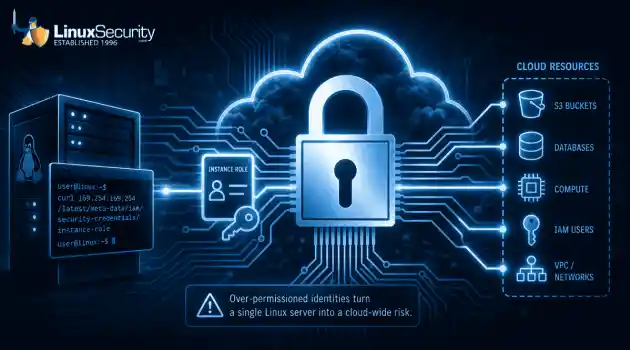
 For years, we secured our Linux infrastructure by building walls: VPCs, security groups, and hardened SSH configurations. We treated the cloud like a virtual data center, assuming that if we kept the "bad guys" out of the network, our workloads were safe. . That model is no longer sufficient. Today, one of the most common paths from an initial compromise to a major cloud breach is the identity assigned to your Linux workload. When an attacker gains code execution on a Linux instance—through a...
 Jul 17, 2026
 security practices patch management
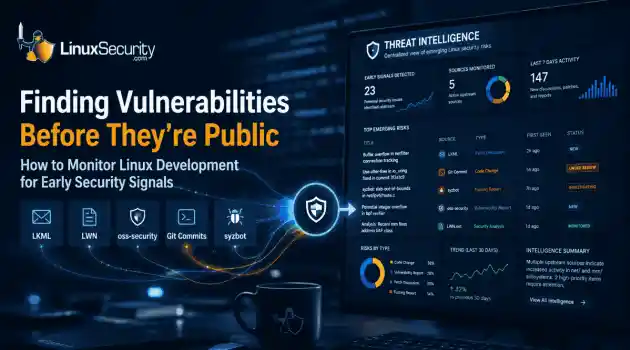
 Most of us don't hear about a kernel vulnerability until a CVE lands in our inbox or the vulnerability scanner starts complaining. By then, the patch isn't new anymore. Kernel developers may have been passing it around for review, arguing over the implementation, or revising it for days before anyone outside that community noticed it. None of those discussions are secret. They're sitting in mailing list archives, Git commits, and patch reviews where they've been the whole time. The strange...
Jul 14, 2026
 Linux security cyber attacks
 Every Linux server in your fleet produces thousands of events every minute. From journald logs and auditd records to kernel-level eBPF hooks, your systems are constantly talking. Most of that noise is just the mundane churn of system services, CI/CD runners, or routine administrative automation. But among that noise, an attacker might be establishing a foothold, moving laterally, or setting up persistence. The challenge for any security team is: how do you separate the routine from the...
Jul 13, 2026
 open-source infrastructure risk
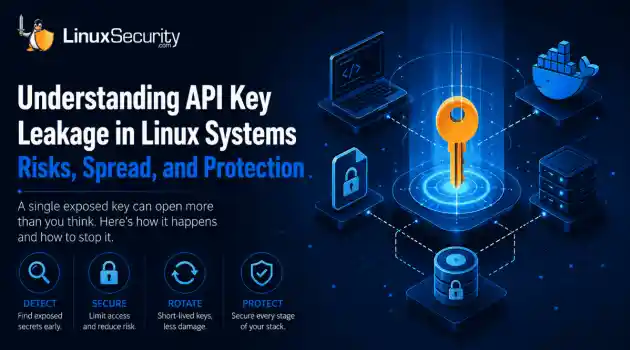
 Security scanners flag exposed API keys in public repositories every day. The initial response is usually predictable: delete the commit, revoke the credential, and move on. That’s a mistake. . In a real Linux environment, an API key never stays in one place. By the time it hits a public repo, it’s already everywhere. It’s in the CI/CD pipeline. It’s in your container registry. It’s in the build logs. It’s in the backups. Git makes this worse because the history never dies. Deleting a file in...
Jul 11, 2026
 open-source rootkit
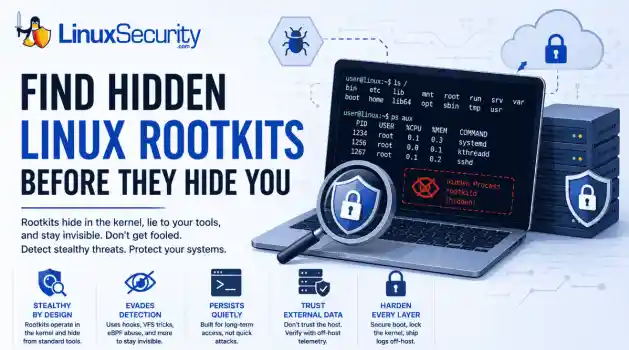
 Most of us think of Linux rootkits as ancient history—the stuff of 90s hacking forums and clunky malware that would crash your system if you looked at it the wrong way. But if you think they’ve gone away, you’re mistaken. They’ve just gotten smarter. . Modern attackers aren't using the noisy tools of the past. Today’s threats are surgical. Many of today’s most advanced Linux rootkits operate at the kernel level or abuse legitimate system features to blend in with normal traffic. They’re...
Jul 09, 2026
 Refine features
X Clear Filters
Get the latest News and Insights
Get the latest Linux and open source security news straight to your inbox.
Community Poll
Should Linux servers automatically install security updates?
Loading...
Explore Latest Linux Security features
We found -2 articles for you...
102
 secure developmentrisk assessmentmemory safety
Why Memory Safety Is Becoming a Core Requirement in Modern Software
Most information security best practices are built on a single, comfortable assumption: that we have control over what software is running on our hardware, and that the underlying system behaves exactly as we expect. We assume that the memory management happening under the hood is a solved problem—a silent utility that stays within its lines. . But the data from the world's largest tech giants just blew that theory apart. From Microsoft to Google, the telemetry is consistent: roughly 70% of all serious software vulnerabilities are memory safety issues. We aren’t just dealing with occasional glitches; we are dealing with a structural failure in how we’ve built software for forty years. The Hidden Layer of Software Security Everyone Ignores When we discuss how to secure a system, we usually focus on the perimeter: hardening SSH, configuring firewalls, and managing user identities. But there is an invisible layer of legacy code and memory-unsafe programming languages running in the background that most admins never touch. Many of the most common software vulnerabilities—like buffer overflows and use-after-free errors—stem from how applications manage memory. Languages like C and C++ are the bedrock of our infrastructure, but they operate on an "honor system." They give developers total control over system memory, but they offer no guardrails. Academic and technical research—such as studies on memory safety issues and vulnerabilities in C/C++ systems —confirms that memory safety issues are a primary cause of kernel and system vulnerabilities. The problem? You can harden your network security all day, but if the foundation is written in an unsafe language, you’ve left a root-level power tool sitting on the counter for anyone to pick up. True system security isn't just about who can get into the box; it's about what the box is allowed to do once they're there. How Memory Safety Breaks System Security The technical failure here is a classic lack of boundaries, butthe design failure is much deeper. In a healthy system security model, trust should be atomic—it either exists or it doesn't. Memory-safe languages (like Rust) enforce this at the compiler level. They check if the data belongs in that memory space, and if it doesn't, the code simply refuses to compile. Memory-unsafe languages break this by splitting trust across layers. The developer has to manually verify every single pointer, and the moment there is a gap between the check and the action, the gap becomes a playground for exploits. Why Endpoint Security Doesn't Catch This This is where the reality of endpoint security gets uncomfortable. Most security tools are designed to look for "bad" things: known malware signatures, suspicious network traffic, or unauthorized binary execution. Memory corruption or a buffer overflow doesn't look "bad" to a standard monitor: The process is a legitimate system component. The action is a legitimate system function. The error happens entirely in the background. Security tools trust the same system components that attackers abuse. If your security strategy is purely reactive, it will stay silent while the system's own "trusted" tools are used to dismantle it from the inside. Linux and Rust: A Signal, Not the Story When a vulnerability is widespread, it stops being a local issue and becomes a massive failure in secure software development, as detailed on the OSS-Security mailing list and industry research. This isn't just a misconfiguration; it's the default behavior shipped to millions of users. Distribution Default Language Risk Profile Ubuntu / Debian Predominantly C/C++ High (The backbone of many servers) RHEL / Fedora Mixed C / Legacy Medium-High (Enterprise standard) The adoption of Rust in the Linux kernel is the clearest signal we have that the tide is turning. This shift is especially visible in Linux kernelsecurity , where new components are increasingly written with memory safety in mind. As noted in recent reports on Linux kernel adoption, this isn't about replacing every line of C overnight. It’s about starting with the most dangerous parts: drivers and new kernel components. By bringing open source security to the core of the operating system, Linux is demonstrating that even the most critical infrastructure can—and must—evolve without sacrificing performance. Rust-based drivers are already proving safer than C-based ones. Rust improves memory safety , concurrency safety, and performance simultaneously. You can also get a clear visual summary of how the integration functions by watching the Linux 7.0 and Rust Integration video . Breaking the Information Security Model We need to be clear about the stakes: Root access is total access. All your software security best practices assume that you have control over what software is running on your hardware. If an attacker can exploit a memory bug to gain arbitrary code execution or escalate privileges, that control is gone. They don't need to crack your database encryption; they can just pull the keys directly from memory. Your entire policy model is built on the assumption that software execution is a privileged, controlled act. Vulnerable, memory-unsafe code turns that act into a free-for-all. How to Secure a Server Right Now (Without Waiting) Most environments should not be relying on unsafe dependencies or unverified memory access where it can be avoided. Here is how to secure a server against this class of vulnerabilities: Audit: Check your dependencies and system binaries for unmanaged C/C++ libraries. Isolate: Stop using unneeded background helper services. If you don't need a middleman, kill the service and mask it so it can't be "woken up" by other processes. Patch/Migrate: Ensure your environments are utilizing up-to-date, securely compiled packages and dependencies. The Real Lesson: StopTrusting Default System Behavior If there is one thing that cybersecurity best practices consistently get wrong, it’s the idea that "default" equals "safe." Defaults prioritize usability. They want the system to "just work" for the broadest number of people. But security assumes correct behavior, and reality breaks both. If structural flaws can sit in default installs across every major distribution, the problem isn’t a lack of patching; it’s a lack of skepticism. The most dangerous systems are the ones that look normal. Security isn't about the tools you've installed. It's about the trust you've refused to give. Stop trusting that the "standard" install has your back. Start validating the foundation. . Explore the critical nature of memory safety in modern software and its impact on system security and vulnerabilities.. Memory Safety, Software Security, Secure Development Practices, System Integrity. . MaK Ulac
 Apr 30, 2026
•
Apr 30, 2026
•
102
 cloud securityautomation toolsLinux management
Linux Management Techniques for MSPs to Enhance Security and Efficiency
Managed Service Providers (MSP) prioritize Linux device management in their core operation. Organizations have started to rely heavily on their Linux systems, so administering these devices appropriately is essential within an MSP. It must deliver efficient Linux device management that aligns with the client’s needs. . Linux MSPs must focus on efficient operations, robust endpoint protection, and Linux-based solutions that can expand the services offered within a cloud security framework. Such benefits can empower an MSP to meet and exceed client expectations by providing top-notch automation, enhanced data and network security, effective security patching, and comprehensive inventory management. This article will discuss how MSPs can help Linux users improve security posture and streamline operations. What Linux Device Management Techniques Should I Use for MPSs? MSPs help clients oversee their IT infrastructure so organizations can embrace their systems and master the essential tactics required to deliver effective, comprehensive services to a business. Let’s review the various aspects of MSPs that help cloud security frameworks thrive. Automation and orchestration Efficient workflow : Streamline routine tasks such as system updates, backups , and general monitoring with automation tools that reduce the necessity for manual intervention. MSPs can deploy scripts that automate repetitive processes and enhance operational efficiency. Seamless operation : Manage complex workflows with orchestration tools that automate the provisioning of new resources, ensuring smooth client operations that do not experience delays. Remote Troubleshooting and Diagnostics Instant remote access : Diagnose and troubleshoot network security issues using remote access tools. Such tactics can help security professionals formulate conclusions about client systems that can help determine the best resolution that minimizes downtime. Diagnostic tools Enable comprehensive MSPs toidentify hardware and software problems, enabling them to develop timely, accurate solutions that reduce downtime and maintain client satisfaction. Patch management and security Patches and vulnerability scanners : Keep systems up to date with the latest security patching updates , especially when managing different client IT infrastructures from one location. MSPs can rely on network security toolkits to schedule and automate Linux patch deployments, preventing emerging threats from causing damage. Best practices for data and network security : Implement various best practices to protect your server from harm. Configure firewall rules, set up Linux intrusion detection systems, deploy antivirus solutions and maintain regular security assessments and cloud security audits to ensure you have robust endpoint security solutions in place. Asset inventory management Asset discovery : Onboard client endpoints with asset discovery tools that make setting up Linux devices much easier while also allowing users to maintain a detailed inventory of client devices, including hardware specifications and software installations. Inventory is invaluable in managing licenses, tracking updates, and ensuring user compliance. License management : Ensure compliance and cost control with an efficient software license management that MSPs can track to prevent non-compliance network security issues. How Can I Streamline MSP Operations with Linux? MSPs have dynamic settings in which to work ever since Linux-based systems have become integral to the contemporary business landscape . Therefore, MSPs must optimize their operational processes to maintain a competitive edge when delivering exceptional services. Here are a few ways you can improve MSP management on Linux: Enhance operational efficiency with Linux device management Resource allocation : Maintain optimal performance with MSPs that can efficiently allocate Linux environments to keep client systems responsiveand efficient. This robust resource allocation and management service helps organizations continue to thrive. Scalability : Linux has scalability that allows MSPs to adapt to a client’s constantly changing needs. Whether a client's business grows or scales down, Linux-based systems adapt to such alterations to prevent significant disruptions and downtime. Scripting and automation : Efficient MSP operations rely on security automation, so Linux has a safe environment from which to script and automate routine tasks, including software updates, backups, and security checks. Ensure comprehensive endpoint protection Security-centric distribution : Built-in Linux security features and network security toolkits can enhance endpoint protection . Fortify clients' systems with MSPs that use such distributions to combat cybersecurity vulnerabilities and other network security threats. Regular updates : Linux is well-known for its rapid response to cybersecurity vulnerabilities . Updating Linux systems regularly can prevent attacks in network security, as you can implement security patching once you notice issues within the server. Endpoint security solutions : MSPs integrate robust endpoint software within Linux environments to provide advanced protection against malware threats , ransomware , and other network security issues. Expand service offerings with Linux-based solutions Cloud services : MSPs leverage Linux to provide clients with cloud security frameworks and services. Such solutions offer scalability, cost-effectiveness, and flexibility, keeping Linux a preferred business outlet. Open-source solutions : Linux is synonymous with open-source software . MSPs can fulfill client requirements with cost-effective and customizable open-source solutions, enhancing flexibility with efficient open-source technology. Containerization : Linux-based containerization platforms , such as Docker and Kubernetes, enable MSPs to offer containerized services toclients. Containers can reduce operational complexities while businesses manage applications in an efficient, portable, easy-to-use framework. How Can MSPs Simplify Linux Management with ManageEngine Endpoint Central MSP? A comprehensive solution like ManageEngine Endpoint Central MSP can enable streamlined Linux device management for businesses. ManageEngine is available both as an on-premises and cloud-based solution. The service provides a holistic suite of network security toolkits that help manage all endpoints, including Linux devices. Endpoint Central MSP can empower clients to automate tasks, troubleshoot remotely, manage security patching, and maintain asset inventory. This software delivers top-tier Linux device management services efficiently and effectively since it is an all-in-one solution that equips MSPs to meet the evolving needs of their clients and thrive in the competitive MSP landscape. Endpoint Central MSP simplifies Linux device management, leading MSPs to success in managed services. Final Thoughts on Linux Device Management for MSPs Utilizing an MSP to manage your Linux devices is essential for maintaining data and network security on your server. The various solutions and techniques we mentioned in this article prove effective in helping companies boost their cloud security framework. . Linux service providers need to prioritize streamlined processes, strong device security, and solutions tailored for Linux platforms. Linux Management Solutions, Managed Service Providers, Endpoint Protection, Cloud Security Techniques, Automation Tools. . Duane Dunston
Nov 28, 2023
•

102
security advisorynetwork threatspatch managementAutomating Linux Patch Management: Boost Security and Efficiency
Although patching endpoints is exhausting and redundant, Linux admins must do so when keeping up with the latest security upgrades so that their company can maintain and improve its security posture frequently. Failure to have robust data and network security patching in place and implement Linux patch management best practices can leave a system vulnerable to cybersecurity exploits and Linux network security threats, including infected endpoints and harmful malware integration. . Automating patch deployment in Linux can relieve admin stress while ensuring a server handles all cybersecurity vulnerabilities. ManageEngine Endpoint Central can make the automation process simple, efficient, and effective. In this article, we will share what we learned from ManageEngine representatives about how their services can patch network security issues and stay up-to-date with the latest information security news so they can strengthen your safety measures as needed. Linux: An Increasingly Popular - and Targeted - OS Businesses continue to use Linux to power their digital infrastructure due to its universality, dependability, and adaptability. However, too many organizations need to take care of security patching Linux endpoints, which can put users, critical assets, and the brand's image at risk. Not patching services such as Apache or NGINX and third-party software can leave Linux systems with cybersecurity vulnerabilities that make them easy targets for threat actors. Linux OS’s growing popularity and integral role in powering web servers worldwide has made the server more susceptible to ransomware and phishing attacks in network security that can damage valuable data. Linux users must strengthen their data and network security to combat cybersecurity trends. Companies can enhance protection in their third-party applications and Linux kernel so that everything is up-to-date and network security issues occur less frequently. Rotate user credentials regularly, turn off root logins, and educateadministrators regarding the latest security news and Linux patch management best practices to keep your business safe. Linux Endpoint Security & Management Has Never Been More Challenging for the Organization Securely and efficiently managing Linux endpoints has never been more difficult for organizations due to the pandemic's heterogeneous workforce, the frequent use of multiple Linux distros within an organization, the prevalence of unpatched third-party applications, and the complexity of security patching. Addressing the security needs for endpoints in the organization and remotely is challenging for admins due to the difference in time zones, bandwidth, and secure authentication modes. With a hybrid/remote work model, organizations need help to strike the right balance between ensuring productivity and maintaining data and network security. The lack of proper bandwidth in remote endpoints, the absence of secure authentication modes such as firewalls or a VPN , and the difference in geographical locations (time zones) make endpoint security increasingly challenging. Moreover, unifying and prioritizing security updates across many organizations running multiple Linux distros in the network can be difficult. Third-party applications that need upgrades can make downloads even more taxing on workers. Still, failure to keep these applications updated at all times can lead to exploits in cybersecurity as severe as ransomware attacks. Implementing all patch management stages for your company can take time and effort, but automation services like ManageEngine can improve security posture behind the scenes. ManageEngine Digital Marketing Analyst Sylvester Jayan states, "Despite the many advantages of open-source Linux, automating patch deployment in Linux can be challenging. So, patching continues to remain a significant hurdle for many businesses." Here are some of the various obstacles Linux users face in managing cybersecurity: Excessive red tape: Some patches undergo testing stagesfrom various teams before clearance. Lack of staff: Organizations may need more funds for a dedicated team, and workers could have difficulty juggling their responsibilities and Linux patch management. Pain in patching: Security patching is repetitive, time-consuming, and resource-intensive. Resistance from end users: End users seek convenience and do not want to restart their devices to update the latest cybersecurity trends. Fear of breakage: Admins worry about facing technical glitches once new updates get installed, so workers might delay patching or follow the n-1 patching method. Automating patch deployment in Linux can take care of these security patching concerns. What Is Required to Secure Linux Endpoints Against Modern Threats? Securing Linux endpoints against today's advanced attacks in network security requires a defense-in-depth approach. No security feature or mechanism can defend against sophisticated and evasive network security threats like ransomware and fileless malware . Organizations should prioritize the following critical areas in their Linux endpoint security solutions: Patch management: Keep cybersecurity vulnerabilities at bay by implementing security patching on third-party applications and the OS to quickly mitigate bugs and network security issues. Reducing SSH attack surfaces: Harden Secure Shell (SSH) access methods in Linux endpoints via least privileged access, host-based firewalls, and so on to prevent the chances of an attack. Disabling irrelevant services: Turn off unused or unnecessary services with endpoint hardening to prevent threat actors from enabling and leveraging those options. Monitoring root accounts: Use strong passwords, rotate passkeys frequently, and monitor accounts occasionally. Auditing sessions: Record terminal sessions so that cloud security audits can use them as playbacks in the event of a security incident. Fortify endpoints across organizations by deploying a reputableunified endpoint management and security solution that addresses these areas. Improve security posture with these solutions so that companies can stay safe. Admins might resist utilizing specific solutions in the market since they may need to be more intuitive and user-friendly. Additionally, mergers and acquisitions can drastically increase a solution's features overnight, making communication between different back-end processes and workflows challenging. Also, most vendors need more pricing transparency before deciding about automated endpoint solutions. Effective Linux Patch Management Is Critical to Robust Security, Yet Too Often Overlooked Effective Linux patch management is essential to maintaining a strong security posture and preventing attacks in network security. Detecting, downloading, testing, approving, and installing new or missing patches for Linux devices within a network gives users a centralized view of the applicable endpoint Linux patches. Classify a system as “Vulnerable,” “Highly Vulnerable,” and “Healthy” so that companies can implement the appropriate measures to keep the network safe from cyberattacks. Keeping Linux endpoints up-to-date is critical, as Linux software updates include cybersecurity vulnerability fixes, better hardware compatibility, and improved stability. In some cases, these significant changes enhance the user experience overall. If you delay security patching, you can miss out on all of these new features and improvements, presenting your company to malicious hackers who can create network security issues that infect your machine with malware and compromise your business. Key Benefits of Automating Linux Patch Management Admins and organizations can ensure that endpoints remain up-to-date with the latest Linux security patching by implementing a unified automated endpoint management and security solution like ManageEngine Endpoint Central. Such operations for automating patch deployment in Linux conserve time and energy, so businessescan focus elsewhere. Here are the notable benefits organizations will see when automating data and network security: Enhanced security: Mitigate Zero-Day attacks and other critical cybersecurity vulnerabilities by preventing delays in patch deployment. Elimination of redundancy: Automate downloads, tests, deployments, and reports so you can negate repetitive security tasks. Prevention of manual errors: Avoid network security issues due to poor configurations through automated patch management that can prevent the regulation of such errors. Secure Linux Endpoints Against Vulnerabilities & Attacks with ManageEngine Endpoint Central ManageEngine Endpoint Central helps admins responsible for controlling network devices increase efficiency by automating network device activities and managing heterogeneous OSs from a single console. Here are the features Endpoint Central offers to assist your enterprise: Asset management : Access real-time information about the hardware and software used across the organization, along with web-based inventory management. Patch management : Ensure that all Linux machines on your network are up-to-date with Endpoint Central’s end-to-end critical or recent security patching and non-security updates (RedHat, Ubuntu, CentOS, Debian, Oracle, and SUSE machines) that total over 250 OS upgrades. Software deployment: Distribute, install, update, and uninstall software applications remotely and automatically in seconds with Endpoint Central’s 38,000+ Ubuntu and 200+ Debian predefined application templates. Configurations: Execute custom scripts to perform repetitive administrative tasks efficiently, install or uninstall patches and software as per convenience, and display messages to target users. Remote control: Access computers on LAN and WAN using Active X and HTML5 Viewer ( Note: Remote control will only work if the X Window GUI component is available in agent computers). Privately manage devices and perform repairswith one-click desktop sharing. Vulnerability assessment & remediation: Perform tests and mitigations in minutes. Insightful desktop management reports: Gain access to comprehensive reports on asset details, patch management, software deployment, network inventory, Active Directory report information, and custom reports. Jayan explains, "Endpoint Central is a great fit for IT executives who are looking to consolidate all of their endpoint management and security. Our dashboard is our single source of truth that lets you manage end-to-end IT from a single portal." He elaborates, "Our solution is also ideal for organizations that lack IT resources and expertise. Getting up and running with Endpoint Central is possible within a few weeks, even with zero technical knowledge." Endpoint Central Automated Linux Patch Management: An Easy & Effective Way to Stay on Top of Linux Security Updates Automating patch deployment in Linux is simpler than ever with ManageEngine Endpoint Central. Endpoint Central provides solutions for Linux patch management that keep Linux network devices up-to-date, mitigate critical network security threats, and ensure no cybersecurity vulnerabilities are present. Admins can completely automate the process for zero downtime, allowing for increased productivity and compliance. Endpoint Central offers automatic and manual security patching, as it has a streamlined patch management process to ensure no system is left unpatched. Here are the variety of critical features Endpoint Central provides to improve Linux patch management: The updated vulnerability database supports Linux patches within 24 hours of release. Discern how vulnerable your network is at a glance with the system health policy . Disable automatic updates to control your installed network patches completely. Test & approve patches so none of your network systems face downtime. Schedule patch deployment during off-hours to preventinterference with daily tasks. Automate Endpoint Central in just four minutes! Deploy the latest cybersecurity trends and updates with a recurring task automation setup , cutting down manual intervention and errors. Install patches using Endpoint Central's mobile app. Gain insights by viewing detailed reports regarding network and patch compliance. Support Operating Systems like Windows, Mac, Linux, and more you can find here. Jayan elaborates, "System administrators can automatically apply updates missing from their network devices using Endpoint Central's Automate Patch Deployment (APD) capability, without user involvement. APDs make sure there are no delays in patch delivery. Complete other, more crucial duties in the time your company saved using automation. Security updates, non-security updates, updates from third parties, and updates for antivirus software can all deploy automatically." Endpoint Central's Automated Patch Deployment (APD) capability benefits organizations: Deployment and distribution adjustments help tighten security. Apply authorized patches directly following their download without having to wait. Every time your system disconnects from the server, agents automatically inspect your system upon refreshing and reconnecting to implement cybersecurity vulnerabilities and security patching immediately. Agents can contact the server every 90 minutes. Agents continue deployment until they take care of all data and network security issues and their patches to meet the APD requirements. Our Final Thoughts on Automating Linux Patch Management & Improving Security The rise in attacks on Linux network security on Linux has made effective Linux patch management critical in establishing and maintaining a solid cybersecurity strategy. Automating patch deployment in Linux can improve security posture and optimize efficiency by making security patching seamless and easy. ManageEngine Endpoint Centraloffers unified endpoint management and data and network security, including automated Linux patch management, enabling admins and organizations to optimize time and resources while engaging in Linux patch management best practices. . Streamlining software updates on Linux reduces the workload for administrators and simultaneously mitigates crucial security vulnerabilities across server infrastructures.. Automated Patch Management, Endpoint Security Solutions, ManageEngine Features. . Brittany Day
Jan 09, 2023
•

Get the latest News and Insights
Get the latest Linux and open source security news straight to your inbox.
Community Poll
Should Linux servers automatically install security updates?
Search Topics
Powered By

Linux Security - Your source for Top Linux News, Advisories, HOWTOs and Feature Releases
QUICK LINKS
subscribe to newsletters!
Like staying secure? So do we.
Sign up for updates, tips, and alerts!