Overly broad permissions can turn one compromised account into a much larger security problem. Learn how to reduce unnecessary access, review privileges, and apply least privilege across modern Linux systems. Review Linux Privileges×


Stay Ahead With Linux Security Features
 identity management security tactics
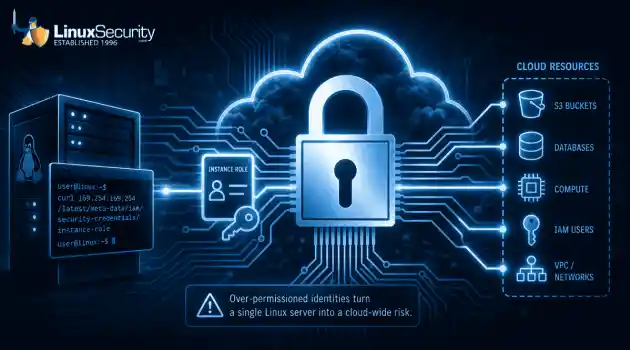
 For years, we secured our Linux infrastructure by building walls: VPCs, security groups, and hardened SSH configurations. We treated the cloud like a virtual data center, assuming that if we kept the "bad guys" out of the network, our workloads were safe. . That model is no longer sufficient. Today, one of the most common paths from an initial compromise to a major cloud breach is the identity assigned to your Linux workload. When an attacker gains code execution on a Linux instance—through a...
 Jul 17, 2026
 security practices patch management
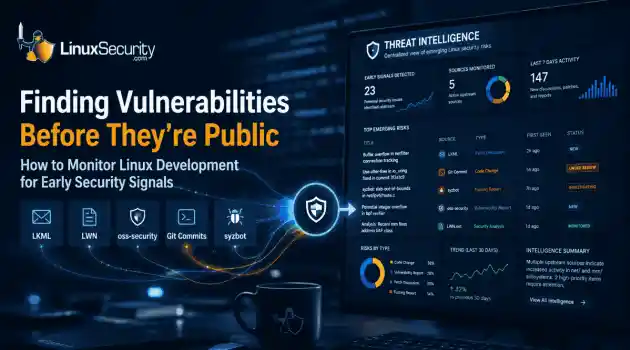
 Most of us don't hear about a kernel vulnerability until a CVE lands in our inbox or the vulnerability scanner starts complaining. By then, the patch isn't new anymore. Kernel developers may have been passing it around for review, arguing over the implementation, or revising it for days before anyone outside that community noticed it. None of those discussions are secret. They're sitting in mailing list archives, Git commits, and patch reviews where they've been the whole time. The strange...
Jul 14, 2026
 Linux security cyber attacks
 Every Linux server in your fleet produces thousands of events every minute. From journald logs and auditd records to kernel-level eBPF hooks, your systems are constantly talking. Most of that noise is just the mundane churn of system services, CI/CD runners, or routine administrative automation. But among that noise, an attacker might be establishing a foothold, moving laterally, or setting up persistence. The challenge for any security team is: how do you separate the routine from the...
Jul 13, 2026
 open-source infrastructure risk
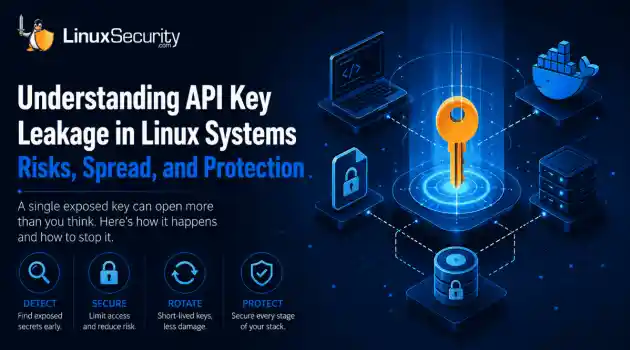
 Security scanners flag exposed API keys in public repositories every day. The initial response is usually predictable: delete the commit, revoke the credential, and move on. That’s a mistake. . In a real Linux environment, an API key never stays in one place. By the time it hits a public repo, it’s already everywhere. It’s in the CI/CD pipeline. It’s in your container registry. It’s in the build logs. It’s in the backups. Git makes this worse because the history never dies. Deleting a file in...
Jul 11, 2026
 open-source rootkit
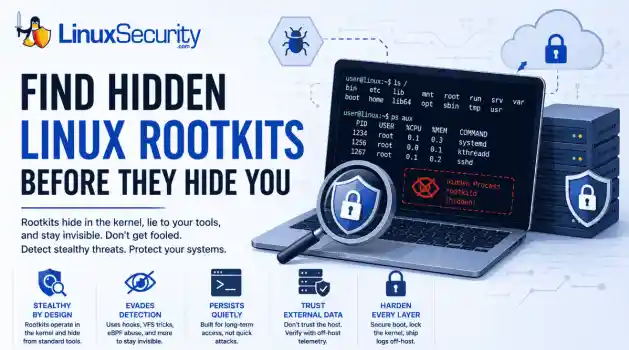
 Most of us think of Linux rootkits as ancient history—the stuff of 90s hacking forums and clunky malware that would crash your system if you looked at it the wrong way. But if you think they’ve gone away, you’re mistaken. They’ve just gotten smarter. . Modern attackers aren't using the noisy tools of the past. Today’s threats are surgical. Many of today’s most advanced Linux rootkits operate at the kernel level or abuse legitimate system features to blend in with normal traffic. They’re...
Jul 09, 2026
 Refine features
X Clear Filters
Get the latest News and Insights
Get the latest Linux and open source security news straight to your inbox.
Community Poll
Should Linux servers automatically install security updates?
Loading...

Explore Latest Linux Security features
We found -4 articles for you...
102
 email securityemail encryptionsecure communication
GPG Encryption: Secure Email Communication on Linux Systems
Much of today’s communication in the professional world occurs via email. What could be worse than sending an email to the wrong recipient or having an email intercepted by an attacker? . There are many reasons that emails should not contain information, especially confidential or personal identifiable information, in plain text. Doing so could put a full organization at risk. Is there a solution? Yes, encryption. Asymmetric cryptography, also known as public-key cryptography, is a cryptography process that is done through a public key and a private key. In asymmetric cryptography, the encryption of data is done with the public key. Once a person encrypts the data with the recipient’s public key, and sends the data, it can only be decrypted using the private, or secret, key. No one should have access to your private key, that way even if communication is intercepted or data is sent to an unintended person, they will not be able to decrypt and read the contents of the message. GPG, or GnuPG , is an implementation of PGP that can be used with different operating systems, including Linux. It is a software that allows for secure communication. GPG is also easily integrated with other applications, making it very simple to encrypt emails and share keys. This article will introduce GPG as a great way to keep private files private on Linux. How Does GPG Work? Using GPG on Linux is extremely uncomplicated. All you need to do is install it, generate your keys, share them, and then you can start using it. To install GPG, you can run sudo apt-get install gnupg in your command line. Once that is complete, run gpg --gen-key to generate a key pair. To allow people to send you encrypted data that you can decrypt using the private key, you need to share the public key. This is done by typing gpg --output ~/mygpg.key --armor --export
 Nov 21, 2022
•
Nov 21, 2022
•

Get the latest News and Insights
Get the latest Linux and open source security news straight to your inbox.
Community Poll
Should Linux servers automatically install security updates?
Search Topics
Powered By

Linux Security - Your source for Top Linux News, Advisories, HOWTOs and Feature Releases
QUICK LINKS
subscribe to newsletters!
Like staying secure? So do we.
Sign up for updates, tips, and alerts!