Overly broad permissions can turn one compromised account into a much larger security problem. Learn how to reduce unnecessary access, review privileges, and apply least privilege across modern Linux systems. Review Linux Privileges×


Stay Ahead With Linux Security Features
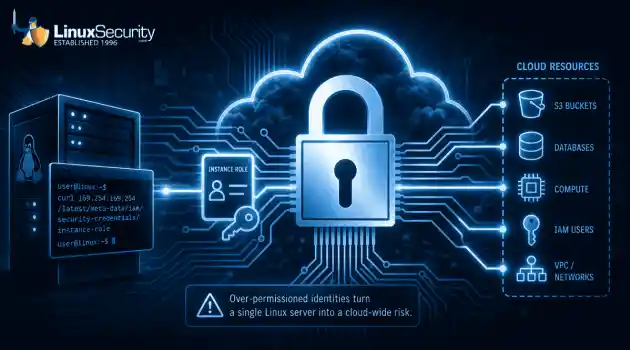
 identity management security tactics
 For years, we secured our Linux infrastructure by building walls: VPCs, security groups, and hardened SSH configurations. We treated the cloud like a virtual data center, assuming that if we kept the "bad guys" out of the network, our workloads were safe. . That model is no longer sufficient. Today, one of the most common paths from an initial compromise to a major cloud breach is the identity assigned to your Linux workload. When an attacker gains code execution on a Linux instance—through a...
 Jul 17, 2026
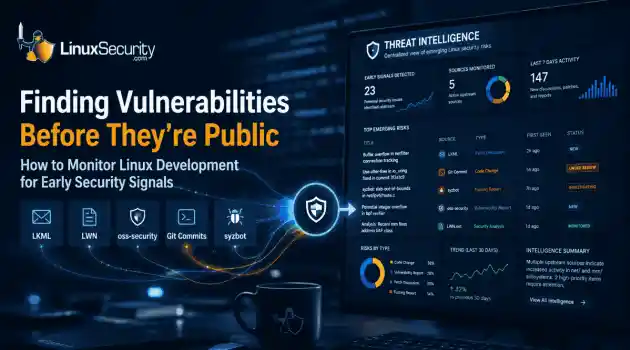 security practices patch management
 Most of us don't hear about a kernel vulnerability until a CVE lands in our inbox or the vulnerability scanner starts complaining. By then, the patch isn't new anymore. Kernel developers may have been passing it around for review, arguing over the implementation, or revising it for days before anyone outside that community noticed it. None of those discussions are secret. They're sitting in mailing list archives, Git commits, and patch reviews where they've been the whole time. The strange...
Jul 14, 2026
 Linux security cyber attacks
 Every Linux server in your fleet produces thousands of events every minute. From journald logs and auditd records to kernel-level eBPF hooks, your systems are constantly talking. Most of that noise is just the mundane churn of system services, CI/CD runners, or routine administrative automation. But among that noise, an attacker might be establishing a foothold, moving laterally, or setting up persistence. The challenge for any security team is: how do you separate the routine from the...
Jul 13, 2026
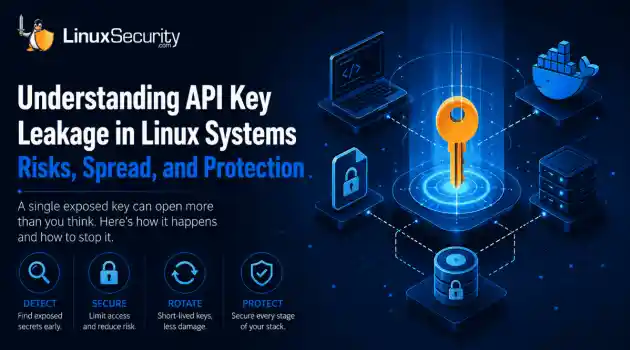 open-source infrastructure risk
 Security scanners flag exposed API keys in public repositories every day. The initial response is usually predictable: delete the commit, revoke the credential, and move on. That’s a mistake. . In a real Linux environment, an API key never stays in one place. By the time it hits a public repo, it’s already everywhere. It’s in the CI/CD pipeline. It’s in your container registry. It’s in the build logs. It’s in the backups. Git makes this worse because the history never dies. Deleting a file in...
Jul 11, 2026
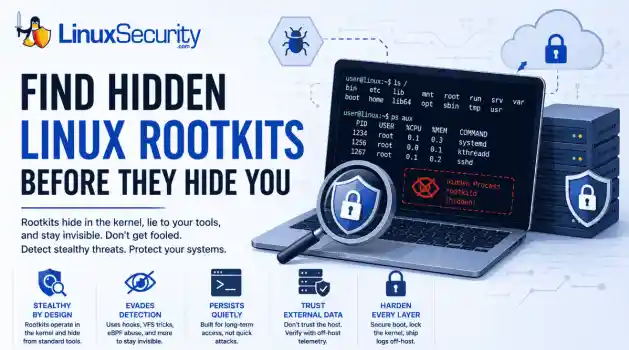 open-source rootkit
 Most of us think of Linux rootkits as ancient history—the stuff of 90s hacking forums and clunky malware that would crash your system if you looked at it the wrong way. But if you think they’ve gone away, you’re mistaken. They’ve just gotten smarter. . Modern attackers aren't using the noisy tools of the past. Today’s threats are surgical. Many of today’s most advanced Linux rootkits operate at the kernel level or abuse legitimate system features to blend in with normal traffic. They’re...
Jul 09, 2026
 Refine features
X Clear Filters
Get the latest News and Insights
Get the latest Linux and open source security news straight to your inbox.
Community Poll
Should Linux servers automatically install security updates?
Loading...
Explore Latest Linux Security features
We found 19 articles for you...
102
 security advisorynetwork securityintrusion detection
Proven Strategies to Assess the Security of Your Linux Server Setup
Linux is a widespread OS known for its robust data and network security . That being said, cybersecurity vulnerabilities are inevitable in any OS. Therefore, Linux system administrators must be vigilant about monitoring and verifying the safety of their servers on an ongoing basis in order to protect sensitive data and prevent attacks on network security. After all, the majority of exploits in cybersecurity on Linux systems resulted from poor administration . . The only way to be sure your server is as well protected as needed is to test it and verify it is working as you expect. This article will introduce LinuxSecurity’s top methods and tools for checking that your Linux server security is safe. We will cover port scanning, intrusion detection, penetration testing, reverse engineering, and auditing, and we will guide you in the direction of other valuable resources to help you get started on your journey to stronger security. What Are the Top Methods for Verifying Linux Server Security? Port Scanning Port scanning, or the process of evaluating ports on a server to identify cybersecurity vulnerabilities, is one method that administrators should employ when looking to evaluate the overall security of a Linux server. Port scanning Linux servers reveals what ports are open to receiving information and what security devices exist between the sender and the target. This information can be used to identify potential network security issues that could be exploited by attackers. Linux users have an array of excellent port scanners to choose from. In this section, we’ll introduce our three favorite open-source port scanners and direct you to some helpful tutorials demonstrating how to perform a port scan on your Linux servers. Let’s take a look at three great port scanners available to Linux users: Nmap Nmap , which stands for “Network Mapper,” is by far the most popular and versatile port scanner available, for good reason. The free and open-source port scanner offers an array of optionsfor performing quick, effective scans on both local and remote networks. Nmap can be used for active port scanning to discover open ports on specific networks/hosts, as well as for host discovery to identify potential hosts that are responding to network requests. Linux Nmap’s capabilities extend beyond port scanning, as it can also be used for penetration testing, fingerprinting operating systems, vulnerability scanning, OS detection, and application version detection. Nmap has both CLI and GUI interfaces (the GUI is called Zenmap ) and can also be run from the classic command line terminal. You can learn how to install Nmap on Linux here . Learn how to perform a ping scan, a host scan, and an OS and services scan with Nmap. Unicornscan Unicornscan is the second most popular open-source port scanner after Nmap. It features renowned asynchronous TCP and UDP scanning capabilities as well as non-common network discovery patterns that provide alternative ways to find out important details about remote operating systems and services. Unicornscan can be used for both active and passive remote OS, application, and component identification. The fast, comprehensive port scanner offers custom module support, customized data-set views, and PCAP file logging and filtering. You can download Unicornscan here . Angry IP Scanner Thanks to its multi-thread approach that separates each scan, Angry IP Scanner is known for its impressive scanning speed. The free multi-platform scanner searches for open ports on any remote network and then exports scanned results into either TXT, XML, or CSV files. Angry IP Scanner has other notable features , including its web server and NetBIOS information detection capabilities and its easy, seamless plugin integration with Java. Angry IP Scanner Linux can be downloaded here . Intrusion Detection Intrusion detection , or monitoring a network or system for malicious activity or policy violations, is a critical part of maintaining a secure Linux server. The informationgathered through intrusion detection provides administrators with valuable insight into the attacks in network security that could potentially threaten their servers. This is valuable information to be aware of when setting up preventative defenses. In this section, we’ll examine a few great open-source Linux Intrusion Detection System (IDS) tools and honeypots that can help server administrators proactively identify and respond to network security threats to their systems, thus preventing data theft and system compromise. We’ll then explore the importance of monitoring logs. Snort Snort is the leader in free and open-source Network Intrusion Detection Systems (NIDS). The popular network security toolkit has various modes that can be used to analyze real-time traffic. The intrusion detection mode is based on a set of rules that the user can either create or download from the Snort community . Linux Snort can also be used for port scanning, OS fingerprinting, and detecting attacks in network security using signature-based and anomaly-based techniques. Snort is easy to install and supported by a large, vibrant community, which makes this cloud security scanner and detection service all the more reassuring. Snort can be downloaded here. Learn how to install and use Snort for intrusion detection in this LinuxHint tutorial . OSSEC In the realm of Host-based Intrusion Detection Systems (HIDS), OSSEC dominates. This full-featured open-source IDS tool is highly effective and extensible. OSSEC’s client/server-based management and logging architecture secures sensitive information against exploits in cybersecurity like tampering and theft by delivering alerts and logs to a centralized server. This server can analyze and notify regarding network security threats even if the host system is compromised or offline. A convenient benefit of this client/server design is one’s ability to centrally manage agents from a single server. OSSEC is very lightweight and is backed by a strong, supportive community.OSSEC can be downloaded here. Learn how to install and use OSSEC for intrusion detection in this LinuxHint tutorial . Suricata Suricata is a modern NIDS that employs signature-based, anomaly-based, and policy-driven intrusion detection methods. It features multi-threading capabilities, GPU acceleration, and multiple-model statistical anomaly detection. Suricata can examine HTTP requests, TLS/SSL certificates, and DNS transactions. Suricata is compatible with Snort's data structure, enabling users to implement Snort policies in Suricata. Suricata can be downloaded here. Cowrie Cowrie is a medium interaction SSH and telnet honeypot that logs brute force attacks in network security and shell interaction. The open-source honeypot emulates a Unix system in Python and functions as a proxy to log malicious activity. Cowrie features JSON logging for easy processing in log management solutions. Monitoring Logs Monitoring logs is an essential part of verifying the data and network security of a server. It must be done on a regular basis to ensure that your systems remain secure. Critical Linux log monitoring categories include application, event, service, and system logs. Many Linux distributions offer network security toolkits for automating this ongoing task. The Logwatch Linux application, for instance, sends a daily email report of all of the logs on a server, providing administrators with valuable information, including potential malicious activity, SSH attempts, IPs causing errors, and the number of sent emails in the server. In a large corporate environment, it is a common practice to send Logwatch emails (along with other mail directed to the root user) to a single company email list. Administrators in the company then subscribe to this email list to stay informed of any notifications regarding suspicious activity detected in any of the company’s server logs. Logwatch can be downloaded here. Fail2ban is another excellent application for monitoring logs and detecting intrusionattempts. This intrusion prevention software and cloud security framework keeps servers safe against brute-force attacks in network security by reacting to intrusion attempts. These reactions could be either installing firewall rules to reject potentially malicious IP addresses for a certain amount of time or blocking access to a specific port. Linux Fail2ban can be downloaded here. Penetration Testing Penetration testing (commonly referred to as pen testing or ethical hacking) is the practice of testing a computer system, network, or application to identify cybersecurity vulnerabilities that could be exploited by malicious actors. As you can imagine, information gathered in pen tests is invaluable in verifying the data and network security of a Linux server and preventing attacks. There are an array of excellent pentesting network security toolkits available to Linux users, and there is a certain group of Linux distro for penetration testing . In this section, we’ll introduce our top two distros for Linux penetration testing: Kali Linux and ParrotOS. Kali Linux Kali Linux is one of the most popular Linux distros among pentesters, ethical hackers, and security researchers. The flexible, full-featured distro contains hundreds of pentesting tools, protects sensitive pentesting data with LUKS full-disk encryption, and offers high customization levels. Kali Linux also offers training and support through the Kali Linux Dojo training suite. Key Features & Benefits: Kali Linux uses LUKS full-disk encryption to secure sensitive pentesting data against loss, tampering, and theft. “Forensics” mode makes this distro perfect for investigative work. Users can automate and customize their Kali Linux installations over the network. This flexible distro offers full customization with live-build . On the training suite, Kali Linux Dojo users can learn how to customize their own Kali ISO and learn the basics of pentesting. All of these resources are available on Kali’s website , freeof charge. Kali Linux also offers a paid-for pentesting course that can be taken online with a 24-hour certification exam. Once you pass this exam, you’re a qualified pentester! ParrotOS Parrot OS is a fully-portable laboratory for pentesting, reverse engineering, and digital forensics. The fast, lightweight distro is frequently updated and offers a wide array of hardening and privacy sandboxing options. ParrotOS tools and features are designed to be compatible with the majority of devices via containerization technologies such as Docker or Podman . Key Features & Benefits: ParrotOS provides pentesters and digital forensics experts with a state-of-the-art “laboratory” featuring a full suite of tools accompanied by standard privacy and security features. Applications that run on Parrot OS are fully sandboxed and protected. Parrot OS is fast, lightweight, and compatible with most devices. Reverse Engineering & Malware Scanning Reverse engineering, or the process of deconstructing an artificial environment to gain insight into its design, architecture, and code, can be extremely helpful in securing or verifying the data and network security of a Linux server. This process plays a central role in malware detection and analysis, as it can help administrators identify network security threats like malware on their systems, which they can then study, eliminate, and learn from so they can apply the knowledge to prevent future attacks in network security. In this section, we will profile the six malware scanning and reverse engineering tools Linux favors, as well as some toolkits and utilities. REMnux REMnux is a free, community-powered toolkit for reverse engineering and malware analysis. The toolkit conveniently enables analysts to investigate malware without having to find, install, and configure the tools needed to do so. REMnux offers a distro that can be downloaded as a VM in the OVO format and then imported into your hypervisor, installed from scratch on a dedicatedhost, added to an existing system running a compatible version of Ubuntu, or run as a Docker container . Chkrootkit Chkrootkit is a free and open-source rootkit detector that locally scans for signs of a rootkit and hidden security holes on Unix/Linux systems. The scanner consists of a shell script that checks system binaries for rootkit modification along with a selection of programs designed to scan systems for different network security issues. Chkrootkit can be downloaded here. Rkhunter Rkhunter is a powerful and user-friendly open-source tool designed to scan Linux systems for rootkits, backdoors, and local exploits in cybersecurity. The comprehensive cloud security scanner inspects and analyzes a system to detect hidden security holes. Rkhunter Linux can be downloaded here. Lynis Lynis is a powerful and popular malware and vulnerability scanning and auditing tool for Unix/Linux operating systems. The free and open-source scanner detects network security issues and configuration errors, performs firewall auditing, checks file/directory permissions, and verifies file integrity and installed software. Lynis can be downloaded here . Learn how to scan your Linux system with Lynis in this Opensource.com tutorial . LMD Linux Malware Detect (LMD) is a full-featured, open-source malware scanner designed specifically for hosted environments; however, this tool can be used to detect network security threats on any Linux system. Linux LMD includes a full reporting system, where administrators can view both current and past scan results accompanied by email alerts after every scan and an array of other useful features. The scanner can be integrated with the ClamAV scanner engine for stronger performance and improved security posture. Project Freta Microsoft recently announced Project Freta , a free cloud-based malware scanning tool for Linux. The tool uses snapshot-based memory forensics, comparing thousands of images of Linux VMs to identify previously undetected malware. Auditing Conducting frequent cloud security audits is an essential part of establishing the data and network security of your Linux servers. System auditing Linux enables administrators to discover security bugs, breaches, or policy violations on their systems. In this section, we’ll take a look at the Linux Auditing System (AuditD) and the insight that this valuable feature can provide administrators into the security, stability, and functionality of their systems. What is the Linux Auditing System? The Linux Auditing System (AuditD) is a native feature of the Linux kernel that collects information on system activity to facilitate the investigation of potential network security issues. AduditD works on the kernel level, where it can oversee all system processes and activities and uses the AuditD daemon to log what it finds. In most Linux distributions, AuditD is installed by default and runs automatically with the system. It logs information according to auditing and added rules. AuditD monitors three categories of events: system calls, file access, and select, pre-configured auditable events within the kernel. It enables administrators to audit activity using these categories of events, including authentications, failed cryptographic operations, abnormal terminations, SELinux modification, and program execution. When any one of the audit rules in place is triggered, AuditD outputs a comprehensive record that can be used to investigate the incident. When implementing the Linux Auditing System, you will likely need to create some of your own rules. There are two types of rules that administrators can write: file system and system call rules. System activities like specific scripts executed, userland events, and internal kernel behaviors cannot be triggered using AuditD. When writing rules, it is critical to remember that audit rules work on a “first match wins” basis. In other words, once audited activity matches a rule, no further rules will be evaluated. Thus, the order in which rules arewritten is of utmost importance. To view the audit records generated by a triggered rule, administrators can use the native ausearch and aureport utilities. Ausearch lets you search your audit log files for specific criteria, and aureport creates summary reports from the audit log files. It is crucial for administrators to ensure that AuditD is properly configured and hardened to provide genuine, reliable information. Begin by checking that AuditD’s configuration is immutable using the control option “-e 2.” Then, confirm that logs are stored in a centralized, secure location - ideally, a server dedicated to accepting remote syslog events. AuditD is a very useful and free feature for facilitating investigations, especially historical investigations, in response to an incident. That being said, AuditD does have some serious weaknesses that should be taken into consideration, namely bugginess, excessive overhead, lack of granularity, missing container support, and onerous output. Final Thoughts on Verifying Linux Server Security Regardless of the OS you’re running, securing your servers is an ongoing process that requires vigilant monitoring, testing, verification, and maintenance. In recent years, Linux has become an increasingly popular target among cybercriminals due to its growing popularity. However, the good news is that the majority of attacks in network security on Linux systems can be attributed to poor administration and can thus be prevented with greater attention to security and system hardening. Frequently verifying the data and network security of your Linux servers using methods such as port scanning, intrusion detection, penetration testing, reverse engineering, and auditing is the only way to confirm that your servers are indeed as secure as you need them to be. . The only way to be sure your server is as well protected as needed is to test it and verify it is wo. linux, widespread, known, robust, network, security, being, cybersecur. . Brittany Day
 Mar 27, 2023
•
Mar 27, 2023
•
102
 network securityintrusion detectionnetwork monitoring
Effective Network Intrusion Detection Guide: Snort Configuration Details
This document takes you through the basics of intrusion detection, the steps necessary to configure a host to run the snort network intrusion detection system, testing its operation, and alerting you to possible intrusion events. . Snort is a software-based real-time network intrusion detection system developed by Martin Roesch that can be used to notify an administrator of a potential intrusion attempt. The ever-increasing amount of Internet crackers, armed with "ready-to-run" exploits, as well as the sophisticated attacker that's intent on defacing your web page necessitates the use of a method to track their activity and alert you to this. Until now, intrusion detection devices were either dedicated-use commercial products, or not real-time and difficult to install. Snort is the solution for monitoring small TCP/IP networks where it is not cost-effective to deploy commercial products. Snort is an easy-to-use, "lightweight", and very functional alternative. What is Network Intrusion Detection? A Network Intrusion Detection System (NIDS) is a system that is responsible for detecting anamolous, inappropriate, or other data that may be considered unauthorized occuring on a network. Unlike a firewall, which is configured to allow or deny access to a particular service or host based on a set of rules. If the traffic matches an acceptible pattern, it is permitted regardless of what the packet contains. However, an NIDS captures and inspects all traffic, regardless of whether it's permitted or not. Based on the contents, at either the IP or application level, an alert is generated. Snort is a "lightweight" NIDS in that it is non-intrusive, easily configured, utilizes familiar methods for rule development, and takes only a few minutes to install. Snort currently includes the ability to detect more than 1100 potential vulnerabilities. Keep in mind that Intrusion Detection devices work in conjunction with other security measures, and are not a replacement for other good security practices. It is also quitefeature-packed right out of the box. Among its features include the ability to: Detect and alert based on pattern matching for threats including buffer overflows, stealth port scans, CGI attacks, SMB probes and NetBIOS queries, NMAP and other portscanners, well-known backdoors and system vulnerabilities, DDoS clients, and many more; Use syslog, SMB "WinPopUp" messages, or a file to alert an administrator; Develop new rules quickly once the pattern (attack signature) is known for the vulnerability; Record packets in their human-readable form from the offending IP address in a hierarchial directory structure. Used as a "passive trap" to record the presence of traffic that should not be found on a network, such as NFS or Napster connections; Used on an existing workstation to monitor a home DSL connection, or on a dedicated server to monitor a corporate web site Snort uses the popular libpcap library, the same library that tcpdump uses to perform its packet sniffing. Snort decodes all the packets passing by on the network to which it's attached by entering promiscous mode. Based upon the content of the individual packets and the rules defined in the configuration file, an alert is generated. Why Use Intrusion Detection? Intrusion detection devices are an integral part of any network. The Internet is constantly evolving, and new vulnerabilities and exploits are found regularly. They provide an additional level of protection to detect the presence of an intruder, and help to provide accoutability for the attacker's actions. Before Installing Snort There are a few things you should determine before you install snort. Do you have approval to run an intrusion detection device by your organization? Is the system you're installing snort on secure? The last thing you want is the feeling of that false sense of security that you get by looking at what you think is happening but really has been modified by an intruder. The use of OpenSSH is mandatory for remote access. Reading the SolarisSecurity FAQ and the Linux Security HOWTO should provide you with a starting point. Where are you going to put it? If you are simply trying to find out who is port scanning or attempting to attack your home system, it's an easy decision. However, placement in an organization may be more difficult. Is the date and time correct? Ensure the time and date are correct on the host that snort will be running on. Install the xntpd time server so you can be sure the time of the events you are recording is correct. Chances are it is included with or already installed on your system but may still need to be configured. Once you have found a suitable timeserver from the URL provided above, a root crontab entry such as the following should suffice: 00 * * * * root /usr/sbin/ntpdate -u The device may be placed outside an organization's firewall between the firewall and the external untrusted network. This allows snort to detect not only the attacks that may make it through the firewall, but also those that are blocked by the firewall. The presence of switches, routers and firewalls will all have an effect on the correct placement of the box. A decision must be made as to which network segment will catch the traffic you actually want to monitor. Placement of the NIDS on the local side of the firewall will allow the NIDS to monitor traffic that the firewall has already determined to be permissable, but not necessarily benign. This will, of course, not catch traffic that the firewall has already blocked, potentially masquerading port scans, probes and other types of attack. Single Interface The easiest configuration is a box with a single interface. The same interface that listens to the network traffic is the same one from which administration is done. Images Courtesy Network Flight Recorder This will be the typical configuration for home network users and administrators monitoring internal networks. Dual Interface In a dual-interface configuration, oneinterface is used to listen to network traffic in promiscuous mode while the other is used for remote administration. This type of configuration is used in environments where it is not possible to administrate the box from the same interface that is listening to the network traffic. In this configuration, the external interface should be well-protected and the box designed explictly for this purpose. The box should not be offering any network services except for ssh on the internal interface only. Images Courtesy Network Flight Recorder Installation of Snort The file INSTALL included with the distribution contains information on installing and configuration snort from the downloadable source code. It is very easy to compile, configure, and install. If you are a Red Hat or compatible user, a precompiled RPM file is available from . You will also need the libpcap-0.4 package which is included with all Linux distributions. The source code and other information are downloadable from . Installing the Snort Ruleset After snort is installed, you'll want to download the latest rules file. Currently there are two different rulesets that people use. A ruleset developed by Jim Forster can be downloaded from Another ruleset, developed as part of Max Vision's ArachNIDS work, is available from and updated hourly. The Max Vision ruleset is particularly nice because it follows the Common Vulnerabilities and Exposures (CVE) database, allowing people to refer to a particular vulnerability using a consistent name. From the CVE Frequently Asked Questions: "CVE is a list of information security vulnerabilities and exposures that aims to provide common names for publicly known problems. The goal of CVE is to make it easier to share data across separate vulnerability databases and security tools with this "common enumeration." " If you've installed the snort RPM, the /usr/sbin/snort-update script written by Dave Dittrich can be used to download thelatest Max Vision ruleset from cron: 00 00 * * * root /usr/sbin/snort-update -q It can also be downloaded from This assumes the wget package is installed, the local box can download the file at , and it can successfully deliver mail to an administrator. The snort-update script will place the vision.conf file in /etc/snort/vision.conf.new and an email notification will be sent to the local root account with the differences from the previous version, if any. You must then rename the vision.conf.new to vision.conf . You might also consider using the snort.org ruleset in addition to the Max Vision ruleset. This can be achieved by downloading the snort.org ruleset. Information on combining these rulesets together is included below. The backdoor-lib , misc-lib , overflow-lib and other similar files are included with the source code, but are pretty dated and not typically used. Before snort can be started, a few variables must be defined. Also included in the snort RPM is a file called rules.base which was derived from Max Vision's vision.conf file. It is a short file that contains a few variables that define your internal and external networks, hosts that snort should ignore portscans from, and on which networks snort should watch for portscans. It can also be downloaded from . A portscan is defined as TCP connection attempts to more than P ports in T seconds or UDP packets sent to more than P ports in T sections. Read Martin's "Writing Snort Rules" for a full description of portscan. You'll need to supply the information for your INTERNAL and EXTERNAL networks, and from DNS servers which tend to trigger the portscan detection. The rules.base file looks as follows: # # Taken and modified from "vision.conf", part of Max Vision's # ArachNIDs work. See /usr/doc/snort-1.6/README.snort-stuff for more # information on how to use this file. var INTERNAL 192.168.1.0/24 var EXTERNAL 63.87.101.0/24 var DNSSERVERS63.87.101.90/32 63.87.101.92/32 preprocessor http_decode: 80 443 8080 preprocessor minfrag: 128 preprocessor portscan-ignorehosts: $DNSSERVERS preprocessor portscan: $EXTERNAL 3 5 /var/log/snort/portscan.log # | # Log file (path/name) ----------------------------------+ # Ruleset, available (updated hourly) from: # # # Include the latest copy of Max Vision's ruleset include /etc/snort/vision.conf # # Uncomment the next line if you wish to include the latest # copy of the snort.org ruleset. Be sure to download the latest # one from # # include /etc/snort/06082k.rules # # If you wish to monitor multiple INTERNAL networks, you can include # another variable that defines the additional network, then include # the snort ruleset again. Uncomment the two following lines. # # var INTERNAL 192.168.2.0/24 # include /etc/snort/vision.conf # include other rules here if you wish. If you are on a dialup machine, the INTERNAL setting would be your dialup interface with a /32 subnet mask, indicating the host itself. Additionally, you may need to configure syslogd to log snort and other security events to a specific log file. Edit /etc/syslog.conf to log snort alerts, then signal syslogd to re-read the /etc/syslog.conf file: authpriv.* /var/log/secure.log [root@krypton ~]# /usr/bin/killall -HUP syslogd Using Preprocessors The preprocessor directives listed above are used to examine the data flow before the intrusion detection engine applies the ruleset to the packets. This can be used to modify the contents of the packet, or to signal the detection engine to not process a particular packet. The preprocessor http_decode: directive instructs the detection engine to convert the data within HTTP URI strings into a format that defeats attempts at eluding the content analysis strings used to examine HTTP traffic for suspicious activity. Supply the ports on which a web serveris running. The preprocessor portscan: directive is used to define the host or network for which snort should watch for a portscan. The /32 appearing after the IP addresses indicates CIDR notation for a 32-bit subnet mask (the host itself). For a Class C network, use /24 . It may also be necessary to exclude some hosts from triggering the portscan detection module. Boxes that generate legitimately generate traffic on a large number of ports in a short amount of time, including NFS or DNS servers are typical candidates. More on Patrick Mullen's portscan preprocessor can be found at . The portscan-ignorehosts preprocessor is used for this, and includes the hosts to ignore as its argument seperated by spaces: preprocessor portscan-ignorehosts: 63.87.101.90/32 63.87.101.92/32 You might consider trying it without the portscan-ignorehosts directive first, as you don't want to unnecessarily disable the ability to detect portscans if it's not necessary. The minfrag preprocessor checks for fragmented packets which can be used to disguise TCP packets from IP filters used in routers and hosts. Packets less than 512 bytes do not need to be fragmented with modern networks, and packets found smaller than that typically indicate attempts to subvert a firewall or intrusion detection. You should now be able to test your configuration file and the normal operation of snort: [root@krypton ~]# snort -d -l /var/log/snort -c /etc/snort/rules.base Initializing Network Interface... User level filter, protocol ALL, raw packet socket Decoding Ethernet on interface eth0 Initializing Preprocessors! ------------------------------------------------- Keyword | Preprocessor @ -------------------------------------------------http_decode : 0x8053070 minfrag : 0x8053290 portscan : 0x8053ce0 portscan-ignorehosts: 0x8054340 -------------------------------------------------InitializingPlug-ins! ------------------------------------------------- Keyword | Plugin Registered @ -------------------------------------------------content : 0x8052050 offset : 0x8052080 depth : 0x80520f0 nocase : 0x8052160 flags : 0x8052710 itype : 0x80528f0 icode : 0x8052a00 ttl : 0x8052b10 id : 0x8052bf0 ack : 0x8052cd0 seq : 0x8052dc0 dsize : 0x8052ec0 ipopts : 0x8054420 rpc : 0x8054670 icmp_id : 0x8054830 icmp_seq : 0x8054930 session : 0x8055300 -------------------------------------------------Initializating Output Plugins! ------------------------------------------------- Keyword | Output @ -------------------------------------------------alert_syslog : 0x8054a20 log_tcpdump : 0x8054ff0 ------------------------------------------------- +++++++++++++++++++++++++++++++++++++++++++++++++++ Initializing rule chains... 255 Snort rules read... 255 Option Chains linked into 140 Chain Headers +++++++++++++++++++++++++++++++++++++++++++++++++++ Performing Rule List Integrity Tests... ---------------------------------------Alert TCP Chains : OK Alert UDP Chains : OK Alert ICMP Chains : OK Log TCP Chains : Empty list... Log UDP Chains : Empty list... Log ICMP Chains : Empty list... Pass TCP Chains : Empty list... Pass UDP Chains : Empty list... Pass ICMP Chains : Empty list... --------------------------------------- -*> Snort! 192.168.200.189:32771 TCP TTL:42 TOS:0x0 ID:5410 ***F*P*U Seq: 0x0 Ack: 0x0 Win: 0x400 00 00 00 00 00 00 ...... The corresponding syslog entry looks like: Jun 18 00:48:31 krypton snort[8757]: MISC-Attempted Sun RPC high port access: 192.168.100.189:57554 -> 192.168.200.189:32771 Several perl scripts exist to process this information intoan HTML page which can be accessed periodically to determine what is occuring on the network. The snort2html is a perl script written by Dan Swan that does a nice job of producing useable information in HTML format. If you decide to save this in a directory accessable by a web server, be sure to apply the proper authentication mechanism to prevent outsiders viewing this file. It contains a great deal of helpful information to a potential intruder. It can be used as follows: [root@krypton ~]# /usr/bin/snort2html /var/log/auth.log This will produce an HTML file in /var/log/snort-log.html that is for use with the Max Vision ruleset and creates links to the CVE definition of each intrusion attempt. This version has been modified from the original to accept the filename from the command-line. You can edit this file to save the resulting HTML file in another location. Resources Lance Spitzner shows snort in action as he tracks an intruder and performs forensic analysis on the trails of the intruder. Fyodor has put together a document that describes the snort internals The snort download page includes pointers to source code, plugins to send snort output data directly to a database, the Win32 port, and the latest rulesets. The snort.org has a wealth of helpful information and documentation. Have questions or comments about this document? We'd love to discuss them with you- please leave a comment below! . Delve into Suricata, the advanced network threat detection framework. Configure triggers and observe network breaches in real-time.. Snort Detection, Network Monitoring, Intrusion Alerts, Open Source Solutions. . Brittany Day
Jan 14, 2022
•

102
 network securityintrusion detectionsecurity measures
Master Custom Snort Rules for Enhanced Security with EnGarde
There are already tons of written Snort rules, but there just might be a time where you need to write one yourself. You can think of writing Snort rules as writing a program. They can include variables, keywords and functions. Why do we need to write rules? The reason is, without rules Snort will never detect someone trying to hack your machine. This HOWTO will give you confidence to write your own rules. . Prerequisites: Bill Keys What you will need: 1. A machine to do your development on. These rules should NOT be run on a production server because the rules are only meant to be examples, which you can learn from. 2. Also you will need a client machine to connect to the machine which Snort is running on. 3. EnGarde Secure Community 3.0.18 or above with Snort installed. Syntax: The Guts of Rules The syntax may look a little strange at first but this section will explain it so you can start writing your own rules. Snort rules are divided into two sections: the rule header and the rule options. First, the rule header contains rules, actions, protocol, source and destination IP address, and source and destination ports. The second part is rule options, which contains an alert message and information on the parts of the packet that should be looked at to see if the rule action should be taken. Example: alert tcp any any -> 192.168.1.0/24 111 (content:"|00 01 86 a5|"; msg: "mountd access";) The text up to the first parenthesis is the rule header and the section inside the parenthesis is the ( rule options ). Rule Actions: This is where you describe the . Prerequisites: Bill Keys What you will need: 1. A machine to do your development on. These rules sho. there, already, written, snort, rules, might, where. . Anthony Pell
Mar 16, 2010
•
102
intrusion detectiondata protectionnetwork protectionKey Security Practices for Protecting Your Server Infrastructure
In a word, No. No machine connected to the internet is 100% secure. This doesn't mean that you are helpless. You can take measures to avoid hacks, but you cannot avoid them completely. This is like a house — when the windows and doors are open then the probability of a thief coming in is high, but if the doors and windows are closed and locked the probability of being robbed is less, but still not nil. . 1 What is Information Security? For our purposes, Information Security means the methods we use to protect sensitive data from unauthorized users. 2 Why do we need Information Security? The entire world is rapidly becoming IT enabled. Wherever you look, computer technology has revolutionized the way things operate. Some examples are airports, seaports, telecommunication industries, and TV broadcasting, all of which are thriving as a result of the use of IT. "IT is everywhere." A lot of sensitive information passes through the Internet, such as credit card data, mission critical server passwords, and important files. There is always a chance of some one viewing and/or modifying the data while it is in transmission. There are countless horror stories of what happens when an outsider gets someone's credit card or financial information. He or she can use it in any way they like and could even destroy you and your business by taking or destroying all your assets. As we all know "An ounce of prevention beats a pound of cure," so to avoid such critical situations, it is advisable to have a good security policy and security implementation. 3 Security Framework The following illustrates the framework needed to implement a functioning security implementation: [ Risk Analysis ] [ Business Requirements ] | [ Security Policy ] | [ Security Service, Mechanisms, and Objects ] | [ Security Management, Monitoring, Detection and Response ] This framework shows the basic steps inthe life cycle of securing a system. "Risk Analysis" deals with the risk associated with the data in the server to be secured. "Business Requirements" is the study which deals with the actual requirements for conducting business. These two components cover the business aspects of the security implementation. The "Security Policy" covers 8 specific areas of the security implementation, and is discussed in more detail in section 4 below. "Security Service, Mechanisms and Objects" is actually the implementation part of security. "Security Management, Monitoring, Detection and Response" is the operational face of security, where we cover the specifics of how we find a security breach, and how we react if a breach is found. 4 Security Policy The Security Policy is a document which addresses the following areas: Authentication: This section deals with what methods are used to determine if a user is real or not, which users can or cannot access the system, the minimum length of password allowed, how long can a user be idle before he is logged out, etc. Authorization: This area deals with classifying user levels and what each level is allowed to do on the system, which users can become root, etc. Data Protection: Data protection deals with the details like what data should be protected and who can access which levels of data on the system. Internet Access: This area deals with the details of the users having access to the internet and what they can do there. Internet Services: This section deals with what services on the server are accessible from the internet and which are not. Security Audit: This area addresses how audit and review of security related areas and processes will be done. Incident Handling: This area addresses the steps and measures to be taken if there is a breach of security. This also covers the steps to find out the actual culprit and the methods to prevent future incidents. Responsibilities: Thispart covers who will be contacted at any given stage of an incident and the responsibilities of the administrator(s) during and after the incident. This is a very important area, since the operation of the incident handling mechanism is dependent on it. 5 Types of Information Security There are 2 types of security. (1) Physical security / Host Security and (2) Network security. Each of these sections has 3 parts: Protection: Slow down or stop intrusions or damage Detection: Alert someone if a breach (or attempted breach) of security occurs, and quantify and qualify what sort of damage occurred or would have occurred. Recovery: Re-secure the system or data after the breach or damage and where possible, undo whatever damage occurred 5.1 Host Security / Physical Security Host Security / Physical Security means securing the server from unauthorized access. For that we can password protect the box with such steps as setting up a bios password, placing the computer box in a locked room where only authorized users have access, applying OS security patches, and checking logs on regular basis for any intrusion and attacks. In Host security we check and correct the permissions on all OS related files. 5.2 Network security Network security is one of the most important aspects of overall security. As I mentioned earlier, no machine connected to the internet is completely secure, so security administrators and server owners need to be alert, and make sure that they are informed of all new bugs and exploits that are discovered. Failure to keep up with these may leave you at the mercy of some script kiddy. 5.3 Which operating system is the most secure? Every OS has its own pros and cons. There are ways to make Windows more secure, but the implementation is quite costly. Linux is stable and reasonably secure, but many companies perceive it as having little vendor support. My vote for the best OS for security purposes goes to FreeBSD, another free Unix-like OS,but not many people are aware of its existence. 6 Is a firewall the final solution to the Network Security problem? No, a firewall is just a part of the security implementation. Again, we will use the example of a house. In a house all the windows and doors can be closed but if the lock on the front door of the house is so bad that someone can put just any key-like thing in and open it, then what is the use of the house being all closed up? Similarly, if we have a strong firewall policy, it will restrict unauthorized access, but if the software running on the box is outdated or full of bugs then crackers can use it to intrude into the server and gain root access. This shows that a firewall is not the final solution. A planned security implementation is the only real quality solution to this issue. 7 Security is a continuous process Continuing security is a on-going process. Security administrators can only conduct their work on the basis of the alerts and bugfixes released up to the date of securing, so in order to accommodate all of the fixes for the latest bugs, security work has to be done on a regular basis. 8 Does Security implementation create overhead and/or reduce performance? Yes, Security implementation creates a small amount of overhead, but it need not reduce overall performance drastically. In order to take care of such things, a well done security implementation has an optimization section where the security administration gives priority to both performance and security. While securing any software, we should secure it in such a way that it provides maximum performance. 9 Security Audits - What Should be Checked A security audit is a part of security implementation where we try to find out the vulnerabilities of the system and suggest actions to improve the security. In a normal audit, the points below should be checked, and a report with the results of that audit should be created. Check intrusion detection. Use chkrootkit or rkhunter for this purpose. Check forknown bugs in the software installed on the server - the kernel, openssl, openssh, etc. Scan all network ports and find out which ports are open. Report the ports that should not be open and what program is listening on them. Check whether /tmp is secured. Check for hidden processes. Check for bad disk blocks in all partitions. (This is just to make sure that the system is reasonably healthy.) Check for unsafe file permissions. Check whether the kernel has a ptrace vulnerability. Check the memory (Another system health check.) Check if the server is an open e-mail relay. Check if the partitions have enough free space. Check the size of the log files. It's better that the log size remains in megabytes. 10 How to know if you are being hacked? To find out if your box is compromised or not, follow these steps. These are the steps which I used to do and will be handy in most of the situations. 10.1 Check your box to see if your performance has degraded or if your machine is being over used. For that, use the commands vmstat Displays information about memory, cpu and disk. Ex: bash# vmstat 1 4 (where 1 is delay and 4 is count) mpstat Displays statistics about cpu utilization. This will help us to see if your cpu is over worked or not. Ex: bash# mpstat 1 4 (where 1 is delay and 4 is count) iostat This command displays statistics about the disk system. Useful options: -d - Gives the device utilization report. -k - Display statistics in kilobytes per second. Ex: bash# iostat -dk 1 4 (where 1 is delay and 4 is count) sar Displays overall system performance. 10.2 Check to see if your server has any hidden processes running. ps Displays the status of all known processes. lsof List all open files. In Linux everything is considered a file, so you will be able to see almost all of the activity on yoursystem with this command. 10.3 Use Intrusion Detection Tools rkHunter ( ) chkrootkit ( www.chkrootkit.org ) 10.4 Check your machine's uptime . If the uptime is less than it should be, this can mean that your machine's resources are being used by someone. Linux doesn't crash or reboot under normal conditions because it is such a stable OS. If your machine has been rebooted try to find out the actual reason behind it. 10.5 Determine what your unknown processes are and what they are doing. 10.5.0.1 Use commands like the following to take apart unknown programs readelf This command will display what the executable's program is performing. ldd This command will show the details of libraries used by a executable. string This command will display the strings in the binary. strace This command will display the system calls a program makes as it runs. 11 Hardening Methodology Read all security related sites and keep up to date. This is one of the main things a security administrator or server owner should do. Server owners should be made aware of security and its importance. Security training is an important part of an overall security package. Create a good security policy. Conduct security audits on the basis of this policy. Keep your OS updated by applying all patches. Install a custom kernel with all unwanted services removed and patched with either grsecurity or openwall. Disable all unwanted services and harden the services you leave running; Change file and directory permissions so that security is tightened. Install a firewall and create good rule sets. Test and audit the server on regular basis Install an intrusion detection system, log monitor, all of the Apache security modules, bfd, faf and tmp monitor. Make your partitions secure. Run a good backup system to recover data in case of an intrusion, crash, or other destructiveincident. Install a log analyzer and check your logs for any suspicious entries. Install scripts to send out mail or enable notifications when a security breach occurs. After a security breach try to find out how, when and through what the breach occurred. When you find a fix for it, document the details for future reference. 12 Summary Now lets conclude by covering the main steps by which a hosting server can be secured. 12.1 Determine the business requirements and risk factors which are applicable to this system 12.2 Devise a security policy with the above data in mind. Get management's approval and signoff on this security policy. 12.3 On approval of the policy, do a security audit on any existing systems to determine the current vulnerabilities and submit a report regarding this to the management. The report should also cover the methods needed to improve existing security. A quick checklist: Software Vulnerabilities. Kernel Upgrades and vulnerabilities. Check for any Trojans. Run chkrootkit. Check ports. Check for any hidden processes. Use audittools to check system. Check logs. Check binaries and RPMS. Check for open email relays. Check for malicious cron entries. Check /dev /tmp /var directories. Check whether backups are maintained. Check for unwanted users, groups, etc. on the system. Check for and disable any unneeded services. Locate malicious scripts. Querylog in DNS. Check for the suid scripts and nouser scripts. Check valid scripts in /tmp. Use intrusion detection tools. Check the system performance. Check memory performance (run memtest ). 12.4 Implement the security policy 12.4.1 Correct all known existing software vulnerabilities either byapplying patches or by upgrading the software. 12.4.2 Implement host security Protect your systems with passwords Check the file systems and set correct permissions and ownerships on all directories and files chmod -R 700 /etc/rc.d/init.d/* Use rpm -Va to find out if an rpm is modified Apply security patches to vulnerable software (ie. patch -p1 < patch file ) Remove all unneeded ttys and console logins by removing the entry from /etc/securetty Check system logs (eg: /var/log/messages, /var/log/secure, etc.) Set a password on the boot loader (lilo and grub both support this) Monitor the system (nagios or big brother) 12.4.3 Implement Network security Remove all unwanted users and groups. Use custom security scripts which will send out notification when sshing as root or while creating a user with uid of 0, etc. Require passwords with 16 characters (can be done by making changes in login.def). Disable unwanted services using tcpwrapper (unwanted services can also be disabled through xinet.d or xinetd.Conf). Set up an idle timeout, so that idle users will be logged out after a certain amount of time. Disable all console program access (eg: rm -rf /etc/security/console.app/ .) Enable nospoof option in /etc/host.conf. Specify the order in which domain names should be resolved (eg: order bind hosts). Lock the /etc/services file so that no one can modify it. Restrict direct root login (comment out the PermitRootLogin login option in sshd_config). Restrict su, so that only wheel group members are able to su. (can use pam or disable the permission of other for the su binary). Limit users resources (using pam, specify the limits for each user in /etc/security/limit.conf). Secure /tmp (mount /tmp with noexec,nodev,nosuid). Hide the serverdetails. Remove /etc/issues and /etc/issues.net. Disable unwanted suid and sgid files (eg: find -type -perm -04000 -o perm 02000 .) Examples of these: gpasswd , wall , and traceroute Using iptables, allow only pings from a specific locations (for monitoring systems to work). Take preventive measures against DOS, "ping of death" attacks, etc. Install a firewall (eg: apf and iptables) and only allow ports to operate which the box needs for its normal functions; block all other ports to prevent mischief. Links: rfxnetworks.com and yolinux.com/TUTORIALS/LinuxTutorialIptablesNetworkGateway.html Install intrusion detection (eg: install tripwire or aide ). Links: and redhat.com/docs/manuals/linux/RHL-9-Manual/ref-guide/ch-tripwire.html Install sxid to keep an eye on suid and sgid scripts. Restrict ssh to specific IP addresses and specific users (I suggest key authentication using passphrase). Install logcheck to check the logs. Install tmpwatch to delete the unused files from /tmp directory. Install and setup portsentry and configure it to use iptables to block IPs. Install mod_security and mod_dosevasive to safe guard apache. Delete files with nouser and nogroup. Deleted unwanted files/folders in htdocs, disable directory indexing. Check for unwanted scripts in /root, /usr/local, /var/spool/mbox. Install BFD and FAF for additional security. Disable open email relaying. Submit a status report to management detailing all discovered vulnerabilities and fixes. 12.5 Testing phase Use tools like nessus, nikto, and nmap to do a penetration test and see how well your server is secured. Also do a stress test. Security is of utmost importance to a server, compromising security is compromising the server itself. Hence, an understanding of the same is a prerequisite to serverownership and administration. About this document... This document was generated using the LaTeX 2 HTML translator Version 2002 (1.62) My name is Blessen and I prefer people calling me Bless. I got interested in Linux when I joined the software firm, Poornam Info Vision Pvt Ltd. They gave me exposure to linux. I am a B.Tech in Computer Science from the College of Engineering, Chengannur. I passed out in the year 2001 and got into the company that year. During my work, I was passionate with Linux security and I look forward to grow in that field. My hobbies are browsing net, learning new technologies and helping others. In my free time I also develop open source softwares and one of them is a scaled down version of formmail. The project is called "Smart Mail" which is more secure than formmail. Contact Blessen Cherian Copyright © 2005, Blessen Cherian. Released under the Open Publication license . 1 What is Information Security? For our purposes, Information Security means the methods we use to p. machine, connected, internet, secure, doesn't. . Blessen Cherian
Feb 08, 2005
•
102
 security advisoryaidechkrootkit
Enhance Network Security With AIDE and CHKROOTKIT Integration
Implementing an accurate security analysis into your network security toolkit is vital in ensuring your company is secure against any and all cloud security breaches that head your way. Linux AIDE and CHKROOTKIT are incredibly useful services that can help protect your data and network security. This article will discuss these two programs, how they benefit users, and how to integrate them into your security practices. . What is CHKROOTKIT? How Do I Set It Up? CHKROOTKIT , or Check Rootkit, checks all parts of your company’s system for search rootkits or LKM trojans. Chkrootkit can detect any network security issues and adjust system binaries to prevent further problems from appearing. Once you have downloaded this service, you can find a list of detectable network security threats on any cybersecurity project’s homepage. To configure chkrootkit, you will need to enter the command "tar xzf chkrootkit.tar.gz" and the new directory "cd chkrootkit-0.43/”. You will be ready to launch the program but test it straight away with the function "./chkrootkit" to prevent any problems in data and network security from arising. There are many different controls and inquiries you can utilize on Chkrootkit by inputting “ps,” “tar,” or “ls” binaries, all of which can help you detect any attacks in network security that your company may be facing. Type the command "./chkrootkit ps tar ls sniffer" as a root user so you can see if your system is infected: bash-2.05b# ./chkrootkit ps tar ls sniffer ROOTDIR is `/' Checking `ps'... not infected Checking `tar'... not infected Checking `ls'... not infected Checking `sniffer'... eth0: not promisc and no PF_PACKET sockets You can also test the integrity of your binaries using "./chkrootkit -x | more". If you only want to check a certain part or directory within your system, type in "./chkrootkit -p /home/" or "./chkrootkit -p /home/:/mnt." Pay attention to the messages provided by the chkrootkit so that youcan see what isn’t working properly or functioning as it should within your system. Here are some of the outputs that chkrootkit could provide (see image below). The complete list of the functions allowed from Chkrootkit. Chkrootkit's output messages. What Is Linux AIDE? Why Should I Use It? Linux AIDE, or Advanced Intrusion Detection Environment, is a powerful and useful intrusion detection software that can replace Tripwire and check the integrity of your files. AIDE functions can improve Tripwire actions to help your company’s data and network security. AIDE helps verify all files you interact with and notifies you of changes to a file’s configurations and filtering. See if your system supports Linux aide, and if so, download and compile the services from freshmeat.net: GNU Flex, GNU Bison, GNU Make, ANSI C-Compiler, and Mhash library. Critical Component of AIDE: Mhash Library Mhash library is quite helpful on various systems, as it can verify problems within your AIDE package utilizing the command "./configure" so you can receive output messages: checking for mhash_get_block_size in -lmhash... no configure: error: You must have libmhash properly installed. Ensure your Linux security patching "/usr/local/lib" is in the "/etc/ld.so.conf" file. If not, add "/usr/local/lib" to the end of the file, save, and run an “ldconfig”. If AIDE continues to prevent you from seeing the Mhash library, look at the "config.log" file in the main directory to understand the network security issues you are facing so you can take care of it. Compiling AIDE Download the sources and compile the package: "tar xzf aide-0.10.tar.gz", "cd aide-0.10", "./configure", "make", "su root", "make install". AIDE will then locate the configuration file in the directory "$prefix/etc/" with the name "aide.conf". You can move this to your preferred editing site to set up AIDE configurations according to your company’s needs. Here are the three line types you should considerwhen setting up your AIDE: Configuration lines set configuration parameters and define/undefined variables. Selection lines indicate which files will be added to the database Macro lines define variables within the config file Here is a compilation of various AIDE functions to keep in mind: p: permissions i: inode n: number of links u: user sha1: sha1 checksum rmd160: rmd160 checksum g: group s: size b: block count m: mtime tiger: tiger checksum R: p+i+n+u+g+s+m+c+md5 a: atime c: ctime S: check for growing size md5: md5 checksum L: p+i+n+u+g E: Empty group Following AIDE manual guidelines, we can configure our files based on system requirements. Linux AIDE rules are not always valid for all systems, but it is a good idea to know all of the services for educational and demonstrative purposes in case you switch systems or need to help someone else configure their files. In the below image, we set up our rules, which unwind all controls based on what we prefer, and we give ourselves control over permissions, number of links, inodes, file size, md5 checksum, last time change, sha1 checksum, and more. AIDE Functions and How to Execute Them You will need to build a database to check your system's integrity and the overall data and network security services implemented with AIDE. Use the command "aide --init" to database every file you selected with the configuration control. Move the AIDE database to a backup device to avoid compromising the system or database if something goes wrong. Update your system using the command "aide --update” as frequently as necessary. Suppose you have modified something in your AIDE database recently. In that case, it is a good idea to check the integrity of the service so that you can utilize security patching if your system is not fully protected following the changes. "aide --init” can verify your system and boot unsafe hosts. Compare files with integralsin the database using "aide --compare.” Our aide.conf Final Thoughts AIDE and CHKROOTKIT for Digital Security These network security toolkits focusing on security analysis are incredibly useful to configure within your system to ensure your company and its files are safe. Consider implementing either AIDE or CHKROOTKIT into your day-to-day data and network security so that you can concentrate on other aspects of your business rather than how to maintain your company's security. Linux AIDE has many functions that can help test the integrity of your system, while chkrootkit can check for any network security threat headed your way. . What is CHKROOTKIT? How Do I Set It Up? CHKROOTKIT, or Check Rootkit, checks all parts of your compa. security, implementing, accurate, analysis, network, toolkit, vital, ensuring. . Brittany Day
Nov 22, 2004
•
102
network securityintrusion detectioncyber threats10 Years Of Internet Security: Addressing Ongoing Cyber Threats
As we get smarter, so will those trying to exploit the technology the Internet provides. What we can do is never give up the pursuit and after 10 full years of trying, I don't imagine that we ever will.. The closing weeks of last month marked the tenth anniversary of the inception commercial Internet security. Internet Security Systems celebrated a decade in business and as an industry we celebrate a decade of securing cyberspace for all users. In the last 10 years the Internet security industry, as well as the Internet as a whole, has grown dramatically developing into an essential part of mainstream culture. Looking back who ever would have thought that our entire livelihood stemmed from a simple idea; create a safe environment for corporations to be able to conduct business over the Internet. I think it is safe to say that idea came to fruition with flying colors. We are now capable of conducting entire business functions solely through the use of the Internet. Direct mail has become a thing of the past and business phone calls are near obsolete. All communications, commerce, and business operations can be conducted entirely from ones desktop. Unfortunately as the world we live in is deemed unsafe, so is the world we surf in. The number of active cyber criminals is growing by the day and the actions they partake in, including everything from stealing bandwidth to the transferring of viruses and worms, to intruding upon corporate networks, is conducted with the intent to cause inconvenience and in some instances severe network harm. With corporate networks being vital to the every day operational success of millions of world wide businesses, network and Internet security has never been more necessary. In the beginning, organizations data security requirements were simple. Most systems utilized a password for authentication purposes and a firewall to keep intruders out. As technology improved and companies increasingly requested additional capabilities to better utilize the resources of the Internet, sotoo did their exposure to exploitation. The first solutions came in way of intrusion detection systems. Designed to analyze network traffic and alert administrators to unusual activity, intrusion detection is presently one of the best network security resources available. From the inception of the intrusion detection system in the mid 1990's, the necessity for Internet security solutions has sky rocketed. No longer would a firewall, password, and a single intrusion detection system keep unlawful visitors away from corporate assets. We soon had to develop virus scanners, spam filters, network intrusion detection, host intrusion detection, intrusion prevention, encryption, and a plethora of others. Once those were developed and packed on to corporate servers you would think it would be safe right? Wrong. Now we were safe from outside intruders for the time being, but what about the internal threats? We then had to begin protecting networks from disgruntled employees, inexperienced administrators, and other inside people who could pose a threat. Enter the widely held usage of internal access controls, application filters, and content filters. So now we are done right? Wrong. All these threats evolve as quickly (if not faster) then the technology itself, so in order to stay completely secure, all of these applications and security mechanisms have to be maintained, updated, and be forced to evolve with the growing and ever-changing risk factors. That is a lot of security. Bottom-line? Internet security is a marathon; a race against time. As an industry we have to outsmart hackers and cyber vandals before they outsmart us. We have to continue to innovate in hopes of one day reaching the goal of an Internet utopia. Is that possible? Probably not. As we get smarter so will those trying to exploit the technology the Internet provides. What we can do is never give up the pursuit and after 10 full years of trying, I don't imagine that we ever will. Dave Wreski, CEO Guardian Digital, Inc. . The closingweeks of last month marked the tenth anniversary of the inception commercial Internet se. smarter, those, trying, exploit, technology, internet, provides. . Dave Wreski
Nov 22, 2004
•
102
intrusion detectionnetwork protectionopen sourceAdvanced Internet Defense and Detection System by Guardian Digital
Comprehensive internet defense system delivers unsurpassed security combining intrusion detection and prevention in one easy to manage system.. ALLENDALE, NJ-April 5, 2004 -- Guardian Digital, Inc., the world's premier open source Internet security company, has today announced the first fully open source system designed to provide both intrusion detection and prevention functions. Guardian Digital Internet Defense & Detection System (IDDS) leverages best-in-class open source applications to protect networks and hosts using a unique multi-layered approach coupled with the security expertise and ongoing security vigilance provided by Guardian Digital. "Guardian Digital IDDS addresses the growing demand for consistent, cost-effective protection from ever-increasing intrusions on the Internet," writes Nicholas DeClario, lead architect of intrusion systems at Guardian Digital. "Further defining its role as the open source Internet security leaders, the unique combination of services and support deliver unmatched protection, data correlation, and visibility for enterprises without sophisticated training or proprietary technologies." Designed with the engineered security only found in Guardian Digital solutions, IDDS analyzes traffic on an organization's network or at their gateway for abnormal and potentially malicious activity, mitigating risk from debilitating vulnerabilities. Guardian Digital IDDS also delivers an extra layer of prevention at the host level, protecting web sites and other critical system information from being modified using an advanced form of access control. "The engineered security provided by Guardian Digital combined with the new intrusion prevention feature of the IDDS, our network has never been more secure," writes Alexandre da Fonseca, chief technology officer for Paris, France-based Code511 Internet Security, S.A. "This is by far the best and easiest way tomonitor and defend our system from intrusion attempts and malicious data." With the addition of intrusion prevention, network security is further enhanced. When an intrusion is detected, the offending IP address is identified and the connection redirected or reset before harmful data has the opportunity to disrupt the network, reducing the number of Internet threats and immediately making systems less vulnerable to known and unknown attacks. Frequent updates are available through the Guardian Digital Secure Network to consistently safeguard business-critical networks against a multitude of attacks, including buffer overflows, stealth port scans, CGI attacks and more. The added prevention mechanism is the perfect compliment to the already power-packed security features of the IDDS. Emphasizing increased security against costly network intrusions, IDDS includes: Open source intrusion applications including Tripwire & Snort. Network intrusion prevention. Specific attack information gives administrators the resources to properly defend against the latest threats. Detection of known and unknown attacks. Recommended settings feature ensures network security while easing administrative duties. Classified alerts determine the severity of the attack so to maximize security resources and eliminate guesswork. Pre-defined list to block well-known worms and other attacks. Comprehensive system auditing and graphical reports. Maintains state to guard against evasion attacks. Significant reduction of false positives. Provide protection for critical infrastructure servers and public-forcing applications. Simplified web-based management system. - No additional administration experienced required. Working across all protocols, IDDS is designed to work perfectly in a DMZ or small critical subnet to proactively enhance network security while leveraging an organization's existing technology.This comprehensive security solution affords administrators all necessary information to appropriately allocate resources and take suitable action to identify and prevent harmful network attacks, saving substantial administration time, lessening risk, reducing false positives while simultaneously lowering IT costs. Pricing and Availability Internet Defense and Detection System is now available starting at $545 for the standard system and with prevention capabilities starting on April 23, 2004 starting at $1445. All options include a free annual subscription to the Guardian Digital Secure Network as the primary means to obtain system and security updates as well as regular intrusion and prevention engine updates. Comprehensive annual support subscriptions are also available. About Guardian Digital Guardian Digital, the premier open source security company, offers the first secure, open source Internet infrastructure system. Based on Guardian Digital's operating system platform, EnGarde, the company provides enterprises with the software and services necessary for secure computing on the Internet. By leveraging the merits of the collaborative open source design model, coupled with the company's security and Internet expertise, Guardian Digital solutions maintain the highest degree of security and reliability. Founded in 1999, Guardian Digital is headquartered in Allendale, New Jersey. For additional information, please visit Guardian Digital Makes Email Safe For Business - Microsoft 365, Goo.... or call 1-866-GD-LINUX . Contact: Alison Parker Guardian Digital, Inc. Corporate Communications 201-934-9230
Apr 05, 2004
•
102
intrusion detectionsystem managementsecure operating systemGuardian Digital EnGarde Secure Linux: Next-Gen Proactive Protection
Award-winning secure operating platform combines ease of management with unsurpassed security as a primary focus.. ALLENDALE, NJ-February 9, 2004 -- Guardian Digital, Inc., the world's premier open source security company, announced an update to the next generation, award-winning platform that delivers features designed to ease the process of building a complete Internet presence and the level of security necessary to prevent system compromise. EnGarde Secure Linux leverages the best open source applications available to provide secure Internet connectivity, user privacy, Web and email functions, and intrusion detection. "The proactive security improvements inherent into its design are one of the primary factors in the success of EnGarde," writes Pete O'Hara, vice president of engineering at Guardian Digital. "Coupled with the most sophisticated open source Web-based management system, EnGarde consistently protects users from even debilitating kernel security vulnerabilities where other Linux vendors fail." EnGarde features secure web-based management of all functions, including Internet edge services (Web, DNS, email), integrated intrusion detection, cryptography, improved authentication and access control, as well as protection from many forms of intrusion such as buffer overruns and denial of service attacks. Enhanced availability and access control mechanisms delivers a potent combination suitable for the largest enterprise. "Security management is an essential component of any successful online operation. Mitigating security risks through the use of a dynamic, rapidly-evolving development process bolstered by collaboration of the open source community provides the most efficient form of protection," writes PaulBrisson, orthopedic spinal surgeon, New York Spinal Care. "EnGarde Secure Linux and its secure-by-design approach combined with the security benefits engineered by Guardian Digital offer the best in proactive protection," continues Brisson. EnGarde Secure Linux features the Guardian Digital WebTool, a web-based interface used to securely manage network and server operations. Emphasizing increased security, performance, and an available 2.6 Linux kernel, EnGarde Secure Linux features include: Simple and secure web-based management. Core Internet services including Web, DNS, and email system management. Unlimited virtual domains. Comprehensive backup/recovery system. Sophisticated access control mechanisms. Integrated network and host intrusion detection Guardian Digital Secure Network to provide easy access to security and system updates. Mandatory Access Control (MAC) using the Linux Intrusion Detection System to provide sophisticated access control and prevent Trojan horse attacks. Latest cryptography tools including built-in web-based key management for building secure Web sites. Hardened kernel and user tools providing highly resilient protection from intruders. Gateway firewalling using stateful packet inspection. Security Control Center to monitor system activity. Upgraded core components including Linux kernel 2.4.22 and development tool chain. Unparalleled protection from the latest Internet threats including denial of service, Trojan horse, spoofing, Microsoft worms. Other new features in EnGarde Secure Linux include new executive summary reportingfunctionality that allows IT Managers to receive and deliver comprehensive graphic reports on server activity and security alerts, scalability improvements, and enhanced journaling filesystem support. See Guardian Digital Makes Email Safe For Business - Microsoft 365, Goo.... for a complete overview of features and information on Guardian Digital enterprise products. Pricing and Availability EnGarde Secure Linux is now available for download from Guardian Digital and includes a free 30-day subscription to the Guardian Digital Secure Network to obtain system and security updates. An annual subscription to the GDSN is available for $229 per year and includes thirty days of email installation and configuration support. About Guardian Digital, Inc. Guardian Digital, the premier open source security company, offers the first secure, open source Internet infrastructure system. Based on Guardian Digital's operating system platform, EnGarde, the company provides enterprises with the software and services necessary for secure computing on the Internet. By leveraging the merits of the collaborative open source design model, coupled with the company's security and Internet expertise, Guardian Digital solutions maintain the highest degree of security and reliability. Founded in 1999, Guardian Digital is headquartered in Allendale, New Jersey. For additional information, please visit Guardian Digital Makes Email Safe For Business - Microsoft 365, Goo.... or call 1-866-GD-LINUX . Contact: Alison Parker Guardian Digital, Inc. Corporate Communications 201-934-9230
Feb 10, 2004
•

Get the latest News and Insights
Get the latest Linux and open source security news straight to your inbox.
Community Poll
Should Linux servers automatically install security updates?
Search Topics
Powered By

Linux Security - Your source for Top Linux News, Advisories, HOWTOs and Feature Releases
QUICK LINKS
subscribe to newsletters!
Like staying secure? So do we.
Sign up for updates, tips, and alerts!