Audit Linux privileges now to limit compromise, escalation, and system-wide damage. Review Linux Privileges×


Stay Ahead With Linux Security Features
 security advisory path traversal
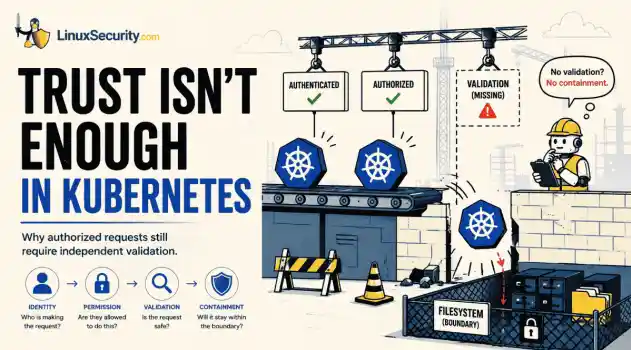
 Two newly fixed storage bugs in Kubernetes showed more than just a problem with path traversal. They found a common security flaw in the cloud: powerful parts often think that requests accepted by a higher system are safe to run. This is a simple lesson for the platform and security teams: RBAC can accept a request without showing that its parameters will stay within a certain filesystem boundary. This is clear from a new study from SentinelLabs into flaws in the Kubernetes CSI drivers for NFS...
 Jul 24, 2026
 security advisory update
 A large volume of Linux security updates and advisories this week across major distributions once again, but it wasn't just the volume that was the story. Where maintainers and security teams focused their attention was evident in the concentration of fixes targeting Linux kernel updates, identity services, DNS infrastructure, and internet-facing software. . Instead of looking at each advisory in isolation, administrators gain more value from the general trends they reveal about Linux security...
Jul 23, 2026
 identity management security tactics
 For years, we secured our Linux infrastructure by building walls: VPCs, security groups, and hardened SSH configurations. We treated the cloud like a virtual data center, assuming that if we kept the "bad guys" out of the network, our workloads were safe. . That model is no longer sufficient. Today, one of the most common paths from an initial compromise to a major cloud breach is the identity assigned to your Linux workload. When an attacker gains code execution on a Linux instance—through a...
Jul 17, 2026
 security practices patch management
 Most of us don't hear about a kernel vulnerability until a CVE lands in our inbox or the vulnerability scanner starts complaining. By then, the patch isn't new anymore. Kernel developers may have been passing it around for review, arguing over the implementation, or revising it for days before anyone outside that community noticed it. None of those discussions are secret. They're sitting in mailing list archives, Git commits, and patch reviews where they've been the whole time. The strange...
Jul 14, 2026
 Linux security cyber attacks
 Every Linux server in your fleet produces thousands of events every minute. From journald logs and auditd records to kernel-level eBPF hooks, your systems are constantly talking. Most of that noise is just the mundane churn of system services, CI/CD runners, or routine administrative automation. But among that noise, an attacker might be establishing a foothold, moving laterally, or setting up persistence. The challenge for any security team is: how do you separate the routine from the...
Jul 13, 2026
 Refine features
X Clear Filters
Get the latest News and Insights
Get the latest Linux and open source security news straight to your inbox.
Community Poll
Should Linux servers automatically install security updates?
Loading...
Explore Latest Linux Security features
We found -3 articles for you...
102
 security managementcloud securityopen source security
Container Security Misconfigurations That Still Go Unnoticed
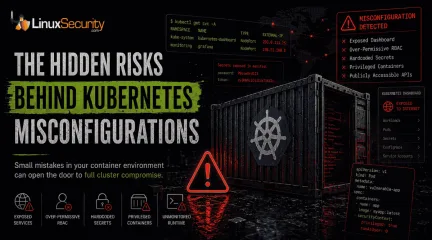
Container security has long carried a reputation for resilience, but attackers have increasingly shifted their focus toward something easier to exploit: the Kubernetes environments surrounding the containers themselves. . Instead of breaking Kubernetes directly, attackers are abusing exposed dashboards, overly broad permissions, insecure APIs, and containers running with far more access than they actually need. Many of these weaknesses are not hidden particularly well. They survive because clusters change constantly, deployments move quickly, and temporary configurations often remain in place long after production rollout. The pattern has become increasingly common across cloud environments. A service account keeps cluster-admin privileges after troubleshooting. A management dashboard stays exposed after testing. API keys end up sitting directly inside YAML manifests. Individually, these mistakes look minor. Combined, they create an attack surface that attackers now constantly scan for. What Is a Container Misconfiguration? At its core, a misconfiguration is just an environment left insecure by mistake. It usually stems from settings that are far too open or protections that were simply never toggled on. This usually happens during the "move fast and break things" phase of a deployment. A team needs an application online by Friday, so they use temporary settings for testing that somehow survive the trip into the live environment. Over time, those weak settings create security gaps that attackers exploit with minimal effort. The pattern is repetitive and predictable: Containers running with full administrator privileges. Secrets or API keys are stored in plain text within the manifest. Open ports exposed to the public internet for "ease of access." Unused services left running as background noise. RBAC permissions that grant users far more power than their role requires. Attackers hunt for these mistakes because they are common and require almost zerosophistication to exploit. In many cases, a single weak setting can give an attacker access to an entire cloud environment before a defender even realizes a pod was compromised. Why Kubernetes Security Is a Moving Target Most Kubernetes security problems aren’t exotic. They come from rushed deployments and permissions that nobody cleaned up later. The same mistakes appear over and over again: Containers running as root because fixing permissions took too long. API keys are sitting directly inside YAML files. Public ports left exposed after testing. RBAC rules granting cluster-admin access because narrowing permissions broke something once, and nobody revisited it. Old manifests are reused across new deployments without anyone reviewing the original security settings. Those mistakes matter because Kubernetes connects everything together. Compromise one over-privileged container, and attackers often gain access far beyond the application itself—secrets, neighboring workloads, the Kubernetes API, sometimes even the wider cloud account. The real problem is visibility. Kubernetes environments change constantly, and insecure settings spread fast through reused manifests and inherited configurations. At scale, small mistakes quietly turn into incident response problems. The "Root" of the Problem: Over-Privileged Containers One of the oldest Kubernetes problems still causes some of the worst incidents. Containers running with far more privilege than they need. Teams leave workloads running as root because it avoids permission issues during setup, makes debugging easier, or just survives from an early deployment nobody revisited later. That shortcut opens the door wider than most people realize. Once an attacker gets into a privileged container, they can often reach beyond the application itself. That can mean accessing the host system, stealing credentials, installing malware, or moving into other containers on the same server. One compromised workload canquickly turn into a wider cluster breach when permissions are too broad. Publicly Exposed Services: The Windows We Leave Open Another common failure is exposing internal Kubernetes services directly to the internet. Usually not on purpose. A load balancer gets configured too broadly. A dashboard stays reachable after testing. Network rules remain open longer than they should. Small deployment decisions. Big exposure. Attackers look for these systems constantly because they’re often easier to exploit than hardened front-end applications. Kubernetes dashboards, management APIs, monitoring panels, backend services—anything that was meant to stay internal becomes a potential entry point once it’s exposed publicly. An exposed dashboard is especially dangerous because it can reveal far more than most teams expect: secrets, environment variables, deployment settings, service accounts, sometimes even direct administrative control depending on how permissions were configured. Organizations often don’t realize these services are public until suspicious traffic appears in logs or cloud usage spikes unexpectedly. The fix is straightforward, but teams skip it constantly. Internal management systems should sit behind VPN access, identity-aware authentication, or tightly restricted network policies—not directly on the public internet. The Visibility Gap: Unmonitored Runtime Activity Most teams have gotten good at scanning container images before deployment, but far fewer monitor what happens after those containers go live. This creates a massive visibility problem. A scanned, "clean" container can still be compromised through a logic flaw in the application itself. Once an attacker is inside, they may try to download a binary from an external IP or start an unexpected reverse shell to maintain persistence. Without runtime monitoring, this behavior is essentially invisible. This is why tools like Falco or Dynatrace are critical. You need to be alerted the moment a container suddenlytries to execute /bin/sh or starts scanning the internal network—activities that no healthy web server should ever be doing in a production environment. Why Misconfigurations Remain a Major Threat Misconfigurations remain one of the leading causes of Kubernetes and container-related breaches. In many cases, the issue is not a sophisticated zero-day exploit. It’s an environment that was never fully secured in the first place. Three Kubernetes Checks Most Teams Can Run in 15 Minutes Most Kubernetes security problems aren’t advanced. They come from rushed deployments, leftover permissions, and configurations nobody revisited after the cluster went live. The dangerous part is how long these issues sit there unnoticed. 1. Find Containers Running With Too Much Privilege A lot of clusters still have containers running as privileged or root because it made setup easier at some point. That shortcut matters more than people think. Once an attacker gets into one of those containers, they can often reach the host system, pull credentials, or move into other workloads running on the same node. Run this and see what comes back: kubectl get pods --all-namespaces -o jsonpath='{.items[?(@.spec.containers[*].securityContext.privileged==true)].metadata.name}' If the list includes anything outside core infrastructure components, it’s worth investigating. Most application containers don’t need that level of access. 2. Check for Overly Broad RBAC Permissions RBAC problems are everywhere in Kubernetes environments. Permissions get expanded during troubleshooting, someone adds cluster-admin access temporarily, then nobody removes it later. Over time, the access model drifts into chaos. That becomes dangerous fast during a breach. If a compromised ServiceAccount has broad permissions, the attacker may be able to access secrets, deploy workloads, modify namespaces, or interact directly with the Kubernetes API across the cluster. One weak pod can turn into fullorchestration-layer access surprisingly quickly. Look through ClusterRoles and watch for wildcard permissions using *. Those rules usually grant far more access than anyone intended. 3. Run a Basic Misconfiguration Scan Kubernetes changes constantly. New workloads appear every day, policies drift, and old YAML gets reused. Manual review doesn’t scale well once clusters grow beyond a certain point. That’s where lightweight scanning tools help. Kube-Bench is useful for checking whether the cluster aligns with CIS benchmark recommendations. Kubescape goes wider and looks for insecure configurations, exposed services, risky RBAC settings, and known vulnerabilities across workloads and manifests. Neither tool fixes the environment for you, but both are good at surfacing the problems teams stop noticing after staring at the same cluster for too long. Basic Hygiene Still Prevents the Majority of Breaches Advanced cloud security tools are important, but many container-related incidents still come down to basic defensive hygiene . The most effective protections are often the most boring: Enforcing least privilege access and disabling unnecessary privileges. Scanning images regularly and monitoring runtime activity for anomalies. Applying network segmentation and removing unused workloads. Keeping Kubernetes components updated and auditing RBAC consistently. Restricting public exposure to the absolute minimum. None of these steps is especially new or complicated. The challenge is maintaining them consistently as environments grow and change. Final Thoughts: What To Do Next Monday Morning Container adoption is moving faster than most teams can secure it. The biggest risks usually aren’t zero-days or advanced exploits. They’re the everyday configuration mistakes that stay sitting in production for months because nobody noticed them during deployment. If you want to harden a Kubernetes cluster quickly, start with the basics. Run a Kube-Bench scan tosee how your cluster configuration stacks up against CIS benchmarks. Audit your "Privileged" pods using a simple kubectl query to see who actually has root access. Check for exposed dashboards or unauthenticated APIs. As cloud infrastructure becomes more dynamic, visibility becomes just as important as prevention. Security teams need to understand not only what they deploy, but also how workloads behave after deployment. Because in many modern breaches, attackers aren’t discovering new weaknesses—they’re simply finding the misconfigurations nobody fixed. Stay Ahead of the Threat: Sign up for our newsletter for weekly deep-dives into cloud-native security. Container Security Misconfigurations Leading to Threats Kubernetes Security: Top Strategies for 2026 Against Emerging Threats . Unlock your Kubernetes security with key checks to combat common misconfigurations that cloud environments face.. Kubernetes Security, Container Management, Misconfiguration Detection, Cloud Environments, Security Best Practices. . MaK Ulac
 May 07, 2026
•
May 07, 2026
•
102
 security advisoryaccess controlmisconfiguration
Kubernetes Container Security Misconfigurations Leading to Threats
Container security failures rarely come from zero-days. They come from the configuration. Misconfigurations don’t trigger alerts. They don456’t crash systems. Most of the time, they sit quietly in production until something starts probing from the outside or moving laterally from the inside. . Kubernetes environments are especially prone to this. The flexibility that makes them powerful also creates space for subtle mistakes. Some are obvious once you see them. Others blend into normal operations and get missed during audits. This is where most real-world container risk lives, not in the exploit, but in the setup that makes exploitation trivial. Where Container Security Actually Breaks Down Most environments aren’t “unsecured.” They’re partially secured. You’ll see: Namespaces in place, but overly permissive RBAC is configured, but not enforced consistently Network policies are defined, but not applied cluster-wide Each layer looks correct in isolation. The gaps show up between them. Security controls in Kubernetes are composable. That’s the problem. Missing one piece doesn’t break the system; it just lowers the barrier for an attacker. In practice, teams that do this well benchmark their environment against the Kubernetes Security Checklist to ensure their layered controls are actually creating a cohesive defense. Overly Permissive RBAC Role-Based Access Control is one of the most common weak points. You often find broad roles assigned to service accounts, wildcard permissions (*) used for convenience, or long-lived tokens tied to workloads. Once an attacker gains access to a pod, these permissions define what happens next. In many cases, escalation doesn’t require an exploit—it just requires using what’s already allowed. In practice, teams that do this well use rbac-lookup to visualize current permissions and move toward granular, namespaced roles that only permit the exact actions required by the application. Containers Running withExcessive Privileges Privileged containers are still common in production clusters. This includes: privileged: true containers Access to host namespaces Mounting sensitive host paths like /var/run/docker.sock These configurations blur the boundary between container and host. At that point, the container is no longer isolated in any meaningful way, turning a single container foothold into full node access. In most cases, this isn’t intentional; it’s a shortcut added to get a workload running, then never revisited. Over time, it becomes part of the baseline. In practice, teams that do this well use Admission Controllers like Kyverno or OPA Gatekeeper to automatically reject pods attempting to run with elevated privileges. They treat these configurations as temporary exceptions that are removed once no longer needed, pushing workloads back toward the minimum level of access required to function, as outlined in the CIS Kubernetes Benchmark . Missing or Ineffective Network Policies Flat networking is still the default in many Kubernetes deployments. Without strict network policies, pods communicate freely across namespaces, and internal services are exposed to lateral movement. Even when policies exist, they’re often incomplete, applied inconsistently, or not tested under real conditions. That creates segmentation on paper, but not in practice. The difference shows up when you look at how traffic actually flows. In tighter environments, communication paths are defined intentionally. In practice, teams that do this well implement a "Default Deny All" policy for every namespace, following the official Kubernetes Network Policy documentation . This forces an explicit mapping of traffic: workloads don't get broad internal access by default—they only talk to exactly what they need to function. Unrestricted Use of Kernel Features Containers don’t remove kernel risk—they share it. Misconfigurations here include: Lack of seccomp profiles No AppArmor orSELinux enforcement Broad syscall access If a container can access powerful kernel interfaces without restriction, it becomes much easier to trigger or chain vulnerabilities. The kernel is constantly adapting, but configurations often lag behind. In practice, teams that do this well use Inspektor Gadget to observe the actual system calls their applications make, allowing them to generate and enforce minimal, secure profiles for each workload. Image and Supply Chain Weaknesses Not all misconfigurations are runtime. Common issues include using outdated base images, pulling from untrusted registries, or embedding secrets directly into image layers. These issues won't show up in a standard cluster scan. In practice, teams that do this well implement image signing with Sigstore/Cosign to ensure code integrity and offload secret management to tools like HashiCorp Vault , keeping sensitive credentials out of the image entirely. Why These Issues Go Unnoticed These misconfigurations persist for a few reasons: They don’t break functionality They often exist in “working” systems Security reviews focus on compliance, not behavior Tooling reports issues, but prioritization is inconsistent Most teams fix what blocks deployment. These issues don’t. What to Focus on Going Forward Enforce least privilege in RBAC, not just define it Treat privileged containers as exceptions, not defaults Apply and test network segmentation policies Restrict kernel-level access with seccomp and LSMs Continuously validate configurations, not just at deployment The Path Forward: Moving from Compliance to Behavior Container security isn’t failing because controls don’t exist. It’s failing because those controls are applied unevenly. The gaps aren’t always obvious. They’re small, layered, and easy to justify in isolation. But in practice, they create predictable paths for attackers. Fixing them doesn’t require new technology. It requires tighteningwhat’s already in place and understanding where those controls stop short. . Kubernetes environments are especially prone to subtle misconfigurations that can expose them to severe security threats.. container misconfigurations, Kubernetes security, least privilege RBAC. . MaK Ulac
Apr 15, 2026
•


Get the latest News and Insights
Get the latest Linux and open source security news straight to your inbox.
Community Poll
Should Linux servers automatically install security updates?
Search Topics
Powered By

Linux Security - Your source for Top Linux News, Advisories, HOWTOs and Feature Releases
QUICK LINKS
subscribe to newsletters!
Like staying secure? So do we.
Sign up for updates, tips, and alerts!