Audit Linux privileges now to limit compromise, escalation, and system-wide damage. Review Linux Privileges×


Stay Ahead With Linux Security Features

 security advisory vulnerability
 For decades, Linux defenders relied on a comfortable assumption: a public security patch did not imply an imminent vulnerability. While open-source openness made vulnerability fixes public to everyone on kernel.org or the Linux Kernel Mailing List (LKML), converting a raw commit into a weaponized exploit took a significant amount of manual effort. This delay, estimated in weeks or months, gave businesses enough time to assess exposure, organize testing windows, and push changes across...
 Jul 27, 2026
 security advisory path traversal
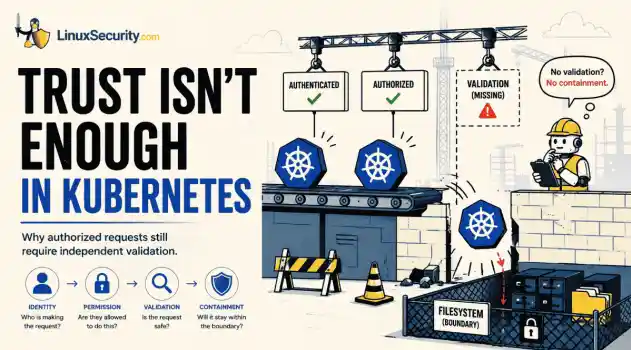
 Two newly fixed storage bugs in Kubernetes showed more than just a problem with path traversal. They found a common security flaw in the cloud: powerful parts often think that requests accepted by a higher system are safe to run. This is a simple lesson for the platform and security teams: RBAC can accept a request without showing that its parameters will stay within a certain filesystem boundary. This is clear from a new study from SentinelLabs into flaws in the Kubernetes CSI drivers for NFS...
Jul 24, 2026
 security advisory update
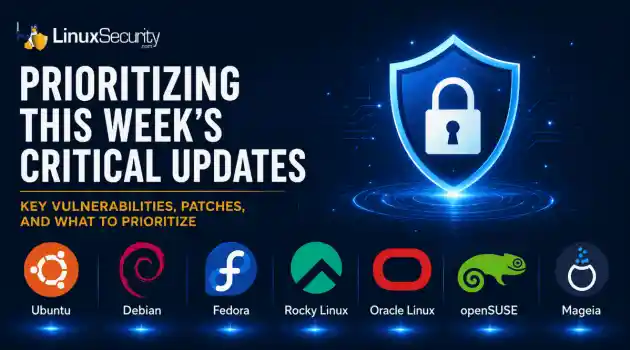
 A large volume of Linux security updates and advisories this week across major distributions once again, but it wasn't just the volume that was the story. Where maintainers and security teams focused their attention was evident in the concentration of fixes targeting Linux kernel updates, identity services, DNS infrastructure, and internet-facing software. . Instead of looking at each advisory in isolation, administrators gain more value from the general trends they reveal about Linux security...
Jul 23, 2026
 identity management security tactics
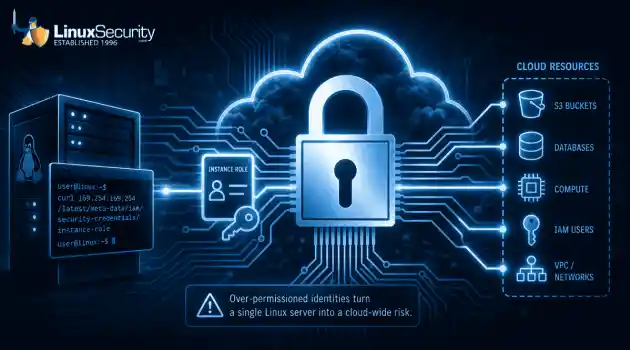
 For years, we secured our Linux infrastructure by building walls: VPCs, security groups, and hardened SSH configurations. We treated the cloud like a virtual data center, assuming that if we kept the "bad guys" out of the network, our workloads were safe. . That model is no longer sufficient. Today, one of the most common paths from an initial compromise to a major cloud breach is the identity assigned to your Linux workload. When an attacker gains code execution on a Linux instance—through a...
Jul 17, 2026
 security practices patch management
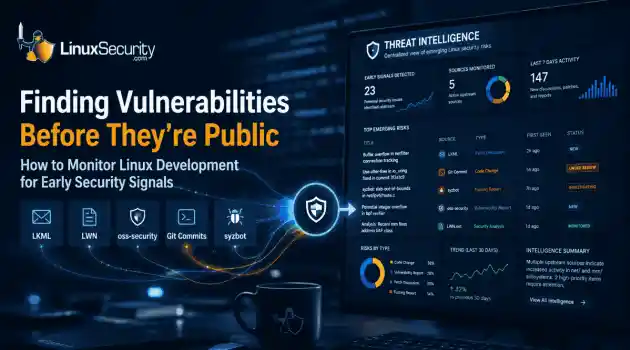
 Most of us don't hear about a kernel vulnerability until a CVE lands in our inbox or the vulnerability scanner starts complaining. By then, the patch isn't new anymore. Kernel developers may have been passing it around for review, arguing over the implementation, or revising it for days before anyone outside that community noticed it. None of those discussions are secret. They're sitting in mailing list archives, Git commits, and patch reviews where they've been the whole time. The strange...
Jul 14, 2026
 Refine features
X Clear Filters
Get the latest News and Insights
Get the latest Linux and open source security news straight to your inbox.
Community Poll
Are host-based firewalls still worth using?
Loading...
Explore Latest Linux Security features
We found -3 articles for you...
102
 security practiceskernel securitysystem hardening
Essential Guide for Securing the Linux Kernel Environment Effectively
With the support of the open-source community and a strict privilege system embedded in its architecture, Linux has security built into its design. That being said, gone are the days when Linux system administrators could get away with subpar security practices. Cybercriminals have come to view Linux as a viable attack target due to its growing popularity, the valuable devices it powers worldwide, and an array of dangerous new Linux malware variants that have emerged in recent years. . It has become apparent that most attacks on Linux systems can be attributed to misconfigurations and poor administration - and failure to properly secure the Linux kernel is often at least partially to blame. Kernel security is a key determinant of overall system security, as the Linux kernel is the foundation of the Linux OS and the core interface between a computer’s hardware and its processes. Luckily, the Linux kernel possesses an assortment of effective built-in security defenses - namely, firewalls that use packet filters built into the kernel, Secure Boot, Linux Kernel Lockdown, and SELinux or AppArmor - that administrators should take full advantage of. In this article, we'll examine the importance of robust kernel security and explore various measures you can take to secure the Linux kernel and protect your systems from malware and other exploits. How Secure Is the Linux Kernel? Kernel security is an ongoing concern for Linux system administrators, and securing the kernel is one of the most complex aspects of securing a Linux system. Even though the Linux kernel undergoes constant scrutiny for security bugs by the “many eyes” of the vibrant, global open-source community, kernel vulnerabilities remain a persistent and serious threat. Flaws are inevitable in any OS, and many Linux kernel bugs present potential security issues, often resulting in privilege escalation or denial-of-service (DoS) attacks. Critical kernel vulnerabilities can often be exploited by remote attackers - withoutrequiring that the victim take any actions. Some of the most notorious Linux kernel security bugs discovered and fixed in recent years include: CVE-2017-18017: This critical vulnerability, which resides in the netfilter tcpmss_mangle_packet function, is highly dangerous due to its central role in filtering network communications by defining the maximum segment size that is allowed for accepting TCP headers. Without these controls, users are susceptible to overflow issues and DoS attacks. The flaw impacts kernel versions before 4.11. CVE-2016-10229: This udp.c bug, which also affects kernel versions before 4.5, allows a remote attacker to execute arbitrary code via UDP traffic, triggering an unsafe second checksum while executing a recv system call with the MSG_PEEK flag. CVE-2016-10150: This use-after-free vulnerability, which impacts kernel versions before 4.8.13, could be exploited by hackers to gain privileges and launch DoS attacks. CVE-2015-8812: This severe vulnerability, which was discovered in the Linux kernel drivers, impacts kernel versions prior to 4.5 and enables a remote attacker to execute arbitrary code or cause a DoS (use-after-free) attack via crafted packets. CVE-2014-2523: This serious netfilter vulnerability, which impacts kernel versions through 3.13.6, is attributed to the incorrect use of a DCCP header pointer. The flaw allows a remote attacker to cause a DoS (system crash) attack or to execute arbitrary code via a DCCP packet that triggers a call to either the dccp_new, dccp_packet, or dccp_error function. Tracking advisories is critical in protecting against kernel vulnerabilities and maintaining a secure, updated system. Subscribing to our weekly Linux Advisory Watch newsletter is an easy, convenient way to stay up-to-date on your Linux distribution's latest advisories and updates issues. What is Kernel Self-Protection, and Why Is It Important? Linux kernel-self protection , or the design and implementation of systems andstructures within the Linux kernel to protect against security flaws in the kernel itself, is an excellent way of adding another layer of security to the Linux kernel. It includes defense methods such as attack surface reduction, memory integrity, probabilistic defenses and the prevention of information exposure. Let’s examine some tips and best practices for securing the Linux kernel by implementing these defense methods to protect your users, your systems and your data. Practical Advice for Securing the Linux Kernel Securing the Linux kernel requires a proactive, multi-layered defense strategy. Practical measures you can take to secure the kernel against vulnerabilities and exploits leading to compromise include: Apply Kernel Security Patches The Linux kernel is patched frequently to mitigate the latest security vulnerabilities discovered and, albeit monotonous, staying on top of kernel security updates is imperative to maintaining a secure Linux system. The most straightforward method of updating the Linux kernel is tracking distribution security advisories and applying the latest updates available directly from your Linux distribution. There are three other methods for updating the kernel: on the command line, with kexec, or with a rebootless live kernel patching tool . Updating the kernel from the command line is the method that is most likely to be covered in your distribution’s documentation. However, a major disadvantage of patching the kernel on the command line is that you will need to suffer the downtime of a system reboot. Administrators can quicken rebooting process by using the kexec system call. However, this method is risky, as it can cause data loss and corruption. The third method - updating the kernel automatically using a rebootless live kernel patching tool such as Livepatch , Ksplice , Kpatch , Kgraft is generally administrators’ method of choice, but is not a replacement for full kernel upgrades, as it only applies patches for security vulnerabilities orcritical bug fixes. Enable Secure Boot in “Full” or “Thorough” Mode UEFI Secure Boot is a verification mechanism for ensuring that code launched by a device's UEFI firmware is trusted. The feature is designed to prevent malicious code from being loaded and executed before the OS has been loaded. By enabling UEFI Secure Boot in “f ull” or “thorough” mode, administrators can decrease the attack surface on x86-64 systems. UEFI Secure Boot requires cryptographically signed firmware and kernels. Thus, no unsigned drivers can be loaded for hardware on systems with UEFI Secure Boot enabled in “full” or “thorough” mode. This makes it far more difficult for an attacker to insert a malicious kernel module into a system and for unsigned rootkits to remain persistent after reboot. However, administrators should be aware that enabling Secure Boot comes with some potential drawbacks. For instance, it requires manual intervention any time a kernel or module is upgraded. Using Secure Boot also activates "lockdown" mode, which disables various features that can be used to modify the kernel. We will cover this in more depth in the following section. Use Linux Kernel Lockdown Linux Kernel Lockdown is a kernel configuration option developed to provide a policy to prevent the root account from modifying the kernel code by strengthening the divide between userland processes and kernel code. Thus, in the event that a root account is compromised, having Lockdown mode enabled will make it far more difficult for the compromised account to compromise the rest of the OS. Although Lockdown was not introduced until the release of kernel version 5.4, work on this feature began over a decade ago, and was spearheaded by Google engineer Matthew Garrett. Lockdown support can be activated to experience Linux Kernel Lockdown benefits with the lockdown= kernel parameter. The module has two modes: “integrity” mode and “confidentiality” mode. It is generally advised to use the “integrity”mode, and to only use the “confidentiality” mode for special systems that contain sensitive information that even root shouldn't be permitted to see, such as the EVM signing key which can be used to prevent offline file modification. Using confidentiality mode blocks access to all kernel memory, preventing administrators from being able to inspect and probe the kernel for purposes such as troubleshooting, development and testing and verifying security measures. Setting lockdown=integrity will block kernel features that allow user-space to modify the running kernel, while setting lockdown=confidentiality will block user-space from extracting sensitive information from the running kernel. Administrators have the option of permanently enforcing either the integrity or the confidentiality lockdown mode via SECURITY_LOCKDOWN_LSM_EARLY . All of these configurations are controlled through the Kconfig SECURITY_LOCKDOWN_LSM option for enabling the module and experiencing Linux Kernel Lockdown benefits. Administrators should be aware that using Lockdown prevents various features and modules that can be used to modify the kernel from loading. For instance, Lockdown disables: Loading kernel modules that are not signed by a trusted key, such as out-of-tree modules including DKMS-managed drivers. Using kexec to start an unsigned kernel image. Hibernation and resume from hibernation. User-space access to physical memory and I/O ports. Module parameters used to set memory and I/O port addresses. Writing to MSRs through /dev/cpu/*/msr. The use of custom ACPI methods and tables. ACPI APEI error injection. Enable Kernel Module Signing & Module Loading Rules The Linux kernel supports digital signatures on loadable kernel modules , ensuring that only known and valid modules can be loaded and decreasing a system’s attack surface with this requirement. Kernel module signing must be enabled in the kernel with settings in CONFIG_MODULE_SIG. Administrators can configure the kernelto require valid signatures, enable automatic module signing during the kernel build phase and specify which hash algorithm to use. Local or remote keys can also be used. In addition, limited module support can be enabled by default using the sysctl kernel.modules_disabled=1 command. Sysctl is a way for administrators to communicate directly with the kernel to control how it functions. These functions can also be configured in the /etc/sysctl.conf file. We explain how administrators can harden this file in the following section. Disabling modules completely can drastically reduce a system’s attack surface, but is only practical in special use cases. Harden the Sysctl.conf File The sysctl.conf file is the main kernel parameter configuration point for a Linux system. By using secure defaults, your whole system will benefit from a more secure foundation. With /etc/sysctl.conf you can configure various Linux network and system settings to improve security by: Limiting network-transmitted configuration for IPv4 Limiting network-transmitted configuration for IPv6 Turning on execshield protection Protecting against syn flood attacks Turning on source IP address verification Securing a server’s IP address against spoofing attacks Logging suspicious packets such as spoofed packets, source-routed packets and redirects Enable SELinux or AppArmor Modern Linux systems include the Mandatory Access Control (MAC) security enhancement systems AppArmor or SELinux (depending on the distribution) installed by default to protect against threats such as server misconfigurations, software vulnerabilities and zero-day exploits - which could potentially compromise an entire system without these controls in place. SELinux is installed and enabled by default on CentOS and RedHat Enterprise Linux OSes, while AppArmor is installed and enabled by default on Ubuntu and SuSE Linux Enterprise systems. These security enhancement systems allow for granular access control with securitypolicies, providing an additional layer of security throughout a system. SELinux defines access controls for the applications, processes, and files on a system, using security policies to enforce these access controls. When an application or process - known as a “subject” - makes a request to access an “object” such as a file, SELinux checks with an access vector cache (AVC), where permissions are cached for subjects and objects. If SELinux is unable to make a decision about access based on the cached permissions, the request is forwarded to the security server, which checks for the security context of the subject and object from the SELinux policy database. Permission is then either granted or denied. If permission is denied, an "avc: denied" message will be available in /var/log/messages. For typical use cases, we recommend that administrators set SELinux to permissive mode . By operating in permissive mode, policy is not enforced and the system remains operational. In other words, SELinux does not deny any operations, but only logs AVC messages, which administrators can then use for troubleshooting, debugging, and policy improvements. Like SELinux, Apparmor isolates applications and processes from each other with per-program profiles built into the kernel, as well as any profiles that an administrator has generated. AppArmor can be set to either enforce these profiles or to complain when profile rules are violated. AppArmor is less complex than SELinux, but in turn offers less control over how processes are isolated. It is unfortunately quite common for administrators to disable SELinux or AppArmor when they encounter an issue as opposed to learning how to fix the issue with these services enabled. This is a poor administration and security practice, and can detract significantly from a system’s overall security posture by leaving the system susceptible to the very attacks that SELinux or AppArmor are designed to prevent. Implement Strict Permissions When all kernelmemory is writable, it’s easy for attacks to redirect execution flow - making it imperative that kernel memory is protected with a tight set of permissions. Permissions should be as strict as is practical in a given environment. Administrators should begin by ensuring that executive code and read-only data is not writable. The CONFIG_STRICT_KERNEL_RWX and CONFIG_STRICT_MODULE_RWX configurations, which seek to make sure that code is not writable, data is not executable, and read-only data is neither writable nor executable, are the default options for the majority of Linux architectures. If these settings are user selectable, an administrator can select ARCH_OPTIONAL_KERNEL_RWX to enable a Kconfig prompt. CONFIG_ARCH_OPTIONAL_KERNEL_RWX_DEFAULT determines the default setting when ARCH_OPTIONAL_KERNEL_RWX is enabled. It is critical that function pointers and sensitive variables, which the kernel looks up and uses to continue execution, are read-only—not writable. Many such variables can be made read-only by setting them “const” so that they reside in the .rodata section instead of the .data section of the kernel. Permissions should always be configured to enforce the segregation of kernel memory from userspace memory. These rules can be enforced either via hardware-based restrictions or via emulation. Blocking userspace memory forces attacks to operate entirely in kernel memory. Use AuditD for Ongoing System Monitoring Carefully monitoring the Linux kernel enables administrators to discover security bugs, breaches or policy violations, allowing them to mitigate potential damage caused by these threats and verify the security of their systems. Using the Linux Auditing System (AuditD) is a popular and effective method of monitoring the events that occur on a system. AuditD is a native feature of the Linux kerne l, installed by default in most distributions and runs automatically, that collects information on system activity, such as file permissions modifications, services being enabled ordisabled, and network events, to facilitate the investigation of potential security incidents. It logs information according to its ules and any custom rules an administrator has added. The kernel is uniquely suited to perform these functions because only the kernel can access a system’s devices and memory. Here’s an example of the type of information the AuditD audit daemon provided. It shows users running specific commands like /usr/bin/sudo and ssh generating a new session key. type=USER_CMD msg=audit(1611763205.568:1621017): pid=1829220 uid=991 auid=4294967295 ses=4294967295 msg='cwd="/" cmd=2F7573722F6C6962363 exe="/usr/bin/sudo" terminal=? res=success'UID="nrpe" AUID="unset" type=CRYPTO_KEY_USER msg=audit(1611762843.231:1620894): pid=1825289 uid=0 auid=0 ses=49526 msg='op=destroy kind=server fp=SHA256:d7:c2:5a7 direction=? spid=1825289 suid=0 exe="/usr/sbin/sshd" hostname=? addr=? terminal=? res=success' UID="root" AUID="root" SUID="root" Here’s an example of “aureport” being used to generate a summary report of events on the system. [root@myhost ~]# aureport Summary Report ====================== Range of time in logs: 01/23/2021 04:54:03.379 - 01/27/2021 11:36:05.388 Selected time for report: 01/23/2021 04:54:03 - 01/27/2021 11:36:05.388 Number of changes in configuration: 67 Number of changes to accounts, groups, or roles: 0 Number of logins: 1457 Number of failed logins: 6249 Number of authentications: 1461 Number of failed authentications: 178 Number of users: 4 Number of terminals: 7 Number of host names: 661 Number of executables: 7 Number of commands: 1 Number of files: 0 Number of AVC's: 0 Number of MAC events: 65 Number of failed syscalls: 0 Number of anomaly events: 0 Number of responses to anomaly events: 0 Number of crypto events: 45395 Number of integrity events: 0 Number of virt events: 0 Number of keys: 0 Number of process IDs: 25064 Number of events: 136817 [root@myhost ~]# aureport -x --summary ExecutableSummary Report ================================= total file ================================= 71421 /usr/sbin/sshd 22796 /usr/sbin/crond 17905 /usr/lib/systemd/systemd 12344 /usr/bin/sudo 290 /usr/libexec/ipsec/pluto 26 /usr/bin/crontab 24 /usr/bin/su AuditD must be properly configured and hardened to ensure optimal security and effectiveness. Administrators should check that AuditD’s configuration is immutable using the control option “-e 2” and confirm that logs are stored in a centralized, secure location—ideally, a server dedicated to accepting remote syslog events. AuditD does have some weaknesses that should be considered - namely, bugginess, excessive overhead, lack of granularity, missing container support, and demanding output. Our Final Thoughts on Improving Linux Kernel Security Linux is becoming an increasingly attractive target among cybercriminals due to its growing popularity and the high-value devices it powers worldwide. Effective security is contingent upon defense in depth, and kernel security is a key element of overall system security that cannot be overlooked. After all, the kernel is the foundation of a system, and if the kernel is not secure, then nothing on the system is secure. Thus, Linux system administrators must prioritize kernel security and remain vigilant about implementing the tips and best practices discussed in this article to protect against security vulnerabilities and prevent exploits. Do you have questions about securing the Linux kernel or want to discuss the topic more? Reach out to us @lnxsec . We're here to help! . Attacks on Linux systems arise from misconfigurations; explore effective kernel security measures against threats.. support, open-source, community, strict, privilege, system, embedded, architec. . Brittany Day
 Jan 22, 2025
•
Jan 22, 2025
•
102
 network securitysecurity best practicesmalware defense
Guide to Business Cybersecurity: Best Practices Against Cyber Threats
Businesses have been increasing the amount of technology they integrate into their workflows. In America, 94% of businesses use technology to improve efficiency. . Virtual tools allow them to complete tasks quickly and accurately with fewer resources. However, these employed processing and storage techniques are prone to cyberattacks that can corrupt a business’s electronic system, resulting in data and money loss and a negatively impacted reputation. Companies must implement the best cybersecurity practices and solutions for smooth and secure business operations. Cybersecurity entails securing your data, servers, programs, and systems against external and internal attacks in network security. Here is a guide to help you understand various cybersecurity vulnerabilities and how to implement protective measures against them. What Are Common Types of Cyberattacks Businesses Experience? To protect your system against different types of cyberattacks, you must understand the various kinds, their origin, and the harm they can do. Here are the more common risks to keep in mind: Password Guessing Attacks A password-guessing attack entails hackers trying to guess an organization’s usernames and passwords. The sample information they use comes from previous data and cloud security breaches, which occur when employees keep the same weak or default passwords for multiple logins and command servers. Hence, the credentials are easy to remember. To avoid password-guessing attackers, encourage employees to use unique and complex passwords with a mixture of letters and numbers. Advise them to type the password when logging into the company’s servers rather than having the system remember it. It’s also best to introduce a password-changing policy where everyone must reset their passwords after a set period. Organizations should also use password cracking, or the technique of retrieving passwords from encrypted data stored in or communicated by a computer, to help identify easily hackablepasswords and test passwords to create stronger ones. Many great open-source password-cracking network security toolkits are available to assist. Distributed Denial of Service Attacks Distributed Denial of Service attacks (DDoS) occur when a hacker paralyzes an organization’s system with a massive influx of fake activity, such as messages, requests, and web traffic. DDoS attacks are made through malware-infected, interconnected devices (computers, servers) on botnets. This attack weakens business cybersecurity measures, allowing hackers to access data. Identifying DDoS attacks is challenging because their symptoms, like slower servers, are confused with regular high traffic. On closer inspection, the fake activity comes from one IP address and occurs at odd hours of the day. You can eliminate these types of cyberattacks by creating a black hole to remove the fake traffic or limit the requests a server receives in a certain period. Malware Attacks Malware attacks are when hackers infiltrate software through private networks to access information. Some types of malware attacks include: Keyloggers : These track the information users type with keyboards, such as passwords and Social Security Numbers. Ransomware entails encrypting vital data where the hacker forces users to pay a ransom to access it. If their demands are unmet, they threaten to delete, sell, or publish it on the dark web. Spyware : This monitors a user’s online activity, like web browsing, to gather personal information for hackers. It can also hack into webcams and turn them on to collect sensitive and identifiable information. Adware : Also known as spam, adware is relatively harmless. It decreases the performance of your computer but can download other harmful malware without your knowledge. Malware attacks enter networks through viruses, trojan horses, and worms. They spread quickly in interconnected systems, but you can eliminate them through updated antivirus software and properauthentications. Phishing Attacks In phishing attacks, hackers deceive employees through fake websites and emails to release private information, such as login credentials, credit card numbers, and Social Security information. Threat actors disguise themselves as trusted agencies, like banks, to obtain sensitive information. In a survey, 57% of organizations reported facing successful online or email phishing attacks. Spear phishing attacks are personalized to target a specific organization or person, creating emails using their names to make it harder to distinguish them. Authentication software and awareness programs can reduce the chances of victimizing such cyberattacks. Business Cybersecurity Best Practices Many businesses use outsourced IT support to implement the best cybersecurity practices. These third-party companies are skilled in managing and updating cybersecurity elements to guarantee data and network security. If you want to save money, consider applying cybersecurity yourself. Here are the most essential, best cybersecurity practices businesses need to prevent most cyberattacks. Use a Secure OS It is no secret that the OS you choose is a key determinant of your security online. After all, your OS is the most critical software running on your computer, managing memory, processes, software, and hardware. Experts agree that Linux is a highly secure OS and, arguably, the most secure OS by design. Some key factors that contribute to Linux being a more secure OS than Windows for businesses include: The Open-Source Security Advantage : Linux source code undergoes constant, thorough review by members of the vibrant, global open-source community so that any cybersecurity vulnerabilities in Linux can be identified and eliminated rapidly. A Superior User Privilege Model : Unlike Windows, where “everyone is an admin,” Linux greatly restricts root access through a strict user privilege model. Because Linux users have low automatic access rights andrequire additional permissions to open attachments, access files, or adjust kernel options, spreading malware and rootkits on a Linux system is harder. Built-In Kernel Security Defenses : The Linux kernel offers a selection of built-in security defenses , including firewalls that use packet filters in the kernel, the UEFI Secure Boot firmware verification mechanism, the Linux Kernel Lockdown configuration option, and the SELinux or AppArmor Mandatory Access Control (MAC) security enhancement systems. Admins can add layers of data and network security to their systems by enabling these features and configuring them during Linux kernel self-protection. Security through Diversity : A high level of diversity is possible within Linux environments due to the many Linux distributions (distros) available and the different system architectures and components featured. This diversity helps satisfy users’ requirements and can protect against different types of cyberattacks by making it difficult for adversaries to efficiently craft exploits in network security that can be used against a wide range of Linux systems. Highly Flexible & Configurable : There are vastly more configuration and control options available to Linux admins than to Windows users, many of which can be used to enhance security. For instance, Linux sysadmins have the ability to use SELinux or AppArmor to lock down their system with security policies offering granular access controls, providing a critical additional layer of security throughout a system. Despite the key benefits Linux offers, it is crucial to remember Linux is not a “silver bullet” in security. The OS must be correctly and securely configured, and sysadmins must practice secure, responsible administration to prevent attacks on network security. Use Antivirus Software Antivirus software scans, detects and removes known malware from a computer. It runs in the background and occasionally pops up to notify you of potential network security threats froma website, download link, or hardware. However, since new malware codes constantly appear, ensuring your antivirus software is constantly updated is crucial. Use a Firewall & a VPN A firewall is a barrier between an organization’s network and the public internet. It constantly monitors and filters traffic into the personal network according to your organization’s data and network security policies. In simpler words, firewalls ensure that different types of cyberattacks, like DDoS, do not enter the organization. Like antivirus software, you must regularly update firewalls to prevent newer network security threats. Firewalls also perform NAT and VPN functions. Network Address Translation (NAT) hides IP addresses, allowing users to access the internet with more security and privacy. In contrast, a Virtual Private Network (VPN) creates a tunnel between private and public networks, ensuring that the data packets shared remain secure. Use Two-Factor Authentication Two-factor authentication (2FA) is an extra layer of protection used after you enter your username and password. The second authentication check can be one of three types: Something you know : This can be a personal PIN or question, such as the name of your first pet. Something you have : This includes verification through something users would often have. For example, you can gain access by entering a one-time passcode (OTP) sent to your phone. Something you are : This authentication includes fingerprints, eye scans, and voice prints. Invest in Security Awareness and Training Programs You must train your employees regarding the best cybersecurity practices so they can be aware of common hacking and phishing attacks and techniques. Since employees are the first defense against specific cyberattacks, preparing them can protect your organization’s data, network security, and all your business systems. You should also instruct employees not to plug unknown devices into PCs, download unknown orunsafe files, open spam emails on the business’s computers, or enter their passwords on random websites to avoid malware attacks. Similarly, employees must use different computers for payment processing and web surfing to prevent identity theft incidents. Your employees must have the right platform to report cloud security breaches, such as suspicious emails they receive or a sudden increase in server traffic. The IT department must promptly address such concerns to ensure these cyberattacks are not established or spread. What Should I Do After a Cyberattack? Despite your best efforts, your system can still be susceptible to cyberattacks. As soon as the attack is identified, you must contain it. Disconnect your computers from the internet and isolate essential computers from the interconnected devices . As an extra precaution, consider changing the sensitive file passwords. You can also configure additional email authentication methods like MTA-STS to prevent man-in-the-middle attacks like TLS downgrades and DNS spoofing on future attacks. You must then identify the attack’s source. The network connections at the time will help your IT department understand any cybersecurity vulnerabilities that would have allowed the threat to bypass security measures and what further improvement they require. You must also analyze the information you lost and take measures accordingly. For example, if you lose payment processing credentials, you must report the incident to law enforcement agencies and change your passwords. Be transparent about the cyberattack with clients, as their data and network security may also be compromised. Final Thoughts on Business Cybersecurity Data is essential for businesses, allowing companies to make informed decisions that increase profit margins. A greater reliance on technology also makes businesses susceptible to different types of cyberattacks, like the ones mentioned in this guide, so safeguarding data is a must, albeit complex. You canindependently apply the best cybersecurity practices, like choosing a secure OS, using antivirus software and firewalls, and two-factor authentication to protect your business’s sensitive data. Without the proper experience and knowledge, your business will remain susceptible to attacks on network security. Hiring trained IT professionals or considering outsourcing to a cybersecurity provider is best. They will ensure your data and network security measures are constantly updated, and your employees are trained in security protocols. . Understanding prevalent cyber threats and implementing strong security measures is vital for tech-dependent businesses. Business Cybersecurity, Cyber Attack Prevention, Cybersecurity Tools, Malware Defense, Security Best Practices. . Brittany Day
Mar 13, 2023
•


Get the latest News and Insights
Get the latest Linux and open source security news straight to your inbox.
Community Poll
Are host-based firewalls still worth using?
Search Topics
Powered By

Linux Security - Your source for Top Linux News, Advisories, HOWTOs and Feature Releases
QUICK LINKS
subscribe to newsletters!
Like staying secure? So do we.
Sign up for updates, tips, and alerts!