Audit Linux privileges now to limit compromise, escalation, and system-wide damage. Review Linux Privileges×


Stay Ahead With Linux Security Features
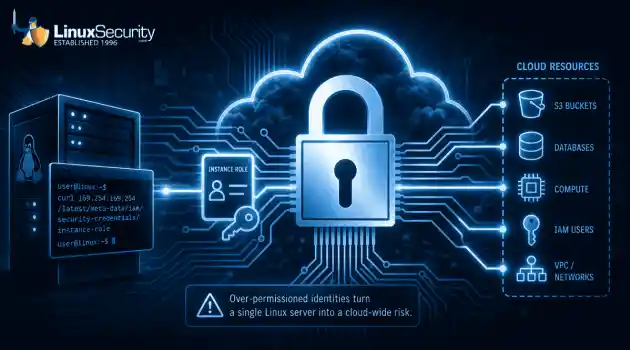
 identity management security tactics
 For years, we secured our Linux infrastructure by building walls: VPCs, security groups, and hardened SSH configurations. We treated the cloud like a virtual data center, assuming that if we kept the "bad guys" out of the network, our workloads were safe. . That model is no longer sufficient. Today, one of the most common paths from an initial compromise to a major cloud breach is the identity assigned to your Linux workload. When an attacker gains code execution on a Linux instance—through a...
 Jul 17, 2026
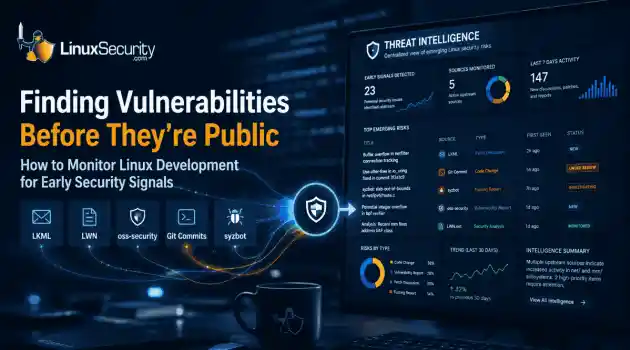 security practices patch management
 Most of us don't hear about a kernel vulnerability until a CVE lands in our inbox or the vulnerability scanner starts complaining. By then, the patch isn't new anymore. Kernel developers may have been passing it around for review, arguing over the implementation, or revising it for days before anyone outside that community noticed it. None of those discussions are secret. They're sitting in mailing list archives, Git commits, and patch reviews where they've been the whole time. The strange...
Jul 14, 2026
 Linux security cyber attacks
 Every Linux server in your fleet produces thousands of events every minute. From journald logs and auditd records to kernel-level eBPF hooks, your systems are constantly talking. Most of that noise is just the mundane churn of system services, CI/CD runners, or routine administrative automation. But among that noise, an attacker might be establishing a foothold, moving laterally, or setting up persistence. The challenge for any security team is: how do you separate the routine from the...
Jul 13, 2026
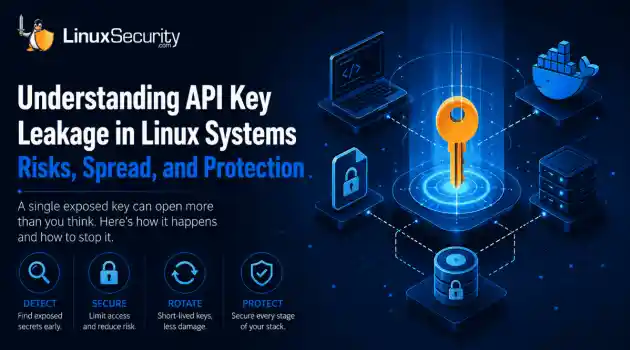 open-source infrastructure risk
 Security scanners flag exposed API keys in public repositories every day. The initial response is usually predictable: delete the commit, revoke the credential, and move on. That’s a mistake. . In a real Linux environment, an API key never stays in one place. By the time it hits a public repo, it’s already everywhere. It’s in the CI/CD pipeline. It’s in your container registry. It’s in the build logs. It’s in the backups. Git makes this worse because the history never dies. Deleting a file in...
Jul 11, 2026
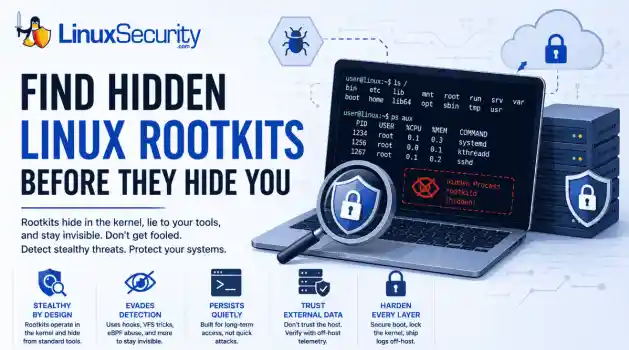 open-source rootkit
 Most of us think of Linux rootkits as ancient history—the stuff of 90s hacking forums and clunky malware that would crash your system if you looked at it the wrong way. But if you think they’ve gone away, you’re mistaken. They’ve just gotten smarter. . Modern attackers aren't using the noisy tools of the past. Today’s threats are surgical. Many of today’s most advanced Linux rootkits operate at the kernel level or abuse legitimate system features to blend in with normal traffic. They’re...
Jul 09, 2026
 Refine features
X Clear Filters
Get the latest News and Insights
Get the latest Linux and open source security news straight to your inbox.
Community Poll
Should Linux servers automatically install security updates?
Loading...
Explore Latest Linux Security features
We found -1 articles for you...
102
 social engineeringdns securitymalware prevention
AI-Driven Cybersecurity Upgrades: 3 Strategic Uses
With the increasing pace and complexity of digital attacks, analysts are turning to AI threat detection to stretch IT resources and keep out cyber threats. No matter the size of a company's operations, AI-driven data analytics tools can provide threat intelligence and enable cybersecurity professionals to select appropriate protection measures. . Various industries have been using AI-powered cybersecurity strategies to: Protect employees from social engineering attacks Ensure network safety against DNS threats Prevent malware attacks In this article, we’ll discuss these three use cases to examine the impact of artificial intelligence on cybersecurity. 1. Protection From Social Engineering Attacks Today, social engineering comes in many shapes, and phishing attacks are always a problem. They could start with a weird-looking email that pops up on your company’s account. Maybe it’s a bad actor impersonating a partnered brand in an attempt to swindle information. Attackers could also try to get employees to click on a link to their malicious website. It mimics real login portals for entering sensitive information about clients or the business. The major problem with these types of attacks is that it can be hard to separate what’s genuine from what’s not. That’s where AI threat detection has an advantage: deep learning tools can analyze patterns to determine if an incoming message has hostile intent, and warn users before they click. In this way, AI security tools can shield businesses from phishing, spear phishing, and other social engineering attacks. Google is already using deep learning to protect its Gmail users from phishing attempts in the same manner. The search engine giant uses a combination of deep learning and computer vision to screen billions of image-based emails, like you’d do in a big data analytics project , and then quarantine possible threats. Deep learning is a more comprehensive approach to machine learning, in which an AI“brain” learns to solve problems on its own. Unlike basic machine learning, where algorithms learn only from labeled data, deep learning takes in large quantities of statistics. A deep neural network forms and evolves beyond examples to deal with new threats, unfamiliar to the system. So even if your business faces a new threat that the system hasn’t learned from yet, the algorithm should still be able to offer protection. If you were to receive spam or phishing emails, the DL neural network would block these emails from even getting into your company's networks. The criteria for social engineering blocking may flag down newly created domain messages and suspicious hard-to-read emails, among other metrics that cybersecurity analysts can fine-tune according to their needs. 2. DNS Threat Detection DNS is essentially the Internet’s directory. When we look up some of our favorite websites, we type in phrases or domain names such as espn.com or google.com. A DNS translates these website names into a language that devices can understand and work with, namely IP addresses. In a nutshell, the DNS enables movements between websites. Your company may be vulnerable to a DNS security threat in one of two ways. The first is a Distributed Denial-of-Service attack. During DDoS attacks , your DNS server is overloaded with so much traffic that it cannot attend to legitimate queries from real clients. The second type of DNS threat is an amplification attack. What happens here is that your client is directed to a knock-off version of the business website. Despite typing in the correct address, the compromise in the DNS means your clients land elsewhere and type in sensitive login details into this deceptive website. There are various ways to prevent DDoS attacks before they happen. Businesses can defend against DNS cyberattacks like these by identifying threats with AI-driven network monitoring. AI intrusion detection systems watch all network traffic as it flows in and out ofDNS servers. Then, it can separate legitimate website user requests from malicious requests meant to overwhelm the system. Financial institutions, an industry prone to DNS threats, are putting AI-driven DNS solutions to work with software that entails a database of previous cyber threats, and cross-checks all the DNS traffic against a checklist of what an attack would look like. When this software notices data anomalies that may indicate a DNS maneuver, it alerts human IT staff, who then take corrective action. They could deny the request, or even call up the client in the case of a pending transaction. 3. AI-Driven Malware Identification Relying on traditional antivirus packages means limited protection, because they are programmed to protect companies from known threats. Signature-based antivirus software isn’t much help when businesses are up against new malware signatures they cannot detect. An AI-powered antivirus software, on the other hand, protects your business from both the known and emerging varieties of malware. Adaptive antivirus technology runs on AI/ML frameworks . Instead of relying on a signature list to identify threats, AI-driven antivirus software uses an anomaly detection system. It doesn’t need to sync with known malware signatures because it monitors individual programs to detect suspicious behavior. So if a new type of malware has hijacked one of your workplace programs, like MS Office, the AI-powered antivirus will take note of the app’s unusual behavior. The program will then be singled out for a scan, and the threat is excavated from hiding and eliminated. Add AI Threat Detection to Your Cybersecurity Strategy There are many benefits to be gained from AI defensive measures. AI-powered antivirus software, DNS threat-detecting networks, and AI social engineering protection offer adaptability to new threats and faster detection and response times. Cybercriminals are leveraging new technologies to circumvent traditional digital securitystrategies and forcing Linux security systems to adapt. By incorporating AI threat detection into their networks, businesses can effectively counter emerging cyber threats. . Artificial intelligence is transforming cybersecurity by improving defenses against threats like ransomware and phishing through advanced AI algorithms for quick detection. AI Cybersecurity Solutions, Threat Protection Methods, Machine Learning in Security. Lerma. Andrew Kowal
 Apr 25, 2026
•
Apr 25, 2026
•
102
 network securitycybersecurityransomware
IceFire Ransomware: Tactics, Protection, and Security Practices for Linux
IceFire Ransomware, which already utilizes exploits in cybersecurity to attack Linux systems, has recently developed a new strain . This threat takes advantage of an IBM Aspera Faspex file-sharing vulnerability ( CVE-2022-47986 ) that had previously only targeted Windows systems and media and entertainment companies. Since Linux systems tend to be quite powerful in mitigating risks, IceFire Ransomware is all the more concerning, as it can breach robust cybersecurity systems and cause substantial harm. . The ransomware operators' tactics are consistent with those of the "Big-Game Hunting (BGH)" ransomware families, as the variant focuses on attacking large enterprises, leveraging double extortion, utilizing evasion techniques like deleting log files, and implementing numerous persistence mechanisms. Double extortions are detrimental since these attacks in network security typically demand twice as much for the ransom payment. As network security issues rise, you must stay up-to-date on the latest security news. Knowing the best security practices can help you mitigate risks before they damage your server. This article will review ransomware, dive into IceFire Ransomware, and show you how to protect your server. What Is Ransomware? Ransomware cybercriminals focus on breaching a company’s system, decrypting sensitive files and valuable data, and forcing victims to pay a ransom, or a large sum of money, before returning company work to employees. This type of malware is more damaging to a business than typical malware and phishing email attacks since money is involved. What Does a Ransomware Attack Look Like? During a ransomware attack, users might receive a phishing email that appears to be from a trustworthy sender due to the use of social engineering tactics. Users will open the message and download attachments or links that lead to legitimate-looking documents and websites. Then, cybercriminals can install ransomware they please onto a server, infecting a system and taking away primaryaccess to data companies need for daily operations. What is IceFire Ransomware and its Characteristics? IceFire Ransomware on Linux systems comes across as 2.18 MBs, 64-bit Executables, and Linkable Binary Files (ELF) with open-source GNU Compiler Collection (GCC) for AMD64 system processor architecture. Cybercriminals deployed the services against CentOS hosts so they could run successfully on Intel-based Ubuntu and Debian distributions. Impacted systems download the IceFire payloads, execute them to encrypt files, and rename them with the ".ifire" extension. Then the payload stealthily deletes itself to avoid detection. IceFire Linux payload scripts exclude encryption for specific system-critical files and paths like the following: .cfg, .o, .sh, .img, .txt, .xml, .jar, .pid, .ini, .pyc, .a, .so, .run, .env, .cache, .xmlb, p, /boot, /dev, /etc, /lib, /proc, /srv, /sys, /usr, /var, /run. This intentional deletion prevents encryption so companies can still operate their server. The variant exploits cybersecurity vulnerabilities by implementing itself into the system rather than relying on phishing emails and third-party frameworks. As a result, network security threats may go undetected for an extended period while devising a plan of attack. Once the business faces a breach, there is very little they can do to stop it since the cybercriminals have done extensive research when sitting inside the company's server for so long. The Linux IceFire ransomware payload uses an RSA encryption algorithm with an RSA public key hard-coded into the binary. The payload drops a ransom note from an embedded resource and writes it to each directory targeted for file encryption. The ransom note includes a predefined username and password that you must use to access the ransom payment website hosted on a Tor hidden service to ensure anonymity. How Could IceFire Break Into Secure Linux Systems? Linux security expert and LinuxSecurity.com Founder Dave Wreski remarks, “Linux presents more challenges forransomware operators than Windows, especially on a large scale. Many Linux systems are servers less susceptible to common infection methods like phishing or drive-by downloads. Thus, attackers have resorted to exploiting application vulnerabilities, as we have recently seen with the IceFire ransomware group.” How Can I Secure My Linux Systems Against IceFire Ransomware? Cybercriminals target Linux operating systems more frequently since their highly secure servers outperform Windows and macOS in data and network security. More online customers rely on Linux to power a company's high-value devices as the necessity for email protection skyrockets. Malware , rootkits , and more malicious network security threats put Linux users at risk even more as the system popularizes. Unfortunately, we know only one threat management platform that can combat and stop evasive ransomware attacks in network security: Vali Cyber's ZeroLock . What is ZeroLock? How Can It Protect Against IceFire? ZeroLock rapidly and reliably reacts to attacks in network security by deploying email security solutions that effectively combat malware, rootkits, and ransomware. This service injects code into all aspects of a system so it can monitor the controls organizations use frequently. ZeroLock can suspend, delete, or cache any files, links, or downloads that it considers suspicious. Cybersecurity hardening with ZeroLock keeps cloud security breaches far away from your business and ensures email protection throughout your server. What Other Email Security Options Do I Have to Combat Threats? If you are searching for solutions to add to your security tactics on top of Vali Cyber’s ZeroLock, consider implementing these best email security practices that can improve security posture in your Linux system: Stay up-to-date on the latest cybersecurity vulnerabilities impacting your systems. Register as a LinuxSecurity user, subscribe to our Advisory Watch newsletter, and customize your advisories based on distros toknow the latest security news that could cause network security issues for your business. Follow @LS_Advisories on X for real-time updates. Avoid a Single Point of Failure (SPOF) attack by backing up critical files and diversifying your storage media so cybercriminals cannot utilize repetition in a breach. This solution will not stop attacks, but it can mitigate damage. Integrate the principle of least privilege for your users so accounts only provide the access an employee needs and nothing more, reducing the likeliness of an internal breach. Monitor network activity and system logs closely to stop any attack or risk as quickly as possible. Identify anomalous behavior when keeping tabs on event activity. Regularly checking prevents harm from reaching your company. Use a combination of IP filtering, an Intrusion Detection System (IDS), and an Intrusion Prevention System (IPS). These three options can quickly improve security posture and combat more network security threats. Use Linux security extensions that control and restrict access to data or network resources. Such applications will prevent cybersecurity vulnerabilities from being abused during a possible attack. Implement robust network segmentation and data compartmentalization to minimize the impact of a potential ransomware attack. Utilize cloud security audits on systems regularly. Test them and utilize security patching as needed to prevent any risk that could severely harm the productivity of your business. Our Final Thoughts on Securing Linux Systems Against Ransomware Understanding the data and network security issues you may face during a ransomware attack is vital in guaranteeing your company knows how to protect itself from such threats in the first place. IceFire can encrypt files and delete itself from servers to go undetected when hacking into a system and inflicting damage. Although IceFire Ransomware is not the most significant risk out there, it can be detrimental to a business, especially considering itcan get through Linux security systems, which are relatively defensive in their approach to email security. Fortunately, you can utilize various solutions to prevent an IceFire attack from reaching your organization. Wreski concludes, "Linux ransomware is a serious and increasingly prevalent threat, but luckily, attacks can be prevented with sound administration, the implementation of the right technology, and the other security best practices shared in this article." Continue learning how to strengthen your server's email protection by checking out our blog and articles about other types of ransomware and phishing attacks reaching Linux systems. . Discover IceFire ransomware's strategies and implement robust measures to protect Linux environments from evolving cyber threats successfully.. IceFire Ransomware, Linux Security Threats, Protect Linux Servers, Ransomware Prevention Tips, Cybersecurity Practices. . Brittany Day
Mar 13, 2023
•

102
 data protectionLinux securitysecurity measures
Fileless Malware Attack on Linux: Techniques and Mitigation Strategies
Recent years have demonstrated that Windows users are not the only ones who should be concerned about malware. Linux is becoming an increasingly popular target among malware operators due to the growing popularity of the open-source OS and the high-value devices it powers worldwide. Security researchers from AT&T Alien Labs are now warning that “cyber gangs have started infecting Linux machines via a fileless malware installation technique that until recently was more commonly used against Windows-based systems”. . So what exactly is fileless malware and how does a fileless malware attack on Linux work? This article will provide you with answers to these questions by honing in on the anatomy of a Linux fileless malware attack - equipping you with the knowledge necessary to secure your systems and your data against this stealthy and malicious threat. Let’s begin by exploring the concept of fileless malware. Fileless Malware 101 Unlike traditional malware which leverages executive files to infect systems, fileless malware does not rely on files to accomplish this - as its name suggests. Rather, this stealthy new type of malware infiltrates a server’s random-access memory (RAM) and exploits existing, trusted software and applications known as LOLBins to install and run malicious code on target systems. This strategy of essentially turning systems against themselves is referred to as “living off the land”. Malicious code downloaded on the target system is often used to encrypt and exfiltrate sensitive data, and transfer it directly into the hands of the attacker. Fileless malware attacks leave no trace on the systems they infect, as all malicious activity is performed directly in RAM and no files are written to the hard drive. This type of attack is considered an Advanced Volatile Threat (AVT) - after the affected system reboots all malicious code present on it disappears, but damage has already been done to the impacted server. Because fileless malware does not leverage executablefiles to infect systems and therefore has no signature, it is able to evade the detection of signature-based antivirus software and many traditional security solutions. How Does a Fileless Malware Attack on Linux Work? Fileless malware attacks targeting Linux systems are carried out in a series of clearly-defined steps, beginning with infection via the exploitation of a vulnerability and ending with the compromise of a server and the data it houses. Let’s take a closer look at how fileless malware attacks on Linux systems work, broken down step-by-step, to help you better understand this growing threat to your systems and your data. Step 1: Infection via Exploitation of a Vulnerability Whereas fileless malware infects Windows systems via a malicious link delivered in a phishing email, fileless malware infects Linux systems by exploiting a vulnerability such as a flaw in a network protocol or in a browser’s Flash plugin. For instance, TeamTNT’s infamous Ezuri Golang malware exploits misconfigured Docker instances and exposed APIs to turn vulnerable systems into DDoS bots and cryptominers. Step 2: Modification of a Linux Process Once it has gained access to the target system through the exploitation of an unpatched security bug, the malware modifies and crashes a running Linux process using the ptrace() system call. This system call is commonly used by debuggers to inspect and manage the internal state of the target process, and is useful in software development. Step 3: Insertion of Malicious Code into Memory Once the malware has crashed a running process using ptrace() , it is able to cause the process to insert malicious code into memory without writing to the disk. This is frequently accomplished by exploiting a buffer overflow, or a situation in which a program, while writing data to a buffer, or an area of memory, overruns a buffer’s boundary and overwrites adjacent memory locations. Step 4: Execution of Malicious Code = System Compromise Most installed Linuxdistributions have pre-installed software, which usually has programming language interpreters such as Python, Perl, С Compiler and PHP. Fileless malware exploits these interpreters to execute the malicious code it has inserted into the memory of the target system. By placing malicious code in /dev/shm or/run/shm directory, it is possible to run the file directly in the RAM. Attacks such as those leveraging the Ezuri encryption tool, which use system calls such as memfd_create() to create an anonymous file in the RAM that can be run, have gained popularity recently. Once the malicious code is executed, the attacker has successfully compromised the target system. He or she is now capable of performing an array of malicious actions such as damaging the impacted server, stealing sensitive data and encrypting critical files on the system . Download Infographic How Can I Protect Against Fileless Malware? Securing a Linux system against fileless malware and other sophisticated modern threats requires a proactive, layered security strategy . The majority of attacks on Linux systems can be attributed to misconfigurations and poor administration, making it essential that administratorsremain vigilant about testing and verifying the security of their servers . In addition, we recommend that administrators implement these security best practices to protect against filelessmalware and other dangerous exploits: Make sure that all software and patches are up-to-date. Uninstall applications that are not being used and disable unnecessary services and program features for all necessary applications. Restrict admin privileges - only grant the privileges that are necessary for a user to do his or her job. Monitor network traffic and check activity logs frequently. In the event that an infection does occur, change passwords immediately once you become aware of the infection and again after disinfection. Implement adaptive security solutions capable of detecting malicious code –not just on the file system, but also in the RAM. The Bottom Line Fileless malware is a growing concern for Linux administrators. Linux is considered a very secure OS by design - and rightfully so. With its robust privilege system and the “many eyes” of the open-source community scrutinizing the increasingly popular OS’s code for security vulnerabilities, Linux users are generally much safer than their Windows-using counterparts . That being said, sound administration and the implementation of security best practices can help prevent fileless malware attacks and other dangerous modern exploits that threaten Linux systems. . Delve into the mechanisms behind fileless malware on Linux platforms and learn effective strategies to safeguard your systems against this elusive danger.. Fileless Malware, Malware Attack Strategies, Linux Threat Prevention, Advanced Malware Techniques. . Brittany Day
Mar 25, 2022
•
102
 kernel securitysecurity toolssecurity improvement
Enhancing Linux Kernel Defense: Open-Source Tools and Strategies
Kernel security is a key determinant of overall system security. After all, the Linux kernel is the foundation of the OS and the core interface between a computer’s hardware and its processes. Luckily, Linux now supports a range of effective open-source extensions and external tools engineered to boost kernel security. From the threats you should be aware of to the initiatives and technologies designed to reinforce and enhance the security of the Linux kernel, here's what you need to know. . The Open-Source Security Advantage Enterprise IT environments are becoming increasingly reliant on open-source technologies, but companies too often fail to approach those technologies with the same attention to security as they do with commercial and closed-source alternatives. Of course, open-source technologies are traditionally more secure than IT products that have been commercially developed. The Linux OS, for example, is known for its high level of security and has been exposed to far fewer bugs than its closed-source counterparts. This can largely be attributed to the nature of open-source development - higher levels of transparency and user scrutiny than proprietary development results in the rapid identification and elimination of potential security vulnerabilities in open-source code. The Impact of OpenSFF Launched in August 2020, the Open Source Security Foundation (OpenSSF) was created with the sole intention of improving the security of open-source software (OSS). A combination of The Linux Foundation’s Core Infrastructure Initiative, Github’s Open-Source Security Coalition and the Joint Open-Source Software Initiative, OpenSSF is a cross-industry collaboration that intends to continuously work to improve OSS security. OpenSSF has lofty goals and is already producing real-world results. Along with the accessible courses open to software developers (the Secure Software Development Fundamentals), they have also launched scoring systems that auto-generate reports into security andcriticality. The launch of a security metrics dashboard is still in its early stages but seems to be a very promising addition that should help boost kernel security. Overall, OpenSSF is one of the most significant steps forward in terms of improving OSS security. What Are Some Common Linux Kernel Attacks? From kernel data attacks that change the way that an OS functions to malware attacks that remain a serious, persistent threat, Linux kernel attacks are as dangerous and disruptive as ever. Let’s take a closer look at some of the main threats to the Linux kernel. Rootkits & Kernel Data Attacks Threat actors wishing to breach open-source security systems will commonly alter the in-memory kernel data so they can manipulate and change the way that the OS behaves. Doing this means that they don't have to worry about inputting any form of malicious code. This type of exploit is known as a kernel data attack and, although somewhat rare, these attacks could quickly become as disruptive as more traditional kernel rootkits - a particularly damaging type of malware that is able to hide from both antivirus software and the human eye. Rootkits work by modifying files (and in some cases replacing them entirely). While other OSes suffer from rootkit insertion to a much greater extent than Linux, Linux users can be just as susceptible to data theft, the intrusion of remote access, or even recruitment into a botnet. The transparency of open-source kernel security technologies is becoming less of a determining factor of security as those systems grow. For example, just a few years ago Linux kernel code consisted of only two million lines. Now, that number is closer to 28 million Malware and Open-Source Technologies In the early days of the Internet, malware was used primarily as a form of digital vandalism. The purposes of malware have evolved and expanded as cybercriminals have become increasingly sophisticated in both their motives and their tactics. Now, their goals and methods of attack vary greatly and,as a result, open-source kernel security technologies have to work harder to detect malware and rootkits and to avoid exposure to different types of DDoS attacks , as well as the myriad of other ways that threat actors can breach modern digital environments. For the most part, cyber criminals' main goal is now financial gain, although there are still those with ideological reasons for attacking organizations. Implementing Linux Kernel Security with Open-Source Technologies The most common method of enhancing kernel security is the use of a software layer that sits within the OS itself. With hardware at the heart of the technology, the kernel is the next layer, and regulates all authentication instructions and governs access control. The kernel cannot then be tampered with or changed, and by using open-source kernel security technologies, transparency becomes a key aspect of improving security. As the world grows increasingly reliance on digital technologies, open-source kernel security technologies must be built with this transparency at their heart. The growing number of automation tools that can monitor Linux systems and identify errors is only making open-source kernels safer and easier to use, while exponentially improving digital security. The LSM framework allows for various security checks via the use of newly introduced kernel extensions. These extensions are not loadable kernel modules, however. Instead, they are selected during the build-time process but can be overridden when it comes to boot-time. Mandatory Access Control (MAC) extensions are one of the more comprehensive security policies for Linux, and there is a range of options to look at more closely throughout build-time. Some of the most well-known examples, such as SELinux and AppArmor , do have limited functionality, though. For more in-depth layering and protection, extensions can be built directly from the LSM framework. This gives users the opportunity to make specific changes that they may not have access to with larger MACextensions. You can find out more about LSMs and how to extend their capabilities on the Linux man-pages project. These protection systems must be enabled at all times to ensure a safe Linux environment. Introducing Linux Kernel Lockdown Lockdown is a relatively new security feature designed specifically for the Linux kernel. Part of the Linux kernel 5.4 branch, it is a feature that must be activated. Its default mode is off, simply because it can negatively affect existing systems. However, the primary function of lockdown is to prevent root account interactions with kernel code. By strengthening this divide, Lockdown counters potentially dangerous interactions that have been possible since the launch of the Linux OS. Once lockdown has been activated, there will be limitations on kernel functionality, but these will make it significantly more difficult for root accounts that have been compromised to affect the rest of the OS. This will even affect root users, so it's not a small step. Two lockdown modes are supported: Integrity: This mode disables the kernel features that will allow userland modifications to kernel code. Confidentiality: This mode disables the ability to use the kernel features that allow for the extraction of confidential information. Additional external patches can also be added to the lockdown LSM. Additional Security Features It is highly advisable that organizations allow for the enabling of UEFI Secure Boot in either 'full' or 'boot' mode - especially on x86-64 systems. This will require cryptographically signed kernels and firmware, but it means that unsigned drivers cannot be loaded for hardware. This can dramatically reduce an attack surface by making it much more challenging for threat actors to insert malicious kernel modules into a system. It can also reduce the risk of unsigned rootkits remaining in place after a reboot. It's worth noting that not all Linux distros will have Secure Boot integration and that manual intervention may be necessary at times,particularly during upgrades. Introducing the Linux Auditing System (AuditD) Developed and maintained by RedHat, AuditD is designed for Linux access monitoring and accounting. It's an excellent and robust tool that integrates very tightly with the kernel, monitoring for particular system calls. By operating at the kernel level, this allows admins to access any of the system operations that they need to. Everything can be monitored, including files and network traffic. By operating at such a granular level, the detail that AuditD offers is outstanding, and it is as useful a tool as they come. However, it does suffer from a lack of Syslog. So while it doesn't have to rely on any externals, this does mean that you have to manage all of the audit logging using only the tools available on the AuditD dashboard itself. As a result, log collection, archiving and remote logging can become a lot more challenging. Malware/Rootkit Scanners Finding rootkits is always a challenge, but there is now a wide range of rootkit scanners that make it much easier to detect and then remove rootkits. There are plenty of options available, too, with some of the biggest tech names, such as Intel (McAfee) and Norton, offering their own rootkit scanners. Smaller names are also delivering a rapid output of rootkit scanning products, making rootkit discovery and removal significantly faster and easier. If you are planning to implement a malware/rootkit scanner, it's worth bearing in mind that they are often designed with a different end-user in mind. Many are tailored to more experienced users, while others will offer more basic functionality for non-technical users. Make sure to have a clear idea of the types of features you need, and do your research on each of the existing options. The following are all highly regarded: rkhunter chkrootkit OSSEC Automated Source Code Analysis Automated source code analysis (SCA) software is more informative than traditional vulnerability scanning software, as it checks forlicense and policy compliance and security threats, as well as any version updates. If the goal is a higher quality end product, automated source code analysis software is a worthwhile investment. It is very helpful in detecting flaws and even highlighting specific solutions for application code errors. Without the need for test cases and dramatically cutting down on test time, SCA software is the common-sense alternative to manually evaluating every single line of code. These solutions are dependable and cost-effective and are particularly valuable for organizations facing repeated cases of reduced quality, compliance issues, or overlooked flaws. Although not definitive, the advent of an automated technology that reads and analyses source codes line by line is the next stage in the evolution in open-source kernel security technologies. These technologies can quickly and easily identify and then repair potential vulnerabilities across a range of open-source systems and technologies. Hackers looking to attack an open-source technology will often target buffer overflows , memory allocation bugs - or any vulnerability they are able to find. Coding issues are all too easy to miss when in-house teams are the only option, making automation key to enhanced security measures across the digital space. In Summary By utilizing the very best open-source kernel security technologies, Linux admins can ensure that their systems are secure from attacks and branches. With the rapid innovation occurring in the realm of open-source security combined with responsible administration, admins, users and data can be kept safer than ever. . The Open-Source Security Advantage Enterprise IT environments are becoming increasingly reliant on o. kernel, security, determinant, overall, system, linux. . Brittany Day
Feb 15, 2021
•

Get the latest News and Insights
Get the latest Linux and open source security news straight to your inbox.
Community Poll
Should Linux servers automatically install security updates?
Search Topics
Powered By

Linux Security - Your source for Top Linux News, Advisories, HOWTOs and Feature Releases
QUICK LINKS
subscribe to newsletters!
Like staying secure? So do we.
Sign up for updates, tips, and alerts!