Audit Linux privileges now to limit compromise, escalation, and system-wide damage. Review Linux Privileges×


Stay Ahead With Linux Security Features

 security advisory vulnerability
 For decades, Linux defenders relied on a comfortable assumption: a public security patch did not imply an imminent vulnerability. While open-source openness made vulnerability fixes public to everyone on kernel.org or the Linux Kernel Mailing List (LKML), converting a raw commit into a weaponized exploit took a significant amount of manual effort. This delay, estimated in weeks or months, gave businesses enough time to assess exposure, organize testing windows, and push changes across...
 Jul 27, 2026
 security advisory path traversal
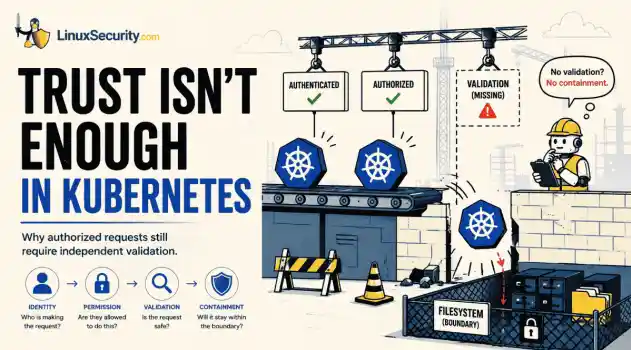
 Two newly fixed storage bugs in Kubernetes showed more than just a problem with path traversal. They found a common security flaw in the cloud: powerful parts often think that requests accepted by a higher system are safe to run. This is a simple lesson for the platform and security teams: RBAC can accept a request without showing that its parameters will stay within a certain filesystem boundary. This is clear from a new study from SentinelLabs into flaws in the Kubernetes CSI drivers for NFS...
Jul 24, 2026
 security advisory update
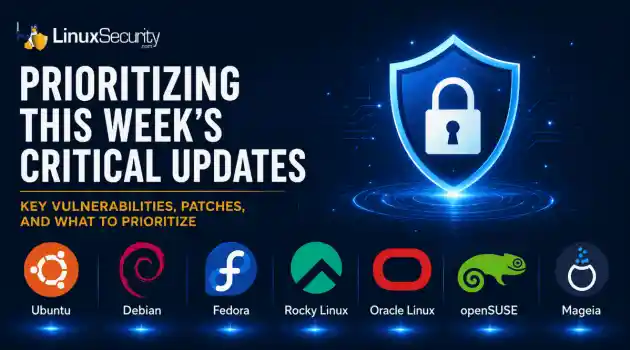
 A large volume of Linux security updates and advisories this week across major distributions once again, but it wasn't just the volume that was the story. Where maintainers and security teams focused their attention was evident in the concentration of fixes targeting Linux kernel updates, identity services, DNS infrastructure, and internet-facing software. . Instead of looking at each advisory in isolation, administrators gain more value from the general trends they reveal about Linux security...
Jul 23, 2026
 identity management security tactics
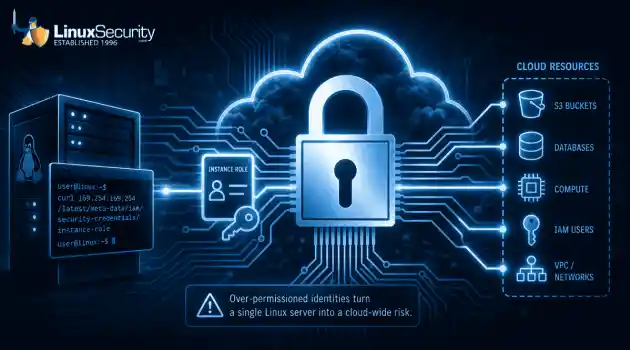
 For years, we secured our Linux infrastructure by building walls: VPCs, security groups, and hardened SSH configurations. We treated the cloud like a virtual data center, assuming that if we kept the "bad guys" out of the network, our workloads were safe. . That model is no longer sufficient. Today, one of the most common paths from an initial compromise to a major cloud breach is the identity assigned to your Linux workload. When an attacker gains code execution on a Linux instance—through a...
Jul 17, 2026
 security practices patch management
 Most of us don't hear about a kernel vulnerability until a CVE lands in our inbox or the vulnerability scanner starts complaining. By then, the patch isn't new anymore. Kernel developers may have been passing it around for review, arguing over the implementation, or revising it for days before anyone outside that community noticed it. None of those discussions are secret. They're sitting in mailing list archives, Git commits, and patch reviews where they've been the whole time. The strange...
Jul 14, 2026
 Refine features
X Clear Filters
Get the latest News and Insights
Get the latest Linux and open source security news straight to your inbox.
Community Poll
Are host-based firewalls still worth using?
Loading...
Explore Latest Linux Security features
We found -3 articles for you...
102
 security practicescloud securityapplication deployment
Best Practices for Linux Admins in Container Security Management
Agility and scalability are paramount for us Linux security admins, and traditional software deployment methods often fall short in these critical areas. Container technology is a game-changing innovation that has revolutionized how software is deployed, managed, and scaled. It offers many benefits to ensure that applications run consistently regardless of the hosting environment. . Safeguarding your digital assets is crucial for protecting sensitive data and preventing unauthorized access, and security concerns remain one of the top roadblocks to container adoption. The most common issues include cybersecurity vulnerabilities in container images, misconfigurations, unauthorized access, and container runtime weaknesses exploited during network security attacks. In this article, we will take a deep dive into container security by exploring the underlying concepts, reviewing basic container security considerations, understanding popular containerization platforms, and examining security considerations for businesses. Continue reading to learn how containerization is shattering software deployment barriers! Understanding Containers A container is an isolated software unit that ensures the application runs flawlessly in different computing environ ments. Containers include codes and dependencies, an operating system, a file system, networking, and a runtime environment that allows for efficient encapsulation and running. Consistent and portable containers provide a self-contained space, making it convenient for developers to build and deploy software. Containers and Virtual Machines (VMs) differ in a few ways. VMs are resource-intensive, reproduce complete computers with their own OS and kernel, and communicate via Virtual Machine emulation services. Containers, on the other hand, are lightweight, share the host system's kernel, and communicate via standard system calls. Here are the benefits of using containers for application deployment: Enhanced Portability: Containers provide aconsistent deployment model, enabling seamless application movement and stationing across diverse environments. Efficient Scalability: Containers enable swift application replication and deployment across multiple instances, facilitating effective scaling. Isolated Environments: Containers ensure process-level isolation so each application runs in its own protected environment, which can minimize data and network security issues and dependencies that could lead to cyber security vulnerabilities. Optimized Resource Utilization: Containers have a lightweight nature that allows for maximizing the number of applications that can be hosted on a single server, optimizing resource efficiency. Enhanced Application Security: By offering isolated environments, containers enhance application security by mitigating the risk of potential cloud security breaches and other risks. Types of Container Platforms There are two main types of container platforms - full-stack container platforms and managed container services. Let's examine how the two differ: Full-stack container platforms provide end-to-end solutions for containerization. This includes the necessary network security toolkits and infrastructure that allow users to build, deploy, and manage containers. Full-stack container platforms typically offer container runtimes, orchestration frameworks, networking, storage, and monitoring capabilities. Examples include Docker, Kubernetes, OpenShift, and Red Hat containers. Managed container services are cloud-based solutions that handle the complexities of infrastructure management and offer a controlled environment for deploying and operating containers. Users can prioritize application development without worrying about the underlying infrastructure intricacies. Examples include Amazon Elastic Container Service (ECS) , Google Kubernetes Engine (GKE) , and Microsoft Azure Kubernetes Service (AKS) containers. Consider that some container platforms fall into bothcategories, like Docker Engine and Docker Hub. Organizations may opt for full-stack platforms when the company requires more flexibility and control over its container environment. Businesses will choose managed services due to their simplicity, scalability, and reduced operational overhead. Basic Container Security Considerations Container security involves various components that are useful once incorporated into deployment practices. Here are ideas to keep in mind to mitigate potential application security vulnerabilities: Least Privilege Principle Containers can only access what is necessary for their tasks and nothing more. Provide containers with minimal privileges to meet their specific requirements instead of granting root privileges and permissions to containers. The principle of least privilege reduces exposure risks. Container Isolation Robust isolation measures help prevent cross-container attacks in network security and limit the impact of cloud security breaches. To isolate containers at the process and resource levels, use container runtime features like namespaces and cgroups. Image Security Image integrity and authenticity are crucial for preventing network security issues. Obtain images only from trusted sources and verify images with image signature tools. Consider regularly updating your images and integrating security patching frequently. Secure Communication Between Containers Implementing secure communication channels between containers protects sensitive data and prevents tampering. You can enhance container-to-container security with encryption protocols and service meshes. Regular Updates and Patching The latest security patches can help you keep container runtimes, host operating systems, and container images up-to-date. You can easily handle known application security vulnerabilities and data and network security issues with regular updates. A patch management process ensures timely updates across your container environment. WhatAre Specific Security Features in Linux Containers? Linux is a user-friendly and secure container platform with key security features. Let’s explore how Linux helps protect a containerized environment: Linux security modules, such as SELinux and AppArmor , provide Mandatory Access Control (MAC) cloud security frameworks for accurate access controls and security policies. Namespaces separate and isolate the resources used by different containers, while cgroups control the system resource allocation and management for containers, ensuring fair usage across platforms. Seccomp scans limit system calls, blocking potentially risky ones to reduce the chance of program attacks on network security. Linux capabilities allow containers to perform privileged operations without exposing unnecessary privileges, reducing the risk of unauthorized access or misuse. Integrity Measurement Architecture (IMA) verifies the integrity of files and processes, limiting unauthorized changes and maintaining the trustworthiness of the system. BPF and Kernel Containers BPF, or Berkeley Packet Filter, is a lightweight virtual machine integrated into the Linux kernel. It operates by executing BPF programs, which are loaded and validated for safety using the bpf() syscall. These programs are associated with kernel objects and are triggered when specific events occur, including packet emissions from a network interface. eBPF, or Extended Berkeley Packet Filter, plays a vital role in container security, as it provides enhanced visibility and control at the kernel level, allowing for real-time monitoring, policy enforcement, and threat detection within containers. By leveraging eBPF, data and network security measures can be tailored specifically to container environments, ensuring a stronger and more secure container ecosystem. BPF-based cybersecurity projects enhance container security. Cilium focuses on data and network security, providing deep visibility and fine-grained policy enforcementusing BPF. Falco, on the other hand, monitors container activities and system calls using BPF probes to detect abnormal or malicious behaviors in real-time. Tracee is a lightweight runtime security and forensics network security toolkit that utilizes BPF to trace system calls, network activity, and other runtime events within containers. This helps in detecting suspicious activities, monitoring network security threats, and conducting incident response investigations. Kernel container security enhances current Linux container security services, aiming for better isolation, stronger resource control, and powerful overall security. Here are some examples: Namespaces provide isolation for different operating system resources, including process IDs, network interfaces, mount points, and user IDs, ensuring that containers have their own isolated view of these resources. Control groups enforce resource allocation and usage limits on containers, preventing resource exhaustion and ensuring an equitable distribution of system resources. Seccomp limits the system calls that containers can make, reducing the attack surface and minimizing the impact of potential application security vulnerabilities. IMA verifies the integrity of executable files and their metadata, safeguarding against unauthorized modifications and tampering. What Are Different Types of Containers and Their Security Implications? Let’s examine the most popular containers and their security features to help you strengthen your understanding of Linux container security: Docker is a containerization platform with built-in security features like isolation and image verification. This service offers official images regular updates, and maintains a secure host environment and network. They help enhance the security of containerized applications. Kubernetes is a container orchestration platform that provides security features like RBAC, network policies, and secrets management. Their best practices include securecluster configuration, regular updates, Pod Security Policies implementation, image application security vulnerability scanning, basic monitoring and logging, and disaster recovery and backup plan establishment. RKT incorporates security features like process isolation and image signature verification to support the principle of least privilege. This server offers secure deployment, provides regular updates, and adheres to the principle of immutable infrastructure. RunC is a lightweight container runtime that does not include extensive built-in security features. However, you can still benefit from process isolation, resource control, capability management, auditing and testing services, and image integrity, all of which can assist in enhancing container data and network security. Resources for Learning More about Containers Here are some useful resources where you can learn more about containers. This technology is evolving rapidly, so you should expand and enhance your containerization knowledge quickly. Online Courses and Training Videos On popular, official container platform websites, like Docker and Kubernetes , you can take courses, find tutorials, and reference documentation to understand the best containerization practices. There are great online learning platforms, such as Udemy, Coursera, and edX, that offer courses on containers and orchestration. YouTube offers training videos and webinars published by major cloud providers, both of which you can screen record to capture key information and learn it more thoroughly. Books and eBooks When it comes to books and eBooks on container technology, there are several valuable resources available. Docker Deep Dive by Nigel Poulton offers a comprehensive guide to Docker, explaining its architecture, features, and practical usage. Kubernetes: Up and Running by Brendan Burns, Joe Beda, and Kelsey Hightower introduces and explains key Kubernetes concepts. Both of these resources are helpful in providing practicalexamples of how to deploy and manage applications and take care of data and network security in your containers. Blogs and Websites Use official website blogs, like the Kubernetes Blog or the Docker Blog , to stay updated on container technology through engaging articles written by experts. You can find tutorials, valuable insights, news, case studies, and lots of useful containerization-related topics. Visit their websites or subscribe to their newsletter to stay tuned. LinuxSecurity.com covers the latest container security news and updates you should be aware of to keep your systems secure. Container Security Considerations for Businesses Data and network security considerations for containers are valuable in making sure all sensitive information is safe from cloud security breaches and other compliance violations. Here are some suggestions to think about: Conduct regular risk assessments and implement risk management strategies to prevent and address potential hazards. Consider establishing clear security policies and procedures specific to container deployments that can serve as guides for how to protect data, manage images, control access, and secure networks. Develop an incident response plan that will help you detect and recover from network security threats and cyber security vulnerabilities. Container security requires timely detection, rapid response, proper communication, and post-incident analysis. Make sure container deployment aligns with GDPR, PCI DSS , and other relevant industry standards and requirements for data encryption and privacy. All employees in the containerization process should undergo regular training to ensure they utilize the best security practices in the event of an emergency. Our Final Thoughts on the Importance of Linux Container Security As you can see, the significance of Linux container security cannot be overstated. As container adoption continues to soar, it becomes increasingly crucial to prioritize robustsecurity measures to protect your digital assets from evolving data and network security threats. It’s essential to stay informed on container security developments and leverage the resources we’ve discussed to learn how to effectively protect your containerized environments and mitigate risks. Want to learn how containerization could benefit the security and manageability of your WordPress website? Check out the recent LinuxSecurity Feature article Containerizing WordPress: Best Practices for Robust Security and Management to learn more! . Safeguarding your digital assets is crucial for protecting sensitive data and preventing unauthorize. agility, scalability, paramount, linux, security, admins, traditional, software, deploym. . Brittany Day
 Dec 24, 2024
•
Dec 24, 2024
•
102
 managed serviceshosting solutionssecurity benefits
Explore Secure Linux Hosting Options with RoseHosting's Management Benefits
Linux prevails as the most popular OS among hosting providers - and for good reason. Linux is secure by design , cost-efficient, compatible with the majority of key programming languages used worldwide and offers high levels of customization. . There are a plethora of excellent Linux hosting solutions available to businesses, and selecting a hosting provider may be a bit daunting as a result. To assist in the process, we’ll take a look at three popular types of Linux hosting and the benefits that each offers. We’ll then introduce you to RoseHosting, a provider of fully-managed, highly secure Linux hosting solutions that we love. Linux Hosting: The Clear Choice for Businesses Linux hosting solutions offer a selection of unique benefits that proprietary alternatives are unable to match - a greater level of security being one of the most notable advantages. Linux is generally regarded as an exceptionally secure OS - arguably the most secure OS . Because of its open-source roots, Linux offers robust security due to the involvement and support that the innovative, global open-source community provides. Linux source code undergoes ongoing scrutiny by user-developers who are deeply invested in their work, both for their own benefit and for the benefit of the community. As a result of this careful, constant review, Linux security vulnerabilities are generally identified and eliminated very quickly - often before they are discovered and exploited by malicious actors. Linux is also highly diverse , follows a strict user privilege model and offers a selection of built-in kernel security defenses - characteristics that further enhance its security and the security of the solutions it powers. That being said, the benefits of Linux hosting go beyond security. The open-source foundation of Linux allows code to be modified and redistributed without restriction, resulting in the potential for a greater level of customization in server capabilities and user options than is possible in morerestrictive proprietary platforms such as those that run on Windows. Linux also supports the majority of key programming languages used worldwide including Python, MySQL, PHP, Ruby and Perl. Moreover, Linux hosting providers do not bear any subscription charges or per-user licence fees as they would with Windows, a benefit that directly carries over to the consumer. Types of Linux Hosting There are multiple types of Linux hosting services available to businesses, each offering a unique set of characteristics and benefits designed to meet customers’ varying requirements. Three common types of Linux hosting include: VPS Hosting VPS (Virtual Private Server) hosting works as a Virtual machine sold as a service by an Internet hosting service provider. This type of hosting allows for complete isolation and better control over system configuration. Dedicated Server Hosting Dedicated server hosting (also known as bare metal server hosting) refers to hosting services provided by a physical computer designed specifically for running these services without any interruptions. Dedicated server hosting is generally based in a single-tenant environment where physical resources are not shared with other tenants. As a result, customers enjoy direct access to the server, high levels of customization, full hardware control and cost predictability. KVM Hosting KVM (Kernel-based Virtual Machine) is an open-source virtualization hosting technology built into Linux. KVM makes it possible to turn Linux into a hypervisor that allows a host machine to run multiple, isolated virtual environments called guests or virtual machines (VMs). Because KVM is part of existing Linux source code, businesses immediately benefit from every new Linux feature, fix and advancement without additional engineering. RoseHosting: A Breath of Fresh Air in the Hosting Industry If you’re searching for a fast, reliable and secure Linux hosting solution, then RoseHosting is a provider that we strongly suggest you consider.Established in 2001, RoseHosting has provisioned over 100,000 Linux virtual servers worldwide, and has earned its reputation as one of the best managed hosting companies over the past two decades. While RoseHosting also offers web hosting and cloud dedicated server hosting, it specializes in managed VPS hosting. When RoseHosting emerged two decades ago, the company was the sole provider of commercial Linux VPS hosting services. Although this has changed over the years, RoseHosting comes unmatched in terms of experience and the quality of service it provides its customers. RoseHosting takes great pride in never overselling - a common problem in the hosting industry. Jeff Wilson, RoseHosting Marketing Manager, comments on the issue, “Overselling gives hosting, in general, a bad name that is really unfair to the hosting companies that don’t do it. We have not done it since day one. It’s unfair.” RoseHosting VPS hosting is fully-managed, making it ideal for businesses that are short on IT resources and expertise, or simply looking to optimize security and convenience. RoseHosting VPS customers effectively have a dedicated IT department that takes care of every detail regarding their server's and website's daily operations and performance, freeing up valuable IT resources that would otherwise be put toward these critical ongoing tasks. RoseHosting administrators handle website migration at no additional charge, making getting started with RoseHosting easy and efficient. Customers also get to take advantage of RoseHosting Support, which consists of a team of expert Linux administrators. No request is too big for RoseHosting Support experts, and customers receive a response to a Support request in less than five minutes on average. Wilson explains the significance of RoseHosting fully-managed support: Our approach is very different from the rest of the market where most of the larger cloud providers are totally unmanaged, or to get managed service you have to pay a lot of extra fees, and theyare quite expensive. With us, the plan is what you pay and you also get our hand-holding server management support, which is unmatched in the hosting industry. No other hosting provider lets their customers have full root access to their servers and include a free unlimited fully-managed support. They would let you have one or the other, never both. For these reasons, turnover is extremely low, and over 90% of customers stay with RoseHosting for 10-20 years. Powered by enterprise SSD drives, RoseHosting VPS is ultra-fast and highly reliable, with 99.99% uptime guaranteed. All servers are connected to a Gigabit Network, facilitating faster speeds and lower latency with no limitations. Free weekly backups, firewall security and hardening and free Let’s Encrypt SSL further enhance the security that RoseHosting VPS provides through its open-source foundation and expert managed services. Key Takeaways Linux hosting offers businesses a selection of key benefits including high levels of security, cost-efficiency, compatibility with the majority of key programming languages used worldwide and high levels of customization. Businesses can choose between VPS hosting solutions, dedicated server hosting and KVM depending on their specific needs and priorities. RoseHosting VPS hosting is an excellent choice for businesses looking to free up IT resources and enhance security with a fast, reliable, fully-managed Linux hosting solution. Wilson sums up RoseHosting’ s approach to hosting, “We’re always trying to improve our services through better hardware, virtualization, more space, and RAM. There is a lot of small print in this industry, but not with our hosting. What you see is exactly what you get, no less, no more — and we think it’s the best.” . Explore various Linux hosting solutions available for businesses, highlighting the benefits of secure managed hosting with RoseHosting.. linux, prevails, popular, among, hosting, providers, reason, secure. . Brittany Day
Jun 06, 2021
•


Get the latest News and Insights
Get the latest Linux and open source security news straight to your inbox.
Community Poll
Are host-based firewalls still worth using?
Search Topics
Powered By

Linux Security - Your source for Top Linux News, Advisories, HOWTOs and Feature Releases
QUICK LINKS
subscribe to newsletters!
Like staying secure? So do we.
Sign up for updates, tips, and alerts!