Overly broad permissions can turn one compromised account into a much larger security problem. Learn how to reduce unnecessary access, review privileges, and apply least privilege across modern Linux systems. Review Linux Privileges×


Stay Ahead With Linux Security Features
 identity management security tactics
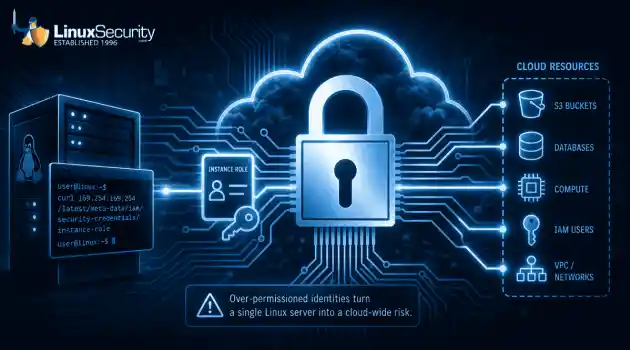
 For years, we secured our Linux infrastructure by building walls: VPCs, security groups, and hardened SSH configurations. We treated the cloud like a virtual data center, assuming that if we kept the "bad guys" out of the network, our workloads were safe. . That model is no longer sufficient. Today, one of the most common paths from an initial compromise to a major cloud breach is the identity assigned to your Linux workload. When an attacker gains code execution on a Linux instance—through a...
 Jul 17, 2026
 security practices patch management
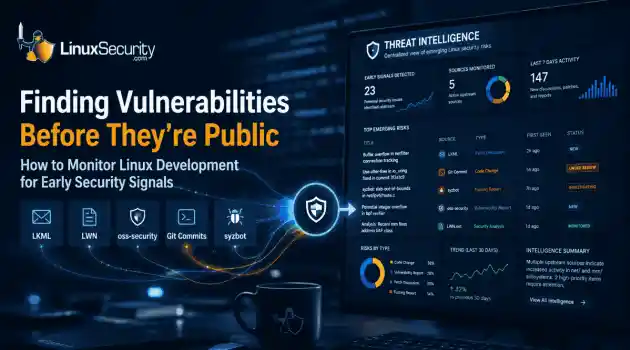
 Most of us don't hear about a kernel vulnerability until a CVE lands in our inbox or the vulnerability scanner starts complaining. By then, the patch isn't new anymore. Kernel developers may have been passing it around for review, arguing over the implementation, or revising it for days before anyone outside that community noticed it. None of those discussions are secret. They're sitting in mailing list archives, Git commits, and patch reviews where they've been the whole time. The strange...
Jul 14, 2026
 Linux security cyber attacks
 Every Linux server in your fleet produces thousands of events every minute. From journald logs and auditd records to kernel-level eBPF hooks, your systems are constantly talking. Most of that noise is just the mundane churn of system services, CI/CD runners, or routine administrative automation. But among that noise, an attacker might be establishing a foothold, moving laterally, or setting up persistence. The challenge for any security team is: how do you separate the routine from the...
Jul 13, 2026
 open-source infrastructure risk
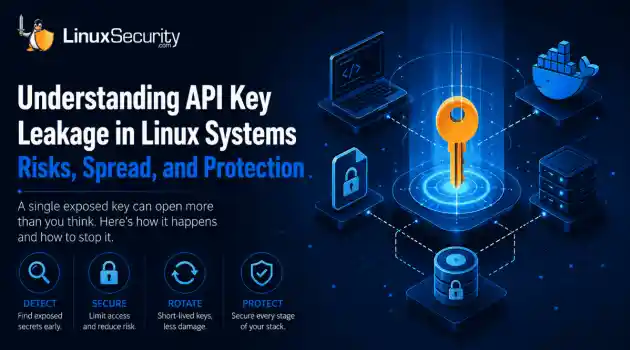
 Security scanners flag exposed API keys in public repositories every day. The initial response is usually predictable: delete the commit, revoke the credential, and move on. That’s a mistake. . In a real Linux environment, an API key never stays in one place. By the time it hits a public repo, it’s already everywhere. It’s in the CI/CD pipeline. It’s in your container registry. It’s in the build logs. It’s in the backups. Git makes this worse because the history never dies. Deleting a file in...
Jul 11, 2026
 open-source rootkit
 Most of us think of Linux rootkits as ancient history—the stuff of 90s hacking forums and clunky malware that would crash your system if you looked at it the wrong way. But if you think they’ve gone away, you’re mistaken. They’ve just gotten smarter. . Modern attackers aren't using the noisy tools of the past. Today’s threats are surgical. Many of today’s most advanced Linux rootkits operate at the kernel level or abuse legitimate system features to blend in with normal traffic. They’re...
Jul 09, 2026
 Refine features
X Clear Filters
Get the latest News and Insights
Get the latest Linux and open source security news straight to your inbox.
Community Poll
Should Linux servers automatically install security updates?
Loading...
Explore Latest Linux Security features
We found -3 articles for you...
102
 application securitycode analysismigration
.NET Core Migration Challenges: Enhance Security with Linux Integration
As organizations look to modernize their applications and increase performance, .NET Core can be a pivotal shift from the .NET Framework. It is the perfect platform to build secure, scalable, and future-ready solutions, with a growing emphasis on open-source technologies and cross-platform compatibility. In this article, we explore the migration process and how using Linux and open source can make it more secure and efficient before and after the migration. . Advantages of .NET Core over .NET Framework .NET Core is an open-source, cross-platform framework designed for cross-platform development to address .NET Framework limitations. Compared to .NET Framework, which is only intended to run on Windows, .NET Core permits applications to be deployed into Linux and macOS, making it an excellent choice for cloud-based web hosting. Its flexibility also works well for companies looking for a cheaper hosting option, such as cloud-based web hosting, and more flexible working. Additionally, the .NET Core is open source and has evolved rapidly among the participants of the .NET developer community, contributing to innovation and security enhancements. From a security point of view, .NET Core brings a lot of advantages. Updates and modularity mean that developers have a vehicle by which to quickly and easily remediate vulnerabilities. One of the benefits is that it makes it possible to run .NET Core-hosted apps on Linux with the security benefits that Linux offers out of the box. The ability to provide this combination of adaptability, cross-platform development, and security makes .NET Core an enterprise-worthy solution for modernizing technology. Migration to .NET Core – Hard Challenges To migrate from .NET framework to .NET core comes with its challenges. Many applications built in .NET Framework depend on legacy libraries and APIs that: They are not compatible with .NET Core. They may not be accessible via .NET Core packages. They need to be manually importedfor use. Refactoring or replacing dated components is necessary, so we need to plan accordingly. Furthermore, during the migration, organizations also have to guarantee that their applications continue to meet security technical implementation guides to meet security and compliance requirements. Another huge challenge is switching workloads to platforms unfamiliar to some teams. Although Linux's security and performance are unique, adopting it requires a change in their approach. Understanding Linux-based monitoring , logging, and security tools that administrators use is essential for leaders. The learning curve for understanding Linux can be steep in the beginning, but the payoff in the long run is well worth it. Making the Business Case for Linux and Open Source in the Migration Process Clicking into .NET Core allows an organization to integrate Linux and open source technology within its ecosystem. .NET Core apps run stably and performantly on Linux, which has built-in security features like SELinux, AppArmor, and a pumped-up network configuration. Deploying applications on Linux, establishing backup Linux systems , and combining containerization help organizations break away from proprietary systems and embrace cloud-based web hosting for improved infrastructure security. The migration process would not be as successful without open-source tools. There are plenty of utilities, including containerization tools, available to developers to make refactoring, testing, or deployment of your applications a breeze. One of the attributes of containers is their role in containerization ( Docker in particular), providing isolated .NET Core applications and their dependencies where performance can remain consistent. In addition, open-source CI/CD pipelines such as Jenkins or GitHub Actions allow for automated testing and deployment, and migrated applications are tested and deployed with quality standards to end up in production. Another equally important advantage of thisopen-source collaboration is that developers have access to extensive documentation, forums, and code samples to help expedite the migration process. This collaboration also makes security patches, updates, and cross-platform development more readily available, which helps eliminate an even larger security vulnerability—not realizing that there’s an issue in the first place. Open source development is transparent, allowing the trust and reliability necessary for mission-critical applications. Improving Security During And After Migration The migration from .NET Framework to .NET Core is of primary importance for security. Organizations have to practice ahead to identify and control potential risks. The process starts with a very good analysis of existing applications, their dependencies, and their vulnerabilities. Practical code analysis tools will help determine where code needs to be changed to support .NET Core while closing security holes introduced by unknown sources. After migration, the choice of Linux as a security hosting platform only gets better. It provides exceptional control over system configuration , especially when following a technical security implementation guide. Since access controls can be enforced and the behavior of applications can be monitored admirably, Linux is a sound, minimally privileged system, making it ideal for running backup Linux environments securely. Besides, to provide additional layers of protection against cyber threats, the use of open-source security tools, including intrusion detection systems and audit frameworks, can be beneficial. .NET Core applications need regular updates and maintenance to maintain their security status. Because .NET Core is a modular framework, updates to a particular component don’t mean that the entire application stops working, reducing downtime and ensuring the quick rollout of security patches. To stay ahead of emerging threats, organizations should create a robust patch management process and ensure they havebackup Linux systems to safeguard data. Strengthen Your .NET Core Security Posture. A move from .NET Framework to .NET Core offers organizations the chance to embrace an open-source approach, shore up security, and gain cross-platform compatibility. By exploiting the power of Linux, cross-platform development, and an abundant ecosystem of open-source tools , businesses can navigate migration challenges and achieve deeper levels of efficiency and innovation. Getting here requires good planning, but dedication to continuous improvement has its benefits. Organizations that build with .NET Core are also well-positioned to build resilient, scalable, and secure applications for the future. Maintaining the security of .NET Core projects is critical to protecting user data and applications from potential threats. By following open-source best practices for security, you can significantly decrease vulnerabilities and safeguard systems more effectively. Such practices include securing dependencies, enforcing HTTPS, managing configurations securely, and implementing robust authentication and authorization mechanisms. Additionally, organizations should conduct regular static code analysis, perform audits and penetration tests to identify security flaws and provide comprehensive logging and monitoring capabilities. Audits and pentests will help identify vulnerabilities and can identify and exploit them effectively. As you move forward, pay particular attention to taking these proactive measures to increase the security of your .NET Core apps: Regularly Update Dependencies : Use tools such as NuGet or Snyk to keep dependencies up-to-date, adhere to a security technical implementation guide , and do not originate from unknown sources. Also, implement HTTPS using Let's Encrypt . Establish HTTPS in Transit : Secure your data while transiting using migration towards HTTPS, ensuring its protection in transit by migrating all HTTPS-enabled sites using Let's Encrypt's services for SSL/TLScertificates. Secret Management : Securely store sensitive information using Azure Key Vault , AWS Secrets Manager , or HashiCorp Vault , as well as environment variables for sensitive data storage. Deploy Security Frameworks : Integrate effective authentication and authorization frameworks such as ASP.NET Core Identity, IdentityServer4, or Azure AD B2C for robust user authorization and authentication processes. Automate Code Analysis : Integrating code analysis tools like SonarQube and GitHub CodeQL into your CI/CD pipeline will help you identify issues early and detect potential threats. Enable Robust Logging and Monitoring : For comprehensive logging, consider Serilog, NLog, or cloud services such as Azure Monitor. Prometheus or Grafana may provide useful monitoring features to monitor application performance and potential security concerns. Conduct Regular Security Audits and Penetration Tests : Regular security audits and penetration tests using tools like OWASP ZAP are crucial for continuously evaluating and enhancing your security posture. By implementing these best practices and making optimal use of open-source tools, you can establish an efficient security framework for your .NET Core projects. By taking proactive steps like these, using code analysis tools, avoiding unknown sources, and leveraging open-source tools efficiently, you will significantly lower the risk of exploiting applications used by all users and ensure their safety and reliability for all. . Explore the .NET Core migration challenges and uncover how to enhance security with Linux integration effectively.. organizations, modernize, their, applications, increase, performance. . MaK Ulac
 Jan 17, 2025
•
Jan 17, 2025
•
102
 phpopen sourceuser experience
LinuxSecurity: Successful Migration to Joomla 4 And PHP 8
LinuxSecurity.com has been using the open-source Joomla Content Management System (CMS) and Hypertext Preprocessor (PHP) scripting language for nearly three decades and recently migrated to the latest versions, Joomla 4 and PHP 8. This allows LinuxSecurity to use new features and optimizations to provide visitors with an enhanced user experience. We’ve decided to pull back the curtain on our experience with the migration to Joomla 4 and PHP 8 to give users planning to migrate their websites insight into the lessons we learned. . What’s New in Joomla 4 & PHP8? Joomla has demonstrated significant strides with the release of Joomla 4 and PHP 8 over the last three years. Joomla 4 is built with modern open-source technologies to become a more robust and easy-to-use CMS platform with an intense focus on network security toolkits and is bringing both user experience and code quality improvements along with it, including: Faster page loading times Features to improve Search Engine Optimization (SEO) Framework 2.0 Bootstrap 5 integration Raising the minimum supported PHP version to PHP 7 New media manager Back-end UI improvements Improved functionality with the removal of previously deprecated functionality Simplified upgrade process with a one-click upgrade for core Limited backward compatibility breaks for extensions The release of PHP8 also brings many new and exciting features and optimizations, including: Named arguments Union types Attributes Constructor property promotion Match expression Nullsafe operator Just In Time (JIT) services for safe access Improvements in the type system, error handling, and consistency IDL Web Inc. Founder and Senior Developer Jacob Hodara explains how Joomla 4 and PHP 8 improve security posture and performance, “The key with any upgrade, whether it is software running on your computer or the web, is security . Without being too technical, both Joomla and PHP offer improved performance,ultimately giving the LinuxSecurity user base an improved and secure experience while visiting LinuxSecurity.com”. Our Migration Experience Overall, our migration to Joomla 4 and PHP 8 went pretty seamlessly. This outcome can be partially attributed to our careful planning, documentation, and team meetings, which helped iron out any possible data and network security issues. Hodara reflects, “We were well prepared with the amount of research, documentation, and testing done before going live with the upgraded site.” Below, we have listed various suggestions to keep in mind if your company plans to migrate to Joomla 4 and PHP 8. Our Top Suggestions for Users Migrating their Websites to Joomla 4 & PHP 8 Planning Check in with your developer to ensure all areas of your Joomla site are PHP 8 compatible, from extensions to templates and plugins. We found it helpful to locate the changelog and scan the document for PHP 8 references. Joomla 3.10.10 offers a Pre-Update Check report to see if it is or is not compatible with Joomla 4. If a system is not ready for Joomla 4, you may have to consider a different extension that offers the same functionality. Staging You will want to set up a staging environment to test PHP 8 and Joomla 4. The testing process can be lengthy, depending on the website's complexity. We recommend using a staging site to test your website correctly. Documentation Document any file modifications made for future reference. More importantly, document the process to launch the site, as you may need to refresh some data or content on the staging site. Testing & More Testing! After you’ve completed either upgrade, be sure to test every part of the website thoroughly. You will want to do a visual and functional check (form testing, user registration, user login, etc.). All of this will be helpful in checking that your company’s data and network security are strong enough after the migration. Final Thoughts on Migrating to Joomla 4 and PHP 8 We’re happyand proud to have completed the migration to Joomla 4 and PHP 8 to provide our users with an enhanced LinuxSecurity.com experience. We hope those planning to upgrade their websites have learned something from our migration experience! You can download Joomla 4 here and upgrade to PHP 8 here . Check out our Feature articles to learn about best practices to secure your Joomla website and best practices for PHP data and network security . Have you completed the migration to Joomla 4 and PHP 8? If so, how was your experience? If you’re considering upgrading, what are your main concerns? What features and optimizations are you most looking forward to? We’d love to hear about your experience in a contributed article ! . LinuxSecurity.com upgraded to Joomla 4 and PHP 8, transforming their platform's performance and user experience with enhanced features and security improvements. Joomla Migration, PHP 8 Features, Website Optimization. . Brittany Day
Sep 25, 2023
•


Get the latest News and Insights
Get the latest Linux and open source security news straight to your inbox.
Community Poll
Should Linux servers automatically install security updates?
Search Topics
Powered By

Linux Security - Your source for Top Linux News, Advisories, HOWTOs and Feature Releases
QUICK LINKS
subscribe to newsletters!
Like staying secure? So do we.
Sign up for updates, tips, and alerts!