Audit Linux privileges now to limit compromise, escalation, and system-wide damage. Review Linux Privileges×


Stay Ahead With Linux Security Features
 security advisory vulnerability
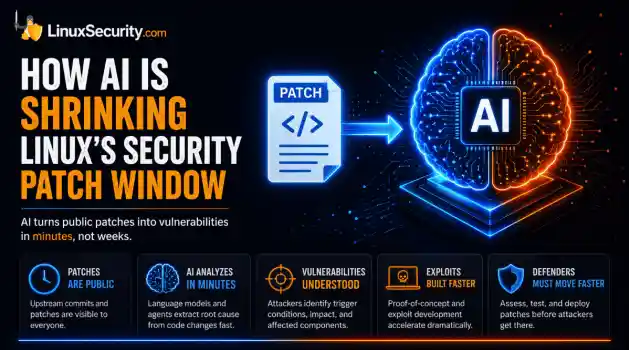
 For decades, Linux defenders relied on a comfortable assumption: a public security patch did not imply an imminent vulnerability. While open-source openness made vulnerability fixes public to everyone on kernel.org or the Linux Kernel Mailing List (LKML), converting a raw commit into a weaponized exploit took a significant amount of manual effort. This delay, estimated in weeks or months, gave businesses enough time to assess exposure, organize testing windows, and push changes across...
 Jul 27, 2026
 security advisory path traversal
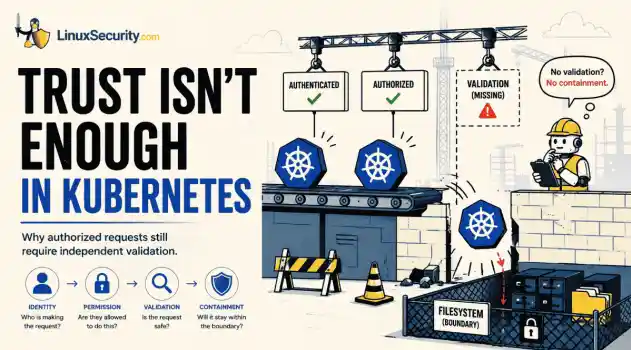
 Two newly fixed storage bugs in Kubernetes showed more than just a problem with path traversal. They found a common security flaw in the cloud: powerful parts often think that requests accepted by a higher system are safe to run. This is a simple lesson for the platform and security teams: RBAC can accept a request without showing that its parameters will stay within a certain filesystem boundary. This is clear from a new study from SentinelLabs into flaws in the Kubernetes CSI drivers for NFS...
Jul 24, 2026
 security advisory update
 A large volume of Linux security updates and advisories this week across major distributions once again, but it wasn't just the volume that was the story. Where maintainers and security teams focused their attention was evident in the concentration of fixes targeting Linux kernel updates, identity services, DNS infrastructure, and internet-facing software. . Instead of looking at each advisory in isolation, administrators gain more value from the general trends they reveal about Linux security...
Jul 23, 2026
 identity management security tactics
 For years, we secured our Linux infrastructure by building walls: VPCs, security groups, and hardened SSH configurations. We treated the cloud like a virtual data center, assuming that if we kept the "bad guys" out of the network, our workloads were safe. . That model is no longer sufficient. Today, one of the most common paths from an initial compromise to a major cloud breach is the identity assigned to your Linux workload. When an attacker gains code execution on a Linux instance—through a...
Jul 17, 2026
 security practices patch management
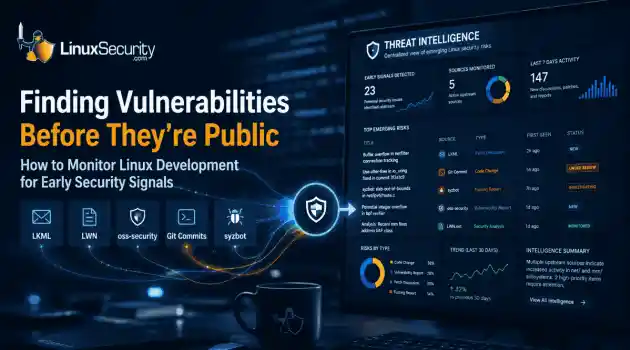
 Most of us don't hear about a kernel vulnerability until a CVE lands in our inbox or the vulnerability scanner starts complaining. By then, the patch isn't new anymore. Kernel developers may have been passing it around for review, arguing over the implementation, or revising it for days before anyone outside that community noticed it. None of those discussions are secret. They're sitting in mailing list archives, Git commits, and patch reviews where they've been the whole time. The strange...
Jul 14, 2026
 Refine features
X Clear Filters
Get the latest News and Insights
Get the latest Linux and open source security news straight to your inbox.
Community Poll
Are host-based firewalls still worth using?
Loading...
Explore Latest Linux Security features
We found -3 articles for you...
102
 security advisorymoderatekernel
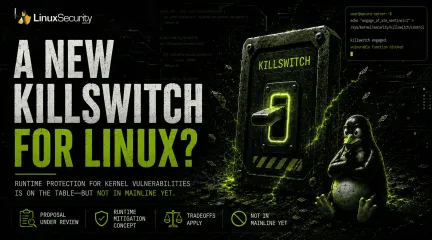
Linux Could Soon Disable Vulnerabilities Without a Reboot: Kernel Killswitch
Linux administrators often face an ugly choice during major kernel vulnerabilities: reboot critical systems immediately or leave exploitable code running in production while waiting for a maintenance window. . That problem is scaling faster than our ability to patch. As Linux infrastructure stretches across cloud platforms and Kubernetes clusters, emergency reboots can disrupt entire environments. A new Linux kernel proposal aims to bridge that gap. Sasha Levin , NVIDIA engineer and co-maintainer of the Linux stable trees, recently proposed a runtime “killswitch” system. It allows defenders to temporarily disable vulnerable kernel functionality without a reboot. The goal is straightforward: give defenders a way to kill the exposure while the permanent fix is still in the CI/CD pipeline. The timing isn't accidental. Recent Linux privilege escalation vulnerabilities like Copy Fail and Dirty Frag exposed the reality of modern server security. In cloud-heavy environments, a single kernel exploit can potentially expose containers, shared workloads, or entire Kubernetes nodes before a team can safely hit "restart." The Impossible Choice: Uptime vs. Zero-Day Vulnerabilities The Linux kernel is the core layer of the OS, managing everything from memory to networking. Every application eventually depends on kernel functions. That’s why vulnerabilities here are treated with such gravity—if an attacker exploits the kernel, they don’t just own an app; they own the system, bypass security controls, and escape containers. In modern infrastructure, a single vulnerable Linux host may support hundreds of internal APIs and authentication systems simultaneously. In this world, the traditional patch-and-reboot model is breaking. Rebooting thousands of systems during an active security incident is rarely simple. Some systems simply cannot go down without massive operational fallout. Others stay online because patch validation takes days. Essentially, patch management has become abottleneck for security. Attackers understand this delay window. Research into container escape and kernel memory corruption is moving faster than ever. Public proof-of-concept exploits now appear within hours, leaving defenders in a race they are currently losing. This killswitch is the attempt to reclaim that lost time. From "Patch and Pray" to Precision Runtime Mitigation Under the proposed patch, administrators could intercept a specific vulnerable function while the system continues running. The example Sasha Levin provided uses the securityfs interface: echo "engage af_alg_sendmsg -1" > /sys/kernel/security/killswitch/control This tells the kernel to intercept calls to af_alg_sendmsg and immediately return an error. The vulnerable code never actually executes. It creates an instant runtime blockade that applies across every CPU core without a single second of downtime. The Killswitch in Action: Why AF_ALG is the First Target Levin’s choice of af_alg_sendmsg was deliberate. It’s part of the cryptography interface associated with Copy Fail. This privilege escalation bug drew major attention because it allowed attackers to reach dangerous memory operations. By engaging the killswitch, any application depending on AF_ALG would stop working, but the attack path would disappear. It’s a brutal tradeoff: Reduced exposure vs. operational disruption. Sasha Levin specifically mentioned ksmbd , nftables , vsock , and ax25 as other possible killswitch candidates. These subsystems have all produced notable Linux kernel vulnerabilities or attack surface concerns in recent years. For many organizations, breaking one subsystem is far less dangerous than leaving a wide-open exploit running on production metal. Killswitch vs. Live Patching: Understanding the Strategic Difference Some administrators immediately compared the killswitch proposal to live patching technologies, but they solve very different problems. Feature Runtime Killswitch Live Patching Primary Goal Disables vulnerable functionality entirely Replaces vulnerable code while running Operational Impact May break applications temporarily Attempts to preserve functionality Focus Emergency exposure reduction Seamless patch deployment Mechanism Temporary mitigation Runtime repair mechanism Live patching systems like kpatch or Canonical Livepatch try to preserve operational stability while applying fixes. The killswitch proposal prioritizes immediate exposure reduction, even if applications stop functioning in the process. The AI Factor: How Claude 4 and Automated Fuzzing Are Accelerating the Kernel Arms Race The proposal also ensures the kernel marks itself as “tainted” with a new H flag once a killswitch is engaged. This ensures that any subsequent crashes are clearly flagged as occurring on a modified runtime—crucial for debugging during an incident. Perhaps most interestingly, the patch was Assisted-by: Claude:claude-opus-4-7 . The Linux community has recently formalized guidance for AI-assisted contributions . This reflects a broader shift: maintainers like Greg Kroah-Hartman are already using AI-assisted fuzzing to find vulnerabilities in subsystems like ksmbd . We are entering an era where AI helps find the bugs, assists in writing the patches, and accelerates the entire security response cycle. The Bottom Line for Linux Admins The killswitch proposal isn't just about a new command; it’s a signal of where Linux security is heading. The traditional model doesn't fit a world of globally distributed Kubernetes environments and sub-hour exploit cycles. Whether this specific patch lands or not, the discussion reveals a new priority for defenders. We are no longer just asking how to patch faster. We are asking how to safely operate vulnerable infrastructure while the world waits for a fix. As exploit development accelerates and maintenance windows shrink, Linux security is increasingly becoming less about perfect patch timing and more about controlling exposure before patches arrive. . That problem is scaling faster than our ability to patch. As Linux infrastructure stretches across c. linux, administrators, often, choice, during, major, kernel, vulnerabilities, reboot, critical. . MaK Ulac
 May 11, 2026
•
May 11, 2026
•
102
 security advisorymoderatelinux
Linux: Tee.Fail Moderate TEE Side-Channel Attack for 2024-001
The tee.fail attack targets how Linux handles trusted execution environments. Think of it as a way to peek inside hardware-backed enclaves that should be locked tight. The attack plays with timing and cache behavior to pull data from those protected spaces, and researchers proved it works without needing full kernel access. That’s what makes it unsettling — it sidesteps the layers we usually rely on to keep sensitive code and keys safe. . On Linux, TEEs do a lot of heavy lifting for confidentiality. They wall off memory used by cryptographic processes or secure workloads, keeping them safe even if the rest of the system gets messy. When something like tee.fail breaks that isolation, it doesn’t just hit performance or stability. It hits trust — the kind that underpins the whole model of hardware-assisted security. We’ll get into how those environments actually fit into Linux security next, and why the setup that’s supposed to keep things safe can still spring leaks like this. Understanding Trusted Execution Environments in Linux Security A trusted execution environment is a hardware-backed zone where sensitive code runs apart from the main OS. It’s designed to keep data isolated even if the kernel or hypervisor is compromised. In linux security, these environments show up through vendor-specific support — Intel’s SGX and TDX, AMD’s SEV-SNP. Each hooks into the kernel and virtualization stack to carve out protected memory regions that the rest of the system can’t touch. What Trusted Execution Environments Do in Linux Systems In practice, a trusted execution environment handles three main jobs: isolating enclaves, verifying integrity, and securing keys. Enclave isolation keeps workload memory off-limits from the user space and the host. Attestation lets remote systems confirm that code inside the enclave hasn’t been modified. Key protection keeps encryption material sealed in hardware, never exposed to regular process memory. That’s the clean version of howit’s supposed to work. In real Linux deployments, it looks messier. Cloud providers rely on SEV-SNP to separate tenant workloads in KVM. Intel SGX ties into user-space enclaves for confidential compute. Kernel modules like arch/x86/kernel/cpu/sgx/ and drivers/virt/coco/sev/ handle the setup — building enclave pages, switching context securely, juggling permissions. It’s solid engineering, but every layer adds its own assumptions. And assumptions are where things start to bend. Let’s talk about what happens when they do. Known Limitations of Trusted Execution Environments Even with all that hardware isolation, TEEs still leak information in ways the spec doesn’t cover. Studies have shown cache timing, page-fault, and speculative side-channels that don’t break encryption but still expose fragments of what’s happening inside. The Survey on TEE Side-Channel Attacks breaks it down well — Intel and AMD both show measurable leakage in lab conditions, each from slightly different timing paths. The root cause sits deeper in hardware. Cache hierarchies and page tables leave small timing footprints that map back to enclave activity. Add in speculative execution, and those signals get even louder. None of it’s catastrophic on its own, but it chips away at the guarantee that data inside a TEE stays invisible. And for anyone running confidential workloads, “almost invisible” doesn’t count. DDR5 Memory Design Impacts on Linux Security DDR5’s on-die ECC and new bank timing design shift latency just enough to create measurable timing variance inside enclave workloads. The effect is observable only under research-grade measurement, not through practical exploitation. AMD documented the behavior in Security Bulletin SB-7036 , confirming no field impact but noting the measurable drift in latency. It’s a subtle example of how even performance tuning at the memory layer can ripple into linux security. These hardware quirks and timing leaks all feed into the samepoint — they open the cracks that the tee.fail attack later drove straight through. Inside the tee.fail Attack and Its Verified Technical Findings The tee.fail attack breaks into a space few thought reachable — the physical behavior of DDR5 memory used by trusted execution environments. Instead of going after the CPU’s cache or page tables, it reads the timing ripples from the memory controller itself. That timing data, when measured carefully enough, exposes hints about enclave operations that should be invisible. It’s a reminder that even hardware isolation can’t fully hide from physics. How the tee.fail Attack Works According to Researchers According to the researchers who disclosed tee.fail , the exploit measures tiny differences in DDR5 row-buffer timing to infer enclave activity. Each time the trusted execution environment accesses a protected memory row, the controller reacts slightly faster or slower depending on prior use. When those differences stack up, they create a traceable pattern — one that can be correlated back to enclave data handling. The setup isn’t casual. It requires physical or low-level system access to measure the memory controller directly. Remote exploitation isn’t part of the published findings, and no evidence suggests real-world abuse so far. Both the disclosure and vendor confirmations describe the attack as lab-proven under controlled instrumentation, not in production systems. We’ll move next to which platforms and TEEs are confirmed vulnerable. Which Trusted Execution Environments Are Confirmed Affected The tee.fail attack has been confirmed by vendor advisories to affect Intel SGX and TDX, along with AMD’s SEV-SNP. All three rely on memory controllers that share the same DDR5 timing design the attack exploits. On Linux, the exposure tracks through kernel modules and KVM virtualization layers that manage enclave contexts. Hypervisors using these TEEs inherit the same exposure path since they share the same low-level hardwareinterface. Intel and AMD both issued guidance confirming the findings, aligning with the original academic disclosure. Patches focus on firmware-level mitigation rather than software changes — a sign the issue lives deep in the hardware layer, not in kernel or hypervisor code. Let’s put that in context next to older enclave vulnerabilities. How tee.fail Differs from Earlier Enclave Vulnerabilities Older enclave attacks focused on what the CPU leaked through software behavior — page faults, cache hits, speculative paths. tee.fail shifts the target lower, to how the memory controller itself betrays timing differences. It’s not a cache or page-fault trick; it’s an electrical signal problem. Aspect Previous Enclave Attacks tee.fail Attack Targeted Layer Cache or Page Fault DDR5 Memory Controller Access Requirement Local or Software Hardware / Physical Vendor Response Microcode Patches Firmware & Controller Updates Linux Relevance Kernel Mitigations Firmware Verification The Flashbots report on Intel TDX side-channel fixes provides a good comparison point — Intel’s past page-fault fix involved software control, while tee.fail drives mitigation down to the firmware and hardware boundary. This all leads directly into the practical question: how much risk does tee.fail actually pose in live Linux environments? Assessing the Real Linux Security Impact of tee.fail For all the attention the tee.fail attack gets, its impact on linux security is narrower than headlines suggest. The attack only works under a tight set of conditions — DDR5 memory, an active trusted execution environment, and some level of physical or privileged system access. Without all three, the side-channel measurements that make tee.fail viable don’t exist. That last part matters. No remote exploitation has beenconfirmed, and none of the researchers claim real-world weaponization. Every verified test came from a lab setup designed to expose timing differences at nanosecond precision — far from a standard production host. So while the findings push boundaries in hardware research, they don’t translate into widespread operational risk yet. That said, environments using TEEs for confidential workloads still need to check where they stand. We’ll move next into how vendors responded and what admins can verify today. Vendor Advisories and Official Responses AMD SB-7036 : Confirms DDR5 timing variance, no field exploitation, and mitigations at the firmware level. Intel SGX/TDX Guidance : Acknowledges sensitivity in row-buffer timing; microcode and BIOS updates recommended for affected CPUs. Ubuntu & Red Hat Kernel Trackers : Note Linux kernel awareness, but classify tee.fail as non-exploitable without local access; tracking tied to firmware release schedules. Admin Verification Checklist Identify systems in inventory using DDR5 memory. Confirm firmware and microcode patch levels against vendor advisories. Validate that the trusted execution environment is properly configured and attestation chains are current. Review access logs and custody controls for any system with enclave workloads or physical exposure. These checks don’t eliminate the issue, but they clarify exposure and set up a baseline for mitigation. Next, we’ll look at how Linux and hardware vendors are layering those mitigations in practice. Strengthening Linux Security in Light of tee.fail The tee.fail attack didn’t rewrite how hardware isolation works. But it did get vendors to check what “secure” really means when timing data starts leaking through memory. For linux security, that translates into firmware fixes, kernel updates, and a closer look at how enclaves are managed. Quiet changes, but important ones. Confirmed Mitigations and Firmware Updates Intel and AMD both pushedupdates after the findings came out. Intel’s new microcode for SGX and TDX evens out DDR5 row-buffer timing so it’s harder to read the memory patterns tee.fail used. AMD’s firmware updates, listed in SB-7036, do something similar for SEV-SNP by tightening controller timing. Linux vendors followed suit. Red Hat and Ubuntu added kernel patches to make enclave memory handling more predictable and synced testing with the hardware teams. Most of that work is already in LTS builds. A few updates are still in progress while engineers figure out how DDR5 behaves across chipsets. So what should admins actually do with all that? Best Practices for Trusted Execution Environment Deployment Keep the basics solid. Use a key management system or hardware security module for encryption keys instead of leaving them in enclaves. Treat the trusted execution environment like an isolation layer, not a vault. Keep enclave hosts separate from general systems and limit who has physical access. Firmware and attestation come next. Stay current with microcode and ensure every enclave still verifies against signed firmware. Here’s what regular monitoring should look like. Monitoring and Verification Enable attestation logging and review it for any unexpected changes. Track firmware versions and kernel builds for each host. Run periodic checks to confirm enclave measurements match known-good values. Area Mitigated Still Under Review Firmware Intel & AMD microcode DDR5 timing behavior Kernel RHEL & Ubuntu patches Broader upstream testing Hardware ECC adjustments DDR6 specification research Each fix adds a little more resilience. Together, they make linux security and trusted execution environments sturdier against side-channel noise. FAQ: Facts About the tee.fail Attack and Linux Security Before diving into details, these are the questionsadmins and analysts keep asking most often about the tee.fail attack and its role in linux security. What is the tee.fail attack in linux security? It’s a DDR5-based side-channel attack that measures tiny timing shifts in the memory controller to infer what’s happening inside a trusted execution environment. Verified research showed it working against Intel SGX, TDX, and AMD SEV-SNP in controlled lab conditions — not in the field. Source: tee.fail research disclosure, 2024; AMD SB-7036. Which trusted execution environments are affected? Vendor advisories confirm Intel SGX/TDX and AMD SEV-SNP. Both rely on DDR5 controllers that show the timing variance tee.fail exploits. Sources: Intel SGX/TDX advisory updates; AMD SB-7036. Does it affect all DDR5 systems? No. The attack only applies when DDR5 hardware is running an active enclave. Regular DDR5 systems without TEEs aren’t exposed. Source: AMD Security Bulletin SB-7036. How can admins confirm they’re protected? Check firmware and microcode patch levels, verify TEE attestation logs, and make sure kernel builds include the latest updates. In short, the tee.fail is real, but its reach is narrow. Keeping firmware current and verifying enclave integrity covers most of what matters. Linux teams that already manage enclaves carefully won’t need to change much — just stay patched and keep watching for new hardware notes. Conclusion: Building Reliable Linux Security Beyond Enclave Assumptions The trusted execution environment is still a core part of linux security, but tee.fail reminded everyone that hardware isolation isn’t perfect. It works best when paired with clean firmware, current microcode, and regular validation. That’s not new advice — just the part people tend to skip once systems seem stable. Firmware hygiene and patch transparency matter more now. Intel, AMD, and the major Linux vendors have made mitigation tracking easier, but it only helps if admins actually apply the updates.Quiet maintenance does more for long-term security than any new enclave feature. Looking ahead, hardware is changing fast. DDR6 and next-generation controllers will close some gaps and open new ones. The lesson from tee.fail isn’t panic — it’s routine care. Reliable security comes from staying curious, patching often, and not assuming the hardware will always keep your secrets for you. . TEEs provide crucial confidentiality on Linux, but the tee.fail attack exposes weaknesses in hardware isolation. Admins must respond accordingly.. Trusted Execution Environments, Side-Channel Attack, Linux Security, TEE Exploitation, DDR5 Vulnerabilities. . MaK Ulac
Oct 29, 2025
•


Get the latest News and Insights
Get the latest Linux and open source security news straight to your inbox.
Community Poll
Are host-based firewalls still worth using?
Search Topics
Powered By

Linux Security - Your source for Top Linux News, Advisories, HOWTOs and Feature Releases
QUICK LINKS
subscribe to newsletters!
Like staying secure? So do we.
Sign up for updates, tips, and alerts!